


 Not all images were able to load for printing. Please close the print window and try again.
 The Engine-Inspired Display of the TAG Heuer Monaco Speed 12
The Monaco Speed 12, with a bit of help from LV, turns its racing roots into mechanical theater.
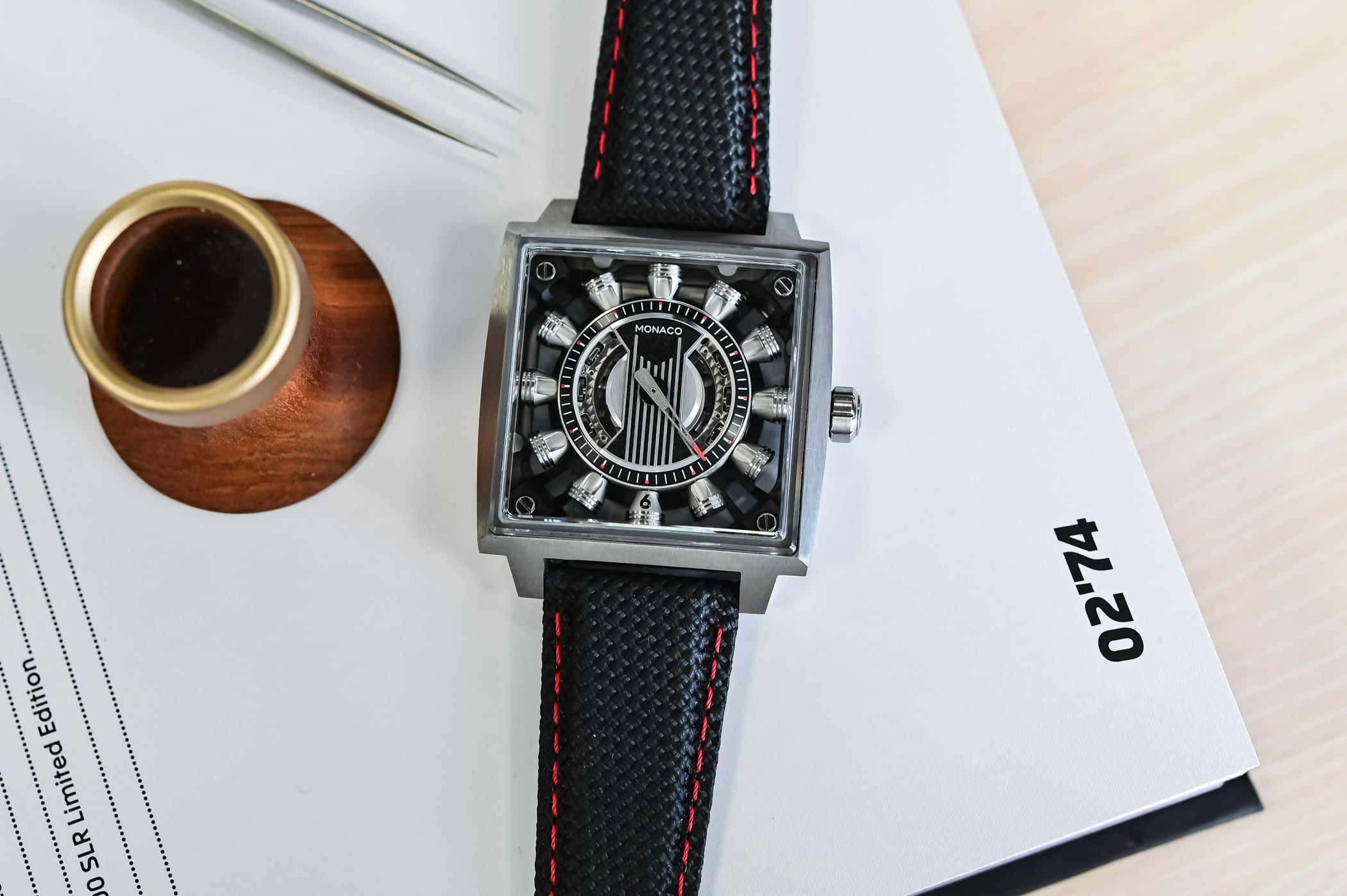
The TAG Heuer Monaco is a watch with a rather interesting history, as we explored in this Evergreen article. The watch, introduced in 1969, was a true vessel for innovation at Heuer, not only due to its daring square design but also the integration within this case of one of the earliest automatic chronograph movements, the Calibre 11. It had all the elements for success, including being worn on silver screen by legend Steve McQueen. And yet, the watch failed commercially. But not in terms of image. The Monaco came back and eventually regained its status of vessel for innovation, with models like the V4. And then TAG Heuer kept it fairly conservative for years. Until recently, as linked to the comeback of the brand in Formula 1, the Monaco became bold again… In-house calibres, Split Seconds, Skeleton, titanium even on the most classic models, TH-Carbonspring, compliant mechanisms on the Evergraph… And then enters the Monaco Speed 12, another layer in the avant-garde spirit that sits right in the name of the brand.
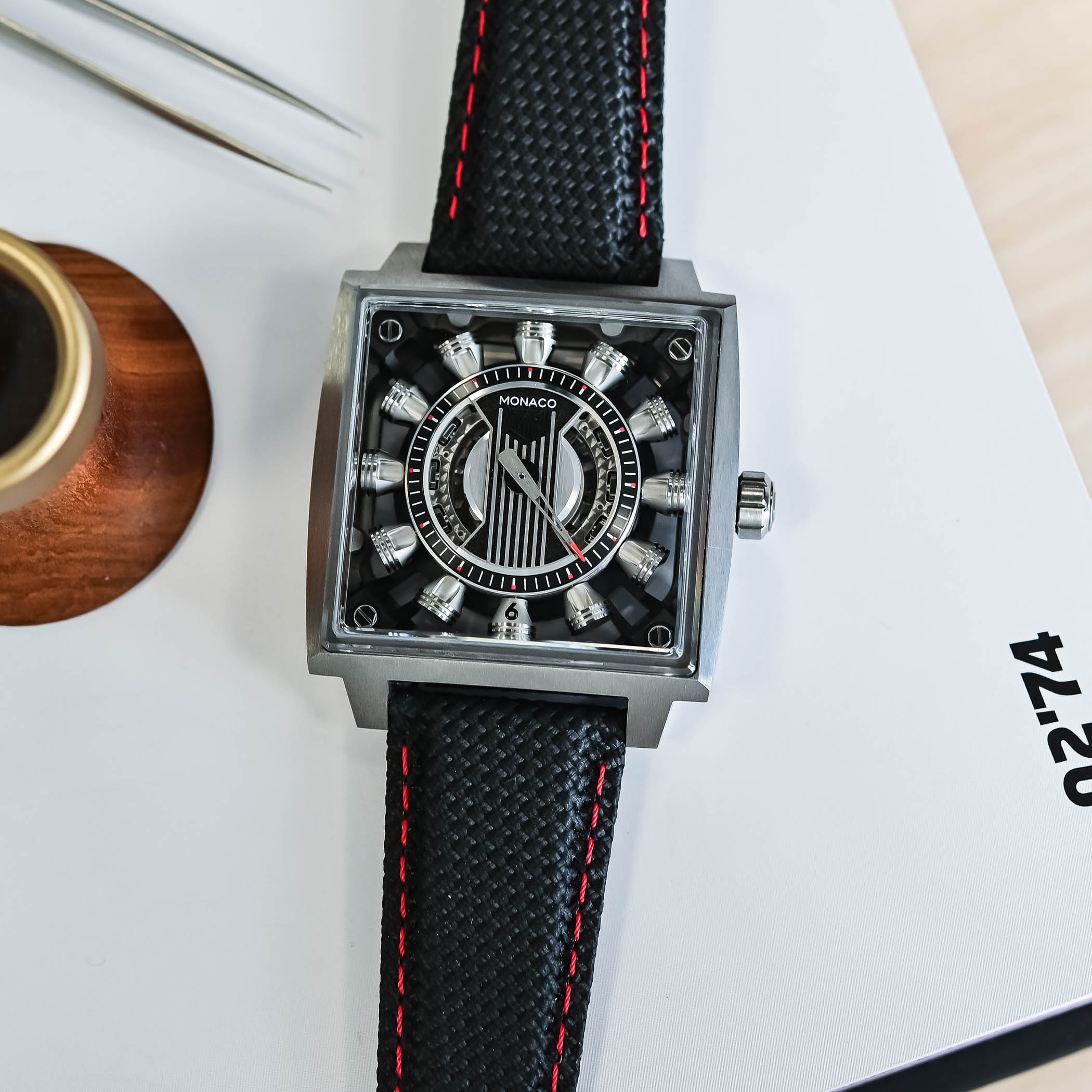
The TAG Heuer Monaco Speed 12 is a watch that sits high in the range of Monaco models – the base is composed of two main watches, the classic versions with automatic chronograph and crown at 3 o’clock, and the new, historically faithful “Steve McQueen” with crown at 9 o’clock and now in-house movement. There are, however, models that are much more advanced technically, far bolder in terms of style and that look almost futuristic – or, to keep it more car-inspired, more racing oriented. The Speed 12 is a model that feels highly familiar for two reasons. One, it retains a relatively classic case construction and dimensions that are close to what a “normal” Monaco would be. Second, its dial is home to a display that surely has all the necessary car DNA, but also reminds us of something else… Something very unique, a display that’s been around for about a decade and that’s as distinctive as it can be.
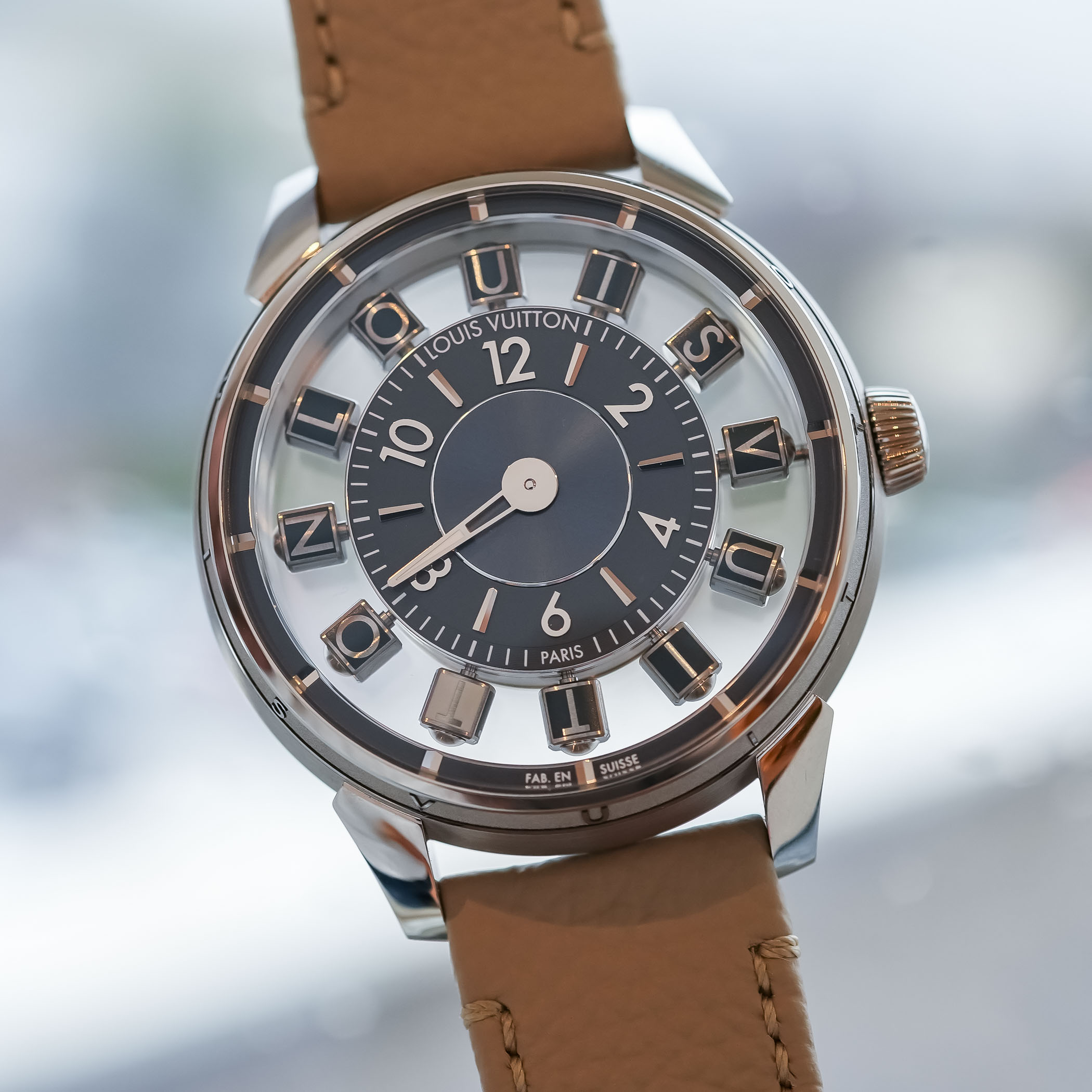
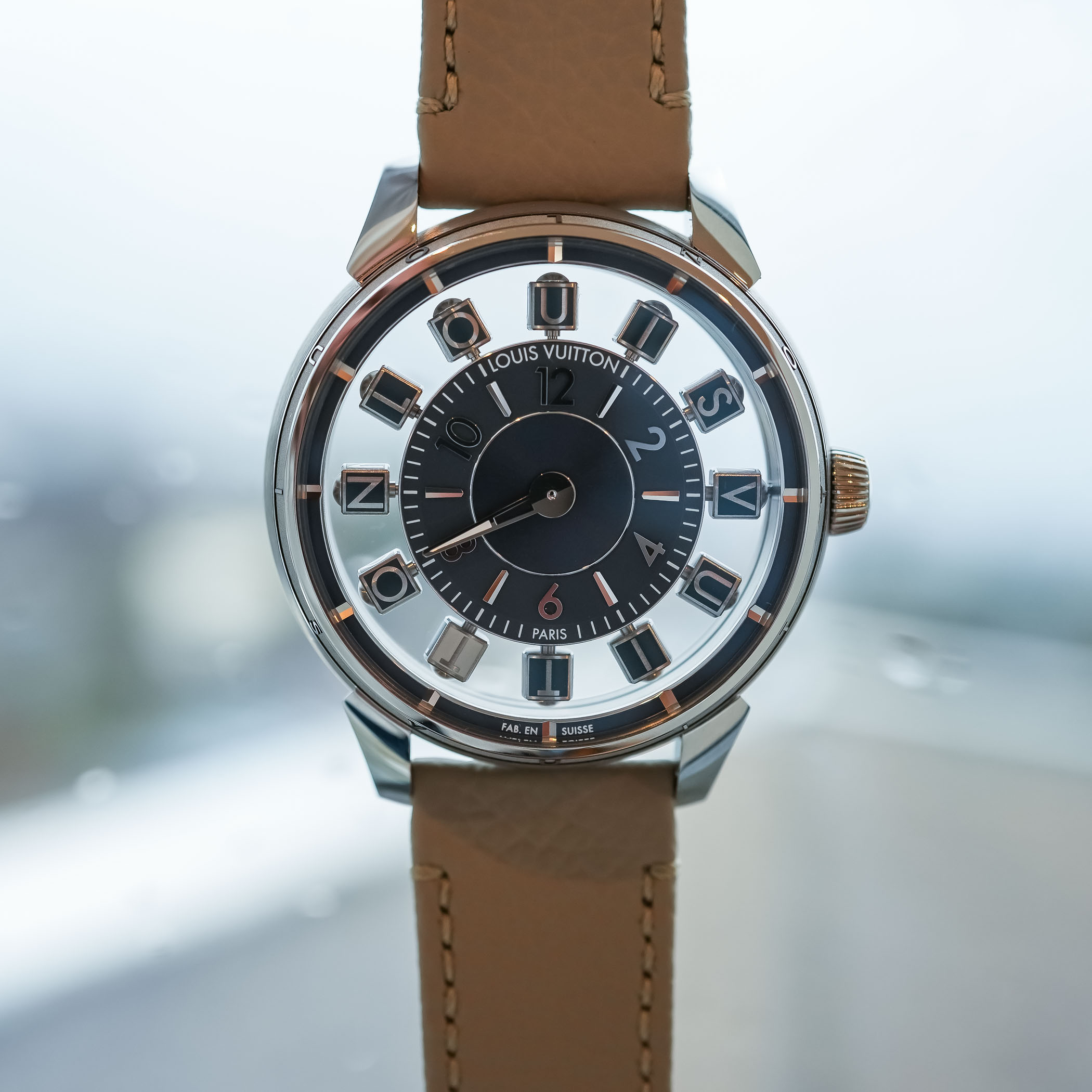
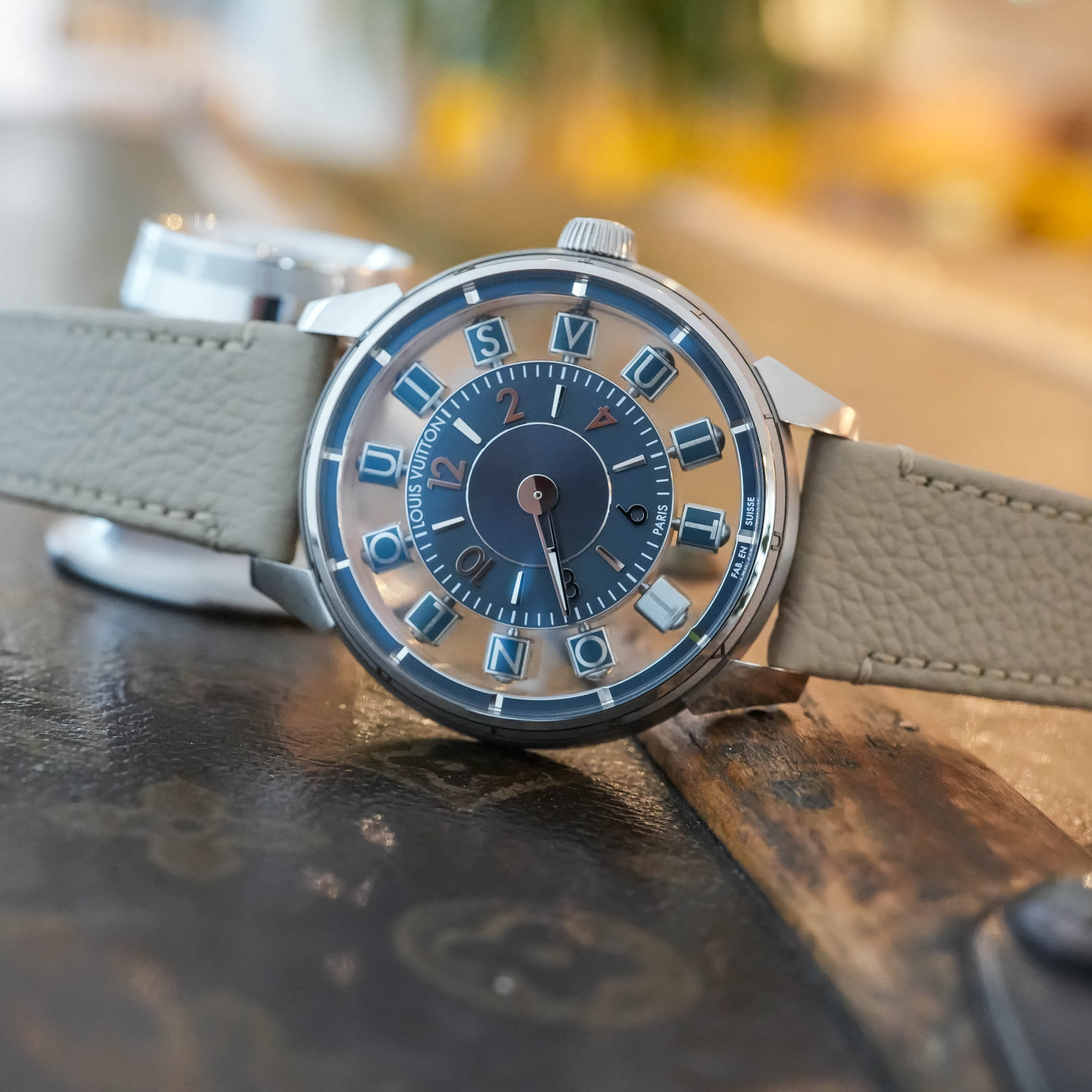
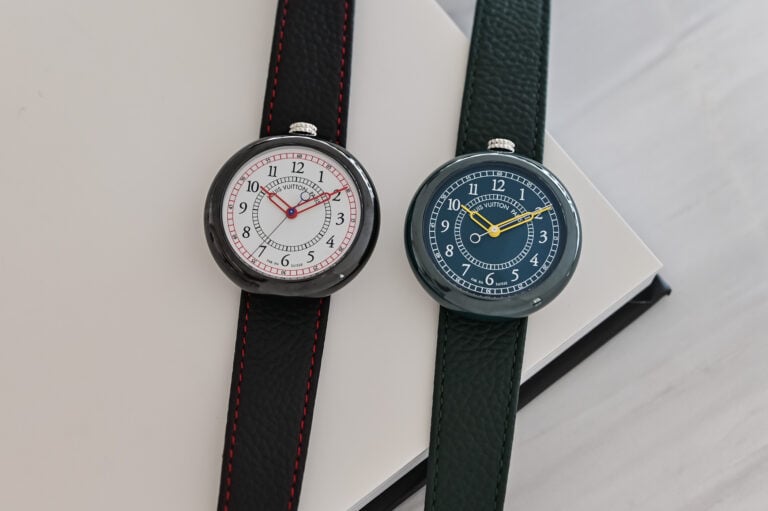
And to find the origin of this display, which has been cleverly adapted for the racing and engine spirit of the Monaco Speed 12, you don’t have to look far away… Thanks to internal synergies, TAG Heuer relies on the Spin Time concept invented by La Fabrique du Temps for Louis Vuitton, which has been revamped recently with the new Taiko Spin Time collection. Except that here, we’re not in classic, high-end territories, but a watch with a far stronger character. That said, the mechanics under the hood are the same. And are produced by LFT.
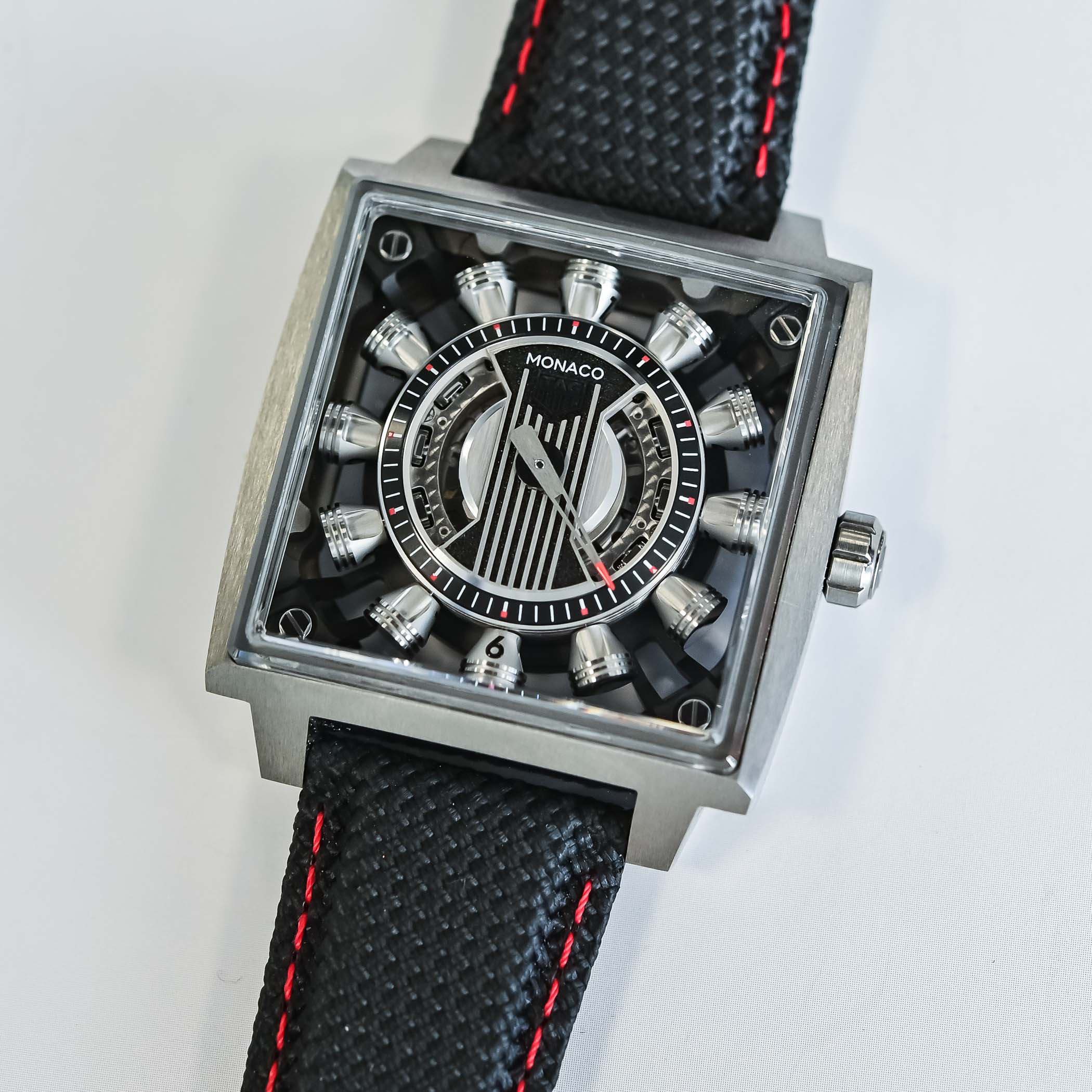
Design-wise, the Speed 12 is a Monaco through and through, with its 40mm x 40mm square case topped by a bevelled sapphire crystal, itself positioned above a square sapphire bezel that maximises visibility on the pistons from all angles. Made of grade 5 titanium, it is mostly brushed and is, as always with the Monaco, relatively present on the wrist – remember that a square watch has about 30% more surface than a circle. But let’s pass on this part, as this isn’t the talking point of the Speed 12. It’s a Monaco, it’s square, it’s light and well executed. End of the story.
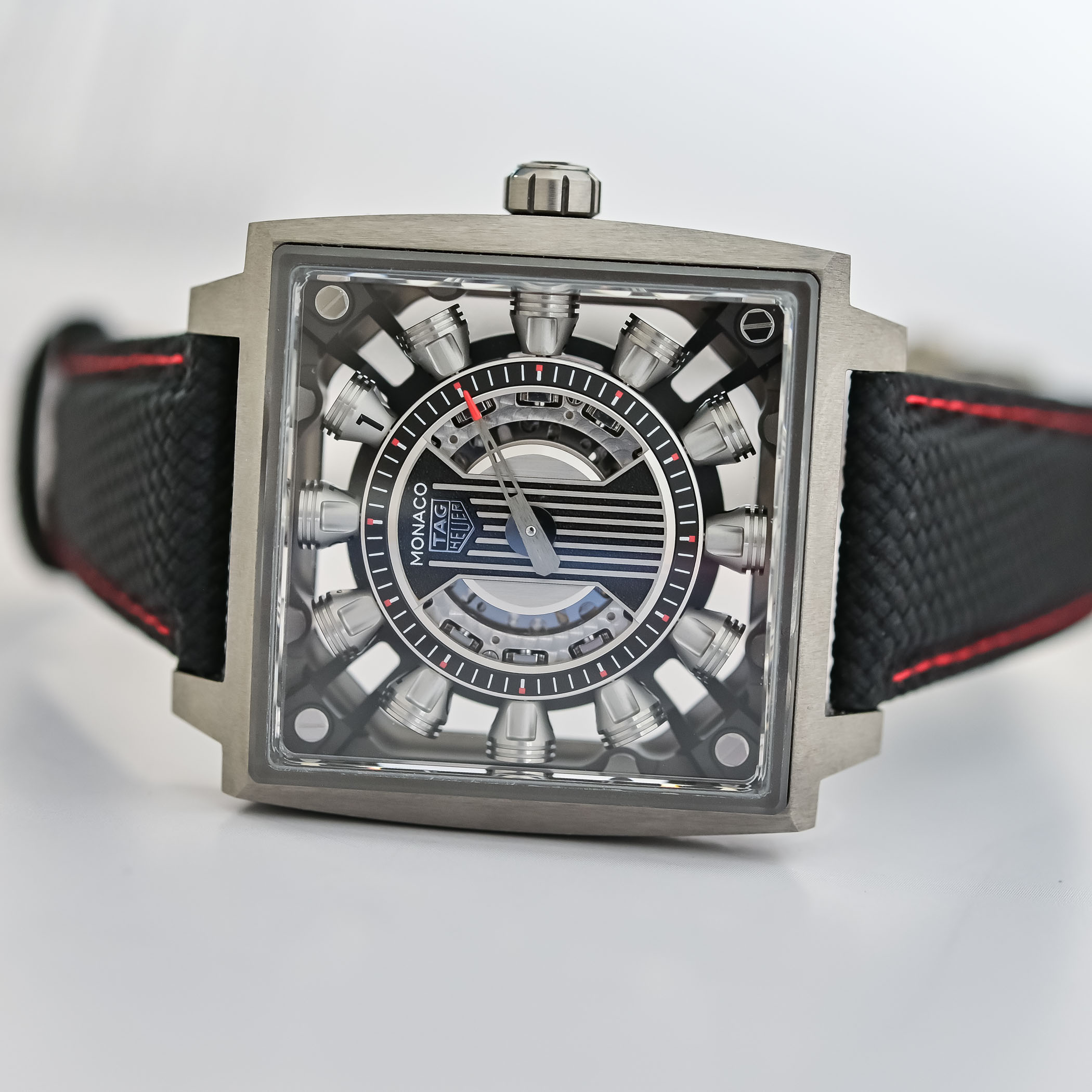
What matters is the display. As said, it relies on the patented Spin Time concept developed by Michel Navas and Enrico Barbasini (founders of La Fabrique du Temps, later acquired by LVMH) for Louis Vuitton in 2007. The Monaco Speed 12 relies on the latest version of the Spin Time, introduced in early 2025 in the Taiko collection, together with a new automatic base movement to drive the display. But what exactly is the Spin Time all about? The idea, a dynamic display using 12 rotating cubes to indicate the hours, was inspired by the overhead flap panels that show timetables in airports. These 12 cubes, one for each hour, are connected to the central movement using arms.
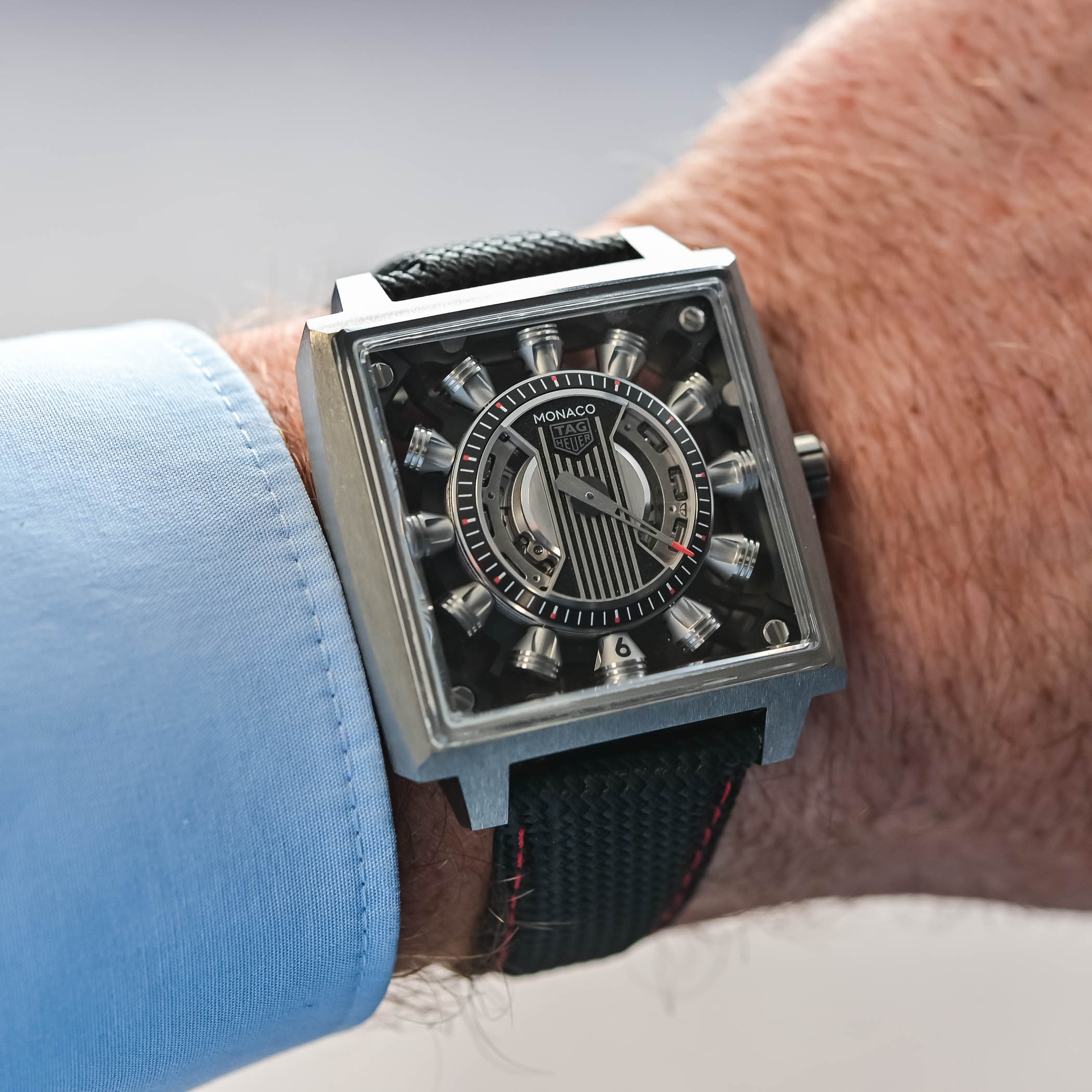
Except that in the Monaco Speed 12, these rotating elements are not cubes but something far more in line with the spirit of the watch, “a display that channels the adrenaline of the racetrack into the precision of high-end watchmaking,” to quote the brand. Instead of cubes, TAG Heuer has created with LFT a 12-cylinder engine (the noblest of them all), with 12 rotating pistons circling the dial, indicating the corresponding hour with every revolution of the central minute hand, offering a very cool reinterpretation of the jumping hour complication, but also one that couldn’t be more in line with TAG’s renewed interest in racing. The movement is suspended within the case, held in place by four DLC-coated openworked arches, adding depth and transparency.
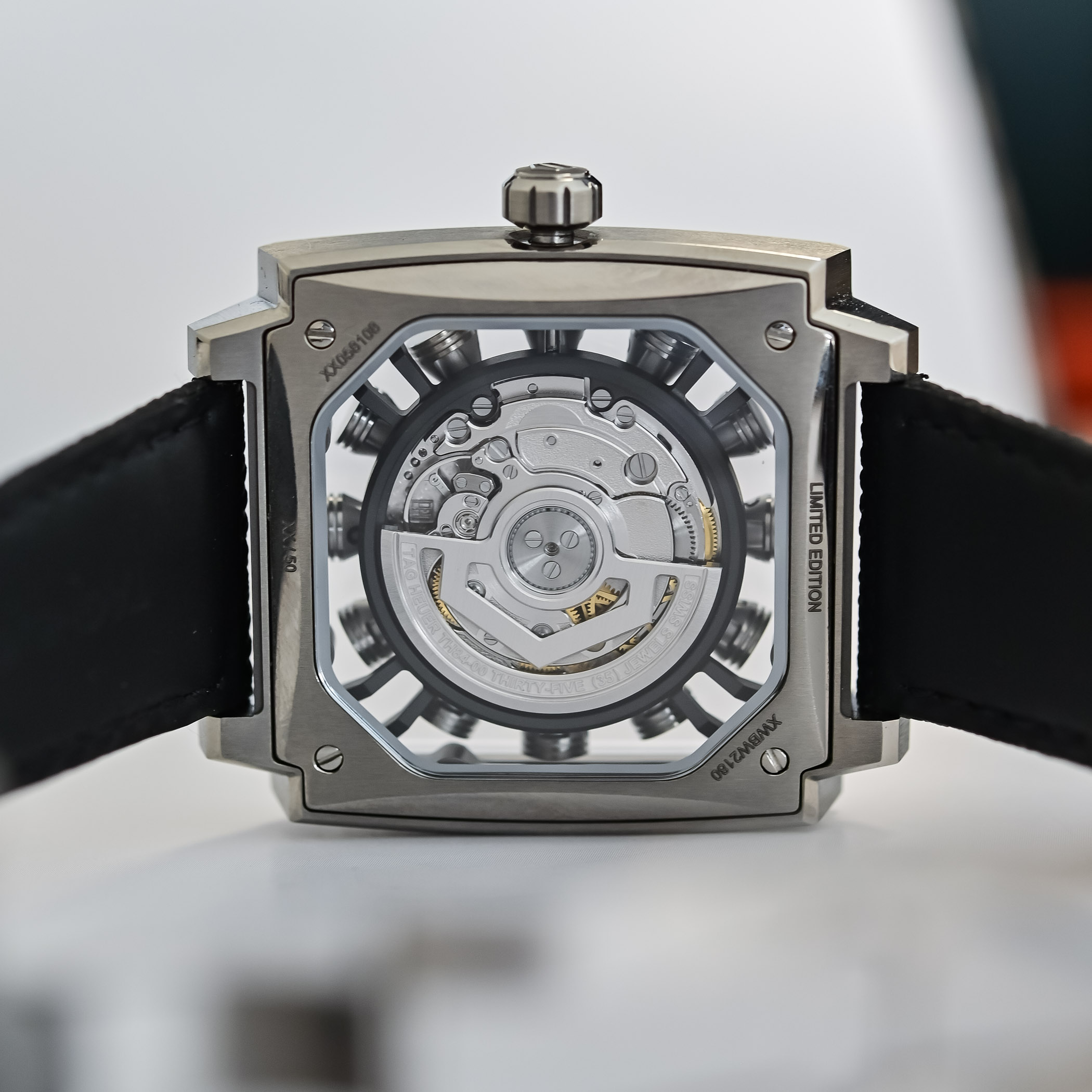
As for the display, the movement is sourced from LFT Louis Vuitton, as the automatic calibre TH84-00 relies on the same architecture as the calibre LFT ST13.01 of the LV Taiko Spin Time. A fairly compact movement, a necessity to leave space for the rotating hour modules, it runs at 4Hz and stores about 45h of power reserve (not bad considering the size and the energy consumption of such a display module). This nicely decorated movement receives here a distinct rotor, giving it a more technical look.
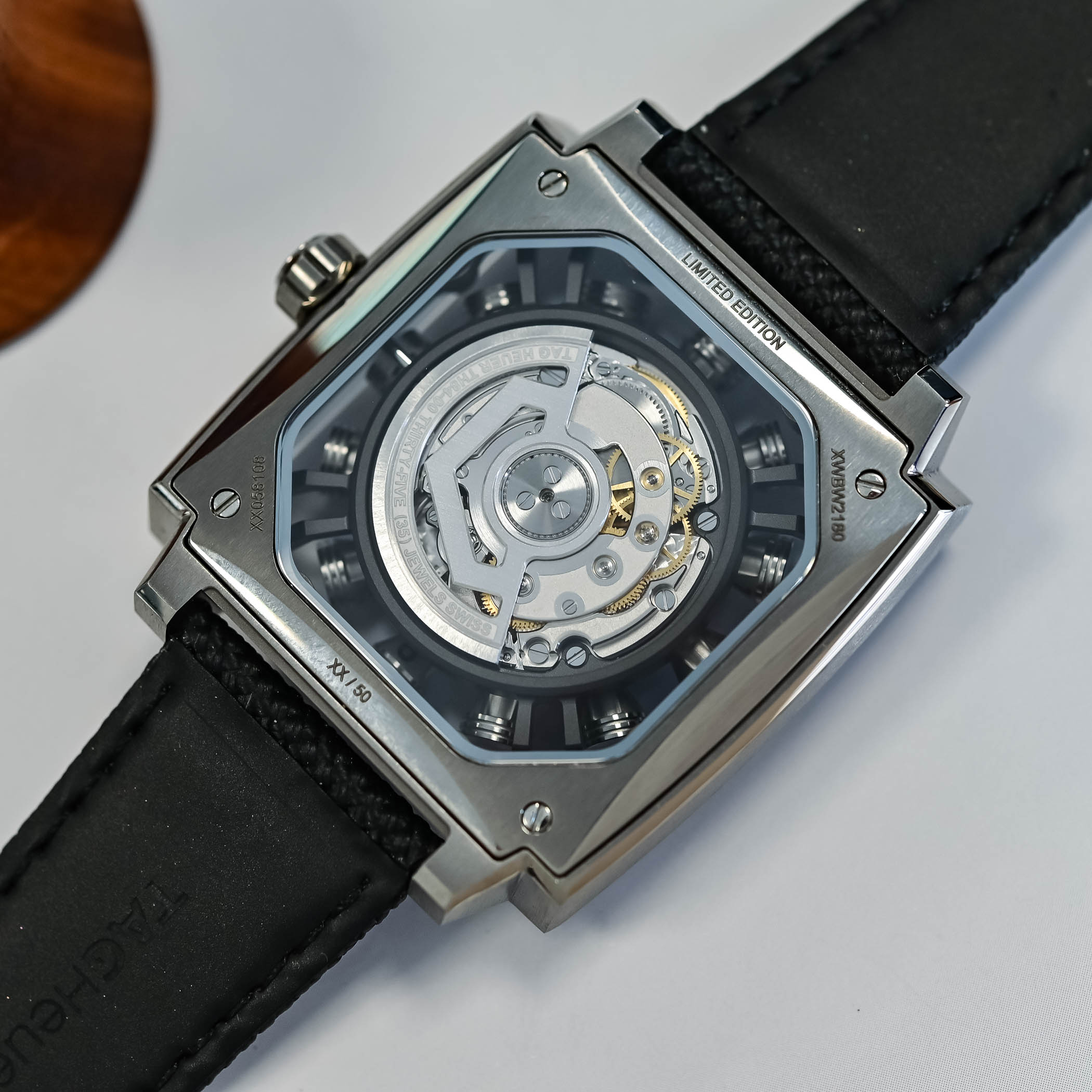
Worn on a black rubber strap with textile embossing and red stitching, closed by a titanium folding clasp, the TAG Heuer Monaco Speed 12 will be strictly limited to 50 pieces, available from December 2026. It is priced at EUR 77,000, CHF 70,000 or USD 87,000. For more information, please visit tagheuer.com.

4 responses
Nice and really fun way displaying the time but of course I’m gonna pretend I did not see the price
Price: EUR 77,000
CHF 70,000
USD 87,000
Who would like to spend those amounts?
Thanks LVMH, but I don’t like you nor what you stand for.
I think it looks very cool. I’m not sure, I understand why it is so complicated. Jumping hour movements have been around forever, so have regulator style . This seems like a similar concept. I feel like I should be able to afford this watch as Monaco‘s are typically chronographs, and this just tells time. I don’t think it should be cheaper than a chronograph, but at least in the same postal Code,