
 Not all images were able to load for printing. Please close the print window and try again.
 The TAG Heuer Monaco Evergraph, a Re-Engineered Chronograph with Compliant Mechanisms
After recent milestones such as the carbon hairspring, TAG Heuer fully embraces the "TAG" in its name once again: Techniques d'Avant-Garde.
While the Monaco has long been a platform for bold design, this new 2026 TAG Heuer release is first and foremost a mechanical statement. With the Monaco Evergraph, TAG Heuer is not just updating an icon but rebuilding the chronograph, in classic Techniques d’Avant-Garde style… The new calibre TH80-00 abandons common chronograph design in favour of compliant, flexible mechanisms developed in-house by the TAG Heuer Lab, offering a fundamental rethink of how a chronograph starts, stops and resets. In simple terms, instead of relying on the traditional system of levers, springs and column wheels used in most chronographs, the Evergraph uses flexible mechanical structures that bend microscopically to trigger the functions. It is not simply a new Monaco, nor merely a new movement, but a way for how chronographs could be built differently in the future.
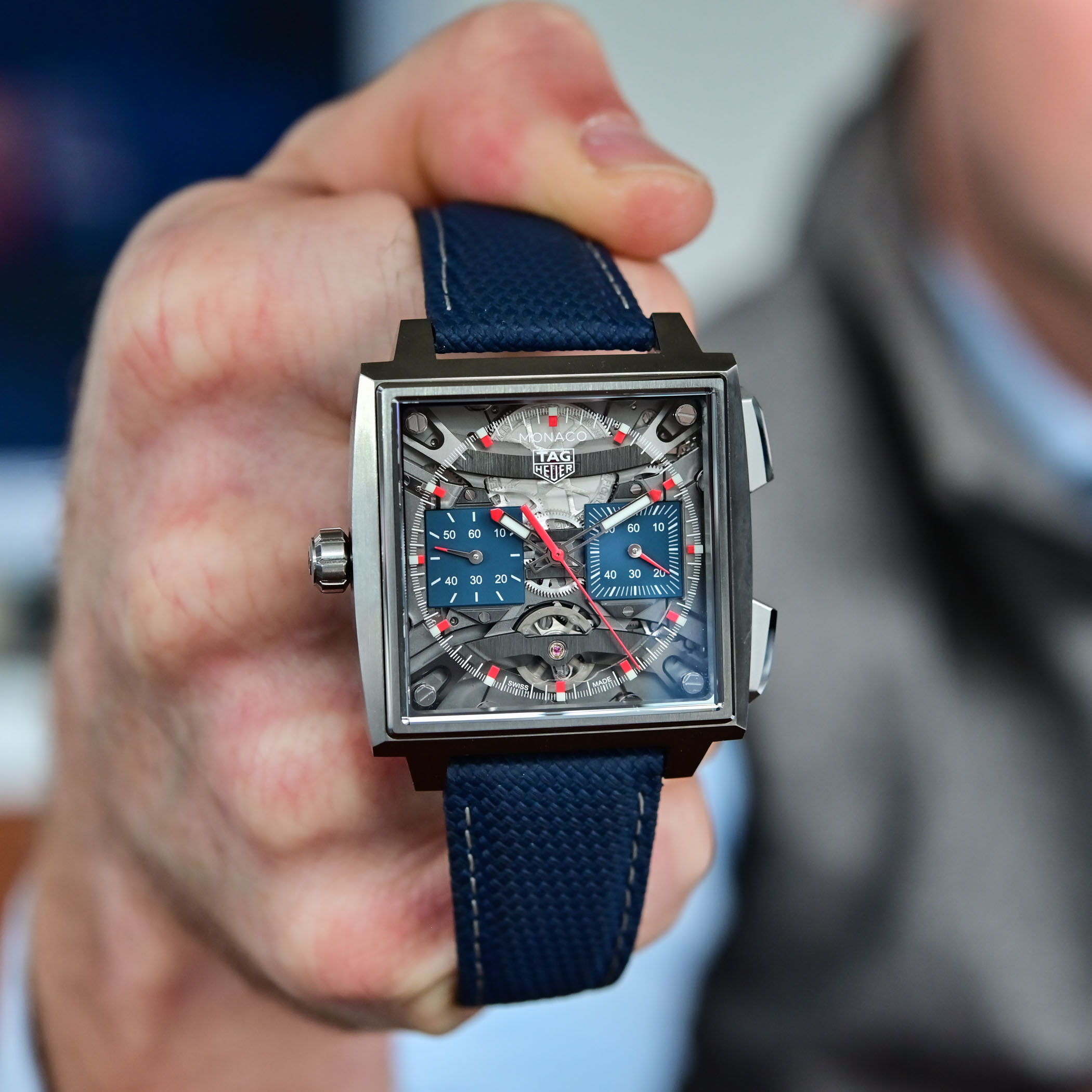
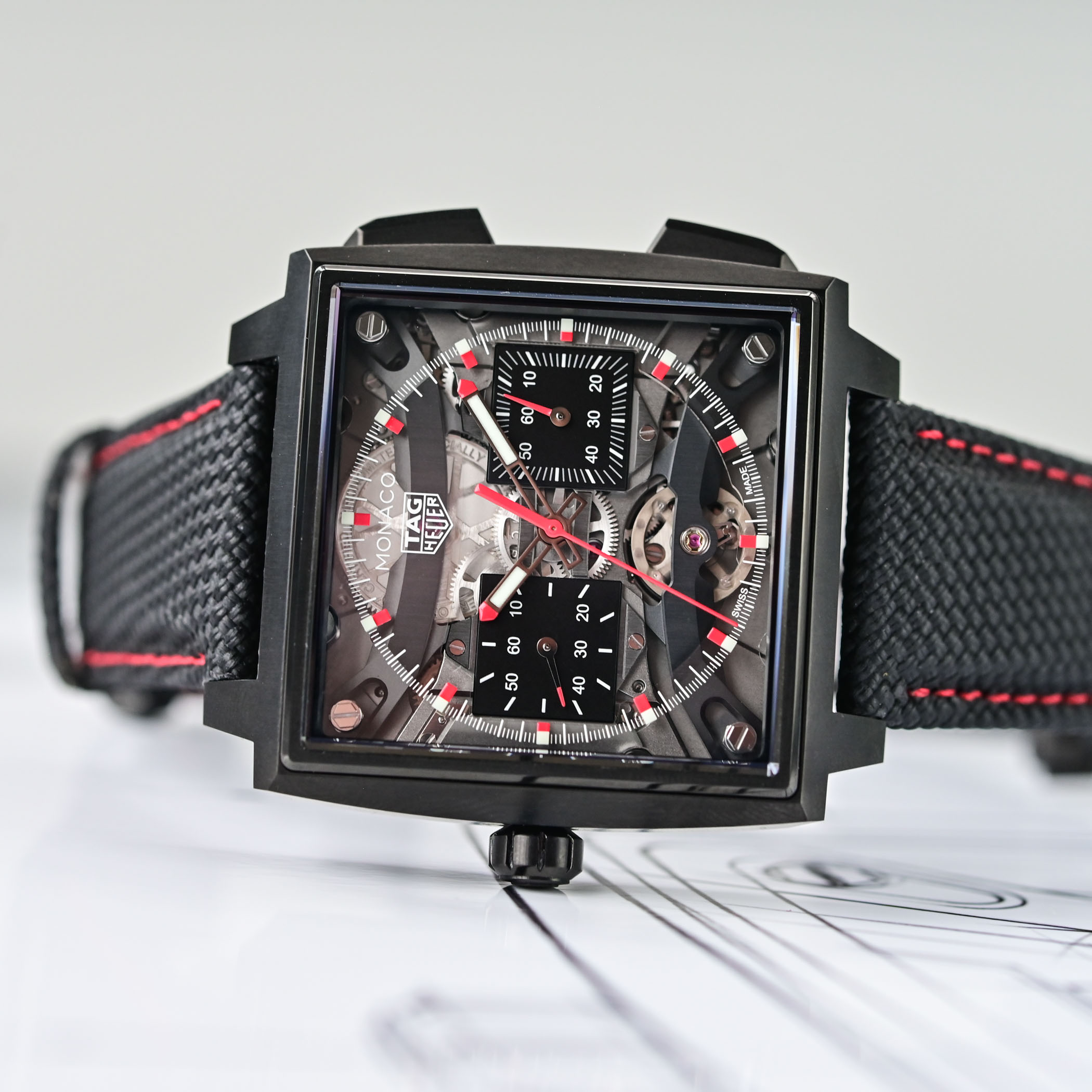
The Monaco Evergraph lands in a 40mm square case, finely brushed and polished in natural grade 5 titanium or black DLC-coated titanium. All very Monaco indeed. Both variants retain the traditional left-hand crown, a detail recalling the original 1969 Monaco reference 1133, along with elongated chronograph pushers on the right. In line with the series updates, ergonomics have been prioritised. The case has been subtly reshaped with tapered profiles and sharper facets. A square sapphire caseback mirrors the movement’s shape, follows the square geometry of the Monaco case, resulting in a rare yet coherent construction. Water-resistance is 100m, practical.
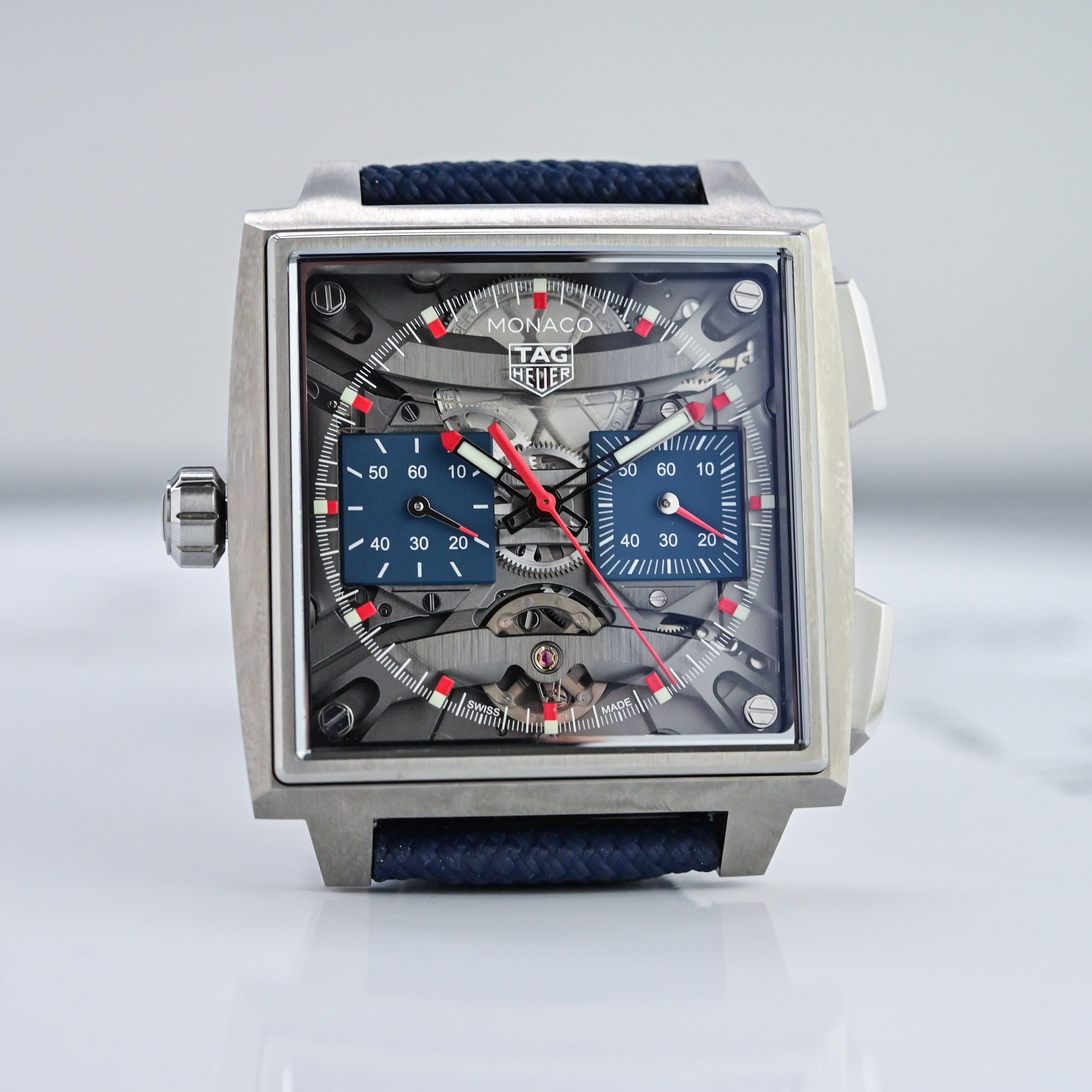
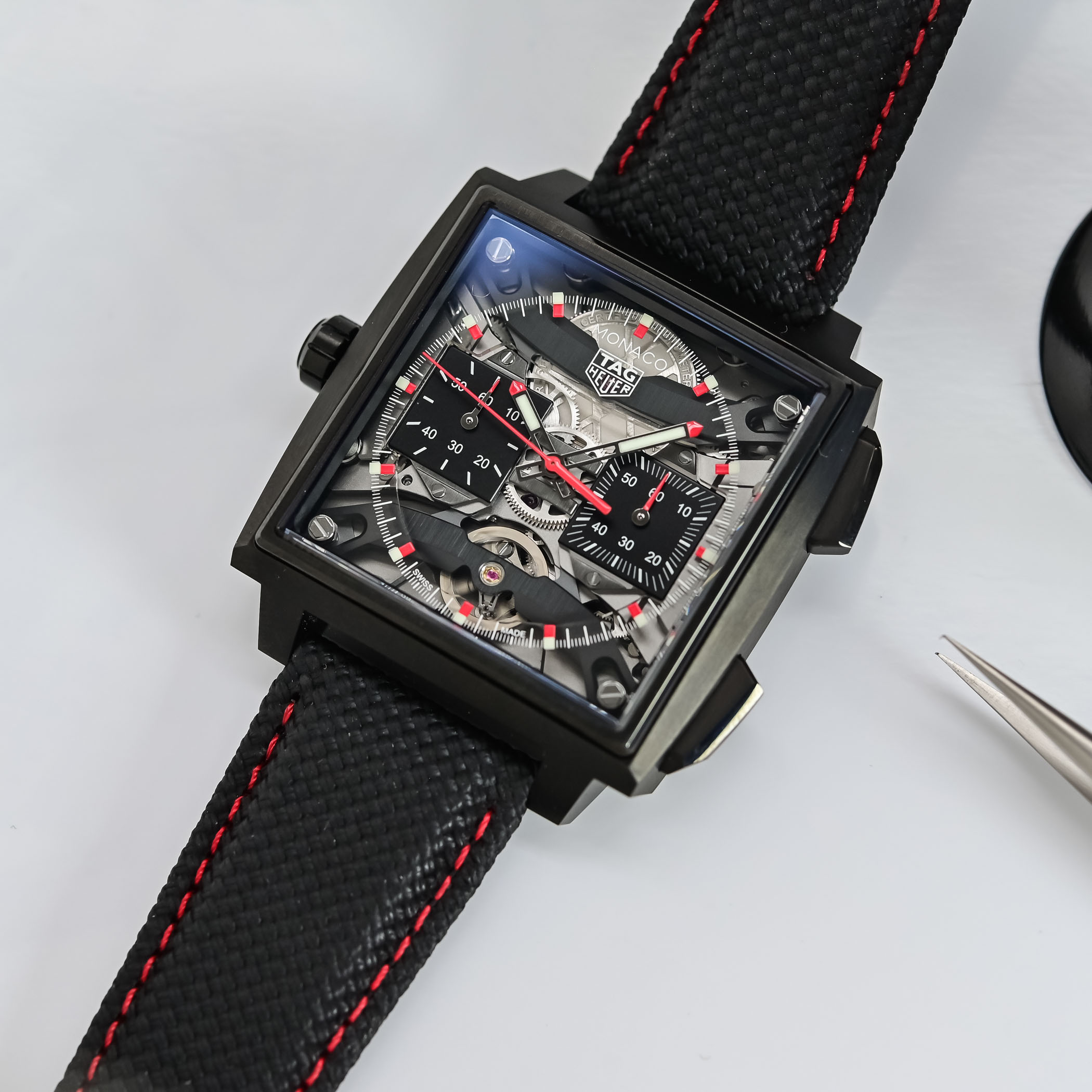
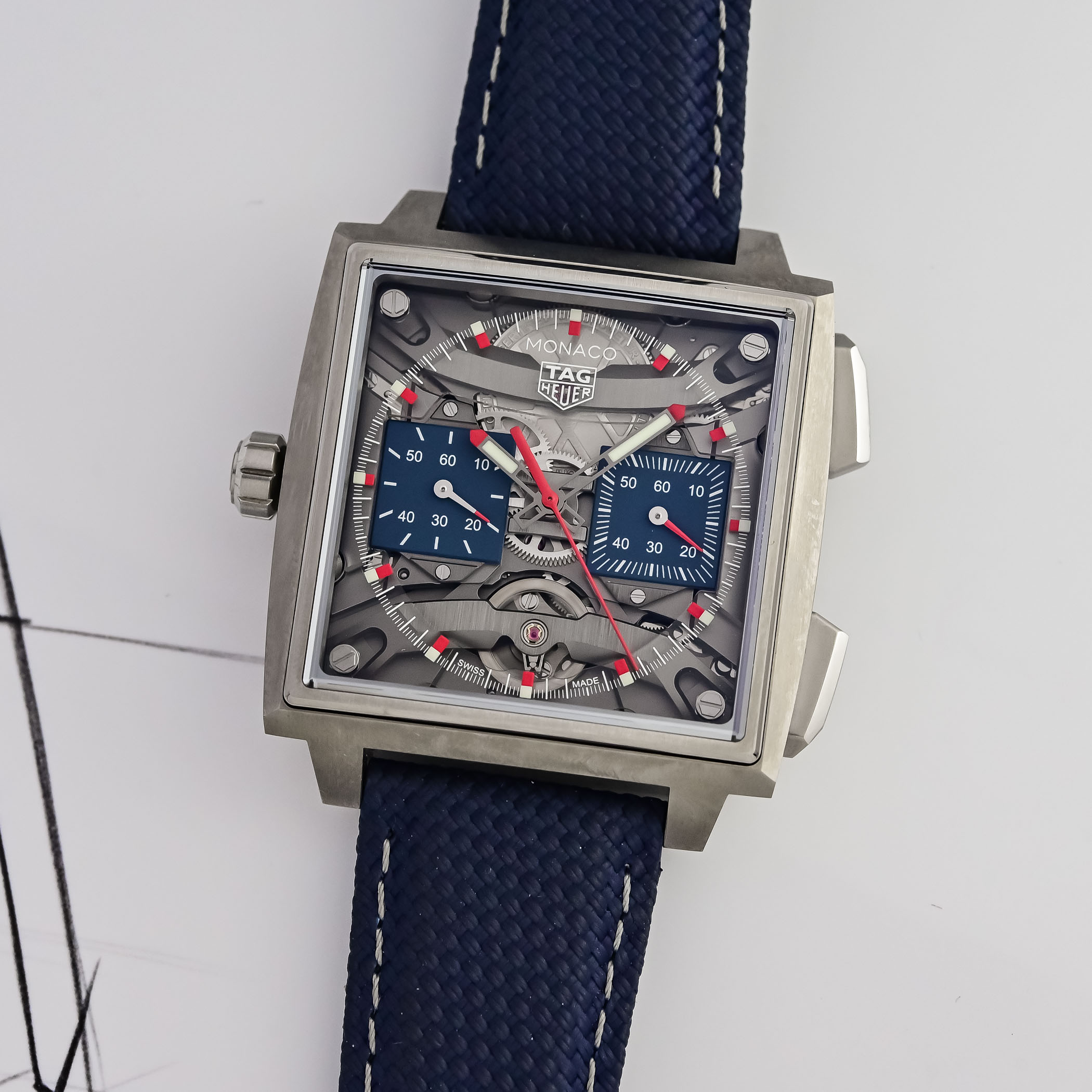
The dial side is largely about the movement. The Monaco Evergraph uses a transparent plate, allowing the inverted construction, placing the barrel, gear train and balance on the dial side, to be visible. The symmetrical layout places running seconds at 9 o’clock and chronograph minutes at 3 o’clock, with two sweeping arched bridges for the barrel and escapement. These curved bridges reinforce the watch’s identity, recalling the design seen on TAG Heuer’s recent Monaco split-seconds chronographs.
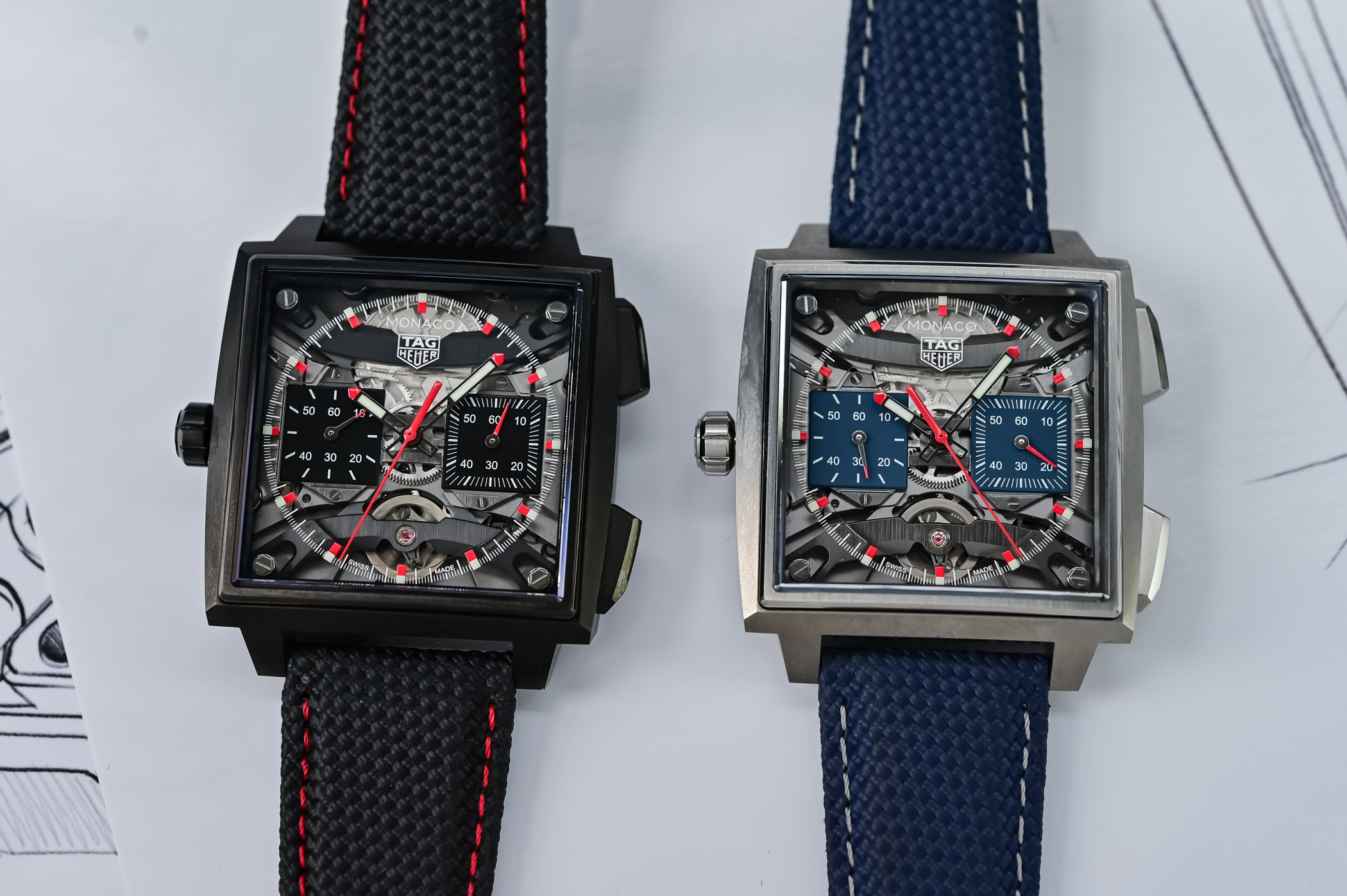
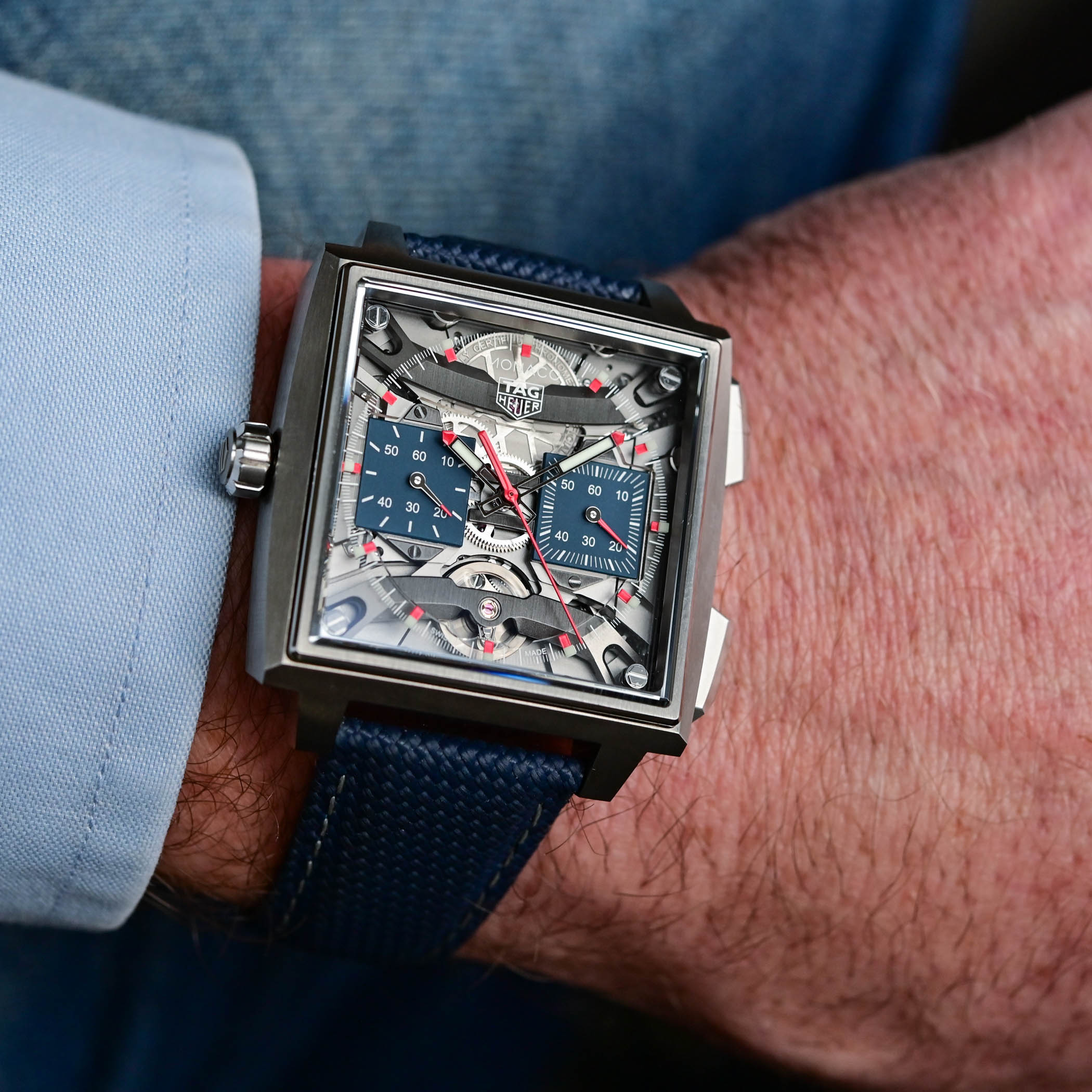
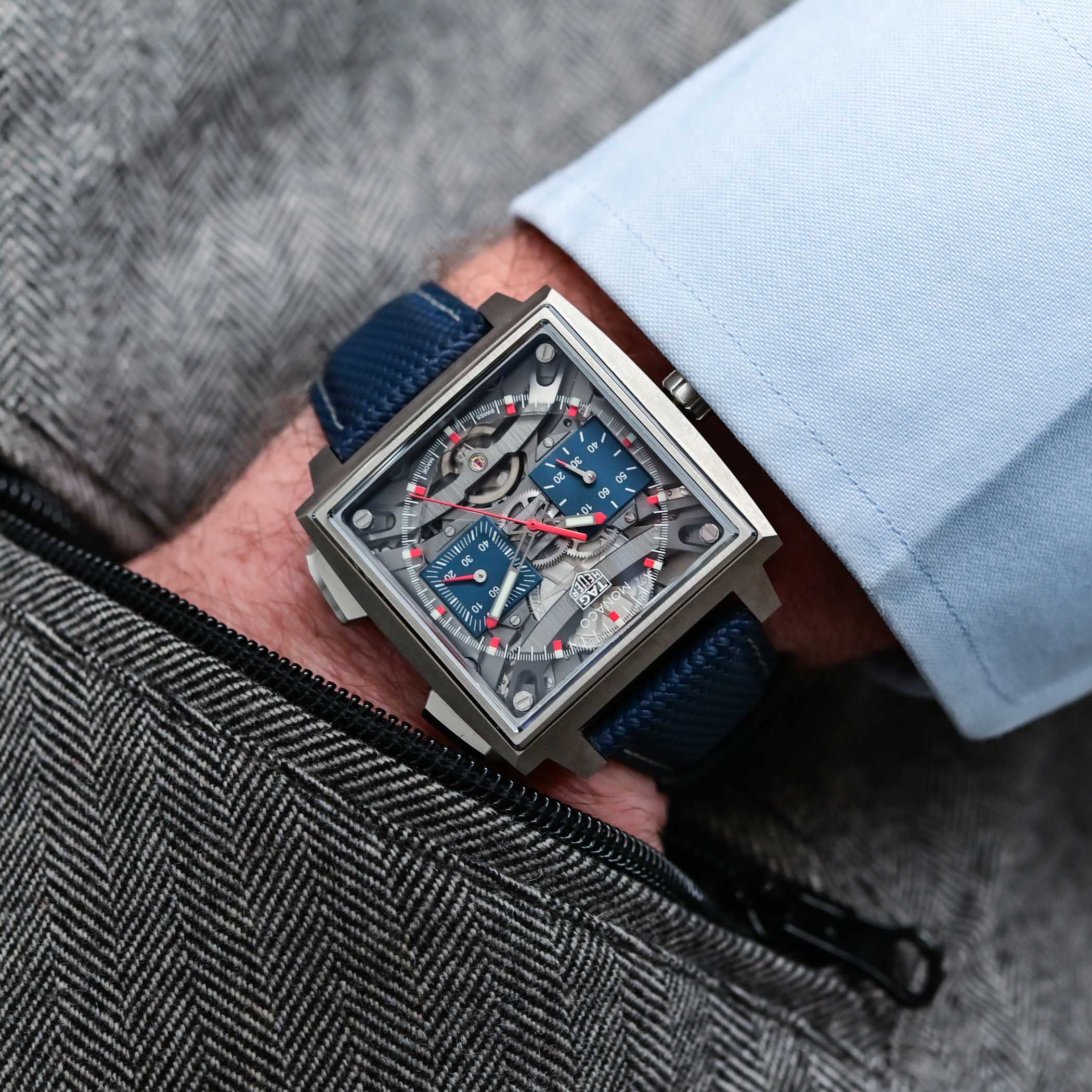
The natural titanium model pairs the movement’s technical architecture with blue opaline chronograph counters, while the black DLC-coated version adopts a darker aesthetic with black counters and matching coated bridges, giving the watch a stealthier, more instrument-like, technical appearance. Applied markers float above the mechanism and, like the openworked hands, feature red lacquered tips and white Super-LumiNova treatment. The red-lacquered central chronograph hand sweeps the dial, while the contrasting counters ensure legibility despite the highly technical presentation.
The new movement and the use of compliant mechanisms
The big news, of course, is the movement. The calibre TH80-00 is an automatic chronograph developed with Vaucher Manufacture Fleurier after five years of research and development. It operates at a high frequency of 5Hz (or 36,000 vibrations/hour), has a 70-hour power reserve, is chronometer-certified by COSC, and incorporates TAG Heuer’s recent TH-Carbonspring Oscillator for improved magnetic resistance and long-term stability. And even though fascinating on its own, this is not the topic of the day.
These are impressive specifications on their own, but they are almost secondary to the chronograph’s workings. Traditional chronographs rely on an array of levers, springs and cams to control start, stop and reset. This is why, even today, the chronograph remains one of the most difficult complications to develop and to assemble. Also, with frequent use, these numerous parts wear down, friction increases, and the tactile feel of the pushers can degrade. TAG Heuer’s solution is to eliminate almost all of this.
The Evergraph uses two bistable precision-engineered compliant mechanisms, manufactured using LIGA technology. One controls start/stop; the other, reset. In mechanical engineering, compliant mechanisms transmit motion through controlled elastic deformation rather than through articulated joints; think flexible. Because these monolithic components flex rather than slide or pivot, they eliminate contact surfaces, mechanical play, friction and many traditional wear points.
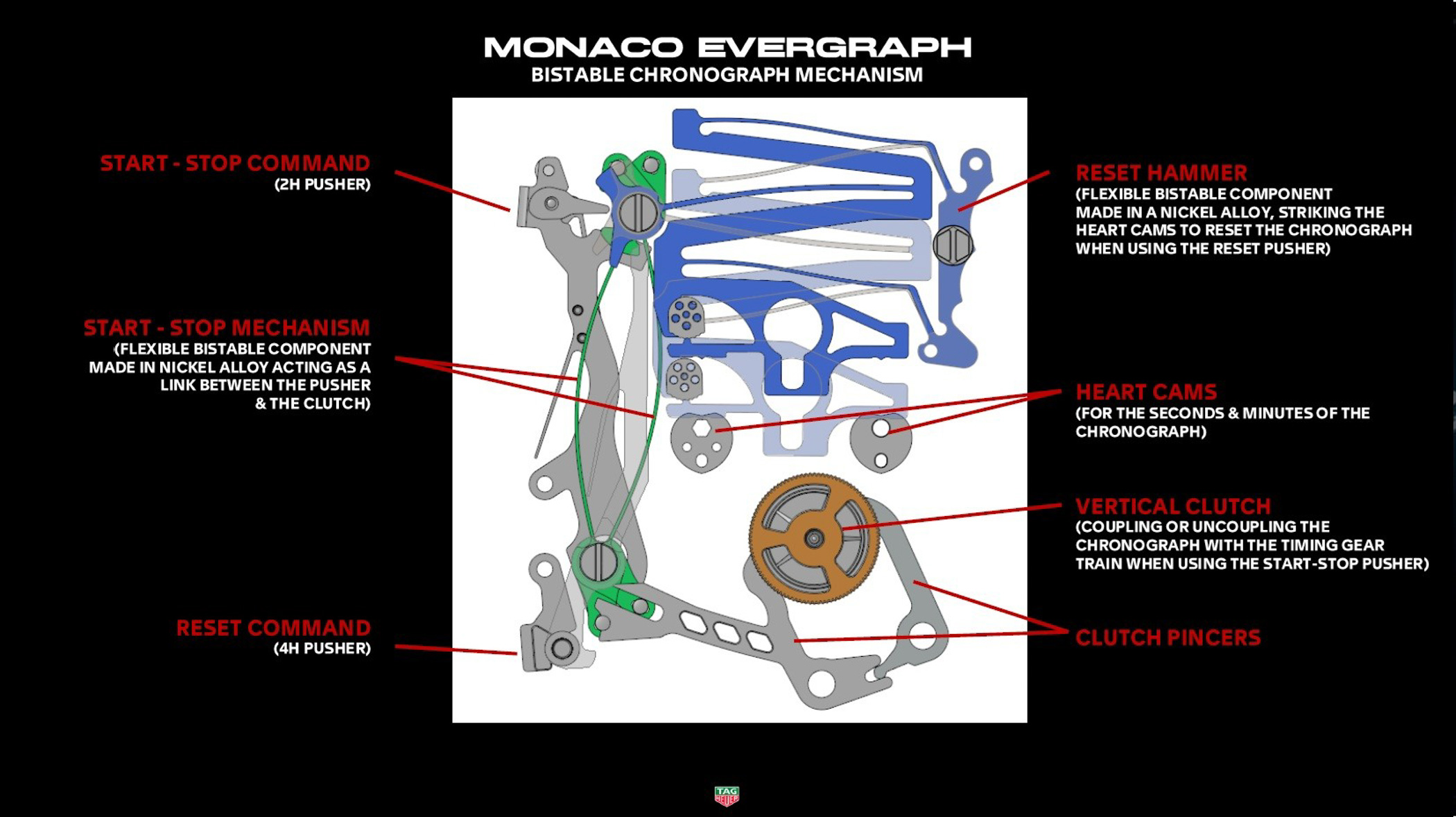
The start-and-stop compliant mechanism between the 2 o’clock pusher and the vertical clutch stores energy in a buckled blade that snaps between two stable positions once a critical force threshold is reached. This bistable behaviour ensures extremely fast and precise transitions between chronograph states. Whatever pressure is applied to the pusher, the blade snaps cleanly into the next position, ensuring consistent engagement.
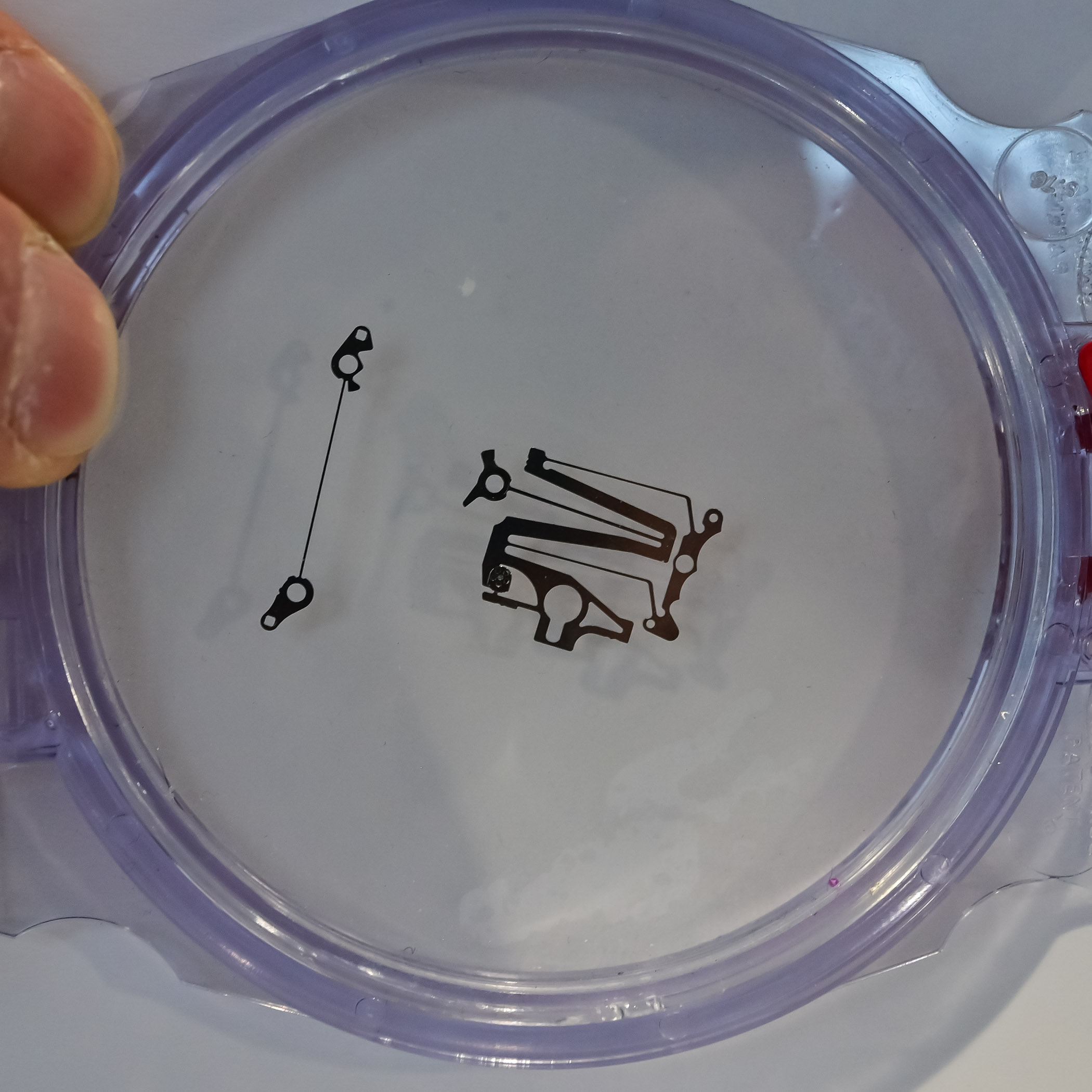
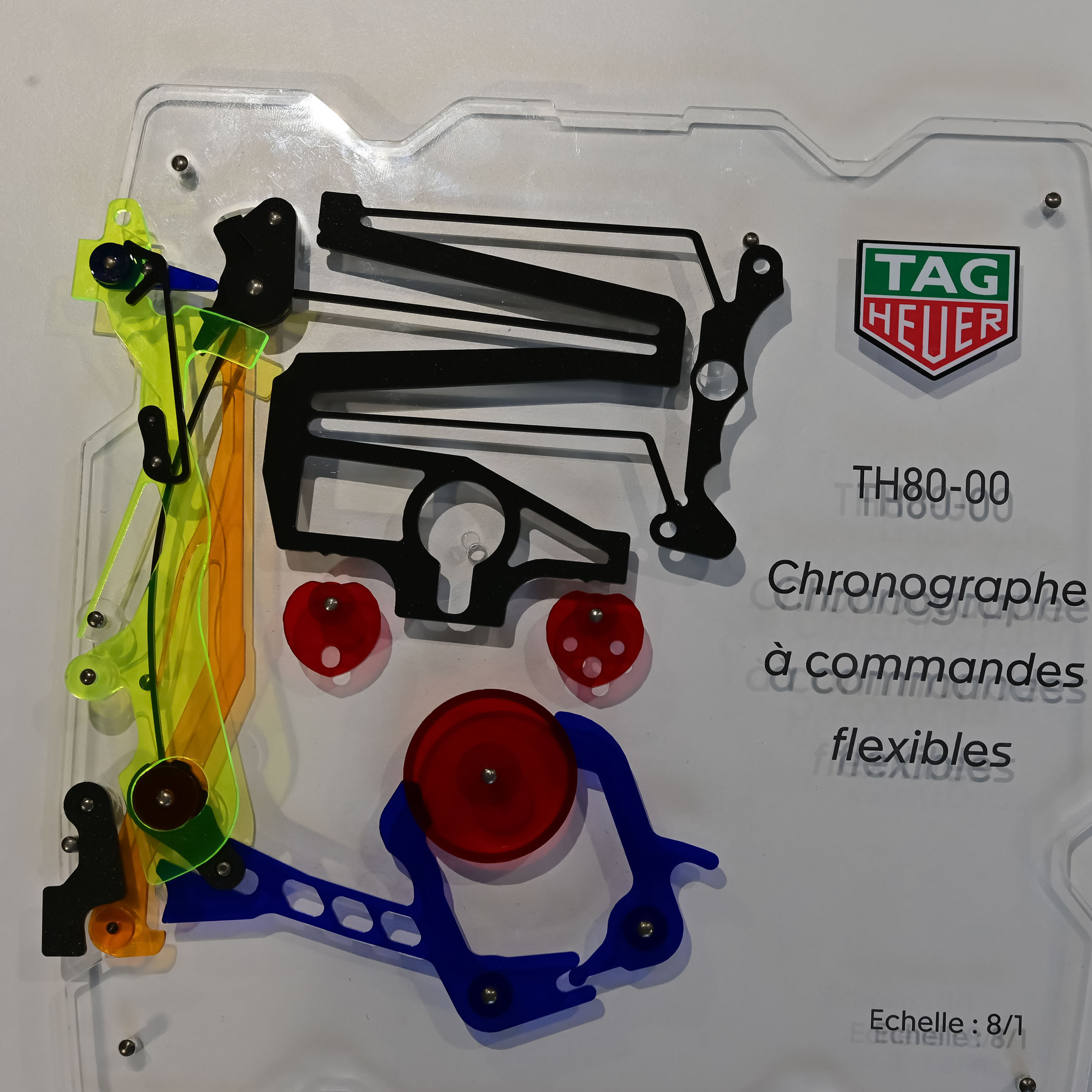
A second compliant mechanism (the reset hammer), which drives the reset function, exhibits a far more complex geometry, simultaneously returning the chronograph hands to zero by resetting the two heart-shaped cams for the chrono seconds and minutes.
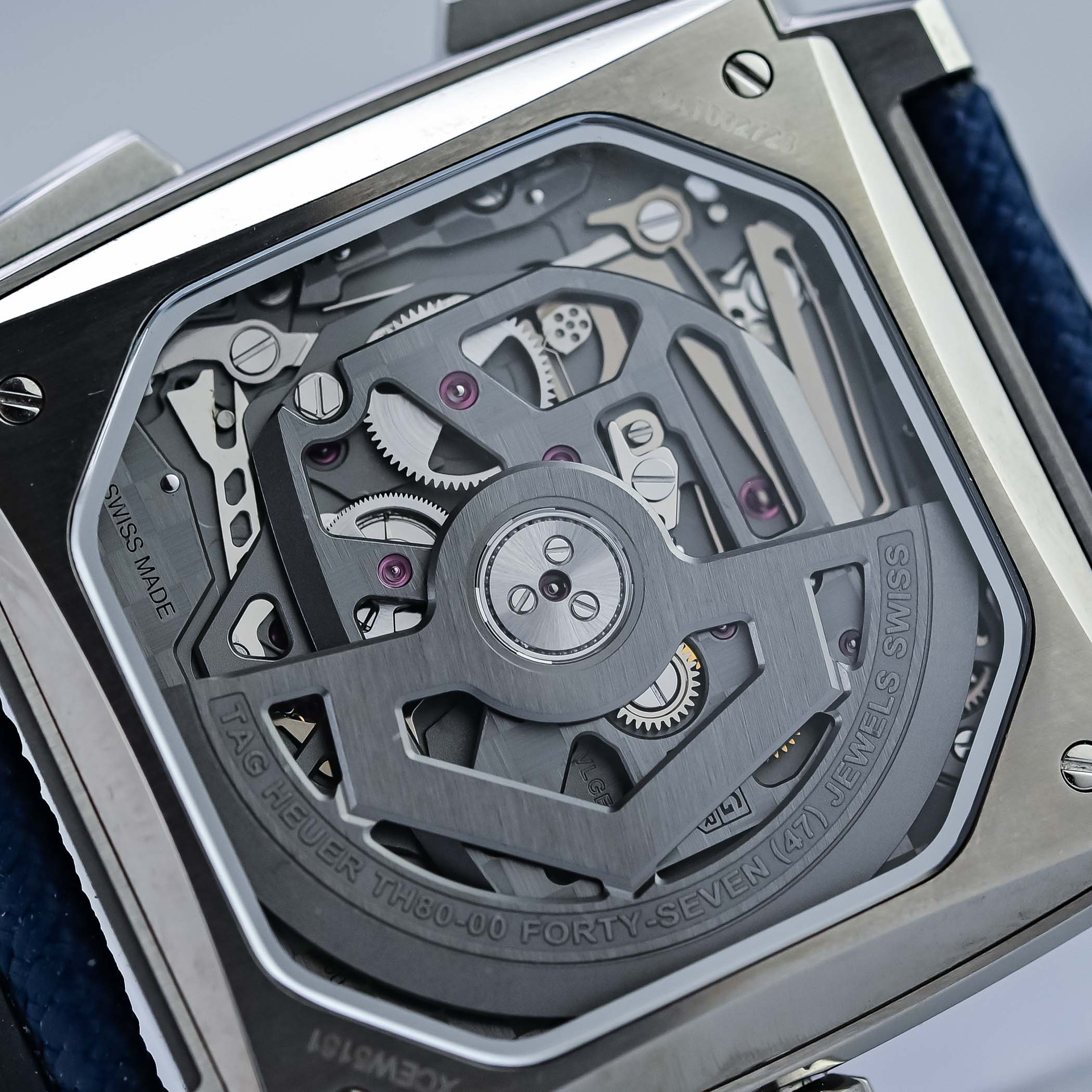
The absence of mechanical coupling means the sensation at the pushers is crisp and consistent. According to TAG Heuer, it does not matter whether it is the first activation or the ten-thousandth; the chronograph should feel the same years down the line as it does brand new. In other words, the innovation is not only mechanical but also experiential, creating a chronograph with a highly refined tactile interaction.
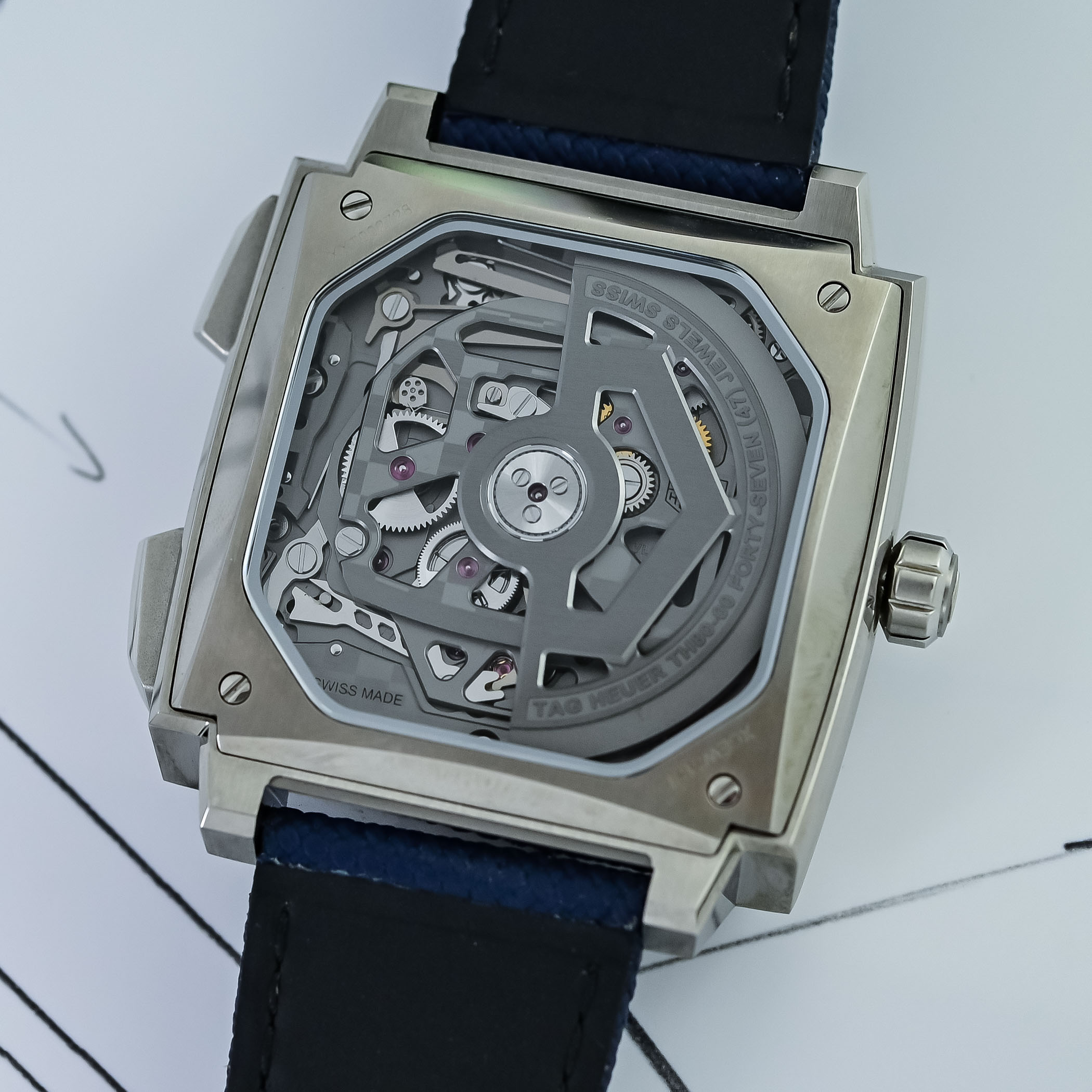
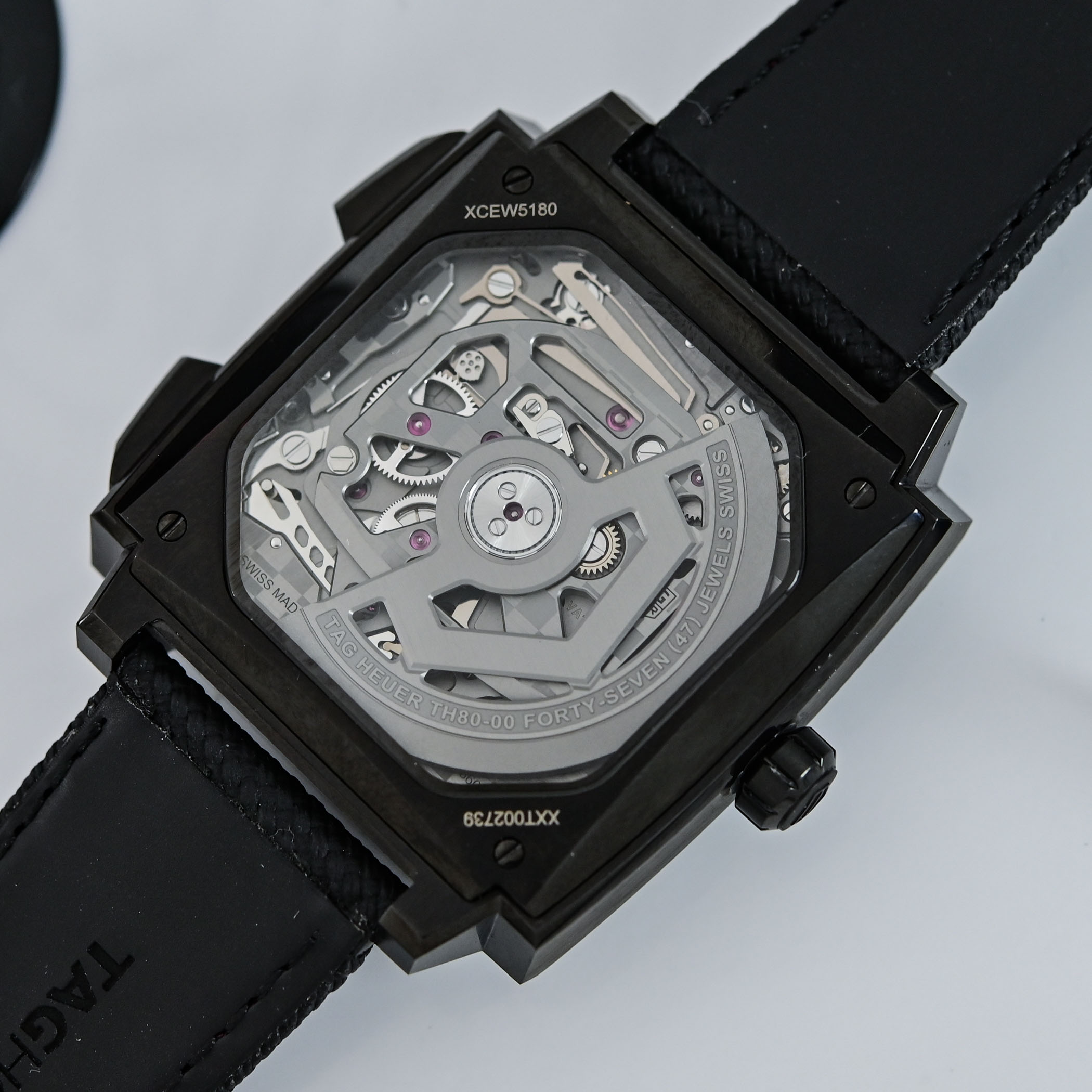
The movement places ceramic components in high-stress areas to further reduce wear and the need for lubrication. Finishing is technical, with sandblasted and brushed surfaces throughout the movement and a chequered-flag motif on the caseback. The shield-shaped rotor remains.
Availability & Price
The Monaco Evergraph is worn on a rubber strap with textile embossing and introduces a new folding clasp with double safety push-buttons, a welcome upgrade over the brand’s previous system. It improves comfort, ease of use and security. The watch is available immediately and not limited in supply, proving that we’re looking at real-world innovation. Each version is priced at EUR 25,000, USD 25,000 or CHF 23,000.
For more details, please visit TAGHeuer.com.