


 Not all images were able to load for printing. Please close the print window and try again.
 The History of Metal Bracelets for Wristwatches
Simple yet robust metal bracelets took hold during World War I and evolved into what’s often the second most difficult part of a watch to produce.
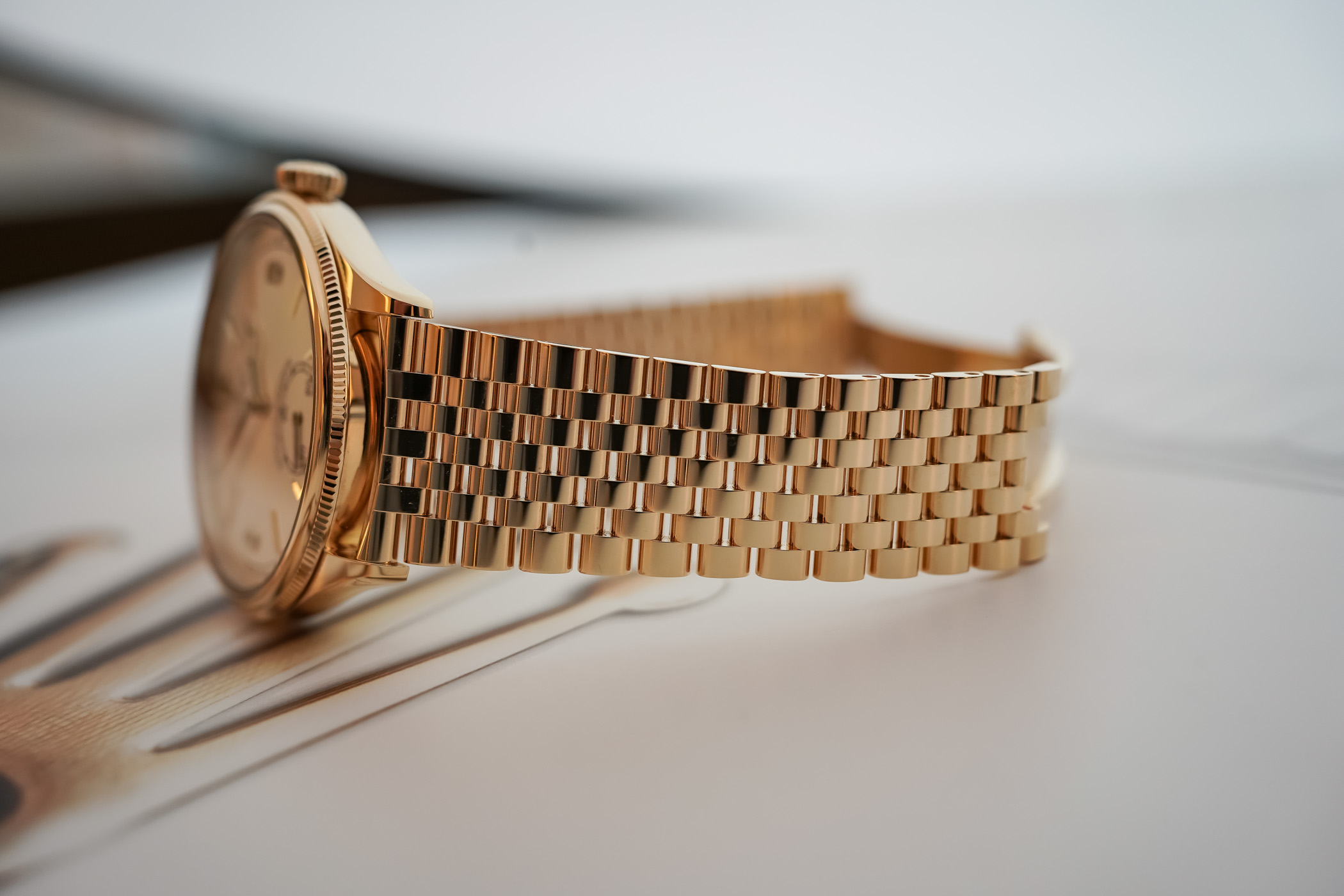
With few exceptions, metal bracelets are a 20th-century phenomenon, really surfacing in the 1920s as wristwatches became a cultural and fashion phenomenon. Three names are generally recognised as part of the rise of contemporary bracelets – Rolex, Gérald Genta and Gay Frères – although there’s much more to the story, and the latter arguably plays the biggest role. We can, however, go back to the early 19th century to find precious metal bracelets on rare custom women’s wristwatches, though these were generally one-offs rather than standard production pieces. There’s even documentation of bracelets from the late 18th century, although we’re talking single digits. We won’t cover every bracelet type here, such as the rare Cheese Grater bracelets from Patek Philippe in the 1970s (on the Beta 21 quartz watch), but this will provide a historical overview of what many consider the second most difficult (and often expensive) component to produce in watchmaking – often far more complex than the case.
Why So Hard?
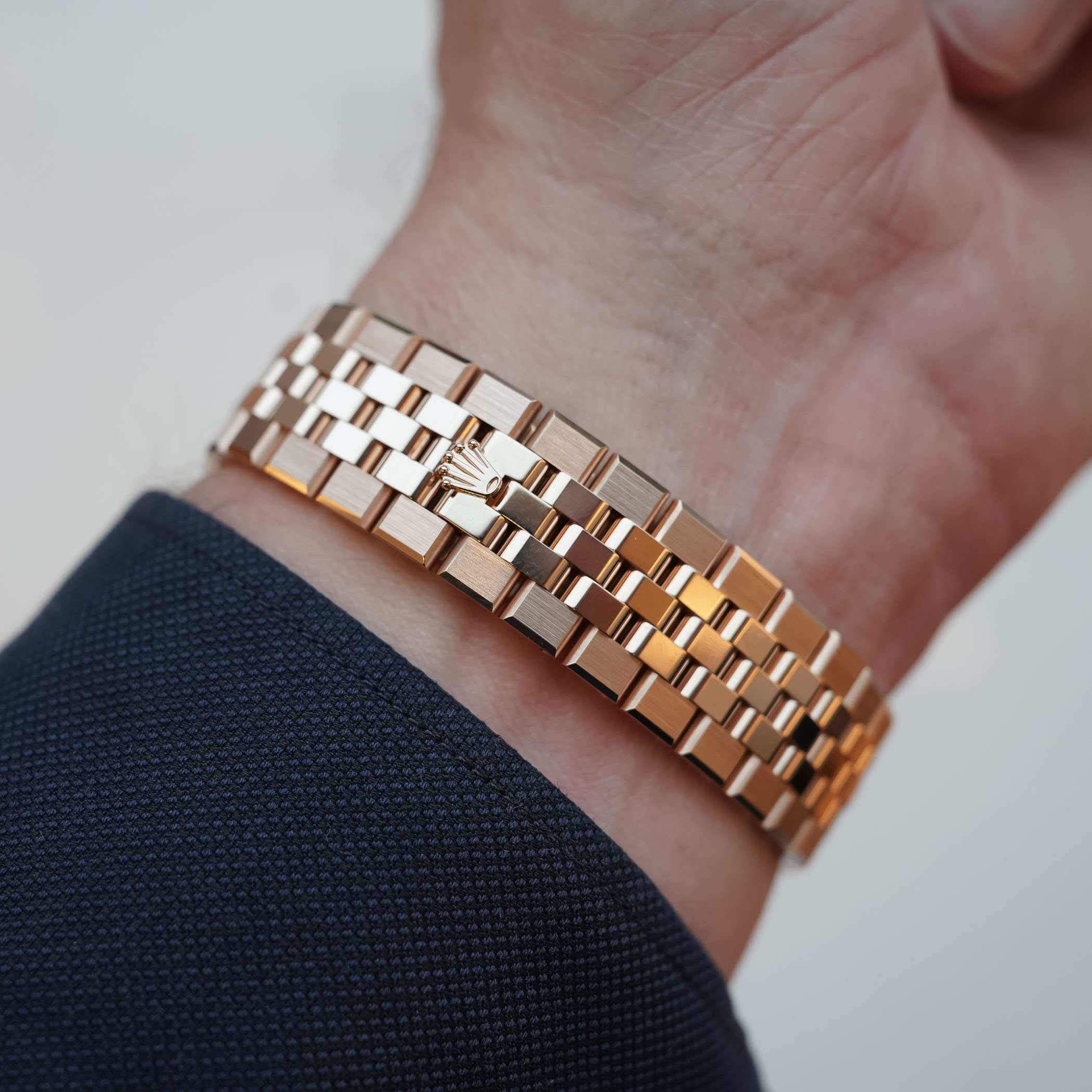
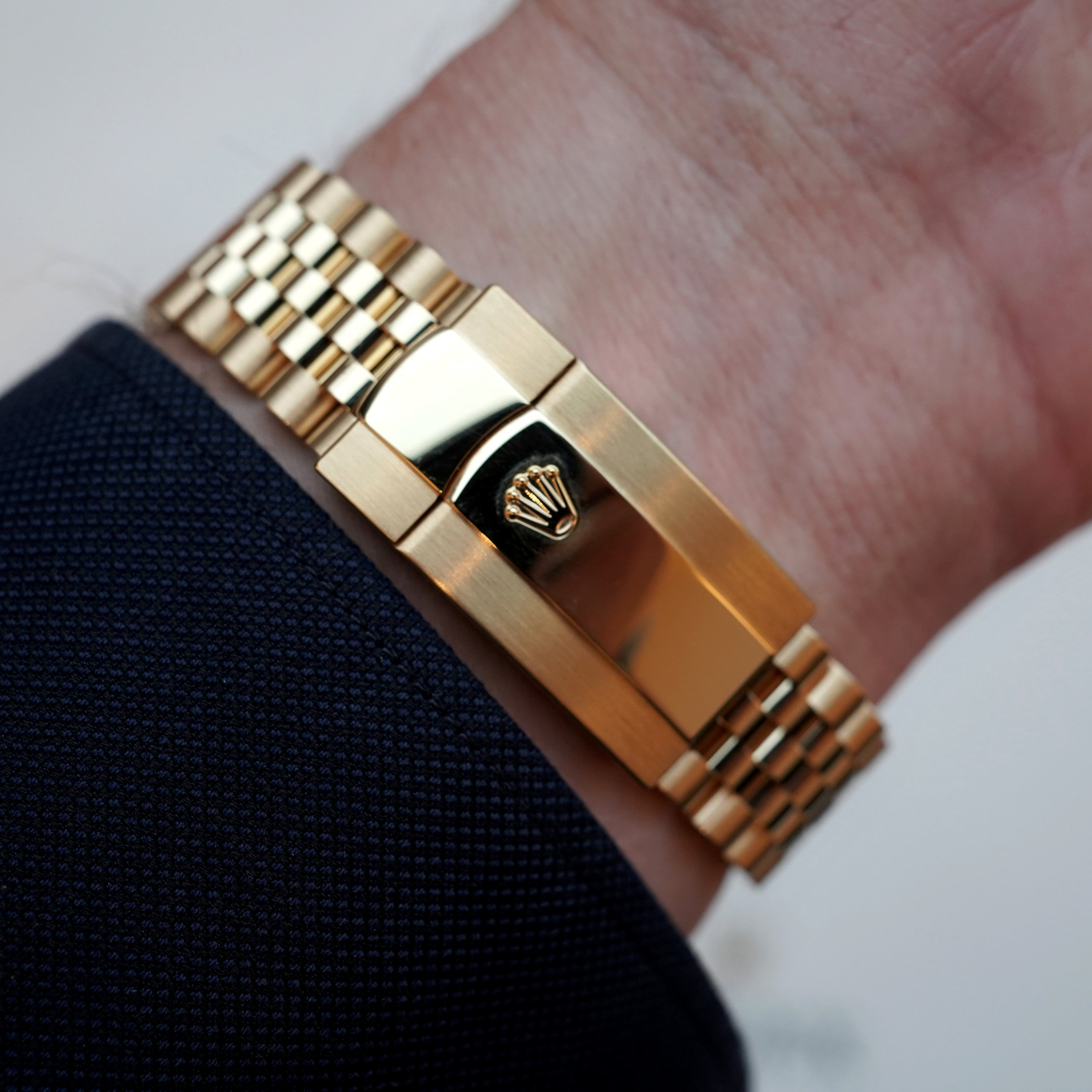
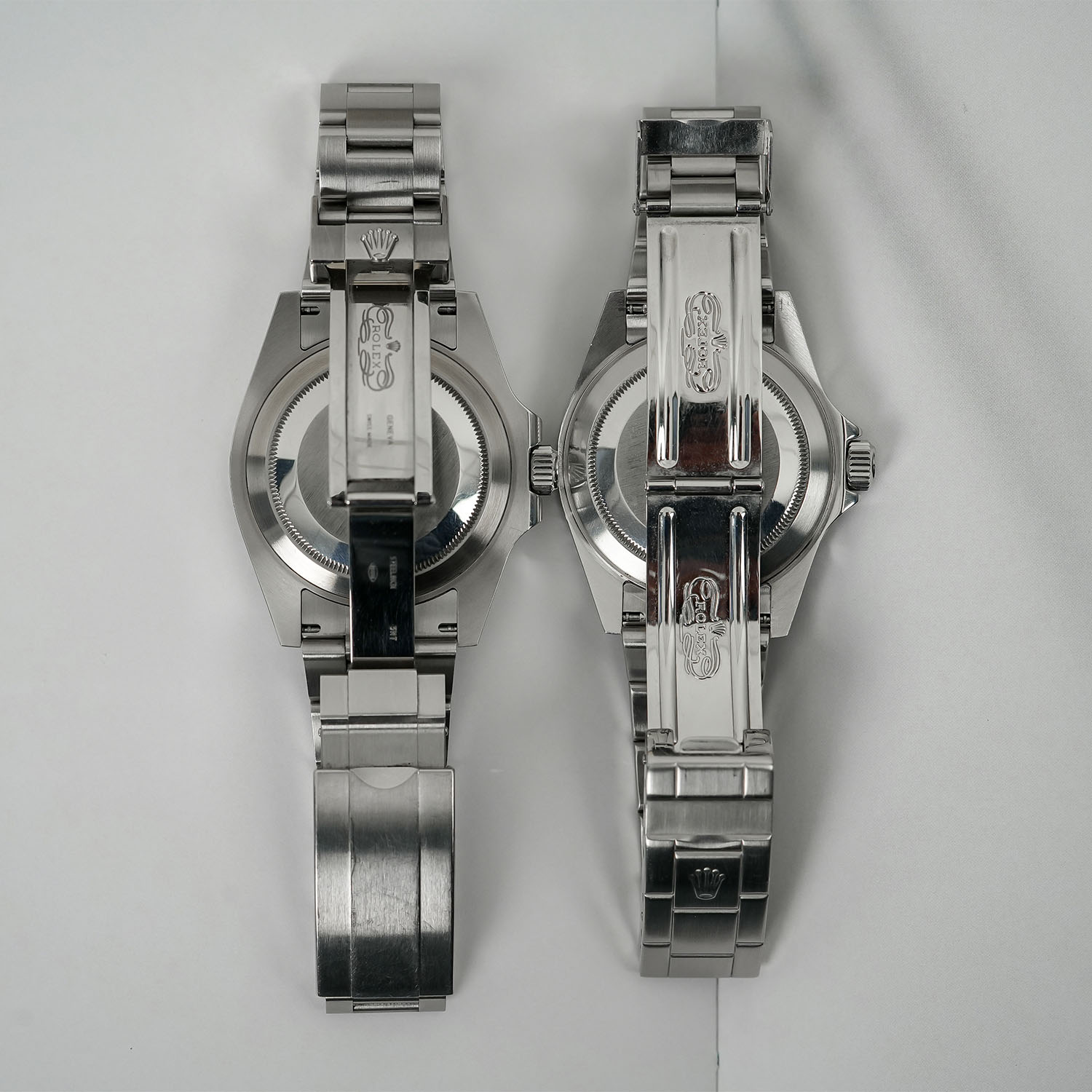
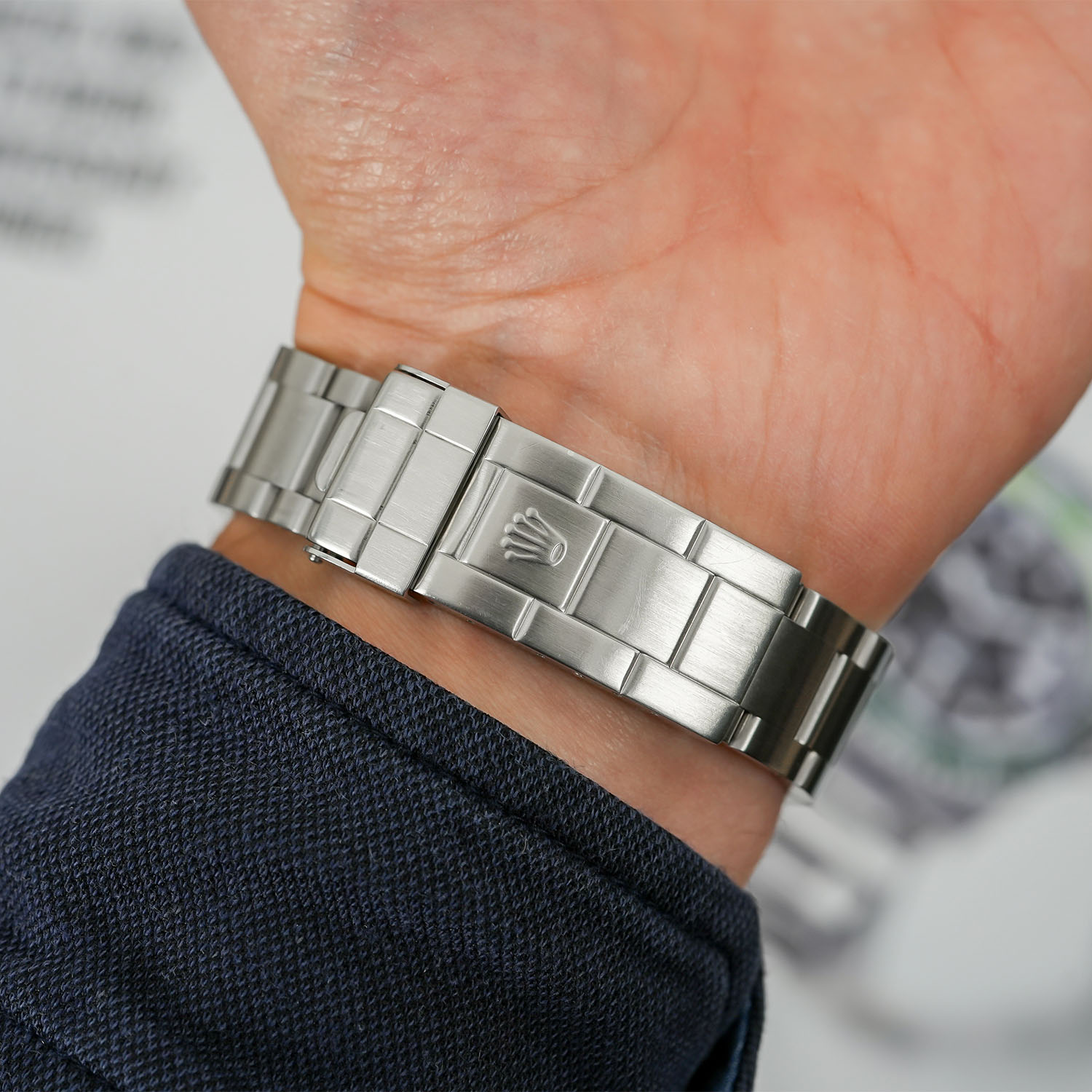
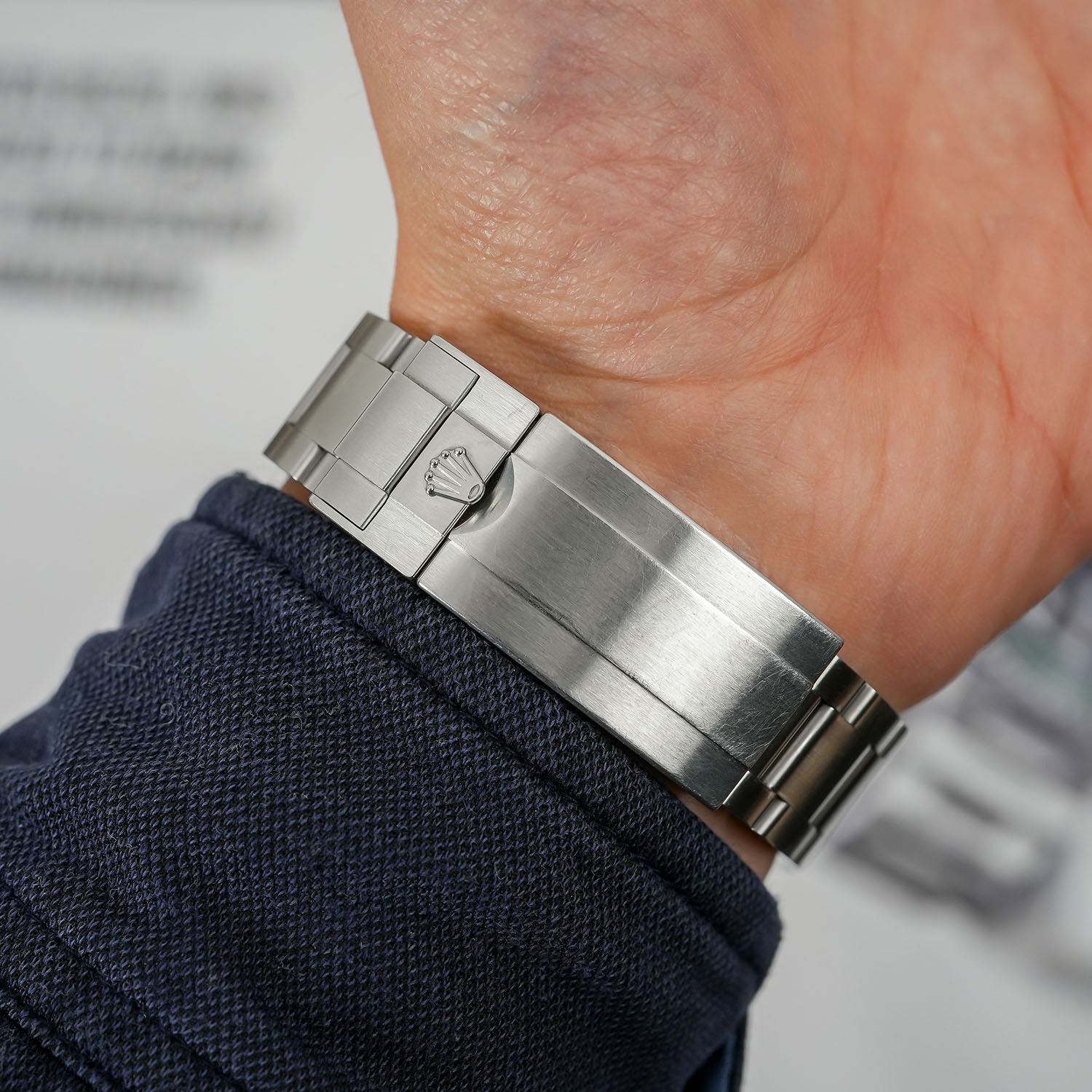
Although there’s a wide variety of inexpensive third-party bracelets on the market, proprietary counterparts for the mid-range segment and above aren’t simply mass-produced. They’re usually custom-designed for specific models and require extremely tight tolerances and extensive hand finishing. Bracelets also comprise many small parts that need to fit together perfectly to prevent stiffness or sagging, noise, hair pulling and so on. Performance is second only to the movement itself. For perspective, a modern Rolex Oyster bracelet has approximately 190 individual parts (and remember that the Oyster is a fairly simple bracelet), and a majority need to be finished to match the case and corresponding links, while the links themselves are specifically shaped to conform to the wrist, taper down to the clasp and sit flush with the case. And talking about clasps, they’re often engineering marvels themselves. Butterfly clasps that seamlessly bring the bracelet together, tool-free micro-adjusting clasps, multi-point locking clasps for dive watches and so on (although that’s for another story).
the Bonklip Bracelet
A very notable early design was the Bonklip bracelet, favoured by Rolex and the British RAF. The design was nicknamed the “Ladder” or “Bamboo” bracelet for its lightweight and thin metal tube links connected by metal loops. One end was attached to the lugs while the clasp end slipped through the second lug (either fixed or a spring bar) and then hooked onto any of the tube links. This made it completely adjustable without having to remove links, similar in concept to a Velcro strap today. Starting in the 1930s, Rolex offered it as a popular second option after a leather strap before moving to the Jubilee and Oyster bracelets in the mid-1940s.
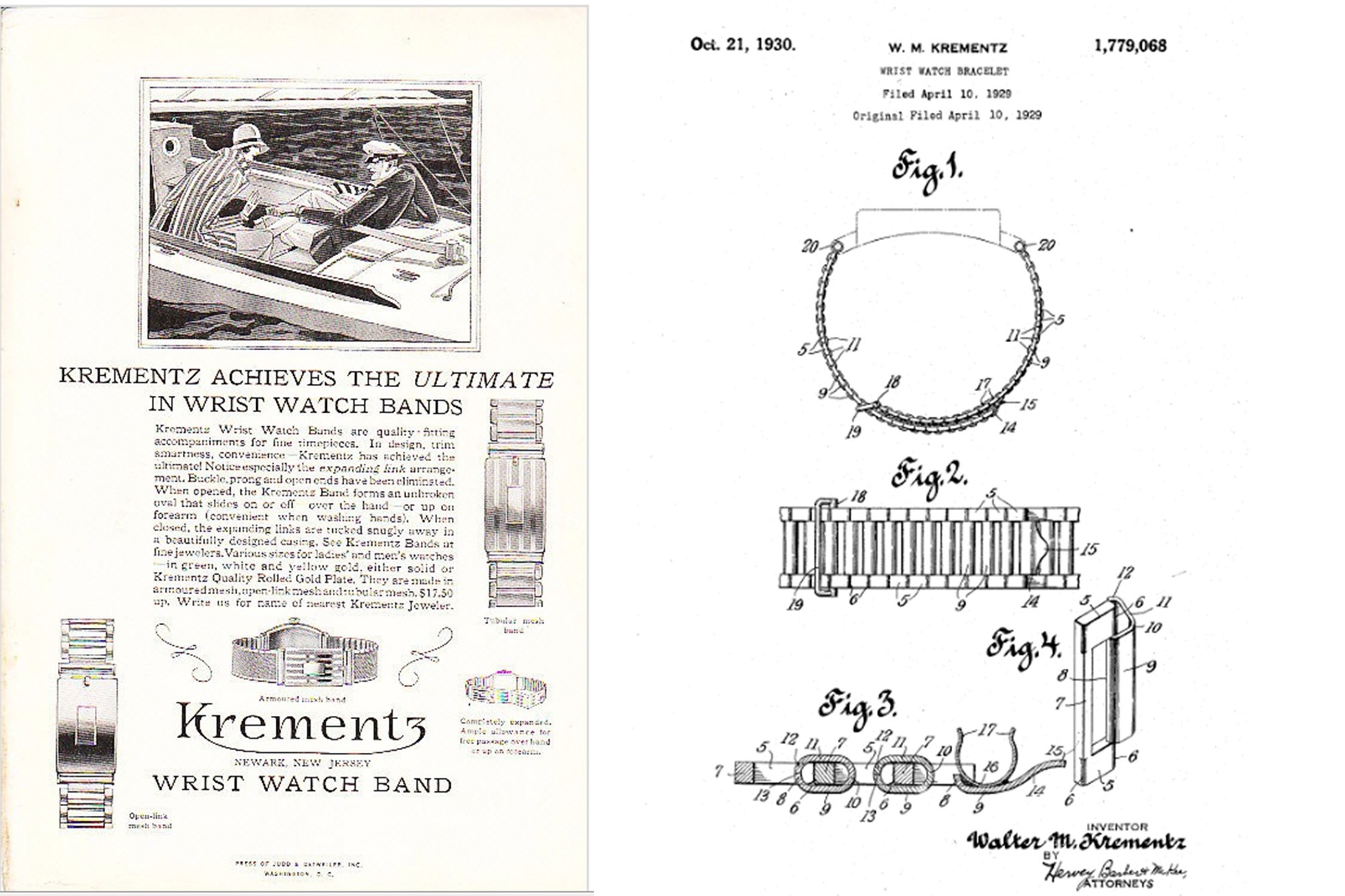
The Bonklip design was patented in England in the late 1920s by B.H. Britton and Sons (through Dudley Russel Howitt, a British lighter manufacturer), who mass-produced them for decades and popularised the Bonklip name. Similar designs like the Krementz were patented around the same time, so it’s a bit unclear who was first, but the Krementz was too expensive and ultimately a market failure. Although big in the civilian market thanks to B.H. Britton and Sons and Gay Frères (see below), it became a pilot favourite during World War II, particularly among Royal Air Force (RAF) pilots, as the bracelets were durable, effortlessly sized and corrosion-resistant stainless steel. It remained officially issued after the war by the British Ministry of Defence, and reference numbers were assigned, such as ref. 6B/2763 (17.5mm) and 6B/3033 (20mm). Post-war navigator watches for the RAF from IWC and Jaeger-LeCoultre were fitted with reference-numbered Bonklip bracelets.
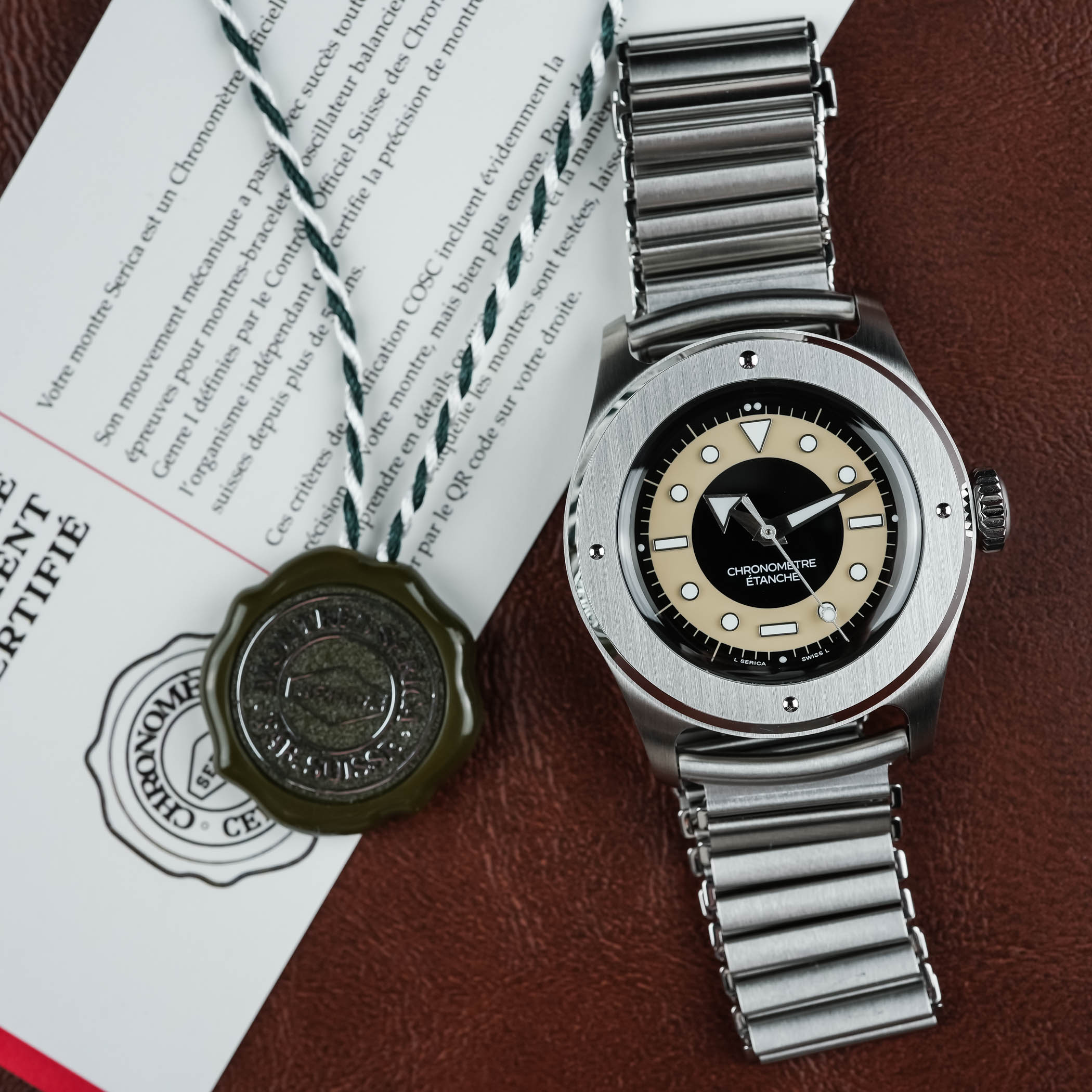
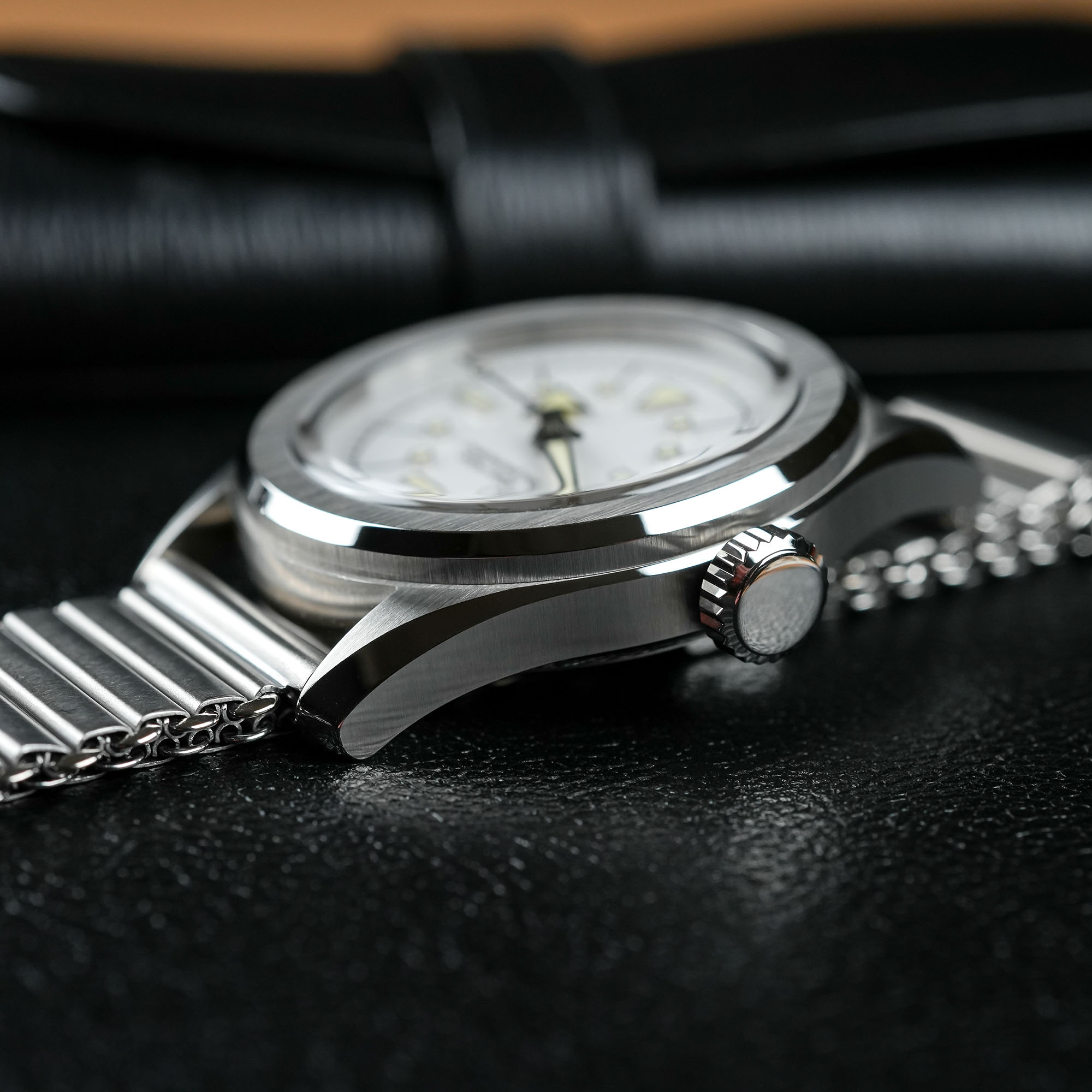
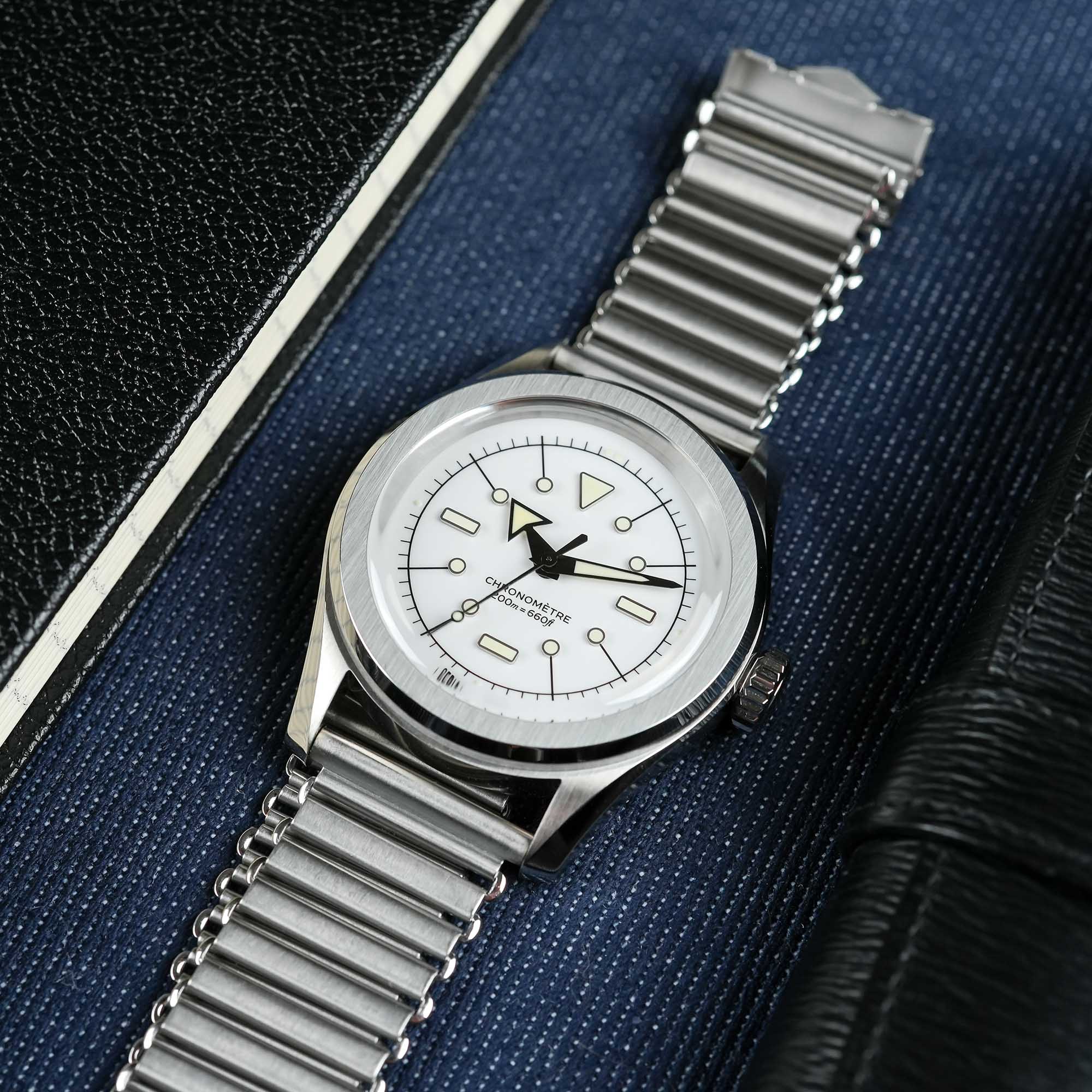
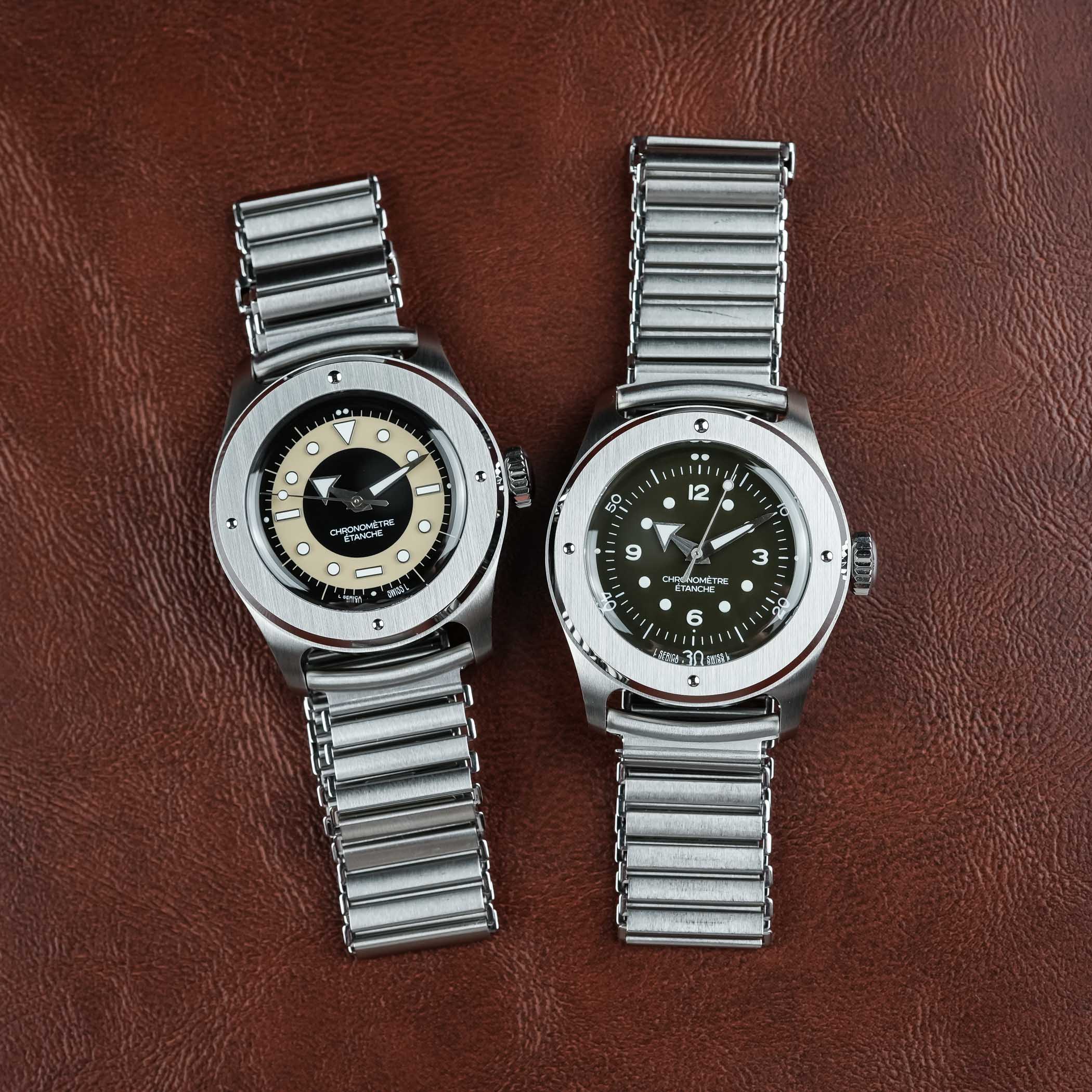
Today, French brand Serica is best known for its proprietary Bonklip bracelets in its field- and military-inspired collections, while aftermarket bracelets are made by companies such as Forstner (the Forstner Klip) and Joseph Bonnie. Although the Bonklip wasn’t the first metal wristwatch bracelet to hit the market, it was the first to be affordable, durable and mass-produced for both civilian and military use.
Gay Frères
Most of us know Gérald Genta and Hans Wilsdorf, but fewer are familiar with Gay Frères. This isn’t a person, but a company, and very much the godfather of 20th-century metal bracelets, particularly for the higher-end market. Although now owned by Rolex, the company goes back to 1835, when it was founded in Geneva by Jean-Pierre Gay and Gaspard Tissot (no relation to Tissot watches). It fittingly started as a master chain-maker (or chaîniste in French) specialising in lanyards for pocket watches – it was also a jeweller. Precious metals were used until stainless steel hit the scene in 1913, and production began shifting to wristwatch bracelets at the start of the 20th century. During World War I, the company patented an early expanding metal bracelet in 1916 for trench watches (wristlets), known as the “Army” bracelet. It had sliding metal link sections and internal springs, and proved to be a durable alternative to straps, easily adapting to any wrist size or over uniform sleeves.
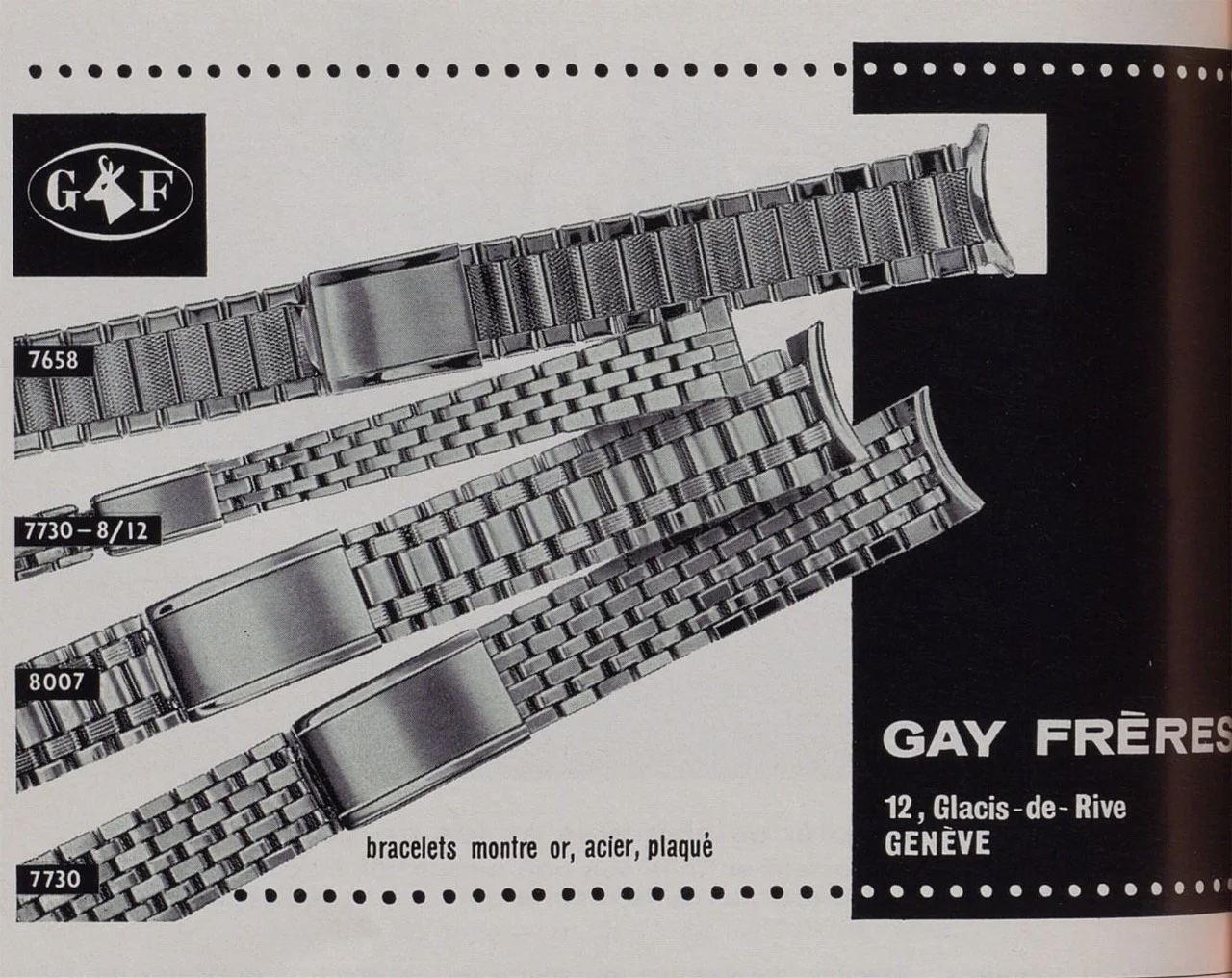
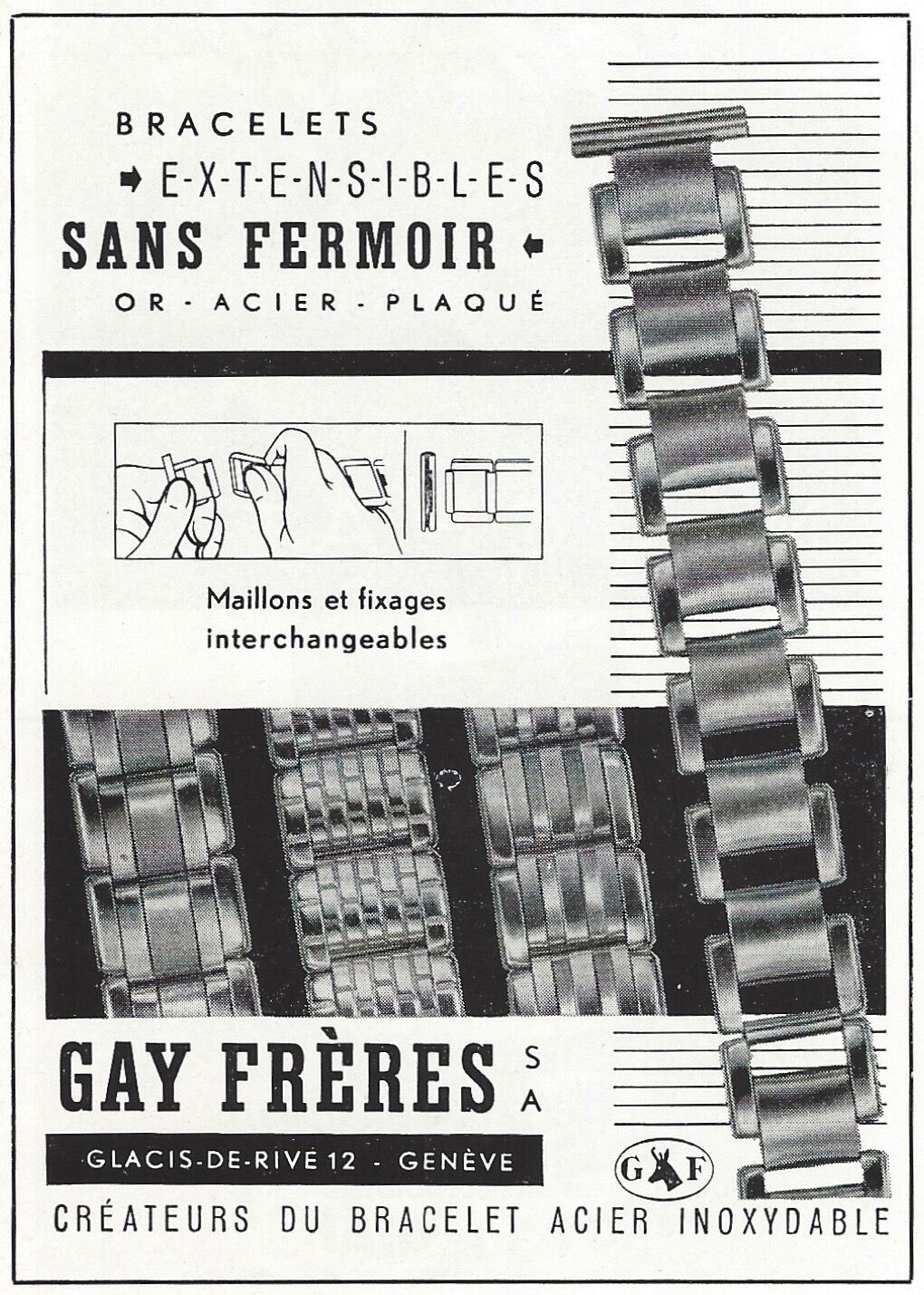
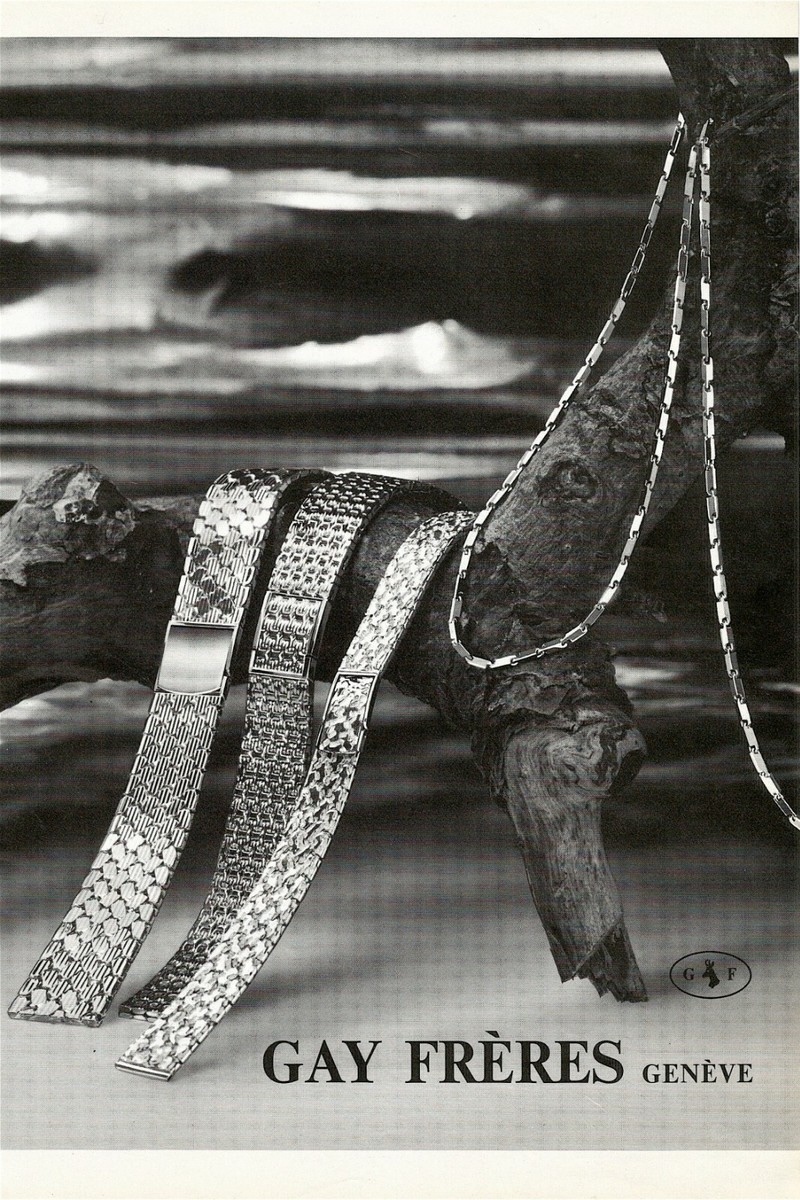
After the war, Gay Frères focused on luxury wristwatch bracelets as a designer and supplier. Rolex became an early customer of its Bonklip bracelets, and Gay Frères went on to design the iconic riveted Oyster bracelet with a patent granted to Rolex in 1947 (patent 257,185) for release in 1948. The end links (at the lugs) were straight until 1952, when they then curved around the Oyster case for a more modern, flush aesthetic. The first Rolex to come standard with a flush-mounted Oyster bracelet was the GMT Master, ref. 6542. In the 1950s, multiple companies produced Oyster bracelets for Rolex depending on the region, like US-based C&I, but Gay Frères remained the preferred supplier with the best overall quality.
Beads-of-Rice
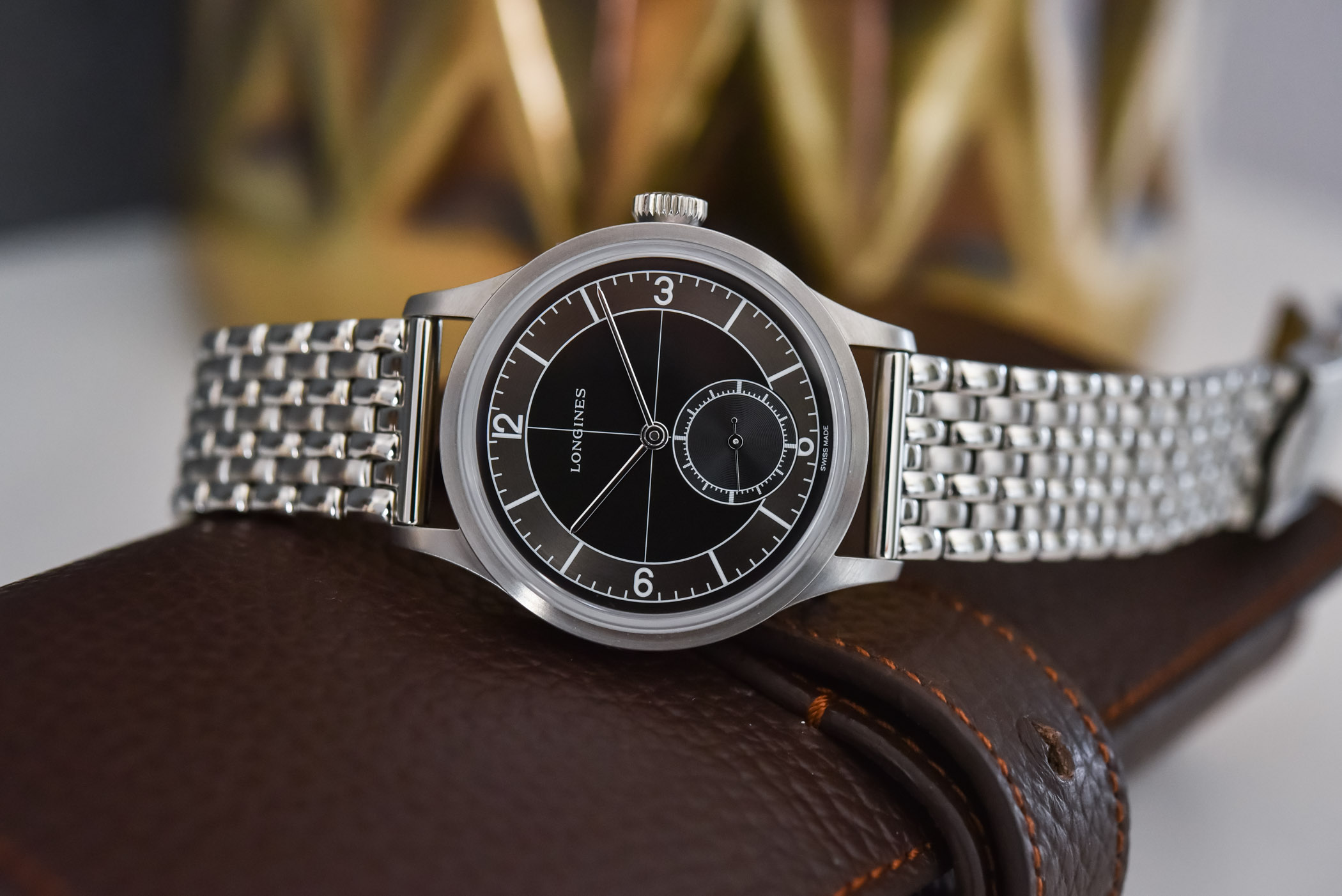
One of the most famous Gay Frères designs is the beads-of-rice bracelet, introduced in the early 1940s and quickly adopted by heavyweights like Patek Philippe and Vacheron Constantin for both dress watches and chronographs. The bracelet was made up of rows of rice-like articulated links that better wrapped around the wrist due to the smaller and more numerous links involved – more like heavy chainmail than a typical metal bracelet (although the design structures were different). Heuer’s chronographs in the 1960s, along with Carreras and Autavias, prompted Gay Frères to modify the beads-of-rice aesthetic with larger Oyster-style edge links, somewhat approaching the Jubilee design. The iconic ladder bracelet for Zenith’s El Primero, and integrated steel bracelets for Audemars Piguet’s Royal Oak and Patek Philippe’s Nautilus were all Gay Frères productions, and the company was actually larger than these watchmakers in the mid-1970s – it was Geneva’s largest factory at the time. Rolex acquired the company in 1998 to integrate it into its in-house production, and projects for all other brands ceased.
Brogioli SA
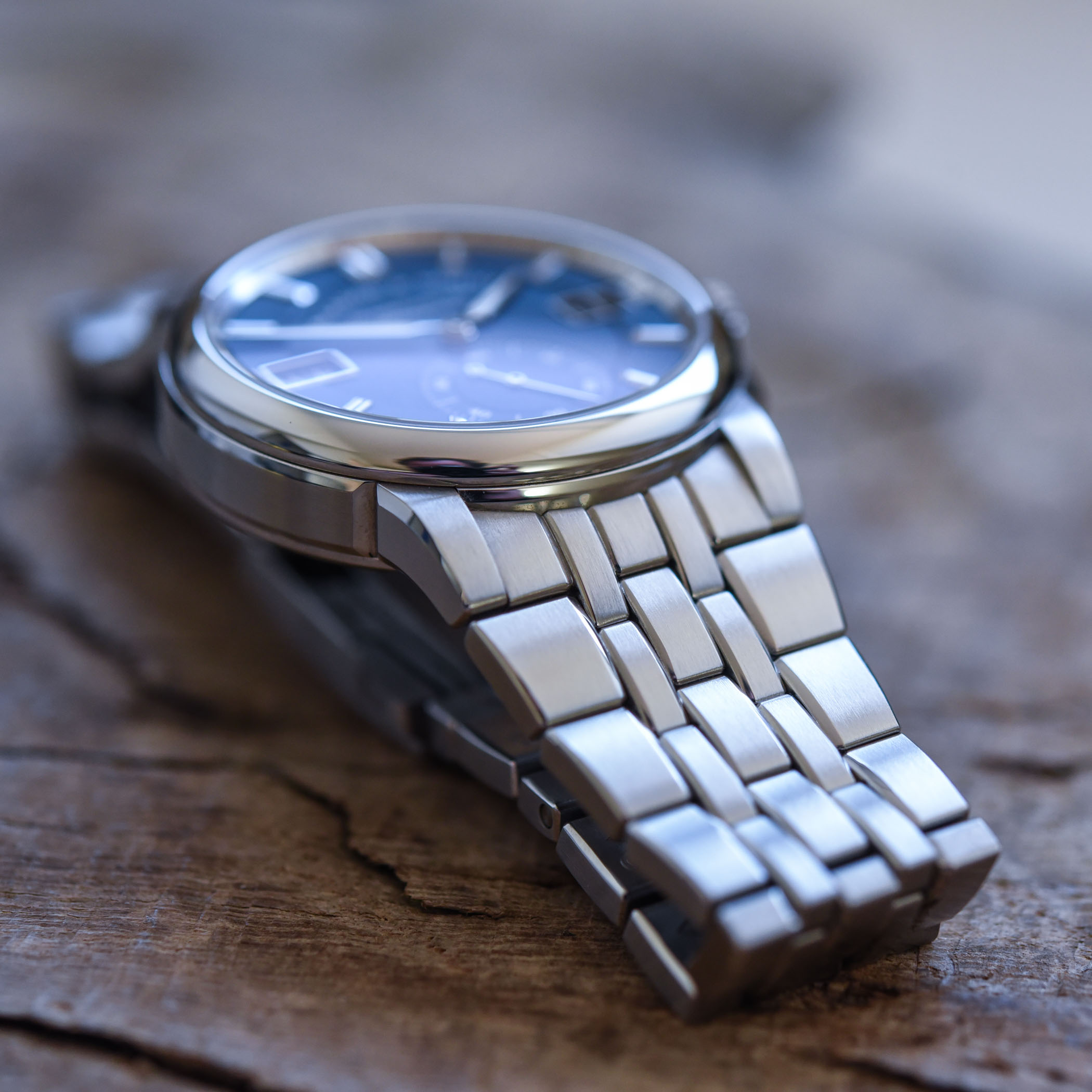
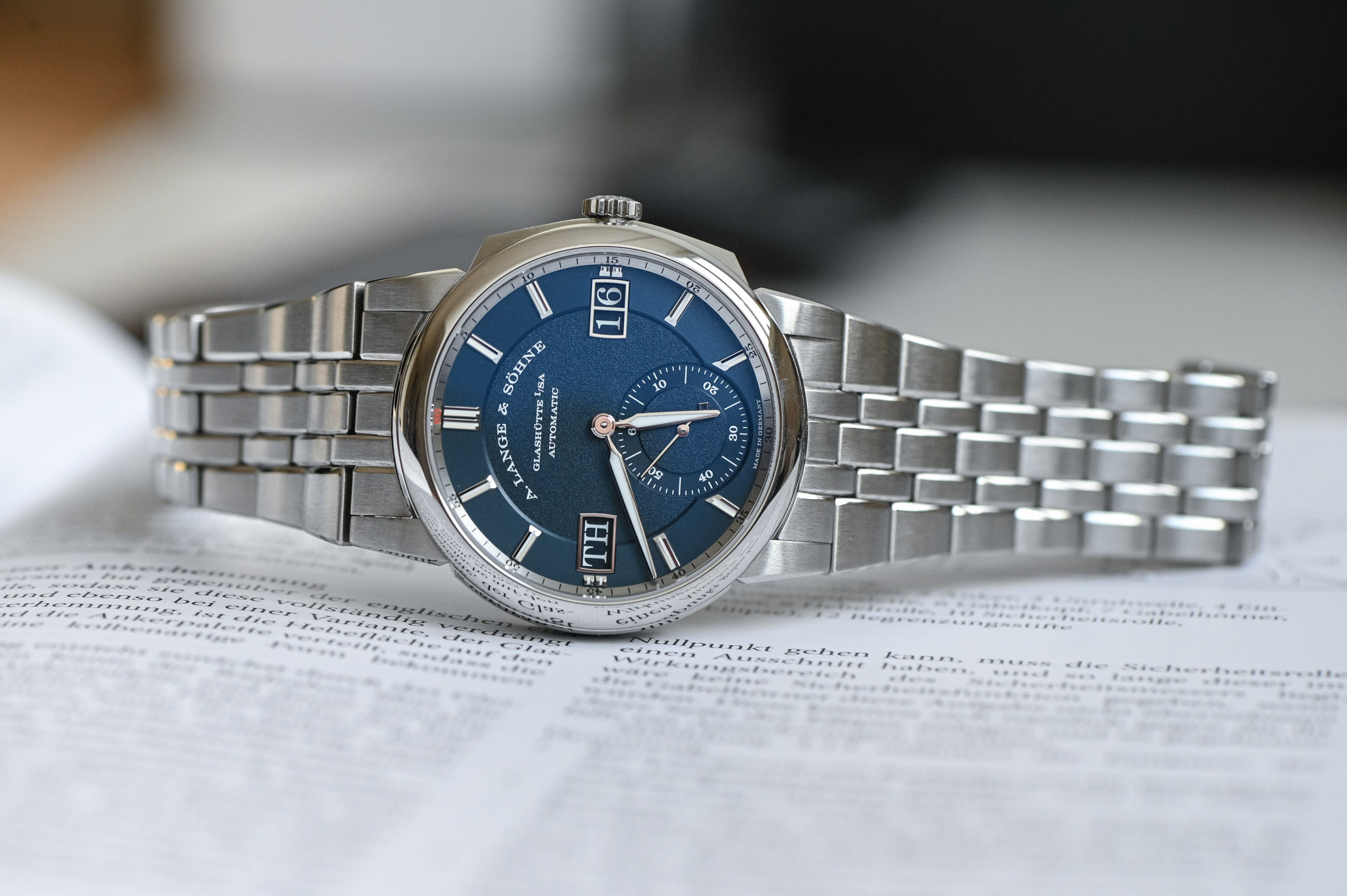
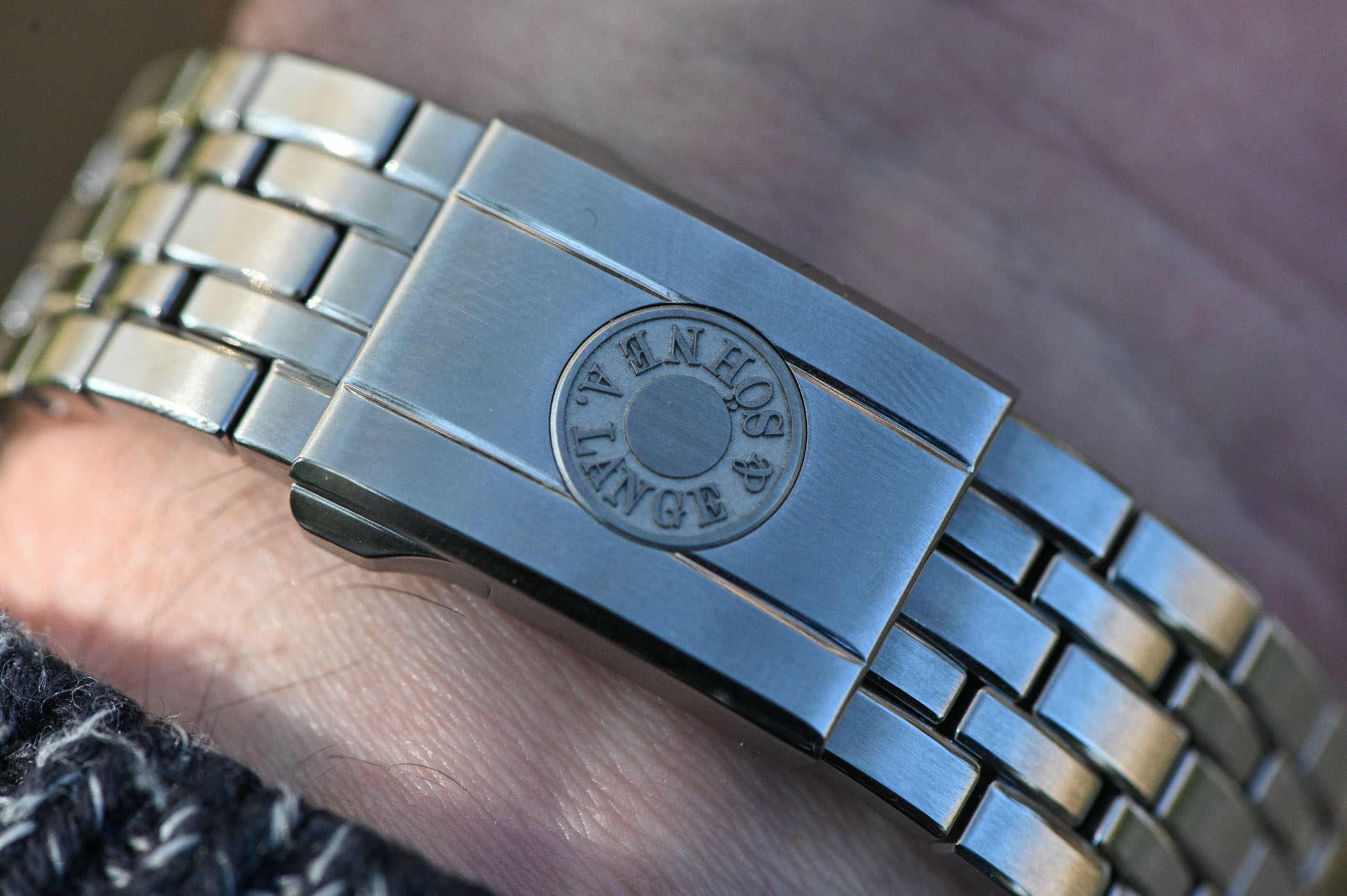
This is a much more recent bracelet manufacturer, founded in 1985 in Monteggio, an Italian-speaking region of Switzerland. It started as a metal and goldsmithing factory that also specialised in precision casting, with an initial focus on the eyewear industry. As operations grew, it shifted focus to watch bracelets due to high demand and relevant capabilities, although jewellery and eyewear components remain part of its portfolio. Like Gay Frères, its clientele consists of high-end European watchmakers such as A. Lange & Söhne (for the Odysseus), IWC, H. Moser & Cie, and Glashütte Original. Traditional finishing is combined with advanced CAD/CAM systems and CNC machining to produce complex bracelets and clasps in precious metals, titanium and stainless steel. The company is also well known for its innovative clasps, such as the ratcheting micro-adjustment clasp for A. Lange & Söhne and the on-the-fly micro-adjustment clasp for Glashütte Original.
The Rolex Trilogy
Rolex arguably has three of the most famous and recognised bracelets today – the Oyster, Jubilee and President. Gay Frères introduced the Oyster in 1947/1948, and Rolex sometimes used regional manufacturers in the US and other countries to avoid import taxes and customs duties. The three-piece bracelet is among the most iconic of the 20th century and originally featured hollow links that were folded and secured with side rivets. The design was updated in the 1970s, but the links remained folded and hollow, which were prone to stretching over time. It wasn’t until the 1990s that a new design brought solid links that were much more durable and noticeably heavier (many preferred the heavier, premium feel), which significantly reduced the stretching issue. Solid end links (at the case) didn’t come until the late 1990s; they were more durable and prevented potential rattling between the bracelet and case. The Oyster wasn’t the first major Rolex bracelet – that debuted a few years earlier as the Jubilee and was the watchmaker’s first in-house bracelet. Rolex returned to Gay Frères for the Oyster, which was exclusive to the brand, with a 1947 patent and a 1948 commercial release.
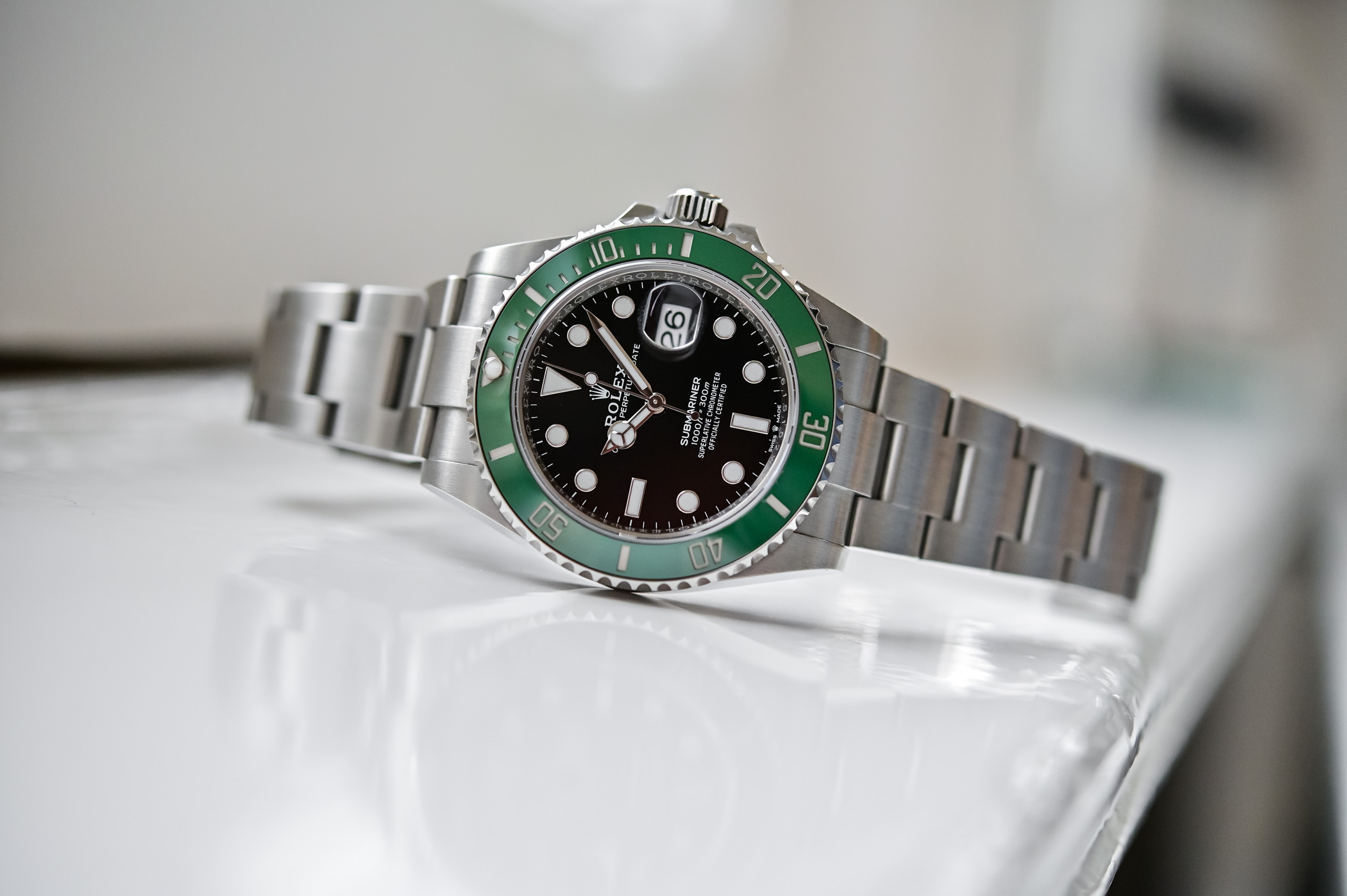
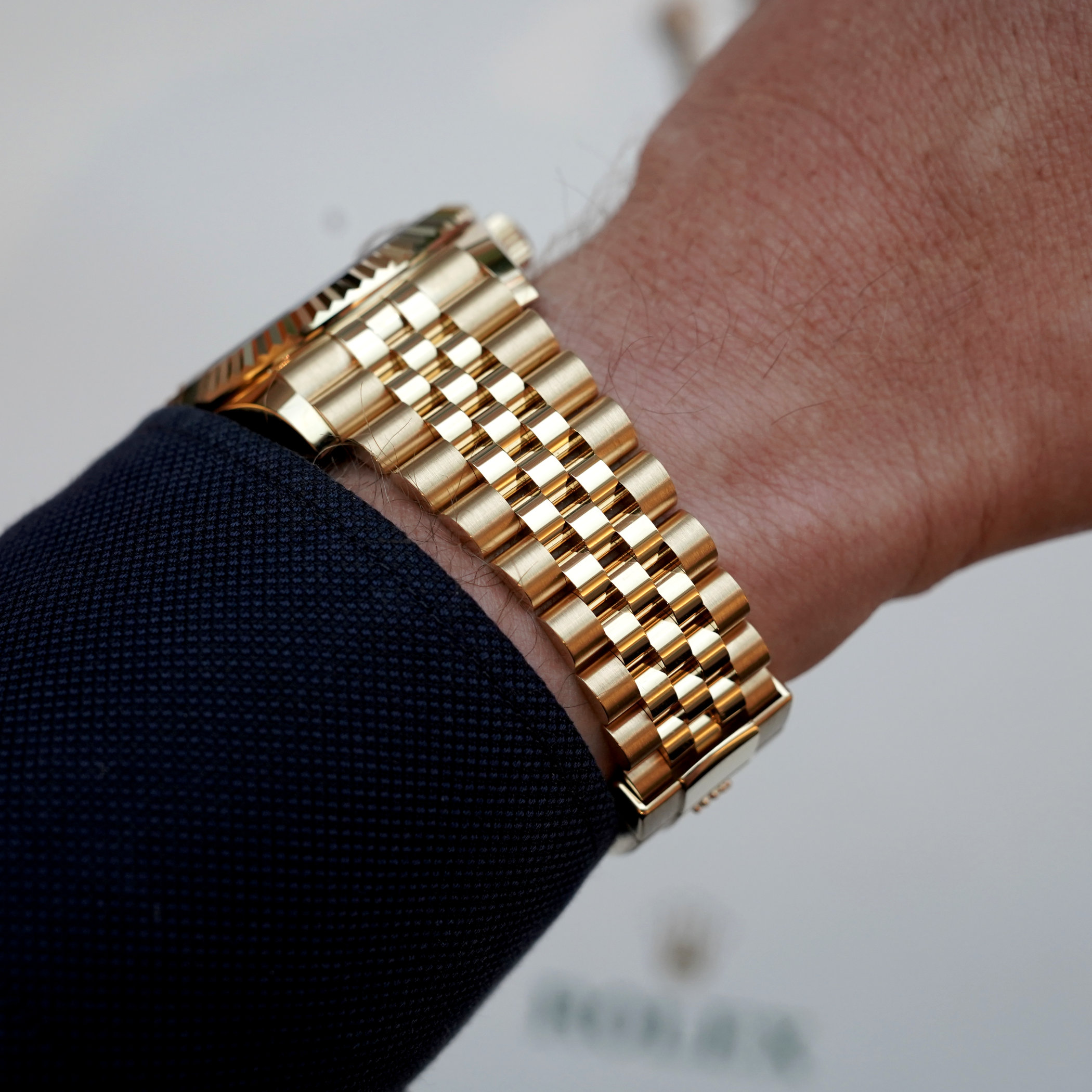
The five-link Jubilee bracelet debuted in 1945 with the launch of the Datejust. As the Jubilee name suggests, it celebrated the watchmaker’s 40th anniversary. The three beads-of-rice-style centre links were polished with larger Oyster-style brushed outer links, and the Jubilee debuted only in 18k gold. It wasn’t until the 1950s that two-tone Rolesor and steel variants were introduced, and it expanded beyond the Datejust to the GMT-Master and very early Day-Date models. Like the Oyster, the Jubilee started with hollow, folded links but switched to solid links around 2003 for greater durability and stretch resistance. Although the aesthetics changed very little (the Oyster changed a bit more than the Jubilee over time), both the Oyster and Jubilee can be identified as vintage or modern based on weight alone, as solid links make a significant difference.
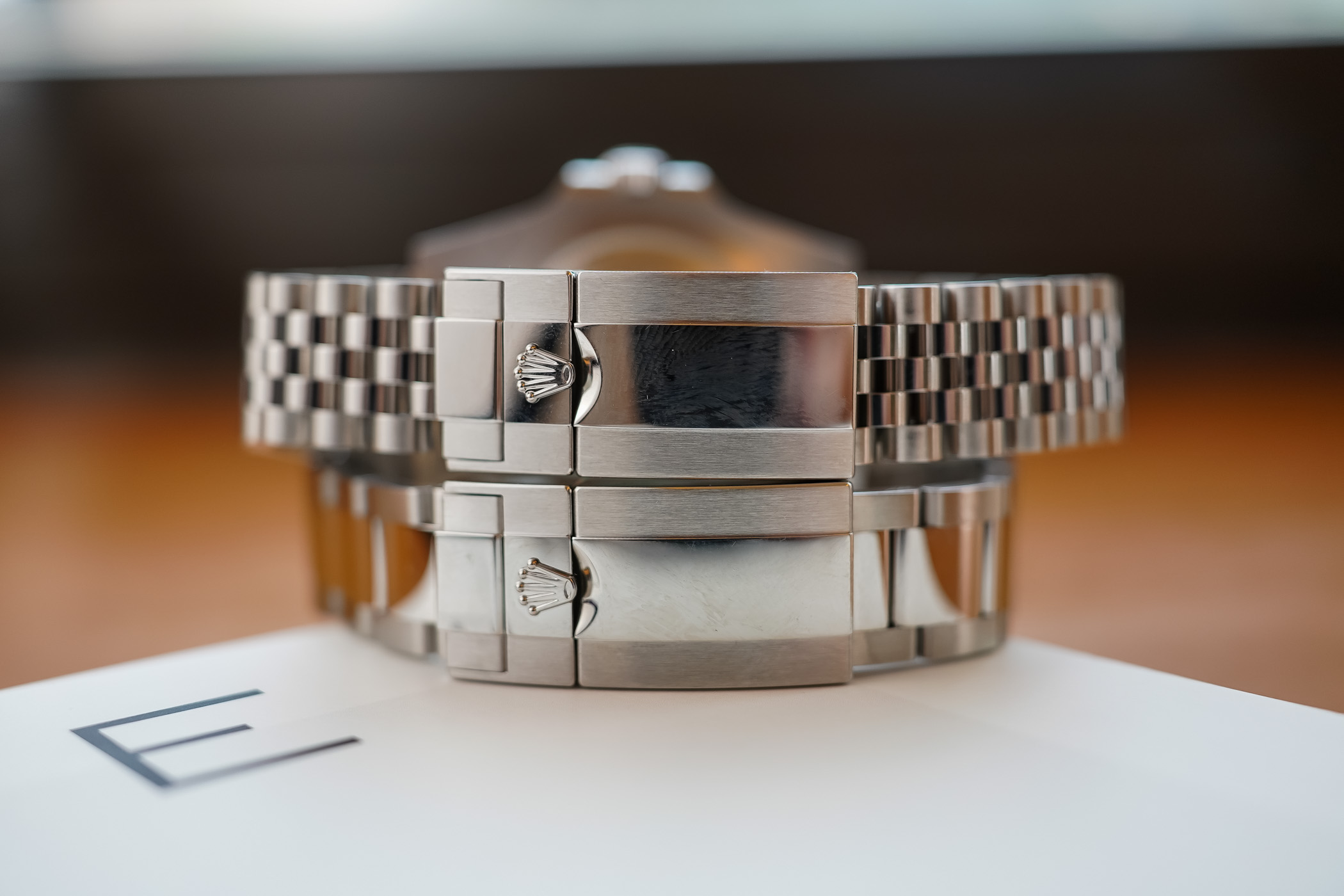
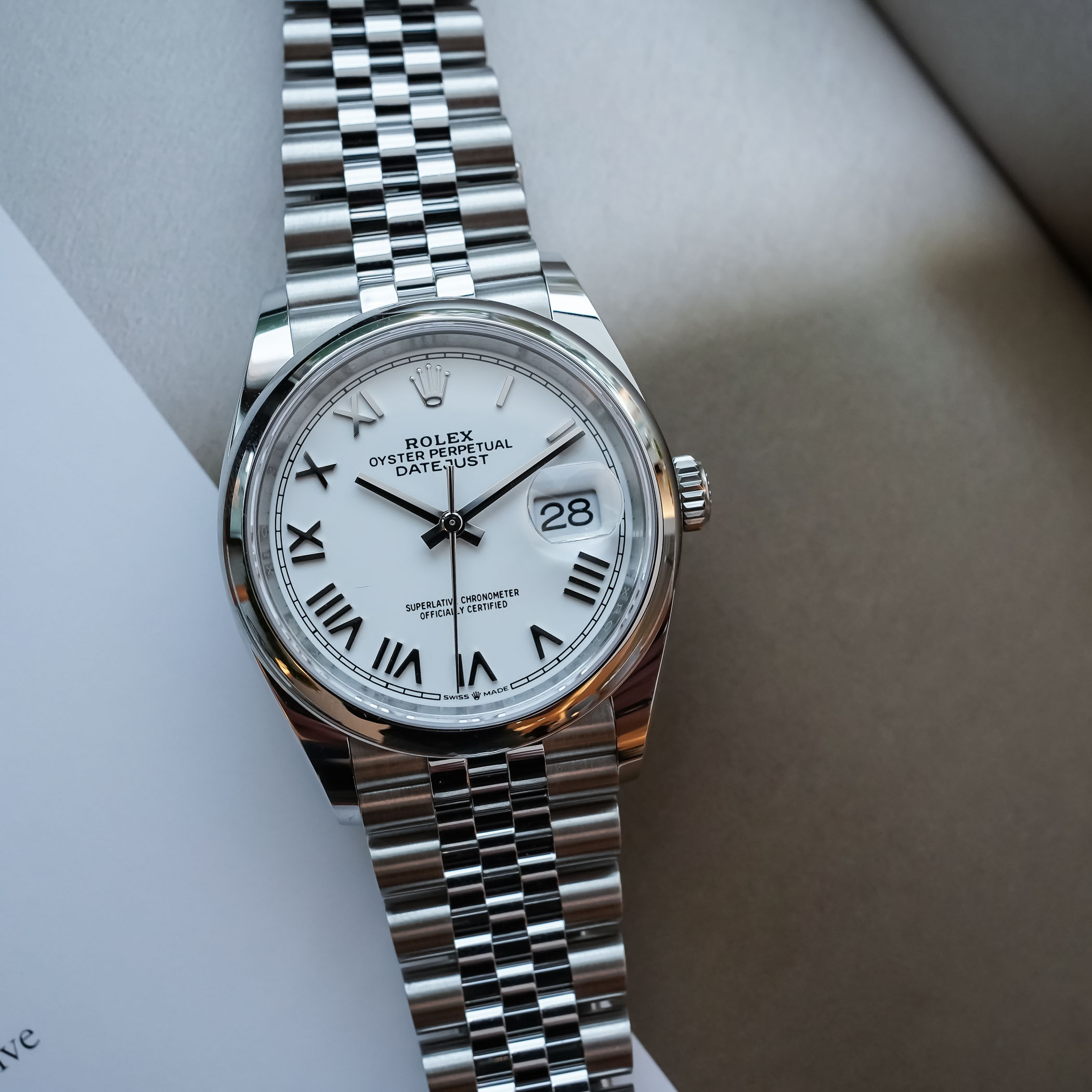
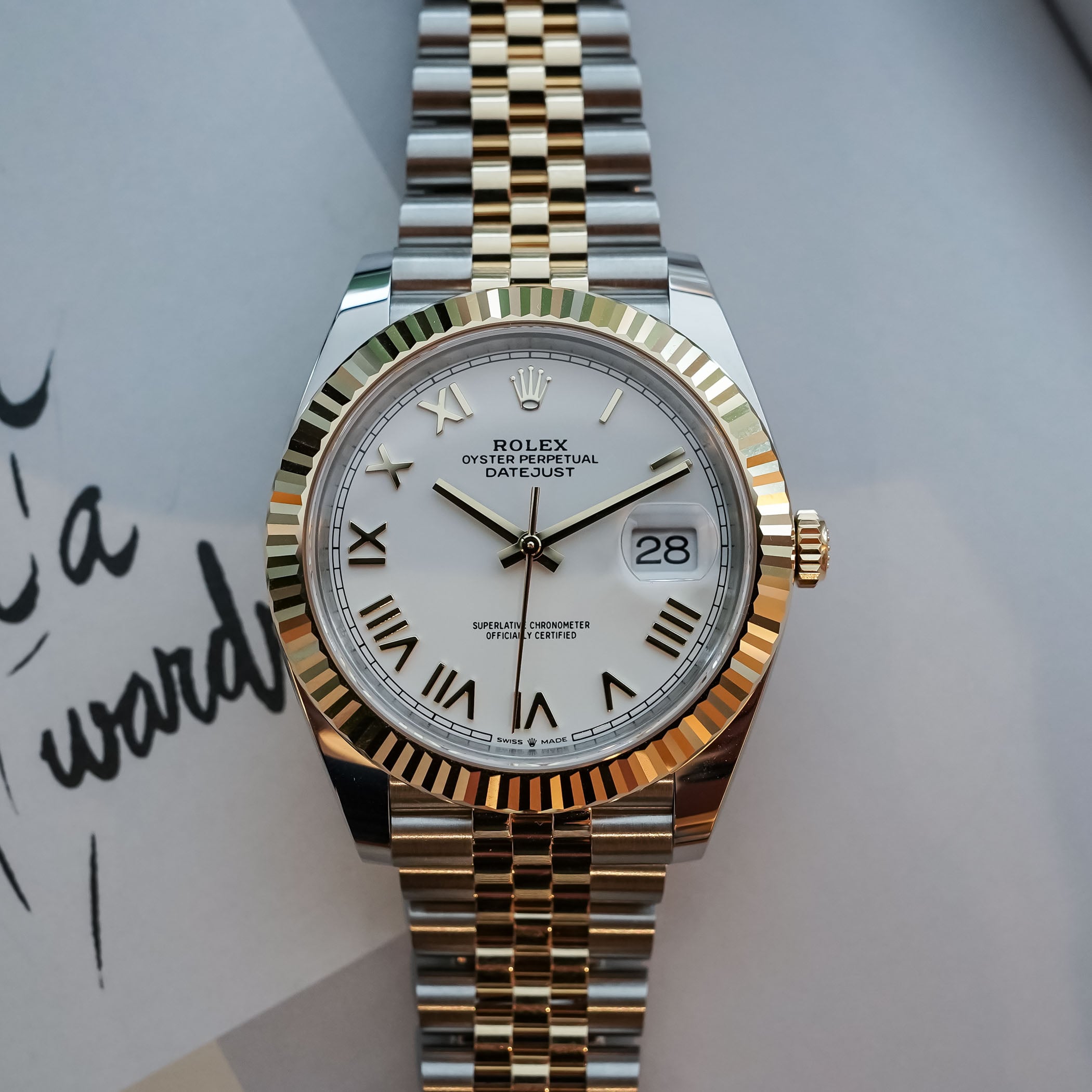
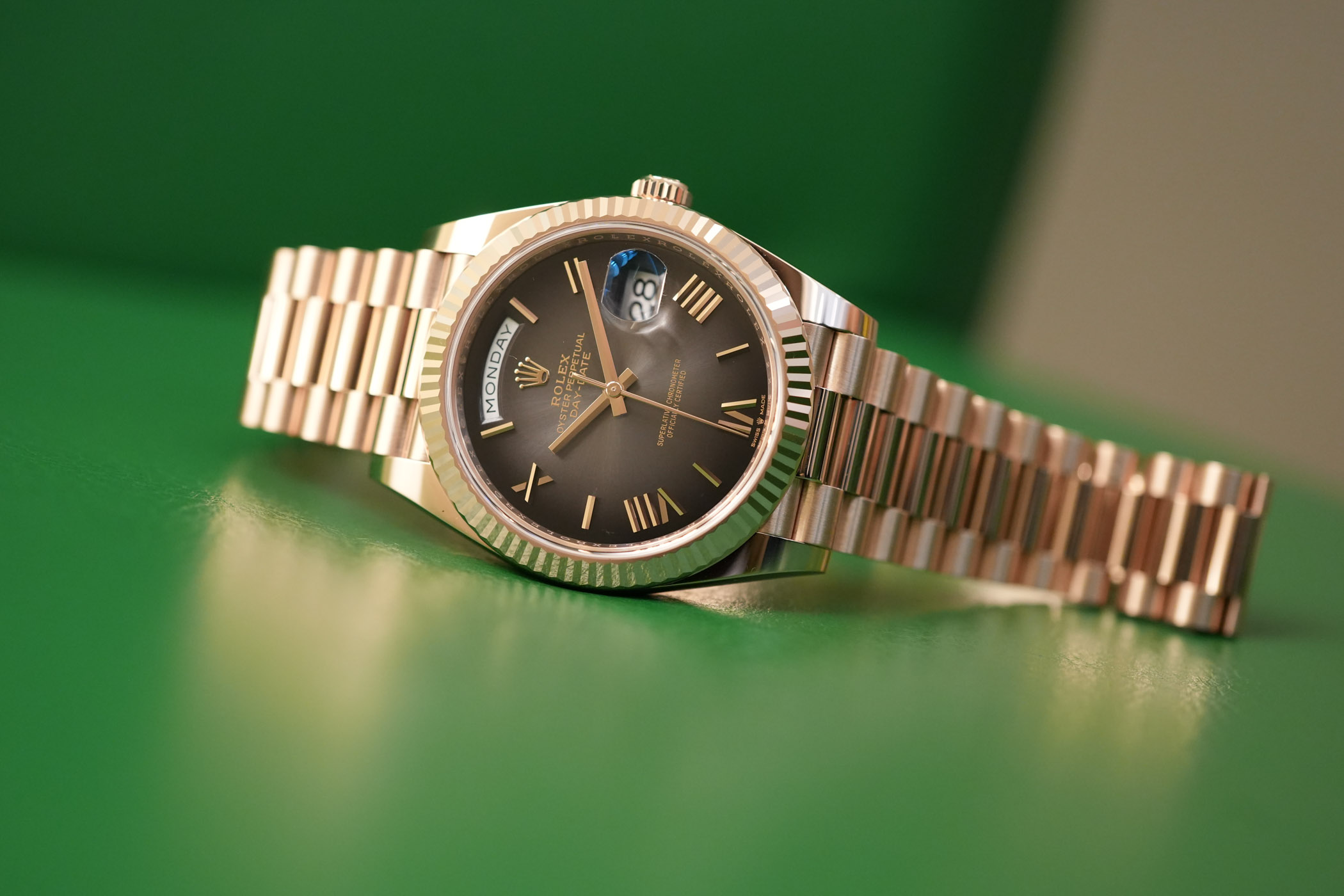
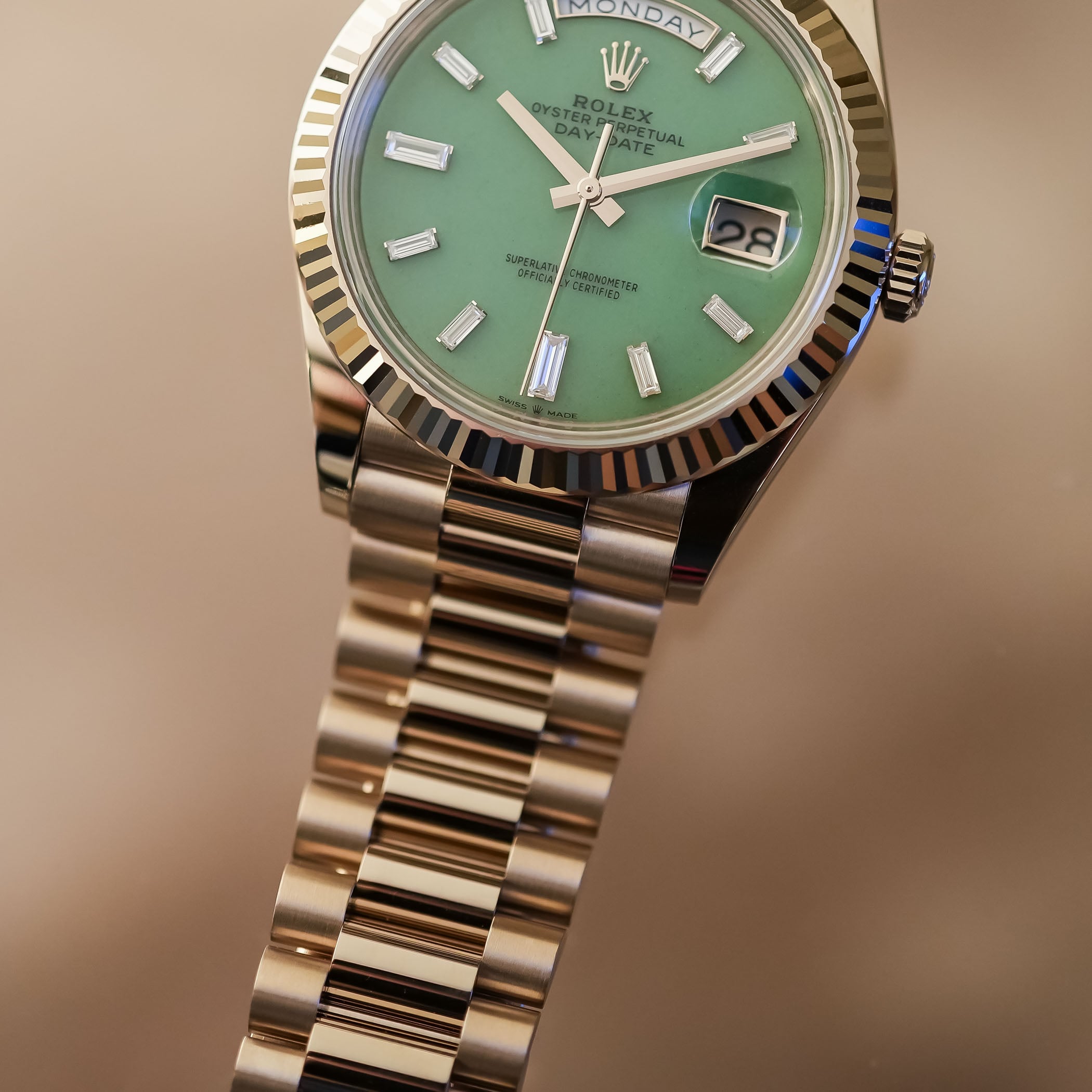
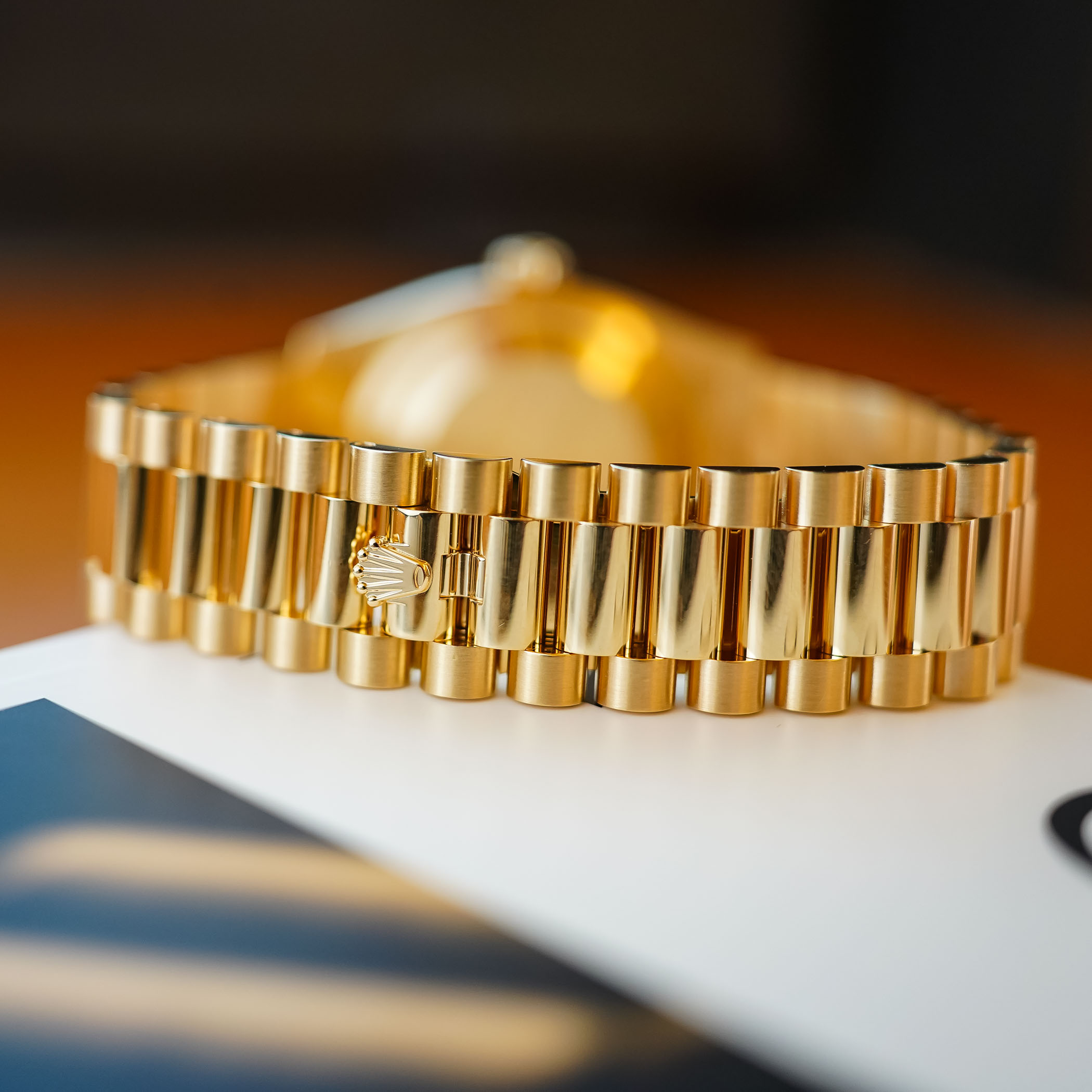
The President bracelet came out a decade after the first two bracelets, designed specifically for the Day-Date in 1956. However, it didn’t technically debut with the model, as very early examples had either a leather or gold Jubilee option. It wasn’t long before the Day-Date was paired with the President bracelet, which was somewhat of a blend of the Jubilee and Oyster with a three-link design and rounded Jubilee-ish links. Basically, it replaced the Jubilee’s beads-of-rice centre links with a wide, semi-circular link. The President bracelet (and Day-Date case) came only in 18k gold or 950 platinum and remains today – although around five stainless steel Day-Date prototypes with steel President bracelets were produced (early ref. 6611 variants) – among the greatest of Rolex unicorns. Some Lady-Datejust models in gold or platinum also use the President bracelet design. Still, it’s most associated with the Day-Date model, which became known as the President or Presidential. The history of this is a bit vague – the bracelet was always the President, but the watch became closely associated with US President Lyndon B. Johnson and others, which likely earned the Day-Date the President nickname. Some argue that the watch is simply nicknamed after the bracelet, although most conclude it’s because of its association with US presidents. Before 2000, the President links were hollow, like the older Oyster and Jubilee counterparts, but they switched to solid links, which created the biggest weight difference of the three, given the link designs and the use of heavy gold or platinum. Although not the heaviest Rolex model (like the platinum Daytona or the gold Deepsea), the platinum Day-Date 40 is up there at 280 grams.
GÉrald Genta’s Integrated Phenomena
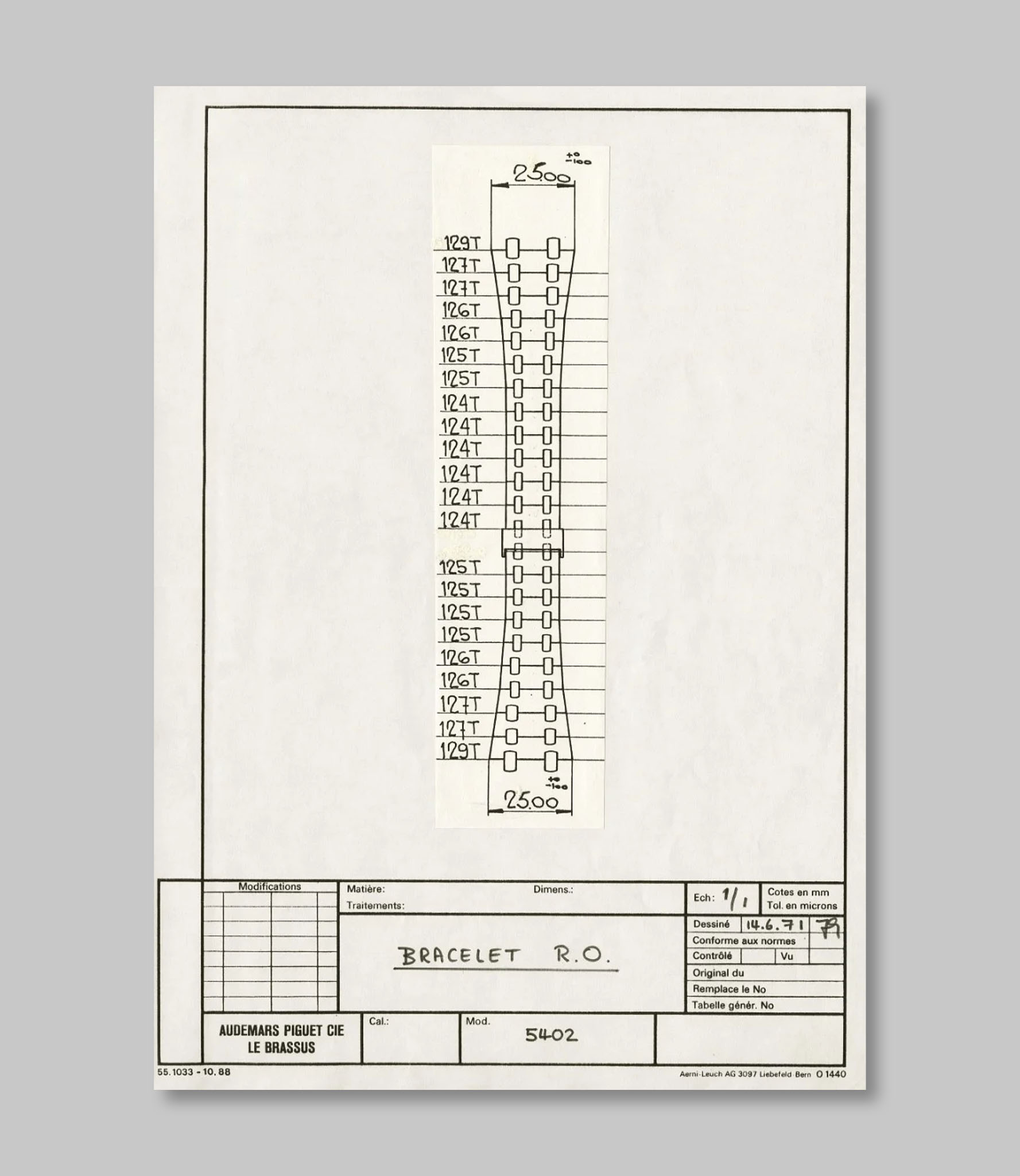
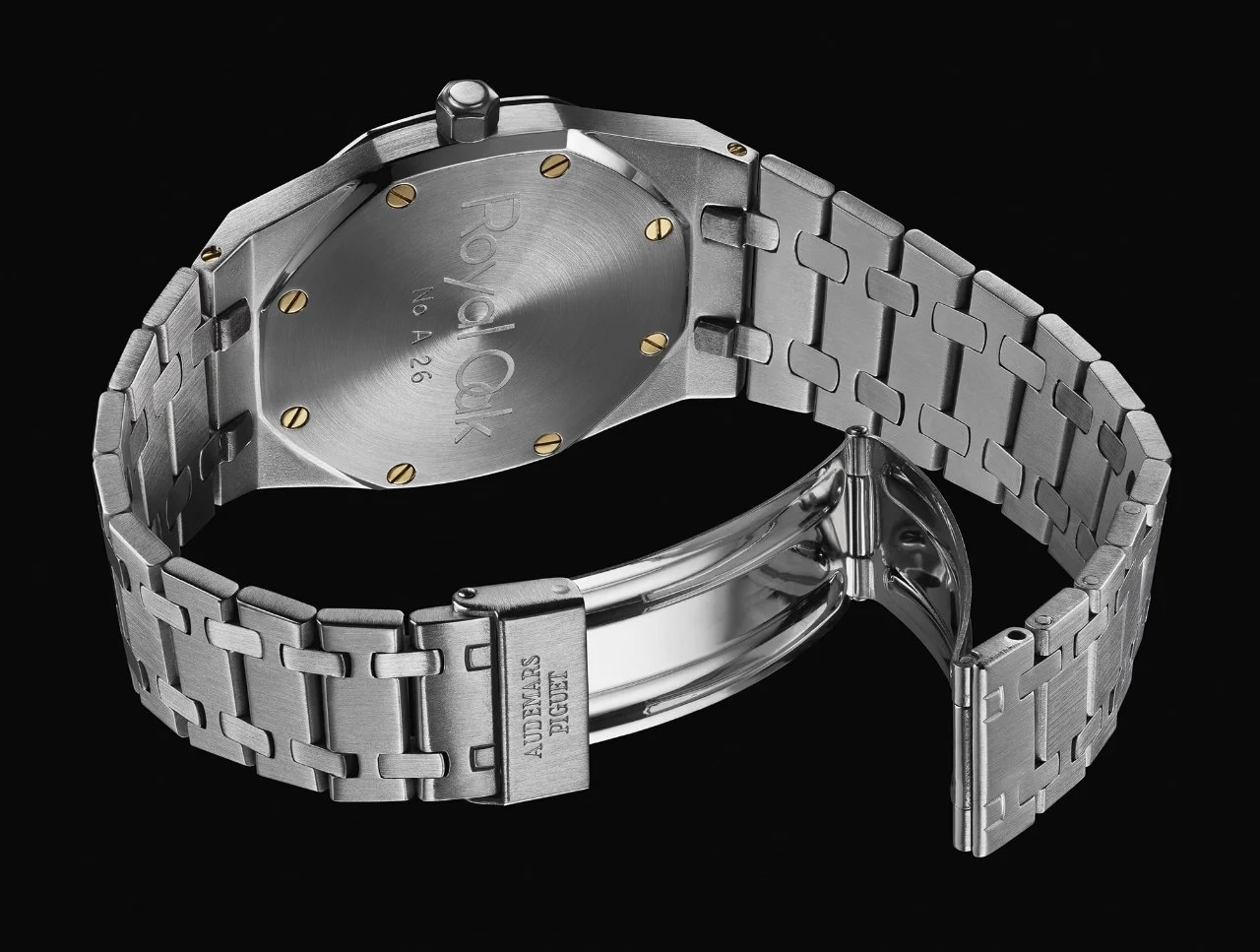
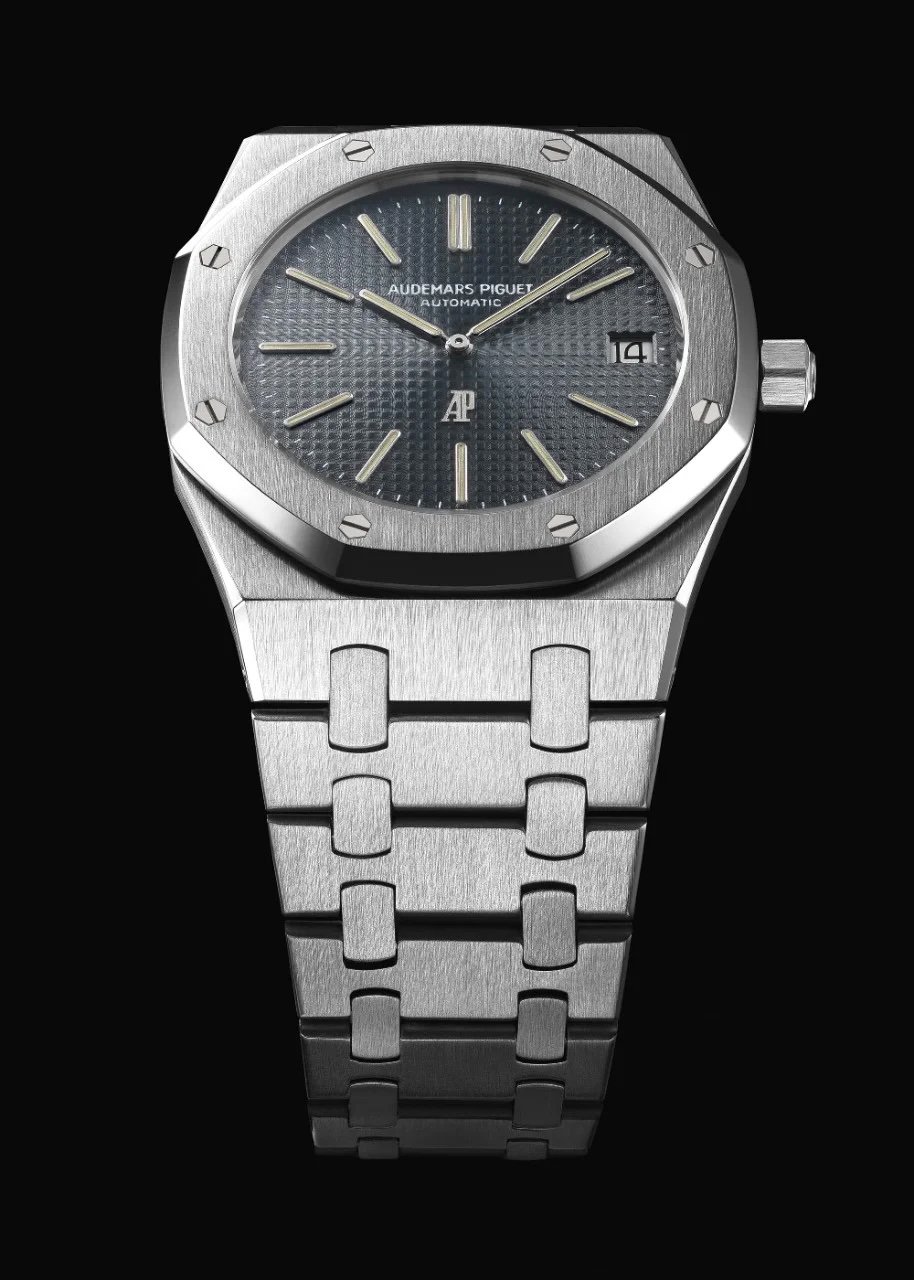
Integrated bracelets are very popular for sports watches today, from the affordable Tissot PRX collection to the premium Piaget Polo, but it all started with Gérald Genta in 1972. Commissioned by Holy Trinity member Audemars Piguet, Genta designed the first integrated luxury sports watch and did it in stainless steel (a very defiant move by AP and Genta at the time). The Royal Oak Jumbo (ref. 5402) debuted as the most expensive steel watch in the world, costing more than Patek Philippe’s gold models and about 10 times the price of a steel Rolex Submariner. Notwithstanding the madness, the design itself was groundbreaking. Unlike traditional lugs, the bracelet (ref. 344) was seamlessly integrated into the case, effectively serving as the first link. It had over 150 individual parts, many of which were painstakingly hand-finished for 30 hours. It tapered from the case to the clasp with trapezoidal links connected by twin vertical counterparts for a distinctive aesthetic. Although designed by Genta, it was Gay Frères that brought it to fruition with production and hand-finishing. It was the second most expensive part of the watch, with only the Jaeger-LeCoultre-based ultra-thin calibre 2121 costing more. And this was again a steel bracelet, not gold or platinum.
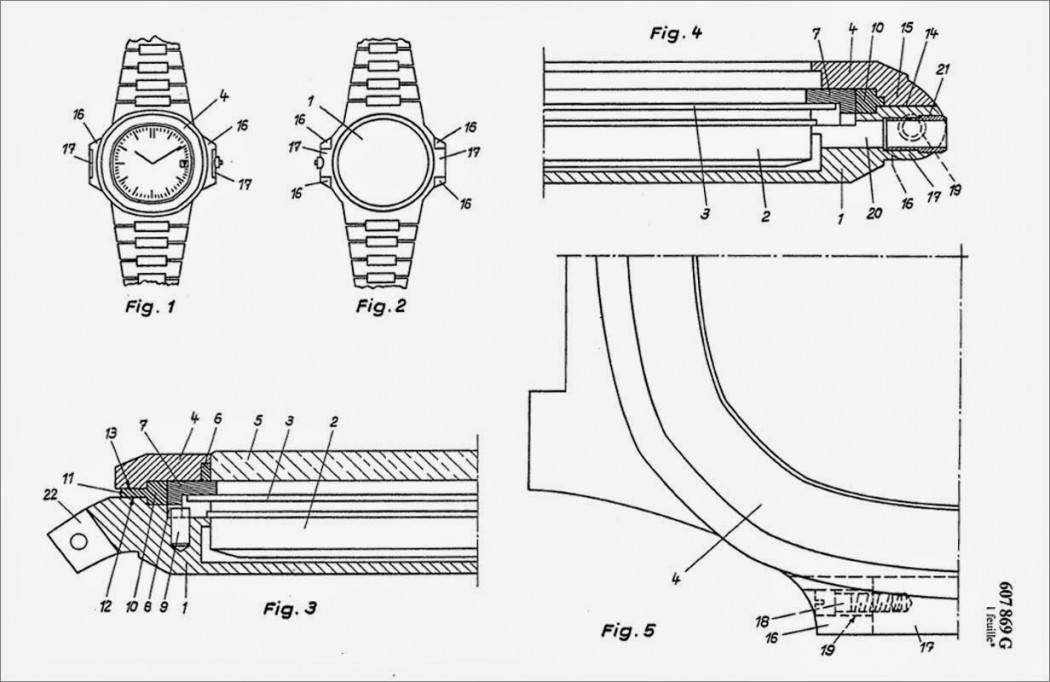
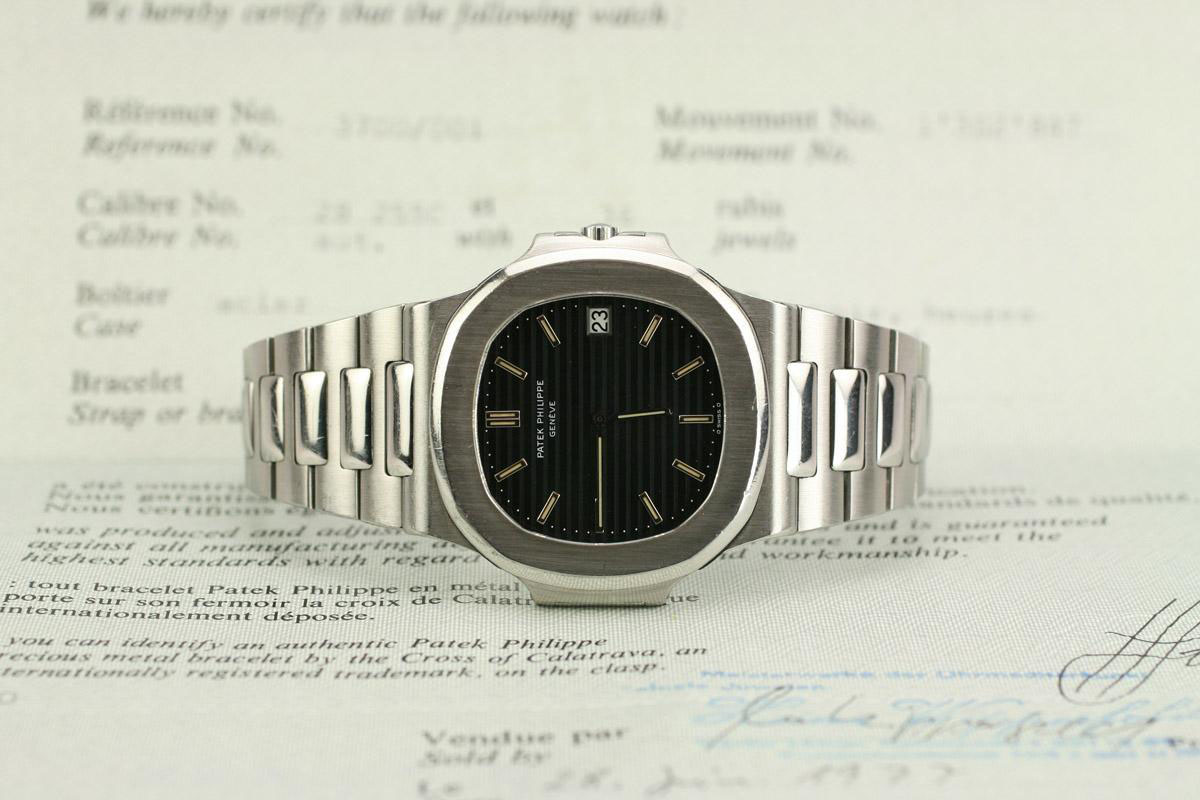
In 1976, Genta struck again with Patek Philippe’s Nautilus, a second luxury stainless steel integrated sports watch. The design was inspired by portholes of transatlantic ocean liners, and its huge case earned it the “Jumbo” nickname. Unlike the Royal Oak, the bracelet had large, brushed H-shaped links connected by polished rectangular centre links, bringing a dressier overall vibe. The original Nautilus, ref. 3700/1 had a bracelet that tapered to the wrist like the Royal Oak, and it was also second only in cost to the movement (another ultra-thin automatic, calibre 28-255 C, based on a Jaeger-LeCoultre). The bracelet had 159 individual parts with all exterior surfaces hand-finished, and a 15-part clasp. This time around, longtime Patek supplier Ateliers Réunis made the steel bracelet, while Gay Frères made the subsequent precious metal counterparts. Patek had acquired Ateliers Réunis a year earlier, so the original steel bracelet was closer to home, but not yet in-house production (the case was outsourced to Favre-Perret SA in Le Crêt-du-Locle).
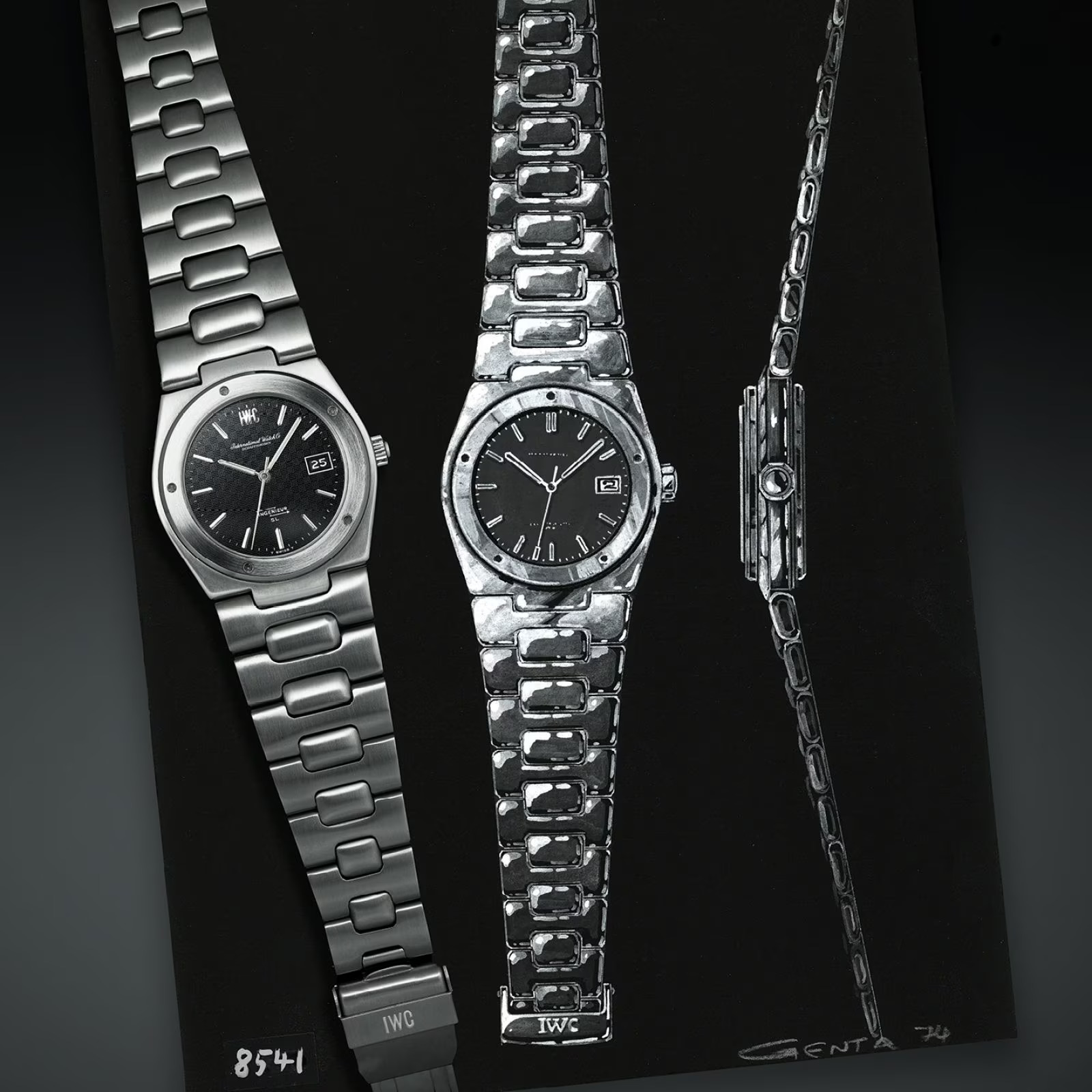
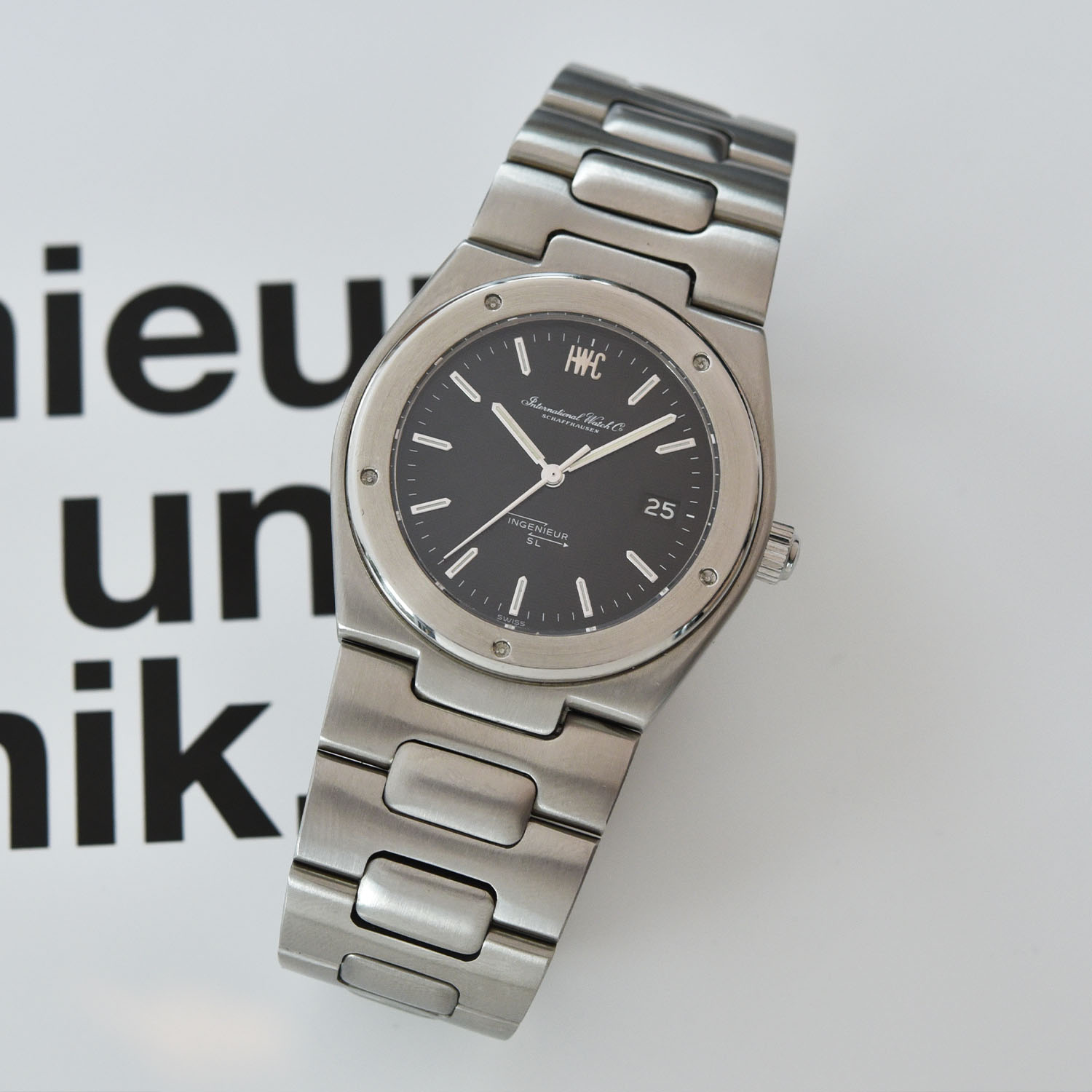
The 1970s were the decade of integrated sports watches as other luxury brands capitalised on the new aesthetic (in both stainless steel and precious metals). In 1976, Genta redesigned IWC’s anti-magnetic Ingenieur with an integrated H-link bracelet and screw-on round bezel with five exposed notches for the screw-on process (giving a similar vibe to the Royal Oak’s bezel). A year later, Vacheron Constantin launched the 222 (celebrating the watchmaker’s 222nd anniversary), which was designed by burgeoning talent Jörg Hysek, not Genta. The bracelet also had long H-links with wide centre links shaped like rectangular diamonds (pointed at each end). One of the best-known integrated watches of the era, outside the Royal Oak and Nautilus, was Piaget’s Polo from 1979. Designed by fourth-generation president Yves Piaget and named after the sport of polo, the watch was produced in 18k gold and powered by a quartz movement, reflecting the latest technology of the day. The bracelet and case design was very different from prior integrated models, seamlessly blending with a horizontal gadroon pattern seen throughout the entire watch (even on the dial). The unusual aesthetic formed what Yves called a “watch bracelet”.

Although the Royal Oak was the first true integrated sports watch, Omega must be mentioned for developing the first integrated “sporty” watch design with the 1969 Constellation. This was a bit dressier, like a Rolex Datejust with a Jubilee-ish integrated bracelet that connected via the narrow inner links. It didn’t have the bold, edgy design elements of the Royal Oak, but certainly introduced the integrated style a few years prior. Pierre Moinat, Head of Omega Creations who later advanced to CEO, patented the design in 1964, in which the links “slot directly into the watch case”, and it debuted five years later at Baselworld. Other watches that flirted with the integrated concept were Rolex’s 1964 King Midas with a Piaget Polo style of blending the case and bracelet, and Zenith’s 1969 Defy with an integrated(ish) design using the brand’s new ladder bracelet from Gay Frères.
Milanese Bracelet (AKA Mesh)
Tightly woven stainless steel Milanese bracelets are comfortable, durable and easy to size, often featuring a clasp that can latch at any point along the bracelet. They were popularised in Pforzheim, Germany, in the 1920s, but the basic design goes back to medieval armour. Chainmail was invented between the 3rd and 4th centuries BC, largely attributed to the Celts during the Iron Age. It was famously adopted by the Roman Empire (and in countless movies today) and spread to Persia, Asia and beyond. Milanese bracelets utilise chainmail on a smaller scale, with spiral wire coils, and Pforzheim artisans such as Vollmer and Staib were able to transform the tedious handwork of traditional Italian jewellers into industrial mass production in the 1920s. The weave of these mesh bracelets can vary in size, from a tapered design resembling a smaller, tighter beads-of-rice style to a super-fine mesh that almost mimics fabric. The Milanese name comes from Milan, Italy, where 19th-century goldsmiths handcrafted mesh bracelets and jewellery before their use in horology.
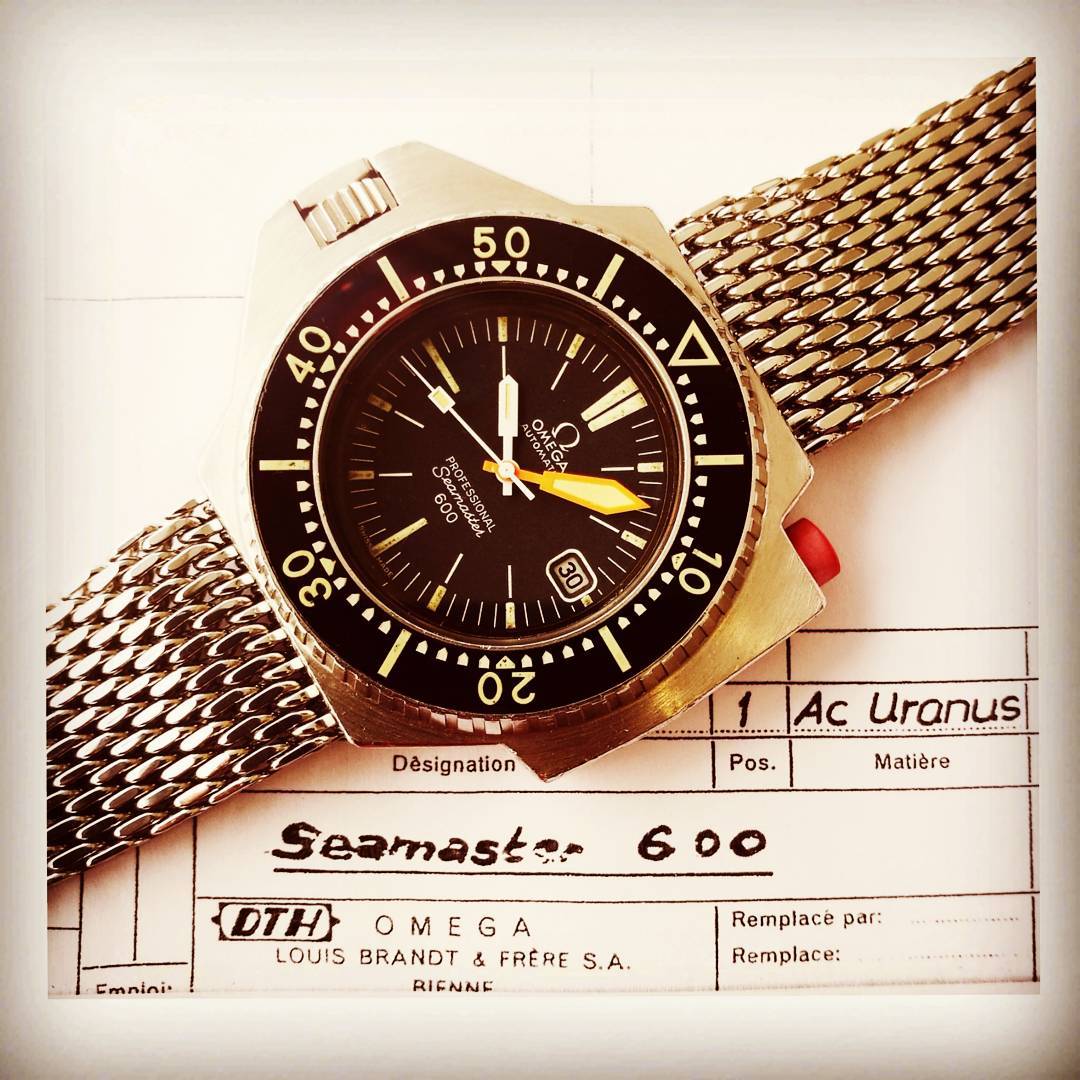
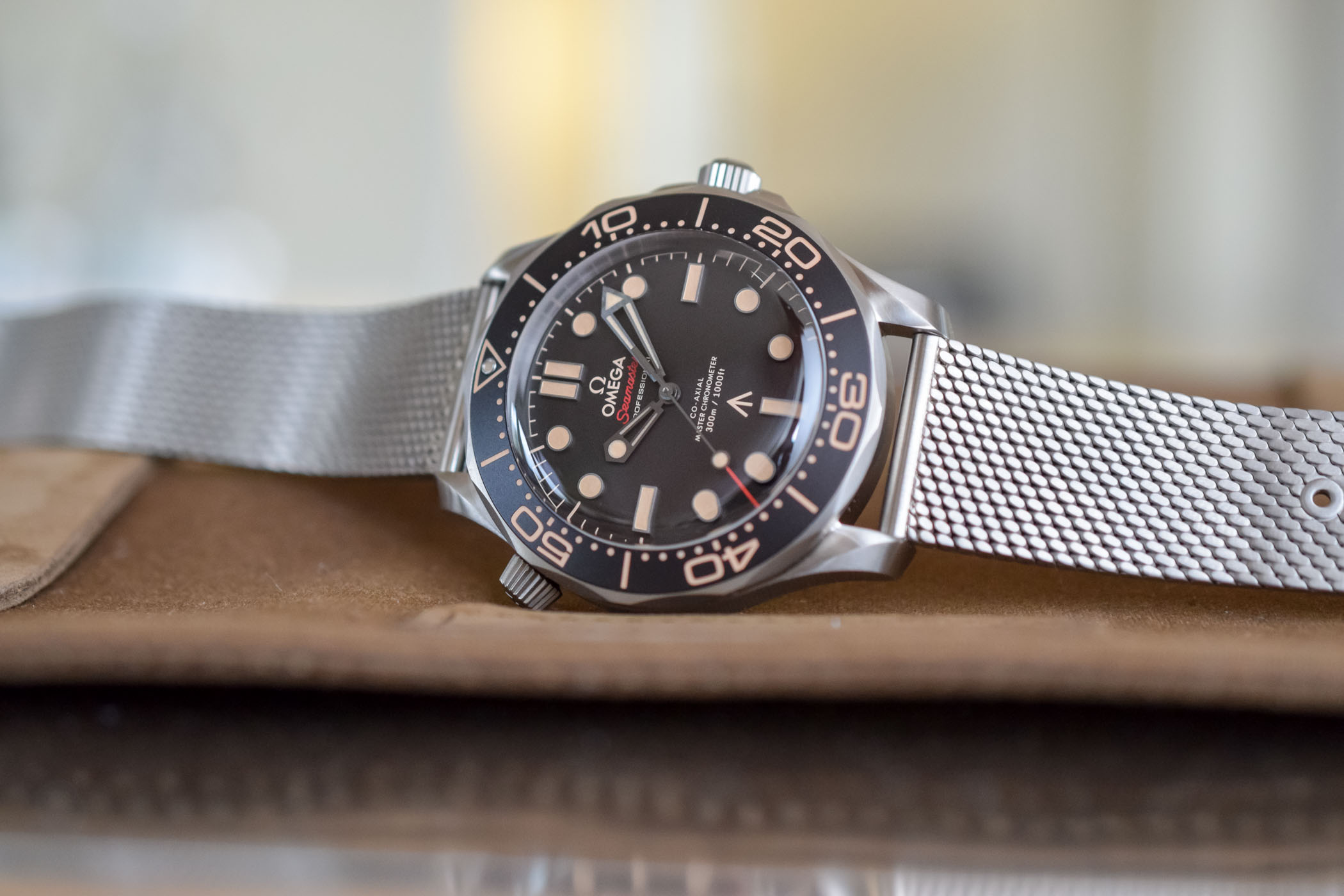
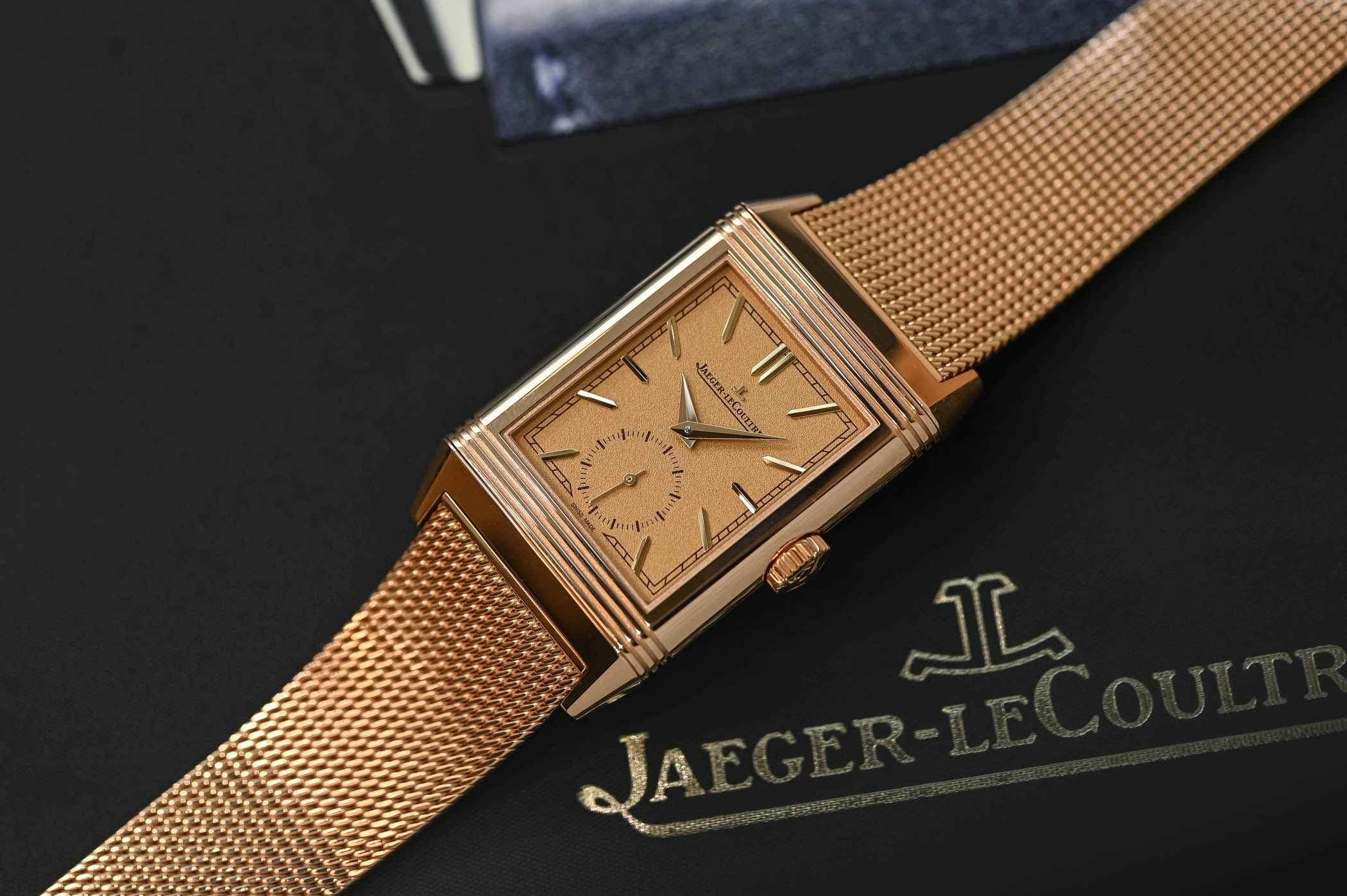
The style took off in the 1960s for both dress and dive watches, embraced by European brands like Junghans and Omega. Heavier weaves (known as shark mesh) became popular in the 1970s for dive watches, with brands like Omega using it for the Seamaster Ploprof and Breitling with the Superocean. The 1970s were when Milanese popularity peaked, and although it’s never gone out of style with plenty of third-party options, there’s been a modern resurgence thanks to the Apple Watch and its magnetic-latching Milanese Loop, along with retro-modern designs like the titanium Omega Seamaster with matching Milanese bracelet from the 2021 James Bond movie, No Time to Die.
Tool-Free Innovations
Moving to the 21st century for a moment, two particular innovations stand out that make removing/replacing and adjusting bracelets much easier. For all of the 20th century, special tools were required to remove a bracelet from the case – either a thin forked bar to compress the spring bar between the end link and inner lug, or a tweezer-type tool to compress both ends at once (if applicable). A third option was to push a pin into the drilled outer lug to compress the spring bar, like removing the SIM tray on a smartphone. Of course, this only applies to drilled lugs, which were phased out by the early 2000s. These tools often caused scratches or marks on the lugs and bracelets over time and could be difficult with tightly fitting bracelets. Around 2015, a small lever was attached to some spring bars, allowing them to be compressed and removed with just a finger, eliminating the pain point of requiring specialised tools. These quick-release levers were inspired in part by the growing smartwatch market (particularly the Apple Watch from 2015), which featured tool-free interchangeable straps and bracelets. Although a variety of names are used by brands today (such as Quick Change, Easy-Change, or QuickSwitch), quick-release levers have become very popular with watchmakers and aftermarket strap/bracelet suppliers, and they’re quickly becoming a standard in the industry.
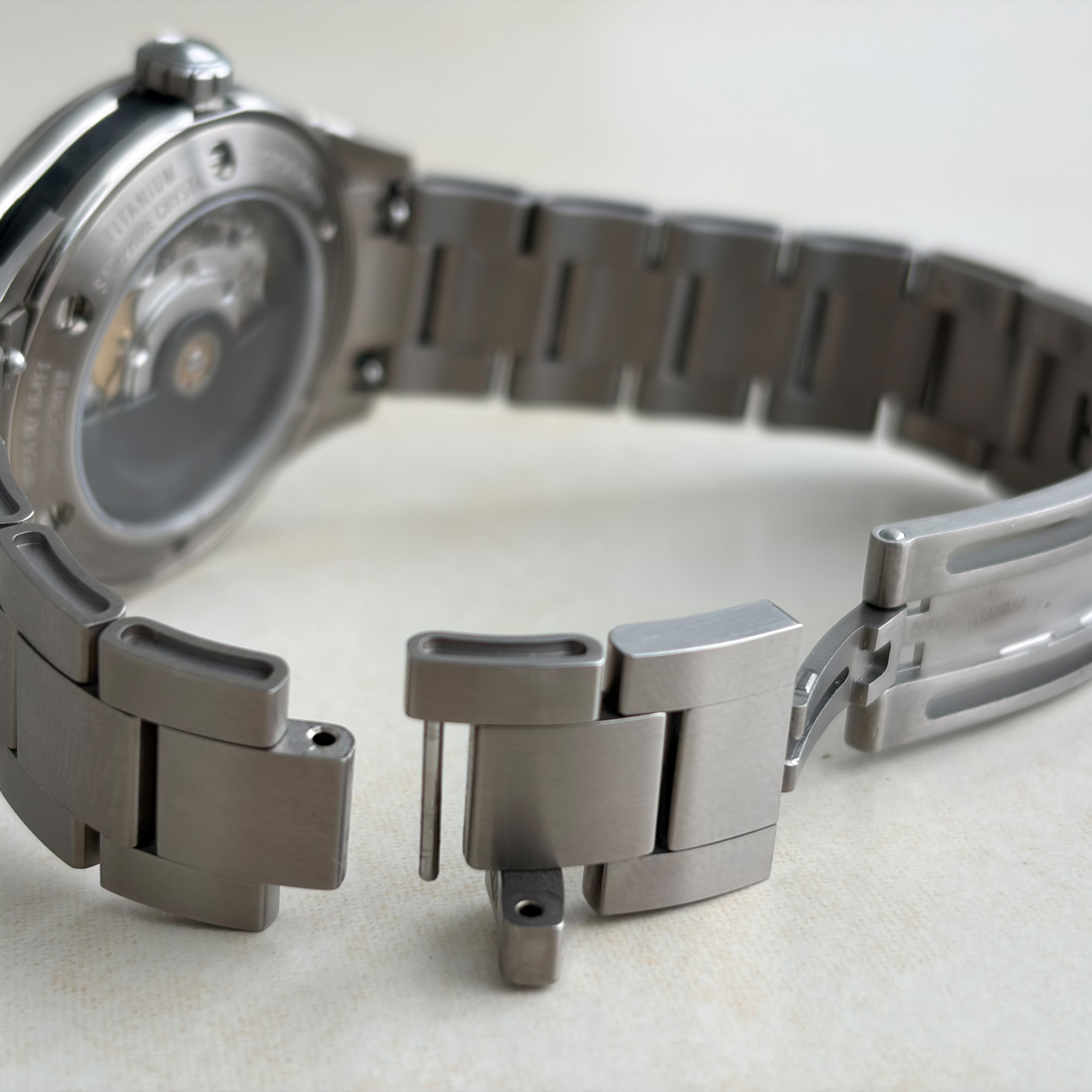
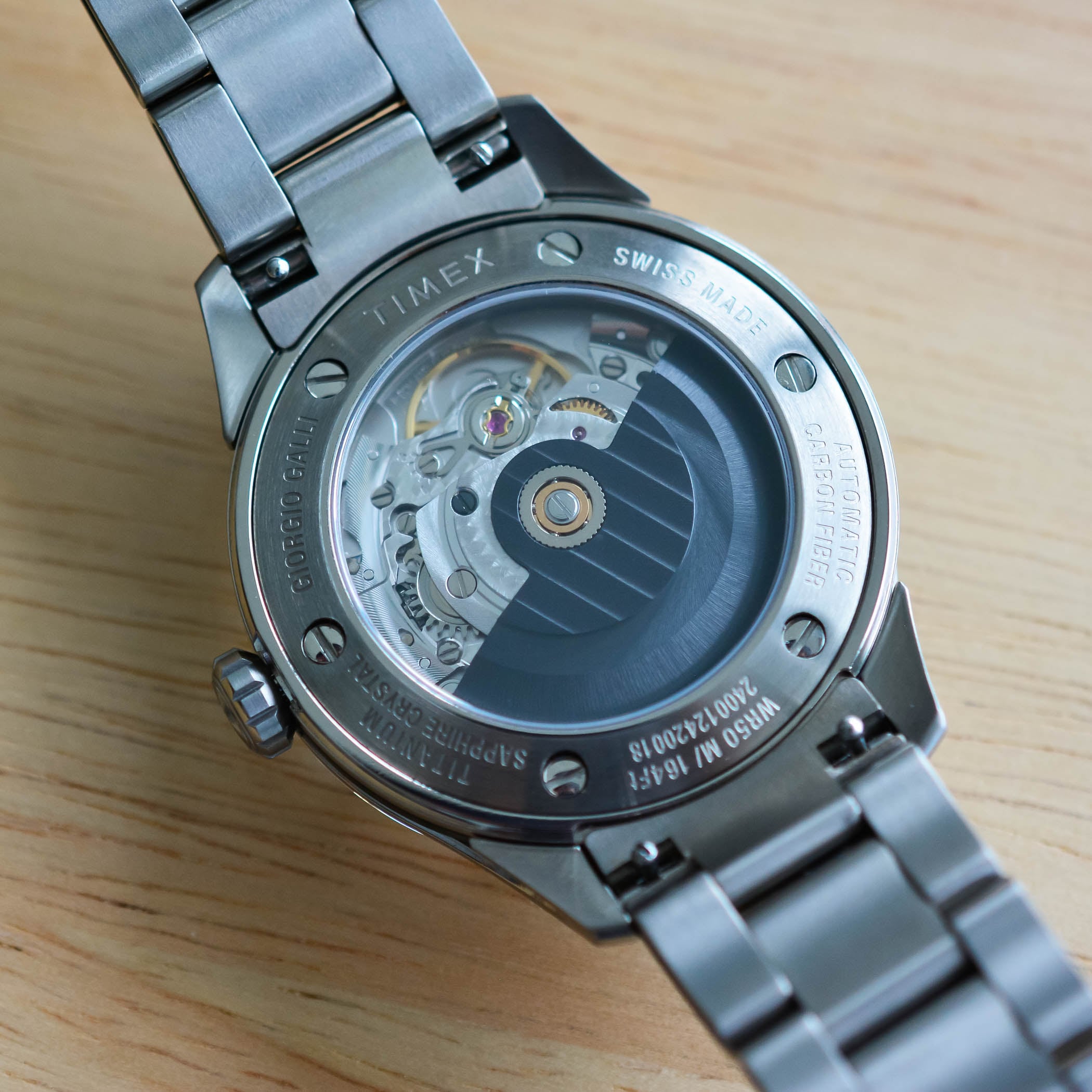
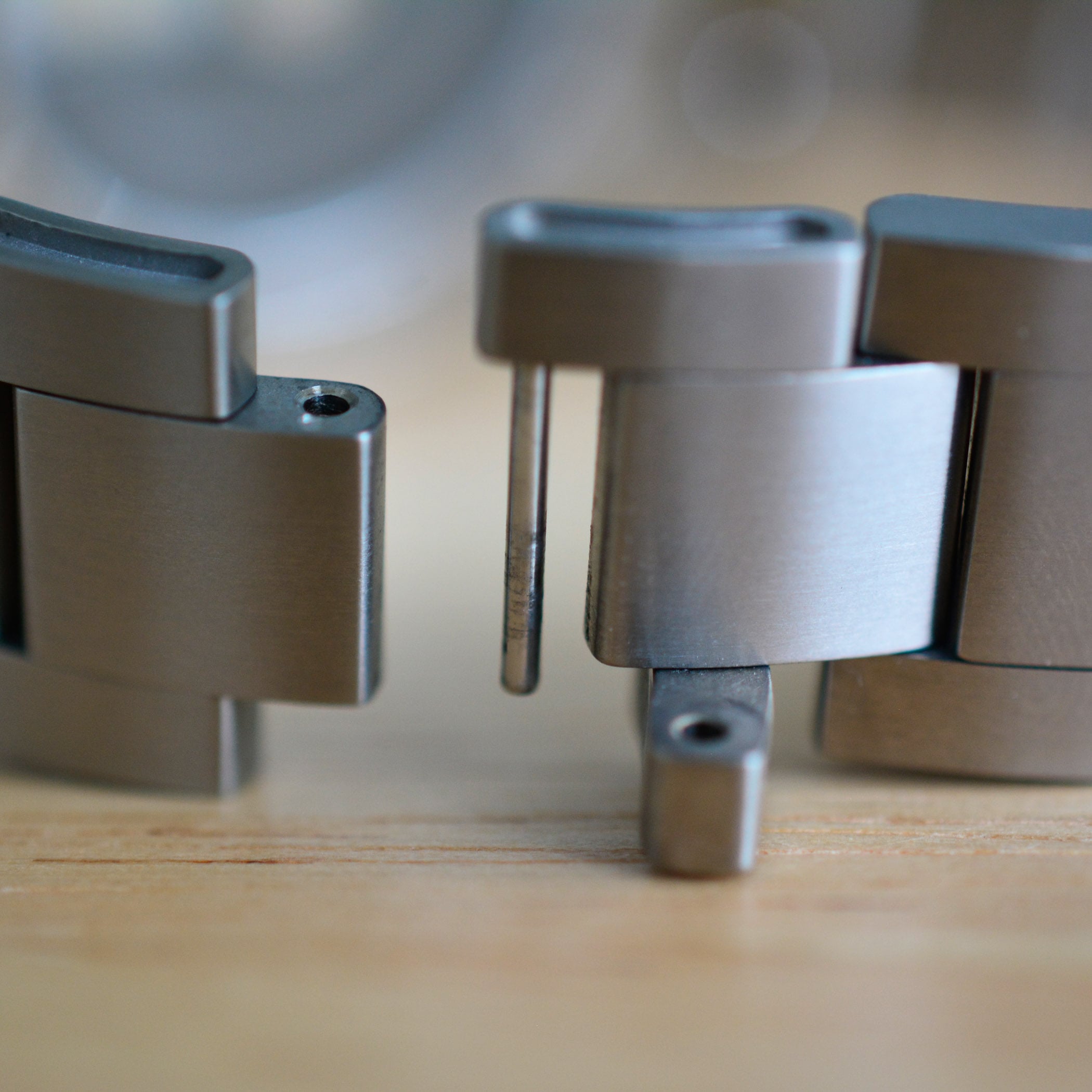
Adjusting the bracelet itself is a whole other beast, requiring specialised tools to remove links. Most modern bracelets are held together with pins (often with collars) or screws, and many simply let professionals size the bracelet to avoid accidental scratches or damage to the pins or tiny screw heads. It’s relatively easy if you’re experienced, but daunting for the uninitiated. Timex, which officially entered the mid-range luxury market in the last couple of years (in a limited capacity so far), introduced a truly innovative Oyster-style bracelet that allows for simple, tool-free removal and replacement of links. Called the I-Size system, you simply pull a spring-loaded outer link from the left side and turn it, allowing it to slide free of the bracelet. Although sizing a bracelet is generally done once and forgotten, having the ability to do it within a minute with just your fingers is brilliant, and it’s seen on luxury Timex Atelier models and the Giorgio Galli S2Ti. Coupled with quick-release levers, it’s the easiest tool-free bracelet to date and doesn’t compromise on style – you’d never know it wasn’t a conventional bracelet without closely inspecting the sides to see the lack of pins or screws. The concept isn’t exclusive to Timex; Entwine offers a similar tool-free aftermarket option, but the overall refinement of I-Size is nigh perfect. An equivalent system equips the Santos de Cartier.
Expandable Spring-Loaded Bracelets
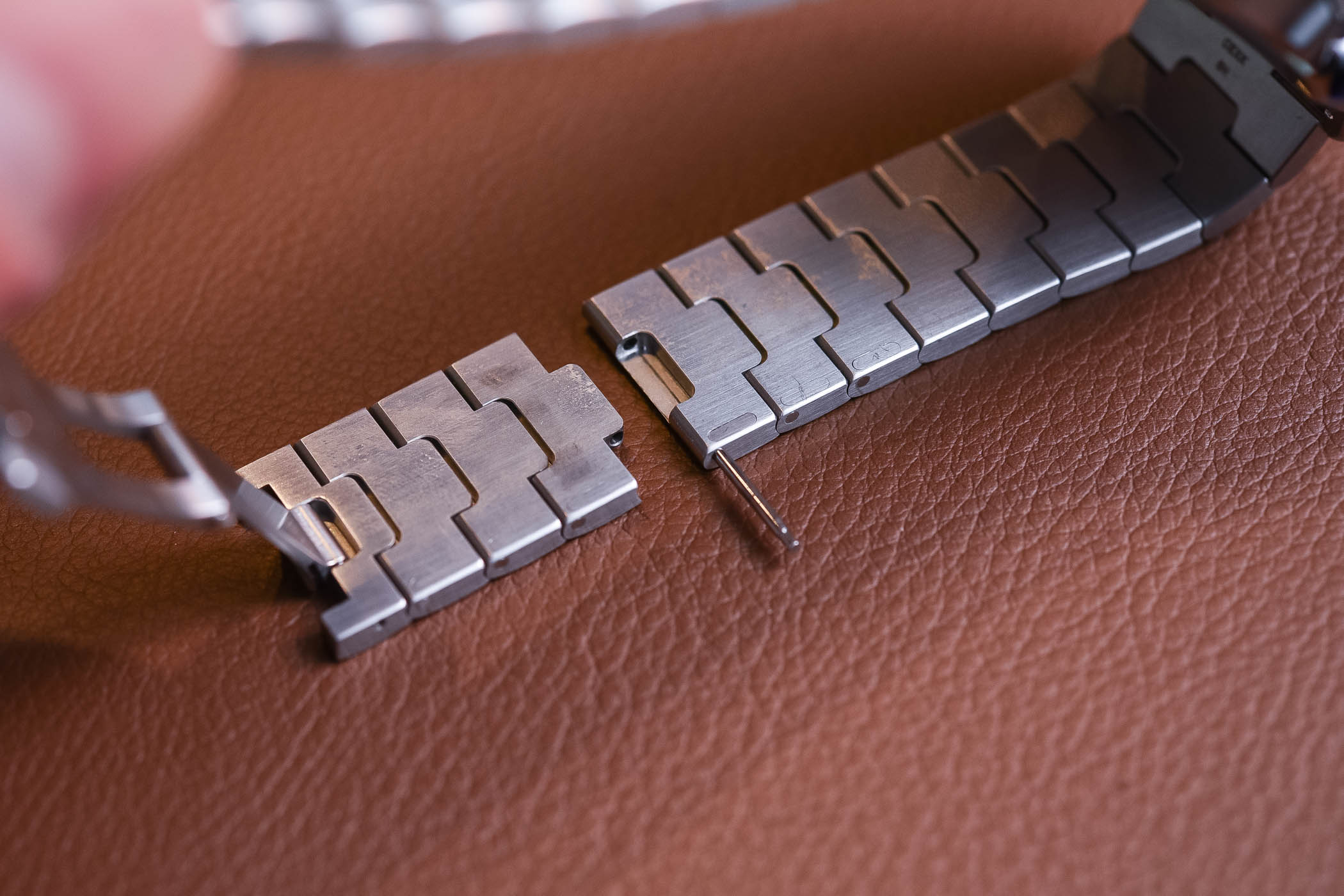
The first expandable bracelet, without the need for a clasp, was introduced in 1906, patented by London jeweller Edwin Harrop for women’s watches. Known as the Britannic, it was very narrow by today’s standards and featured miniature coil springs within the links, allowing the bracelet to stretch easily over the wrist. In 1913, American jeweller Art Hadley patented a more modern variant in Providence, Rhode Island, that set the blueprint for future iterations. Horizontal links touched like metal scales and expanded via U-shaped internal leaf springs to stretch over the wrist. Tabs on the hollow link ends could be pried open to remove links if necessary for smaller wrists, and the bracelet would reconnect to internal u-clips/leaf springs with the outer tabs bent back into place.
The expansion bracelet received a modern redesign in 1936, when German inventor Karl Speidel designed the “Scissors Action Expansion Band”, featuring an internal framework of sliding blades and springs that somewhat mimicked an accordion. This enabled a smoother, more robust expansion action, and the design went mainstream for men’s watches after the war in 1947 with the Golden Knight bracelet. There are unfortunately downsides to vintage expansion bracelets – the springs lose tension over time, so elasticity begins to fail, and they no longer hug the wrist. They’re also notorious for pulling arm hair. Given the complex, tight-fitting nature of the internal structure and their relatively low cost, by the mid-20th century expansion bracelets were rarely repaired and were usually just replaced.
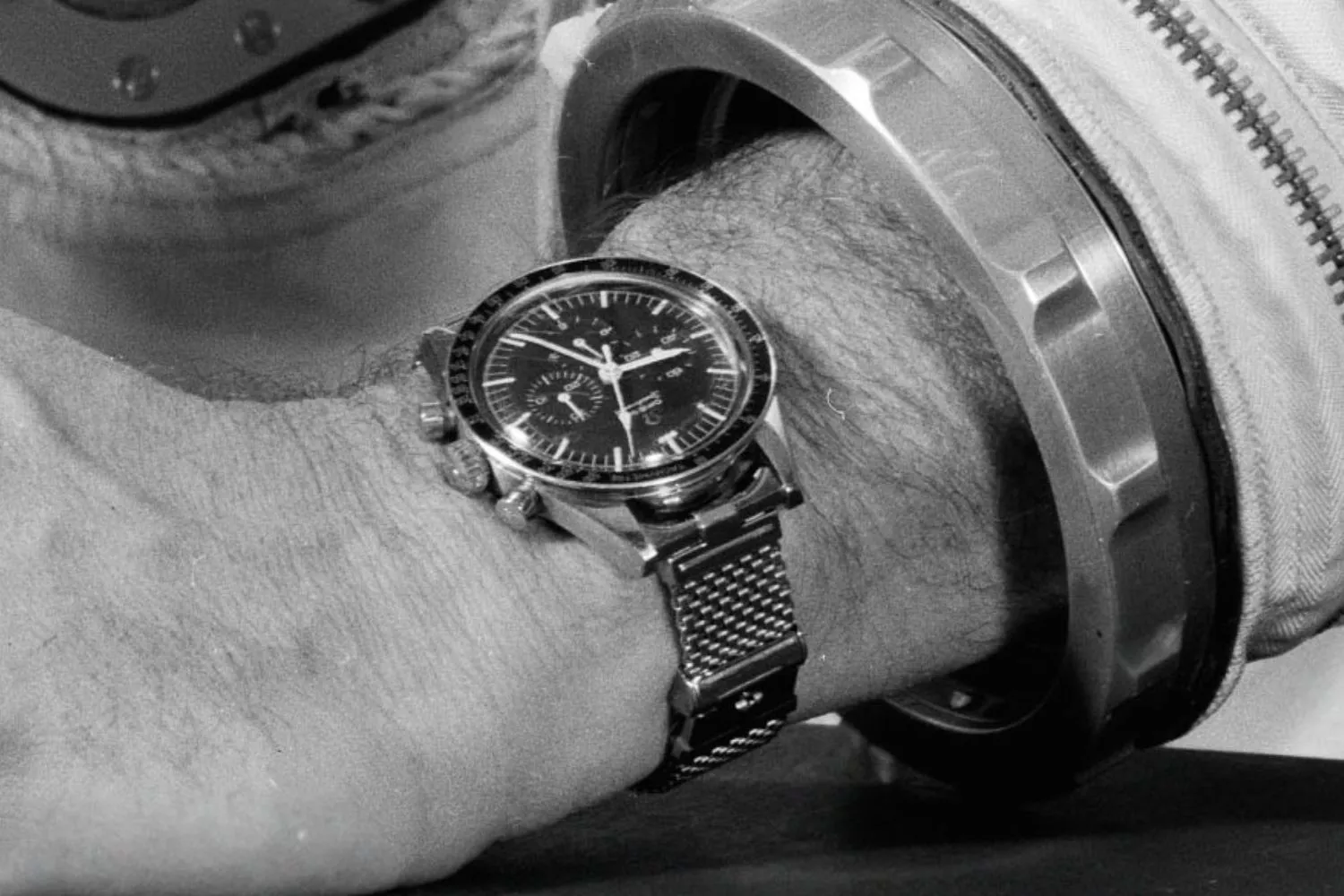
From the 1950s to the 1970s, expansion bracelets were at the height of popularity and paired with many watch styles. However, most were aftermarket or optional accessories – very few luxury watches had them as standard. Timex, Seiko, Citizen and other affordable options (often quartz) capitalised on inexpensive expansion bracelets in the 1970s and 1980s, but there were notable exceptions for high-end brands. In the 1960s, for example, some Omega Speedmasters were fitted with refined expansion bracelets from luxury manufacturers like Gay Frères and Jacoby-Bender (with the JB Champion bracelet). Early Rolex Submariners and Explorers also toyed with JB Champion bracelets in certain markets, but they were not the norm. Today, expansion bracelets are popular and affordable aftermarket options for just about any watch, though they tend to be used with vintage or entry-level brands like Timex and Casio.
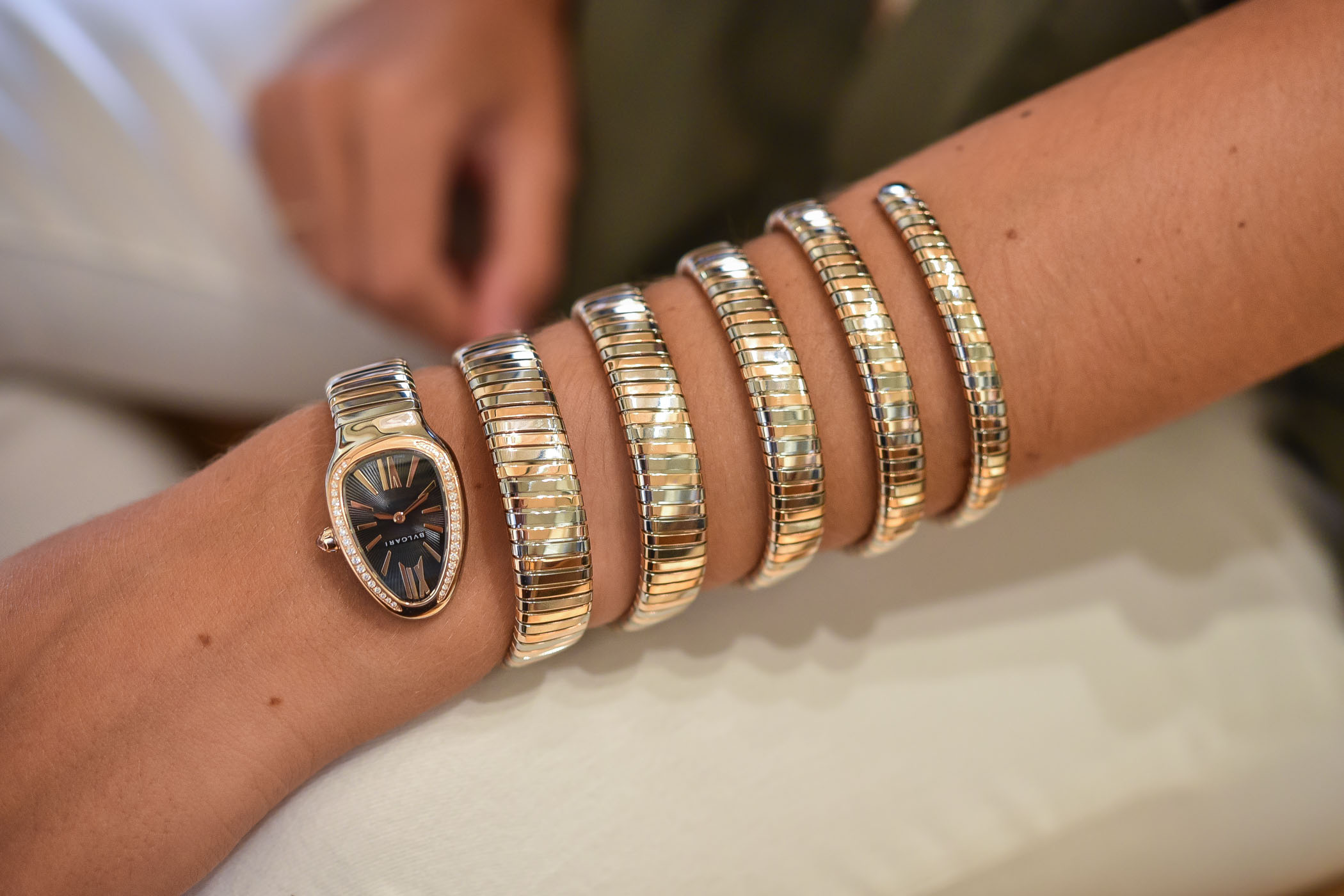
This article doesn’t cover every bracelet type over the last hundred-plus years, but highlights important milestones and developments. There are exotic designs like Bvlgari’s flexible, coiled Serpenti bracelets (mimicking a snake) and Ming’s 3D-printed titanium Polymesh bracelet that pushes the mesh style into a true fabric-like state with a pin buckle. It flows like fabric yet maintains extreme durability with its Grade 5 titanium composition. The strap is 3D-printed in a fully finished state, with no assembly or soldering required (like a 3D printer at home), and maintains tolerances down to 30 microns. A brave new world indeed. Bracelets have transformed wristwatches from the aesthetically delicate leather- or fabric-strap models of the early 20th century into sporty, rugged designs, with Rolex’s vast Oyster Perpetual portfolio, Omega’s Speedmaster and Seamaster lines, Audemars Piguet’s Royal Oak, and countless others. And innovations like Timex’s I-Size and Ming’s 3D titanium printing show that ingenuity and technology will push forward-thinking designs well into the future.

4 responses
Interesting article
Great article, thank you
Where you can find good aftermarket braclets?
two unique designs to add to this extensive list if I may would be the Ebel Classic Wave and the IWC’s early Porsche Design Models (like the late 80s Titan) especially if you look at the back side of it.