


 Not all images were able to load for printing. Please close the print window and try again.
 The Giorgio Galli S2Ti, When Timex Moves Upmarket
Timex’s most refined and high-end production watch, Swiss-made and wrapped in titanium.
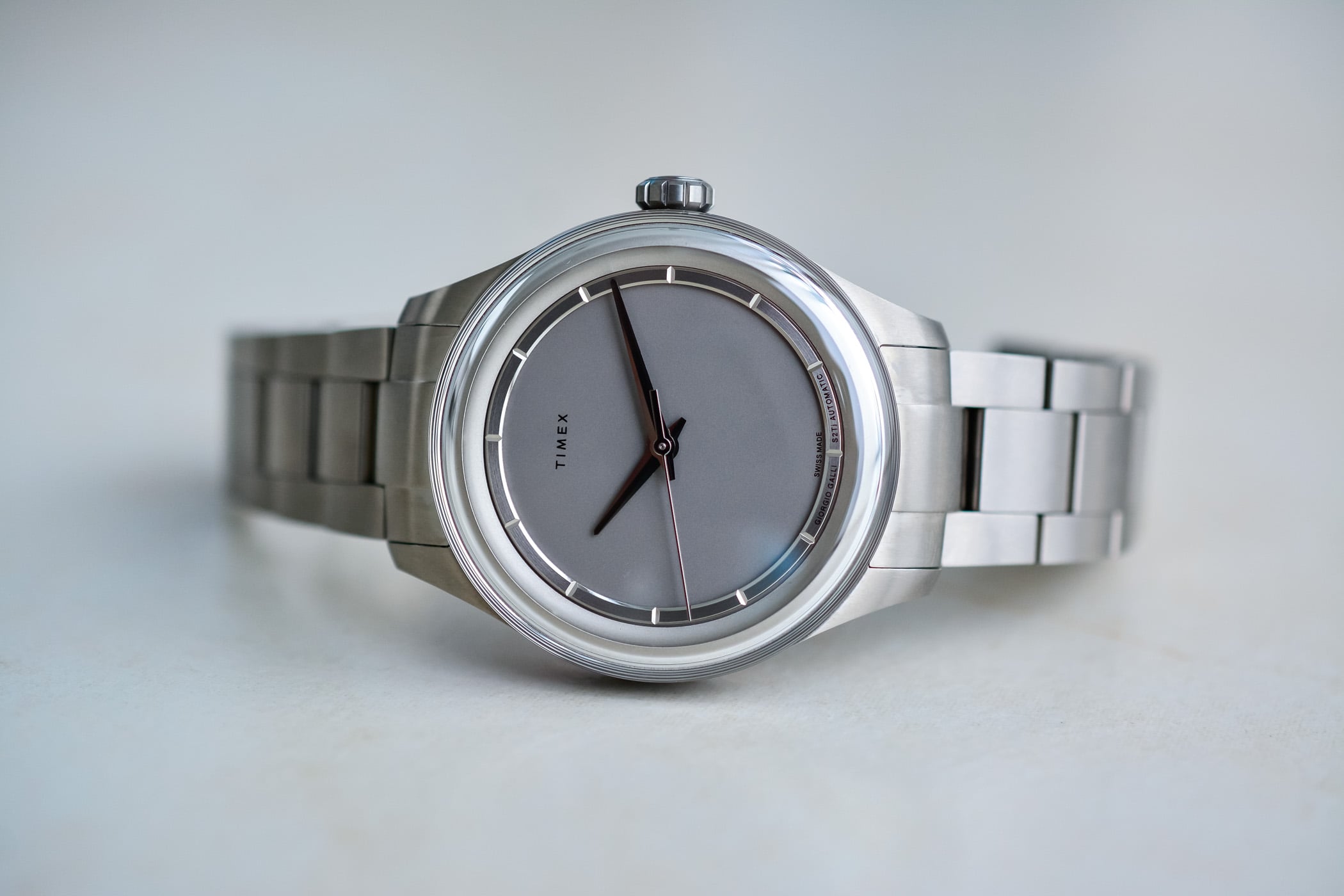
Timex and affordable quartz watches are synonymous and have been since the brand ceased mechanical watch production in 1982, following the Quartz Crisis. Few brands have found as much success as Timex with quartz, and innovations like Indiglo (bright, uniform dial electroluminescence introduced in 1992) have kept them on top for decades. Only a few major Japanese players are on the same field – Casio, Citizen and Seiko – although Casio remains the last to offer a sizeable digital portfolio like Timex today. The brand returned to mechanical watches in 2017 with the vintage-inspired Marlin that first debuted in the 1950s, and Timex has since expanded its portfolio with multiple collections. The limited-edition Giorgio Galli S2Ti represents the pinnacle of this mechanical renaissance and demonstrates an ongoing commitment to the mid-range luxury market.
A Look at the Past
Despite Timex’s renewed interest in mechanical watches, its quartz empire remains intact and is the backbone of the company today. The brand has always embraced affordability, and during the mid-20th century, it was the top seller in the United States with almost 50% of mechanical watch sales. Following World War II, it capitalised on automated production techniques perfected during wartime efforts and innovations like Armalloy, a hardened alloy that replaced conventional jewels in movements. This led to the most accessible mechanical watches in America that just about anyone could afford. Fast forward to 2017, 35 years after the Quartz Crisis forced a strategic shift to quartz-only production, and Timex chose the hand-wound Seagull ST6 for the Marlin reissue. It retailed for less than USD 200, continuing the affordability ethos, and quickly led to additional mechanical collections like Expedition, Waterbury and MK1.
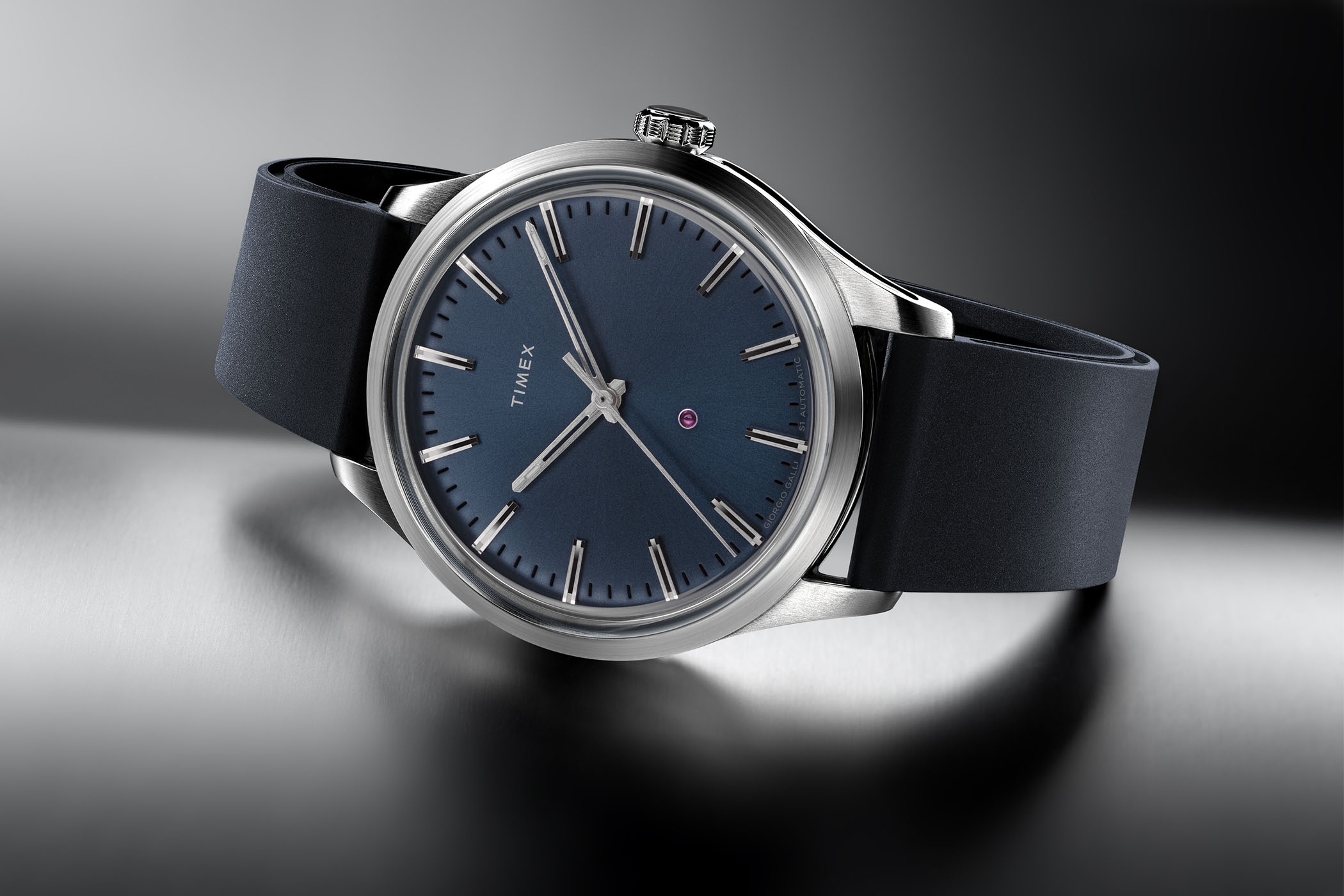
Timex upgraded to Japanese Miyota automatics like the 8215 and 9039, which are well proven and easily serviced, but also perceived as second to Swiss counterparts. Everything changed in 2022 when Italian designer and Timex’s Chief Creative Director, Giorgio Galli, released the Swiss-made Giorgio Galli S2 with a refined European aesthetic. It featured an openworked stainless steel case with a titanium midcase, a minimalistic dial design and a Sellita SW200-1 automatic. This was the first Swiss-made Timex since the early 1980s and followed the Giorgio Galli S1 from 2019 with a more familiar yet upscale Timex aesthetic and a decorated Miyota 9039 automatic. Priced at USD 975, it certainly wasn’t your father’s Timex, and the brand was committing to accessible luxury for the first time. These watches fell under the Timex Atelier collection, which was upscale and separate from the standard portfolio (including the other mechanical watches). The Giorgio Galli S2Ti is the most premium and therefore most expensive model thus far. It’s an all-titanium evolution of the steel/titanium S2 from 2022 and a bona fide mid-range luxury watch, and can compete with Swiss players like Oris or Longines. This also represents the last Giorgio Galli S model (following the S1 and S2) with the Atelier collection now focused on the M1a models. Something new, however, is likely on the horizon.
A Full Suit of Titanium
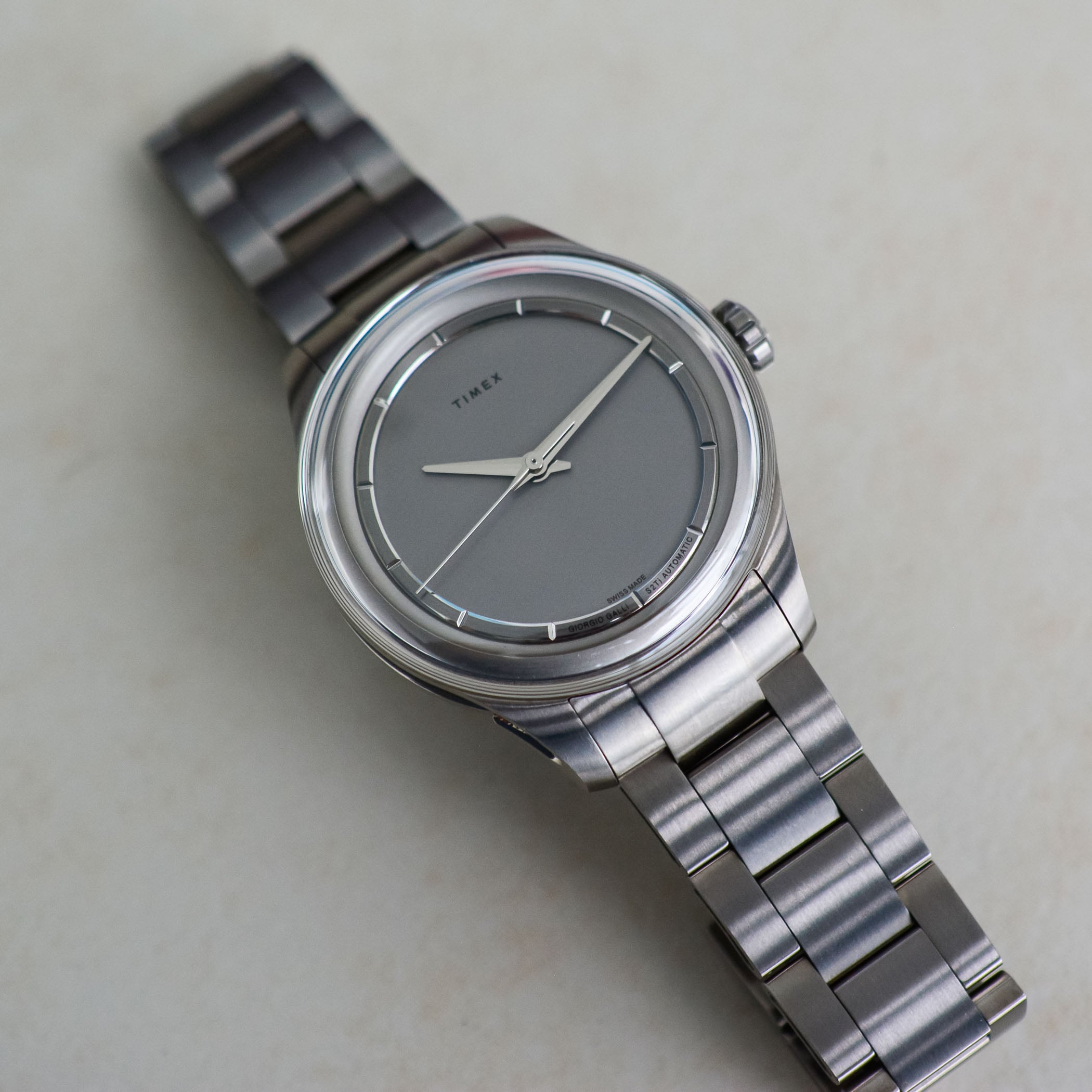
The titanium case continues the Giorgio Galli trend of openworked sides, and this one includes forged carbon within the midcase (the S2 had a similar titanium midcase). The carbon features colour irregularities that are very popular in the upscale motorcycle and automotive market, and adds a subtle detail that an all-black centre would miss. Case production is done via metal injection over traditional CNC machining, known as the Metal Injection Moulding (MIM) process or specifically TiMIM for this titanium model. It allows for complex and intricate shapes (openworked sides and lugs, for example) that would be difficult and expensive with milling.
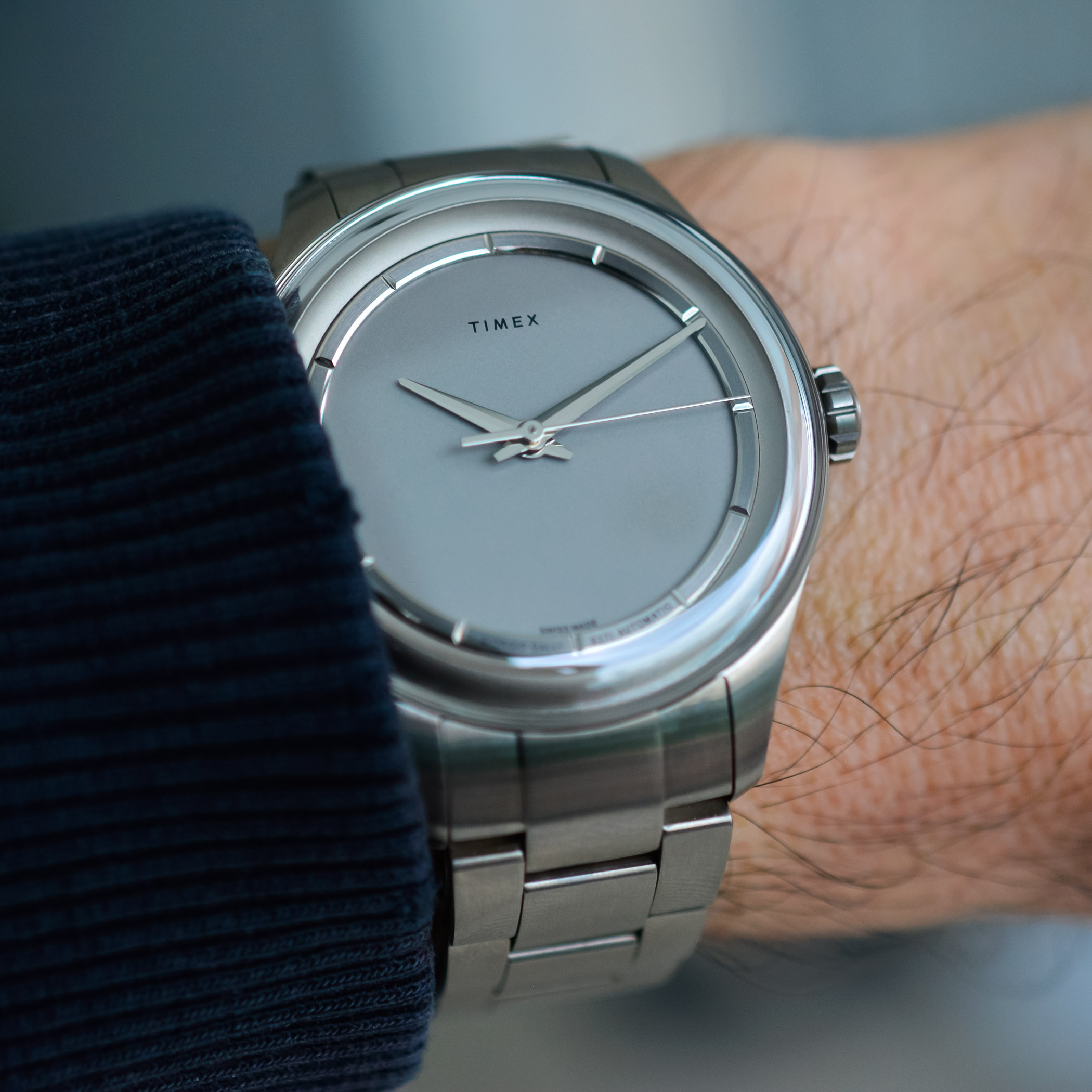
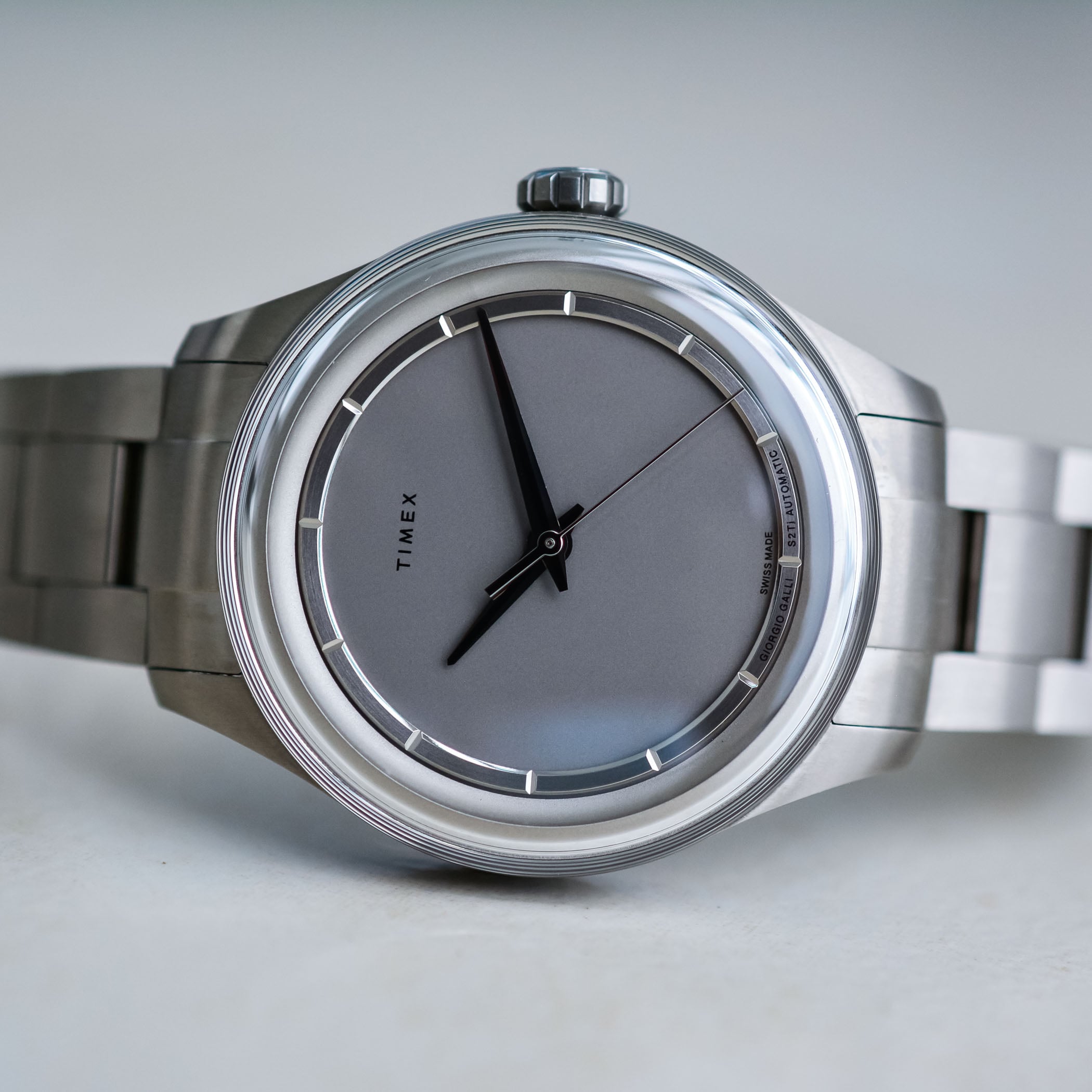
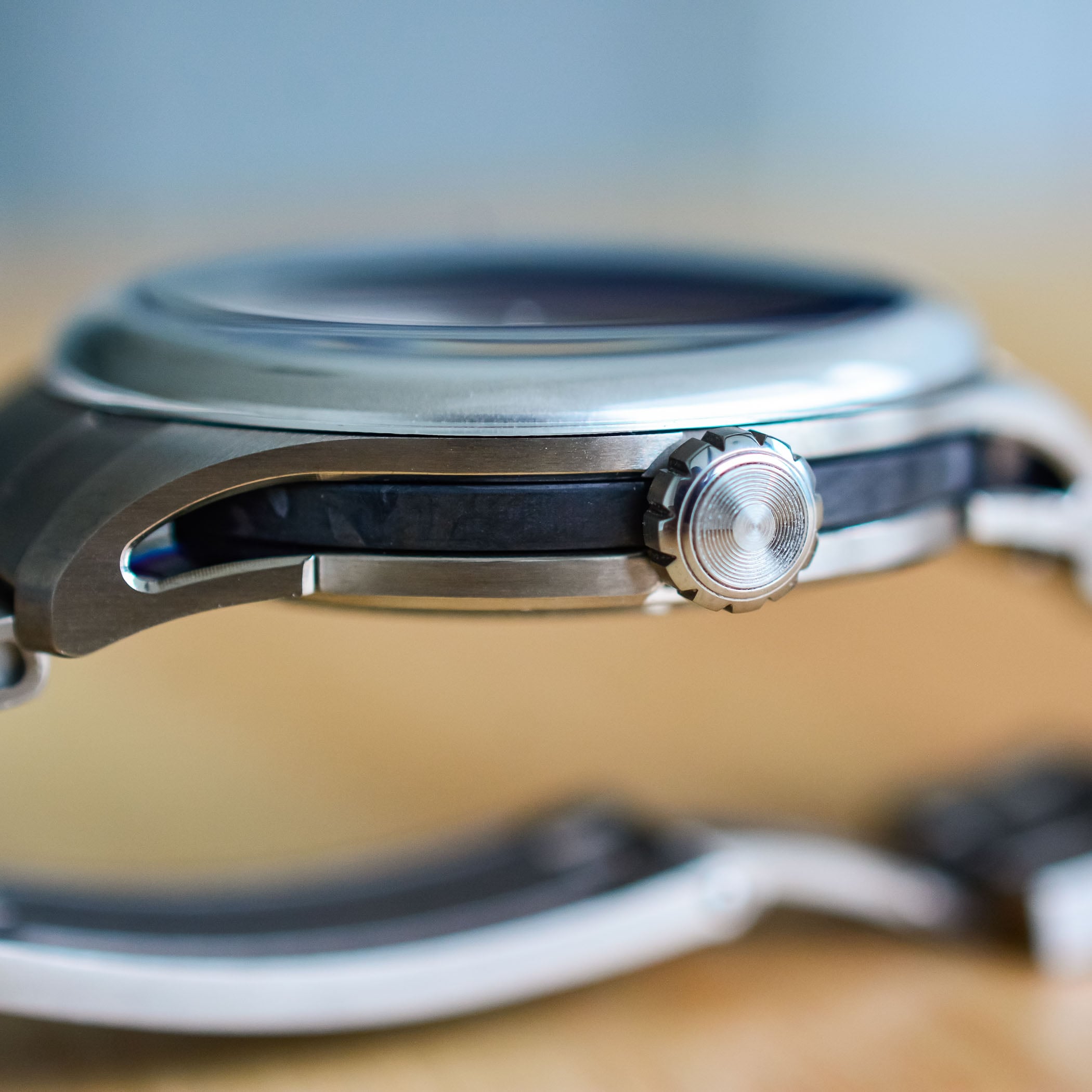
Dimensions are conservative at 38mm in diameter and 12mm in height (46mm lug-to-lug), but it wears a bit larger than the dimensions suggest, feeling closer to 40mm on the wrist. The finishing is well executed with brushed surfaces and subtle polished edges, and a sapphire exhibition caseback displays the decorated Swiss automatic. A high-domed sapphire crystal spans the entire front of the case, removing the bezel that’s seen on the similarly designed steel S2 (and contributing to the larger presence). It’s almost deceptive at first glance, as the titanium rehaut underneath kind of mimics a bezel, showing how good Giorgio Galli is with slick design elements. The push/pull crown has wide knurling that looks cool and feels great between the fingers, and the end has a spiral pattern that’s a nice finishing touch. Water-resistance is rated at 50 metres.
Tool-Free I-Size Titanium Bracelet
The 18mm bracelet continues the case aesthetic with openworked links, albeit somewhat shallow at the ends. It closes with a butterfly clasp, and there are quick-release levers for an easy change to leather or rubber, although I personally wouldn’t change this matching titanium bracelet. It’s well finished and very comfortable on the wrist, and you’d never know it had a major trick up its sleeve without a close inspection – look at the sides, and you’ll see no visible pin or screw ends. While quick-release levers are very convenient, how about quick-release links?
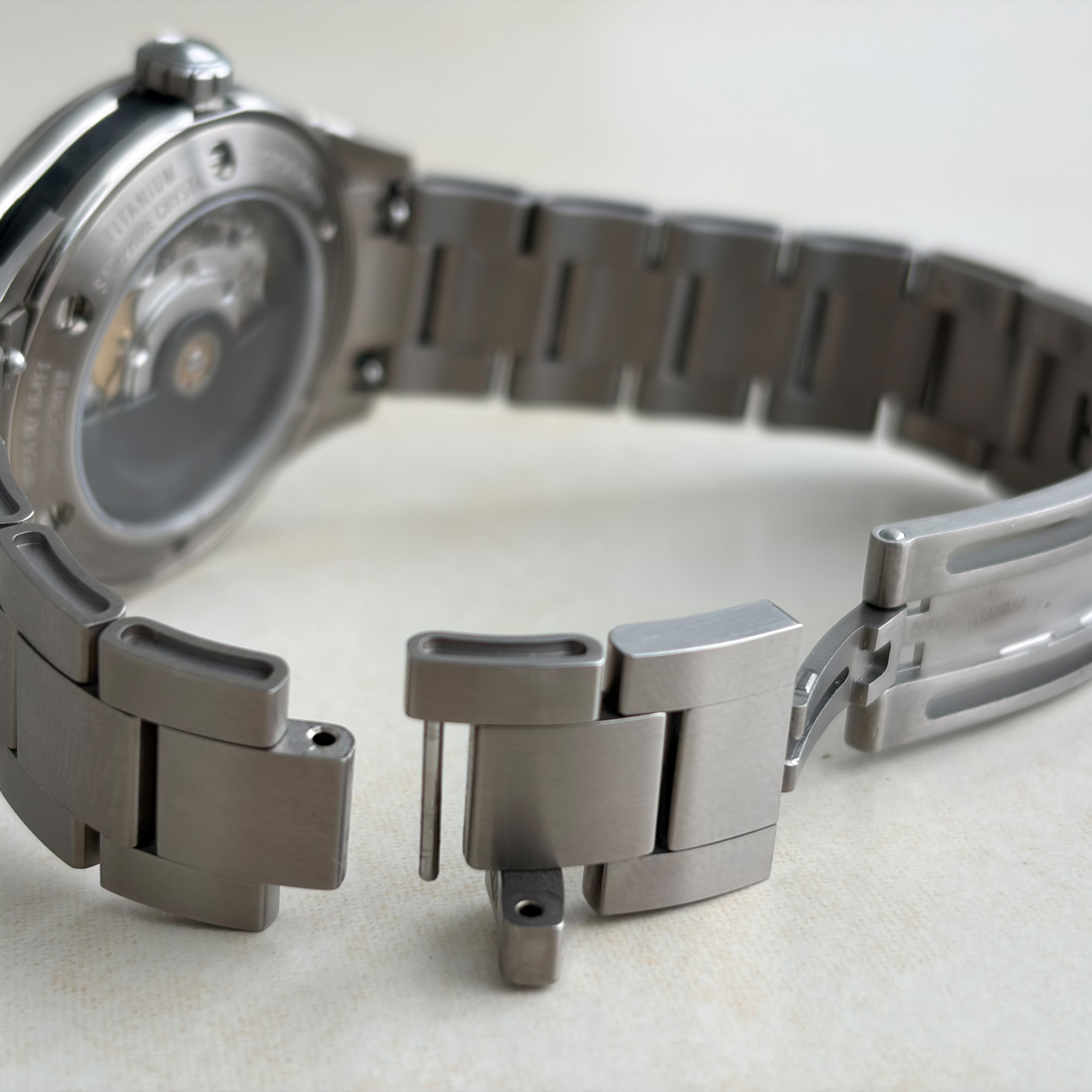
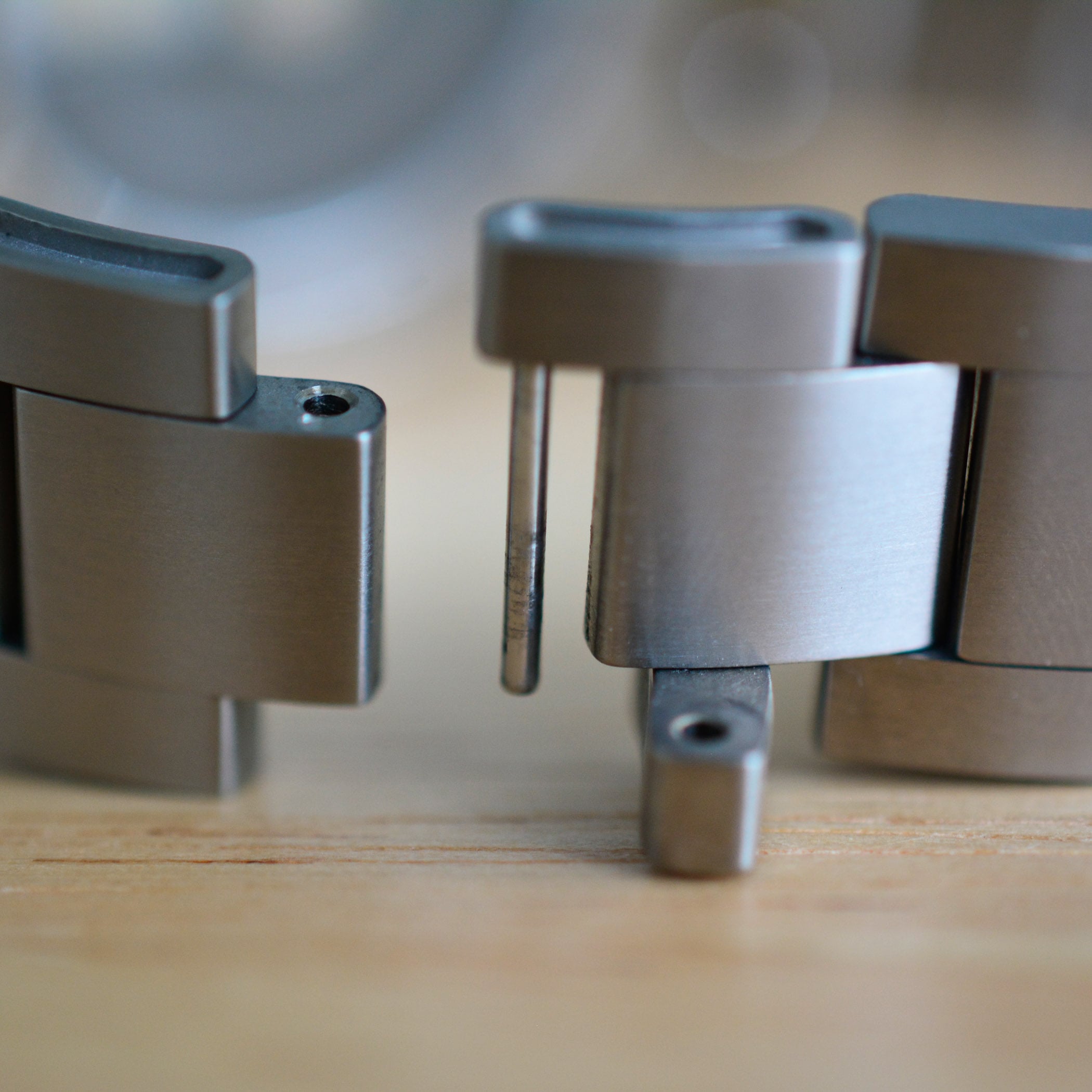
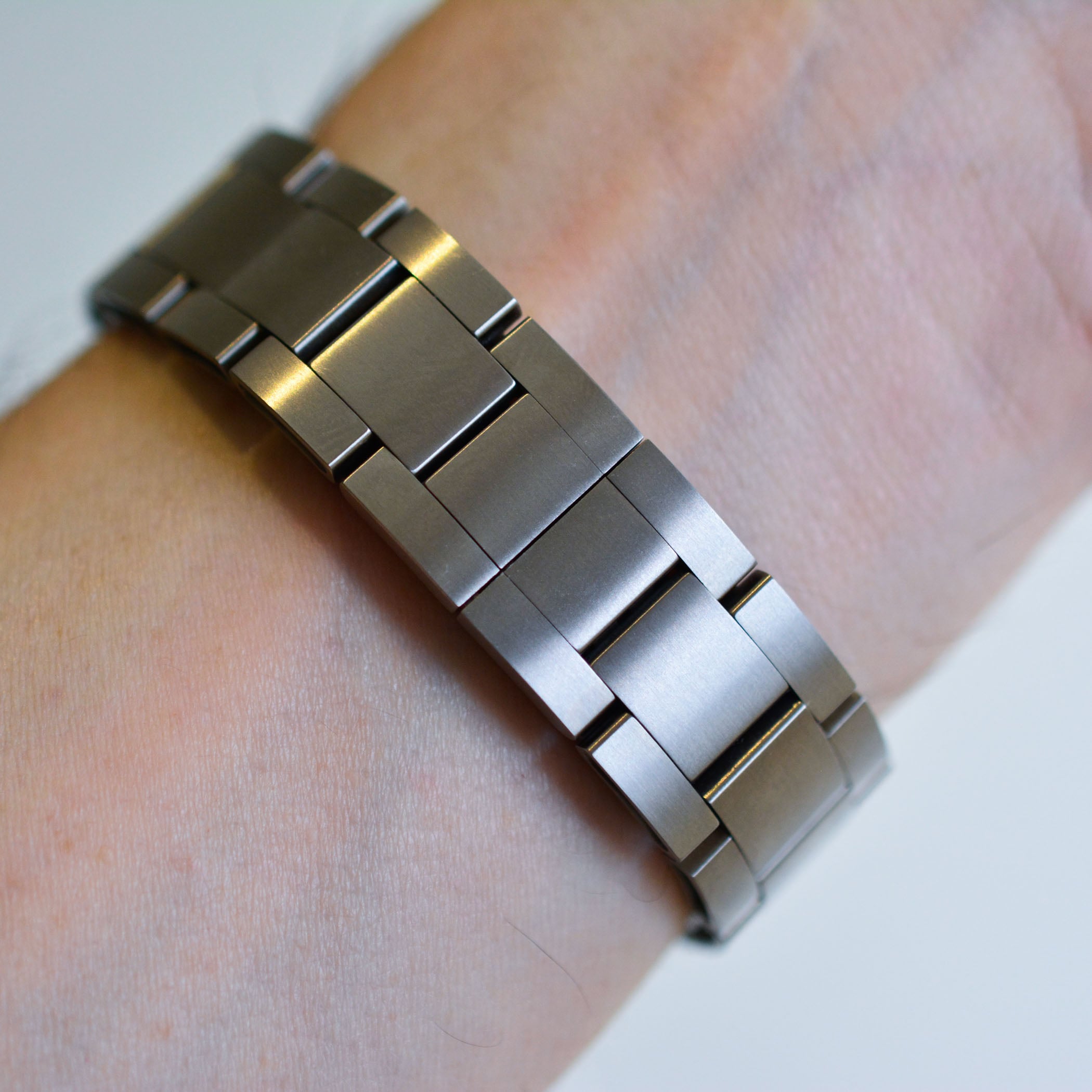
Timex’s I-Size system allows you to easily size the bracelet by removing links by hand – just pull a link end from the left side (an arrow is engraved underneath), which slides outward under a bit of spring tension, and then turn it so the entire link can simply slide out. It’s a brilliant solution to finicky pins or screws, and I sized the bracelet within a couple of minutes on the couch. The hidden butterfly clasp doesn’t include micro-adjusting (a downside of this clasp type), but I was able to comfortably size it nonetheless. I-Size isn’t exclusive to the Giorgio Galli S2Ti, as it’s also seen on the Atelier M1a series, as mentioned, and aftermarket bracelets from Entwine offer similar tool-free sizing. The execution here is nigh flawless, however, and I-Size demonstrates forward thinking and serious innovation as the brand reaches into a different market and price tier.
Matching Titanium Dial
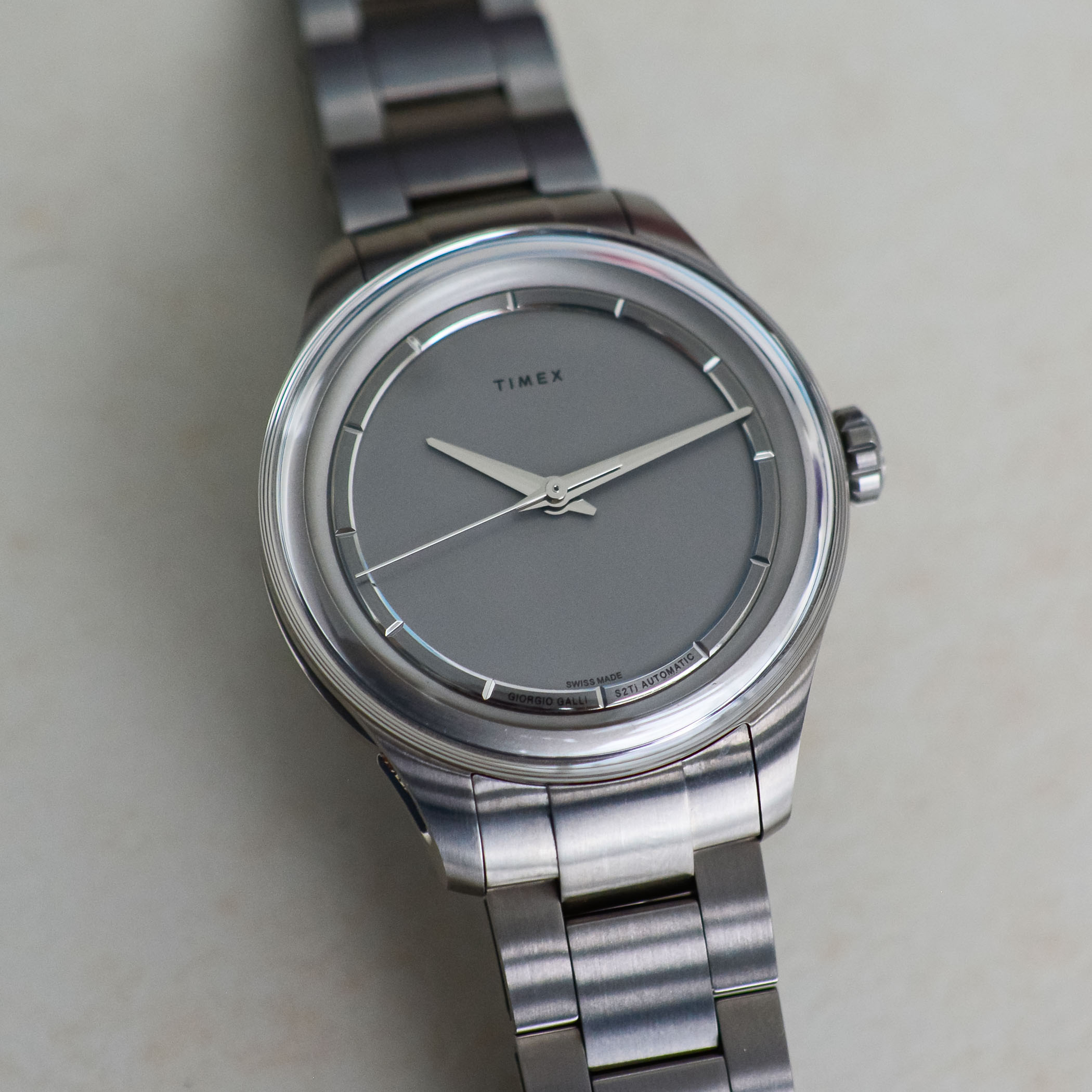
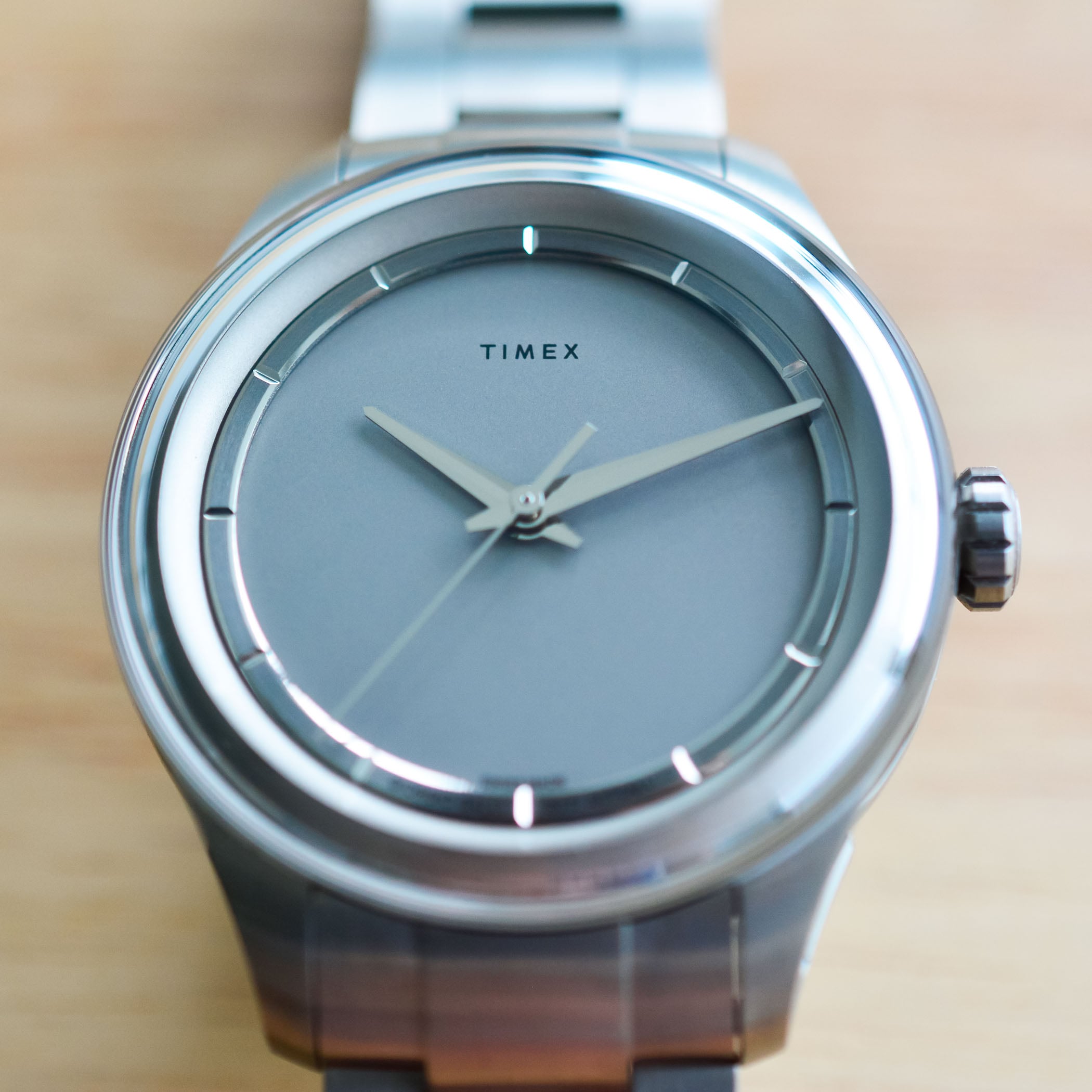
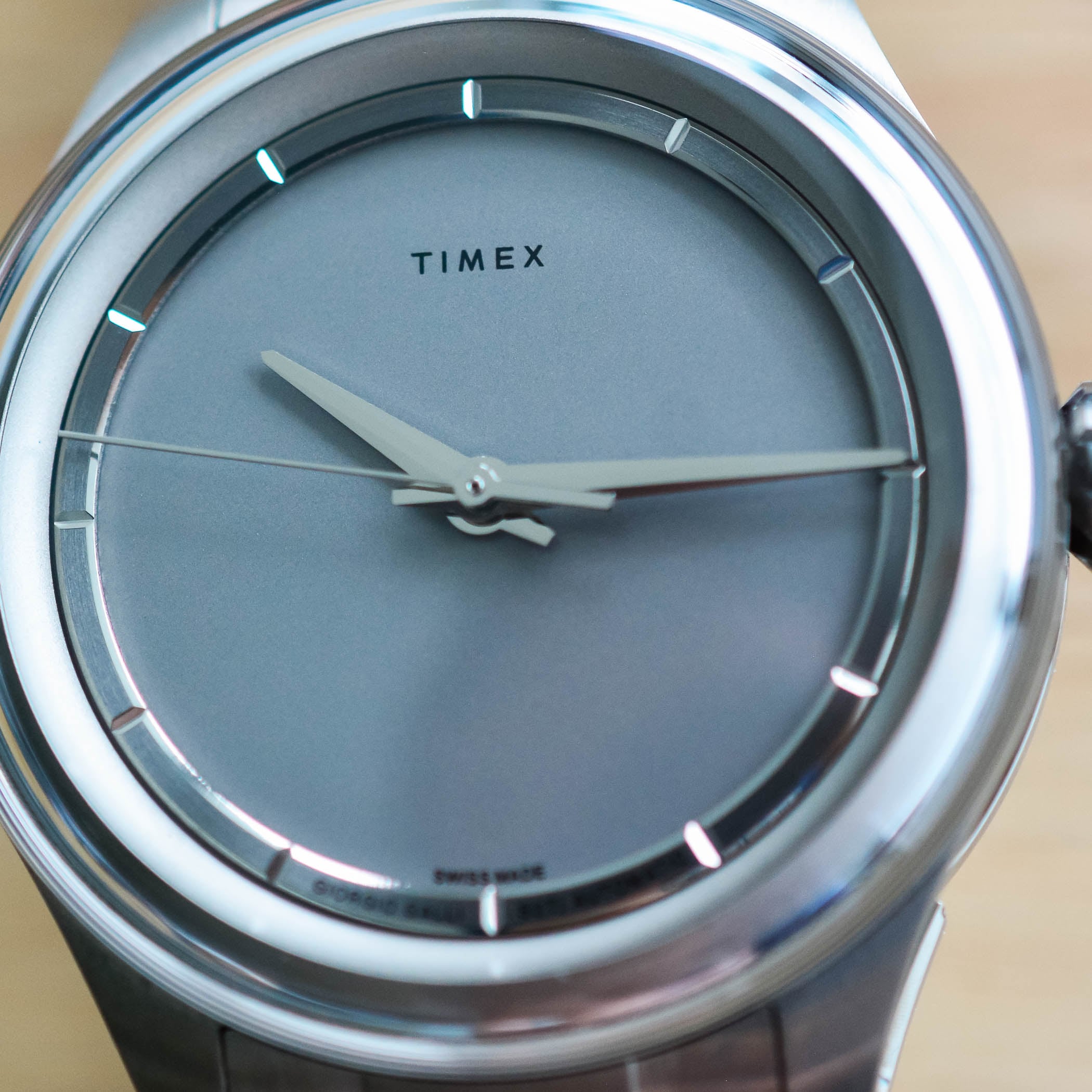
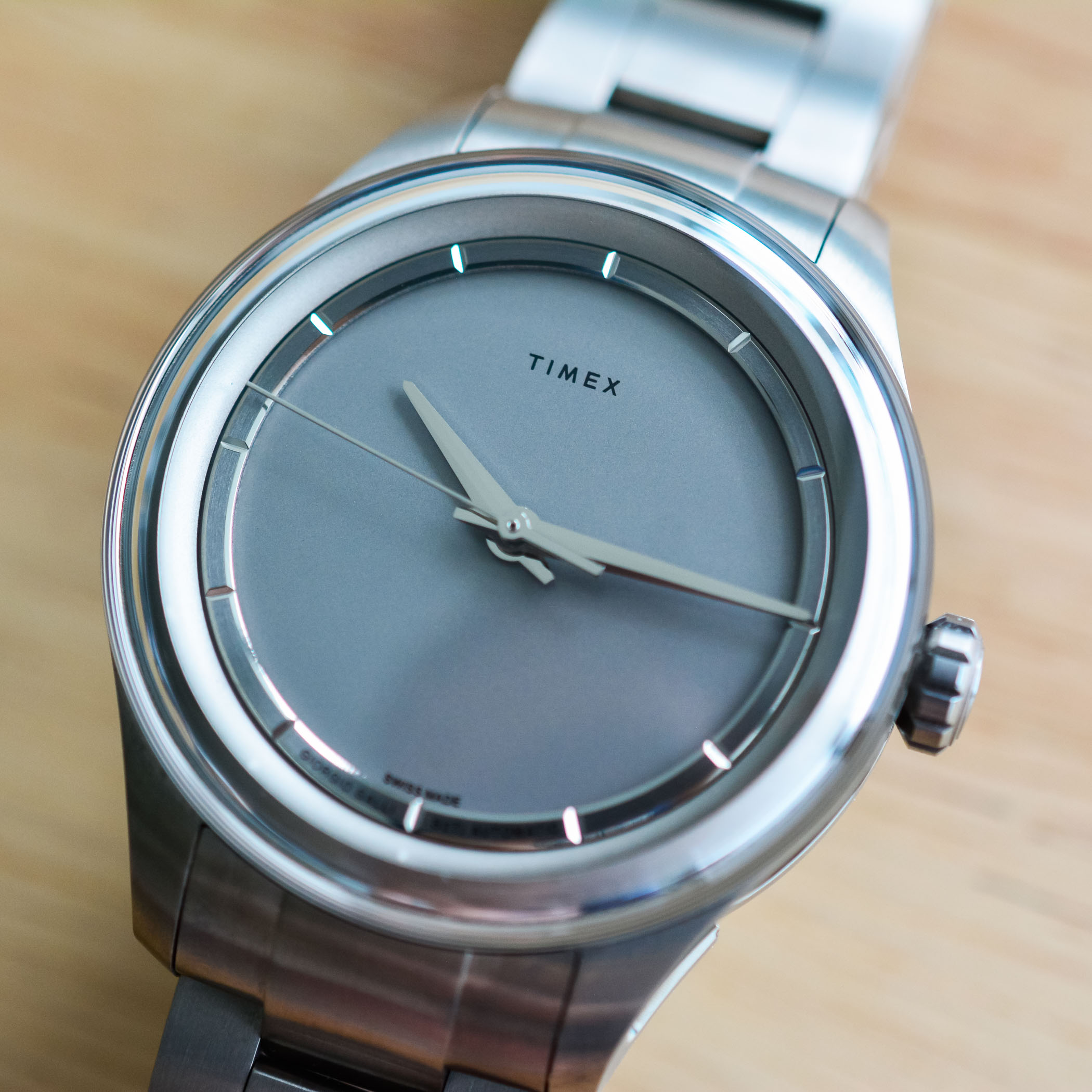
Completing the monochromatic look is the titanium dial that quite literally matches the rest of the watch. It’s a departure from the black dial on the Giorgio Galli S2, but the contrast between the matte grey and polished silver hands is surprisingly good and legible. The simple, notched stainless steel minute ring sits flush with the rehaut, which was smaller on the S2, allowing dial space between the two. Giorgio Galli’s name is printed on the ring itself with Swiss Made just above it on the dial, and TIMEX is printed small at 12 o’clock. It’s all very minimalistic without superfluous text or even lume, and the titanium colour throughout the watch provides a nice uniformity that must be seen in person. I wouldn’t have minded a black dial option like the S2, as I also liked that sharp contrast, but this design has a sophisticated simplicity and polish that really works.
Swiss Movement
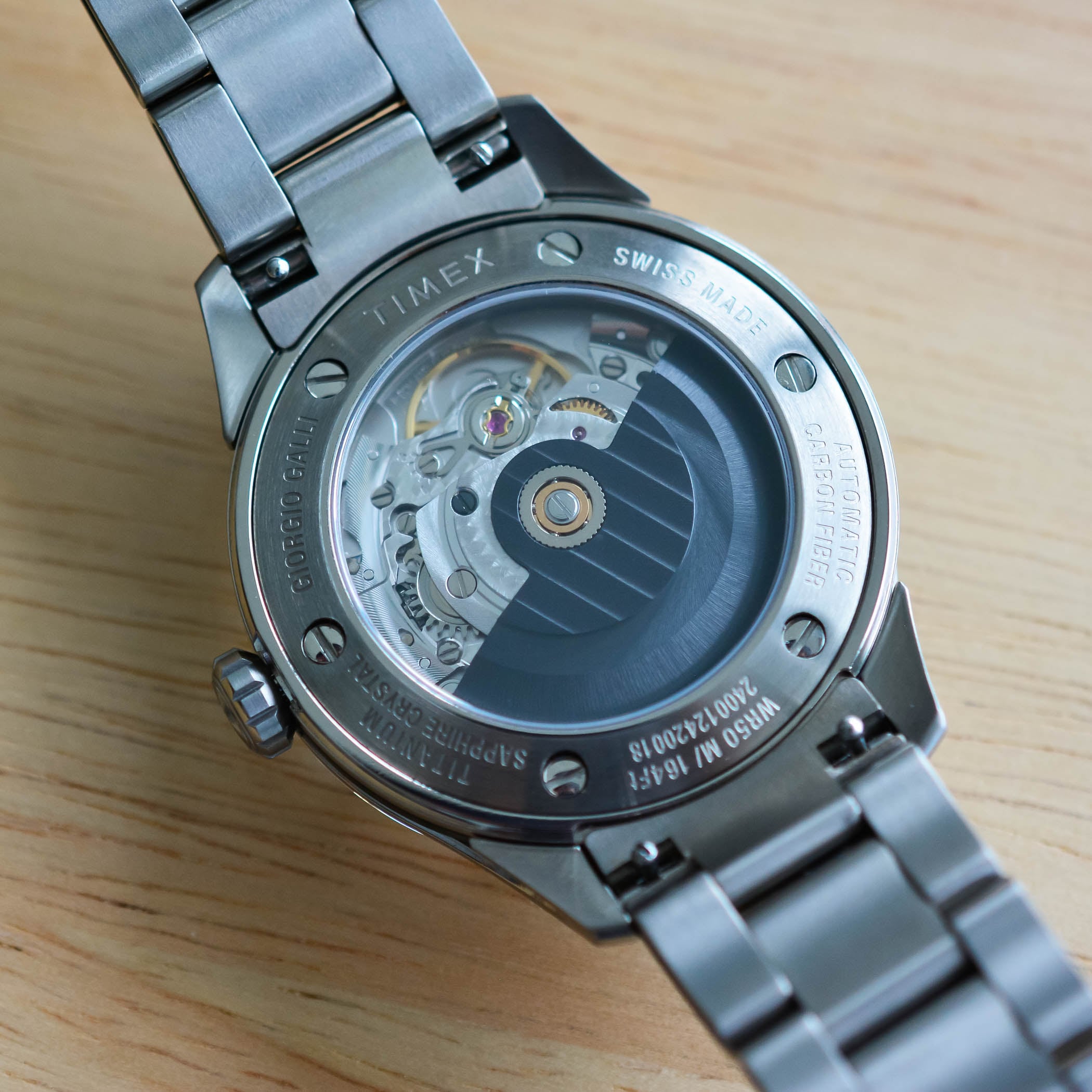
As Timex dipped its toes deeper into the mid-range luxury market, moving to Swiss movements was the logical step. The refined Giorgio Galli S1 housed a Miyota 9039 automatic (with a sub-USD 500 price point), while the S2 made that first move to a Sellita SW200-1 (alternative to ETA’s 2824-2) and was a bona fide Swiss-made piece. The S2Ti continues with a SW200-1 with a custom black (ion-plated) rotor with Côtes de Genève and perlage underneath. It’s well decorated and presents nicely through the sapphire exhibition caseback, which is secured via six screws. Functions include central hours, minutes, hacking seconds and date, with the latter not utilised here. My only criticism would be the phantom date setting, given that the no-date SW200-1 b version exists, although it’s an easy niggle to overlook. It has 26 jewels, beats at 28,800vph (4Hz) and comes with a 41-hour power reserve.
Final Thoughts
Given the success Timex has enjoyed for decades with affordable quartz watches and recent mechanical counterparts, it’s understandable that some enthusiasts will hesitate at an almost USD 2,000 Timex. The Giorgio Galli S2Ti is certainly not overpriced for what’s being offered, and the all-titanium build with the I-Size bracelet is upscale by any measure – we’re not looking at just another Sellita piece trying to be more than it is. Grand Seiko included Seiko on the dial (both names were present) up until 2017, which also gave pause to some, as it seemed like such an expensive “Seiko” compared to more traditional luxury Swiss options. Dropping Seiko from the dial helped distinguish the two divisions. Timex and the Atelier division face the same early perception issues, but I think that sentiment is shifting. The Giorgio Galli S1 and S2 set the stage for what’s to come, while the latest Atelier M1a broadens the collection with new premium designs. Don’t let the Timex name throw you, as the Giorgio Galli S2Ti is in a different league than its lower-priced cousins and every bit as refined and sophisticated as similarly priced watches from major Swiss brands.
The Giorgio Galli S2Ti is limited to 500 pieces and retails for USD 1,950 or EUR 1,950, and few are left as it’s sold out in some markets. For more information, please visit Timex’s website.

5 responses
Great review of an interesting product. Certainly more appealing than getting a plastic AP!
While Timex is aspiring to a higher level of watch here, AP is aspiring to the opposite direction with their upcoming swatch market offering. How the mighty are falling. Is this a prelude to AP getting bought out? The vultures are starting to circle, as AP puts themselves up for pickings.
Really good looking watch at a really unreasonable price. I own the first Galli Timex, the S1 and I remember having a difficult time rationalizing the nearly $500 for that. Certainly a bracelet and off the shelf swiss movement don’t justify 4x the price?
Not cool at all, just ripping off Ming design aesthetics.
Timex has completely lost the plot…