


 Not all images were able to load for printing. Please close the print window and try again.
 The History of American Watchmaking
Although not active until the 19th century, American watch manufacturers revolutionised the industry with mass production and interchangeable parts.
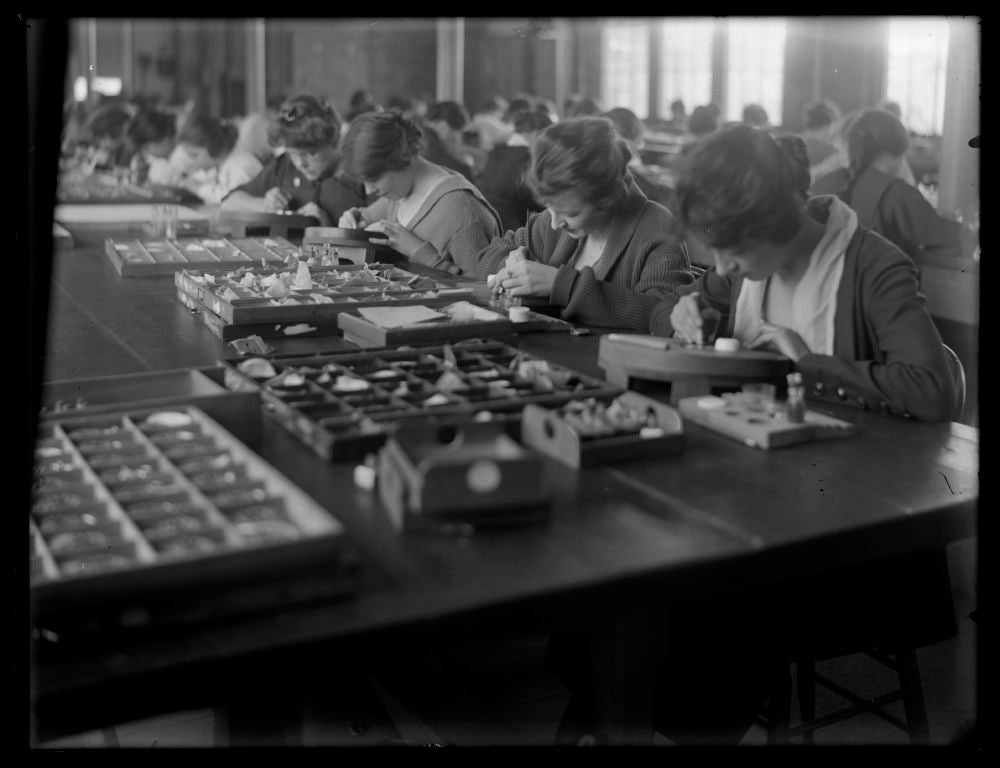
Pocket watches were born in the early 16th century in Germany (Nuremberg eggs) but were very expensive, handmade curiosities that kept horrible time and were composed of components unique to each piece. Replacement parts had to be custom-made, and manufacturing times were long – it could take a year to produce a single watch. This dynamic somewhat improved over time as watchmaking schools grew throughout Europe and innovations increased accuracy and production techniques, but watches remained painstakingly handmade and very expensive into the 19th century. In fact, a pocket watch was often the most expensive item someone would purchase and own prior to the 1850s. The American system of watch manufacturing changed the game by introducing automated machines for the mass production of interchangeable parts, bringing watches to the masses for the first time.
Waltham
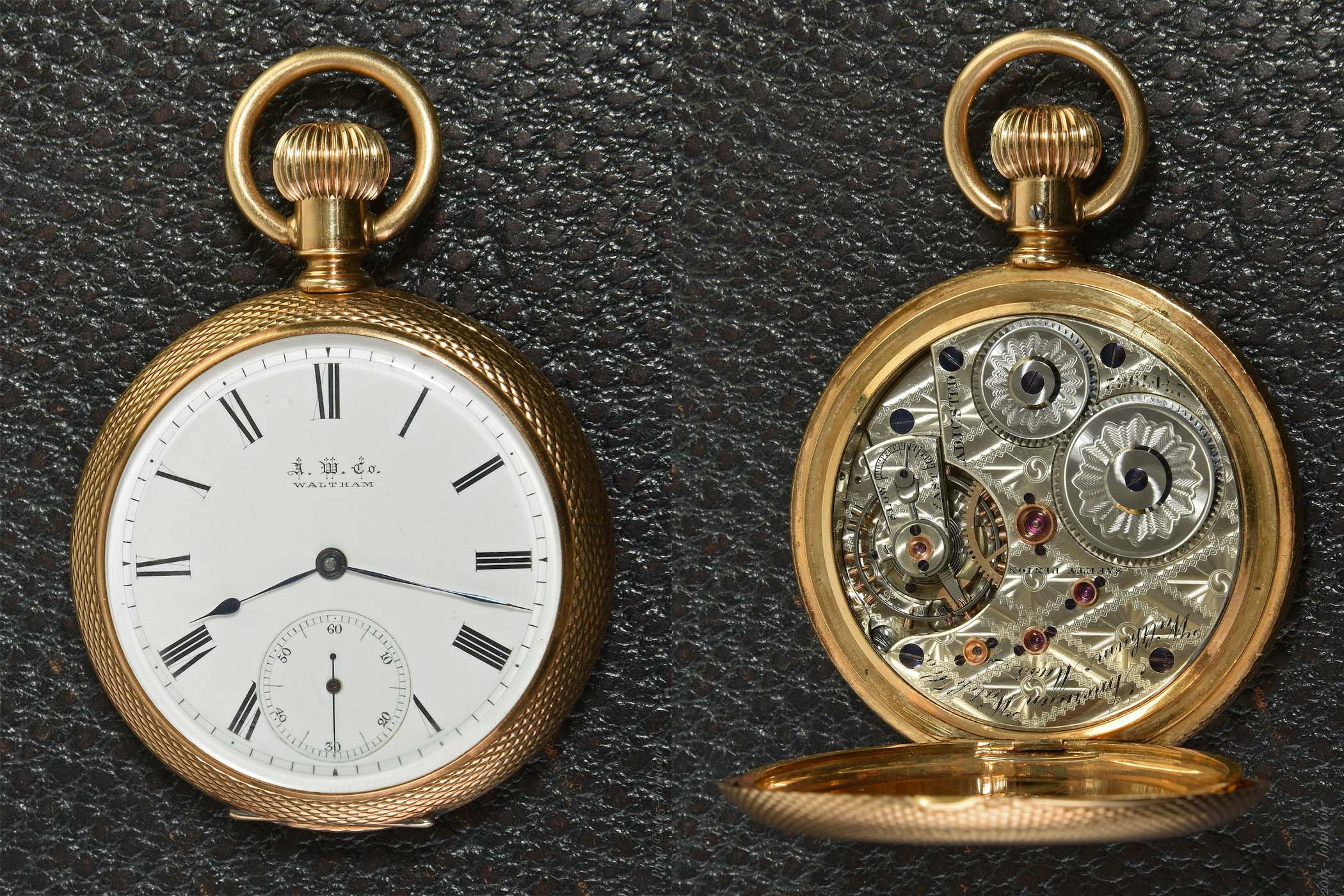
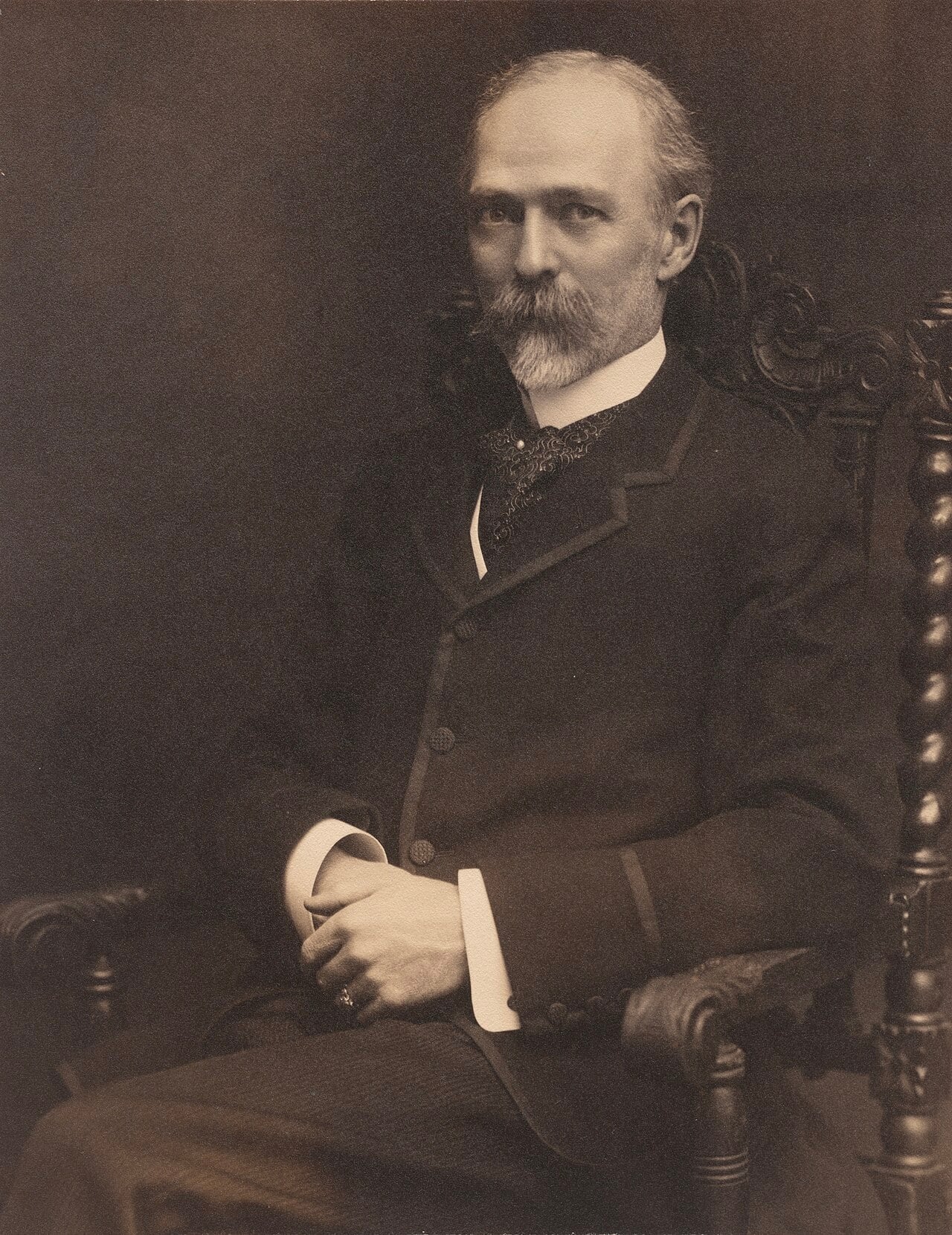
The American system essentially copied the firearms industry that had pioneered mass production of interchangeable parts and strict quality control. American watch repairman Aaron Dennison took particular inspiration from the Springfield Armory in Massachusetts that had a rapid assembly line based on identical, machine-made parts. Prior to Dennison’s work, brothers Henry and James Pitkin had developed their own crude watchmaking machinery with a completed movement in 1838, and around 900 watches were made by 1845. These were the first known to have truly interchangeable parts within the movements. In 1850, Dennison partnered with clockmaker Edward Howard to manufacture watches based on the Springfield Armory’s production methods, and a factory was established in Roxbury (Boston, Massachusetts). Manufacturing pioneer David P. Davis and financial expert Samuel Curtis soon joined the team. They opened the Warren Manufacturing Company, and 30-hour watches were mass-produced starting in 1852, with 5,000 coming off the line under several names – the Warren, the Samuel Curtis and the Dennison, Howard, and Davis (of which 4,000 were made). In 1854, the company moved to Waltham, Massachusetts and changed its name to the Waltham Watch Company.
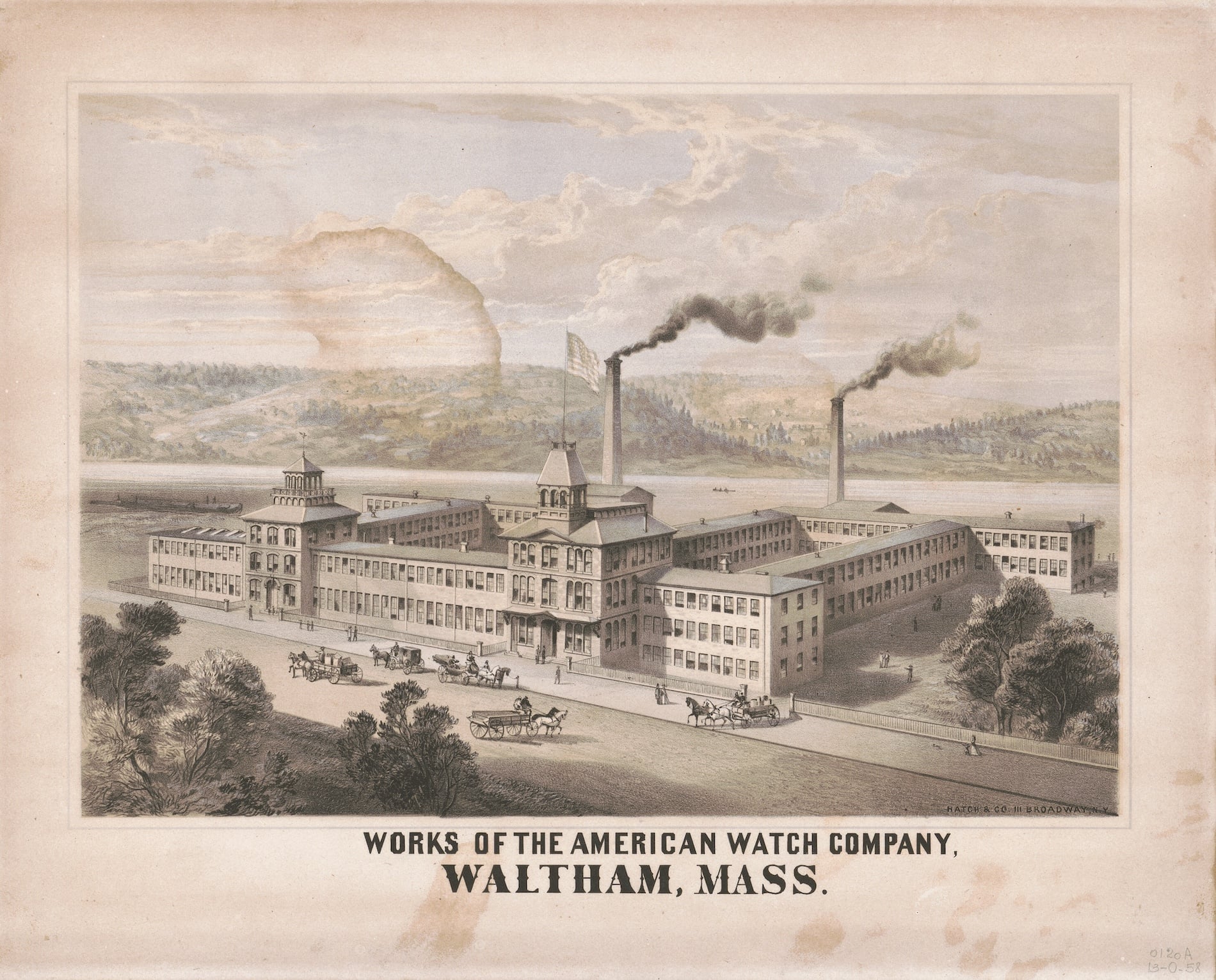
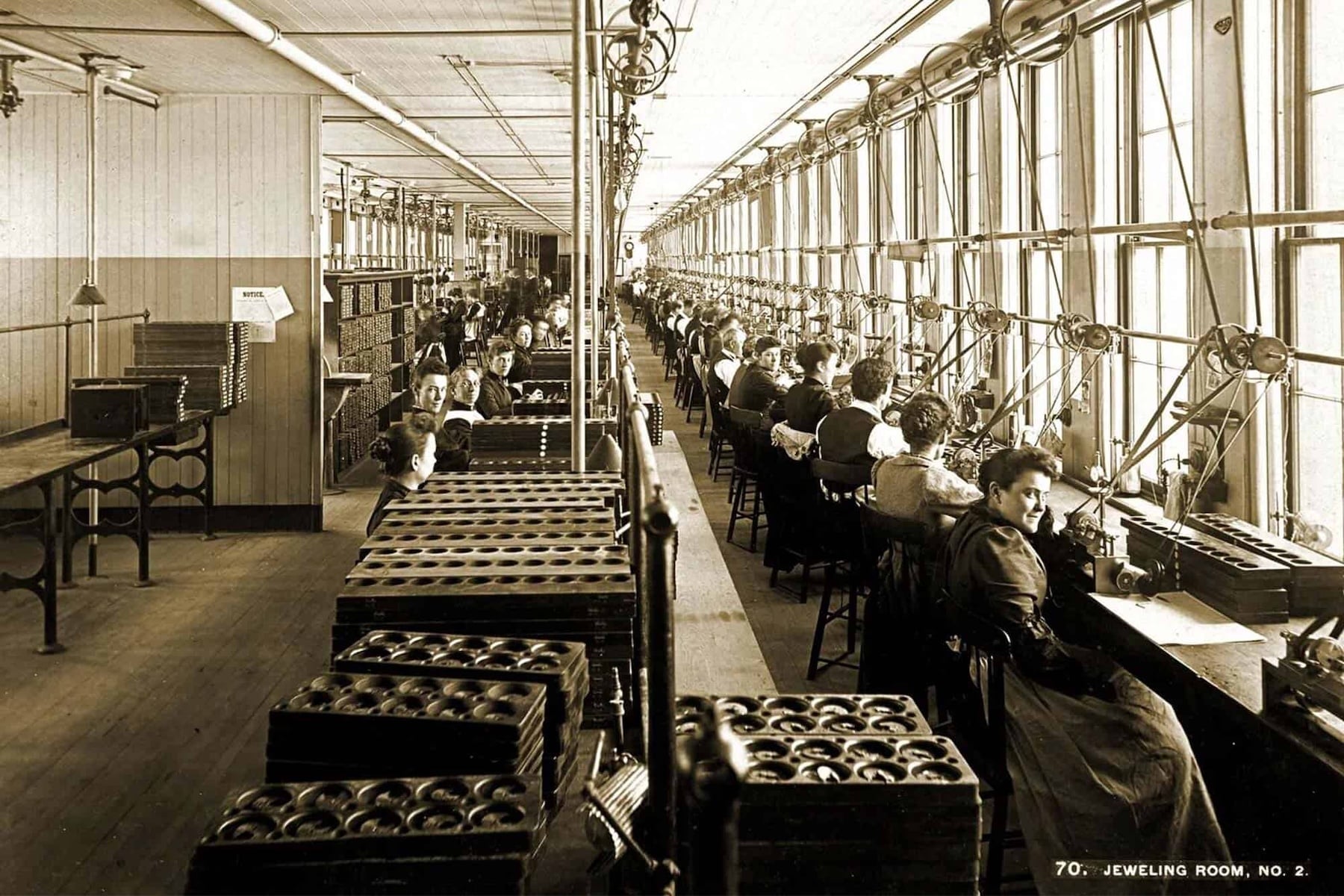
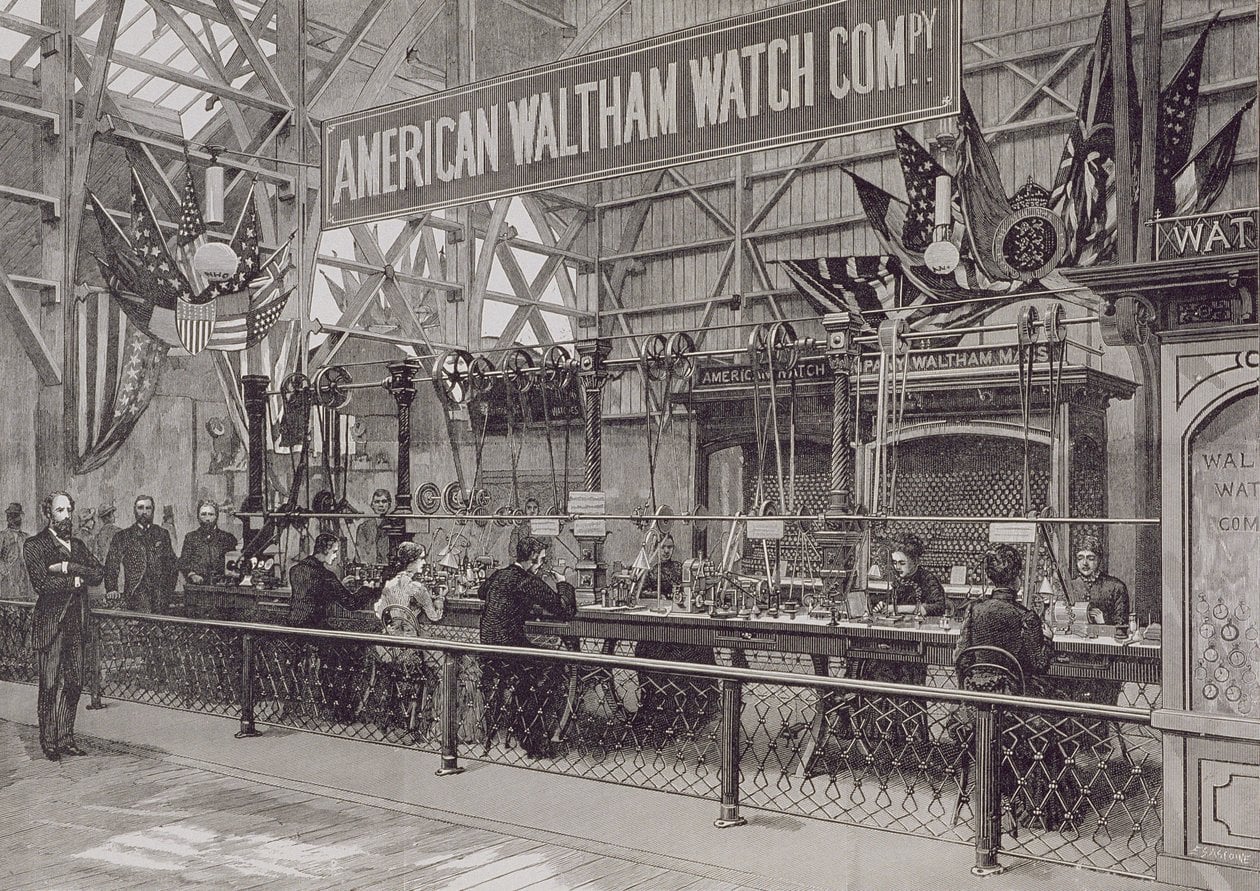
Difficulties plagued the company early on, from economic slowdowns that stalled sales to rising production costs as machines were developed and perfected. The company went bankrupt in 1857 and was bought by New York watch importer Royal Robbins, who kept Dennison on as superintendent of the facility until 1862. Wartime conditions jump-started the company as soldiers were eager for affordable field watches as the American Civil War started in 1861. The William Ellery watch was developed and sold for $13, which was very attainable for a pocket watch at the time (around USD 500 today) and made up 45% of sales by the end of the war. In 1876, Waltham demonstrated automated machinery, including a screw-making machine at the Philadelphia Centennial Exposition, winning the first of its kind gold medal for watch precision. Following the Civil War, the company shifted focus to railroad chronometers that were vital for the safe scheduling of train traffic throughout the country. Waltham was among the first to mass-produce highly precise and reliable chronometers for the railroad industry, starting with Model 1870 Crescent Street. The 21-jewelled Vanguard was the next model and featured a patented power reserve indicator, ensuring that railroad personnel always had a wound timepiece. With the expansion of the American Transcontinental Railroad and the international rise of trains, Waltham became a dominant player in global sales.
Ingersoll Watch Company
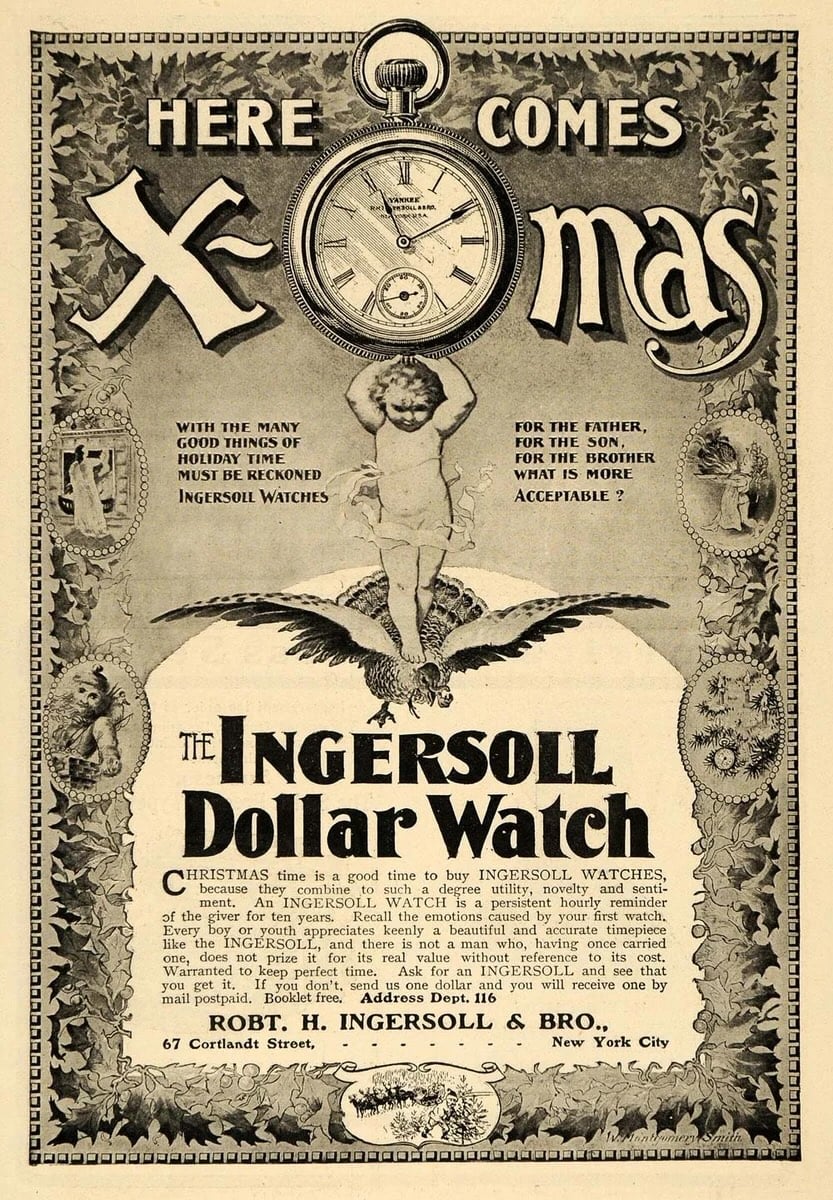
Founded in 1892 by brothers Robert and Charles Ingersoll, Ingersoll Watch Company followed Waltham’s success with mass production, but was able to significantly drop prices to a level that truly brought pocket watches to every worker. The best example is the Dollar Watch, which sold for a dollar (of course) and allowed just about anyone to own a reliable timepiece – it was the cheapest watch in history at the time. Initially called the Yankee watch in 1896, it cost no more than one day’s pay for the average American, and the marketing slogan became The Watch That Made the Dollar Famous. Ingersoll had partnered with the Waterbury Clock Company for production, and the watch used interchangeable stamped parts, a simplified pin-pallet escapement and contained no jewels. By 1899, 8,000 Dollar Watches were produced per day and 3,500,000 per year by 1910. Even Theodore Roosevelt mentioned that America was recognised for the Dollar Watch as he travelled.
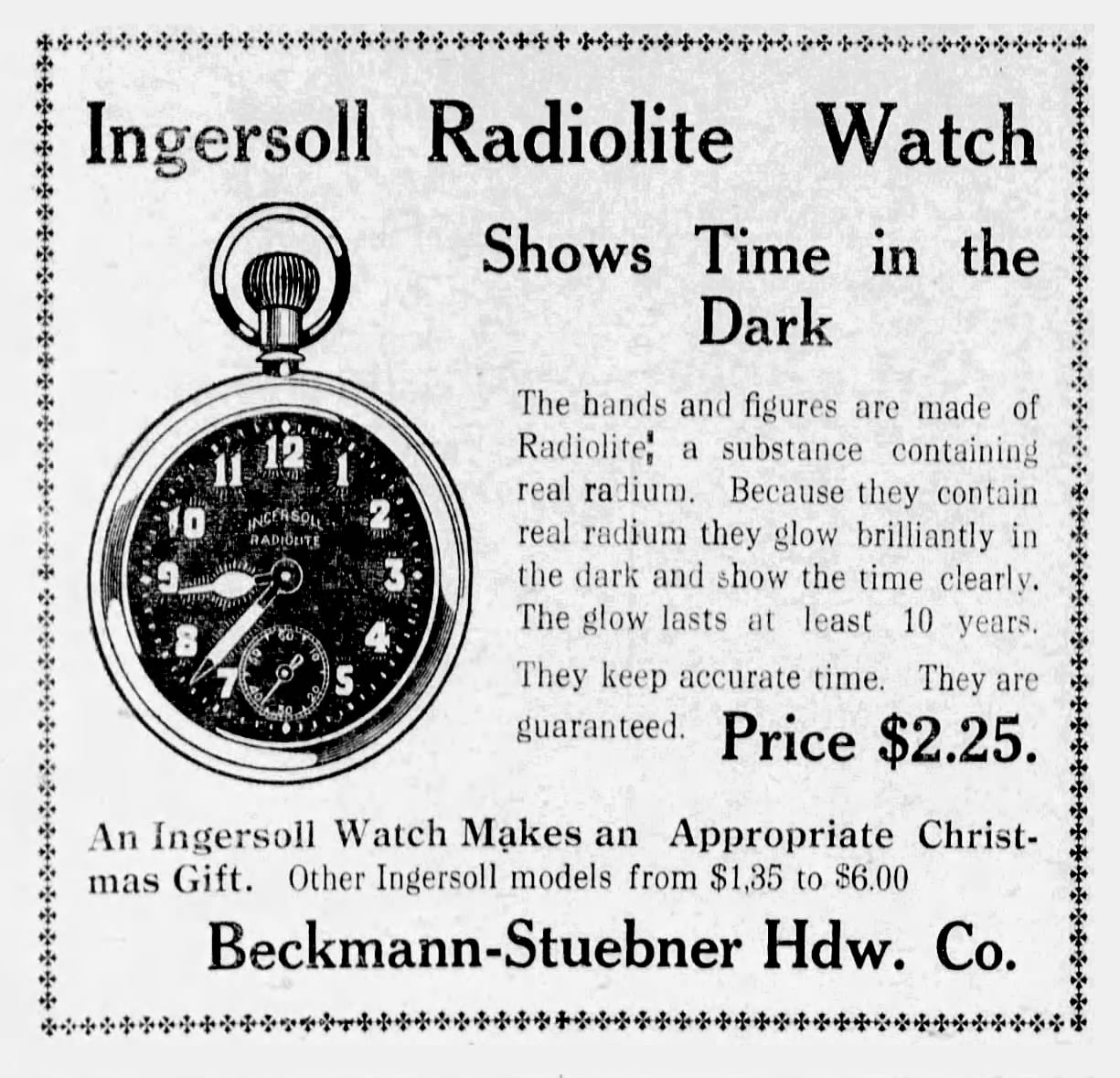
Ingersoll expanded to London in the early 20th century and sold the Crown Pocket for five shillings, which was equivalent to one US dollar. Local production began under British subsidiary, Ingersoll Ltd., and continued well into the 1920s. Following acquisitions (New England Watch Company and Trenton Watch Company), Ingersoll was producing 10,000 watches per day and introduced the Radiolite in 1916, the first mass-produced and affordable watch to feature a radium lume dial. This followed Guido Panerai in 1914 with a patented Radiomir luminescent paint for the Italian Royal Navy, although radioluminescent paint was invented in 1908 by Sabin Arnold von Sochocky. The Radiolite started as a pocket watch, but evolved into wristwatches during World War I and was a popular and widely available luminescent watch for both civilian and military use. Another popular 7-jewelled model debuted in 1917 called the Reliance, which likely sold in numbers above 100,000 by 1922 (official records are incomplete).
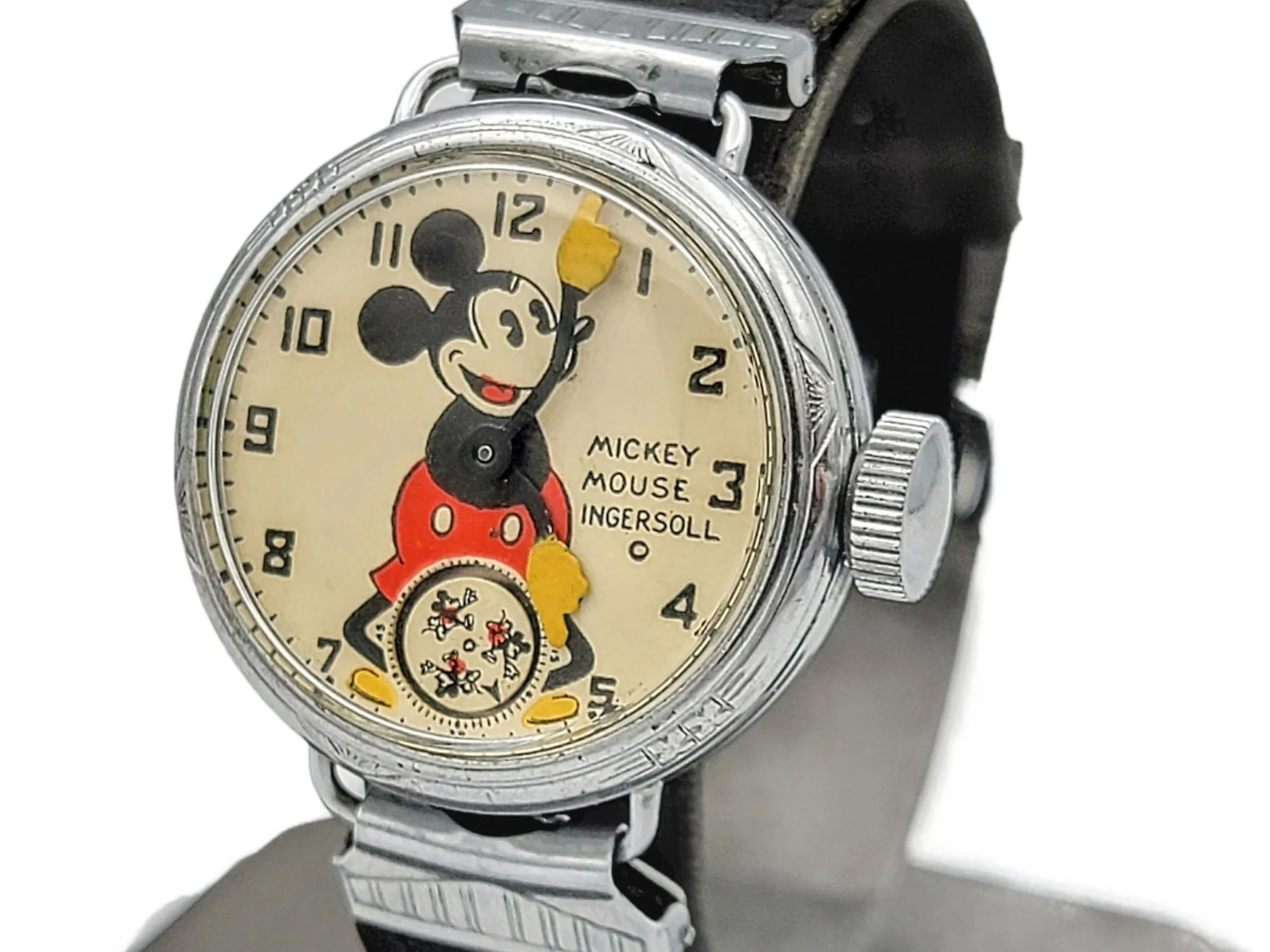
Following World War I and the start of America’s economic downturn, Ingersoll declared bankruptcy in 1921 and was acquired by Waterbury Clock Company after a long-standing production partnership. It was renamed Ingersoll-Waterbury, and the London-based division was sold in 1930, but financial hardships were unavoidable at the time, and one watch ultimately saved the company. In 1932, both Disney and Ingersoll-Waterbury were facing imminent bankruptcy during the Great Depression, and marketing enthusiast Kay Kamen approached both companies to produce a watch that would become legendary. He convinced Disney to license Micky Mouse for use as a character watch for Ingersoll-Waterbury to produce, and the Micky Mouse watch with animated arms for hour/minute hands debuted in 1933 at the Chicago World’s Fair. A wristwatch variant sold for USD 3.75 and a pocket watch for USD 1.50, and they’re credited with saving both Disney and Ingersoll-Waterbury from financial collapse. Within two years, over 2.5 million were sold, and the wristwatch was a global sensation. It became a favourite of celebrities like John Lennon, Andy Warhol and Grace Kelly, and Walt Disney himself received the 25-millionth Micky Mouse watch in 1957.
Hamilton
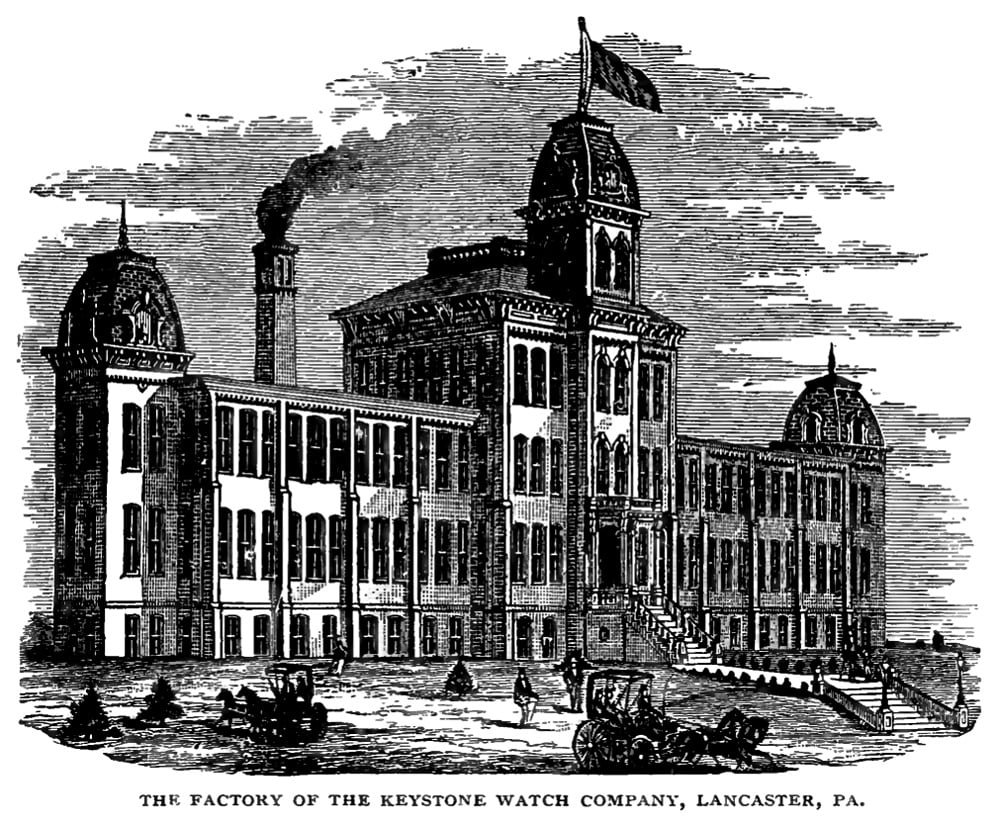
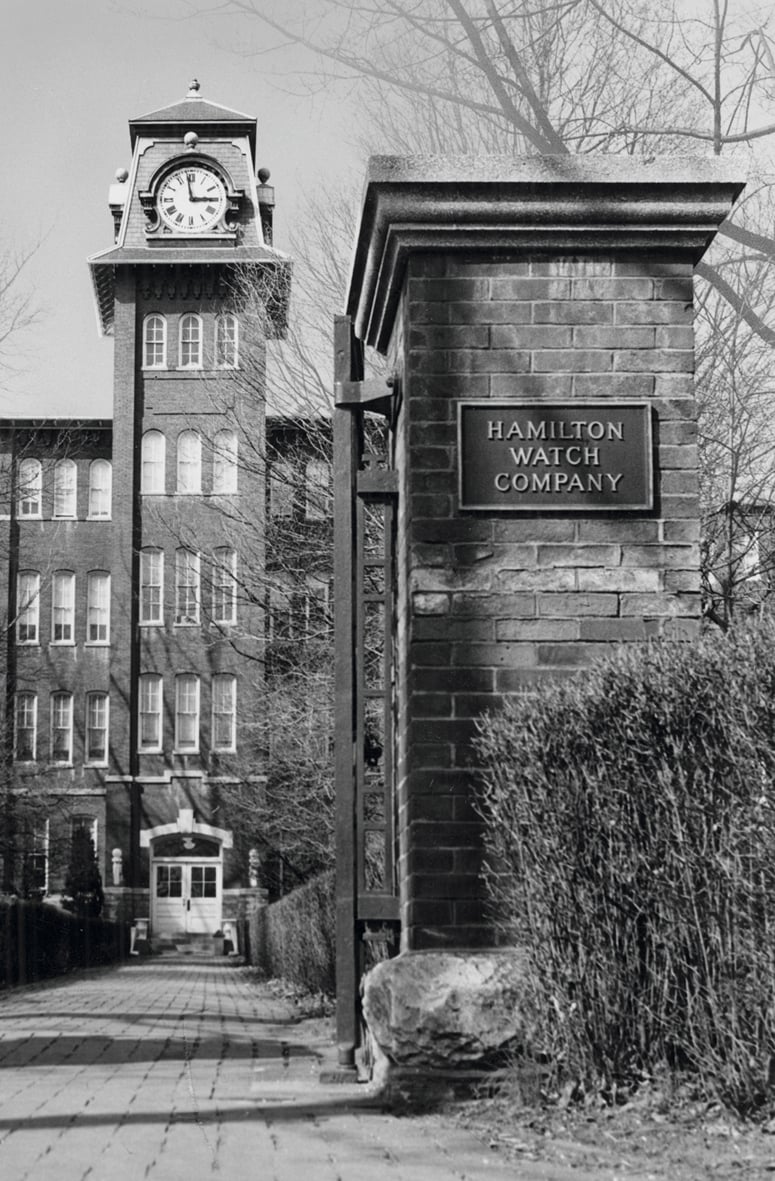
Hamilton started US operations in 1892 as a successor to Keystone Standard Watch Company that was established in 1886 by Abram Bitner. The original company name was Columbian, but they soon realised that Waterbury Watch Company had already trademarked the name, so it became Hamilton Watch Company after attorney Andrew Hamilton, who founded Lancaster County, Pennsylvania, where the brand was headquartered. It purchased machinery from Aurora Watch Company following its bankruptcy and liquidation in 1892 and produced its first 17-jewelled pocket watch the following year. The brand’s first watch series was called the Broadway Limited in 1899 and was marketed as the Watch of Railroad Accuracy (analogous to COSC-certified today). It set a standard that endured for decades, and railroad workers embraced it into the 1930s. Hamilton’s first wristwatch launched in 1917 for wartime soldiers with the repurposed 17-jewel calibre 983 that was intended for women’s pendant watches.
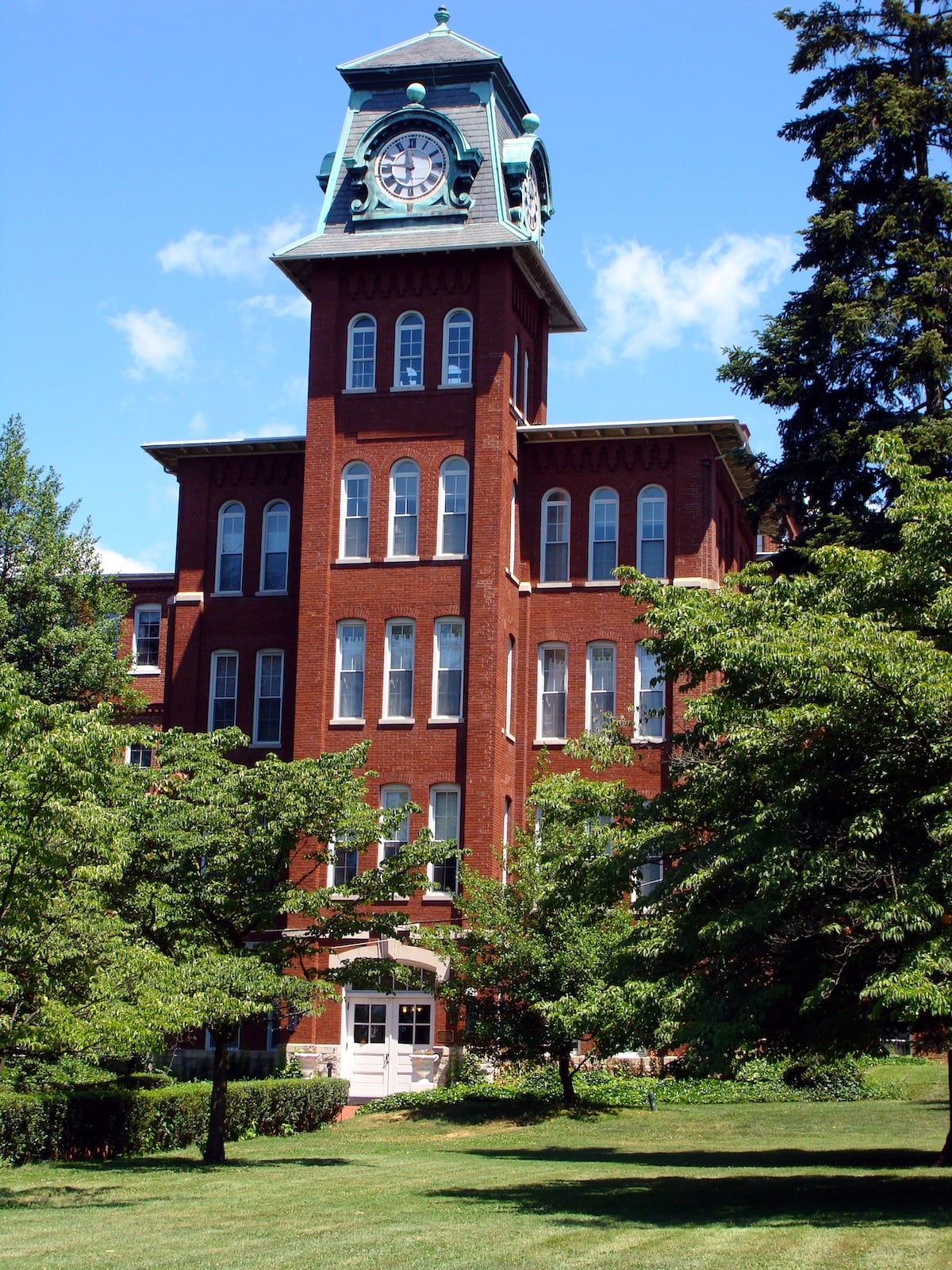
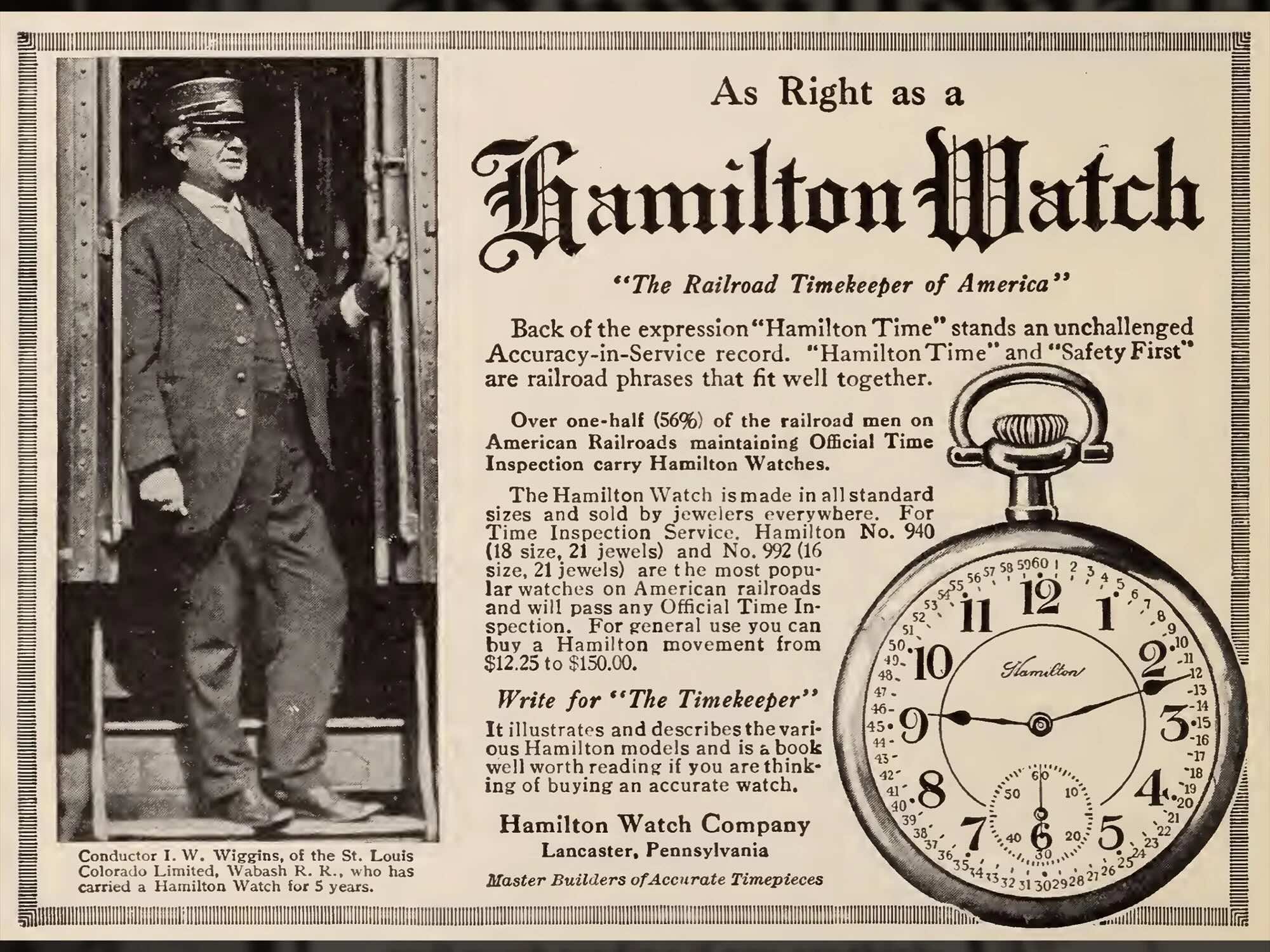
In 1920, Hamilton’s Watch 992 was picked by the US government as the official railroad watch in France for American-built railroads. However, Hamilton pocket watches had been chosen by railroad engineers and conductors prior to this, as the brand was a gold standard for accuracy and reliability. By 1912, more than half of railroad personnel carried Hamilton pocket watches with calibres like Grade 936, 992, and 950. The brand also capitalised on the rise of aviation and became the first official timekeeper for U.S. Air Mail flights.
The birth of cinema and the popularity of feature films and celebrities helped define Hamilton’s legacy, as it has more movie appearances than any other brand – over 500 to date. It all started in 1932 with Shanghai Express and continued through the decades with Elvis Presley wearing the new electric Ventura in Blue Hawaii in 1961. Debuting in 1957, the Ventura was the first electric wristwatch that replaced the mainspring with a battery-powered counterpart, although it maintained a traditional balance wheel. This allowed wearers to forgo winding as the battery did the heavy lifting, but the original Calibre 500 and subsequent movements proved too temperamental and unreliable. It was discontinued in 1963 but made a huge return in the Men in Black movies from 1997 (now as reliable quartz models), while major hits like 2001: A Space Odyssey, Interstellar, Tenet, and Oppenheimer all featured Hamilton watches, either production models or custom pieces.
Elgin
The Elgin National Watch Company was founded in Elgin, Illinois, in 1864, although it was initially called the National Watch Company, employing many former Waltham personnel. Its first pocket watch was launched in 1867, the B.W. Raymond (named after a railway president and Elgin investor), and the brand soon became a serious player in the railroad industry. Like all major American brands in the late 19th century, Elgin was pushing watches into the railroads as the booming industry demanded exacting precision, and high acceptance was a testament to a brand’s accuracy and quality. The company rebranded itself as Elgin National Watch Company in 1874 and at one time had the largest watchmaking factory in the world.
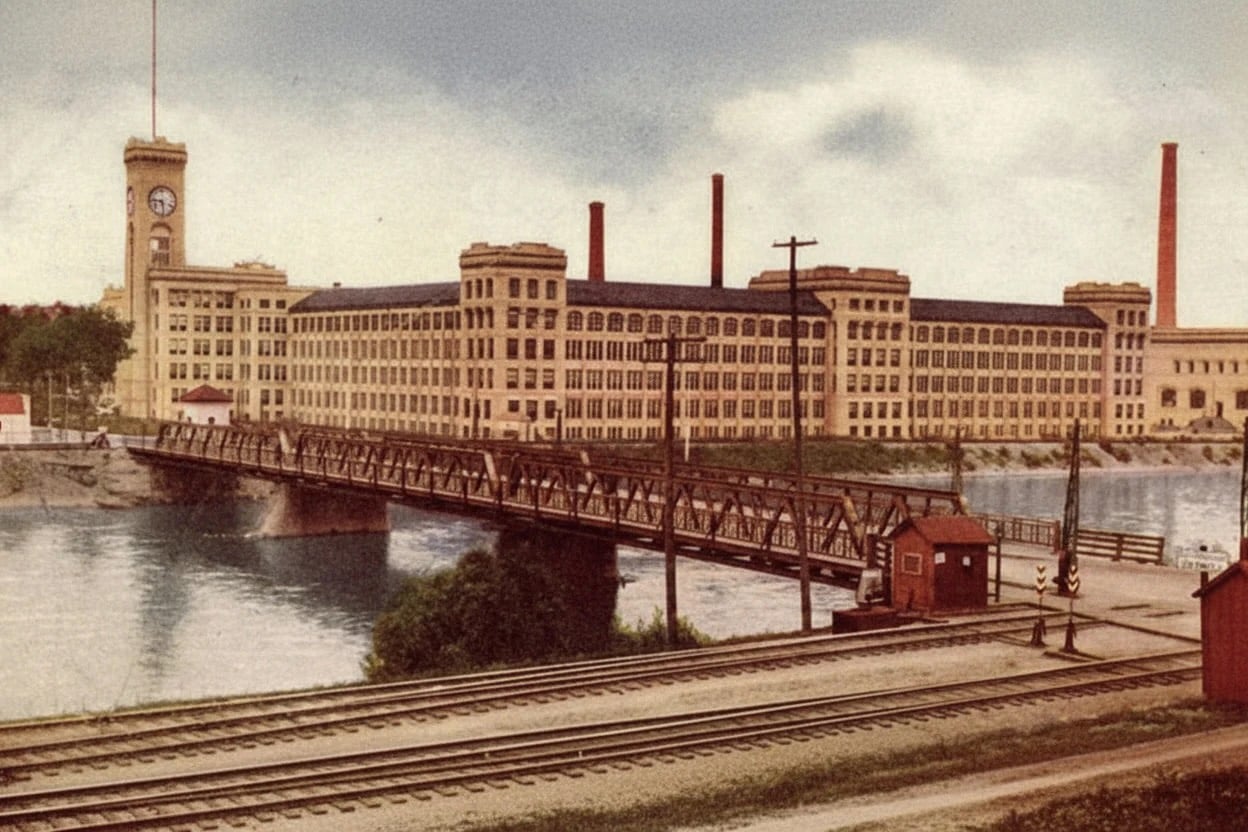
Elgin contributed significantly to mass production and interchangeable parts, and produced over 55 million watches during a century of watchmaking. Key achievements before World War II include the Elgin Observatory in 1910 that acted as an “atomic clock” of the era by tracking time via the movement of stars, which was used to set its master regulator clocks (replacing sundials that were a prior gold standard). Time was measured to a hundredth of a second at the observatory and the marketing term Elgin takes the time from the stars and puts it in your pocket was soon coined. By the 1930s, the brand had established specific luxury collections for men and women – Lord Elgin and Lady Elgin – alongside the more affordable core and DeLuxe models. A premium railroad watch debuted just before the 20th century, Father Time, and featured a temperature-resistant balance wheel and a high jewel count of 21 jewels. There were many Father Time variants and most featured luxury elements like gold screws, engraved cases and high-end movement finishing, which was unusual for such a purpose-built piece. A notable safety feature was lever-setting that required the bezel to be unscrewed before time could be set to prevent accidental changes with the crown (similar in concept to a locking dive watch bezel).
Bulova
Bulova was founded in 1875 in New York City by Joseph Bulova, a Bohemian-Jewish immigrant who started the company as a jewellery and clock/watch repair shop. Clock and watch production began in 1911 with a dedicated factory in Biel, Switzerland, opening in 1912 for pocket and wrist watches using the American system of mass production. This meant that movements were Swiss-made, blurring the American designation a bit, although design and innovations still happened in New York (watches were imported and sold very well in America). Following Elgin’s example, Bulova established an observatory in 1927 on a skyscraper roof to determine precise time from star observations. The brand became known for Art Deco designs with square or rectangular cases, with models like the Commodore, Banker and Breton. The Westfield Watch Company became a subsidiary by 1931 and was marketed as a more affordable line compared to proper Bulova models – less movement jewels and lower-quality cases and straps. The movements were still Swiss-made, but separate from the standard Bulova line. In the mid-1930s, there was some domestic movement production to bypass import restrictions, and market watches as truly American-made, and almost all had high jewel counts of 21 or 23 jewels. This was more of an exception than a rule, as there was continuous reliance on Swiss movements.
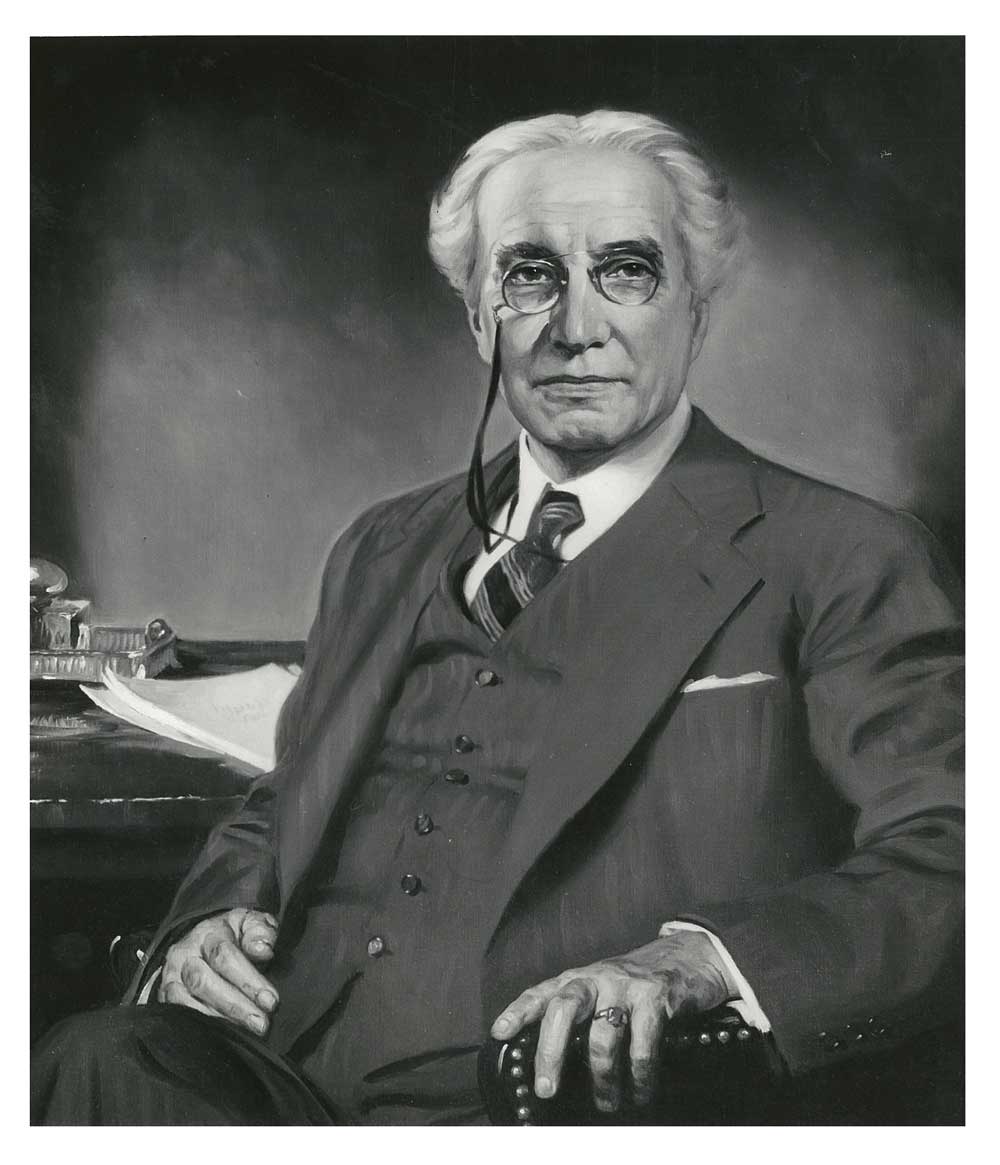
The brand became a marketing pioneer with advertising in the Saturday Evening Post starting in 1922, a popular American magazine published weekly. It made the first national advertisement broadcast on American radio in 1926, providing correct time to millions of listeners – “At the tone, it’s 8 o’clock, Bulova Watch time” and by 1940, the brand was sponsoring the top twenty radio shows in America. In July of 1941, the first day that advertising was greenlit for television, Bulova was on a New York station before a Brooklyn Dodgers and Philadelphia Phillies game. The advertisement was simply a Bulova clock with Bulova Time on the screen with the brand’s logo, which remained for one minute as the second hand did a full sweep. It was a modified station test pattern (a temporary screen before a show or event) and a real marketing coup for the brand.
The Accutron
Bulova is arguably best known for its Accutron line from 1960, which was the first fully electronic watch prior to Seiko’s quartz Astron in 1969. It replaced the mechanical balance wheel seen on older electric watches like Hamilton’s Ventura with a 360Hz tuning fork, designed by Swiss innovator Max Hetzel, who had joined Bulova in 1950. A high-pitched hum from the vibrating fork replaced the familiar mechanical ticking sound, and accuracy was astounding for a wristwatch at the time – two seconds per day. This matches some of the most accurate mechanical watches in 2026. Although both the Accutron and later quartz movements used vibrating resonators, Accutron had a metal tuning fork that vibrated at 360Hz, while quartz used a shaped quartz crystal that vibrated at a much higher 32,768Hz. Unlike quartz, Accutron’s seconds hand swept smoothly via an index gear with over 320 teeth. Quartz used an electric circuit to convert the quartz crystal vibrations into one-second intervals, so the seconds hand ticked every second (which preserves battery life). The absence of a balance wheel also made the Accutron very shock-resistant, and NASA soon utilised models for spacecraft instrument panels. And while on the subject of NASA, commander David Scott wore his own Bulova Lunar Pilot Chronograph on the moon during the Apollo 15 mission, although astronauts otherwise wore the official Omega Speedmaster on all moon landings.
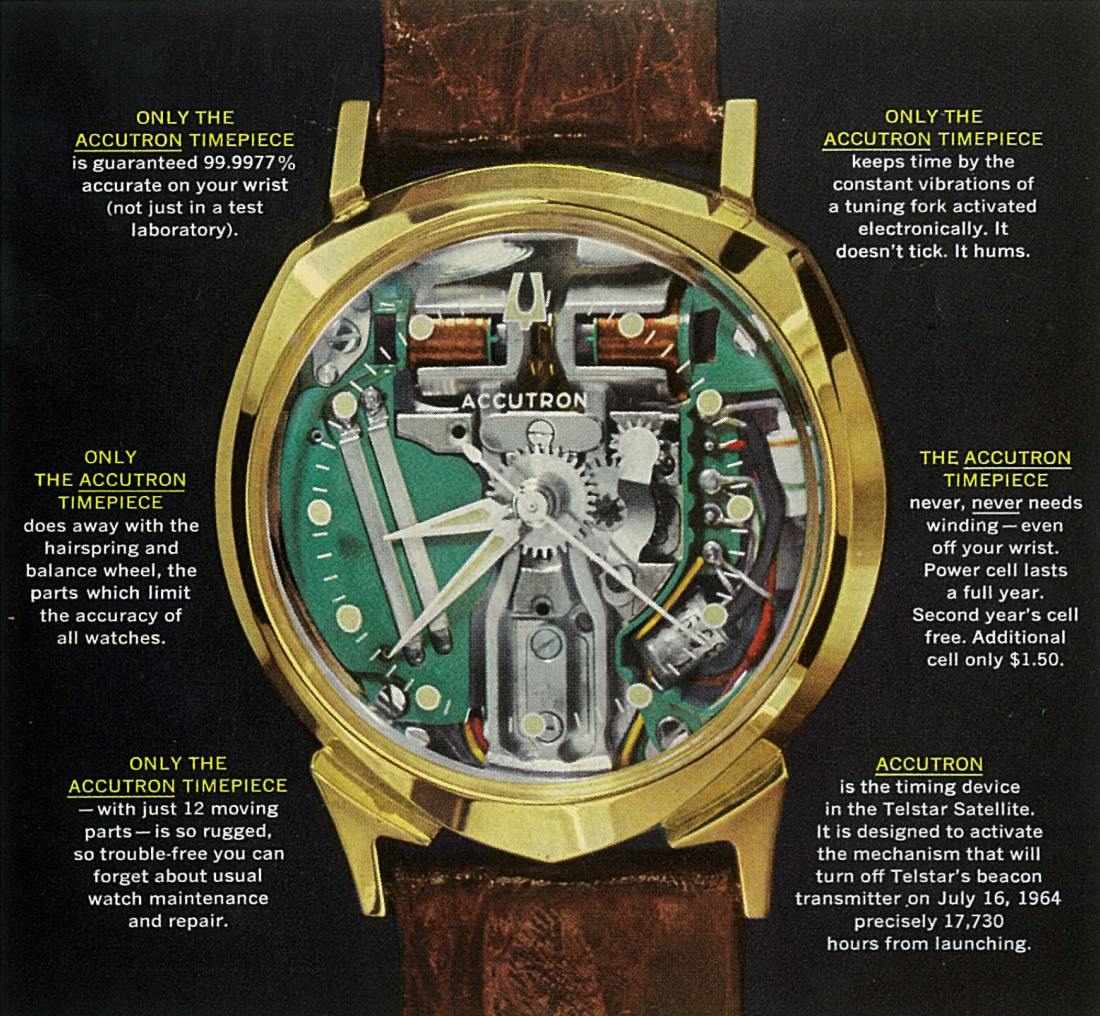
Accutron split from Bulova in 2020 to become its own independent brand, and models have used quartz technology since 1972, starting with hybrid movements known as Accuquartz – the quartz crystal was the master oscillator to ensure the highest accuracy, while the tuning fork continued to drive the gear train to maintain the smooth, sweeping seconds hand. By 1977, however, Accutron movements transitioned to proper quartz and discontinued the tuning fork technology entirely. It was revived in 2025 with the Accutron Spaceview 314 as a nod to the 1960 original, although quartz models still dominate the overall collection.
World War II
World War II had a huge impact on American watchmakers as all major manufacturers ceased civilian production for the war effort. This allowed Switzerland, a neutral nation that wasn’t burdened by military mandates, to push heavily into the American market and capture ground that domestic watchmakers could never recover. While the war itself brought large contracts and resulted in iconic wartime models, it was the catalyst for the total collapse of American watchmaking. Brands weren’t just producing watches for American and Allied forces, but mechanical fuses, torpedo timers and navigational instruments, and quickly modified assembly lines for the massive war effort. Of course, watches were a major focus as well, with models like the A-11 produced by multiple watchmakers.
A-11 Hack Watch
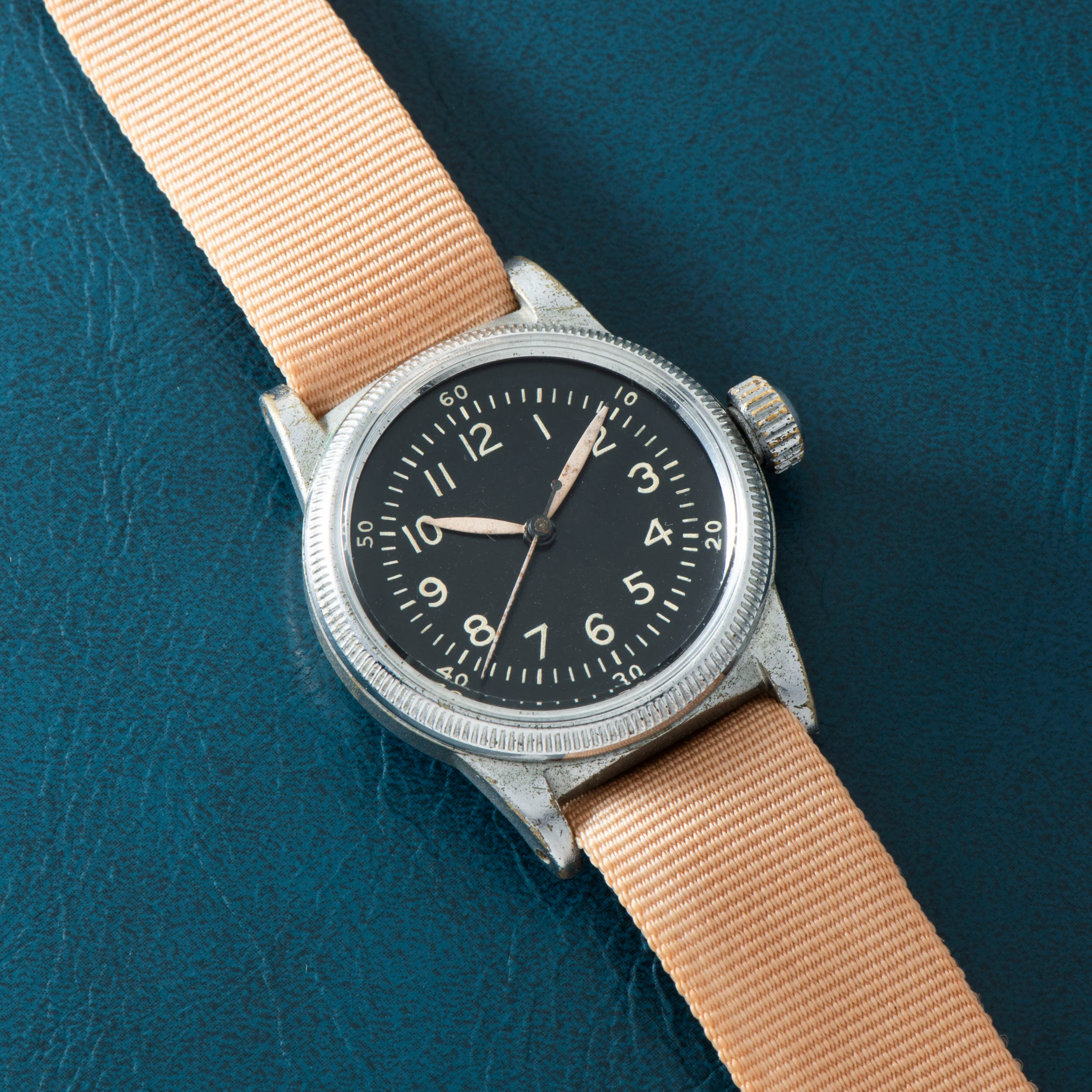
Nicknamed the watch that won the war, the A-11 from 1942 standardised the hacking feature to allow pilots and ground troops alike to synchronise watches for strategic operations, from aerial bombing runs to storming the beaches of Normandy. Similar in concept to other wartime series like the Dirty Dozen or B-Uhren, the A-11 was produced by multiple American watchmakers – Waltham, Bulova and Elgin – according to strict military specifications to ensure adequate supply for American and Allied forces. A highly legible black dial with luminous Arabic numerals, a water-resistant 32mm case, a sweeping central seconds hand with hacking and accuracy within +/-30 seconds per day via a 15-jewel movement made up the mil-spec 94-27834 (which was slightly revised with 94-27834-A and 94-27834-B in 1942 and 1943, respectively). The cooperation among American manufacturers, historically major competitors, ensured interchangeable parts among all models and hundreds of thousands were produced within a handful of years. Simple, reliable and vital for the war effort.
Marine Chronometers
Hamilton was the primary watchmaker for wartime marine chronometers, responding to a severe shortage of European-made counterparts. The watchmaker was commissioned in 1939 to ultimately produce over 10,000 marine chronometers to ensure precise longitudinal navigation without a reliance on radio in a sometimes violently moving ship in wartime conditions. The US Navy approved prototypes in 1942, and Models 21 and 22 were put into mass production in Lancaster, Pennsylvania – prior to this, European manufacturers could only produce a few hundred hand-crafted units per year.
Model 21 – This was Hamilton’s most premium chronometer that maintained accuracy to within a half second per day for longitudinal navigation (with a maximum deviation of 1.5 seconds per day). It was mounted below deck on gimbals within a wooden box to keep a constant position on the moving ship. The clock was fairly heavy, fragile, with a detent escapement and chain-driven fusee and designed to remain in a single, permanent location on the ship.
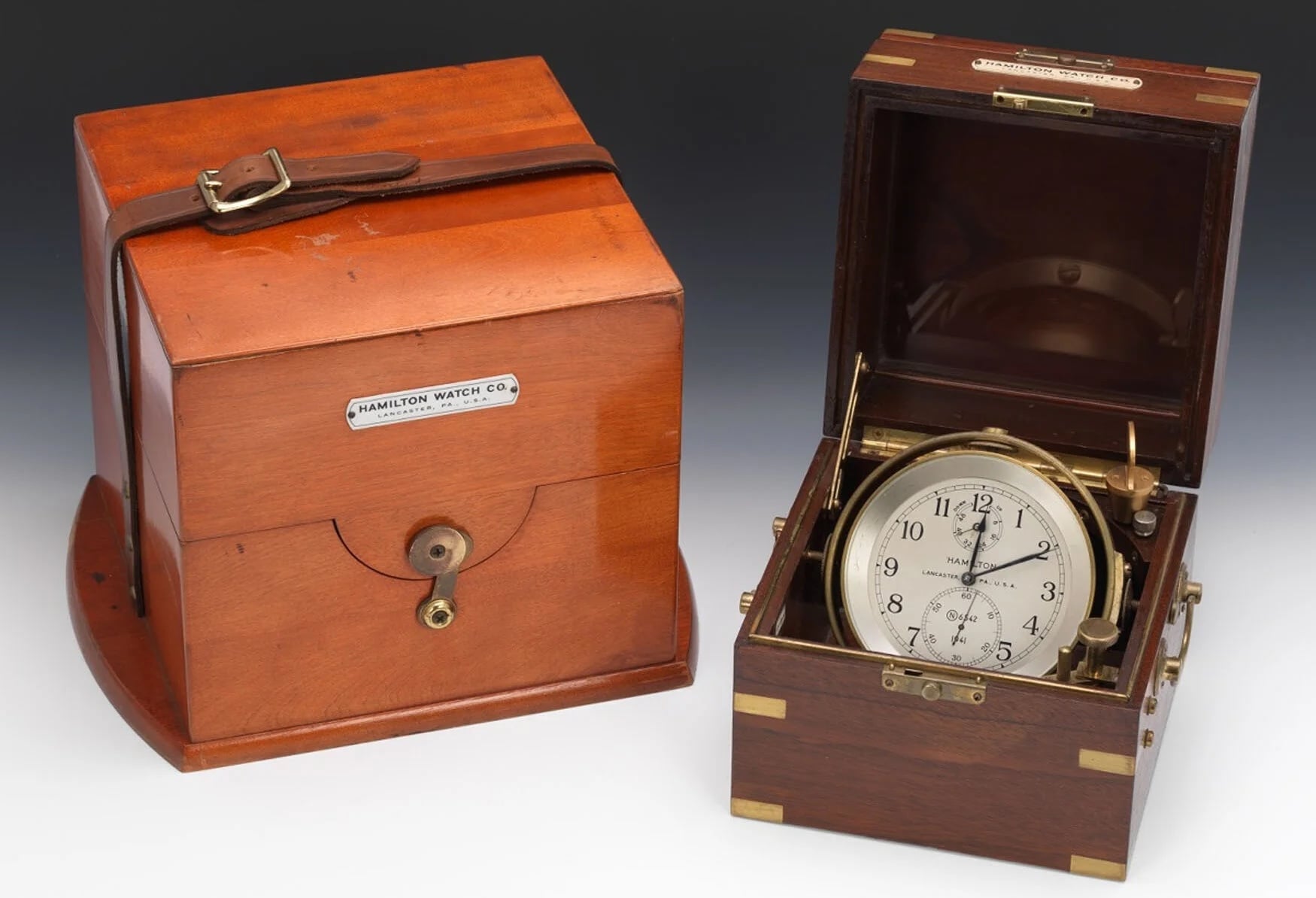
Model 22 – This was a deck watch designed for mobility throughout the ship with a more robust lever escapement. It was accurate to within 3 seconds per day and rugged enough for use on the deck and bridge. It could be mounted on a gimbal as a backup to the Model 21 or used as a large, extremely accurate pocket watch for smaller vessels on shorter missions like PT boats.
The Model 22 was discontinued in 1945 at war’s end, but the Model 21 was such a reliable and accurate marine chronometer that it remained in production until 1961, seeing plenty of action in both the Korean and Vietnam wars.
Timex
A nearly bankrupt Waterbury Clock Company was acquired in 1941 by Thomas Olsen and engineer Joakim Lehmkuhl, who quickly shifted focus to the war effort. Unlike other American watchmakers, conventional watches weren’t a major focus as the company mass-produced mechanical time-delay fuses, precision bomb timers and stopwatches for combat missions. Quality, consistency and automated production techniques earned the company the Army-Navy “E” Award in 1943, and Armalloy was developed as a new, extremely hard alloy for mechanical military parts. With its ongoing contributions to the war, the brand was renamed the United States Time Corporation, which led to a final name change in 1950 – Timex. This came from “Time” and “X”, which symbolised innovation and technical expertise.
After the war, Timex resumed civilian watch production using Armalloy bearings instead of jewels, allowing for very affordable models compared to competitors. In 1956, Timex began televising entertaining torture tests, including freezing watches in water, shooting them with arrows and positioning them in water tanks behind boat propellers. John Cameron Swayze was a famous news anchor and hosted many of these shows, and popularised the Timex slogan, It takes a licking and keeps on ticking. Unlike all other American watchmakers, Timex survived the downturn following WWII and effectively embraced the Quartz Crisis of the 1970s and 1980s, becoming one of the biggest and most popular brands in the world. By 1982, it shut down mechanical watch production altogether and focused solely on quartz, introducing some of the most popular watches in America, like the digital Ironman in 1986. In 1992, Indiglo debuted as a perfectly uniform electric backlight that replaced a miniature bulb that dimly and unevenly spread across the face, which was an industry standard at the time. It used a patented electroluminescent panel that worked with both analogue and digital models, and it revolutionised nighttime viewing.
Mechanical Timex
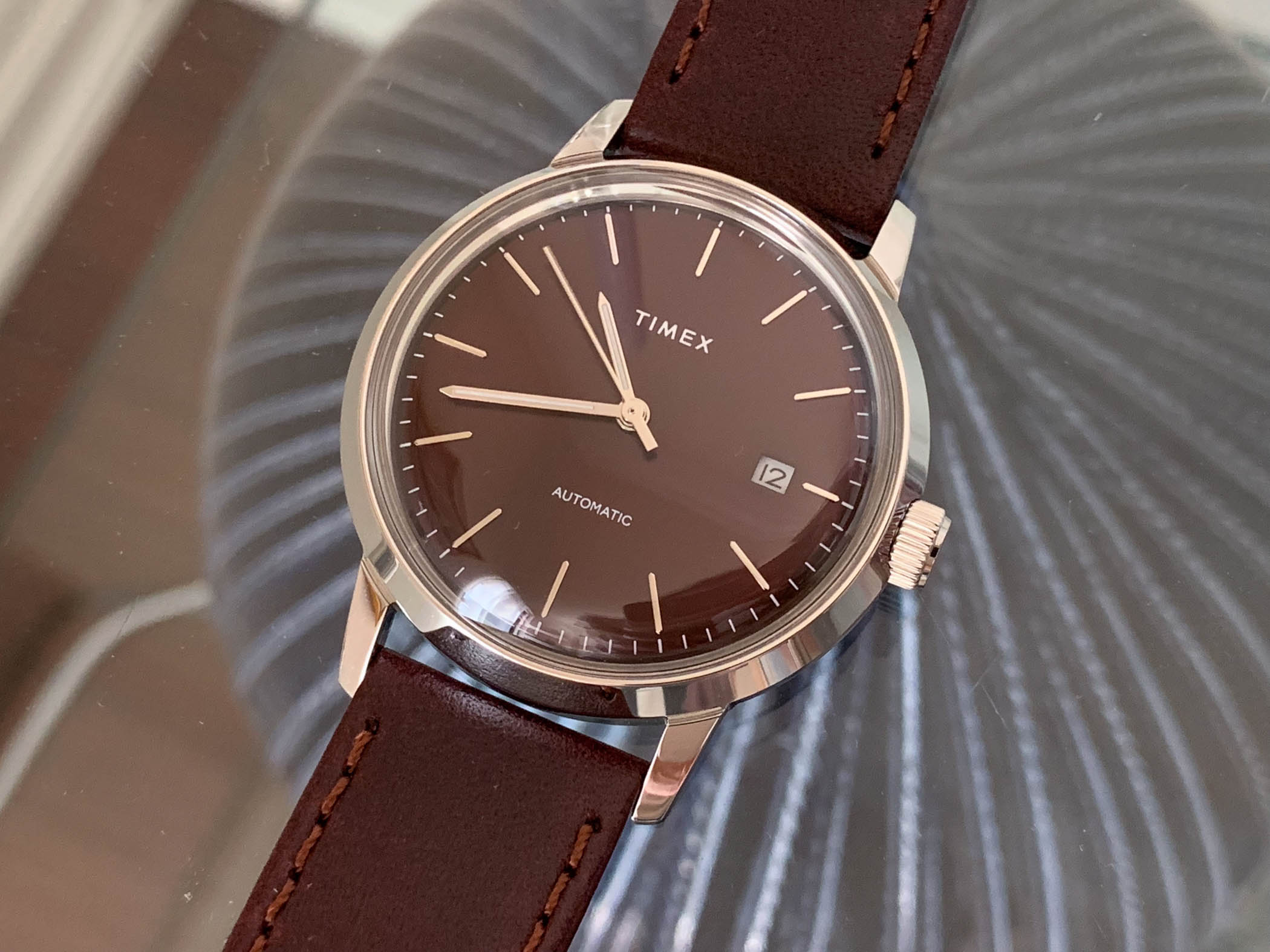
While Timex thrived during the Quartz Crisis and beyond, it also recognised consumer shifts and reintroduced mechanical watches after a 35-year pause. In 2017, Timex reissued a 1960s favourite called the Marlin with a retro 34mm case and hand-wound Seagull movement, and kept the price very affordable at USD 199. This was the start of a broad surge of mechanical collections that include Expedition, MK-1 and Deepwater that shifted to Japanese automatics from China’s hand-wound Seagull. Of course, quartz watches remain the core of Timex’s vast portfolio, but a growing mechanical comeback has helped redefine Timex as a forward-thinking and adaptable brand that understands market trends.
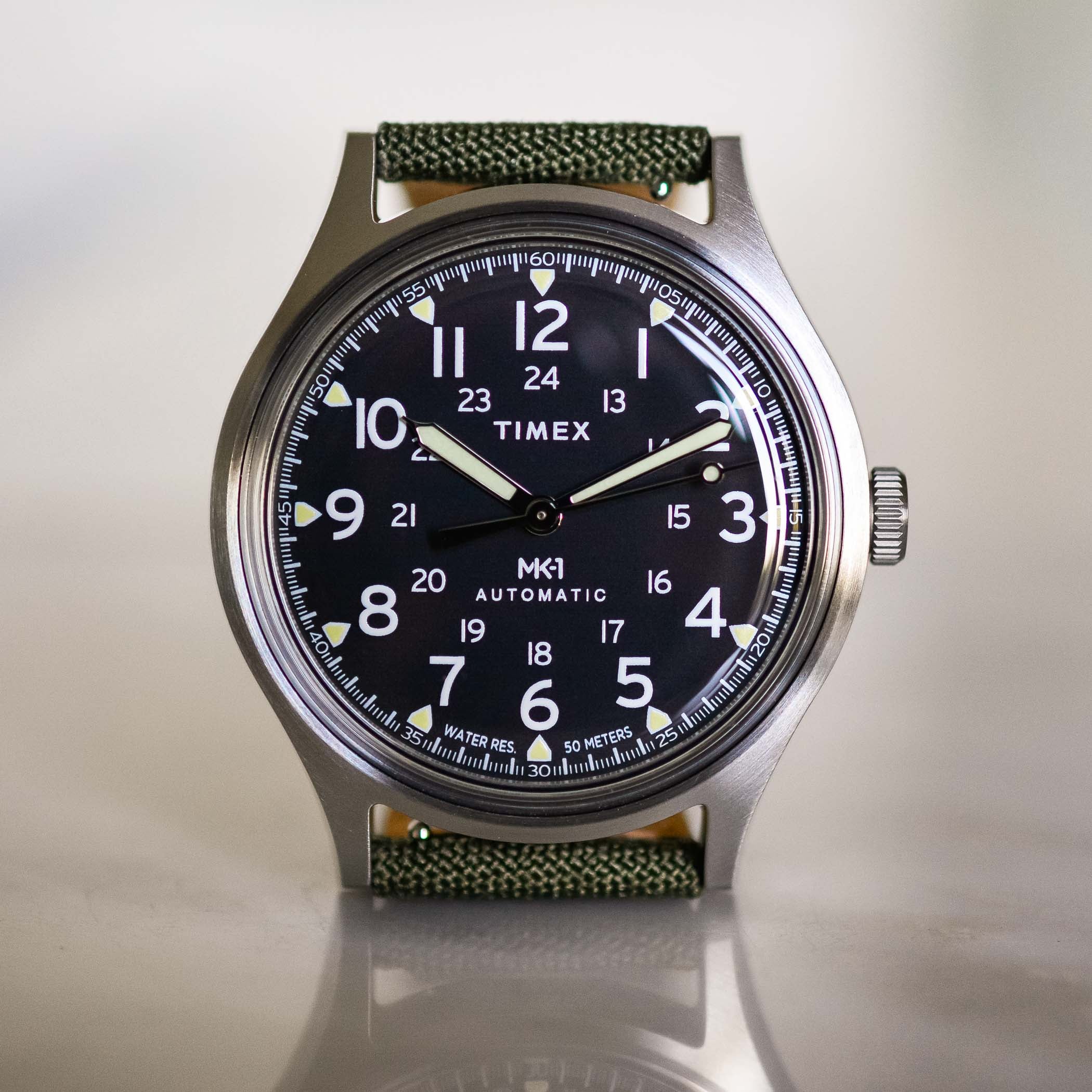
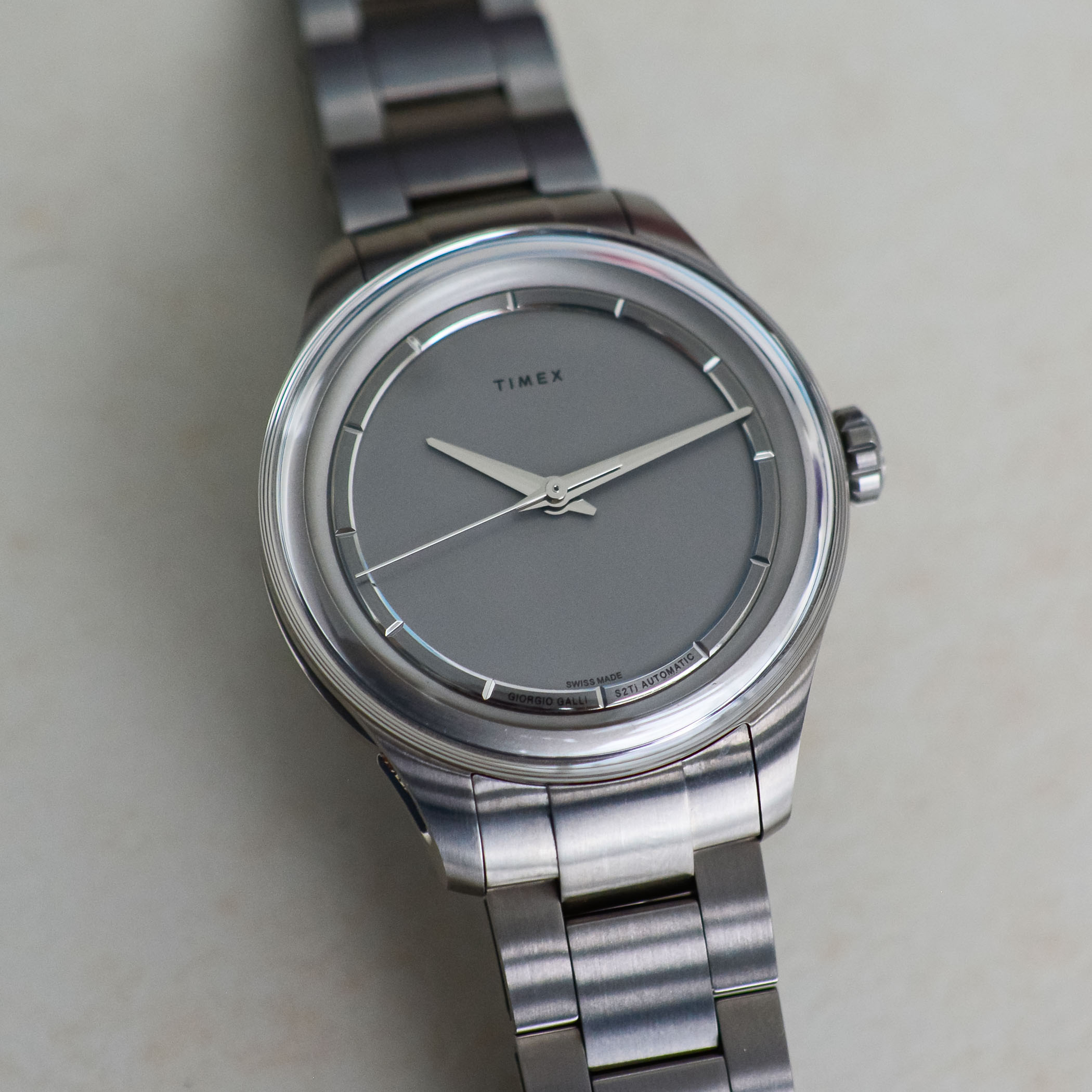
Chief Creative Director Giorgio Galli established “The Next Chapter” with the Atelier Collection in 2025, expanding the mechanical line to the entry and mid-range luxury segment. Miyota movements were soon replaced with Swiss counterparts, like the Atelier GMT24 M1a with a Landeron GMT automatic or Giorgio Galli S2Ti with a Sellita SW200. Some of the latest models feature the innovative I-Size adjustable bracelets that allow spring-loaded links to easily be removed/replaced with just your fingers (and without sacrificing aesthetics). Prices reached USD 2,000 for the most expensive piece, a bit of a shock for Timex, but these were also competitive with Swiss counterparts from Longines and (modern) Hamilton in design and quality, and showed a commitment by Timex to move into a new market and price tier without abandoning its main audience.
The American Collapse
Except Timex, all major American brands either shut down or moved overseas by 1969, although Bulova wasn’t sold until 2008 to Citizen. However, Bulova was also very much a Swiss brand from a calibre perspective with some noted exceptions (including Accutron models), and ceased US movement manufacturing altogether in the 1970s. Following major financial troubles around 1950, Waltham declared bankruptcy in 1957, but American entrepreneur Antonio DiBenedetto bought the rights to the international name (established in 1954) and revived the company in 2011 as a Swiss brand – Waltham Watch Company. The Field & Marine Dual Time is currently the sole collection with a Soprod C115 automatic. Elgin declared bankruptcy in 1968, and the name was bought by a Chinese corporation, which sells generic quartz watches under “Elgin” today.
Hamilton is the success story outside of Timex, as they remain one of the most popular entry- and mid-level luxury brands today with a strong American design influence. Although US operations ended in 1969, the brand successfully transferred to the Buren factory in Switzerland, which it had acquired in 1966. Hamilton was also part of Project 99 in the 1960s, which was a joint venture with Heuer, Breitling and Dubois-Dépraz to create one of the first automatic chronograph movements in 1969, Calibre 11 or the Chronomatic. The Quartz Crisis caused financial hardships in the 1970s, and the brand was acquired by the holding company Société Suisse pour l’Industrie Horlogère (SSIH) in 1974 that also owned Omega and Tissot. Following its own financial troubles, SSIH merged with ASUAG in 1983 under the leadership of Swatch CEO Nicolas Hayek, and it would be renamed the Swatch Group in 1998 (where Hamilton remains a subsidiary). During the 1960s, Hamilton made field watches for US military troops under specific military specifications like MIL-W-3818, and this lives on today with the iconic Khaki Field line of affordable hand-wound and automatic field watches that look back at their mid-century American roots. Of course, movies are also a big part of Hamilton today, with a sizeable Ventura series, field watches and more appearing in movies like Men in Black: International, The Martian, The Matrix Resurrections, Pearl Harbor, Indiana Jones and the Dial of Destiny and many more.
The American Watchmaking Renaissance
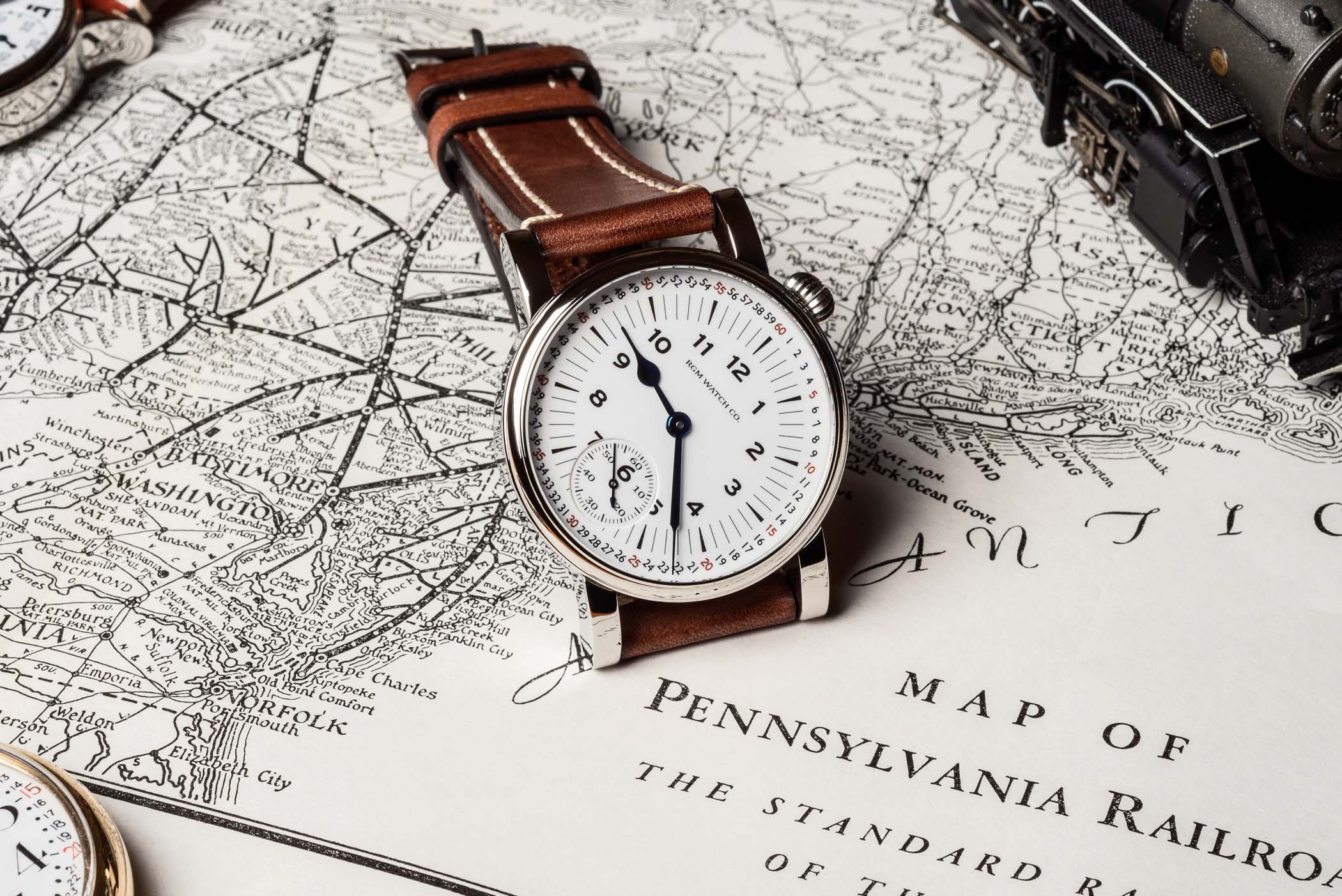
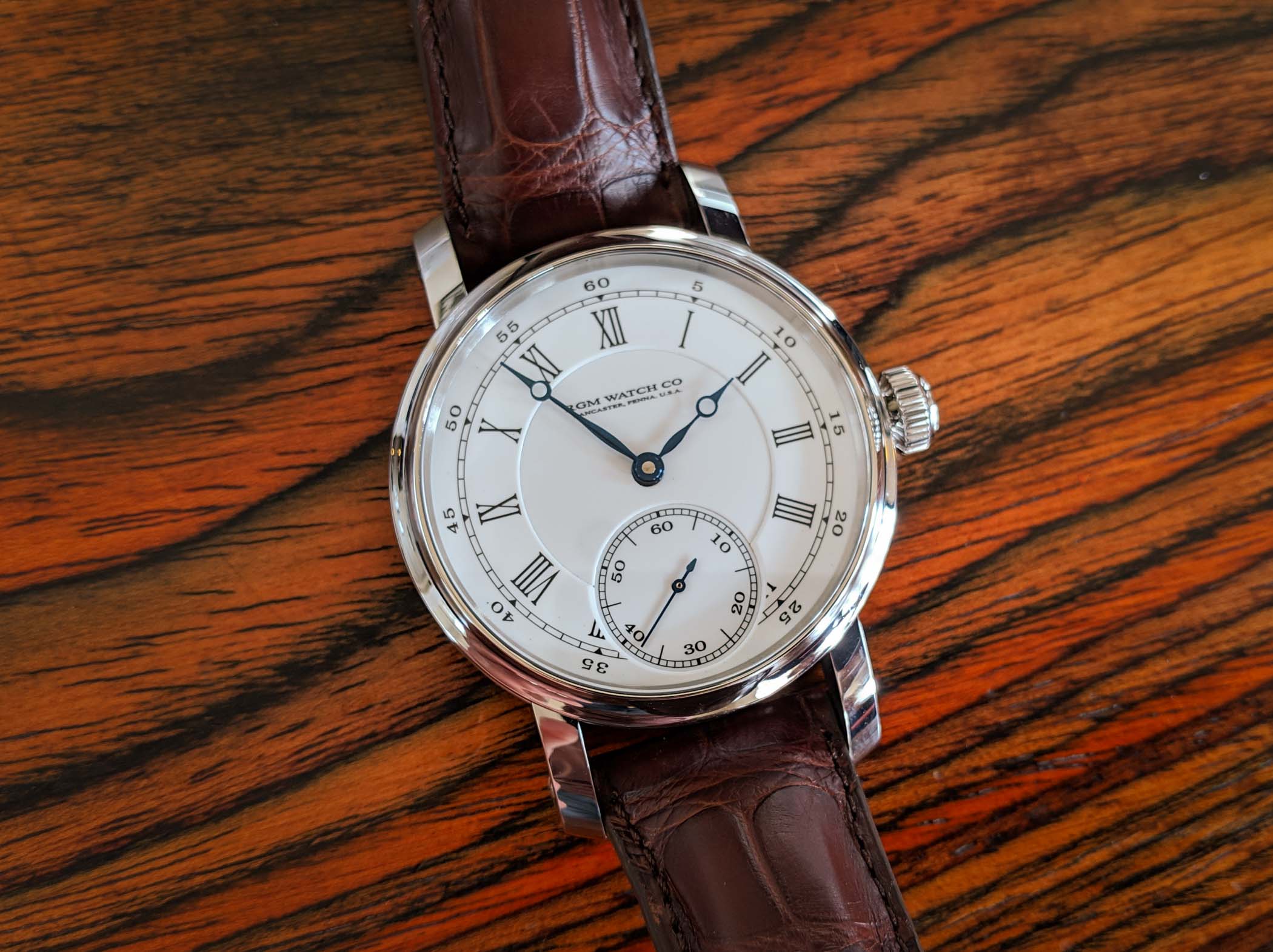
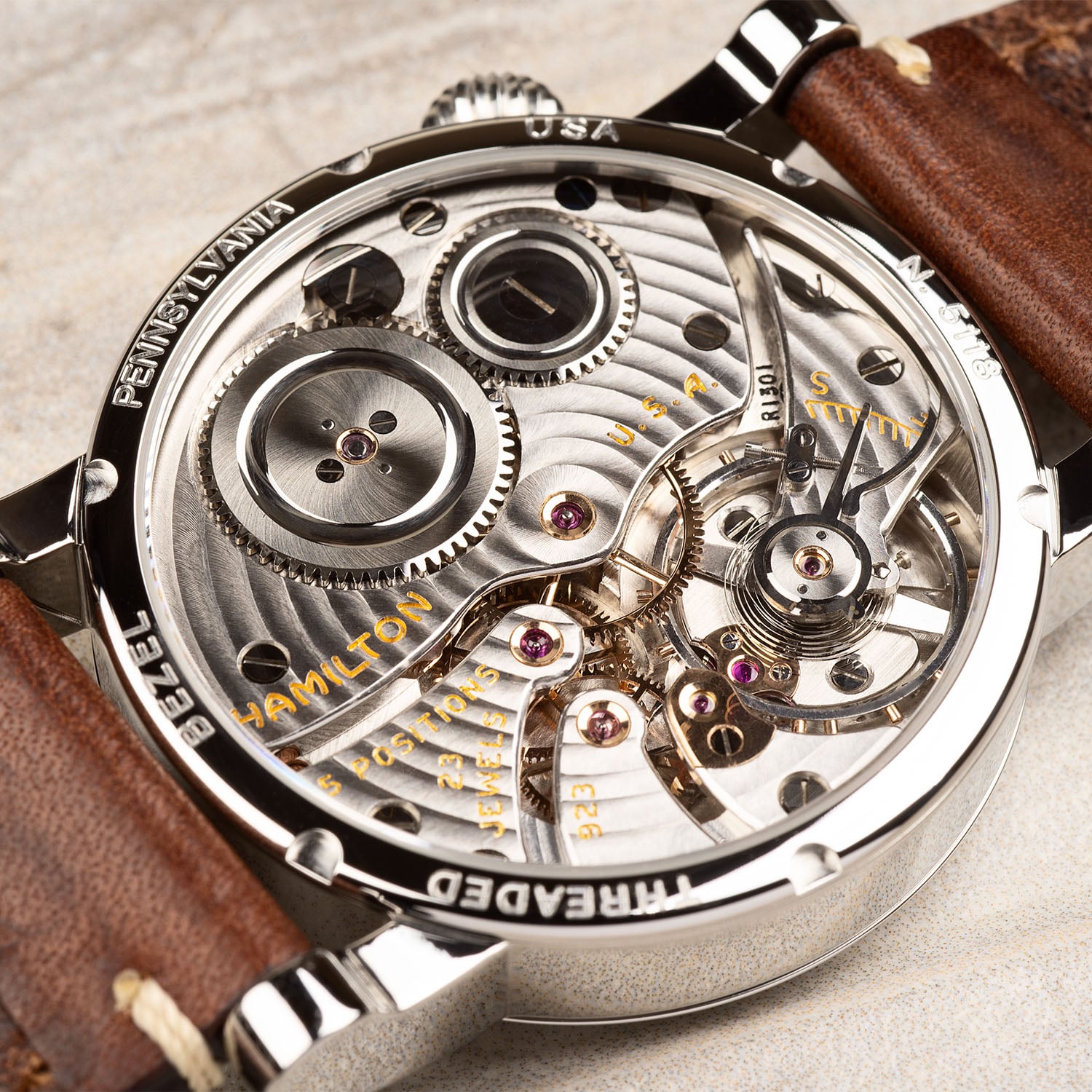
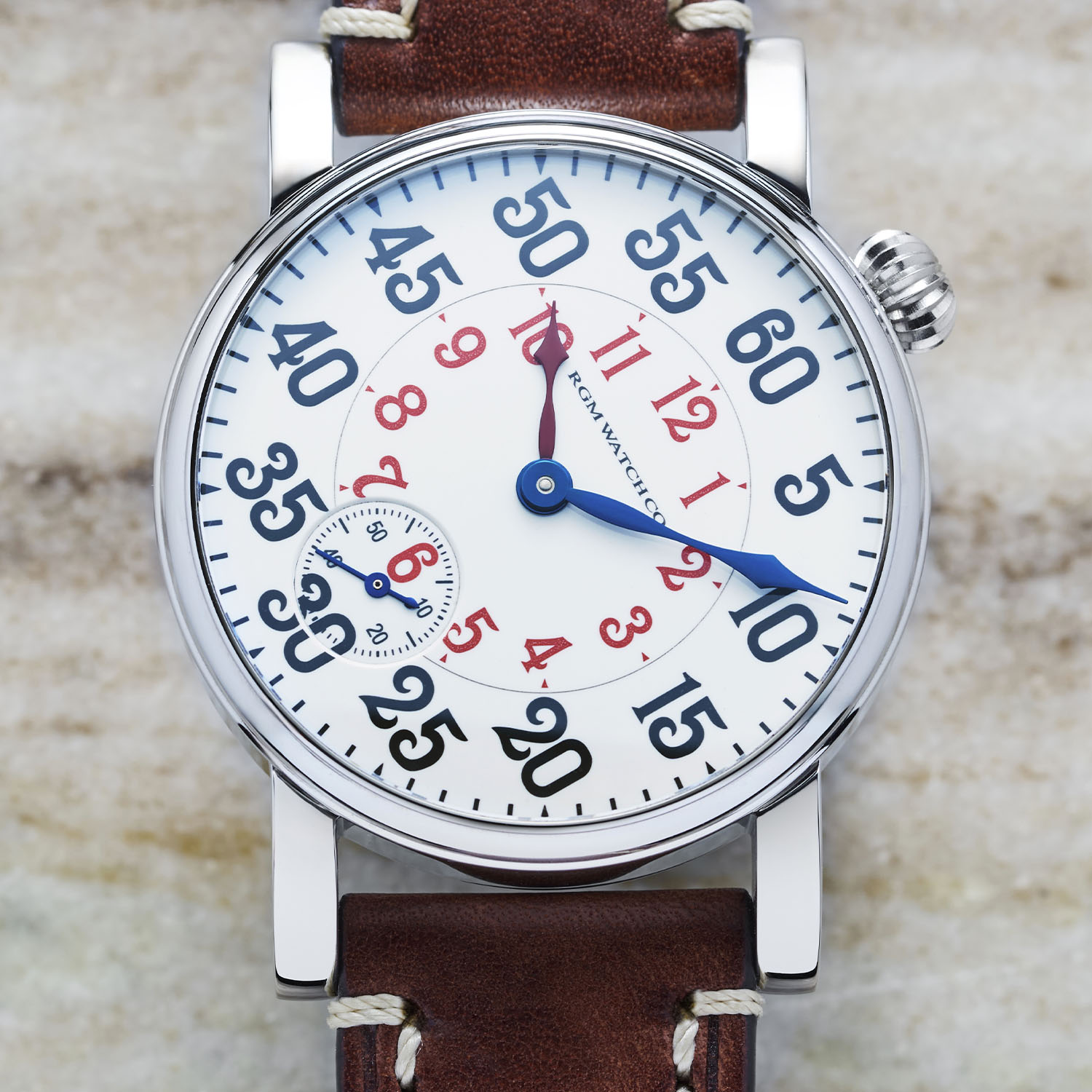
Serious in-house American watchmaking is returning in the 21st century, and it started with Roland G. Murphy in Mount Joy, Pennsylvania, only about 13 miles from Hamilton’s old Lancaster headquarters. Founded in 1992, his brand RGM Watches has multiple high-end in-house movements that are all hand-wound. Calibre 801 is a large wristwatch movement with a pocket watch(ish) design introduced in 2008. Calibre 20 is a tonneau-shaped movement with a retro motor barrel system from the old railroad days, introduced in 2012. And the Pennsylvania Tourbillon (Calibre MM2) is the first serially produced tourbillon ever introduced in the US, which debuted in 2010. RGM also specialises in complex guilloché dials using antique rose engine and straight-line lathes, and extensive custom work is a rare option among high-end brands, including cases, dials and movement details.
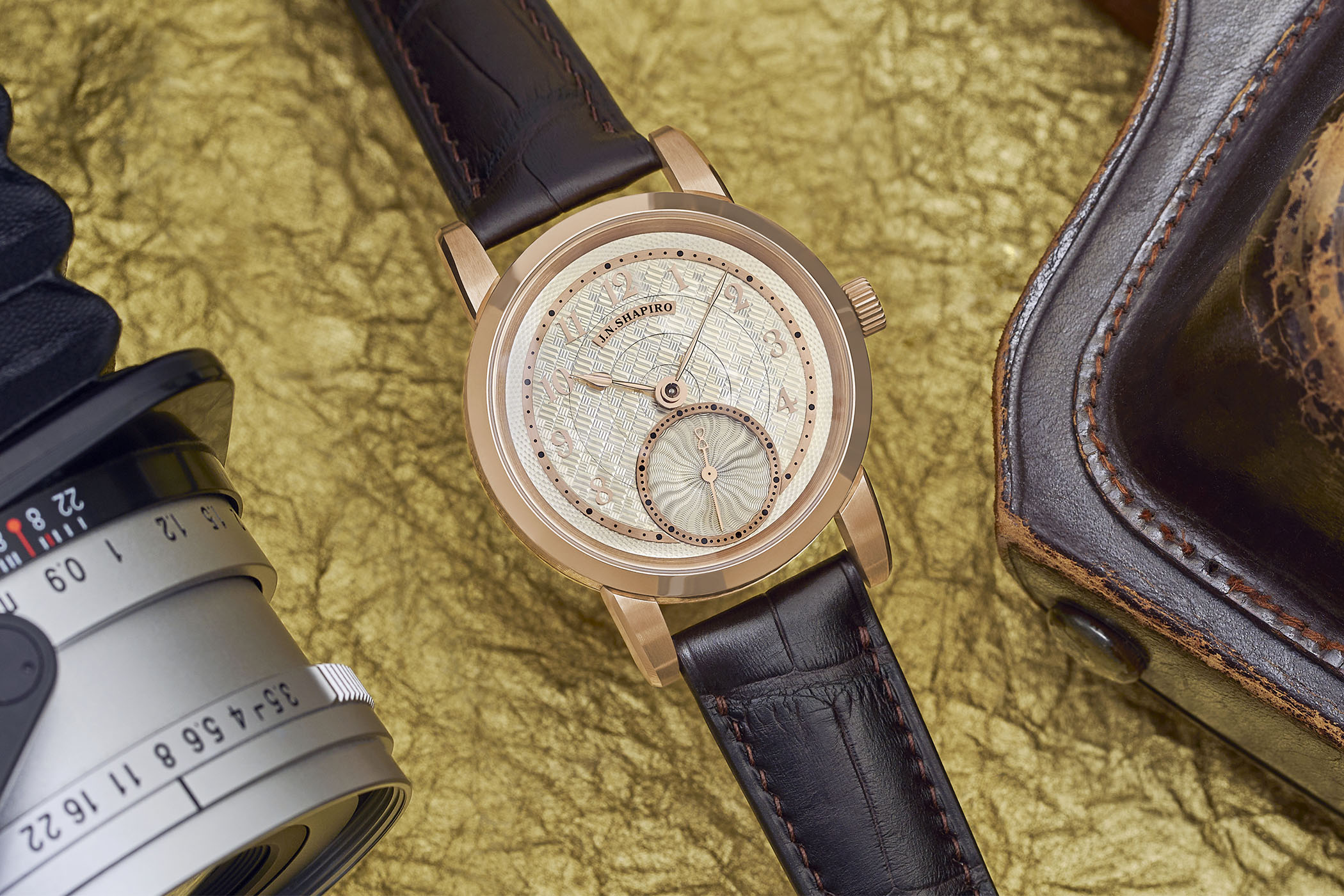
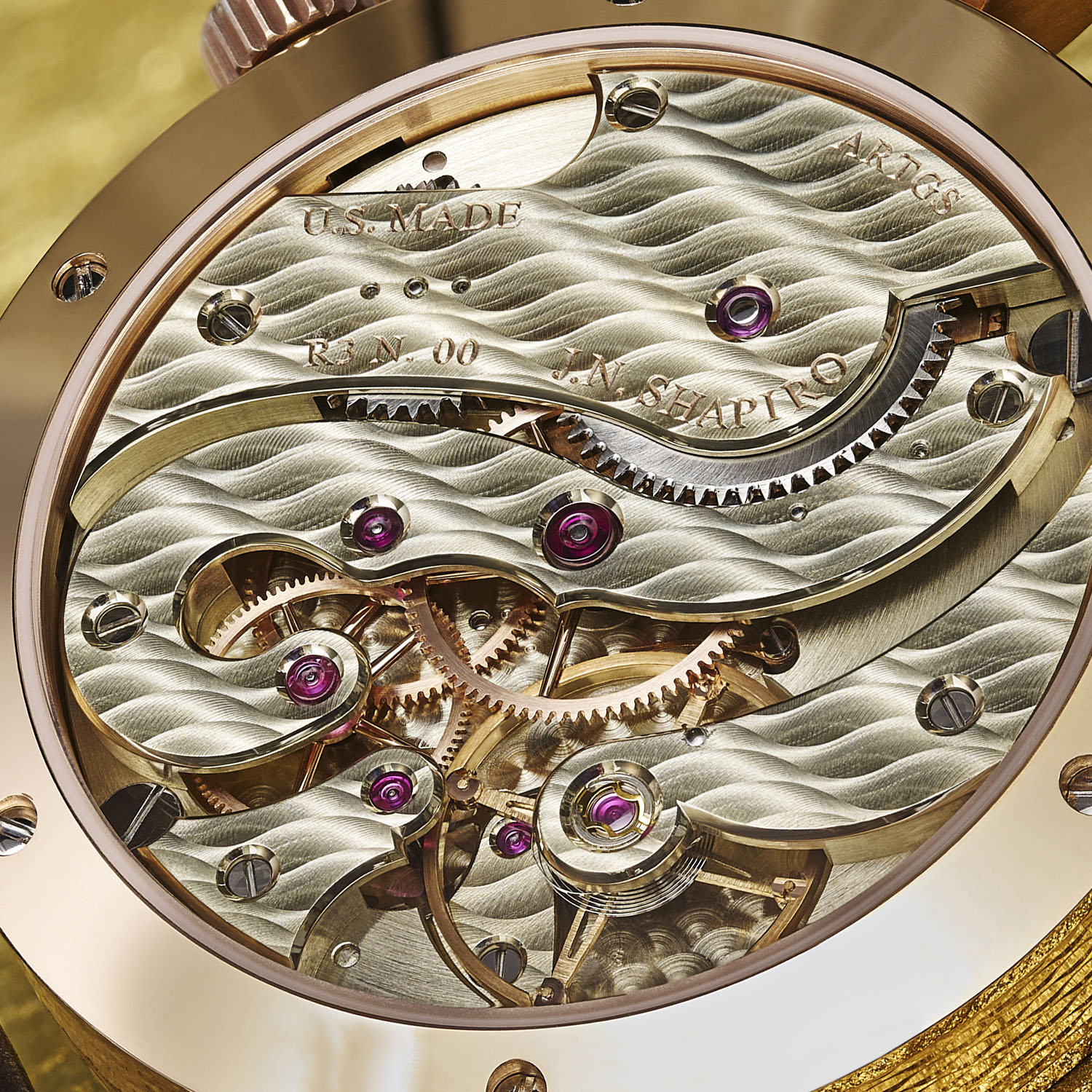
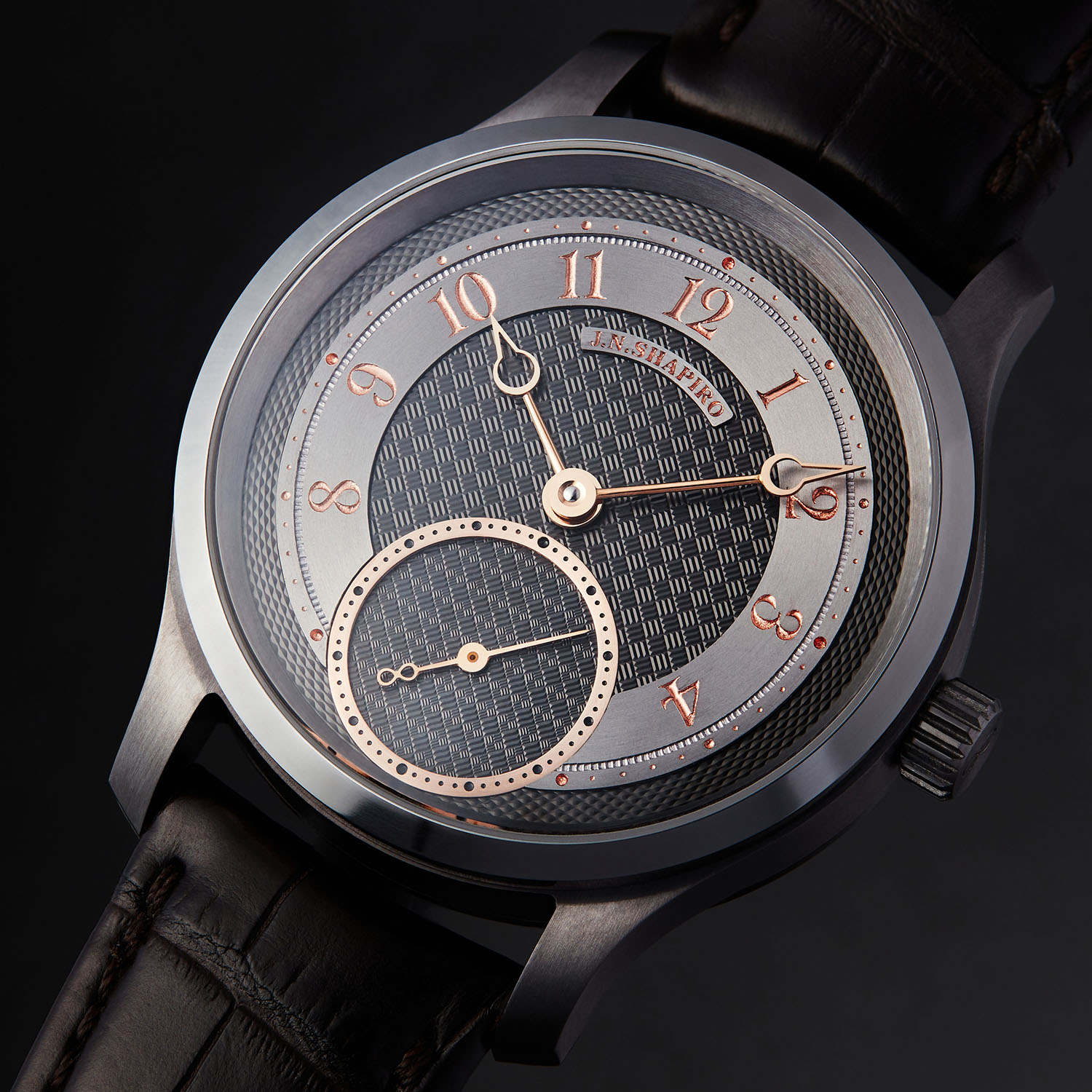
J.N. Shapiro is based in Los Angeles and is also named after its founder, Joshua Shapiro. It’s a fairly new brand, founded in 2018, but has already established itself as a high-end vertically integrated manufacture with specialised guilloché dial patterns invented by Shapiro himself. He’s a former schoolteacher and self-taught watchmaker, and dial patterns include his complex “weaves” like Basketweave and Infinity Weave, with materials like meteorite and zirconium, and cases and bracelets are often tantalum or gold. Although Shapiro traditionally used La Joux-Perret base movements or UWD movements (Uhren Werke Dresden), his recent in-house calibres – Calibre 26 and 26C – are competitive with some major players from Switzerland. Calibre 26 is the core movement for the Resurgence series, while Calibre 26C allows for customisations to alter the finishing and layout of the gear train and balance wheel. Optional layouts include Motion, Heritage and Cubist. Inspiration comes from the legendary George Daniels, and dial aesthetics reflect this, although his collections ultimately have their own unique design language.
Keaton Myrick is a small, independent WOSTEP-certified watchmaker in Sisters, Oregon. He worked with Rolex’s service center for a time, but found a passion in restoring vintage pocket watches. He finished his first handmade wristwatch in 2013 and started a series of 30, and although the movement base is a Unitas 6497, the vast majority has been reworked by Myrick. He creates his own balance wheel, bridges, three-quarter plate, balance bridge and click system, converting the old hand-wound workhorse into a virtual in-house calibre. His production output is very small, limited to around five watches per year, and up to 85% of the entire watch is built in-house. Antique rose engines are used for guilloché dial patterns and you can see George Daniels inspiration here as well, but like Shapiro, overall aesthetics are clearly his own. What’s most unique about Myrick is his solitude – he works alone as a one-man operation. Both Murphy and Shapiro have skilled watchmakers and artisans on staff, and although that allows for a substantially larger output, production is still limited compared to larger manufacturers.
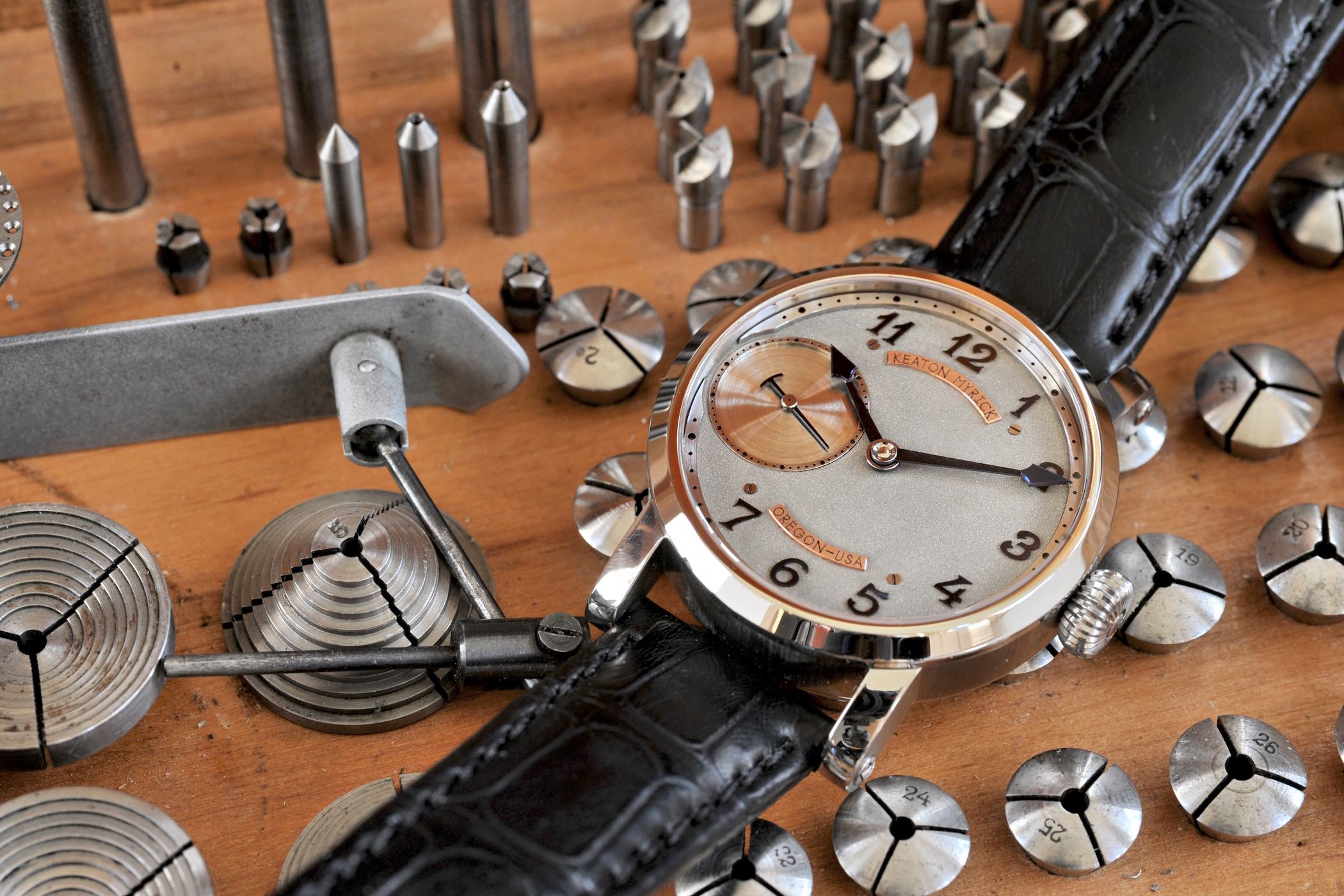
This doesn’t cover every American brand, past or present, but provides a comprehensive overview of the major watchmakers that built the American industry and continue its traditions today. Ohio-based Gruen was founded in 1894 and operated to an extent until 1970, but used German and Swiss movements for almost all production. An exception came when machinery was imported, and a small handful of movements were made in Cincinnati in the 1950s. Shinola Watches was founded in Detroit by Tom Kartsotis in 2012 (who also founded Fossil in 1984), reviving a classic shoe polish brand name from 1877 in Rochester, New York. Models have both quartz and, more recently, mechanical movements, but neither is in-house.
Switzerland and Germany continue to be the primary European watchmaking hubs, while China and Japan dominate in overall global volume. Other countries like France and England also have impressive watchmakers with in-house calibres, and both have important horological histories. America joins this list with high-end, in-house traditional watchmaking from multiple ateliers today and a very important history of its own.

2 responses
Excellent Article ? ?
Terrific article. To those outside of the US and particularly Pennsylvania, we are very proud of our watchmaking heritage, which includes the National Clock and Watch Museum and the NAWCC School of Horology, both in Columbia, PA.