


 Not all images were able to load for printing. Please close the print window and try again.
 The Tudor Black Bay Chrono 39 Bumblebee Is About More Than Just A New Size
There's a lot to take in with this one, beyond the smaller and slimmer case.
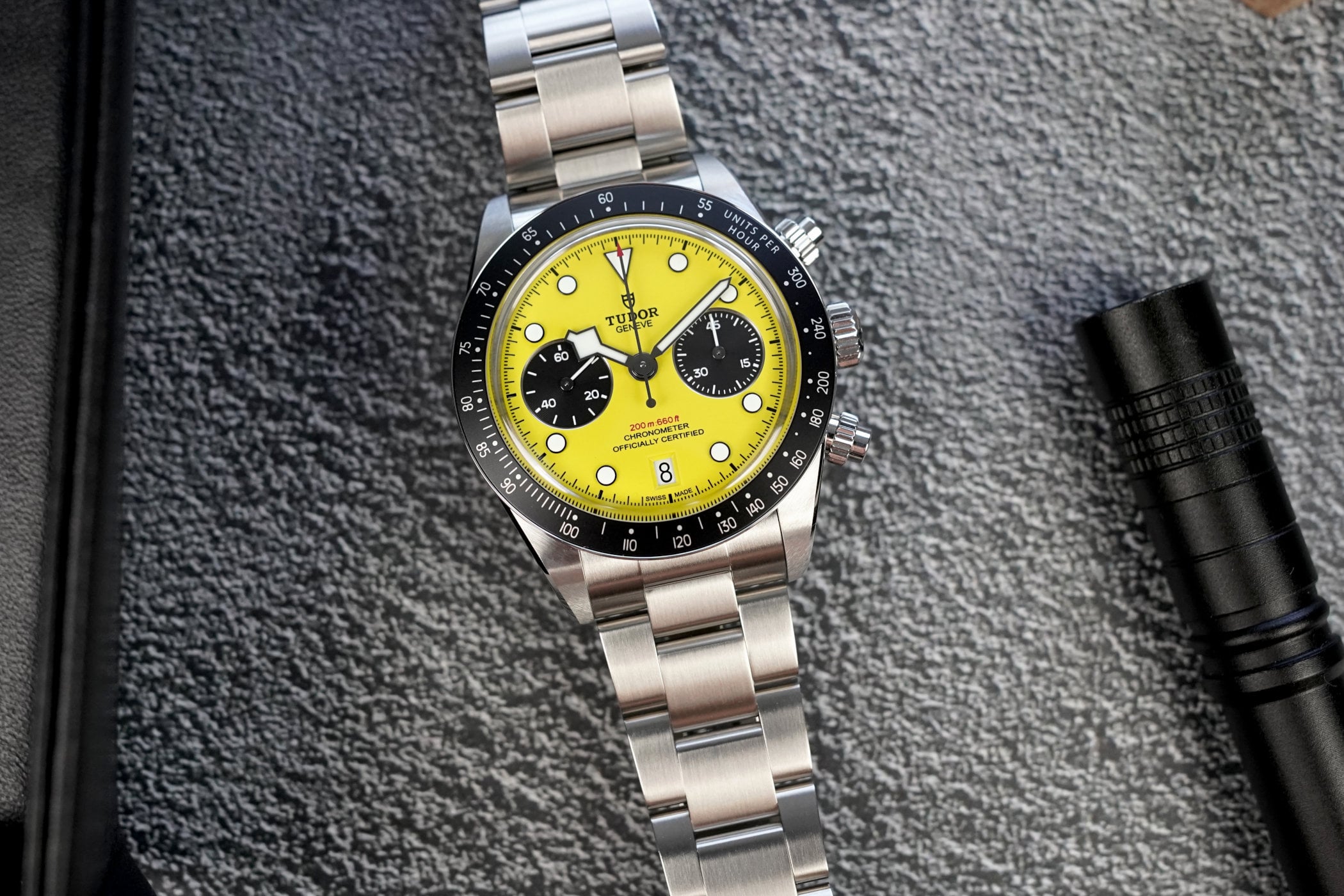
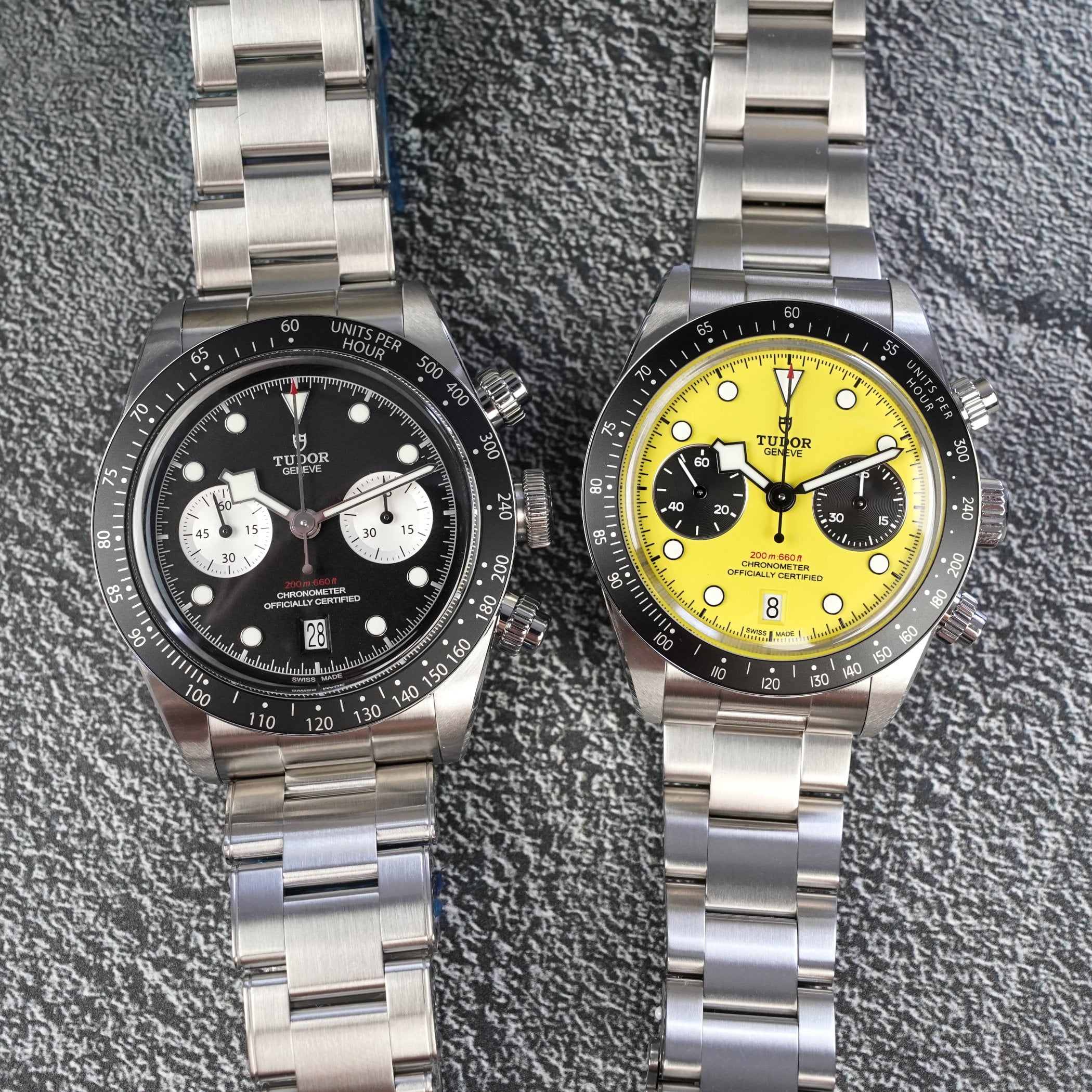
Since its debut in 2017, the Tudor Black Bay Chrono has undergone many makeovers, but in colour and material only. The core collection always came in a 41mm stainless steel case, with special editions like the Carbon 25 and Carbon 26 adding a 42mm-wide forged carbon fibre alternative to the range. Not too long ago, though, Tudor gave us a bit of a surprise with the new Black Bay Chrono 39 Bumblebee. Although the choice of dial colour might have caused a few raised eyebrows, it did grab everyone’s attention at first sight. But there’s more to it than just a new size, as we get to discover by putting it side-by-side with the Black Bay Chrono in 41mm. Here’s what you need to know, but also how this plays out for the collection as a whole.
If you look at the entire Black Bay collection, there’s a distinct and much-loved retro-DNA running through it. Whether you’re looking at a Black Bay 54, a Black Bay Blue Lagoon or a Black Bay Chrono Flamingo Pink, you can identify it as a member of the family from across the room. That’s mostly down to the vintage styling cues taken from Tudors from the past, but also because of the consistency of the brand for the collection. It’s more about incremental evolution, rather than revolution. I mean, the most ‘shocking’ Black Bay models were the 925 Silver and full gold editions, perhaps, and that was purely down to the case material, not a radical departure of the appearance as a whole. The only slight oddball, if you allow me to call it that, was the P01.
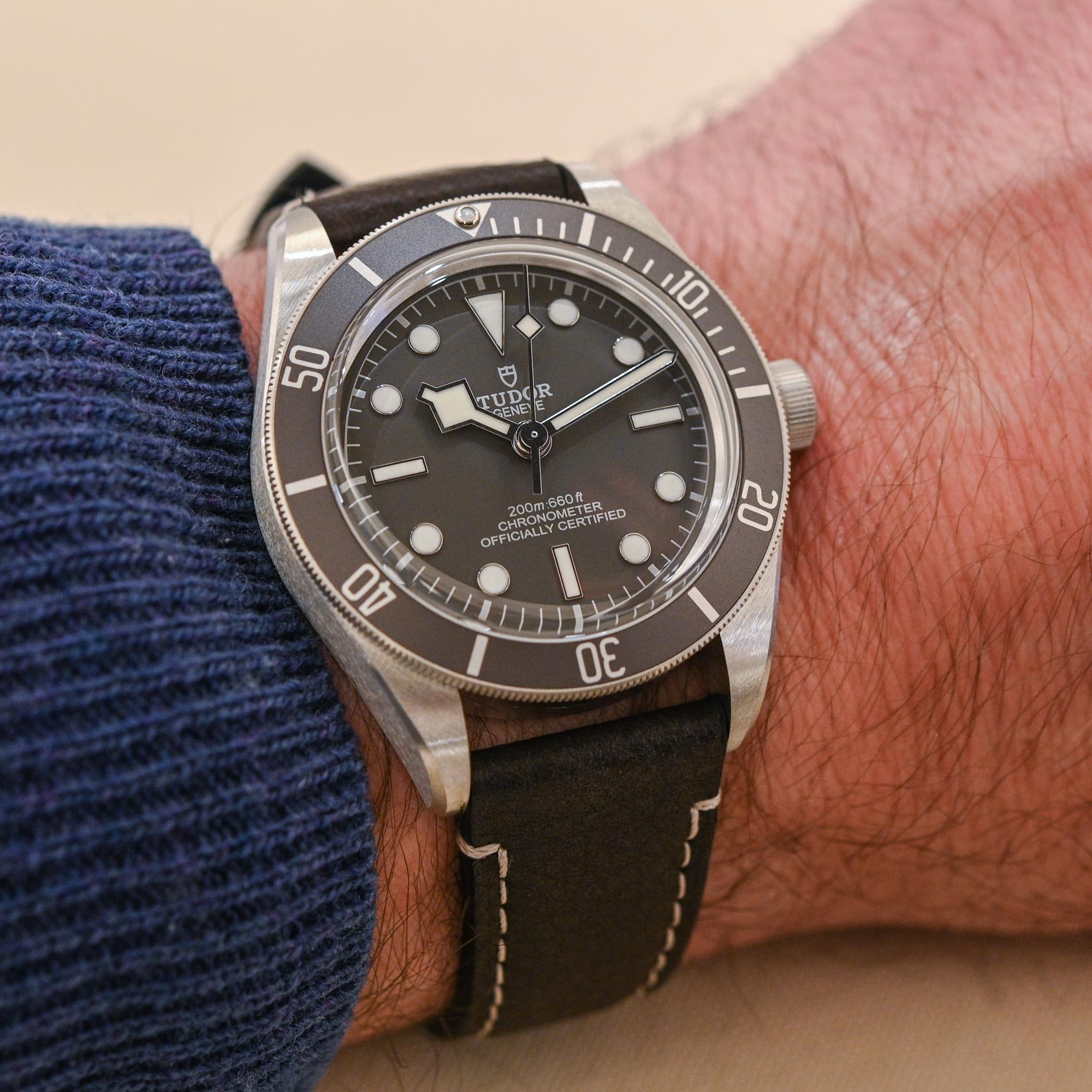


And from the outset, the Black Bay Chrono 39 Bumblebee plays along with the game Tudor has put in place since 2012, when it first launched the Heritage Black Bay Diver 79220R. Yet for this one, the devil is in the detail, as it might seem it’s only a smaller case size, but the new 39 Bumblebee is about more than just that. If you look closely, you’ll notice a fair few things have actually changed. Whether that’s for the better or not, I will get to later on, and in the end, it comes down to the call of the public, you. If we ignore the 42mm Carbon 25 and Carbon 26 for a moment, the following elements have all changed by design, shape or size:
- Case diameter reduced to 39mm (was 41mm)
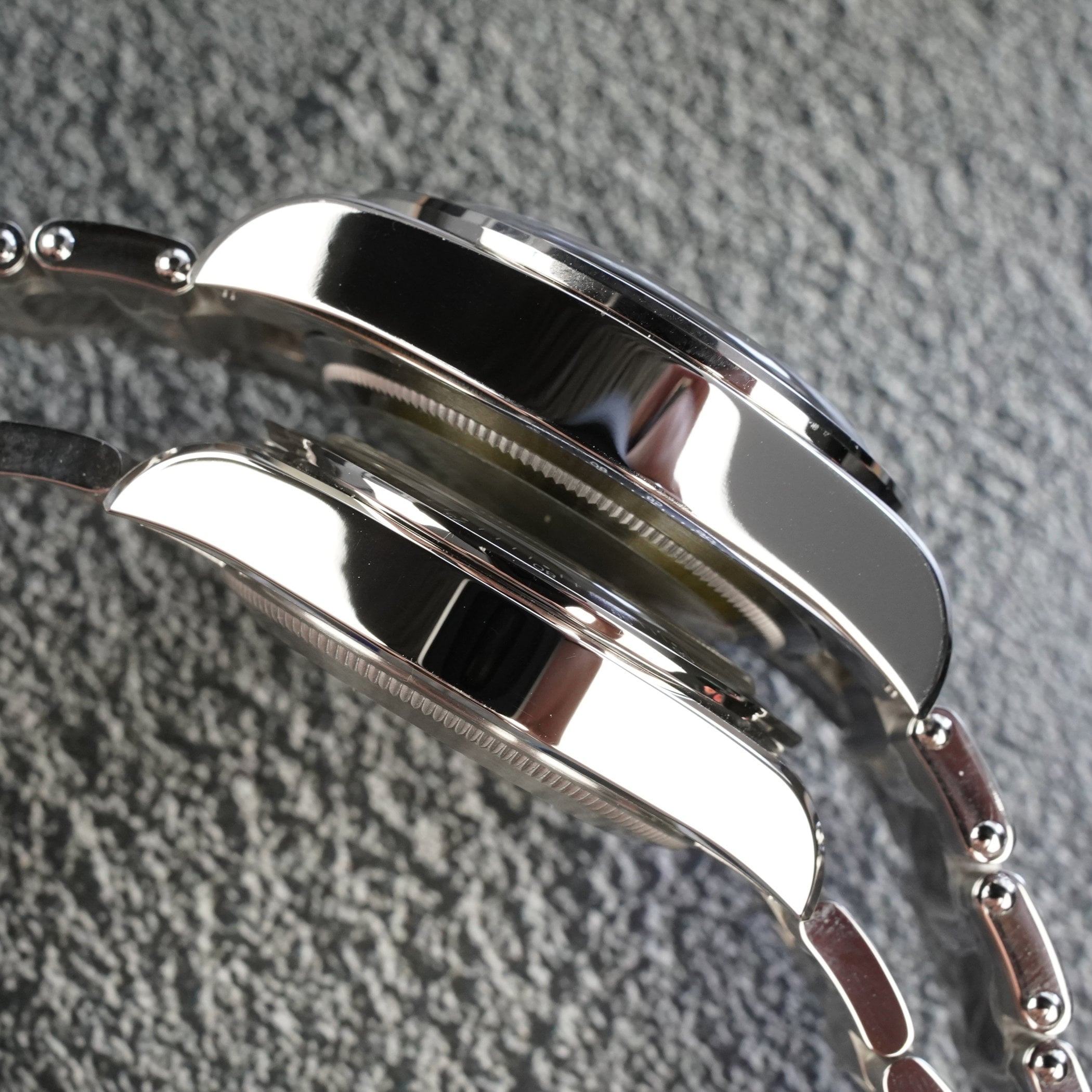
- Case height reduced to 13.1mm (was 14.2mm)
- Lug-to-lug reduction to 47mm (was 49.9mm)
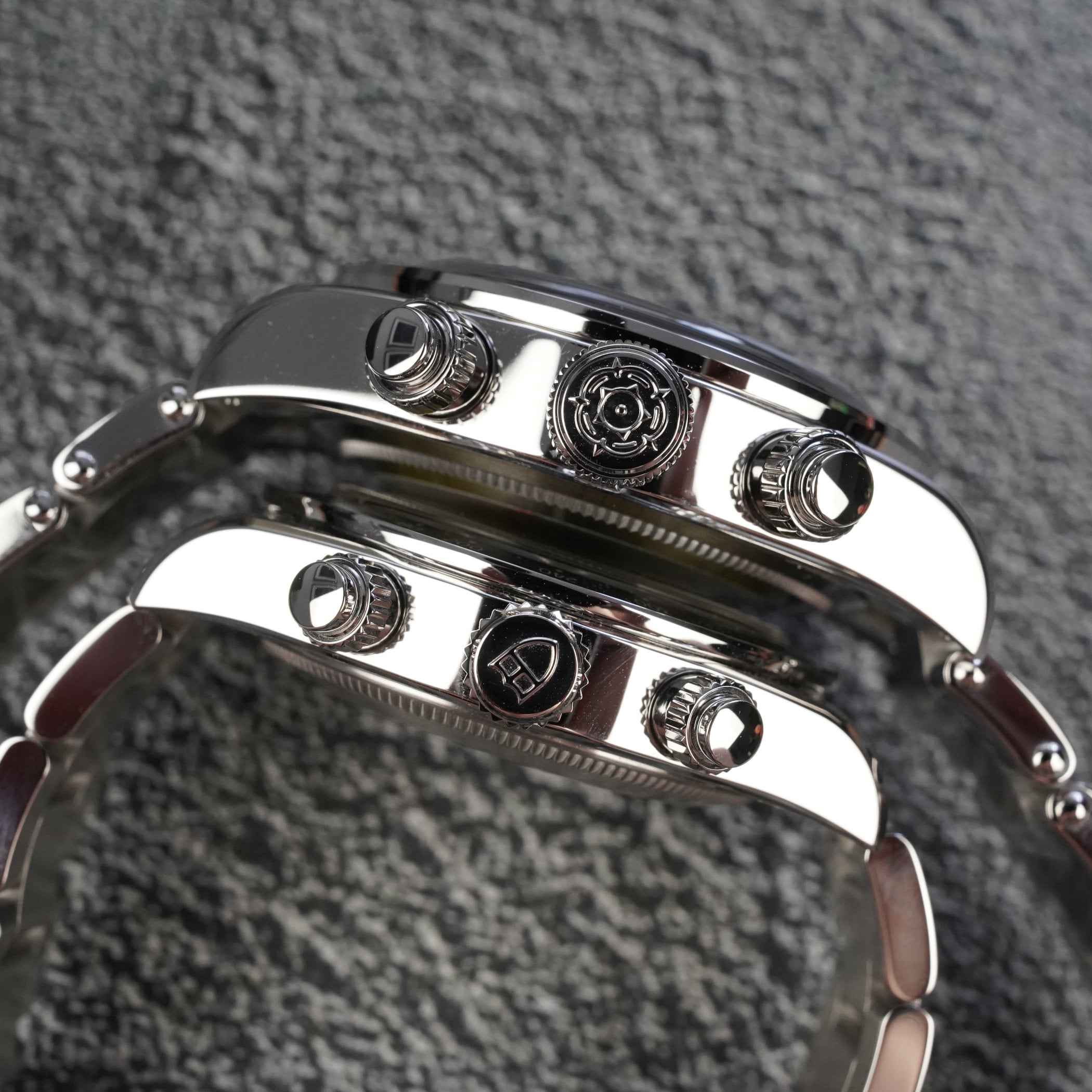
- Shield logo on the crown instead of rose logo
- Non-riveted three-link bracelet with T-Fit clasp
- Slimmer bezel profile
- Narrower bezel insert
- Newly designed tachymeter scale
- Smaller screw-down chronograph pushers
- Smaller hour roundels
- “Swiss Made” moved to the inside of the minute scale
- New subdial design, scale & finish
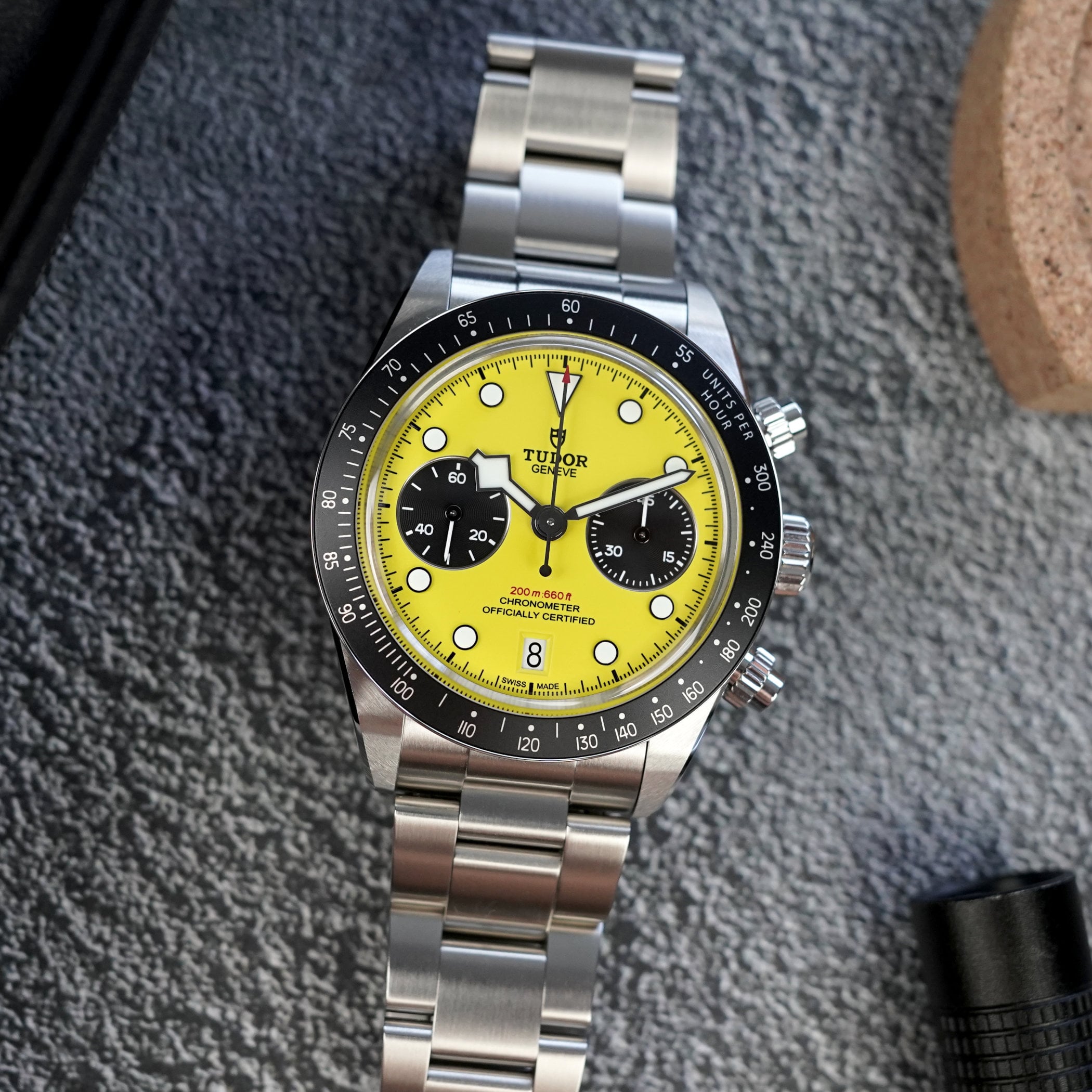
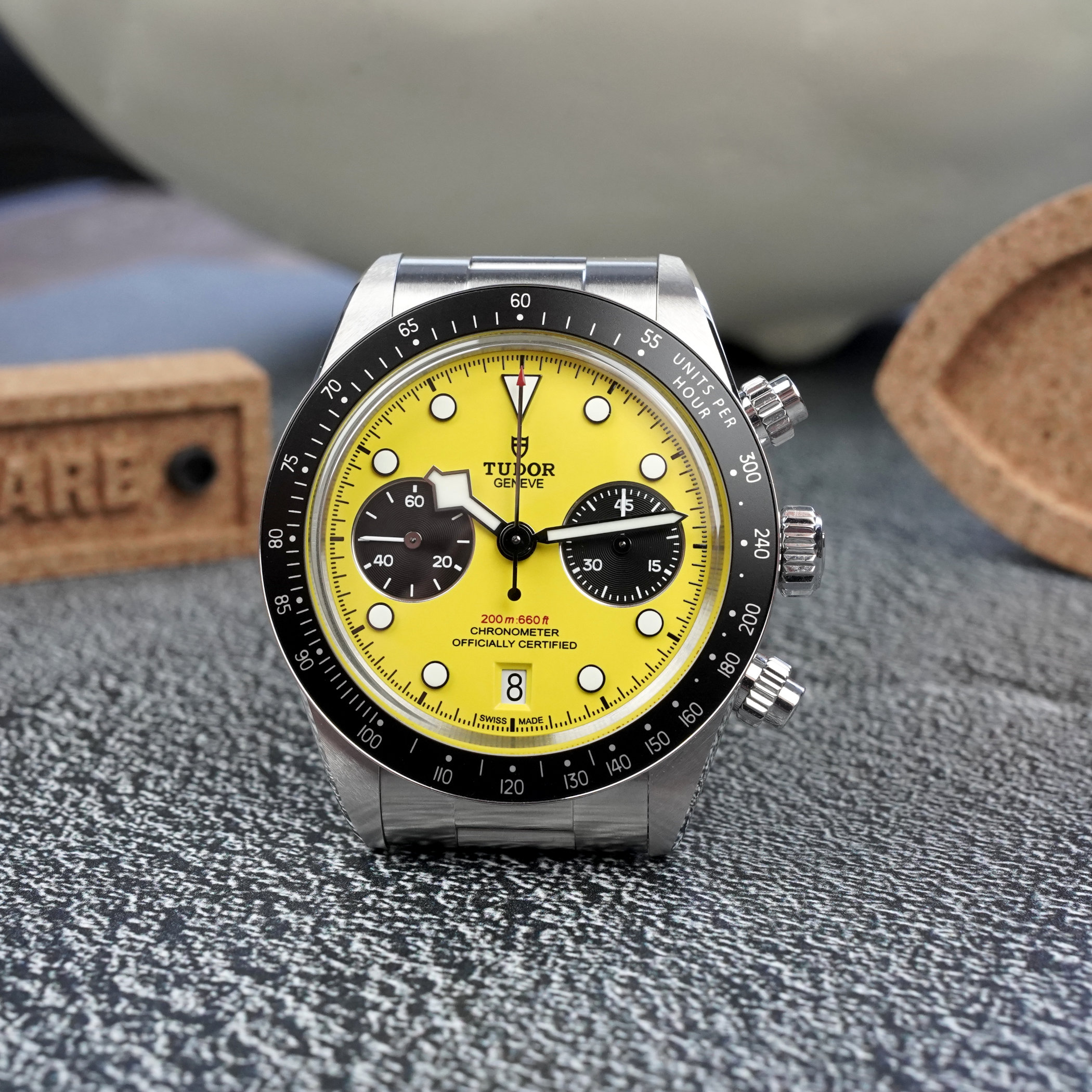
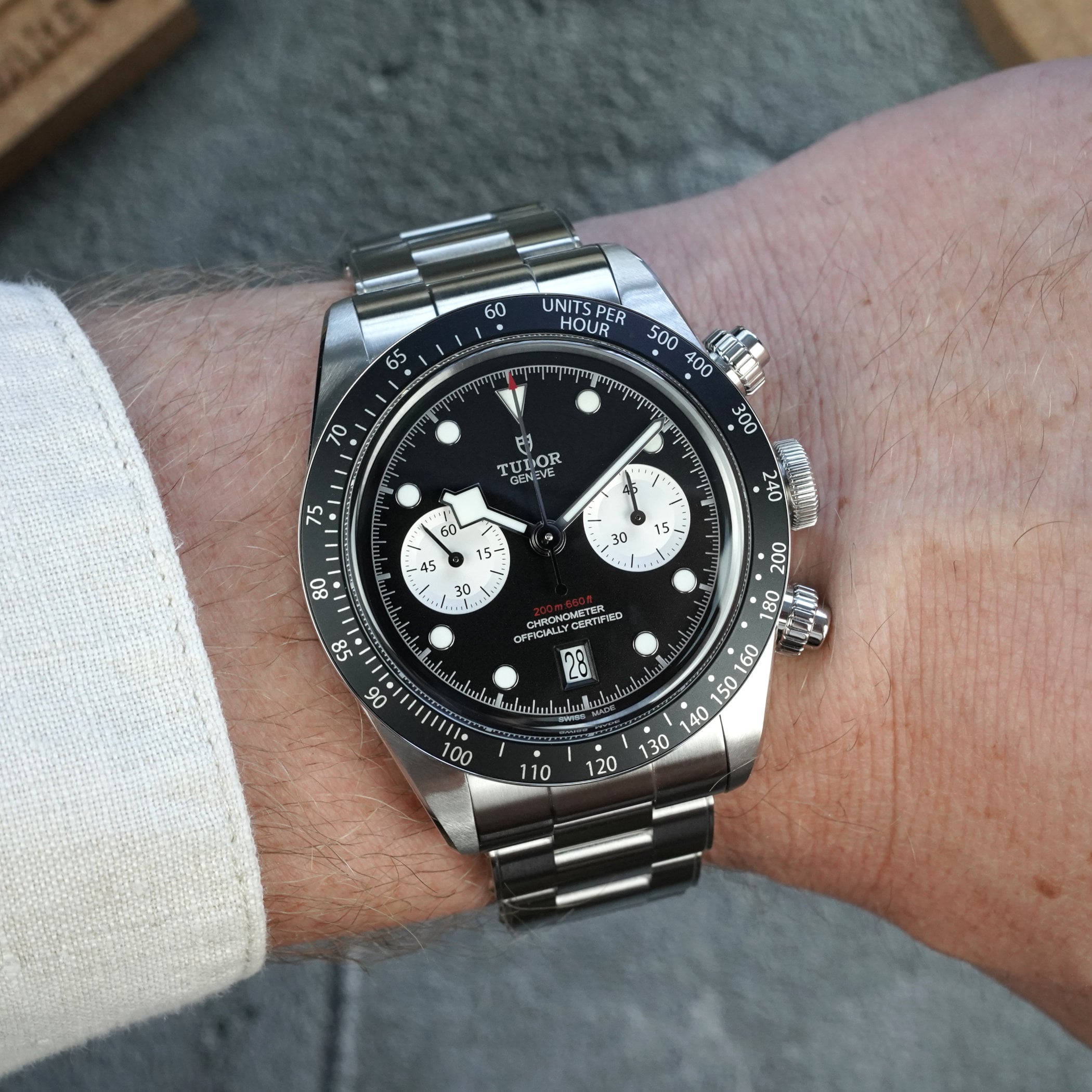
Now that’s cleared up, how does it look and feel in real life? Well, the shortest answer would be: fantastic! The new diameter, height and lug-to-lug size make for a superbly comfortable watch on the wrist. It also feels every bit as sporty and robust as previous Black Bay watches, both divers, GMTs and chronographs, which this one backs up with a substantial water resistance of 200 meters. The general profile is, despite the size reduction, still very much in place. The slimmer bezel certainly helps visually, and it comes with a slightly redesigned tachymeter scale on the insert. Especially the first section has changed, and the font/scale is a touch slimmer too. The downside here is that perhaps it’s a bit tougher to read at a glance. On the 41mm Black Bay Chrono, that’s not an issue, as it has a bit more real estate thanks to the wider black anodised aluminium insert.
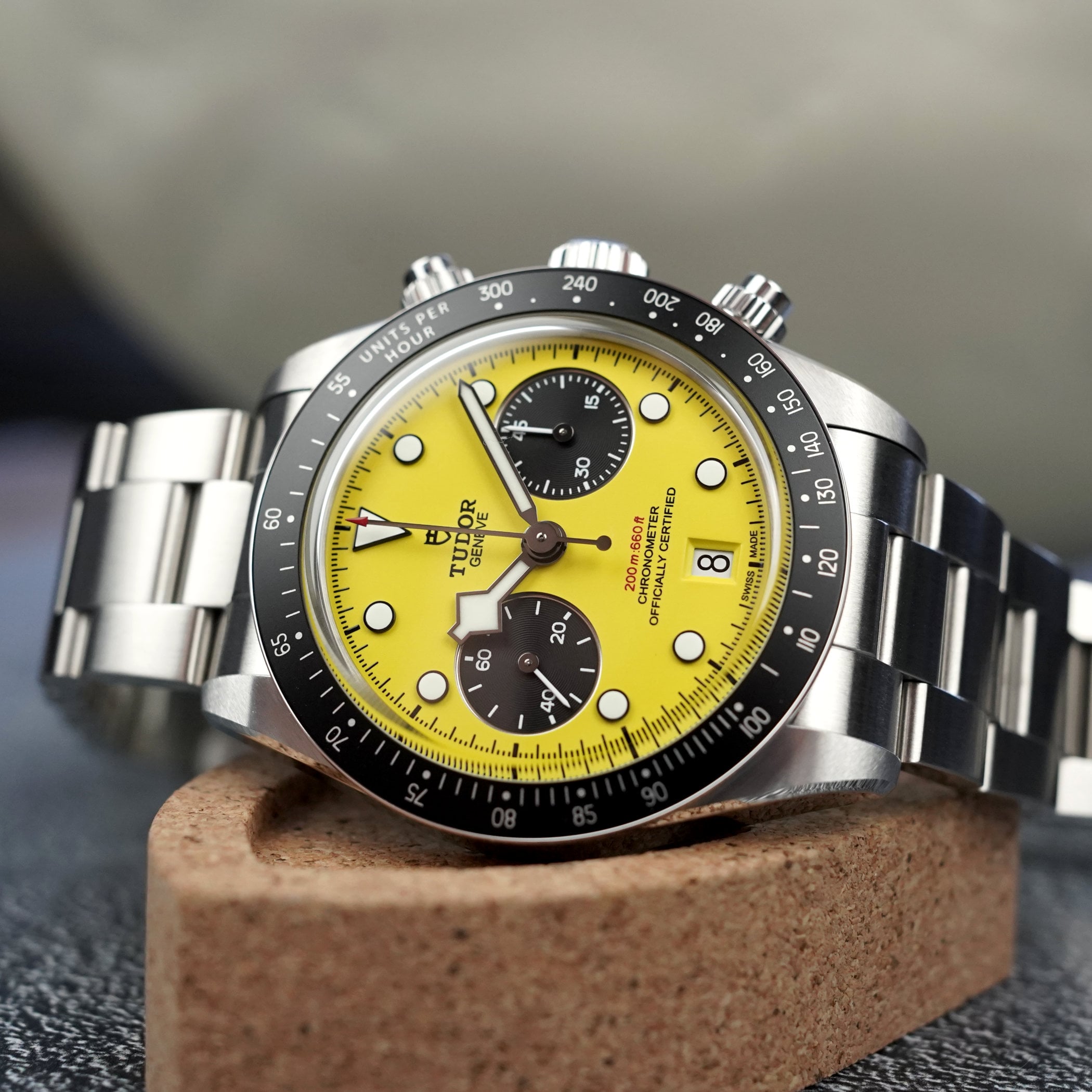
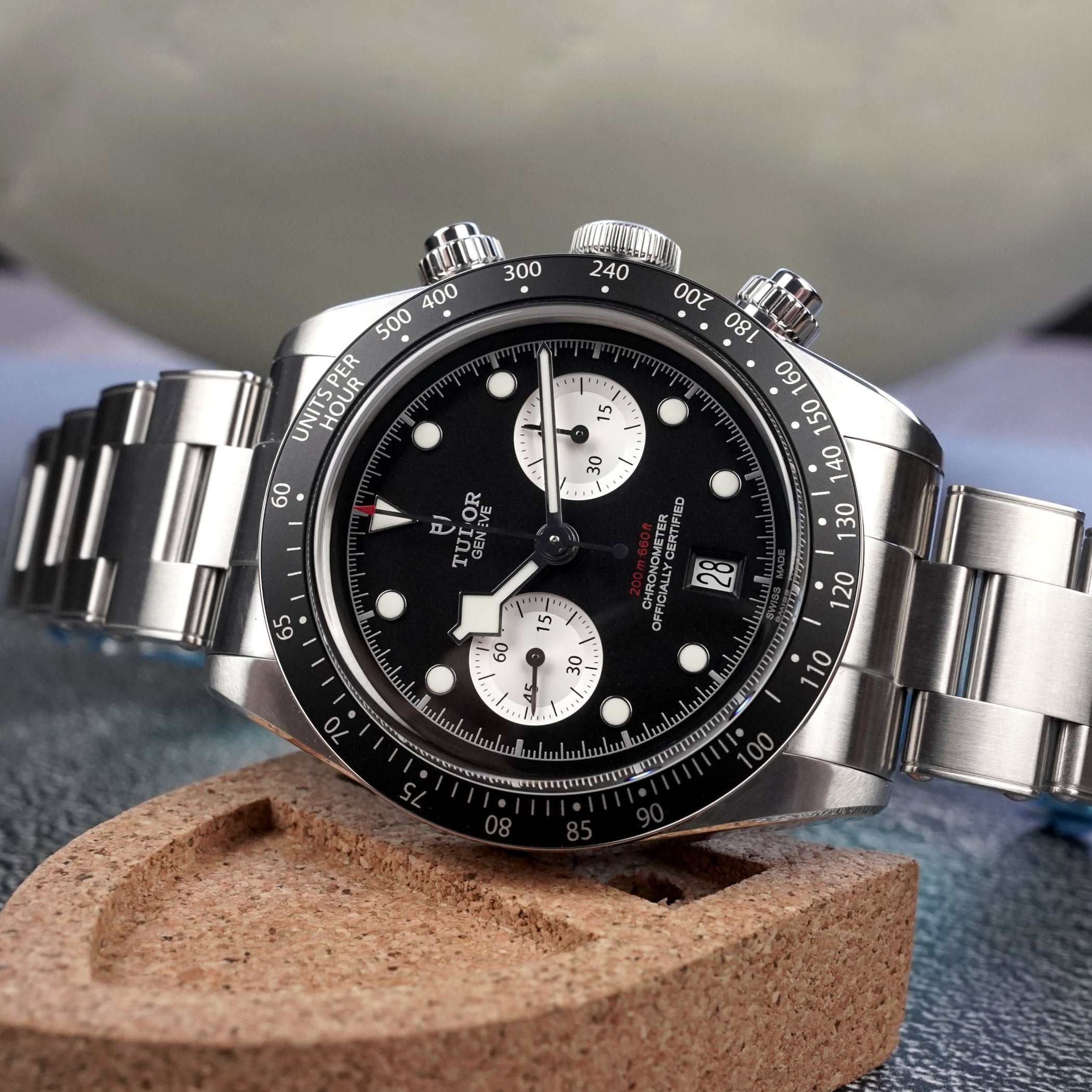
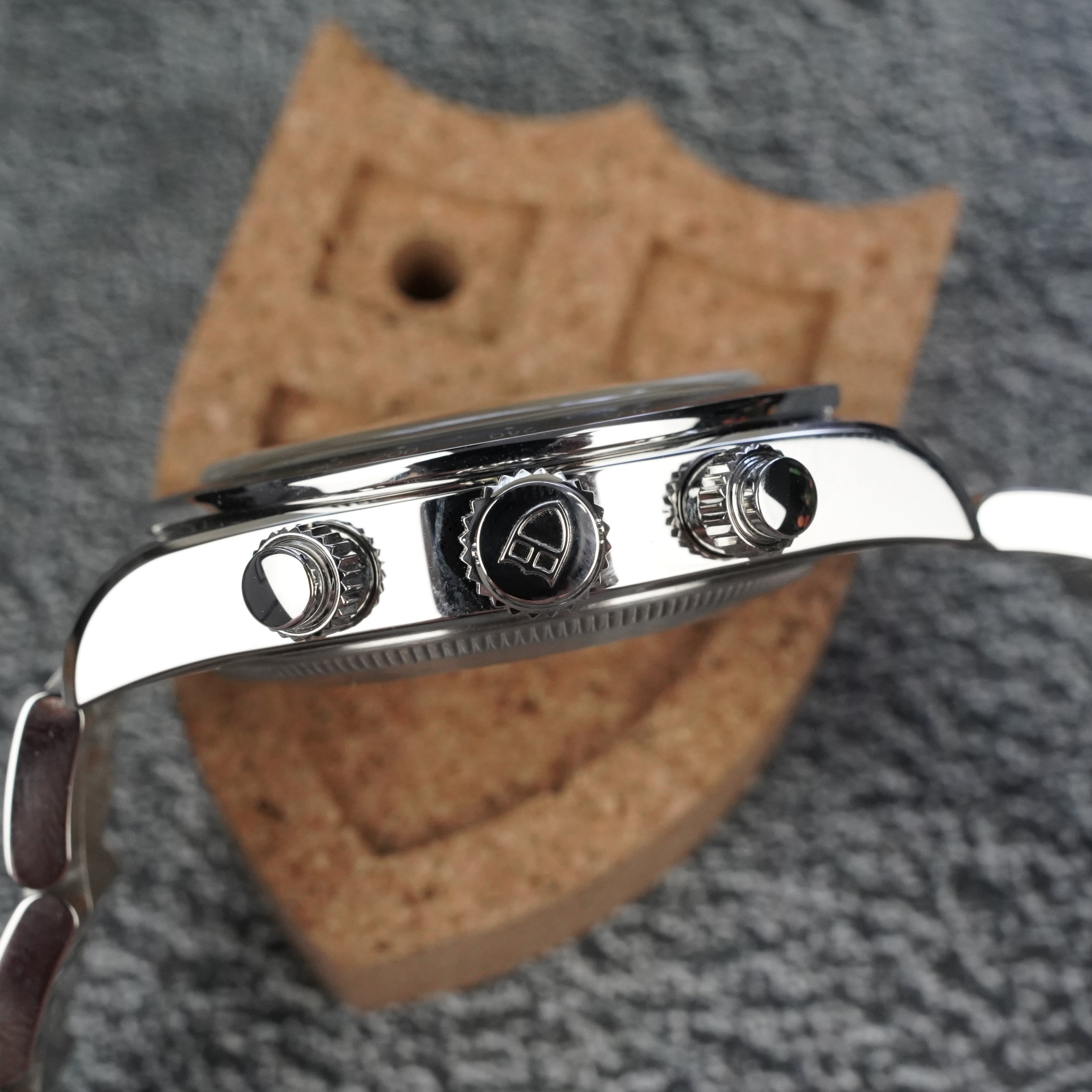
Other than that, you still get a case with brushed top surfaces with a bevelled edge and polished flanks, a box-shaped sapphire crystal and the familiar screw-down pushers. These have come down in size a bit, too, to balance out the smaller profile of the Black Bay Chrono 39. I do feel these diminish the practicality of the Black Bay Chrono, however, as you have to unscrew them first before starting your timed run. If you’re looking at instantly starting a time measurement, you might miss the initial start of things as unscrewing the pusher takes a few seconds.
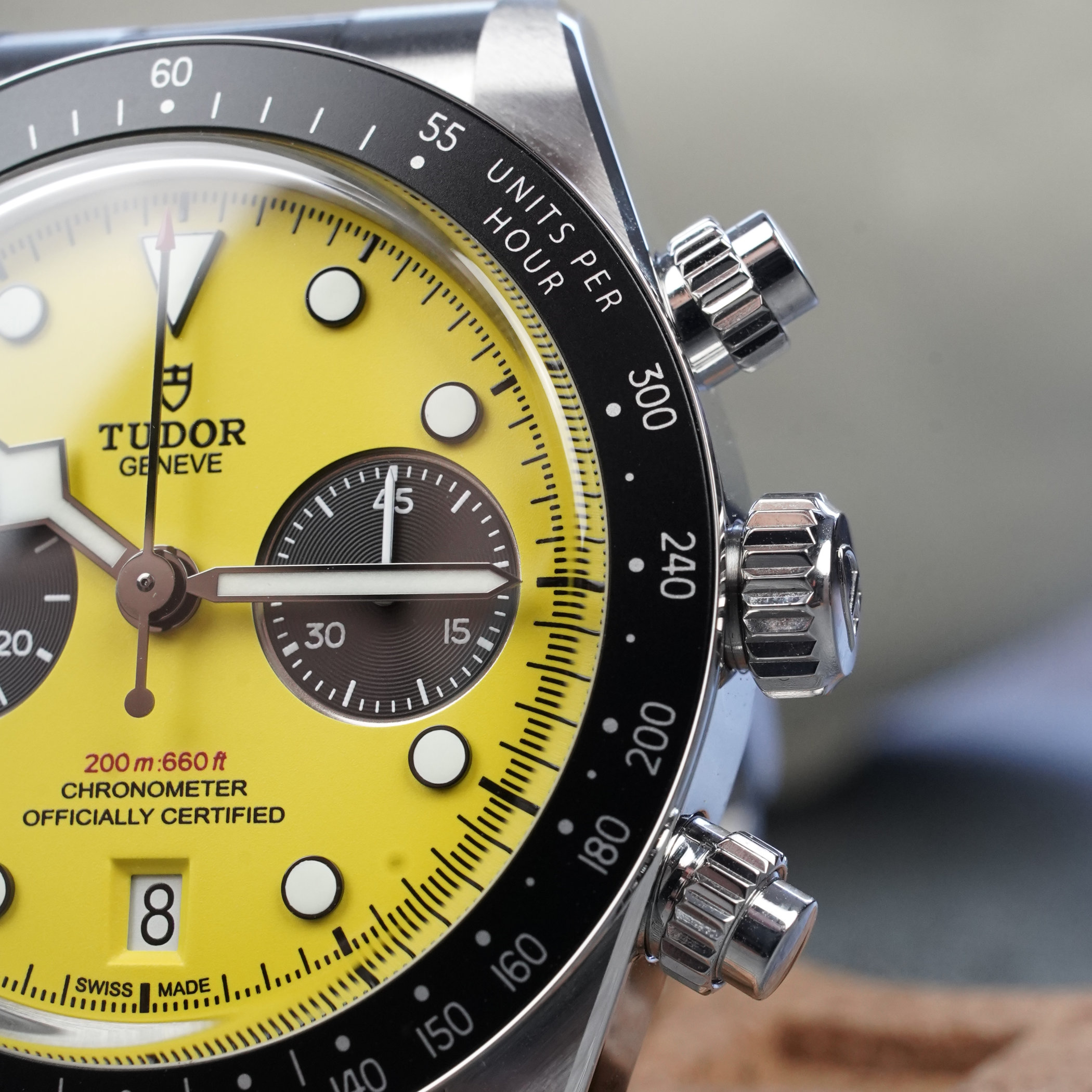
In real life, I doubt how many of us actually do this, but it is an important detail nonetheless. The final detail on the exterior to mention is the crown. Before, this was finished with the Tudor Rose logo, but here we get the Tudor Shield logo. The beauty of the rose logo was that it filled the entire top of the crown, and never felt misaligned when screwed in. On the Black Bay Chrono 39 Bumblebee I had, the Shield Logo was pretty much always pointed upside down when screwed in.
Moving to that very yellow dial, there’s a lot to say about the colour. I think it’s a good choice to catch people’s attention with it, as classical black or blue would have been too obvious and a lot less exciting. Other colours will surely follow, so it’s only a temporary detail. The design is still very typical of the Black Bay Chrono, with a bicompax layout and familiar styling cues all around. The roundels are slightly smaller, the minute track sees the “Swiss Made” move to the inside, and the handset looks a touch slimmer/narrower too. It’s all done to preserve the balance of the design, and to me, it doesn’t feel cramped despite having a ton of information on the dial still. What’s worth a closer look, however, are the subdials. Previously, disregarding the Carbon 25 and 26 editions, the subdials had a concave step to them, but that’s gone here. Instead, they’re flat as a pancake, with a snailed finish. It takes away a bit of the character to me, if I’m honest, as I loved the ones in the Black Bay Chrono Blue Boutique Edition, for instance. The scale in the left one has also changed, now showing 20/40/60 as opposed to 15/30/45/60.

On the inside, the Black Bay Chrono 39 Bumblebee uses the same Calibre MT5813 as its bigger siblings. This automatic movement, based on the architecture of the Breitling B01, is a COSC Chronometer-certified column-wheel chronograph with an accuracy of -2/+4 seconds per day. It uses a variable inertia balance with a non-magnetic Silicon balance spring, beating at a rate of 28,800vph. The power reserve is still a healthy 70 hours, and it also features a date function at 6, alongside running time and the chronograph function.
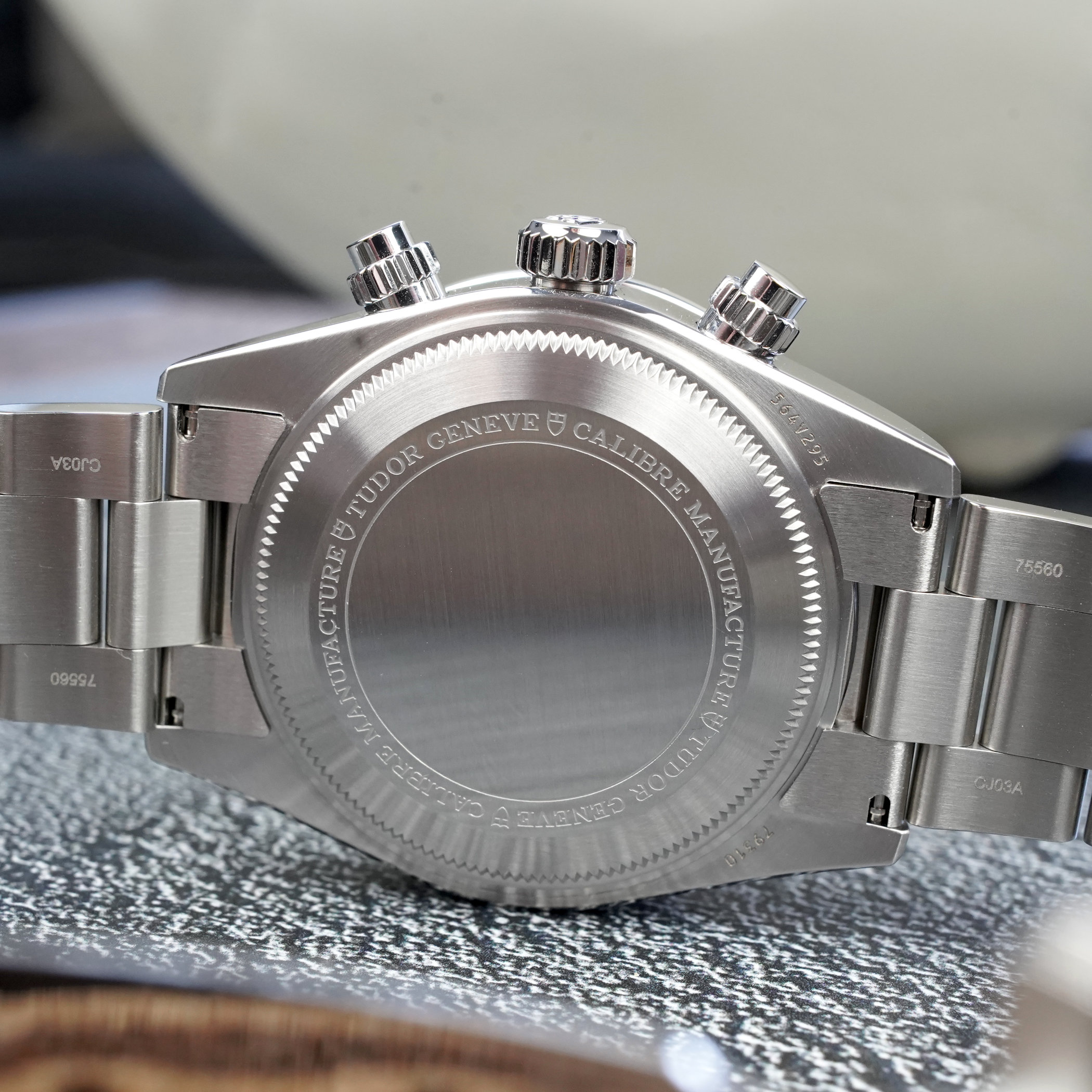
For now, Tudor puts the Black Bay Chrono 39 Bumblebee on the non-riveted three-link bracelet only, which does come with the brand’s easily adjustable T-Fit folding clasp. The price is set at EUR 6,200, which is quite a bit of money, but it doesn’t feel overpriced. It’s a very sporty and good-looking (apart from the divisive colour perhaps) automatic chronograph with very strong specs all around. The reduction in size is good, and a lot of care and attention has gone into making it at least as balanced as the 41mm/42mm Black Bay Chronos.

But what does all this do to the larger variants of the Black Bay Chrono? To me, not much. Both are excellent takes on the Black Bay concept and offer a lot of ‘watch’, and should live alongside each other perfectly fine. On top of that, despite the strong trend and public opinion towards downsizing, there are still plenty of people, including me, who like to wear something sizeable from time to time. After all, there was a merit for Tudor to release the 43mm wide Black Bay 68 just last year. Personally, I don’t mind the size and heft of a 42mm watch or bigger on the wrist, and it does mean you get a bit better legibility with it as well. I would also miss the riveted bracelet and the Tudor Rose logo on the crown, but that’s purely a personal thing. For what it’s worth, this Black Bay Chrono 39 Bumblebee is a strong extension of the family, and should be viewed as such: an extension, and a very, very good one!
For more information, please visit TudorWatch.com.

3 responses
Do you know if the chronograph function can be used while diving?
The yellow is very cool, eye catching.
The new smaller size is just feels more right. Need to check it in real.
Awesome. It’s refreshing to see a big brand achieving a smaller case automatic chrono. Omega should take notice. Now just give us 2-3 more traditional colorways and those will sell like hot cakes.