
 Not all images were able to load for printing. Please close the print window and try again.
 The Comeback of the Cartier Roadster Collection
Cartier’s curvaceous automotive-inspired Roadster is back!
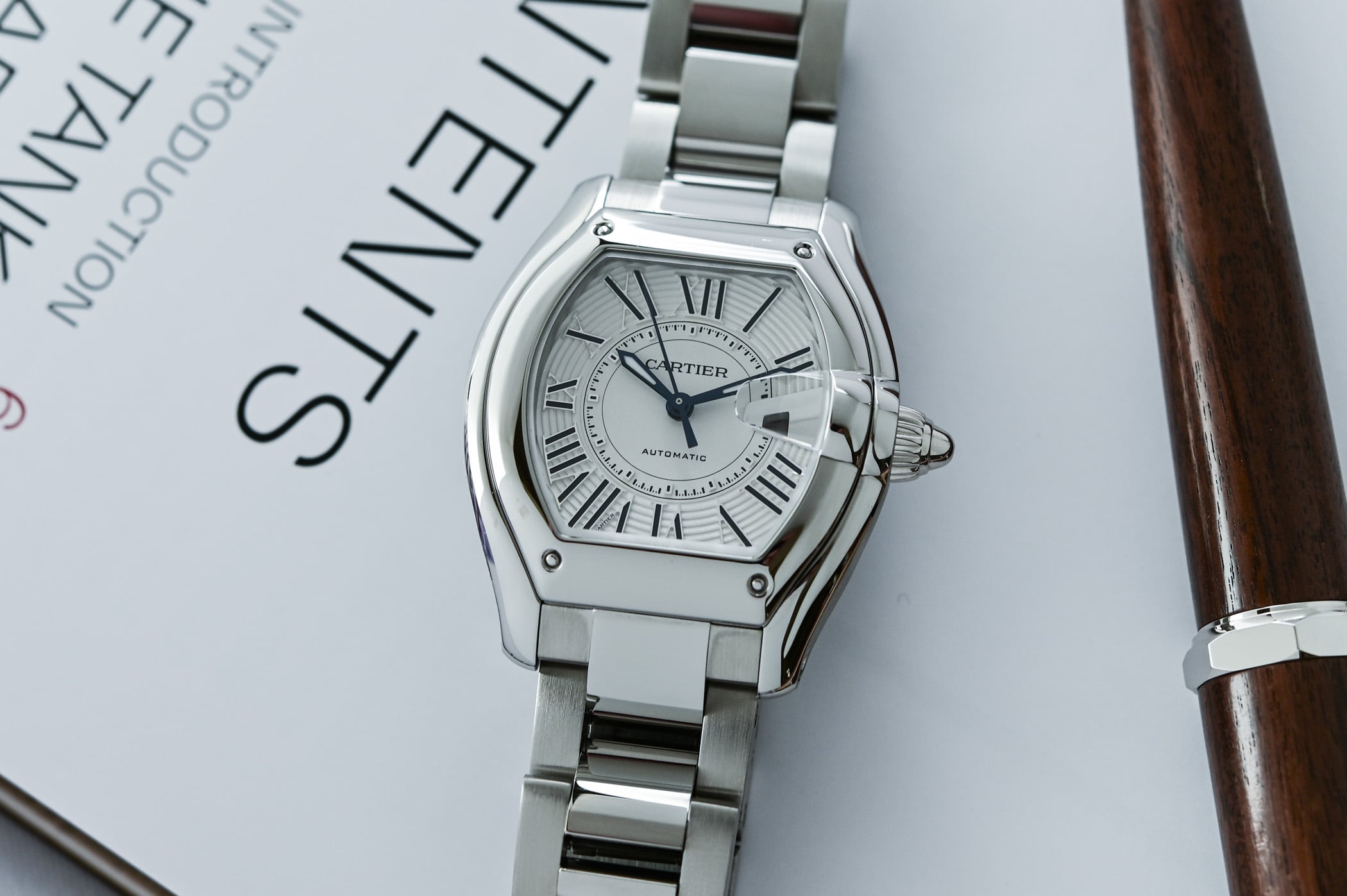
Brands are fully aware that mechanically minded car enthusiasts tend to appreciate mechanical watches, leading to countless sponsorship gestures and collaborations. After a 14-year hiatus, Cartier is set to delight petrolheads with the return of its automotive-inspired Roadster. Renowned as the master of shaped watches, Cartier’s curvaceous, streamlined Roadster has been refined by a team of over 100 artisans and now returns to the track in cases of gold, two-tone steel and gold, and steel, available in medium and large sizes.
Cartier has a distinguished track record in shaped watches. Louis Cartier’s iconic wristwatch, designed for aviator Santos-Dumont in 1904, was square with rounded corners and looked nothing like the round pocket watches of the day, effectively kickstarting a repertoire for shaped watches like the Tonneau (barrel), the Tortue (tortoise), the Tank (rectangular), the Baignoire (bathtub) and even the crazy squiggles of the Crash.
Cartier’s Roadster, named after the two-seater, open-topped sports cars of the 1950s, had a slightly less enduring track record. Introduced in 2001, the Roadster was discontinued in 2012, unwittingly increasing its value in the collector’s market. Emulating the rounded, aerodynamic lines of the 1950s Porsche 356 Speedster, the Roadster’s tonneau-shaped silhouette featured flowing lugs accentuated by recessed screws and a hard-to-miss crown. Available in two case sizes, the large models were powered with mechanical movements, while the smaller cases had quartz movements. In addition to the time-and-date models, there was a chronograph and a GMT.
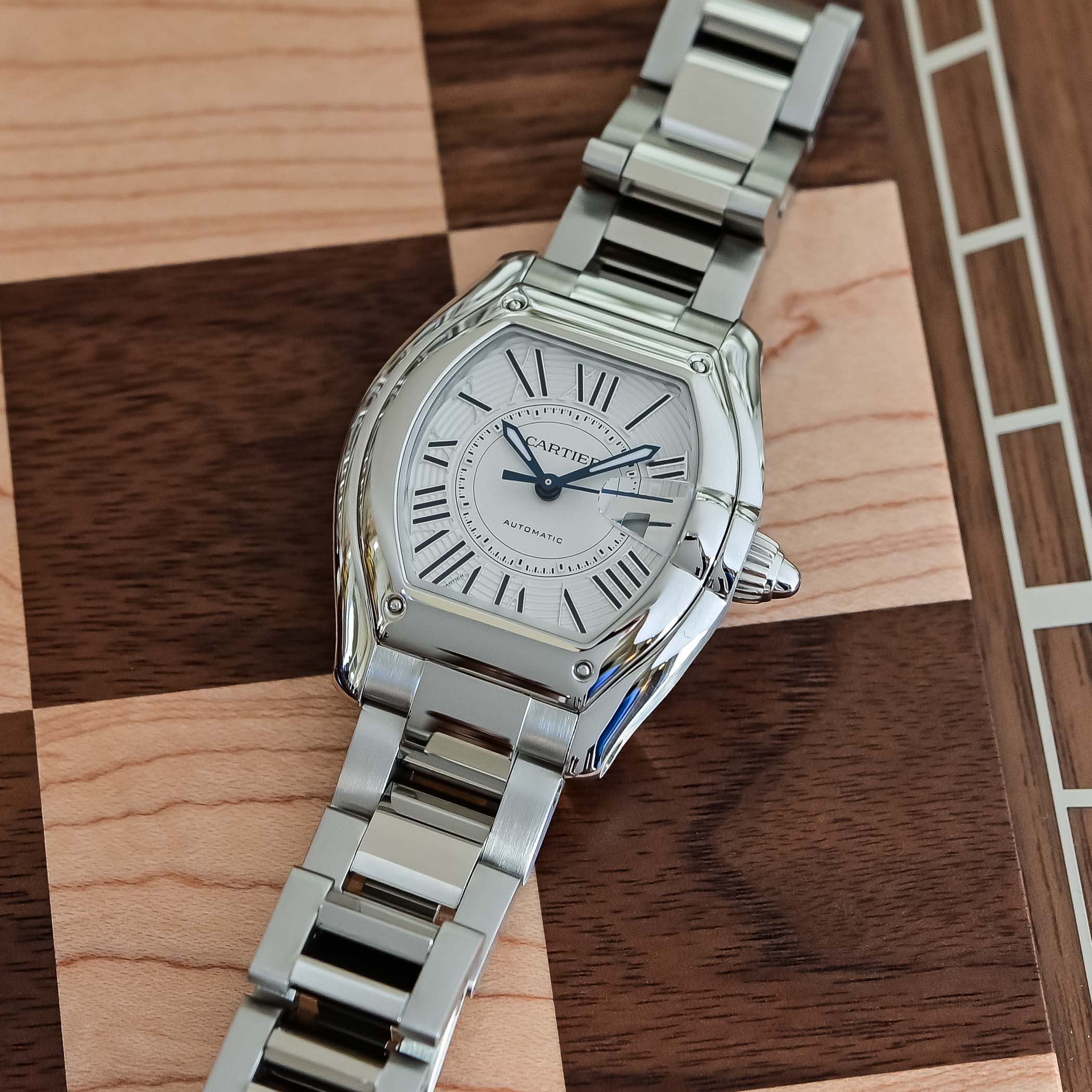
The Roadster’s unmistakable provenance was further underscored by the classic Cartier Roman numerals and sword handset, the chemin de fer (railway) minutes track, and the hidden signature. Referencing its automotive influence, the concentric rings on the chapter ring resembled a speedometer, while the cyclops-style date magnifier resembled a gauge window. However, the most notable feature was the exaggerated, fluted crown, resembling the taillights on the fins of 1950s American cars.
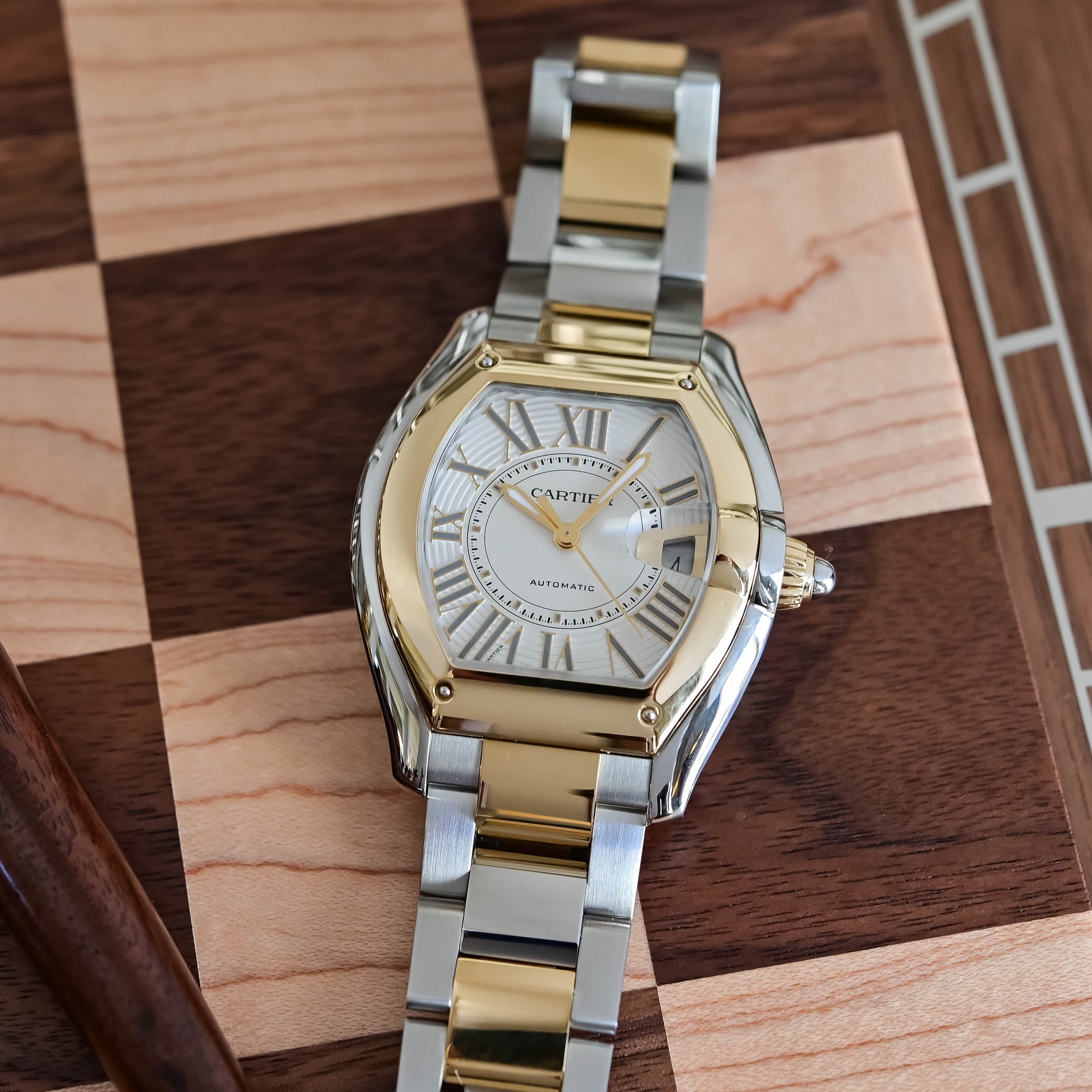
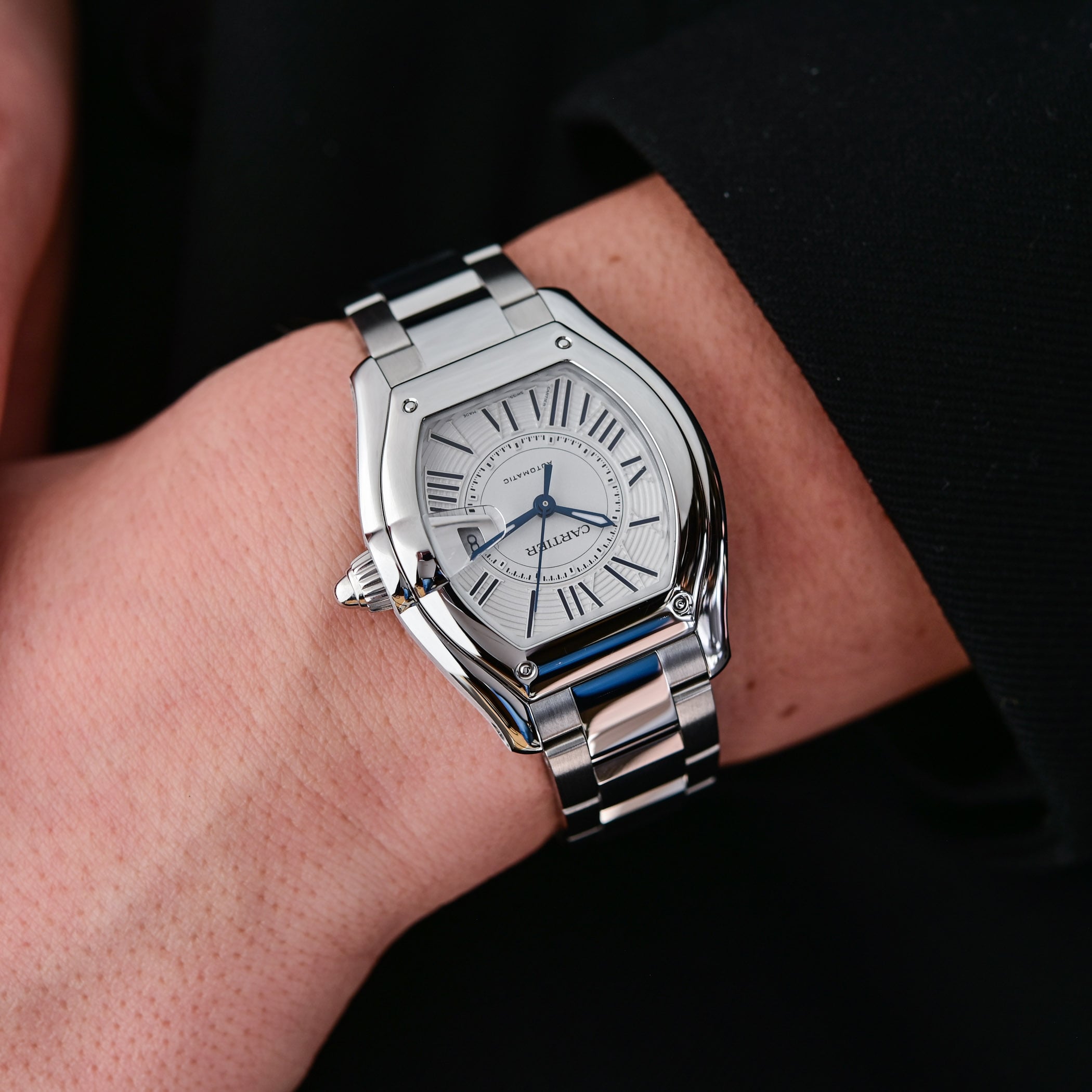
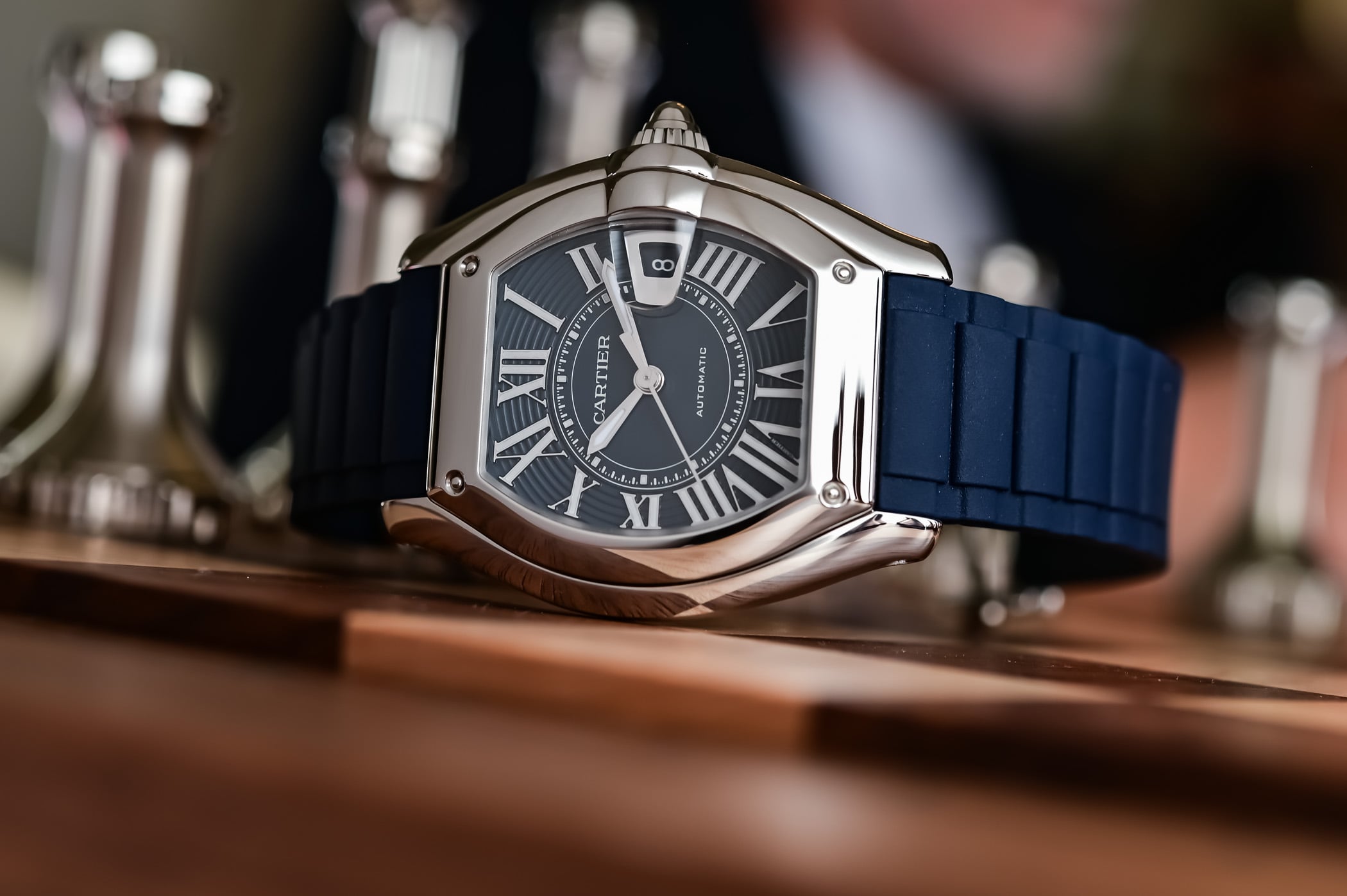
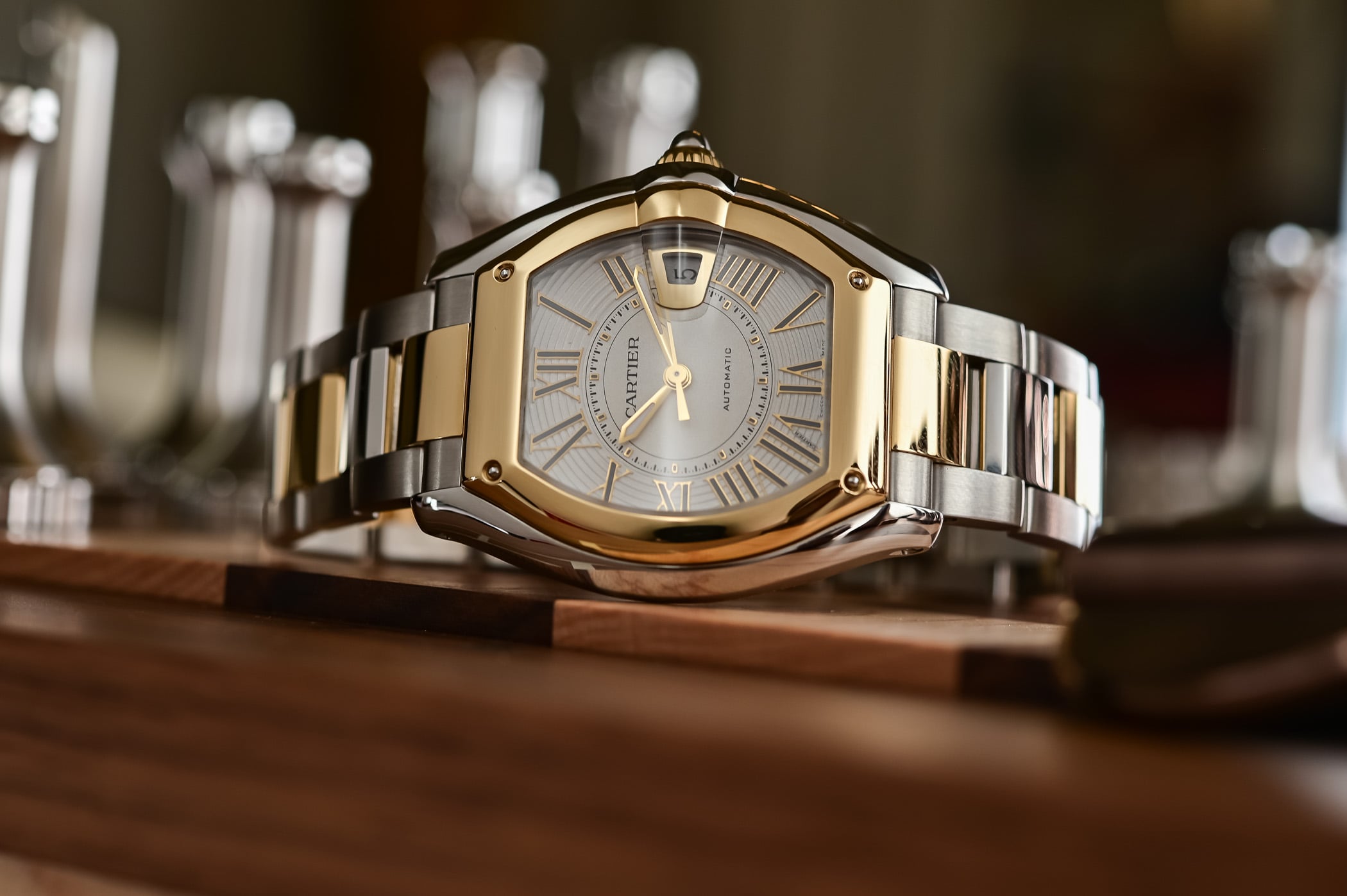
The good news for fans is that the new Roadster has retained its soul and returns with slightly more refined proportions and a redesigned bracelet. As mentioned, two sizes are available: the L references in 47mm x 38mm cases with a thickness of 10.06mm, and the M references in 42.5mm x 34.9mm cases with a thickness of 9.7mm. All models are water-resistant to 100 metres. The L models are offered in solid yellow gold and in two-tone yellow gold with white dials, and in steel with either a blue or white dial. The M models follow suit, but the steel reference with a blue dial is not currently available.
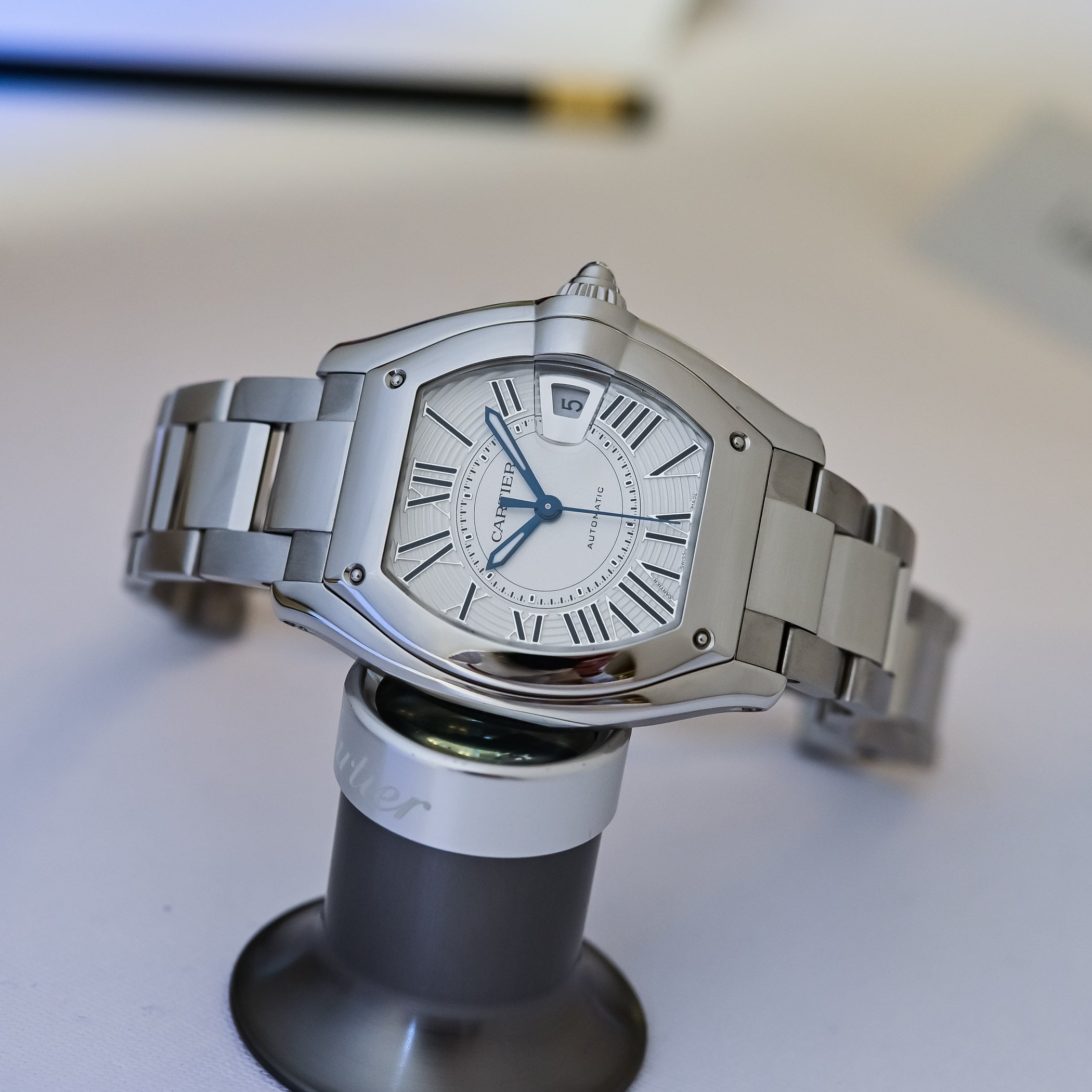
Fans of the original Roadster will notice that the four recessed screws on the tips of the lugs from the first Roadsters have migrated to the bezel, in a slightly different rivet format (without the drive in the screw head). The crown has also been redesigned and is now more integrated, giving the case a sleeker profile. The stepped case construction and its attractive rounded contours are highlighted with the mirror-polished finish.
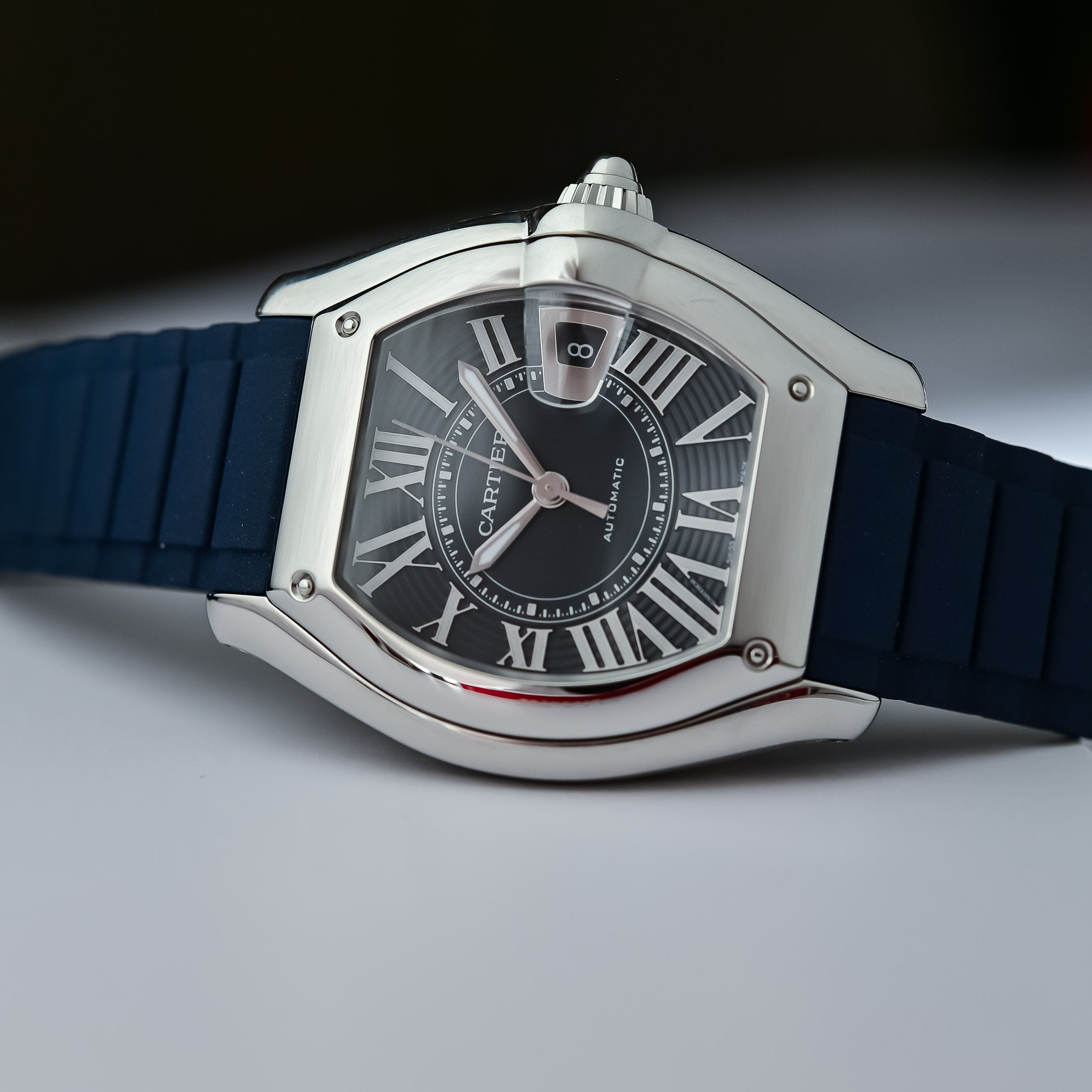
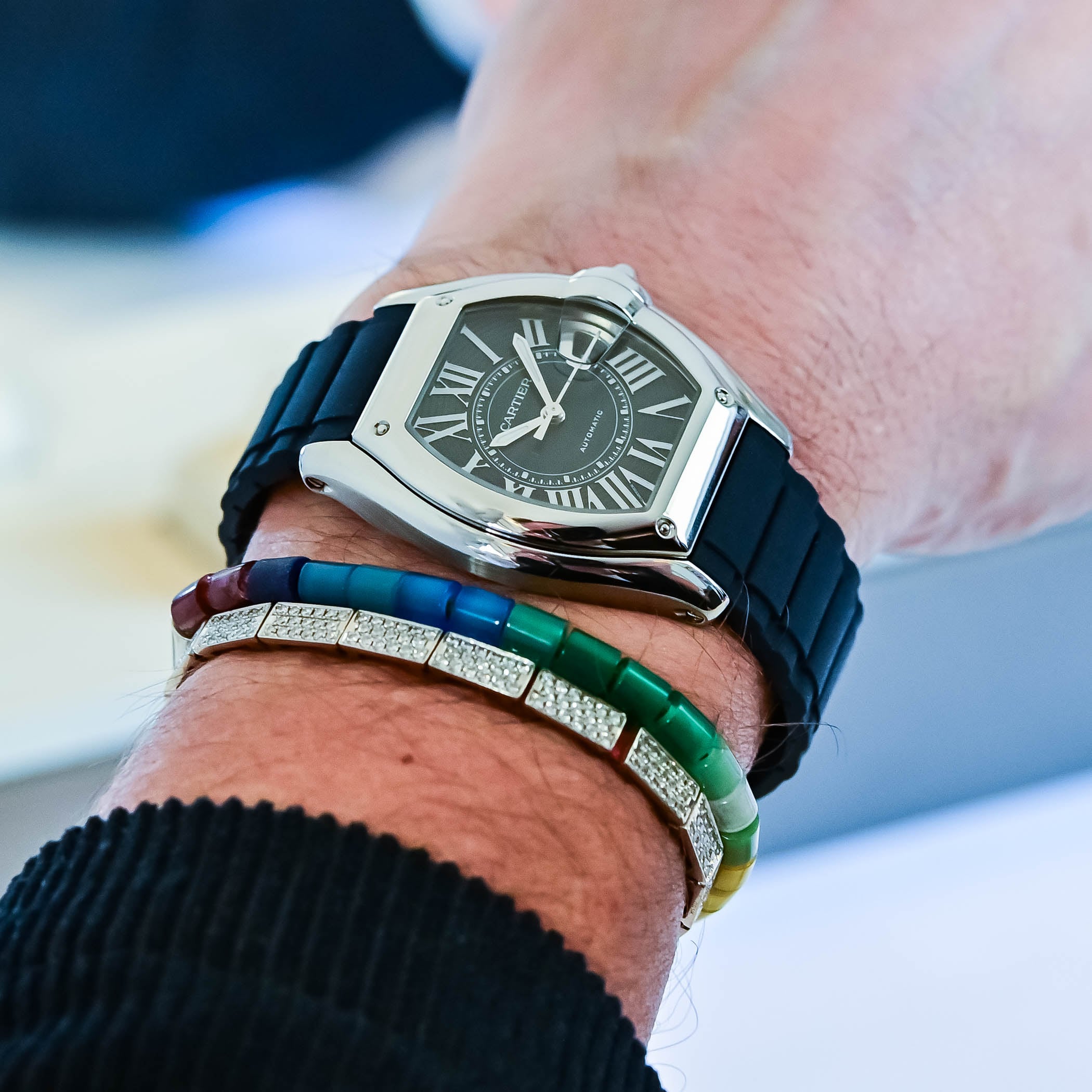
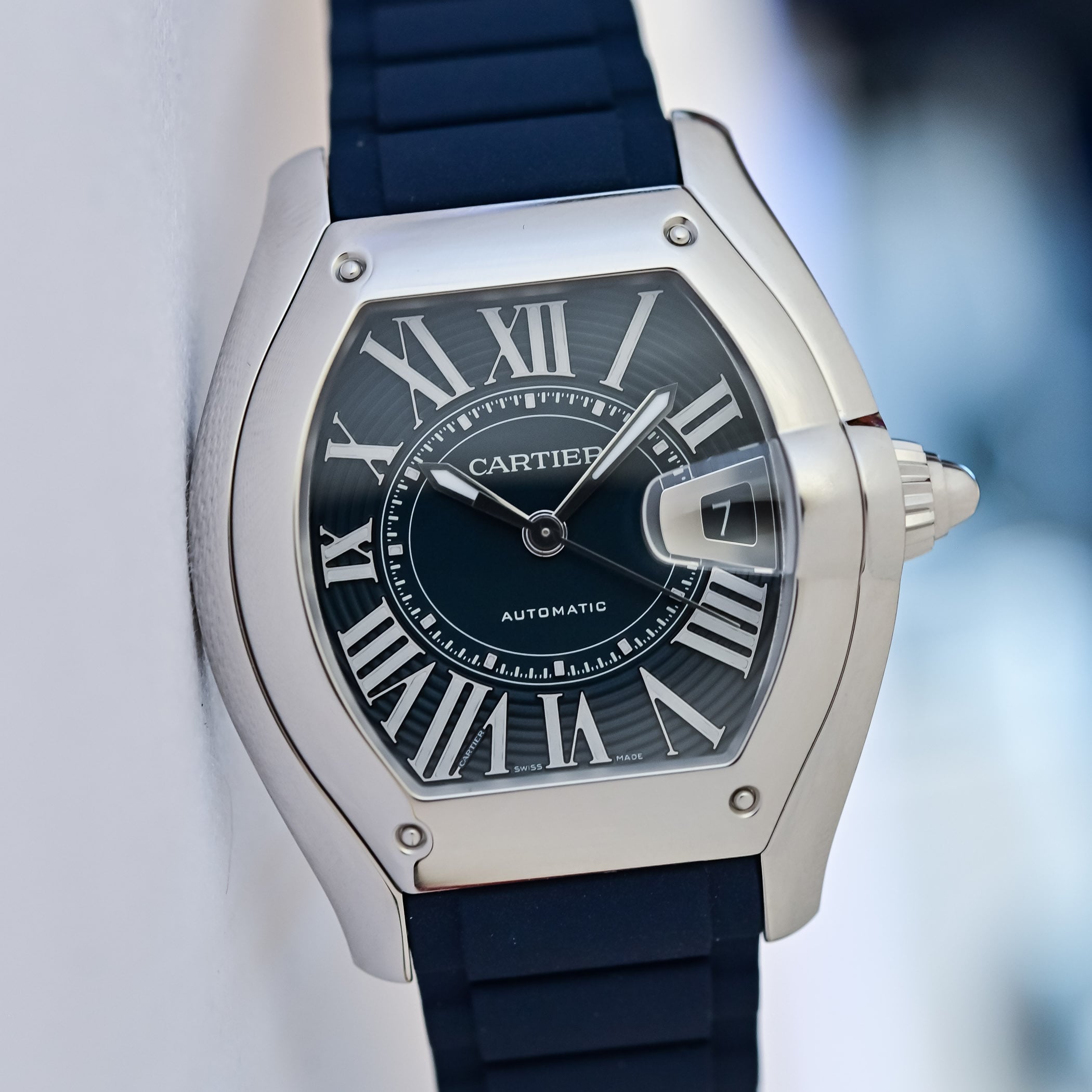
Dial-wise, Cartier has preserved the concentric rings, the classic chemin de fer track, the bold Roman numerals, and the secret signature on the VII hour marker. The difference, however, lies in the appliqué effect created by a stamping tool that adds relief to the scenery.
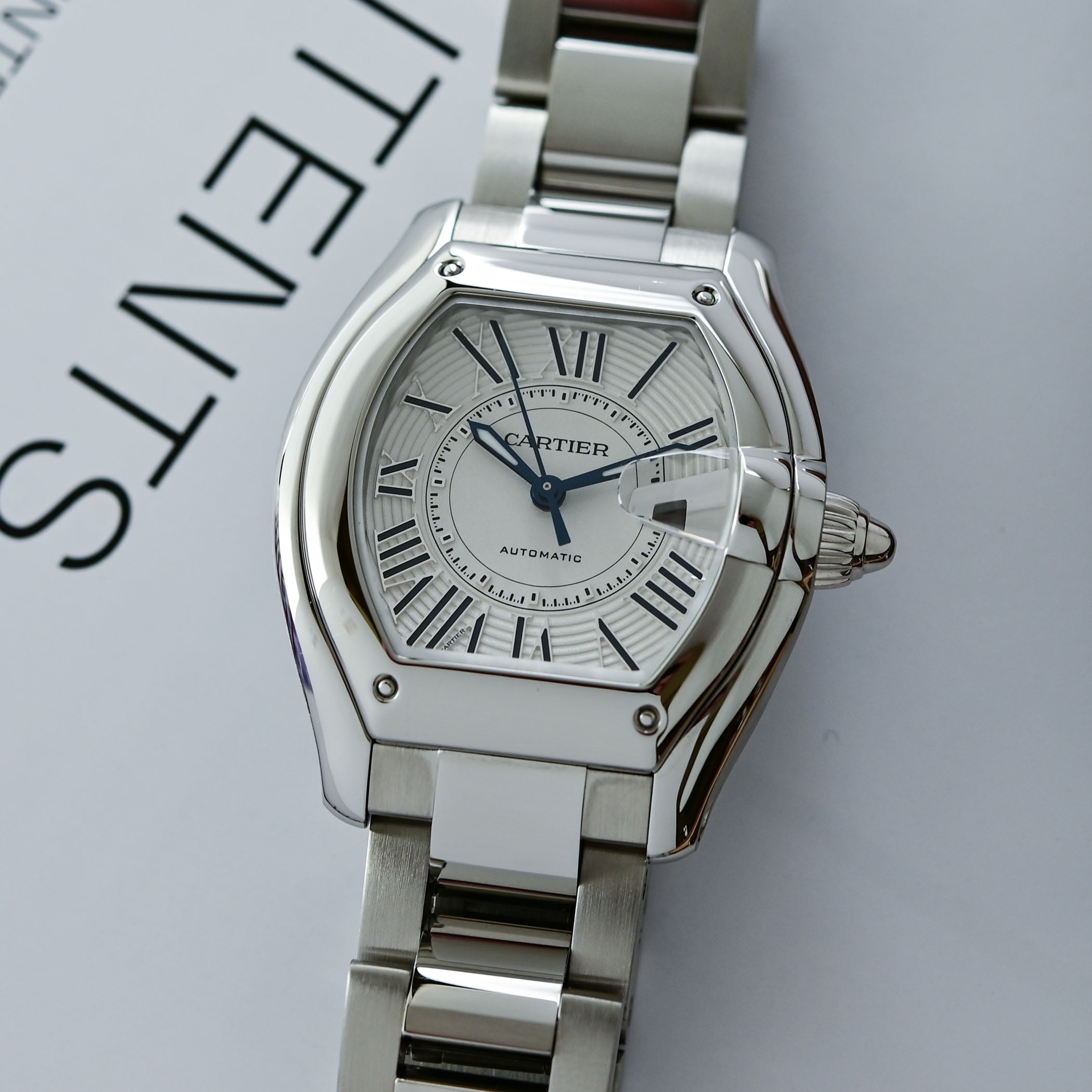
The bracelet now has shorter, more ergonomic links. The central links are positioned horizontally and finished with a polished surface, contrasting with the brushed outer links. Additionally, the bracelet is equipped with Cartier’s patented QuickSwitch system for easy exchanges. All the new Roadsters come with an extra alligator strap and a steel folding clasp, except for the blue dial reference, which is supplied with a sporty navy blue rubber strap.
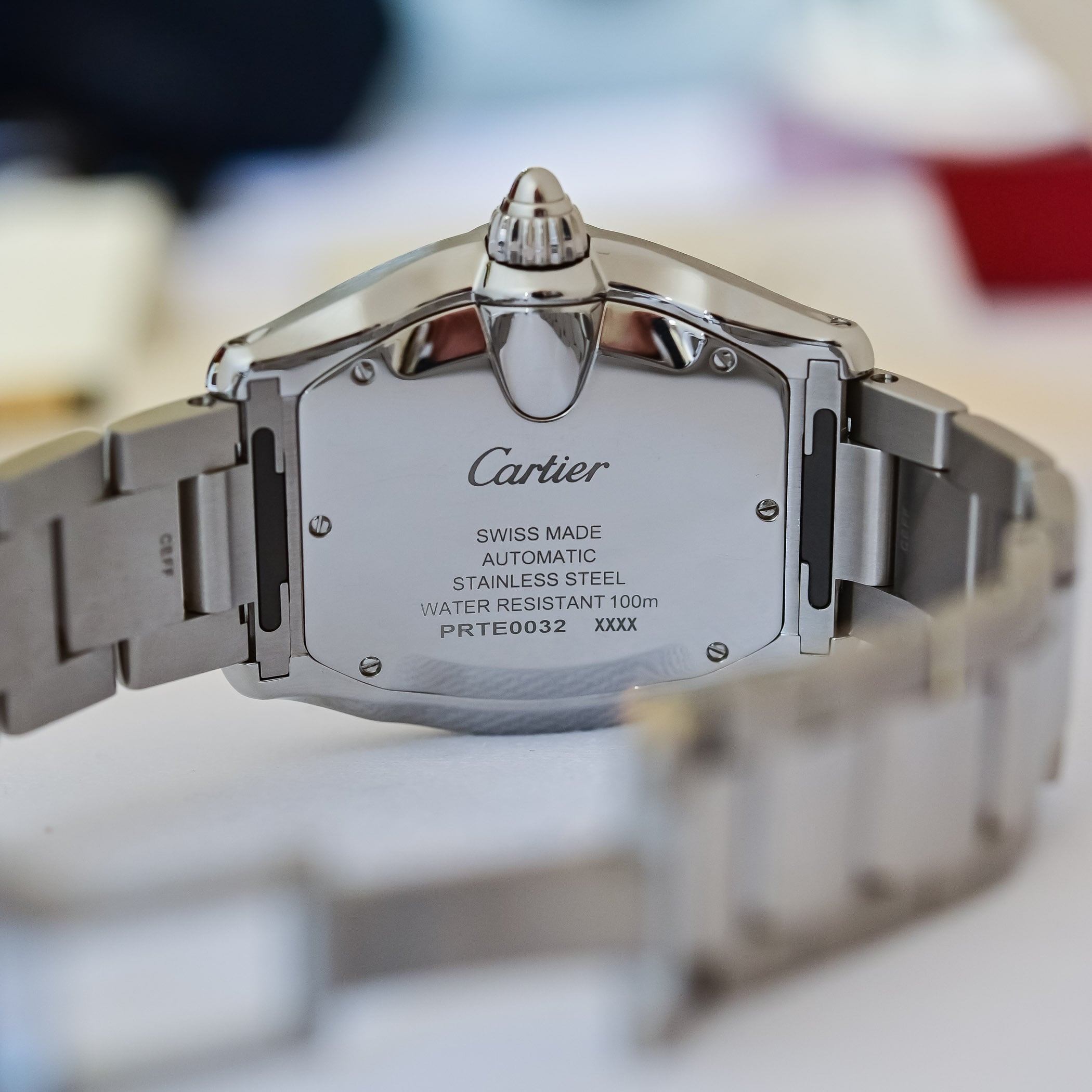
The L models are equipped with Cartier’s 1847 MC automatic movement, introduced in 2015, with a 42-hour power reserve for the hours, minutes, seconds, and date. The M models are powered by Cartier’s more recent calibre 1899 MC, a slim automatic movement with a 38 to 40-hour power reserve.
We await confirmation of the prices. For more information, please visit cartier.com.