Not all images were able to load for printing. Please close the print window and try again.
The History of German Watchmaking
Although Switzerland is the watchmaking capital today, Germany and Nuremberg in particular played an important role in its development.
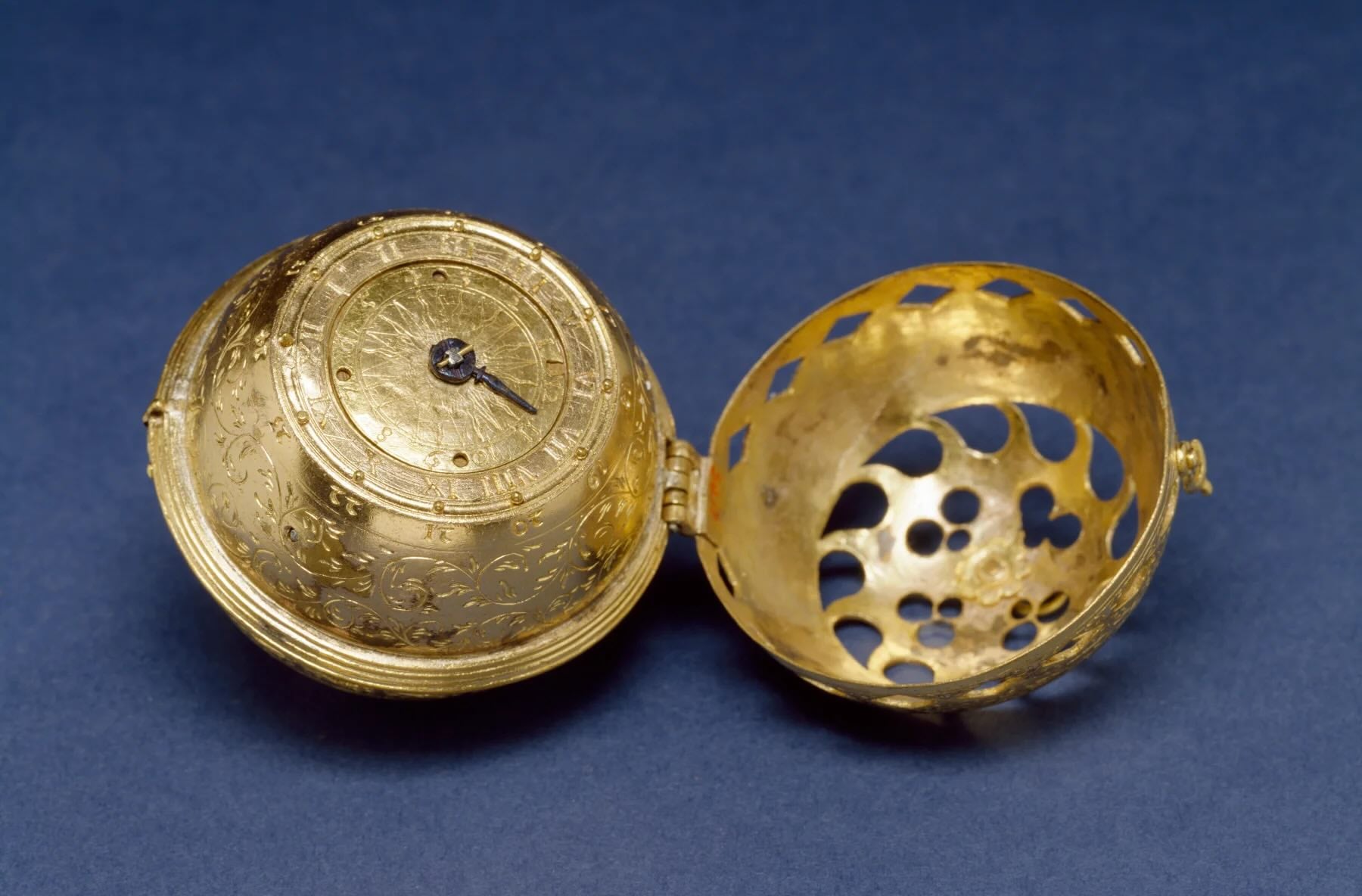
The miniaturisation of clock towers to portable time wasn’t a Swiss innovation – it all started in Germany thanks to locksmith and clockmaker Peter Henlein in Nuremberg at the start of the 16th century. These first “pocket watches” were soon referred to as Nuremberg Eggs, as many had round, bulbous shapes like an egg. They were larger than familiar pocket watches (too large for an actual pocket) and more like miniature clocks that were worn around the neck. The move to spring-driven movements, however, made everything that came afterwards possible, although accuracy was lacking until the invention of the balance spring in the late 17th century. The watch on your wrist today goes directly back to Henlein’s invention, which led to breakthroughs and innovations for centuries throughout Europe.
Controlling Time
The mainspring was the first key invention that made portable timekeeping possible, which was coupled to the verge escapement and foliot via a gear train. It was an imperfect system to be sure, and early mainsprings had very uneven power delivery as they unwound – accuracy was off by hours per day. Nuremberg Eggs were complex curiosities for the wealthy and royalty at the time, but actual time telling was a bit secondary. Inventions like the fusee and chain helped minimise the decrease in power as the mainspring unwound, largely credited to Leonardo da Vinci (cone-shaped fusee) and Gruet of Geneva in 1664 (the chain). A similar concept was seen even earlier in the 15th century for a crossbow windlass. The watchmaking fusee used a cord of several types (including cat gut) before the more durable chain, and the cone shape acted as a variable transmission to compensate for the weakening energy from the unwinding mainspring, unspooling from the tip of the cone to the base. The oldest known clock to have both a mainspring and fusee is the Burgundy clock from 1430, so although Peter Henlein first utilised the mainspring for portable time, he didn’t invent it.
The Black Forest
Nuremberg Eggs kickstarted watchmaking as we know it, but it was France and soon Switzerland that became significant watchmaking hubs during the 16th and 17th centuries, although clockmaking generally dominated the era. Paris and Blois became major horological cities, and Switzerland established the first watchmaker’s guild by the start of the 17th century. The Black Forest region of Germany was a clockmaking centre in the 1600s, producing rather archaic wood-beam clocks with wooden gears and stone weights, but the famous cuckoo clocks emerged a century later. Franz Anton Ketterer introduced the first in the 1730s, and mechanical cuckoo clocks have since defined Black Forest clockmaking. A dedicated school was established in 1850 by the Duke of Baden, and hand-crafted cuckoo clock production methods shifted to a factory-based system, with millions being produced annually by the 20th century.


Pforzheim
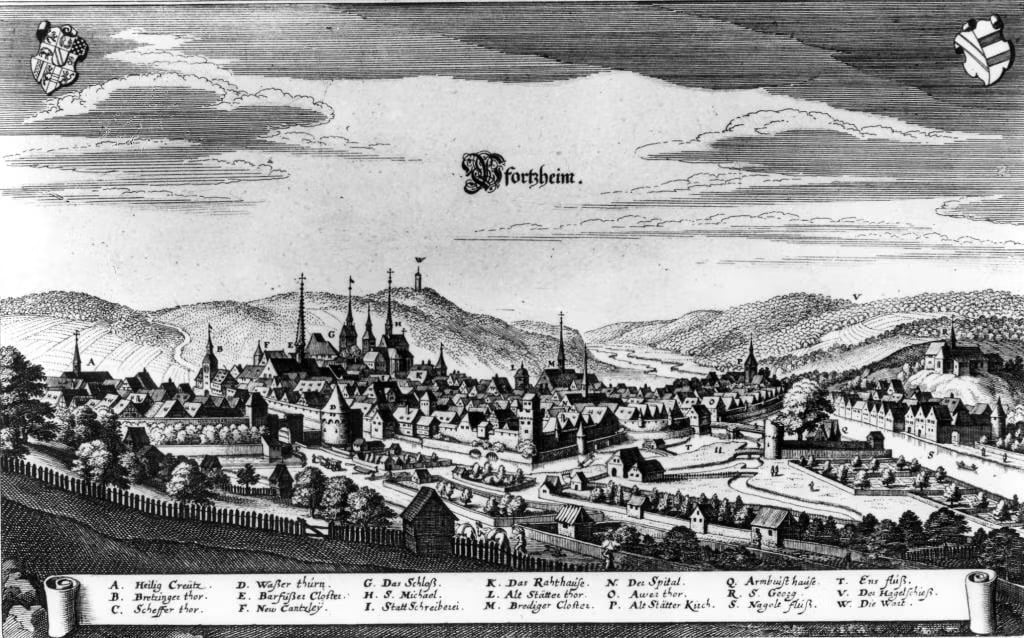
There was a gap of around two centuries between the 16th-century Nuremberg Eggs and a rise of German watchmaking in the 18th century, as neighbouring countries had been doing the heavy lifting. The town of Pforzheim became the “Golden City” in the 18th century as a major centre of German watch and jewellery production. A key date is 1767, when Margrave Karl Friedrich took an unorthodox approach of establishing a watchmaking factory and training centre in an orphanage, partnering with watchmaker Jean-François Autran, who had both Swiss and French roots. The purpose was to teach orphans watchmaking skills for their own economic advantages in later life and to create future teams of trained watchmakers for regional production. The gamble paid off and was a huge success, and the world’s first watchmaking and jewellery vocational school was then established in Pforzheim. The scale and quality of pocket watch production earned the city an international reputation and a second nickname, Little Geneva, and the factory expanded in 1768 for jewelry design/production. Partner mismanagement and bankruptcies unfortunately plagued the factory in the mid-1770s, and the factory itself was shuttered in 1821. It was a serious blow to Pforzheim’s watch industry, and it would take a century for a major comeback.
Glashütte
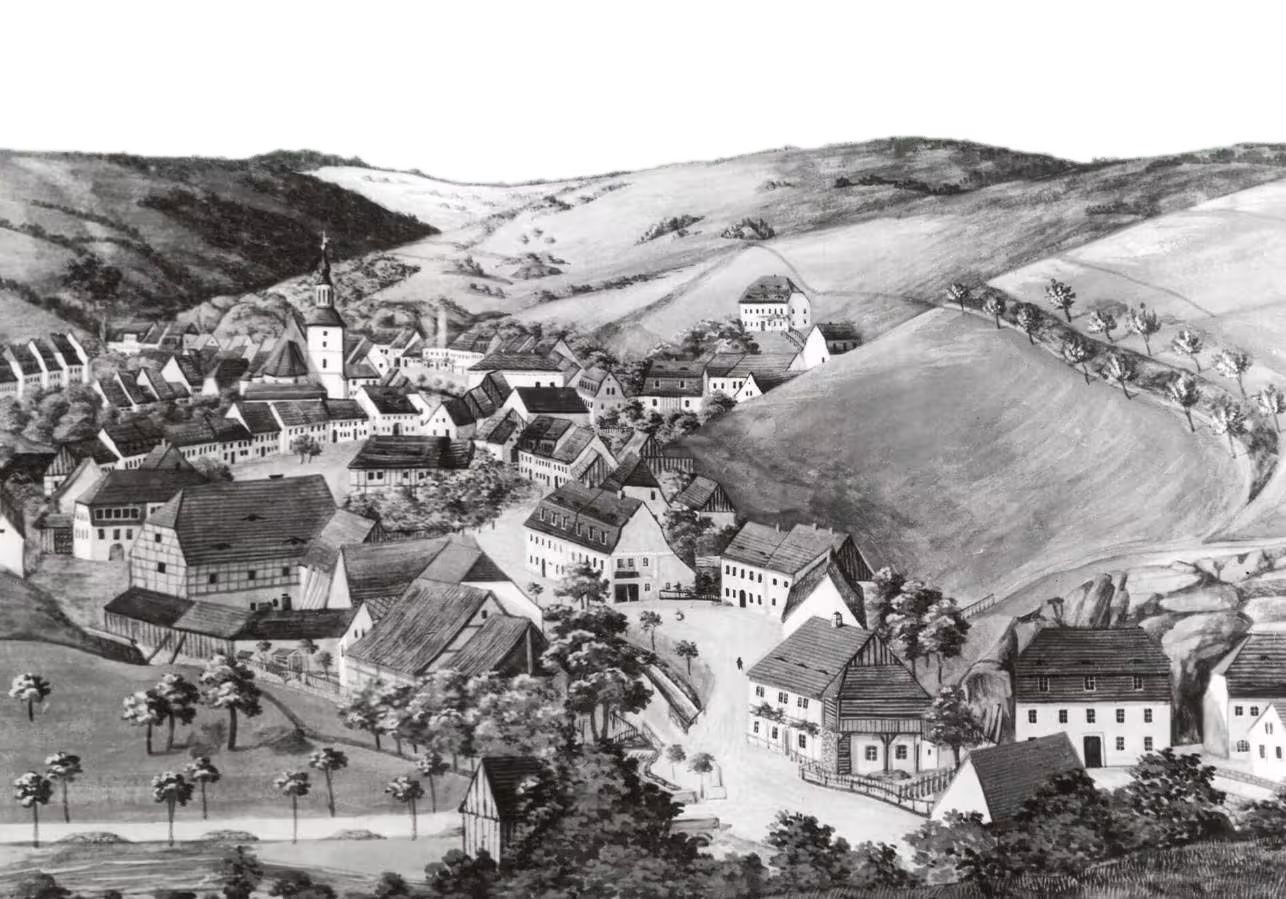
A second major watchmaking city in Saxony emerged about 80 years after Pforzheim and is the epicentre of German watchmaking today. Glashütte is home to A. Lange & Söhne, Moritz Grossmann, Tutima, NOMOS, Glashütte Original and more, although things were quite different in the mid-19th century. In 1845, it was a small and struggling mining town, which became a base for Ferdinand Adolph Lange (after a loan from the King of Saxony), and later Moritz Grossmann. Major regional developments like the three-quarter plate and screwed gold chatons gave the city a distinctive artisanal vibe, and the German School of Watchmaking from Moritz Grossmann was established in 1878 to attract and train new talent for the growing Saxon watchmaking district. The swan neck regulator also became a favourite design element, although that was an American invention from 1867 that Glashütte watchmakers embraced later in the century.
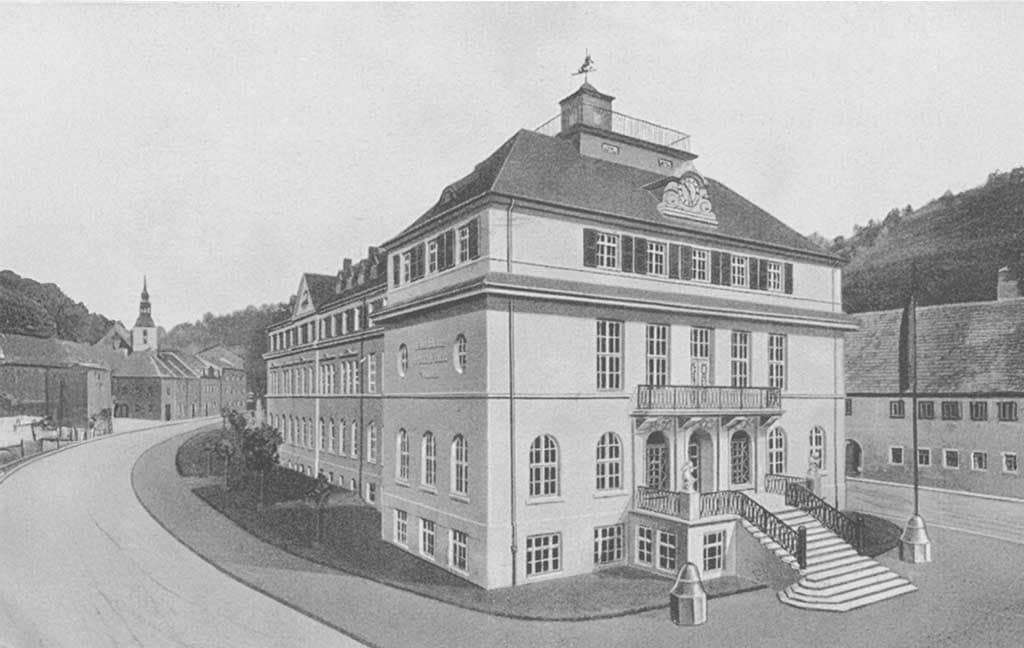
Bauhaus Design and the 20th Century
Walter Gropius created the Bauhaus movement in 1919 with a minimalist aesthetic of “form follows function” that was the antithesis of the louder Art Deco designs that were starting to take hold. Modern dial examples include the Junghans Max Bill series, introduced in 1961, and NOMOS Tangente, introduced in 1992. In watchmaking, the Bauhaus aesthetic started in 1937 on dials from Weber & Baral – a Pforzheim-based dial maker founded in 1927 that became the largest in Germany. Weber & Baral set the standard for the distinctive look and typography with long, thin (often exaggerated) numerals that are unchanged today. Many of these Bauhaus dials went to prominent watchmakers in Glashütte like A. Lange & Söhne, and newer brands like Stowa in Pforzheim.


The second wave of watchmaking in Pforzheim came in the 1920s with brands like Laco and Stowa rising to prominence. Founded in 1927 by Walter Storz (the name takes the letters and sound of his last and first name – Storz + Walter), Stowa began in Hornberg in the Black Forest before relocating to Pforzheim in 1935. It embraced the Bauhaus design in 1937 and continues this with the modern Antea collection, never abandoning its roots. Laco was founded a couple of years before Stowa in 1925 by Frieda Lacher and Ludwig Hummel, and was based in Pforzheim from the beginning. It was generally limited to pocket watches until 1936, when Erich Lacher joined the team and shifted production to wristwatches. Both Laco and Stowa became major suppliers for the Luftwaffe in World War II (more on that below).
A. Lange & Söhne
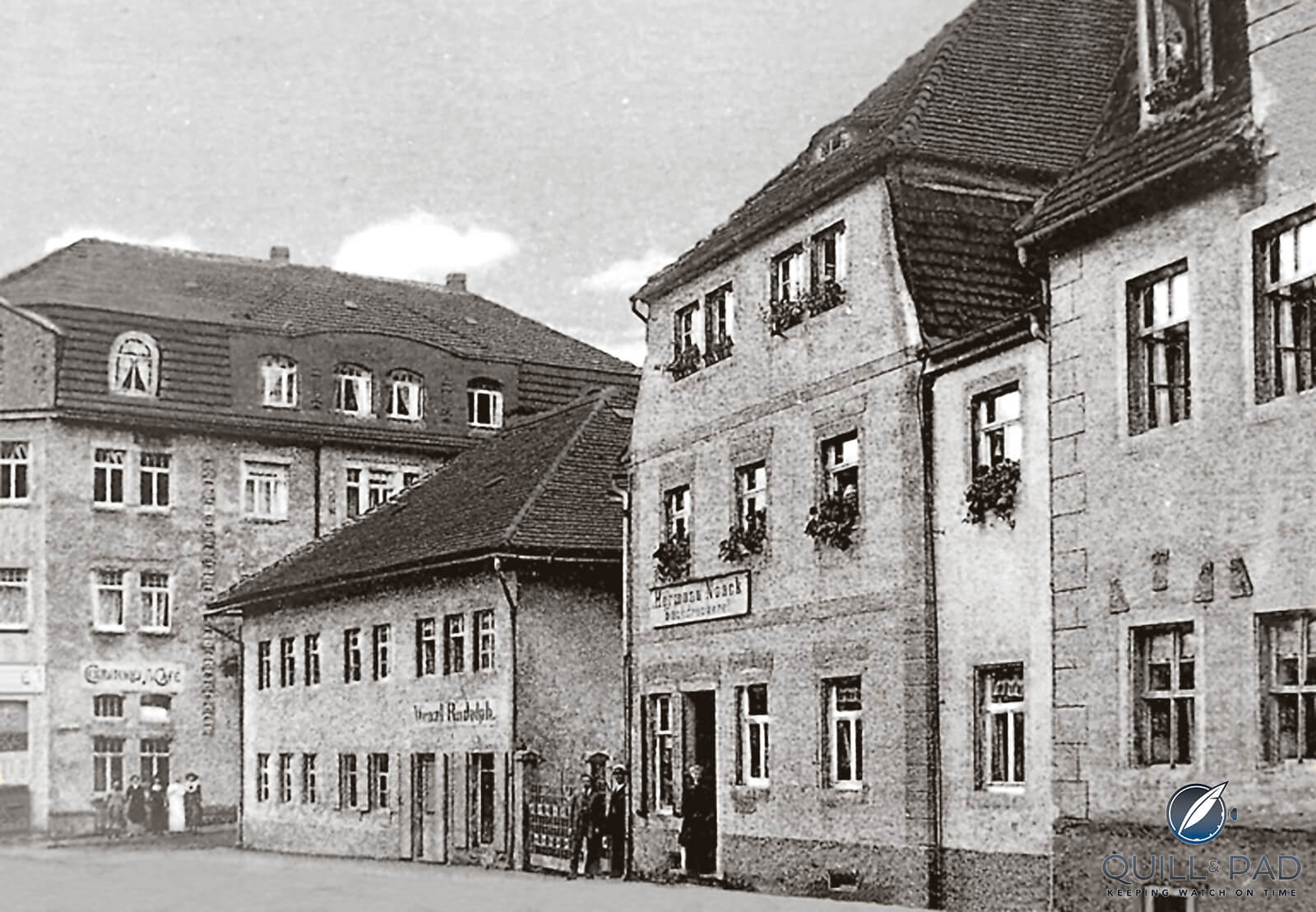
It was Ferdinand Adolph Lange who put Glashütte on the map in 1845, and it’s now the watchmaking capital of Germany. Early innovations from A. Lange & Söhne include the aforementioned three-quarter plate, which is a distinctive design that replaced individual (and often fragile) bridges with a large plate that spanned 75% of the movement (hence three-quarter plate). The design concept was adopted from older English pocket watches but refined for thinner and more advanced German calibres. Durability and stability were significantly improved with the entire gear train mounted to the single plate, and it became a Glashütte hallmark. Lange also made the bold move to abandon the ligne system, a French measuring system widely used throughout Europe, and adopt the metric system with millimetres as the base unit. General watchmaking tools weren’t designed for the metric system, so he made a specialised dial micrometre that could measure down to 1,000th of a millimetre. This was over a decade before Saxony adopted the meter for measurement and the millimetre would become the German watchmaking standard. As the metric system became more popular, most European watchmakers moved to it by the late 19th century, but Lange was the pioneer. He also introduced Glashütte ribbing, which was a similar finishing technique to Swiss Côtes de Genève that helped trap dust particles to prevent contamination of the regulating organs (along with being decorative, of course). He was mayor of Glashütte for 18 years before being elected to the Saxon state parliament, serving his community above and beyond watchmaking.
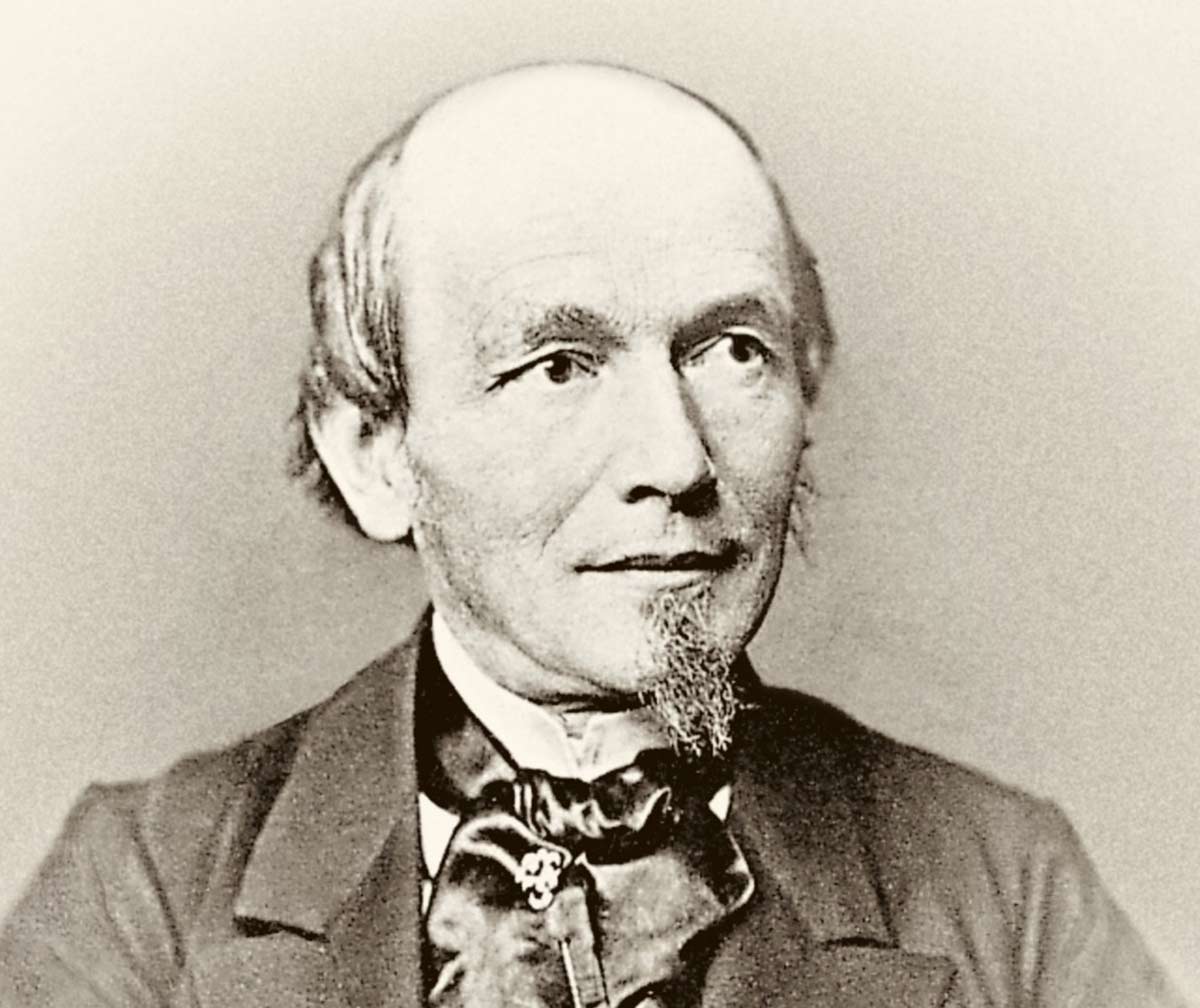
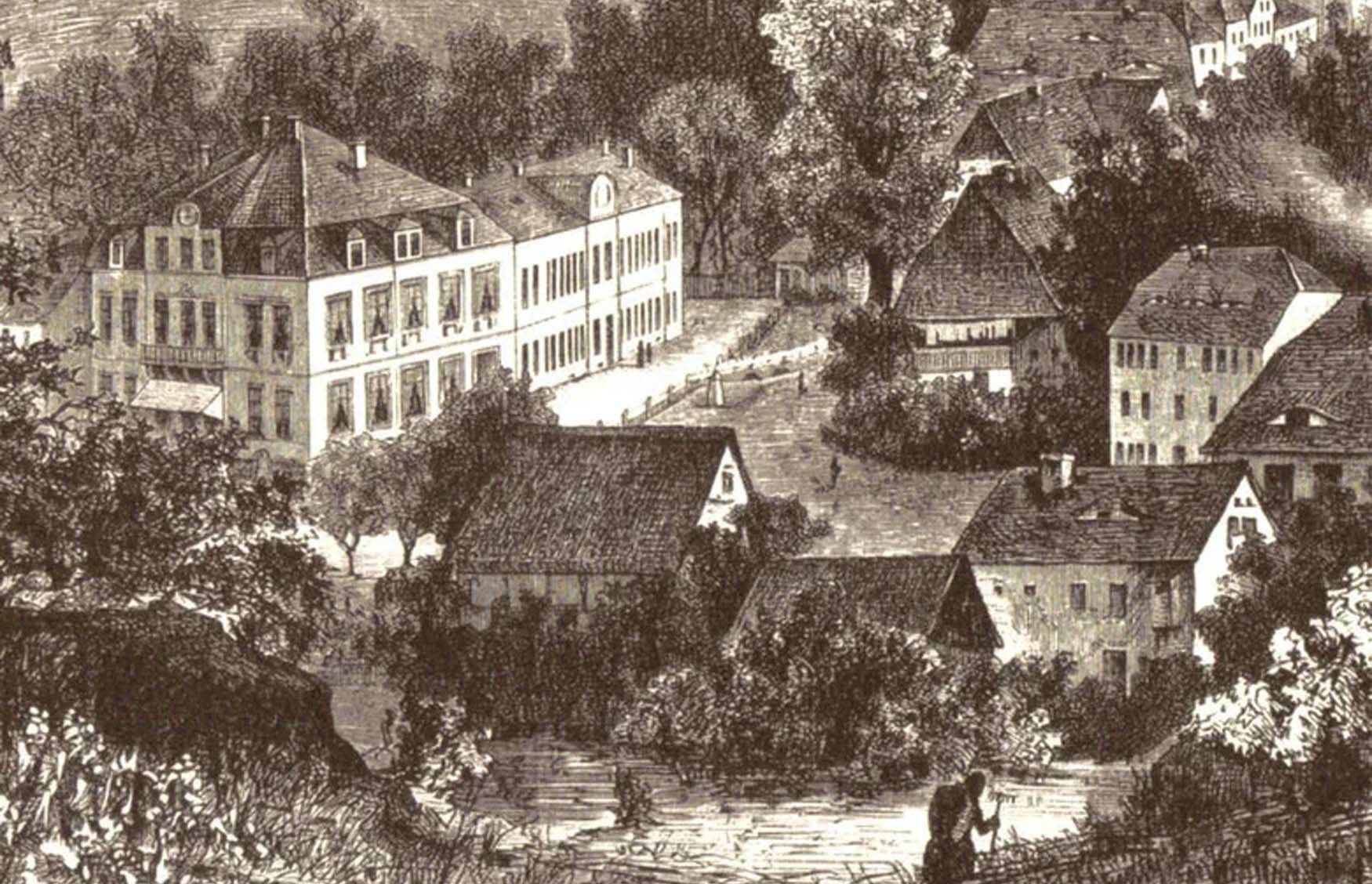
In 1868, Lange’s oldest son Richard became a partner and began running the company, and this is when the brand officially became A. Lange & Söhne (from A. Lange & Cie). His second son Emil joined in 1871, and A. Lange & Söhne was internationally recognised for highly finished and complicated pocket watches with tourbillons, chronographs, repeaters and more. Ferdinand died in 1875 at the age of 60, but the brand was in good hands with his sons and thrived into the 20th century. The brand would become a vital part of Germany’s war effort during World War II, joining Laco, Stowa and others.
Moritz Grossmann
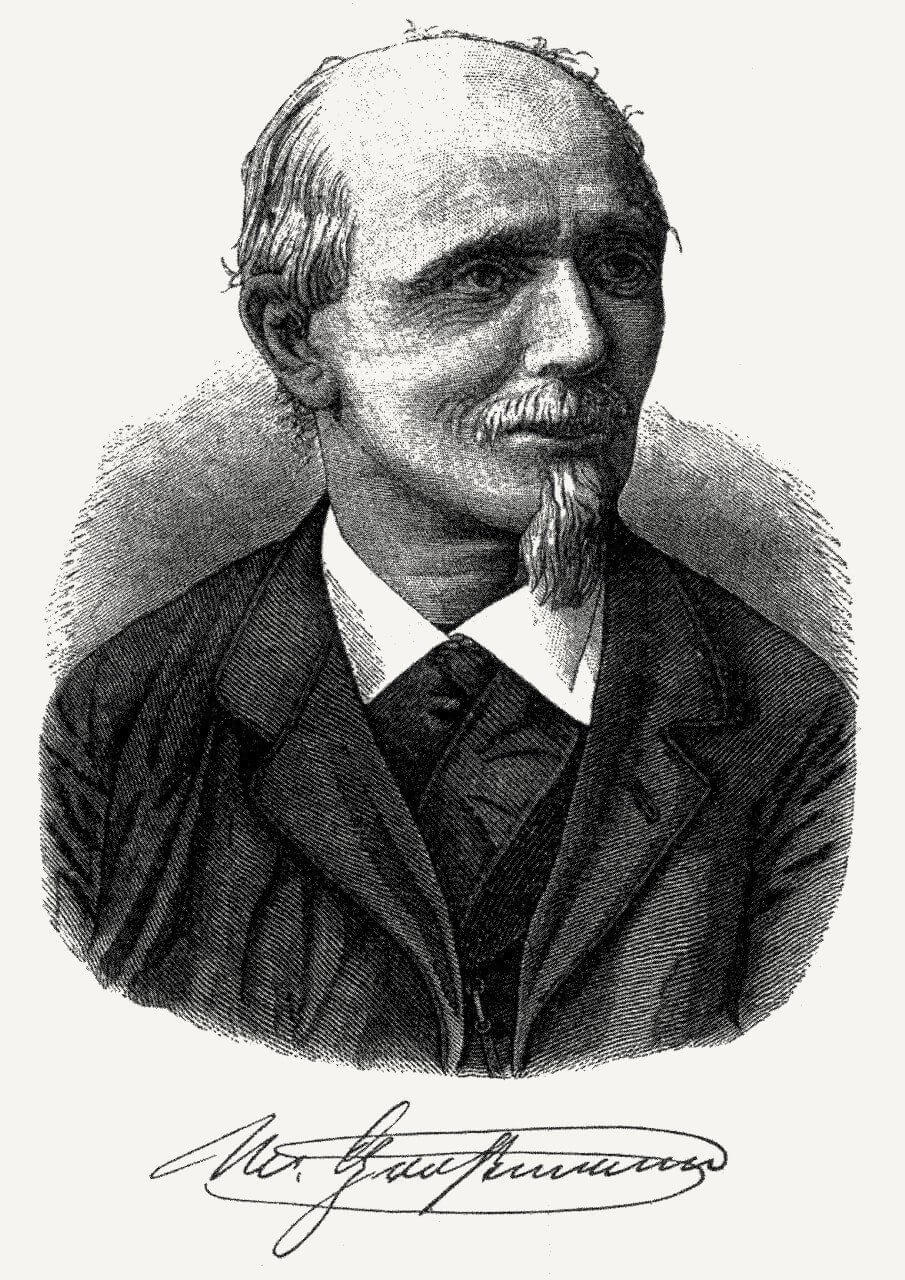
Watchmaker Moritz Grossmann was encouraged by his friend Ferdinand Adolph Lange to establish himself in Glashütte, and he opened an atelier in 1854. Like Lange, he was known for high-end pocket watches and marine chronometers as well. In addition, he was very passionate about education in the field and, as mentioned, opened the German School of Watchmaking in 1878. He was well known for his technical writing and published books like On the Construction of a Simple but Mechanically Perfect Watch, and was always happy to share his knowledge with others to advance horology. This evident in his first publication that was submitted anonymously to the British Horological Institute in 1866, On the detached lever escapement, which won first prize (a first for a German watchmaker) and allowed skilled readers to reproduce lever escapements. He was an enthusiastic teacher, chairman of his school and revered by his students, and ego was never a byproduct of his horological genius. Unfortunately, this master watchmaker died from a sudden stroke in 1885 at the age of 58, and his atelier was soon liquidated. It would be over a century before the Moritz Grossmann name would return to Glashütte.
World War II and the B-Uhr
Similar to the American watch industry during the war, German watchmakers were commissioned (aka forced) to support the war effort. Civilian production was paused as military watches became the primary focus, which resulted in one of the most legendary series. The B-Uhr Observation Watch (Beobachtungs-uhr) was commissioned by the Reich Ministry for Aviation (RLM) for the Luftwaffe with standardised specs including a large 55mm case (to be worn over a flight jacket via a double-riveted leather strap) and central hacking seconds to synchronise watches. The crowns were oversized (usually onion) to be used with heavy gloves. They were powered by pocket watch movements, although all were designed specifically for the wrist. Known as Flieger watches (German for flier), these were vital tools for precise timing of bombing runs and overall navigation, and although the specifications were standardised, there were two separate dial designs in 1940 and 1941, Type A and Type B. Additional specs included an anti-magnetic soft iron cage and matte black dial with radium lume.
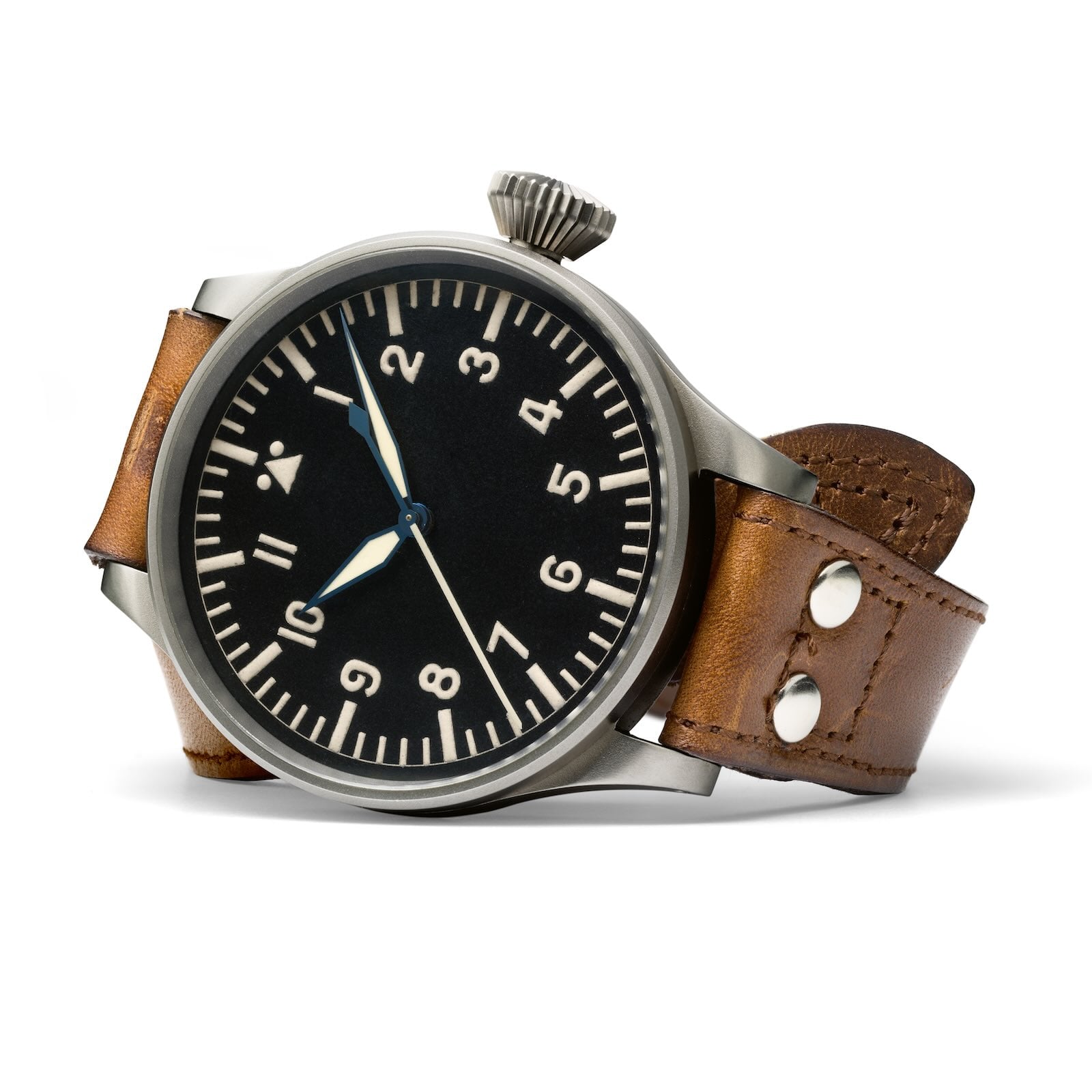
Type A (Baumuster A) – Debuting in 1940, this had a simple, highly legible layout with large Arabic numerals and a triangle at 12 o’clock between two dots, which allowed pilots in difficult environments (darkness, high g-forces, etc.) to easily determine the dial’s orientation. The triangle was also luminous, as were the sword-style hour and minute hands.
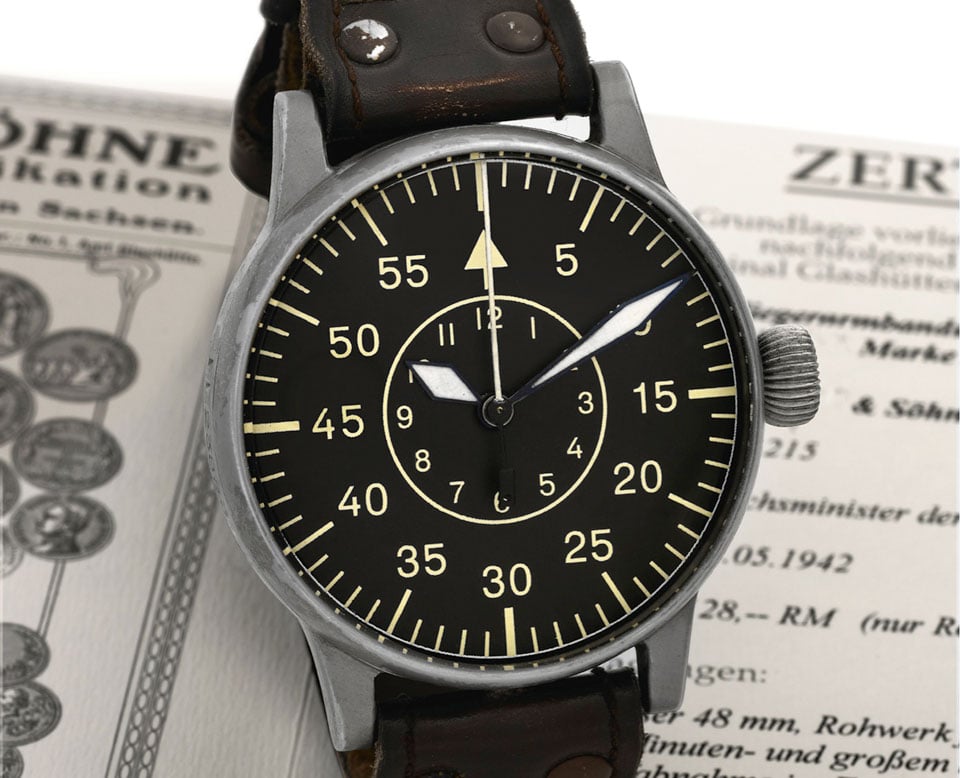
Type B (Baumuster B) – This debuted a year later with a more specialised dial for navigation (for reading minutes). The large Arabic numerals at the perimeter specified minutes – 5 to 55 in increments of 5 – and the triangle with two dots was replaced with an upward arrow. Hours were printed within a smaller central ring and a detailed minute/seconds track spanned the outermost perimeter.
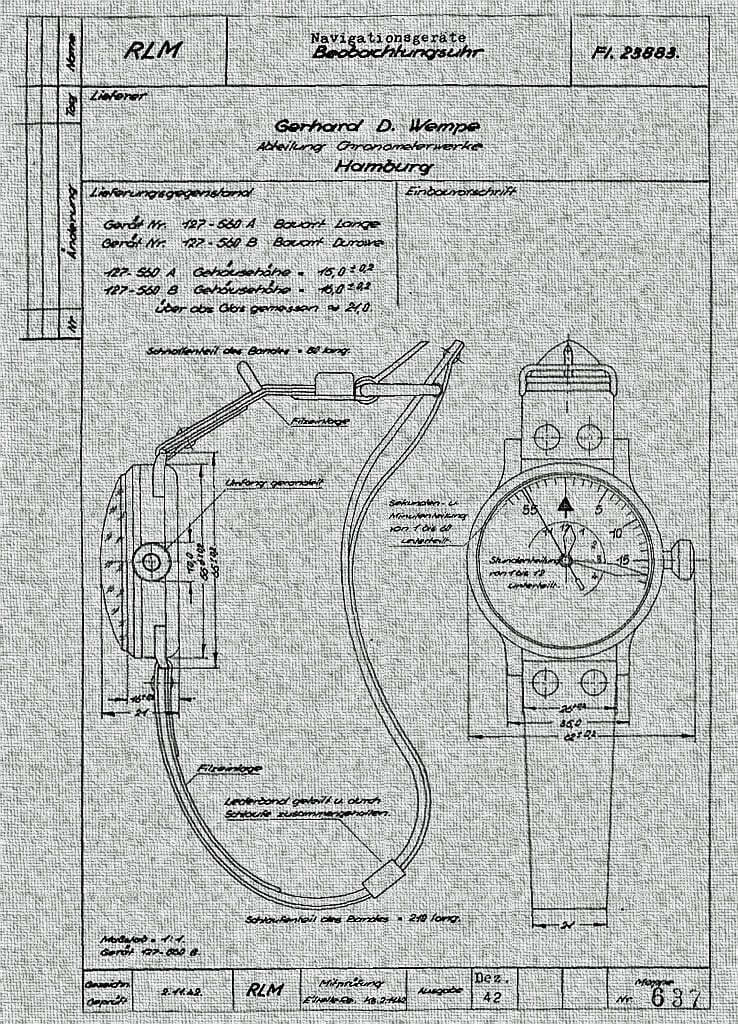
Accuracy was essential for B-Uhr watches, so all met the highest chronometer standards of the Deutsche Seewarte in Hamburg. To ensure that production would keep up with demand, five manufacturers were commissioned – four German and one Swiss – and all had to meet the same specific specifications, inside and out. The German brands were A. Lange & Söhne in Glashütte, Stowa and Laco in Pforzheim, and Wempe in Hamburg. IWC in Schaffhausen, Switzerland, was also brought in to ensure sufficient production capacity. IWC agreed to be a supplier for Germany as Switzerland had a policy of neutrality and, of course, the contract was lucrative. IWC also had the proven Calibre 52 T.S.C (Turm-Sekunden-Chronometer) pocket watch movement that met Germany’s chronometer standards.
Although the B-Uhr is the most recognised German watch from WW2, it wasn’t the only one of significance. Tutima and Hanhart produced the Fliegerchronograph for the Luftwaffe, the only chronograph wristwatch produced for flight crews (both mono-pusher and two-pusher designs). Dienstuhr Heer (DH) watches were produced as a broader service watch across multiple branches, and many were Swiss from brands like Longines, Zenith and Alpina, while Kriegsmarine (KM) watches were produced for the German Navy (Kriegsmarine) and featured white dials, unlike most German military issues. These were produced by Swiss and German brands like Alpina and Junghans.
Wartime Destruction
Germany’s defeat in 1945 brought massive damage throughout the country from intense Allied bombing, including Pforzheim and Glashütte. A. Lange & Söhne was the most celebrated and prestigious brand at the time, and its entire workshops were destroyed, and all remaining assets were taken by the Soviets. Additional Glashütte brands like Tutima and Uhrenfabrik Glashütte were also destroyed, with assets seized. It was the same story in Pforzheim, where brands like Laco, Stowa and Ernst Wagner disappeared. In fact, over 80% of Pforzheim was levelled by Allied bombing. The cities were targeted in part because they were producing timepieces and precision instruments for the German war effort. Some brands were able to relocate and recover in the following years, but others remained dormant for many decades.
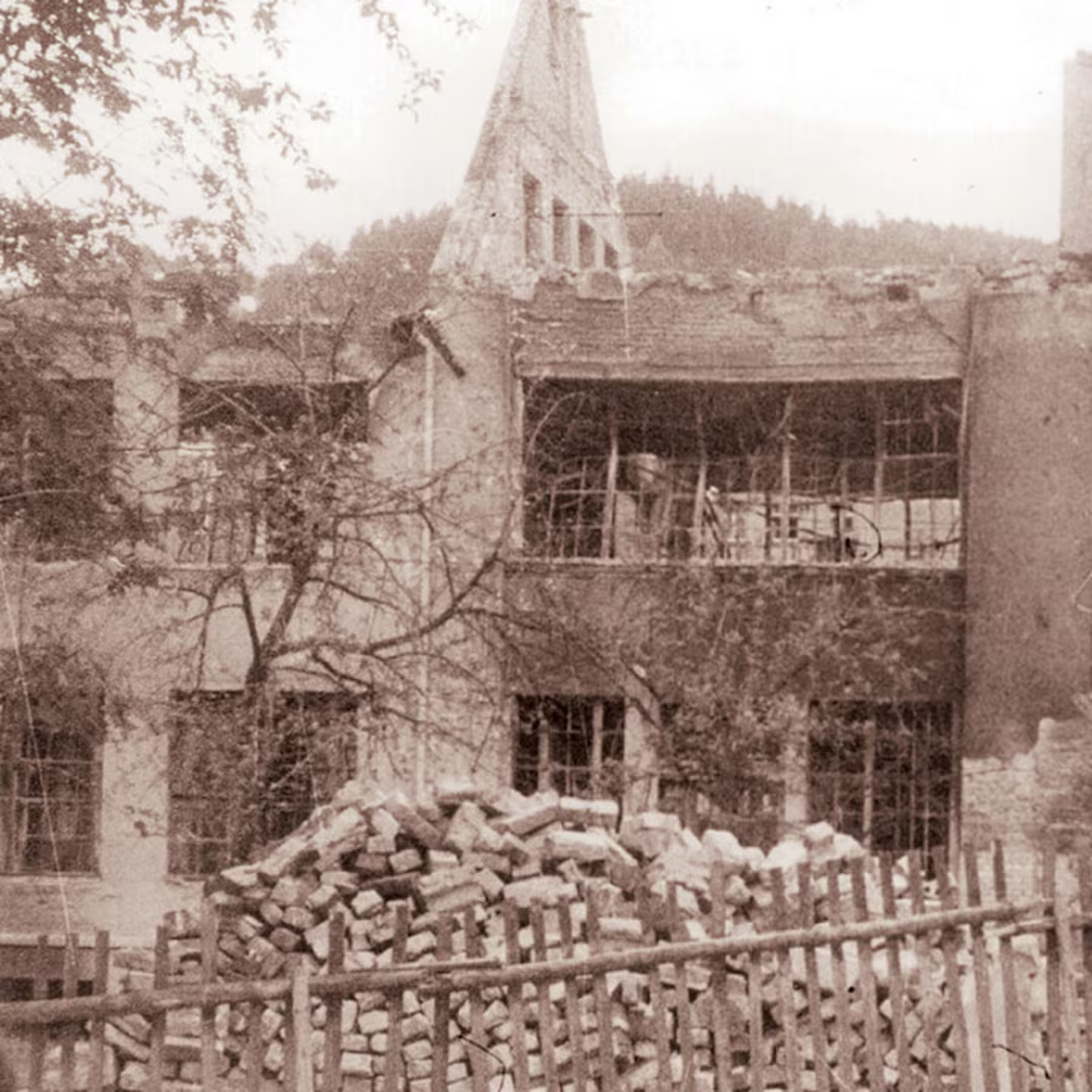
Stowa founder Walter Storz was able to rebuild and resume operations in Rheinfelden, Germany, while Laco benefited from the American Marshall Plan (over USD 13 billion in foreign aid for reconstruction). Most German brands, however, either became state-owned by East Germany via the Soviet Union (consolidated into a single entity) or disappeared entirely, although many were successfully revived in modern times.
A New Golden Age for Prewar German Watchmakers
The 1990s were a huge decade for German watchmaking as major prewar brands returned on an international scale. Some were revived by direct family members, while others were bought and rebuilt under entirely new names, but the decade saw the rebirth of Glashütte and Pforzheim as serious watchmaking hubs in Europe. Let’s look at some historic and newer post-war brands that define German watchmaking today.
A. Lange & Söhne
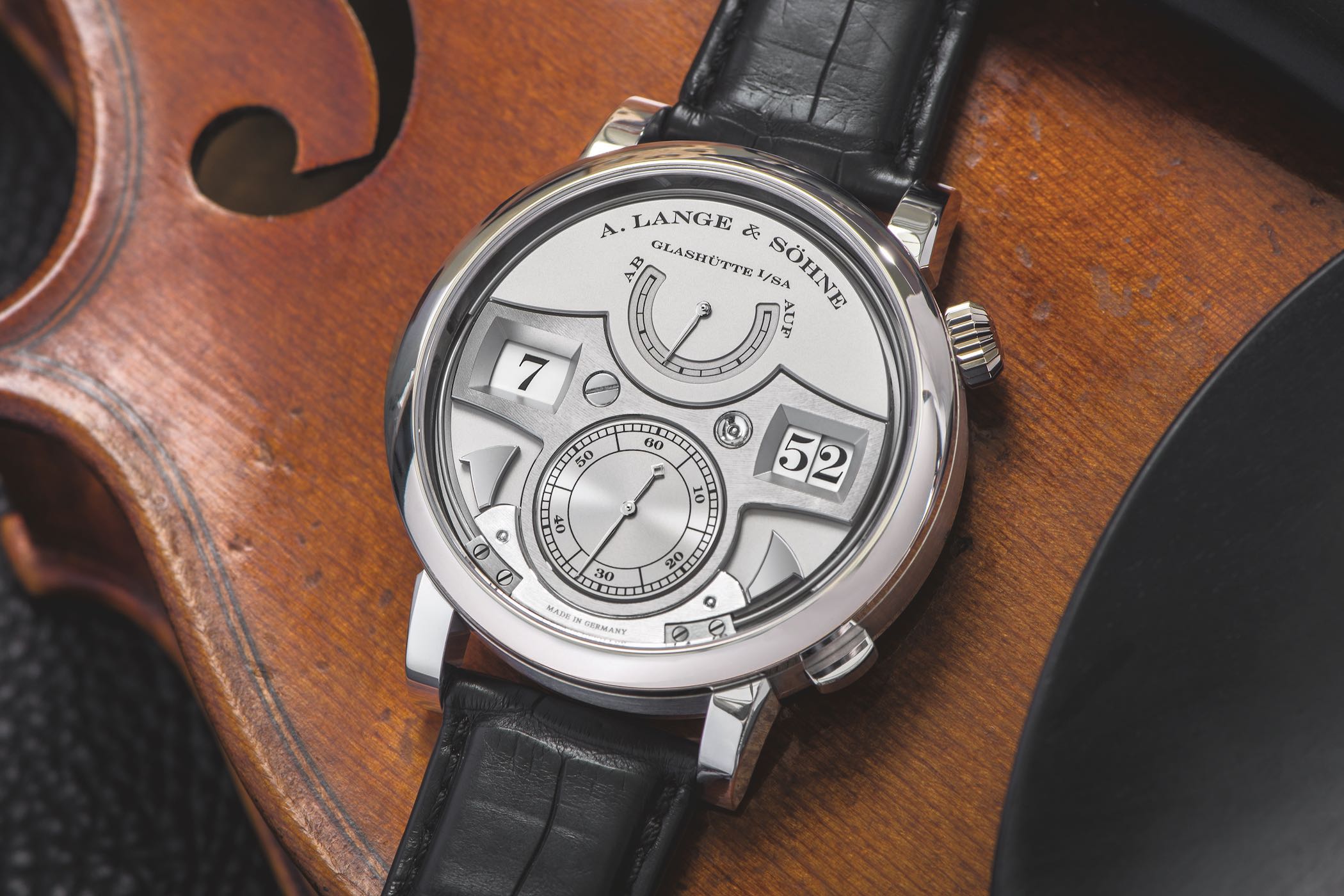
The Lange family lost all assets and control of the company by 1948, and Walter Lange (great-grandson of Ferdinand Adolph Lange) was forced to flee to West Germany. He returned after the Berlin Wall fell in 1989 with a new partner, industry veteran Günter Blümlein, and registered the brand once again in December of 1990. Four years later, in October 1994, the now iconic Lange 1 debuted with a classic German silver three-quarter plate, asymmetrical dial and oversized date, and it remains a signature collection today. In 2000, the brand became a subsidiary of the Swiss Richemont group, but its German manufacturing remained intact and independent, and it continues to operate in Glashütte.

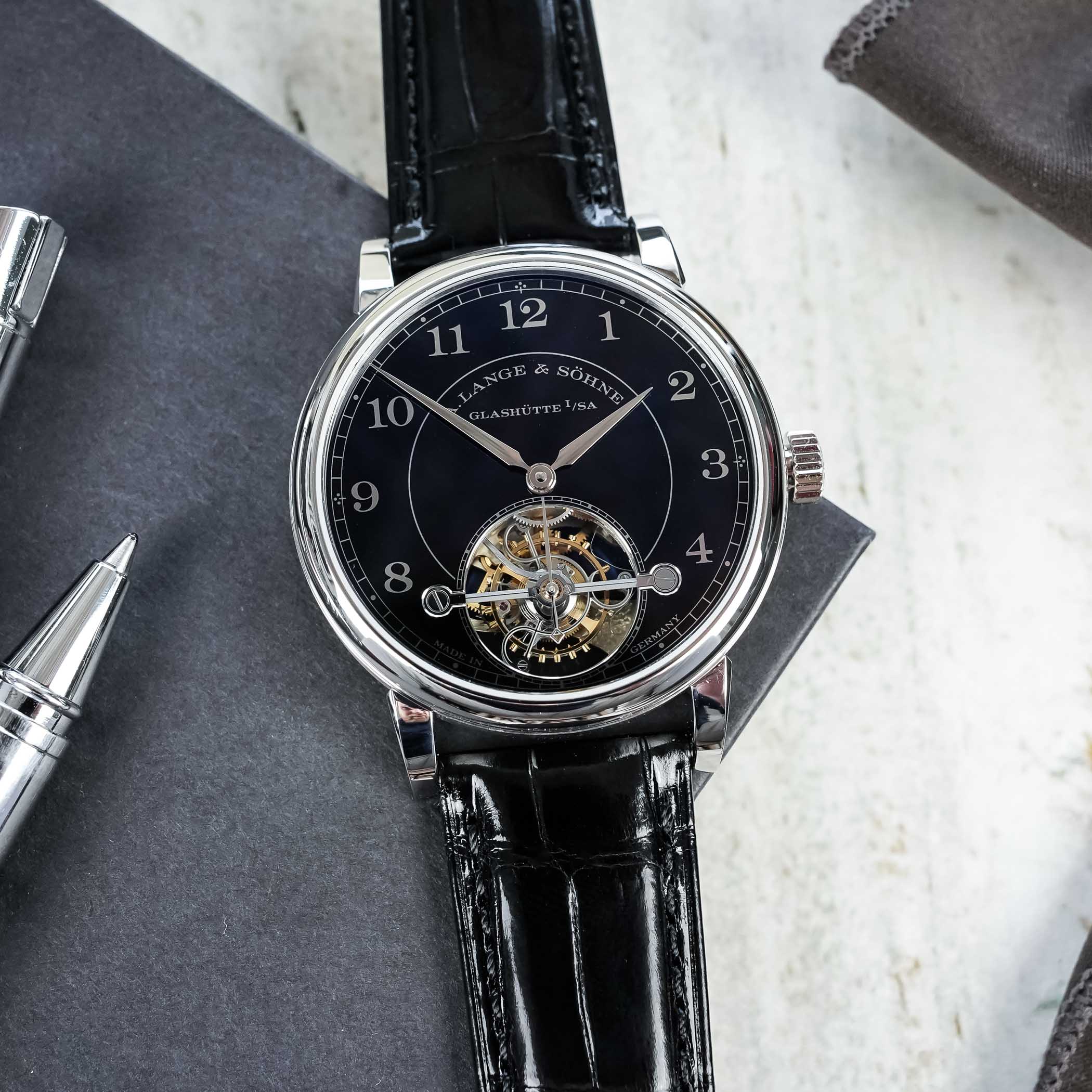

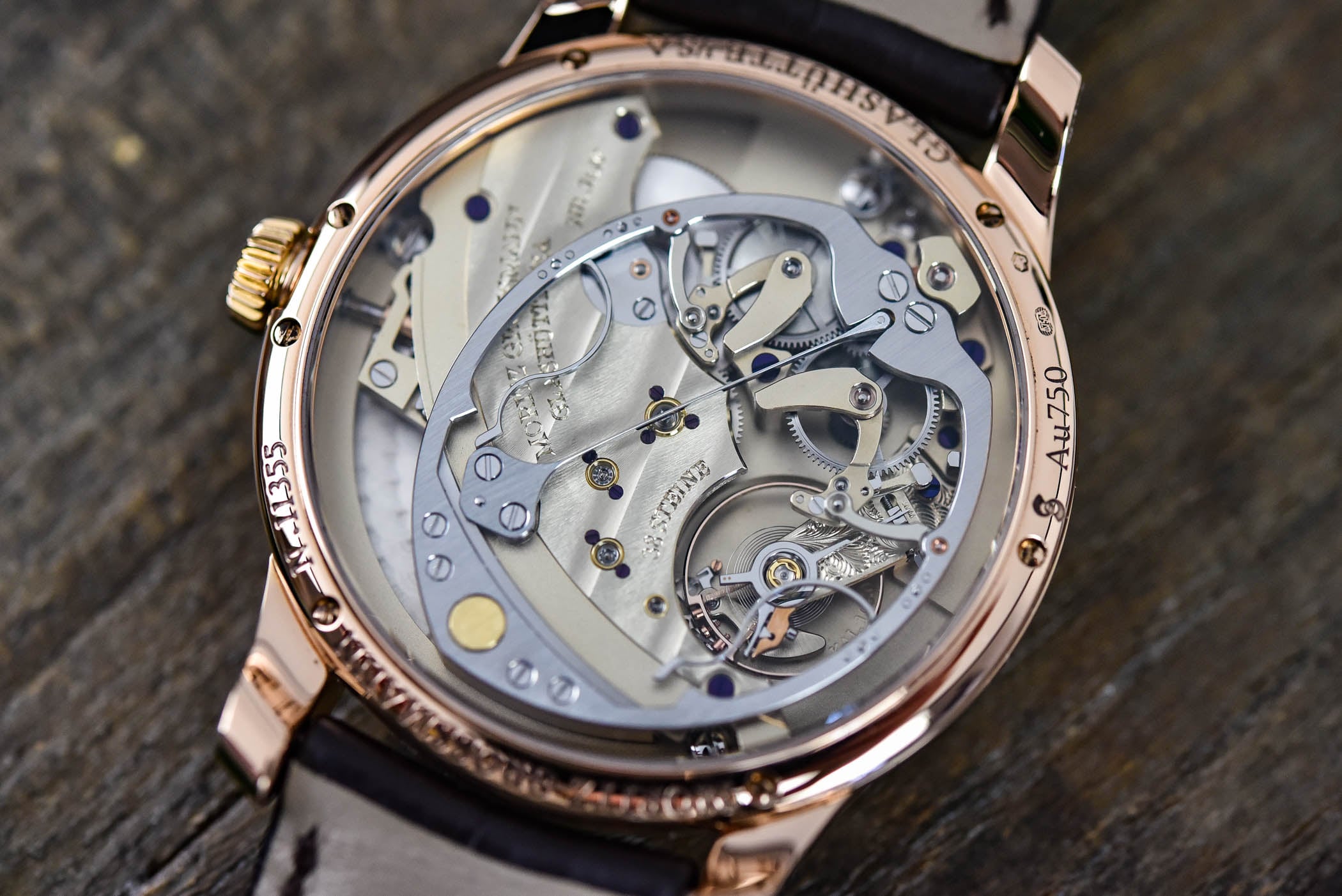
A. Lange & Söhne is considered one of the most prestigious watchmakers outside of Switzerland today, with complexity and hand finishing that rival the best (we’re talking Holy Trinity best). Famous collections include the Zeitwerk with horizontally positioned analog/digital hours and minutes, and the Datograph, which is one of the great modern chronographs that brought a new, in-house flyback column-wheel chronograph calibre – the first wristwatch chronograph in modern Germany and among the first new ground-up chronographs of the era. The 1815 Collection, named after the birth date of Ferdinand, includes the complex and highly finished Rattrapante Perpetual Calendar and Tourbillon variants. Although known for luxury watches and high complications that lean toward the dressier side, the Odysseus launched in 2019 as an integrated steel sports watch.
Moritz Grossmann
Another revival story comes from original Glashütte powerhouse, Moritz Grossmann. As mentioned, this brand collapsed after the death of Moritz in 1885, ending the brief 31-year run of one of the greatest watchmakers of the 19th century. In 2008, Christine Hutter, with an extensive background with A. Lange & Söhne, Glashütte Original and many other brands, secured the rights to the Moritz Grossmann name. Following a year in Dresden, she relocated to Glashütte and is among the very few women to become CEO of a major luxury watch brand (not to mention the founder), particularly with such an important history. The brand helped define German haute horology today and sits right next to A. Lange & Söhne in that regard, with a small production of around 200 watches per year.

NOMOS Glashütte
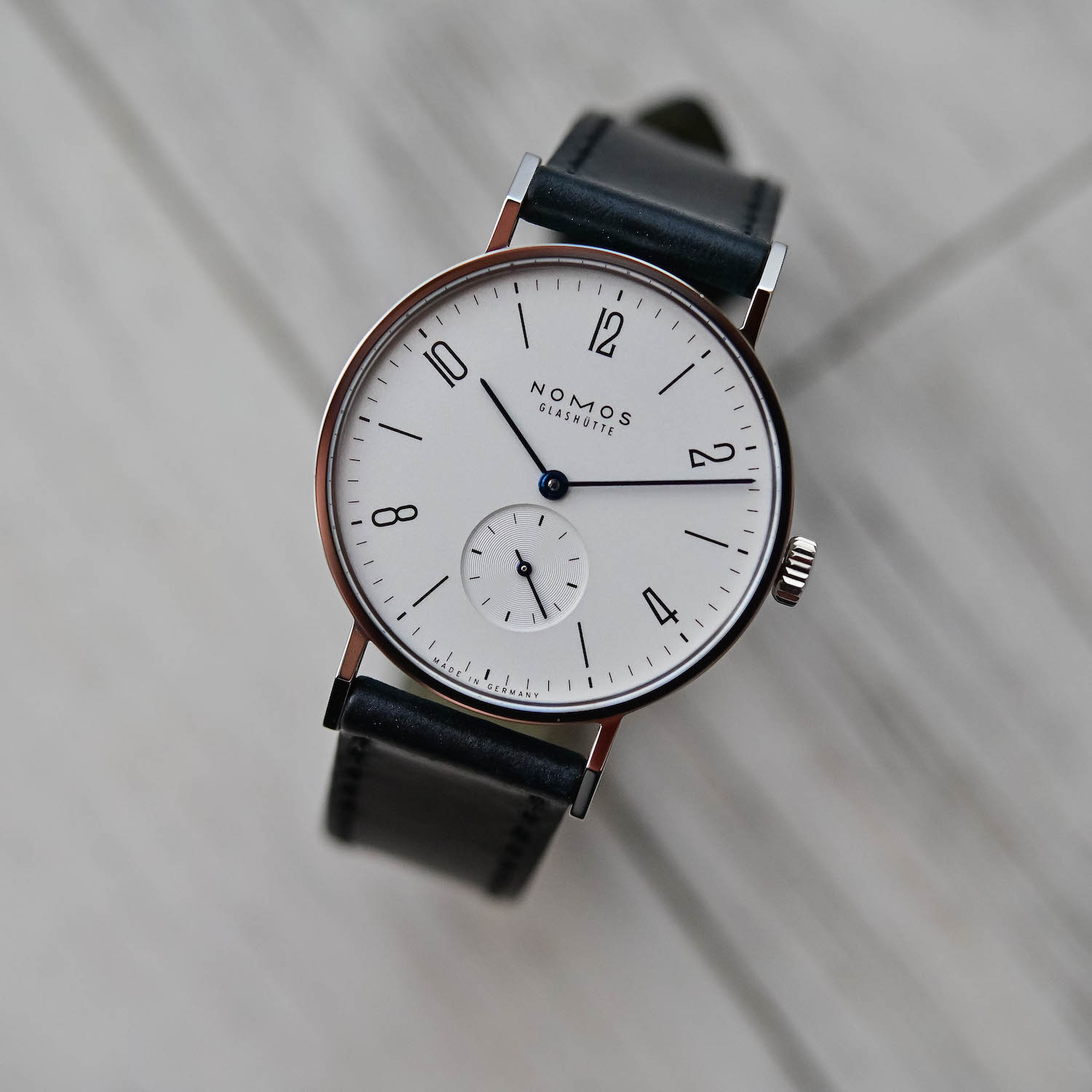
Founded by Roland Schwertner in Glashütte in 1990, NOMOS remains an independent German brand with a perfect blend of value and in-house innovation. It was established soon after the fall of the Berlin Wall, and four models were released in 1992 – Tangente, Tetra, Ludwig and Orion – emphasising the classic 1937 Bauhaus Design. In 2005, the watchmaker transitioned from off-the-shelf movements to in-house, starting with the hand-wound Alpha calibre. NOMOS maintains Glashütte watchmaking traditions like the three-quarter plate, Glashütte ribbing and blued screws, and there are currently several hand-wound and automatic calibres – all are regulated for a chronometer level of accuracy. The watchmaker went beyond “in-house movements” by developing the Swing System, which is their own escapement introduced in 2014. It’s identifiable by the heat-treated blued hairspring, which isn’t to be confused with a blue silicon counterpart.


Glashütte Original
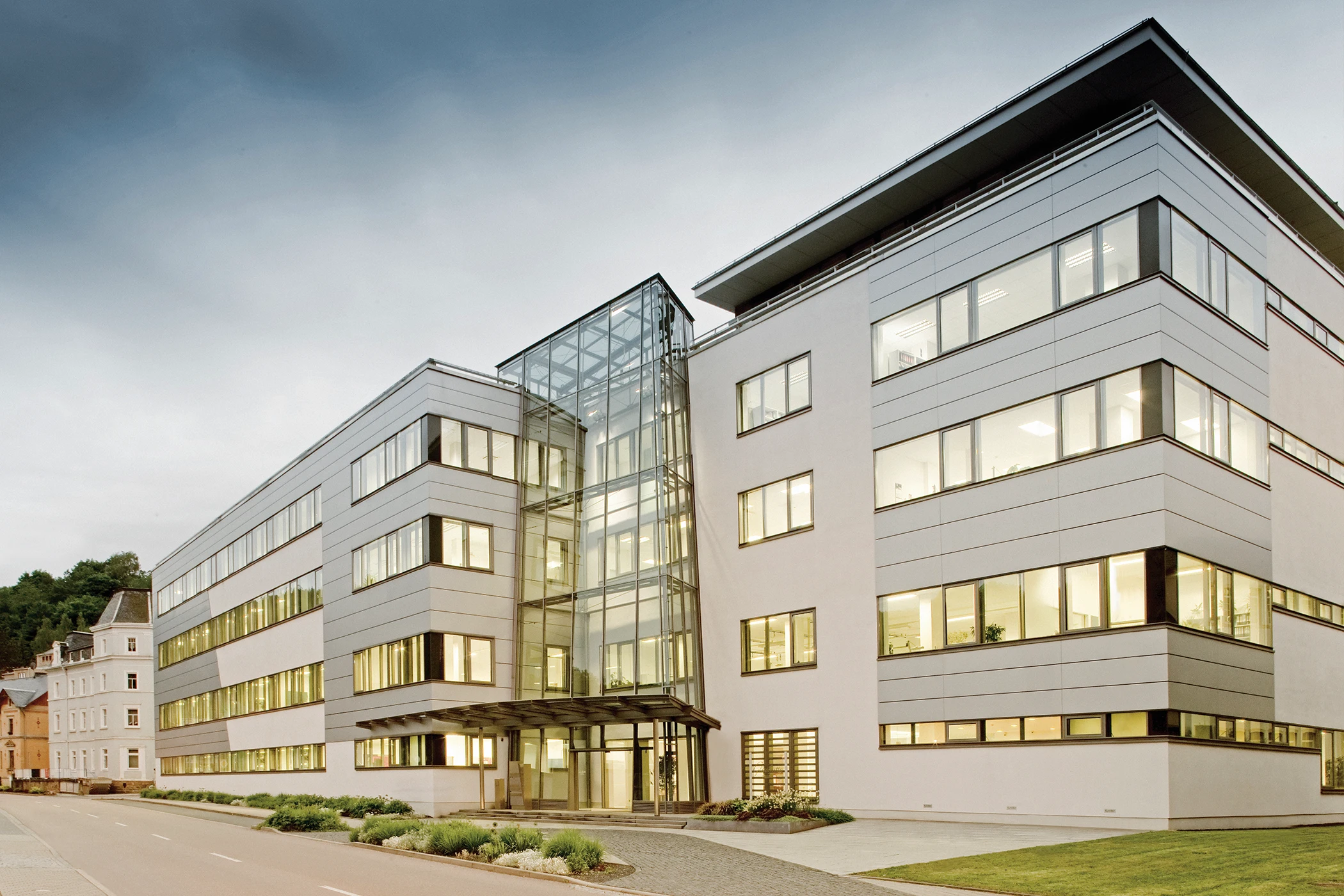
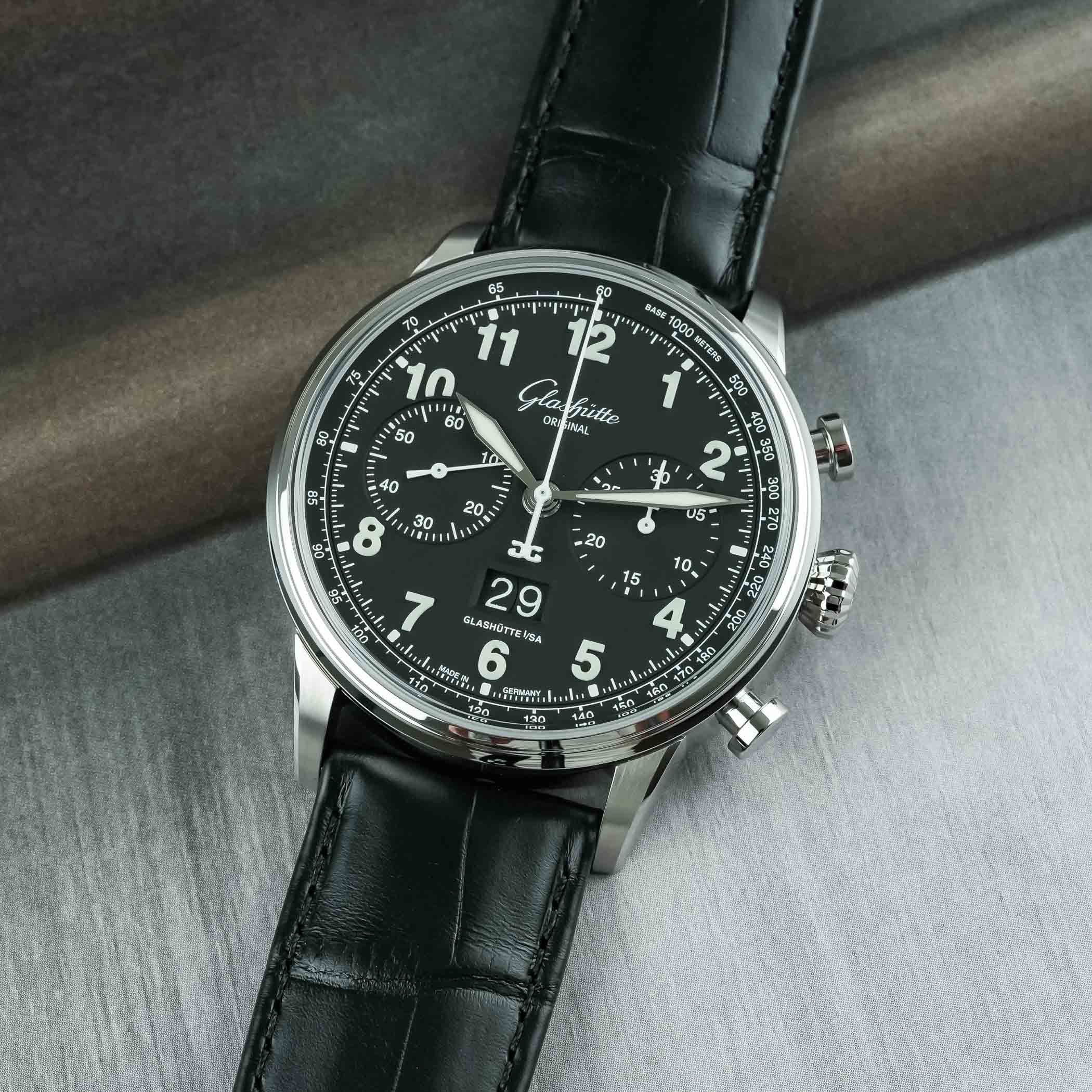
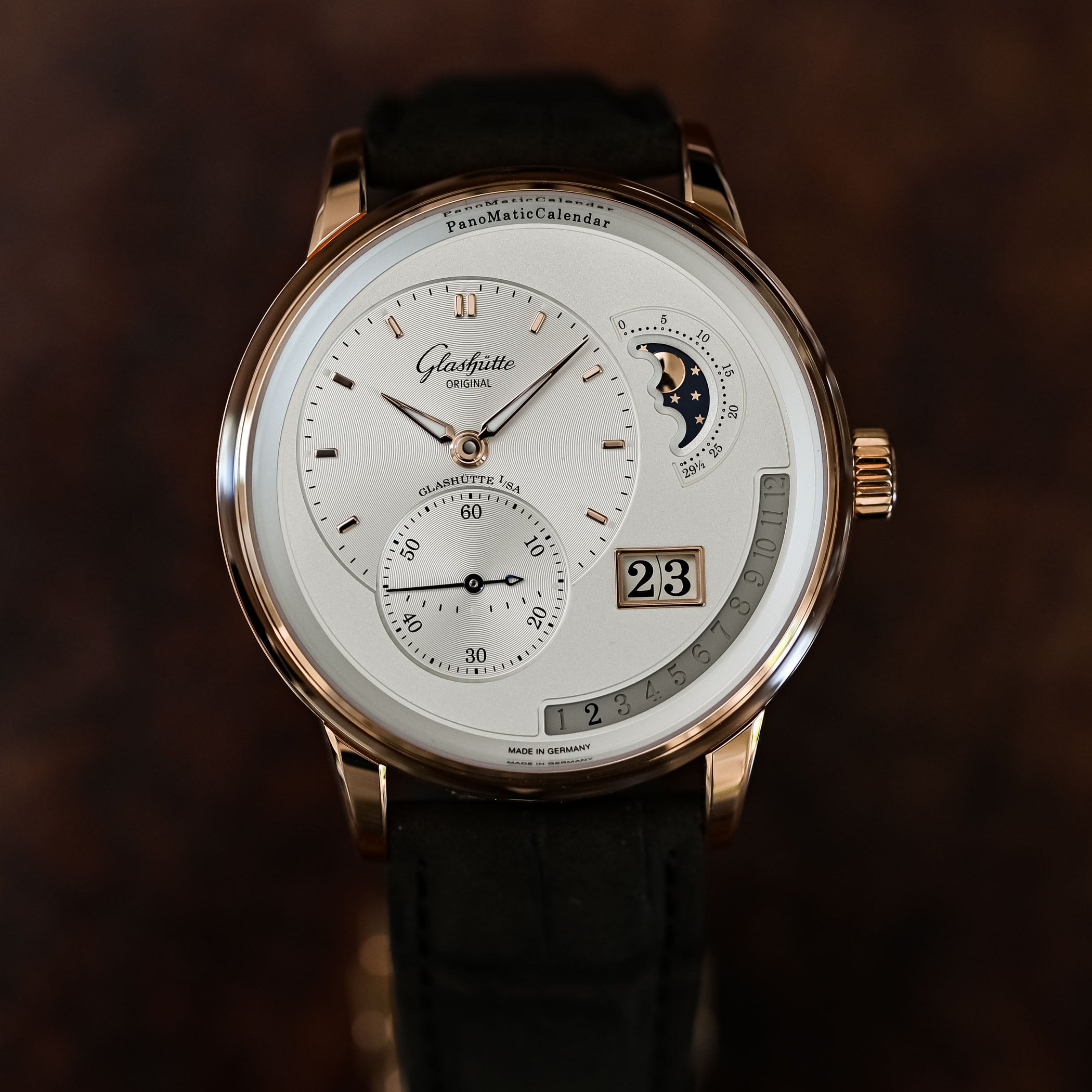
Glashütte Original was also established in 1990 after the state-owned VEB Glashütter Uhrenbetriebe (GUB) went private (GUB was the consolidation of all remnants of Glashütte watchmakers into a single entity after WWII). Entrepreneur Heinz W. Pfeifer introduced the brand name Glashütte Original in 1994. The watchmaker today produces high-end pieces with in-house movements that adhere to Glashütte traditions (three-quarter plate, hand-engraved balance cocks and screwed gold chatons). It’s been a subsidiary of the Swatch Group since 2000 (which certainly helps with overall financial backing), and over 95% of manufacturing is in-house. In the tradition of Moritz Grossmann’s German School of Watchmaking in 1878, Glashütte Original opened the Alfred Helwig School of Watchmaking to establish a new generation of international talent (the school is part of the Swatch Group’s international network of Nicolas G. Hayek Watchmaking Schools).
Hanhart
Hanhart was founded by Johann Adolf Hanhart in 1882 in Switzerland, but relocated to Schwenningen, Germany, in 1902. The brand is arguably best known for precision stopwatches, introduced in 1924 by Johann’s son, Willy Hanhart, who was an automotive and sports enthusiast. It was the world’s first affordable mechanical stopwatch and set the stage for things to come. In 1934, the company relocated again to the Black Forest region (Gütenbach) and launched a pilot’s chronograph in 1938. Following WWII, when Hanhart was seized and shut down by Allied forces, Willy Hanhart was able to resume operations relatively quickly after hiding core assets away from his factory – technical plans, machinery, tools and movements – with the foresight that Germany’s defeat could destroy his operations. He then acquired new machines and assets by trading a stash of finished watches.
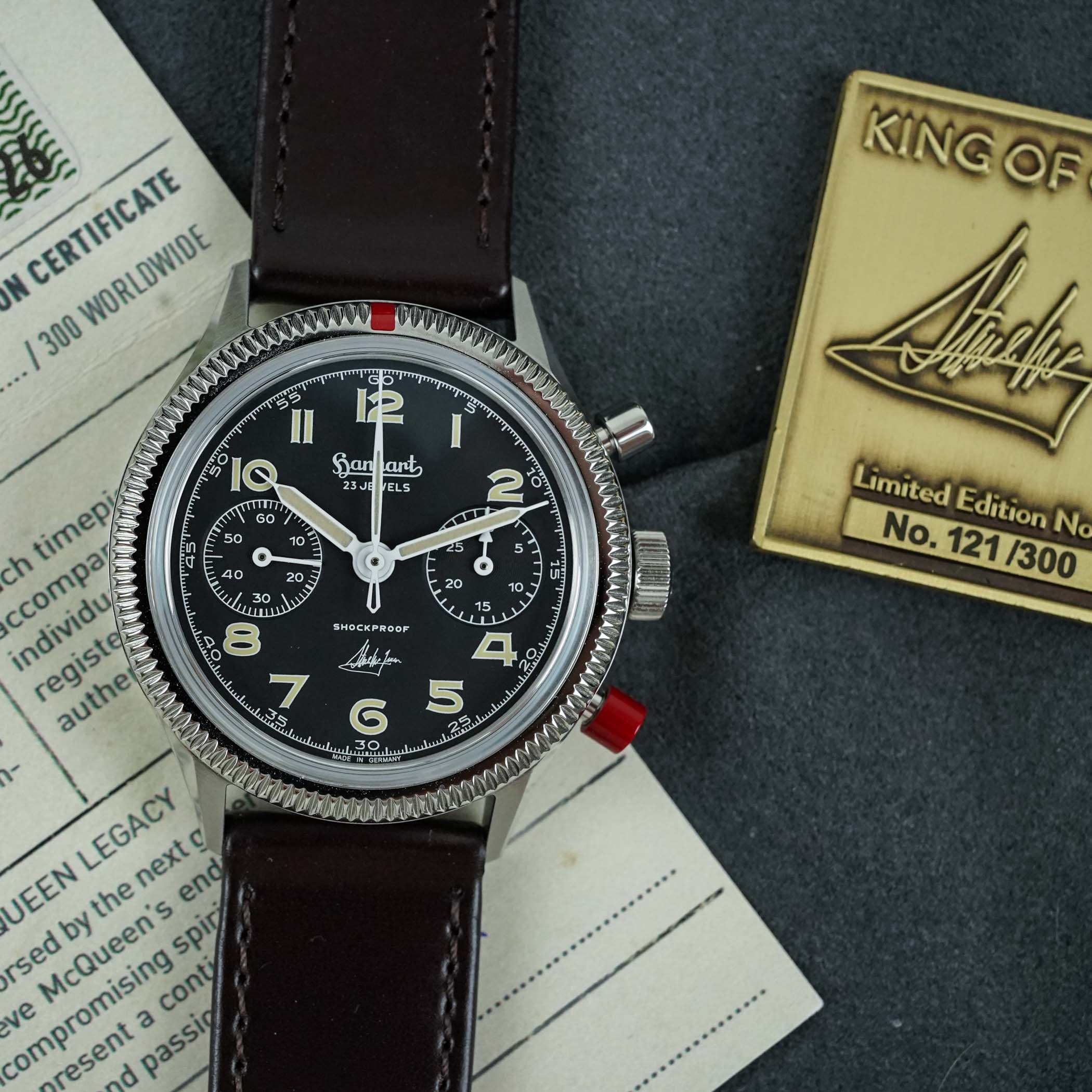
Because post-war regulations wouldn’t allow Hanhart to build chronograph wristwatches (which were considered potential military assets), the brand focused on civilian stopwatches for automotive racing and other sports. Stopwatches remain a signature of the brand’s portfolio today, but Hanhart was able to resume chronograph production for the French in 1948 (the Admiral chronograph) and became the sole supplier for the new German forces in 1957 with a flyback model powered by in-house calibre 42.
Tutima
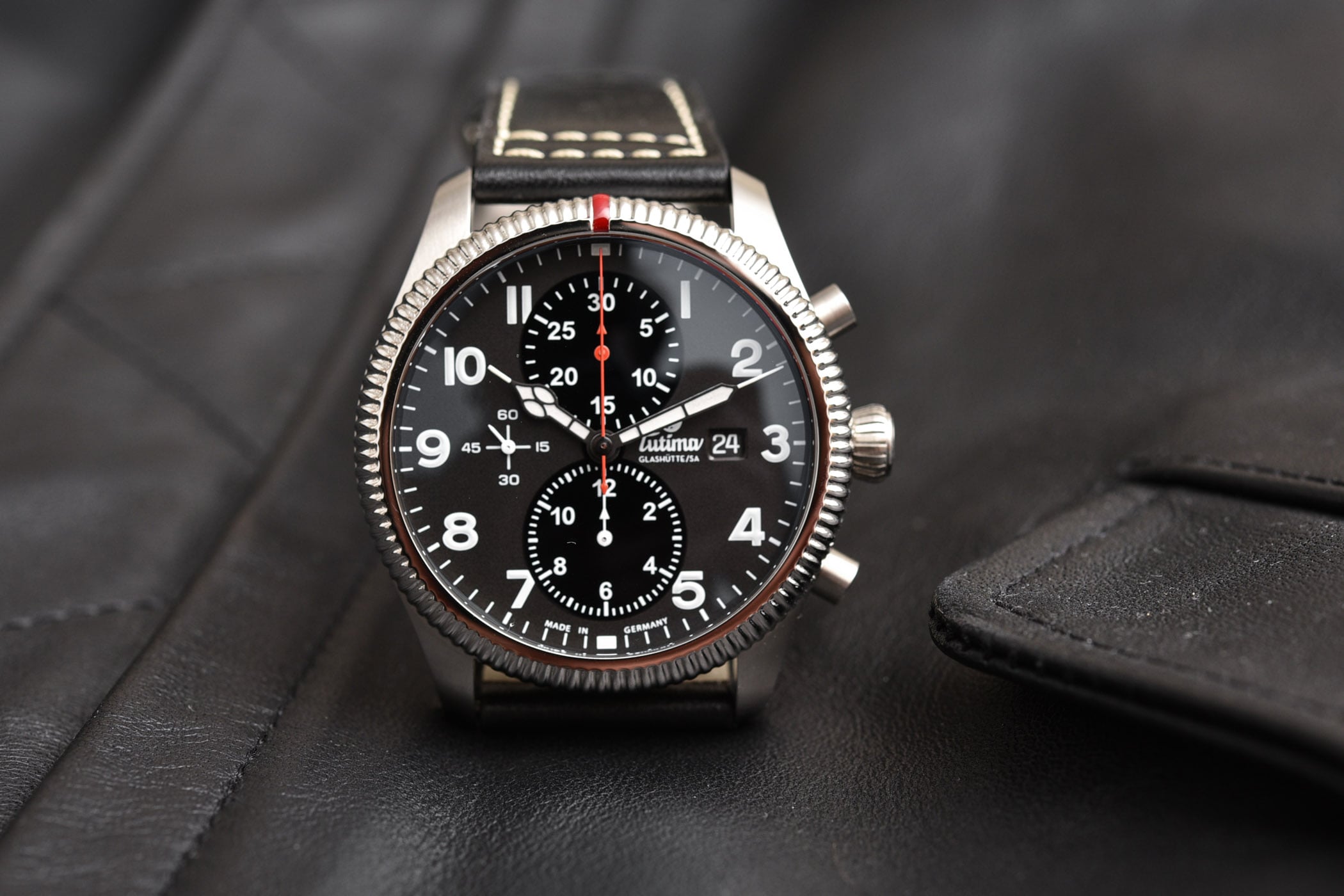
Tutima was founded in Glashütte in 1927 by Dr Ernst Kurtz, who was an early adopter of wristwatches and pioneered mass wristwatch production in Germany. One of its most famous models is the Fliegerchronograph from 1941, which was the first German flyback chronograph and only one of two chronographs supplied to the Luftwaffe (Hanhart made the first one in 1938). Following destruction of his factory by Allied bombing, Kurtz fled to West Germany and restarted operations in Ganderkesee in 1950. In 1983, Tutima again became a military supplier when its NATO Chronograph, powered by the highly regarded Swiss Lemania 5100 calibre, became the official watch for the German Air Force. In 2008, the brand returned operations to Glashütte. In-house movements like the Tutima 617 calibre have traditional Glashütte elements like the three-quarter plate and screwed gold chatons. In 2011, Tutima was the first German watchmaker to develop a ground-up minute repeater with the Tutima 800 calibre, and the Hommage 6800-01 wristwatch features an open-worked dial showcasing the complex mechanism. The calibre was developed in partnership with master watchmaker Rolf Lang.
Junghans
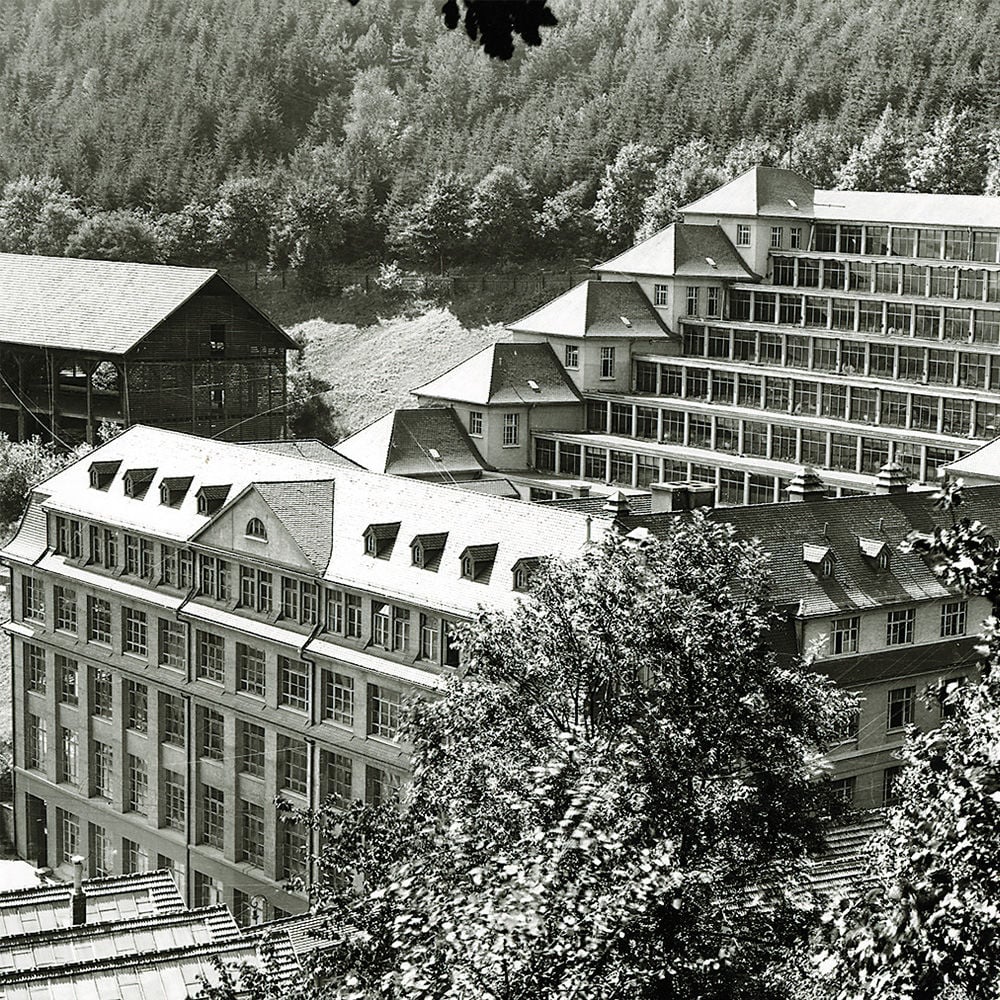
Founded in 1861 in Schramberg by Erhard Junghans and his brother-in-law, Jakob Zeller-Tobler, Junghans started as a manufacturer of clock parts. The brand made its first pocket watch in 1866 and was the largest clock and watch manufacturer in the world by 1903 (with clock production alone over 3 million). Its famous Terrassenbau terrace building was finished in 1918 and resembled a wide staircase descending the steep valley of the Black Forest to maximise natural light in the workshops. The renowned Meister series launched in the 1930s, and the now iconic Max Bill collection launched in 1951. The latter adopted the Bauhaus Design from 1937 and remains a very popular series today. Designer Max Bill himself was a student at the original Bauhaus school in Dessau, Germany. Junghans fell into disarray from the Quartz Crisis and many ownership changes, but regrouped in 2009 as an independent brand under the Steim family in Schramberg, and operations continue in the original Terrassenbau headquarters.


Sinn
Sinn Spezialuhren was founded in 1961 in Frankfurt, Germany, by former WWII pilot and flight instructor Helmut Sinn. The company initially focused on manufacturing highly functional pilot watches and navigation cockpit clocks, which were sold directly to consumers to ensure accessibility. A major milestone occurred in 1985 when the Sinn 140 S accompanied astronaut Reinhard Furrer into space, proving the mechanical watch’s reliability in zero gravity.

The brand’s trajectory shifted in 1994 when engineer Lothar Schmidt acquired the company. Under his leadership, Sinn transformed into a pioneer of horological engineering. Schmidt introduced groundbreaking technical innovations, including German submarine steel cases, TEGIMENT scratch-resistance, Ar-Dehumidifying technology to prevent fogging, and HYDRO liquid-filled watch cases for ultimate underwater legibility. Today, Sinn remains a respected manufacturer of tool watches, officially trusted by specialised elite forces, pilots, and maritime rescue units worldwide.
Conclusion
This certainly doesn’t cover the entirety of German brands, but highlights the core manufacturers and historical milestones from the beginning in Glashütte, Pforzheim and the Black Forest. Germany is considered the only country playing on the same field as Switzerland in the high-end, in-house production game, with watchmakers like A. Lange & Söhne, Moritz Grossmann and Glashütte Original offering exceptionally finished and complicated pieces, while NOMOS brings in-house innovation at more attainable prices. Hanhart has you covered with mechanical timers with world-class stopwatches and chronographs, while Junghans brings Bauhaus aesthetics, a cool history and great value. Laco, Stowa and Wempe can scratch that modern B-Uhr itch, while Tutima has a mix of faithful Flieger watches and high-end, in-house models. Microbrands like Circula and Heinrich offer affordable German designs, and there are additional high-end independent brands like Schaumburg with unique pieces that often have a gothic vibe. Werewolves, bats and oversized blood moons have been themes, and this low-production watchmaker from 1998 continues to impress. German watchmaking has so much to offer, from world-class haute horology to affordable in-house collections, and it will always be known as the one that invented portable time.