


 Not all images were able to load for printing. Please close the print window and try again.
 The Urban Jürgensen UJ-1 Tourbillon, a Pocket Watch Masterpiece Reborn for the Wrist
A one-second remontoir, an unusual power-reserve mechanism, and an extraordinary movement construction.
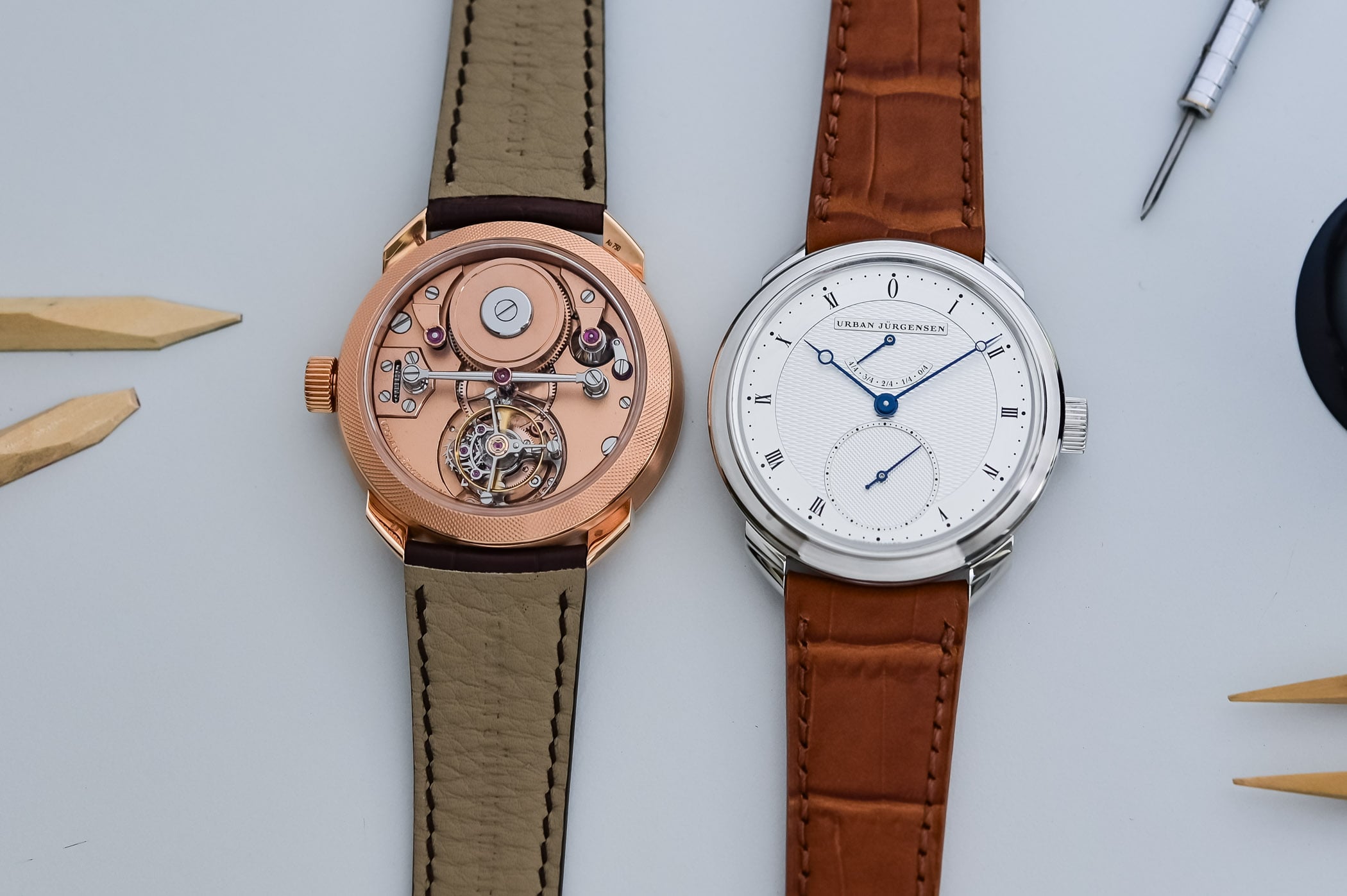
When Urban Jürgensen returned in 2025 under the co-direction of Kari Voutilainen and Alex Rosenfield, three watches formed the inaugural collection. The UJ-2 introduced a time-only calibre with a double-wheel natural escapement; the UJ-3, an integrated perpetual calendar; while the UJ-1 Tourbillon 250th Anniversary Watch was meant to be the technical masterpiece for the return of this historical name. The flagship of the revived Urban Jürgensen is far more than a finely finished tourbillon; it miniaturises the architecture of Derek Pratt’s legendary Oval pocket watch.
The Context, the Inspiration and the Works
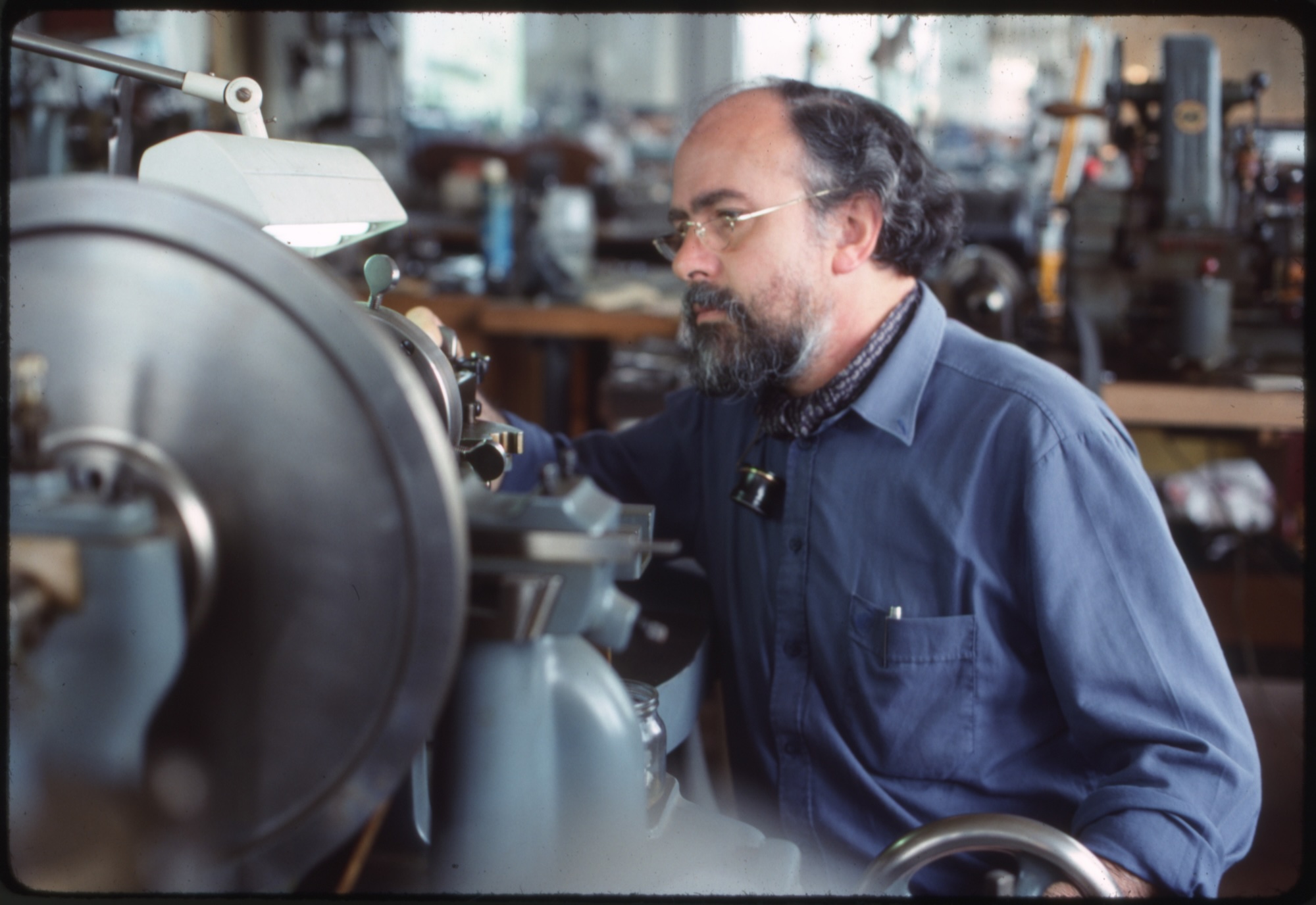
We already covered the return of Urban Jürgensen and its rather extraordinary history in detail, so we won’t repeat the full story here. But the UJ-1 demands some historical context because it is inseparable from one particular watch, the Pratt Urban Jürgensen Oval Pocket watch. Started by the late Derek Pratt in 1982, developed over more than two decades and eventually assembled and finished with the involvement of Kari Voutilainen, the Oval is one of the great works of contemporary independent watchmaking.
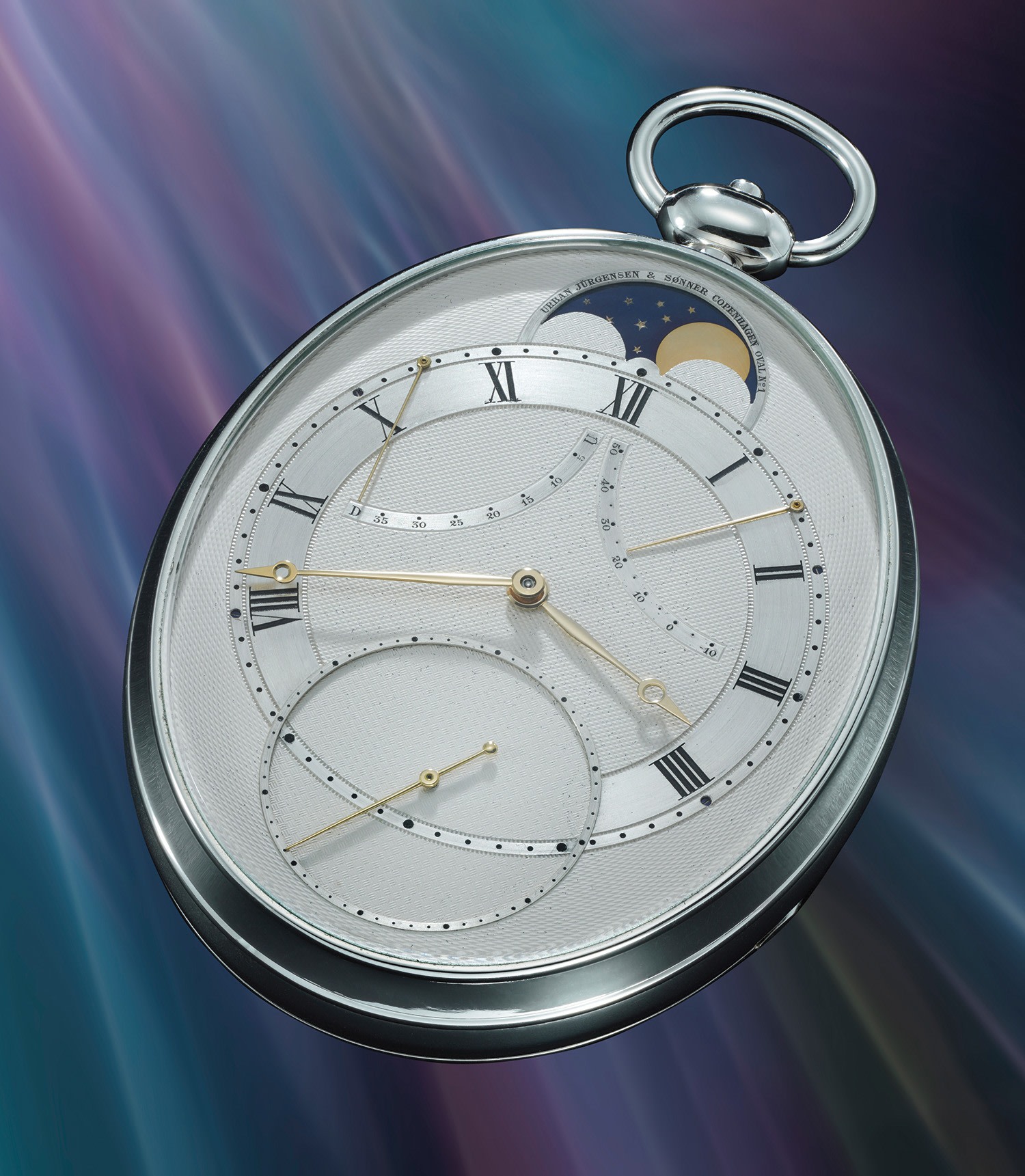
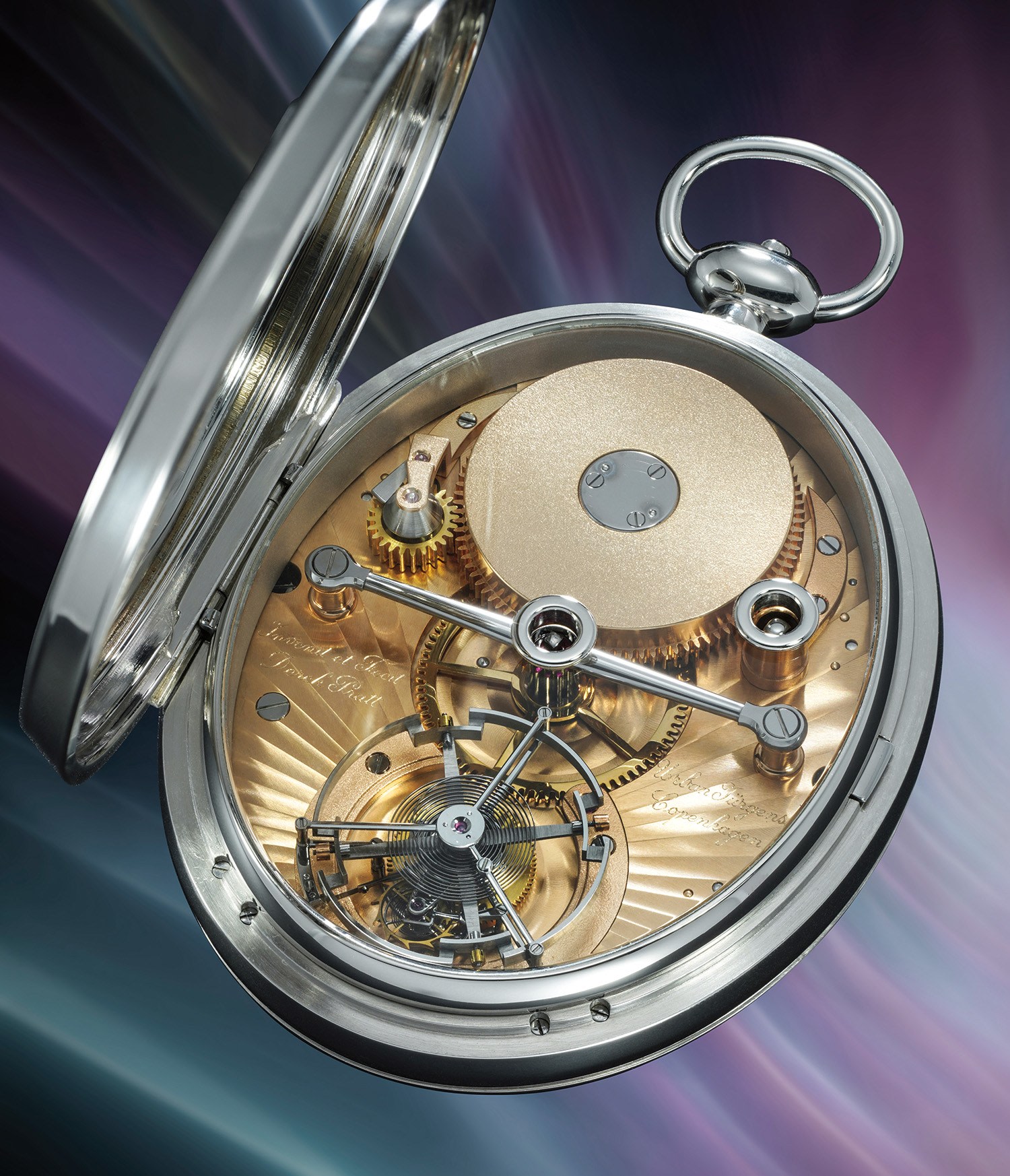
The UJ-1 is not a wristwatch version of the Oval. There is no oval case, no thermometer and no moon phase. What Voutilainen has done is more interesting. He has reconstructed, miniaturised and adapted the fundamentals of Pratt’s movement into a 30mm wristwatch calibre. The new movement was built from scratch, and it is one of those that may appear quite simple from the back.
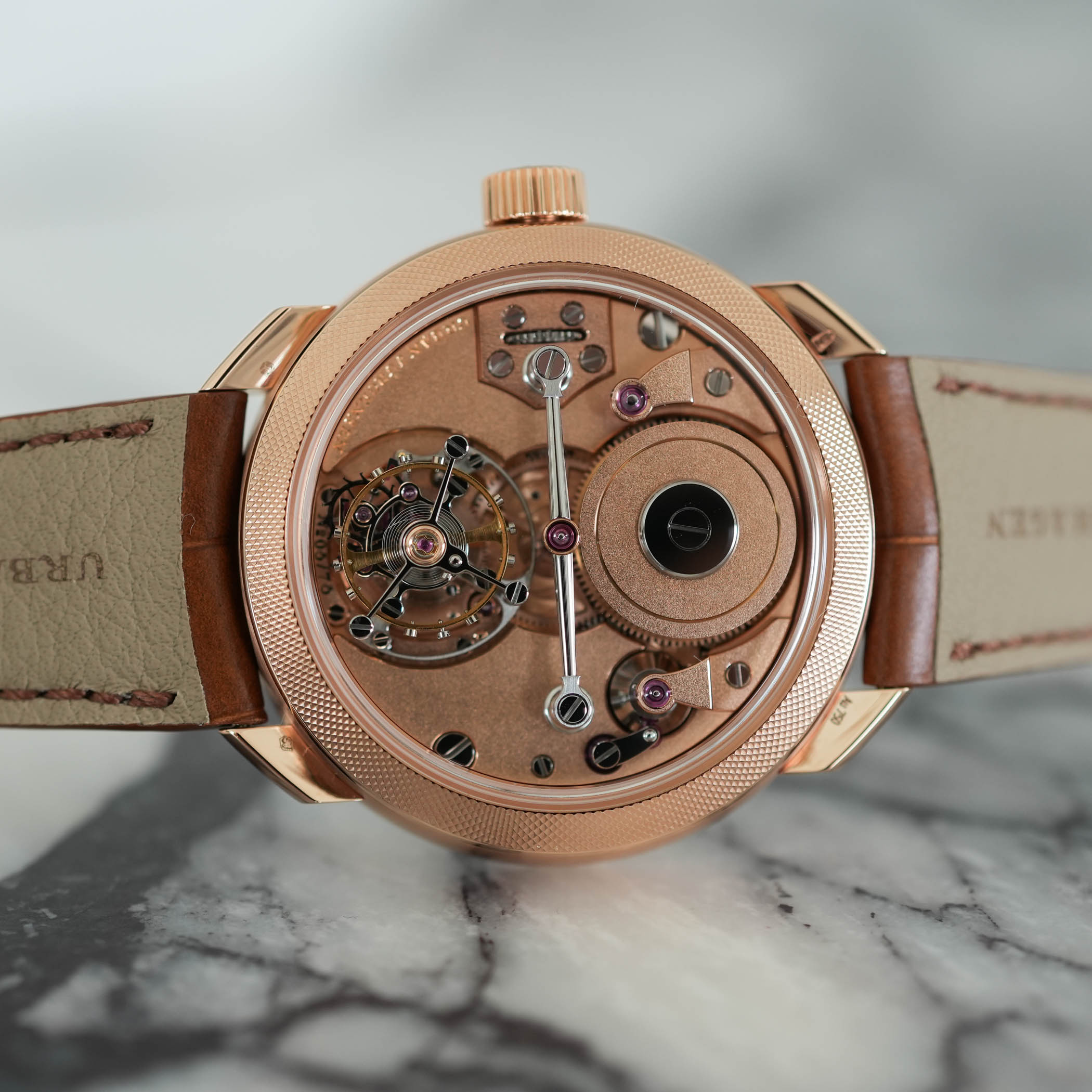
The challenge was not simply to scale the movement (the original pocket watch measured 76mm by 62mm). The Oval was key-wound and key-set, with the winding and setting interfaces on the movement’s back. A wristwatch usually requires a crown and a keyless works. The obvious solution would have been to place the crown wheel and associated gears on the visible movement side. Straightforward, sure, but disastrous if the goal was to preserve Pratt’s architecture. Here, the entire winding and hand-setting mechanism was relocated to the dial side of the calibre. It is something impossible to appreciate when looking at the watch, because it was designed to disappear.
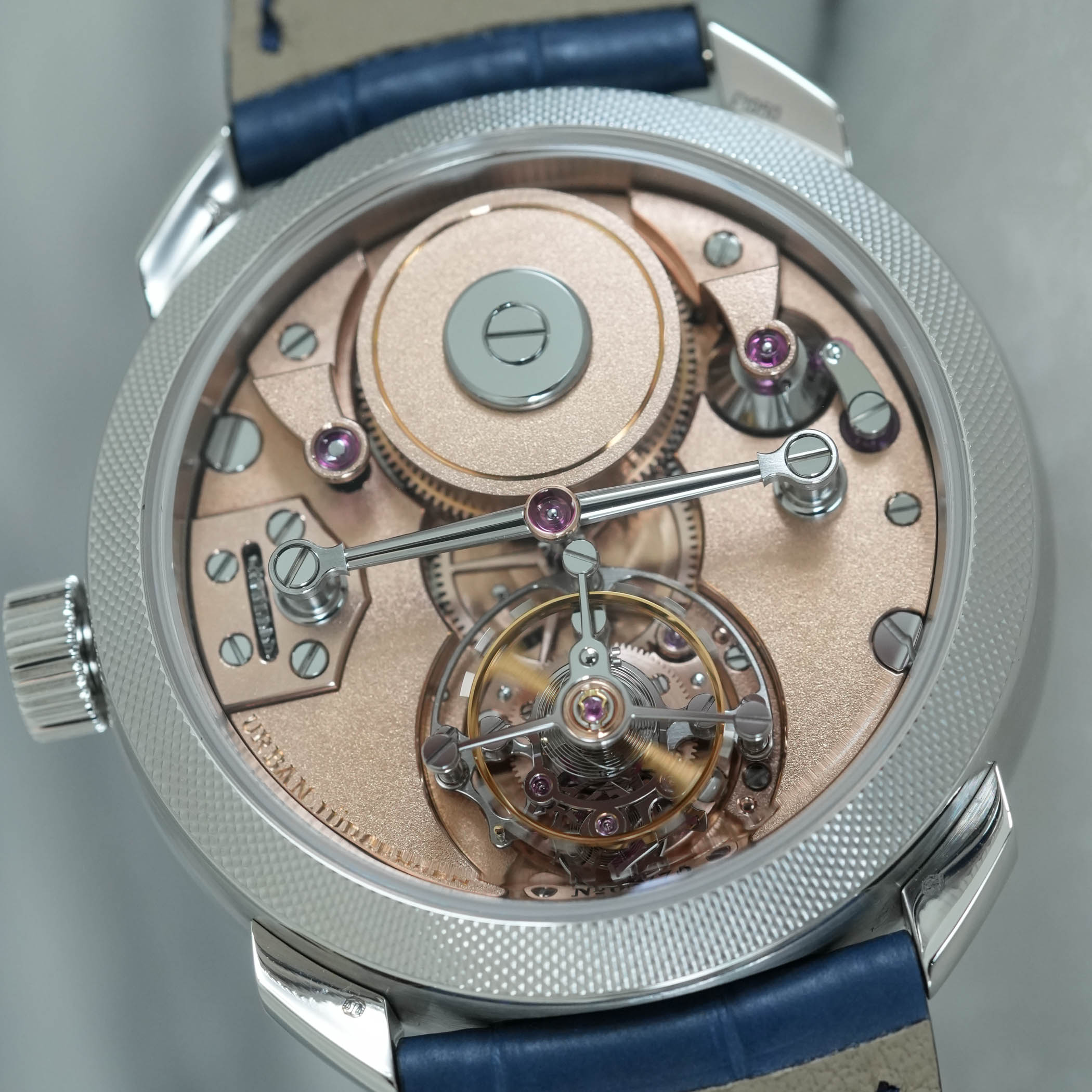
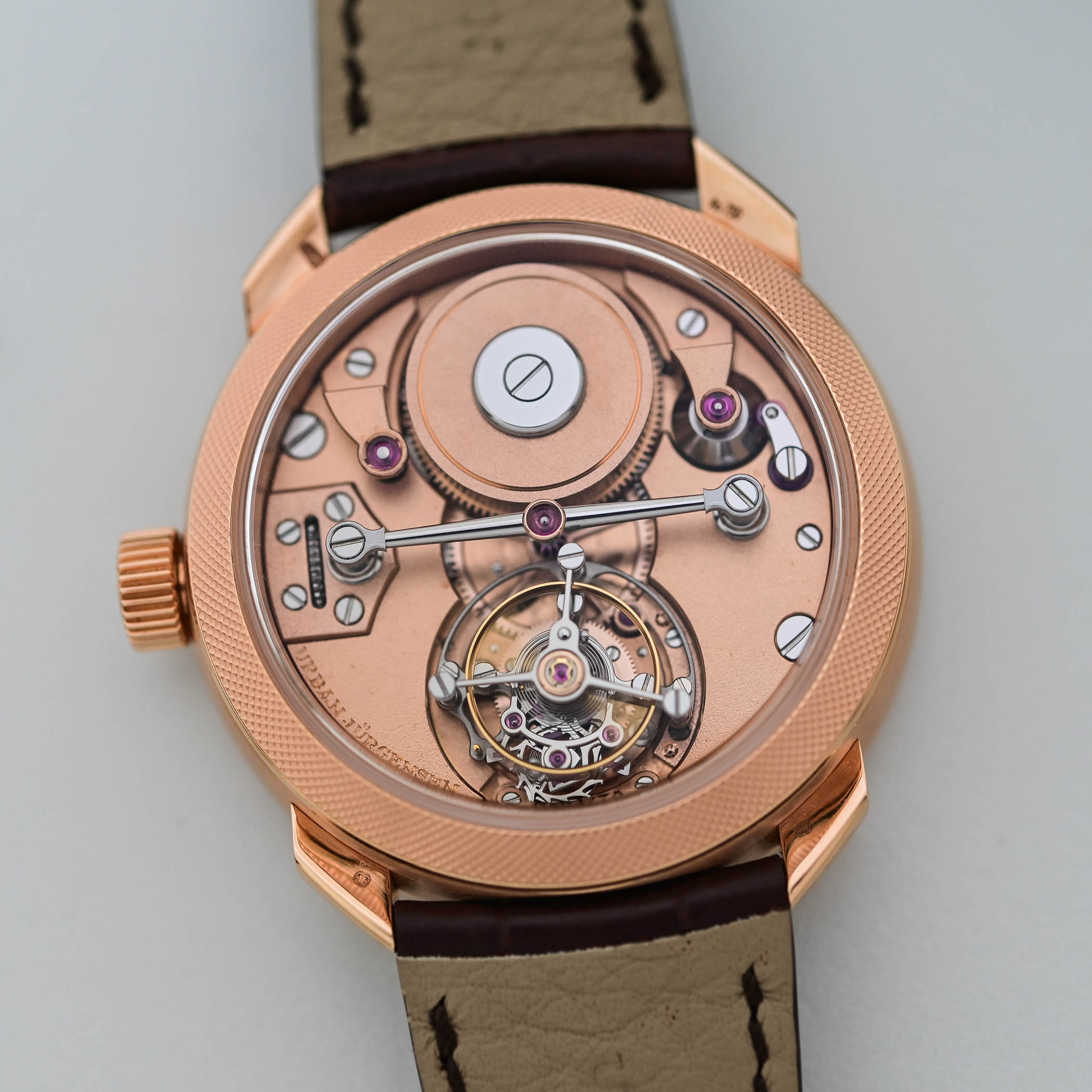
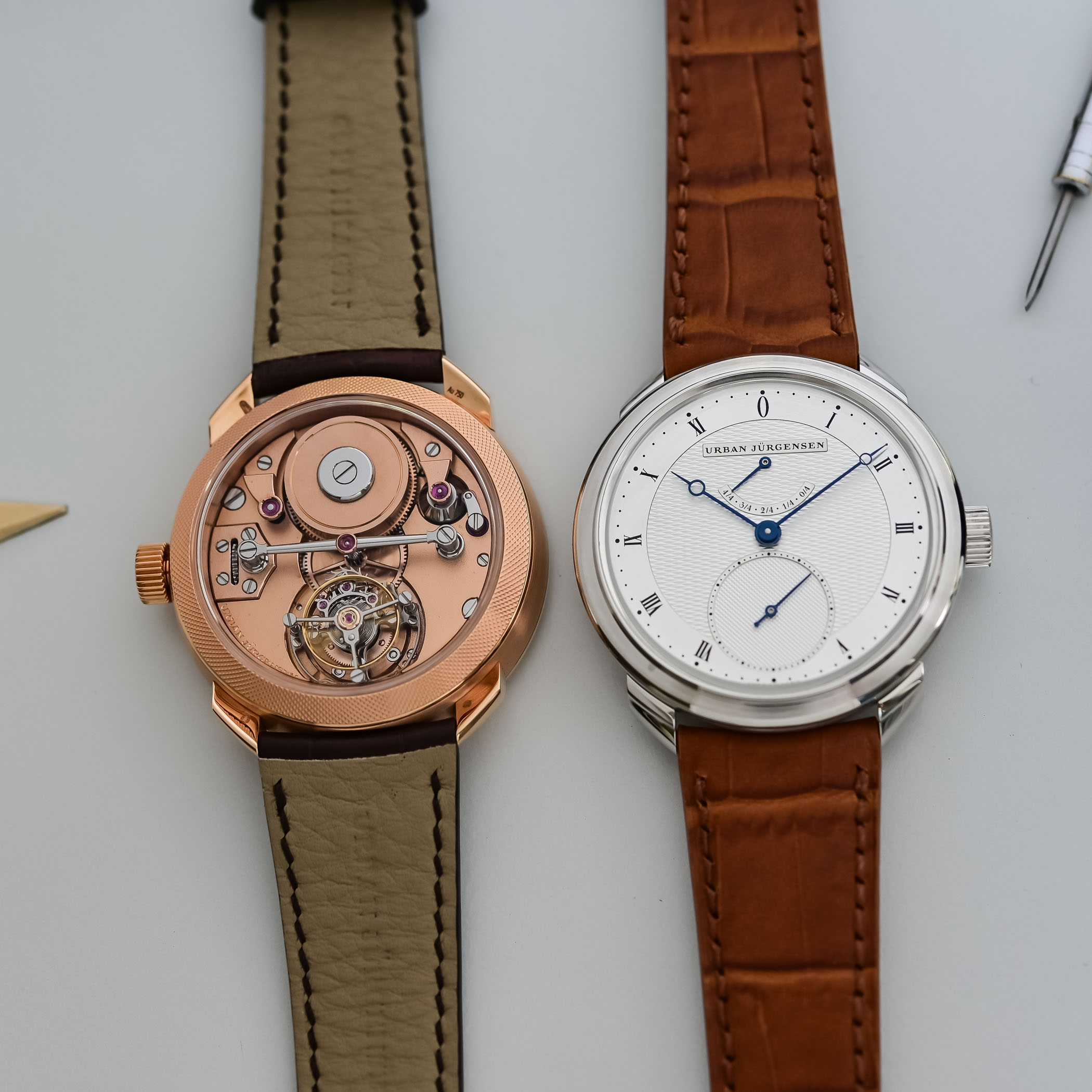
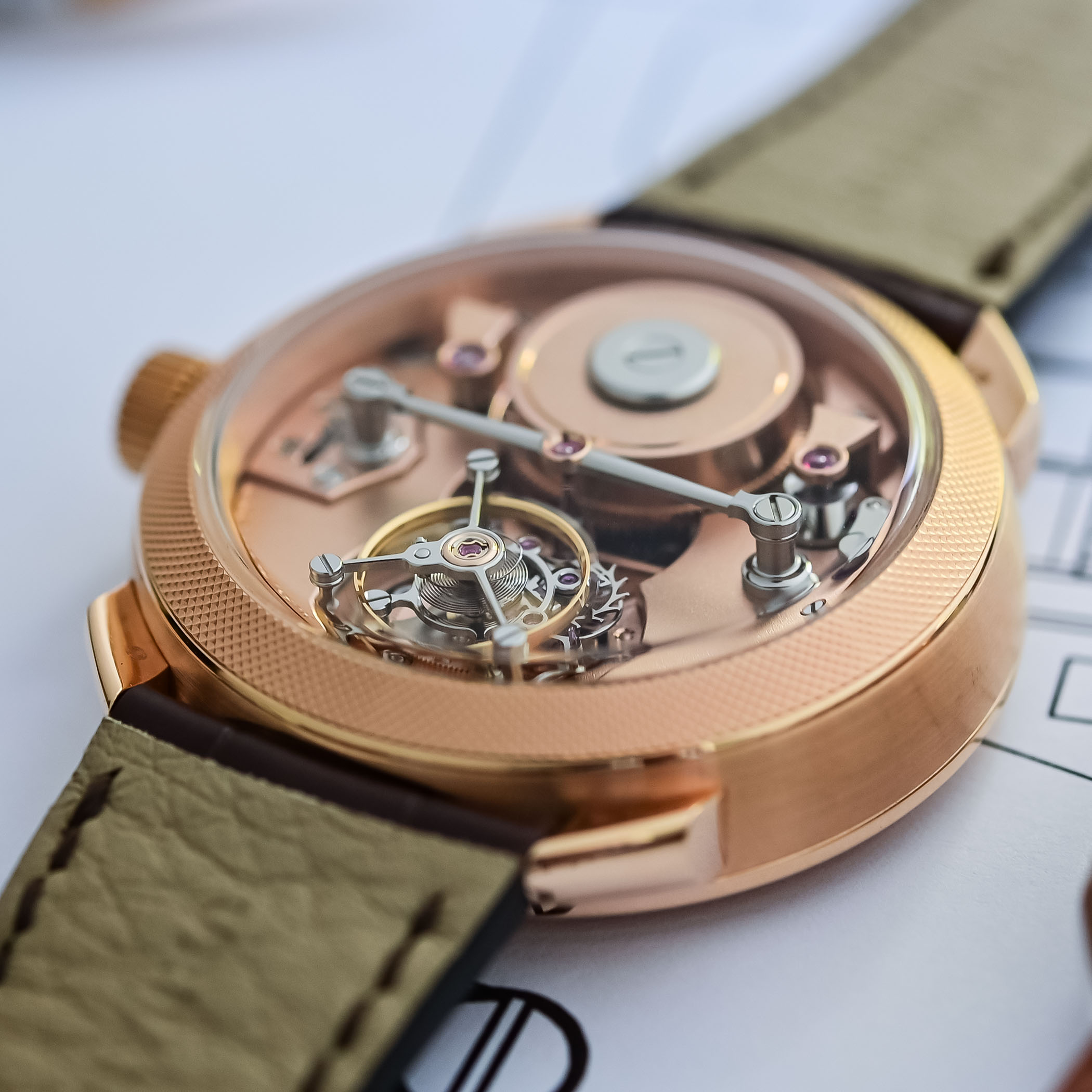
From the back, the UJ-1 remains faithful to the Oval, with neither crown wheel nor keyless works disrupting the composition. Three major elements compose the view: a flying barrel, a monumental curved central bridge and the one-minute flying tourbillon. Large areas of negative space give the calibre an unusual quality and “simple” appearance.
The Barrel
The flying barrel, raised above the movement and appearing almost suspended, contributes greatly to the three-dimensionality of the UJ-1. The barrel incorporates a Geneva stop-work and provides 47 hours of power reserve. Not impressive by modern standards, but maximum autonomy clearly wasn’t the objective. The calibre runs at a traditional 18,000 vibrations/hour, and the barrel also has to feed a demanding regulating system. And this brings us to the real mechanical attraction of the UJ-1, its one-minute flying tourbillon and integrated remontoir d’égalité.
The Tourbillon and the Remontoir
A mainspring does not deliver constant torque. Its energy is strongest when fully wound and progressively decreases as it unwinds. A remontoir d’égalité solves this by acting as an intermediary energy store, periodically releasing a controlled amount of energy to the escapement.
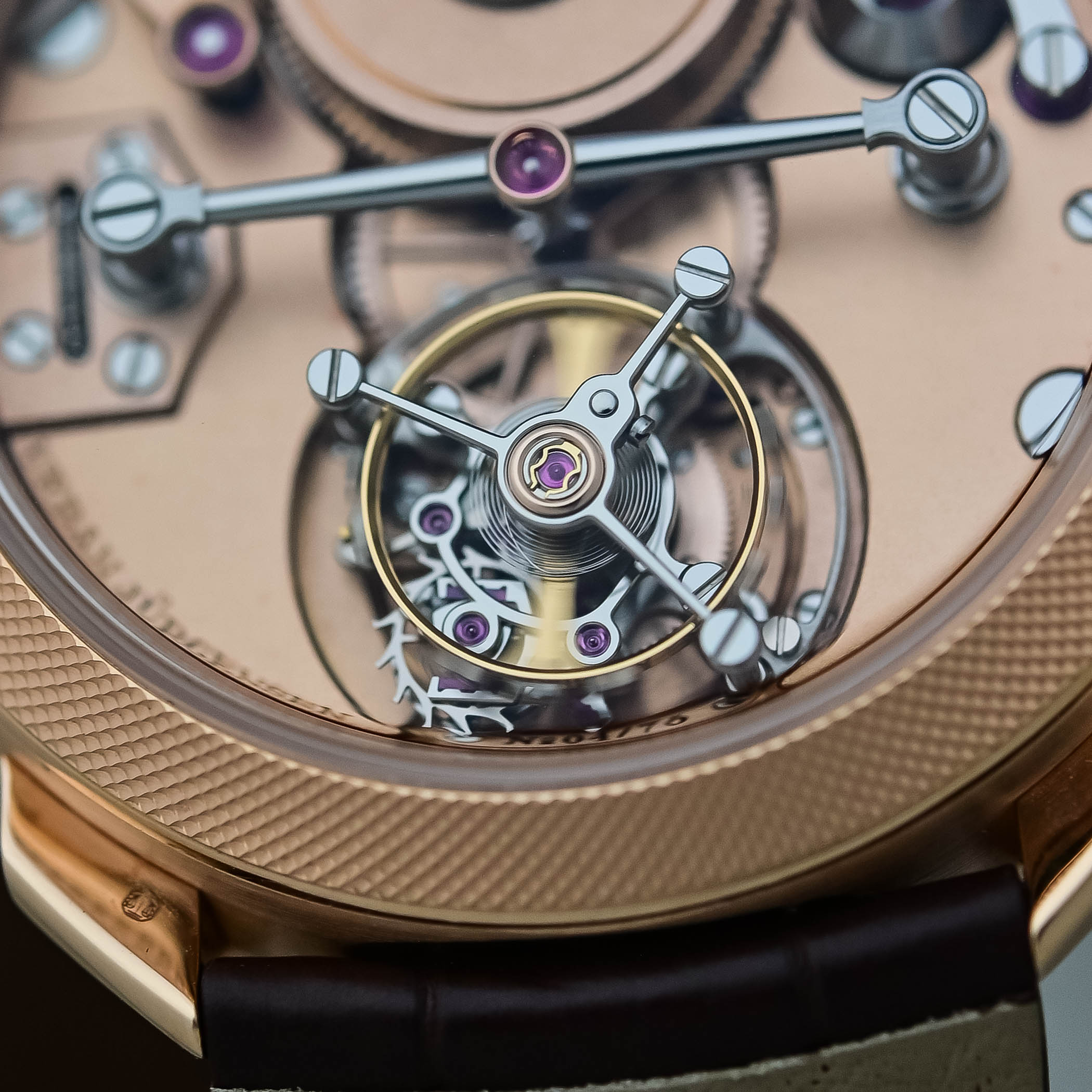
In the UJ-1, this happens once per second inside the tourbillon carriage. Based on Derek Pratt’s system for the Oval, the mechanism centres on a Reuleaux triangle, a curve of constant width. This tiny steel component rotates between a two-pronged lever with ruby contact surfaces, controlling the charging and release of the remontoir spring.
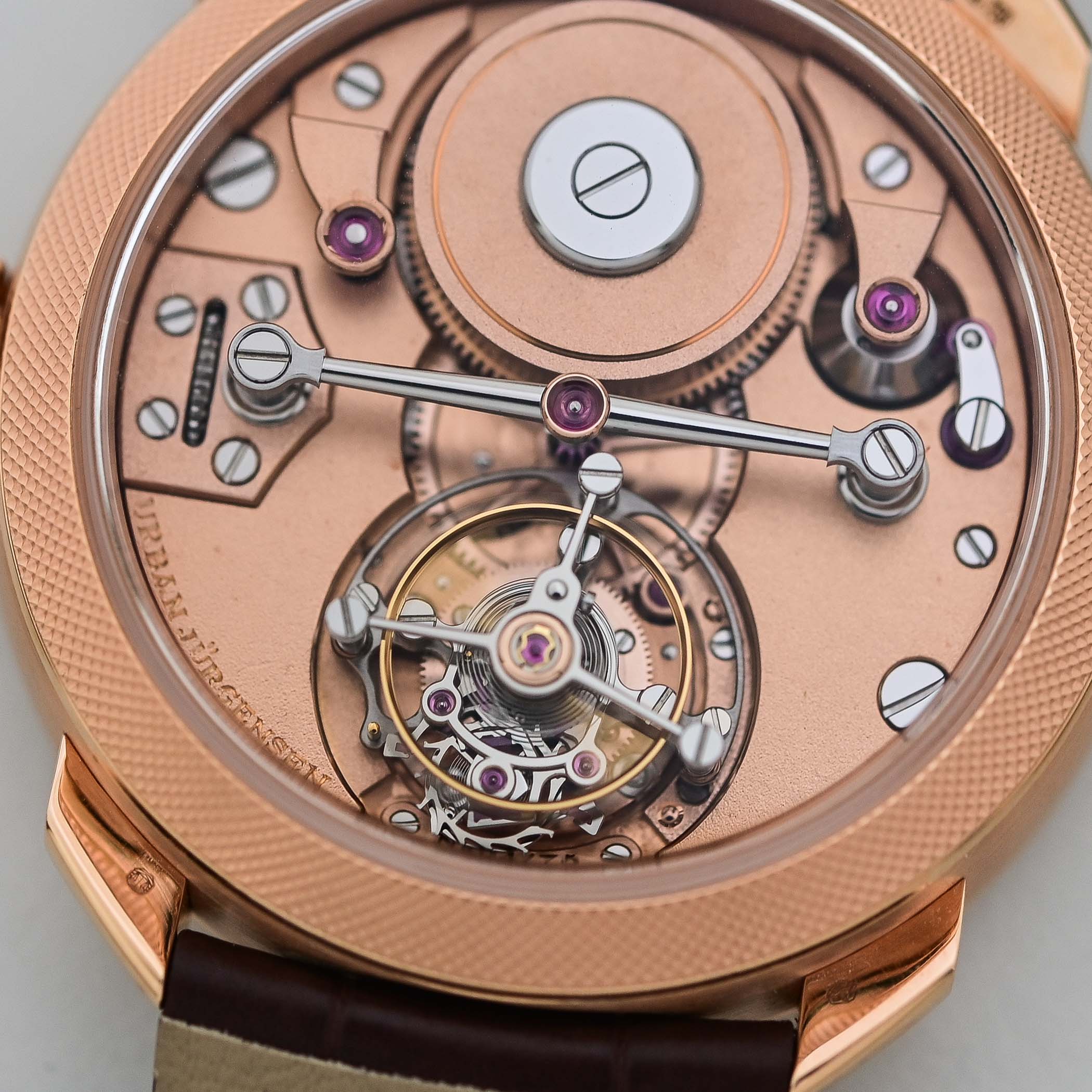
The once-per-second action also creates a dead-beat seconds display, with the small seconds hand advancing in precise increments, doubling as a visual indication of the remontoir recharging and releasing its energy.
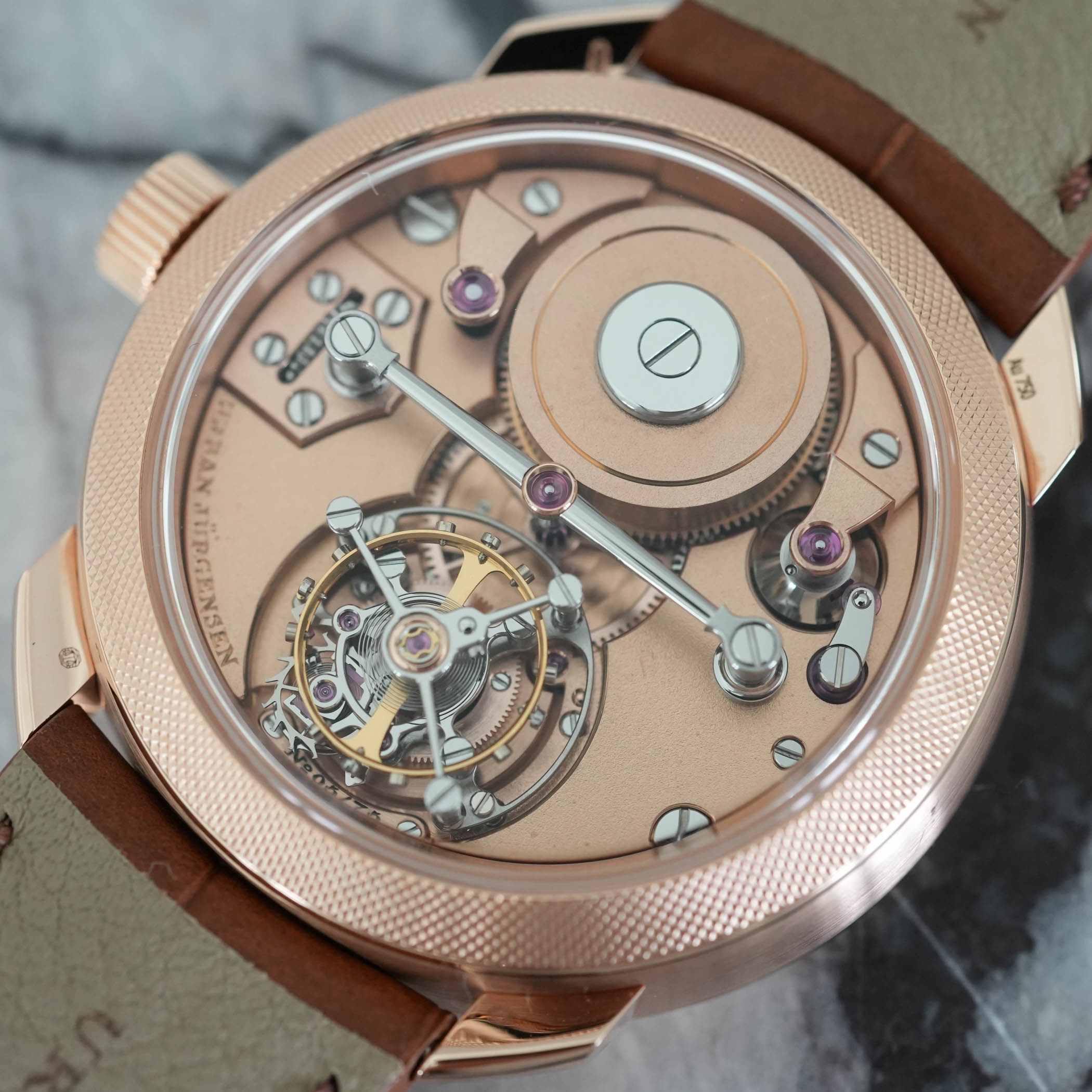
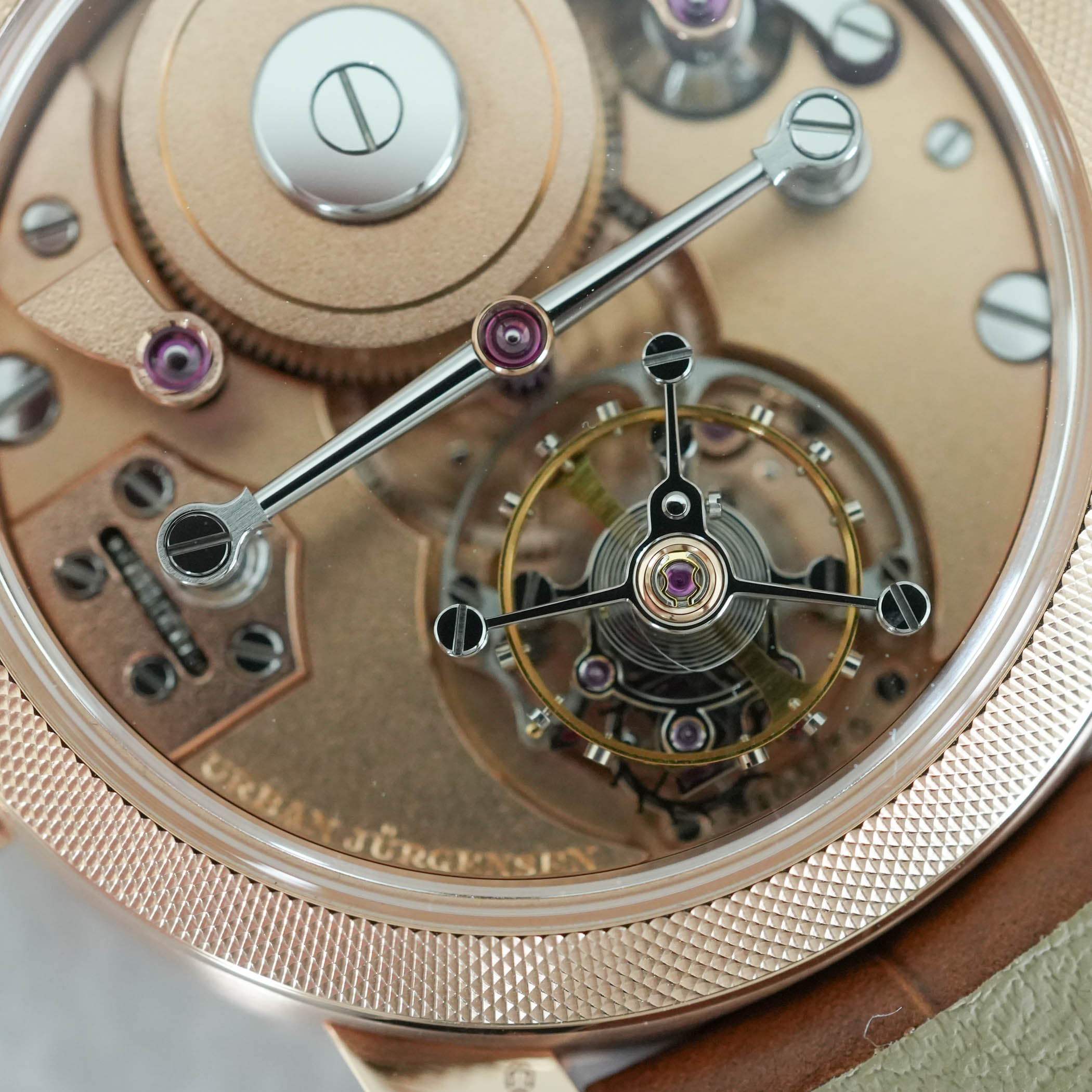
The tourbillon cage deserves attention, too. Its asymmetrical three-arm geometry is a departure from Pratt’s design; it is more functional than decorative. Integrating the remontoir into the carriage creates an uneven distribution of mass, and the opposite side must compensate for the additional weight. The shape of the cage is therefore dictated by poising, its form a direct consequence of the mechanism it carries.
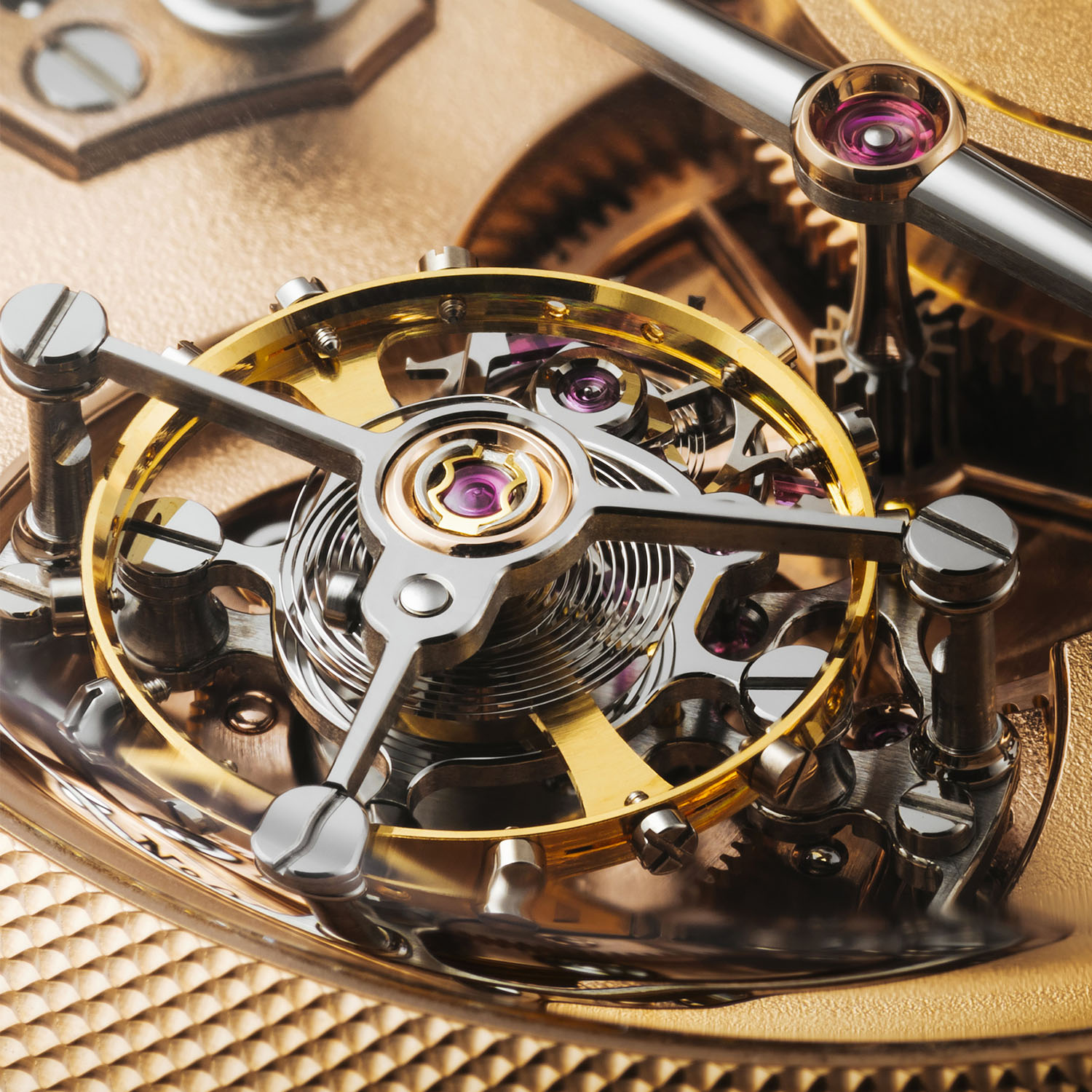
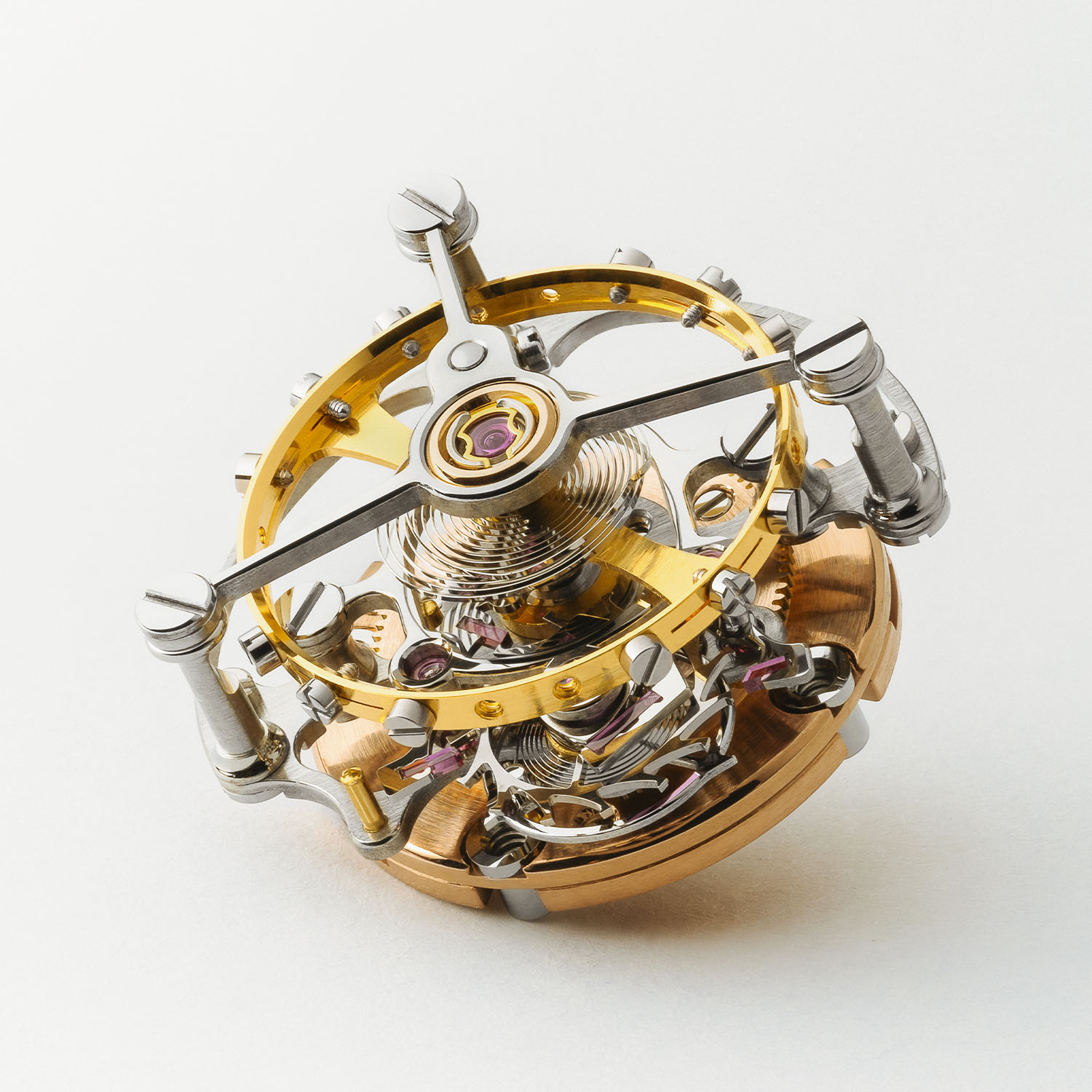
The escapement is a Swiss lever paired with a balance wheel, fitted with micrometric timing screws, and a hairspring with a Phillips terminal curve (the Oval used an Earnshaw-style spring-detent escapement). Yet the UJ-1 wasn’t intended as a component-for-component reproduction. It is an adaptation of Pratt’s wristwatch design, and the lever escapement provides a more suitable solution for a watch intended to be worn rather than carried in a pocket.
The Power Reserve Mechanism
Another historical mechanism is the conical power reserve system. The UJ-1 uses a cone-and-feeler mechanism derived from marine chronometry. As the mainspring winds and unwinds, a threaded cone moves vertically. A feeler with a ruby roller follows the cone’s changing height and translates this motion into the power reserve indication on the dial.
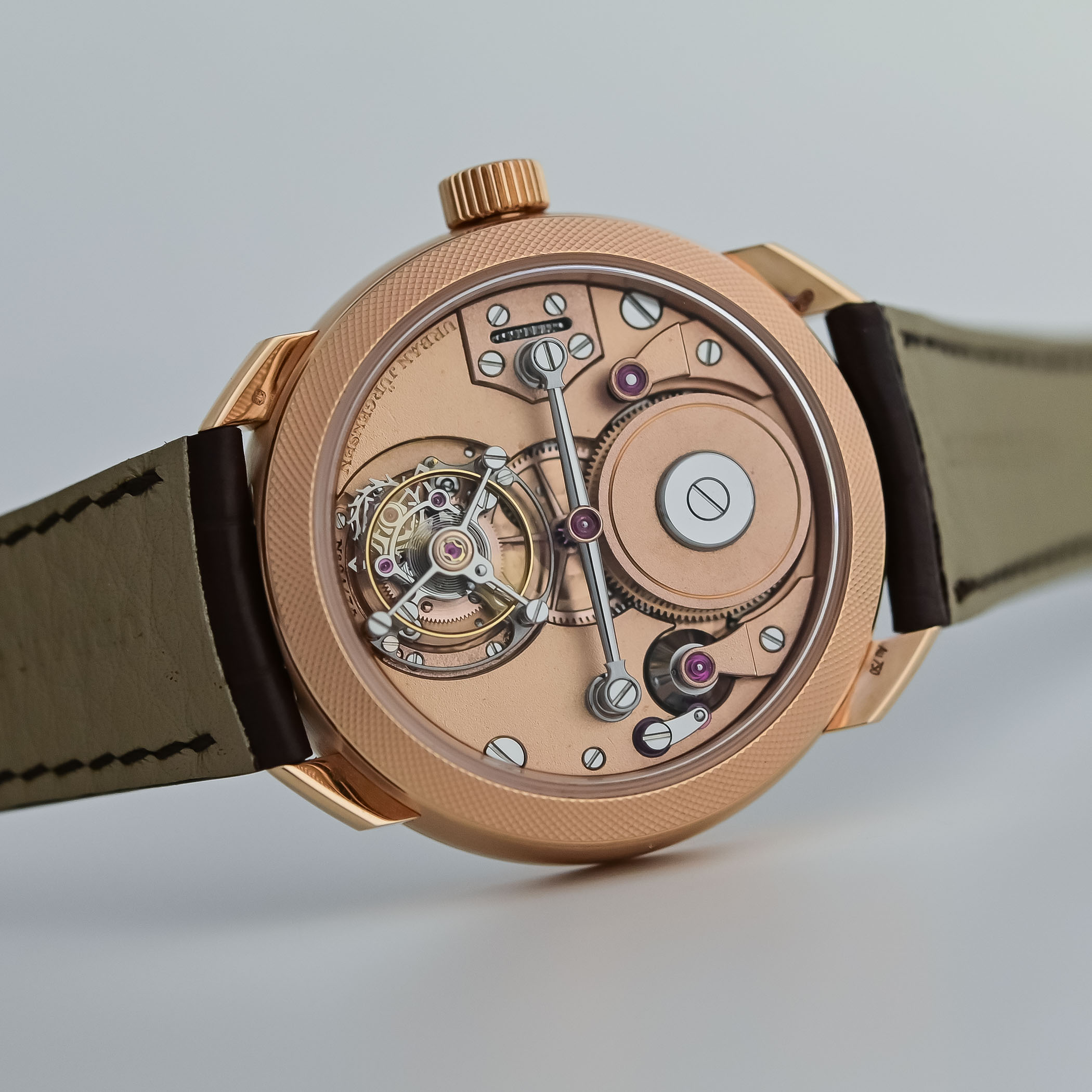
It is quite an extravagant way of displaying 47 hours of autonomy. The mechanism consumes valuable space and is considerably more complex than alternatives. But efficiency is not the point. Like the remontoir, it connects the UJ-1 with the world of precision chronometers that shaped Urban Jürgensen’s history.
The Finishes
Reviewers have already said much about the finishing. At this price and level of watchmaking, exceptional decoration is expected. Yet the UJ-1 goes considerably further than simply applying the familiar checklist of polished bevels and black-polished screws.
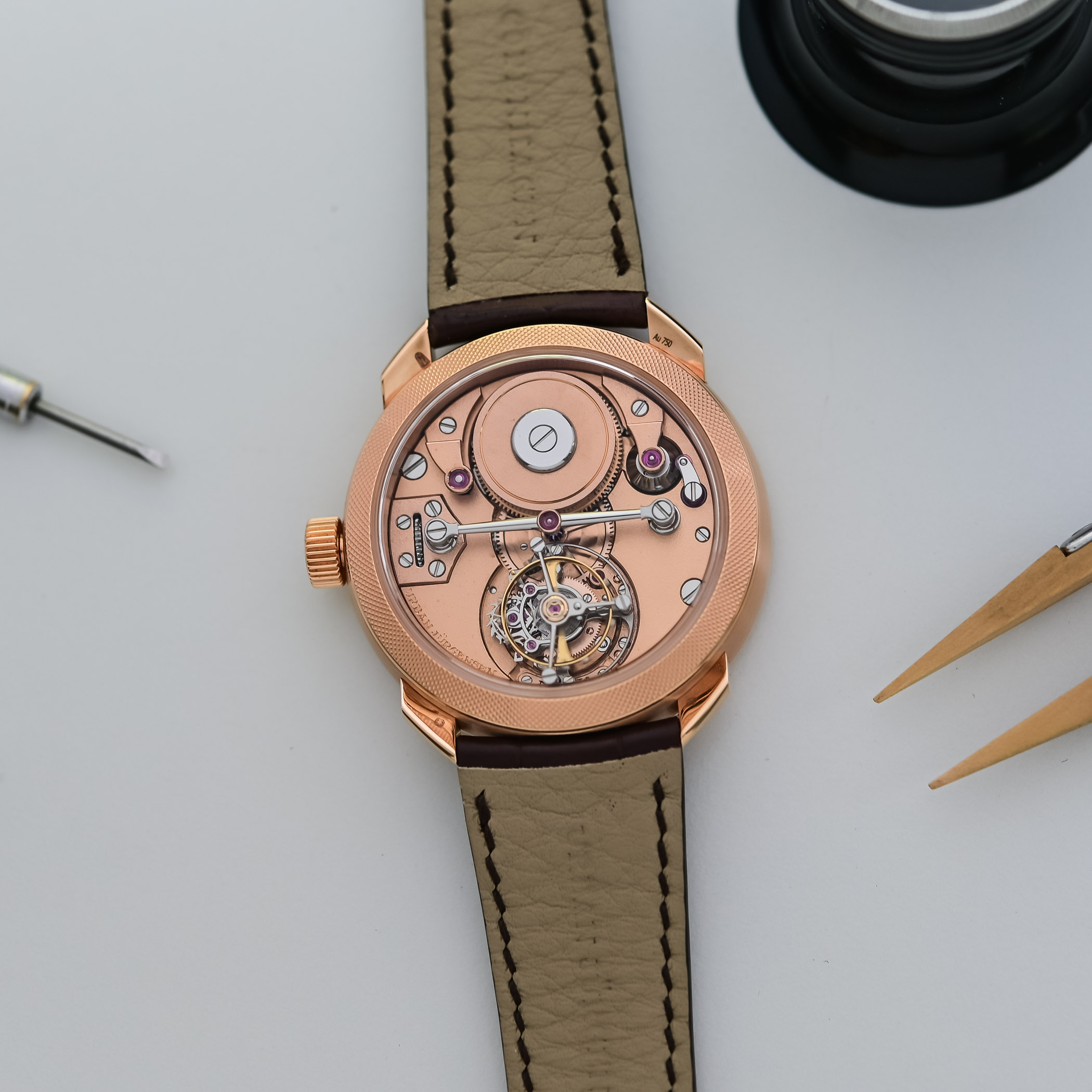
The broad surfaces are frosted with a fine metal brush, creating a finely textured grenage finish. The large curved, or bercé, central bridge is finished with rounded, fully polished bevels, while the bridges receive hand-drawn straight graining using Cabron abrasive. The wheels are satin-polished, with chamfered spokes. Even a single screw required approximately 30 minutes of work, including polishing the head, finishing the traditional English slot, and chamfering its perimeter. Decorative excess, maybe, but it is central to the philosophy behind the UJ-1. Much of this labour and effort does not affect rate stability or power reserve. It exists because the movement is conceived as a complete horological object.
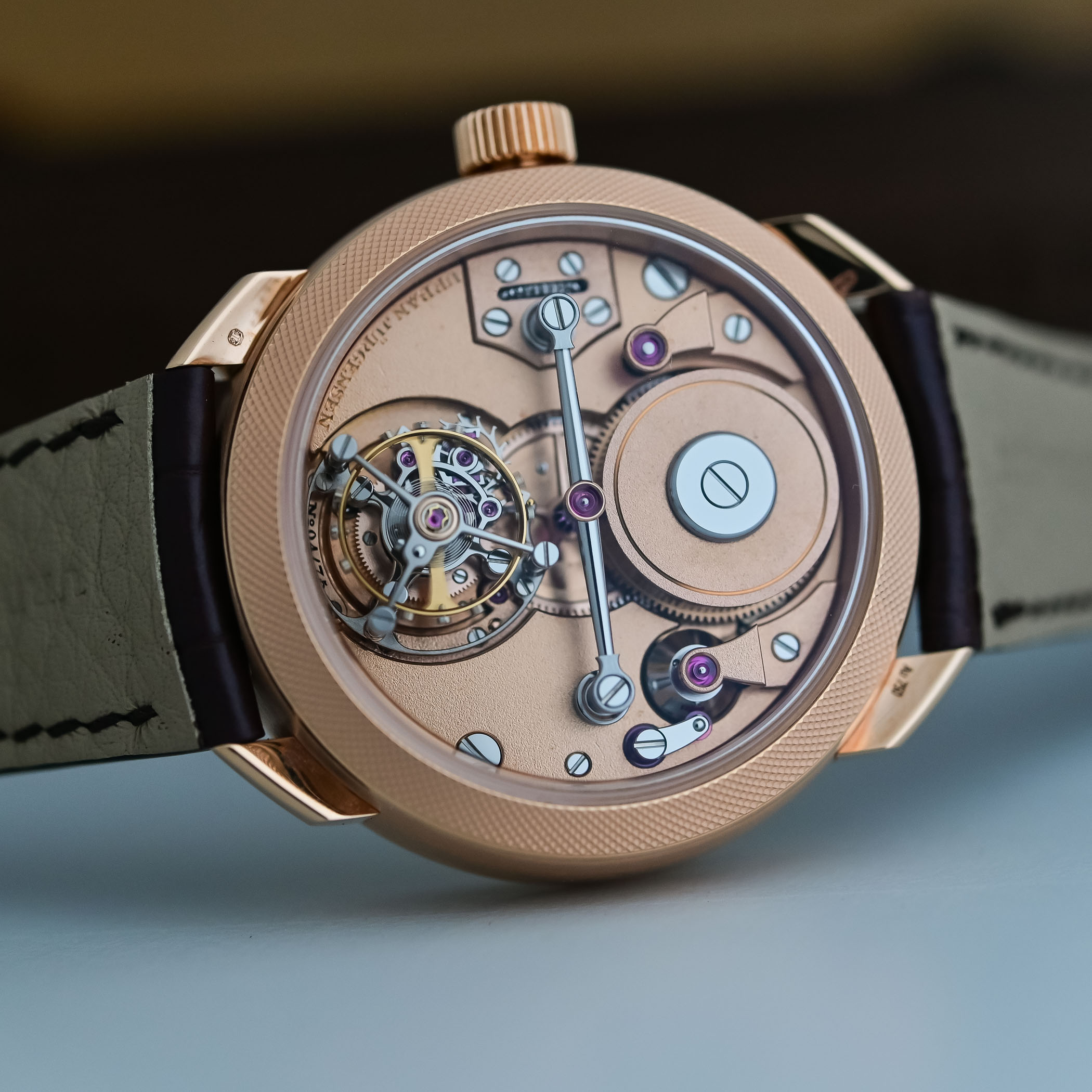
One particularly obsessive detail is almost hidden beneath the centre wheel. Here, the movement features a triple colimaçonnage, or triple spiral decoration, directly inspired by the finish Voutilainen executed on Pratt’s original Oval. Normally, such spiral decoration is performed on a raised surface. In the UJ-1, it had to be applied inside a recessed pocket machined into the main plate. Few owners will ever inspect it without dismantling the movement.
The Dial
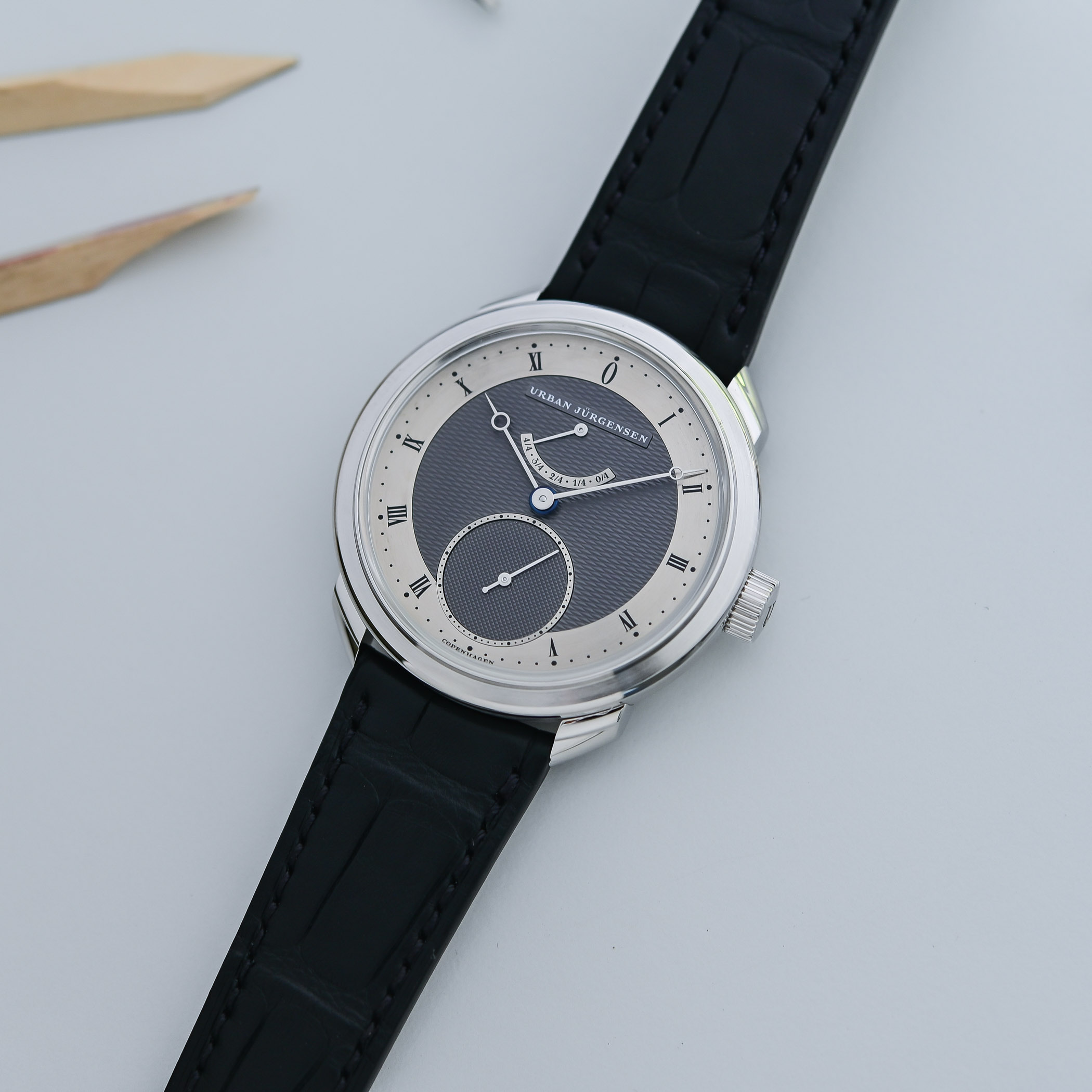
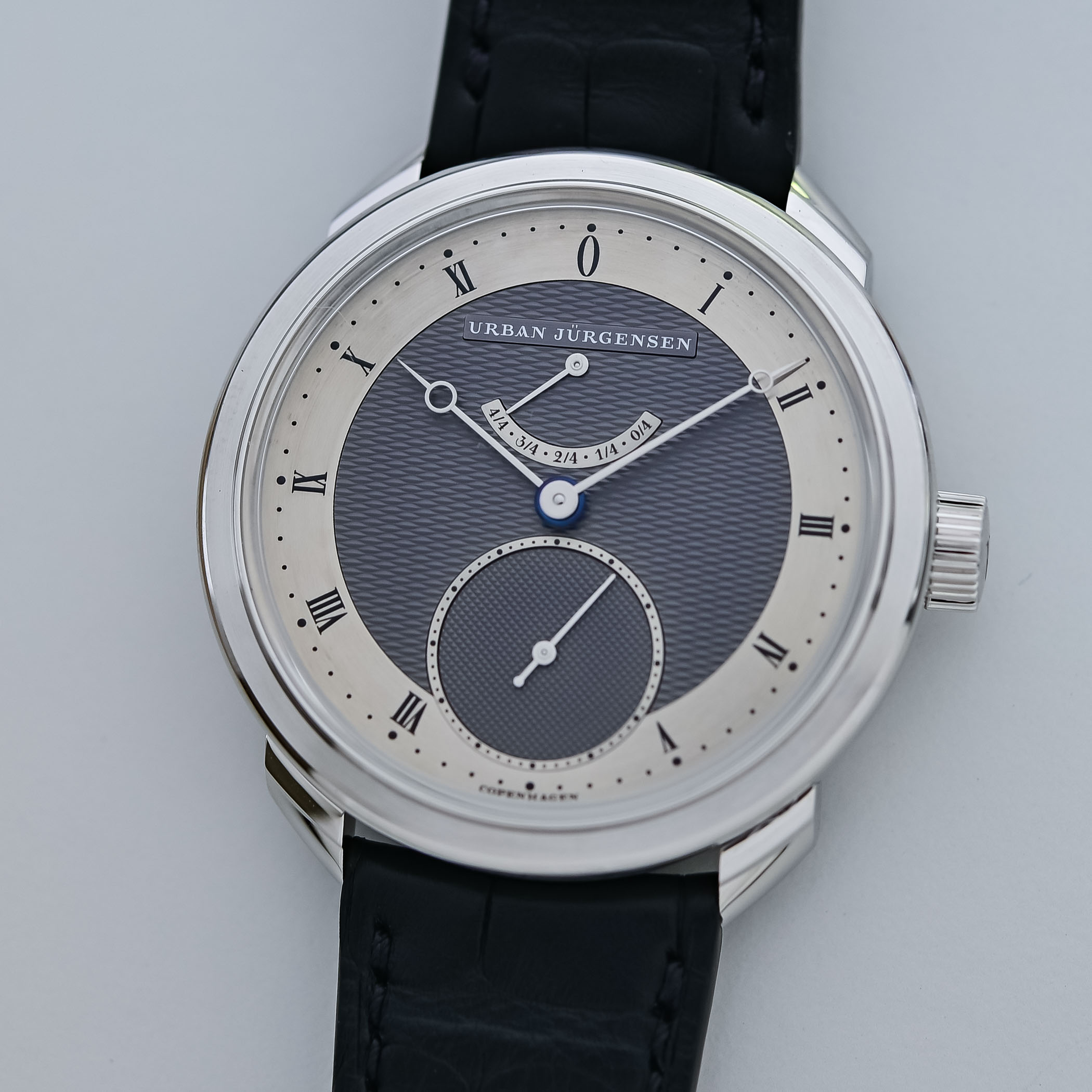
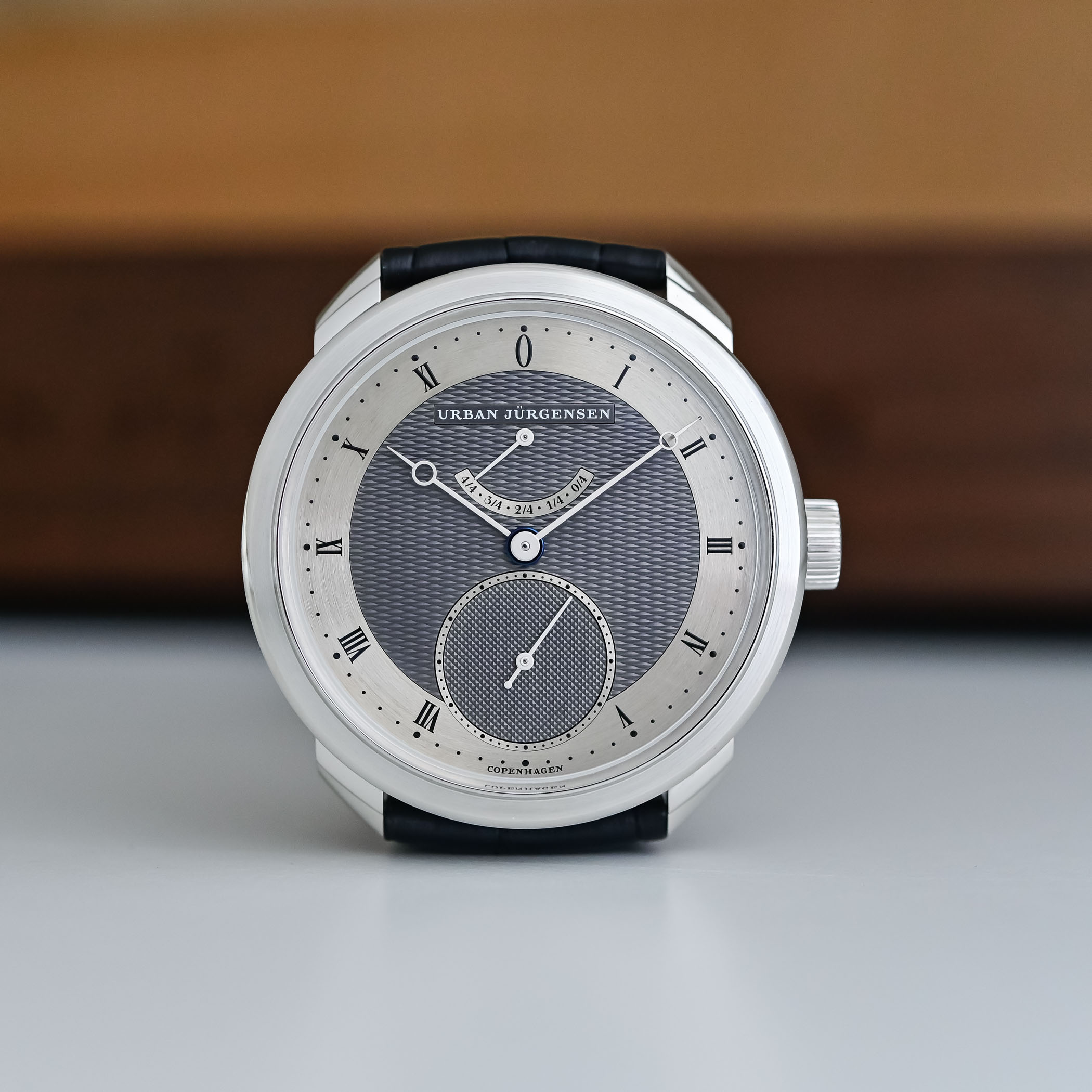
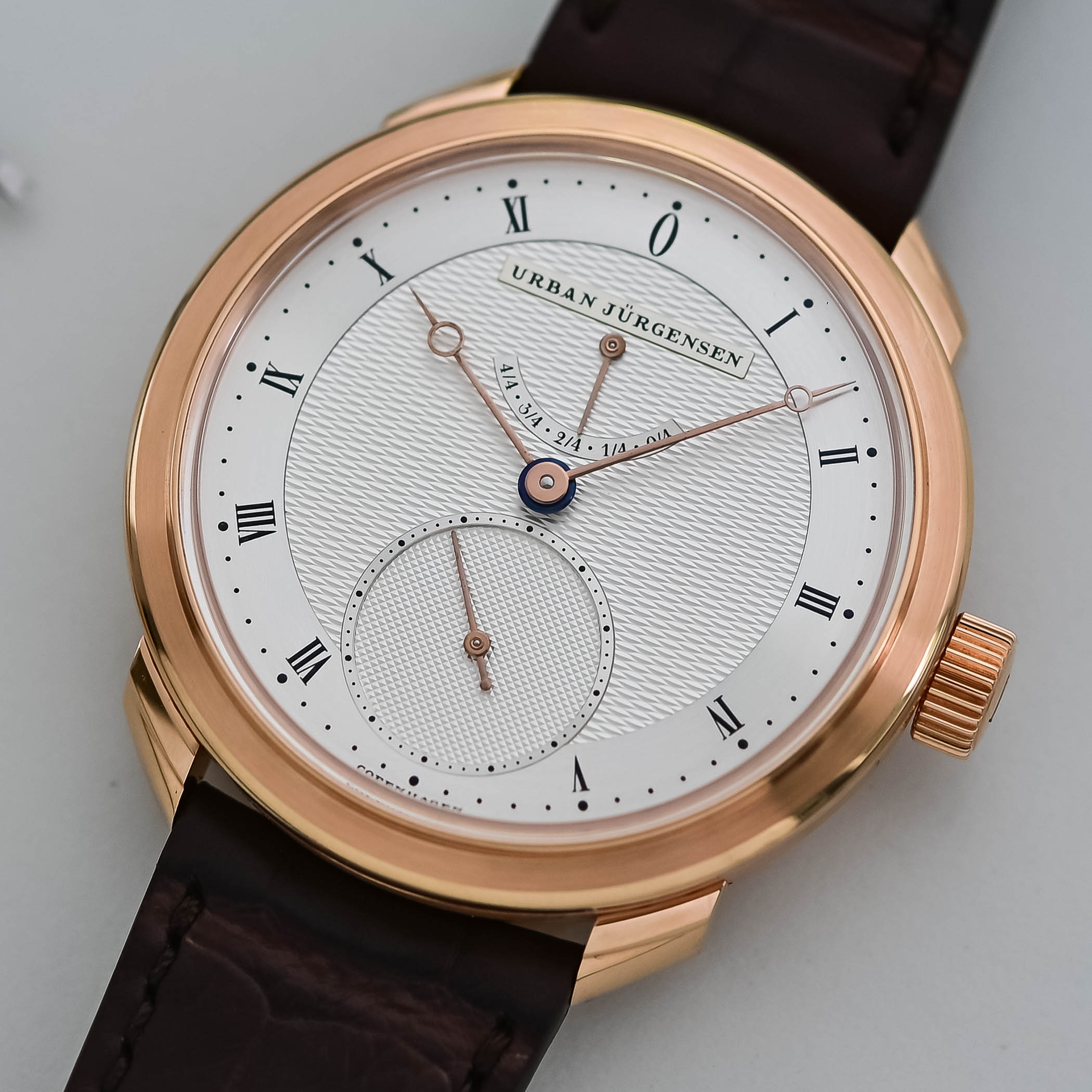
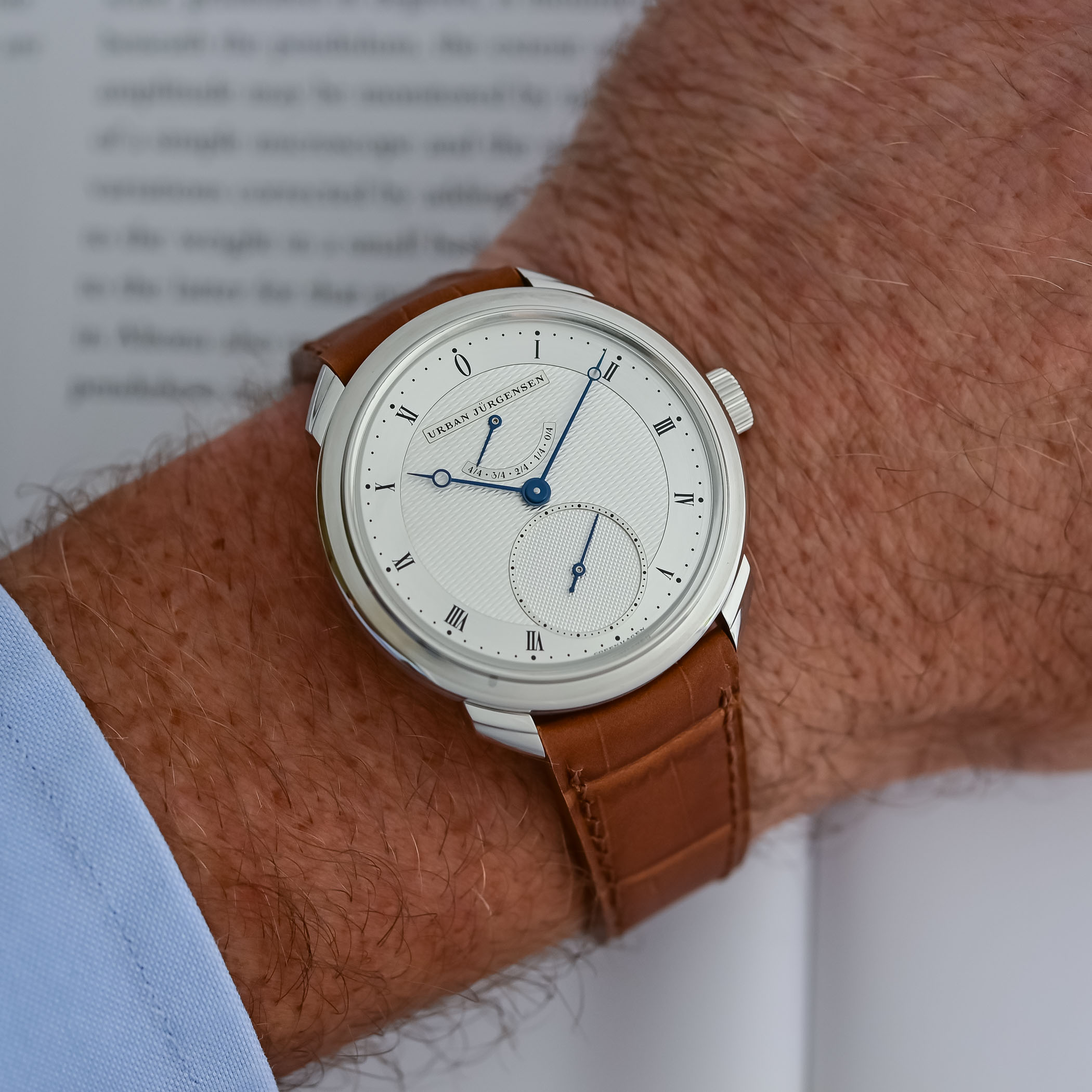
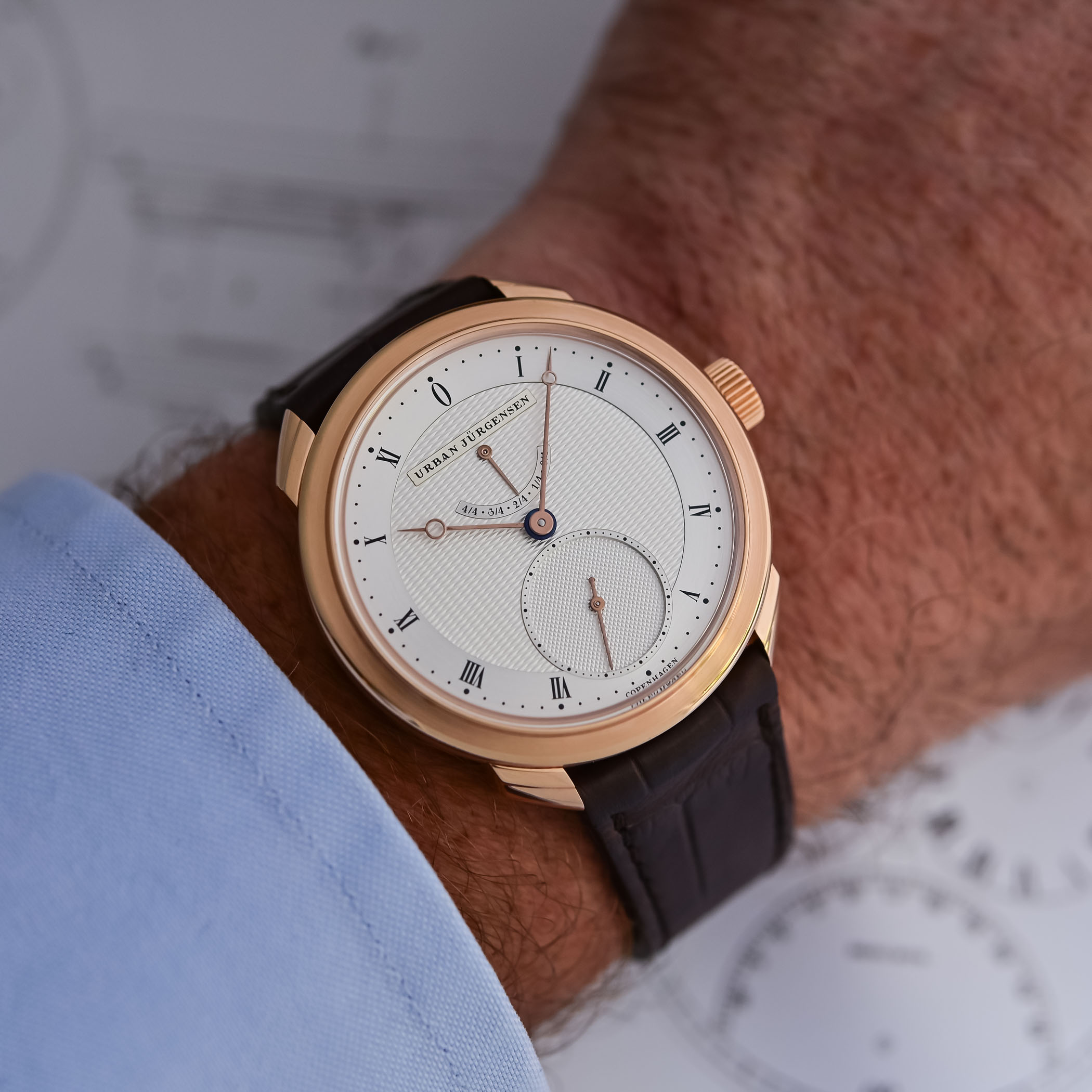
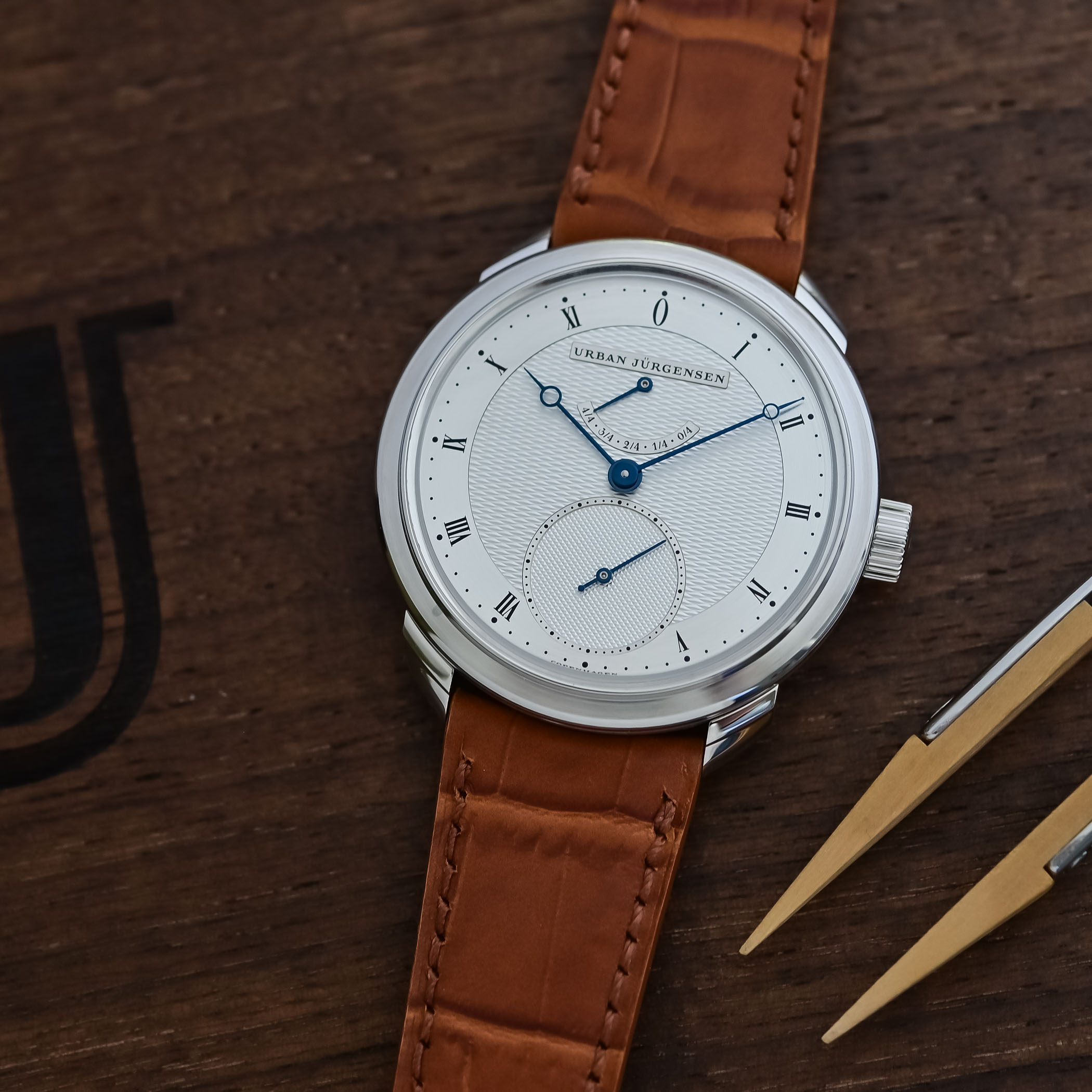
The same attention continues on the front, although the dial is deliberately more restrained. Manufactured by Comblémine, it is made from solid sterling silver and decorated using traditional flinqué guilloché techniques. Linear Grain d’orge fills the main dial, while the small seconds at 6 o’clock receives a Clous de Paris pattern. Applied precious metal tracks structure the display, with a fractional power reserve at noon and time indicated by the open-tipped Jürgensen hour and minutes hands. Should you be curious why noon is marked with a zero rather than a Roman numeral like the rest of the hours, the inspiration comes from the 1867 Jules Jürgensen’s Decimal Time pocket watch created for the World Exhibition in Paris.
The Case
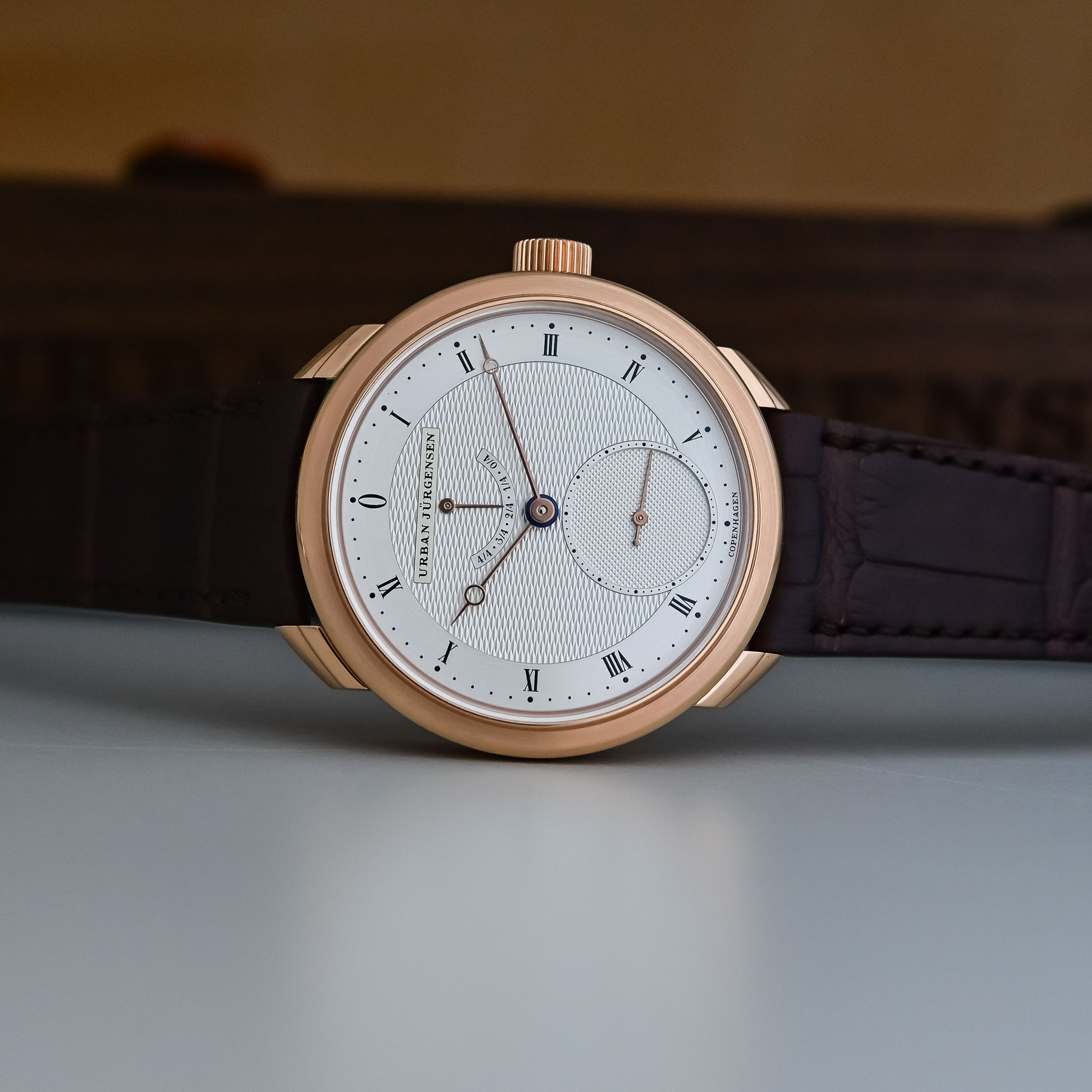
The case is compact, considering the movement inside, and measures 39.5mm in diameter and 12.2mm thick. It is available in 950 platinum or 5N rose gold and introduces the new Urban Jürgensen case design, including the short, sharply defined lugs conceived as a 90-degree reinterpretation of the brand’s traditional teardrop lugs. The caseback features hand-guilloché with a circular Grain d’orge pattern around the sapphire crystal, a detail to be much appreciated.
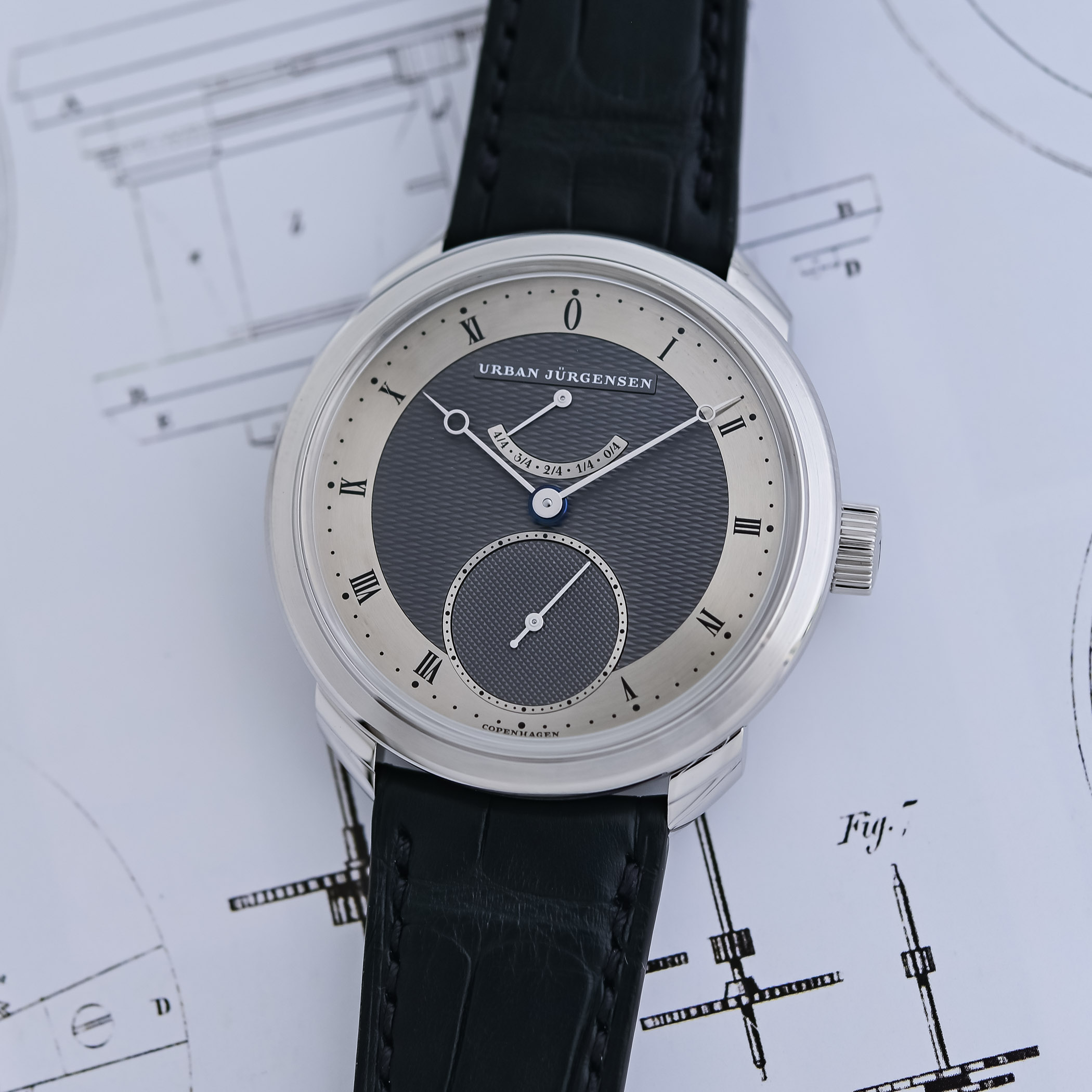
Three versions are available: platinum with a light silver dial and blued hands, platinum with a grey dial, and rose gold with a light silver dial. Each is limited to 25 pieces, for a total production of 75 watches.
The Price and Final Notes
Now, the difficult part, the price. At CHF 368,000 excluding taxes, the UJ-1 is undoubtedly expensive, even by the already distorted standards of contemporary independent watchmaking. There are tourbillons with constant-force mechanisms from established names available for less, and for more. But reducing the UJ-1 to its complication misses much of what makes it so interesting. This isn’t simply a tourbillon with a remontoir; it is a 30mm reconstruction of one of Derek Pratt’s most important movements, redesigned with crown winding, miniaturised without losing its three-dimensionality and decorated to an almost unreasonable degree. The Reuleaux triangle, one-second remontoir, flying barrel, cone-and-feeler power reserve and hidden keyless works are not independent technical curiosities; they form a remarkable movement.
The UJ-1 is certainly not a rational proposition. But as the flagship for the return of Urban Jürgensen, it makes a convincing statement; it is one of the most fascinating tourbillons we’ve seen in recent years. For more, visit urbanjurgensen.com.

1 response
Beautiful one! Another crazy high price.