


 Not all images were able to load for printing. Please close the print window and try again.
 Impressions about the Tudor Ranger 36mm, Including the new Dune White Dial
We don't have a polar white Rolex Explorer yet, but this new Ranger has arguments too.
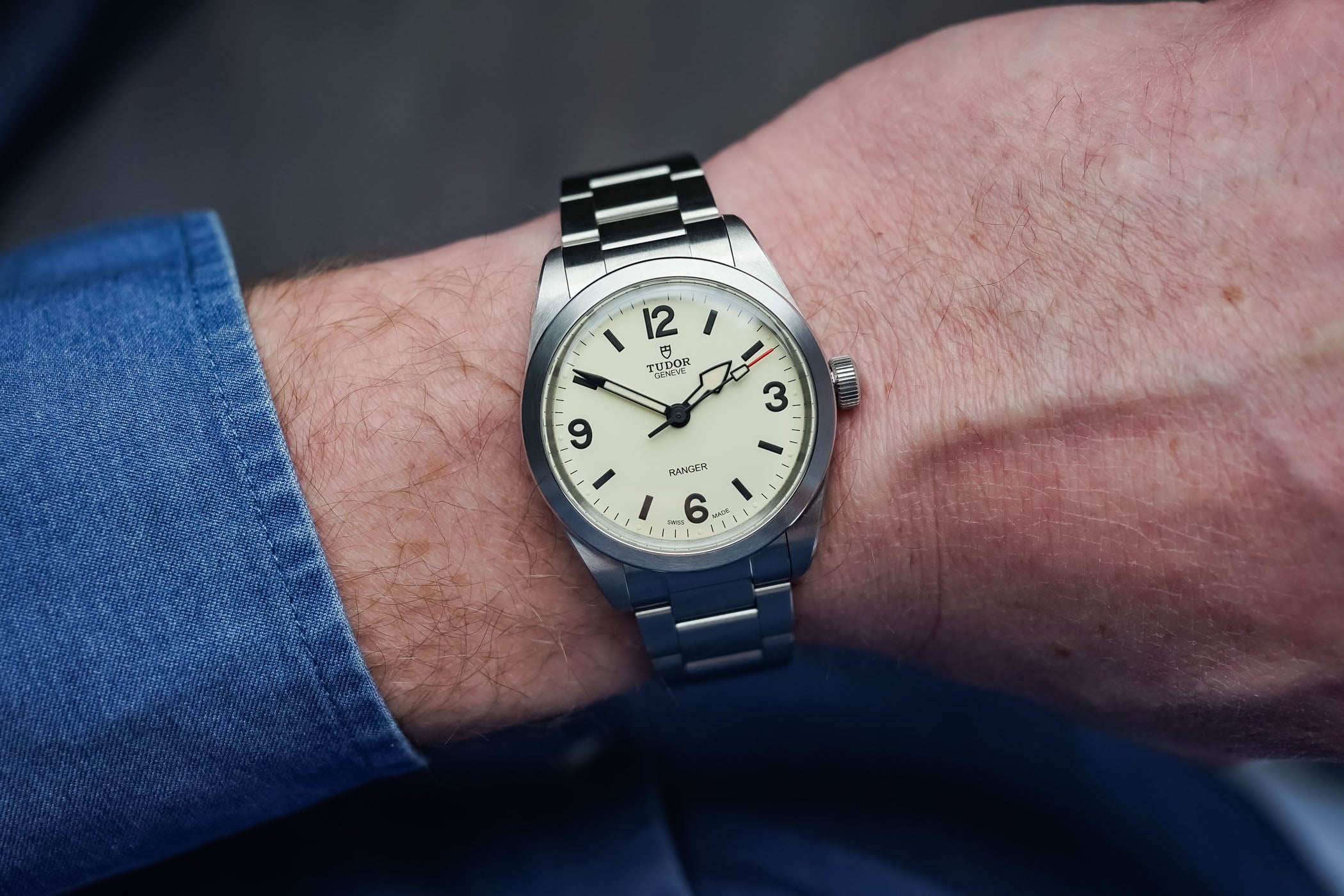
If you’ve been reading MONOCHROME for some time now, you might know that I have a very strong connection with the Rolex Explorer 36mm, in particular the 1990s reference 14270. Not only is it a watch that I consider to be the perfect example of what a yougntimer is, but it’s also, in my books, one of the greatest all-rounder watches ever created. In addition, we’ve been hoping for years to see Rolex release a so-called Polar White version, still without success. But then comes something pretty cool from Tudor, a two-in-one release, the Ranger 36mm (which, I’ll explain later, is the perfect size for this watch) equipped with a new light-toned dial, in a colour named Dune White. So, without saying that it gives us hope for a polar Explorer 36mm, let’s look at this new model and how it changes the perception I had about the Ranger.
Concise History of the Tudor Ranger
As we explained in this in-depth article, the history of the Tudor Ranger isn’t the easiest to comprehend. It is one of these watches with a bit of a blurry context, which includes several pre-production models. Just like Rolex and its Explorer model, the Ranger has a clear exploration background, but not in the shape we’ve come to know the model. The watch that starts it all, known as the Tudor Oyster Prince 7809, was part of the British North Greenland Expedition or BNGE (1952-54), as Great Britain missioned 30 military and civilian scientists to explore Greenland. Part of their equipment were 26 non-modified Tudor Oyster Prince 7809. Just like he did with the Rolex Explorer and Everest exploration, Tudor used BNGE as a promotion for the brand. But as you can see, these watches didn’t have much in common with the vision we have of a classic Tudor Ranger, at least design-wise.
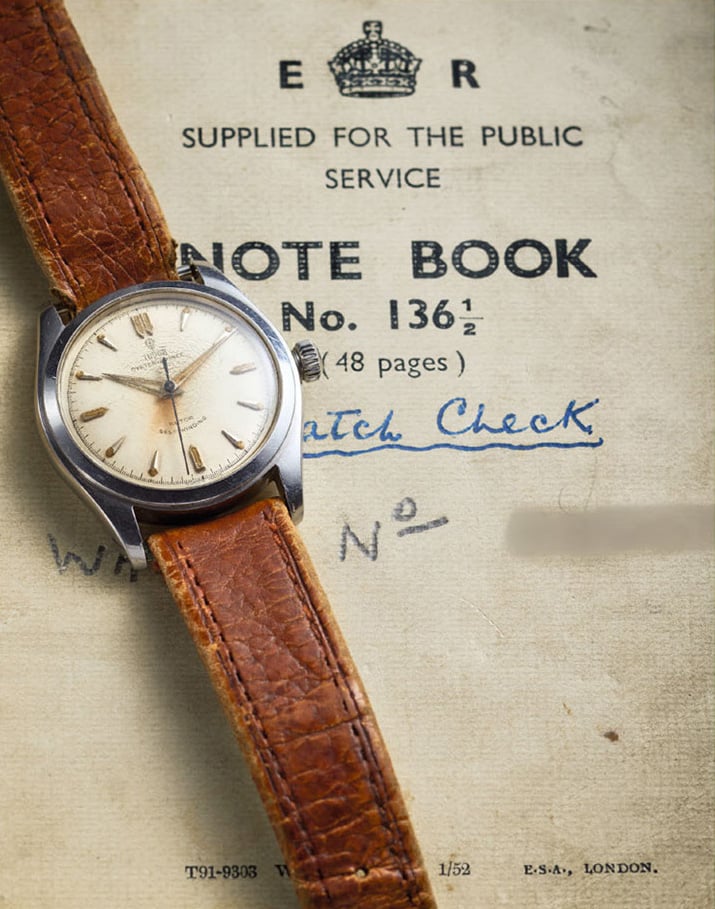
What has been used for the creation of the Ranger collection was the conception and the resistance to harsh conditions, just like the Rolex Explorer did. And yes, we can say it without too much hesitation, the Tudor Ranger was a more affordable take on the Explorer concept, just like the Tudor Submariner was a more accessible version of what Rolex was producing since 1953. This is why, overall, both the Explorer and the Ranger share so many technical and visual similarities.
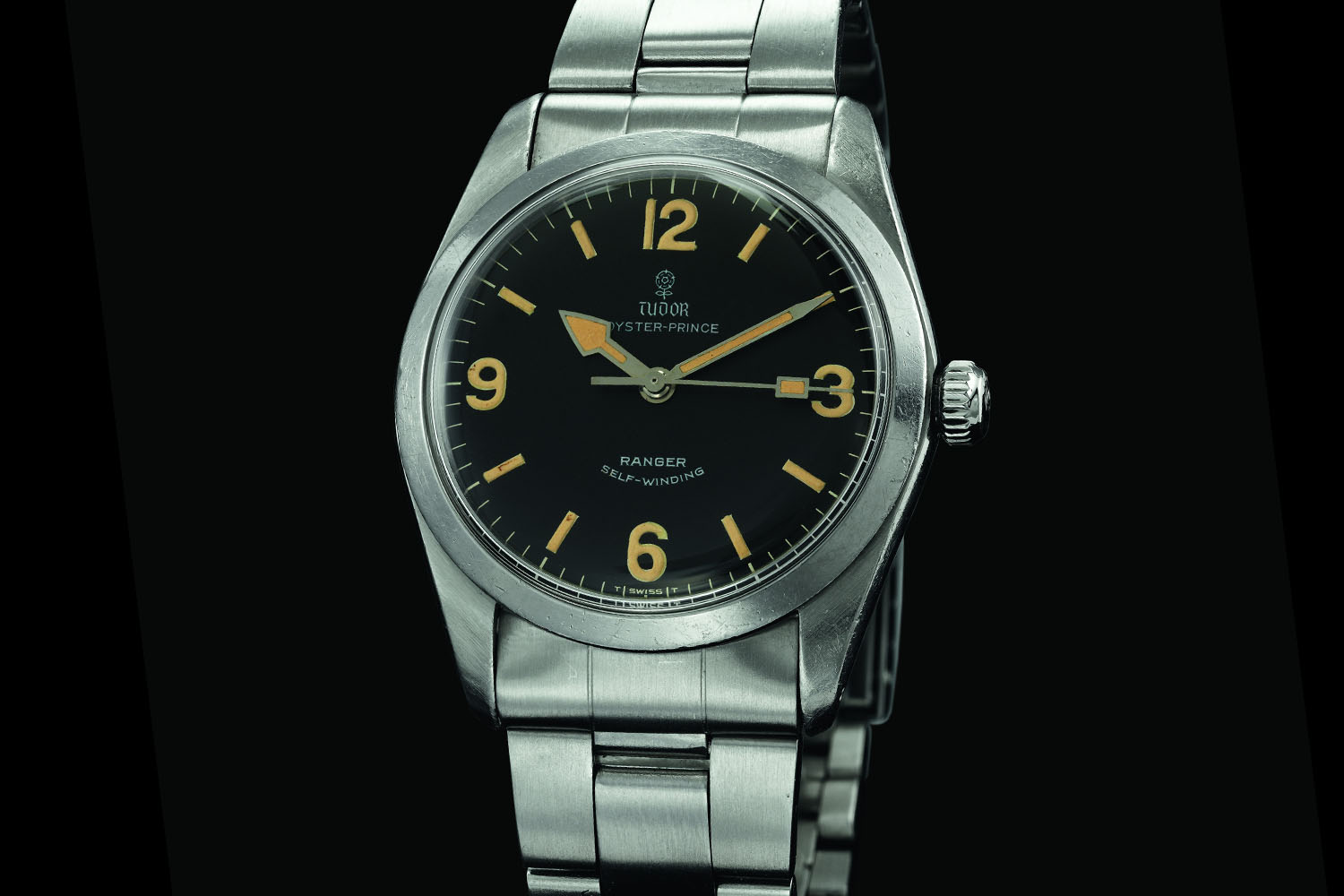
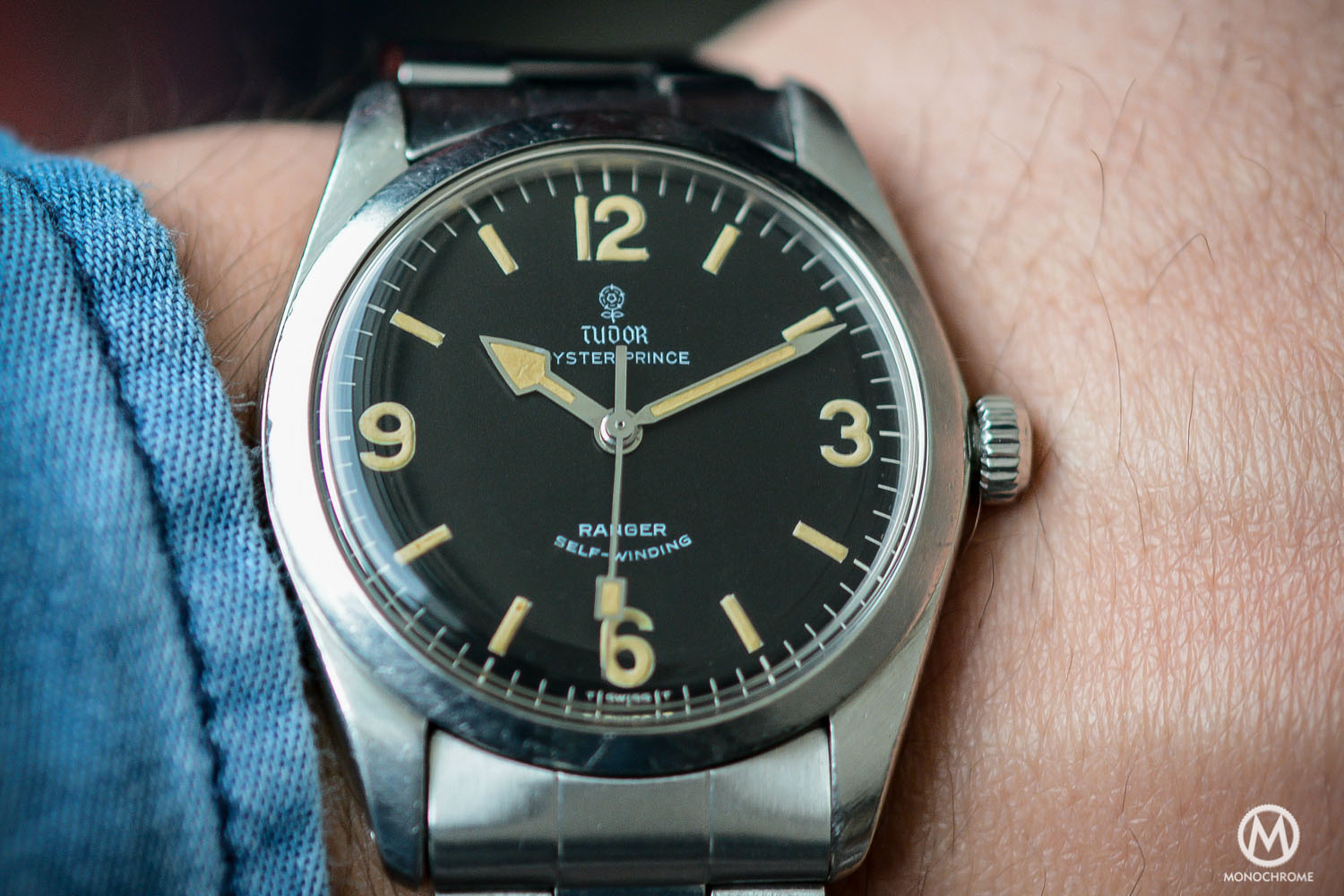
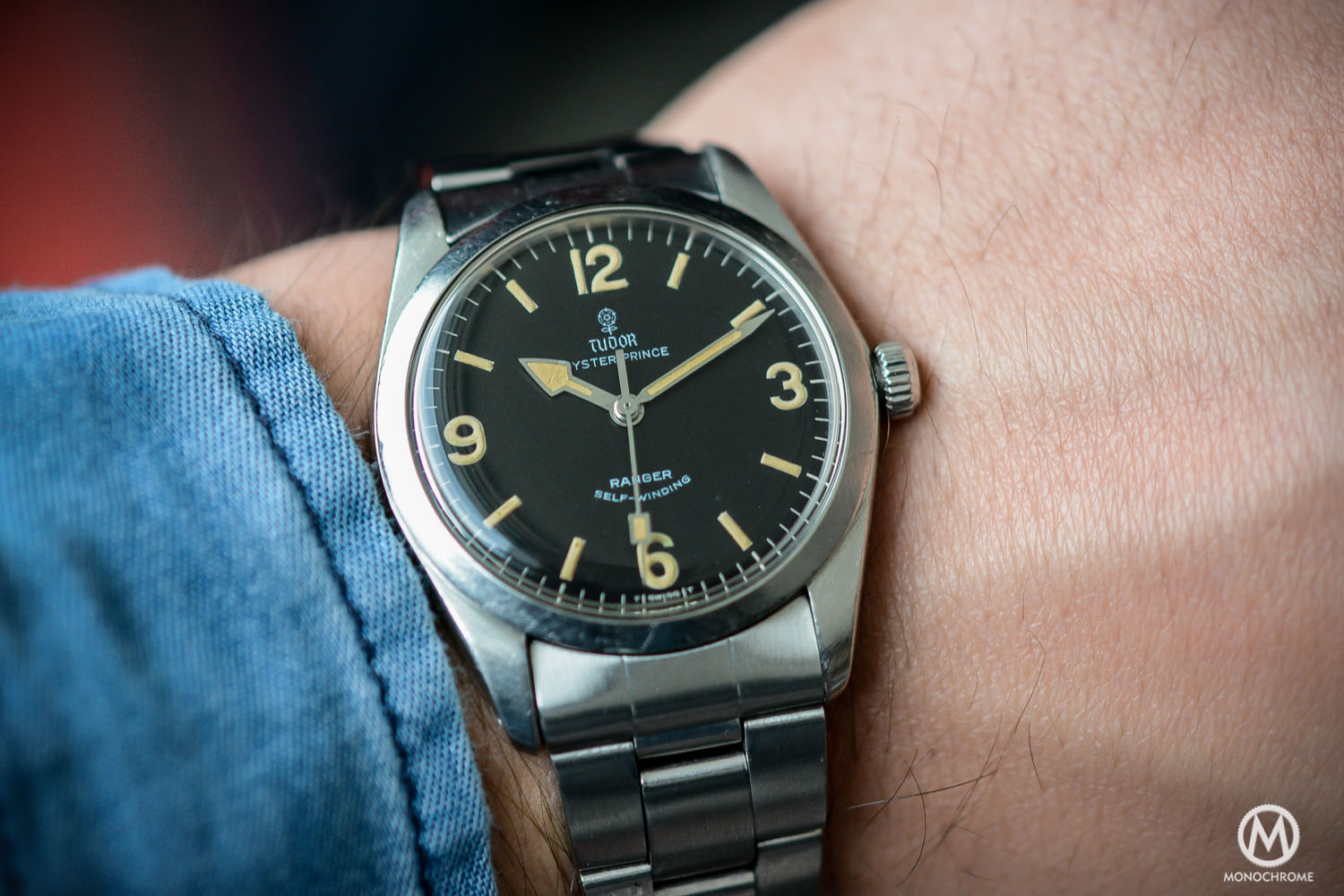
There are multiple references allowed for the Ranger, such as 7964, 7966, 7990, 7992, 7995, 7996, 90330 or 90220, depending on the presence of a date or not. And it’s only in the 1980s that the Tudor Ranger became a model on its own, with references 90330 and 90220, until the model was discontinued in 1988. Early models were classic in terms of design and conception, with an Oyster case, an Oyster bracelet (both sourced from Rolex) and ETA calibres (automatic or hand-wound) inside. The dial was black with 3, 6, 9 and 12 Arabic numerals, paired with baton markers. And the lumed hands were also distinctive, with an arrow-shaped hour hand and a paddle-shaped seconds hand.
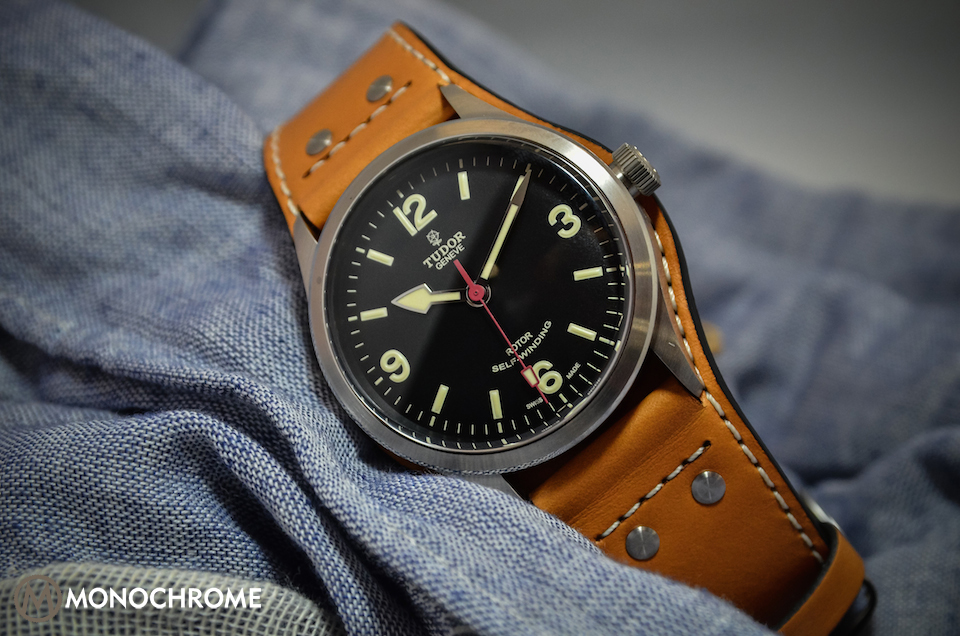
Following several vintage-inspired watches launched as of 2010 by Tudor – Heritage Chrono and Black Bay mostly – the brand took inspiration from early Ranger models (reference 7995, for example) in order to create in 2014 a new, modernly-built but vintage-inspired watch, the Heritage Ranger reference 79910. Visually, this re-edition of the Ranger kept most of the design elements alive, with a robust and sleek brushed case, a clean dial with luminous 3, 6, 9 and 12 markers, the same handset, the vintage Rose logo and the “smiley face” at 6 o’clock for the self-winding mention. What changed (drastically) was the size, as this new watch measured no less than 41mm.
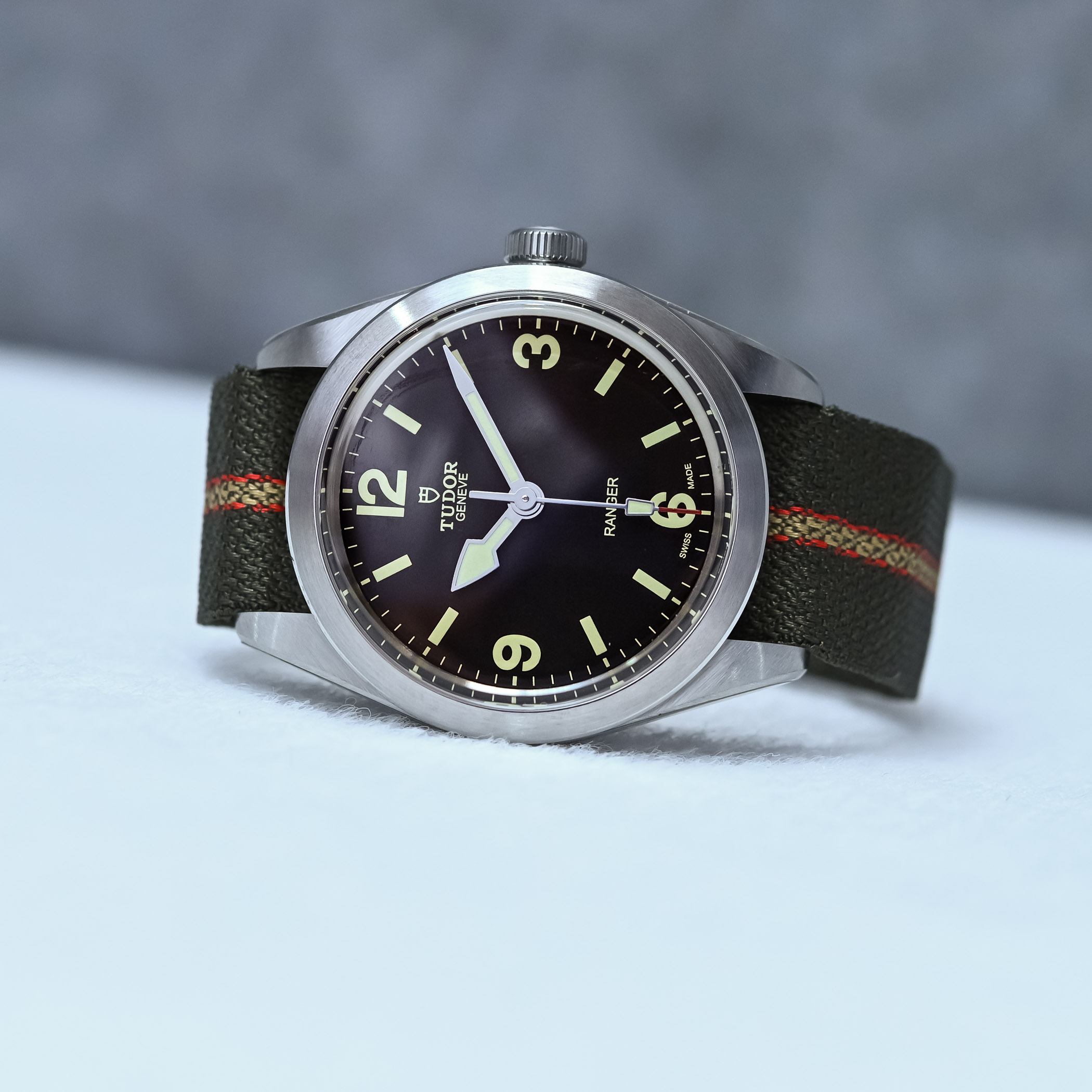
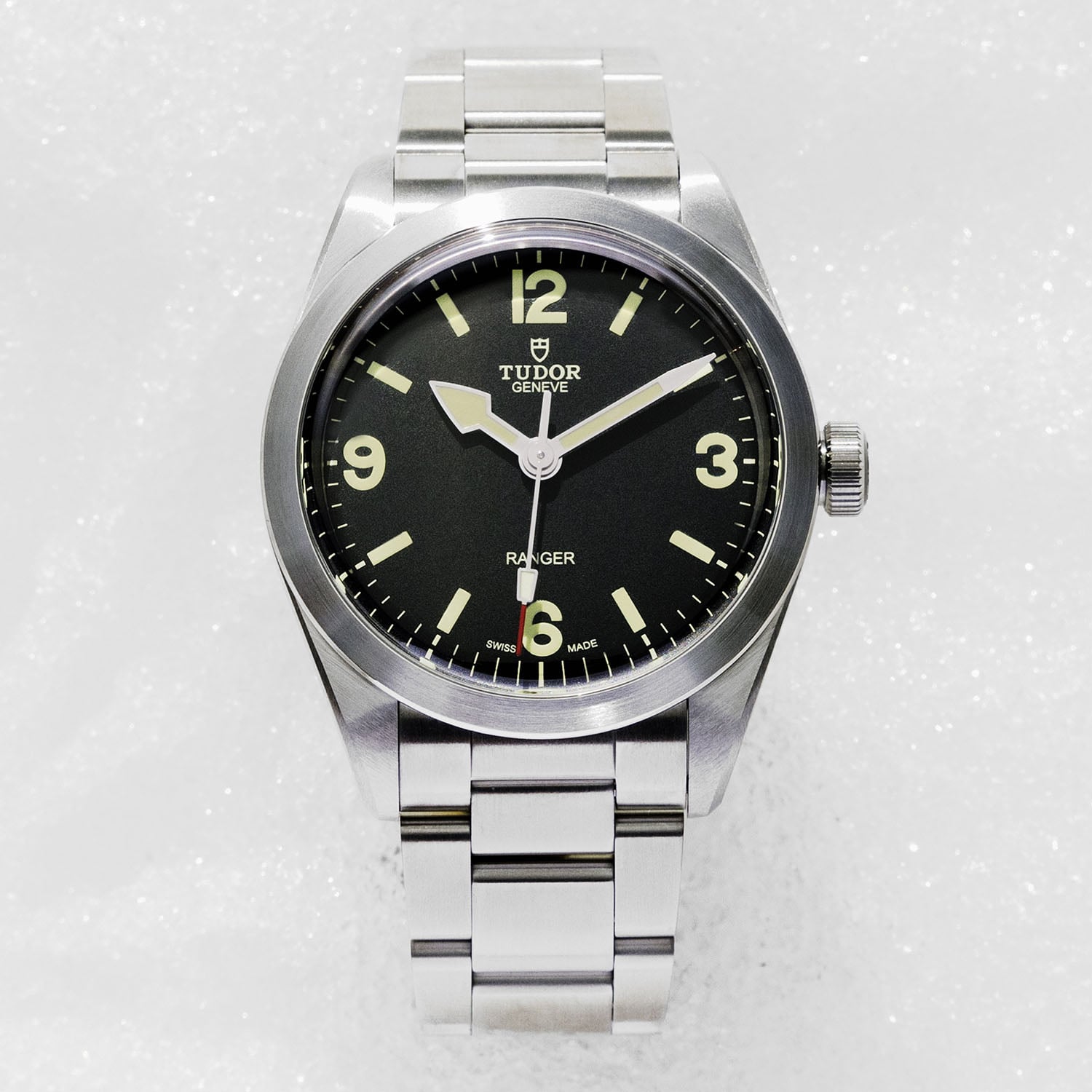
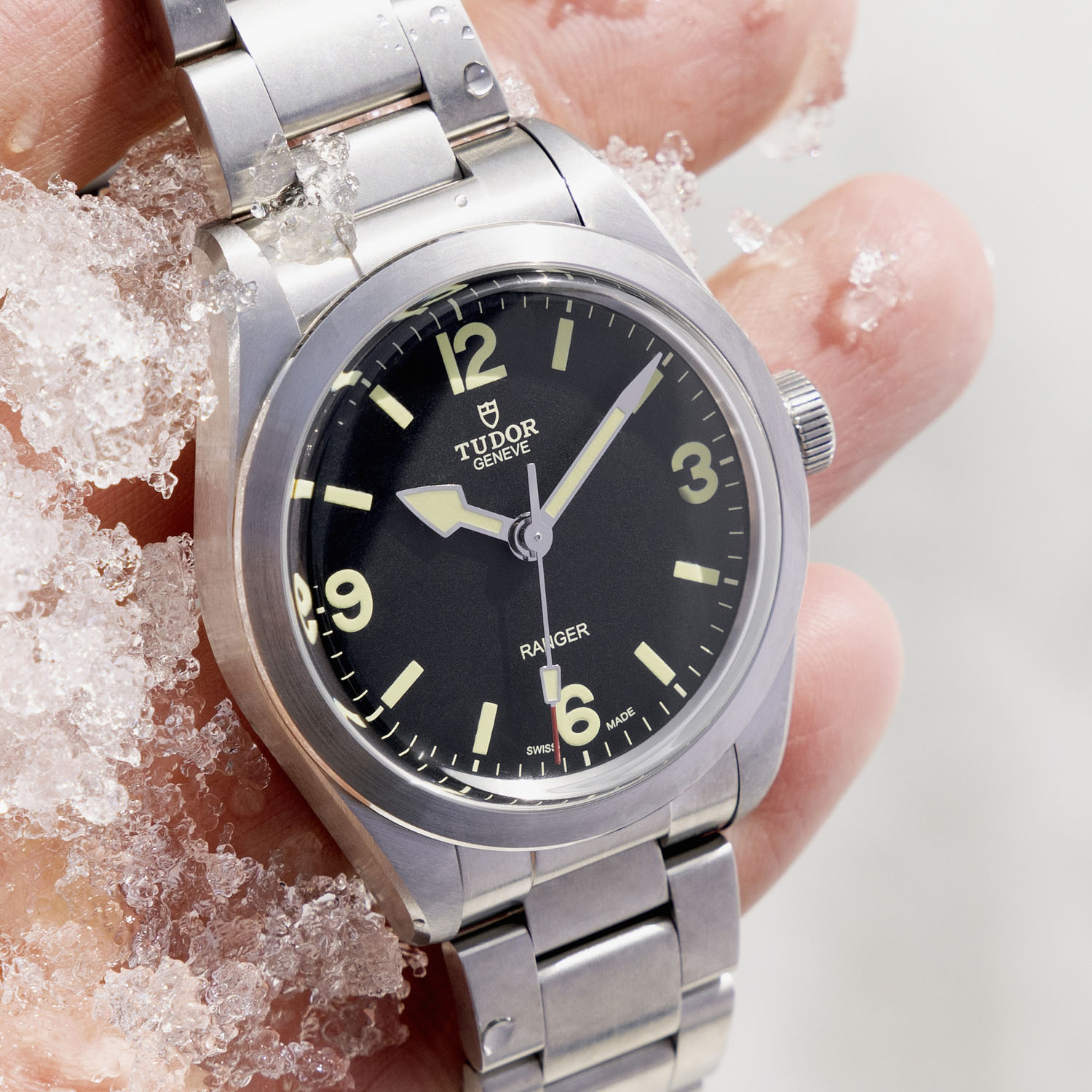
Feeling that the popularity of this 41mm reference was going down (the watch was objectively too big for a classic exploration model, with such a simple dial), Tudor revised the concept in 2022 and launched the Ranger 39mm reference 79950. Several aspects of the watches were updated or upgraded, in addition to the more compact case. First, if the dial was still using the classic Ranger layout, it also showed modern logos. The fully brushed case, thinner and more detailed, housed a manufacture movement (calibre MT5402 by Tudor x Kenissi) with COSC certification. Finally, the bracelet was updated to a more classic design but with a micro-adjustment system.
Better than before, but not perfect either, according to some (me included). But at Dubai Watch Week 2025, Tudor came up with two updates to the Ranger watch, transforming it into a collection now: a new 36mm case option and a new dial variant, in light beige, called Dune White.
The new 36mm Tudor Ranger
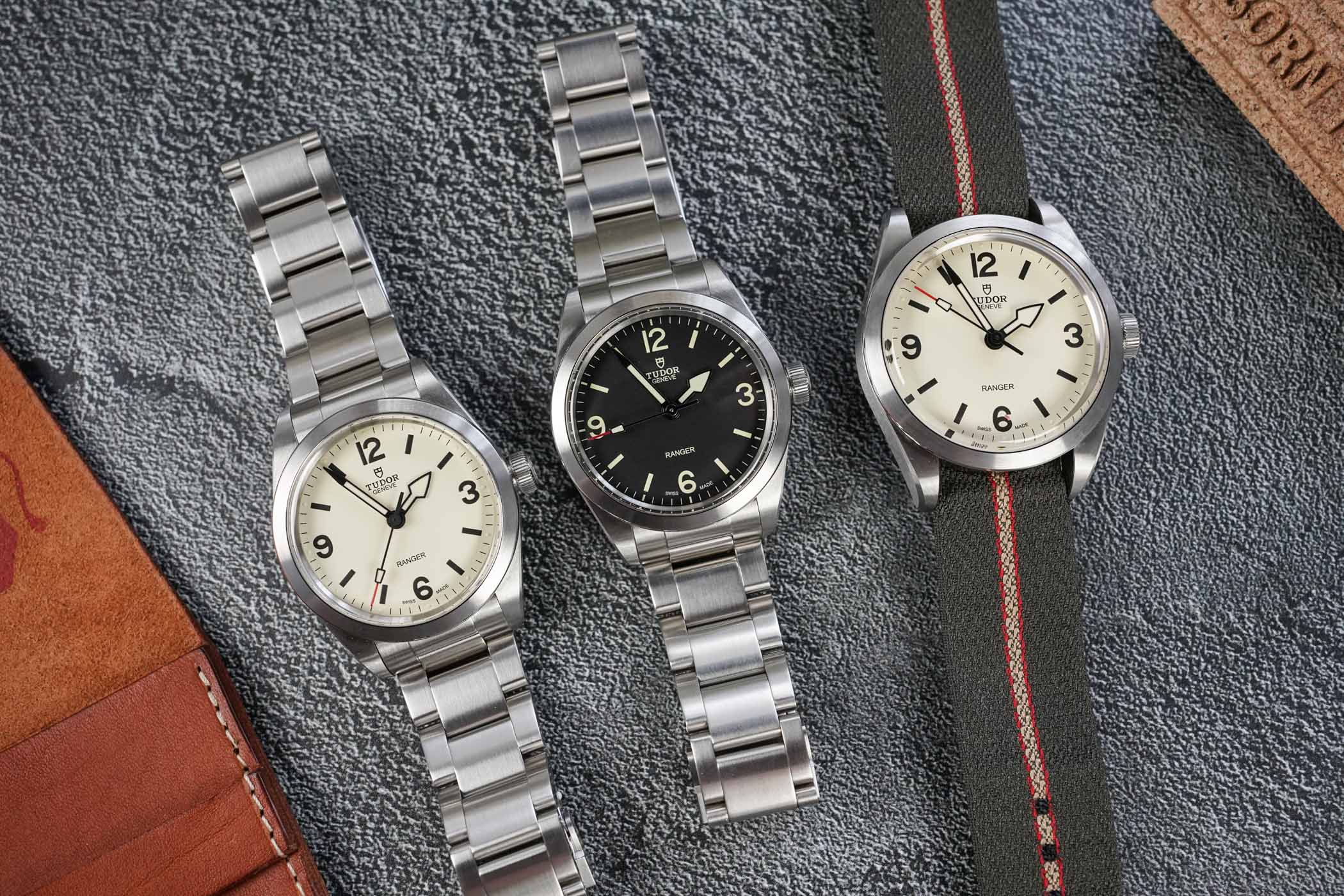
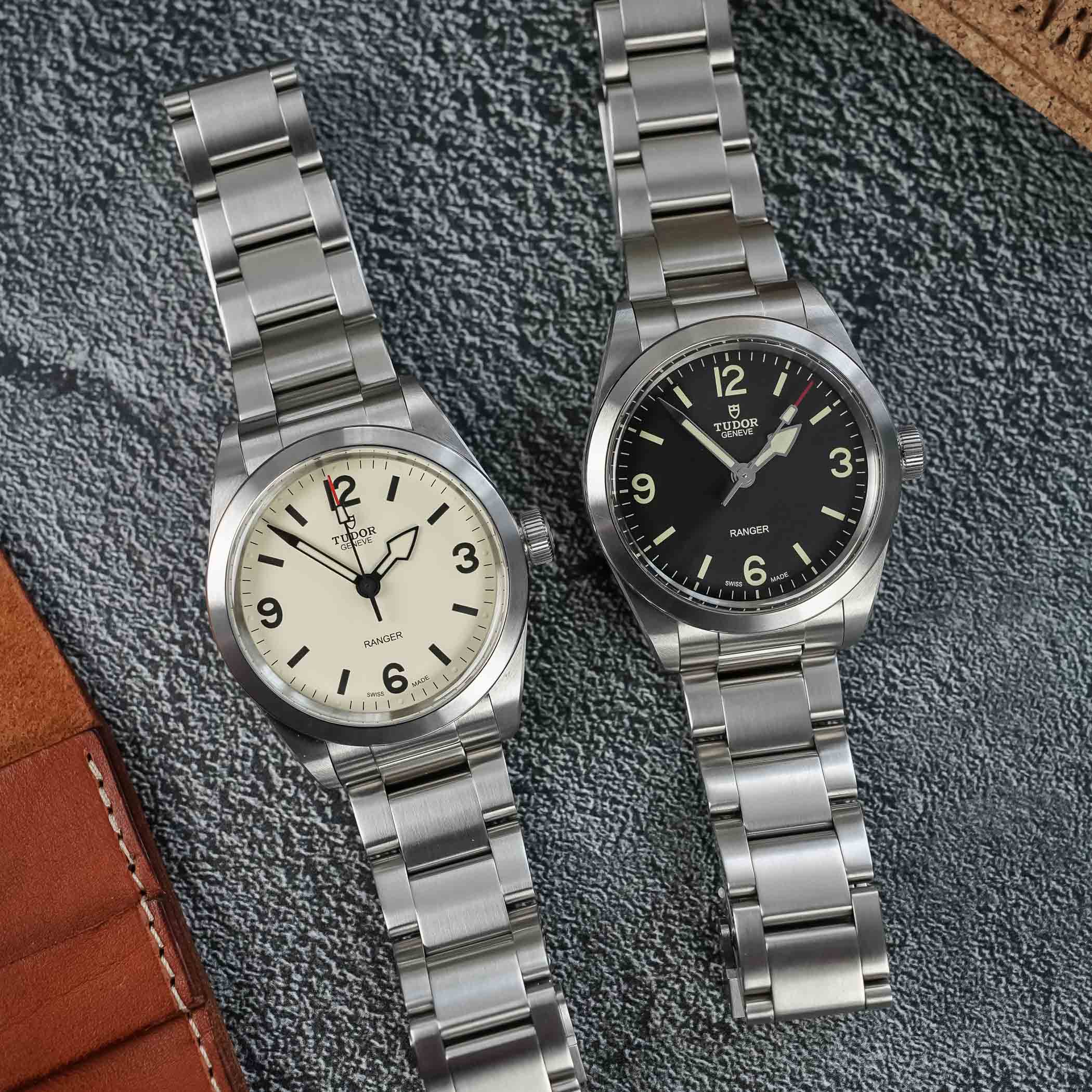
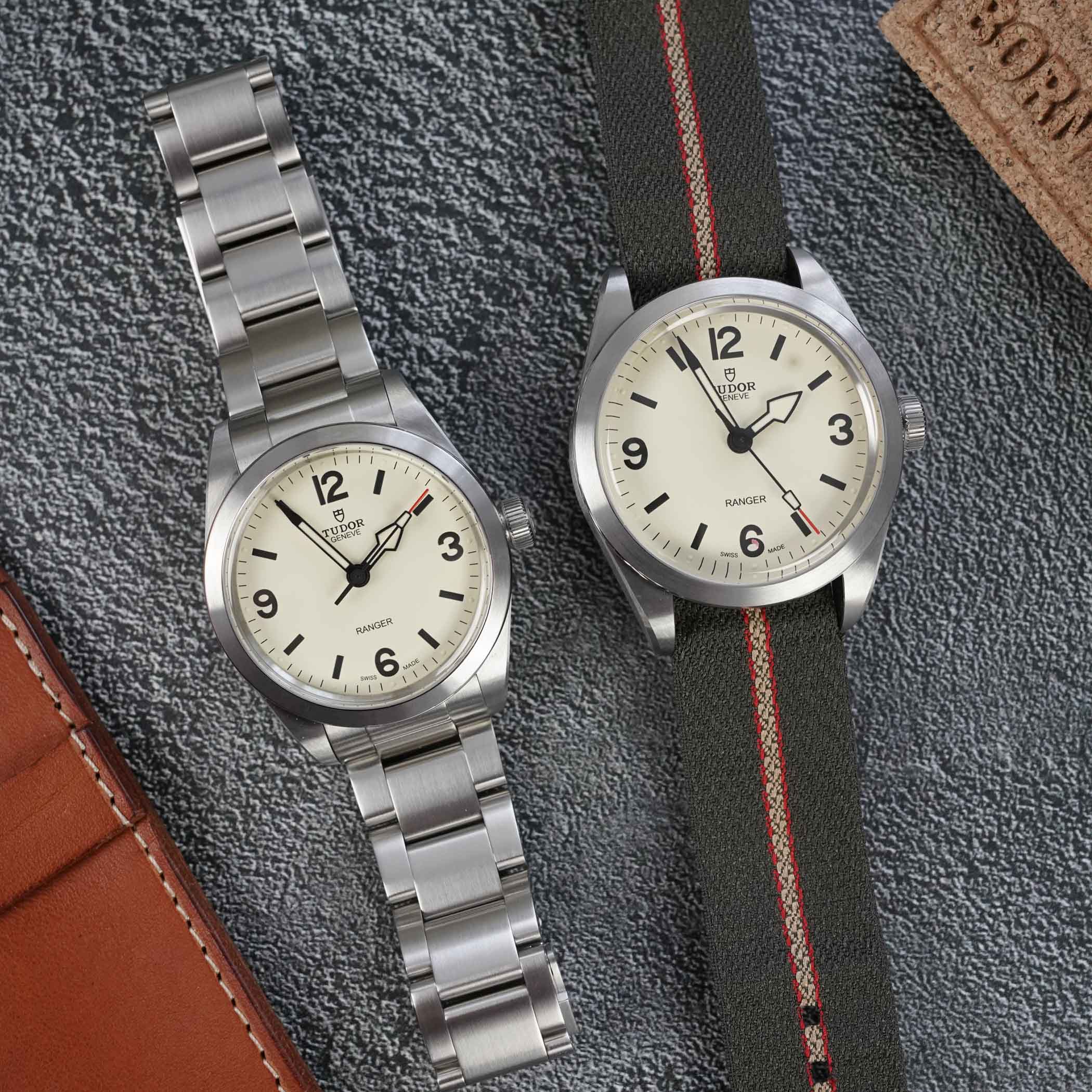
So here we are now with a 4-watch lineup instead of a single model, with 36 and 39mm cases, each available with a classic matte black dial or the new, brighter Dune White dial – and not including the fact that each can be chosen either with a steel bracelet or a textile strap. So, in total, we’re looking at 8 references, as the hybrid rubber and textured leather offered in 2022 isn’t available anymore. And importantly, the Ranger is the most accessible Tudor watch with a manufacture movement, starting at EUR 3,160.
What’s important to know about the new models in the Tudor Ranger lineup isn’t really about the specs and technical aspects. Not much has changed. The Ranger was and still is the blueprint for an exploration watch, which comes close to the requirements of military or field watches: clean 3-hand display, overall resistance to shock and humidity, great legibility night and day, precise but simple movement, and, in general, a utilitarian design void of any decoration or frills. This was the whole initial idea behind the Rolex Explorer and the Tudor Ranger when these were launched, and this hasn’t changed. But making such a simple watch right is a complex exercise. The Explorer is a great example of making something almost basic exciting.
The Ranger, in its previous shape (pre-2022), wasn’t such a watch. It was too large and didn’t check the right boxes on some important aspects, and ultimately, it resulted in a watch that did not catch the attention. The facelift operated by Tudor in 2022 was a first step in the right direction. The new Ranger felt more adequately sized (it doesn’t mean rightfully sized either…), had a manufacture movement, its case was more appealing and slimmer, and the dial had a bit more charisma, even though something hard to achieve with such a simple display and the absence of textures. Overall, the Ranger 39mm was an upgrade over the previous generation, but not a home run either for me.
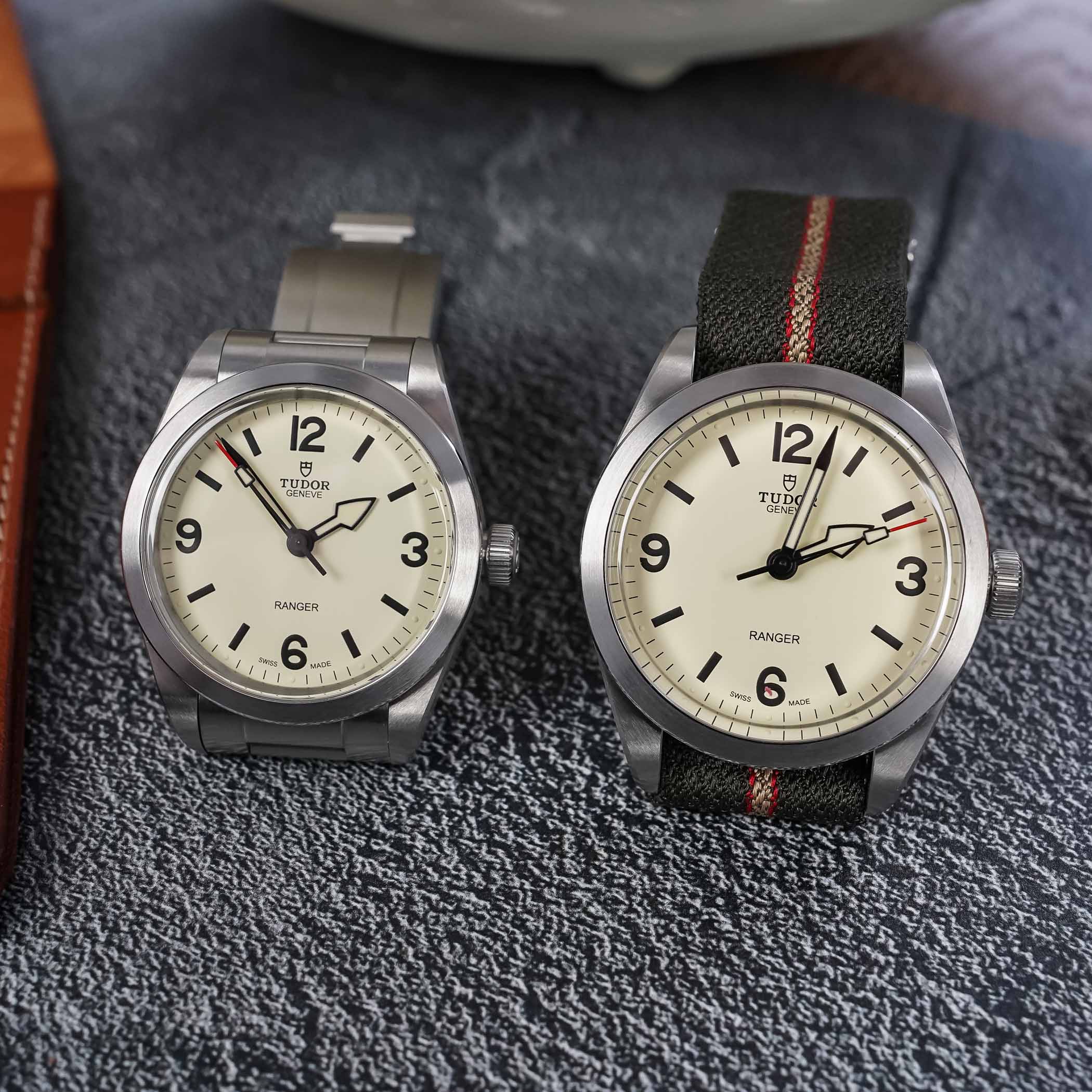
As I said in the introduction, I am one of the most fervent advocates of the classic 36mm Rolex Explorer, being, for me, the perfect definition of the one-watch collection. You are fully allowed to disagree with me on that, of course, but this is how I feel about the whole concept. And this explains why I have been quite critical towards the Rolex Explorer 40 Reference 224270 when it was launched in 2023. For me, it simply cannot hold a candle to the 36mm version. And I have a bit of the same feeling when it comes to the Ranger, specifically after seeing the new 36mm edition. Having been accustomed to seeing the Ranger in 39mm for several years, the introduction of the new, more compact version is a strong reminder that smaller is better in this context.
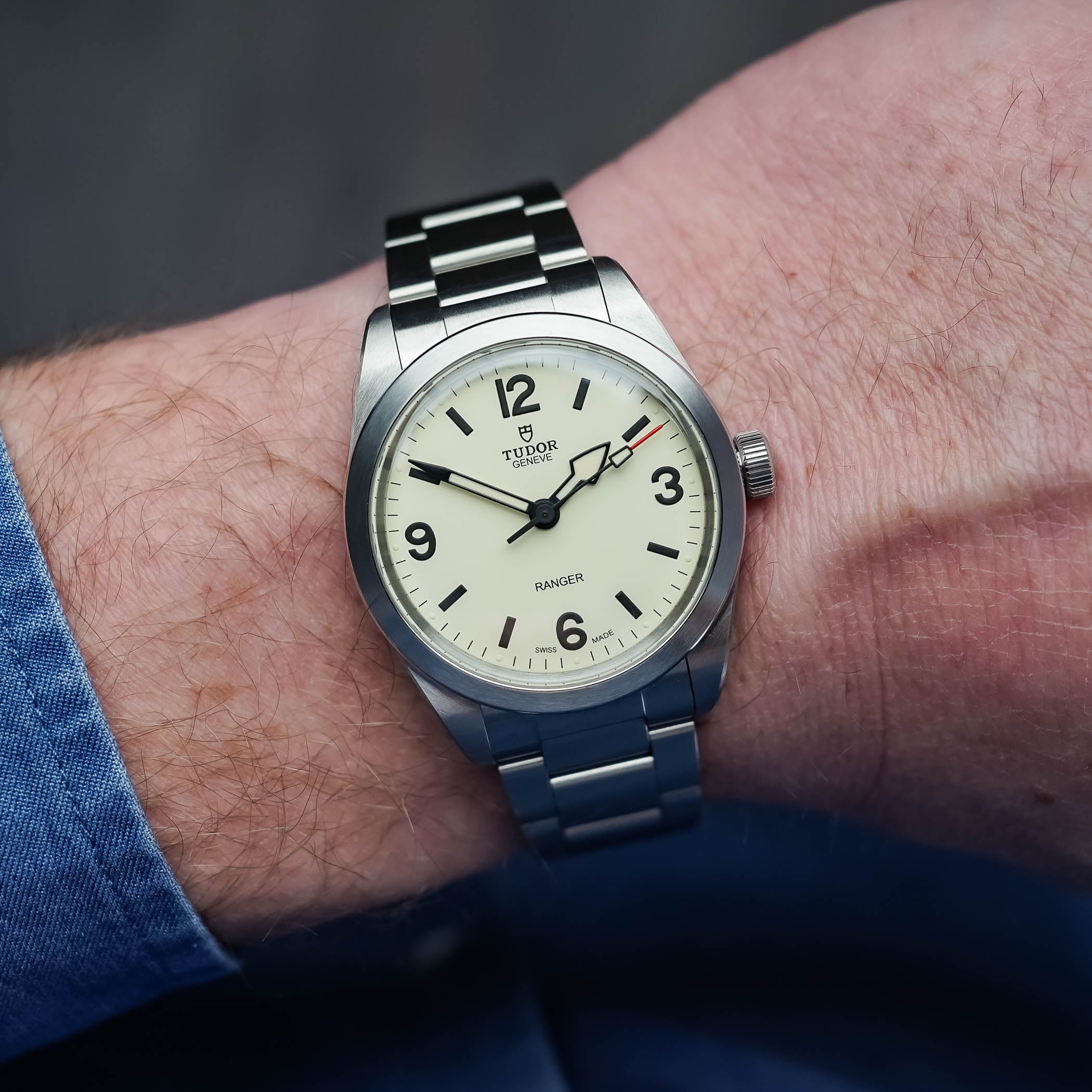
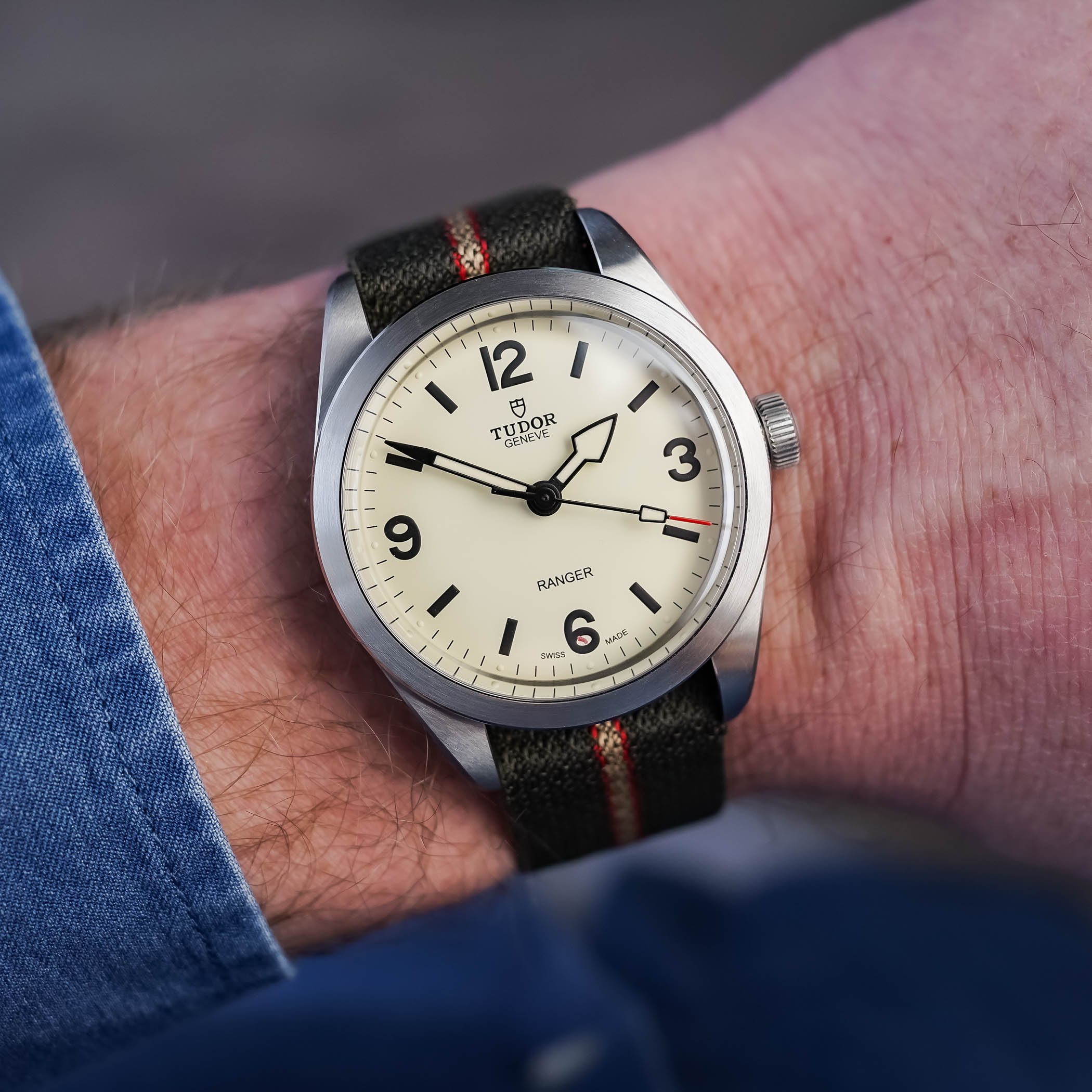
Why…? It mostly has to do with the proportions of the dial, not particularly with the size of the case – even though I’m in favour of a classic 36mm case, the 39mm version is also a good option, if that’s your preference. But, when you consider the relatively wide opening of the dial, and the overall simplicity of the latter, you realise that the larger version feels a bit… empty. There’s too much negative space on the 39mm watch. Something that the 36mm version cancels. Having only 3 hands, minimal texts and logos, a rudimentary minute track and 12 hour markers, that leaves a lot of free space around. Again, this simplicity is inherent to the category, but proportions are hugely important here to find balance.
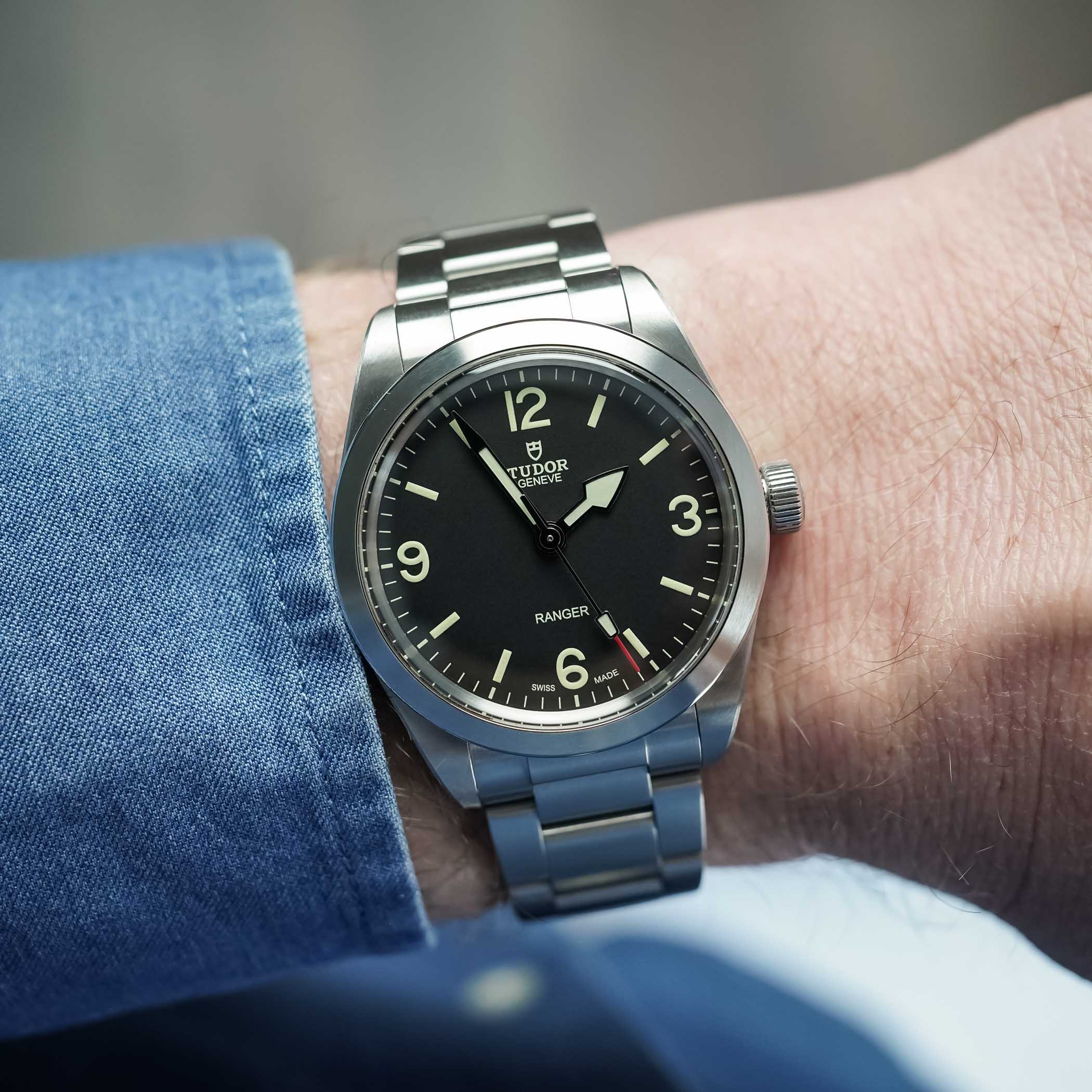
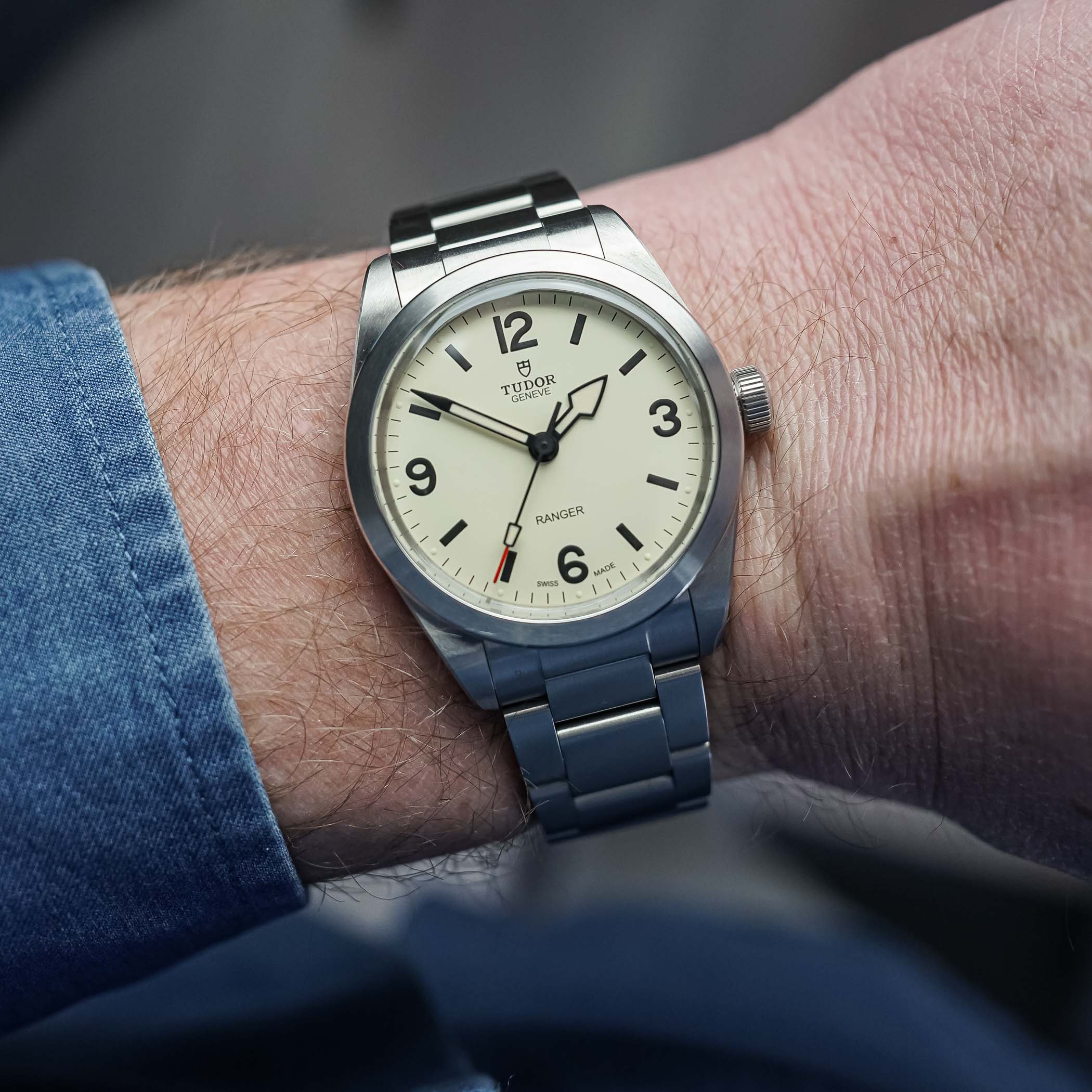
Then, there’s the way this 36mm Tudor Ranger wears on the wrist. And for the sake of demonstrating that 36mm isn’t small, we’ve deliberately photographed the watches on our editor Robin’s wrist, a man of great stature measuring over 2 meters and having an 18.5cm wrist. And as you can see, the Ranger works great on him, and there’s no sensation of being petite, especially with the new Dune White dial that tends to enlarge the watch visually.
The new Dune White dial
Let’s now talk about dials, as the matte, lightly grained black dial isn’t the only option available anymore. There’s now a new, light-toned Dune White dial, and it’s not only about reversing the colours. The base is a light cream (not plain white) matte surface, finely grained to avoid reflections. At first, nothing seems different, but in order to retain great contrast, Tudor has opted for black elements, including the hour markers and numerals. This means that the 3, 6, 9, 12 numerals and the baton indices are now printed in black, but not lumed as they are on the black dial model. This function is now devoted to small dots next to the hour markers, meaning that the nighttime legibility of the Dune White version won’t be on par with the black model.
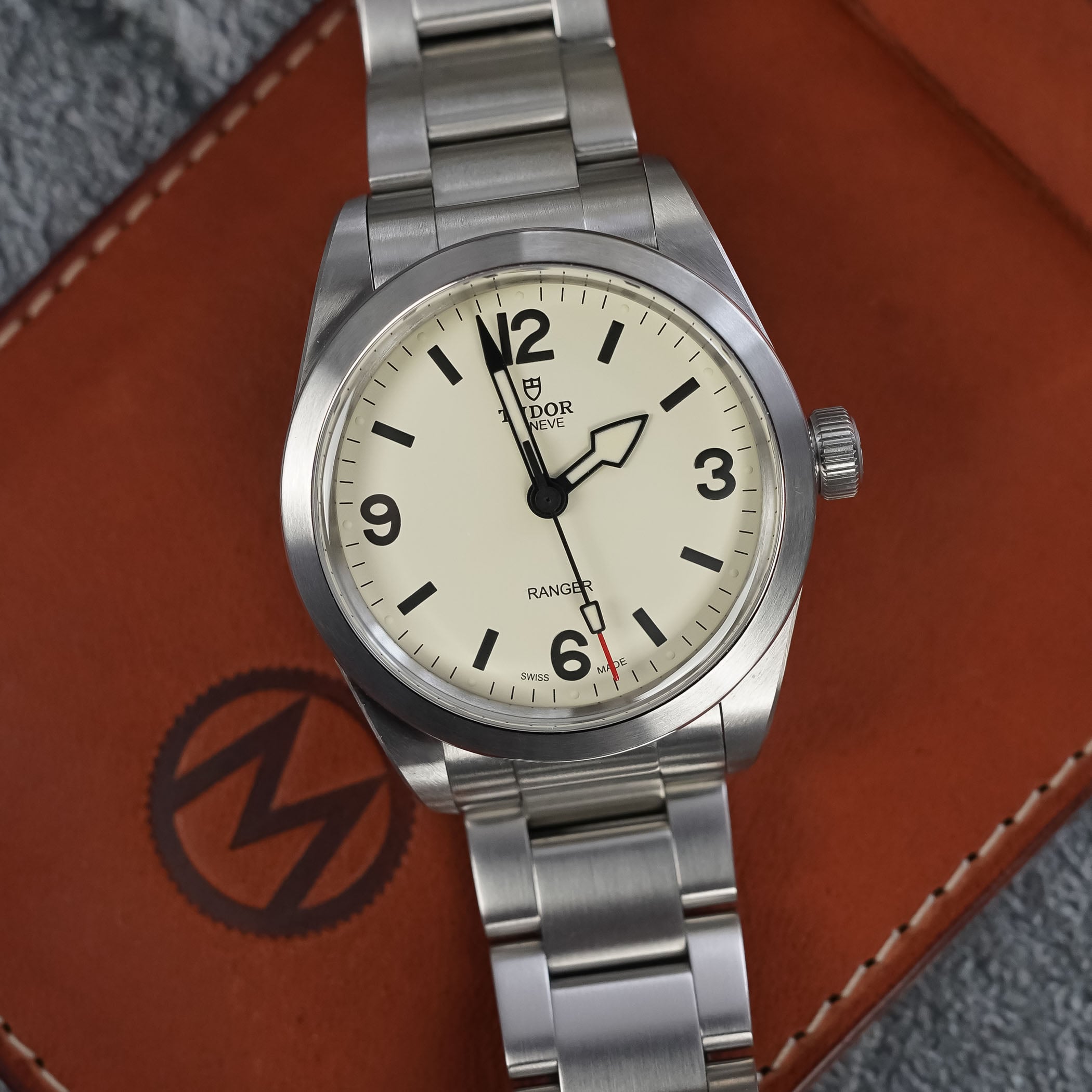
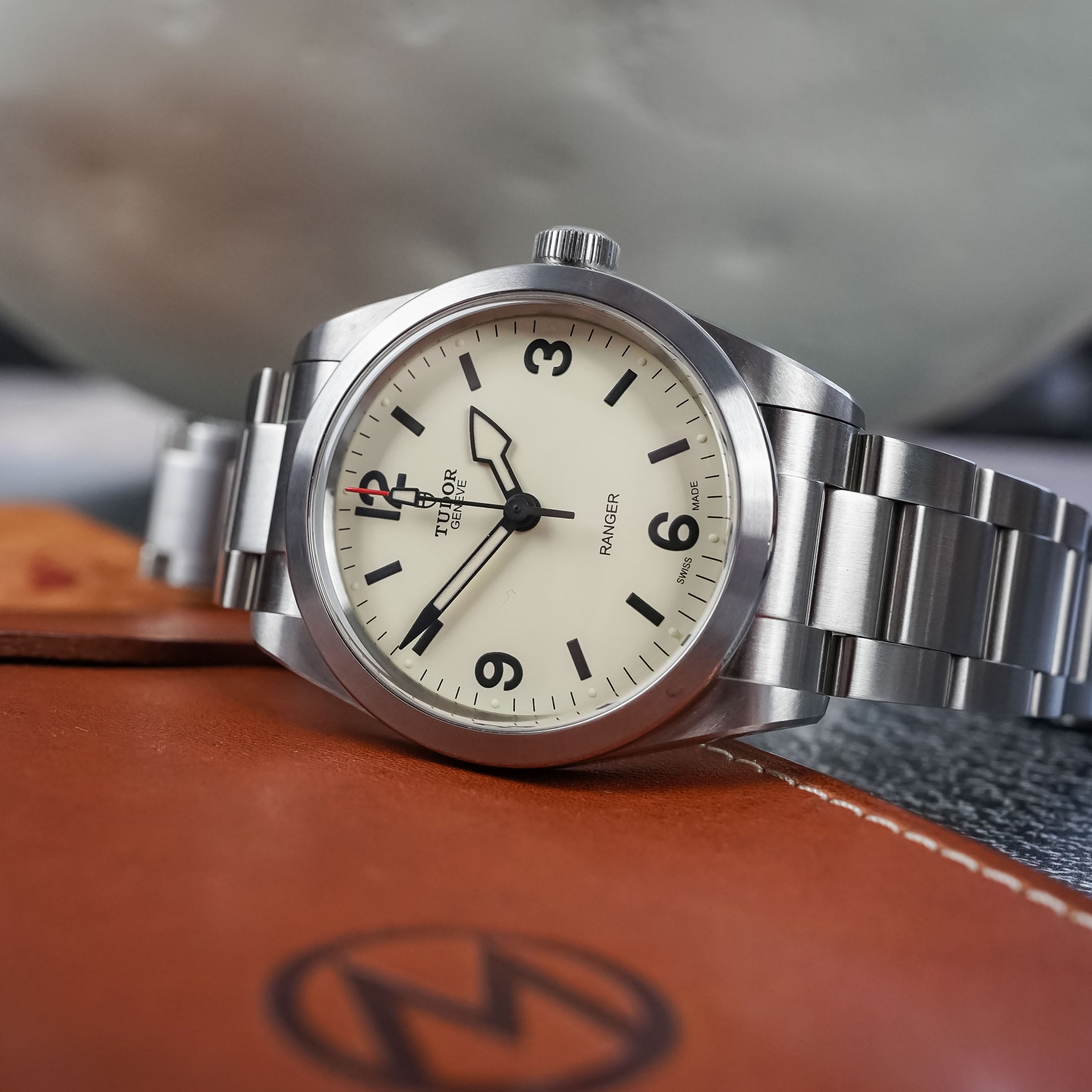
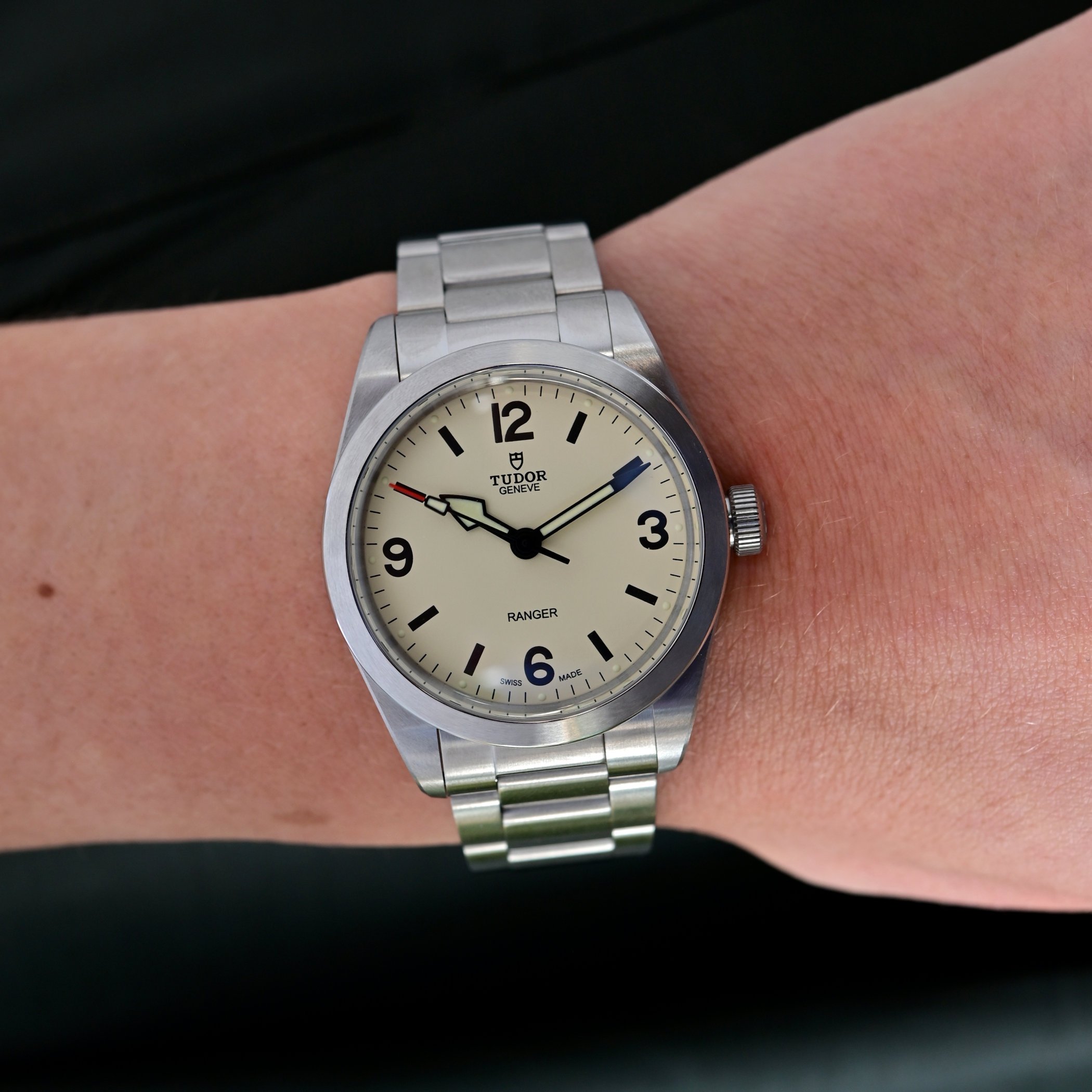
Also, for the same contrast reason, the hands are outlined in black and filled with beige-toned Super-LumiNova. The result is certainly easy to read, but there’s something a bit special about these hands and how they react with the rest of the dial, as if they were openworked rather than lumed – the reason being the tone-on-tone effect between the SLN and the dial. That being said, this new colour is appealing and adds something fresh to what is, otherwise, a quite austere watch.
Known Specifications
Let’s have a quick reminder about specifications. The Ranger is now available in 36mm, with an 11mm thickness, 44mm lug-to-lug and 19mm lug width, or in the classic 39mm version, with a 12mm thickness, 47mm lug-to-lug and 20mm lug width. The case is entirely made of satin-brushed steel, resulting in the desired matte, utilitarian look, including the bevels on the sides of the lugs. Only the edge of the bezel is polished, and it frames a domed sapphire crystal with AR coating. The caseback is, as expected, screwed and solid, while the crown screws down and guarantees a sufficient 100m water-resistance.
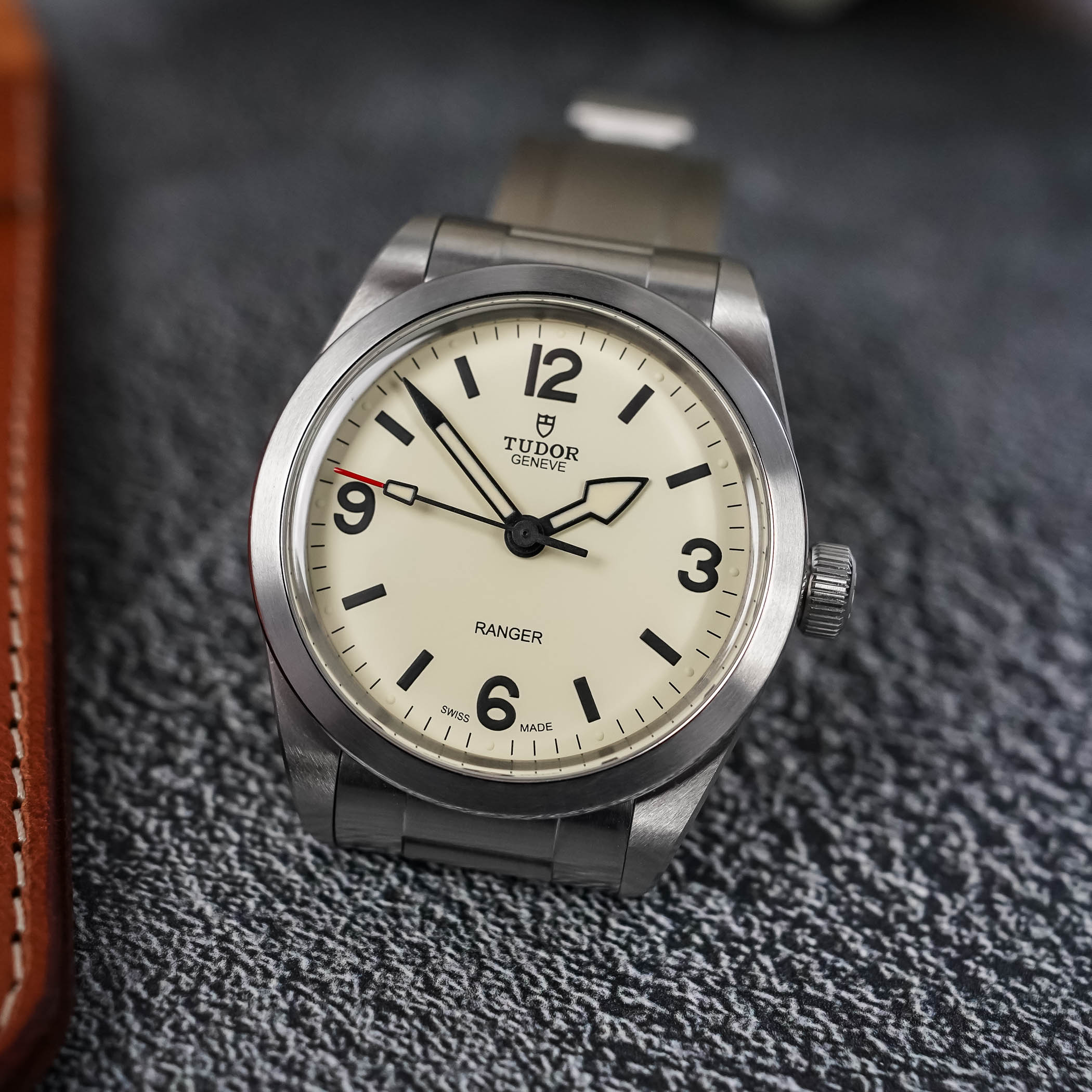
Inside the case of the 36mm model is the calibre MT5400, a slightly smaller version of the MT5402 found in the 39mm model, used in the BB54, BB58 and Pelagos 39. That said, specifications are identical for this Kenissi-made movement, with a 70h power reserve, a 4Hz frequency, a bidirectional automatic winding and strong anti-magnetic properties with a silicon hairspring. The movement is chronometer-certified by COSC, with Tudor insisting on between -2 and +4 seconds’ variation in its running when it is completely assembled.
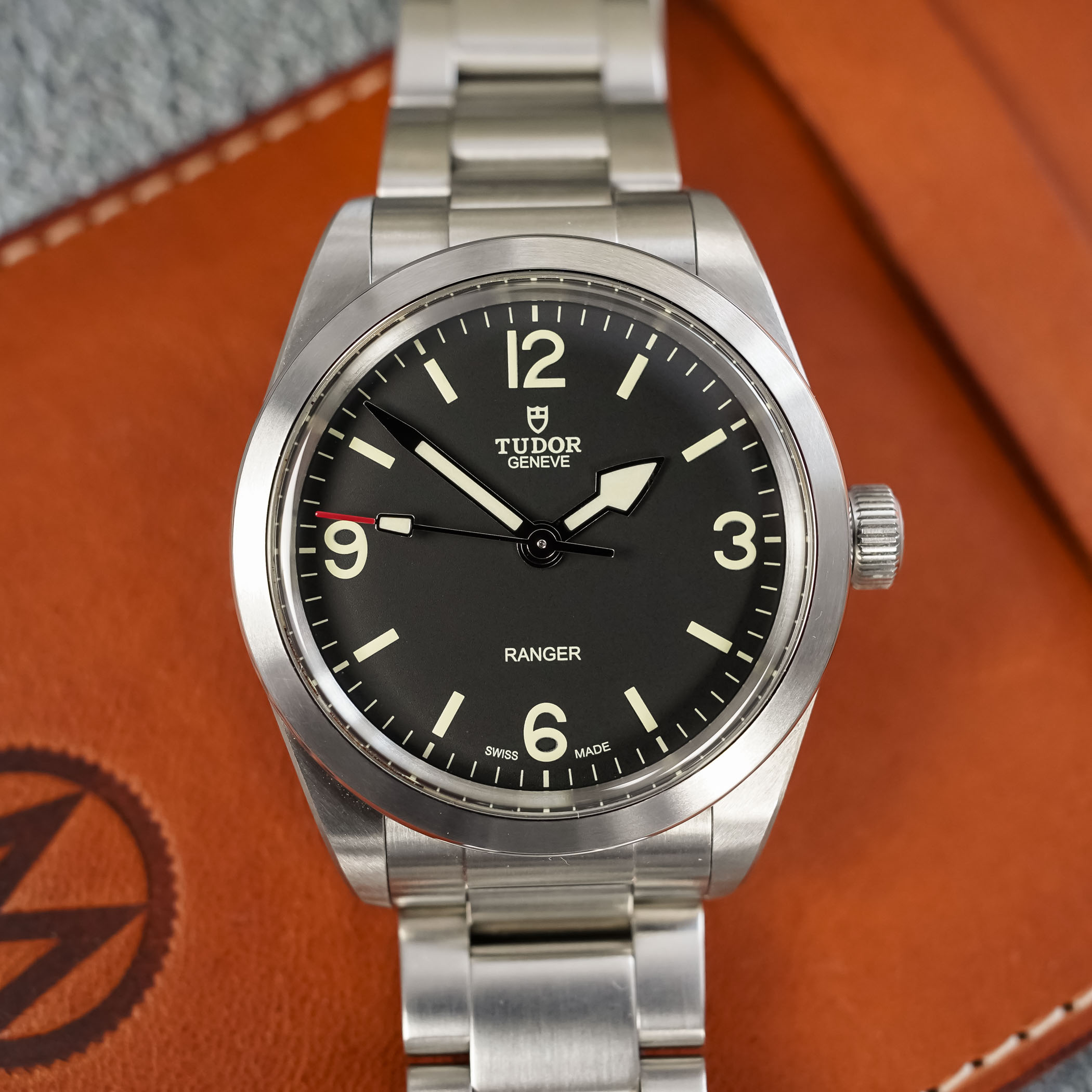
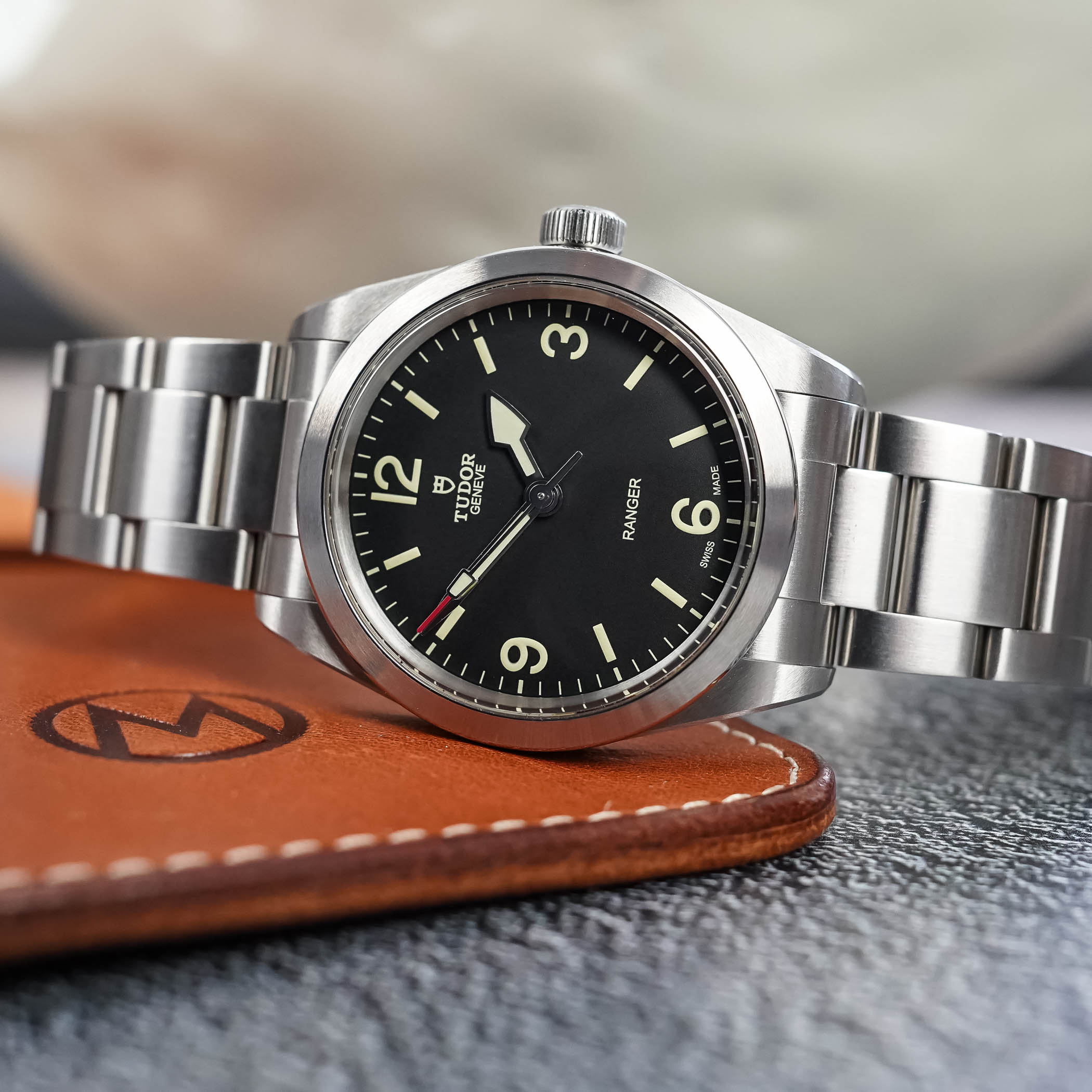
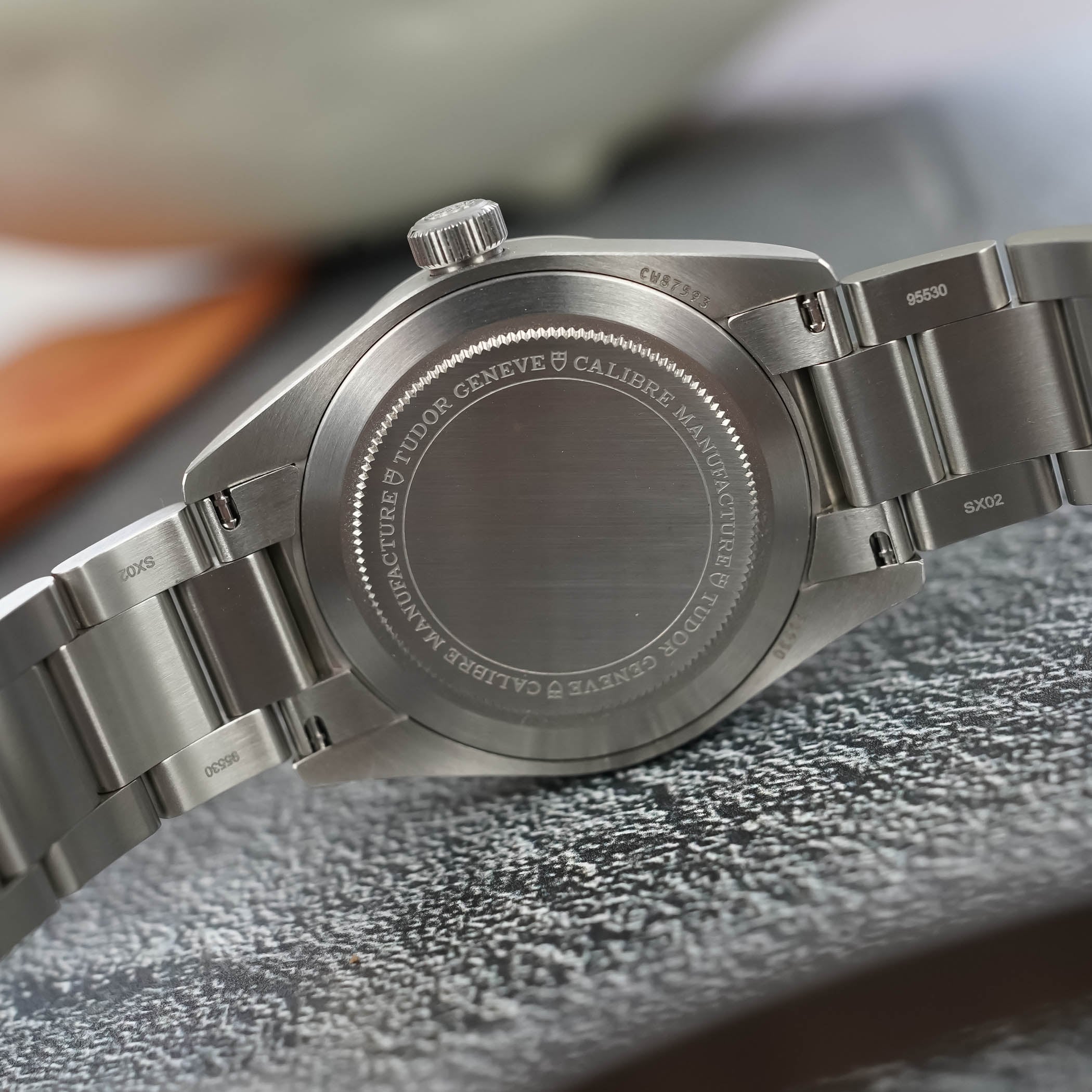
As said, the Tudor Ranger 36mm (just like the 39mm) is available with a choice of bracelet or strap. The first option is a 3-link Oyster-style bracelet completed by a folding clasp equipped with Tudor’s T-Fit system for rapid length adjustment (5 positions on 8mm). The second option is a single-piece, earth-tone, tri-colour fabric strap by the Julien Faure company, with a steel pin buckle.
Thoughts, availability & price
As you’ve probably understood, I am pleased to see the Ranger scaled down to 36mm. It is, in my books, the right size for this watch, whether we’re talking about how it wears on the wrist, or how it looks considering the proportions of the dial. Simply said, it is the version to choose. Black or Dune White…? Difficult question, as I’ll always tend to go classic with the black dial, which not only feels more timeless but also benefits from superior nighttime legibility. On the other hand, the sandy-white version is quite cool too and would make a great summer-oriented watch. And now that Tudor paved the way for a light-tone dial on an exploration watch, we can only hope for Rolex to follow suit…
The Tudor Ranger (all 4 versions) is part of the permanent collection and immediately available. Prices start at EUR 3,160 (36mm on textile), which makes it an interesting value considering the excellent quality of the watch and its movement. For more details, please visit www.tudorwatch.com.

5 responses
I was over the moon with Tudor in general and in particular my Black Bay 58 Navy Blue (M79030B-0001) that I purchased as soon as I saw it in 2020. In year four, my AD sent it in to Tudor because it was losing 8 seconds/day.
Ran accurately for a year, but now it’s out of warranty by six months and losing five seconds/day. My 27 year-old GMT Master II gains less than four seconds a month.
To say the least, I am really disappointed in Tudor and Kenissi and their quality control
Supposedly this should be high on my list considering my tastes and specs on offer yet it does not appeal to me. For some reason it seems like Tudor is failing to capture the charm of the original l, although they are moving in the right direction. I may wait for the next update.
I hope both hour and minute hands are same style, but they aren’t.
I know that the build quality is up to Tudor’s usual standards, but I can’t help feeling that this dial design makes it the “juvenile” version of a Rolex Explorer. Almost as if they made a “junior” version of a Rolex dial that a little kid could wear to look like Daddy’s watch. The dial looks childish, if that makes sense.
Looks just like my new Citizen Model #: AW1890-19B for $350. And accurate to seconds a week.