


 Not all images were able to load for printing. Please close the print window and try again.
 The All-New Omega Constellation Observatory Collection (incl. Video)
The first two-hand watch to achieve Master Chronometer certification, tested at Laboratoire de Précision, and going back to the roots.
The launch of a new collection from a brand as important as Omega is always a significant event. In this particular case, however, it is not strictly the introduction of an entirely new design, but rather the unveiling of a new family of Constellation watches inspired by a historical model’s aesthetics. What also makes this launch especially compelling is that, beyond its design continuity, it comes with a noteworthy innovation regarding the watch certification. The 2026 Omega Constellation Observatory is the first two-hand watch to be certified as a Master Chronometer. Which is all the more surprising for an observation chronometer…
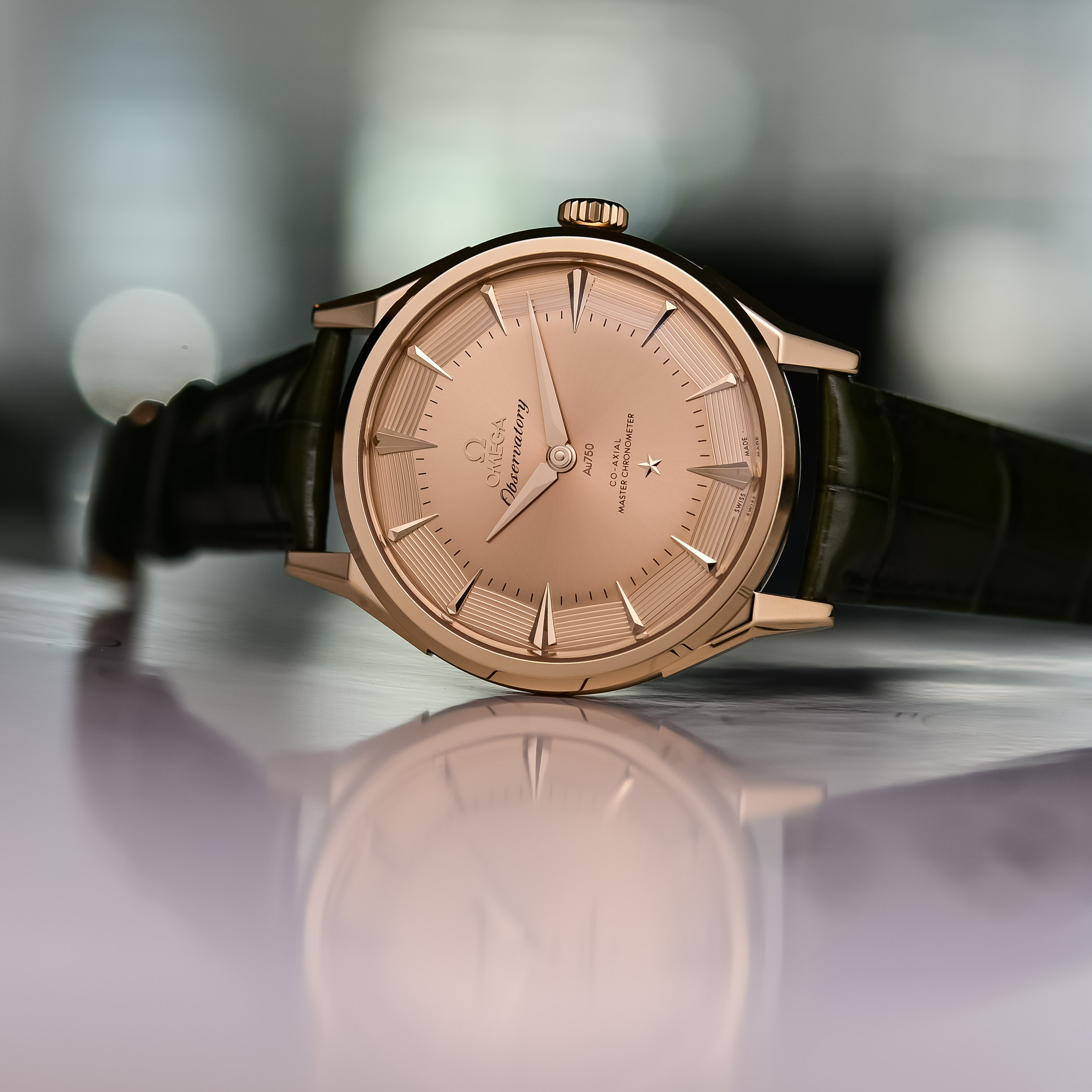
The New Omega Constellation Observatory
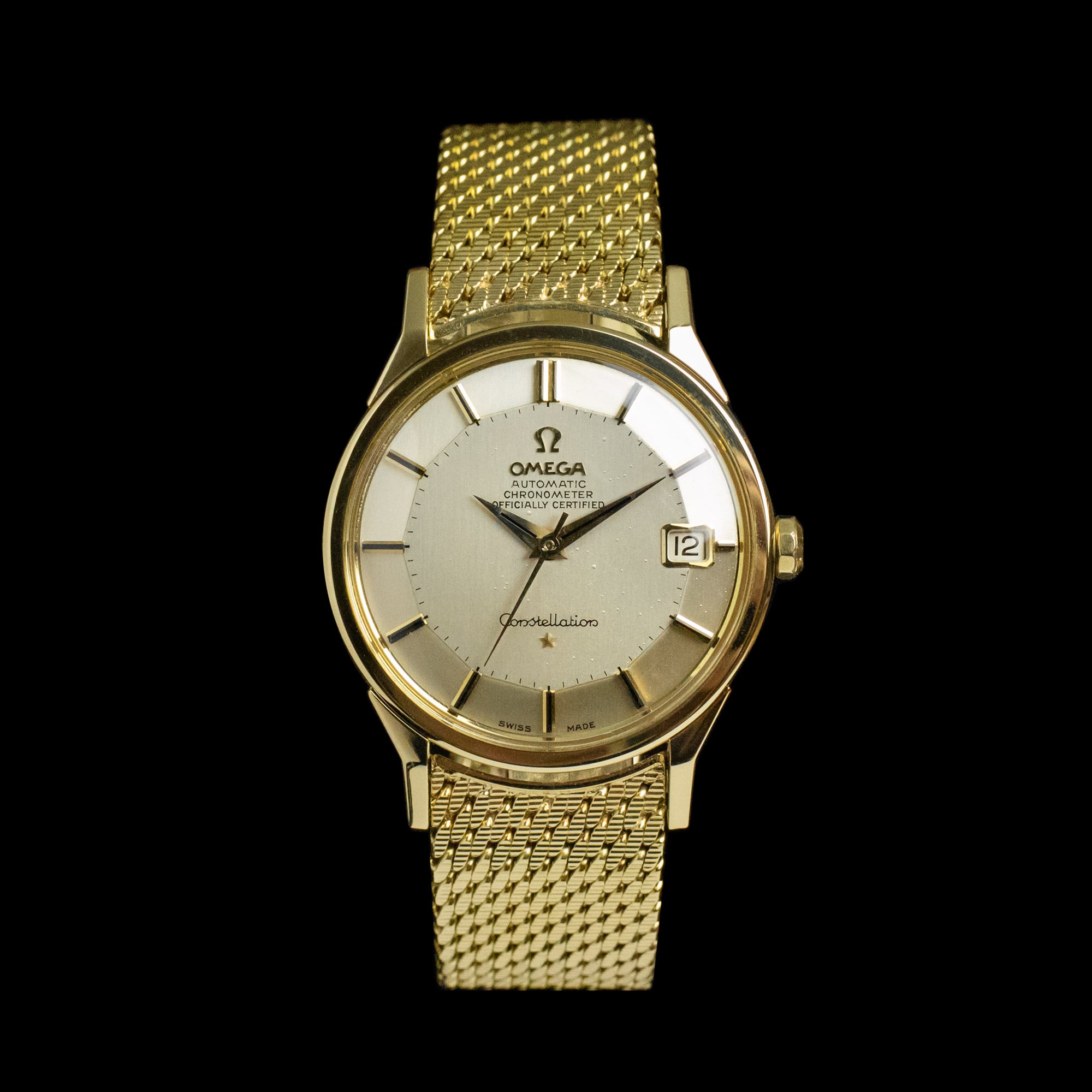
Before delving into the interesting topic of its chronometric certification, we’ll begin with a short presentation of this new Omega Constellation Observatory. Starting as a chronometer for men in 1952, the Constellation design was an evolution of the limited-edition “Centenary” chronometer from 1948. Over its long history, the model has undergone countless aesthetic evolutions and transformations. Among these are the so-called pie-pan dial Constellations of the 1950s, with the Constellation Star at 6 o’clock and Observatory medallion on the caseback. The dog-leg lugs are another distinctive feature of the Omega models of the era.
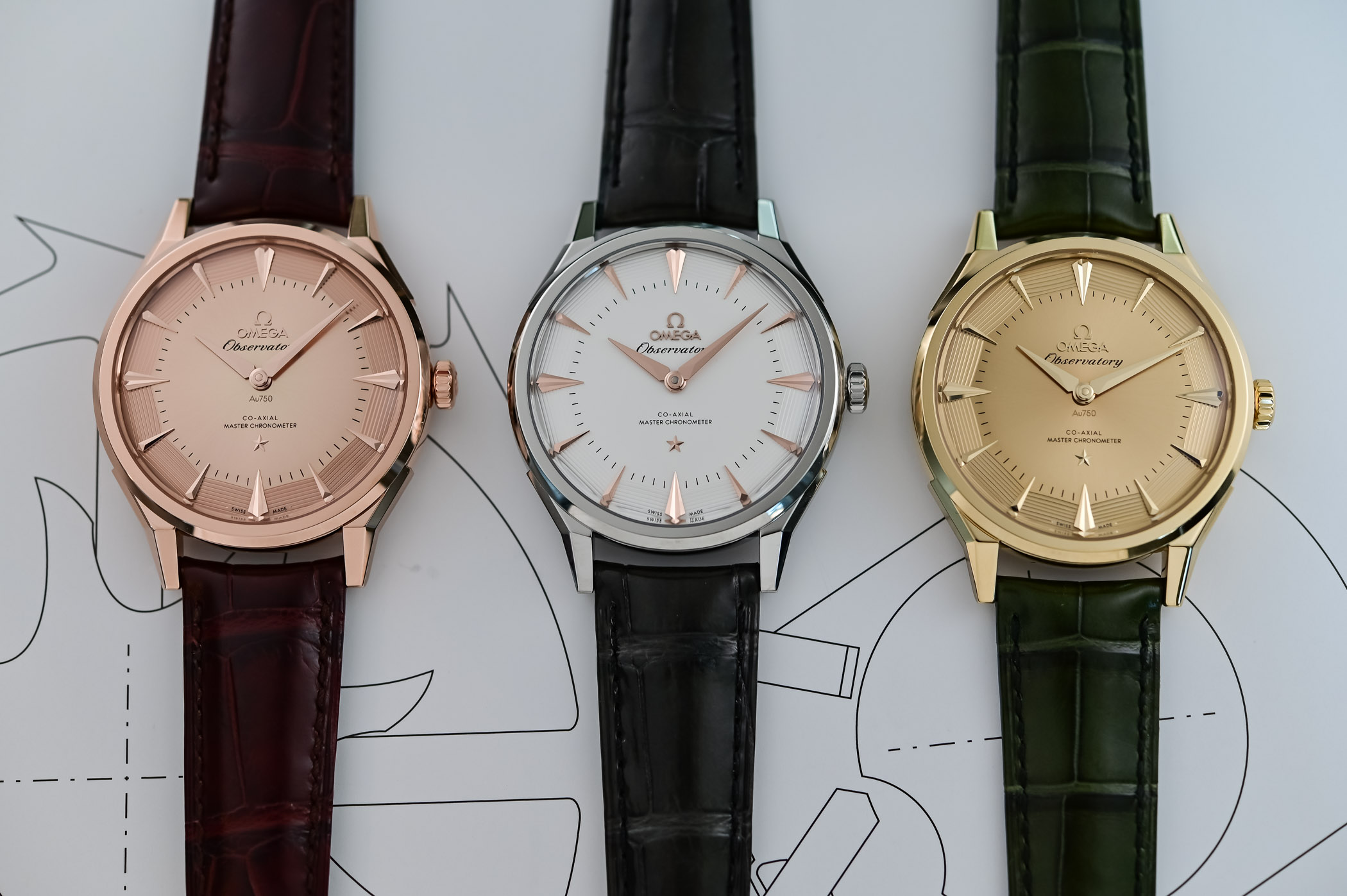
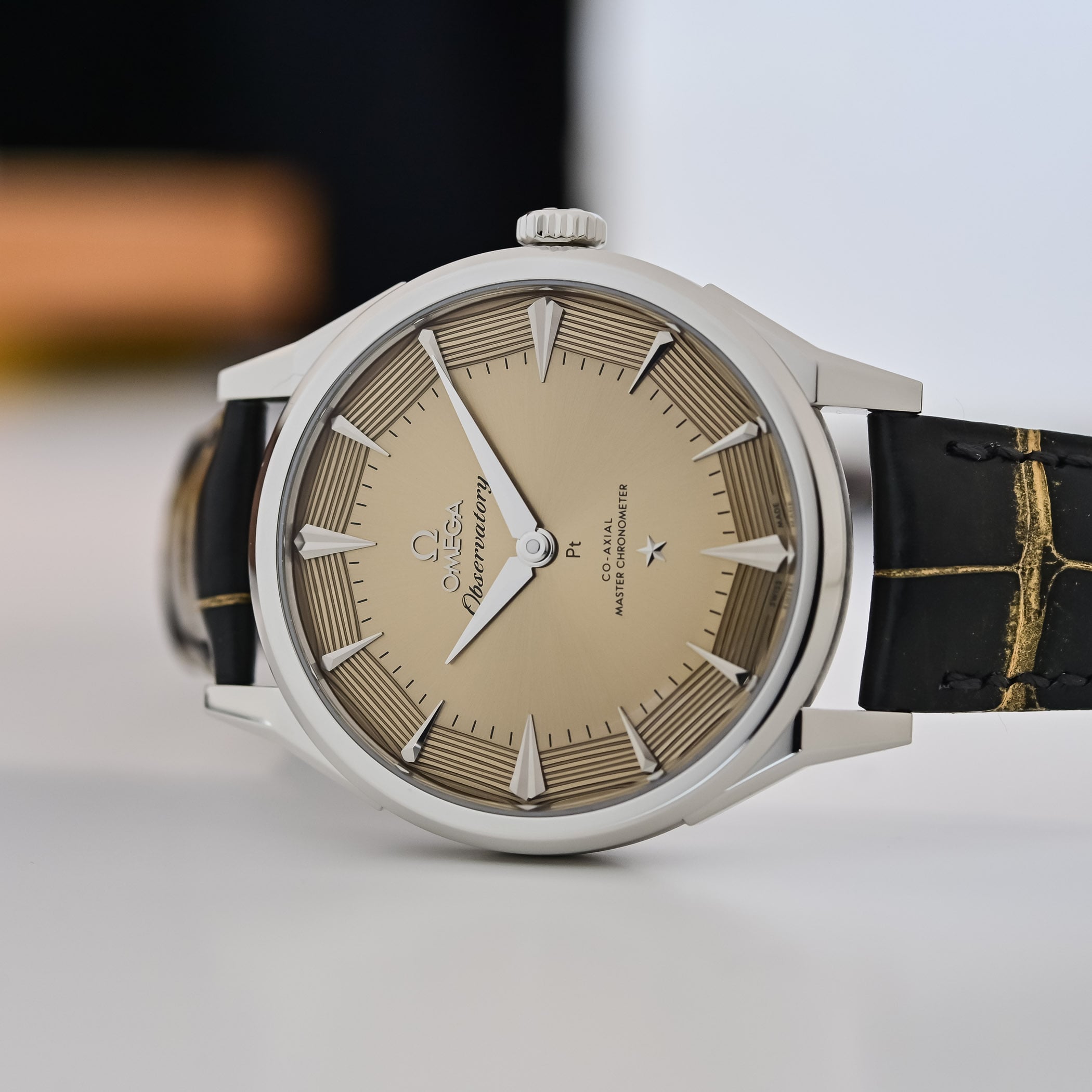
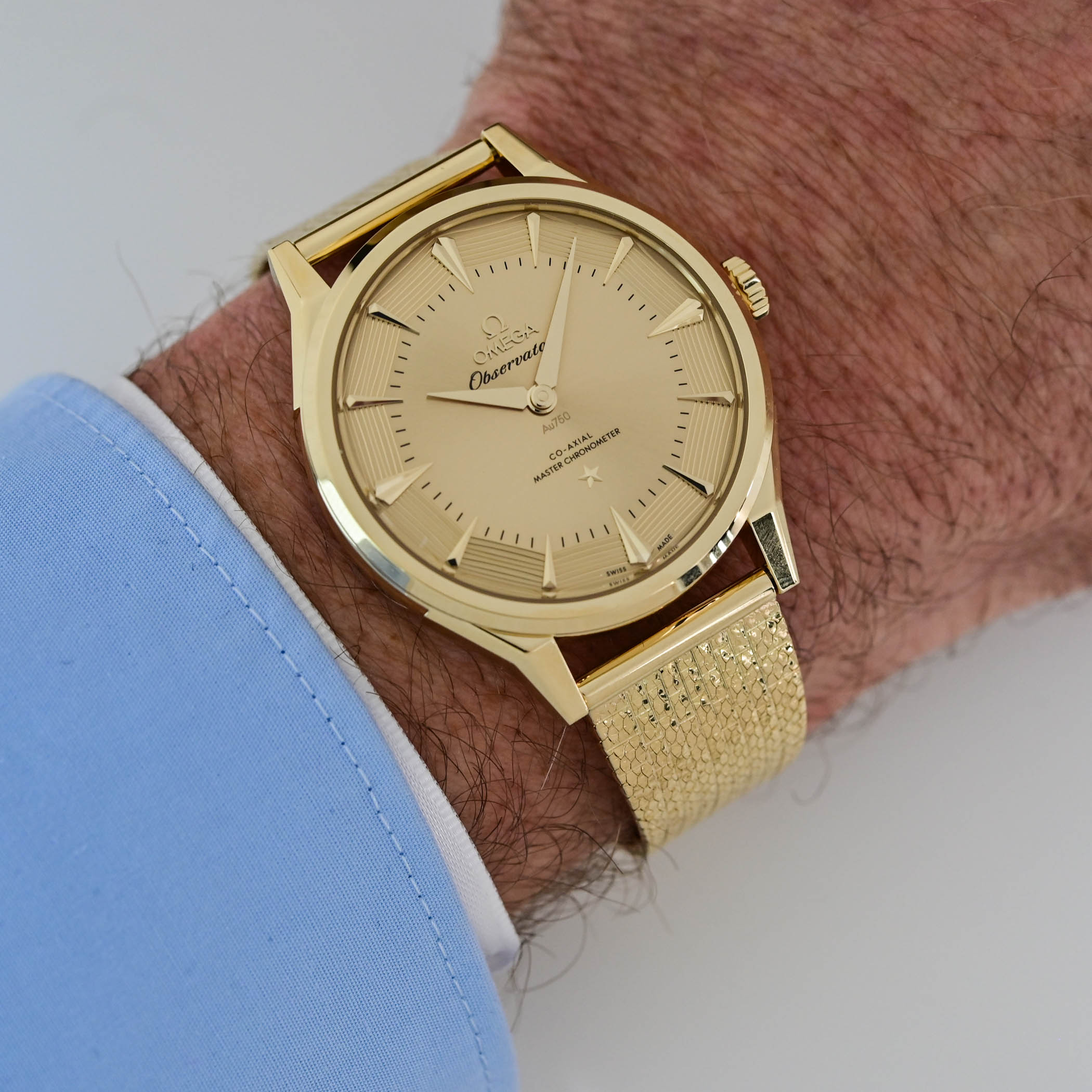
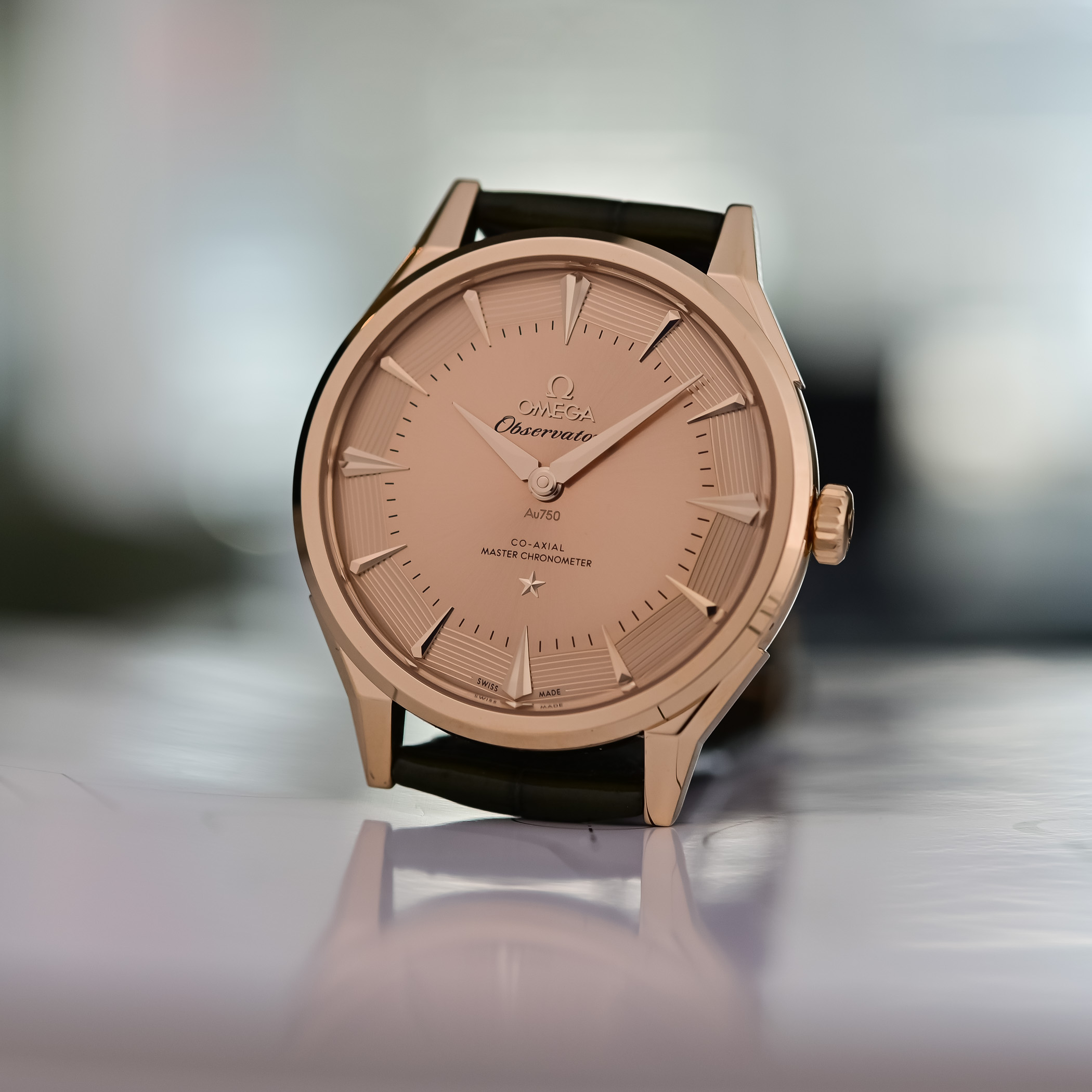
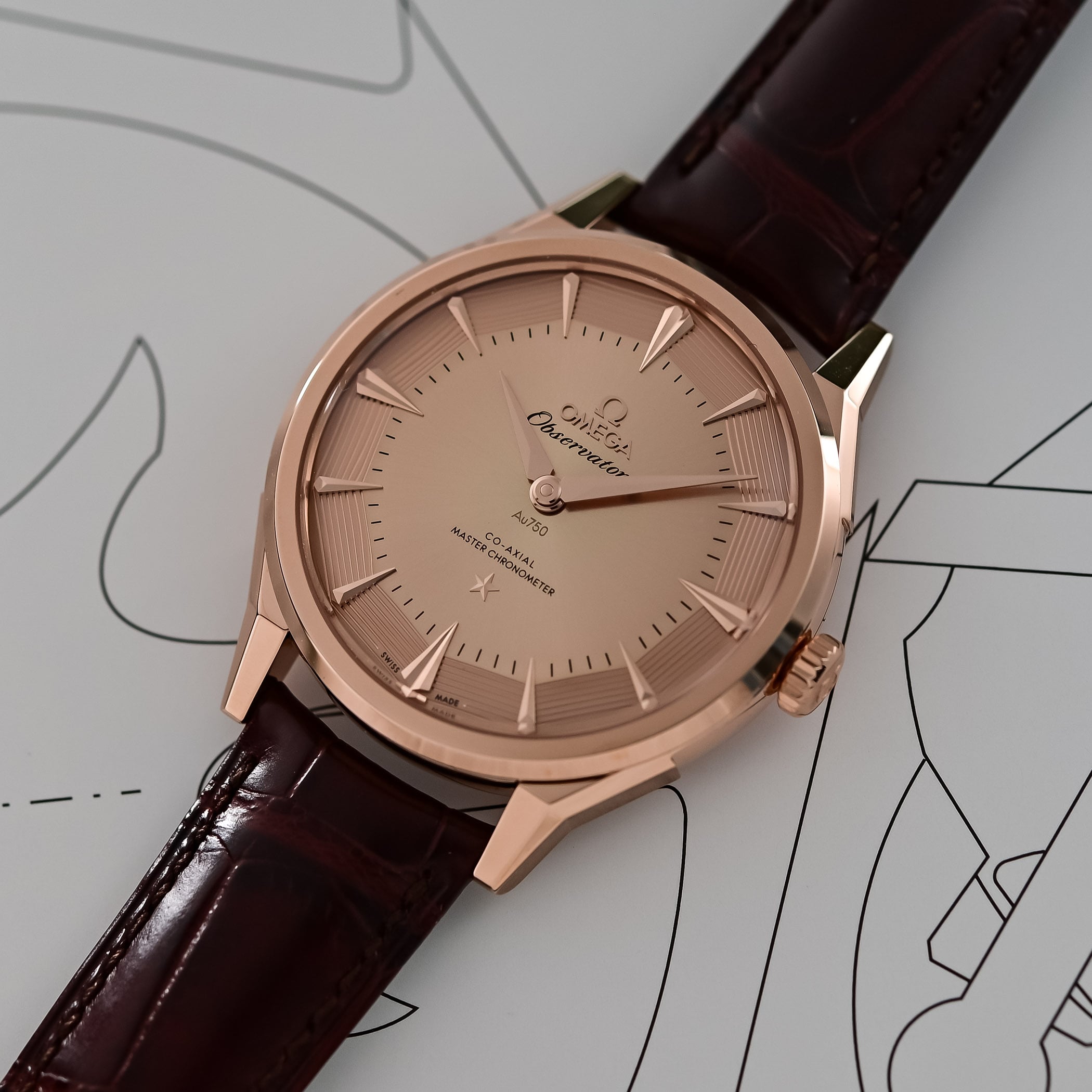
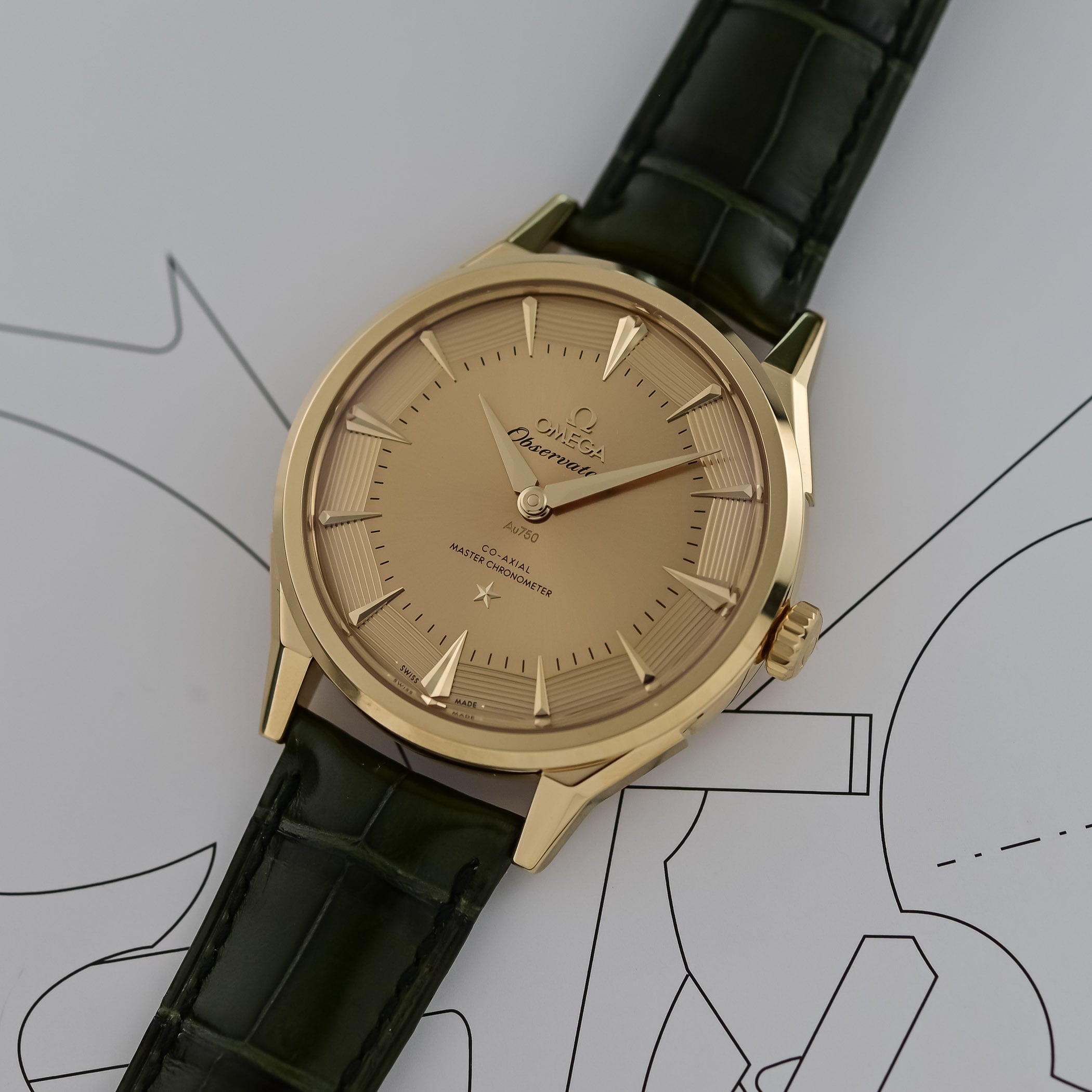
The new Constellation Observatory reinterprets this vintage design language into a modern 39,4mm case available in steel, gold or platinum/gold. The use of two box sapphire crystals allows for a relatively thin case band compared to the overall thickness of the watch (12.23mm in total), enabling it to sit elegantly on the wrist. The case is also relatively short, with a 47.2mm lug-to-lug measurement. As a nod to the past, the Omega Constellation Observatory goes back to the classic yet distinctive shape of the collection, with the uniquely-shaped dog-leg lugs.
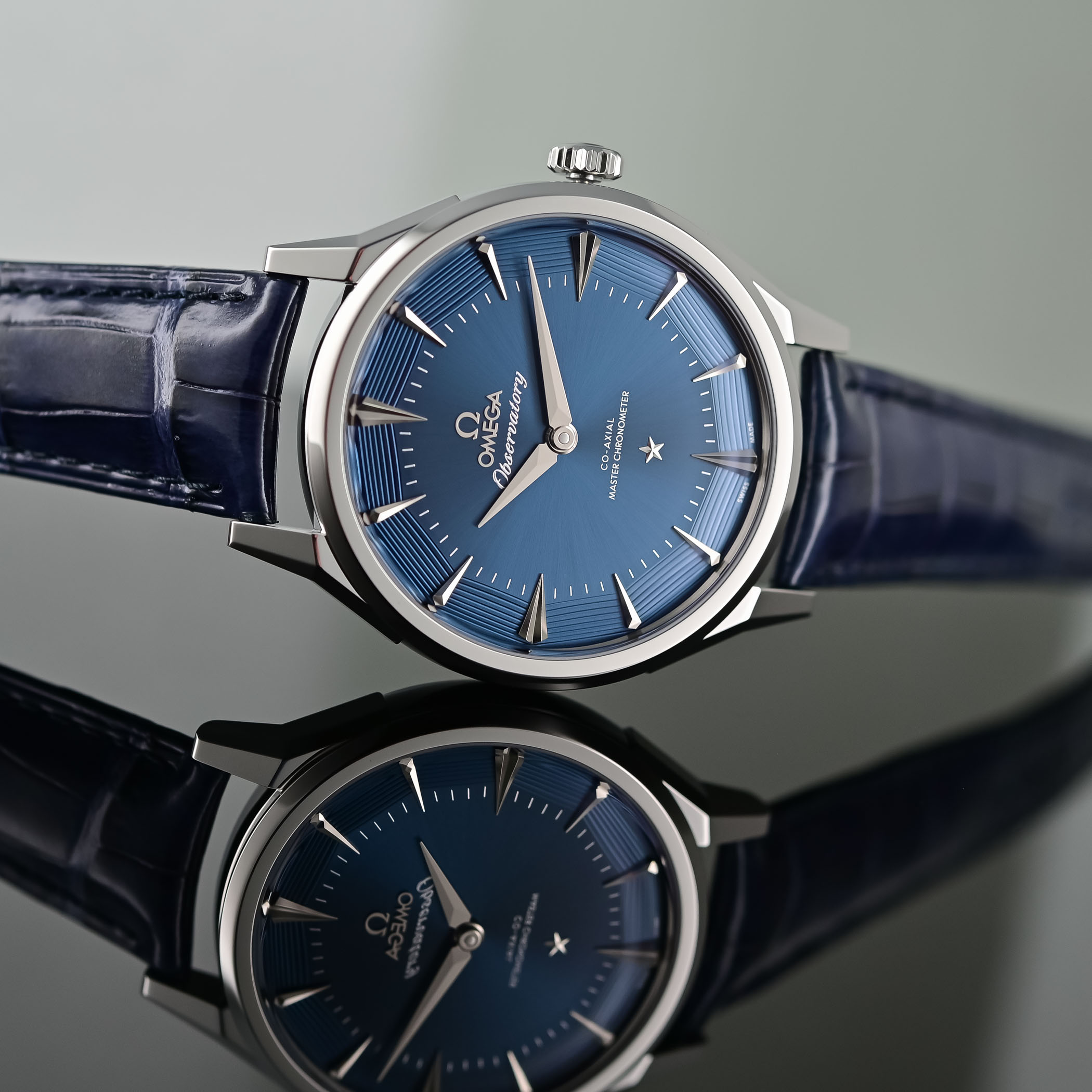
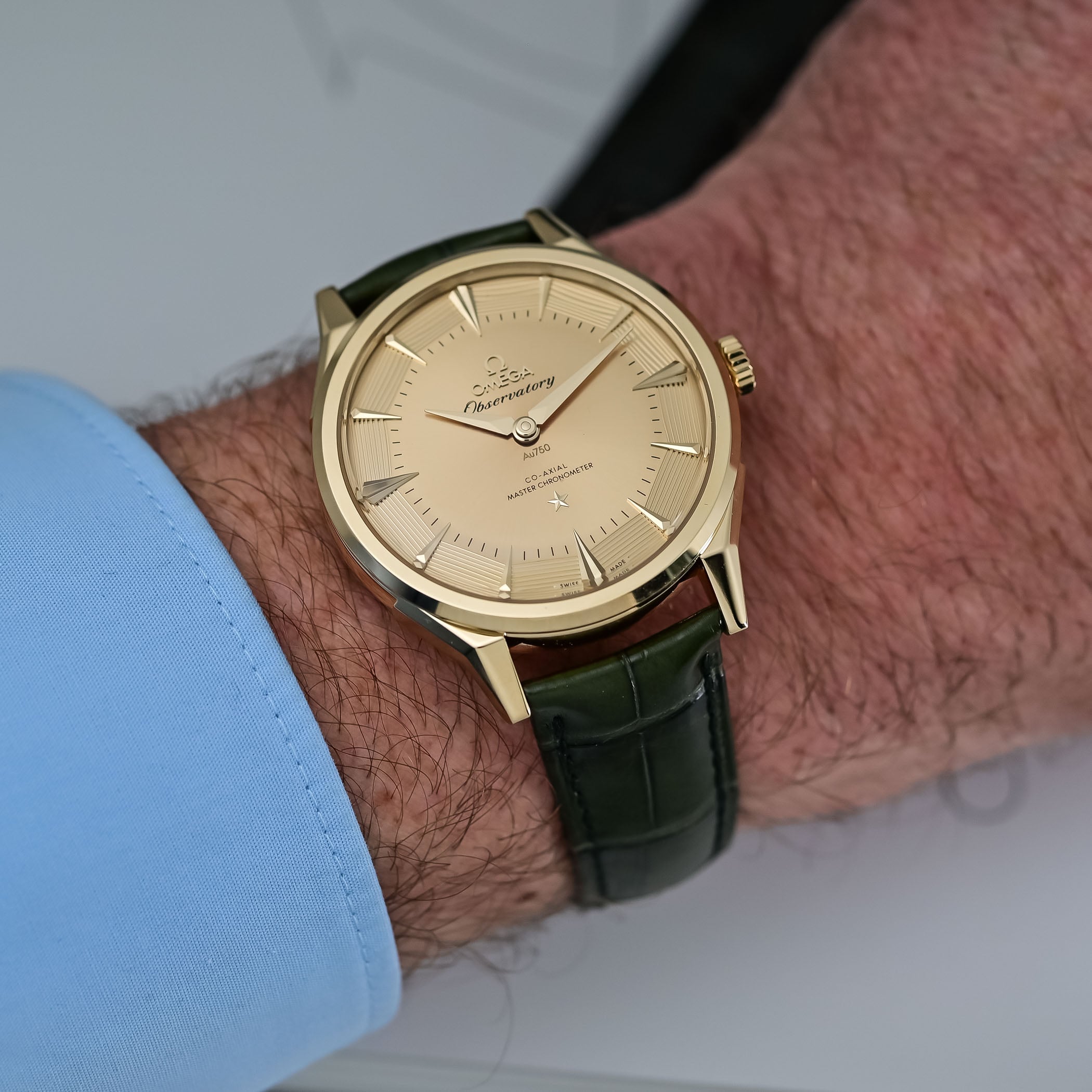
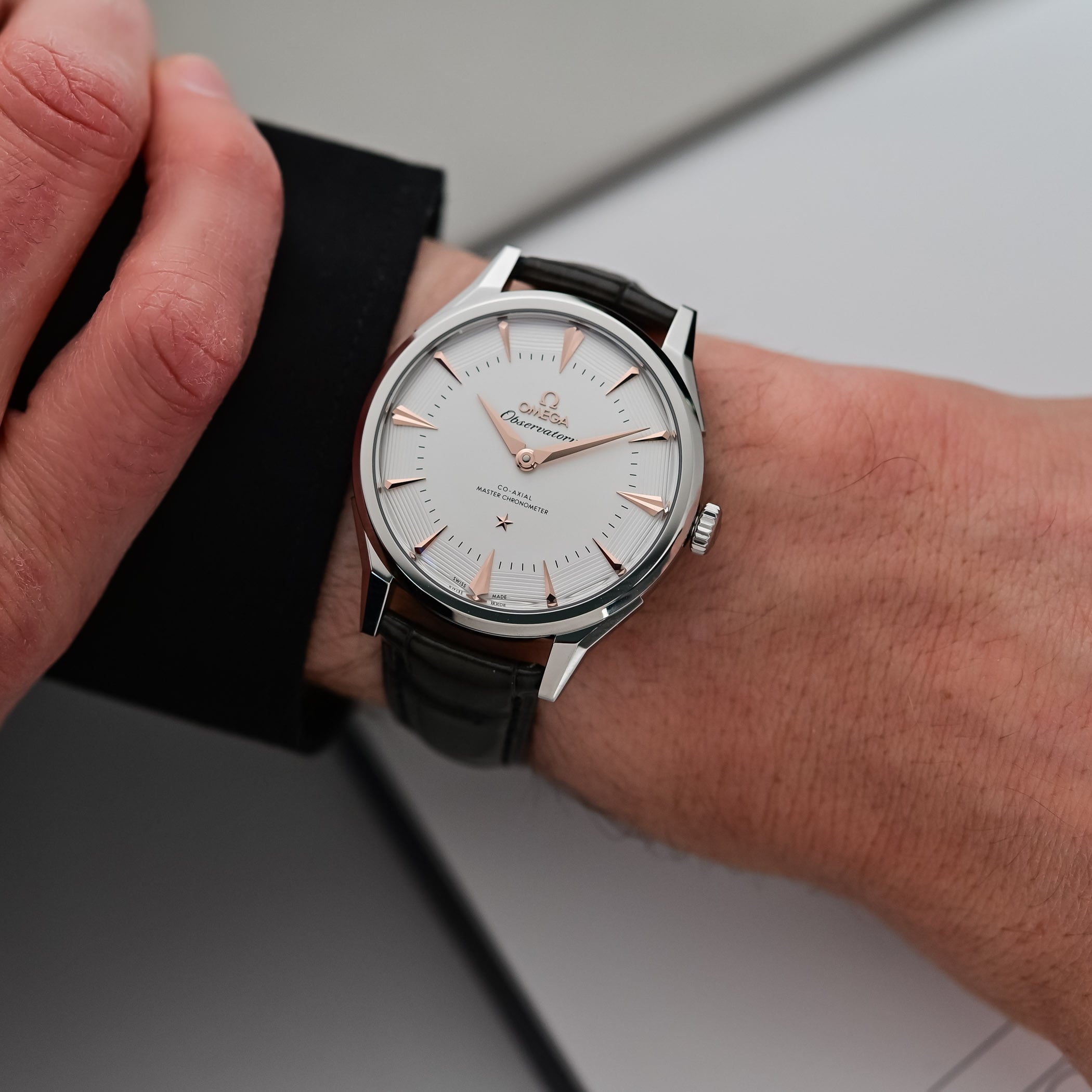
Another reference to the past is the return of the pie-pan dial, which showcases a guilloché pattern along its outer edge (Stamped for the steel versions except one version). The faceted “kite-shaped” applied indexes are paired with kite-shaped hands. The Omega logo and Constellation Star are applied while the Observatory, Co-axial and Master Chronometer captions are transferred.
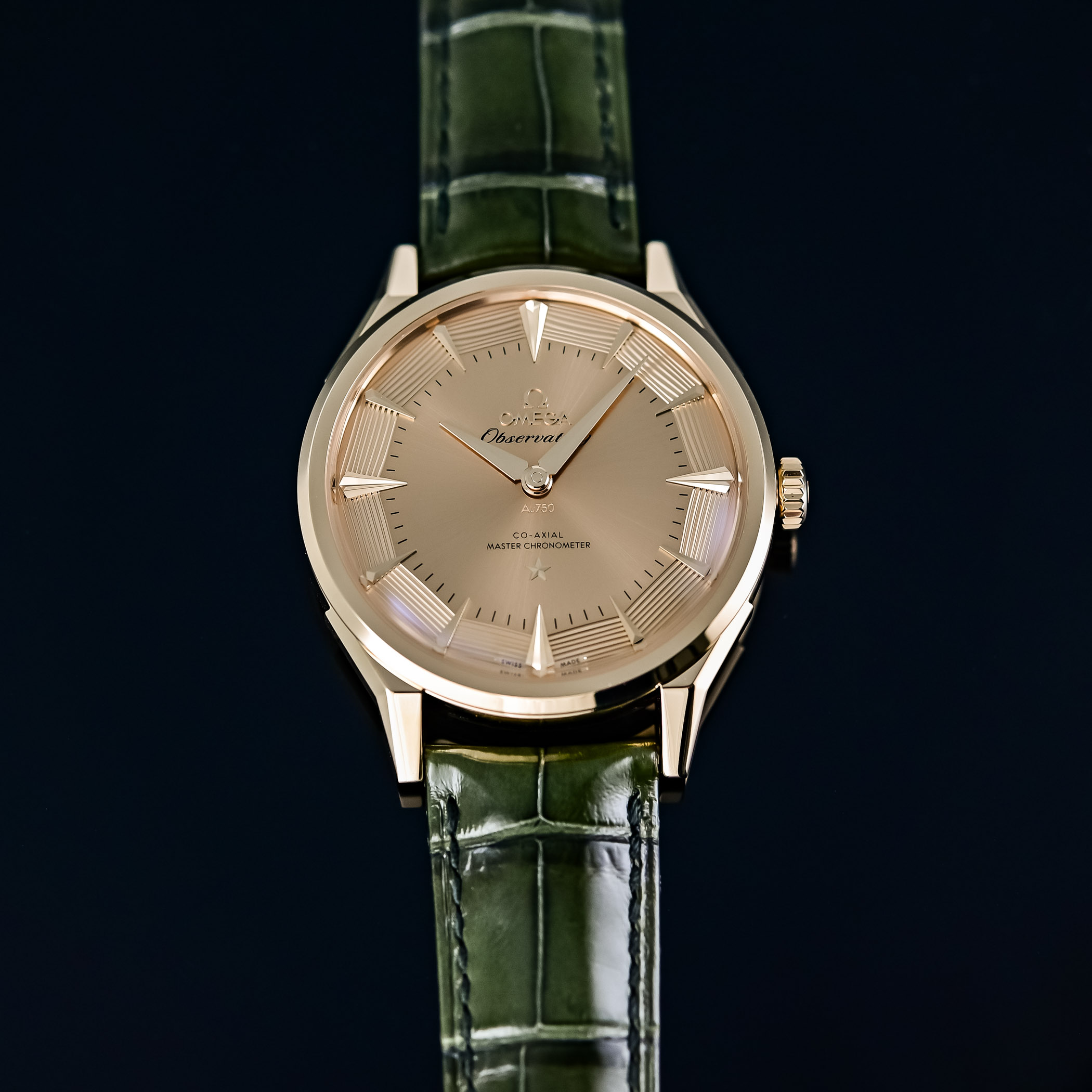
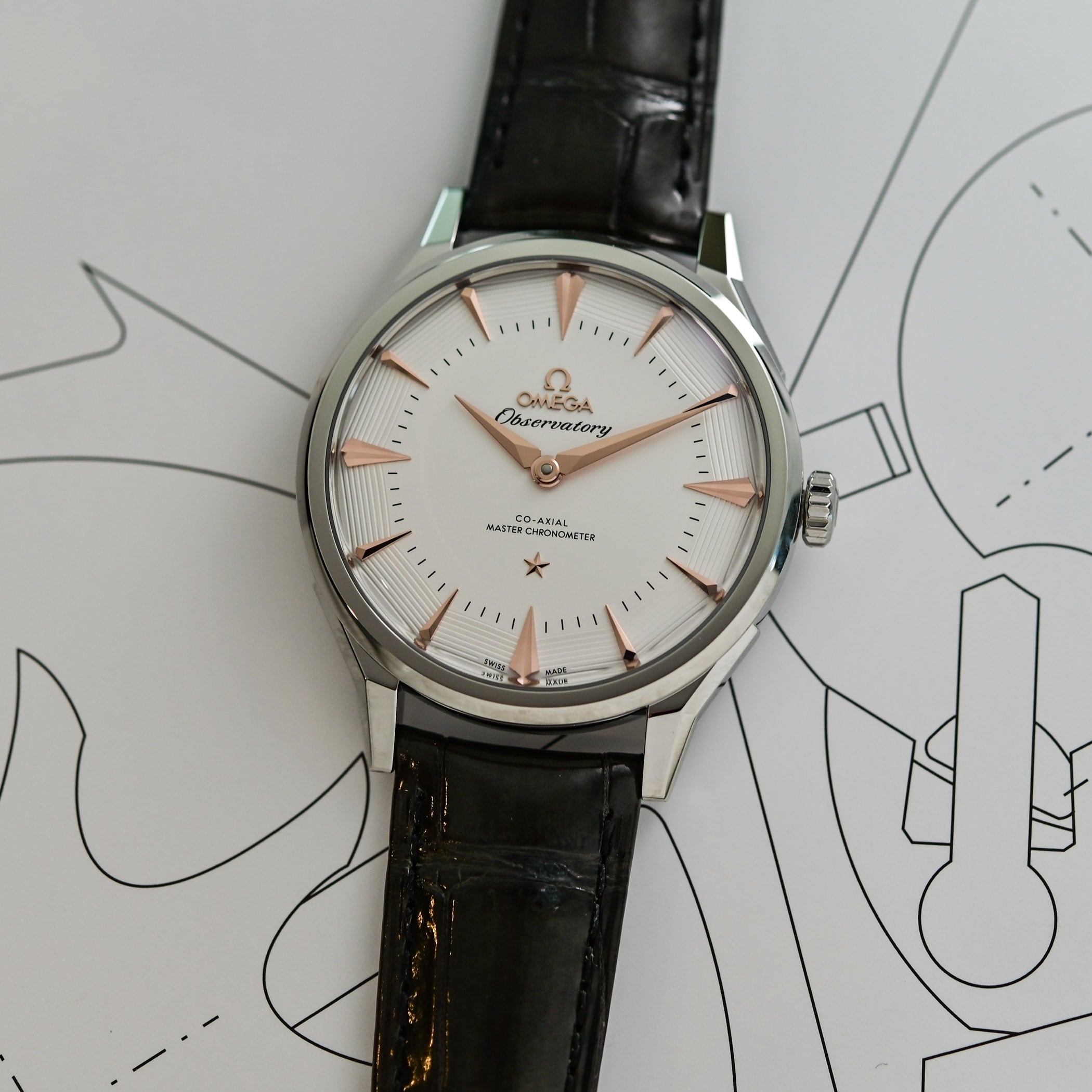
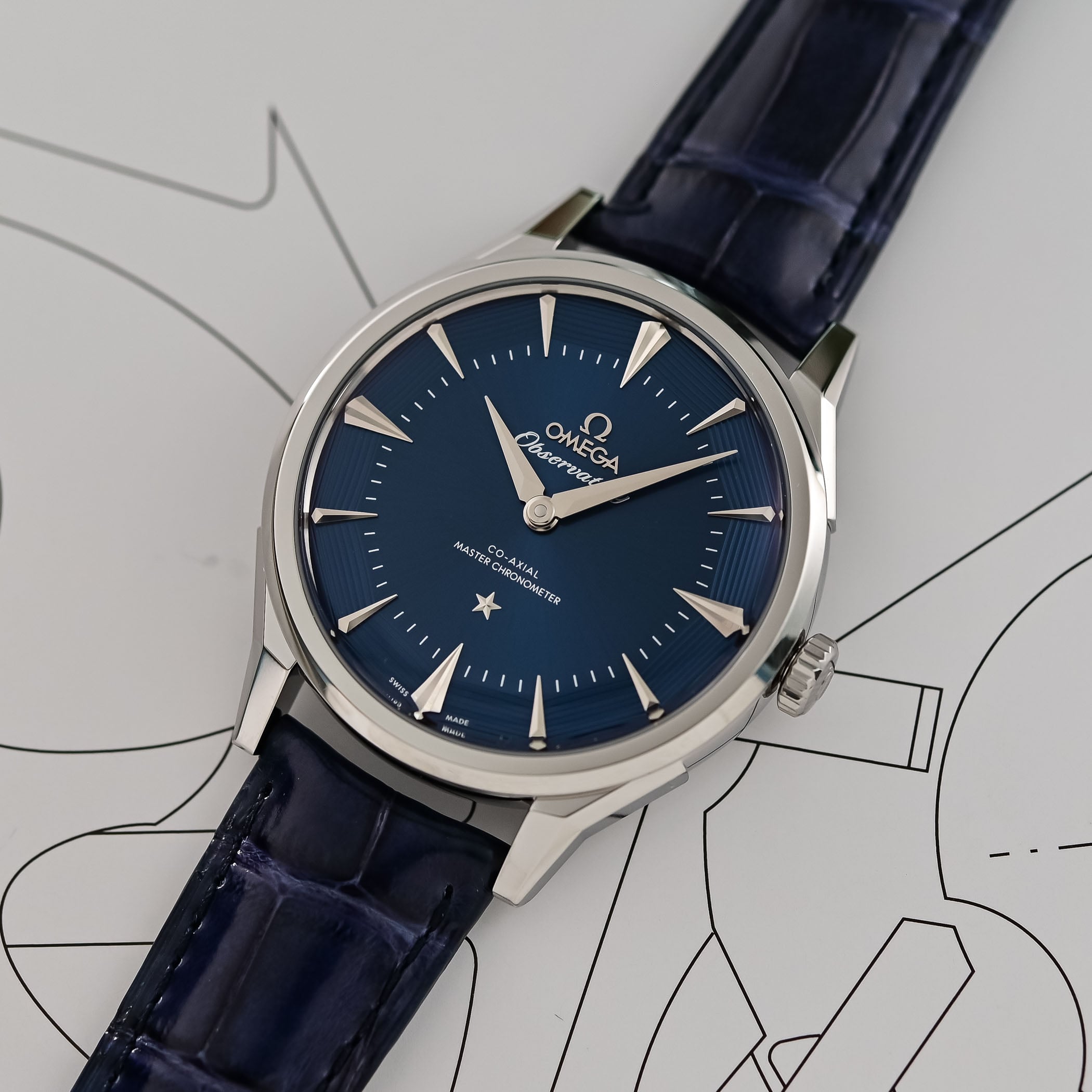
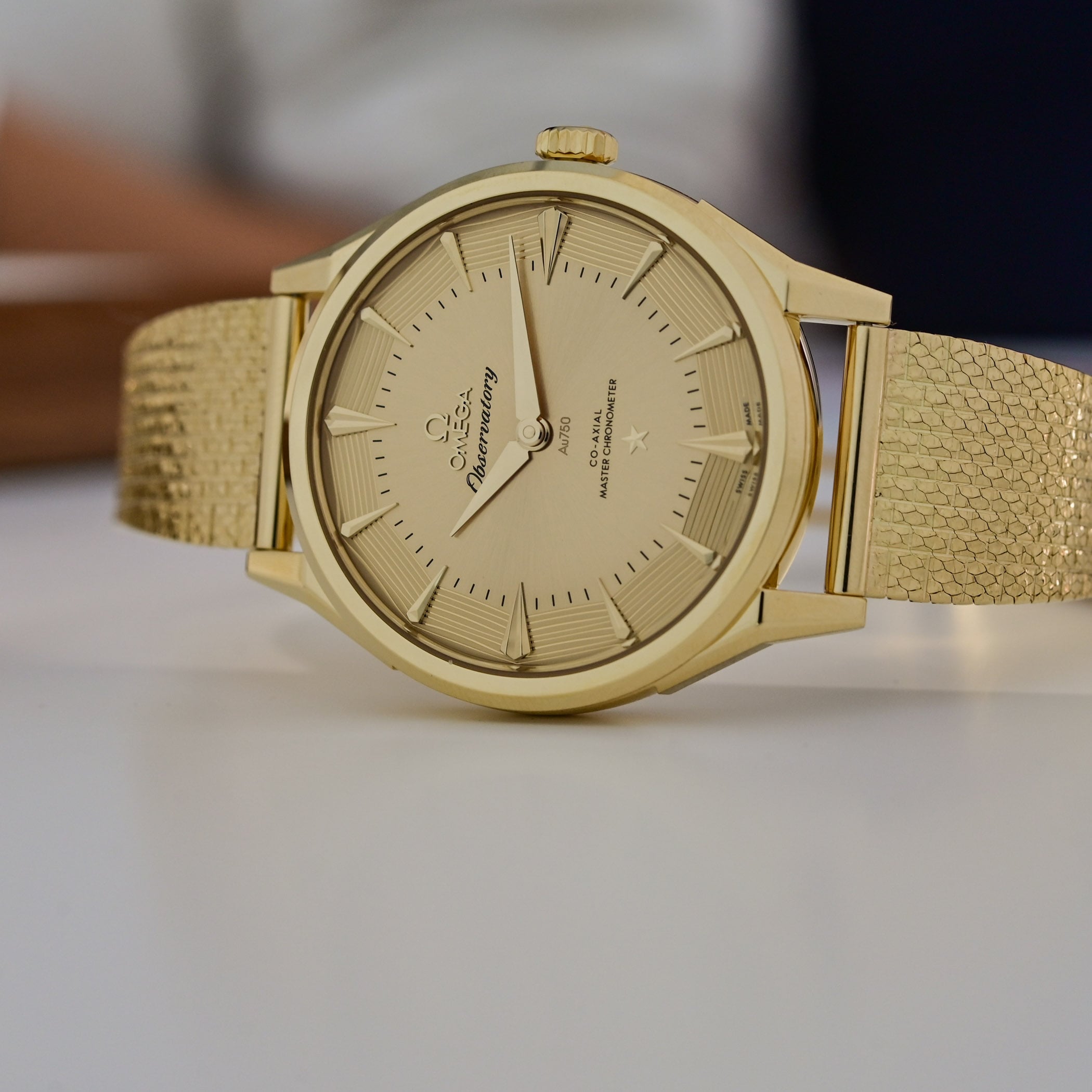
The watch is released in various iterations, either in Omega’s own steel alloy, named O-MEGASTEEL, available in silver opaline with gold markers/hands, in blue or green PVD or with a polished, non-engraved black ceramic dial. All are worn on shiny alligator leather straps. Then come several precious versions, in all of Omega’s own gold alloys. The Moonshine (yellow) gold version has a matching dial and can be ordered with a leather strap or a mesh bracelet. Also available are a Sedna (rose) gold and Canopus (white) gold edition, both with matching dials and worn on a leather strap. The final edition is a platinum-gold model, which brings all four of the brand’s proprietary precious metal alloys together in a single collection for the first time.

And then came our biggest surprise, when we discovered that this watch, proudly named Observatory, is a simple two-hand model without a central seconds hand. A chronometer, even more so an observatory chronometer, typically features a second hand to allow precise time reading down to the second. And until now, a second hand has been required to certify a watch as a chronometer. But when you think about it, why shouldn’t the precision of a two-hander also be certifiable? But we’ll come back to this later.
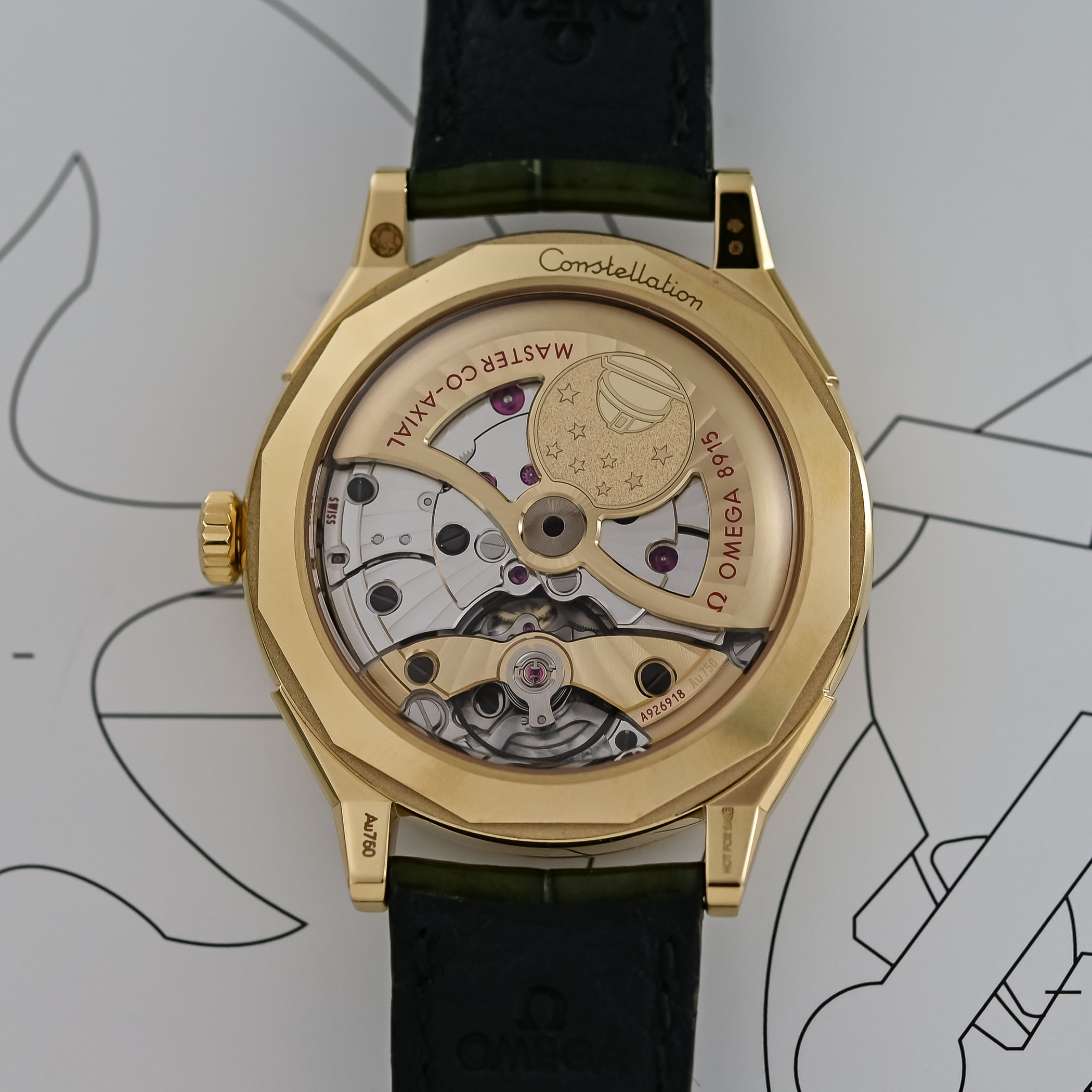
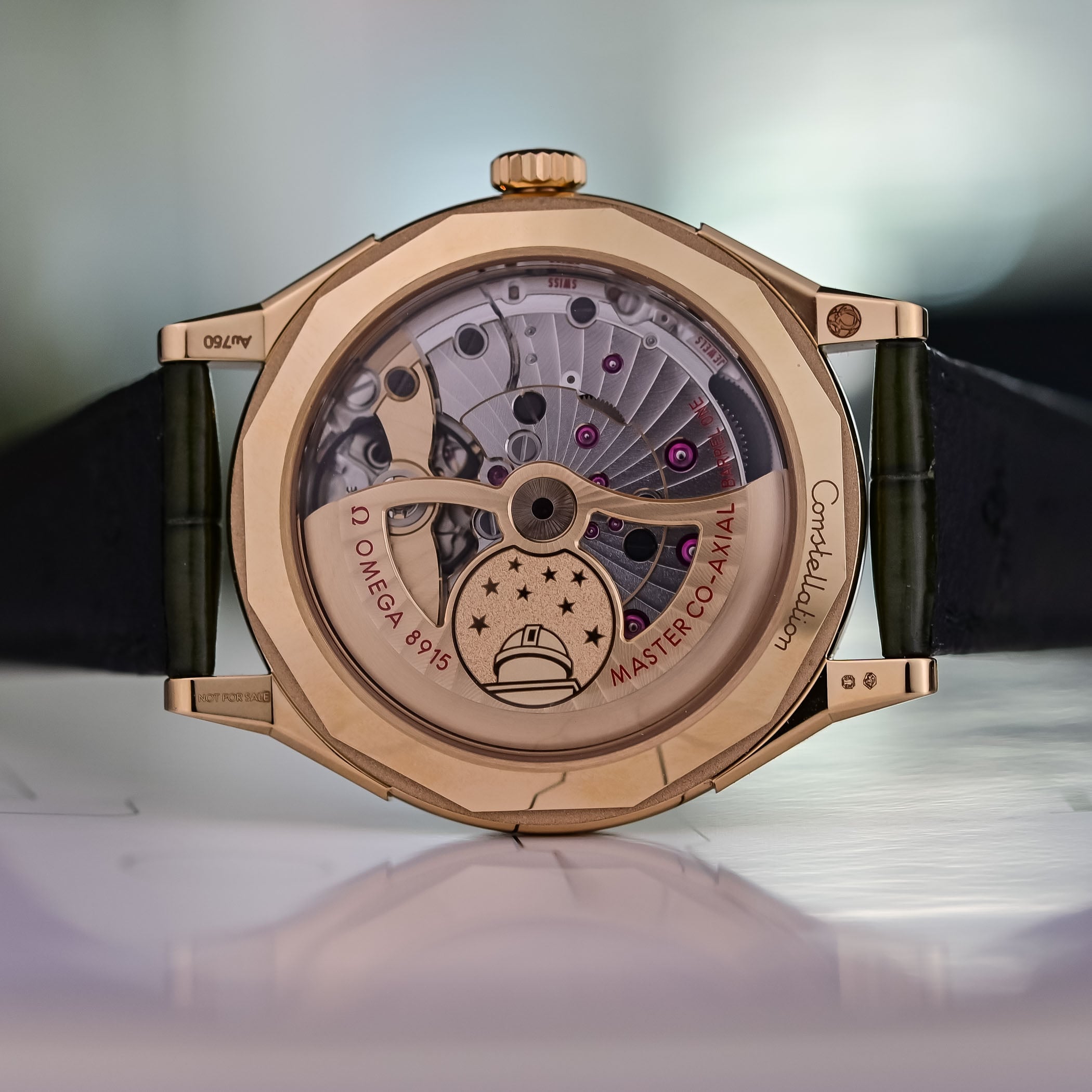
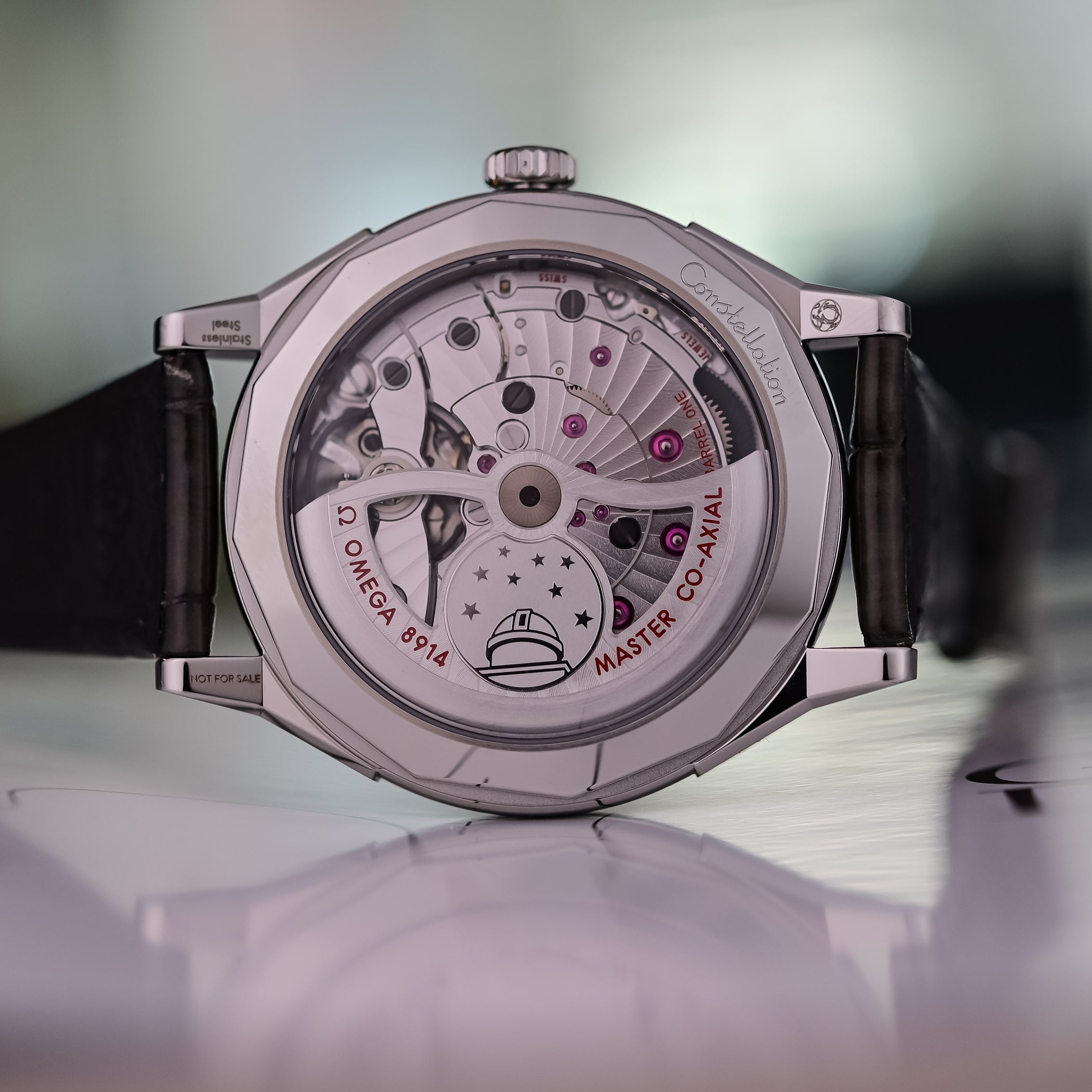
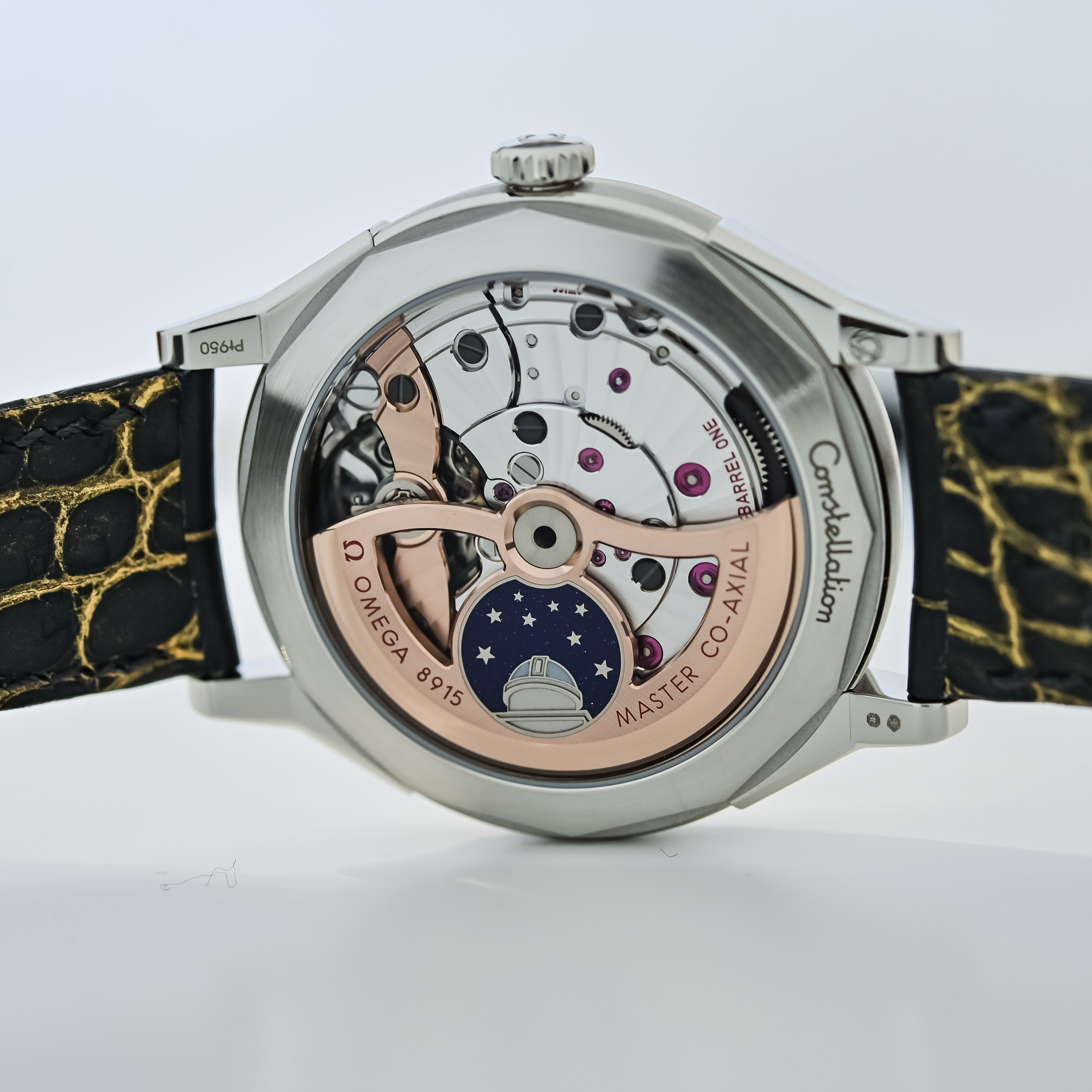
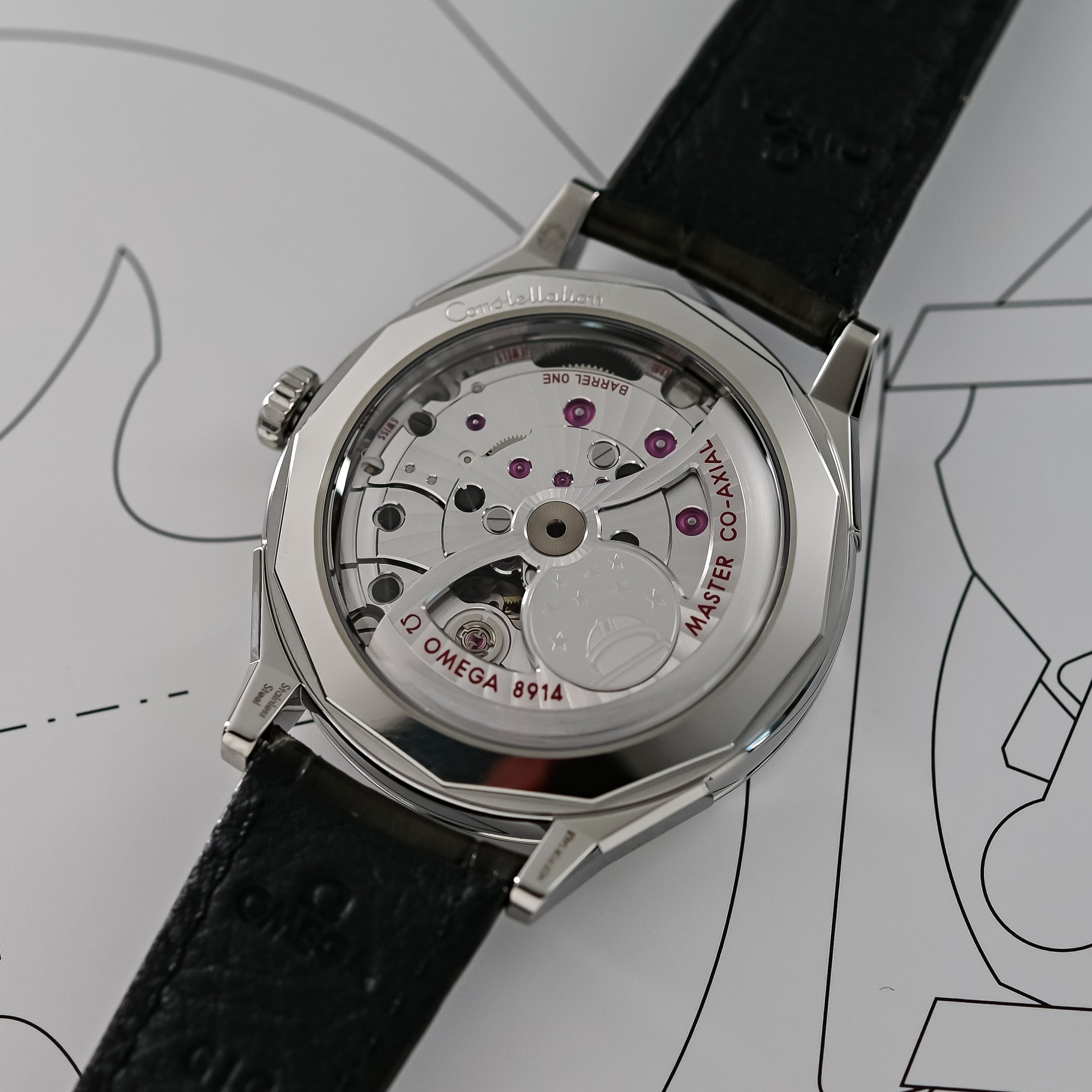
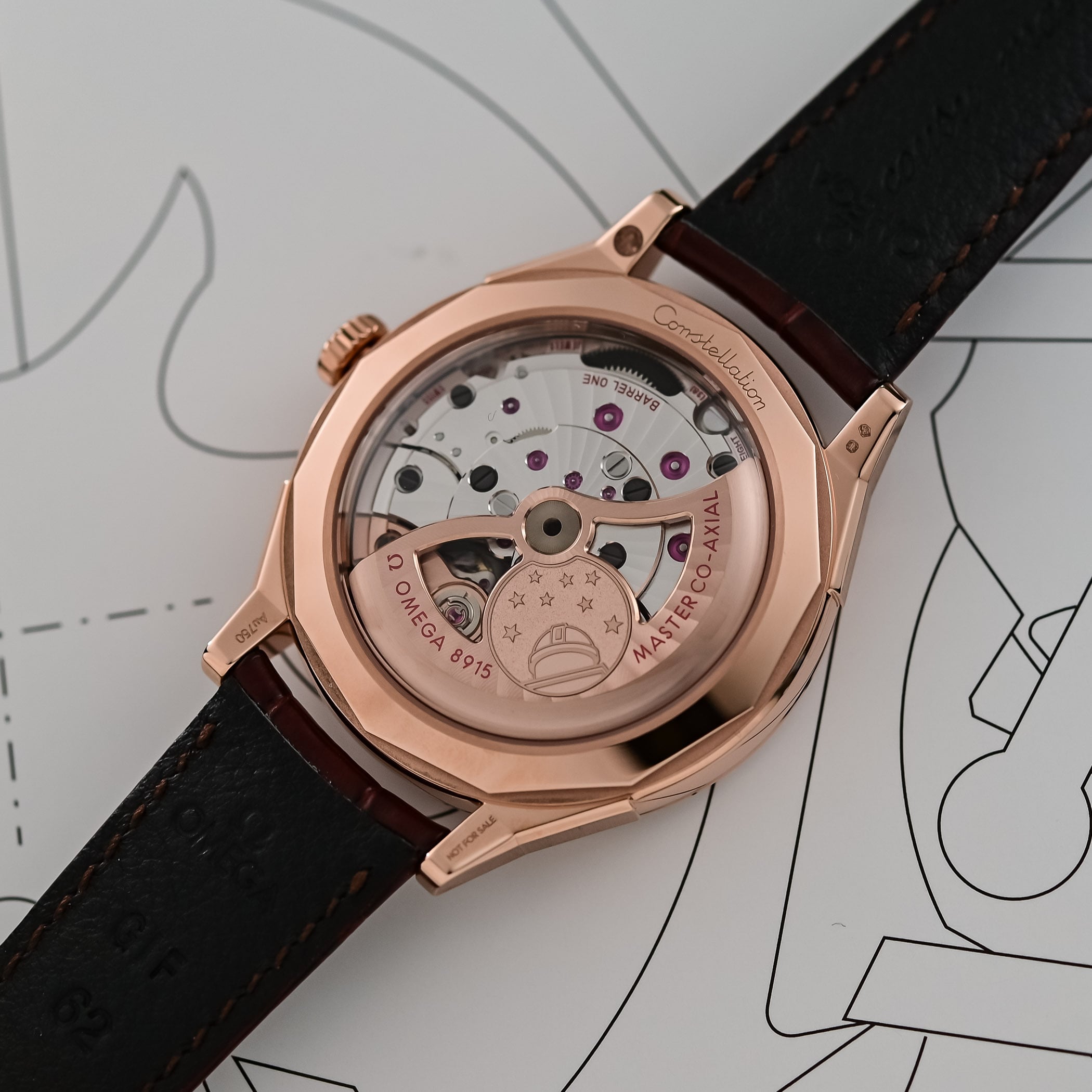
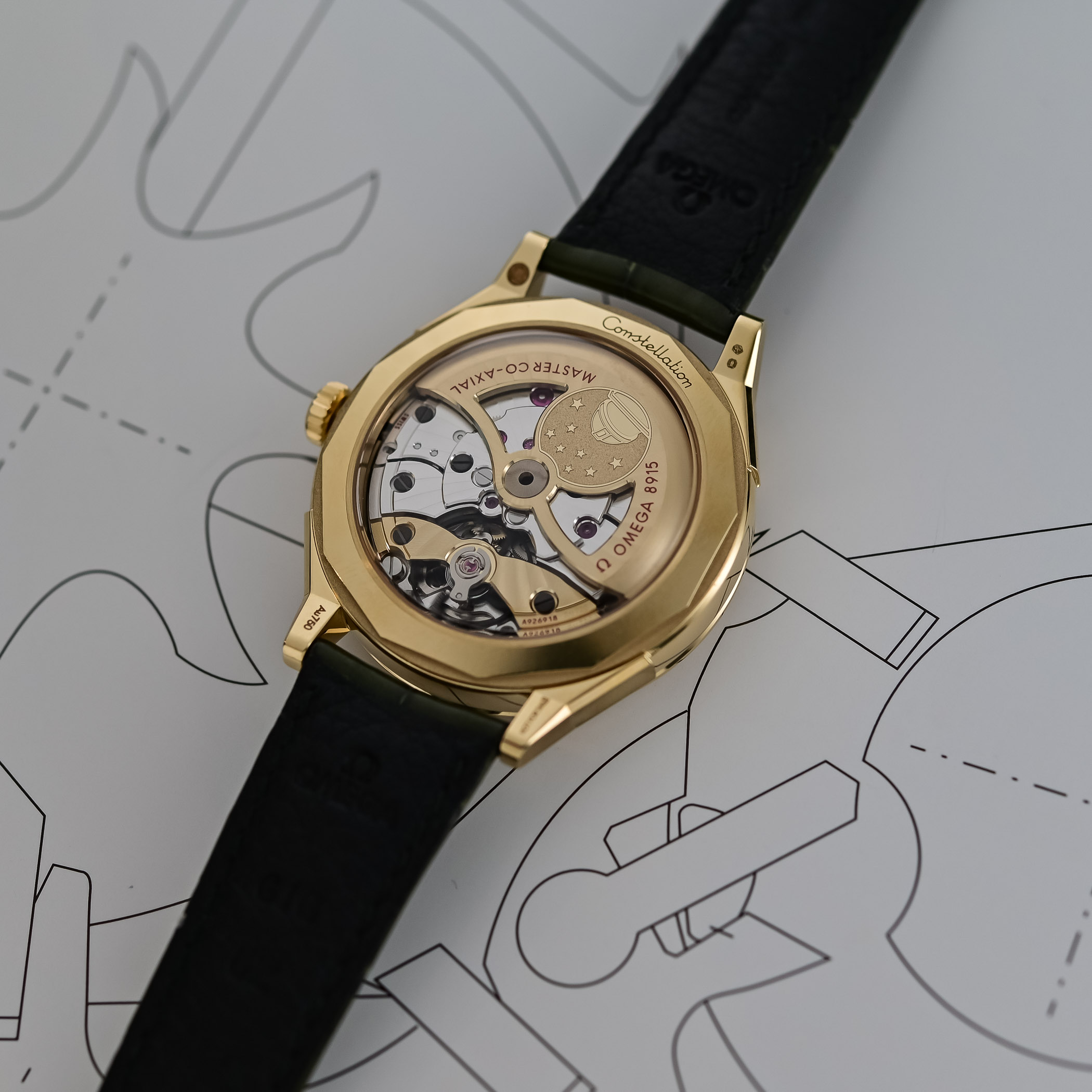
The sapphire crystal on the back allows to discover the in-house automatic movement. This new Omega Constellation Observatory relies on two new calibres (even though based on the classic 89xx architecture) featuring a skeletonised rotor with an applied Constellation Observatory medallion.
- The Calibre 8915 Grand Luxe for the 950 platinum-gold edition. The Observatory medallion is in 18K white gold, laser-ablated, with its dark blue sky enamelled with aventurine glass and highlighted by eight stars, the Observatory dome filled with translucent white opal enamel.
- The Calibre 8915 Luxe for the 18K gold collection. It features a balance bridge (including for the first use of an 18K Moonshine gold rotor and balance bridge in OMEGA’s history). Its medallion is in 18K gold with laser-ablated elements.
- The Calibre 8914 Standard powers the O-MEGASTEEL Constellations and replicates the Calibre 8915 Luxe in full rhodium-plated finish.
The First Two-Hand Watch to Achieve Master Chronometer Certification
Now that we have been through the basics of the new Omega Constellation Observatory models, let’s delve into the Master Chronometer certification of these watches, done in the new Laboratoire de Précision.
There is sometimes a tendency to believe that mechanical watches were better in the past. This is not the case. Today’s technical advancements make it possible to produce watches of higher quality, particularly in terms of durability and precision. This is reflected in the extended warranty periods that many brands now offer. It is also evident in the growing emphasis on certification, whether for accuracy or resistance to magnetic fields, with increasingly stringent and sophisticated criteria. The industry is evolving, introducing new standards, measurement processes, and certifications that continue to raise the bar for performance and reliability. It would be difficult to name all developments in the field, but as this article is about a new Omega watch, I’ll focus on the Master Chronometer certification (introduced by Omega, open to all brands) and the COSC (Contrôle Officiel Suisse des Chronomètres), which recently announced its Excellence Chronometer, its new, stricter standard in chronometry.



The Master Chronometer certification introduced by Omega is more comprehensive than the COSC because it represents a much more rigorous and comprehensive “real-world” validation of the entire timepiece. While the COSC only tests the mechanical movement before it is even placed in its case, the Master Chronometer (METAS) certification tests fully assembled, finished watches. This is an important distinction because the process of assembling the dial and hands, or simply the movement into a case, can sometimes alter its precision. The performance standards for a Master Chronometer are also significantly stricter. A COSC-certified watch is allowed to lose up to 4 seconds or gain up to 6 seconds per day. In contrast, a Master Chronometer must never lose time; its tolerance is strictly between 0 and +5 seconds per day.
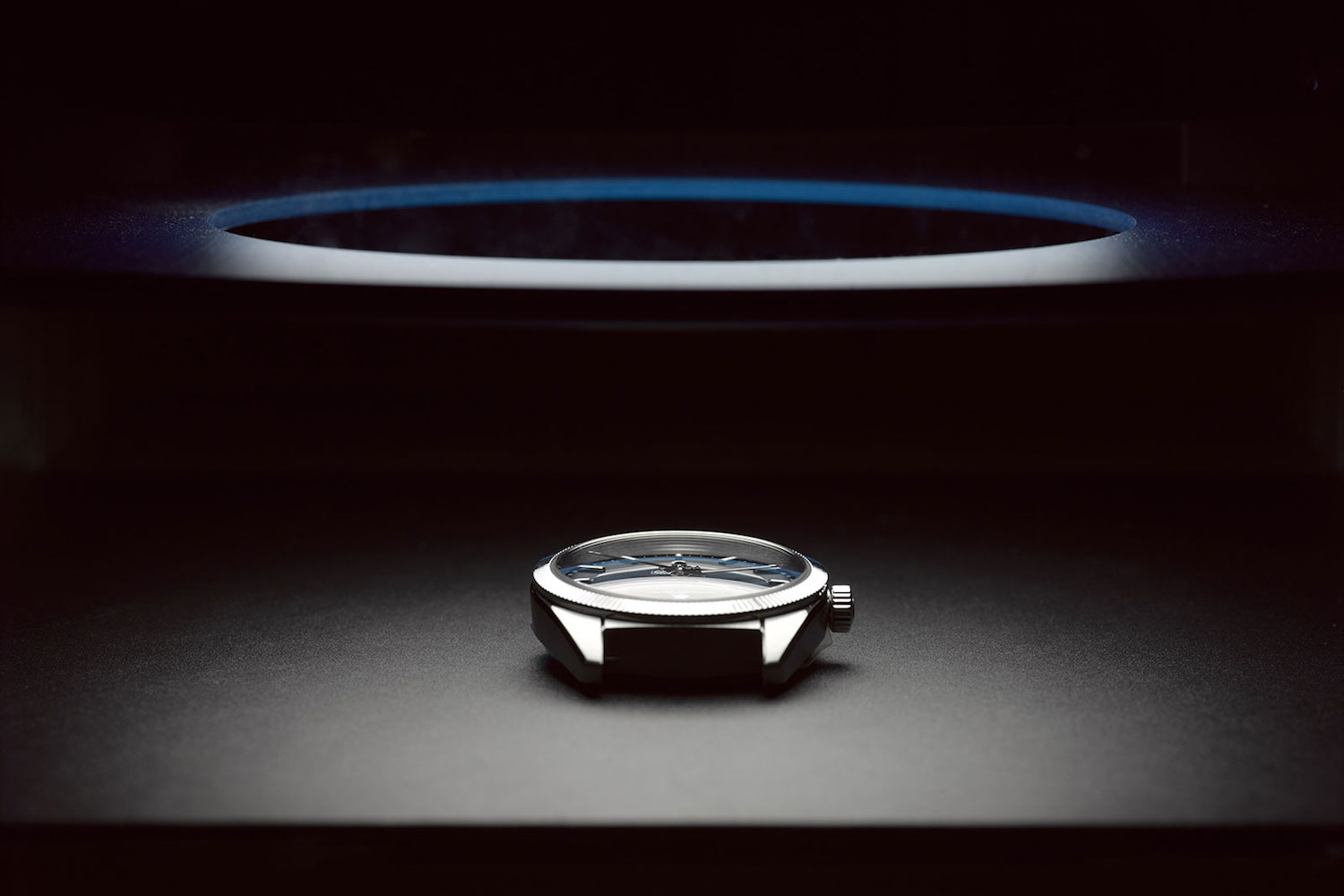
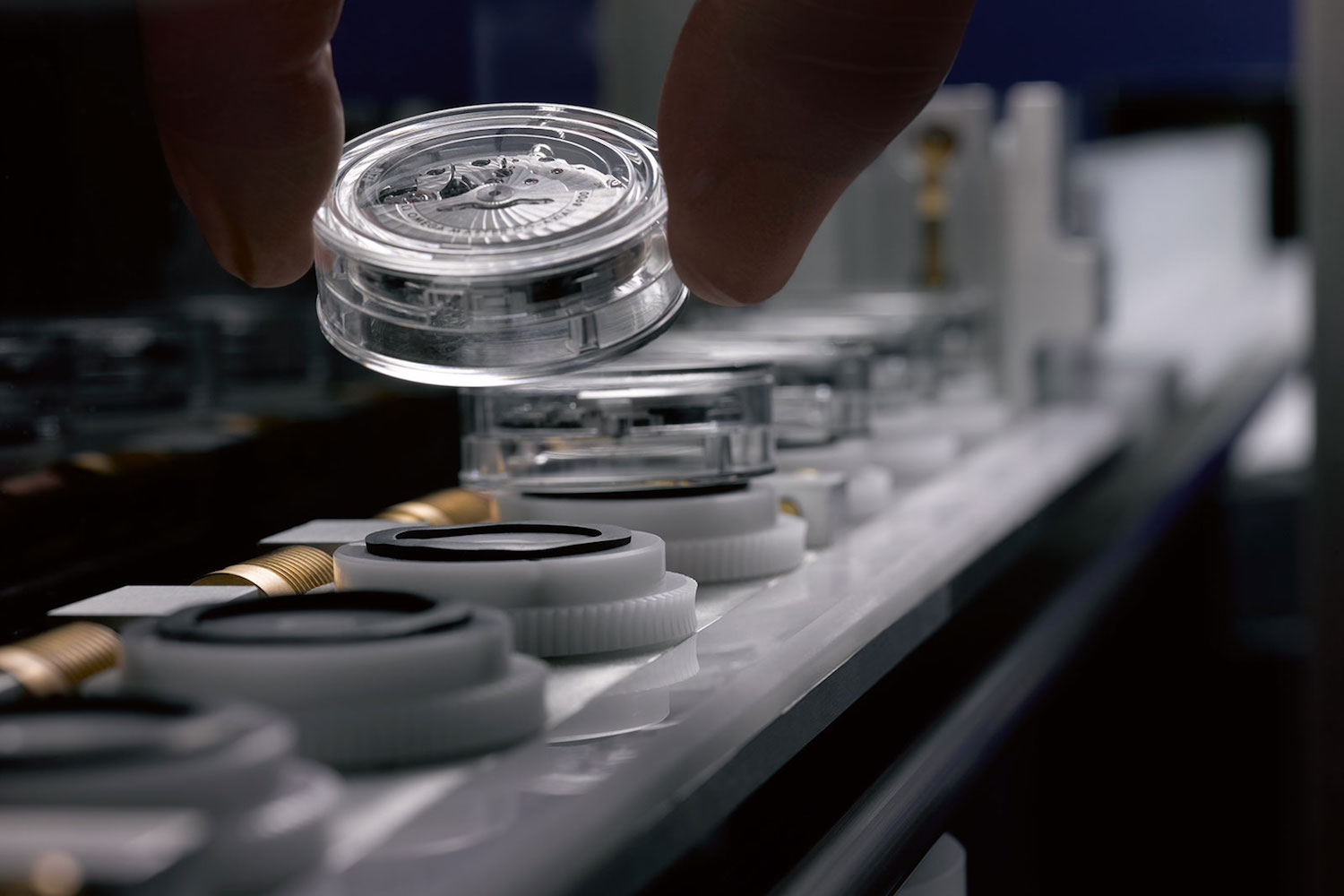
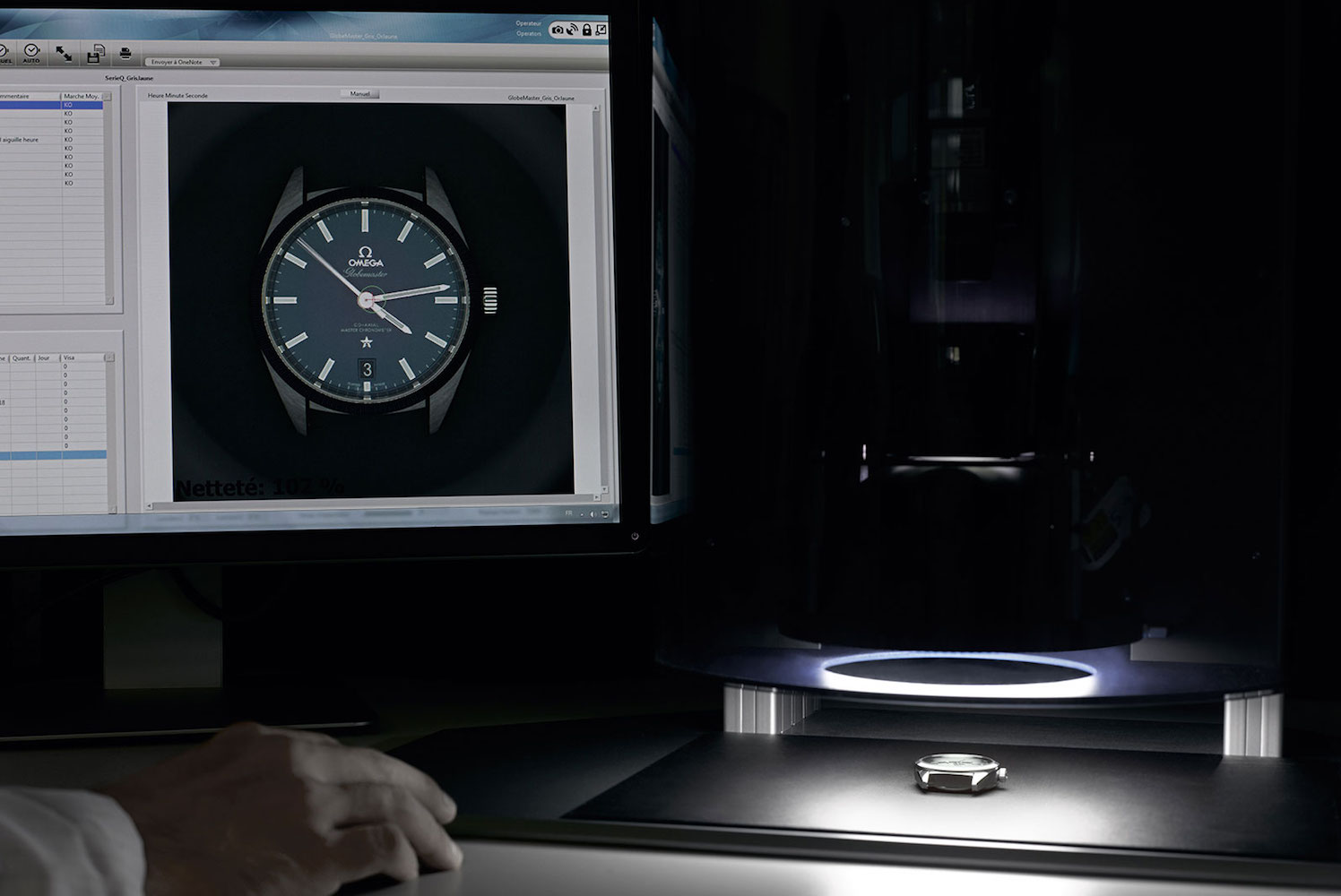
Beyond simple timekeeping, the Master Chronometer certification addresses issues found in a modern environment, specifically magnetism. While the COSC does not subject movements to high-intensity magnetic fields, METAS requires the watch to remain accurate while exposed to 15,000 Gauss – the equivalent of being placed directly against an MRI machine. Finally, METAS also verifies the manufacturer’s claims regarding water resistance and power reserve, ensuring that every functional aspect of the watch meets its advertised specifications. That said, the recently-launched Excellence Chronometer by the COSC addresses some of these issues too.
Until now, chronometric certification tests such as the COSC (Contrôle Officiel Suisse des Chronomètres) have relied on optical cameras. These systems verify whether a movement maintains accuracy over time by capturing images at specific moments. For example, a photograph is taken to check the position of the seconds hand and detect any deviation over a long testing period. This approach has its strengths, as it reflects performance over time and can be more meaningful in some respects than a simple instantaneous measurement.

What is truly innovative today with Omega’s Laboratoire de Précision is the emergence of a new standard based on continuous acoustic analysis. This method listens to every oscillation of the escapement throughout the entire testing period. In other words, every “heartbeat” of the watch is monitored and analysed over time, rather than relying on isolated snapshots. This allows for a complete and detailed understanding of the watch’s performance.
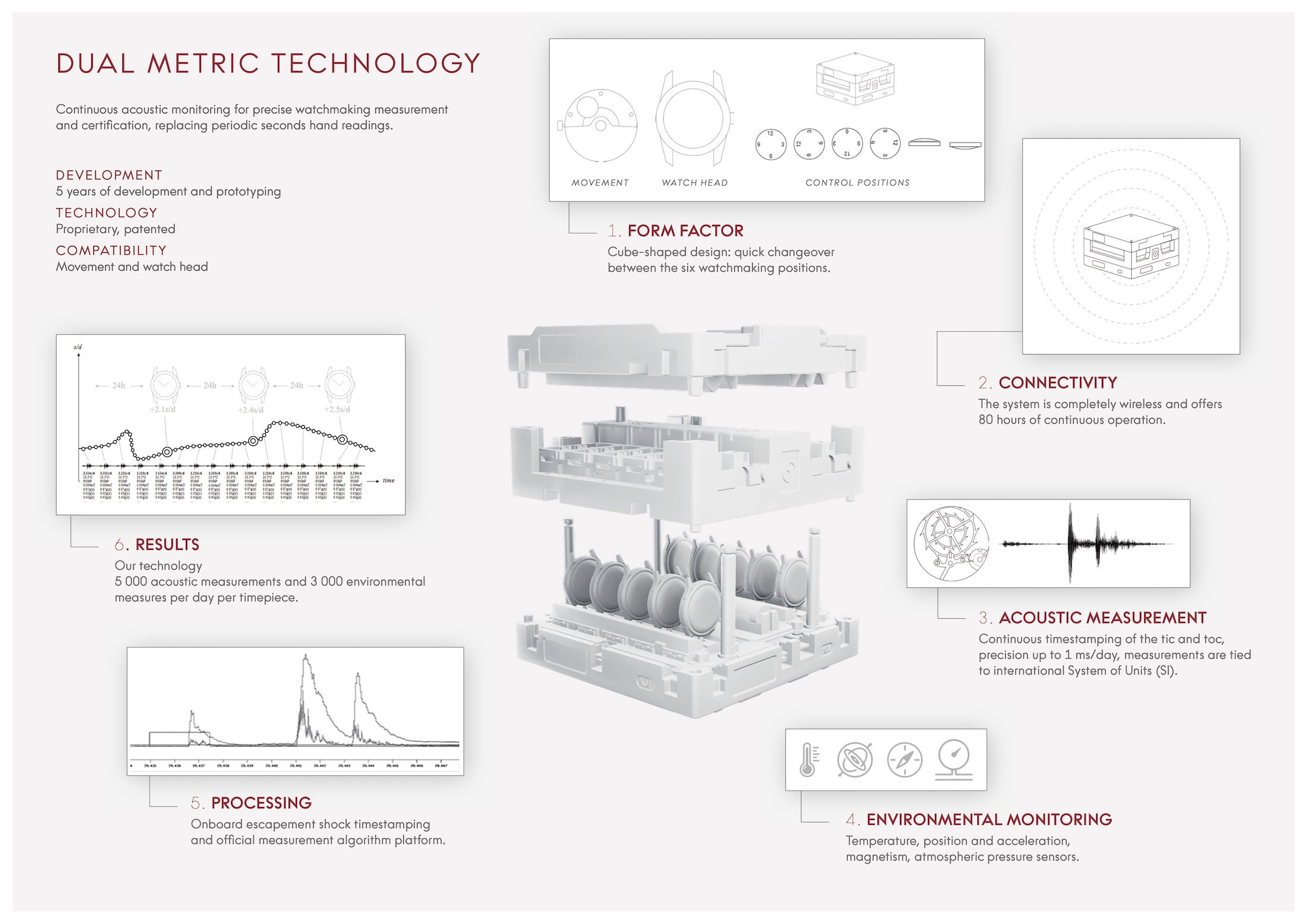
With traditional methods, a watch might gain time at one point and lose it later, ultimately showing only an average result at the end of the test. The new methodology, however, reveals exactly what happens at each individual beat, offering a far more precise and transparent picture.
A useful analogy would be blood pressure monitoring: it is far more informative to track a patient’s blood pressure continuously throughout the day than to take a single measurement in the day. A one-time reading might appear normal, while significant variations during the day would go unnoticed. Continuous monitoring, on the other hand, provides a much more accurate assessment of the patient’s condition.

To perform this test, OMEGA developed what the brand calls the Dual Metric Technology. The watches are placed in a wireless, self-contained testing unit that consolidates all Chronometer and Master Chronometer certification processes into a single device. This unit continuously captures the sound of each beat while recording environmental parameters: temperature, position, magnetic fields and atmospheric pressure throughout 25 days of testing.
The Laboratoire de Précision is officially authorised by SAS (the Swiss Accreditation Service) to carry out alternative and independent testing. Its testing procedures are open to other brands.
Availability and price
The new Omega Constellation Observatory launches with 9 different references ranging. O-MEGASTEEL on leather with a choice of silver, blue or green dial. A fourth O-MEGASTEEL version features an inky black ceramic pie-pan dial. Moonshine gold on mesh or leather. Sedna gold, Canopus gold and platinum/gold on leather. The nine-row brick pattern on the 18K Moonshine Gold mesh bracelet draws on vintage brick bracelets of the Constellation’s early years. Price starts from EUR 10,700 in steel and EUR 37,300 for precious metals.
For more details, please visit www.omegawatches.com.

12 responses
Who decided to put the Au on the dial….
I like the black ceramic the most, but….$11K for the blue or green, $12K cuz ceramic’s more of a pain. Ouch. They’re pricing themselves out of range just like Rolex’s steel versions.
60 hours again, seriously Omega?
The moonshine gold version is a good example of how delusional Omega‘s pricing has become! This Omega is now priced on par with the Patek Philippe‘s Calatrava 6119R. On top of that, instead of streamlining their product portfolio, Omega keep adding more…
When you run out of ideas in 2026…
I think the sedna gold version is particularly beautiful, but why would anyone pay 38K for a precious metal omega dress watch when you can get holy-trinity level watchmaking for the same price??
Is that really the price for the gold one? OK, sure, why not?
Looks like something from the 1950s to my eyes – though the prices belong in the 2050s!
I like how they look and was initially excited but they are too expensive for what they are and the lack of seconds hand is going to annoy me.
Waited until I had put one of these on my wrist for an hour or so before commenting on it as I suspected a lot of the negative comments are based solely on photos, stats, rumours and misconceptions. I have now tried the steel blue dial version and can comment from the perspective of having handled and worn the Observatory. So, first, the thickness is not much of an issue. 12.23mm sounds like a lot for a dressy watch. It is. And it is not. The key issue is the case back has a domed sapphire crystal like the ones used on the 2011 Speedmaster Co-axial Moonwatch (Cal.9300) but much smaller. It is designed to show off the new movement and in particular the new rotor design and it does that very well. Fastening the leather strap to the exact middle hole so it was comfortable on my wrist but not tight helped the crystal case back “nestle” onto my wrist and all that was left was a relatively thin case band and the domed sapphire crystal over the dial. It wears much thinner that the Constellation Manhattan 41mm which was on hand to benchmark the Observatory. It also wears a little thinner than the Globemaster. It is nowhere near as thick as an Aqua Terra once on the wrist. So in that sense the thickness is not much of an issue. Compared to a Calatrava it is thick, compared to a Master Ultra Thin it is thick. Compared to a Ballon Bleu or a Glashutte Original 60s Panorama Date it is about the same. Nobody is saying those two watches are not dressy and nobody is saying they are too thick. But adding a pie pan to any dial is bound to make a watch that bit thicker. Next – diameter. It is just too big. 39.4mm should be 37.4mm. The lug width suggests that too as it is 19mm suggesting the case diameter should be around 38mm as usually lug width is about half the case diameter. The Globemaster is 39mm with a 20mm lug width. So is the 41mm Aqua Terra. So the strap looks a bit small as well. The watch case is however exquisitely made and the dog-leg lugs are fantastic. The dial is also beautiful and the texture around the edges works really well as it does tend to distract the eye and make the watch look slightly smaller. The hour markers are amazingly well done too. Now the bad bit – for a two handed watch where the natural focus will be on just those hands they are a mess. Too thick too industrial looking. Inelegant. I know why that are so thick, on the green and blue dials (and the yellow gold and red gold dials) they blend into the dial due to insufficient contrast so they are thicker to let them be seen better. Not an issue on the silver black or beige dials. As for setting and telling the time, it is a real non-issue just move the minute hand to the correct minute and when the time signal reaches the start of the minute you start the watch. The problem is you will not know daily gain except to the nearest minute. That is really silly for a watch brand invested in accuracy. Finally price – mad! Too much, far too much. Also really too much money for what it is. Then the precious metal versions take the mad then add a dose of utterly crazy. Are Omega guilty of gouging? Maybe. But so are Rolex, Cartier, JLC, Breitling. Seiko and every other watch company. It is an economic phenomenon called “margin retention”, basically the market is shrinking, sales are contracting so in order to keep profit margins healthy fewer watches/cars/whatever are sold at higher prices. Trouble is that would be OK, sort of, if the Observatory was a “knocked it out of the park” desirable watch that everyone wanted. It is not. I am a fan of the Constellation family of watches but this leaves me cold. Why no second hand? Why try to be so clever you end up looking dumb? Why so big? I suspect the marketing department interfered and said to make it 39.4mm not 37.4mm. I cannot work out who the Observatory is for and if a big Connie fan cannot work it out a non-enthusiast is not going to either.
So does it need a battery to function ? .
An update to my comment above, it is now just over three months since the launch of the Constellation Observatory and I have had the chance to wear it again. Have I changed my mind on any of the points I made above? No. The criticism still stands but I was able to compare the Observatory to the watch it most resembles from Omega’s recent (relatively anyway) catalogue – the De Ville Hour Vision. I own the black and silver “Tuxedo” dial version. The Hour Vision also has a grooved finish to the dial but as a raised ring connecting the hour markers but the effect is very similar to the grooved design on the Observatory. The hour markers themselves look pretty much identical to those on the Observatory too. There is no differentiation for the cardinal points though. The lugs on the Hour Vision are not strictly dog-leg lugs but they are made to look as if they are a separate piece to the case and their form closely follows the basic outline of the dog-leg style lugs from the original De Ville Co-axial from 2001. Finally the bracelet of the Hour Vision is a nine row (which actually has nine separate elements to each link) design that is a modern interpretation of the brick link bracelets used on vintage Constellations. So, Omega have been down this route before just using the De Ville as a base. The Hour Vision is however far better executed and more practical with the Cal.8500 which it was designed to showcase. Looking at it and the 2001 De Ville Co-axial which featured a pie pan dial with wedge shaped hour markers (the Hour Vision does not have a pie pan dial) one cannot help think that Omega should have introduced the Cal.2500 and Cal.8500 movements in Constellation Co-axial and Constellation Hour Vision watches rather than De Villes. So the Observatory is still a “miss” but if you agree but want the old-time pie pan vibe with a Manhattan style case or the Globemaster then check out the 2001 to 2007 De Ville Co-axials and the 2007 to 2016 Hour Vision.