


 Not all images were able to load for printing. Please close the print window and try again.
 The Tudor Northflag, an Improved Successor to the North Flag, now with GMT Function
Some things go, much stays, plenty gets refined: the original concept remains, with improved functionality and readiness for adventure.
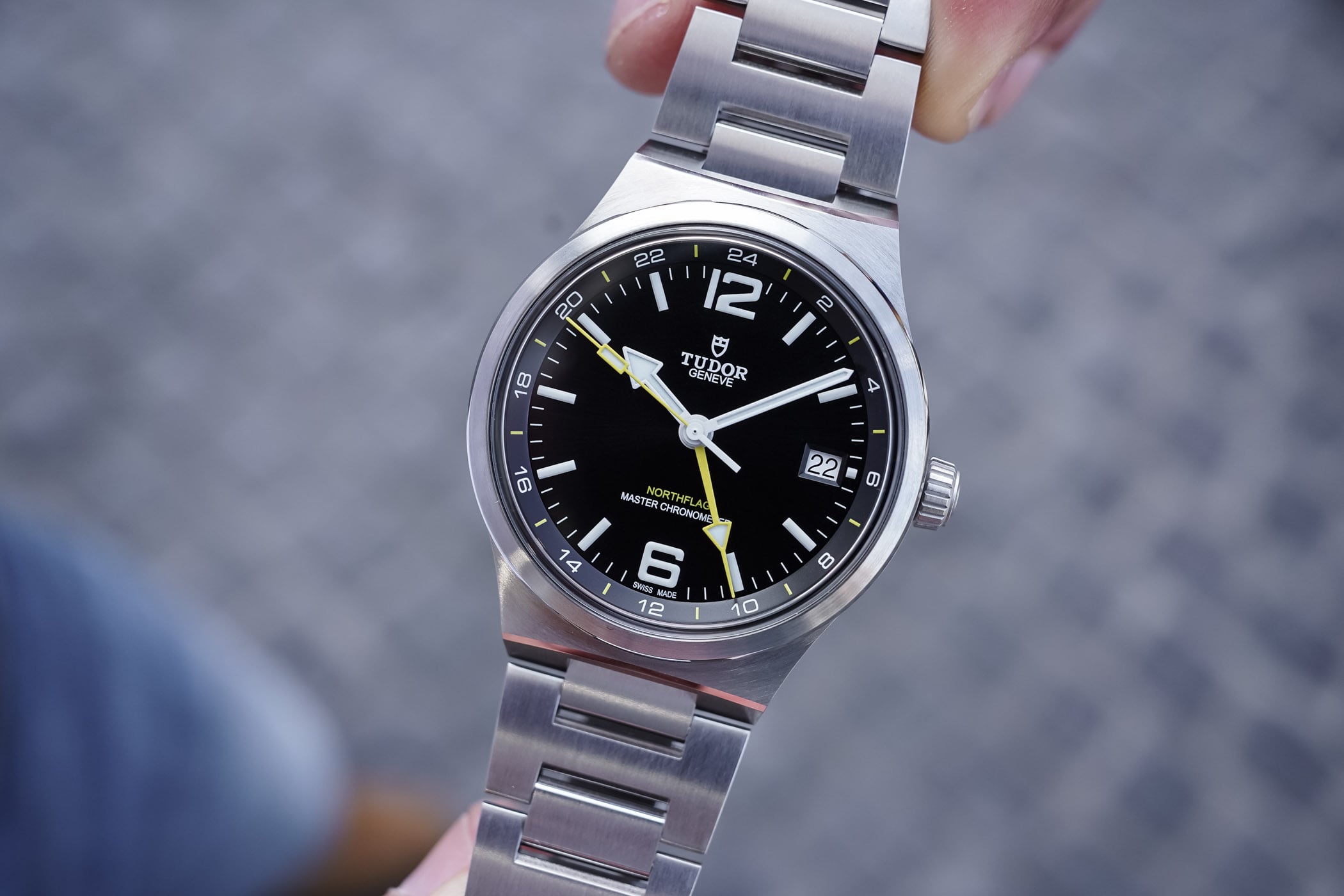
First presented in 2015, the Tudor North Flag was an important watch for the brand. It introduced a new design, drawing on the angular, exploration-inspired character of the 1970s Ranger II, but its real significance was mechanical: it was the first Tudor fitted with a manufacture movement (calibre MT5621), itself the first Tudor movement visible through a sapphire caseback. After six years without updates or new variants, Tudor discontinued the North Flag in 2021, just as its manufacture movements (made with Kenissi) were becoming a defining part of the brand. Now, in 2026, the watch returned as the Northflag (a single word now), with a familiar silhouette, a new and relevant GMT function and a series of changes that make it feel considerably more resolved but leave room for a bit of nostalgia, too. Here are our impressions.
The Ranger II Connection
The Northflag’s (and North Flag’s) identity still makes more sense when viewed alongside the Ranger II. Introduced in the 1970s, that relatively obscure Tudor had a tonneau-shaped case with a prominent fluted bezel, deep-dished dial and integrated bracelet, all designed to make an exploration-oriented sports watch. The original North Flag of 2015 repackaged those ideas into a thoroughly modern piece, with a 40mm case with an integrated design, a substantial bracelet, and a strong black-and-yellow dial.
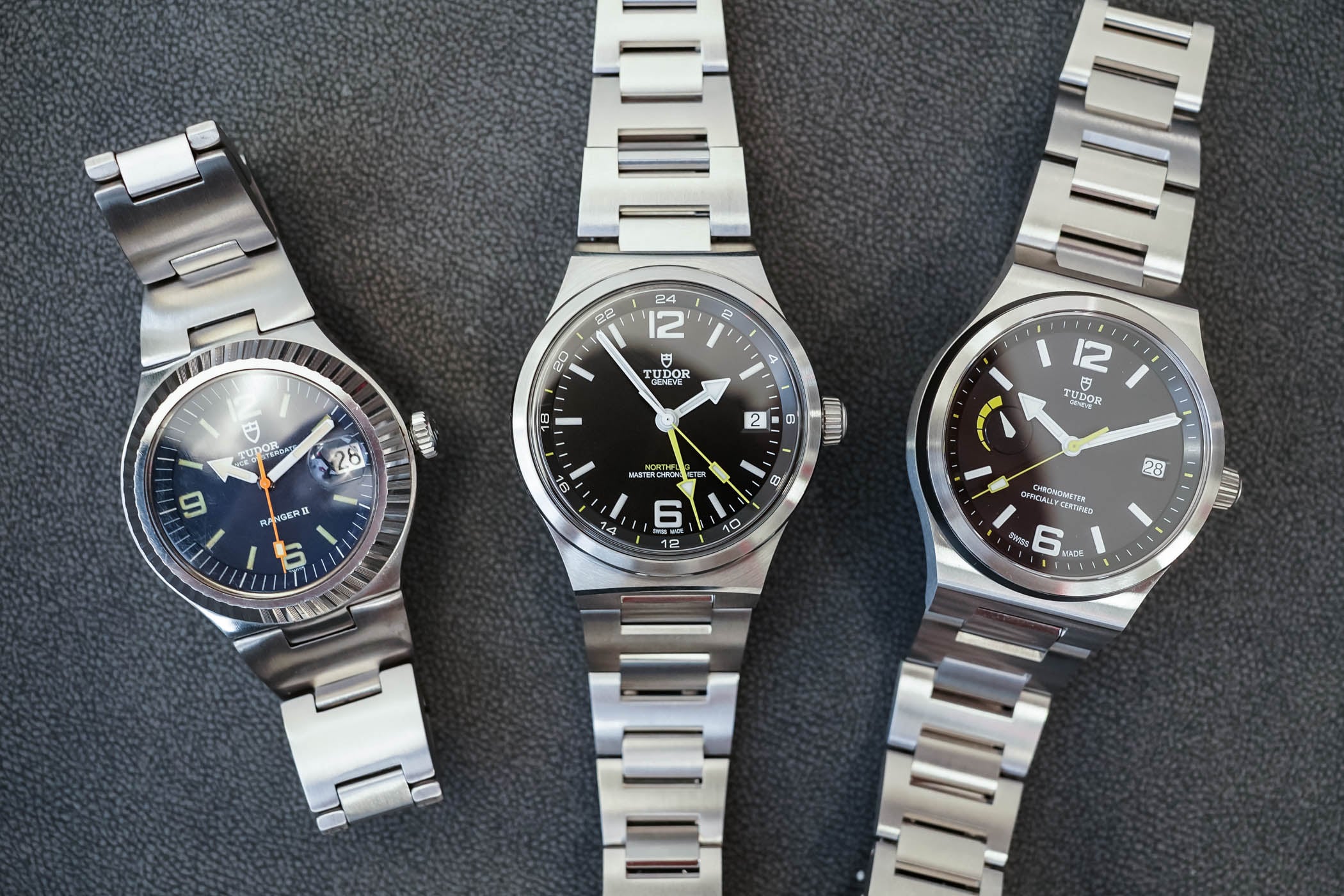
The 2026 watch offers tighter proportions. The case remains 40mm in diameter, but the thickness has dropped from 13.4mm to 12.7mm, and the lug-to-lug has been reduced from 50mm to 48.8mm. Those numbers don’t make it a compact sports watch, but they make a real difference on the wrist. The original, much like the Ranger II, had a certain bluntness to its construction; the new Northflag still feels robust, but more refined.
A Sharper, More wearable Case
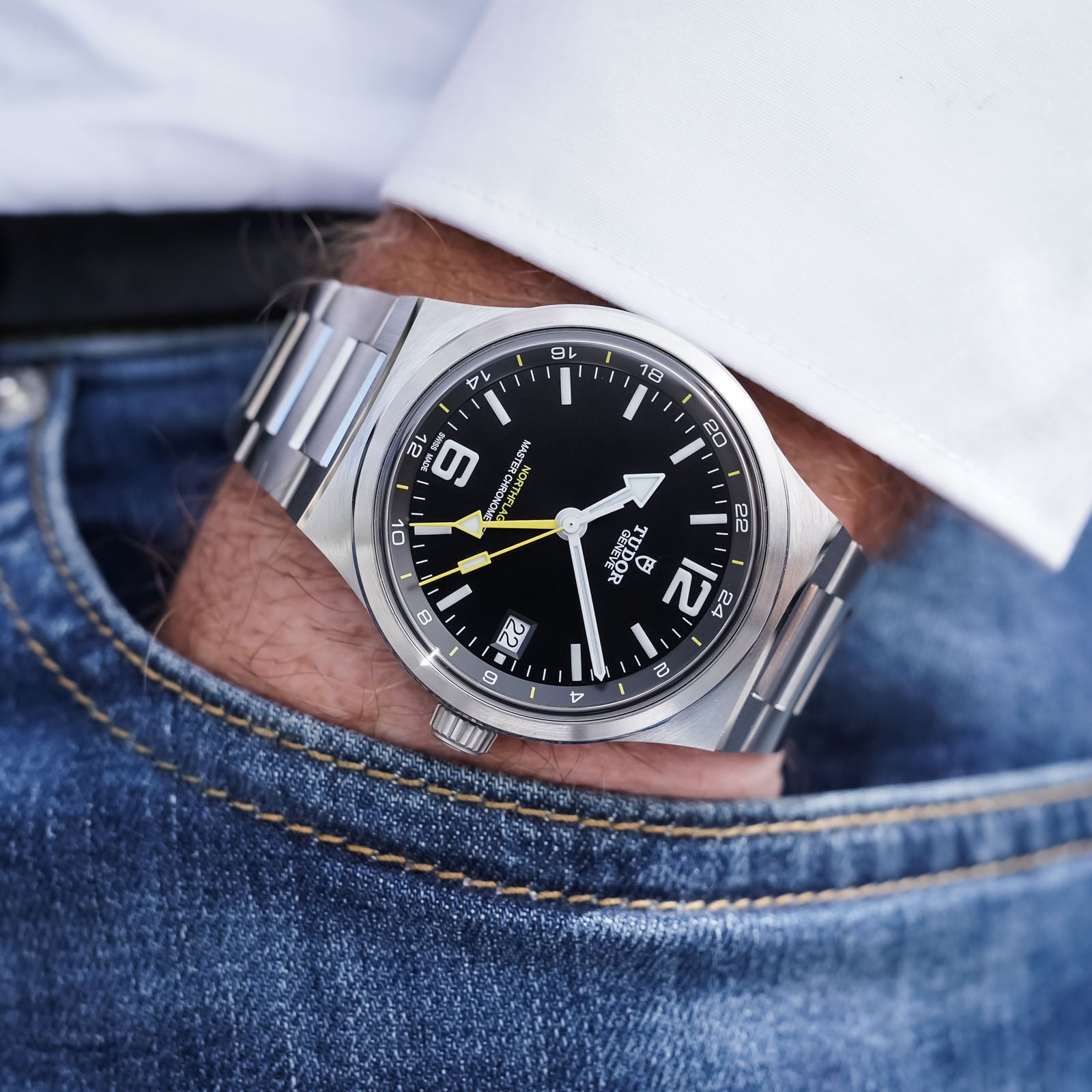
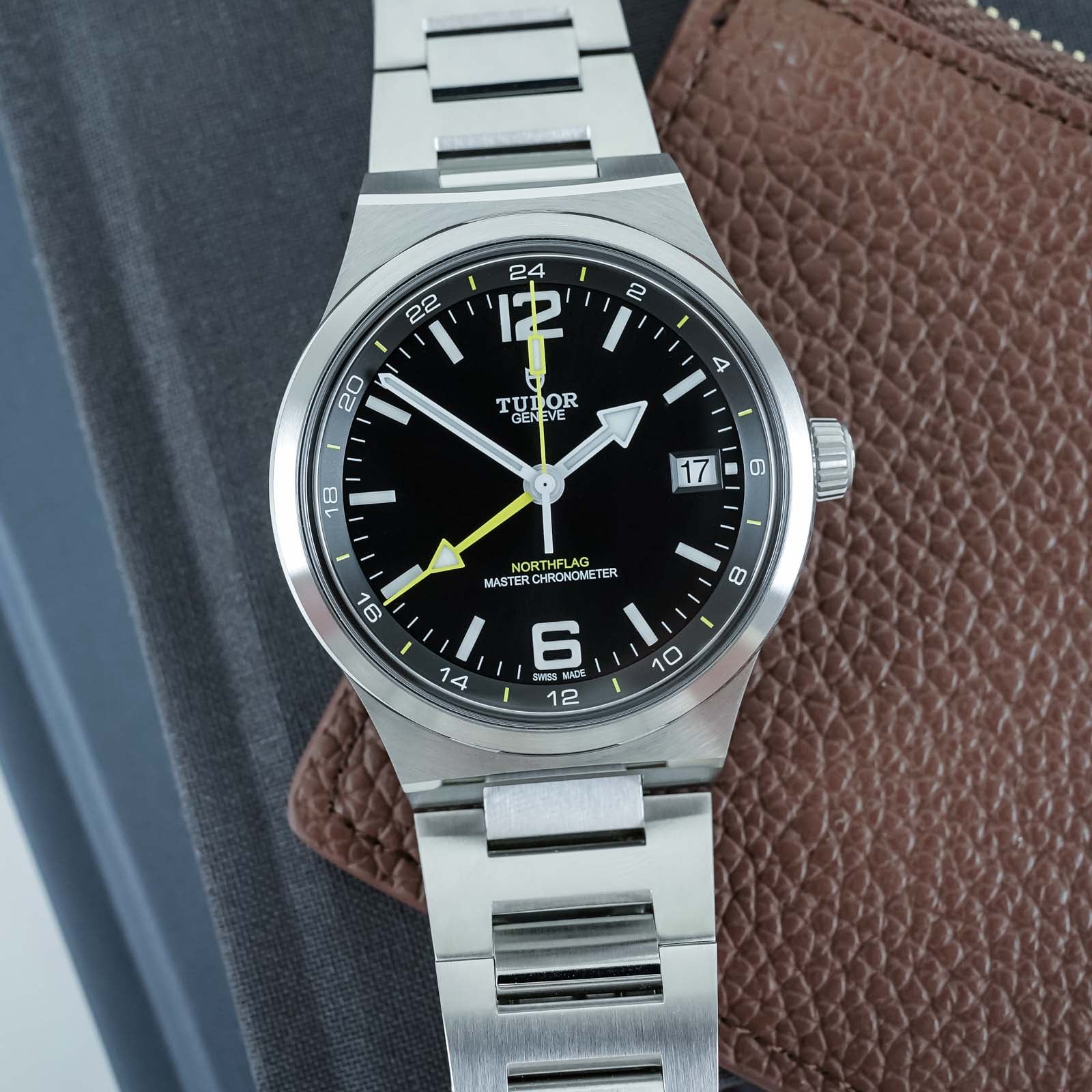
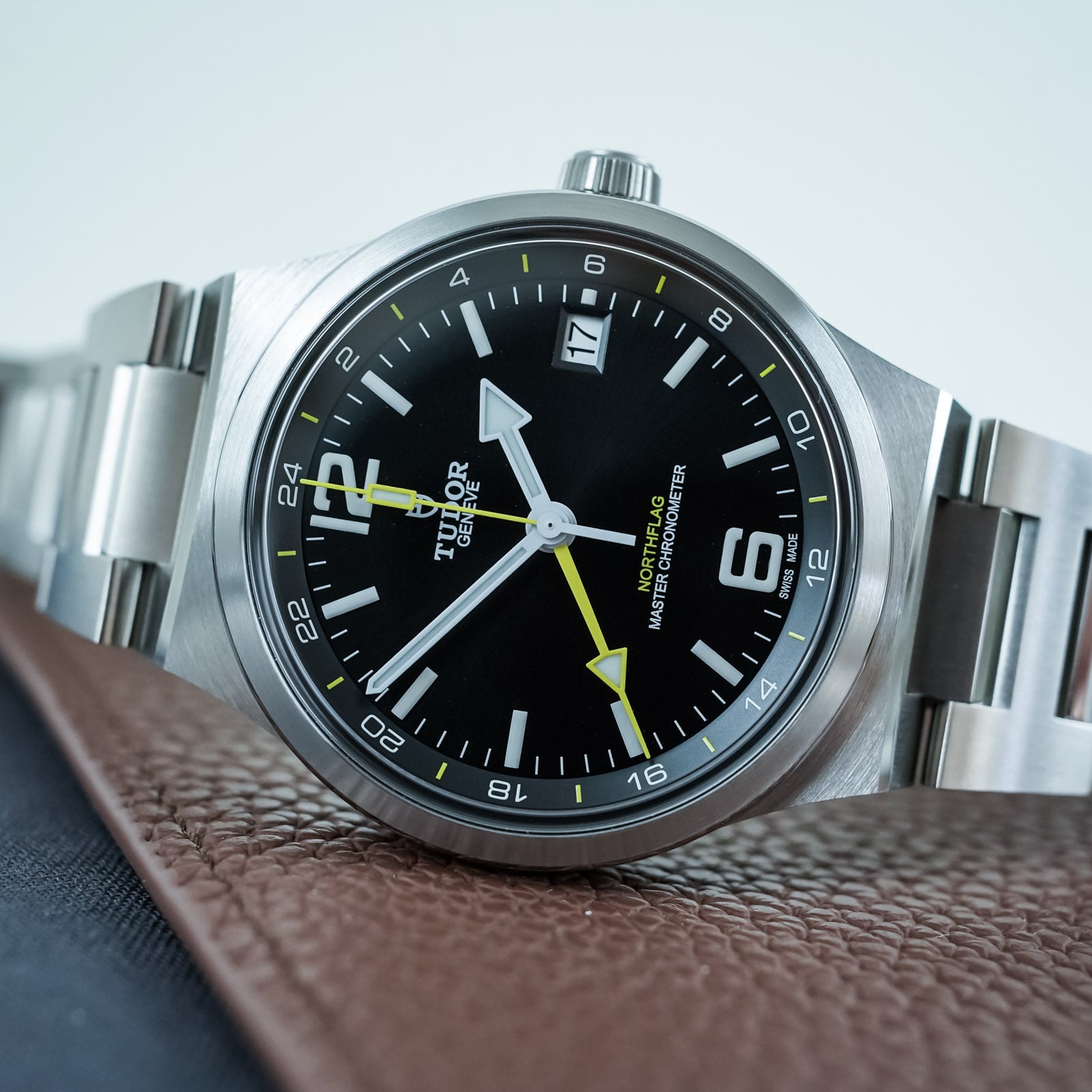
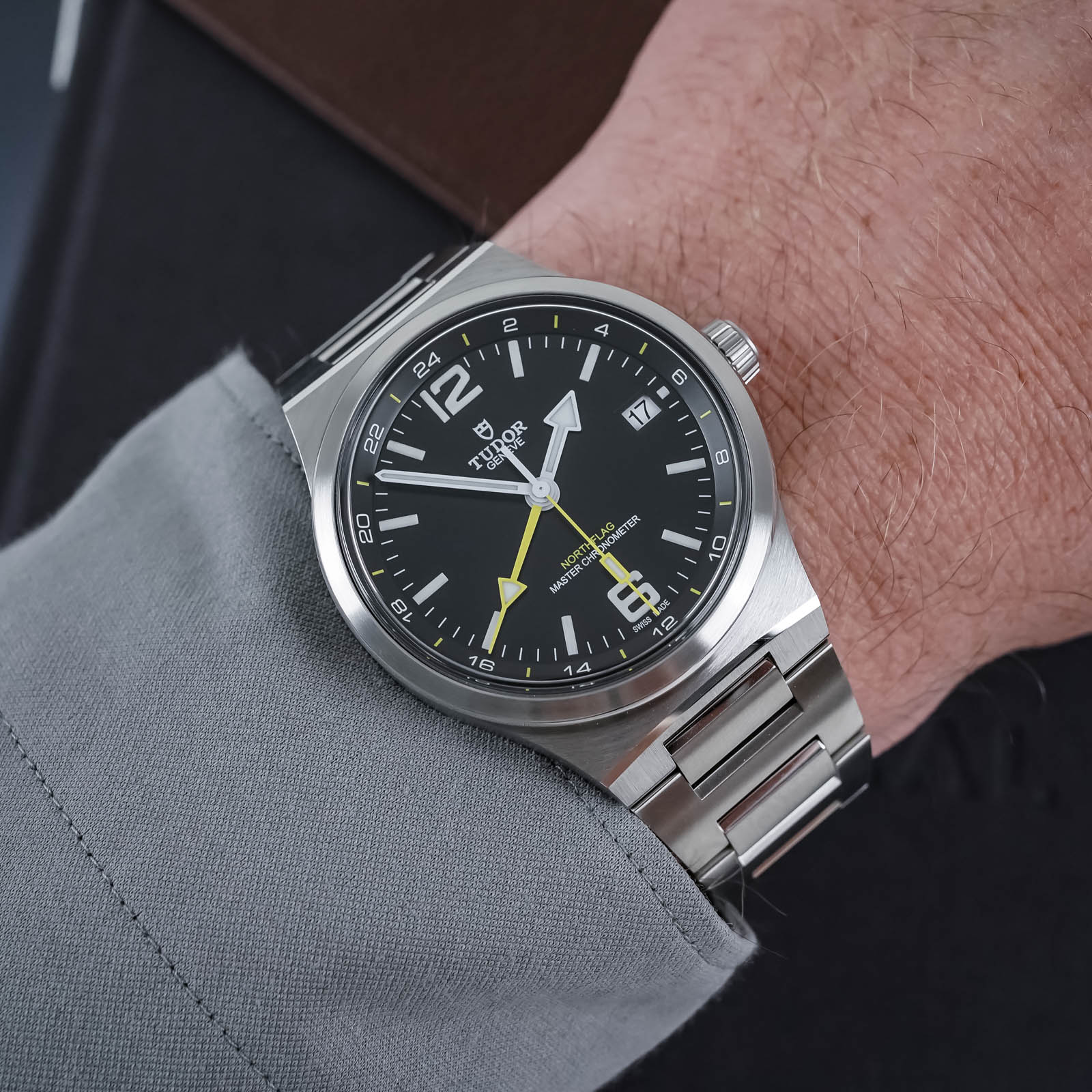
The 100m water-resistant stainless-steel case remains angular and mostly brushed, preserving the original’s tool-watch character. The distinctive black ceramic ring beneath the steel bezel of the first North Flag is gone, replaced by a fixed, brushed and angled bezel. The change removes one of the original watch’s most recognisable details, which gave the North Flag its special appearance that some might now miss, and it simplifies the overall shape. The new bezel is thinner and, paired with a box-shaped sapphire crystal, gives the watch a more slender profile. Sapphire is also used for the caseback, exposing the movement. The screw-down crown at 3 o’clock is more traditionally shaped, but still slightly different from those in the current Tudor collection, and it carries over a subtle element that helped give the original North Flag its personality.
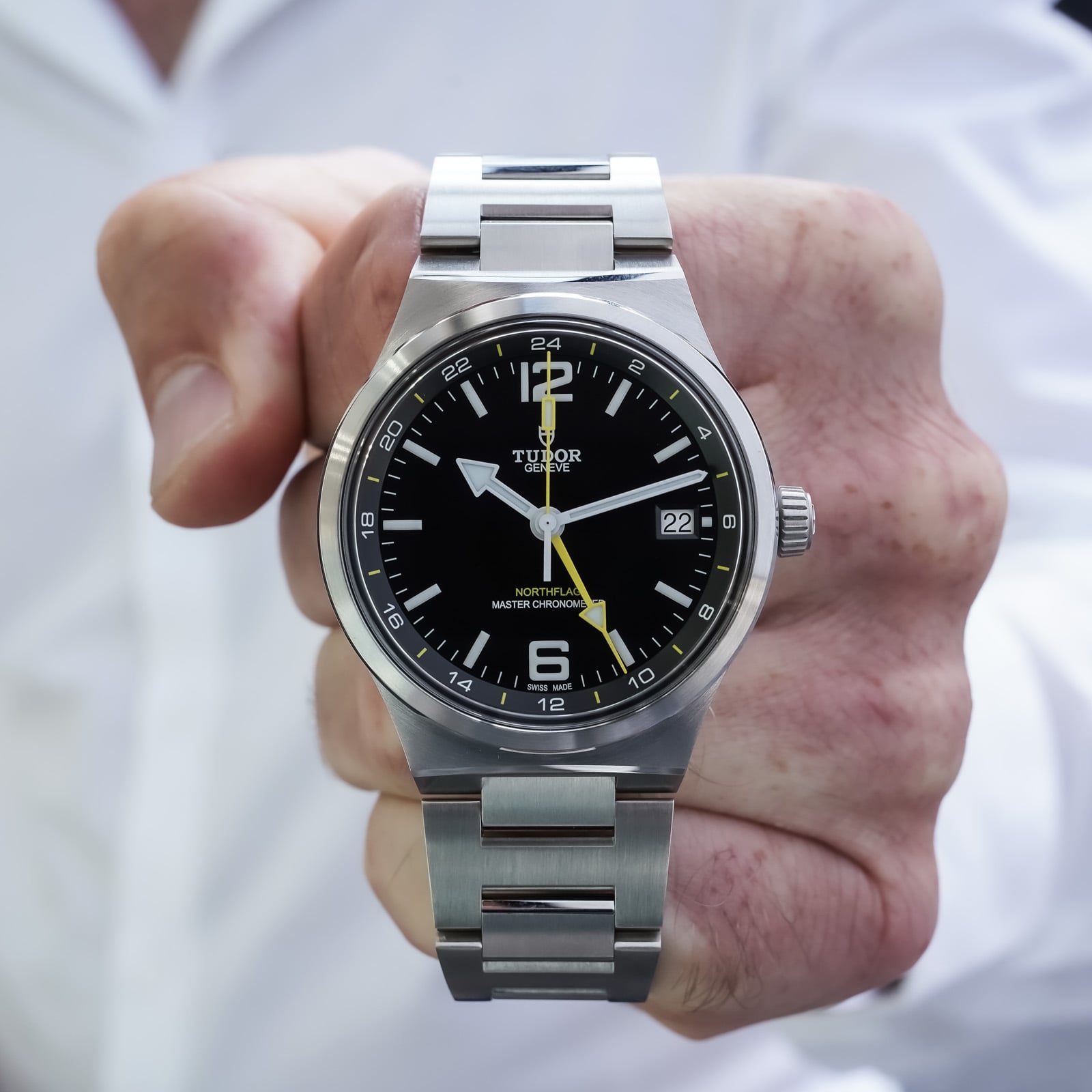
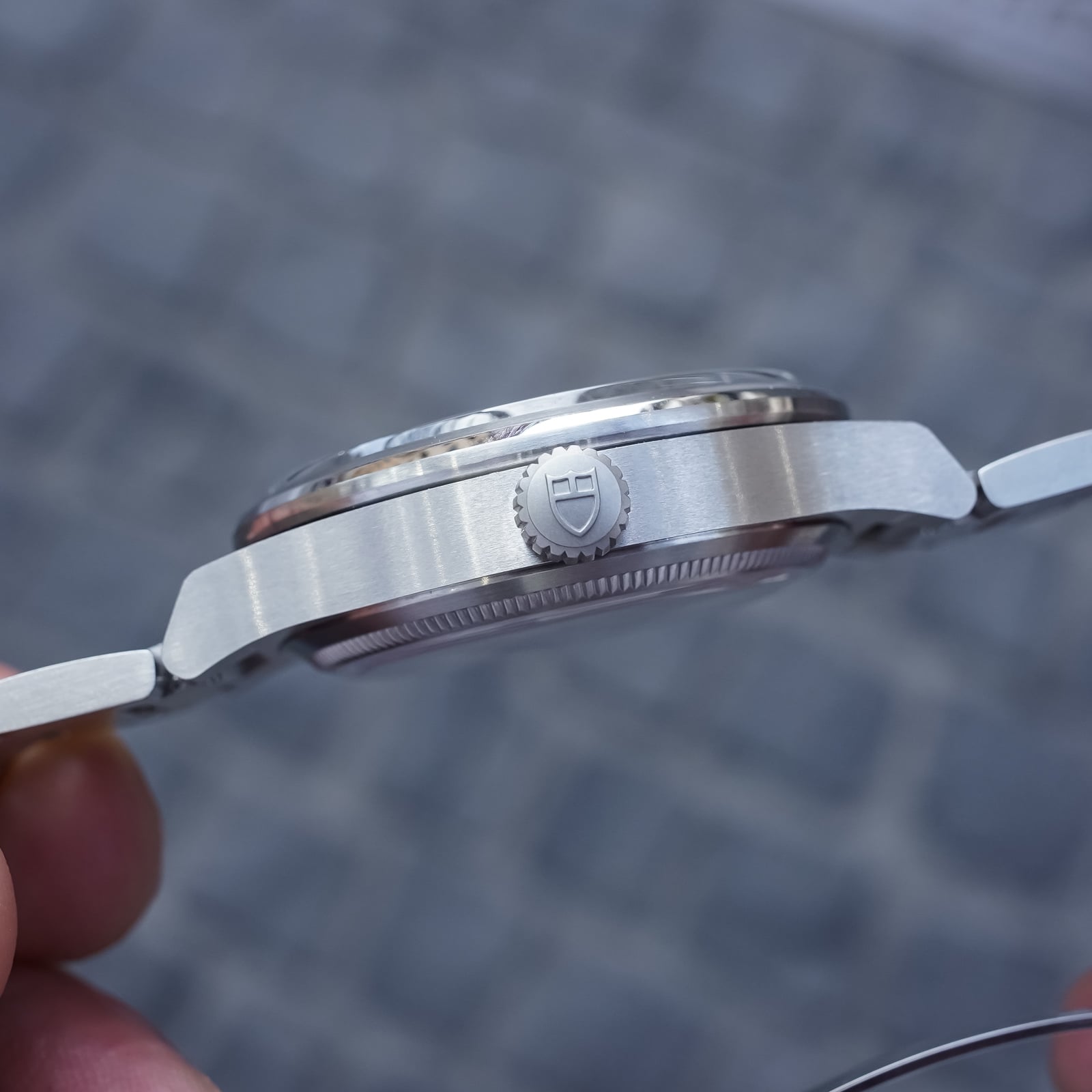
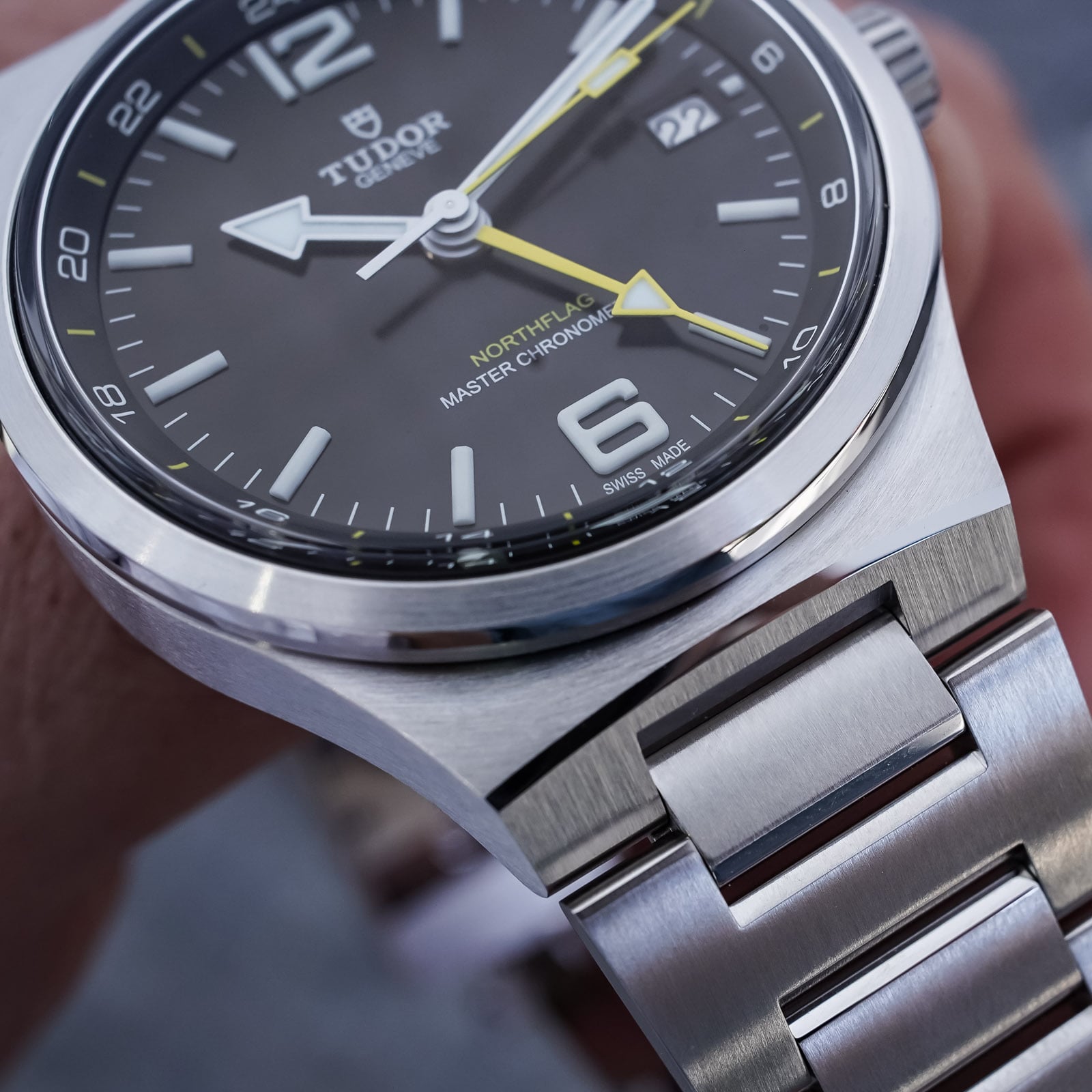
Refinement is perceptible also on the case angles. The original North Flag was edgy and rather utilitarian in its fit and finish. The new Tudor Northflag, even though a watch with robustness in mind, adds some appeal and more attention to detail. There are now polished bevels on the edge of the bezel and at 6 and 12 o’clock on the case corners, two elements that elevate the watch to another level.
More Information, Yet More Clarity
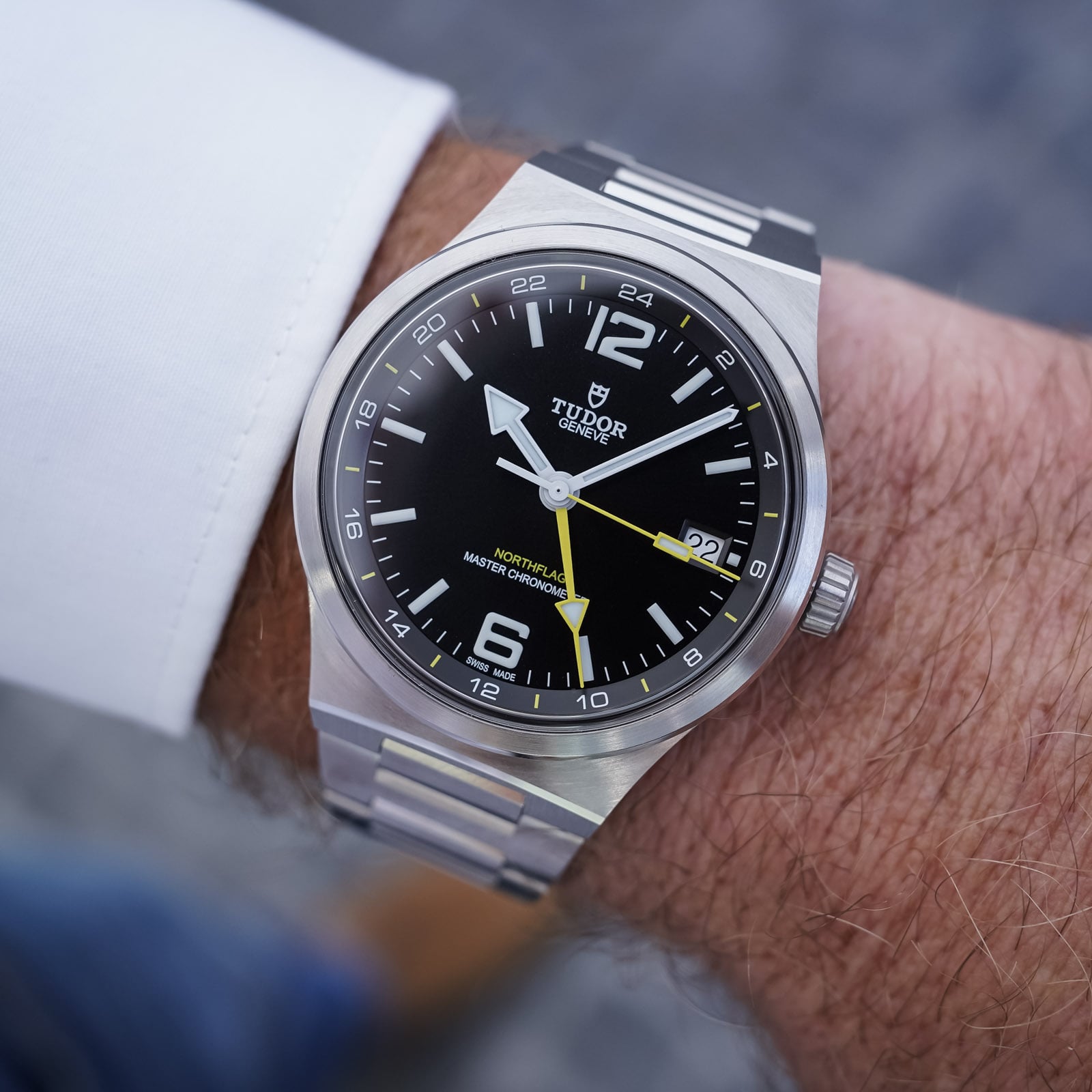
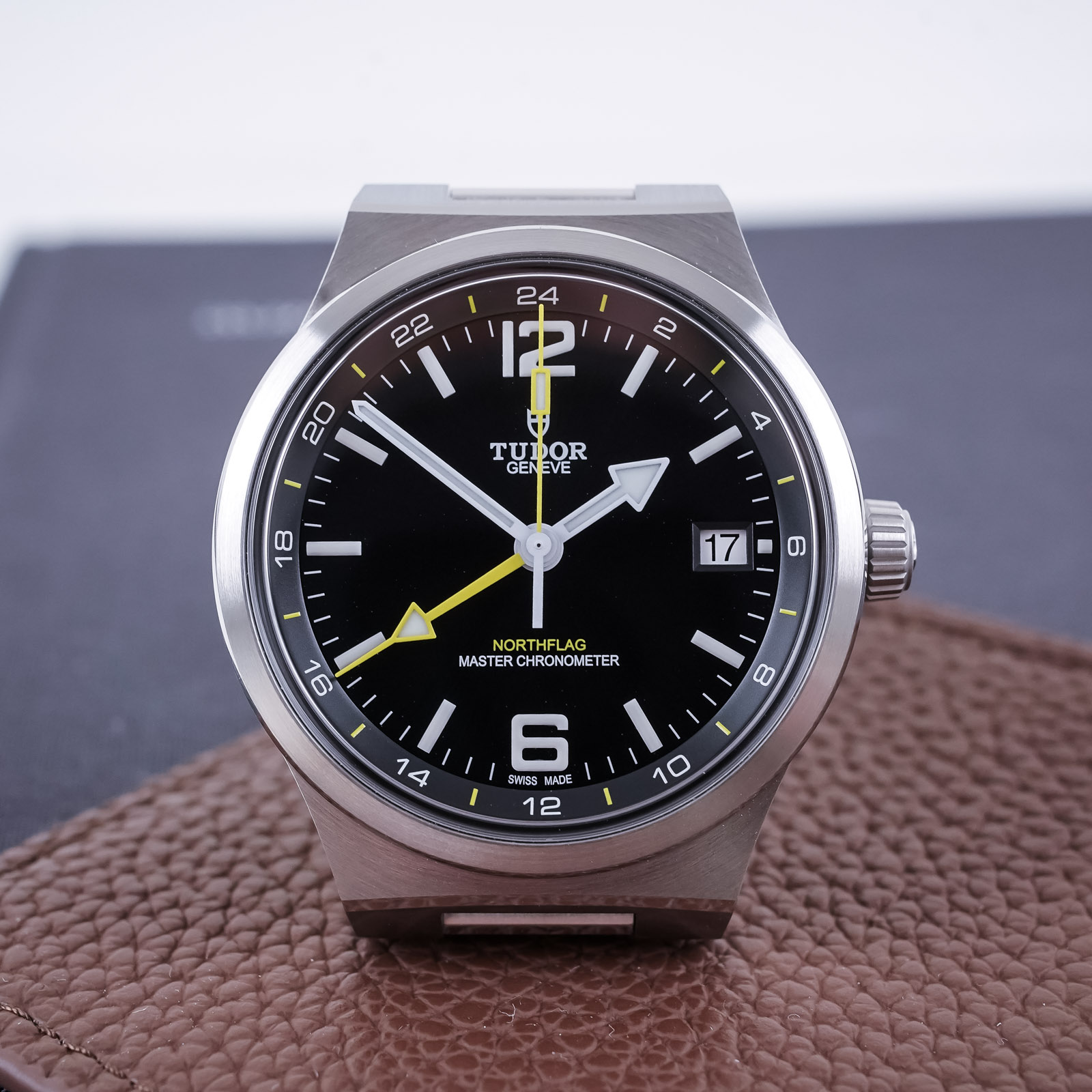
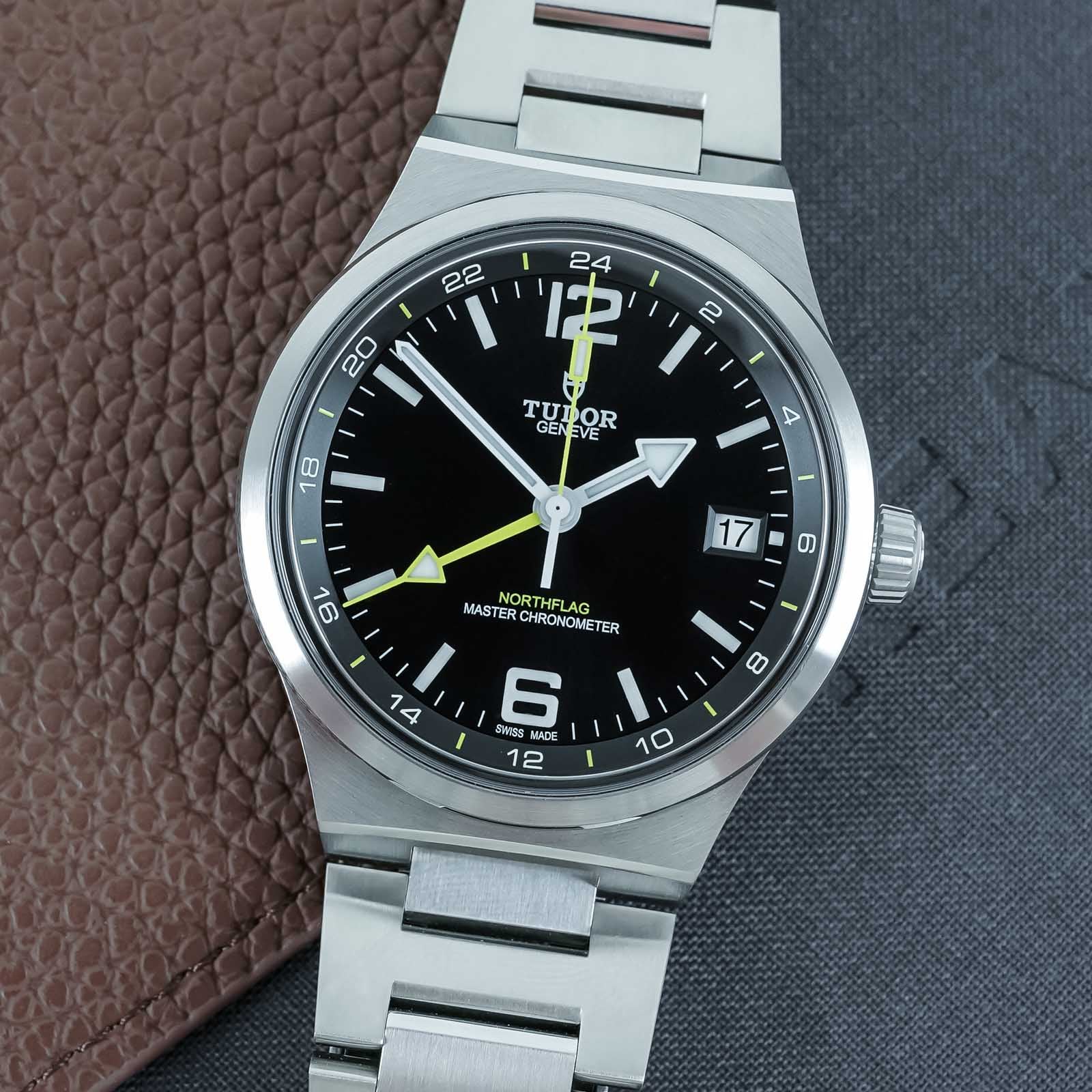
The black dial of the new Northflag follows the North Flag design, with strong white and yellow accents, but the biggest functional change is clear. The original’s power-reserve indicator (by a rotating disc) at 9 o’clock has disappeared, and the fourth hand now serves a true GMT function, in yellow with an arrow-shaped tip. The minutes/seconds track now steps down from the inner flange to sit closer to the dial’s centre; a fixed 24-hour scale replaces it. Other noticeable changes include the yellow-colored central seconds hand now featuring a rectangular, not a trapezoidal, luminous tip, closer to the design of the Ranger II that inspired the collection in the first place, and the dial inscriptions differ. Finally, the matte dial has been replaced by a sunray-brushed surface, discreet in most conditions, visible under certain angles.
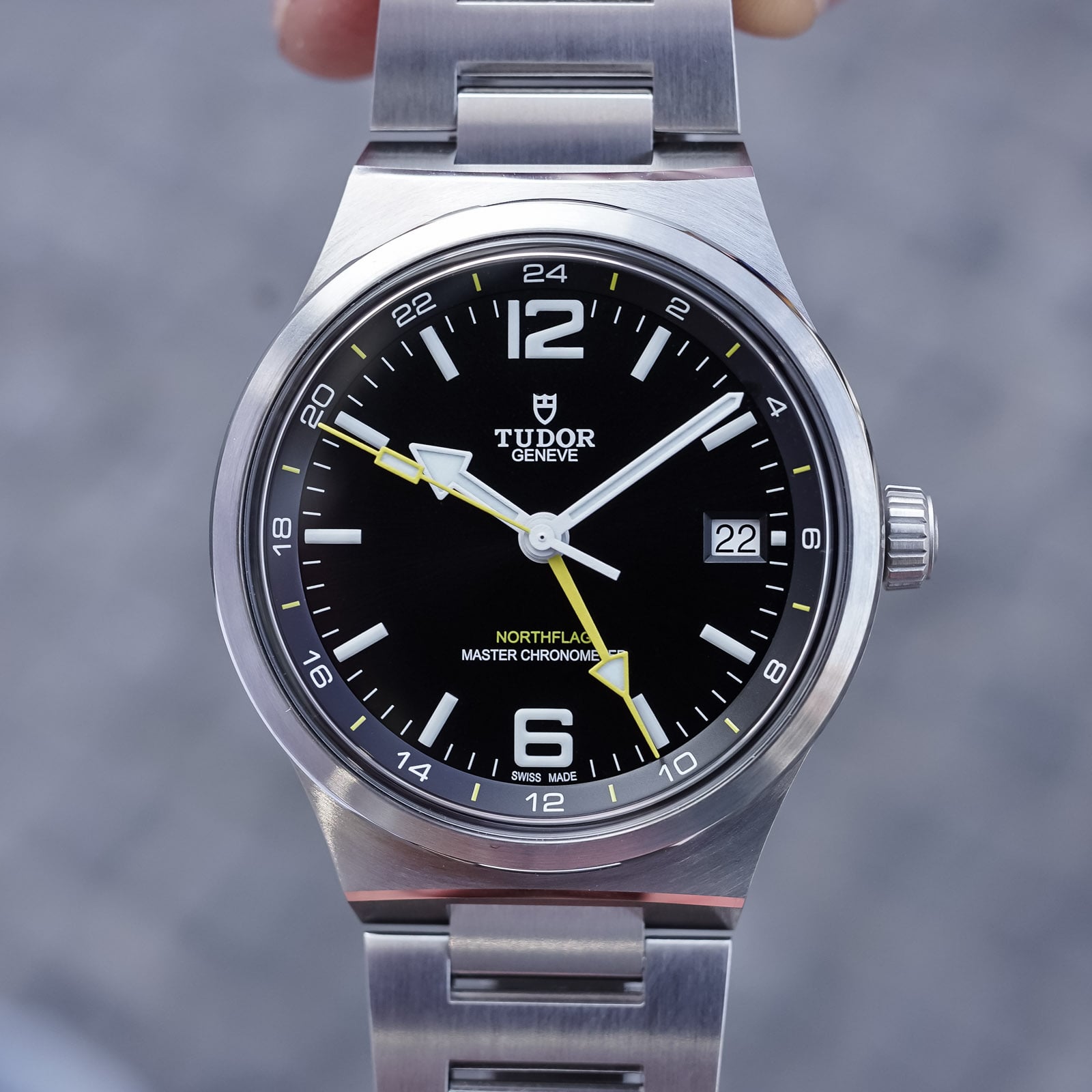
The hours and minutes hands with Super-Luminova treatment remain visually unchanged, and the date aperture is still at 3 o’clock. The hour markers and numerals are now made from monobloc ceramic containing luminous material. The Explorer-like typeface remains, but the raised profile gives the dial more definition. Overall, logical changes. The power-reserve display was directly linked to the significance of the original’s MT5621 and its 70-hour autonomy, but on an automatic watch it was a fairly specialised indication. A GMT adds a practical function without altering the image or purpose. And despite having more information than before, the dial feels more logic, more readable than before, mostly due to the symmetry of its display.
The Calibre MT5652-U
The Tudor Northflag is powered by calibre MT5652-U, a movement already used elsewhere in Tudor’s collection, including the Pelagos FXD GMT and Black Bay GMT family. Produced by Tudor’s movement partner Kenissi, the automatic calibre runs at 28,800 vibrations/hour and offers 65 hours of power reserve.
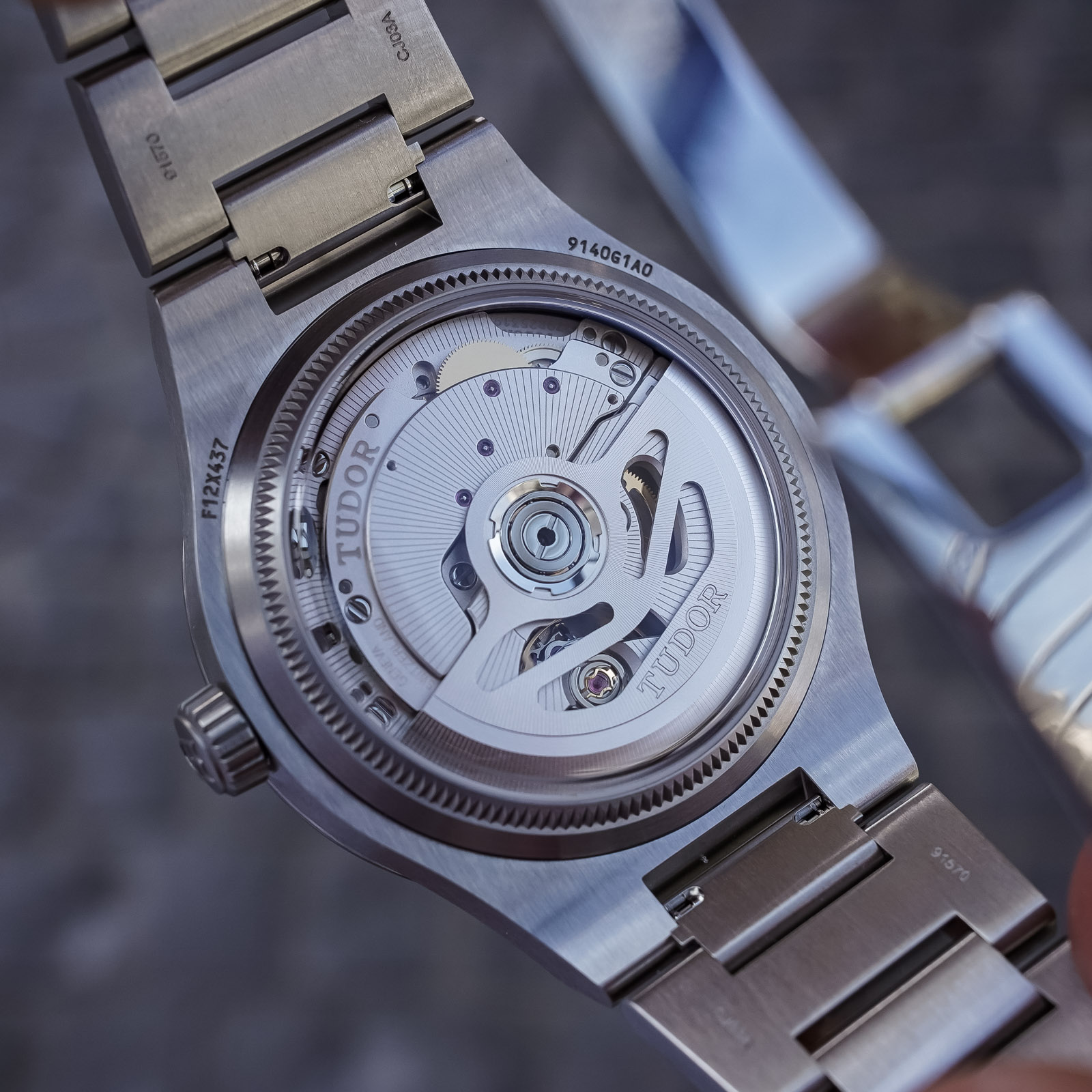
As this is a true GMT movement, the local hour hand can be adjusted independently in one-hour increments, while the 24-hour hand continues to indicate home time. The movement combines a variable-inertia balance with a silicon balance spring and is certified by COSC and METAS as a Master Chronometer. It has 32 jewels and, unlike the movements hidden inside most traditional tool watches, is visible through the fluted-edge caseback.
The Bracelet with T-Fit
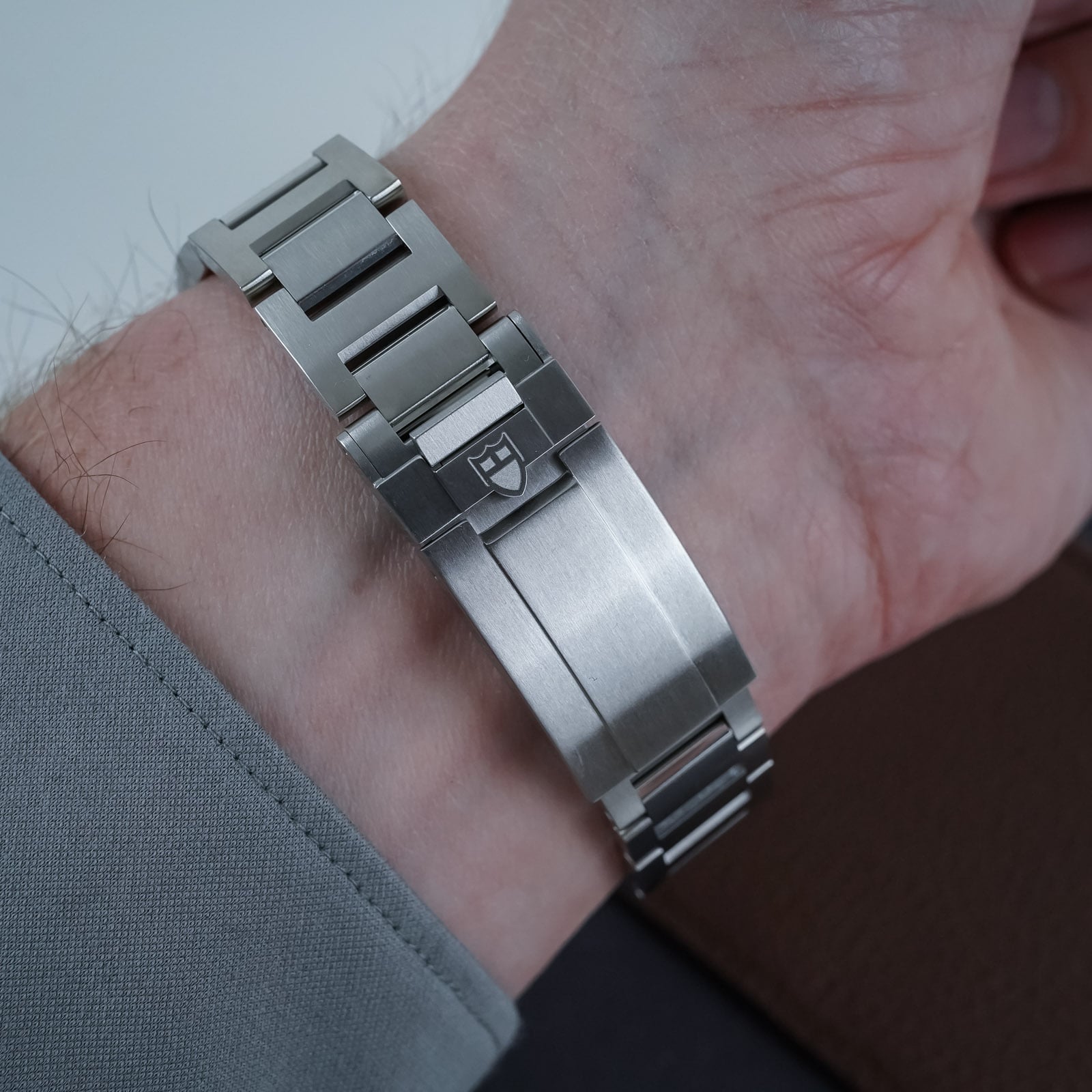
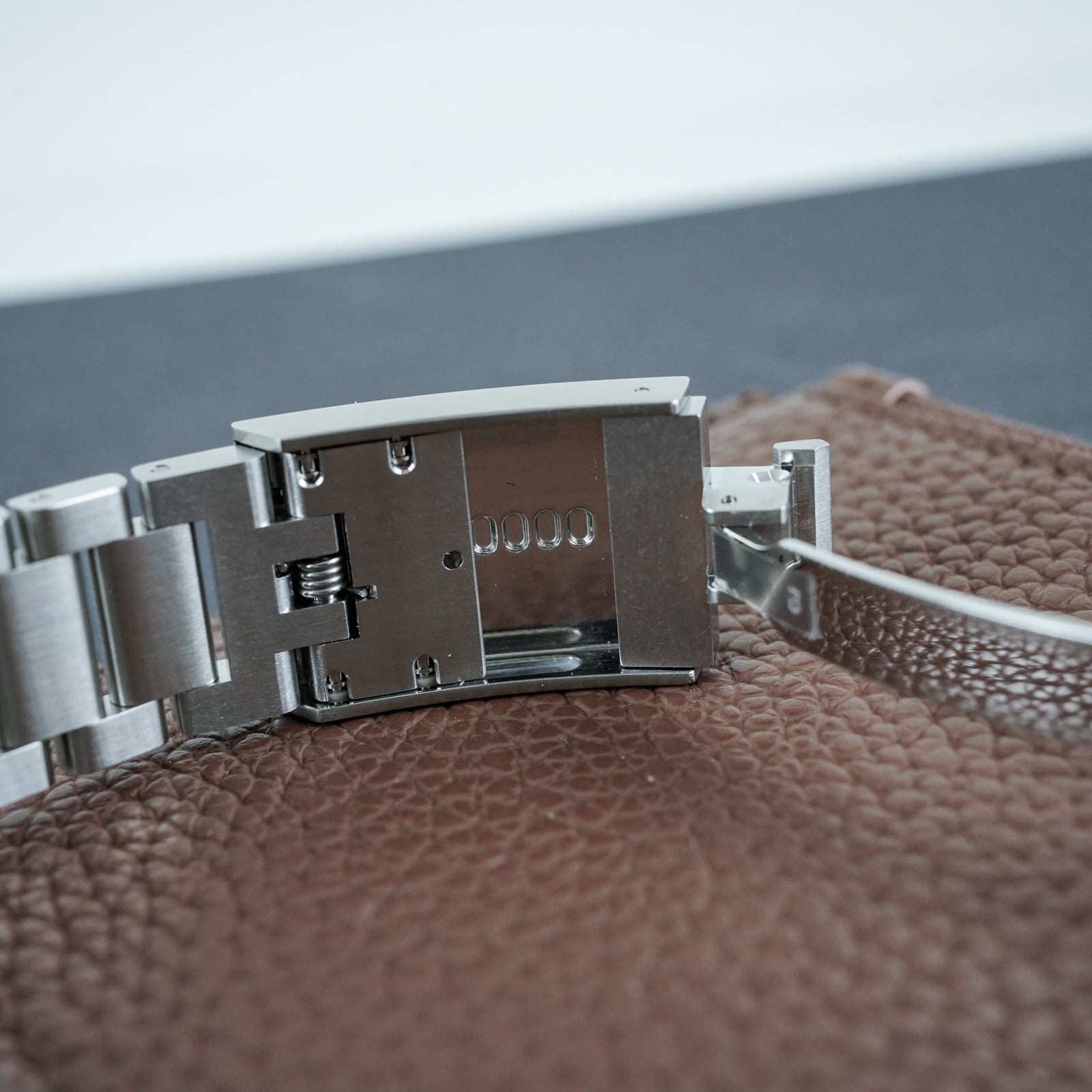
The integrated-style steel bracelet, with broad H-shaped links and a mostly brushed finish, has a tool-like appearance and maintains the strong connection between watch and bracelet that was important to the Ranger II-inspired design. The most relevant upgrade here is Tudor’s T-Fit clasp, which provides rapid on-the-wrist adjustment. It is a small ease-of-life improvement, but an important one for something meant to be worn as an everyday sports watch.
Thoughts, Availability and Price
The changes are positive. The new Northflag is a clear evolution of the 2015 watch, but the reduced thickness and shorter lug-to-lug make the proportions more restrained; the cleaner bezel and sharper lines make it more contemporary. The first-gen North Flag was also a bit rough in its execution, while this new Northflag has more refinement, without losing its adventurous edge. The original North Flag had a special appeal, with its ceramic bezel ring and somewhat quirky power-reserve display. These features are gone, but the new watch gains a useful GMT function, a modern movement, bracelet adjustment, and a case that feels better on the wrist. Maybe this new-gen is a bit more mainstream, but it also feels like a far more accomplished version.
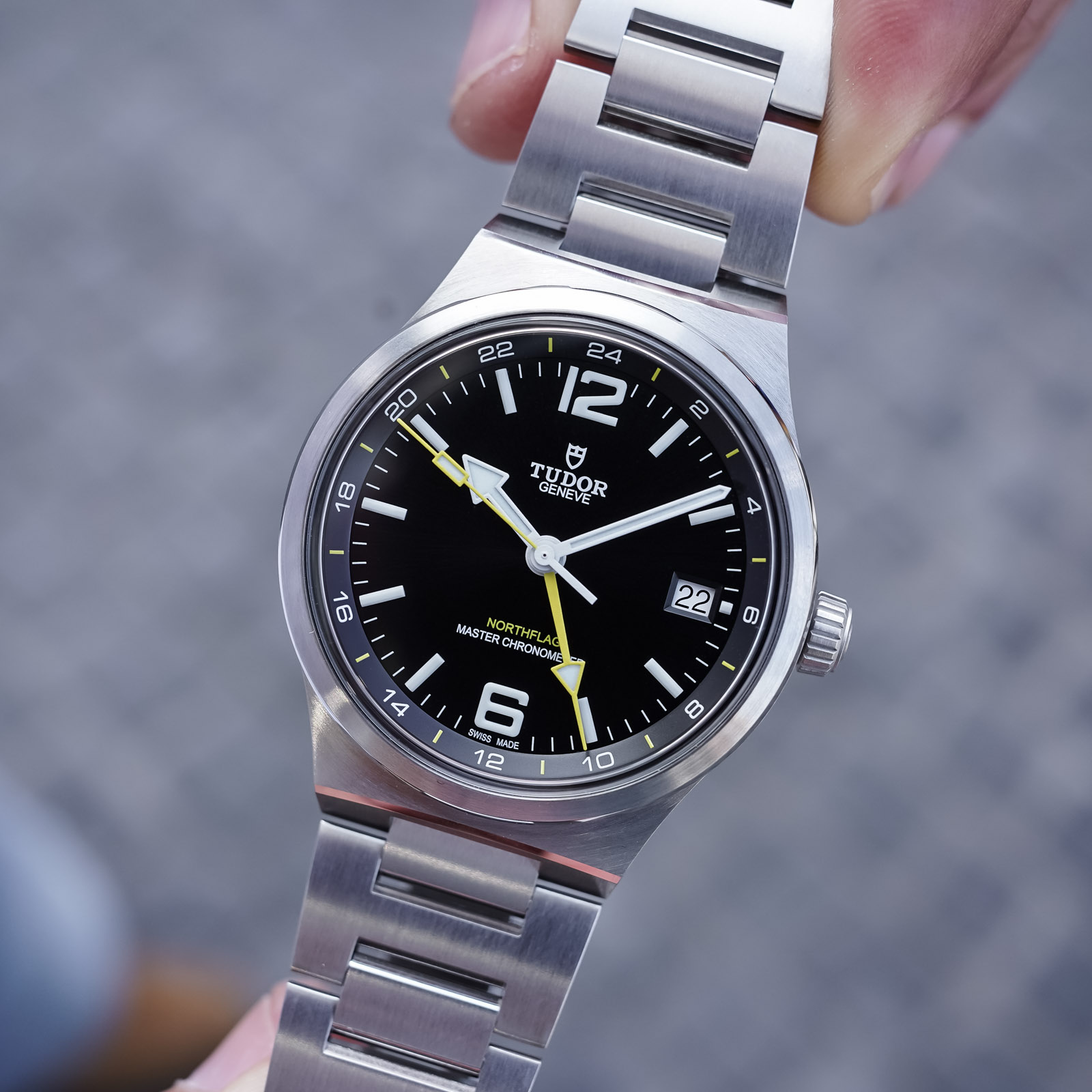
The Tudor Northflag GMT is part of the permanent collection but is available exclusively through Tudor boutiques. It is priced at CHF 4,500, EUR 5,050 or USD 5,525. For more details, please visit tudorwatch.com.

4 responses
The watch is beautiful…the bracelet is a bit too much…I would love to have this watch with NATO strap….
It sure would’ve been nice if they had designed and included a rubber strap with the bracelet.
Bummer it’s boutique too. Two great new Tudors: Chrono 39 and NORTHFLAG: both impossible to see in real life.
To the previous commenters:
Rubber strap = Yes!
NATO = Aren’t we done with those, yet?