


 Not all images were able to load for printing. Please close the print window and try again.
 The Tudor Monarch, an Unexpected yet Successful Return
It's new, but with an old name... It's fresh and in tune with its time, and yet vintage-styled.
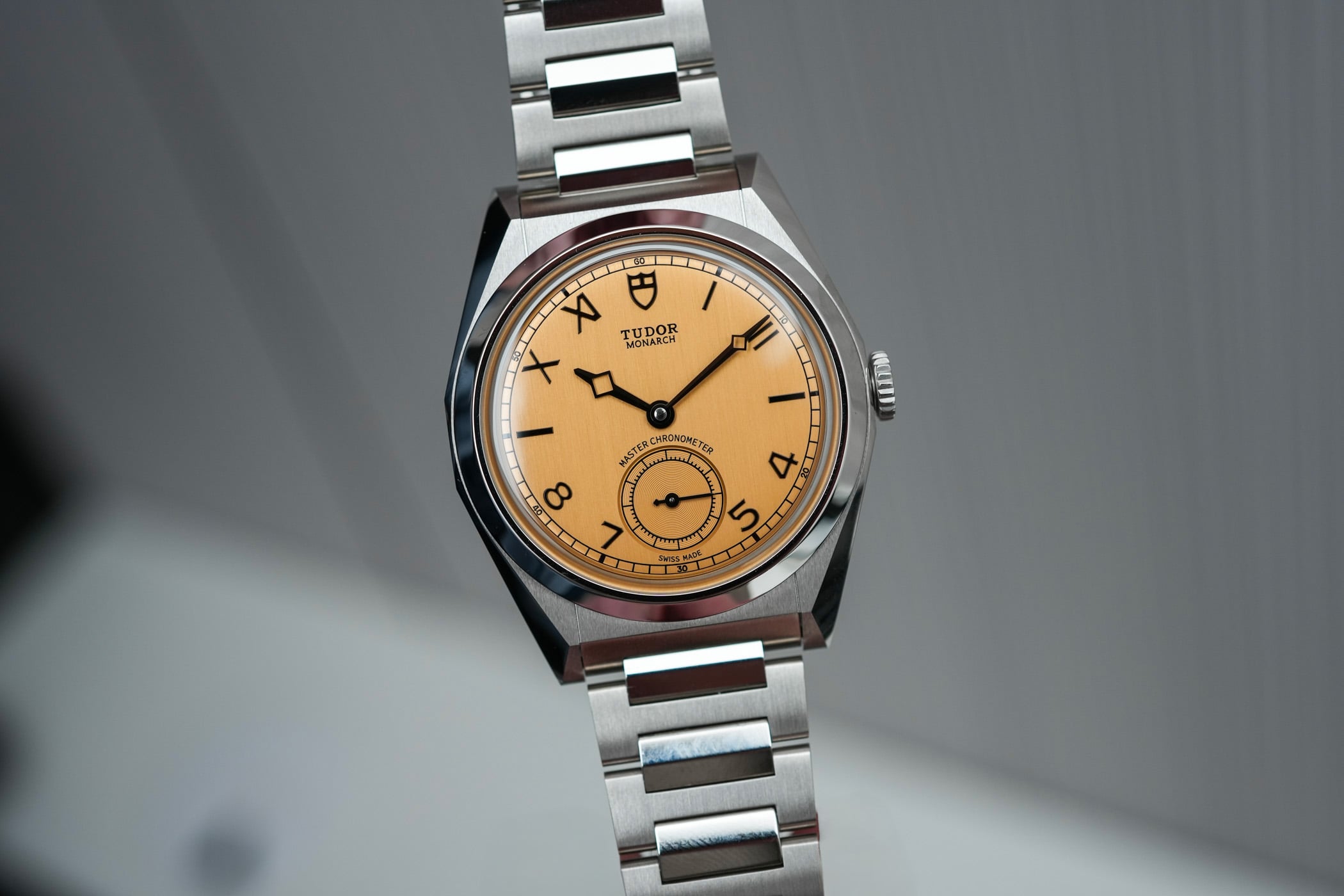
This year was a big one for the Rolex group: the Crown was celebrating the 100th anniversary of its emblematic Oyster case, while Tudor, founded in 1926, turned 100. With this in mind, expectations were high, and some predicted fireworks of novelties, huge innovations, entirely new collections all around… But the celebrations were much more discreet, at least for Rolex (even though we might not have seen everything yet). At Tudor, however, there was something new, or at least the return of an old name, printed on the dial of an entirely new watch, the Tudor Monarch. But what is this watch all about? Let’s find out.
The Tudor Monarch in a nutshell
Let’s start with the whole intention behind the creation of this watch. It is, as far as I can tell, the model that celebrates the 100th anniversary of the brand. Tudor hasn’t pushed this anniversary too strongly and remains low-key on the whole century-long history, and instead focuses on the product. Which, in this day and age, is somehow pleasant and avoids marketing-driven talk.
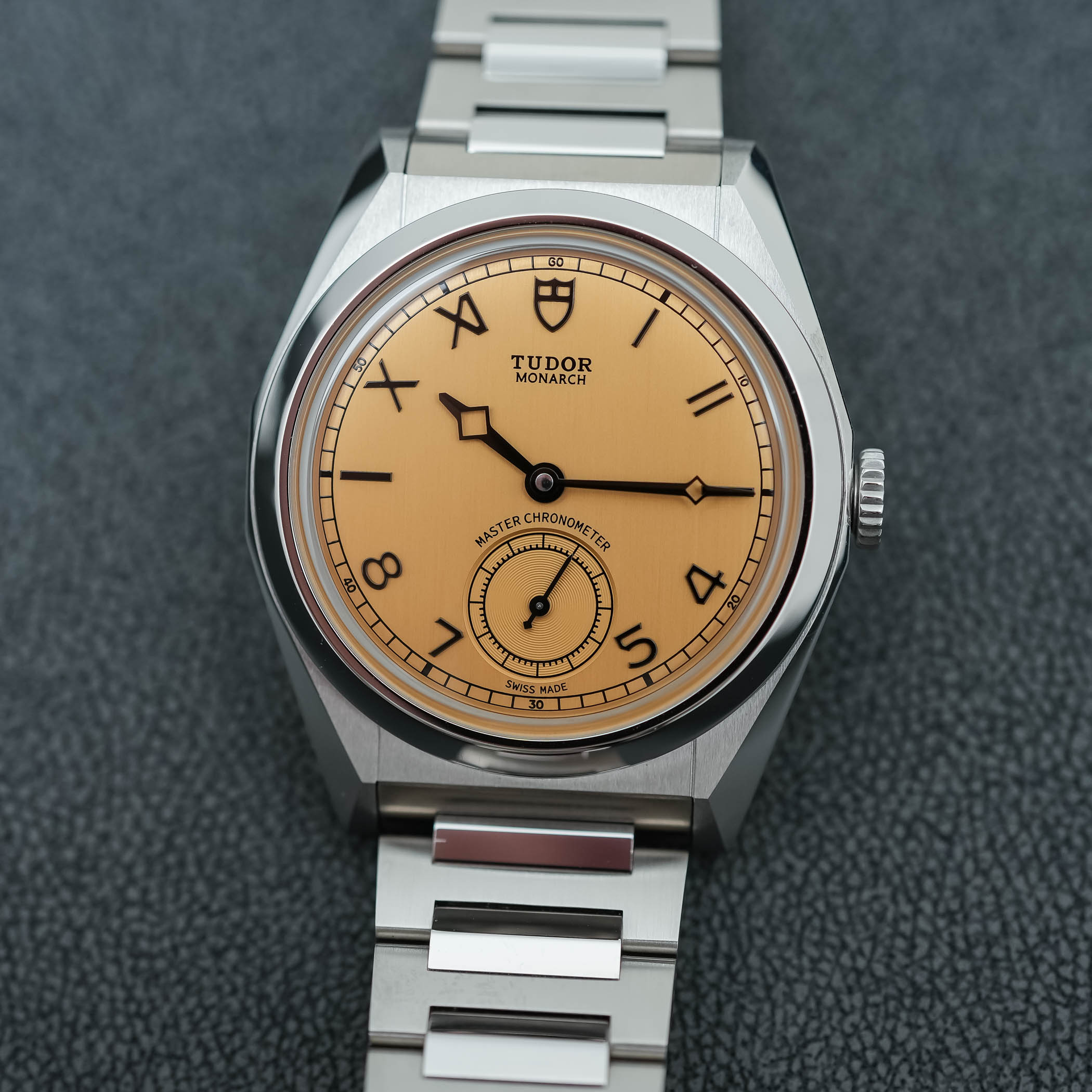
The name… Monarch. The watch is new, the nomenclature isn’t. The Monarch appellation has been used in the past, referring to a series of sporty-chic watches that we’d better forget, often in steel-and-gold combinations, with coin-edge bezels and quartz movements (automatic ones also existed). As with many of the brand’s models during the 1980s and 1990s, these weren’t the most glorious days of Tudor. So why bring back the name? Well, to mark the beginning of a new era, and to mark the launch of a new watch that sits high in the brand’s portfolio, the crowned watch, if you will, which benefits from the best the brand has, either within its own catalogue or from its numerous suppliers.
The Tudor Monarch is a watch that sits well within its time. It has that classic sporty-chic vibe that has found so much favour recently, yet it isn’t per se an integrated design. It has a dial that’s deeply vintage-inspired, reassuring and yet unprecedented, but also light traits of indie watchmaking in the display and colour. It has a new case, sharp and angular, nicely finished and ergonomically pleasant, which is home to a higher-grade version of the Kenissi architecture. It even comes with traditional finishes, and yet pairs that with top-tier certifications. And yes, the price is on the higher end of the brand’s spectrum, which doesn’t mean it is not good value for the money.
The details
The first comment I need to make is that I am pleased to see something new from Tudor, something that doesn’t have the name Black Bay printed on its dial. As great as the collection might be, and as instrumental as that series of watches has been for Tudor’s return to favour, we needed something more. That said, the last time Tudor came with a watch that was part of the classic trio (Black Bay, Pelagos, Ranger), it was the North Flag, and, despite objective qualities, it has not been a commercial success (that said, it is still for us an underestimated watch that needs to be discovered)… Time will tell whether the Tudor Monarch will meet success or not, but the first reactions of the press and watch enthusiasts are positive. Rightfully so? I do believe the enthusiasm is justified.
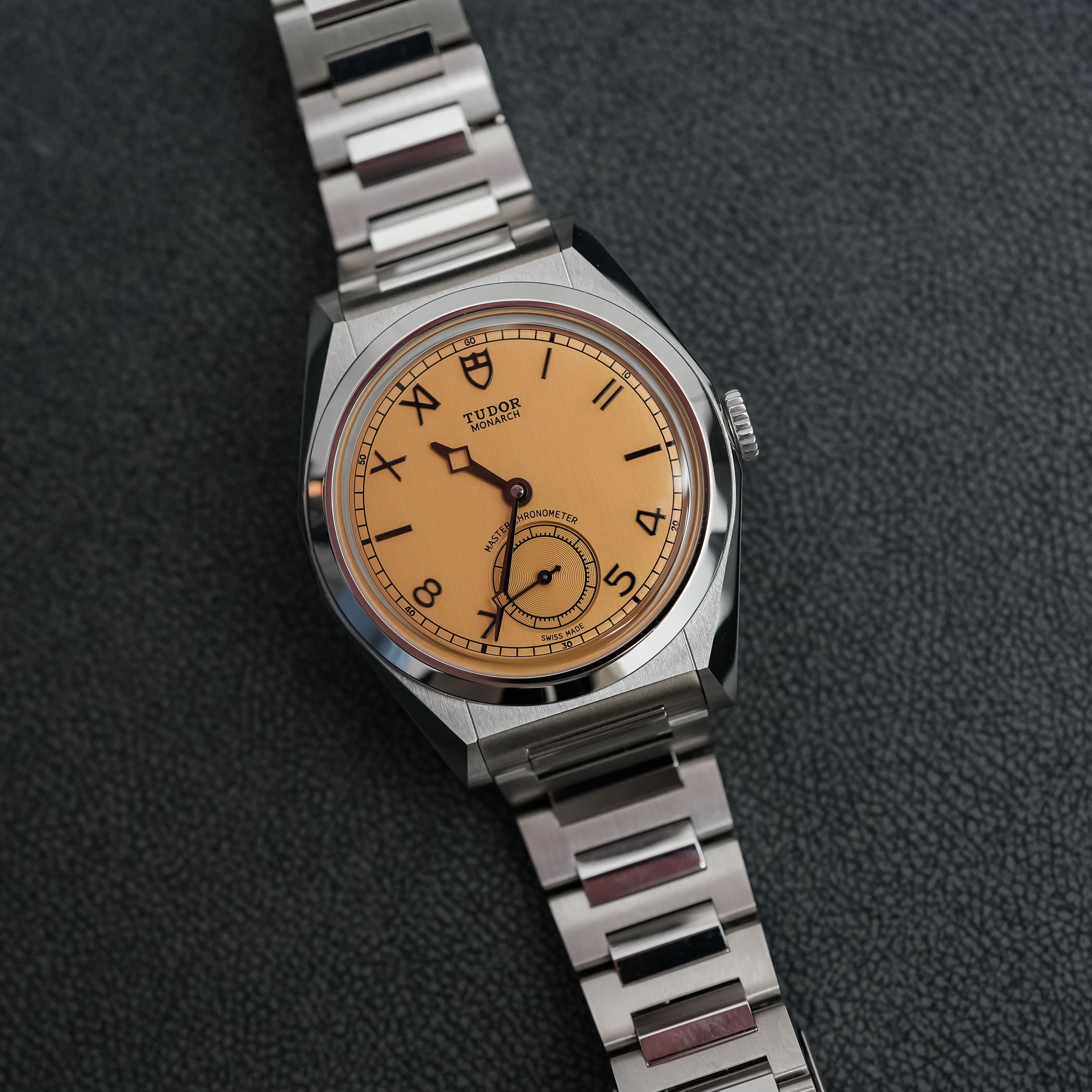
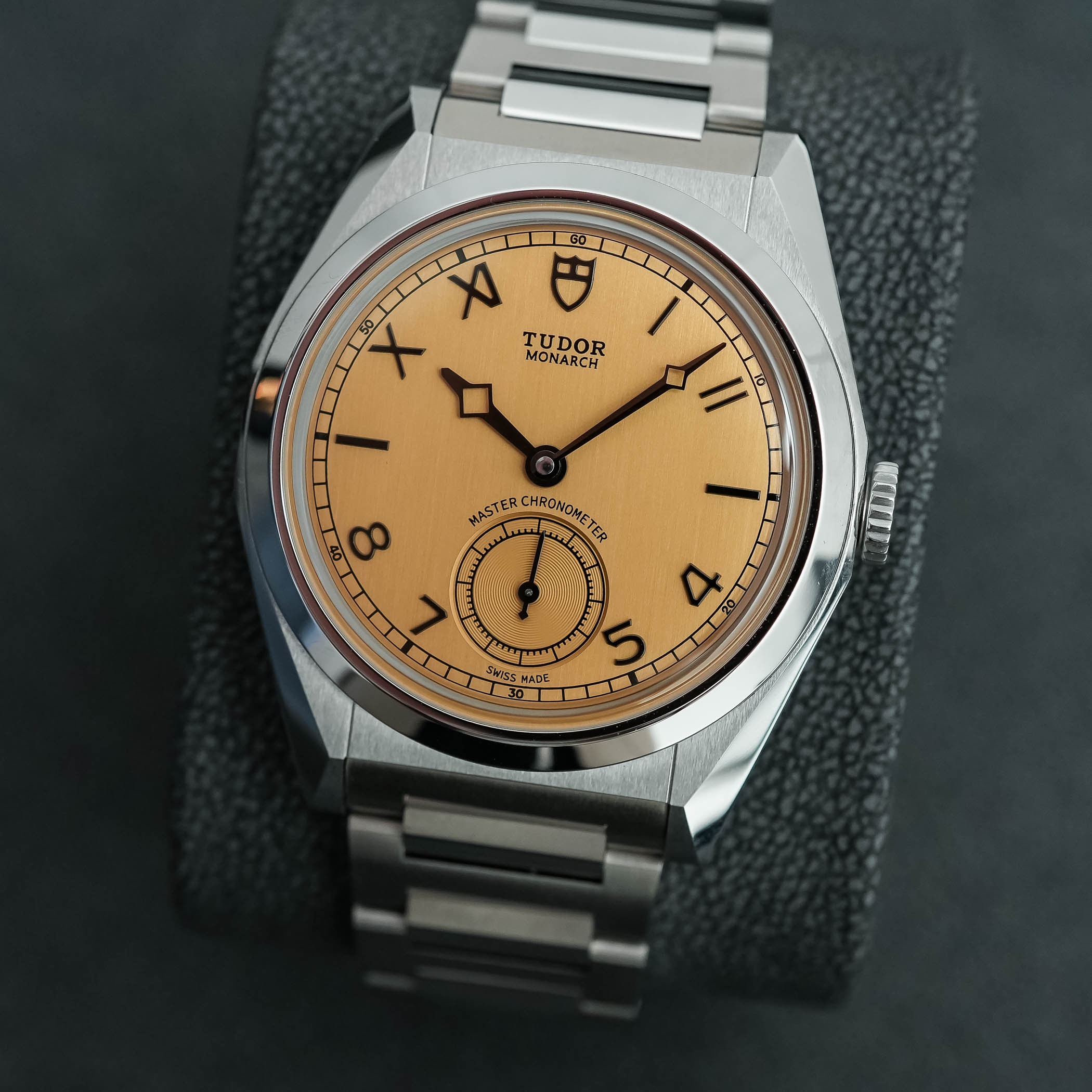
Let’s start with the design of the Monarch. At a glance, you could see something “luxury sports watch” with an integrated bracelet here. Indeed, there are some traits of the category here, starting with the actual shape of the case, with its sharp, faceted barrel-shaped middle part and no actual lugs. The Monarch is built around an octagonal idea, but doesn’t have everything an integrated sports watch normally has. For starters, the bracelet isn’t designed as a continuation of the sides of the case, and yet it isn’t connected to the case traditionally. There are some inter-lugs elements, which add consistency to the design. The back, however, reveals a more classic construction that would make it fairly easy to swap for a leather or rubber strap.
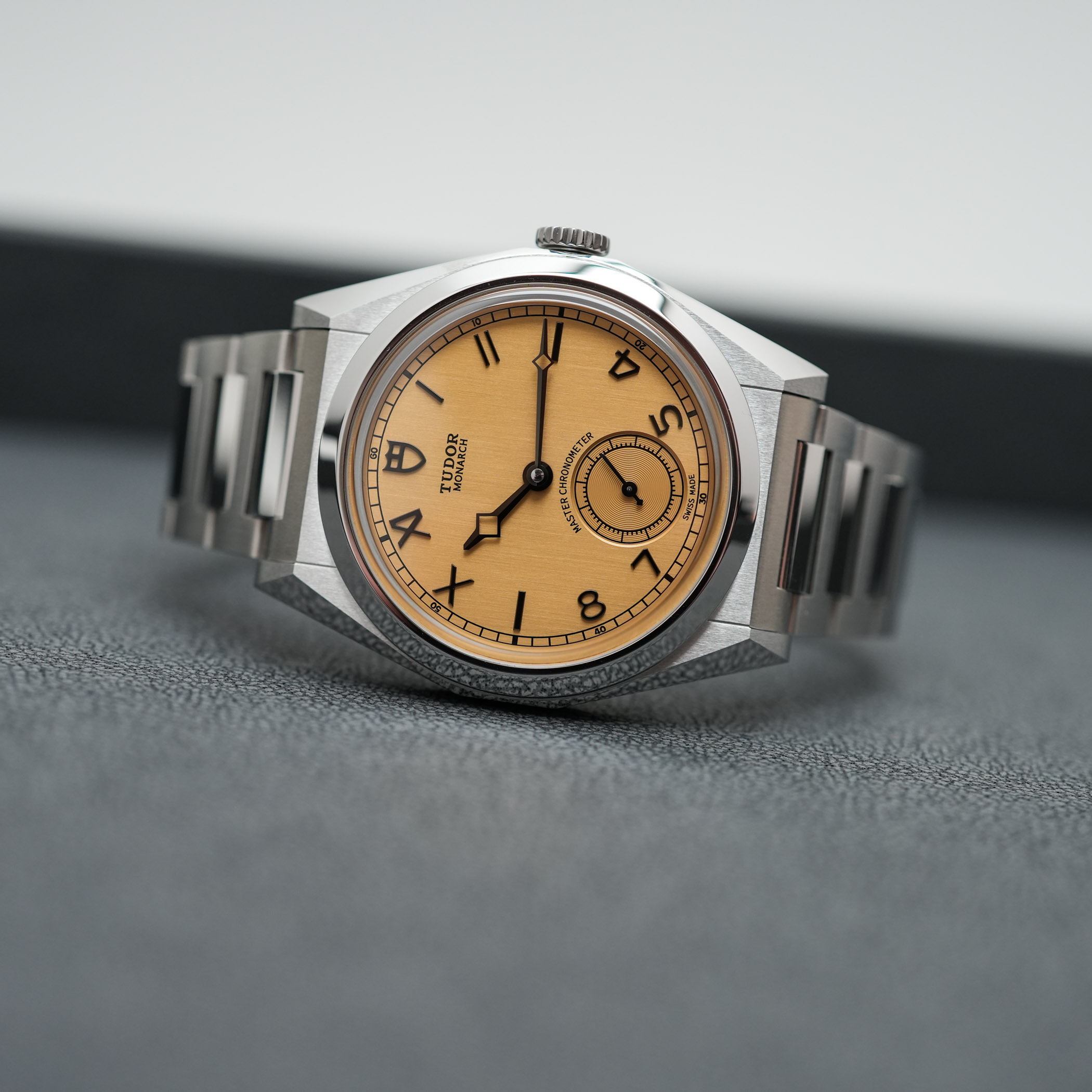
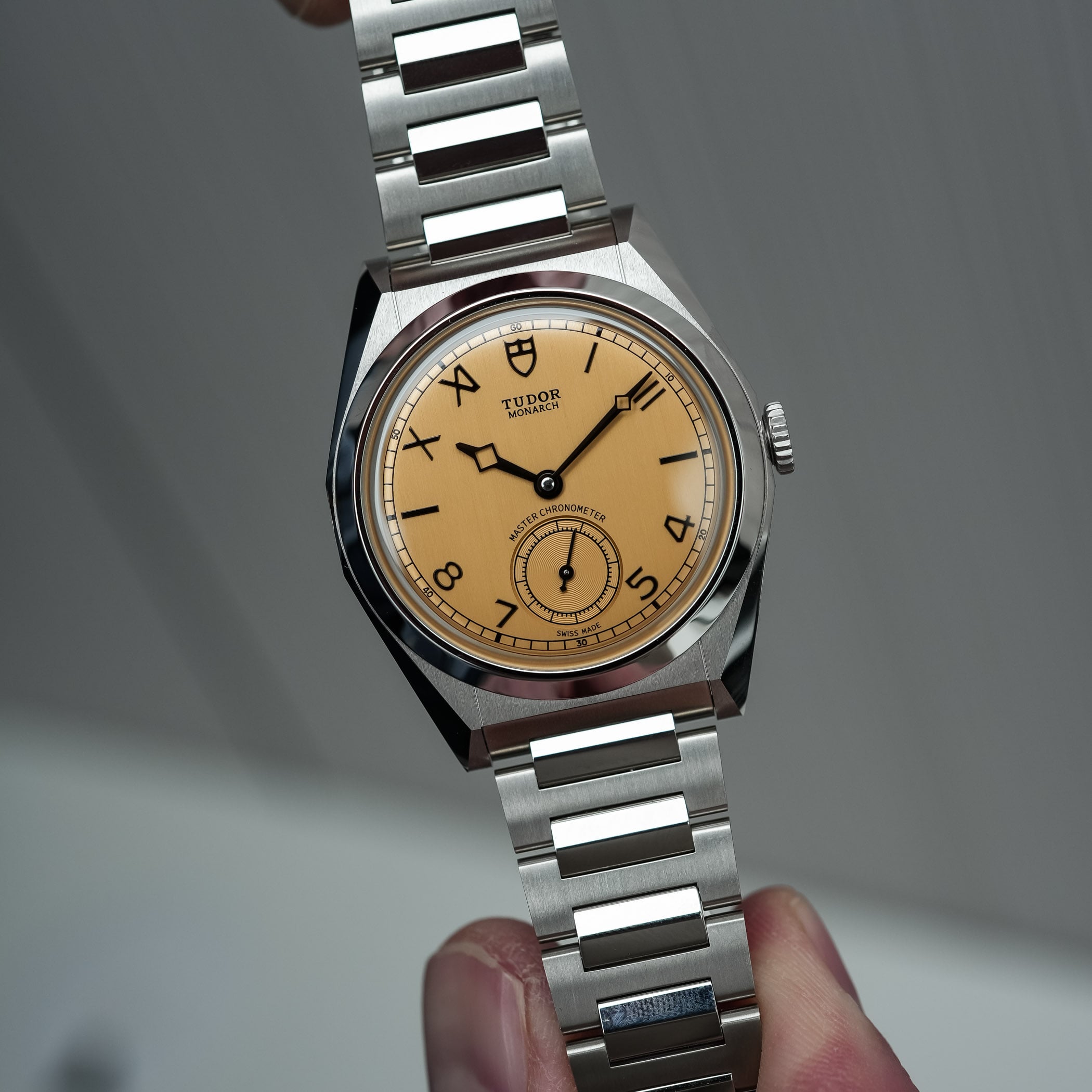
Next, in addition to that mildly octagonal case, we have a classic circular bezel, angled, sharp and polished. Not notches, no fake screws. Inspecting the sides of the Monarch is more interesting and reveals a stronger attention to detail and ergonomics. On paper, the Tudor Monarch is neither small nor oversized, sitting at 39mm in diameter, 46.2mm in length and 11.9mm in thickness. The latter measurement feels a bit disappointing on paper, and we would have liked to see a watch at around 10mm or less. That said, Tudor relies on box-shaped sapphire crystals, including for the caseback, which absorb quite a lot of the measured thickness, not only visually but also in terms of wearing comfort. See below the Tudor Monarch on Robin’s 18.5cm wrist (left), and on my 16.5cm wrist (right).
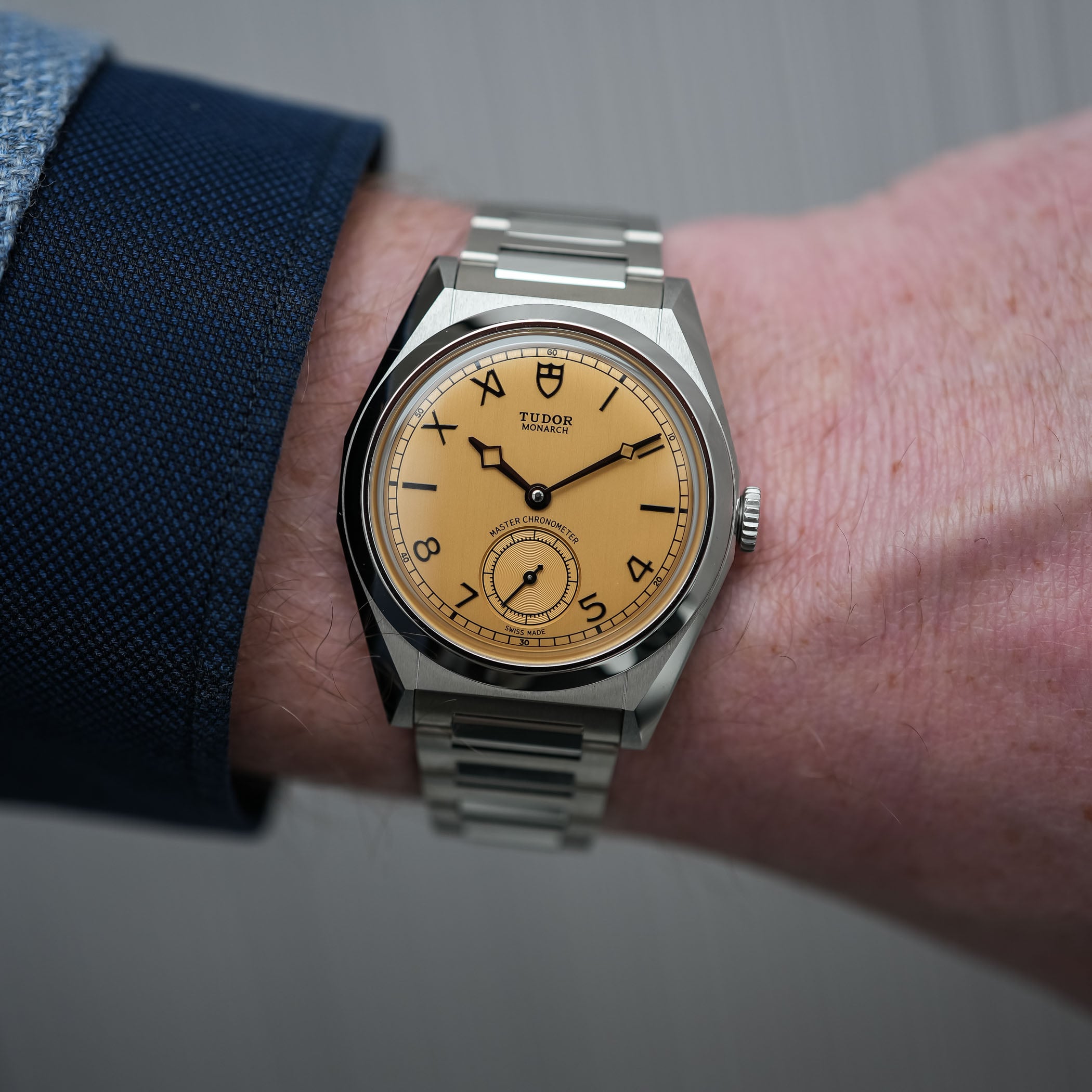
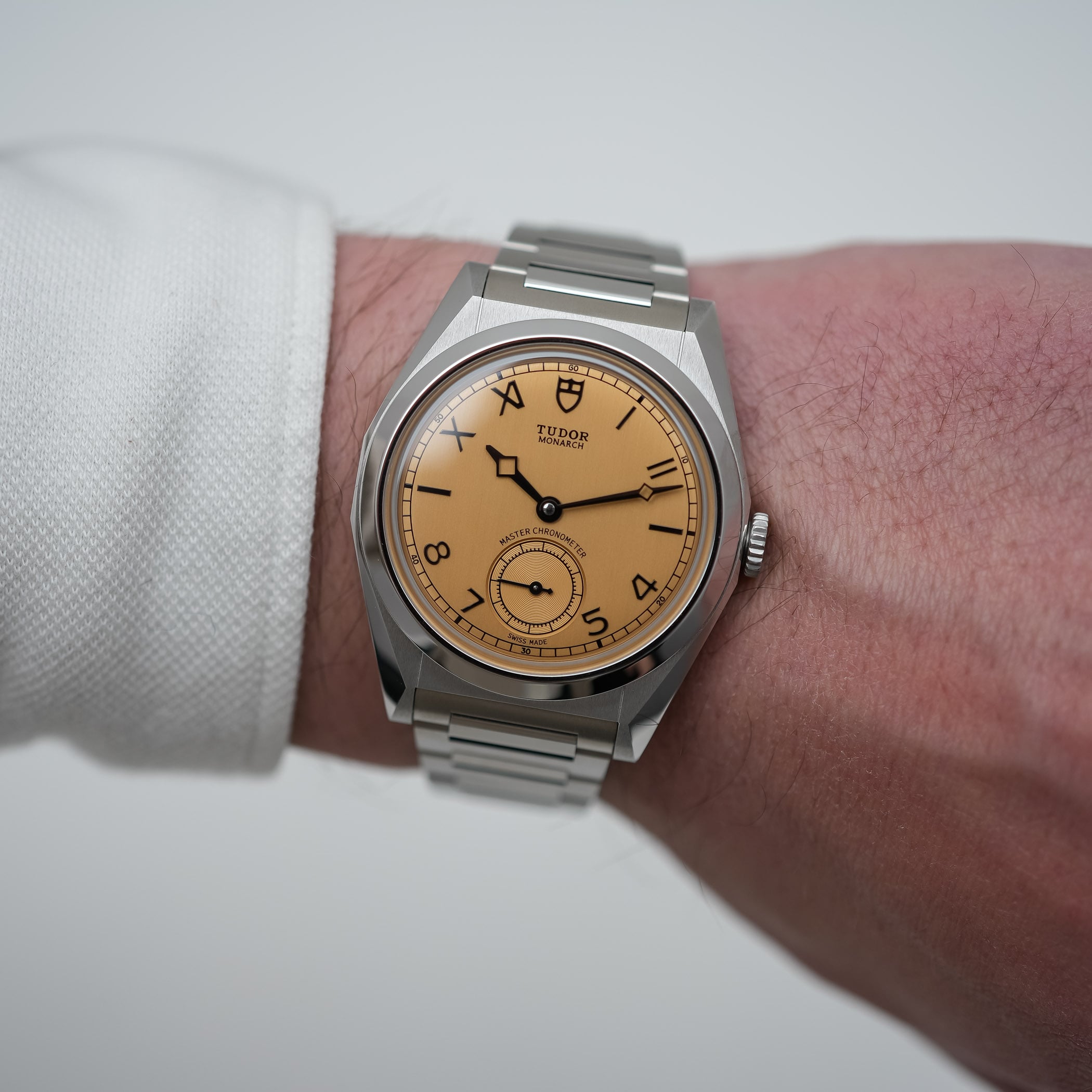
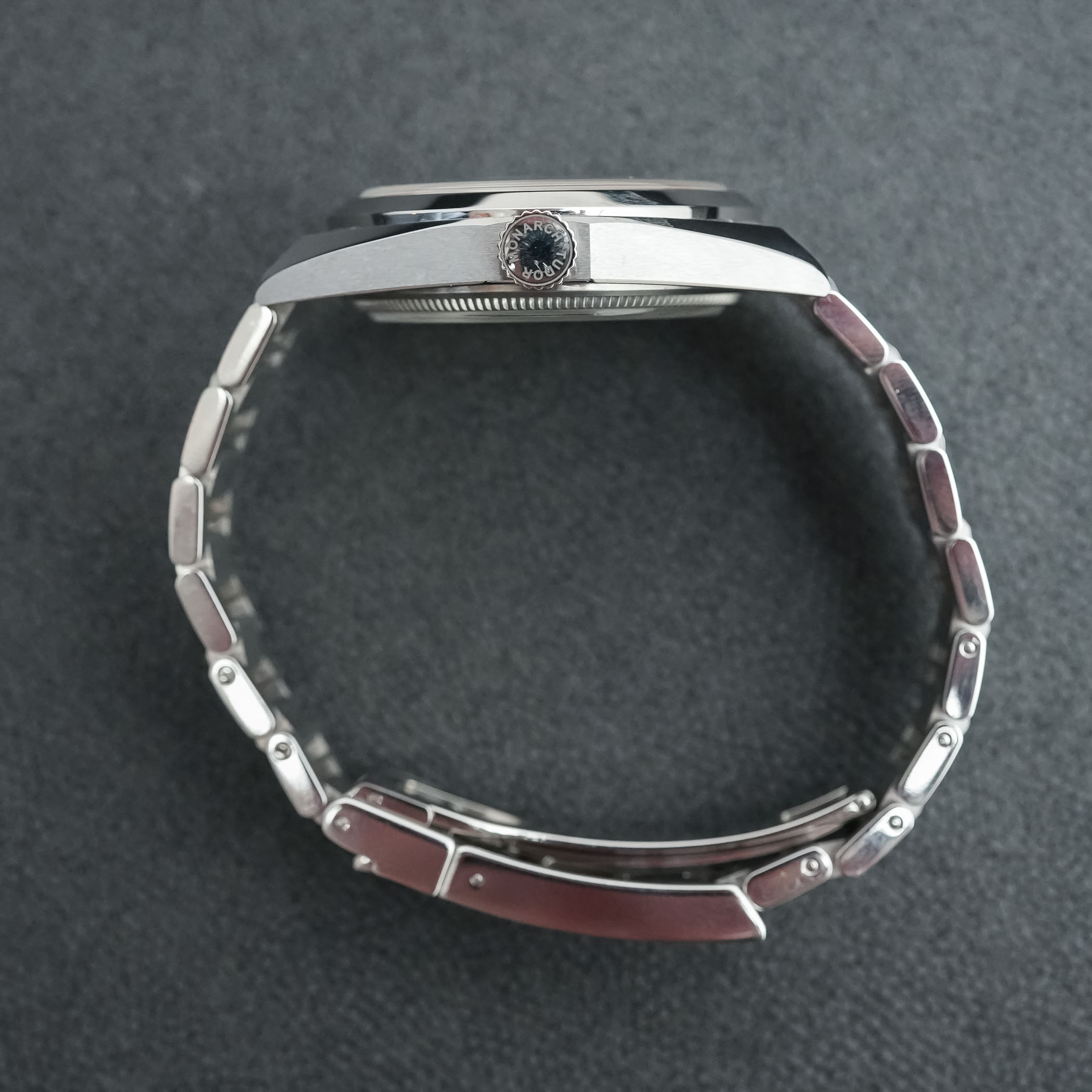
Next, the sides of the case are strongly faceted on two planes, thanks to wide, tapering, polished bevels on each side. The tapering effect is particularly noticeable on the watch’s profile and makes the watch visually much lighter and far more slender than anything else produced by Tudor. Finally, even though a more refined watch with a dressier vocation, the Monarch still features a screw-down crown and caseback, with a comfortable water-resistance of 100m.
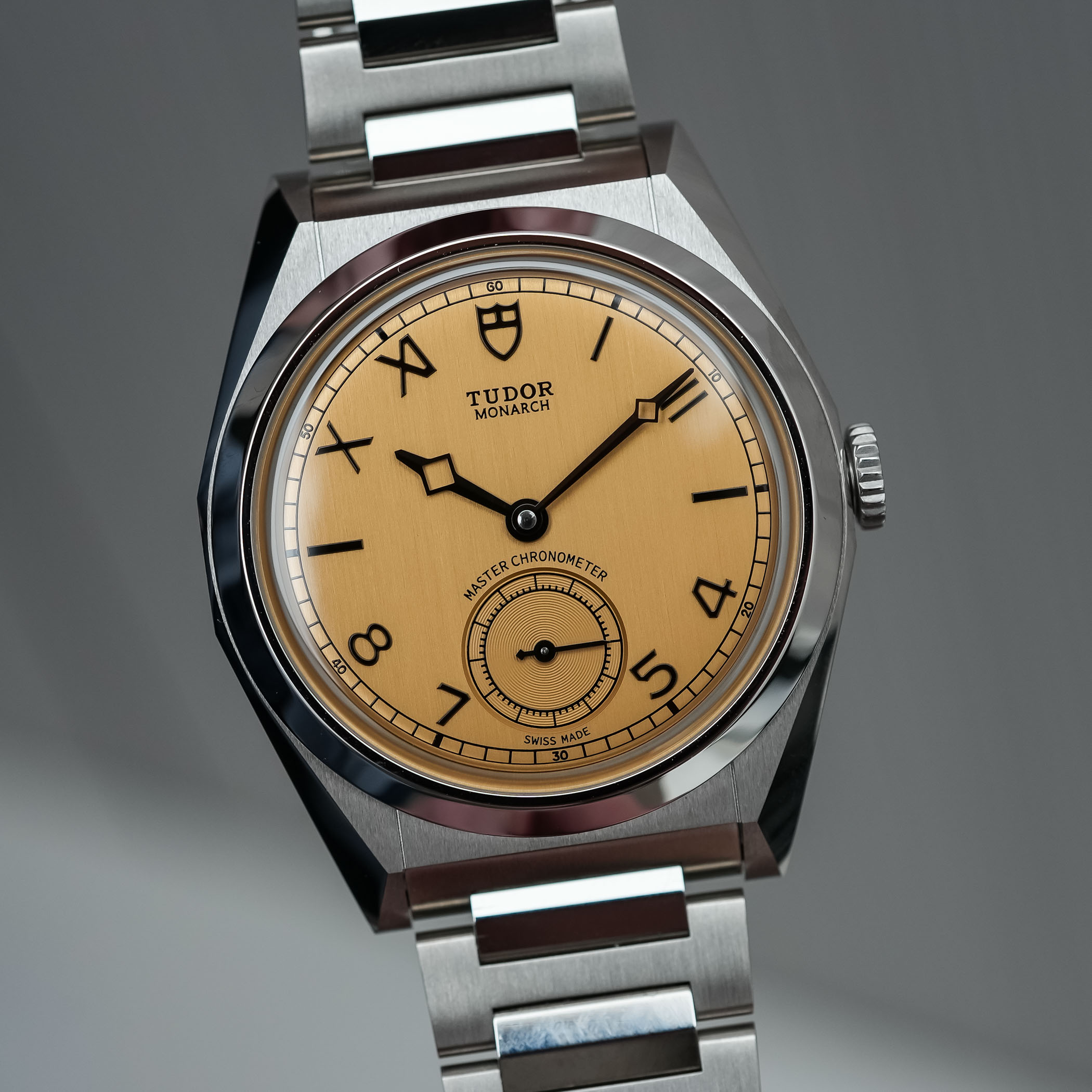
The dial of the Tudor Monarch was quite a surprise, in all fairness. I can imagine that it isn’t to everyone’s liking, but credit where credit is due, it has a certain audacity while maintaining a reassuringly classic feel – and even a bit of the indie vibe we see in a much higher category. The colour of this dial is defined by Tudor as dark champagne, and it is paired with a vertically-brushed finish that gives it an old-school “papyrus” touch. It is quite a bold choice for the launch of this new collection, but the result is distinctive and particularly attractive – at least, within the MONOCHROME team, it got an almost unanimous positive reaction. There’s something unexpectedly traditional and horological in this colour, which isn’t what Tudor used to do in the past 15 years.
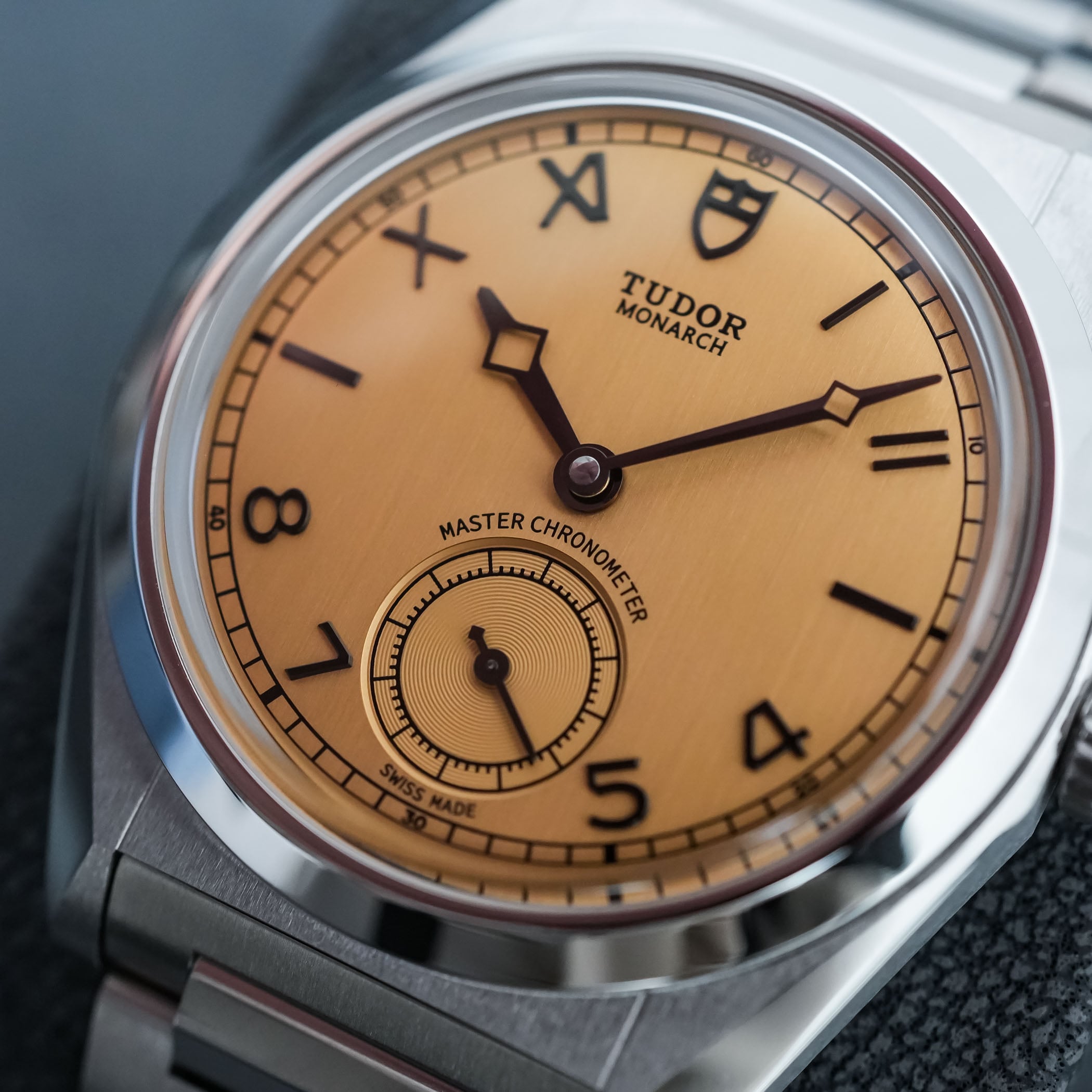
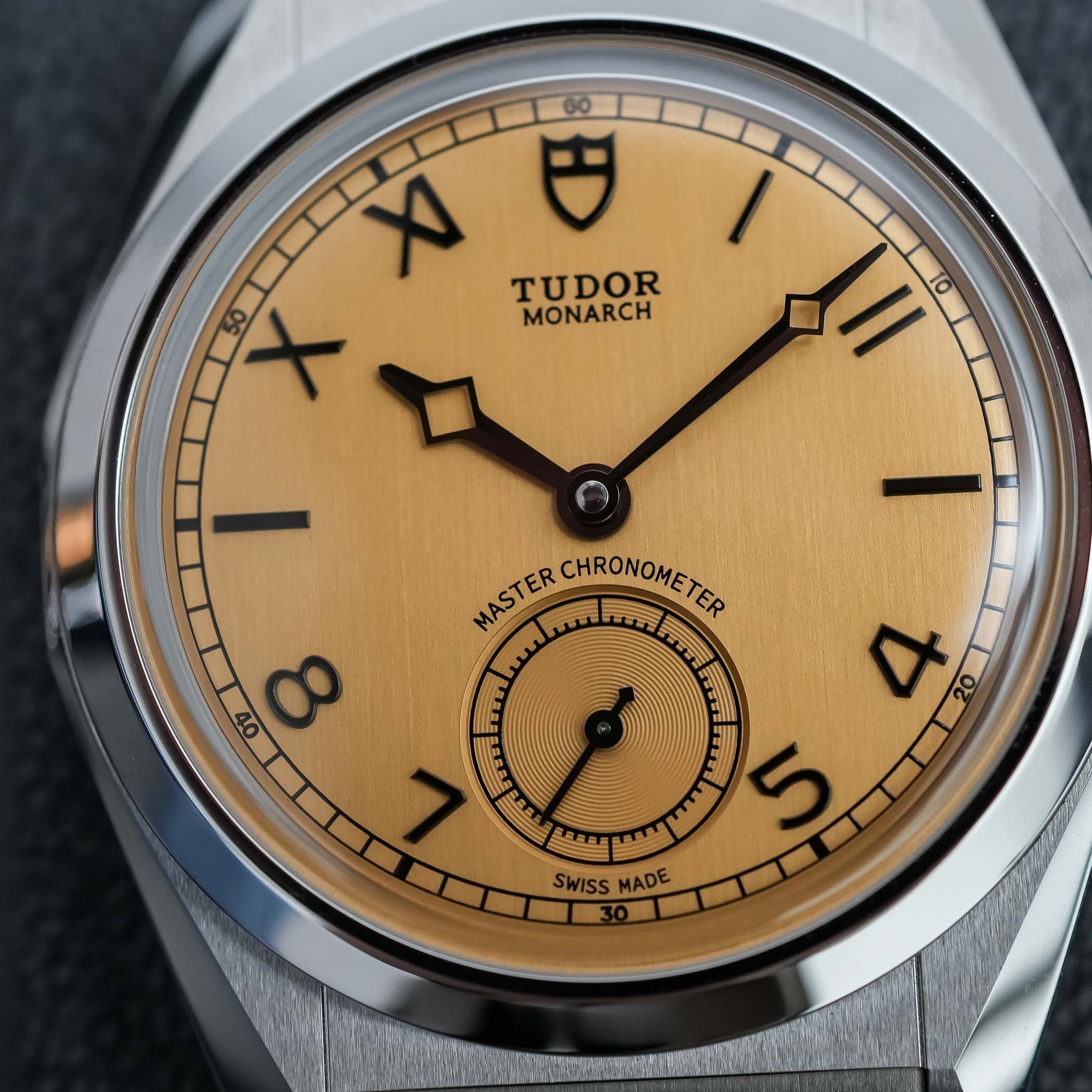
Another distinctive element of the Monarch’s dial: its applied markers. For this launch model, Tudor chose a classic layout that might be more Rolex-related than classic Tudor, but reassuringly familiar, a so-called “error-proof” or “California” dial. Framed by a railway minute track, the dial relies on a combination of Roman numerals from 10 to 2 and Arabic numerals from 4 to 8, with the applied Shield at 12 and baton markers at 3 and 9 o’clock. These markers are applied, thin and blackened, adding great depth to the dial. Another element that surprised us was the hands, which feel like dressed-up, old-school versions of the classic Tudor snowflake mixed with Breguet hands. Last, reinforcing the traditional appeal of the Monarch, it features a small seconds counter at 6 o’clock, and comes without a date window.
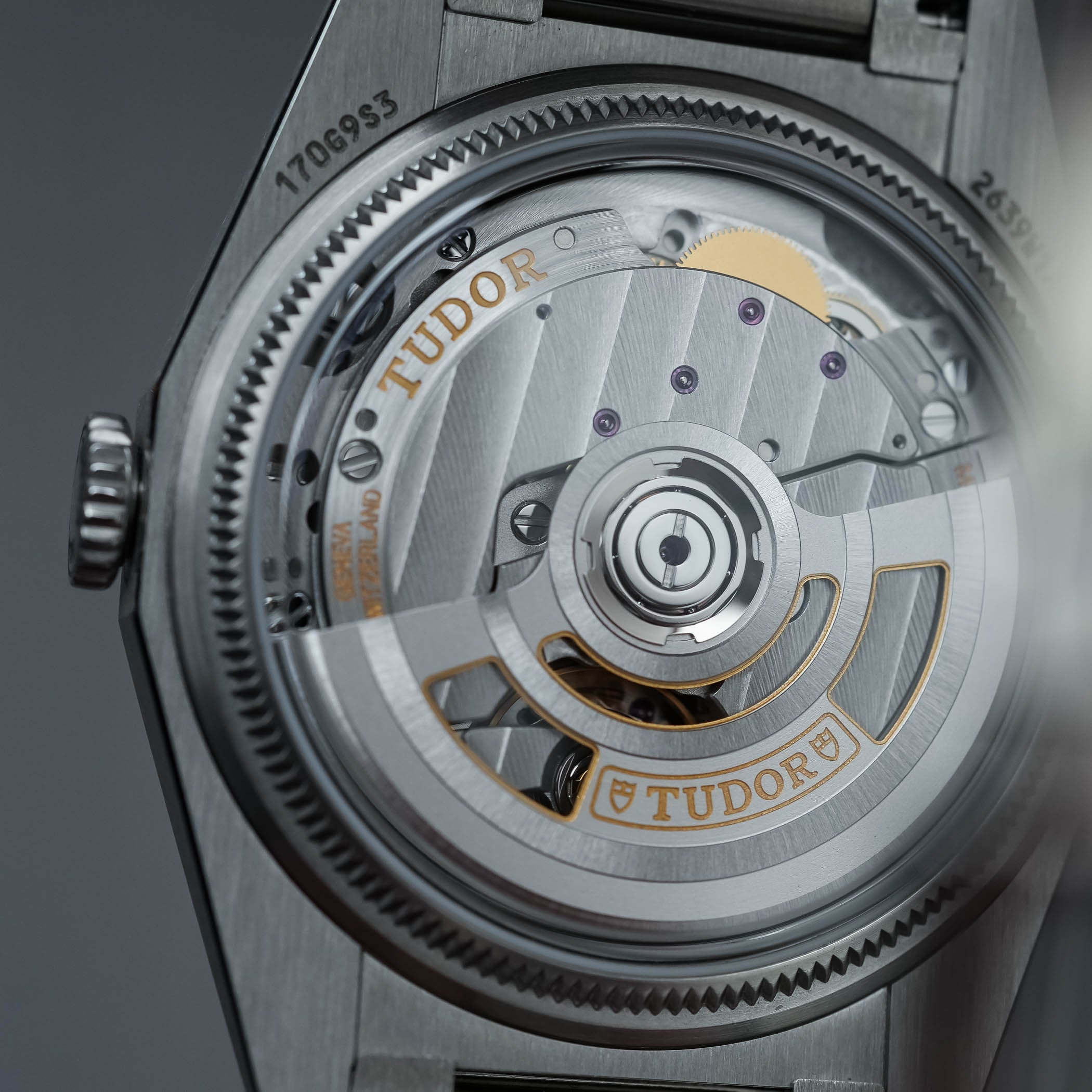
Turning the watch over reveals the same duality, an identical mix of tradition and modernity. Inside beats a new version of the classic Kenissi-based movement, the new calibre MT5662-2U. As said, this large (almost 32mm) automatic movement now features a small seconds, but for the rest it remains in line with the engines found in the Black Bay, Ranger and Pelagos lines. This means a robust calibre (not a thin movement) with a transversal balance bridge, a modern, anti-magnetic silicon hairspring and a variable inertia balance with micro-adjustment screw. This movement boasts 65 hours of power reserve and is Master Chronometer-certified.
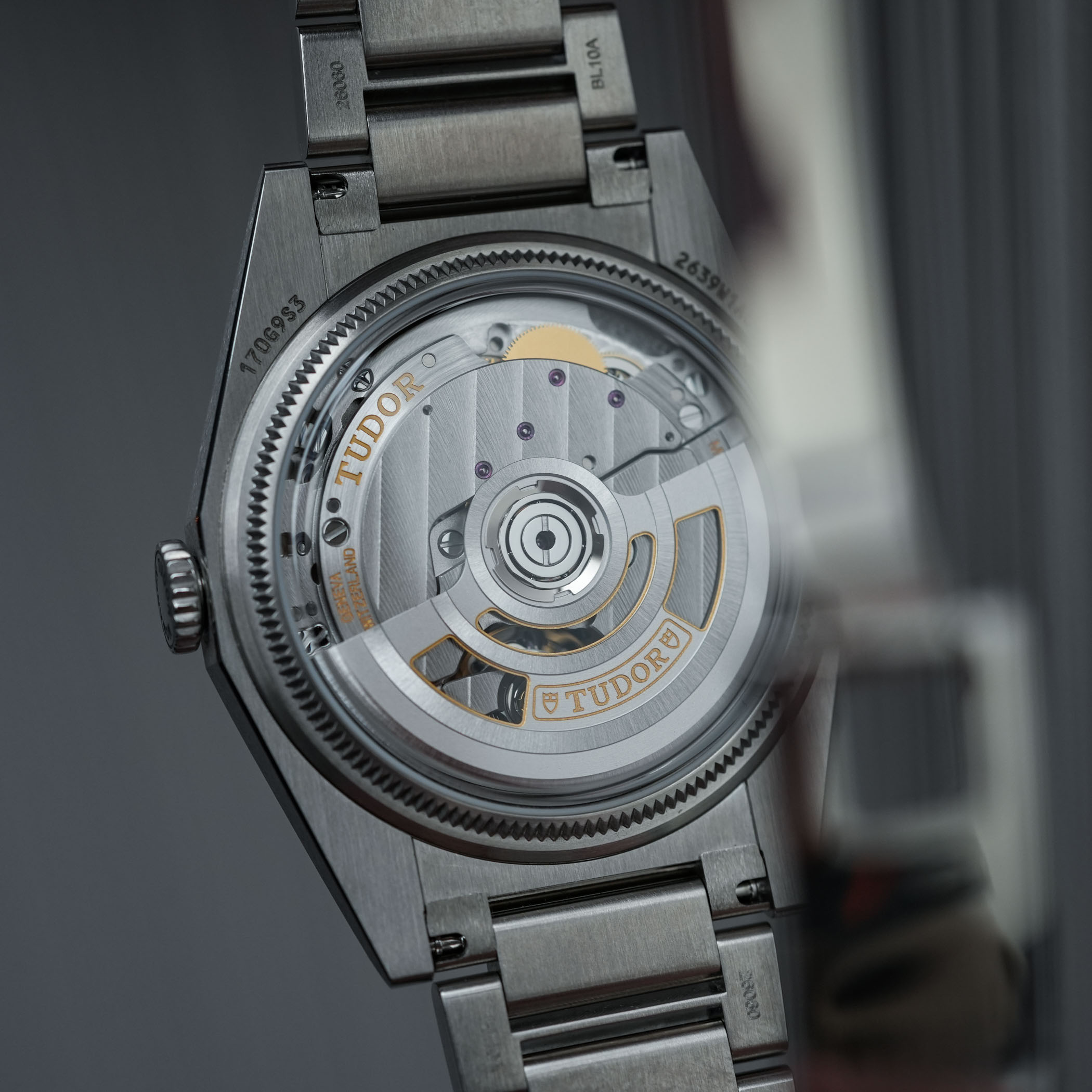
One of the most demanding certifications around, the METAS Master Chronometer certification covers the main functional characteristics of a watch, including precision, resistance to magnetic fields (up to 15,000 gauss), waterproofness and power reserve. First certified by COSC, it is then adjusted and tested as a full watch to meet Tudor’s stringent internal standards of -2/+4 seconds/day. The movement is also particularly appealing to look at, with many more decoration techniques than normally seen at Tudor. This includes circular graining (perlage) on the mainplate, Geneva stripes on the upper bridges and a new, openworked rotor with an 18k gold inlay.
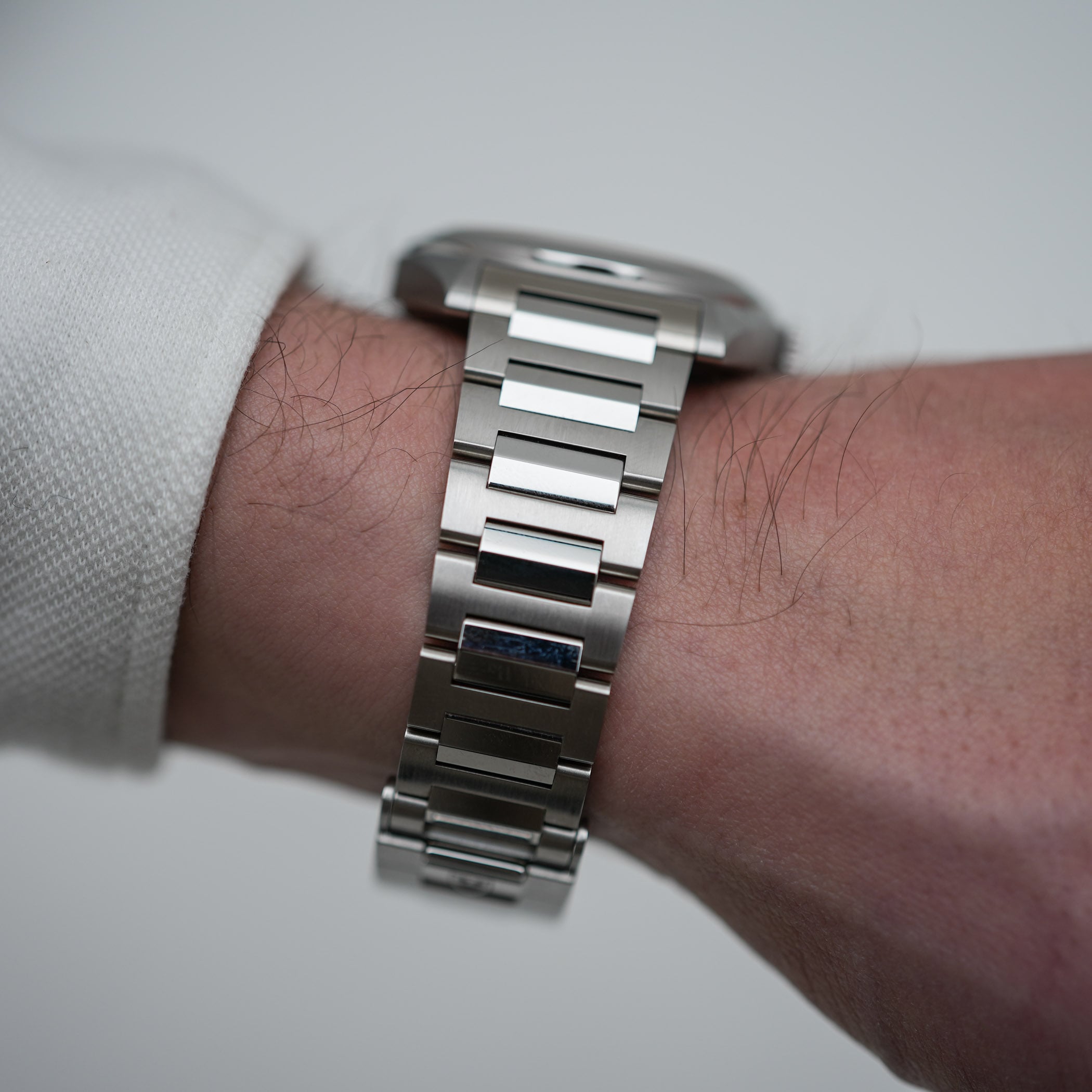
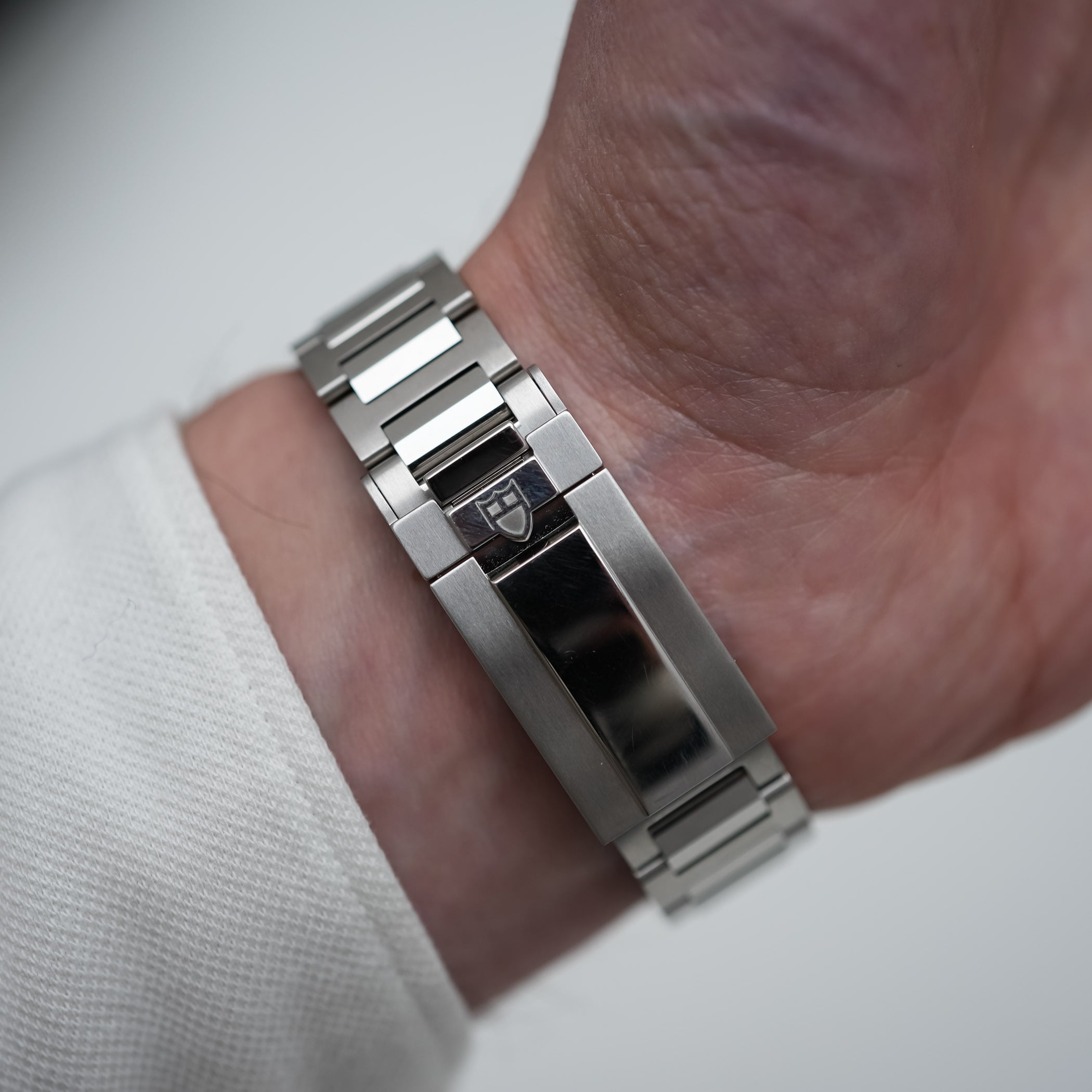
Last, the Tudor Monarch comes equipped with a newly developed bracelet. It is built around brushed H-shaped links, paired with faceted, polished central links. The watch is secured to the wrist thanks to the brand’s classic folding clasp, with a safety latch and the practical T-Fit system, allowing micro-adjustments up to 8mm on 5 positions without tools.
Thoughts, availability & price
As you might have guessed from this hands-on review, I am particularly enthusiastic about the design of the Tudor Monarch, as well as its slightly odd dial (really, it is very cool in the metal). The overall quality of the watch is undeniable, whether looking at the precision of the assembly, the details of the dial or the movement and its certifications. It is, overall, an intriguing and successful release, which also brings some fresh air to a brand too long associated with the Black Bay collection. And despite being on the higher end of the brand’s price policy, there isn’t much in the competitive spectrum that can match everything Tudor has put into this watch.
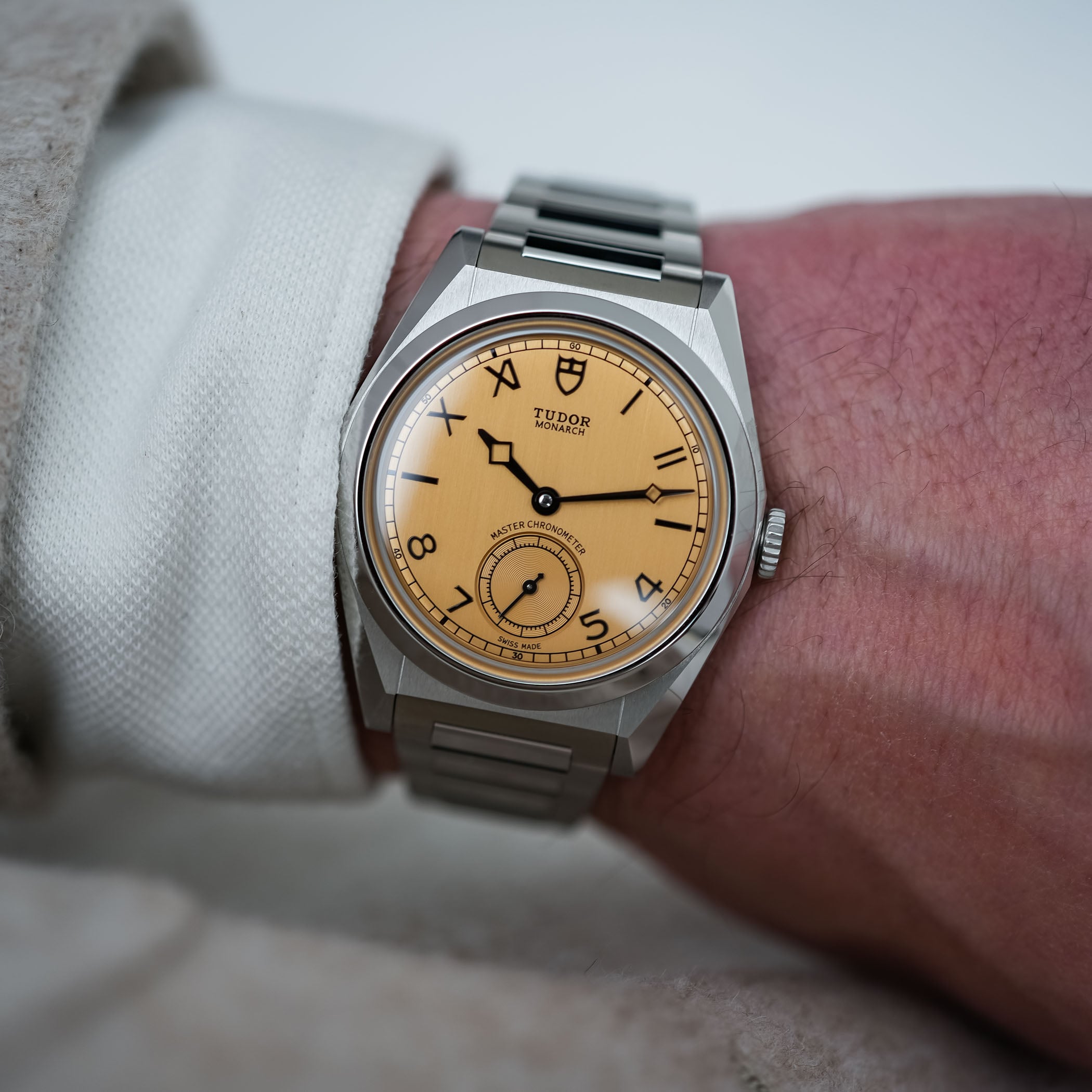
If I had one comment, it would be regarding the actual diameter of the watch. As we’re currently seeing watches going back to 36-38mm diameters, I’m still wondering what a 37mm Monarch would have been. I have a feeling that I would have loved it even more, even though the watch, as it is now, remains very pleasant to wear.
Released as part of the permanent collection, the Tudor Monarch will be gradually available from boutiques and retailers. It is priced at EUR 5,400, CHF 4,800 or USD 5,875. Not cheap for the brand, but there isn’t much on the market that can beat it either… For more details, please visit tudorwatch.com.

9 responses
I was repulsed by the Monarch at first, but admit that it’s growing on me. I wish the dial and hands were a little less vintage inspired, but I really like the case design. I’m acclimating the the “papyrus” dial color.
Never been a fan of the Tudor hour hand.
If Tudor are trying to “chase” Omega in the market they are going about it in the right way. THis seems to be the Tudor “Observatory” watch. All the elements are there and then, like Omega with the Observatory they cock it up. OMega went too big and ar too clever for their own good with the result that the Observatory is a terrible watch when it could have been a great one (Updated Globemaster at 37.5mm?). Same with the Monarch – faux integrated bracelet stainless steel sport watch style – check. Good sizing – check. 100M Wr – check. Revive a name from the archive – check. Stupid “California” style dial but make it worse by using Roman numerals and finally do without any lume at all making it useless at night – check and check. Just like the North Flag – great idea ruined by a dumb power reserve indicator on the dial and a silly hand set.
A point I forgot to mention – why buy this when you can get a Fears for much less?
I like the handset less and less the more I look at it – looks kind of weeny to me.
The only Tudor I would consider purchasing
Nice case size, not too big, not too small. I am trying to warm up to the parchment color dial, the jury is still out. Mixing Roman & Arabic numerals – no. One or the other please. May take a while on the bracelet, I’ve always been an Oyster fan. I will let it grow on me.
Probably the only Tudor I would buy
Not a fan of the angles or the california dial.
I’m a fan of that dial color and the black hands and indices.
What would be really fantastic is if they brought back the Prince Oyster with the same dial color and black hands/indices combo with the small seconds.