


 Not all images were able to load for printing. Please close the print window and try again.
 Everything About Movement Decorations
There are many types of finishing, some more prominent than others, and a long history of dressing up calibres for both art and science
In the early days of primitive watch movements, going back to the 16th century and German Nuremberg Eggs, decorations were important to enhance visual appeal for these mechanical contraptions reserved solely for the wealthy and royalty. Early decorations included intricate engravings and polished components, and gilding was also common. Ornamentation on the movement, case and dial was vital given the ultra-high price, but many movement decorations would later evolve out of necessity, serving practical functions beyond just the bling. Today, decorations are serious business with some strict “stamps of approval” reserved for the most exacting handwork and styles. A couple are from third parties (similar in concept to COSC), while others are in-house from the highest-end brands – the Geneva Seal (Poinçon de Genève) is the primary third-party example, while Patek Philippe has its own “Patek Philippe Seal” that’s just as prestigious. Let’s look at eight of the most common movement decorations today and a bit of history behind them.
Engraving
Métiers d’Arts, French for “artistic crafts”, refers to high-end traditional craftsmanship like engraving, among the oldest and most intricate of watch decorations. In fact, Métiers d’Arts refers to most handcrafted movement decorations that will be discussed here. Nuremberg Eggs were often engraved inside and out, meaning both the case and movements (and dials) were intricately decorated, as time telling was somewhat secondary. Accuracy during this era was measured by hours per day, not seconds like today. They were statement pieces and mechanical curiosities, and needed to match the opulence of the buyer’s lifestyle. Engraving was painstakingly achieved by hand, and one mistake often meant an entire part or even the case had to be remade. In addition to fancy designs, engravings can also tell stories, either personalised for buyers or simply a reflection of the times.
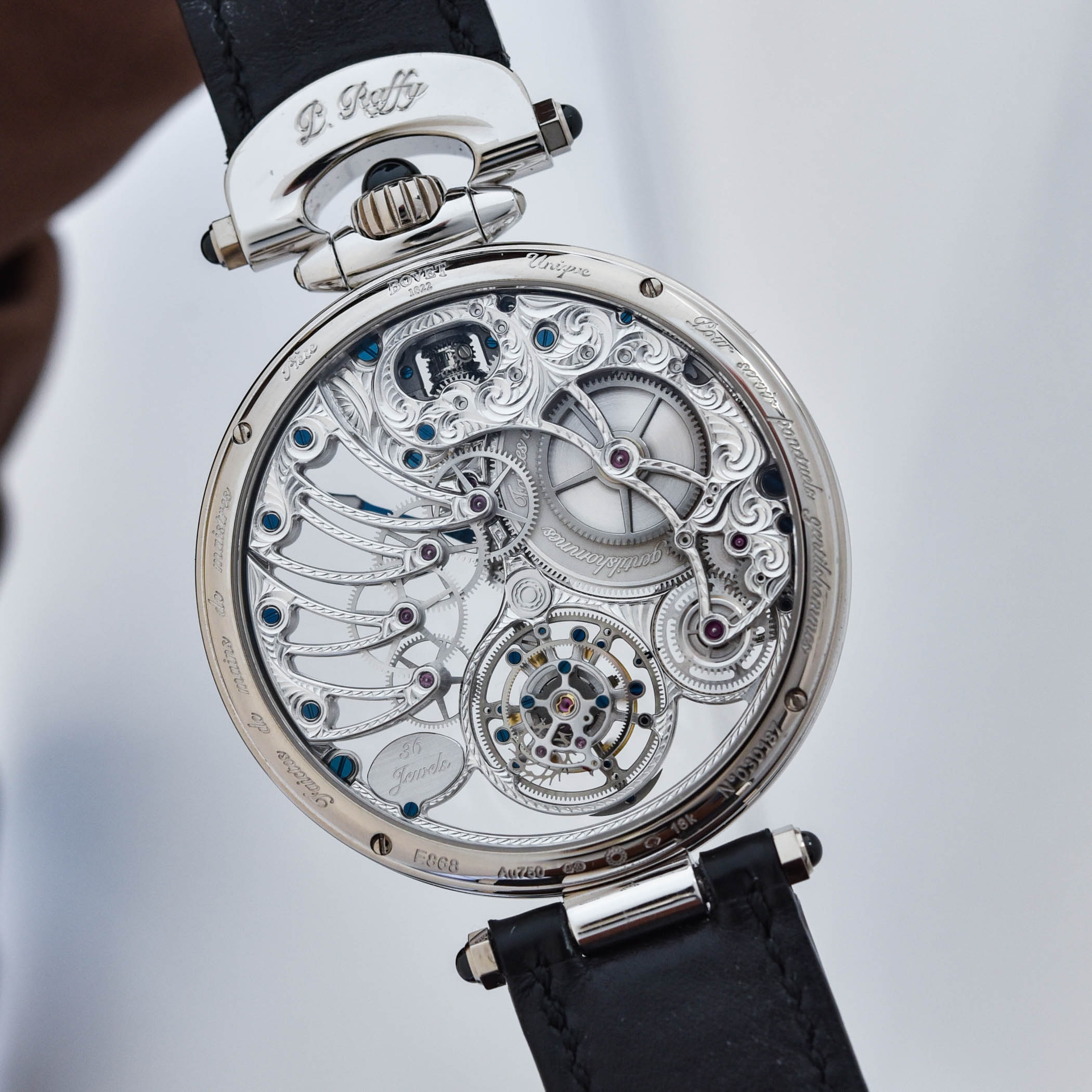
Engraving in general has historically been used to symbolise power and wealth, going back millennia to weapons and jewellery. This was refined during the Bronze Age (around 3,000 BC) when more specialised tools were developed, and elaborately engraved armour and swords would signify rank and class. It played an important role in religion, and medieval European goldsmiths designed intricate tools and symbols that are historic artefacts today. An engraving renaissance of sorts occurred in the 15th century when line engraving and other techniques were perfected in Germany and Italy by artisans like Albrecht Dürer, who mastered wood and metal plate engravings for printing famous works like Adam and Eve and Saint Jerome in His Study.

A specialised chisel, the burin, was used for these complex lines and images on metal plates, engraved in reverse and then inked for mass production of images in a press. The details of engravings by master artisans were so precise and elaborate that official government paper money was produced with this process to prevent counterfeiting (the concept goes back to the Song Dynasty in China around 1,000 AD). This remains the standard for global currency today, usually via a method called intaglio, where printing is performed under high pressure to create a raised aesthetic in banknotes. Of course, traditional engraving via the burin was also used for jewellery, watches and a host of other items through the centuries. Modern luxury watchmakers continue to use these historic techniques via the burin for movements, cases and dials.
Modern Engraving
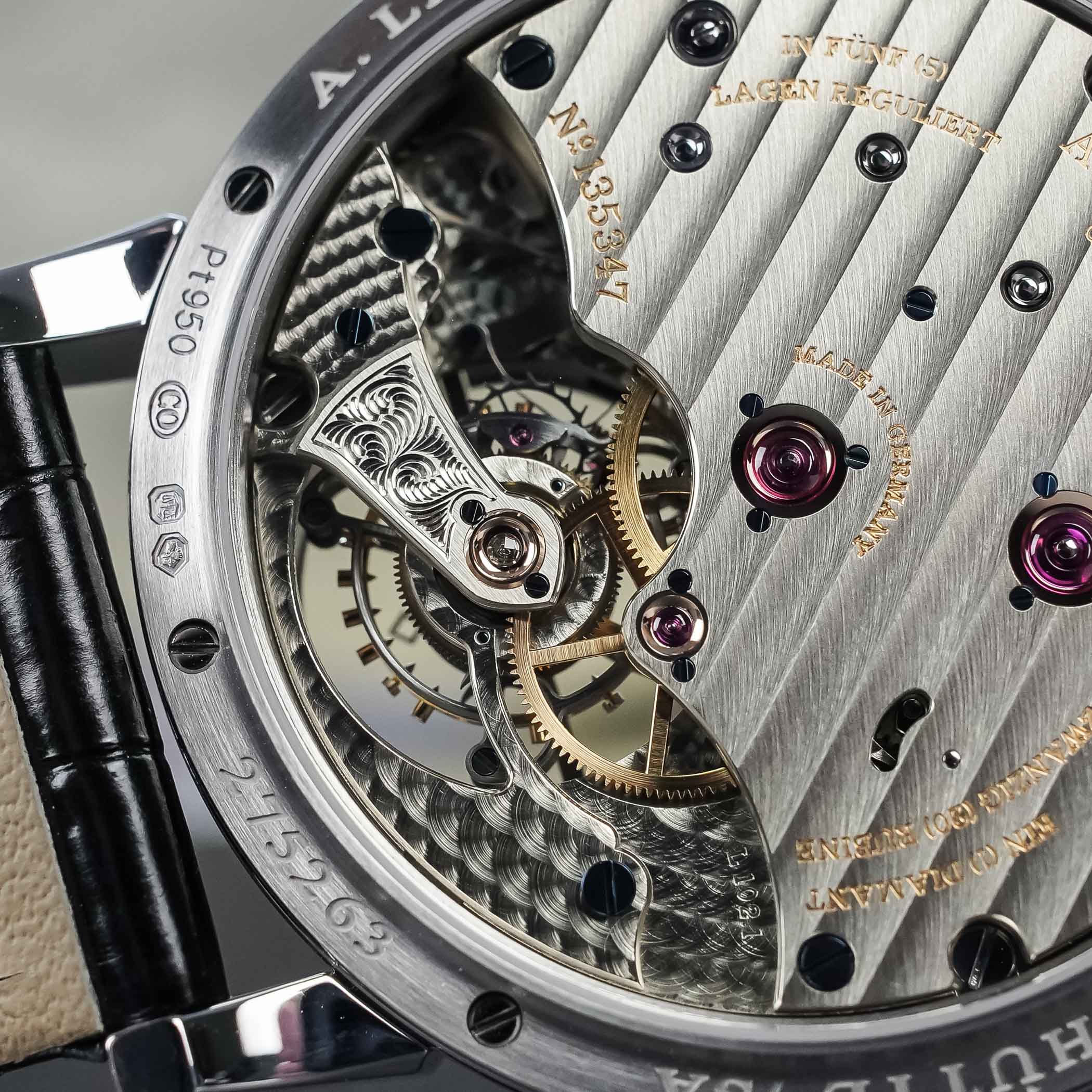
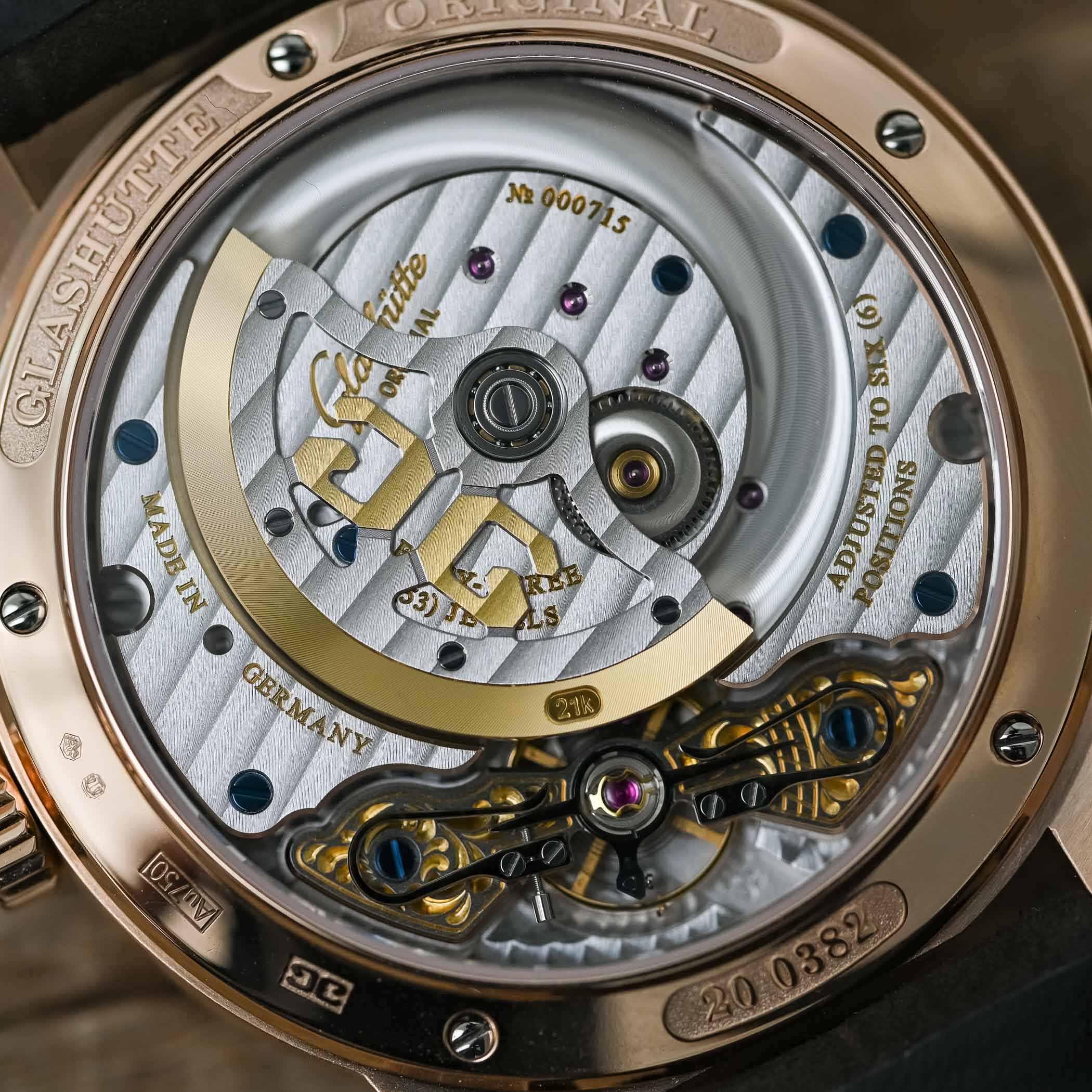
A. Lange & Söhne is a prime example of haute horology outside of Switzerland, and the German brand is well known for engraved movement components, particularly the balance cocks. It’s a tradition that centres around a floral motif – flower petals surrounding the central screw. This signature design element is a relatively small piece of the puzzle, but it makes a distinctive visual impact along with other hand-finished decorations. Arguably the most recognised brand for haute horology and nigh perfect finishing is Holy Trinity member Patek Philippe, which even has its own stamp of approval – the aforementioned Patek Philippe Seal. When it comes to engraving, the watchmaker’s skeletonised movements most frequently get the treatment. This is a very difficult process as much of the metal surface has been removed, so a “razor’s edge” method is employed to create thin, highly detailed patterns. Ref. 5180/1R-001 is an excellent example, showing floral patterns and volutes throughout the narrow bridges, frame and 22k gold micro-rotor on the openworked calibre 240 SQU. This barely scratches the surface for high-end movement engraving as Vacheron Constantin, Audemars Piguet (the other two Holy Trinity members), Breguet, Grand Seiko and many others masterfully engrave calibres as well. Movement engraving beyond lettering tends to fall into a niche category as it’s fairly rare and perhaps a bit “old-fashioned” to some, but it remains a coveted decoration for many enthusiasts and connoisseurs.
Côtes de Genève
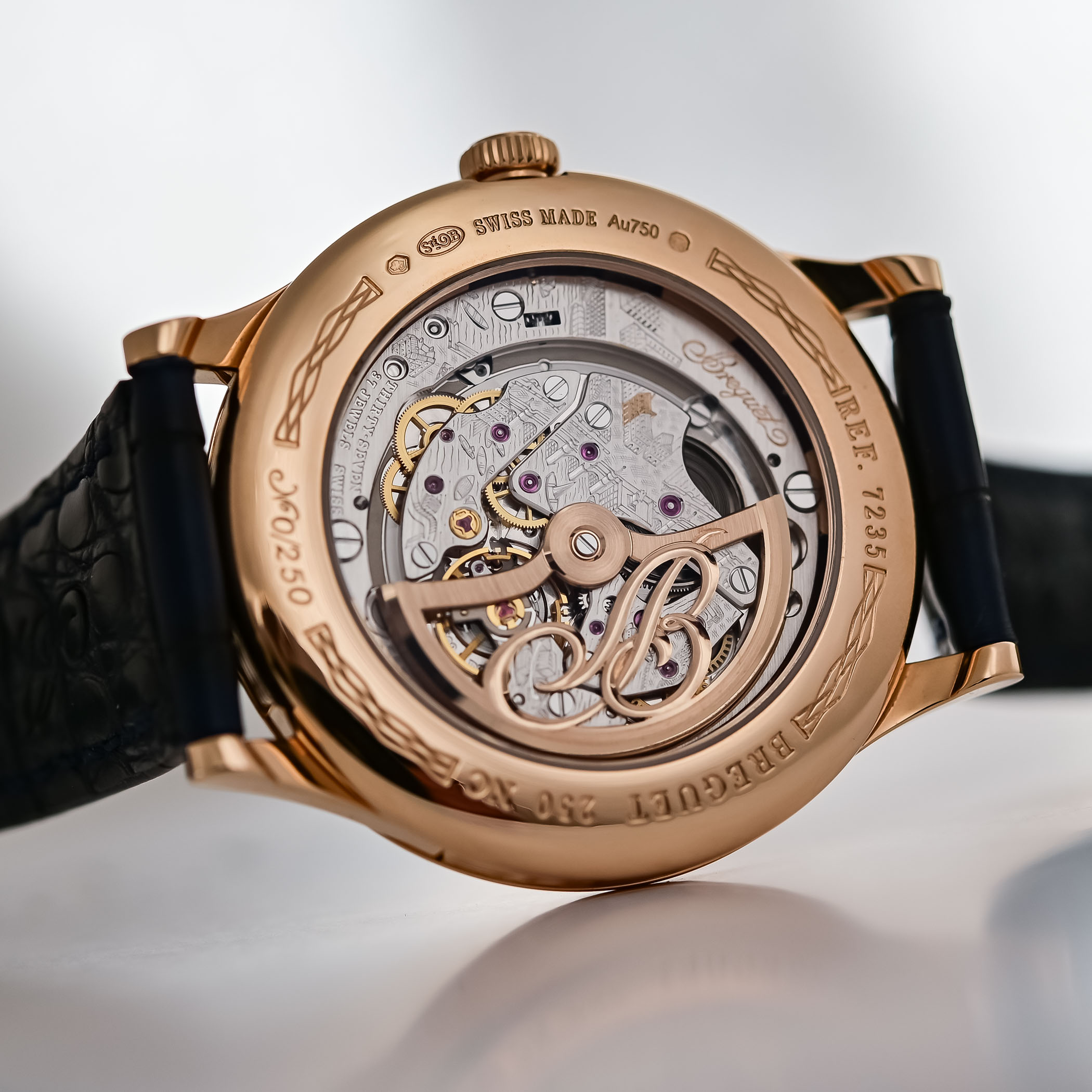
Côtes de Genève (or Geneva Stripes) is probably the most popular movement decoration today and was born out of necessity (not just appearance). Developed in the late 19th century in Geneva, Switzerland (as the name suggests), it was designed to trap small dust particles and oil at a time when watch cases weren’t particularly water and dust-resistant. A secondary purpose was to hide scratches and tool marks on plates and bridges with a “pattern of scratches” that’s aesthetically pleasing. When made by hand, abrasive tools (often from premium supplier Cratex) are carefully pushed over parts held in a jig to “scratch” the surface area at precise angles, creating uniform, parallel ridged stripes. Modern CNC machinery is most often used today to form near-perfect stripes, although the most prestigious brands still create these by hand. Although most are straight and parallel, they can be circular, spiral or wavy. Omega is well known for its “Geneva Waves in Arabesque” that have an overlapping spiral design.
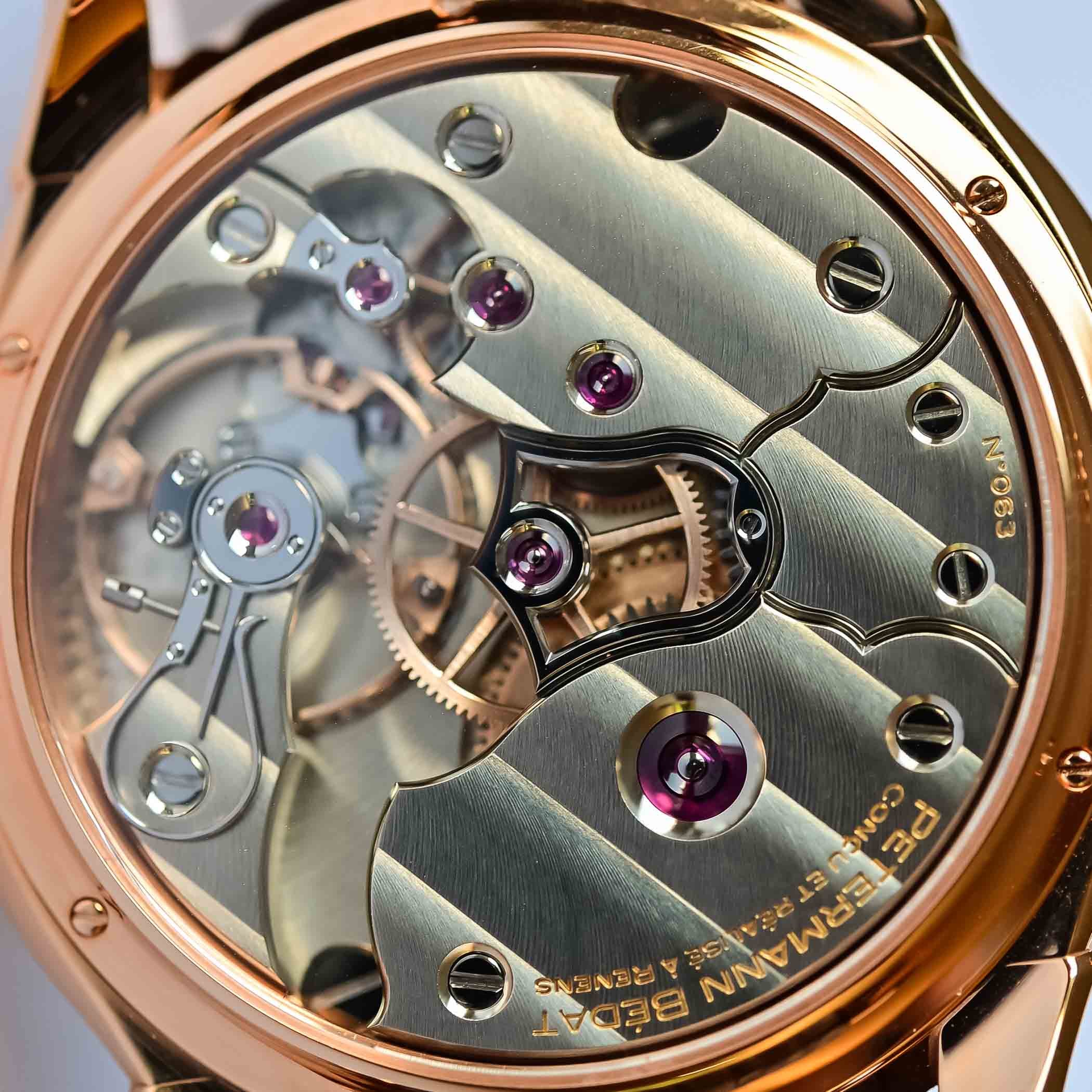
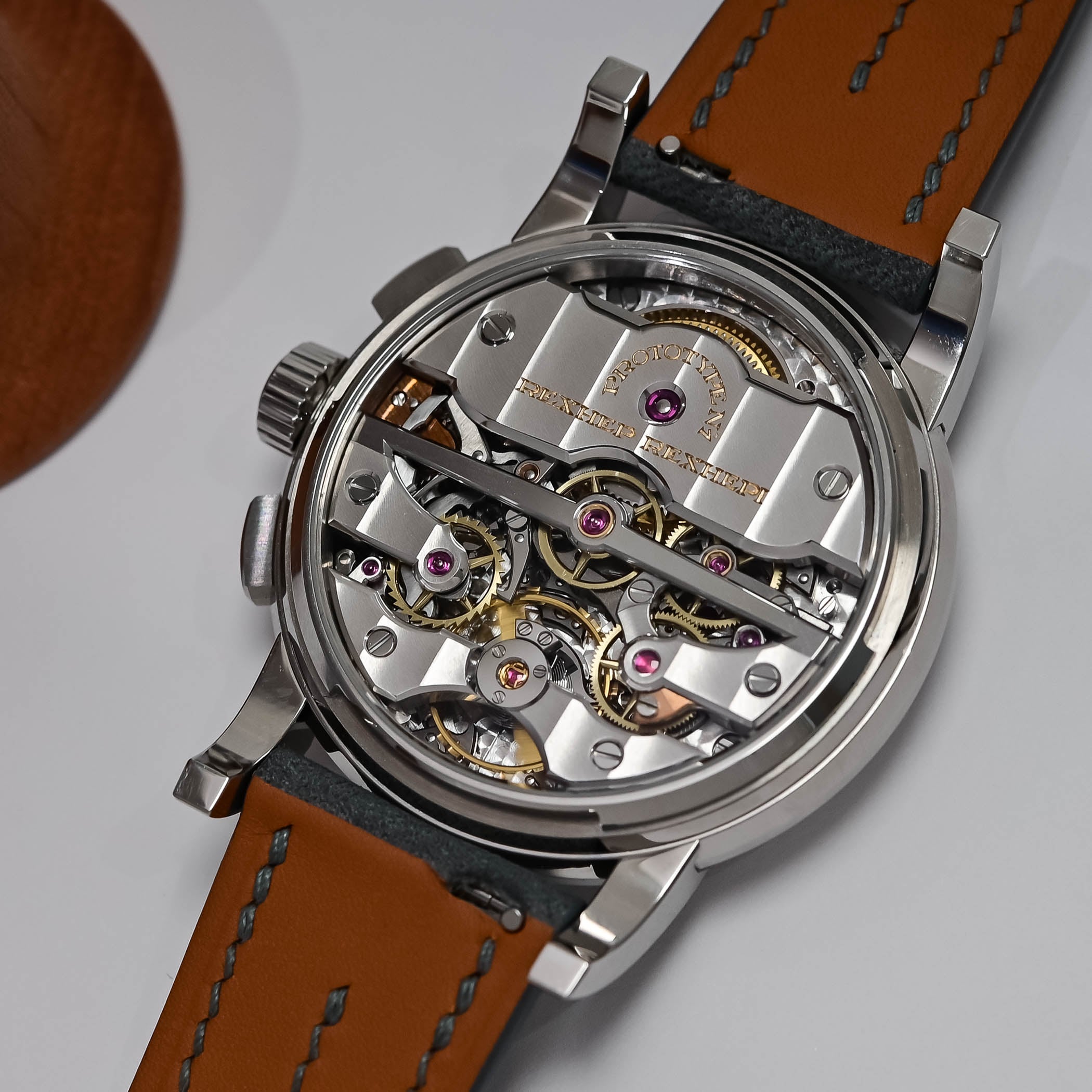
Vacheron Constantin’s watchmakers are among the best with handcrafted Côtes de Genève with some of the deepest, straightest and most defined stripes, helping to earn the Poinçon de Genève stamp on the majority of movements. Patek Philippe has artisans who bring their own methods and personal tools, while A. Lange & Söhne applies stripes to traditional three-quarter plates of German silver. The latter is a German watchmaker, so although the aesthetic is the same (or very similar), the name changes to Glashütte stripes or, more generically, ribbing. Geneva stripes, however, are the most common description both inside and outside of Switzerland – Grand Seiko’s stripes, for example, are usually referred to as Geneva stripes, even though it’s a Japanese watchmaker.
Black Polishing
While on the subject of Grand Seiko, let’s touch on Zaratsu polishing, which is a speciality of the brand. Zaratsu is a Japanese pronunciation of Sallaz, referencing German polishing machines that Japan imported in the mid-20th century. It’s a painstaking, specialised, distortion-free polishing that has a mirror finish, often seen on the brand’s dauphine-style hands, indices and cases, but rarely on movement components. Black polish (spéculaire or poli noir) is similar and generally reserved for steel movement parts like bridges, screw heads and levers. It’s a difficult and precise hand process reserved for the highest brands, and results in such a perfectly flat and smooth surface that light is reflected in a single direction, so it appears black at angles. It’s a popular finish for independent brands like Philippe Dufour and elite players, including Patek Philippe, A. Lange & Söhne (on swan-neck regulators) and Audemars Piguet.
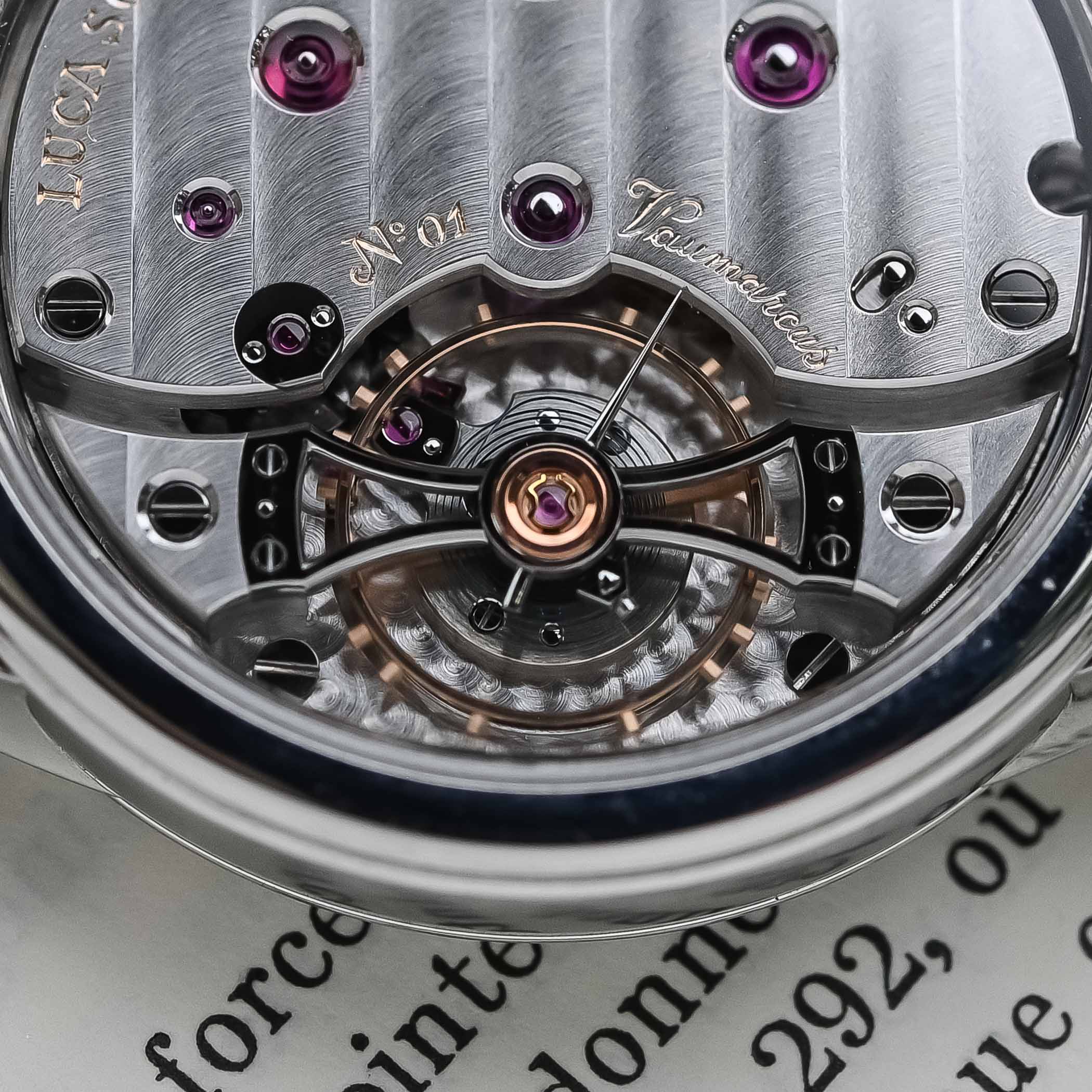
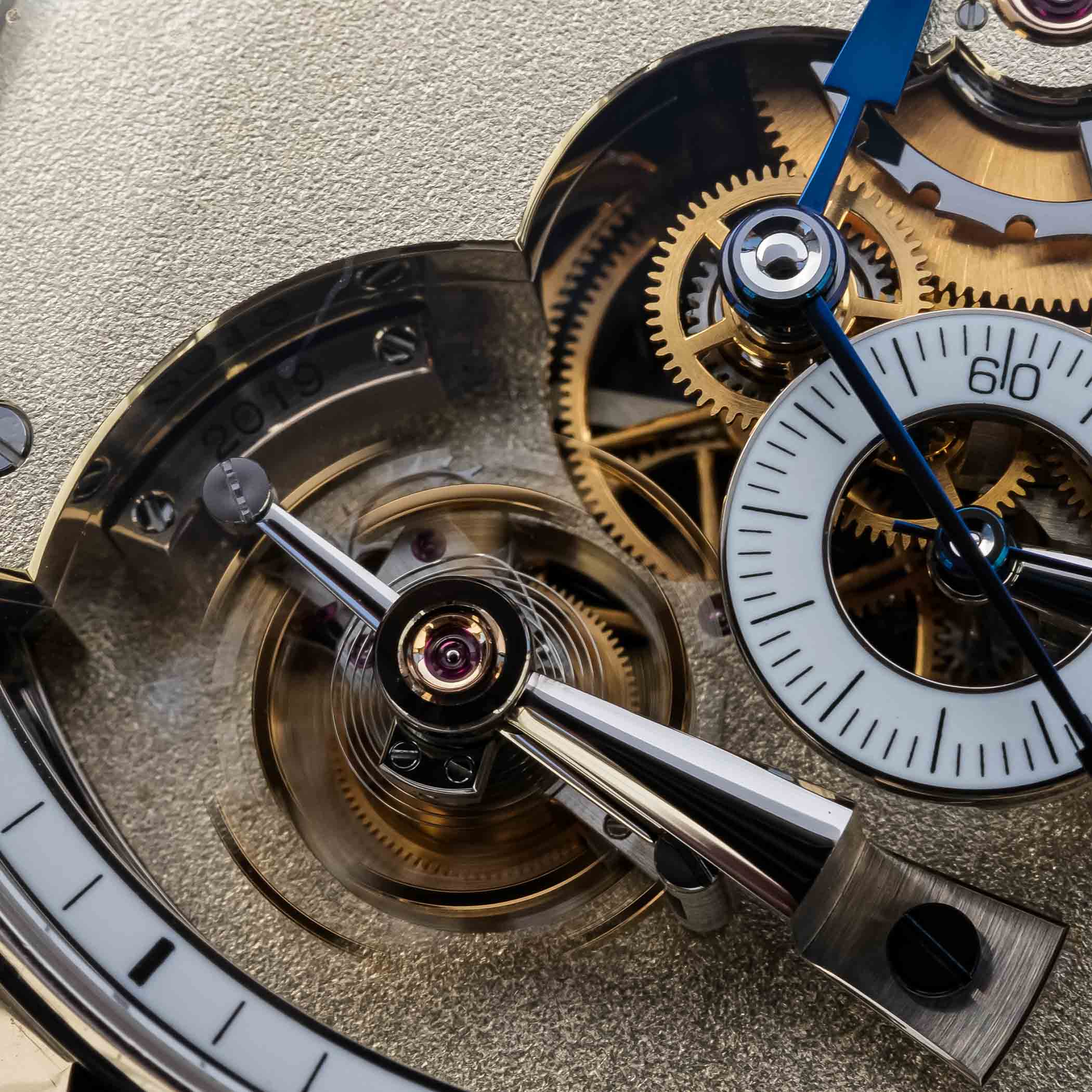
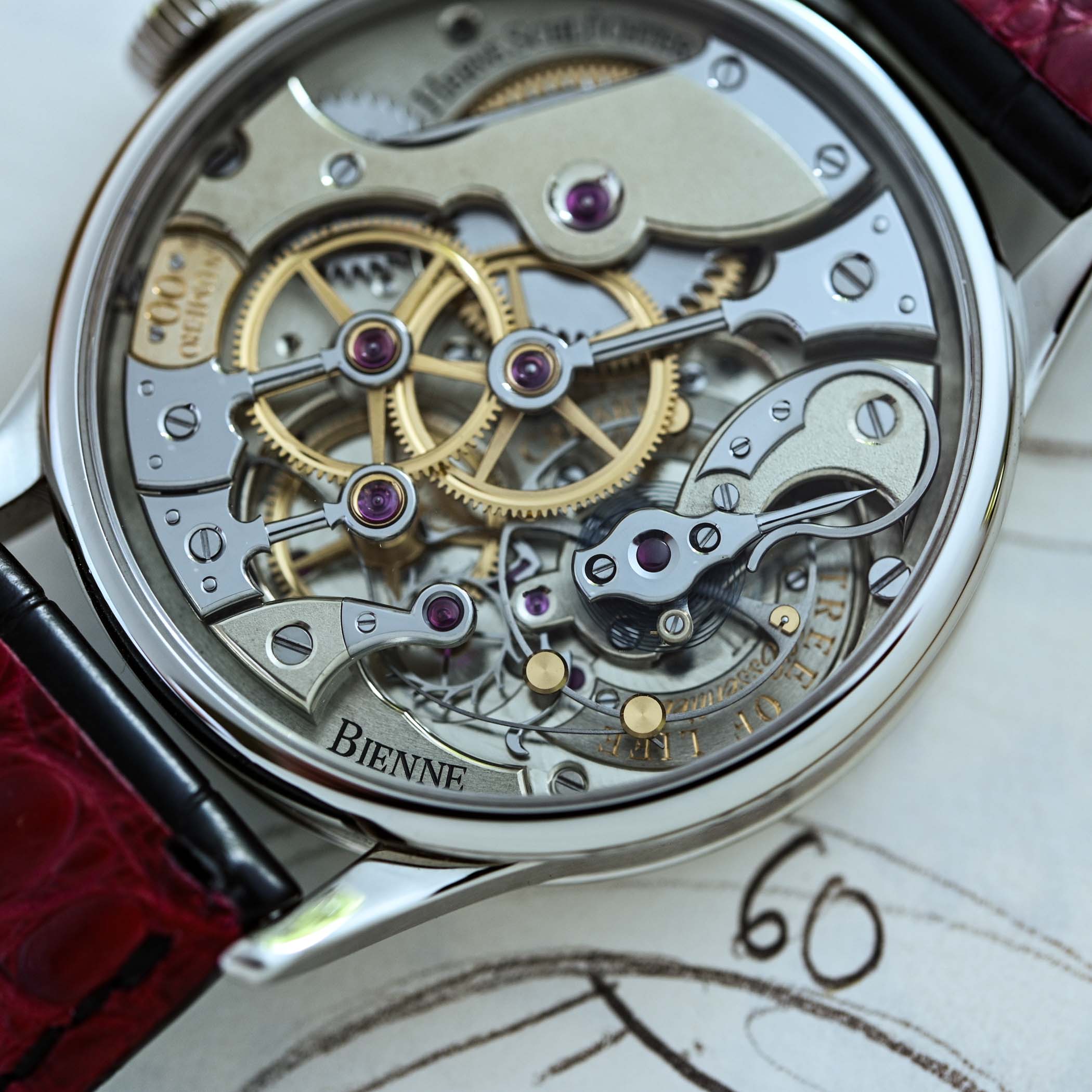
Black polish was first seen in the 18th century, and it takes hours of hand polishing small parts on a flat metal block (historically, tin). Although simple in concept compared to more technical decorations like Côtes de Genève, it’s very difficult to achieve and represents some of the best finishing in haute horology. A diamond paste or lapping films are used as very fine abrasives, while a circular motion is repeated with a fairly light touch, moving to finer abrasives between steps. The pressure, amount of paste and circular pattern are all crucial to a successful finish, and it can take up to a year or more to truly master black polish.
Perlage
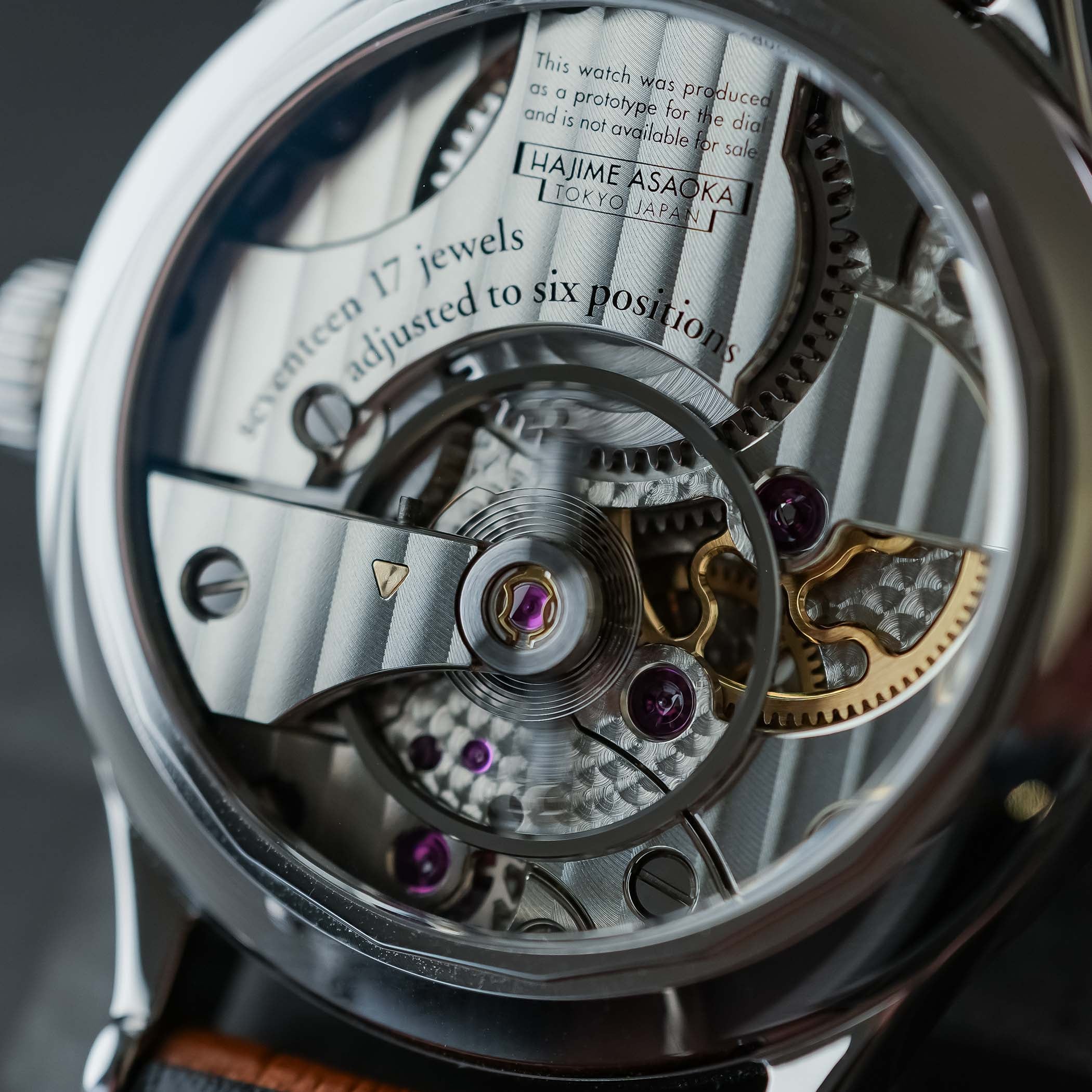
Perlage or circular graining is an overlapping circular pattern often seen together with Côtes de Genève, and it’s also common to be used on unseen areas like the dial side of movements. An abrasive rotating peg is used, either by hand or more commonly via automated machines, and achieving a perfect pattern of dozens of circles (sometimes over a hundred) on a plate by hand takes years of experience. Of course, machines can apply perfectly consistent patterns today, and only highly skilled artisans continue to make perlage by hand – Jaeger-LeCoultre, Patek Philippe and Philippe Dufour are examples. Like Côtes de Genève, this was originally used to trap tiny dust and metal particles like a filter in the 19th century, keeping the moving parts free of debris when cases weren’t entirely dustproof. It’s also an ideal decoration for tight spaces and small surfaces where Côtes de Genève wouldn’t be practical.
Solarisation or Snailing
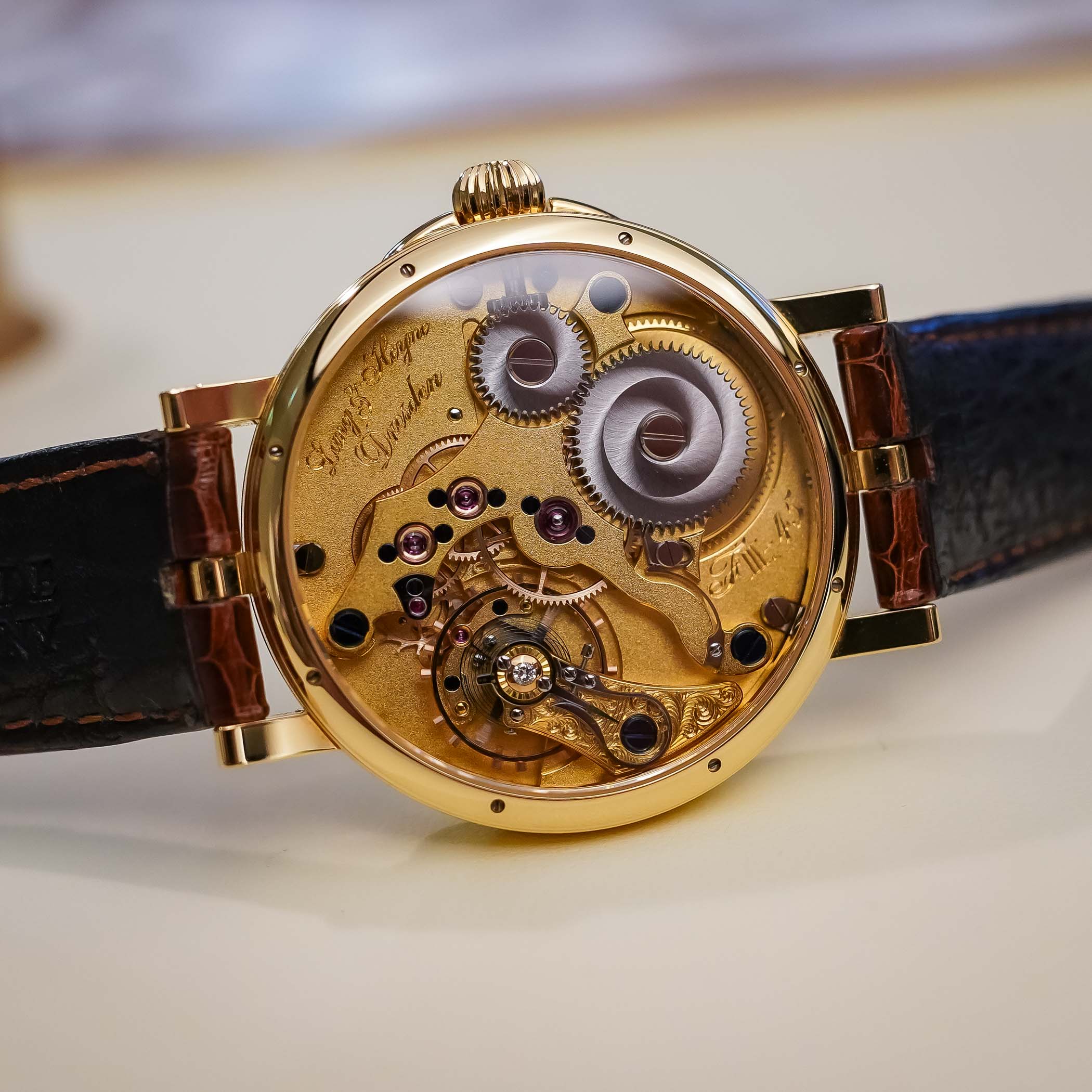
This is most common on larger, round surfaces like crowns and ratchet wheels or mainspring barrels, and consists of a pattern of concentric spirals from a rotating abrasive head and the round surface turning in opposite directions. The result is a whirling or kaleidoscope effect when light hits it, adding depth and a sense of motion. Smaller parts (usually in skeletonised movements) might have this applied as well to provide depth, although that’s generally limited to haute horology. It can resemble the grooves of a snail’s shell, hence the name, and it originated in the early 20th century in American pocket watches. Like previously mentioned decorations, it will also trap small particles and dust to protect moving parts.
Anglage or Chamfering
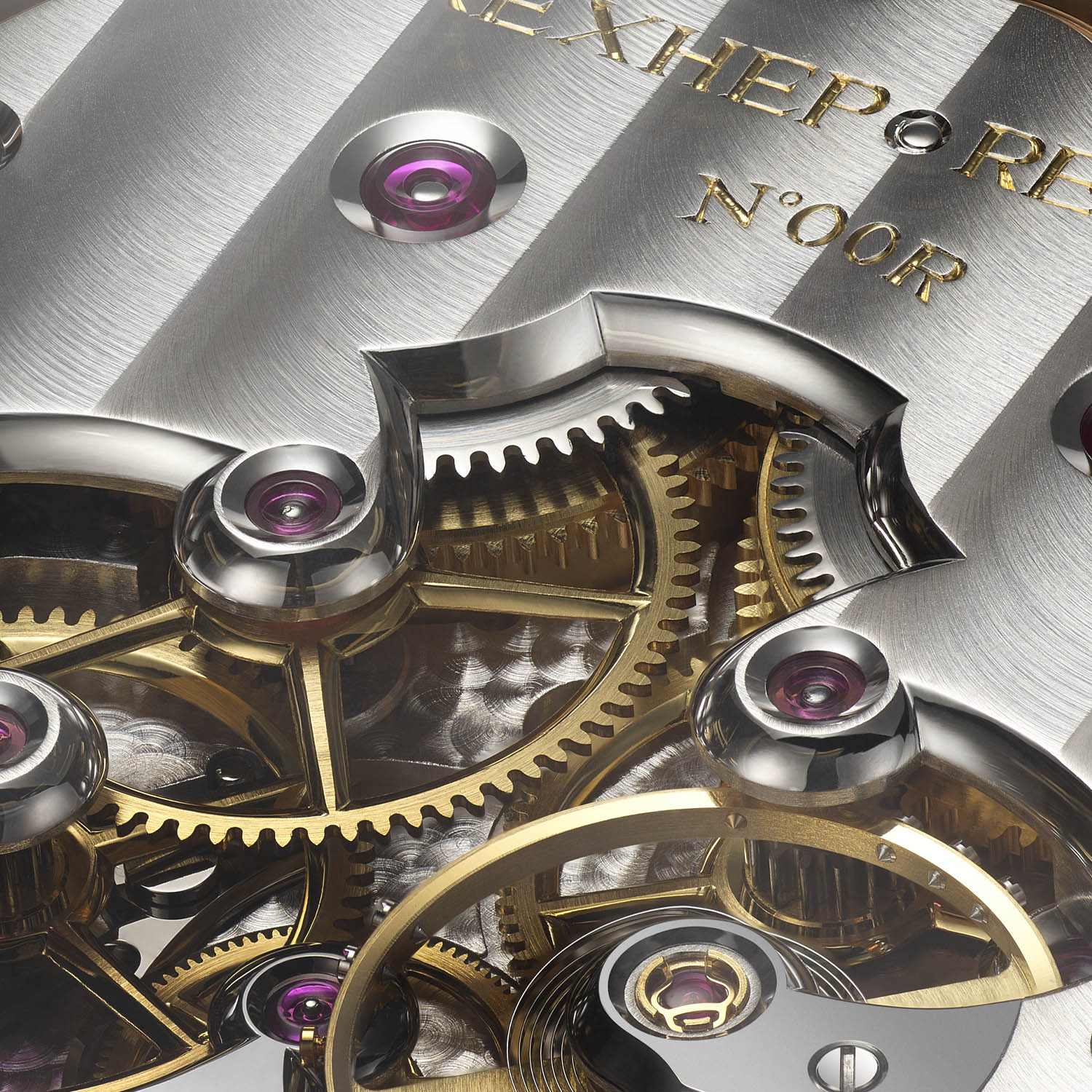
French for bevelling, anglage is the bevelling and polishing of flat edges, most often at a 45-degree angle. If done by hand, it’s very difficult to maintain perfect uniformity and consistency, especially in tight corners. Of course, machines can do this today (even if hand finishing follows), but high-end watchmakers often do this entirely by hand. It starts with small steel files, moves to finer abrasives like specialised paper and then to traditional gentian wooden sticks with diamond paste for a mirror polish. This goes back to the 18th century in Europe and was originally used to prevent stress fractures in the metal, although it’s entirely decorative today. Perfect, uniform handmade anglage is a mark of true haute horology and an important component of the Poinçon de Genève, emphasising its place in high-end movement decoration. The most difficult section of anglage to master is where two edges meet at a sharp point (forming a V shape), known as an interne or internal angle. Even CNC machines can struggle with this, often requiring additional hand finishing to get it precise. Anglage helps define the overall shapes and architecture of the movement and is seen on almost all high-end calibres.
Blued Screws
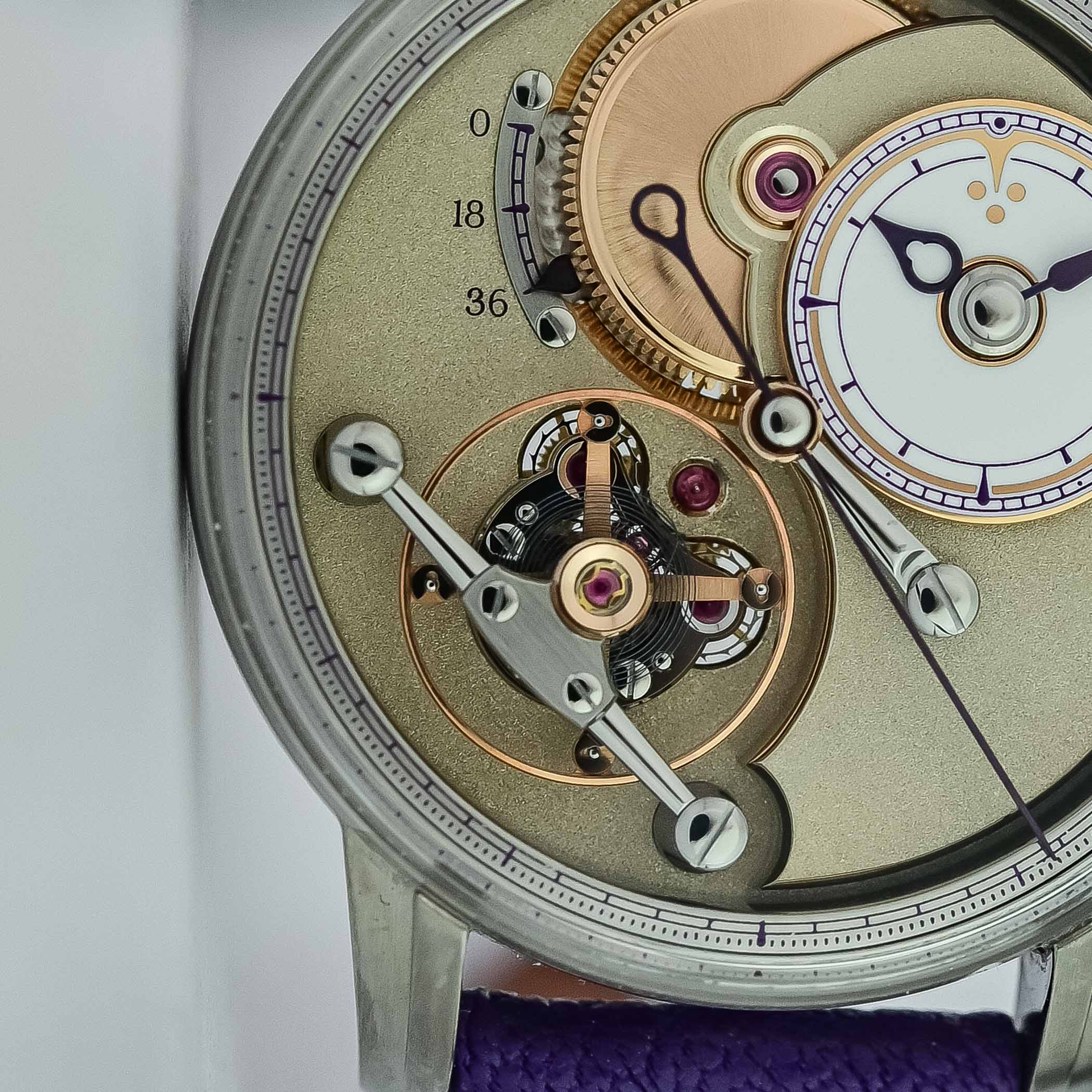
This was never initially meant as a decoration – it was simply the result of tempering high carbon steel for durability and to resist corrosion. High heat forms a thin, protective layer that stops further oxidation. Hundreds of years ago, there weren’t thermometers that could measure the heat applied to screw heads and dial hands, so watchmakers would go by the surface colour during treatment. This was vital to ensure that the process was done correctly, or the steel could become brittle. The colours acted as a temperature gauge as the part was tempered – light yellow to brown to purple and finally a cornflower blue. This isn’t as easy as it sounds, as the surface first needs meticulous preparation that starts with polishing and cleaning. The screw is then slowly heated over an open flame on a copper or brass tray, and hits the blue colour at around 300 degrees Celsius. Screws must be quenched in oil or water to prevent overheating, and timing is critical. Modern alloys like stainless steel make this a moot point today, but it remains popular as a decorative touch, and thermally blued screws demonstrate additional handwork – it’s all in the details. Many mid-range and entry-level brands mimic the look with chemical treatments or paint, but true artisans settle for nothing less than traditional tempering to achieve the colour.
Frosting
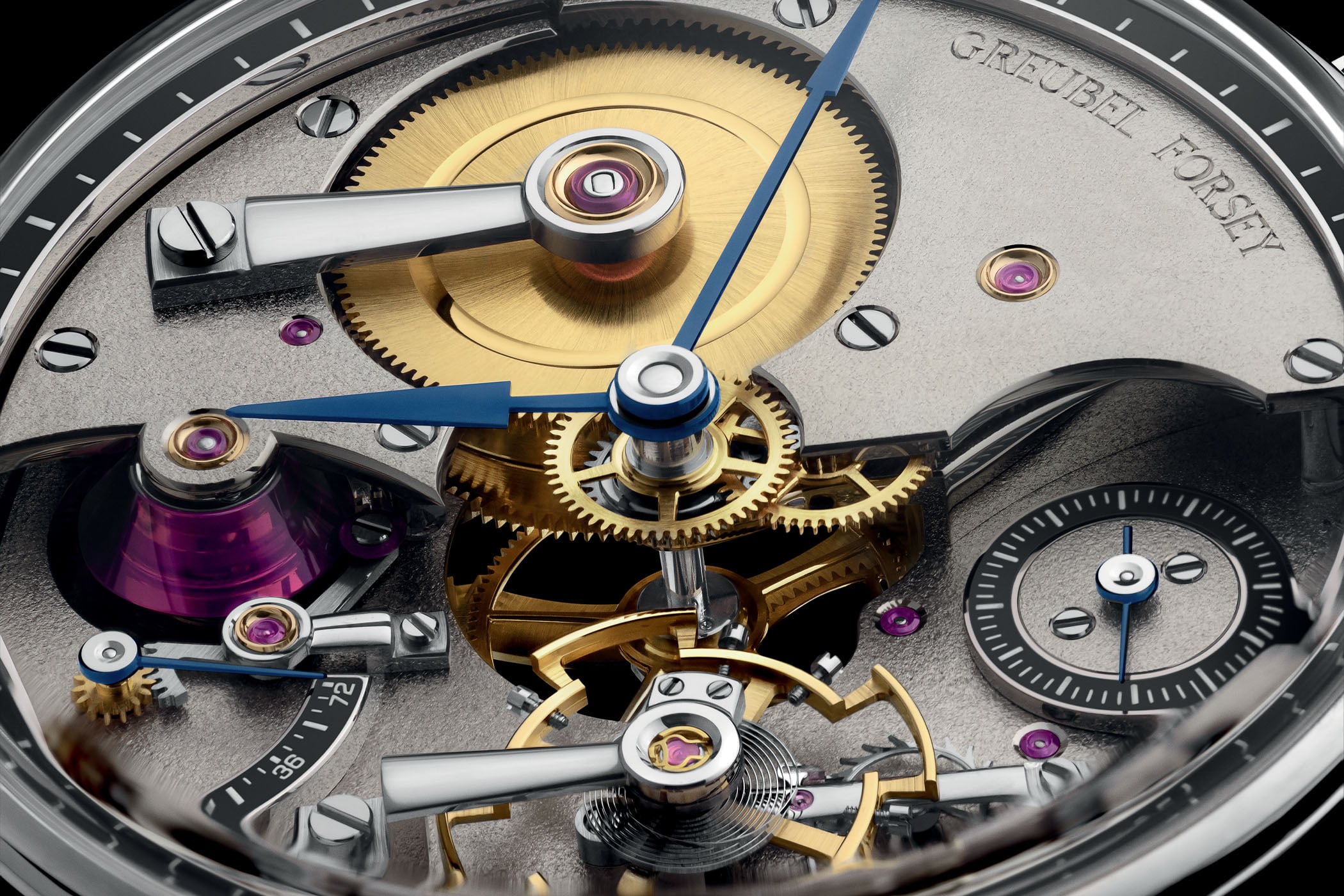
Frosting brings a very finely textured finish to give metal surfaces a matte, non-reflective aesthetic. Combined with decorations like anglage, it can display a sophisticated simplicity that doesn’t draw attention away from complexities like tourbillons or visible repeater hammers/gongs from an exhibition caseback. Mirror-polished bevels and screw heads and gold chatons also stand out over the matte background, bringing an understated elegance that’s very effective. Like most decorations, frosting can be achieved by several methods, using traditional techniques or advanced technology. If done by hand for high-end calibres, the metal surface is moved in circular motions over fine abrasives like powders, pastes or grains – silicon carbide or aluminium oxide would be examples. Modern methods involve bead blasting the surface via air pressure and a fine abrasive material (tiny beads of ceramic or aluminium oxide) to get a uniform, tightly textured matte finish very quickly – an analogy would be spray painting vs hand brushing the surface. Certain metals like brass, silver and gold can also be chemically treated in acid to form a frosted finish by oxidising impurities at the surface, which is actually a very traditional method.
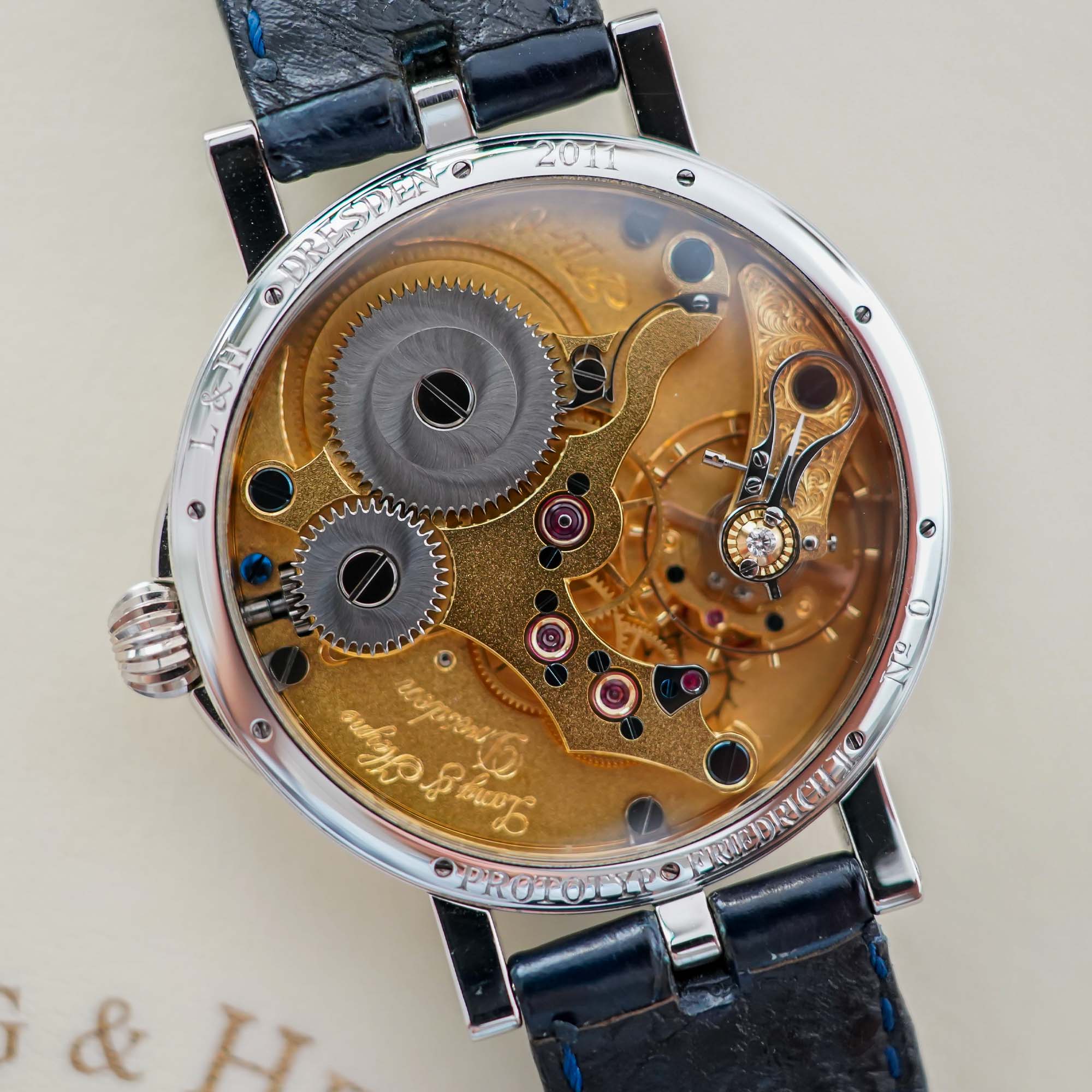
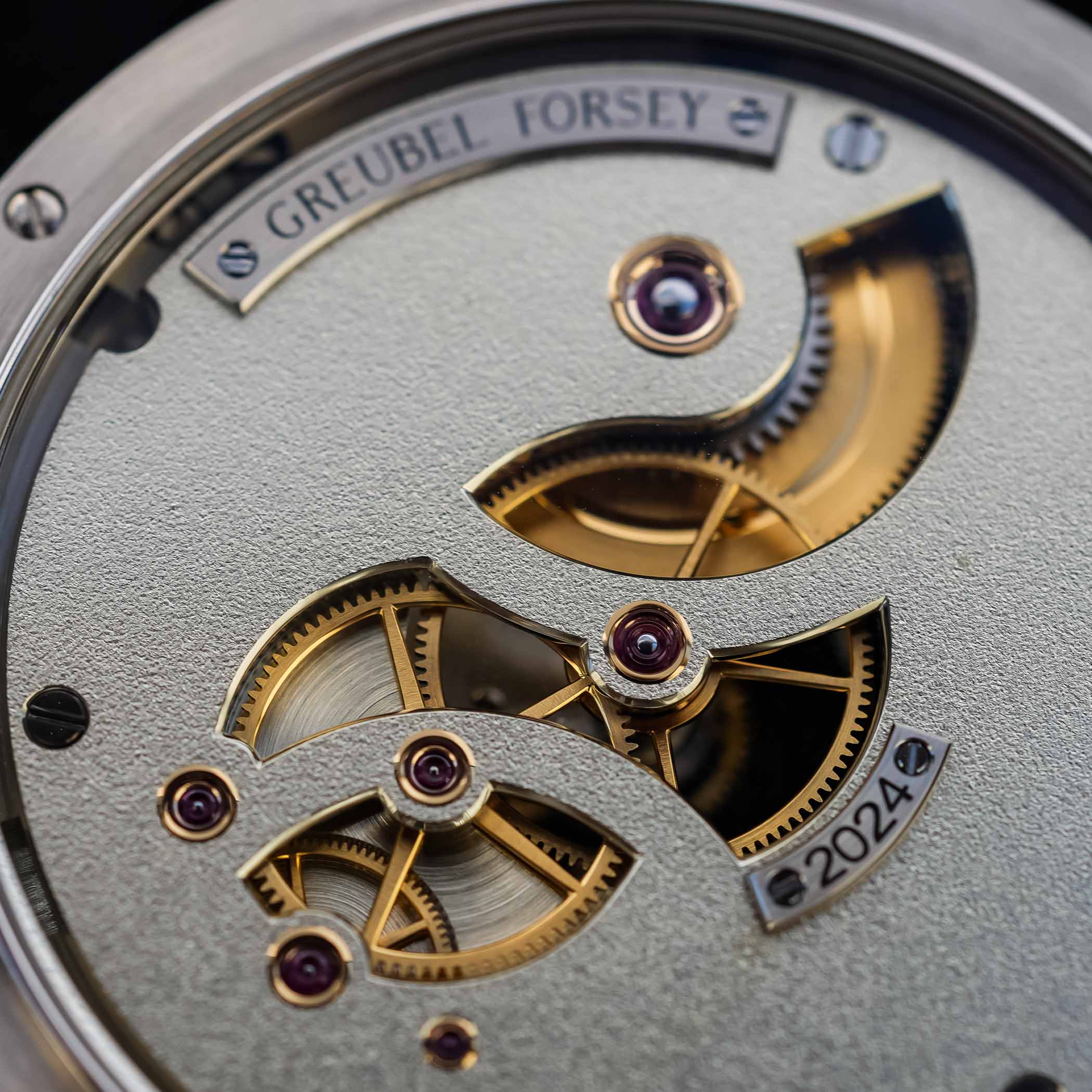
Abraham-Louis Breguet is known for inventing the decoration in the late 18th century, although its initial purpose was to prevent corrosion or tarnish before modern alloys and tightly sealed cases came into play. Brass, gold or silver plates would be heated to bring impurities to the surface and then dipped into strong acid to “burn” them off, which left a tight, pitted texture that was both uniform and matte. The aesthetic became very popular in England, and a blend of gold and mercury was used to coat frosted brass plates to further protect them from corrosion (known as fire gilding). American watchmakers would apply gold plating to chemically frosted plates in the mid-19th century on a mass production scale. Today, technology has democratised the technique so mid-range movements can display the decoration via bead blasting, but elite watchmakers like Roger Smith and Greubel Forsey still do this traditionally, either entirely by hand or via traditional chemical processes and handwork.
Poinçon de Genève or the Geneva Seal
This is among the oldest and most prestigious benchmarks of fine watchmaking that highlights the very best of movement finishing, established in 1886 to separate Genevan watches from foreign competitors. It’s guaranteed by the State of Geneva and administered by TIMELAB, the Geneva Laboratory of Watchmaking and Micro-engineering (which also handles COSC certifications). It has some of the strictest standards in the industry, and a maximum of about 0.12% of all Swiss watches earn this recognition per year (approximately 24,000 watches out of around 30 million). Restrictions go beyond the watch itself as only Genevan watchmakers are eligible, so the movement must be assembled, adjusted and cased in Geneva. Every part and surface of the movement must be finished to the highest standard, including unseen elements, using many or all decorations seen above. There are also specifics in place as to how parts need to be finished, and everything must be done by hand (no machine work). The movement itself must also be constructed to near perfection, and since 2013, accuracy, power reserve and water-resistance are also judged alongside finishing. Only the most elite watchmakers get this seal, such as Vacheron Constantin and Roger Dubuis, and the Genevan coat of arms with the key of St. Peter and Imperial Eagle is stamped on the movement.
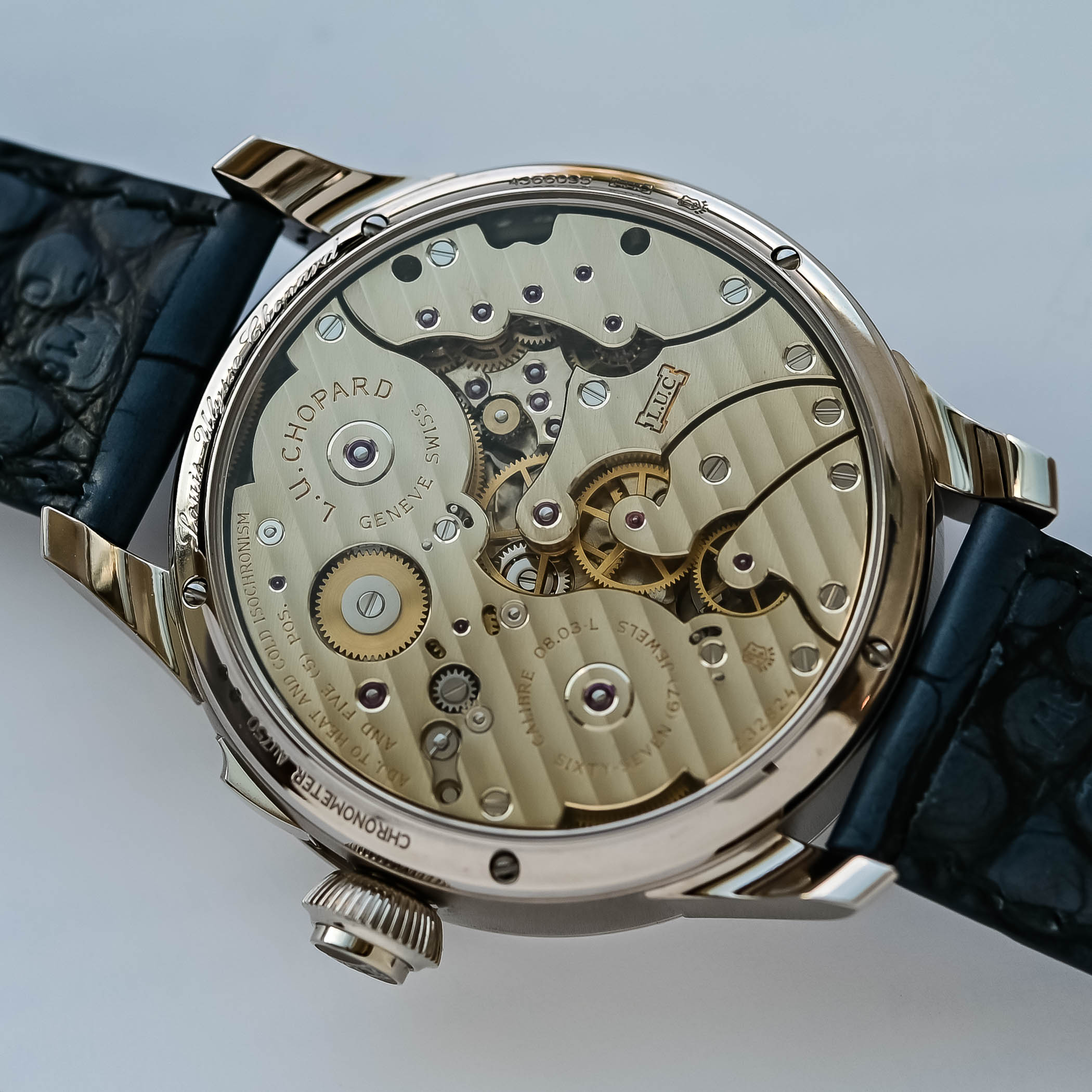
In 2009, Patek Philippe stopped using the Geneva Seal and established its own Patek Philippe seal, which has stricter overall standards with accuracy tolerances within -2/+1 seconds per day for tourbillon movements. The Qualité Fleurier stamp is a broader certification, although it’s very rare and limited to its founding members from 2004 – Chopard, Bovet and Parmigiani Fleurier. It’s not nearly as strict as the Geneva Seal and technically open to any brand in the EU, and is backed by the Swiss government for added legitimacy. Watches must be Swiss-made and COSC-certified (at the very least) and display a very high degree of finishing, although it seems that only Chopard is participating in this on a limited basis today (and, ironically, the watchmaker still submits pieces for the Geneva Seal). The Geneva Seal remains the gold standard for third-party certification, and having one elevates both the watch and brand to a truly elite level. That said, only a handful of eligible watchmakers participate, with brands like F.P. Journe remaining on the sidelines, so it’s a massive endorsement without full inclusion of Genevan brands.
Modern Technology
Today, most decorations can be well executed via CNC machines, and handwork sometimes accompanies this for that final 10% (so to speak). Mid-range brands and off-the-shelf movements often display multiple and impressive decorations that the majority of buyers are happy with. Whether from ETA, Sellita, Miyota or Seagull, it’s not hard to find well-finished movements these days. That said, watchmaking can be as much of an art as a science, and hand finishing by elite artisans brings this to another level entirely, even if differences may seem subtle to some. It’s what separates great from exceptional, and top luxury brands around the world continue the tradition of painstaking hand finishing that connoisseurs and collectors demand.


4 responses
Thank you for this article updating and separating the art and science of the various finishing processes at work. And what to be cognizant of when viewing these various finishing processes when looking at movements.
Because you speak of seagull… Are seagull movements finished removing in a separate step or do they include a stamped pattern in the base part?
Just asking, in my experience and although visually pleasing, their stripes and angles are much coarser than usual, to the point I think they may not technically be a finish. Entirely not sure, to be clear.
Minerva / Mont Blanc deserves a mention, imho.
* removing material
You forgot gold chatons