


 Not all images were able to load for printing. Please close the print window and try again.
 Watches That Track Celestial Events
From moon phases to bona fide orreries, mechanically tracking celestial bodies and events goes back to 14th century clock towers with some wild wristwatch equivalents today.
The Prague Astronomical Clock in the Czech Republic is the oldest mechanical tracker of celestial events that remains operational today. Introduced in 1410, it displays the relative positions of the sun, moon and zodiac, although Richard of Wallingford’s clock from 1330 was able to track the sun throughout the year to predict moon phases and lunar eclipses (and even tides). The Astrarium from Italian engineer Giovanni Dondi in 1364 featured seven dials that tracked the sun, moon and five known planets at the time. The first mechanical clocks, in general, were invented around 1270, give or take, so astronomical complications debuted near the very beginning, showing how innovative and downright brilliant these early scholars and engineers were. Today, mechanical wristwatches can track the sun, moon, planets and much more, and some radical designs even have a full orrery under the crystal.
Moon Phase Indicators
Miniaturising such complications that inhabited clock towers was no easy feat, but they appeared soon after portable time became a reality in Germany with Peter Henlein’s spring-driven Nuremberg eggs in the early 16th century. Rudimentary moon phase indicators were first, but accuracy suffered along with time itself, which could be off by hours per day with the archaic verge escapement and foliot. It wasn’t until the start of the 17th century that English watchmakers invented more contemporary and accurate moon phases in proper pocket watches (Nuremberg eggs were more like small clocks worn around the neck). An early surviving example from around 1605 comes from London, and the complication was genuinely useful in its day. It helped sailors understand tides, travellers predict bright, moonlit nights for safer overnight journeys, and allowed farmers to more accurately time planting/harvesting. It wasn’t until the late 17th century and the invention of the hairspring that pocket watches became accurate and reliable enough for truly precise moon phase indicators.
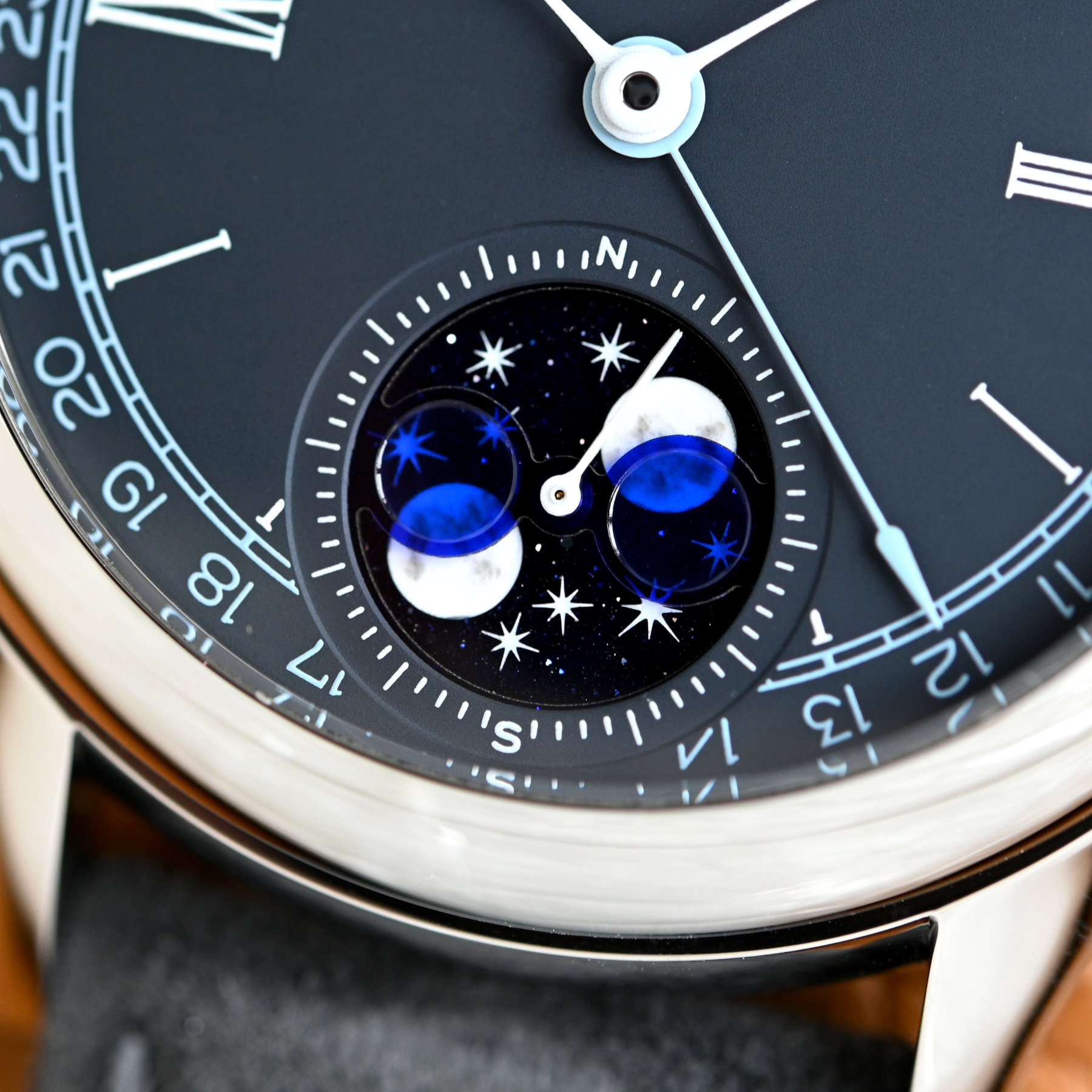
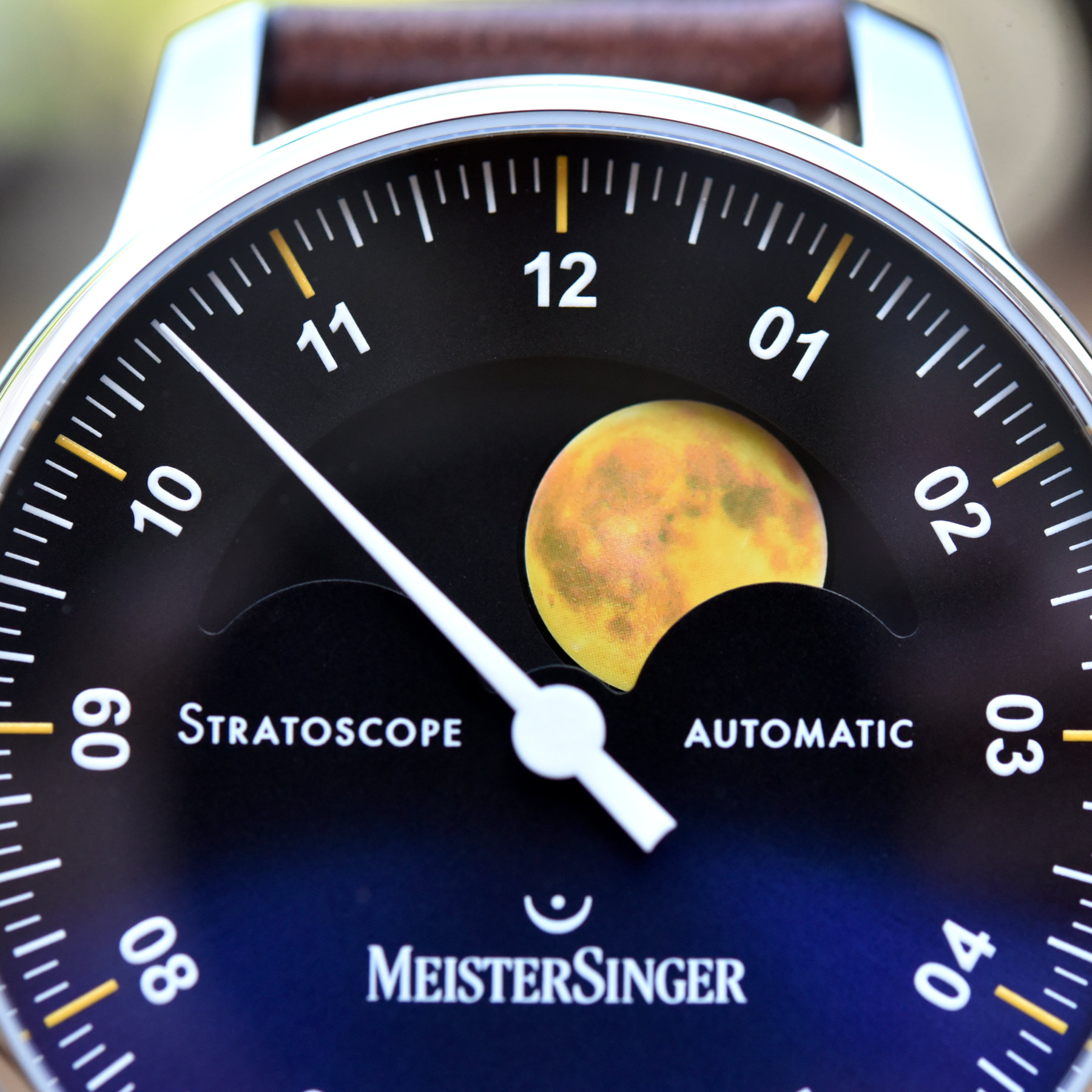
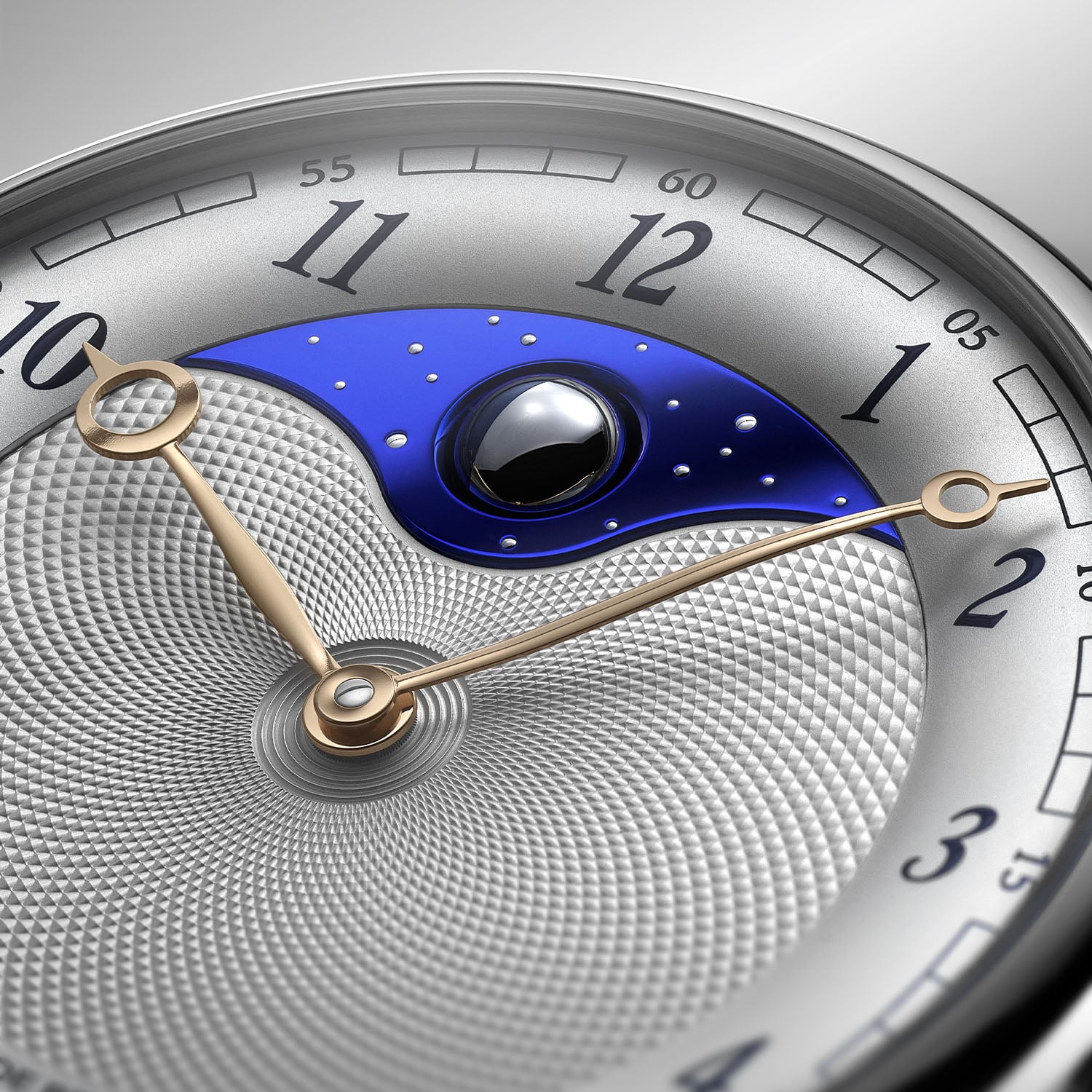
Even with accurate timepieces, moon phase indicators were still tricky to perfect. A lunar (or synodic) month is 29.53 days – new moon to new moon – and tracking that centuries ago via a mechanical movement wasn’t perfect. The primary wheel for this had 59 teeth, which was double 29.5 days, which mathematically rounded down from 29.53, so an error was already built into the design. If all else was theoretically perfect, this slight deviation would cause the moon phase to lose one day every 2 years, 7 months and 20 days. This was well accepted at the time and accurate enough for day-to-day use, even if the relative inaccuracy of many watches themselves exacerbated things a bit. Manual adjustments every few months or so kept moon phase indicators on track.
Perpetual Calendar Influence
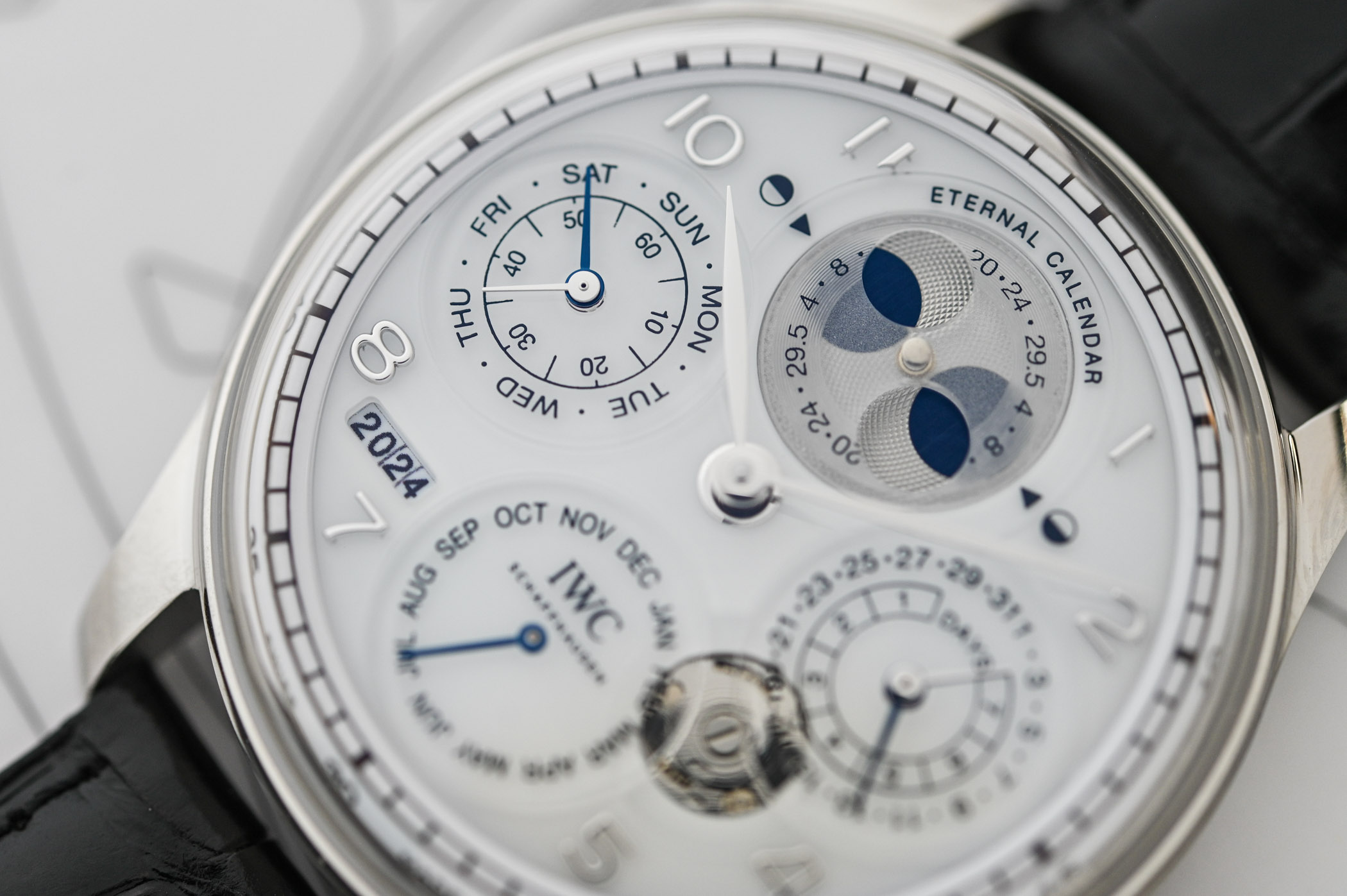
The invention of the perpetual calendar by English watchmaker Thomas Mudge in 1762 revolutionised moon phase accuracy as gear trains became much more complex and specialised, having to compensate for 30- and 31-day months, February’s shorter month and leap years. Custom gear trains were invented just for the moon phase that scrapped the traditional (and flawed) 59-tooth wheel. Gears were mapped so precisely that deviations were pushed to one day every hundred or more years. Of course, this is a bit theoretical as mechanical watches can’t run continuously and uninterrupted for a hundred years – they stop on occasion from not being worn and all need periodic maintenance that requires the entire disassembly of the movement every five to ten years. Almost all perpetual calendars include a moon phase today, as they complement each other well, although the complications remain independent.
Orreries and planetariums
While moon phase indicators are the most common and simplest celestial trackers today, often the only complication on a watch, let’s now jump to the other extreme with orreries, which display physical models of the sun, moon and planets to precisely track positions throughout the year. This mechanical representation of the solar system goes back to the ancient Greeks with the Antikythera mechanism, widely considered the first mechanical computer in the world. Built around 150 BC, the complex, hand-powered mix of gears tracked the positions of the sun, moon and five known planets. It wasn’t until 1712 that the concept was named “orrery” when London engineer John Rowley built a sophisticated one for the 4th Earl of Orrery, Charles Boyle. These modern 18th-century orreries applied Sir Isaac Newton’s laws of gravity and heliocentric universe (sun at the centre). In the 18th and 19th centuries, large orreries became status symbols for the wealthy and affluent schools, but are rare and somewhat obsolete today (like an Underwood typewriter).
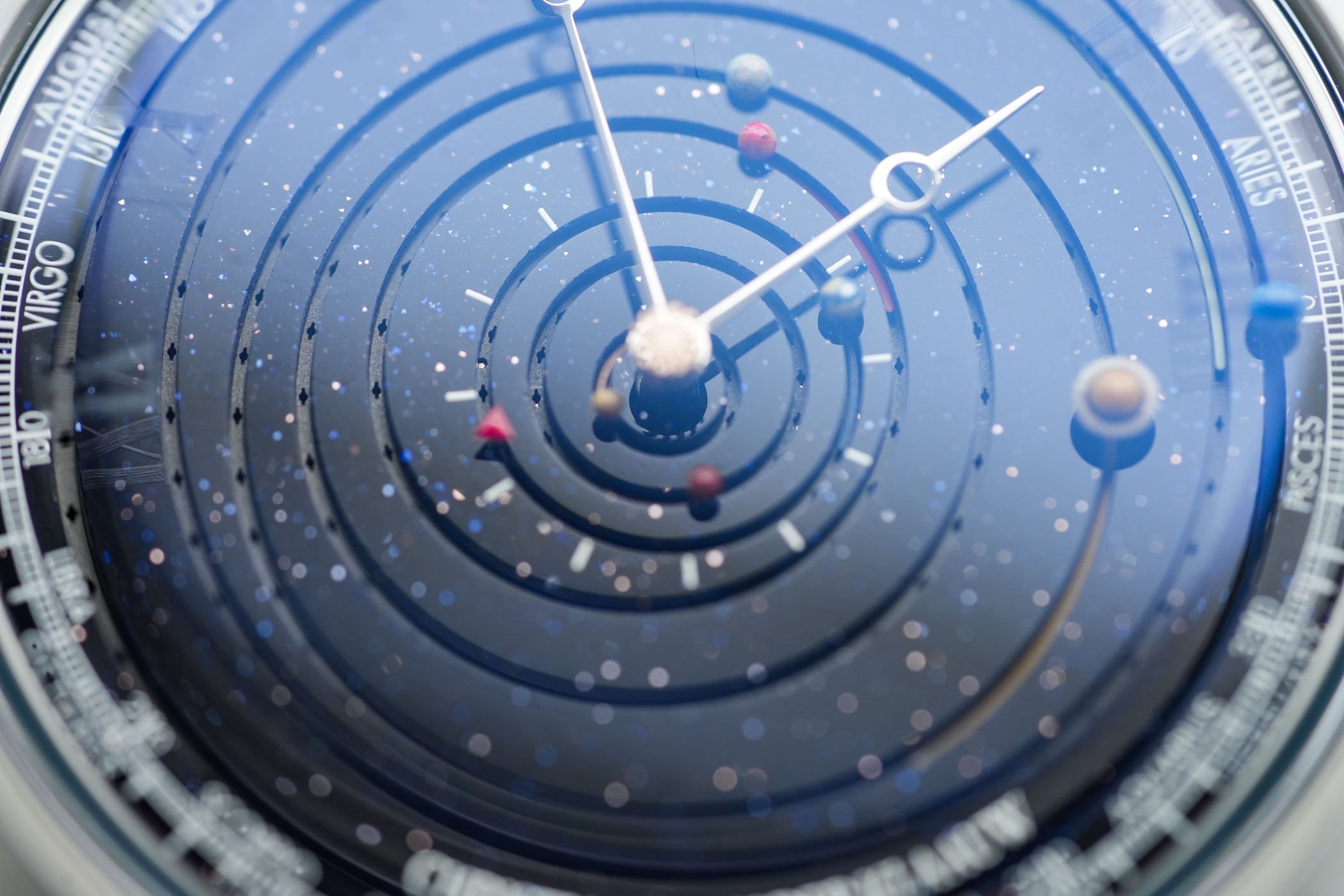
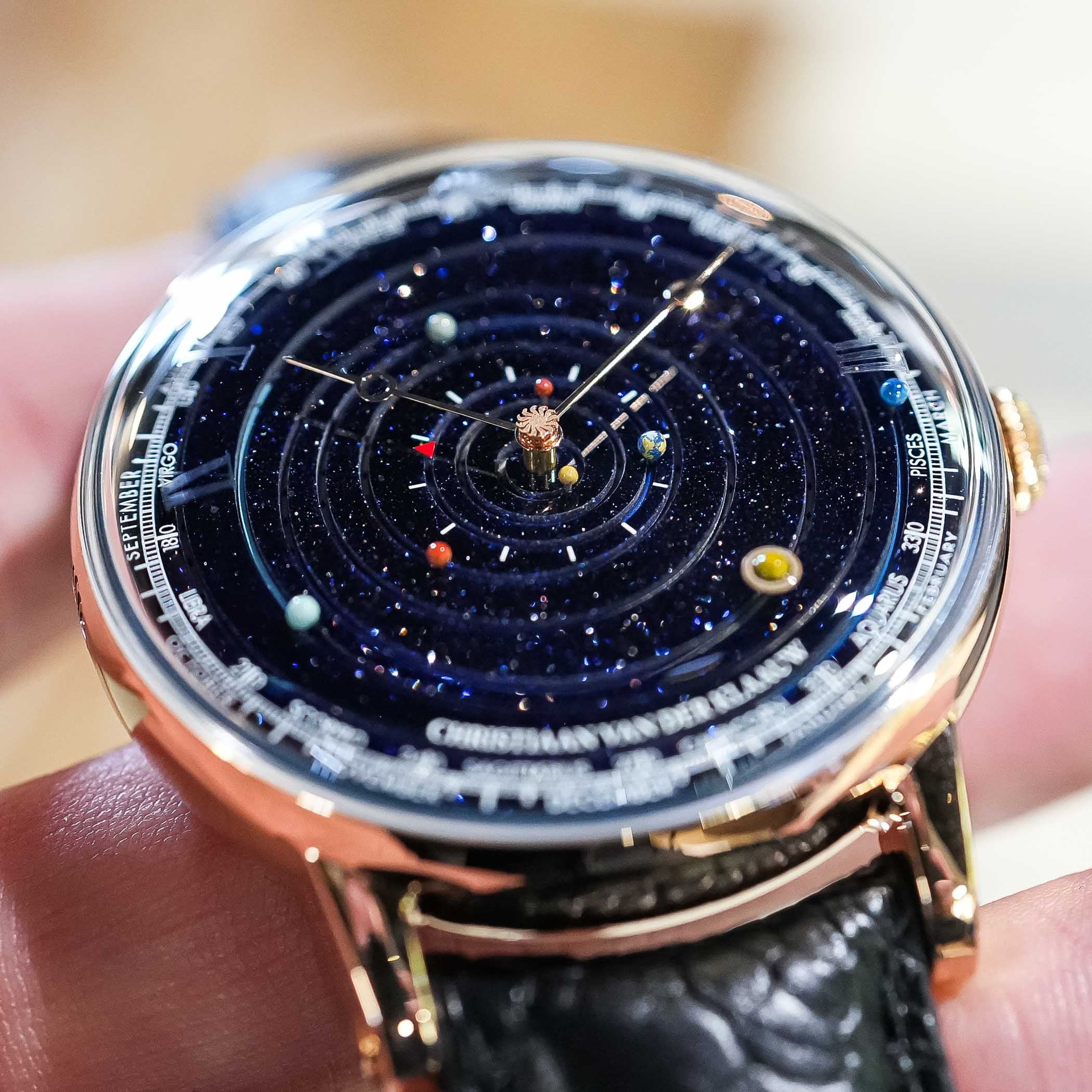
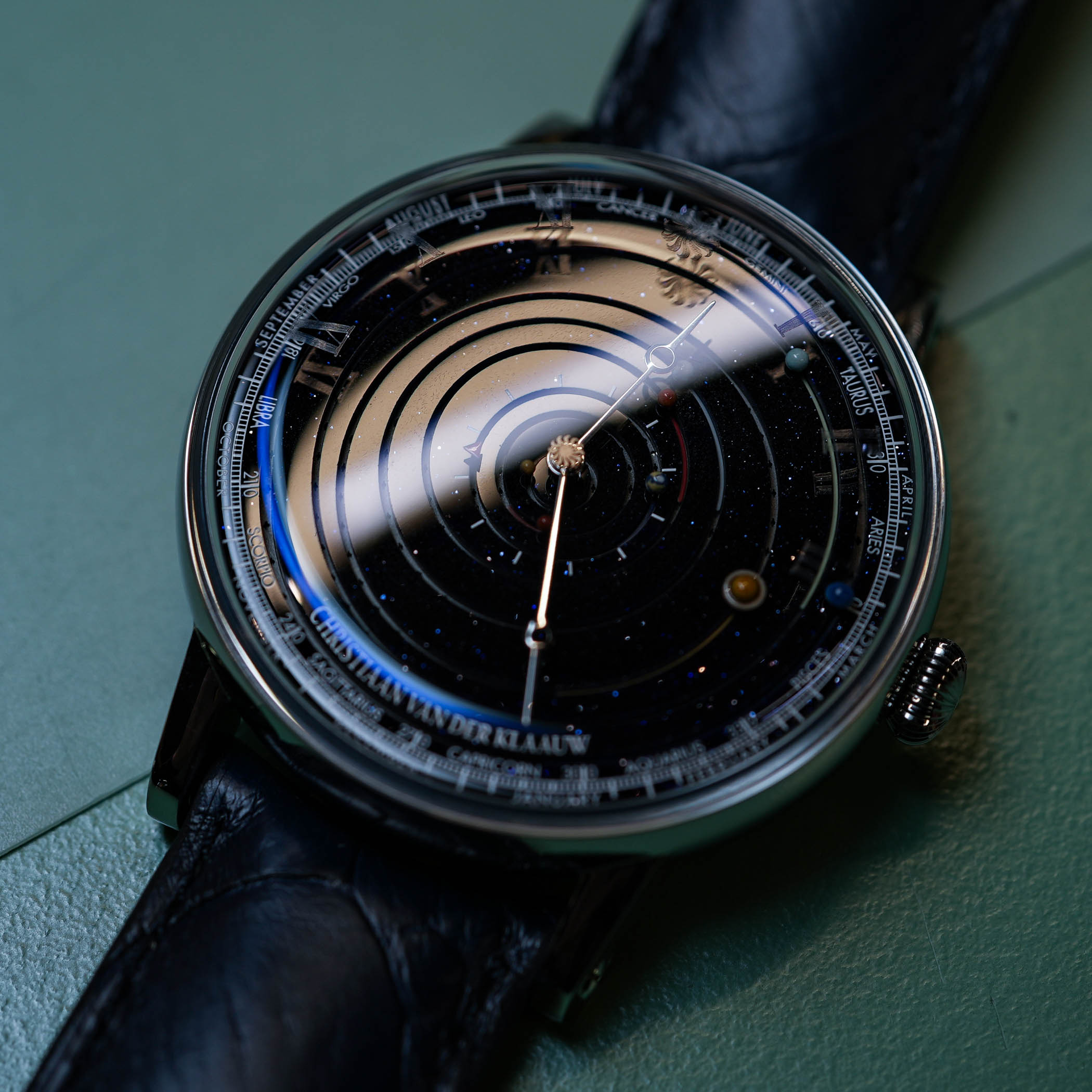
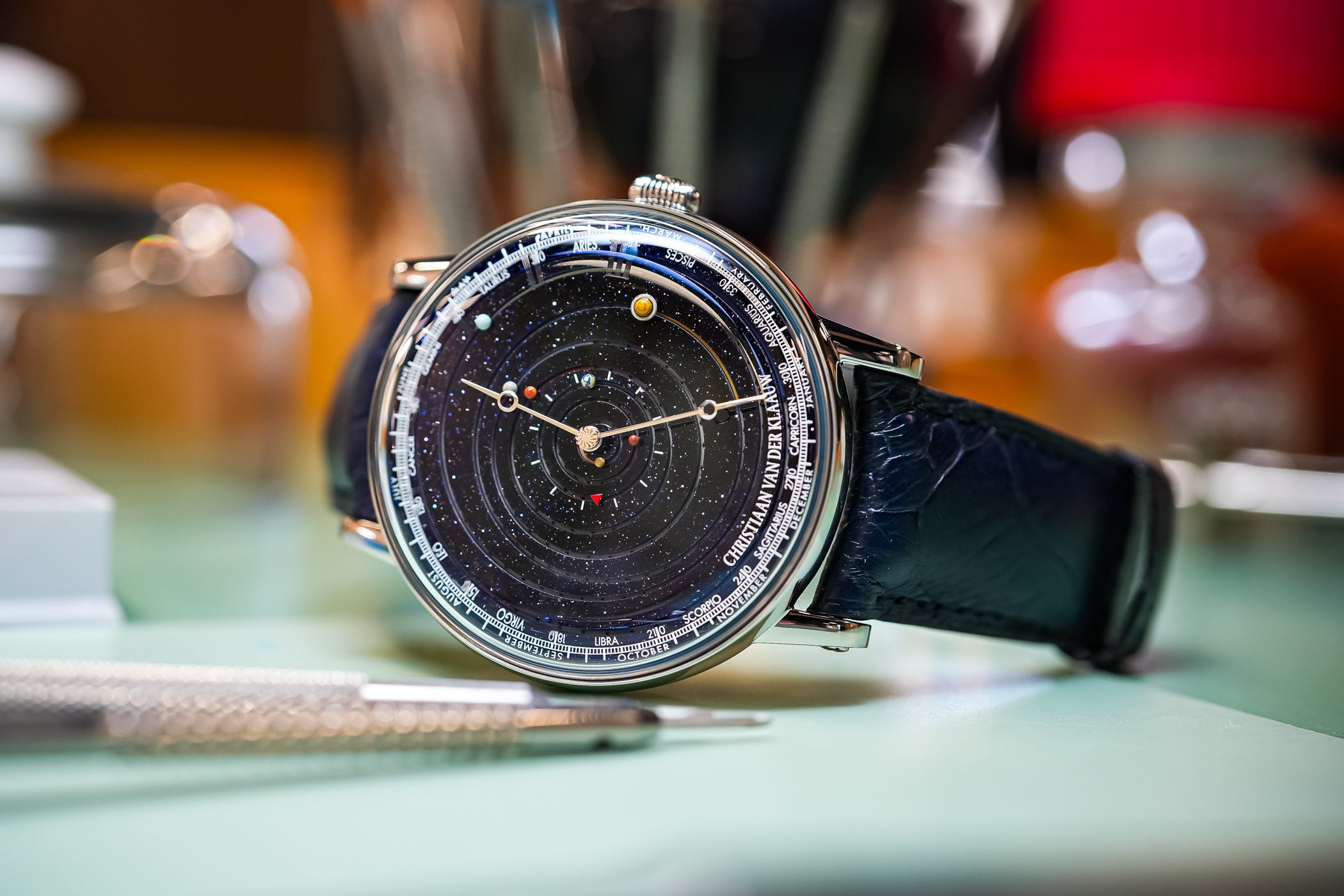
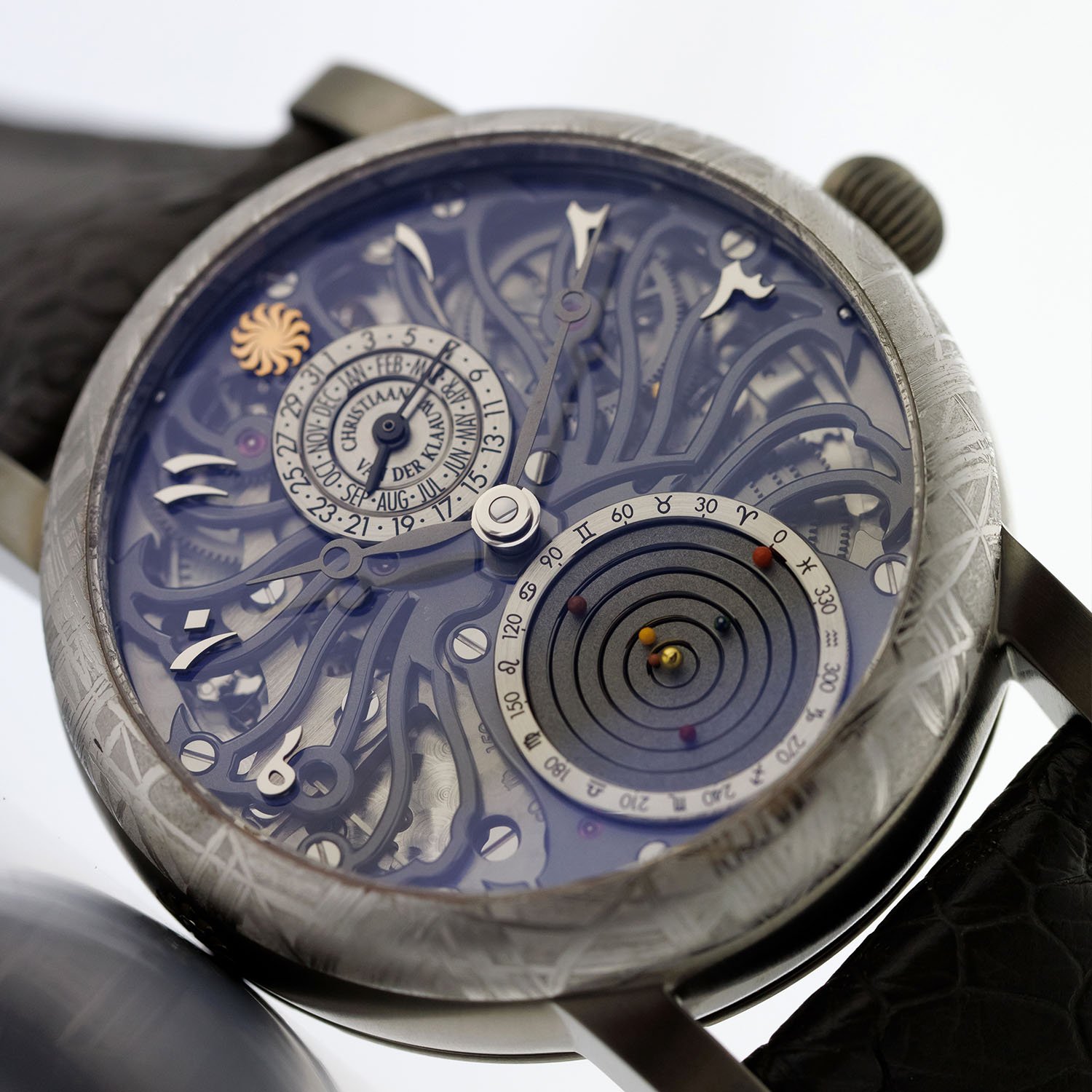
Miniaturising such a complex tracking system for a wristwatch remains extremely difficult and consequently rare, and only high-end watchmakers attempt it (with very few exceptions). Often called a planetarium complication, it’s among the most expensive of complications and generally carries six-figure prices. A great example comes from the Netherlands – Christiaan van der Klaauw’s Grand Planetarium Eccentric. This is more of a two-dimensional type with spherical satellites orbiting a starry aventurine dial, although it’s also the most accurate. Christiaan van der Klaauw is well known for this complication and various types of planetariums, and this piece shows the proper elliptical orbits of Mercury, Venus, Earth, Mars, Jupiter, Saturn, Uranus, and Neptune. It’s the only watch of its kind that can accurately track all eight planets simultaneously. These orbits range from 90 days to over 160 years, and the sun is central on top of the hour and minute hands. Other Christiaan van der Klaauw astronomical variants include the Venus Zodiac and Venus Annual Calendar, which are limited to tracking Venus, Earth and the Moon.
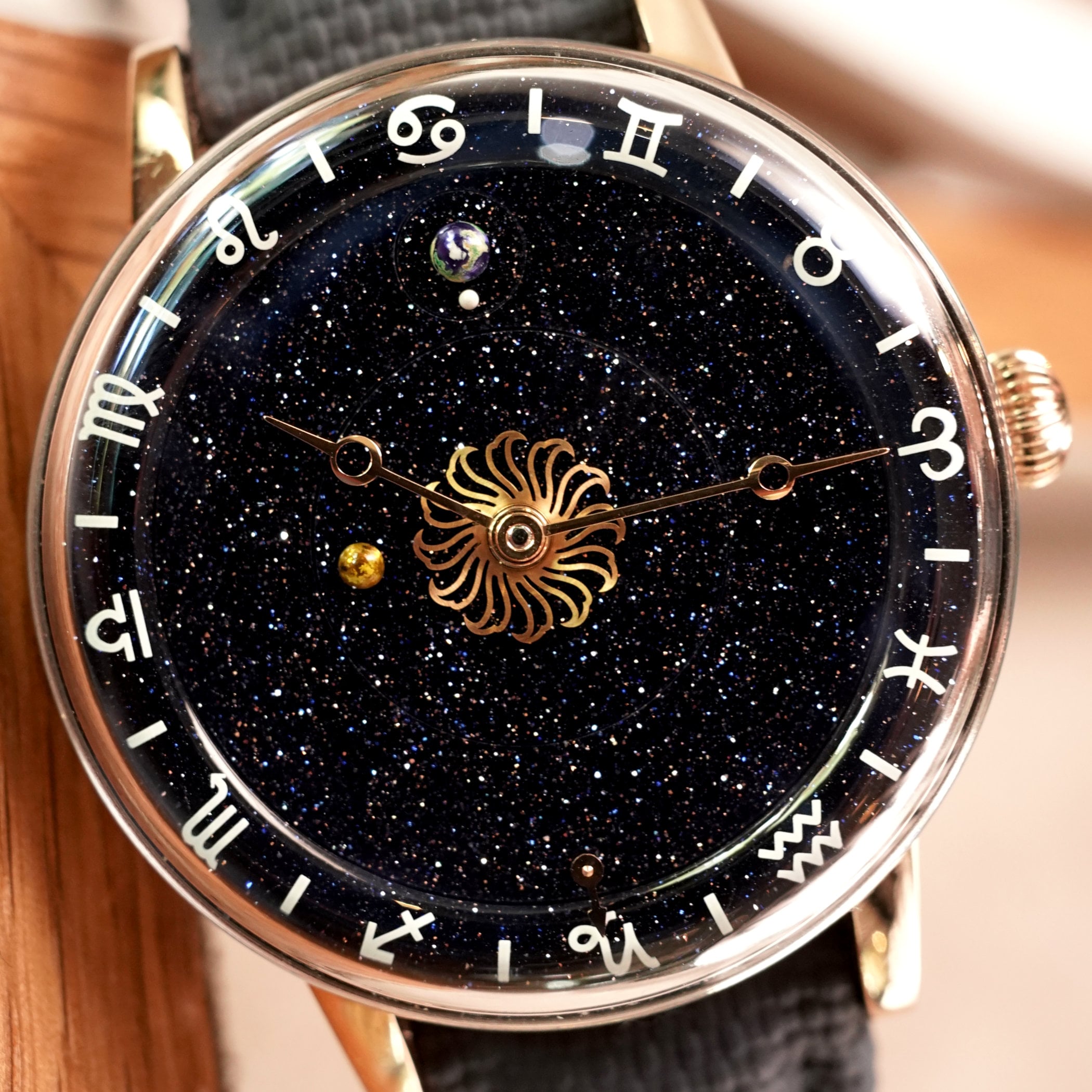
A three-dimensional orrery has even more visual appeal, and the Jacob & Co. Astronomia Solar is a prime example. Housed within a 44.5mm 18k gold case (21mm in height) are five celestial bodies, four of which are represented with cut stones – 1.5 carat Citrine crystal for the sun and amethyst, garnet and smoked quartz for planets. The Earth, however, is more realistically depicted with rose gold and blue lacquer for oceans. The dial base is a starry aventurine, and time is displayed within a small sub-dial. In the midst of all of this is a bi-axial flying tourbillon with a 60-second horizontal rotation and 10-minute vertical rotation. The planets rotate every 10 minutes, while the dial base rotates counterclockwise every 10 ten minutes as well, all providing a fascinating representation of a mini-solar system. The catch, however, is that it’s all visual without depicting accurate orbits of the sun and planets. At the end of the day, it just looks really cool with no science behind it, unlike the very accurate Grand Planetarium Eccentric above.
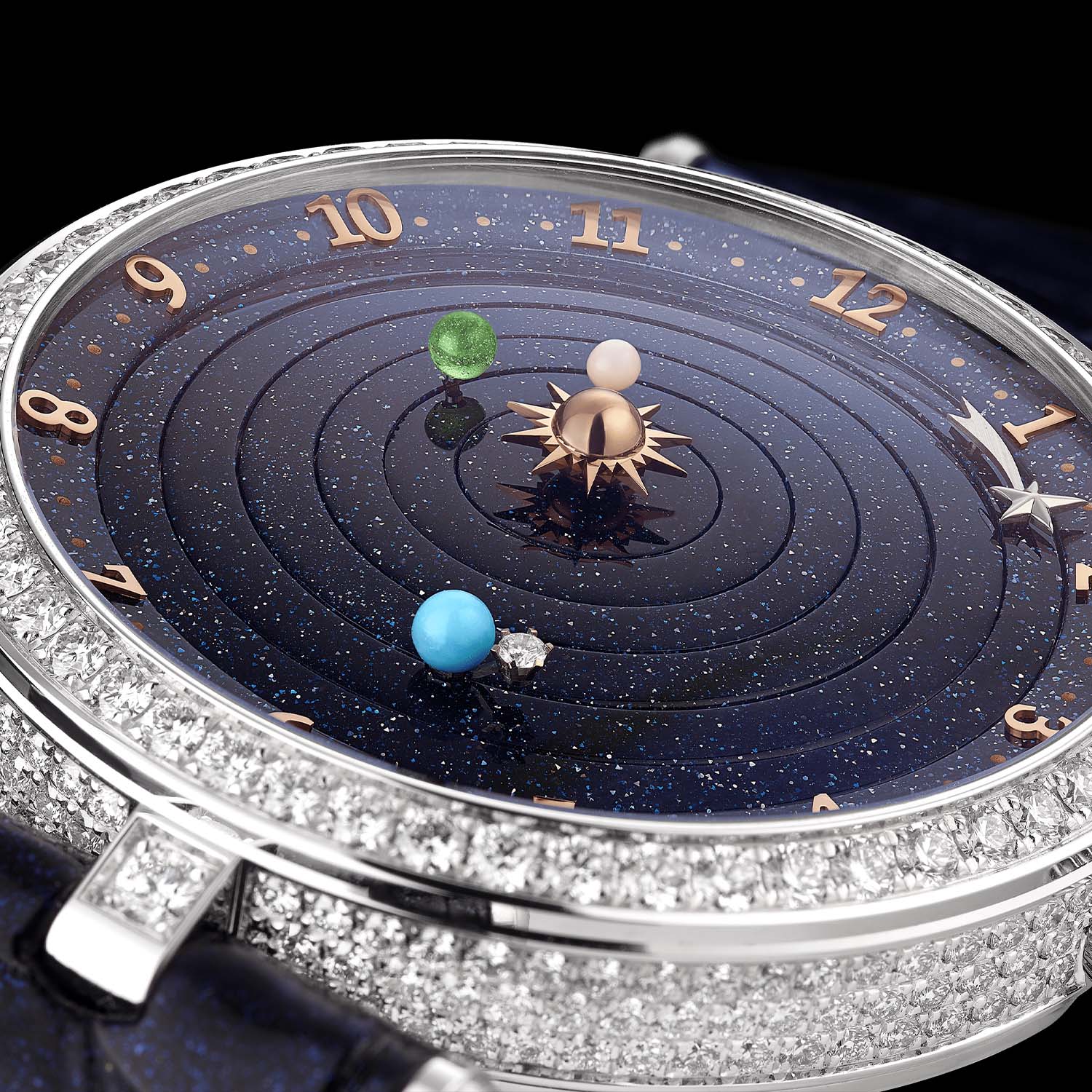
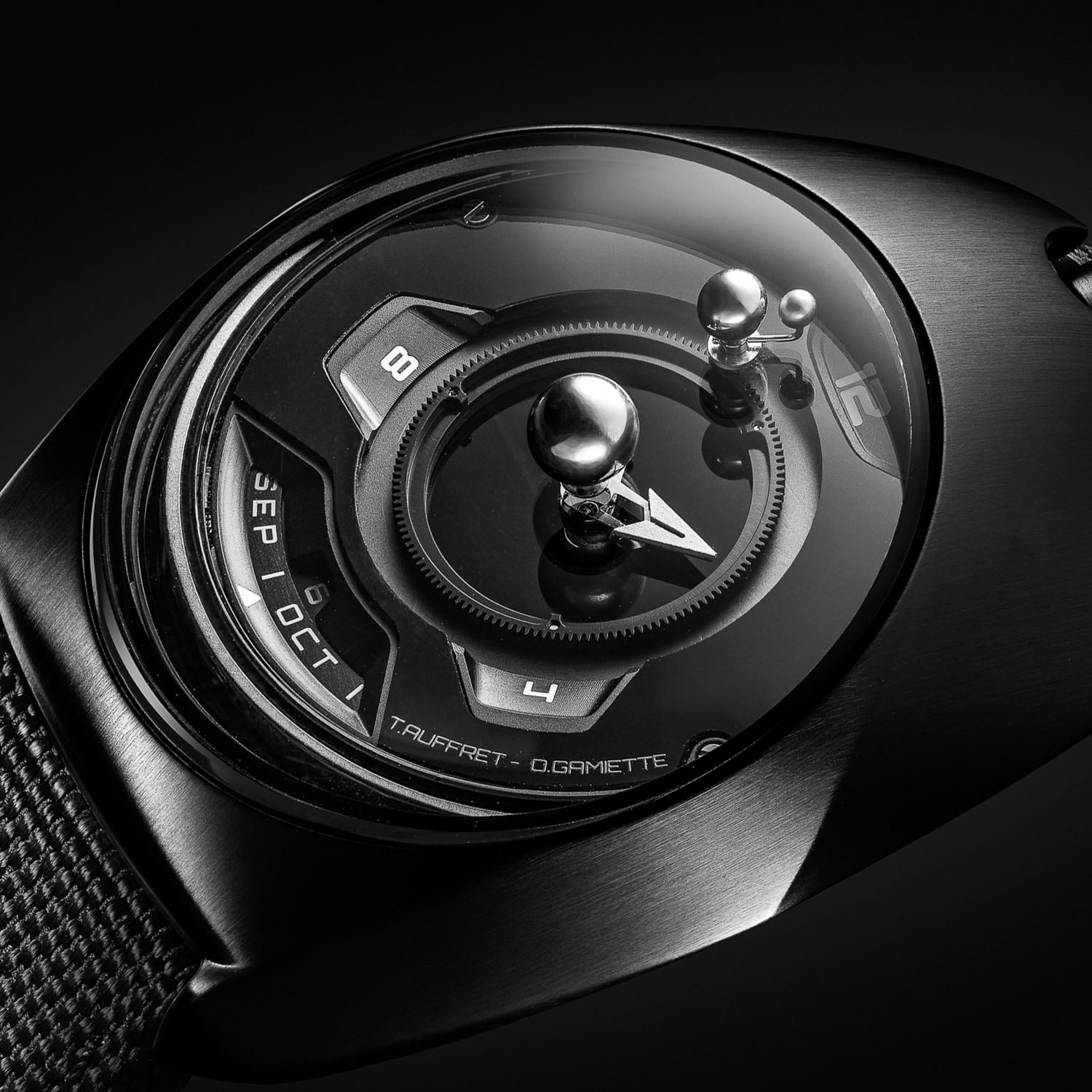
Other sophisticated and accurate orreries include the Van Cleef & Arpels Midnight Planetarium, which is visually similar to the two-dimensional Grand Planetarium Eccentric but limited to six planets (Mercury, Venus, Earth, Mars, Jupiter and Saturn), as also produced by CvdK. And for that rare piece that’s attainable, the futuristic SpaceOne Tellurium offers a more simplified three-dimensional spectacle that accurately shows the Earth and Moon orbiting the sun. Housed in Grade 5 titanium, it’s available for only EUR 2,990 – a far cry from most of the six-figure pieces.
Mars Time
Mars is our closest neighbouring planet and the only one we’ve explored for almost 30 years via rovers and even a small robotic helicopter. Starting with the Pathfinder mission and Sojourner rover in 1997, five American rovers and the Ingenuity helicopter have explored the surface, along with China’s Zhurong rover. Because of this rather intimate relationship, along with a century of Sci-Fi movies depicting Martians (invading Earth), watchmakers occasionally like to include Mars time on dials. Arguably the most popular is Omega’s Speedmaster X-33 Marstimer that combines analogue central hands with a large LCD display. Perhaps this is cheating as electronic chips do the heavy lifting over mechanical counterparts, but given that it’s an Omega Speedmaster variant, it remains relevant here. After all, the Speedmaster was the first watch on the moon in 1969, strapped to Buzz Aldrin’s wrist, earning it the nickname “Moonwatch” and a close association with space. The Marstimer is a variant of the Speedmaster X-33 Skywalker that was used by NASA and later the European Space Agency (ESA) as a newer, more advanced space-faring watch. This one is ready and certified for the first humans to walk on Mars, assuming that happens in the relatively near future, so a Speedmaster could very well become the first watch on the Red Planet.
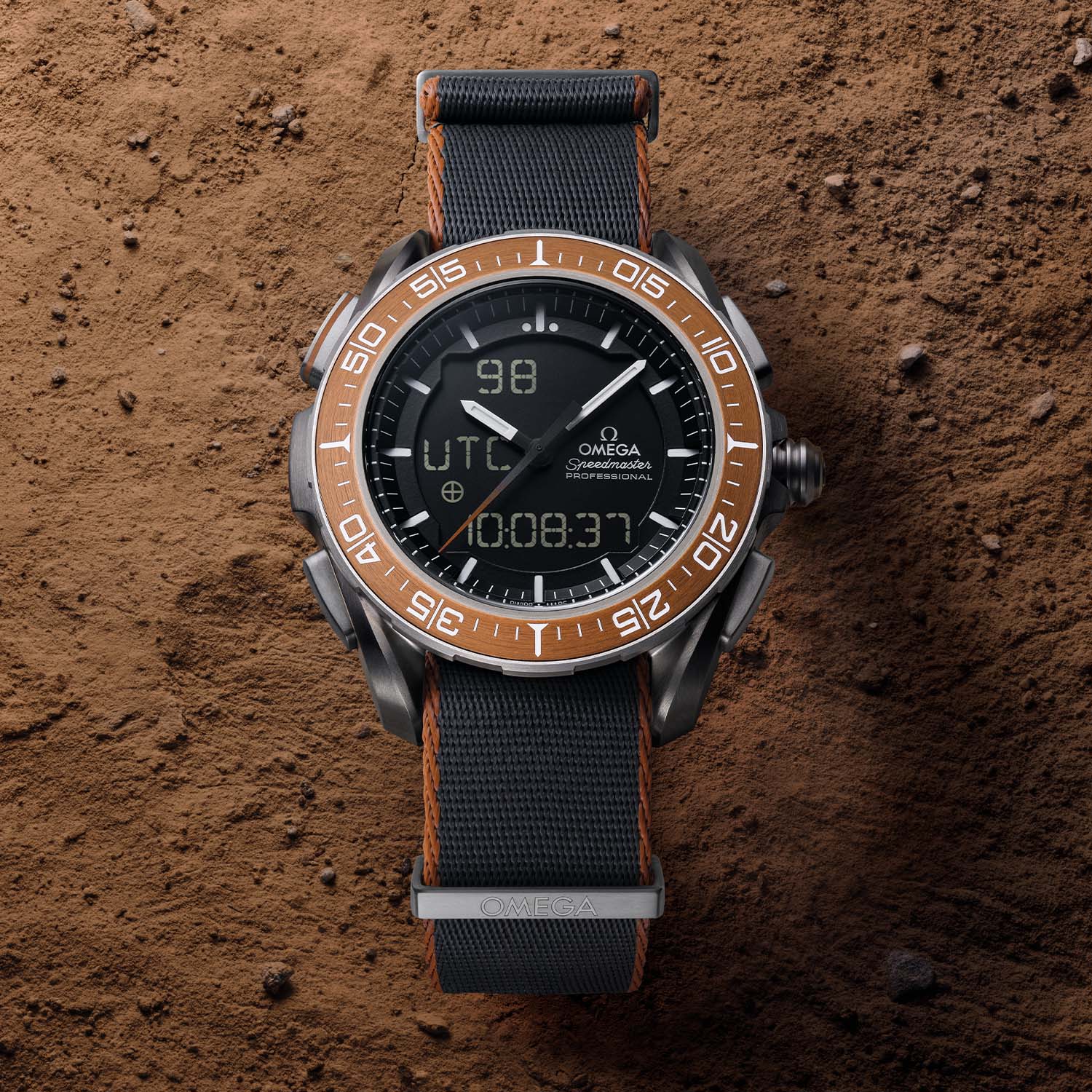
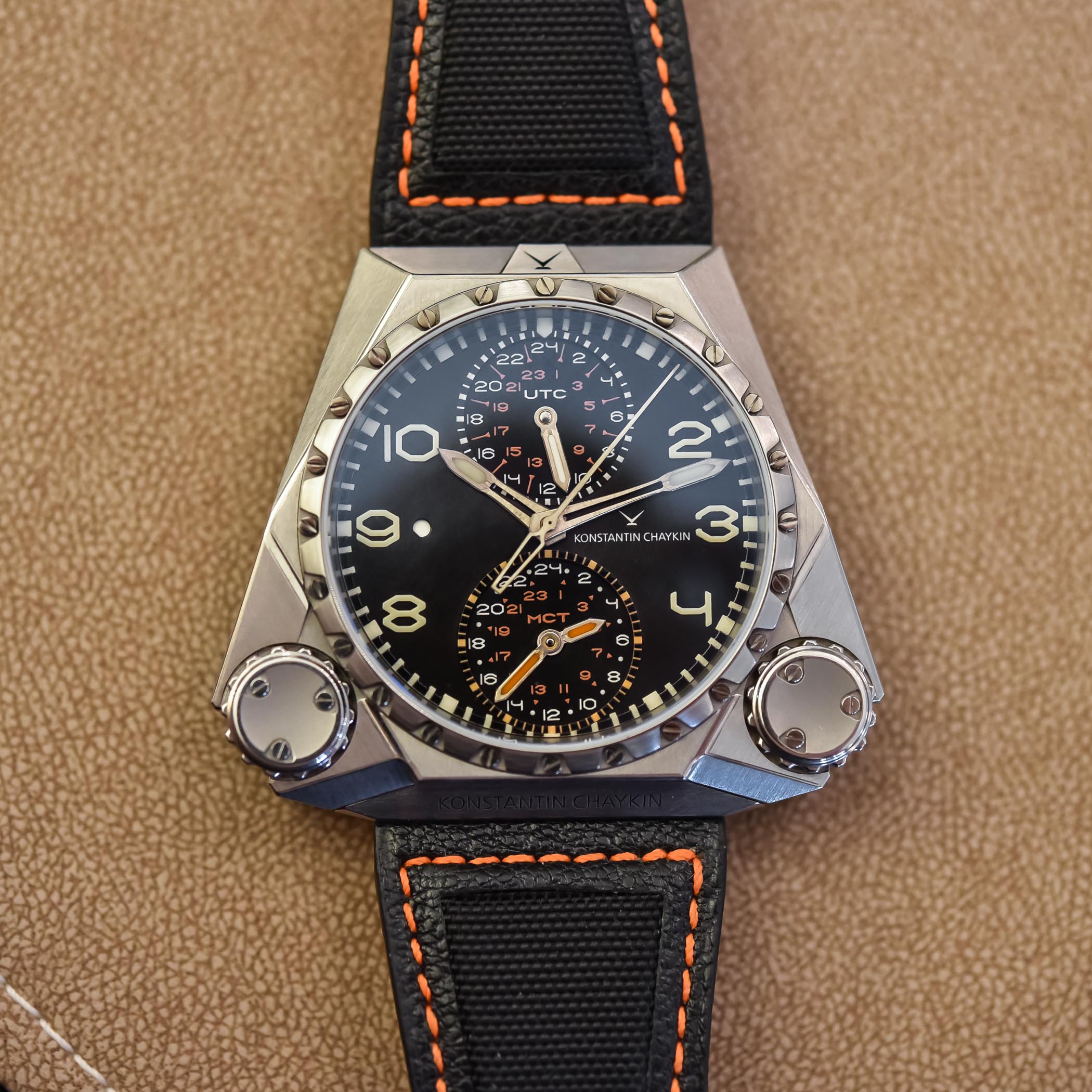
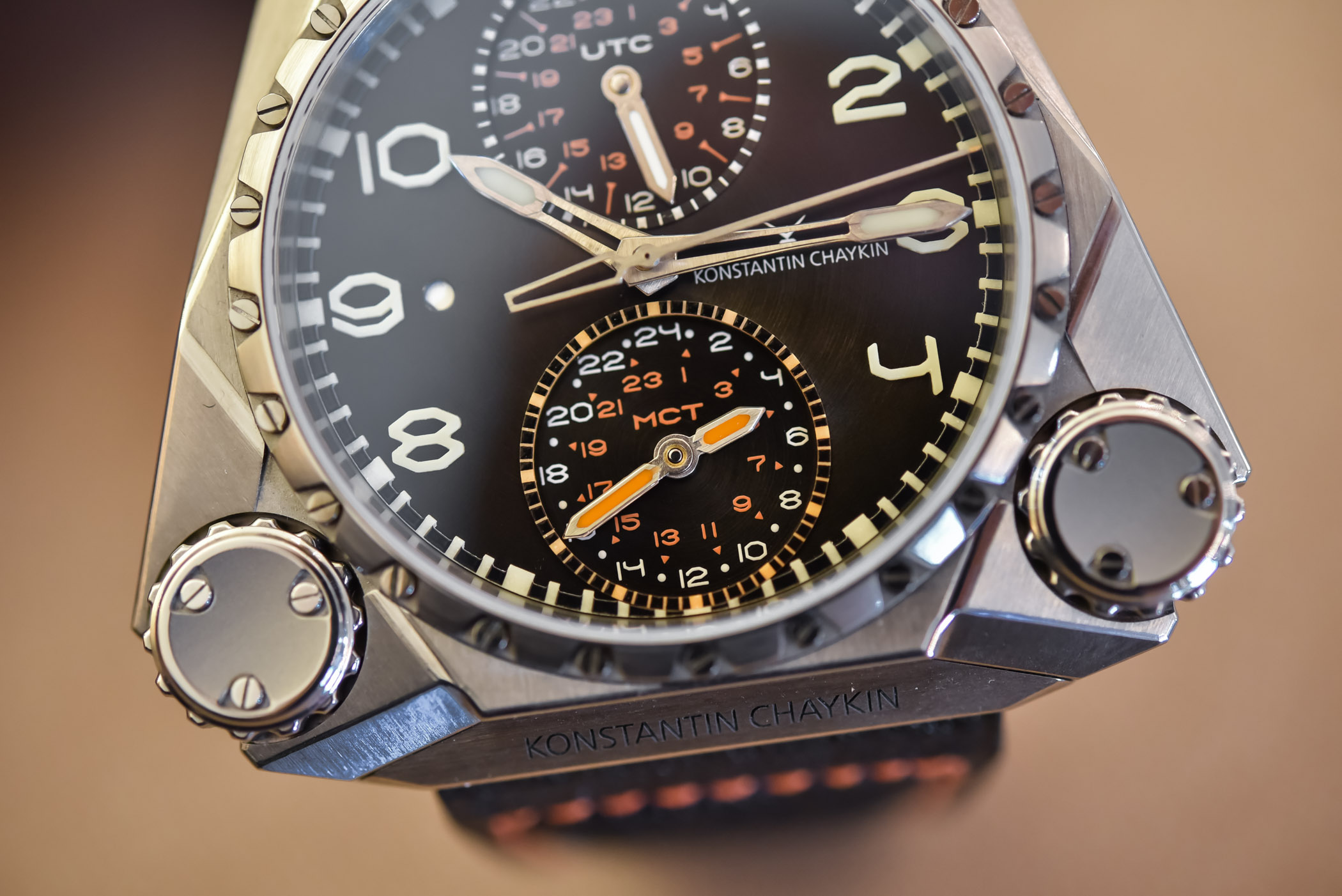
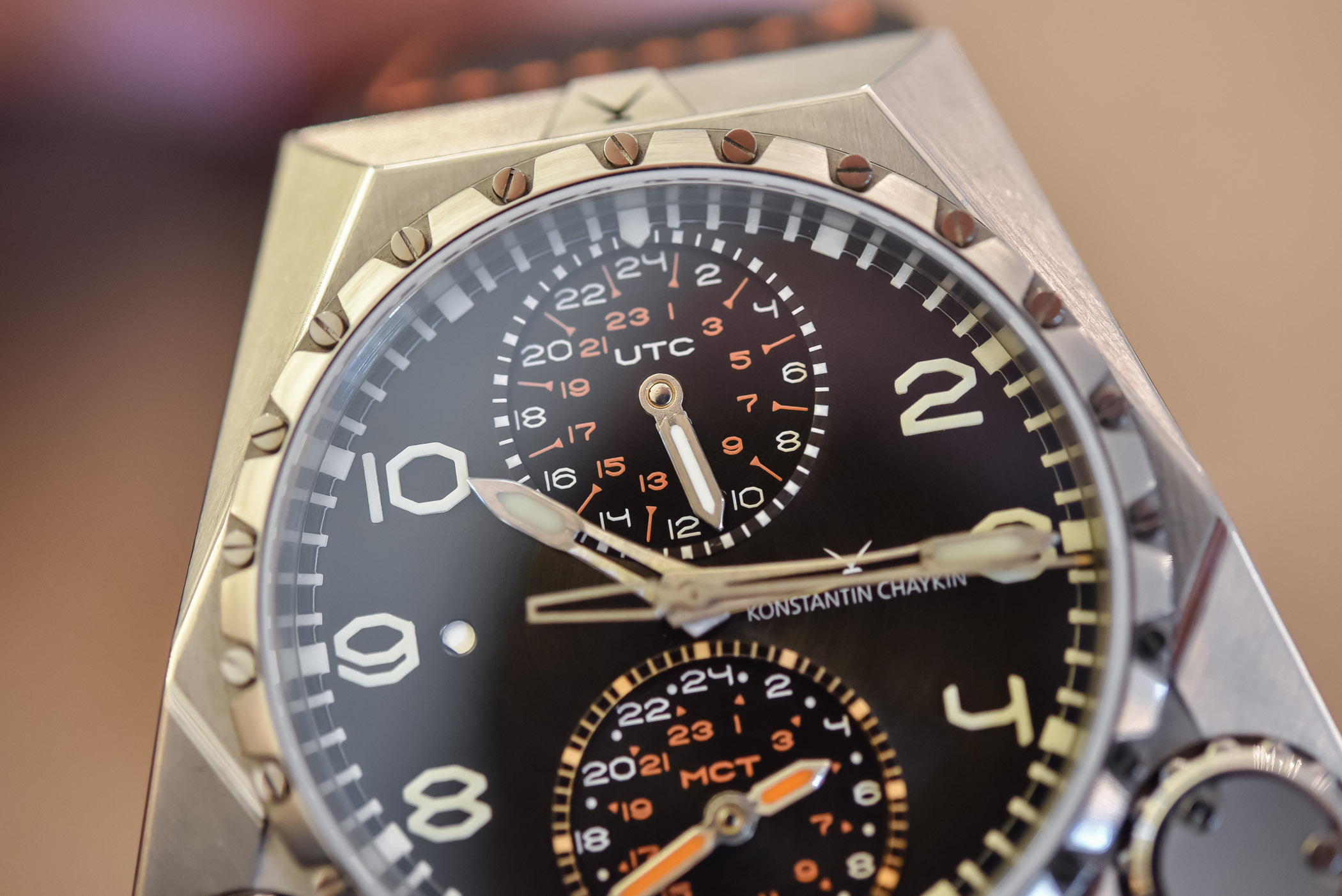
A full day on Mars is 24 hours, 39 minutes and 35 seconds, compared to 24 hours on Earth, so a regular watch would quickly lose hours of accurate time as the longer days add up. The Omega Marstimer keeps local Martian time for interplanetary travellers and classic Earth time for communication with command centres back home. Mechanical watches track Martian time as well, although more for novelty than actual use beyond Earth. Russian watchmaker Konstantin Chaykin created the Mars Conqueror MK3 as a fun yet sophisticated trapezoidal piece, and it’s the third generation of its kind (hence MK3), although this model is the first to go beyond the prototype stage and to actual availability. Its design reflects a semi-serious intention for Mars exploration with dual crowns just under the dial – large, flat and notched – to be used with a spacesuit and its bulky gloves. The right crown sets three different positions within the watch for the left crown to do the work, and the positions are indicated via a colour dot at 9 o’clock (similar in concept to the Leica ZM 1 and ZM 2 dial indicators). There are two sub-dials at 12 and 6 o’clock and central hour, minute and seconds hands as well. The top sub-dial is for UTC time, the successor to Greenwich Mean Time (GMT), while the bottom sub-dial shows Mars time. Local Earth time is displayed by the primary central hands. The titanium watch is very large, funky and just downright cool, and with a production run of only eight pieces, will most likely never see the Red Planet.
Independent watchmaker Behrens, out of Shenzhen, China, has futuristic models in a real MB&F kind of way, although with more attainable prices. A favourite watch of mine (in general) is their Ace of Hearts that showcases the Joker via a skeletonised movement. It was made in collaboration with Konstantin Chaykin above, who’s also well known for watches with whimsical faces via the Wristmon series (with Joker models as well), but I digress. The relevant Behrens model here is the Project One with large, three-dimensional spherical models of Earth and Mars at the top of the case. Earth rotates at 24 hours per day, and Mars at 24 hours and 37 minutes per day. Both Earth and Mars time is displayed via analogue rolling wheels at the bottom like a classic odometer, with a calendar and day of the week as well. The overall design is very futuristic and honours China’s own Mars rover that landed on the surface in 2021.
Grand Complications
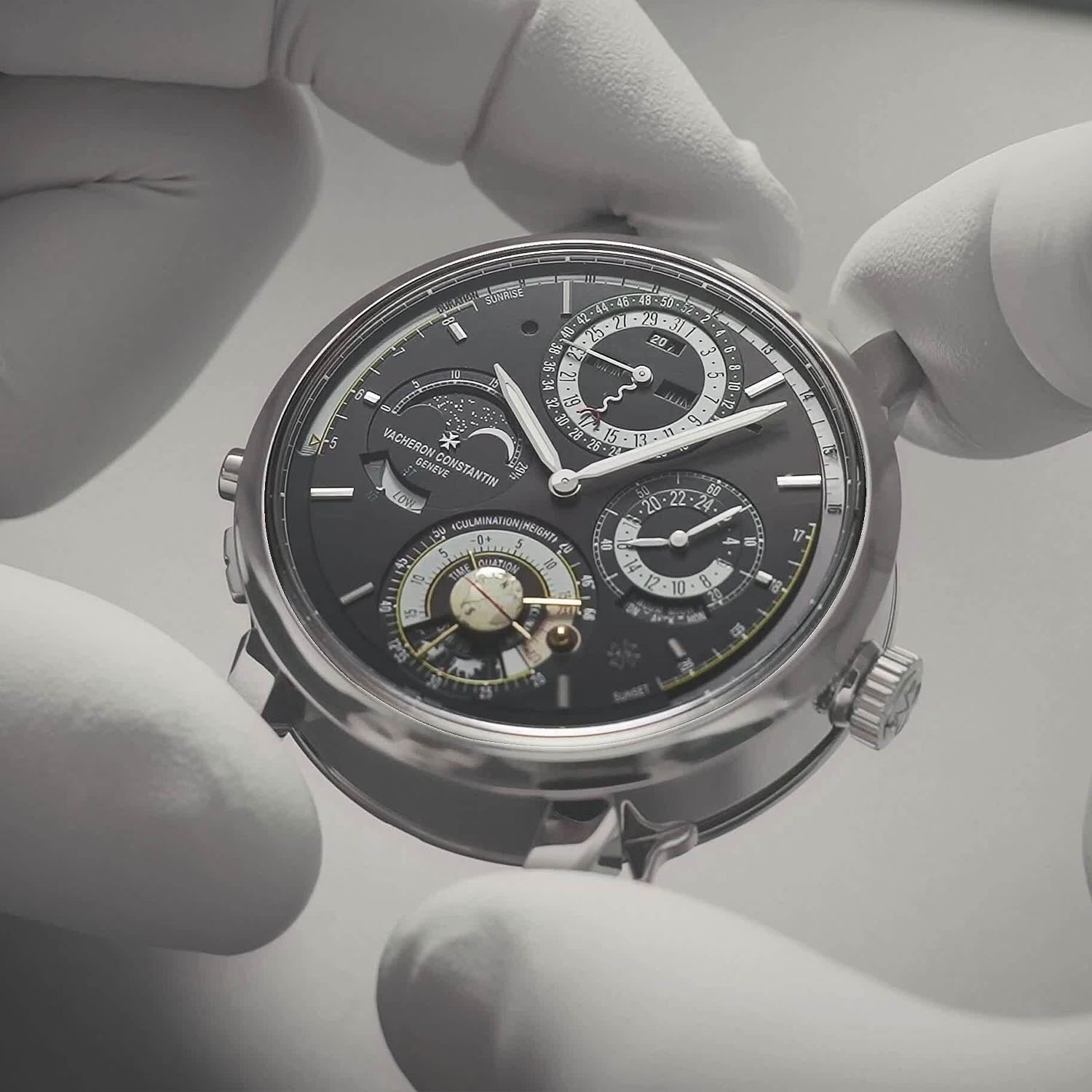
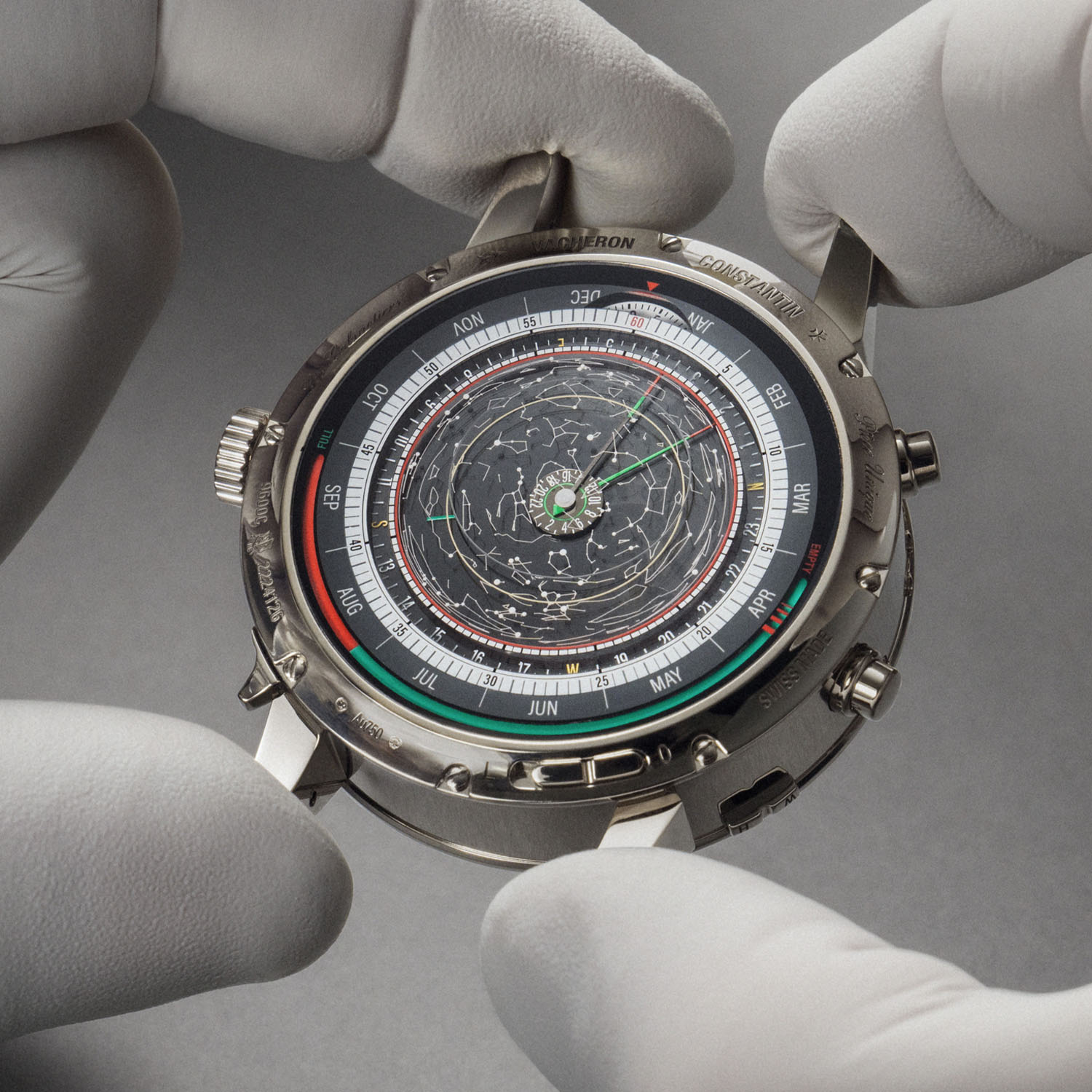
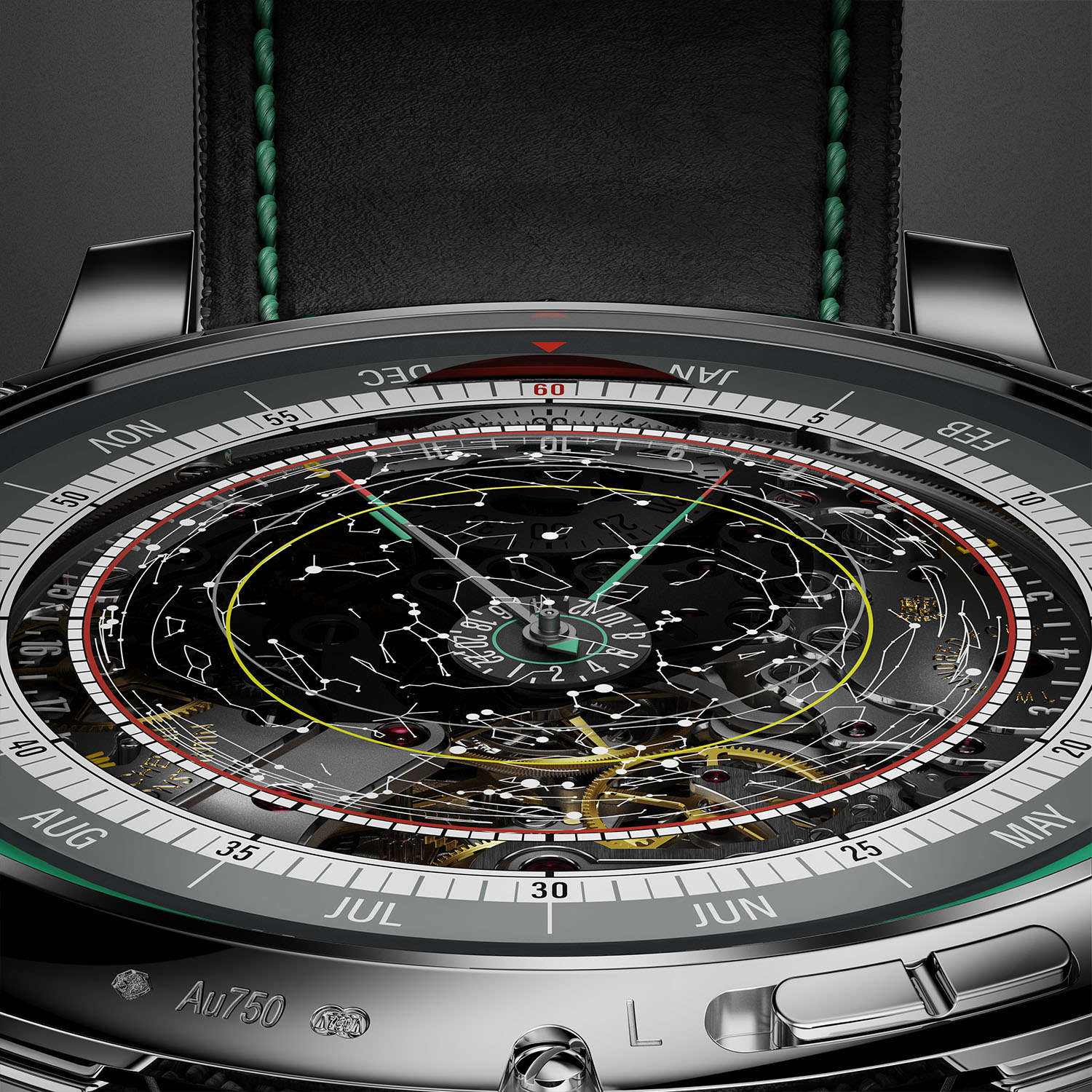
The generally accepted minimum qualifications for a grand complication (although not a hard rule) are a perpetual calendar, chronograph and minute repeater, which is already very impressive, complex and expensive, but some brands go much farther. For example, Vacheron Constantin’s Les Cabinotiers Solaria Ultra Grand Complication is the most complicated wristwatch in the world with 41 complications. It debuted last year for the Holy Trinity members’ 270th anniversary and includes the prerequisites above, along with multiple complications that track celestial events. Let’s just dig in – moon phase and age of the moon, tides, position of the sun, declination of the sun, equinoxes and solstices, sunrise/sunset, equation of time (difference between apparent solar time via a sundial and standard mean solar time), sidereal hours/minutes (Earth’s true rotation time based on fixed stars, not the sun), zodiac signs, sky chart and temporal tracking of celestial objects. It’s quite a collection of astronomical complications for a 45mm wristwatch case, and that doesn’t include the others like a Westminster minute repeater, perpetual calendar, tourbillon and split seconds chronograph. Vacheron also has the Les Cabinotiers Celestia Astronomical Grand Complication with more of a direct focus on celestial events (as the name implies). This one breaks the rules a bit by omitting a chiming mechanism, but it’s still a bona fide grand complication without question.
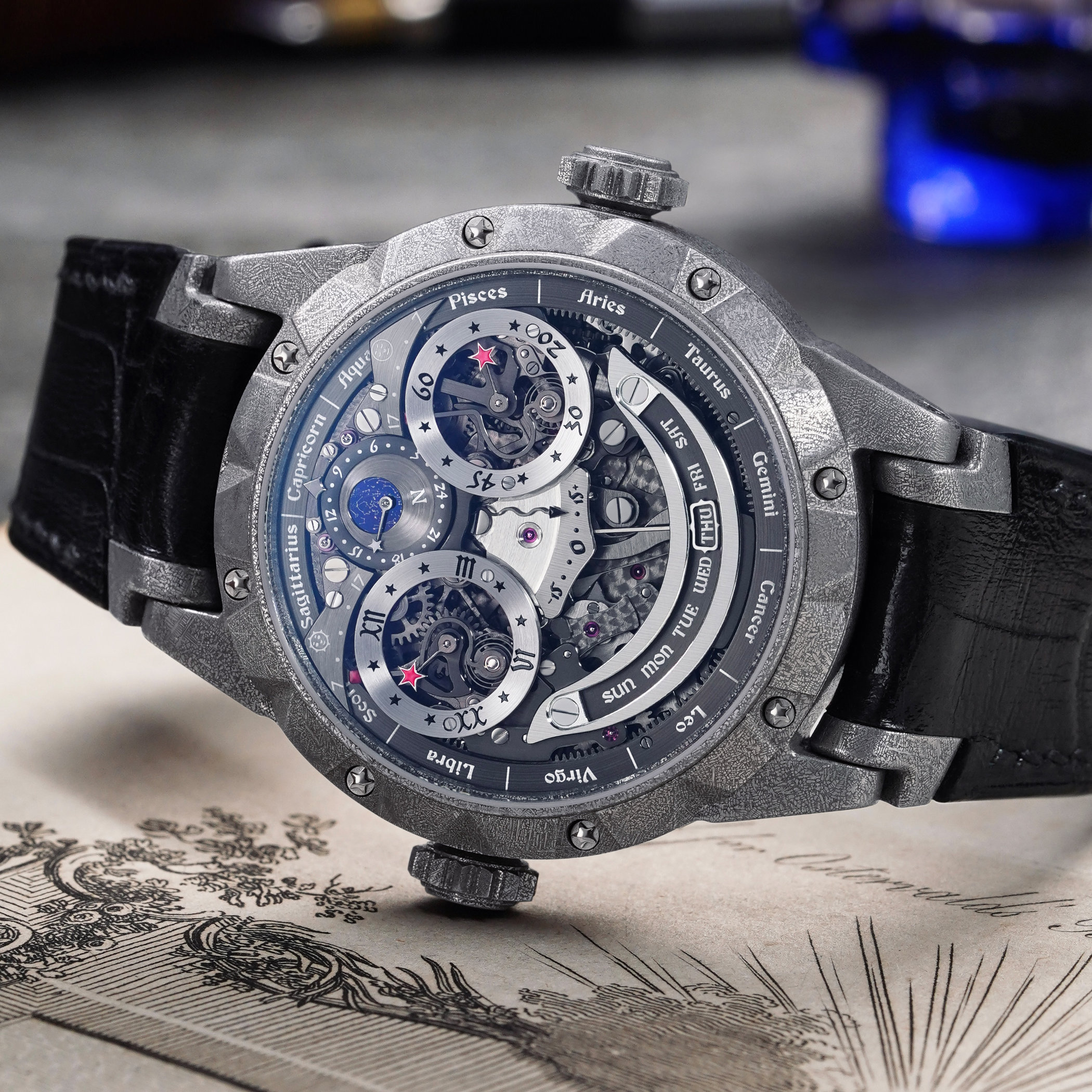
Going back to Konstantin Chaykin, we have the Stargazer with 17 complications (and the brand’s most complicated watch to date with 664 components). As the elite member of the Wristmon collection, it has “faces” on both sides of the case with a Dark Side (the front of the watch) and Light Side (with a tourbillon mouth), and astronomical indications include sidereal time, zodiac signs, moon phase, the equation of time, celestial map of the Northern Hemisphere, four-stage discreet moon phase indicator, solar activity cycle and current cycle duration and sunrise/sunset azimuth indicators – the latter four (after Northern Hemisphere) are also world firsts. All of this is packed into a very wearable 42mm case comprised of 63 components and was originally a one-off for Only Watch 2023, but has since become a production model (on a very limited basis).
Astronomically Focused
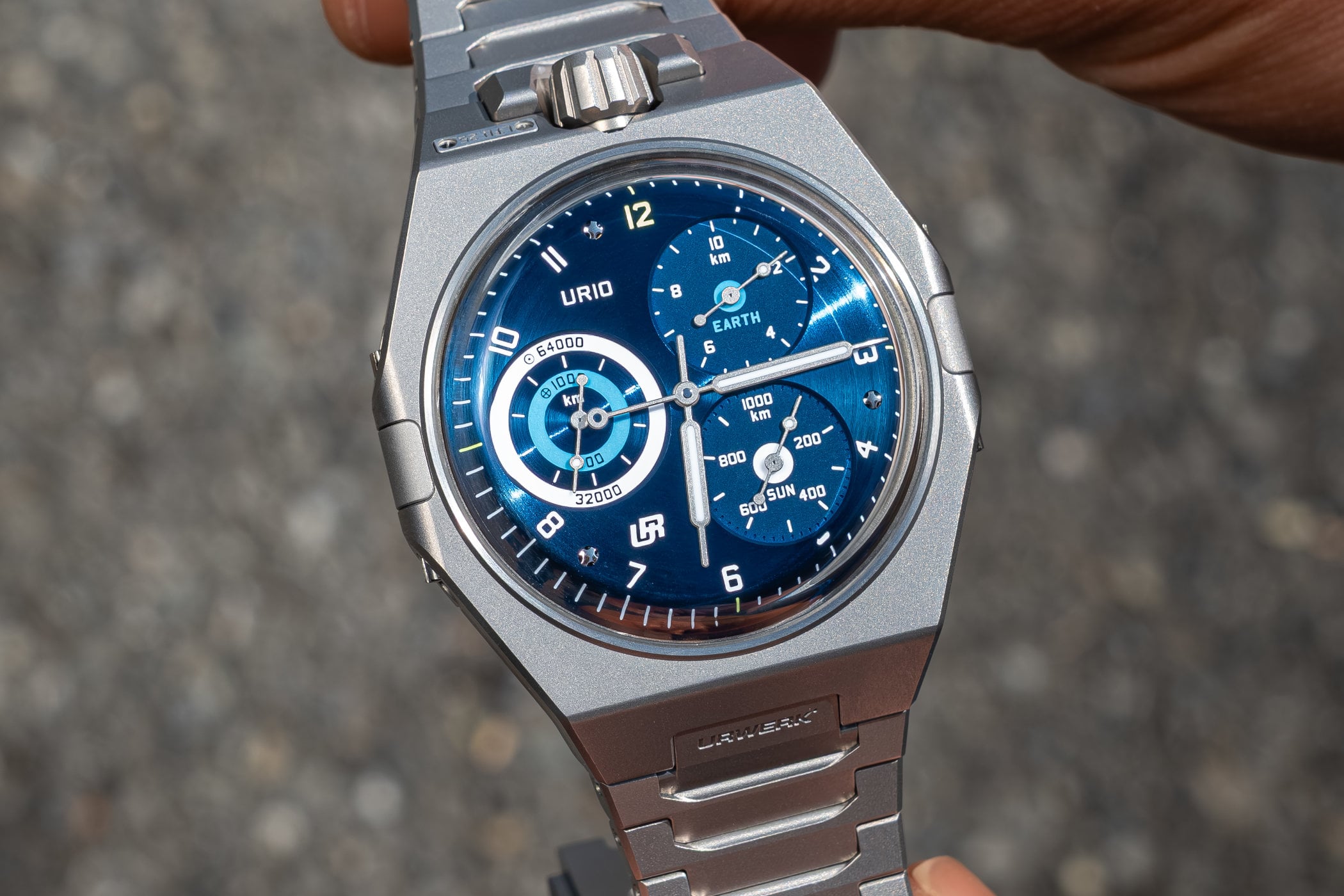
The above is only a small list of grand complications with multiple astronomical functions, but it illustrates how many can be included within a single wristwatch. Let’s now look at astronomically focused watches that fall short of grand complications, but still impress with their complexity. Urwerk’s UR-10 SpaceMeter from 2025 is a great example and a very rare model from the brand with proper central hands. It’s part of the recent “Space Projects” chapter, and although there’s classic syringe hands circling a conventional round dial, there’s predictably a lot more to it. The main dial has three sub-dials, two stacked at the right and the third at 9 o’clock, and none of them is conventional. At 2 o’clock, the sub-dial “EARTH” measures every ten kilometres our planet travels in its daily rotation (in increments of 500 metres). At 4 o’clock, the sub-dial “SUN” measures every 1,000 kilometres the planet travels on its solar orbit (in increments of 20 kilometres). At 9 o’clock, the sub-dial “ORBIT” combines the first two, showing every 1,000 kilometres of rotation and 64,000 kilometres of the solar orbit via two synchronised scales. On the case back, there’s a day/night indicator with a perimeter marker showing 24-hour time (aka Earth’s full rotation). The latter is really the most practical feature for daily use, but the cool factor here is undeniable.
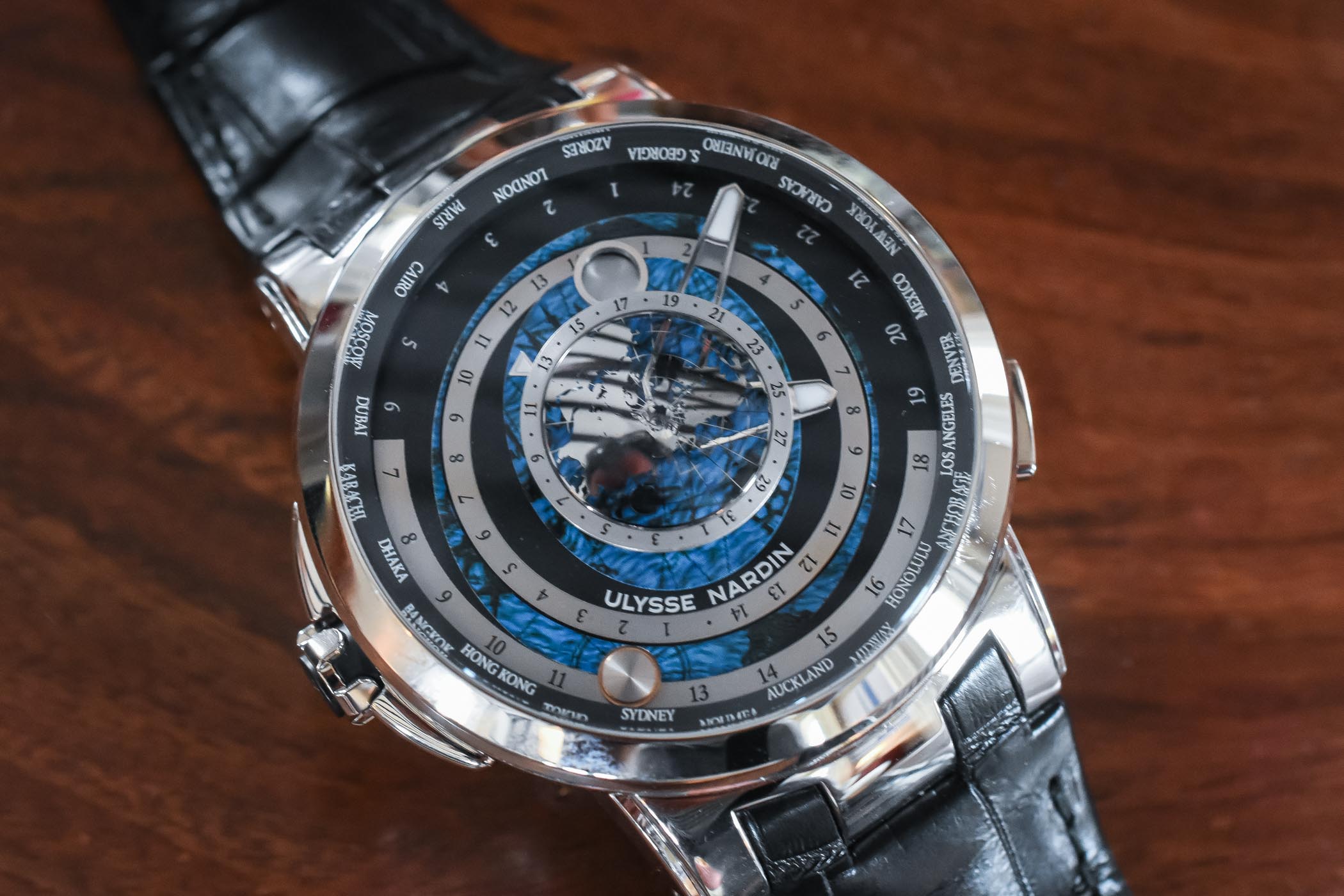
Ulysse Nardin’s Moonstruck Worldtimer is another interesting one and follows the brand’s astronomical trilogy from the 1980s and 1990s – Astrolabium Galileo Galilei (1985), Planetarium Copernicus (1988) and Tellurium Johannes Kepler (1992). In 2017, the watchmaker unveiled this Moonstruck Worldtimer that tracks the movements of the sun and moon in relation to the Earth. There’s also a map of the tides and world-time cities at the perimeter. With Earth at the centre of the dial, the sun and moon rotate around it, represented by small discs. The sun disc orbits every 24 hours at the perimeter, doubling as a day/night indicator, as it also shows time for 24 cities at the outermost perimeter. The moon disc orbits near the dial’s centre (close to Earth) and indicates its phases and position. The world-time feature is an addition to the earlier Executive Moonstruck model that was only astronomical.
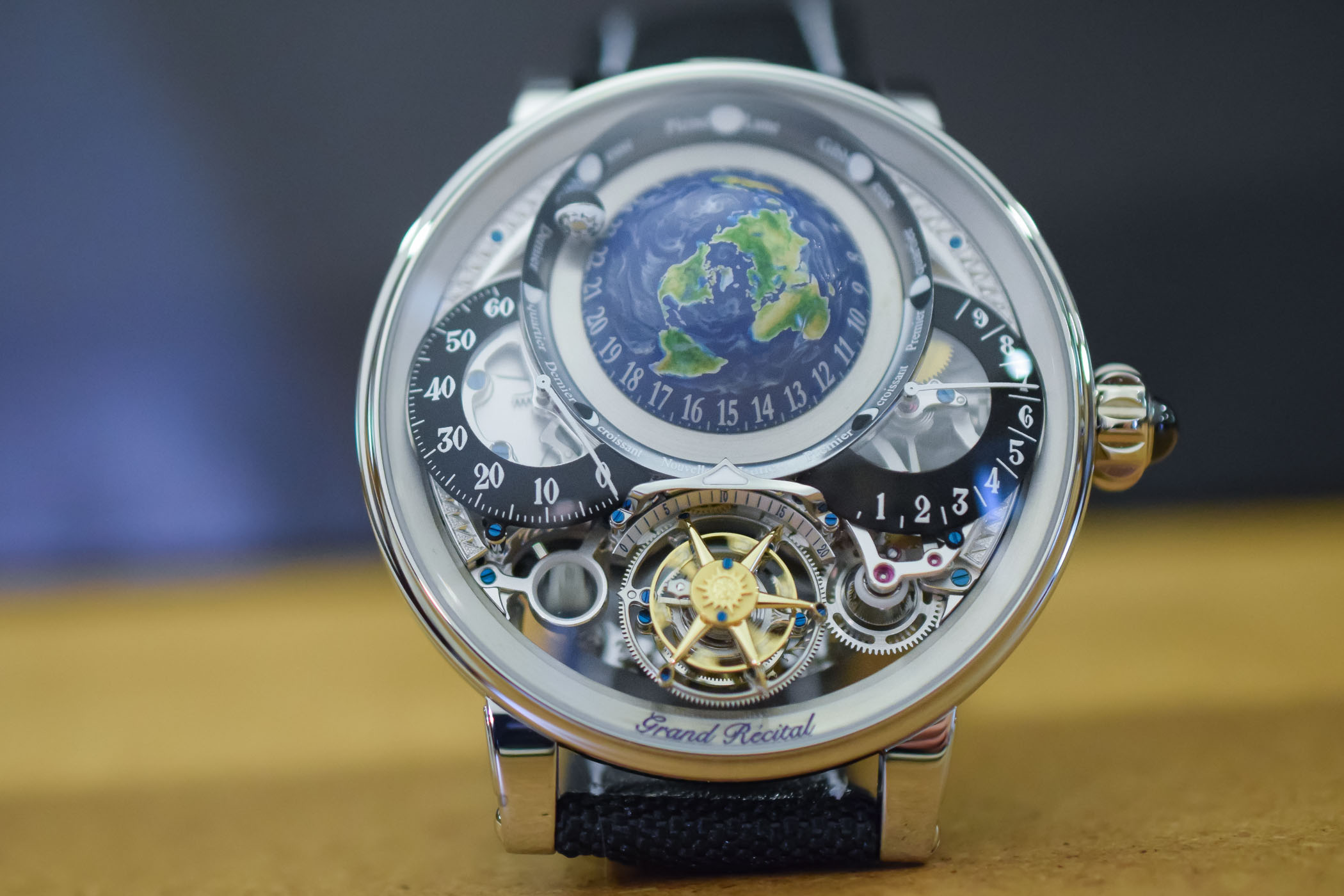
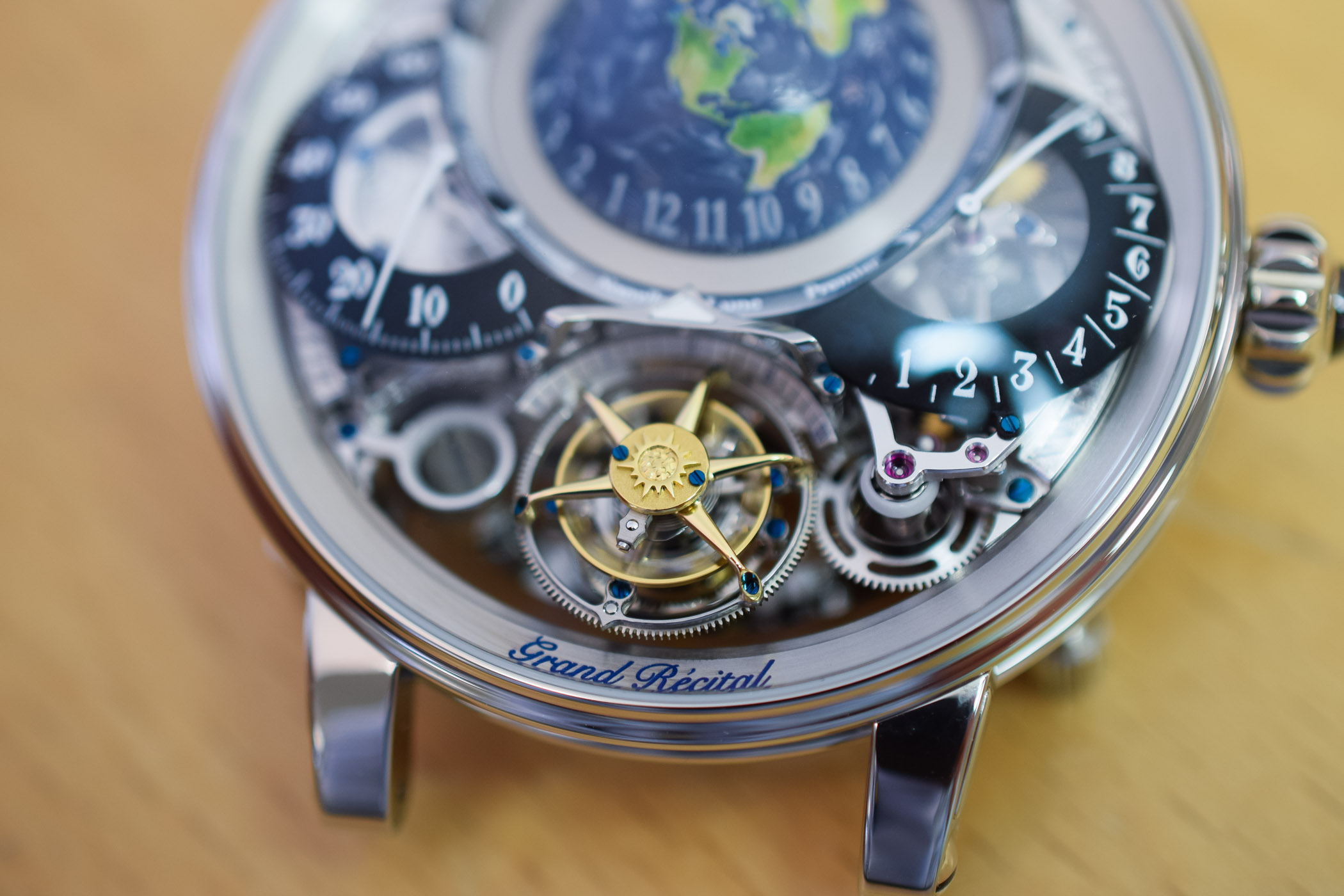
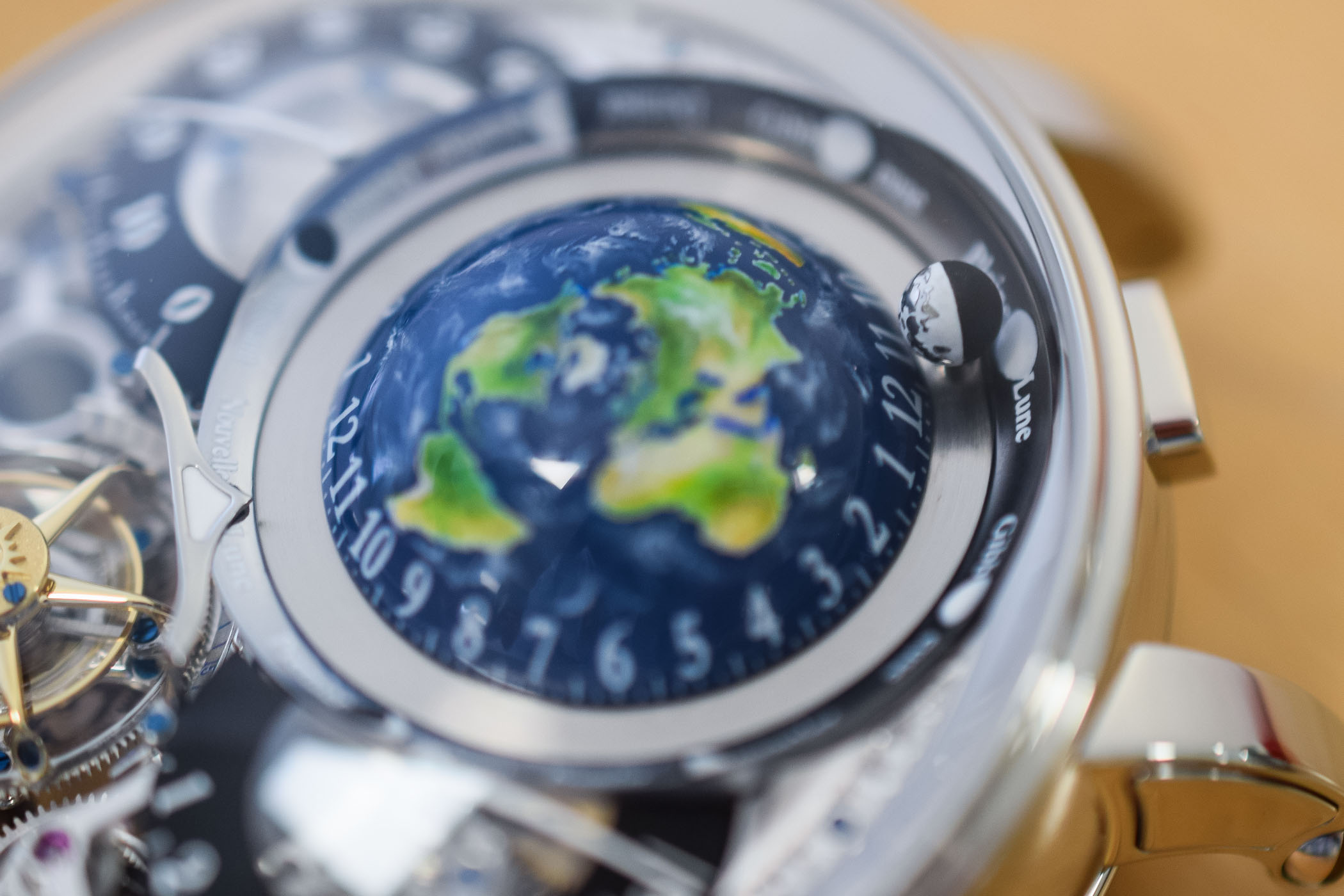
Bovet’s Recital 22 ‘Grand Recital’ isn’t a repeater (or music box) as the name suggests, but a complex piece that tracks the moon’s position and phases. In the tradition of making moon phases (and positioning) extremely precise – this moon only needs a one-day adjustment every 122 years – the watch has a perpetual calendar at the case back with the date also displayed on the dial at 7 o’clock. The sun is represented by a flying tourbillon at 6 o’clock with five outstretched golden arms, while the Earth is a hand-painted, semi-spherical piece at 12 o’clock that rotates with 24-hour time printed at its base. Orbiting the Earth is a three-dimensional spherical moon, while retrograde minutes (at left) and power reserve (at right) flank the planet. On the case back is the full perpetual calendar, including the date for a second time displayed via a retrograde mechanism at the perimeter. It’s an over-the-top spectacle in perfect Bovet style and an immediate attention getter.
Conclusion
This is far from an exhaustive list of astronomical watches, particularly the ubiquitous moon phases, but the above shows the many ways mechanical watches can track and display celestial events (notwithstanding Omega’s semi-digital Marstimer). After all, time is based on the observable movements of the Earth and the sun. The moon orbits the Earth every 27.3 days, heavily influences the tides and has eight phases per the lunar cycle of 29.5 days. Because the lunar cycle is shorter than all months except February, there is sometimes a second full moon within a calendar month (known as the blue moon). Although interesting, most astronomical events are just eye candy on a watch if you’re not a real space enthusiast, and you’ll get little practical benefit from knowing the position of the sun and moon in relation to the Earth, the equation of time, sidereal time and so on, but it still remains a marvel of mechanical engineering that any watch enthusiast will appreciate.

5 responses
Truly fascinating overview. Astronomical watches are gloriously unnecessary, but intellectually compelling. I find those that genuinely model celestial movements far more interesting than those that merely stage a cosmic spectacle.
Only Monochrome brings a smile on my face. EVERYTHING else seems so mundane ?
I may never be able to afford these grand complications or celestial movement time pieces, but the urge is so much that I must have the means to get one these.
You forgot the Citizen Astrodea, which came in Northern and Southern Hemisphere versions. From the early 2000s.
@Jim fuerstenberg The Astrodea (all variants) was quartz, so it didn’t make the cut here. We made an exception for Omega. However, very cool watches with a lot of functionality.