


 Not all images were able to load for printing. Please close the print window and try again.
 The New Christiaan van der Klaauw Venus Zodiac, Planetary Mechanics on the Wrist
A compact astronomical watch displaying the positions of Venus, Earth and the Moon, with a poetic zodiac indication.
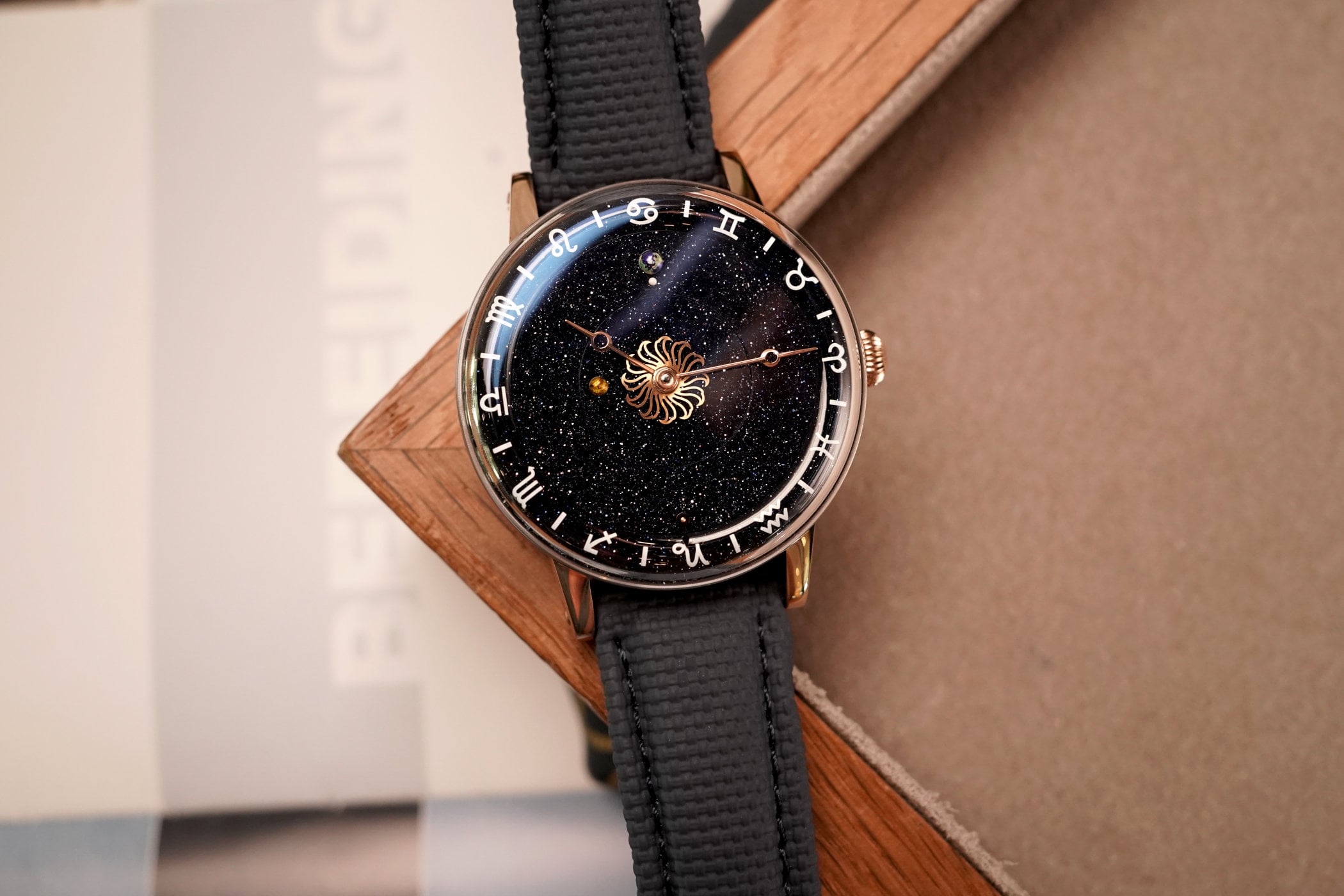
Christiaan van der Klaauw (founded in 1974 in the Netherlands) has dedicated itself almost exclusively to astronomical complications, creating wristwatches that display celestial phenomena with remarkable mechanical ingenuity. From planetariums to highly accurate moon phases, the brand turns astronomy into wearable mechanical art. Following the introduction of its new in-house CKM-01 calibre in 2024, this year Christiaan van der Klaauw expanded its contemporary collection with the new Venus Zodiac and Venus Annual Calendar models. Today, we look at the very poetic Venus Zodiac.
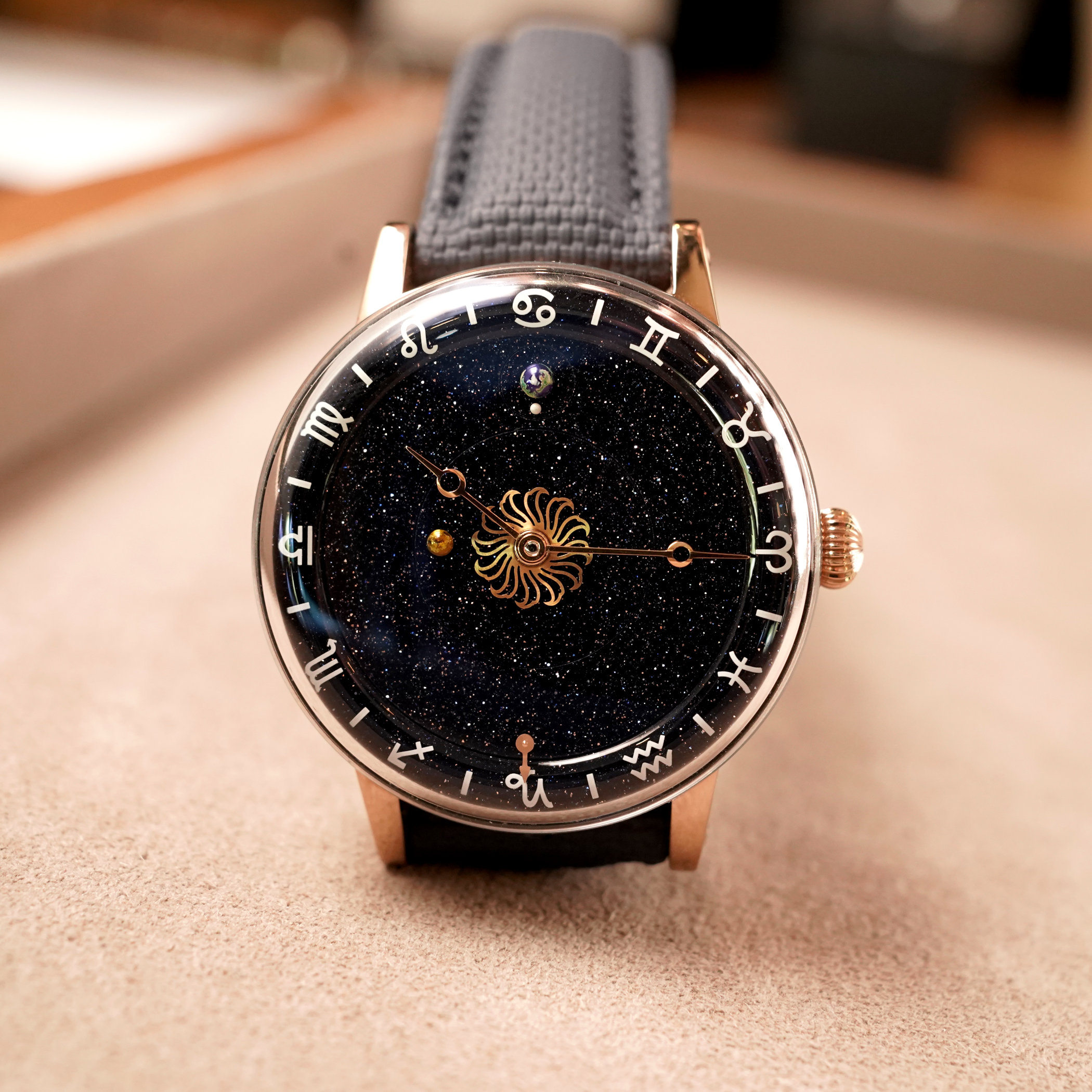
The Venus Zodiac is built with a newly developed astronomical module and focuses on the brightest globe visible from Earth after the Sun and Moon, the planet Venus. The blue aventurine dial is constructed from four separate layers, three of which rotate continuously to display the real-time positions of Venus, Earth and the Moon. The system reproduces the orbital relationships among these celestial bodies, showing Venus’s orbit around the Sun, the Earth’s orbit, and the Moon’s orbit around Earth.
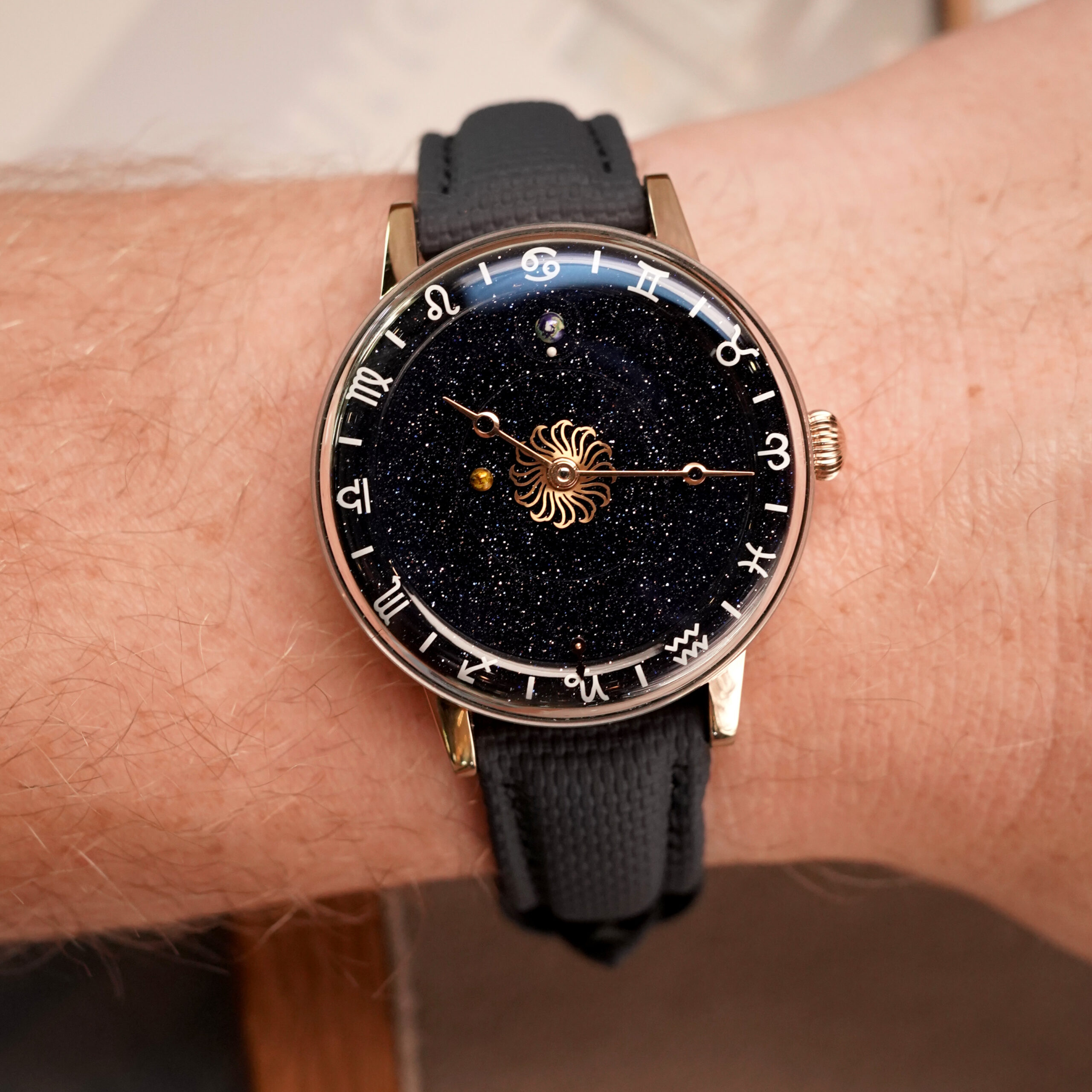
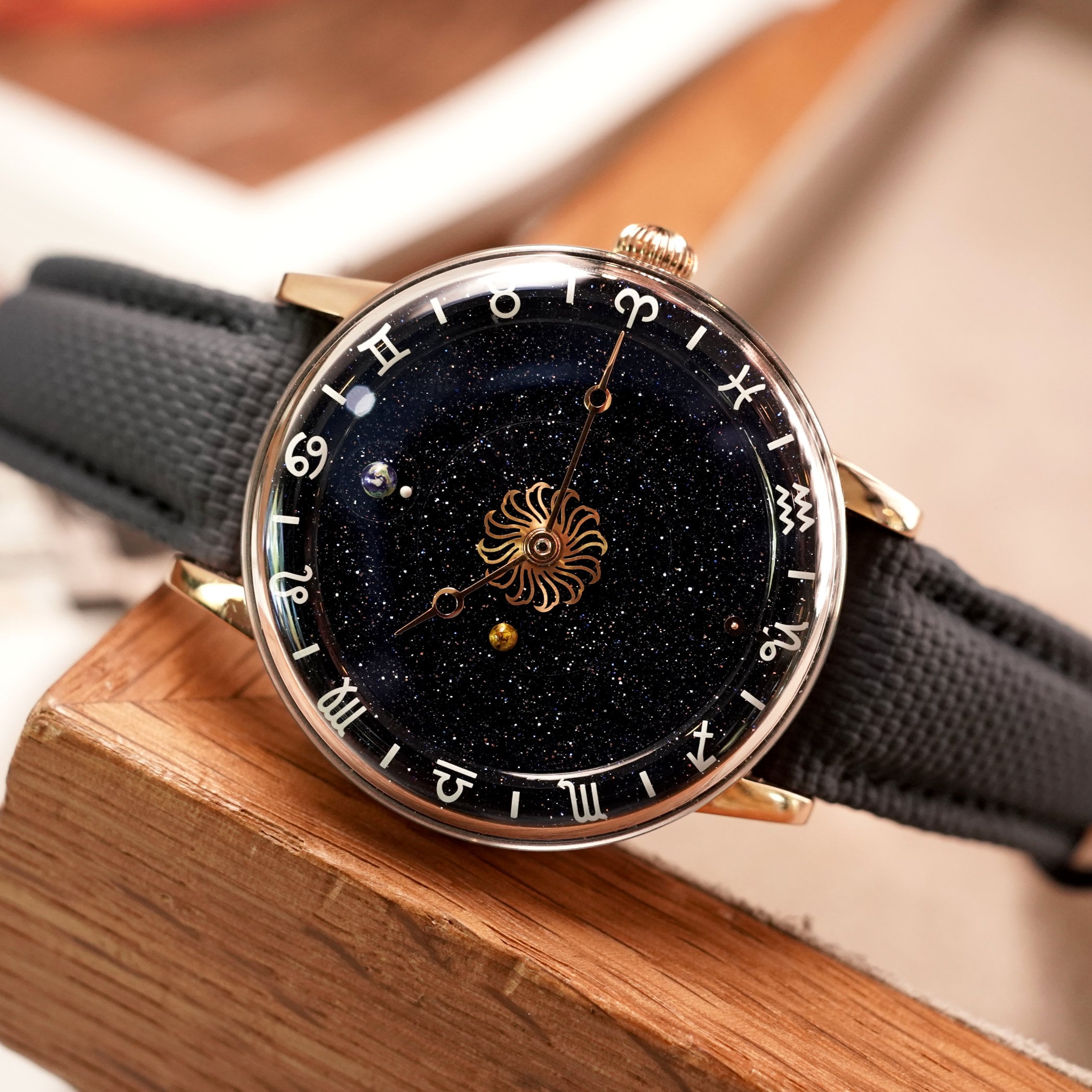
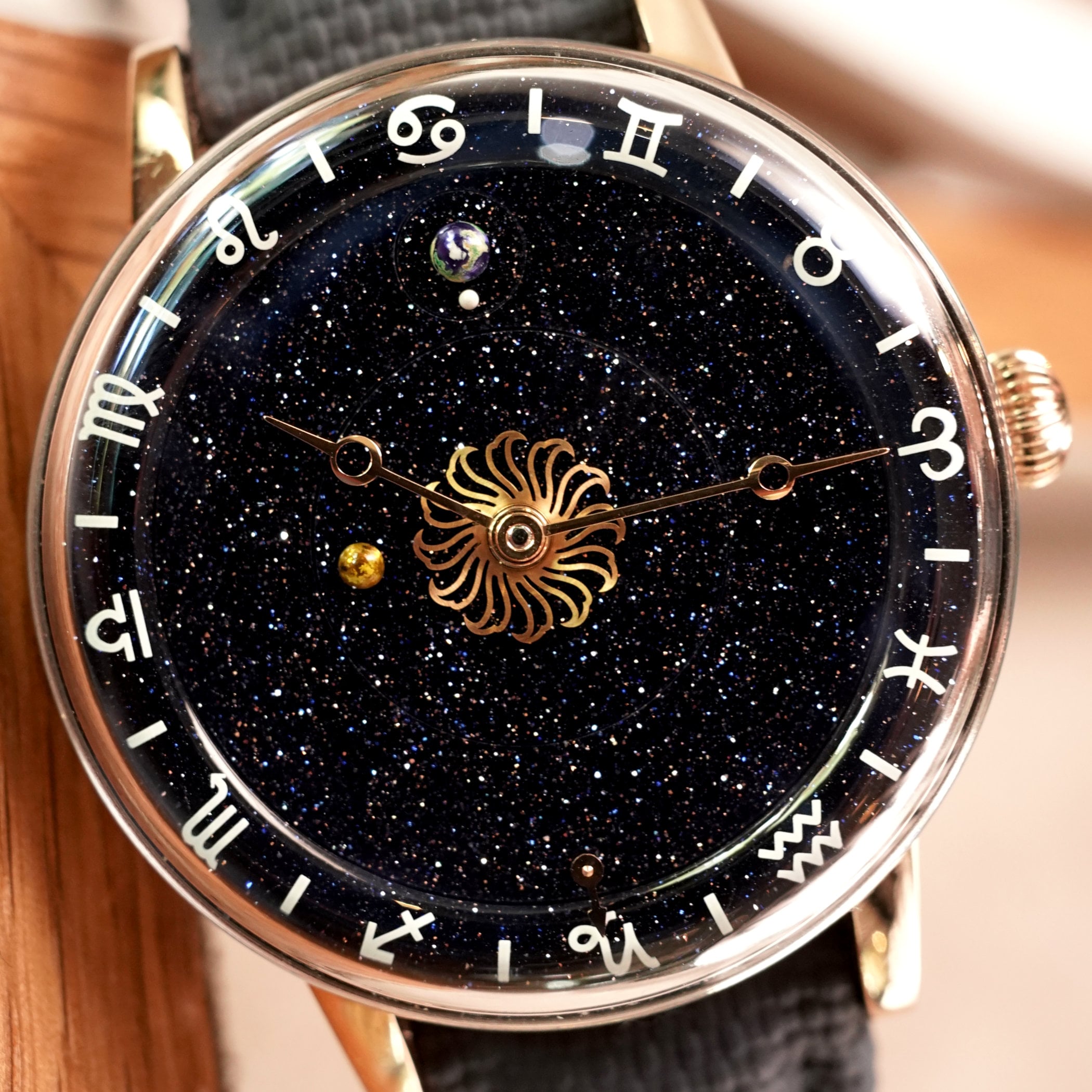
On the dial’s periphery, a non-turning flange displays the zodiac signs, with the current zodiac indicated by a tiny hand moving with the nearest disc, which turns counterclockwise. Markers between the signs show the approximate transition dates, usually occurring around the 21st day of each month. Interestingly, the aventurine dial almost hides the small gaps between the rotating discs, making it appear virtually uniform.
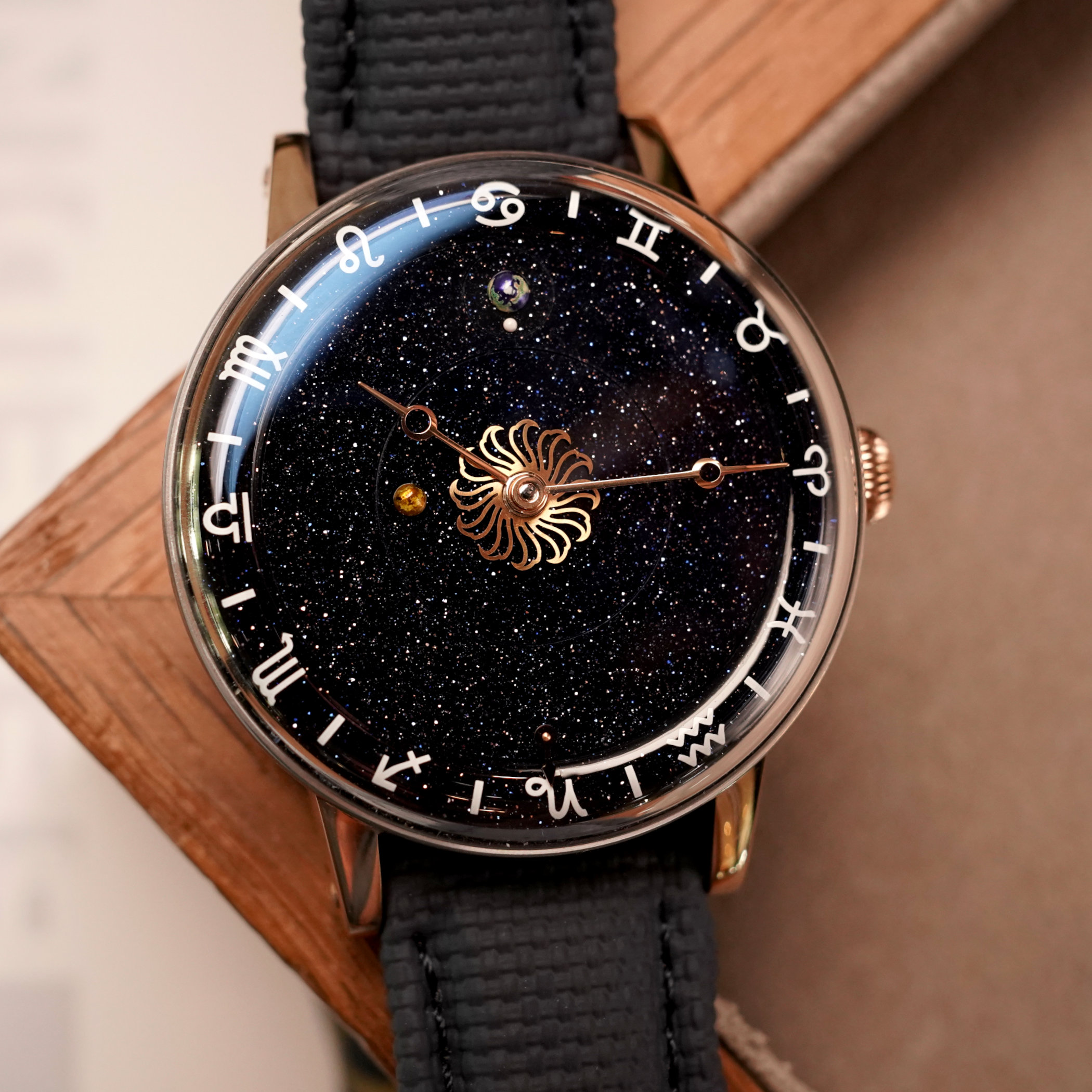
The watch also offers an unconventional, not immediately evident moon-phase display. The phase is represented by the relative positions of the Sun, Earth, and Moon within the planetarium. A new moon occurs when the Moon is positioned between the Earth and Sun, while a full moon occurs when the Earth is between the two. Not the usual aperture with the rotating disc, but quite an intuitive astronomical representation of lunar phases that doesn’t really need getting used to, just remembering the astronomy basics. The gold Breguet-style open-tipped hour and minute hands sit atop the 12-clawed Sun in the centre and complete the layout. Precise time reading was not a priority; looking to the sky for inspiration was.
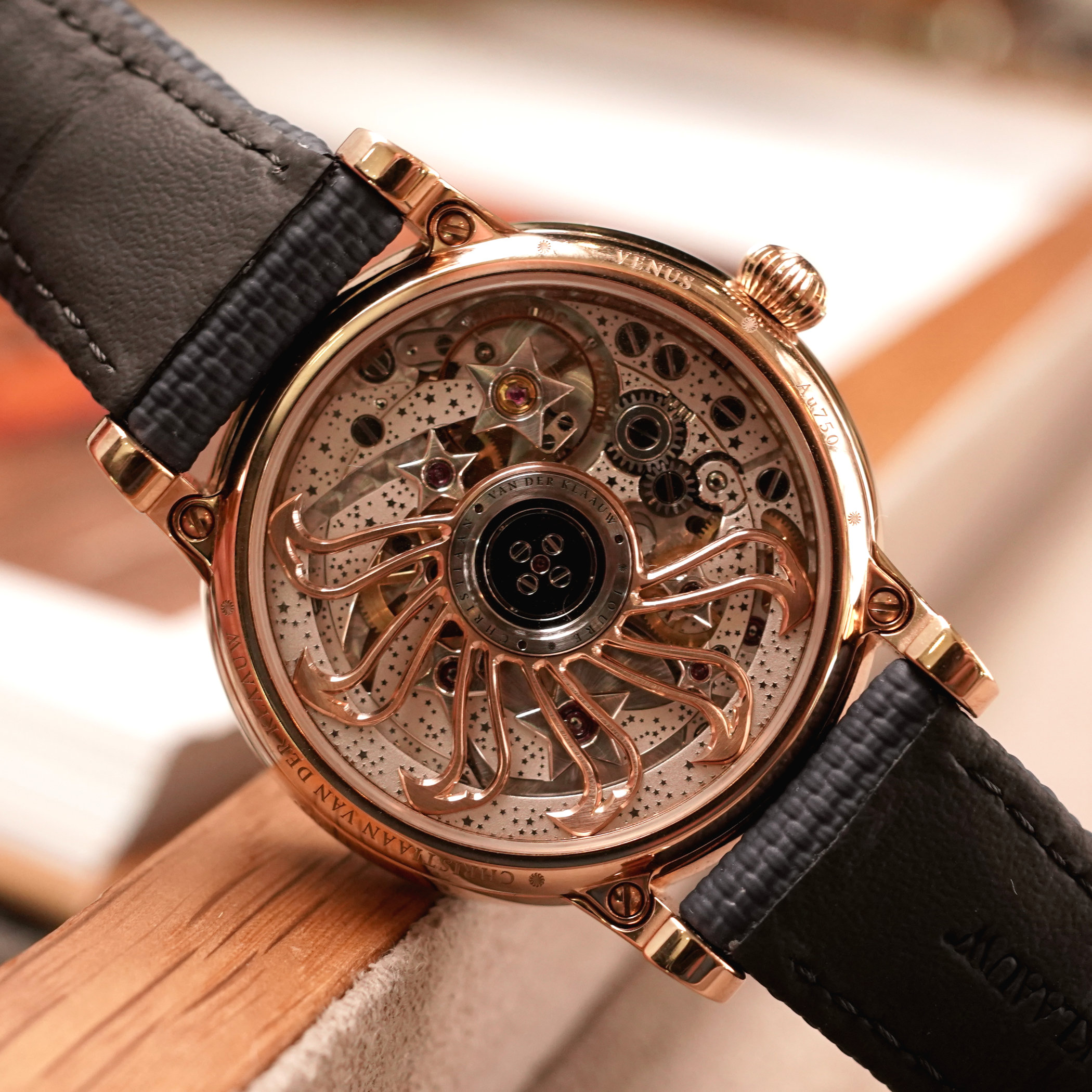
Housing this heavenly, star-sprinkled display is a newly designed 38mm case, available in either stainless steel or rose gold (pictured). Compared to many astronomical watches, which often require substantial dimensions to accommodate their complications, the Venus Zodiac remains compact. The modest diameter, near-absent bezel and a domed sapphire crystal create an elegant overall appearance, with an onion-style crown and straight screwed lugs.
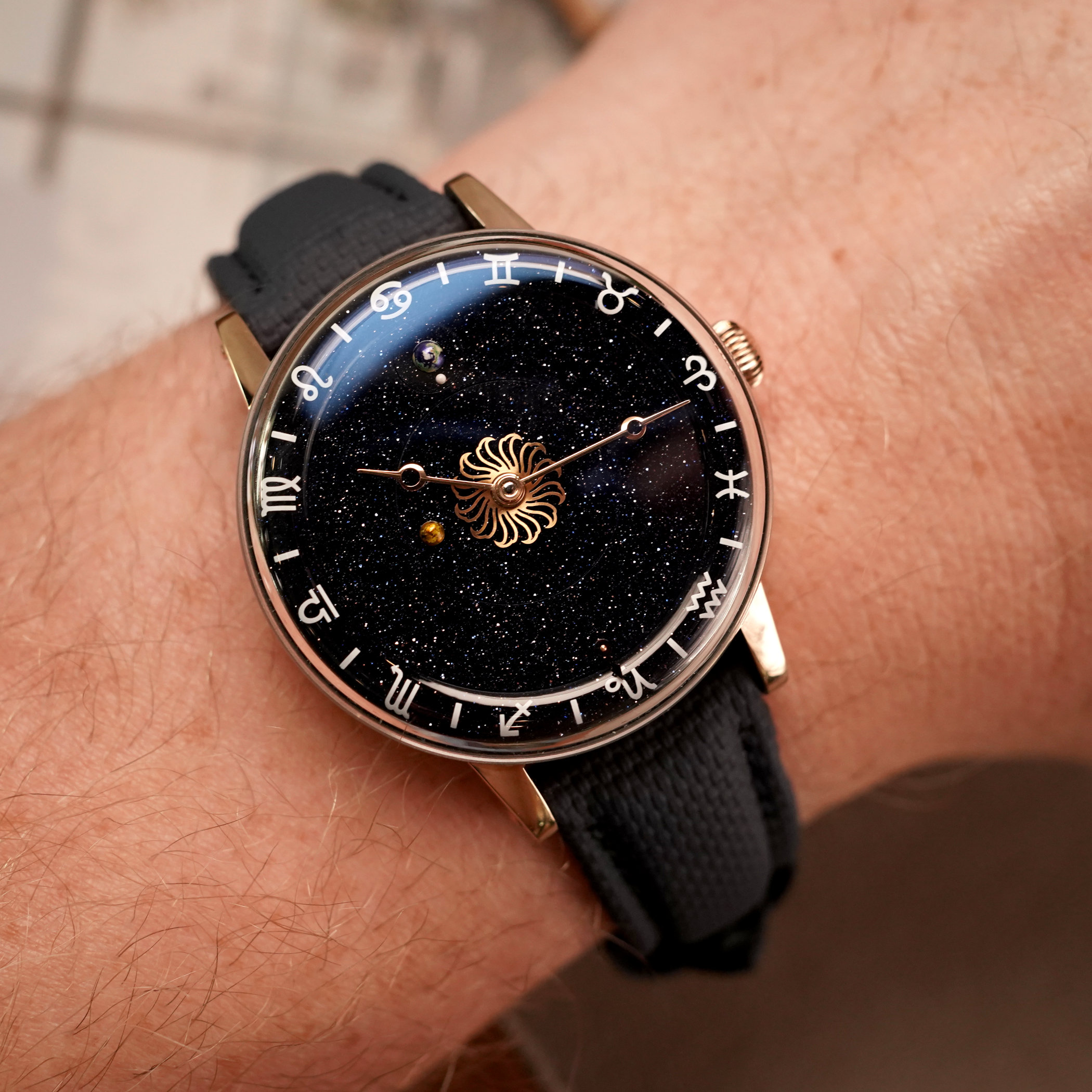
Turning the watch over, the sapphire crystal reveals the CKM-01 calibre, which consists of a base movement by Andreas Strehler and an astronomical Venus module on top. This automatic movement is equipped with a free-sprung hairspring and a variable-inertia balance wheel. It features distinctive star-themed decoration, with hand-finished bevels and a skeletonised rotor shaped after the Christiaan van der Klaauw sun logo. It operates at 21,600 vibrations per hour and stores a comfortable 60-hour power reserve.
The Venus Zodiac in rose gold is worn on a blue Sailcloth (FKM) strap and is priced at EUR 58,500 (ex VAT); the steel edition, worn on a blue Ostrich foot leather strap, costs EUR 42,200 (ex VAT).
More information at Klaauw.com.


1 response
neil degrasse tyson needs this….