


 Not all images were able to load for printing. Please close the print window and try again.
 Christiaan van der Klaauw Goes Openworked with the new Planetarium Skeleton
An openworked interpretation of the brand's signature astronomical complication, now presented in platinum and limited to six pieces.
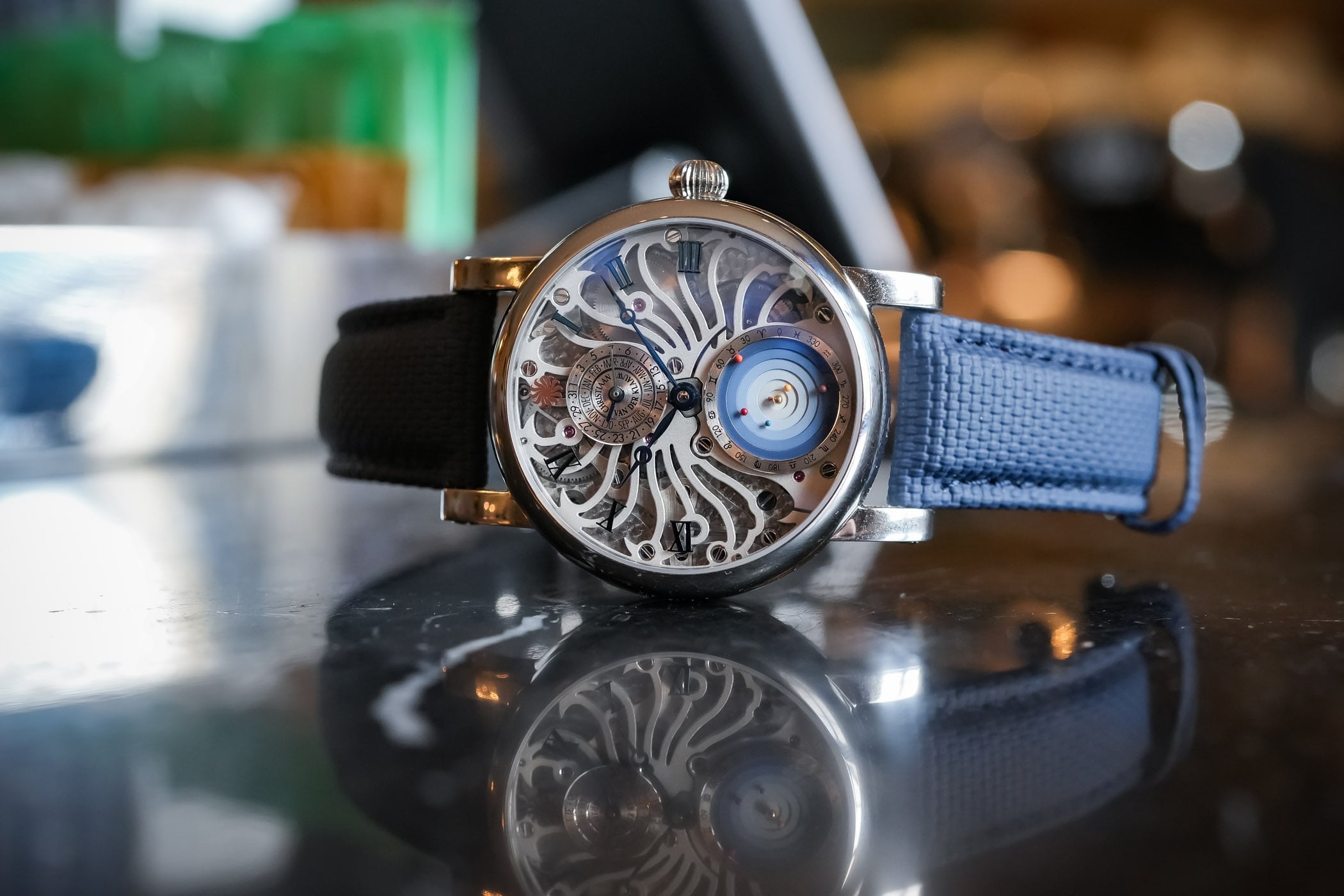
Christiaan van der Klaauw has been making mechanical astronomical watches since the 1990s, and the Planetarium is the defining complication of the Dutch manufacture. The first Planetarium wristwatch appeared in 1999 and featured what remains the world’s smallest mechanical planetarium. The complication has since been interpreted in numerous ways, most recently including the Grand Planetarium Eccentric and the unique Planetarium Julie. The new Planetarium Skeleton Platinum uses the latter’s openworked design, making it a limited-edition model.
The watch is presented in a 40mm platinum case, is 50m water-resistant, and features sapphire crystals on both sides. The case design is familiar, with an onion crown and straight lugs. The transparent sapphire dial changes the way the Planetarium is experienced, with much of the astronomical module’s mechanical structure visible. Blued Roman numerals span 9 to 3, occupying only the upper part of the dial (“above the horizon”) and providing reference for reading the time. The open architecture takes up most of the space.
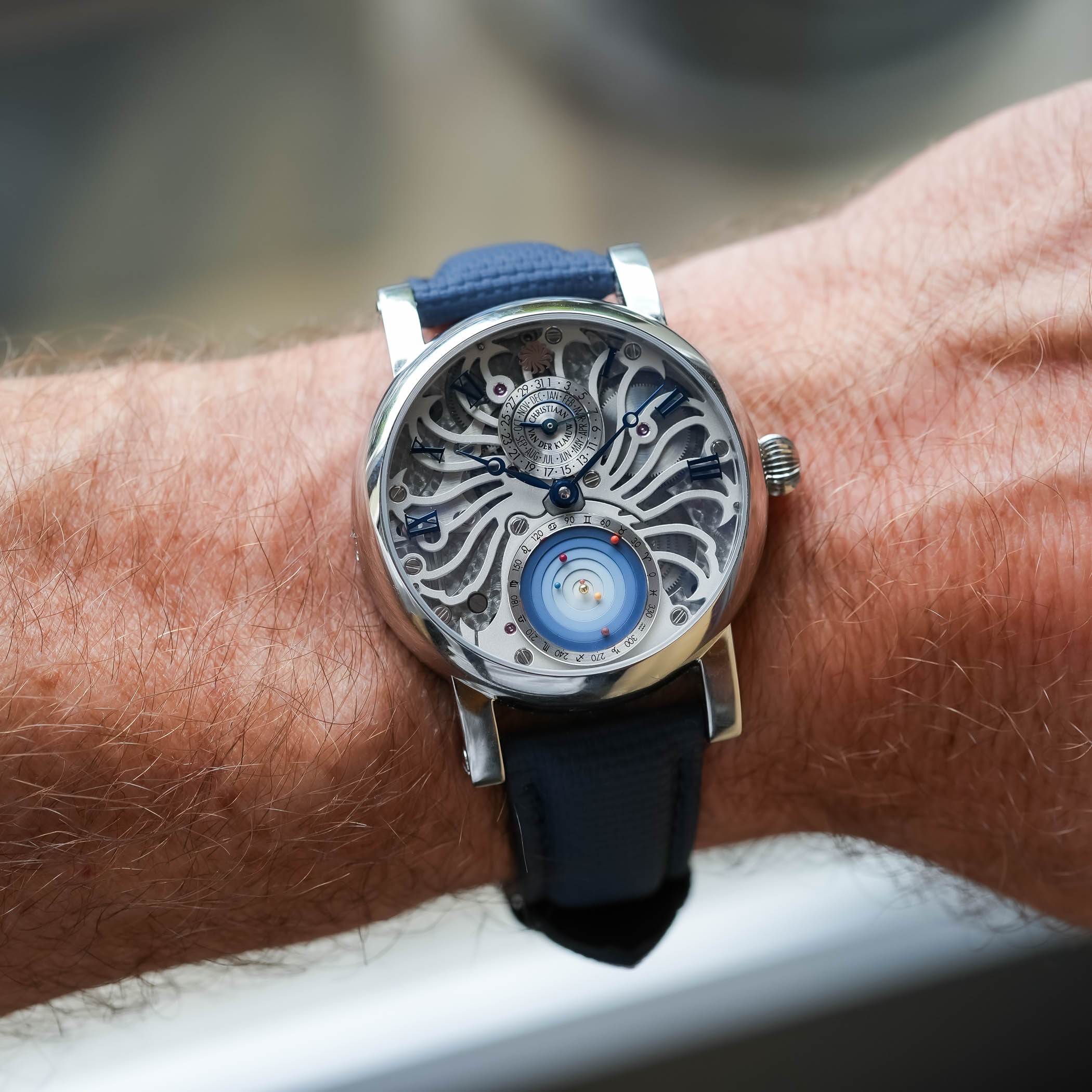
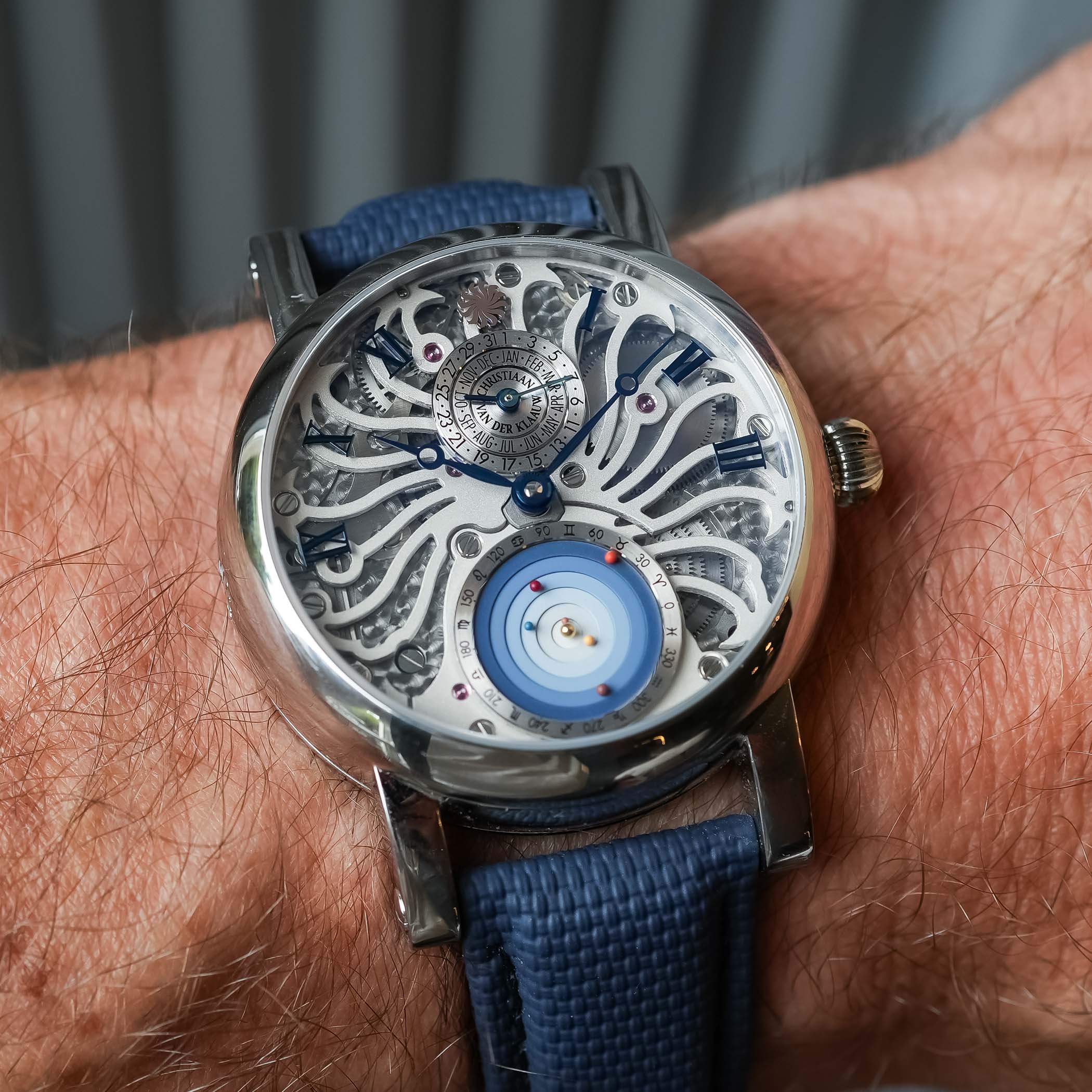
At 6 o’clock, the Planetarium displays the orbits of six planets in real time: Mercury, Venus, Earth, Mars, Jupiter and Saturn. The Sun is at the centre, with each planet following its own precisely calculated path. Mercury completes its displayed orbit in 87.97 days, Venus in 224.70 days and Earth in 365.24 days. Mars takes 686.98 days, while Jupiter requires 11.86 years and Saturn 29.46 years. Date and month indications on the subdial at 12 o’clock complete the astronomical display alongside central hours and minutes, all indicated by blued hands.
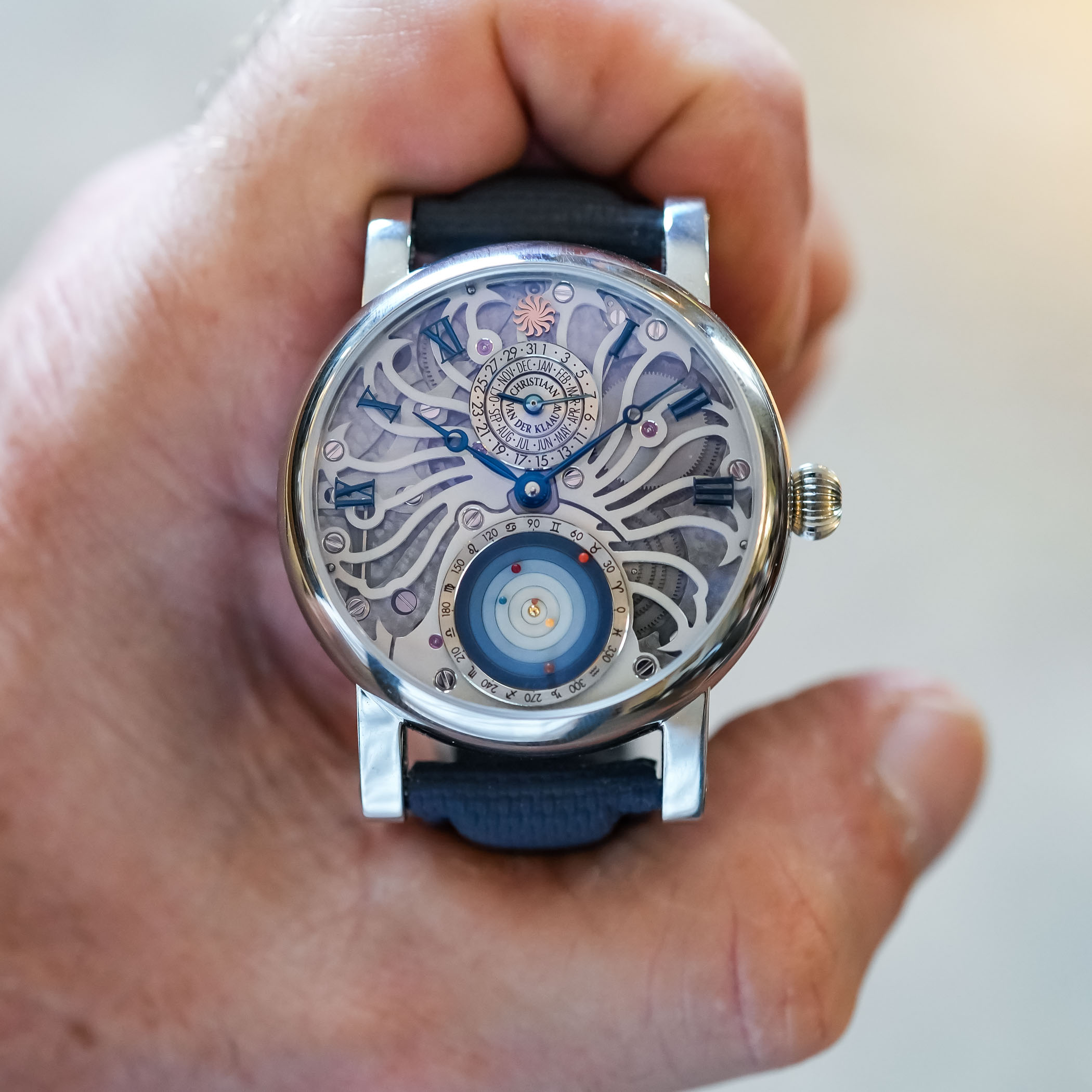
The structure surrounding the planets is something else. The custom bridges have been shaped like the Christiaan van der Klaauw logo, itself representing the Sun with twelve radiating claws. In this skeletonised version, those forms become functional parts of the movement construction, extending around the Planetarium module and exposing more of the gearing beneath the sapphire dial. The bridges and plate are rhodium-plated for a consistent metallic appearance against the transparent dial.
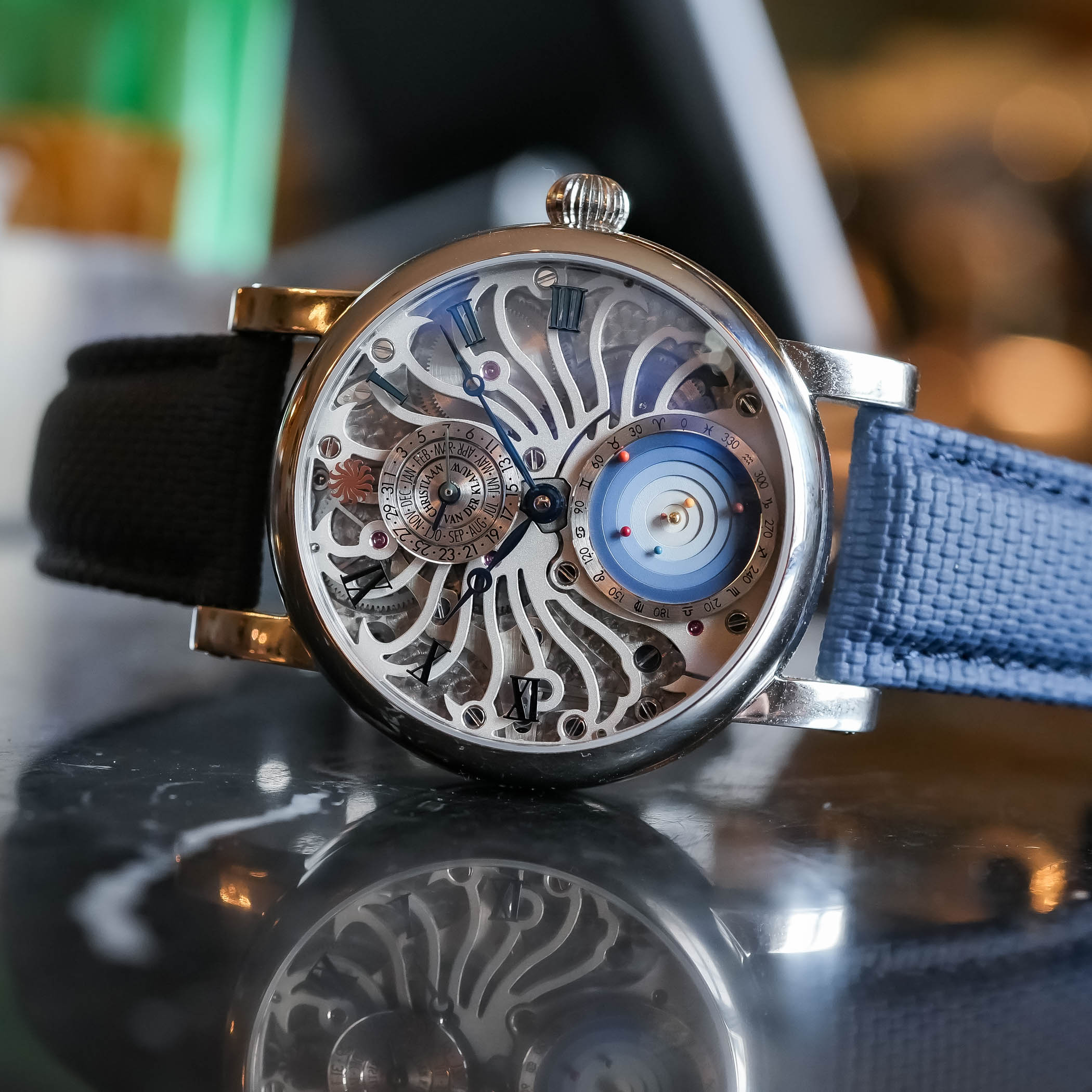
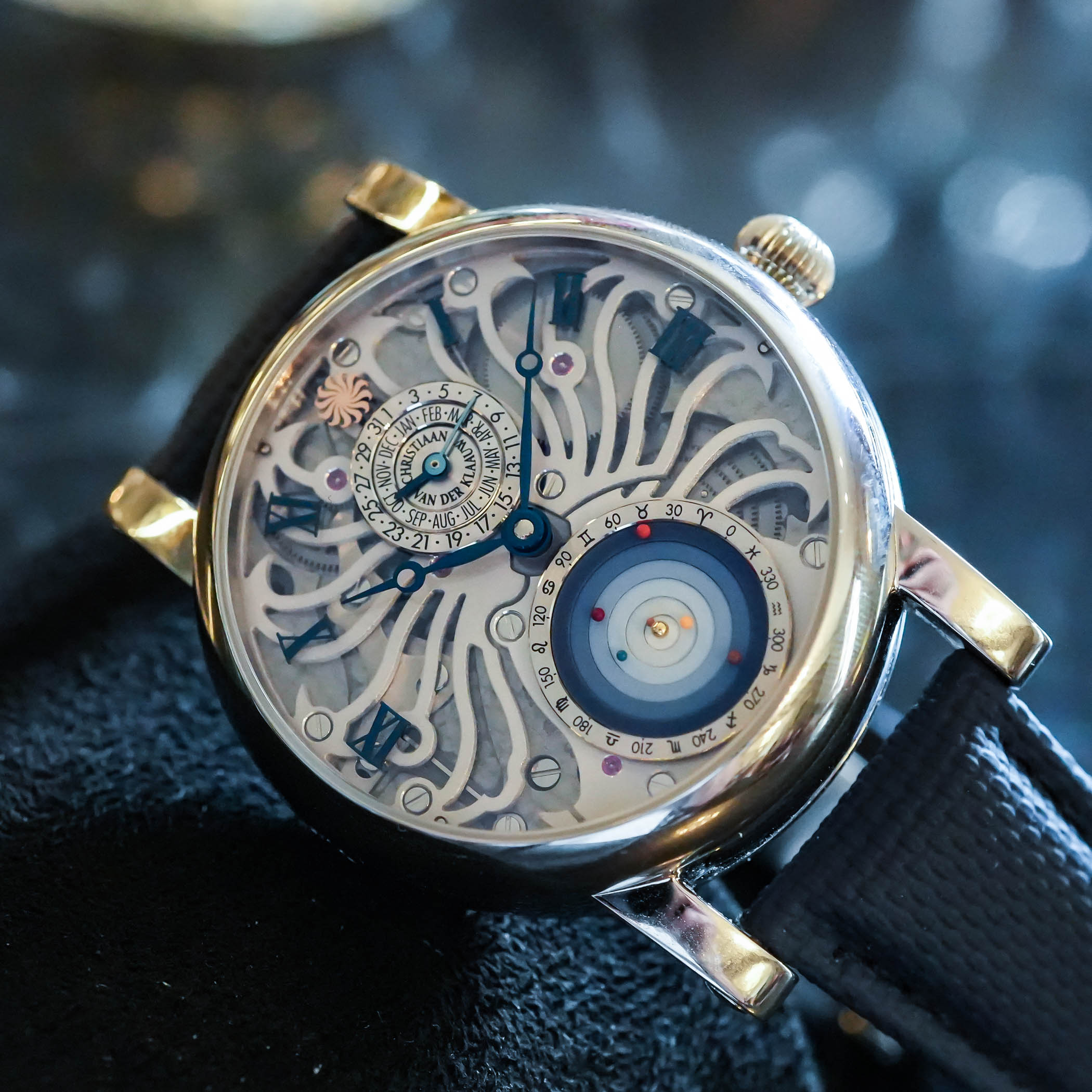
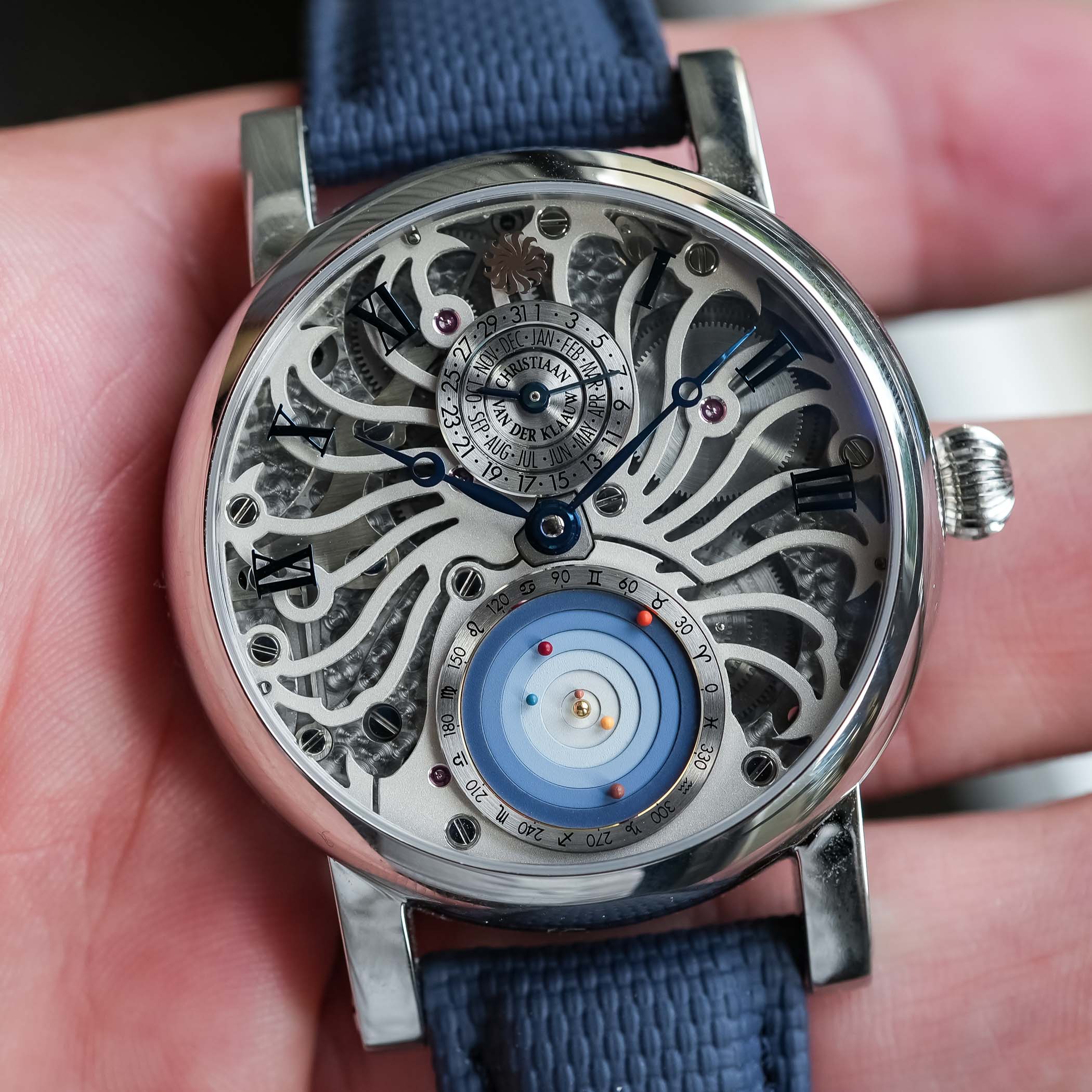
As in the original 2000 Planetarium, on the blue planetary rings, the colour starts bright light blue around the Sun and progressively darkens towards the outer orbits, representing the decreasing intensity of sunlight as the distance from the Sun increases.
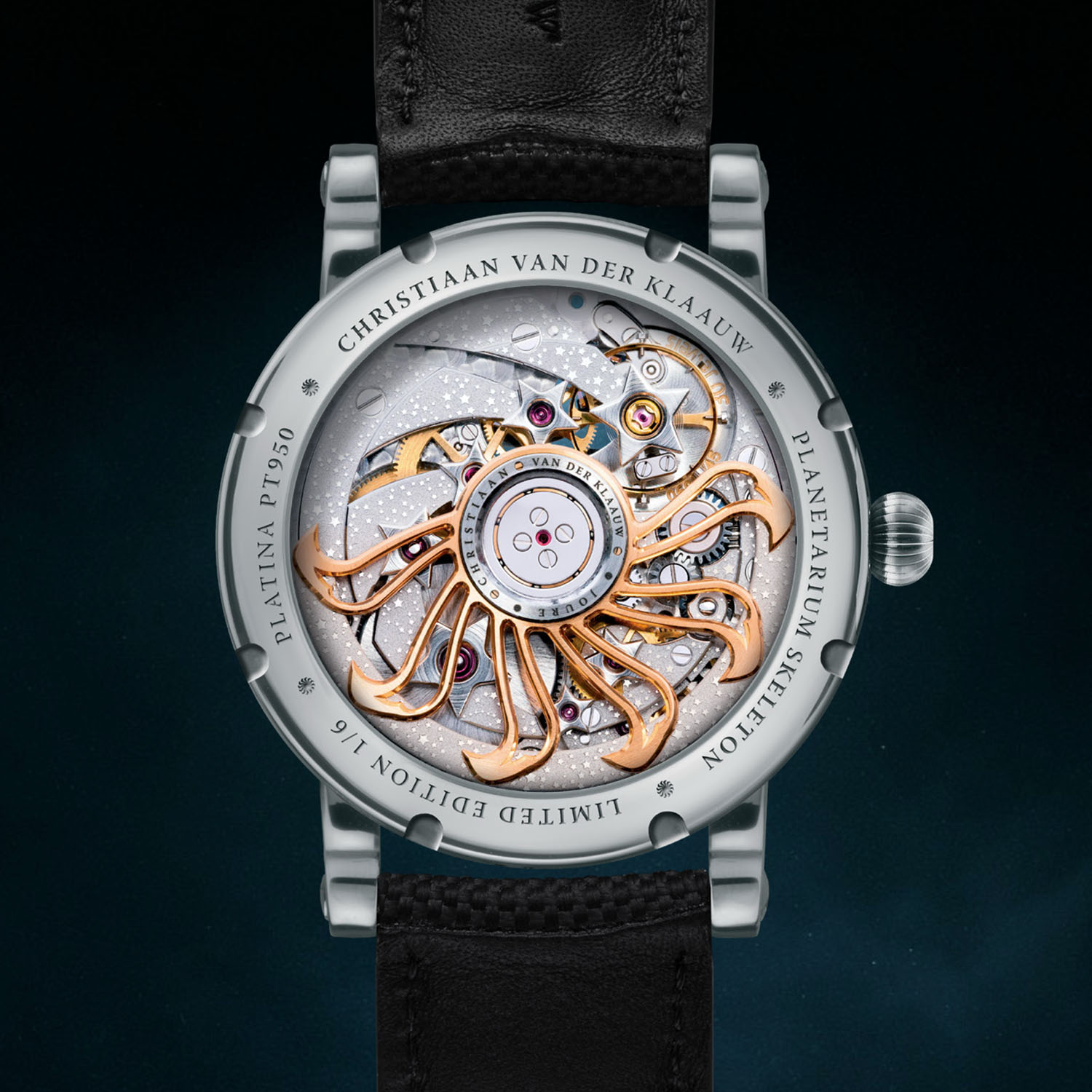
Behind the dial is the CKM-01 manufacture movement, an automatic calibre developed for Christiaan van der Klaauw. It is the same base as used in the Grand Planetarium Eccentric, developed with the movement maker UhrTeil AG (founded by Andreas Strehler). It uses a free-sprung hairspring and variable-inertia balance wheel, operating at 21,600 vibrations/hour and providing 60 hours of power reserve. The finishing includes circular decoration on the star-shaped bridges, frosted star decoration, perlage on the main plate and rhodium plating. The skeletonised rose gold-plated rotor takes the form of the CVDK logo and incorporates a rhodium-plated tungsten weight.
The Planetarium Skeleton Platinum is worn on an FKM sailcloth strap closed with a stainless-steel folding clasp bearing a platinum CVDK logo. The watch is limited to six individually numbered pieces and is priced at EUR 86,000 excluding VAT. For more details, please visit www.klaauw.com.



1 response
Such well designed and proportioned lugs…
Makes the watch wear like a dream on a wide variety of wrists I’m sure