


 Not all images were able to load for printing. Please close the print window and try again.
 Unconventional Ways Watches Can Relay Time Without Traditional Hands
From wandering hours to optical illusions, conventional hands aren’t necessary when you enter the circus of time.
At the dawn of mechanical time, hands weren’t a thing as bells would chime to signal an event or relay the hours. These giant mechanical bell towers were seen in Europe throughout the Middle Ages, with examples like the Salisbury Cathedral clock in the 14th century still functioning today (after restoration, of course). These early clock towers used the archaic verge escapement and foliot design, but were revolutionary at the time and go back to the 13th century. Accuracy and reliability were lacking by today’s standards, as it was common to be off by over an hour per day. A second (albeit rarer) design emerged early on and ran concurrently with bell-only towers, adding a dial with a single hour hand. One of the first of these “clock towers” appeared in 1283 at the Dunstable Priory (a medieval Augustinian monastery). By the 15th century, dials and hour hands were the common standard, although chiming bells remained part of the show.

It wasn’t until the late 17th century that the pendulum escapement replaced the verge (invented in 1656 by Christiaan Huygens, a Dutch scientist) and clocks became accurate enough to include a minute hand. This visual setup of hour and minute hands has endured for centuries and remains the standard for almost all analogue clocks and watches today. That said, we’ve got to have some fun, and watchmakers have experimented with alternative time-telling methods for over a century. There are ultra-rare oddities out there from the 18th and 19th centuries, but the first mainstream alternative to hour and minute hands came in 1883 when Austrian engineer Josef Pallweber created the jumping hour – Arabic numerals were displayed through windows to relay time in an analogue/digital format with the hour “jumping” instantly. Today, we have wild and very complex mechanical creations for relaying time without hands, and although exotic watchmakers like MB&F and URWERK quickly come to mind (and they’ll certainly be talked about below), some amazing alternative watches are surprisingly accessible, as out-of-the-box thinking doesn’t have to break the bank.
Jumping Hour Display and the IWC Pallweber
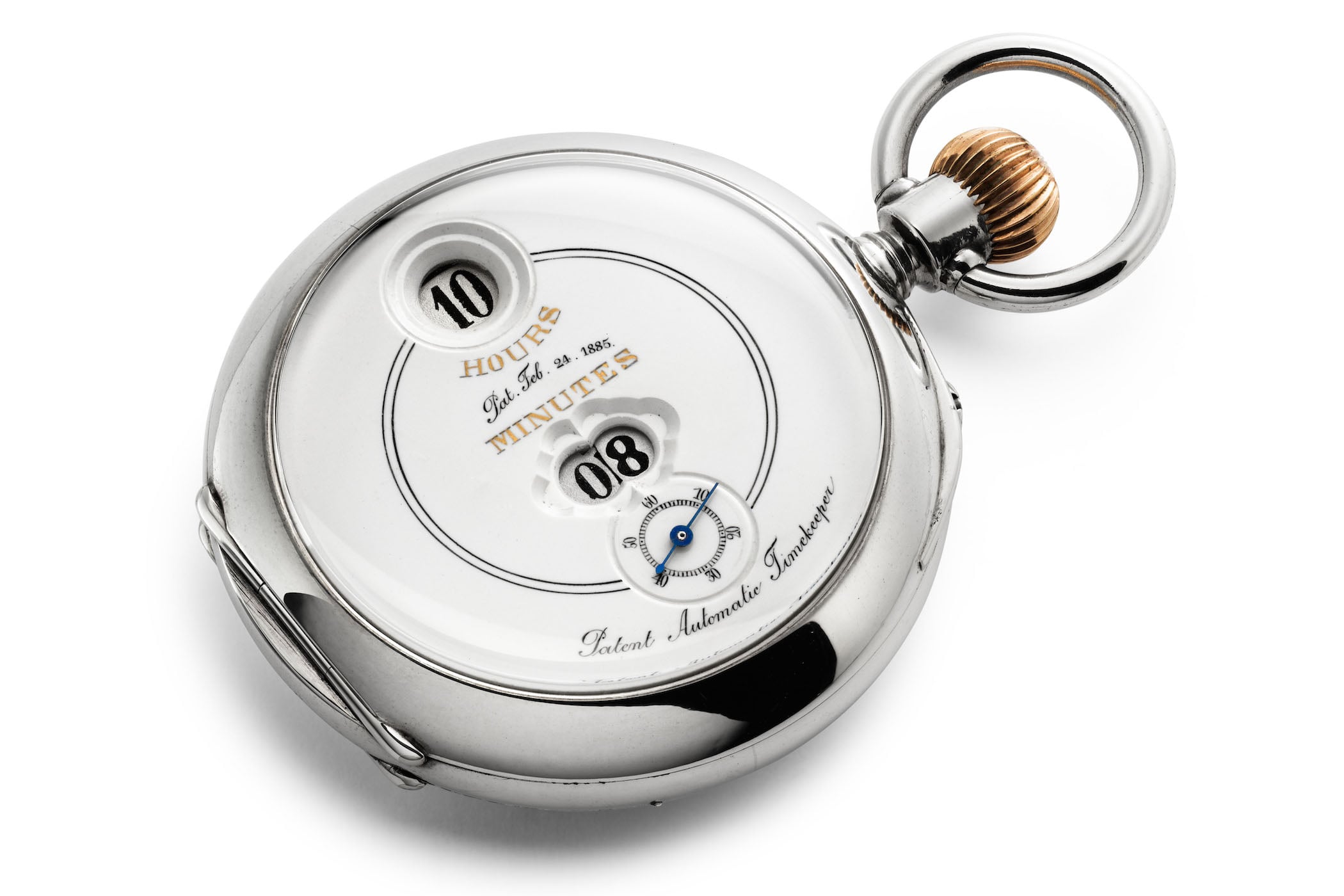
Although Pallweber is generally credited with the invention of jumping hours, a single piece existed 50 years prior and was made for King Louis Philippe I of France. French watchmaker Antoine Blondeau designed this jumping hour pocket watch in 1830 (give or take a year) with a rotating number disc that instantly “jumped” into place every hour, while a second disc displayed the minutes through a separate window. It’s likely the first watch to have a “digital” display and was positively futuristic at the time, but also an expensive one-off for royalty and additional pieces never materialised. Let’s jump forward to 1883, when a jumping hour pocket watch movement was patented by Josef Pallweber, who licensed it to watchmakers Cortebert and IWC (see above). Thousands of models between the two were produced before 1900 (with IWC having much higher production numbers – around 20,000). Unfortunately, initial production was short-lived as IWC Pallweber pocket watches were discontinued in 1890, so the entire run lasted only six years. The concept returned to popularity in the 1960s and 1970s, but it took IWC decades longer to bring back its design.
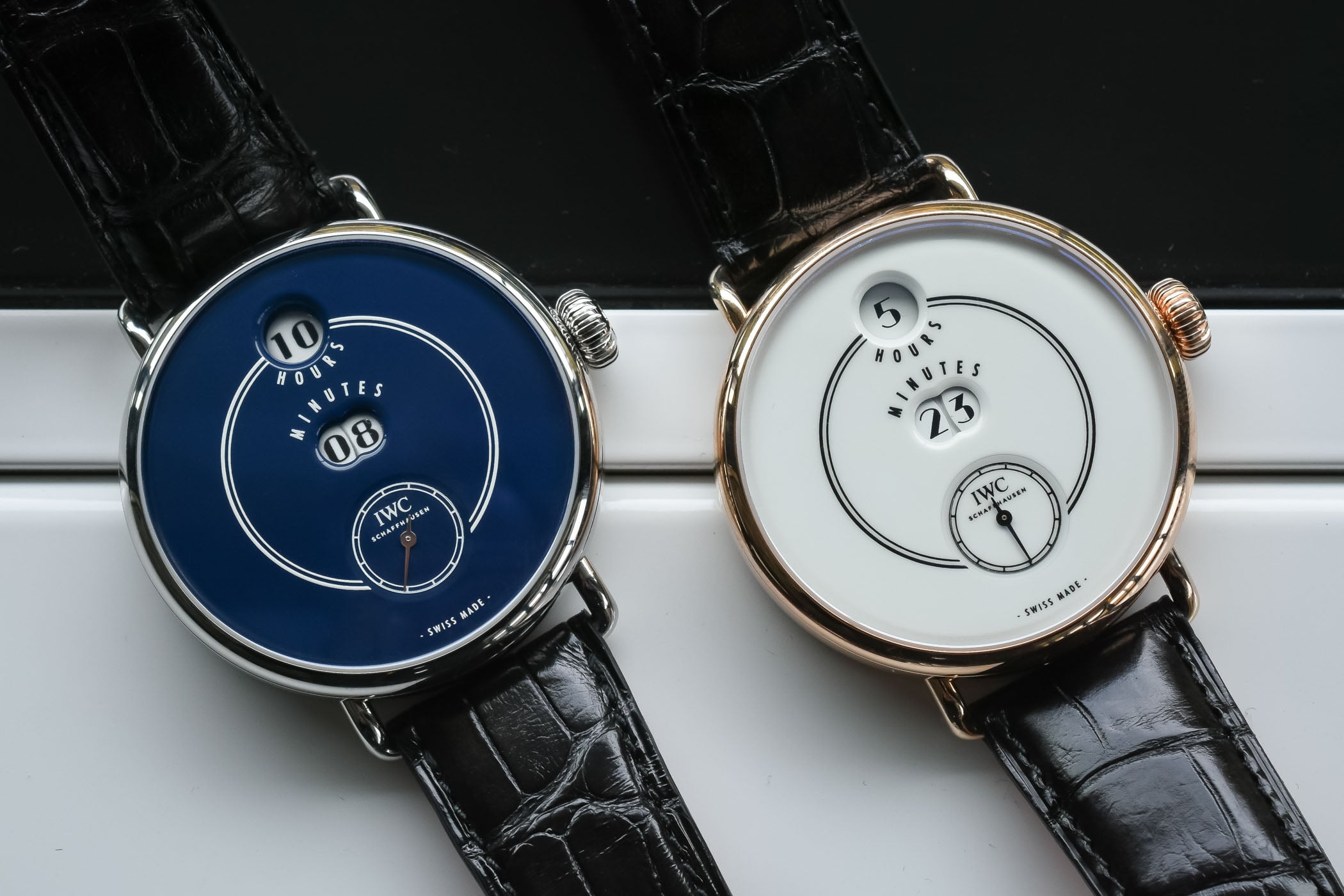
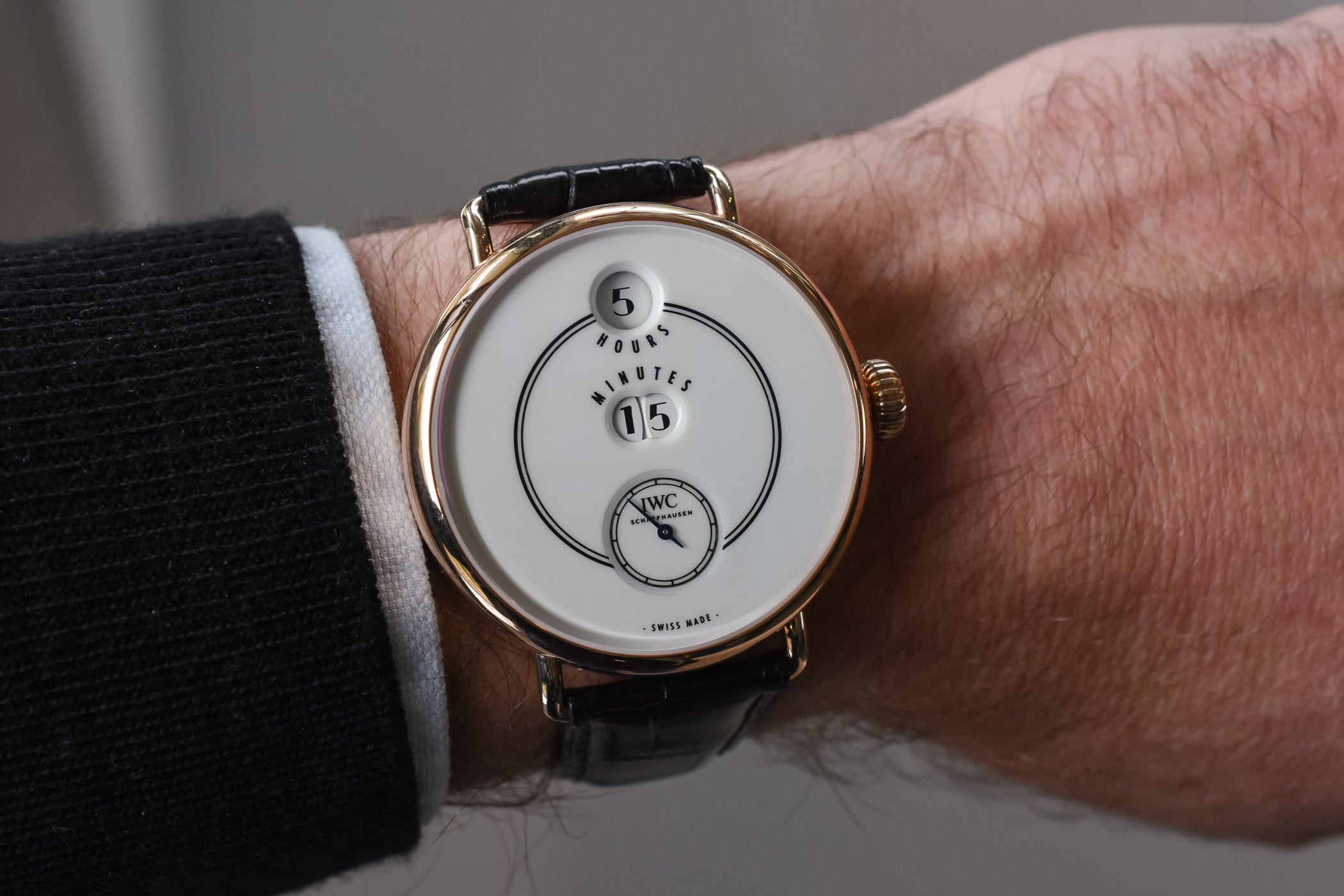
In 2018, IWC celebrated its 150th anniversary by reintroducing the Pallweber jumping hour in a modern wristwatch – the IWC Tribute to Pallweber Edition 150 Years (ref. IW505003). It closely resembled the original layout with jumping hours at the top, a “big date” style minute window in the centre (with two discs) and a conventional seconds hand within a 6 o’clock sub-dial. Of course, the watchmaker also introduced a more limited hunter-style gold pocket watch (ref. IW505101) as a direct successor to the 19th-century models. These are all five-figure watches (though certainly not outrageous for wristwatches), but many affordable jumping hour watches are available today from a wide variety of brands. And while in production for only six years, original IWC Pallweber pocket watches in nice, fully working condition are relatively easy to find on the pre-owned market with a bit of online research, thanks to high (at the time) production numbers.
A. Lange & Söhne Zeitwerk
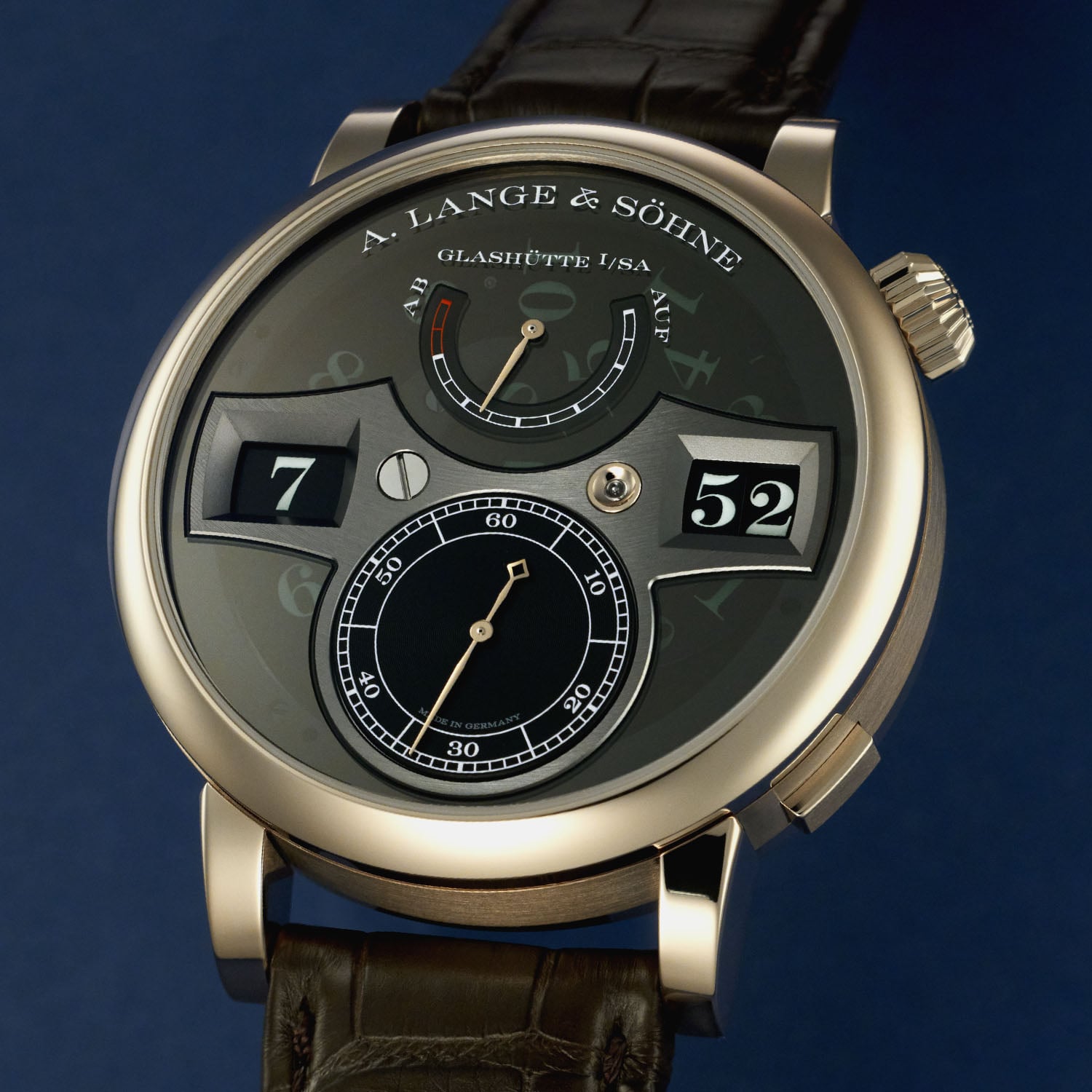
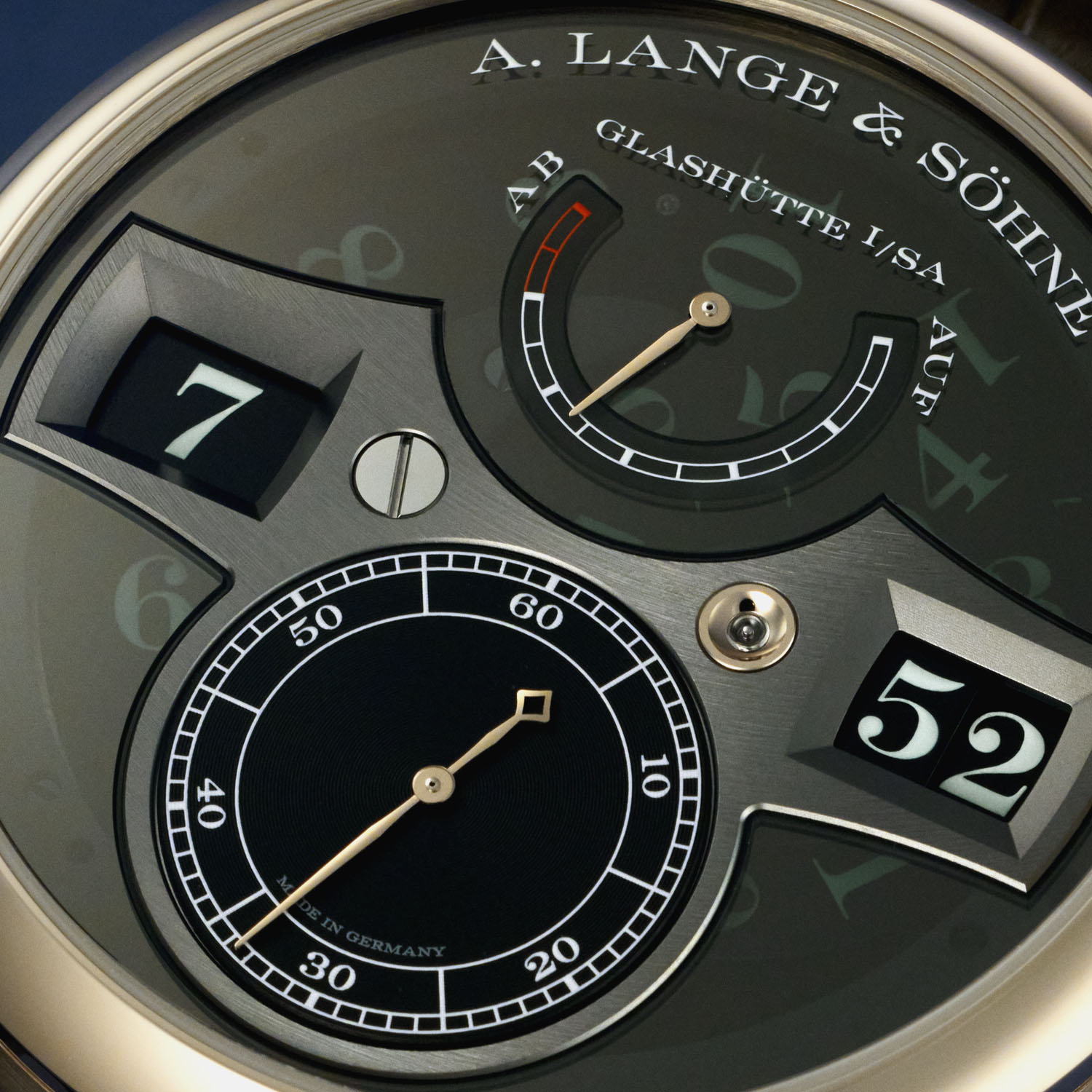
It may be late to the jumping hour game, but let’s look at what’s arguably the greatest example of a modern jumping hour “digital” wristwatch with the A. Lange & Söhne Zeitwerk. Ferdinand Adolph Lange founded the German brand in 1845, but it was completely destroyed during World War II by aerial bombing and shuttered. The great-grandson of the founder, Walter Lange, relaunched it in 1994 with four haute horology models, including the Lange 1 and Saxonia. The Zeitwerk didn’t debut until 2009, but has since defined the brand with its iconic, horizontal analogue/digital format. It comes in several trims today, such as time-only (all have power reserve indicators), with a perimeter date and with a dial-side minute repeater, and all share a common layout with horizontal windows: jumping hours on the left and minutes on the right. Like the IWC Pallweber, the minutes are displayed via two discs, but the horizontal layout mimics a modern LCD digital watch, unlike the traditional vertical Pallweber.
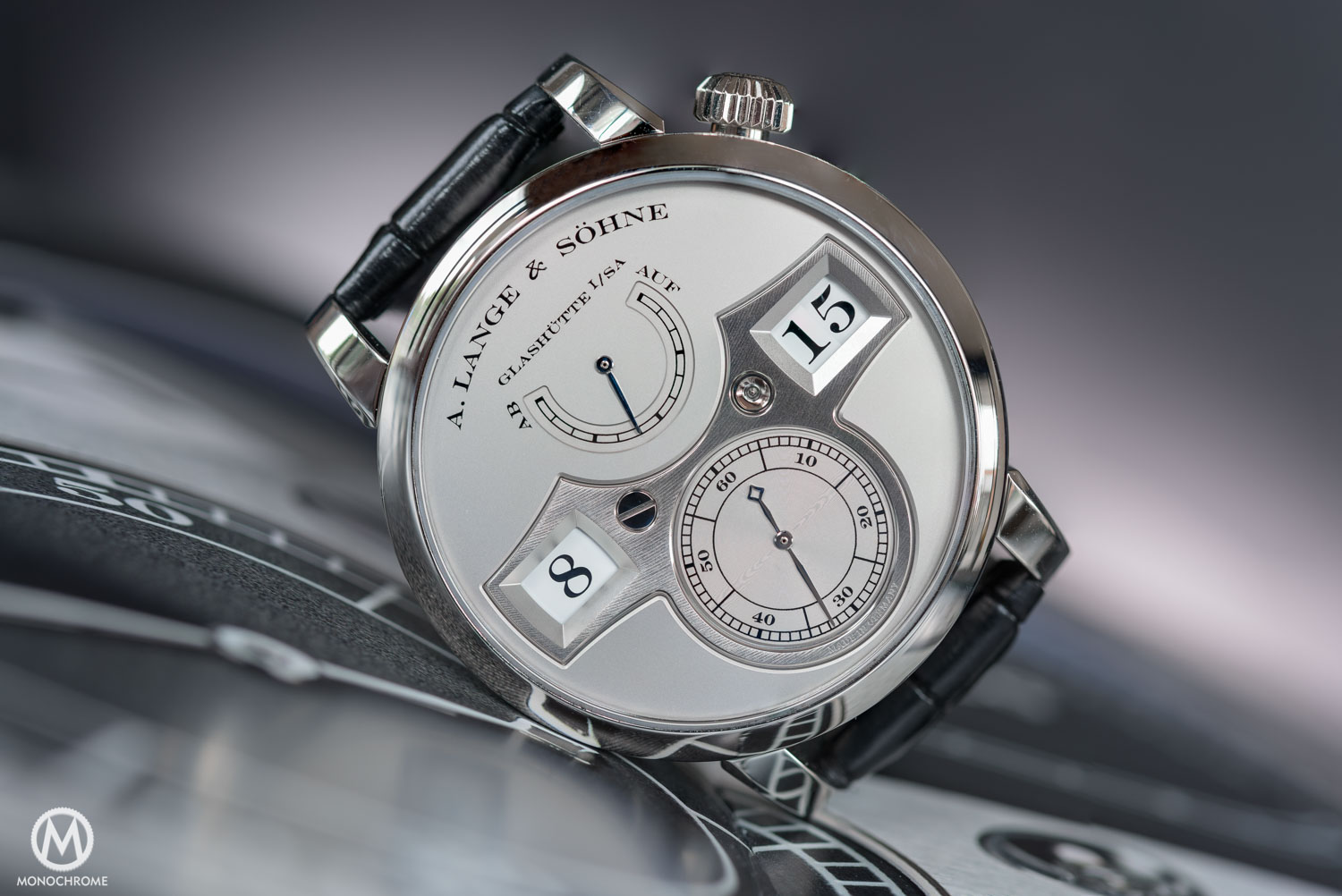
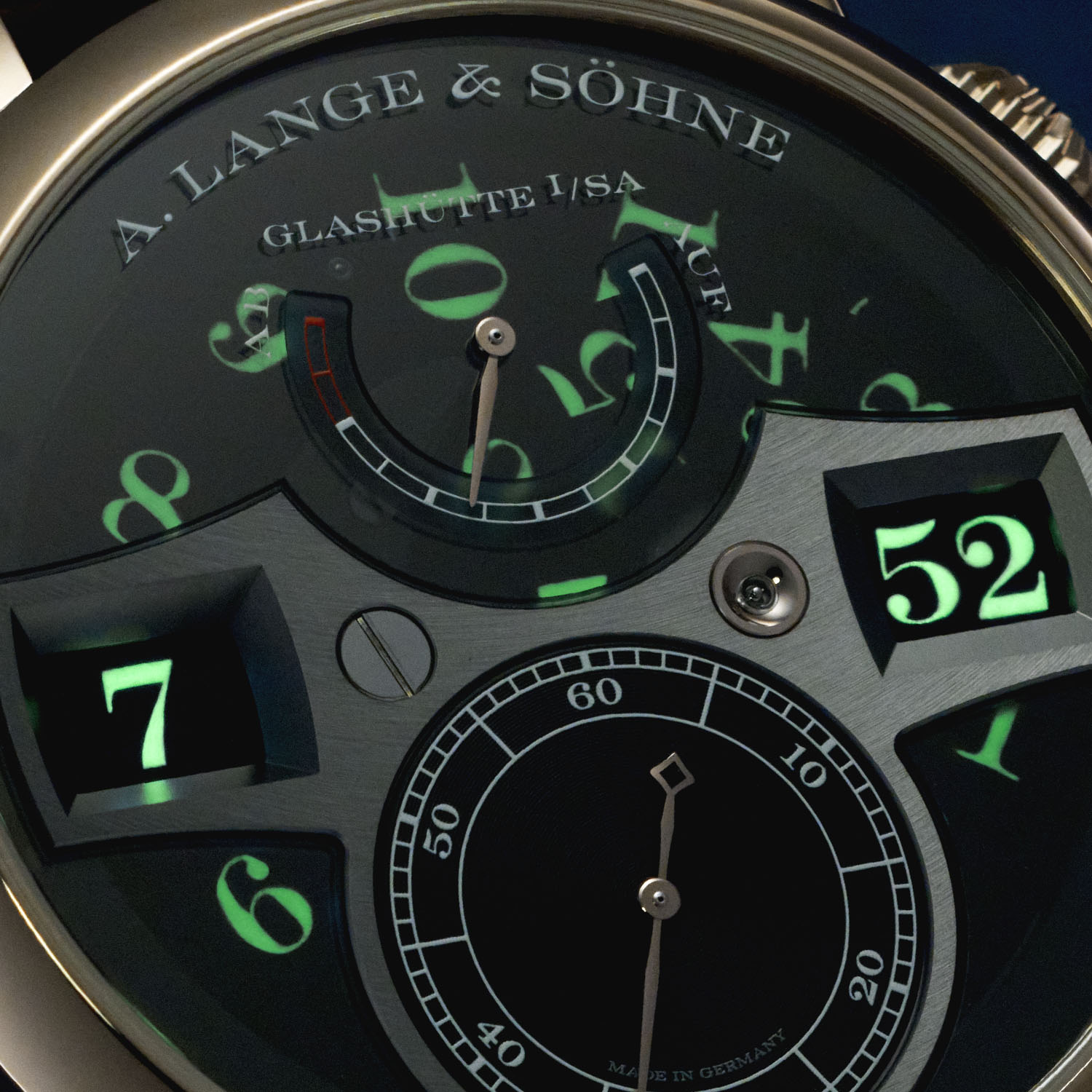
Variants like the Honeygold “Lumen” (ref. 142.055) have a sapphire dial that reveals the entire discs underneath. A constant-force escapement (remontoire) has a second spring (recharged from the mainspring) to maintain a consistent flow of energy regardless of the mainspring’s wound state as it releases energy at regular intervals. It powers the immediate change of discs while also protecting/isolating the balance from the energy spikes required to move the discs. A fly governor then absorbs this energy, keeping the “braking” action of the discs soft with a cushioning effect. Like the IWC, a small seconds sub-dial with a traditional hand sits at 6 o’clock, and there’s a power reserve indicator at 12 o’clock. In true A. Lange & Söhne style, the hand-finishing of the movements is second to none, perhaps worthy of the Geneva Seal (Poinçon de Genève) if, of course, it weren’t a German watchmaker!
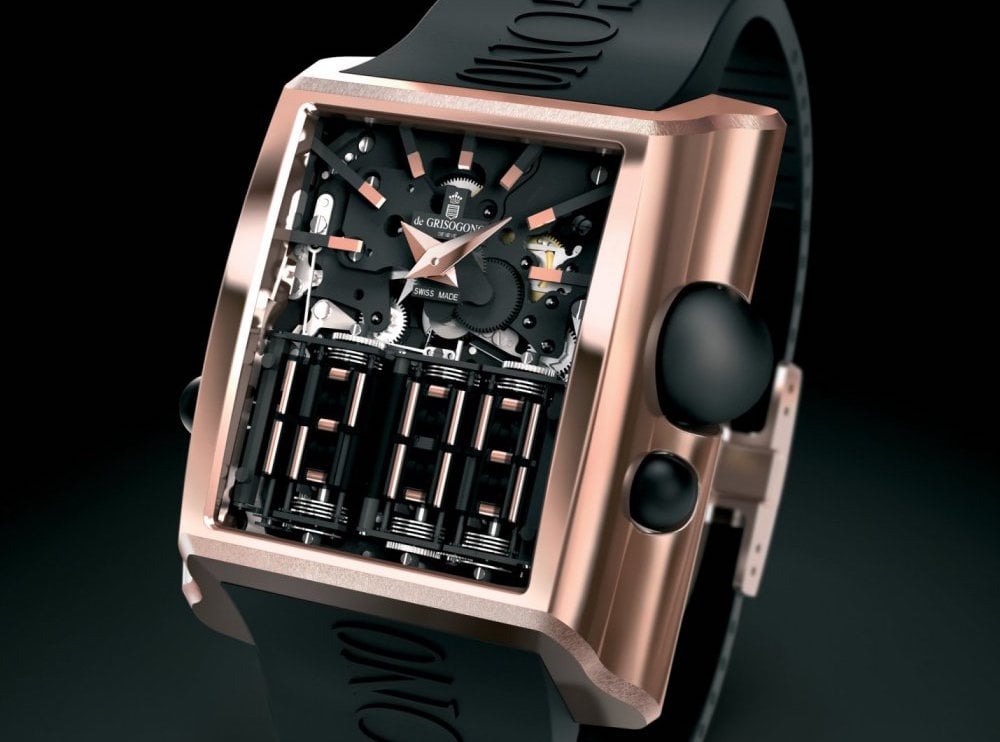
The Zeitwerk isn’t the only watch with a horizontal mechanical digital display, but one of the very few and certainly the best known. The De Grisogono Meccanico DG is an example that looks more like an electric digital piece and features a traditional face with an hour and minute hand, offering two time zones (and it’s the first mechanical watch with a traditional and digital face). The digital display is comprised of micro-segments and incredibly complex, with over 650 parts to the movement and 23 cams synchronised with gears to make it operate. All of this predictably comes at a price, starting at around EUR 288,000 when it launched in 2008 for the brand’s 15th anniversary.
Modern Jumping Displays
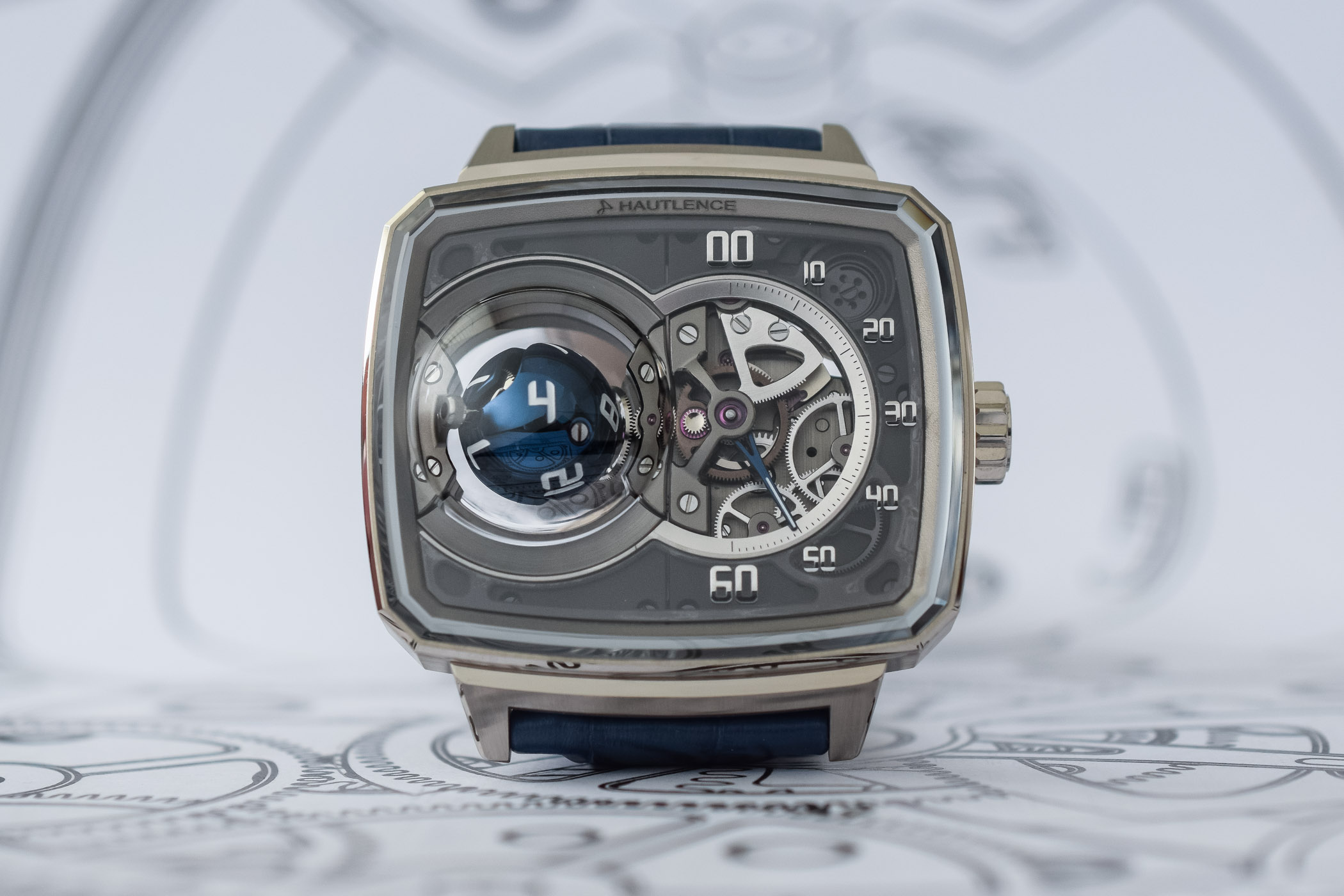
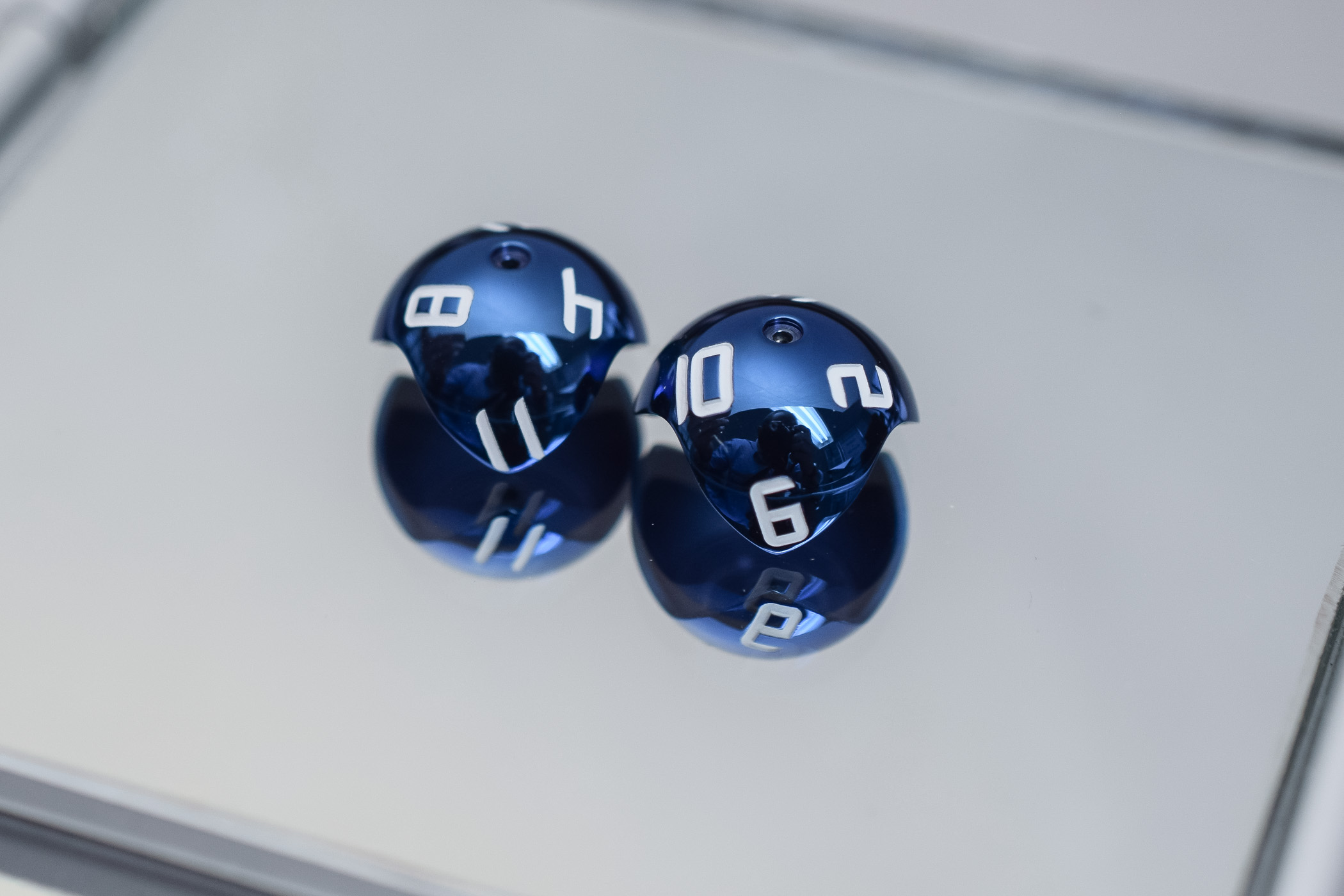
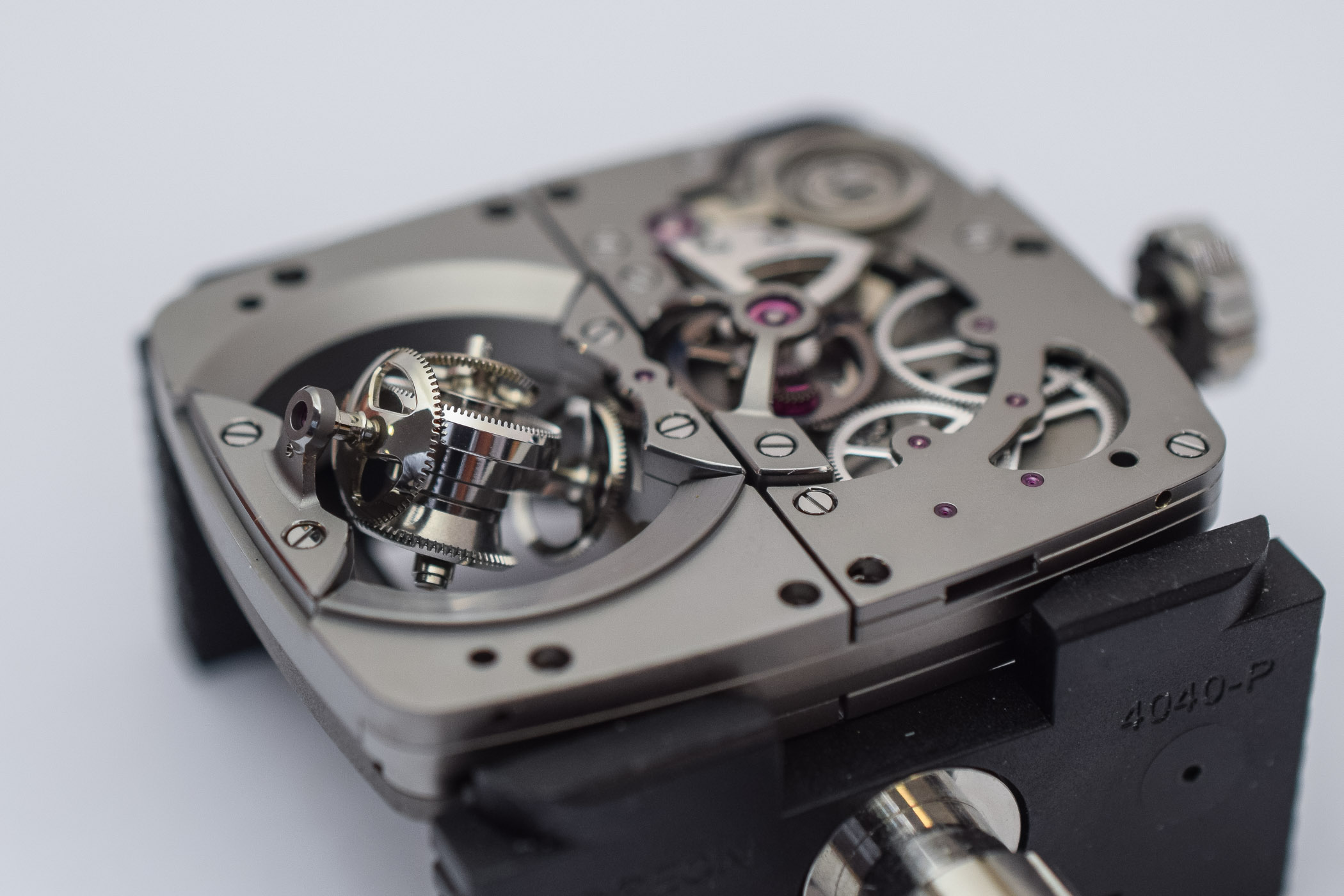
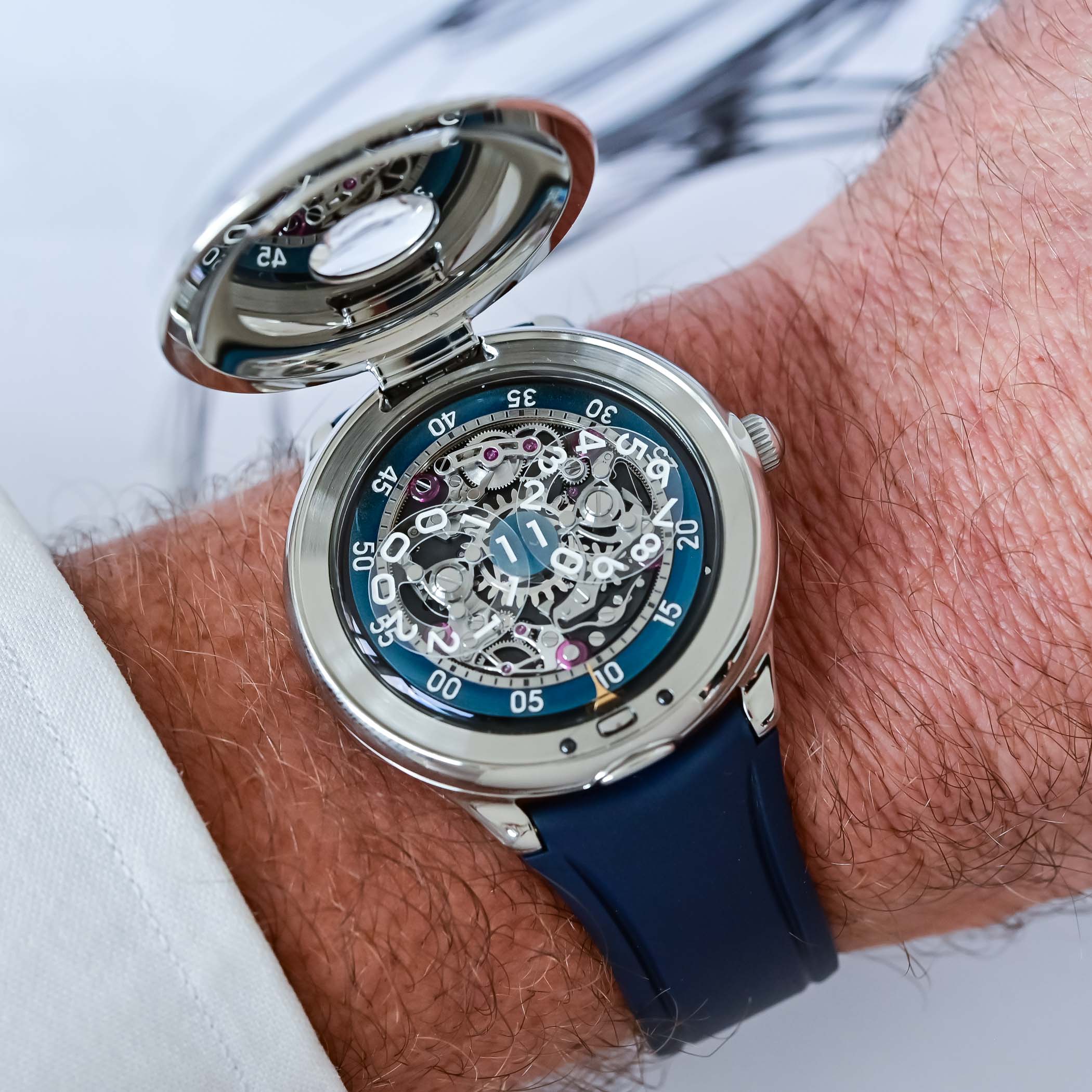
There are countless jumping displays from seemingly countless brands today, so we’ll cover just a few more interesting and accessible ones to keep this article manageable. Swiss independent brand Hautlence, founded in 2004, never disappoints with its unconventional dials. The Sphere Series 1 (ref. BA80-ST00), which followed the limited 2019 HL Sphere 01, features a jumping hour via a three-dimensional sphere on the left, not a flat disc, and remains a marvel of watchmaking. Four conical gears rotate the jump hour sphere on three axes to immediately jump to the next hour, reminding me of the old IBM Selectric typewriters with the spherical “typeball” that instantly jumped to the proper letter in lieu of a wide row of conventional typebars. The right side has retrograde minutes, so two alternative methods are combined on the dial.
The Czapek Time Jumper is another interesting, albeit less complex watch that displays dual disc jumping hours in the centre with a narrow arched window for minutes below. The windows are housed within an intricate guilloché cover that opens like a hunter pocket watch, revealing most of the inner workings. Although Swiss watchmaker Czapek was founded in the mid-19th century, the modern incarnation dates to 2012, and the Time Jumper is definitely futuristic and a departure from the traditional, even in a simpler form compared to the Hautlence.
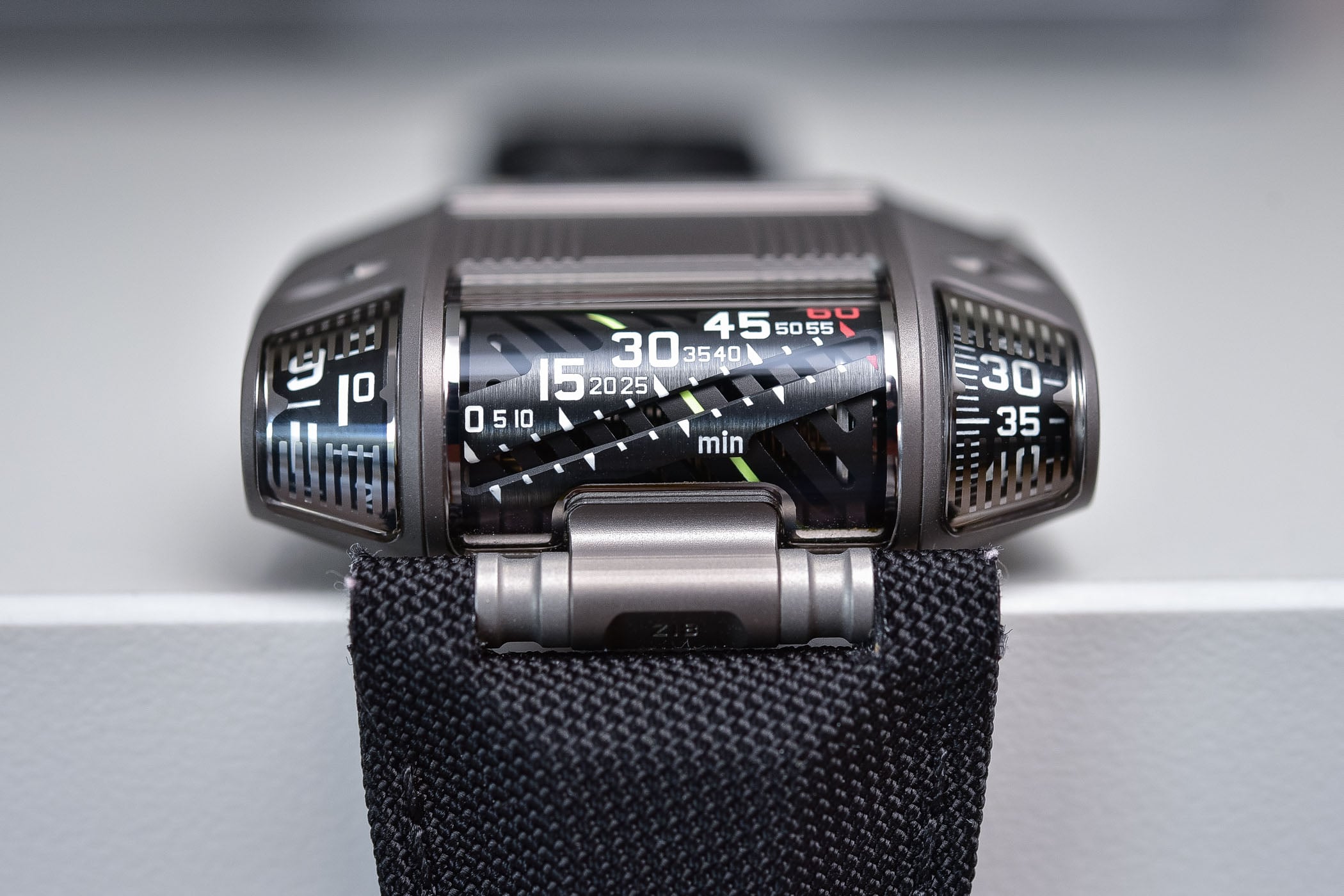
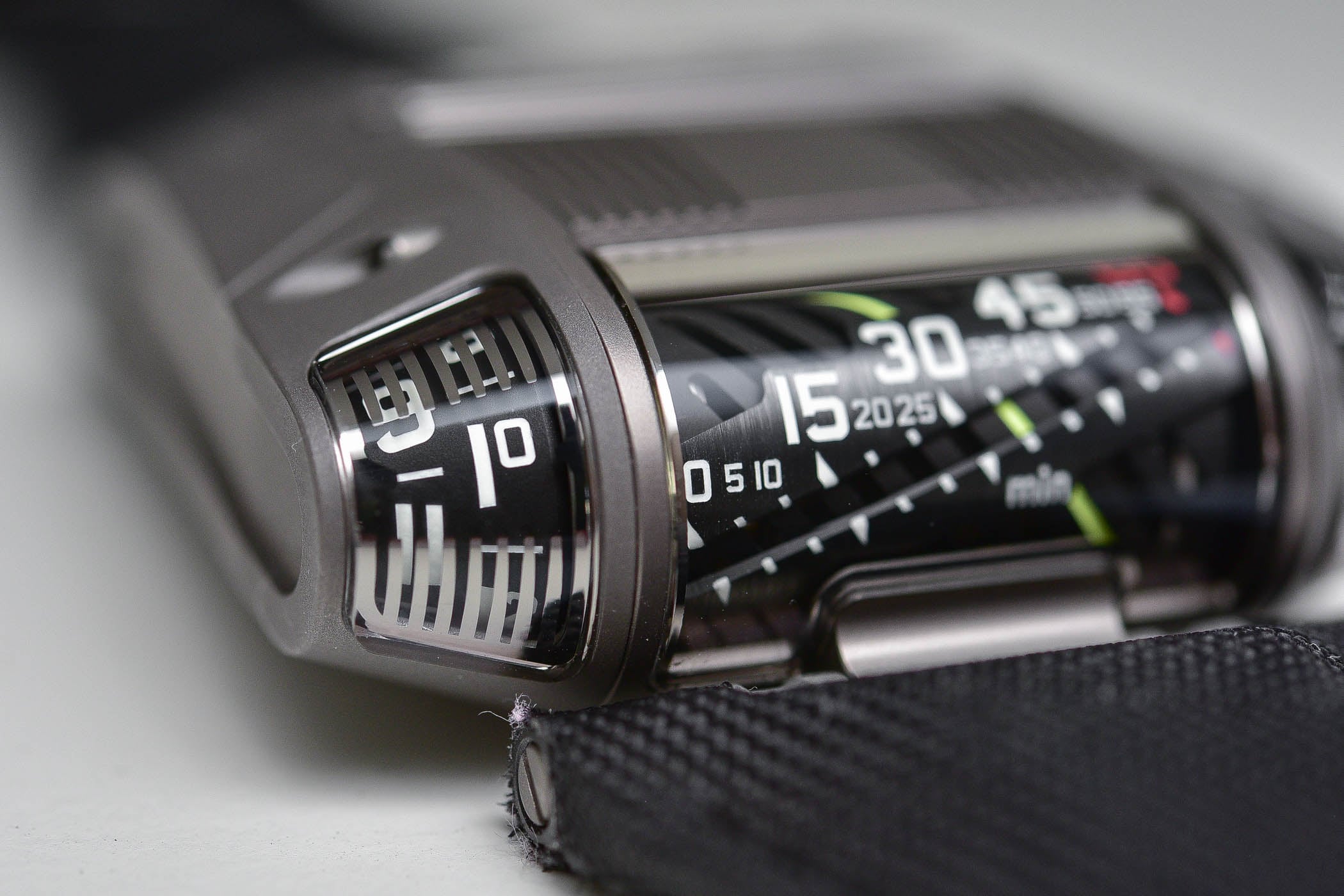
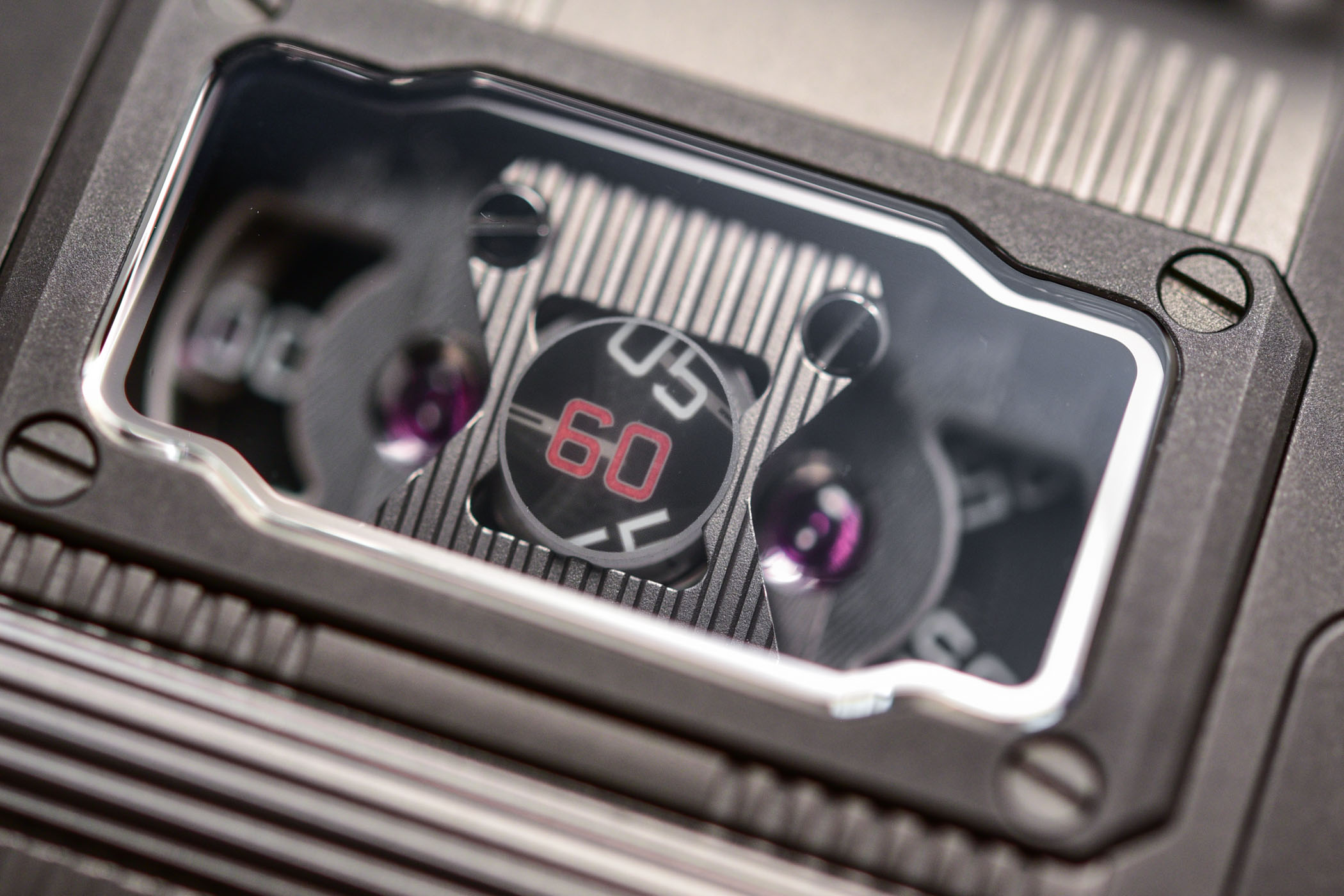
The URWERK UR-111C is a rather radical jumping hour piece with a Sci-Fi theme. Although URWERK is best known for wandering hours (more on that below), this piece is no less bold and complex, with multiple sapphire windows displaying time elements. On the front are three displays with two cone-shaped sapphire crystals on either end and a large central cylindrical crystal. The left-truncated cone shows the jumping hours, while the right has a progressive minute wheel. Although the right minutes are redundant, as the centre display shows larger minutes, they create a visual balance with the hour display. The large cylindrical crystal in the centre is the primary minute indicator with a slanted marker moving along a track to show the correct minute. The seconds live at the top of the case with two small discs – one has 10, 20, 30, 40, 50 and 60, while the other has 5, 15, 25, 35, 45 and 55 – and they seamlessly work together. It’s a complex and visually fascinating piece.
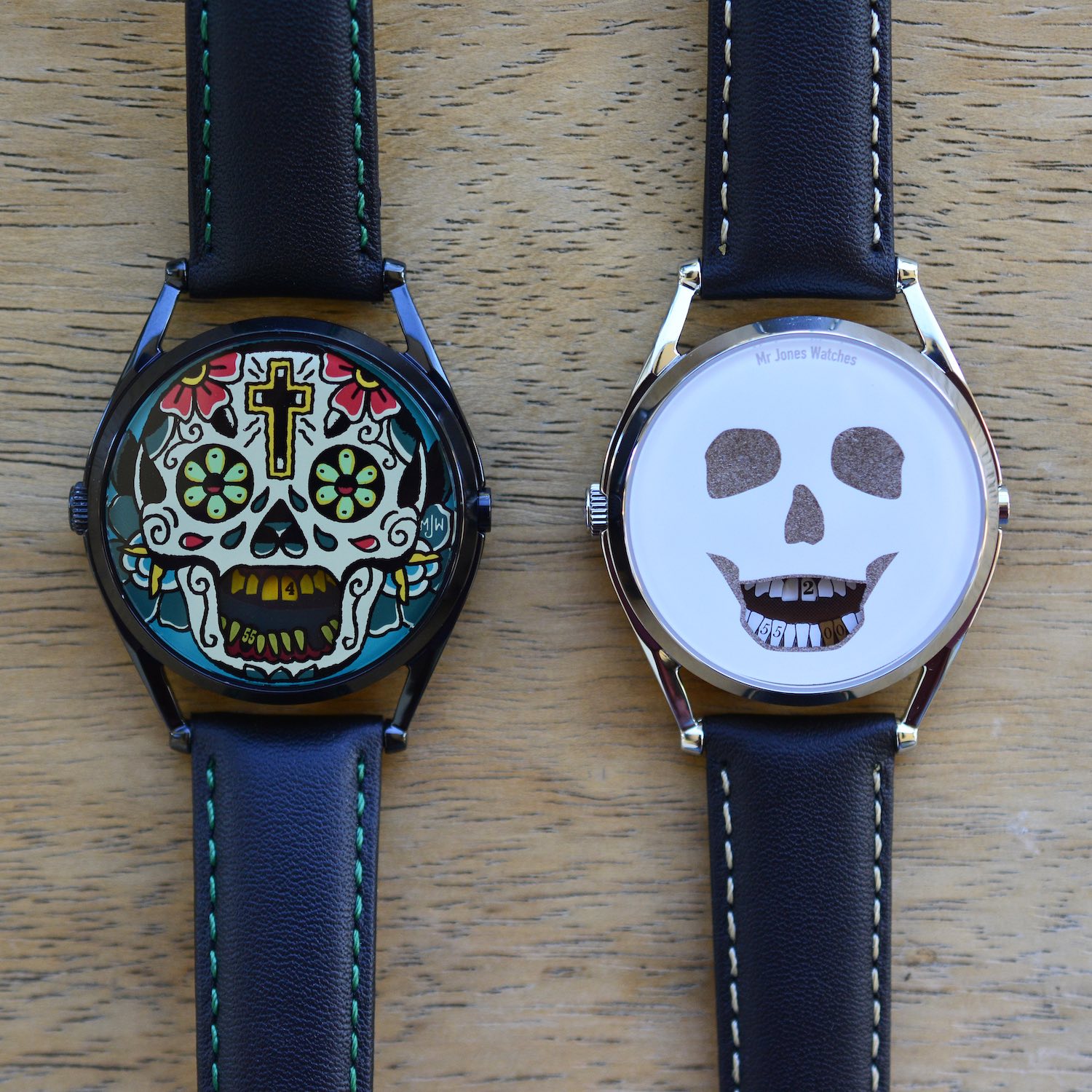
On the affordable front, British brand Mr Jones has a graphically cool collection of jumping displays. Founded in 2007 by Crispin Jones, every piece emphasises art and expression, with outside artists usually designing the dials. Examples include Ricochet with robots surrounding a pinball machine that has jumping hours and minutes on the scoreboard. The dial was designed by artist Ryan Claytor, and metallic foil was gilded by hand in palladium, 20k citron gold and 22k rose gold. The Last Laugh and Last Laugh Tattoo feature large skulls with jumping hours on the top row of teeth, while rotating minutes are seen on the lower teeth. They’re always fan favourites, and the Last Laugh Tattoo was designed by British tattoo artist Adrian Willard. These Mr Jones models start under GBP 300, which is an exceptional value for such creative, mechanical jumping hour pieces.
Wandering Hours
Although we talked about the URWERK UR-111C jumping hour watch above, the exotic brand is best known for its high-end wandering hours portfolio. Until relatively recently, such a complex time display was limited to expensive pieces by URWERK, Audemars Piguet, Vacheron Constantin and a handful of others, but today it’s more common and accessible thanks to affordable modules. Like the tourbillon, the wandering hours is a surprisingly old design, dating back to the mid-17th century, when brothers Pietro and Giuseppe Campani created a wandering hours clock for Pope Alexander VII (see at the top of this article), who wanted an alternative to watch hands that could be read in low light. The design was somewhat of a one-off, with very few clocks produced, and it resurfaced centuries later when Audemars Piguet integrated wandering hours into the Star Wheel wristwatch in 1991. This surprise from the brand used three sapphire discs to display hours (revealing some of the mechanism below) and was a departure from its core portfolio of Royal Oaks and perpetual calendars.
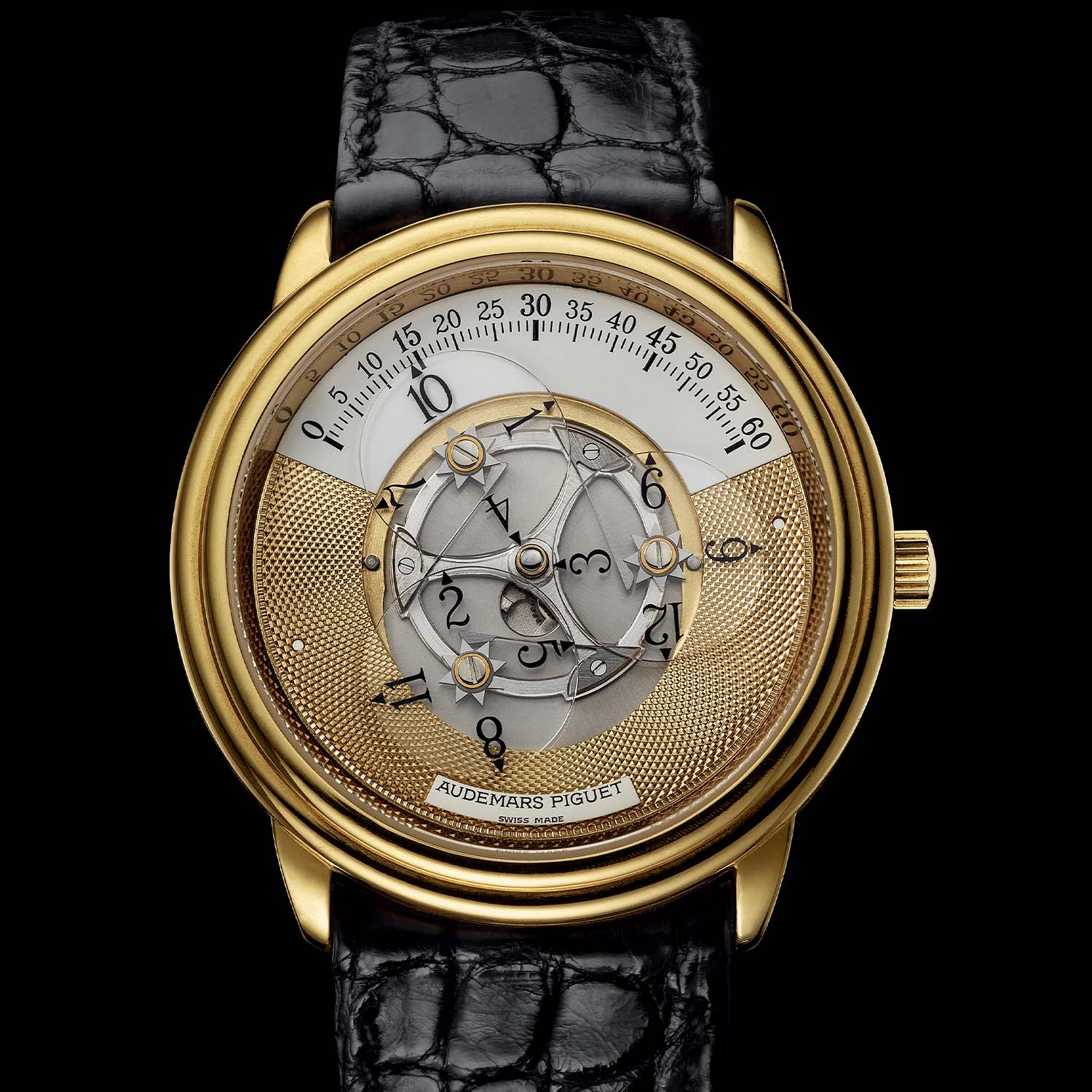
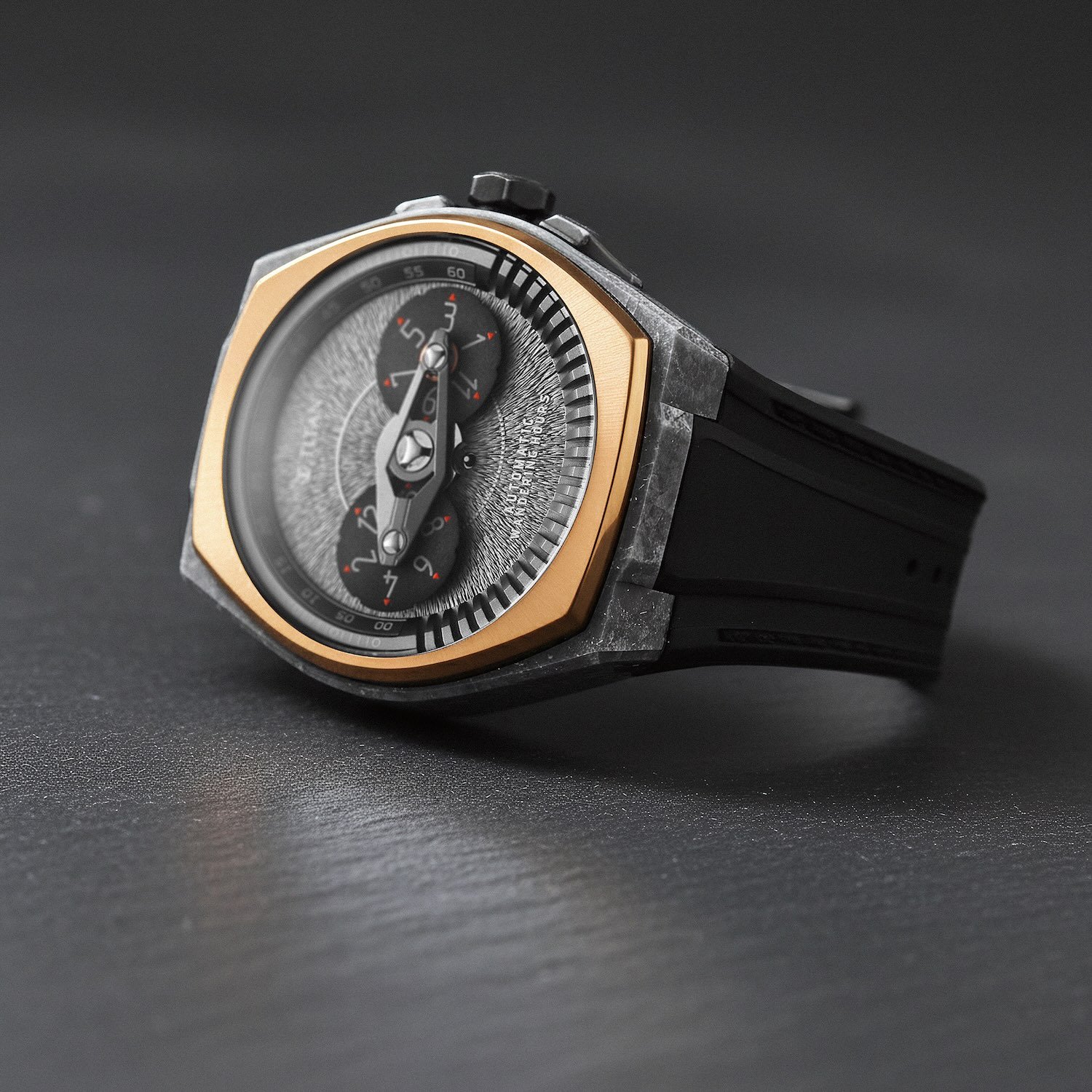
Wandering hours show the time via rotating discs with Arabic numerals. The most common (and traditional) setup has three individual discs, each with four numerals, and an arched minute track at the top or bottom. A disc will rotate to the correct hour when it reaches the minute track and remain as it glides over the track for 60 minutes, pointing to the correct minute as it goes. After 60 minutes, the next disc with the correct hour starts at the beginning of the track and so on. Many setups like this have a central seconds hand as well, like the current Audemars Piguet Code 11.59 Starwheel. Some modern displays have only two discs with six numbers per disc, as in India’s first wandering hours watch, the Titan Stellar 3.0. The concept is the same with a 180-degree minute track at the top, allowing one disc to enter the track as the other leaves.
URWERK
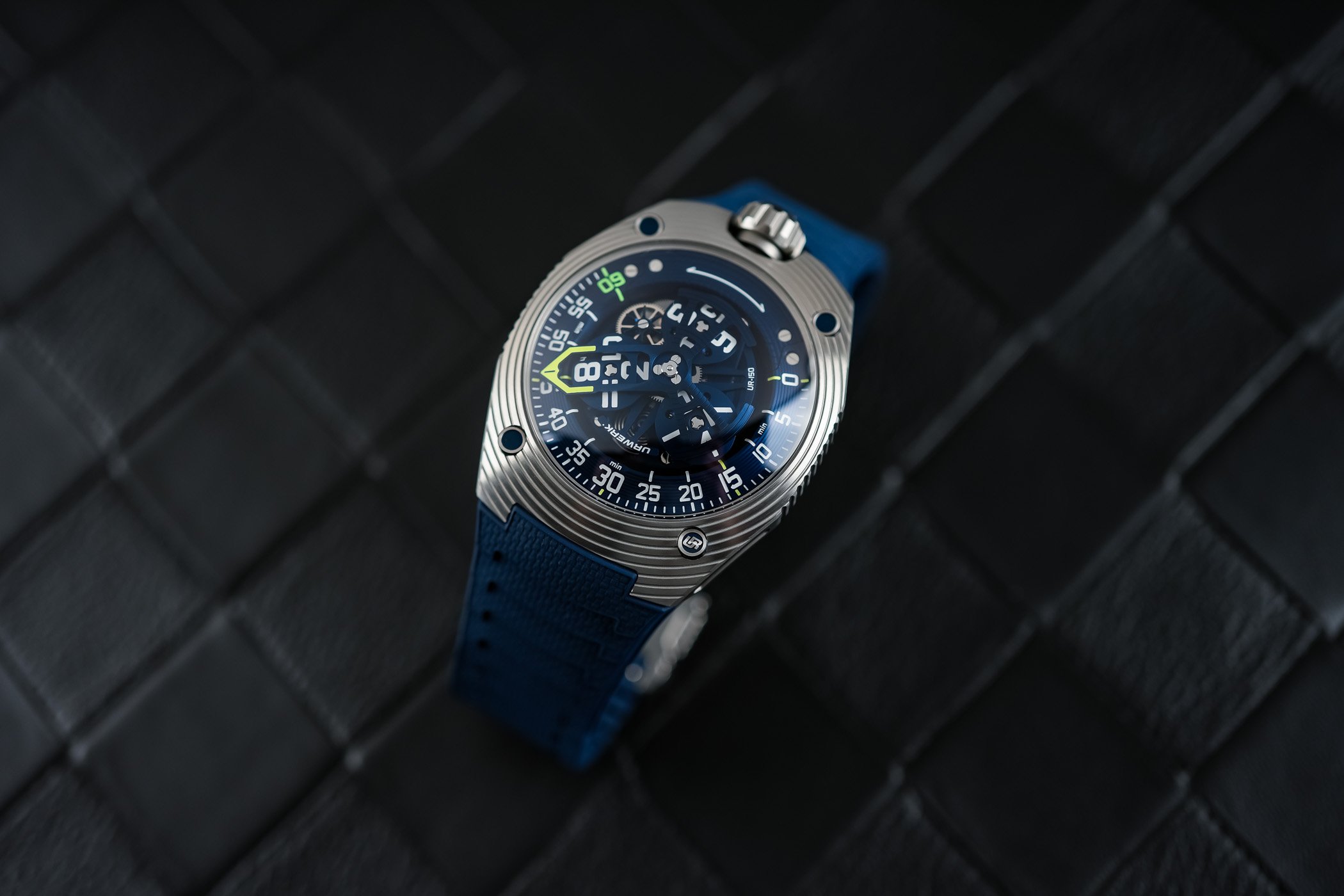
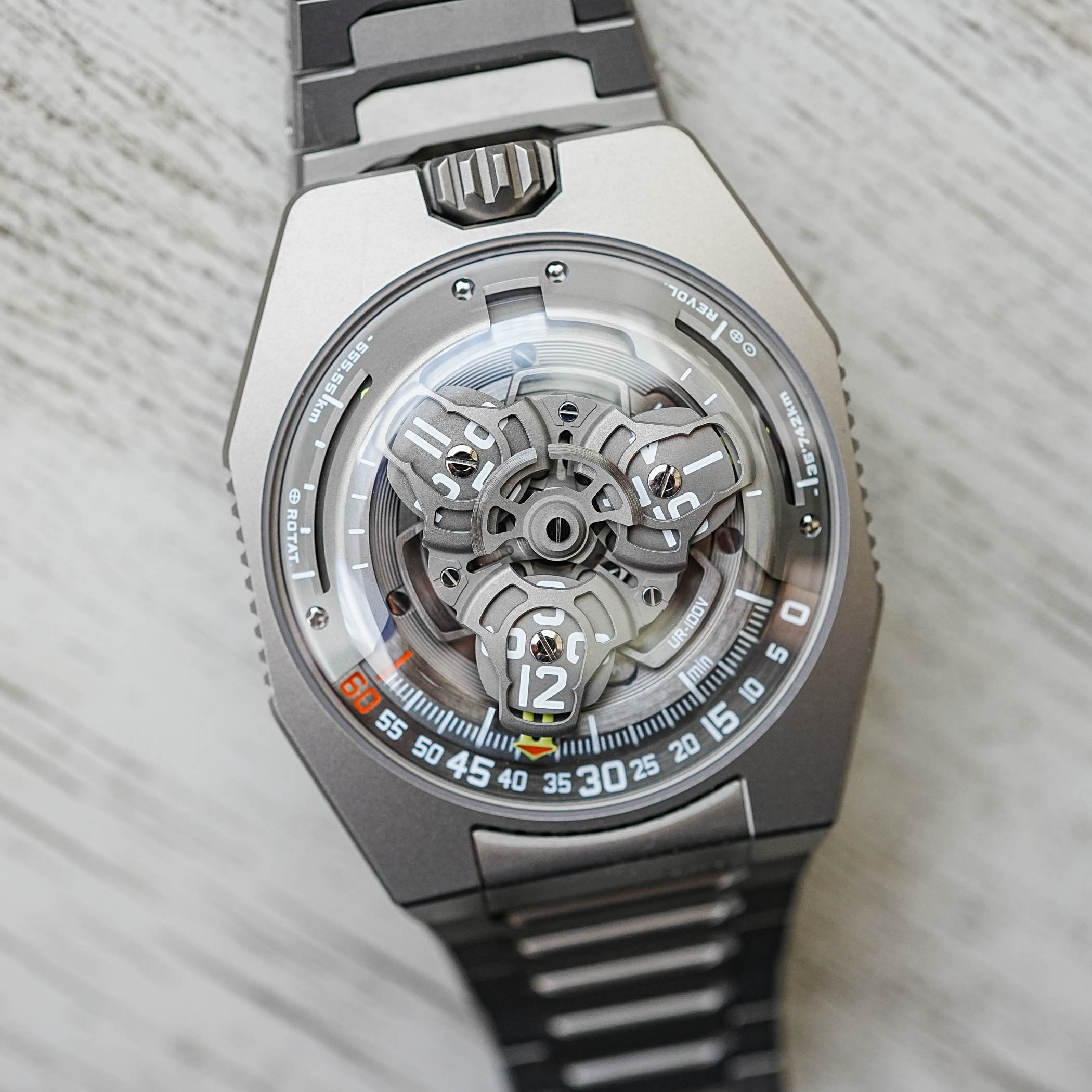
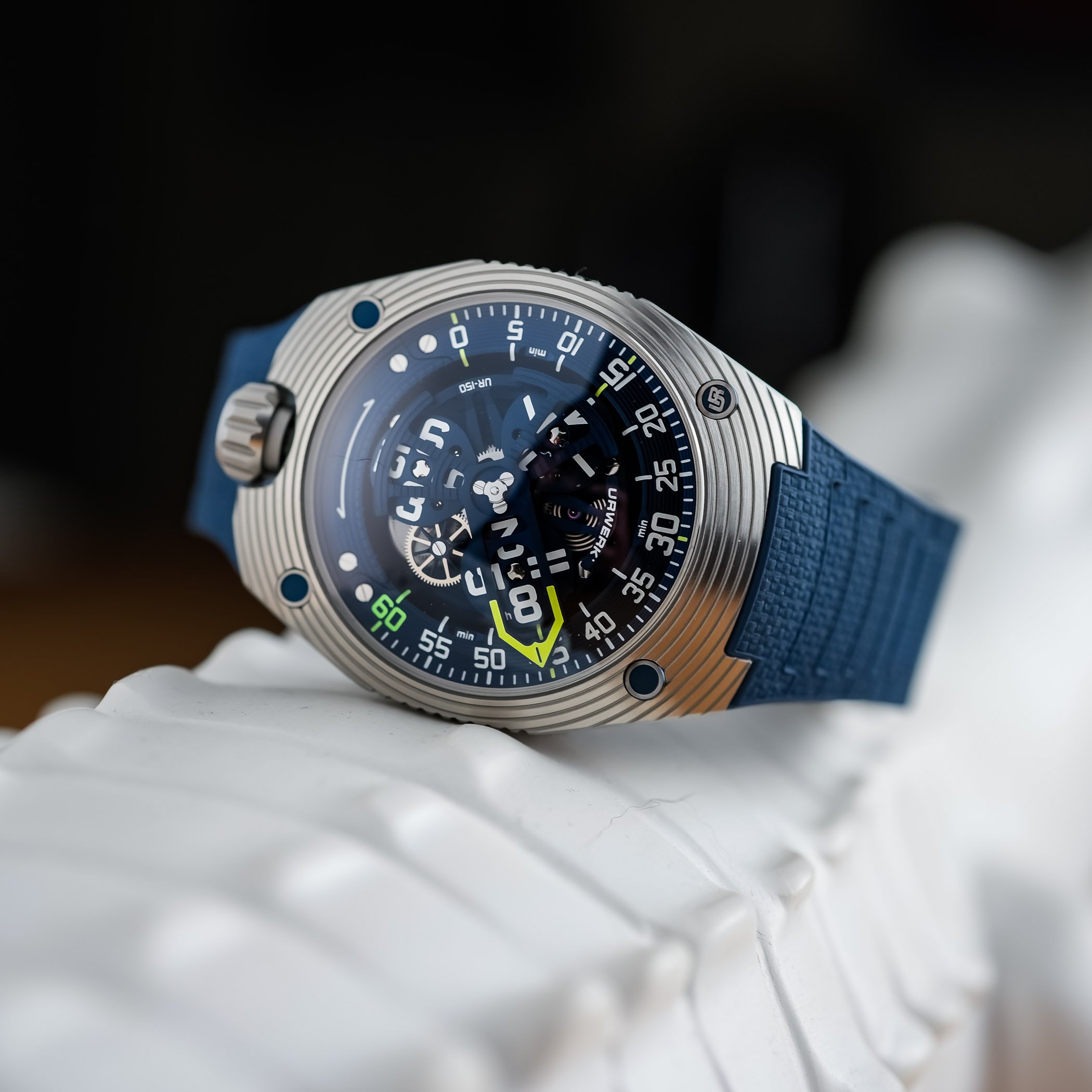
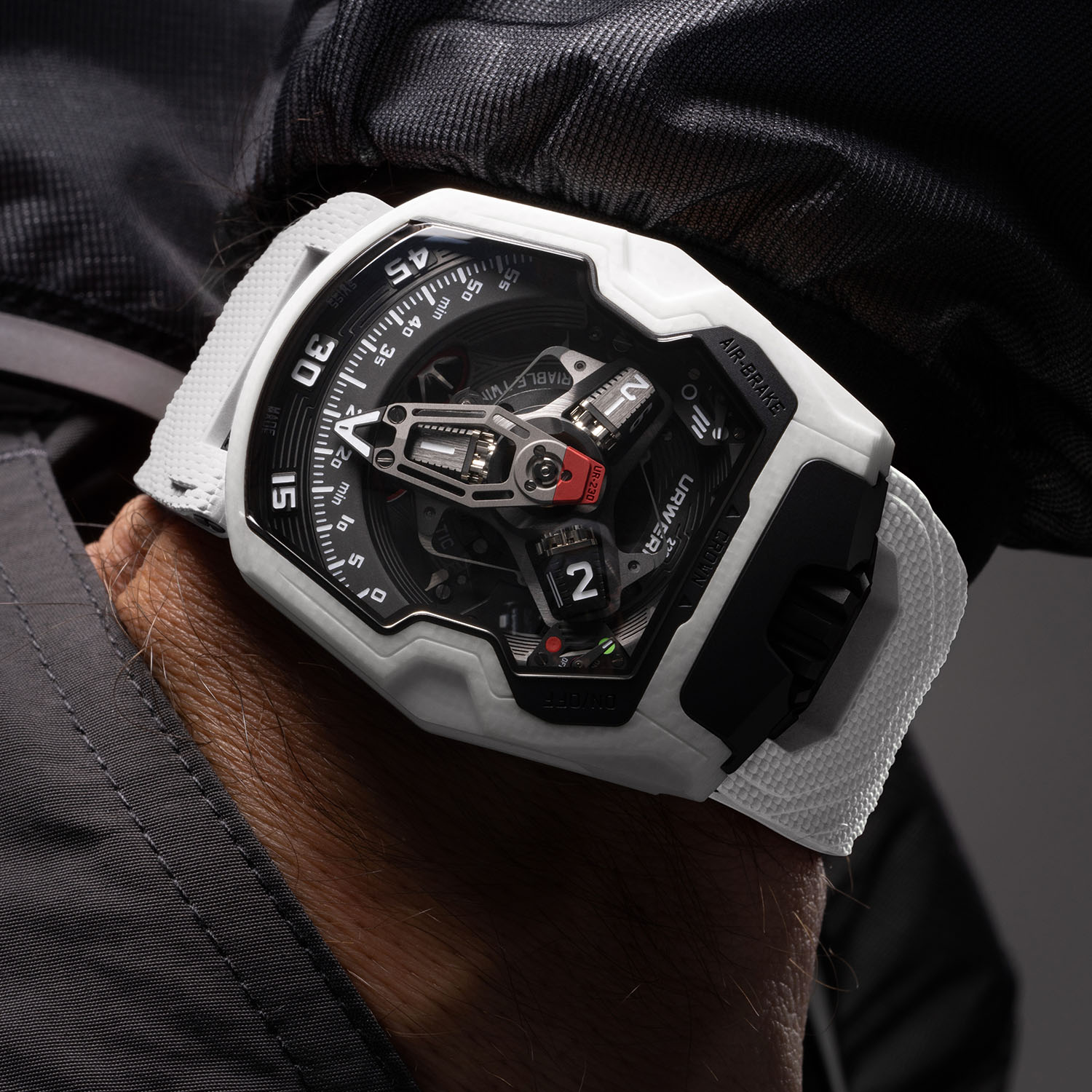
As mentioned, URWERK is most associated with wandering hours with incredible, exotic pieces like the UR-100V Magic T. This clearly isn’t your ordinary watchmaker, and some of the wandering hours models push the boundaries of the concept. For example, the UR-150 Blue Scorpion has a minute track that’s a full 240 degrees and each active disc rides under an openworked blue aluminium “hand” with a neon yellow tip. Once the hand reaches 60 on the track, it snaps back to zero like a retrograde minute hand, and the carousel of discs rotates 270 degrees to bring the next proper disc under the hand. It’s the same wandering hours concept, but with a complex, futuristic execution. Some models use rotating “cubes” instead of discs, like the UR-230 Eagle. In this particular model, half of the display is covered by the case, showing only the relevant time-telling elements at the bottom (hour numeral via a cube under an openworked hand at the bottom of the minute track). The UR-230 Polaris has the same design as “wandering cubes” but with a completely open display.
Affordability
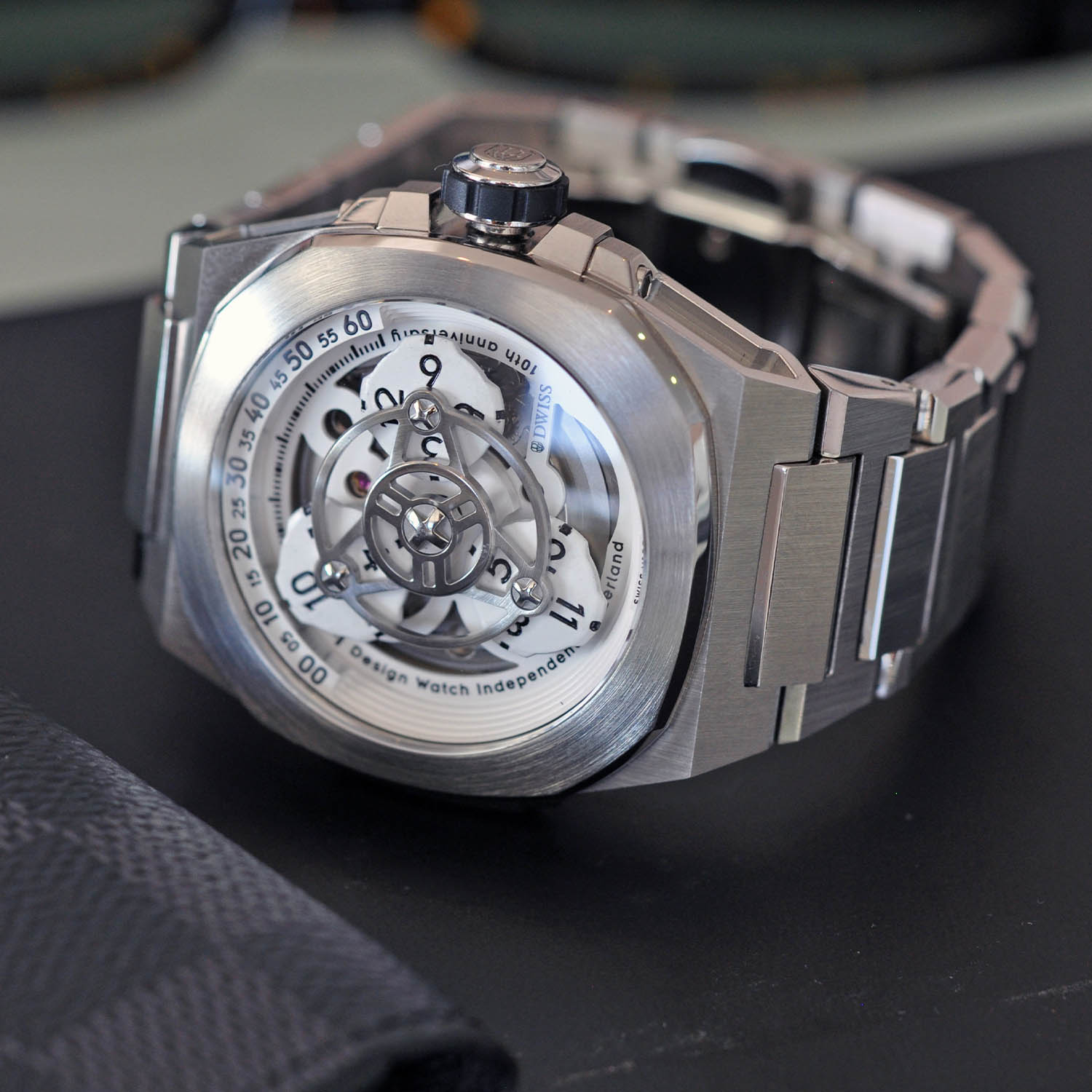
There are now many affordable wandering hour watches as the design has been adopted by mainstream players, again thanks to modules that can couple with workhorse movements from ETA, Sellita, Miyota and so on. A recent brand to offer this is Gorilla Watches, founded in 2016 by Octavio Garcia, a former Design Director at Audemars Piguet. Fortunately, these watches aren’t out of reach for many, as with his previous brand, but the designs are still very compelling. Watches like the Outlaw 42mm Limited Edition have the classic Star Wheel layout with three discs, a minute track at the top and a central seconds hand. Prices for current models are USD 3,250, which is very attainable for this exotic display from the creative mind of Garcia. DWISS is a Swiss brand that also specialises in unconventional displays. Its M3W Wandering Hour 10th Anniversary Limited Edition was even more attainable at USD 1,990, but also limited and unfortunately sold out. Microbrand Xeric, founded in 2013 by brothers Mitch & Andrew Greenblatt in the US, offers some of the most affordable wandering hour designs powered by Miyota automatics. Special sales can push certain models below USD 700, which is an astounding value. They’re not quite as refined as the above watches, with some manufacturing occurring in China, but they still offer the full-blown wandering hours experience in a nice overall package.
Optical Illusions with Humism
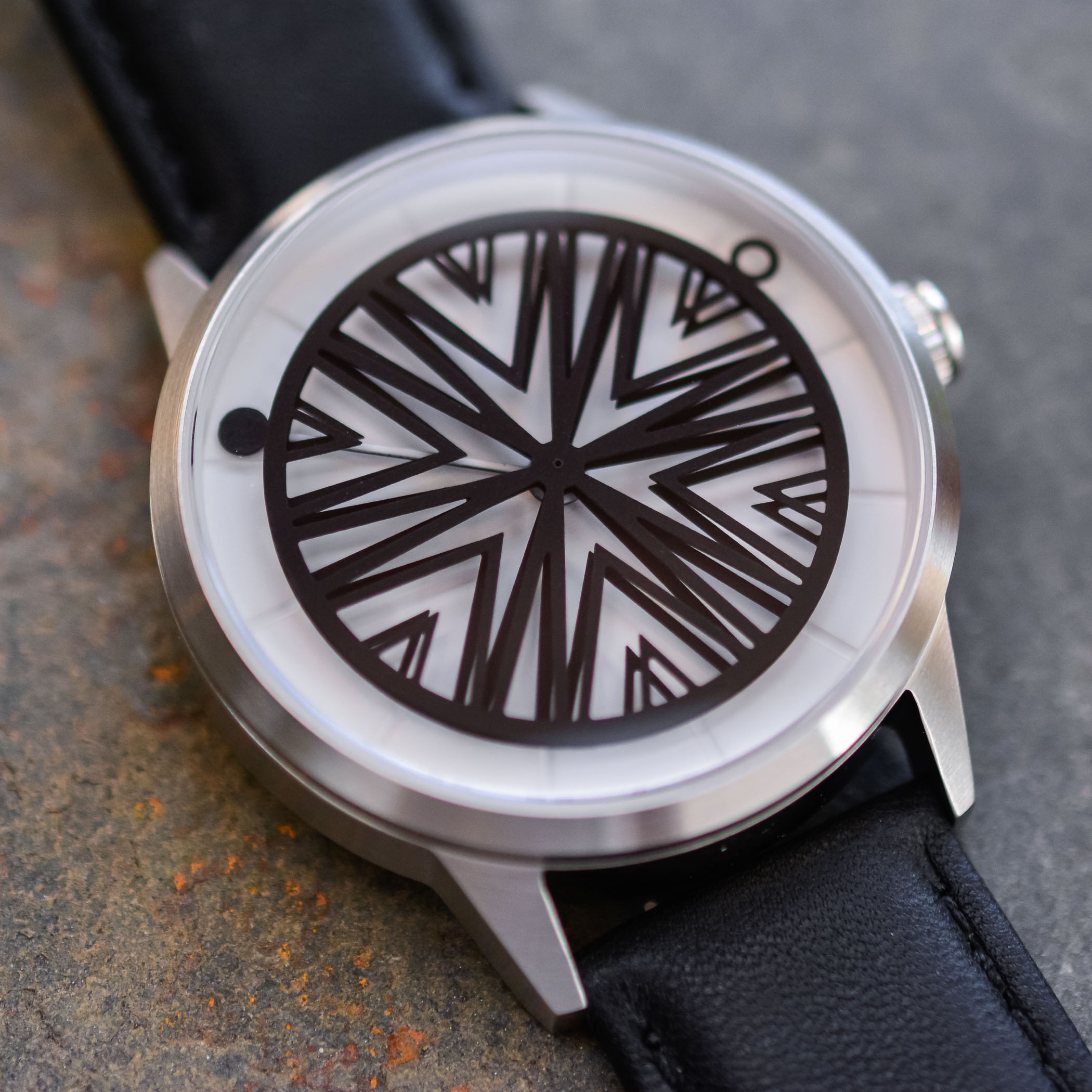
Some dials focus on form over function, with actual time telling moved to the back burner. That’s not always a bad thing, and a great example comes from Humism, a design studio in Singapore that combines kinetic art with wristwatches. We went hands-on with the Rhizome Automatic a few years ago and were duly impressed with the optical illusion created by two patterned metal discs rotating over each other with a white base dial underneath. The discs actually replace two central hands, so the “seconds disc” is the fast one moving over the fairly static minute disc, but the two patterns constantly overlapping create a very cool kaleidoscope effect. The minute indicator is a hollow circle at the end of the minute disc, while the hour indicator is a solid circle that extends from the centre to the outside of the minute disc for a seamless look (the extending hour arm is hidden by the discs). There are no tracks or dial print, so you just have to look at the position of the two circles for hours and minutes. It’s easier than it sounds and not hard to get used to. There are currently five kinetic art styles available in multiple sizes, with the most expensive models selling for only USD 428, but most are USD 368. A very affordable way to get impressive eye candy on the wrist.
Mr Jones Art and Animation
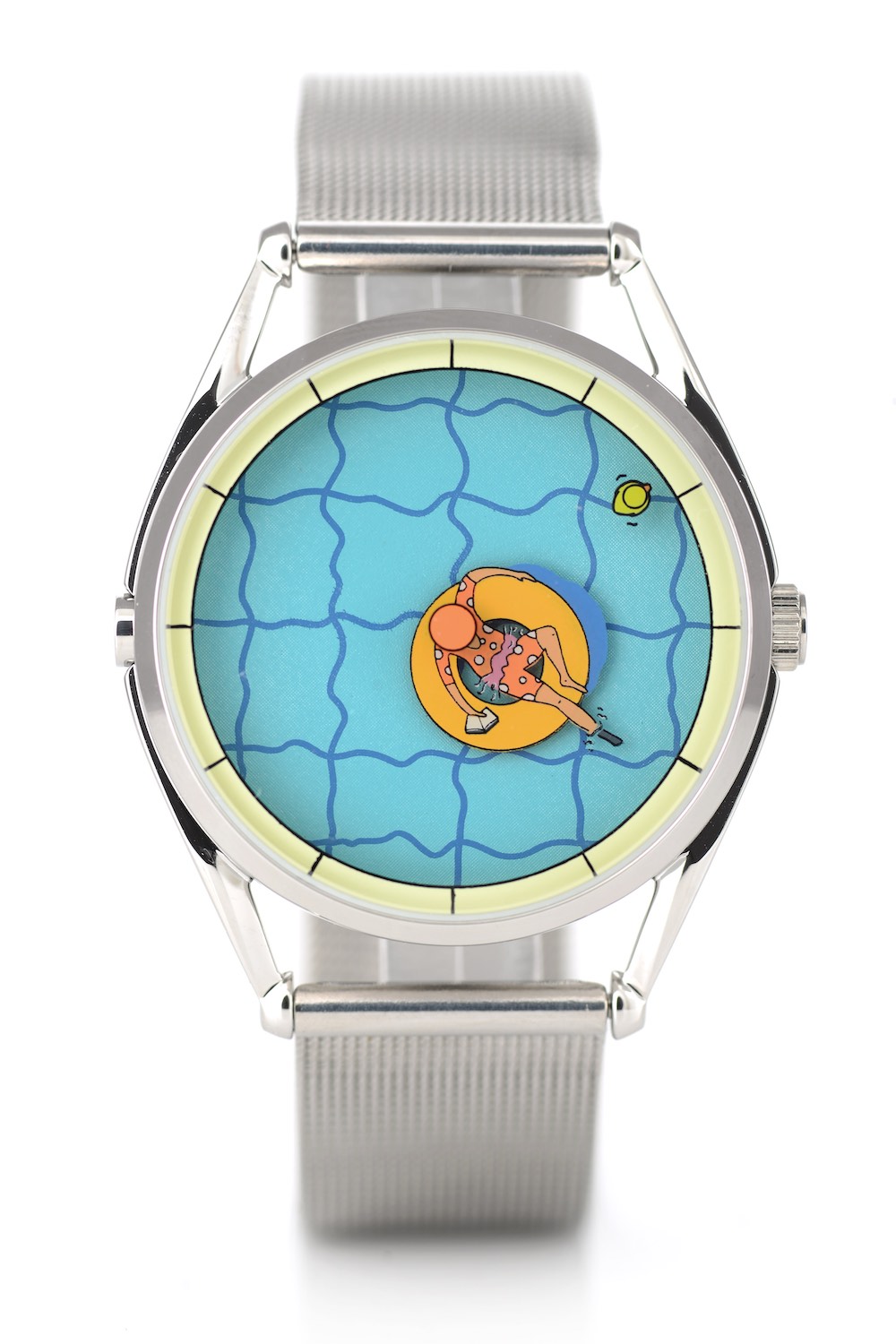
We looked at some intriguing jumping hours from Mr Jones above, but the brand really specialises in artistic animations, again from outside artists that bring creativity and whimsy to the dials. You won’t find conventional hands or obvious markers for hours and minutes as elements of the scenes are cleverly used for that, but much of the fun is just enjoying the art and expression of the watches. For example, “A perfectly useless afternoon” shows someone relaxing on a tube in their pool with one foot in the water and a small plastic duck floating near the edge. The foot in the water shows the hours, while the duck shows the minutes, and everything rotates around the dial as time passes. Designed by artist Kristof Devos, it’s relaxing, animated and just plain cool. “Beam me up!” was designed by French Author-Illustrator Xavier Broche and shows a night scene on a farm with a flying saucer shooting a beam at a pig (with a cow and other elements in the scene). The beam marks the minutes, while the pig marks the hours, and both rotate around the dial until the beam lines up with the pig every hour (for an extraterrestrial abduction). Again, it’s fun, artistic and does indeed tell the time when you understand the scene. Many more Mr Jones watches follow this formula, like the “Monster Melter 3000” and “The Silent Thief” with creativity first and time telling second, and all models are accessibly priced.
Over the Top with MB&F
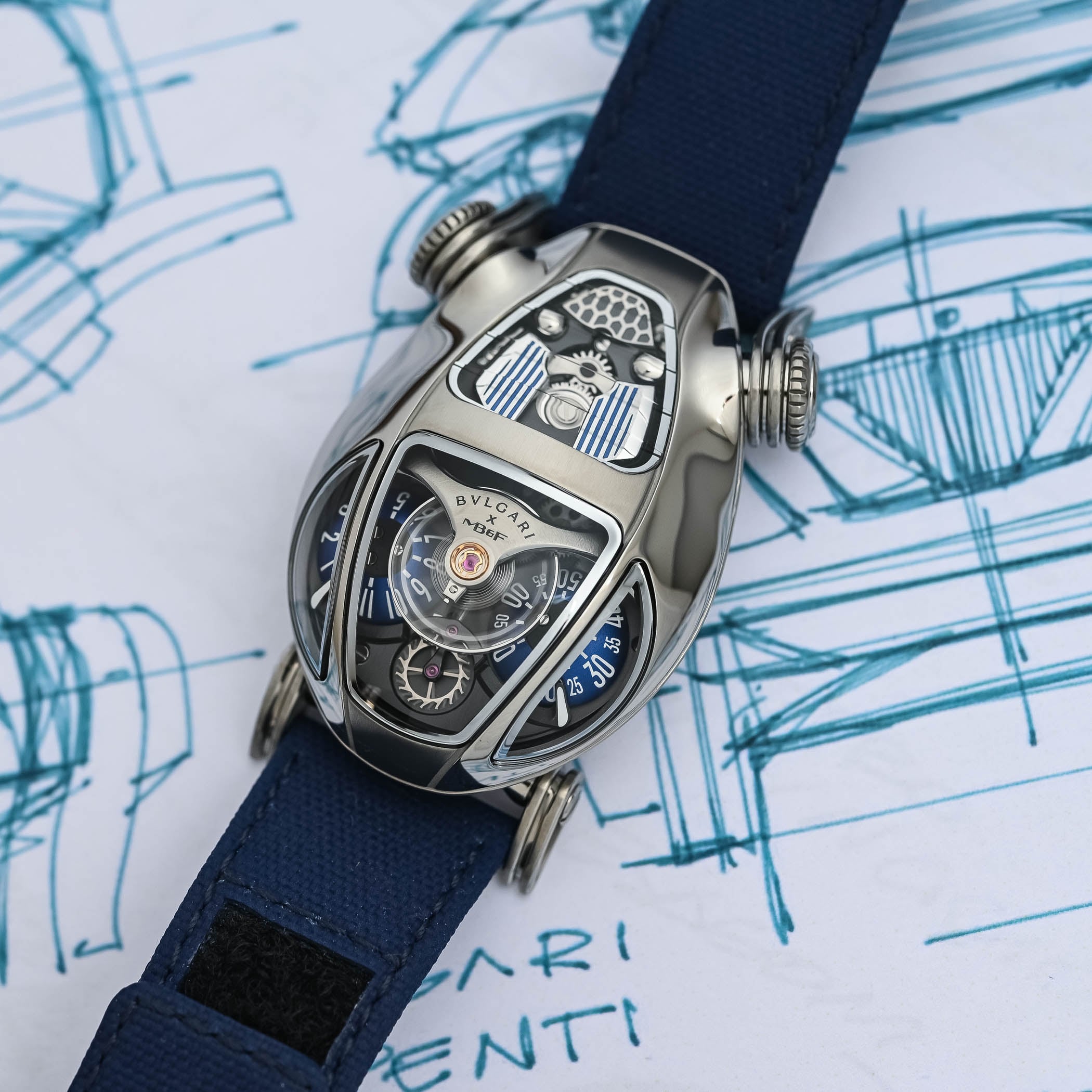
If you’re looking for radical and futuristic designs in the same vein as URWERK, MB&F has you covered. Founded by Maximilian Büsser in 2005 in Geneva, Switzerland (MB&F stands for Maximilian Büsser & Friends), the watchmaker specialises in artistic time-telling sculptures, often referred to as Horological Machines (or Legacy Machines). Many pieces are Sci-Fi inspired and reject the traditional and familiar, and actual time telling can take a few looks to understand. The “Friends” part of the MB&F name refers to collaborations, and they never disappoint. For example, the Bulgari x MB&F Serpenti is a collaboration between Bulgari’s director of watchmaking, Fabrizio Buonamassa Stigliani and Büsser himself, with a futuristic focus on Bulgari’s iconic Serpenti collection. It resembles something worn in the Men in Black movies more than a traditional Serpenti, but the result is wild and a horological masterpiece nonetheless. That said, from the side, you can clearly see the “snake head”, and the lug design also mimics fangs. This isn’t their first collaboration, as the two created the Legacy Machine FlyingT Allegra back in 2021, a high jewellery evolution of MB&F’s first women’s watch, the Legacy Machine FlyingT.
The Bulgari x MB&F Serpenti appears to have a dual-disc wandering hours display at first glance, but it’s actually more straightforward: an hour-and-minute disc. The rear lugs double as dual crowns – the 11 o’clock crown winds the watch, while the 1 o’clock crown sets the time – and they also look like wheels on an exotic car (more on that below). The front of the watch features three sapphire crystals working together like a Robinson 22 helicopter canopy. The left side (or eye) has the hour wheel; the centre shows the large 14mm balance wheel suspended from a bridge, both MB&F and Bulgari engraved; and the right eye has the minute wheel.
The top back of the watch has a large sapphire crystal (with four steps) displaying what appears to be the engine of a Ferrari V12 (valve covers and all), as the pair of designers are also huge car enthusiasts (the rear crowns again resemble wheels). Production was limited to 99 pieces (all were quickly spoken for) and is horological art first, timepiece second. Some car enthusiasts drive their Ferraris daily (as they should), but most reserve them for weekends and/or special occasions. This watch definitely meets that ethos. You certainly can wear it daily, despite its size and somewhat awkward proportions, but I assume most buyers will treat it more as a piece for special occasions.
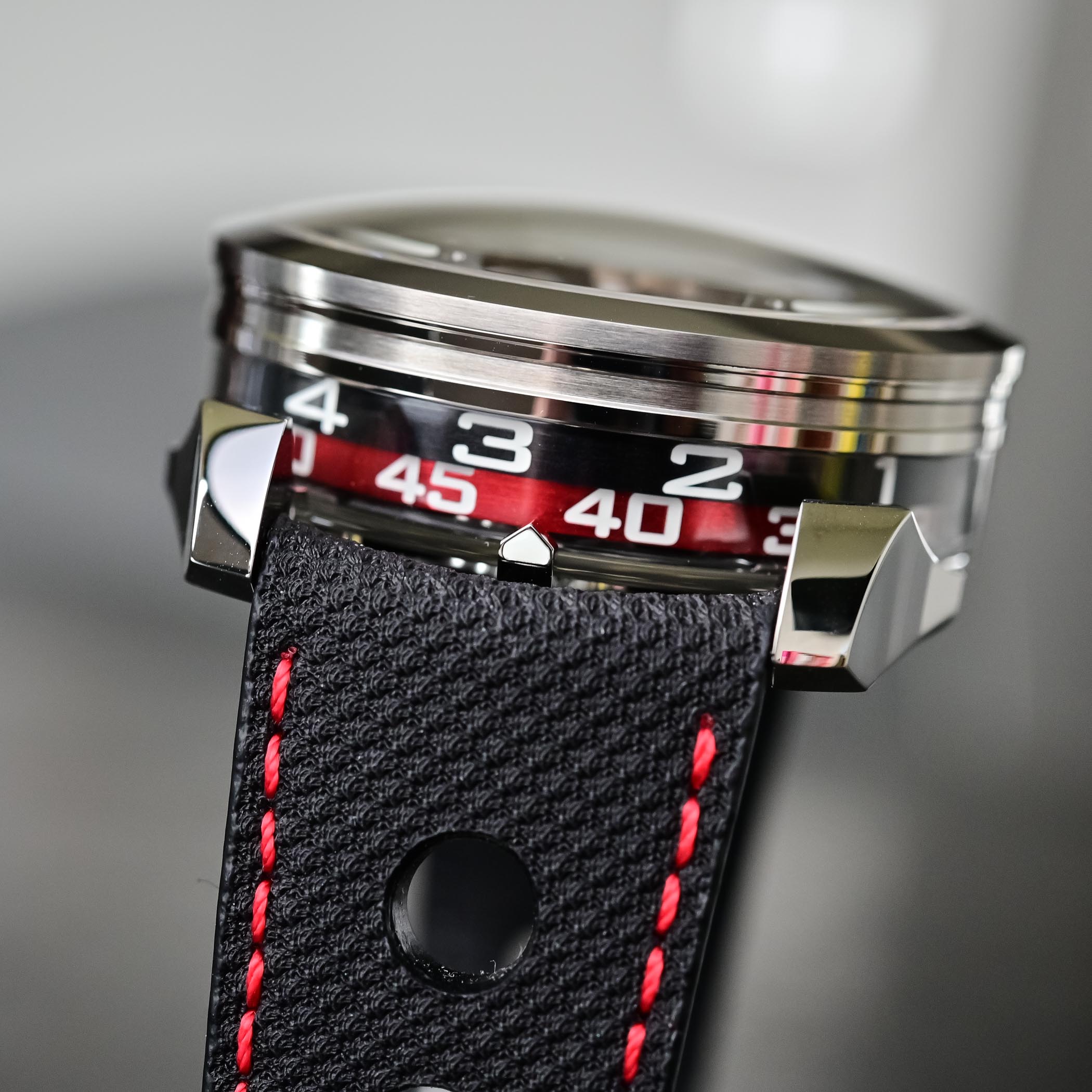
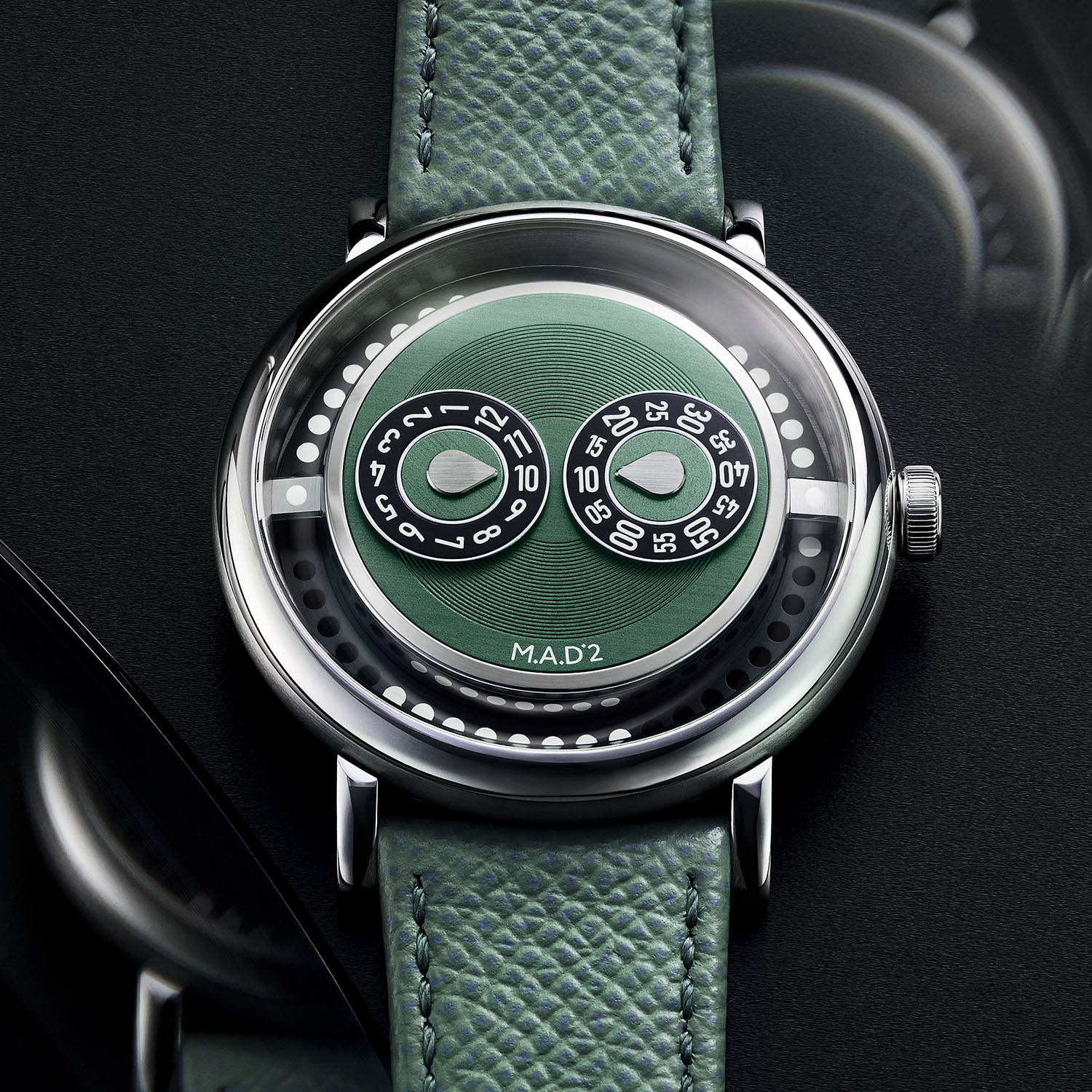
There are quite a few MB&F pieces that could be included on this list, but I’ll finish with the watchmaker’s most affordable offering, which surprisingly uses a Miyota base movement. Unfortunately, the model in any variant is never readily available and requires an invite or raffle/lottery system to purchase. What watch am I talking about? The M.A.D.1 series. There’s also a M.A.D.2 with a completely different design, so we’ll stick with the former. The M.A.D.1 doesn’t have the finishing or quite the radical design of the MB&F portfolio, but still offers an eccentric, certainly unconventional wearing experience at a price under CHF 3,000. For context, the Bulgari x MB&F Serpenti started at EUR 140,000. The star of the show is the triple-bladed automatic rotor with Super-LumiNova stripes at the top under a sapphire crystal that basically doubles as a fidget spinner on your wrist. It looks like a miniature weapon from the 1983 movie Krull and is a result of the Miyota 812A automatic being mounted upside-down. Time telling is wrapped around the case in two rows – hours at the top, minutes at the bottom via twin rotating cylinders. It’s an astounding value proposition for such a unique piece from a brand like MB&F, and it allows a much wider audience access to what’s generally untouchable (again, with somewhat tricky availability).
Trilobe’s Rings of Time with Une Folle Journée
This one certainly has an MB&F vibe, but follows Trilobe’s established design language from the original Les Matinaux and is a wholly unique creation. It’s a surprisingly young brand, given the exotic and sophisticated nature, founded in 2018 by Gautier Massonneau in Paris. It took only four years for one of its watches, Nuit Fantastique Dune, to win the Petite Aiguille prize at the 2022 Grand Prix d’Horlogerie de Genève (GPHG) – a real testament to the brand’s design prowess. The most intriguing watch (subjectively) is Une Folle Journée, with a three-dimensional series of rings that replace conventional hands (or conventional anything, for that matter). It’s a big step from the two-dimensional Les Matinaux concept of concentric discs and seems to defy gravity under the high-domed crystal. Une Folle Journée is “A Crazy Day” in French, and that’s an appropriate name for this wild piece.
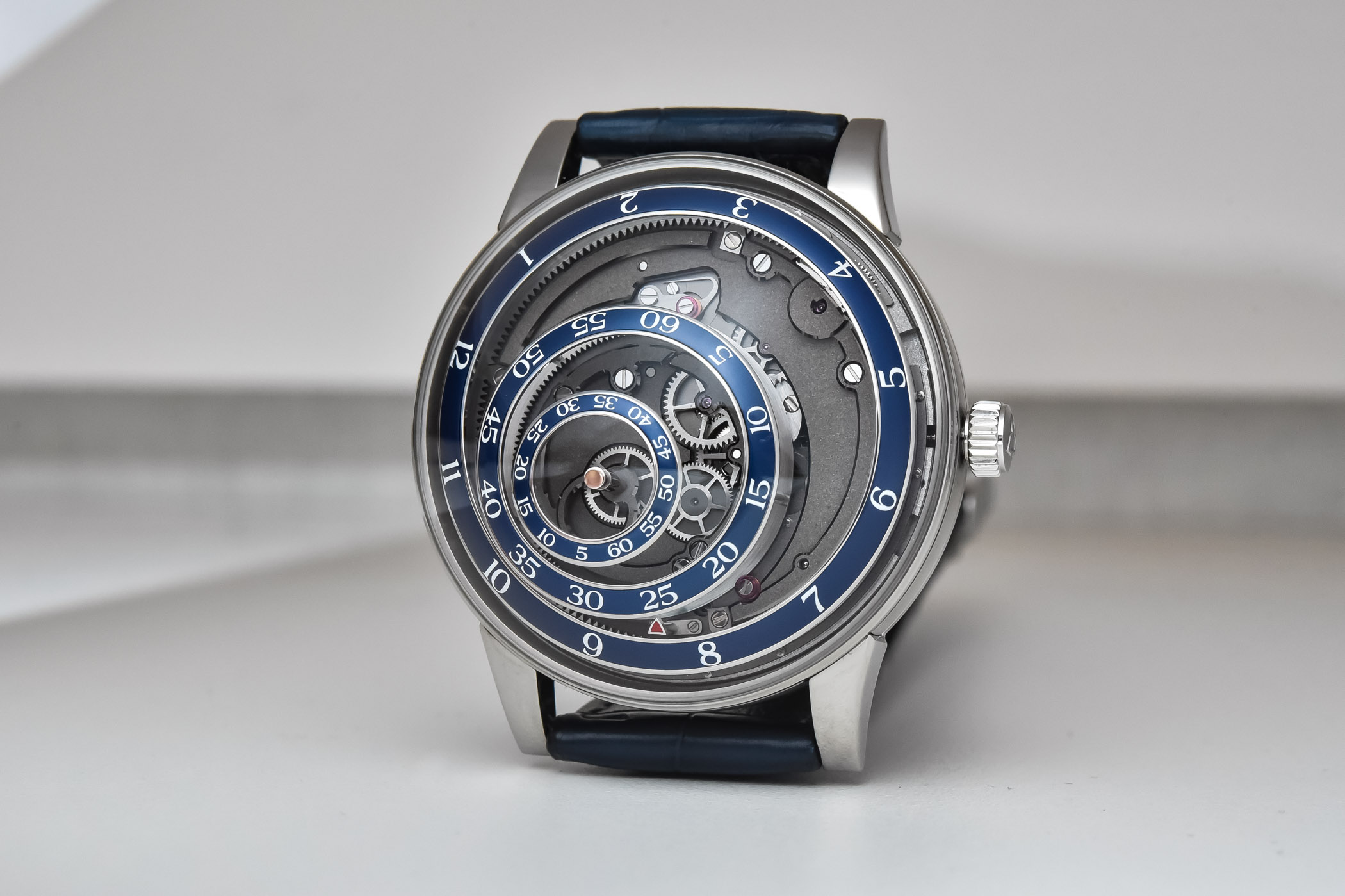
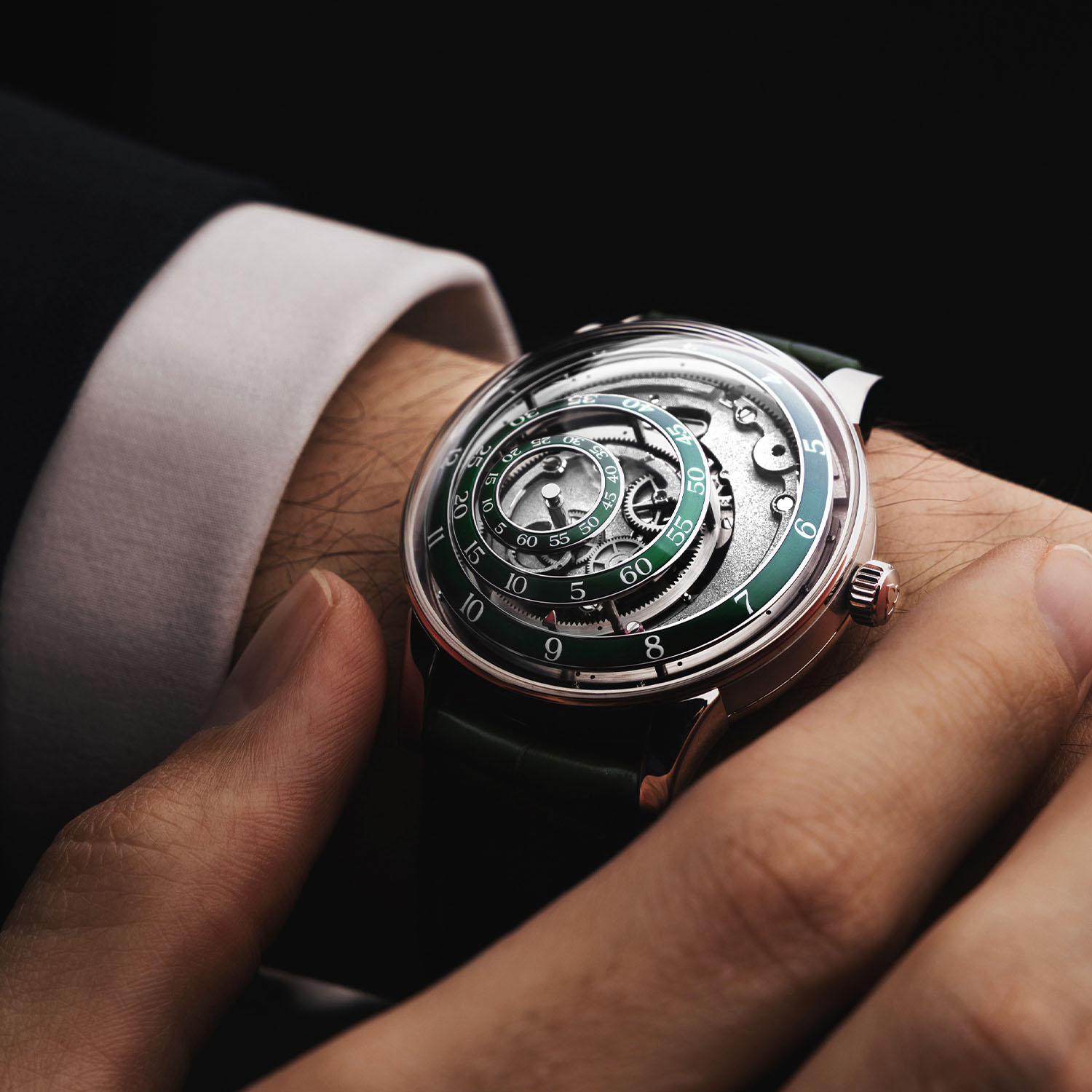
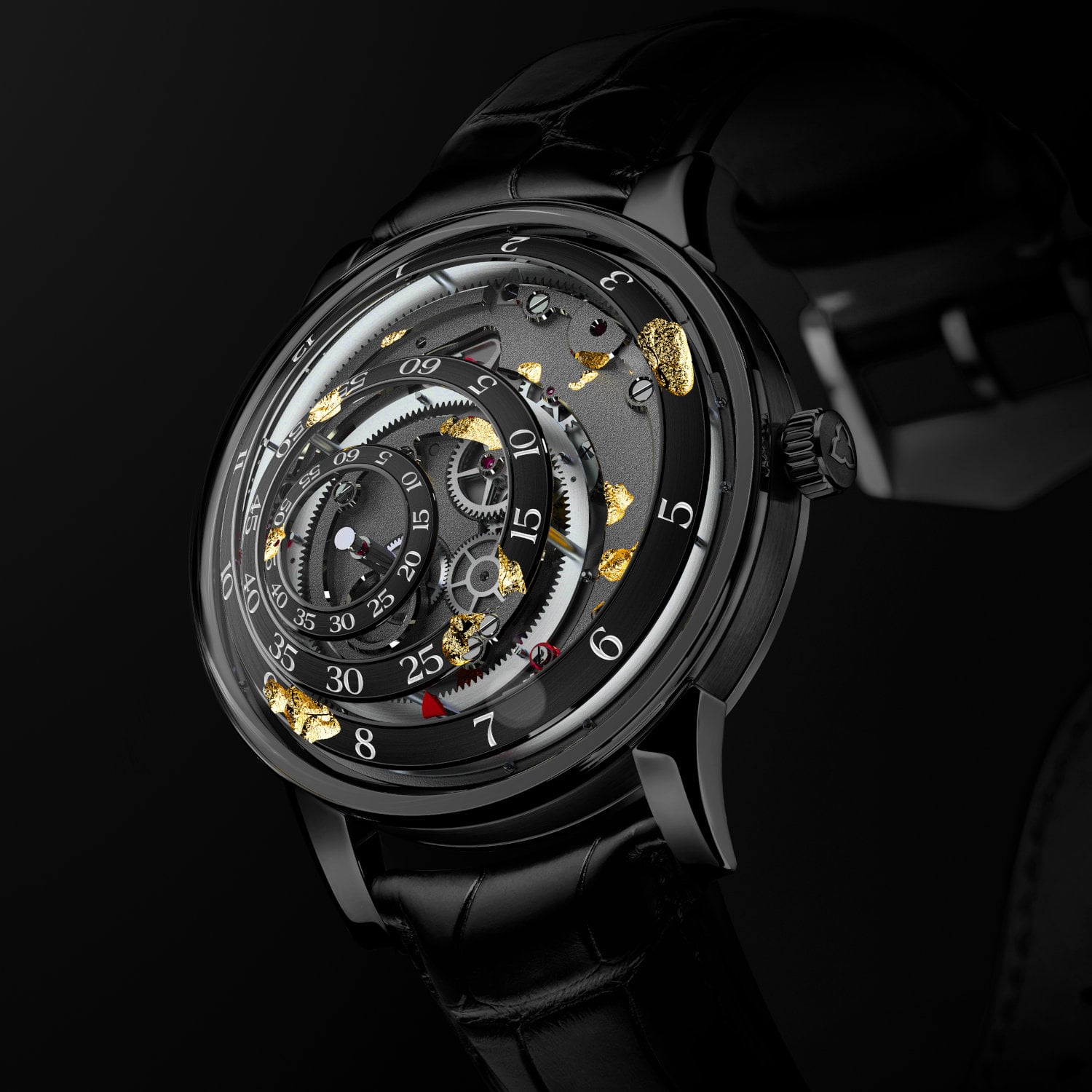
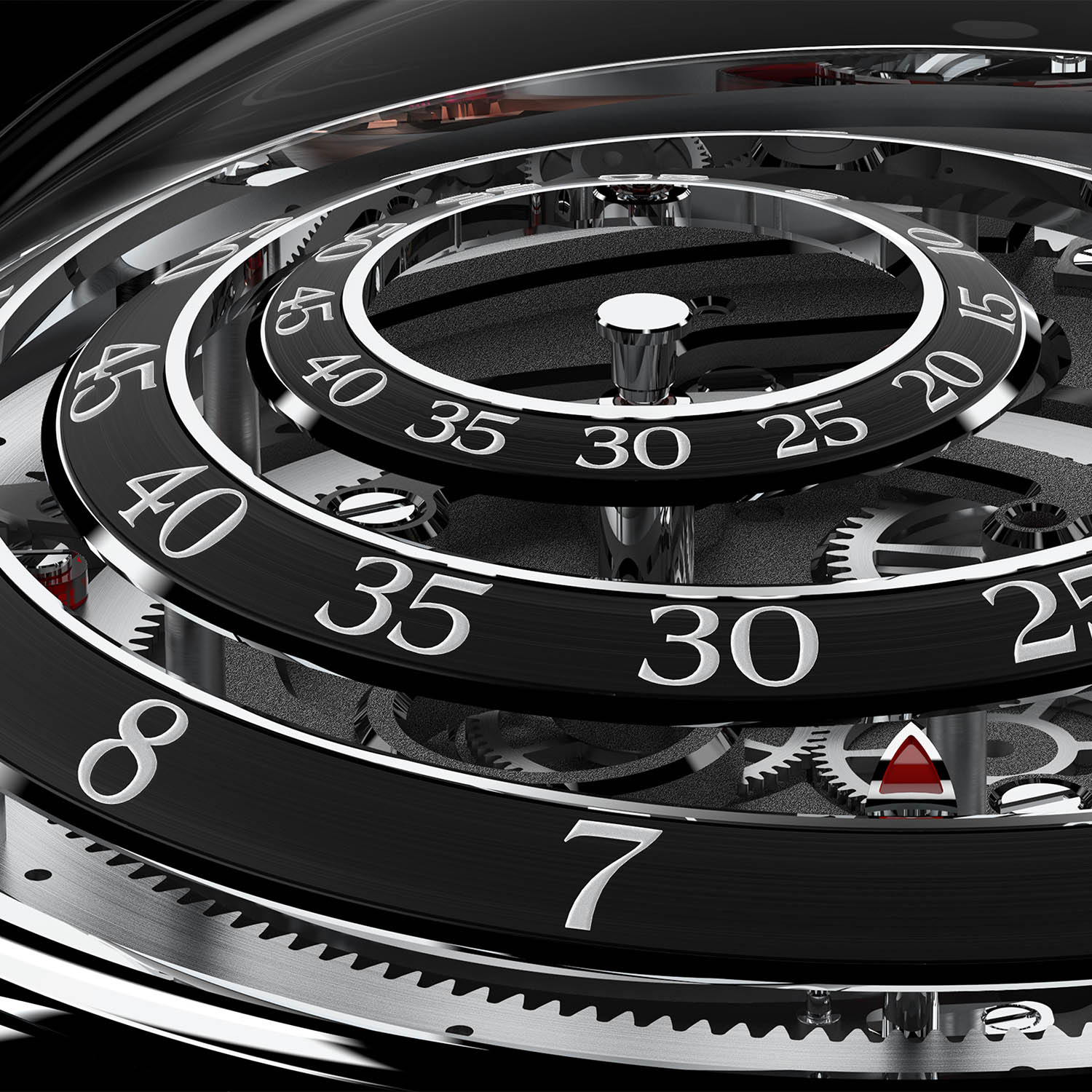
Columns protrude from the base dial, attached to the gear train underneath (with additional gears, wheels and rollers keeping everything perfectly in synch) to elevate the lightweight titanium rings within the 10.2mm sapphire dome (making the entire watch 17.8mm in height). You almost expect to see Zod, Ursa, and Non standing in the centre during their trial on Krypton, but this sculpture of time does, indeed, tell the time. A rotating hour ring remains at the outermost perimeter, while the raised minute ring floats inside, and the smallest seconds ring floats within the minutes. A fixed marker at 6 o’clock (between the hour and minute rings) indicates the time as the rings always line up with the correct numerals, allowing for a surprisingly easy read for such a complex setup. The minute and seconds rings rotate on their respective axis and don’t roam around the dial during the day, as it might initially seem – the action remains a fixed extension from 8 o’clock. As far as seconds, there isn’t a clear way to mark those, so just choose a fixed point on the watch, and that’s your marker. Powering all of this is the same Calibre X-Centric micro-rotor from the original Les Matinaux (in a design partnership with Jean-François Mojon and Le Cercle des Horlogers), reinforcing its design roots. It’s an amazing creation and alternative way of relaying time, and comes with black, blue or green rings, or rings with 150 baguette-cut diamonds within a platinum or 18k gold case. Also, an all-black model was made for Only Watch 2023, the Trilobe Une Folle Journée Réconciliation, which celebrated the Japanese Art of Kintsugi (the use of a lacquer mixed with powdered gold to repair broken pottery). Gold leaf was added to the otherwise blacked-out dial to represent Kintsugi and create striking visual contrasts.
The Out of This World SpaceOne WorldTimer
Back to affordability, this radical creation from SpaceOne proves that extreme creativity and complexity can still be affordable. It brings a world timer complication to the table for global travellers with disc-based hours and minutes, all within a Sci-Fi-inspired case from the mind of French designer Olivier Gamiette (who also designed the brand’s 2024 Tellurium). The earlier 2023 Argon (a name no longer in use, rebranded as SpaceOne) was a jumping hour piece that quite literally resembled a spaceship on your wrist, so SpaceOne is a very appropriate name for this independent French brand. Founded in 2023 by entrepreneur Guillaume Laidet and watchmaker Théo Auffret, the designs are Sci-Fi and space-themed, with a bit of inspiration from the kings of wild designs, URWERK and MB&F.
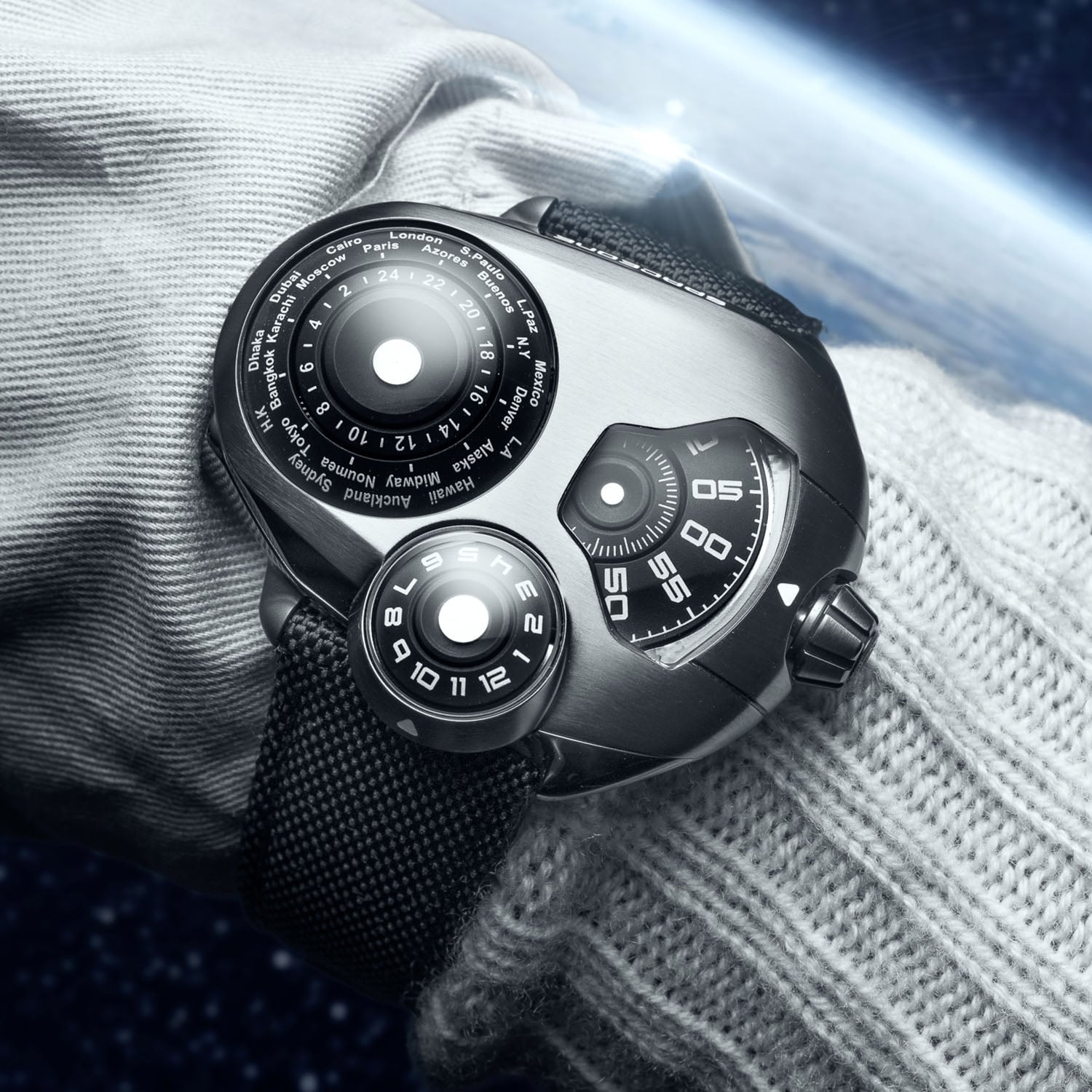
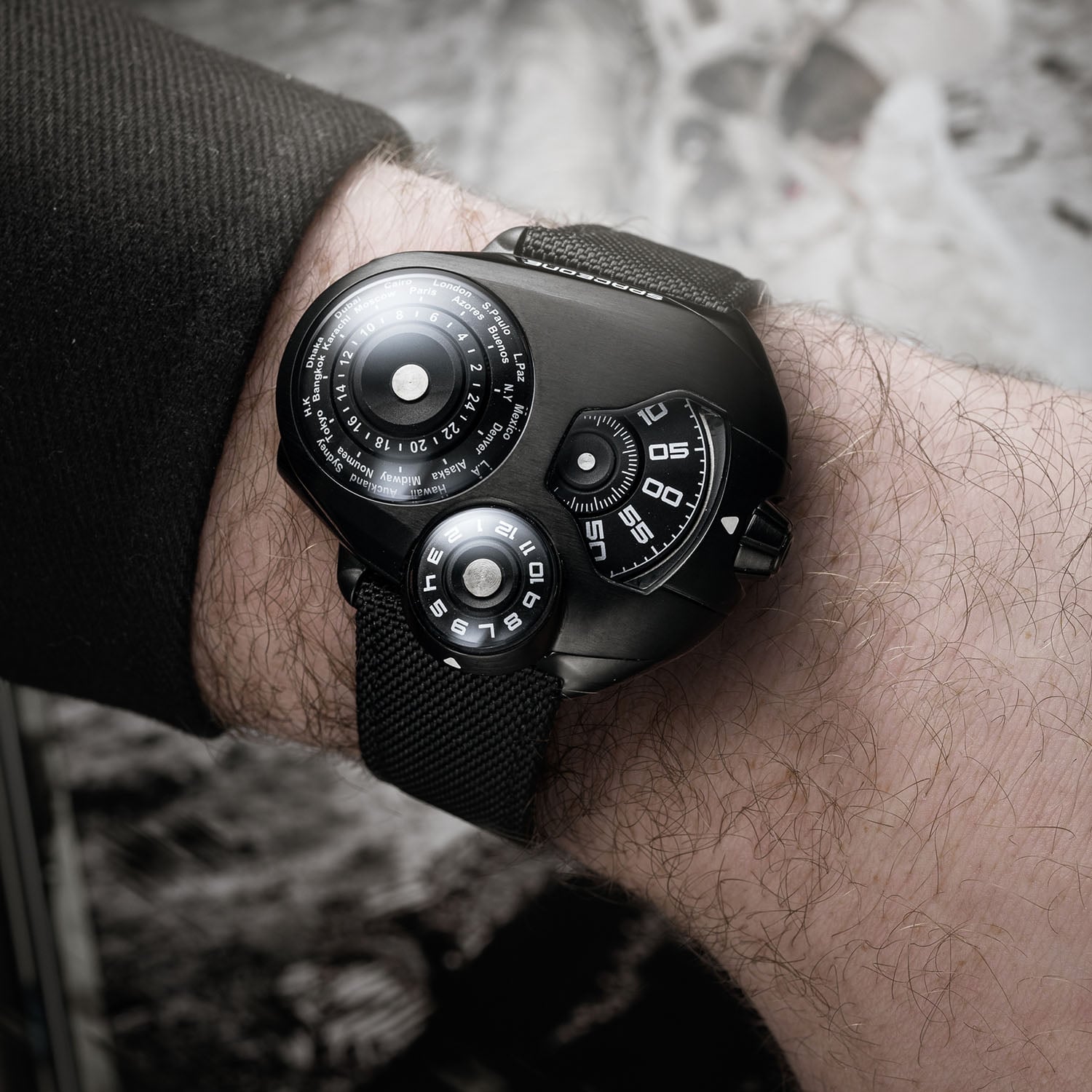
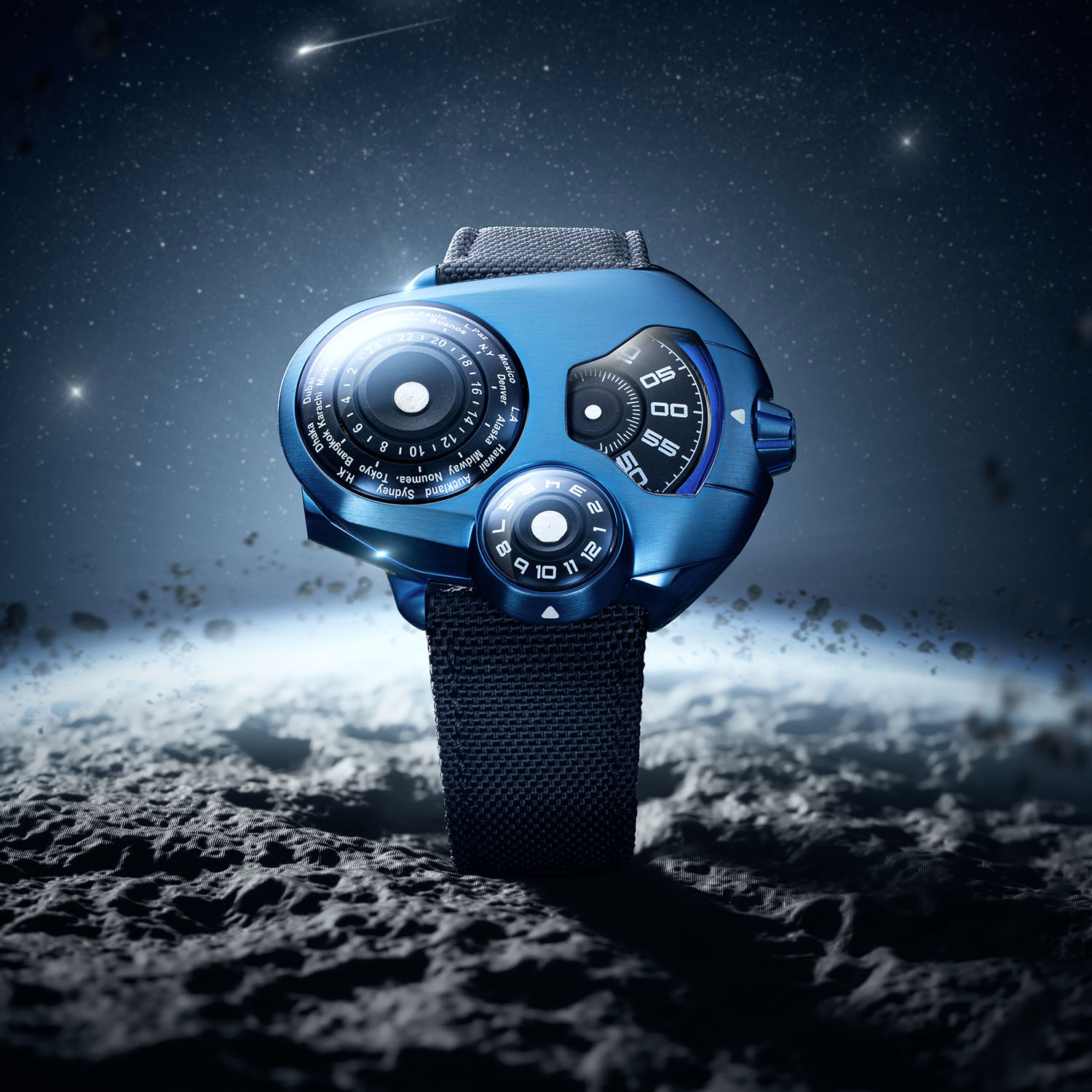
The WorldTimer case is made from Grade 5 titanium (with PVD-coated black or blue options) and certainly doesn’t have a conventional shape, but it’s well balanced with a large world timer display on the left, an almost equally sized minute disc on the right, with a smaller hour disc between the two at the bottom. A second disc sits within the minute disc, basically acting as a running indicator for the movement, as it doesn’t have numbers. The width of the case is 52.7mm with a height of 15.88mm, so it’s sizeable but still wearable with a vertical length of only 41.9mm (the part that goes across your wrist). The world timer window has coaxial discs with a 24-hour scale on the inside of the reference cities, allowing the wearer to easily track the world’s time zones. The crown at 3 o’clock, the only conventional element on the watch, is easy to use and intuitive, with three positions: wind the watch, set the time, and select the city. A Swiss Soprod P024 automatic runs the show, featuring a special in-house WorldTimer module designed by Théo Auffret himself (assembled in Paris). At only EUR 2,700, it’s quite a bargain for such a unique and complex piece.
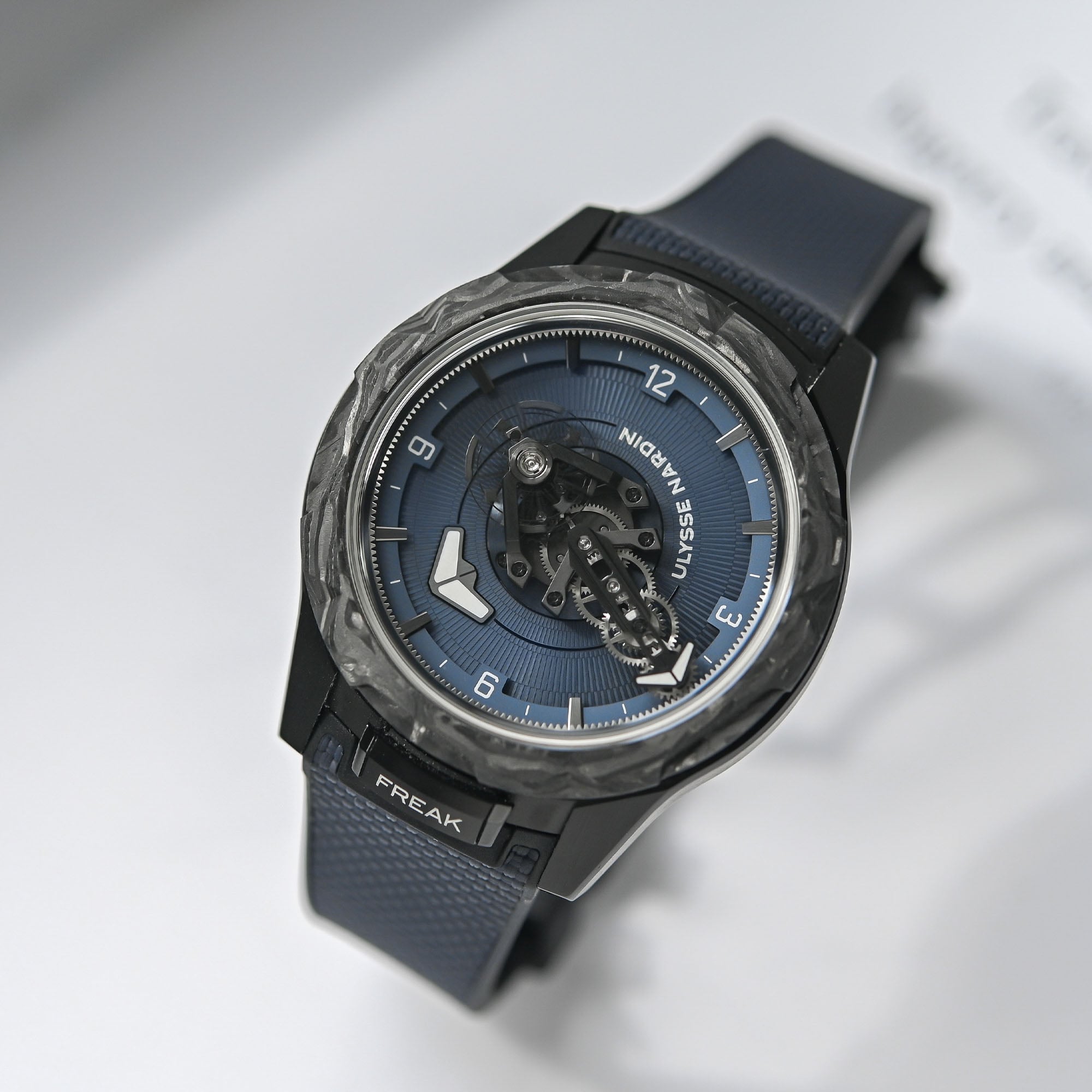
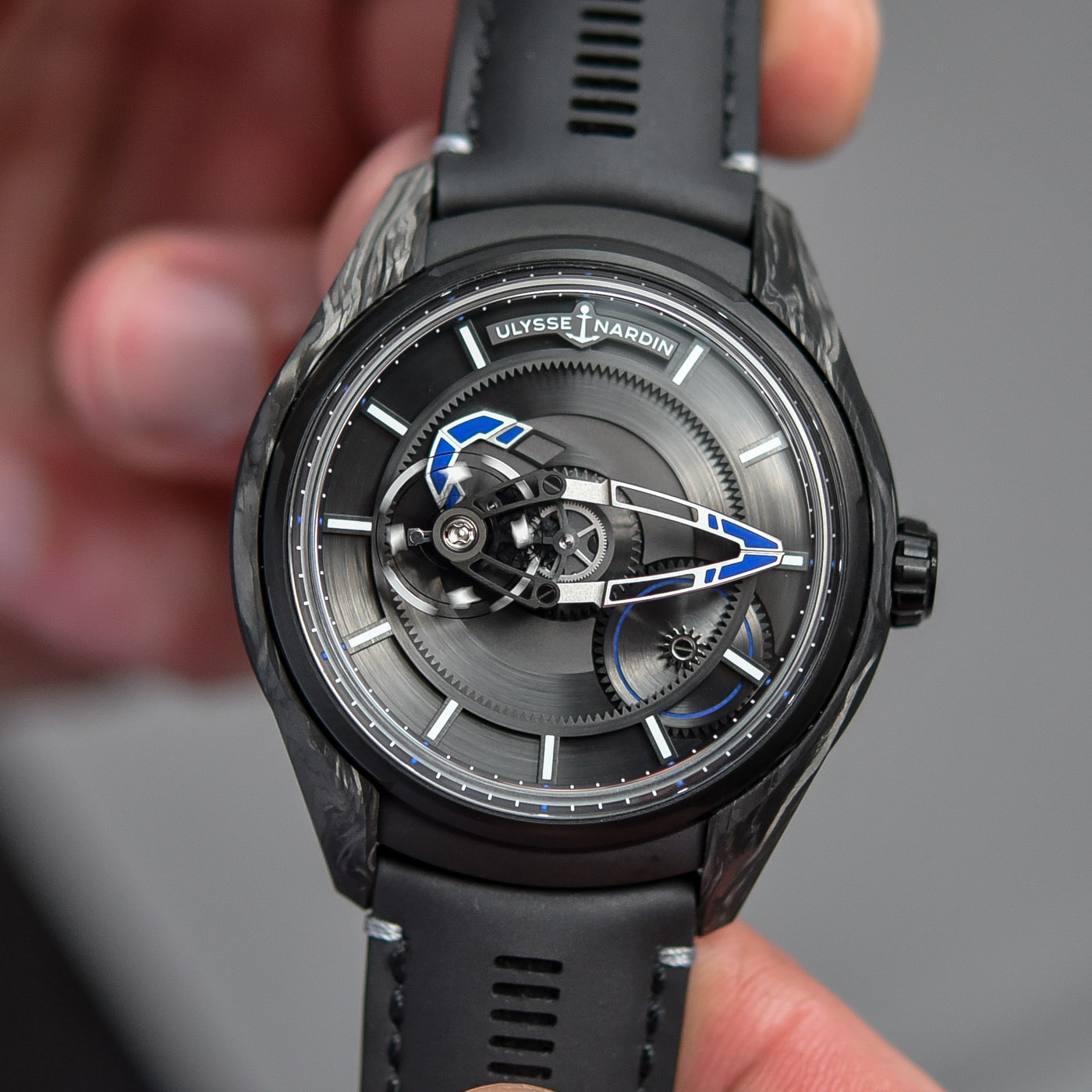
Ulysse Nardin Freak
Launched in 2001, the Ulysse Nardin Freak, in all its forms, still amazes with its rotating movement that doubles as the minute hand. It’s a giant flying carousel in design and was also the first watch to adopt silicon for movement parts in its calibre UN-200, incorporating it into the Dual Direct Escapement (using two silicon escape wheels). Although silicon escapements are somewhat common today with ETA and other watchmakers, the material was cutting-edge in watchmaking at the time. Founded by 23-year-old Ulysse Nardin (hence the name) in Le Locle, Switzerland, in 1846, the brand is historically known for marine chronometers and maintains a maritime theme, but it took a more innovative approach in 1983 when Rolf Schnyder and Ludwig Oechslin took over following hardships from the Quartz Crisis of the 1970s and 1980s. It’s now owned by Sowind Group SA (which also owns Girard-Perregaux) after being a subsidiary of the French luxury group Kering since 2014, but its headquarters has remained in the same building in Le Locle since 1865.
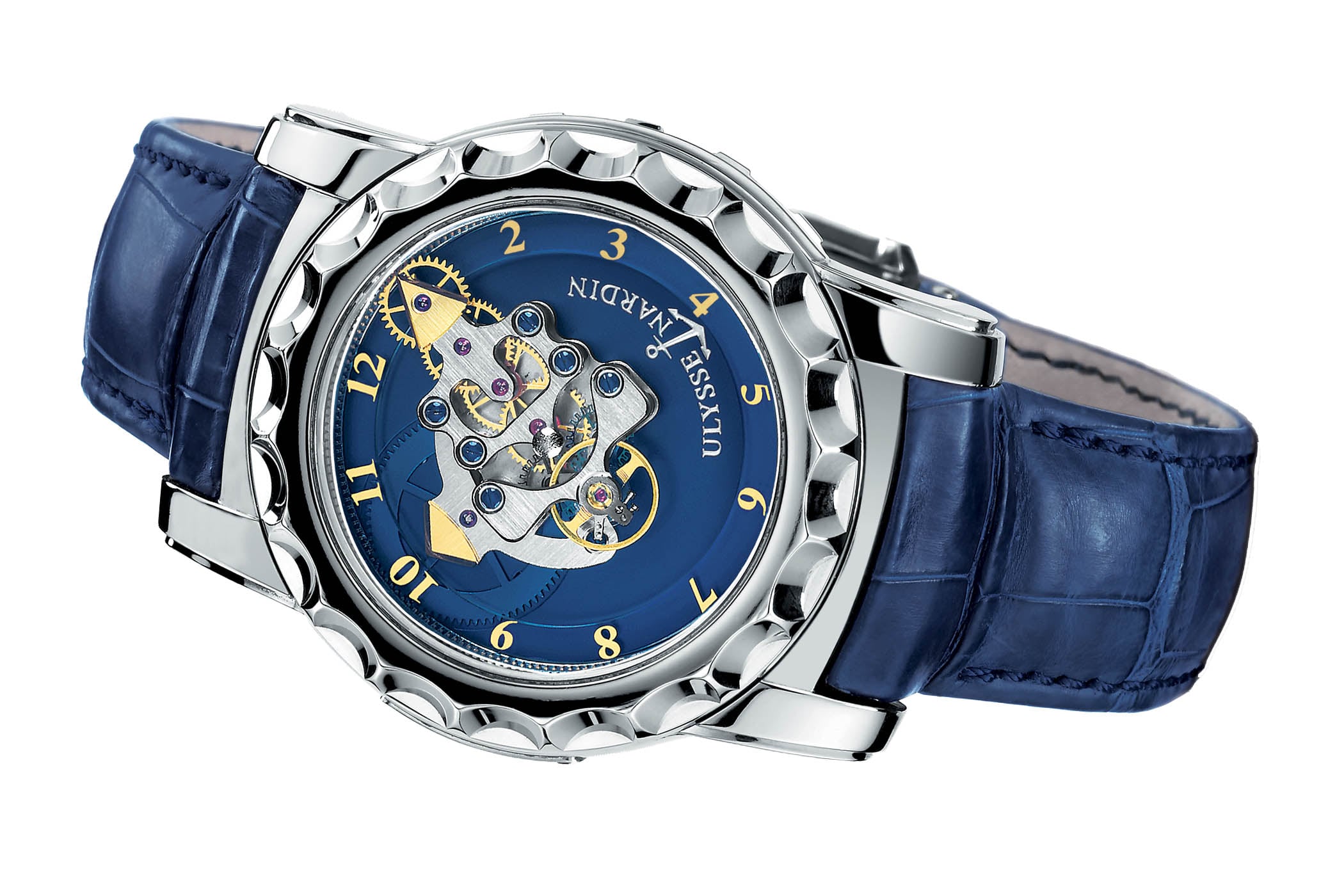
The original Freak from 2001 had no dial, hands or even a crown, and the entire movement again rotated every hour as it doubled as a minute hand. The oversized mainspring barrel rotated every 12 hours to indicate the hours. A rotating bezel was used to set the time, while the case back turned to wind the movement. A freak of a watch, indeed, as it was a crazy out-of-the-box design that established Ulysse Nardin as a forward-looking leader in the industry. The models were expensive, but the subsequent Freak X from 2019 was more accessible and introduced a conventional crown for both winding and time setting. The automatic movement (calibre UN-230) was a bit less complex than the traditional Freak, but it maintained the rotating carousel dynamic and functioned in the same way. It started at USD 21,000, which isn’t cheap by any stretch, but less than half of the Freak Out from a year earlier at USD 48,000 and models like the Freak ONE Navy Blue at EUR 67,500.
We’re Only Scratching the Surface
I could write books on this subject and still only scratch the surface on unconventional watch displays, so this is just a small sample of the wild designs out there that shun traditional watch hands. By the nature of the creativity and engineering involved in such out-of-the-box timepieces, most are pricey, but we’ve also shown quite a few examples of accessible, and even downright affordable, options that provide amazing wearing experiences. Some of the coolest displays are surprisingly old, like wandering hours created around 1656 and jumping hours around 1830, but modern incarnations are not only crazier and more reliable; they also offer an experience that’s otherworldly when combined with Sci-Fi themes and bizarre cases. The quartz digital age showed that traditional watch hands are technically unnecessary and sometimes even undesirable, starting with Hamilton’s Pulsar LED watch from the early 1970s and moving to the billions of LCD watches sold to date. When mechanical counterparts drop the hands, however, it’s a much more complex endeavour and provides an experience that’s truly unique.


2 responses
Do not forget Atowak. There are some nice examples, especially Manta-X. Nice wearing timepiece.
@LSL66 That’s also a cool, accessible brand.