


 Not all images were able to load for printing. Please close the print window and try again.
 The EPHJ 2026, Where the Future of Watchmaking Takes Shape Behind The Scenes
The other side of the watch industry, where brands meet suppliers and where innovation takes shape
Every June, Geneva becomes the meeting point for the world of high precision. Held annually at Palexpo (June 16 to 19, for the 2026 edition), the EPHJ trade show brings together more than 20,000 visitors and over 800 exhibitors from the watchmaking, jewellery, microtechnology and medical technology sectors, making it the largest high-precision industry exhibition in Switzerland and one of the most important gatherings of its kind worldwide. As such, the EPHJ 2026 is an excellent opportunity to take the pulse of the watch industry from a different perspective.
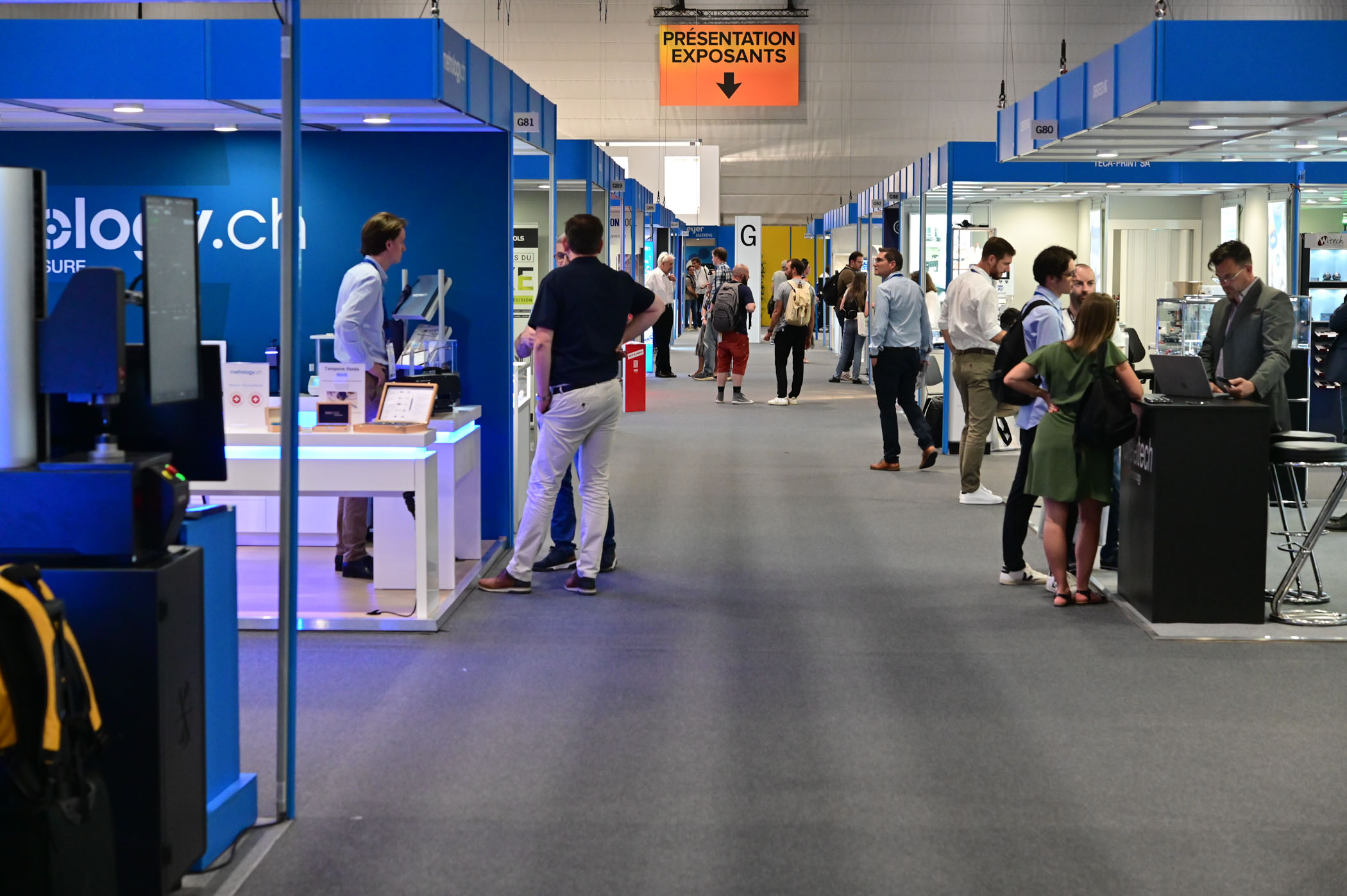
Most of the time, watch brands get all the credit for coming up with new products or concepts, while suppliers who work behind the scenes get none of the accolades. Without these behind-the-scenes players, many innovations would never find their way into the marketplace. To give credit where credit is due, here are some of the novelties and innovations that caught our attention when visiting the EPHJ fair. Among the highlights of this year’s exhibition are several movement manufacturers unveiling new calibres that will likely power watches reaching retailers in the months and years ahead.
Vaucher Manufacture Introduces the VMF 5500
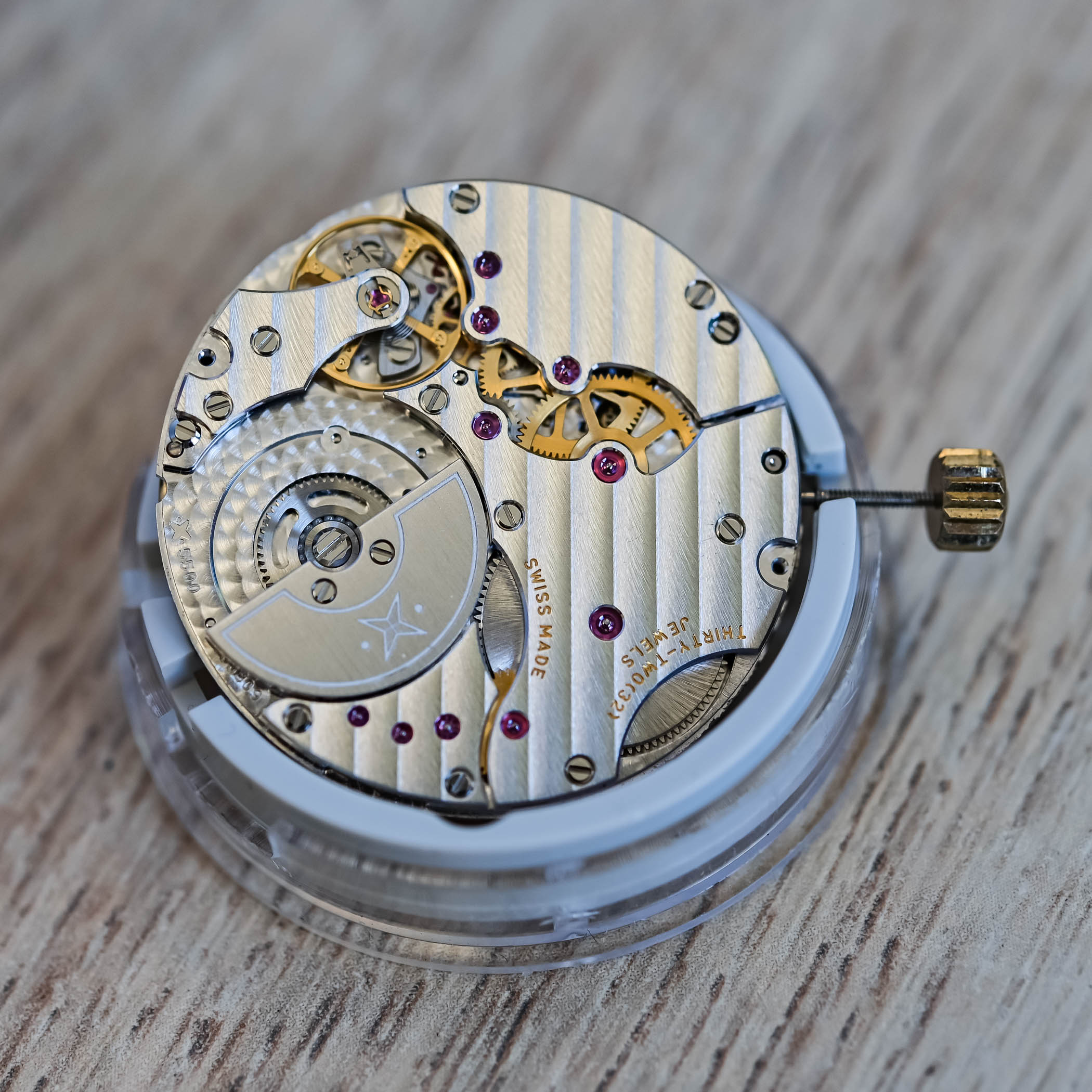
One of the most significant announcements comes from Vaucher Manufacture Fleurier, which presents the new VMF 5500 micro-rotor calibre. As previously covered on MONOCHROME, the movement succeeds the VMF 5400 while maintaining the same overall dimensions and ensuring compatibility with the well-known VMF 5401 architecture. While the external specifications remain familiar, the movement has undergone a substantial redesign aimed at improving both long-term durability and overall efficiency. The most notable improvement concerns power reserve, which has increased from 45 hours to an impressive 65 hours.
Dubois-Dépraz Celebrates 125 Years with a new micro-rotor movement
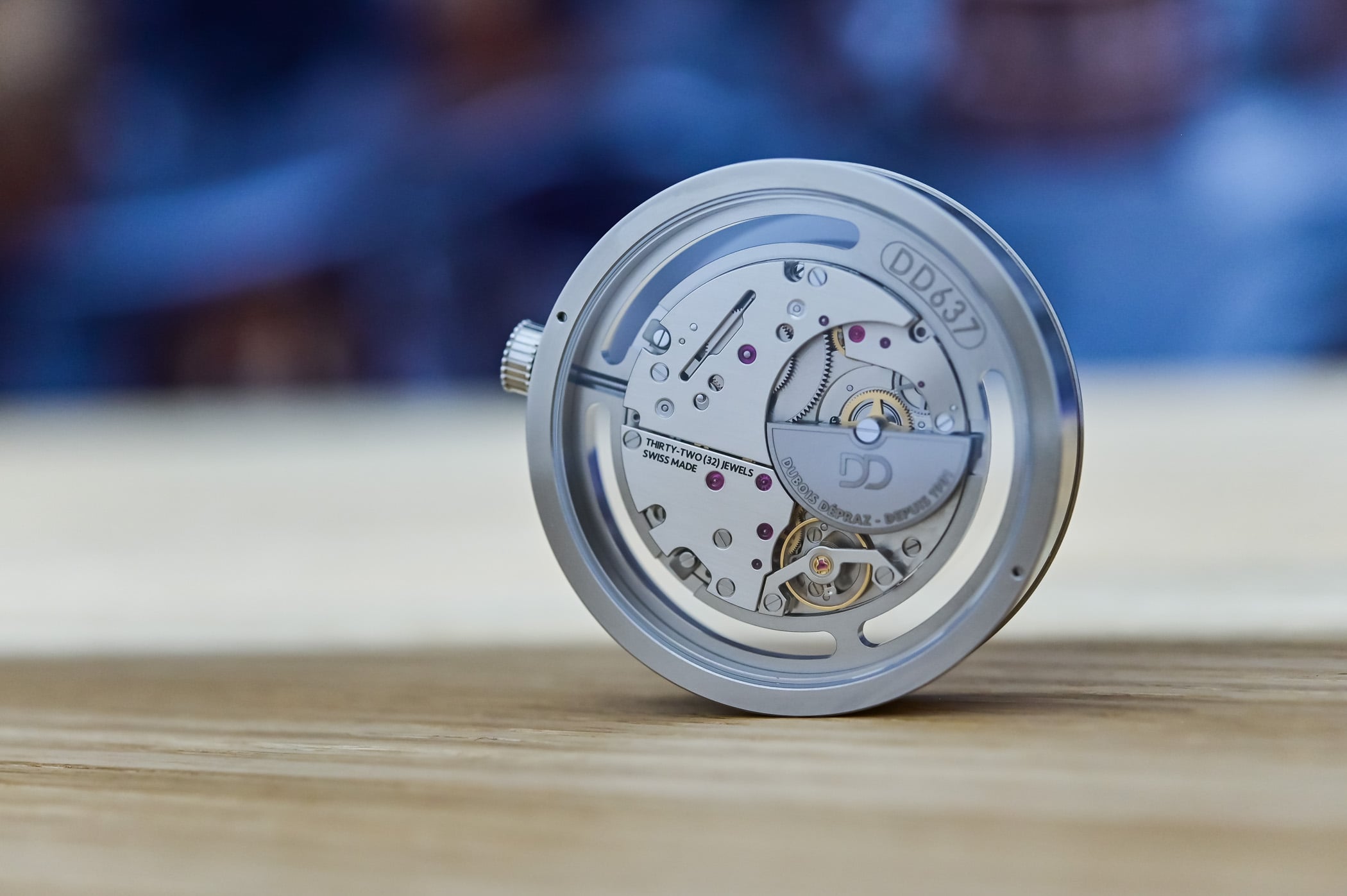
Another noteworthy movement introduction comes from Dubois Dépraz. Long recognised as one of the industry’s leading specialists in movement components and complication modules – particularly chronographs, calendars supplied to numerous watch brands – the company has historically focused on additional mechanisms rather than fully integrated movements. For its 125th anniversary, however, Dubois Dépraz is taking a significant step forward by presenting the new DD630 micro-rotor movement.
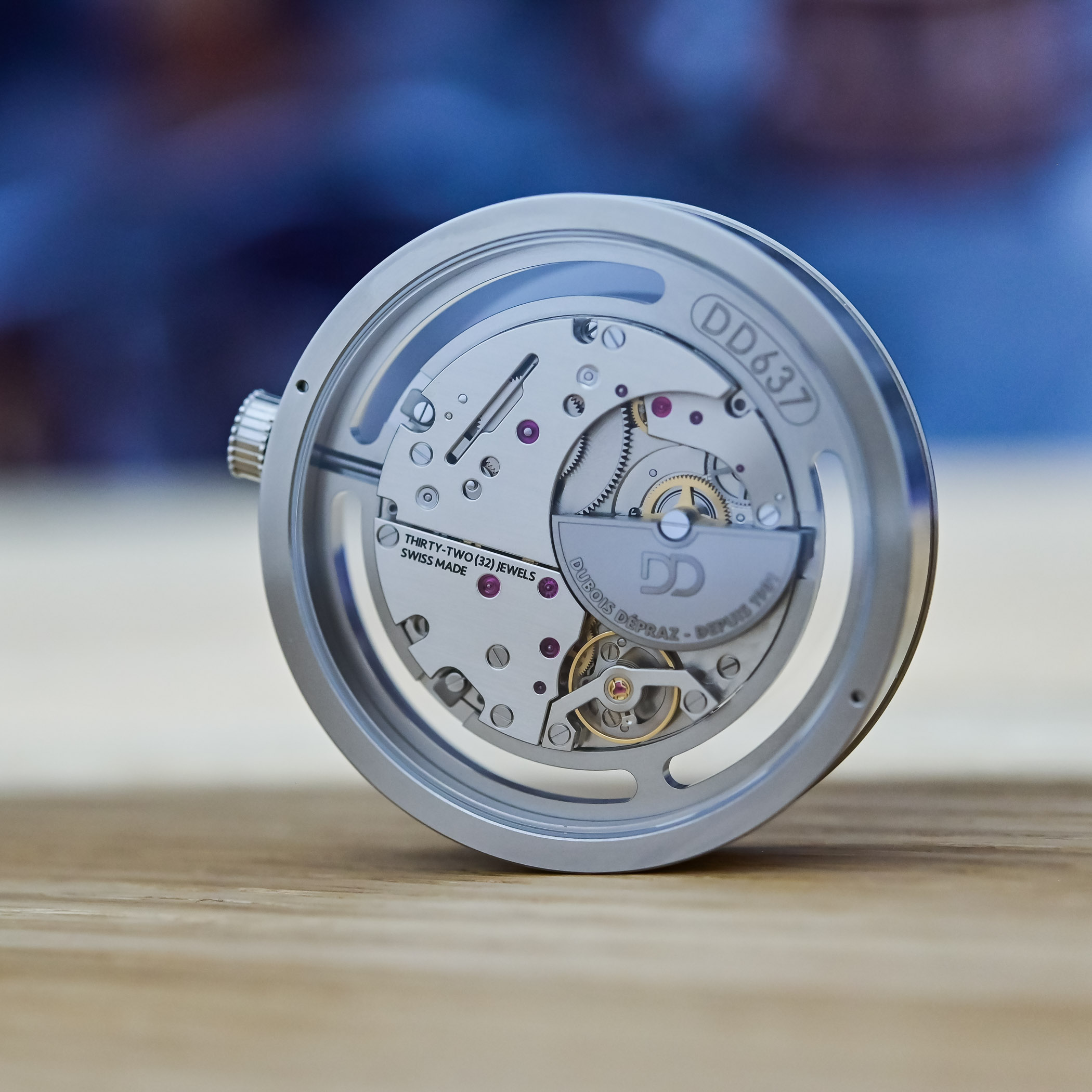
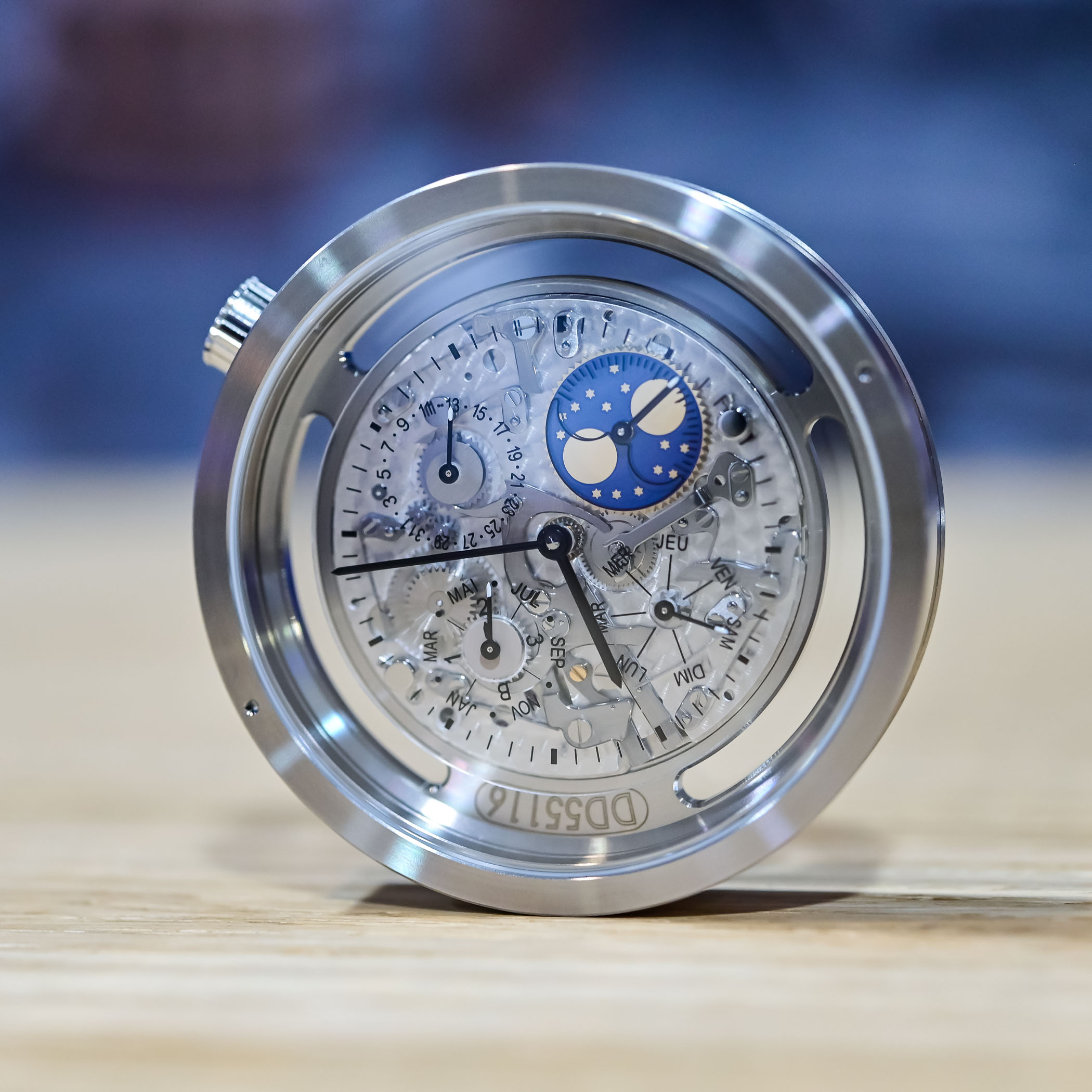
The DD630 measures 30mm in diameter and is just 3.6mm thick. It operates at a frequency of 3.5Hz, features bidirectional winding and incorporates a variable-inertia balance. An optional small-seconds display at 6 o’clock is available. Most importantly for a company known for its impressive portfolio of additional mechanisms, the architecture has been designed to accommodate additional modules, including a complete calendar and simple date functions. This will allow Dubois-Depraz to offer a coherent, high-grade, plug-and-play solution (base movement + module) for its clients.
Ronda, a new player in the mechanical movement segment?
Swiss movement manufacturer Ronda, recognised for its expertise in quartz calibres, is making a significant move into the mechanical segment with the launch of its new R01 movement family, unveiled at EPHJ.
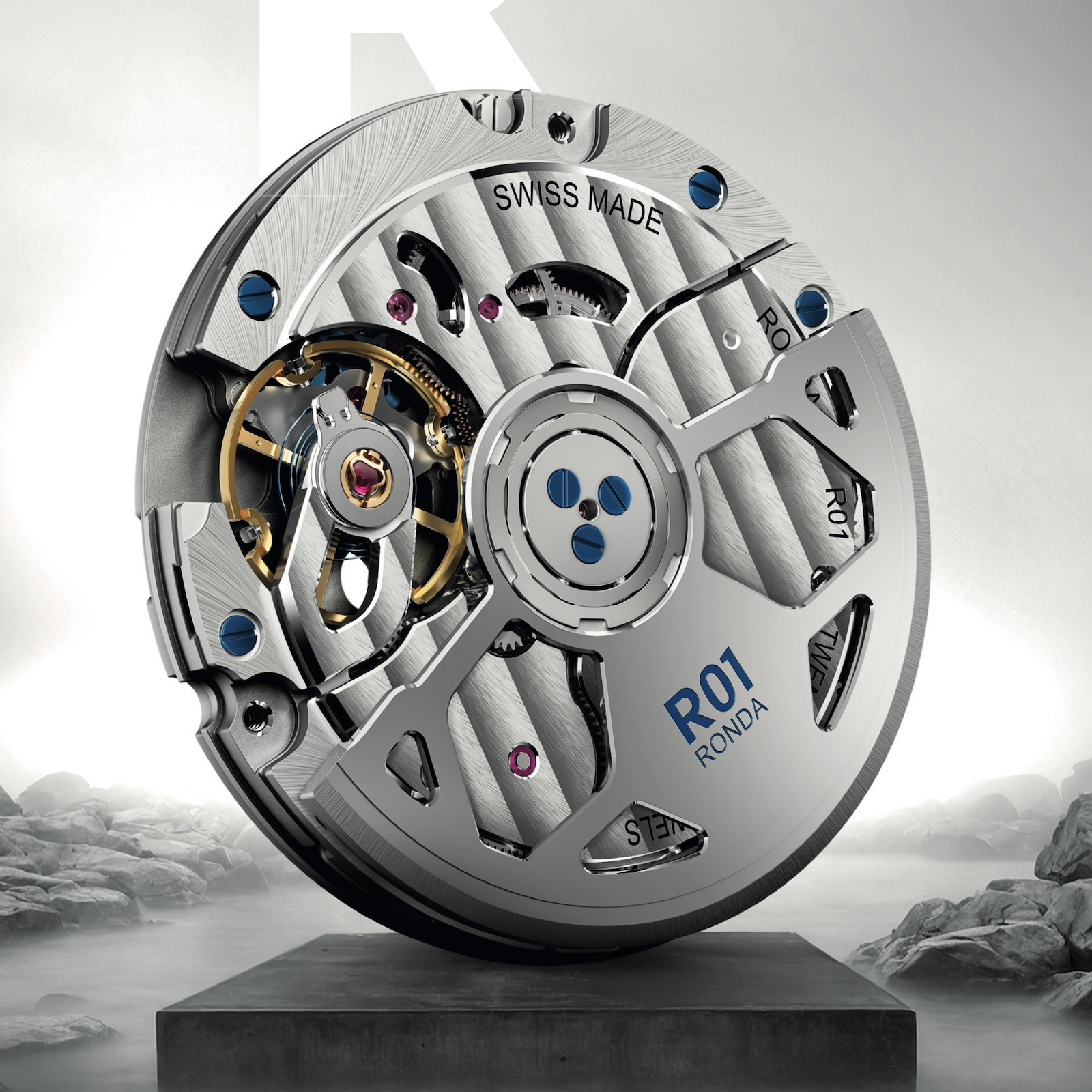
Positioned as a potential alternative to established workhorses such as the Sellita SW200 and La Joux-Perret G100 (in a segment where pricing and differentiation are key), the R01 measures 28.20mm in diameter and is just 4.20mm thick (so not within the classic dimensions of the ETA 2824) while delivering chronometer-grade accuracy, making it suitable for COSC certification.
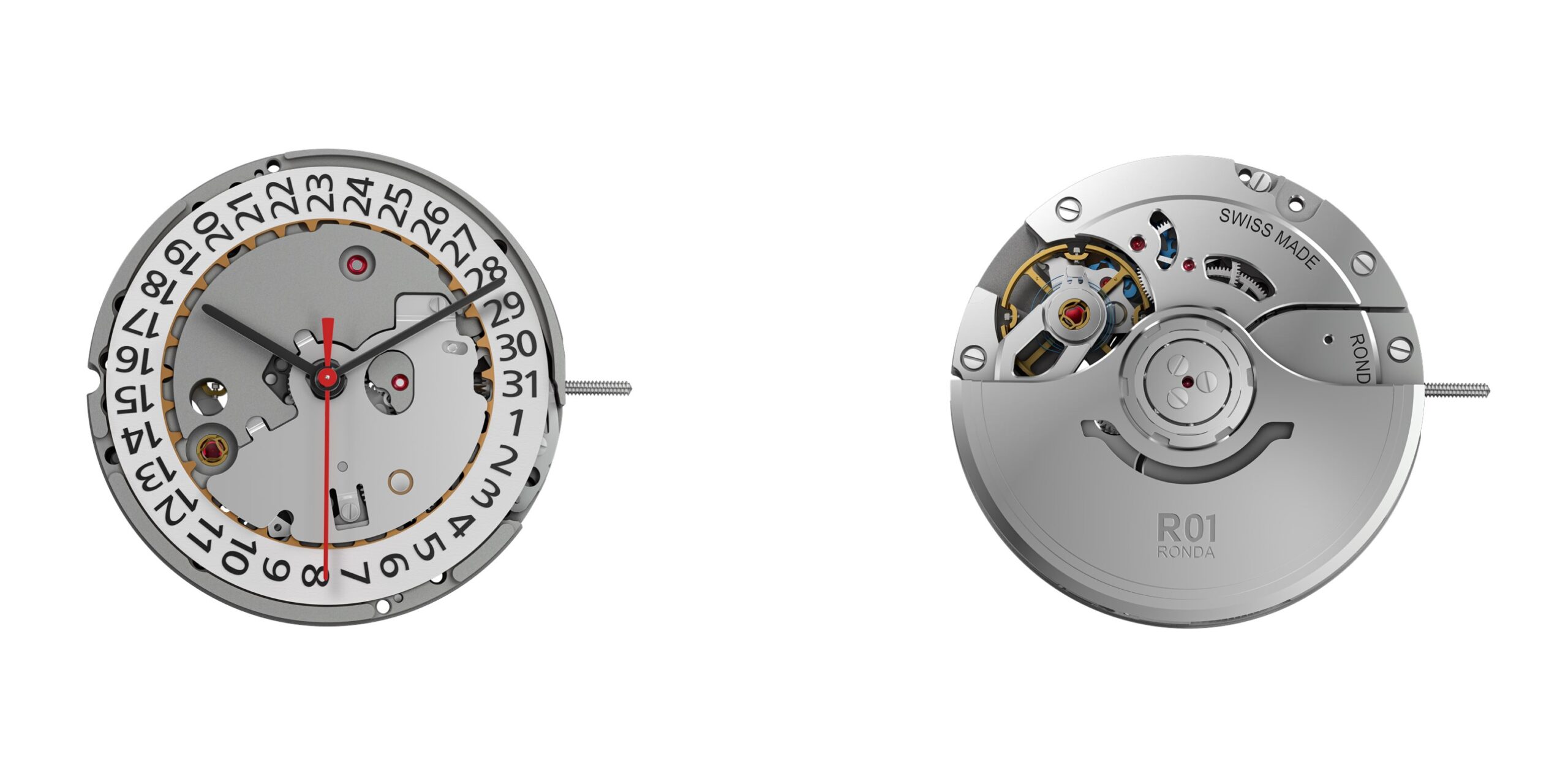
Interestingly, the calibre features a silicon escapement and silicon hairspring, providing resistance to magnetic fields of up to 200 gauss. It beats at 3.5Hz (25,200 vibrations per hour) and delivers an 80-hour power reserve.
Besides these new movements, countless developments and technical applications are presented at EPHJ. It would be difficult to list them all, but to give an idea, we’ll focus on a few of the ones listed for the EPHJ exhibitor’s prize.
Automatic Winding Efficiency
Many of the components essential to a watch’s performance are supplied by highly specialised companies operating behind the scenes. Among them, MPS occupies a key position within the watch industry as one of the leading suppliers of ball bearings used in automatic winding systems.
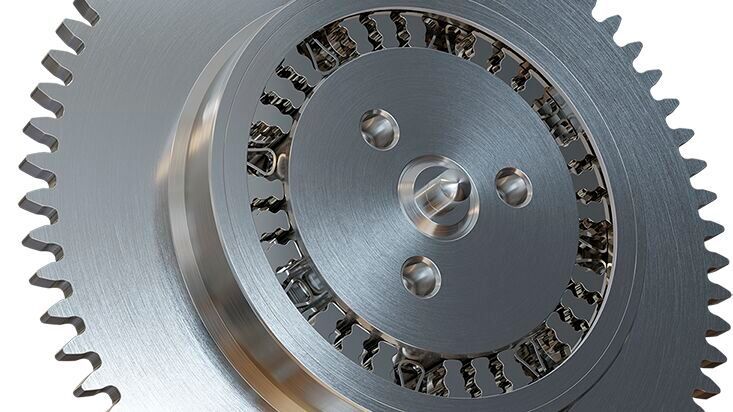
At EPHJ, the company presents Spragway, a new high-performance miniature one-way bearing designed to significantly improve the efficiency of automatic winding mechanisms. As its name suggests, it has been inspired by clutch mechanisms used, for instance, in helicopters. The innovation focuses on two critical parameters for self-winding movements: the amount of torque that can be transmitted and the reduction of the dead angle before engagement occurs. The result is a remarkably compact unidirectional freewheel measuring just 4mm in diameter while delivering substantially enhanced performance. According to MPS, the new Spragway bearing is capable of transmitting a torque exceeding 10,000 µNm, representing approximately ten times the capacity of the company’s OneWay bearing solutions.
Internally cooled PCD drills
To provide another example of innovation, in the field of precision machining, Louis Bélet has developed a new generation of internally cooled PCD (Polycrystalline Diamond) drills.
Machining ultra-hard materials such as technical ceramics, as well as difficult-to-cut materials like lead-free brass and precious metals, is often limited by heat generation and chip evacuation issues. Louis Bélet’s solution combines a tungsten carbide body with integrated coolant channels and a PCD cutting tip, made possible through advanced laser drilling technology. This hybrid architecture delivers coolant directly to the cutting edge, improving chip evacuation and process reliability. The result is a significant increase in productivity and extended tool life, even in ceramics and demanding alloys. Thanks to the exceptional hardness of PCD—around four times harder than carbide—higher cutting parameters can be achieved.
Electroforming in 3D dimension
With its VERA™ technology, NanoVoxel brings electroforming into a new dimension. By combining two-photon polymerisation-based micro 3D printing with high-fidelity metal deposition, the solution enables the production of truly three-dimensional microparts, free from planar constraints. The result: unprecedented design freedom, faster cycles and expanded applications, from watchmaking to microtechnology.

1 response
this is cool stuff! thanks for sharing!