
 Not all images were able to load for printing. Please close the print window and try again.
 Deconstructing The Miyota 9075 GMT And Understanding How A True GMT Works
Oops, I've done it again! This time with a GMT movement that has little competition.
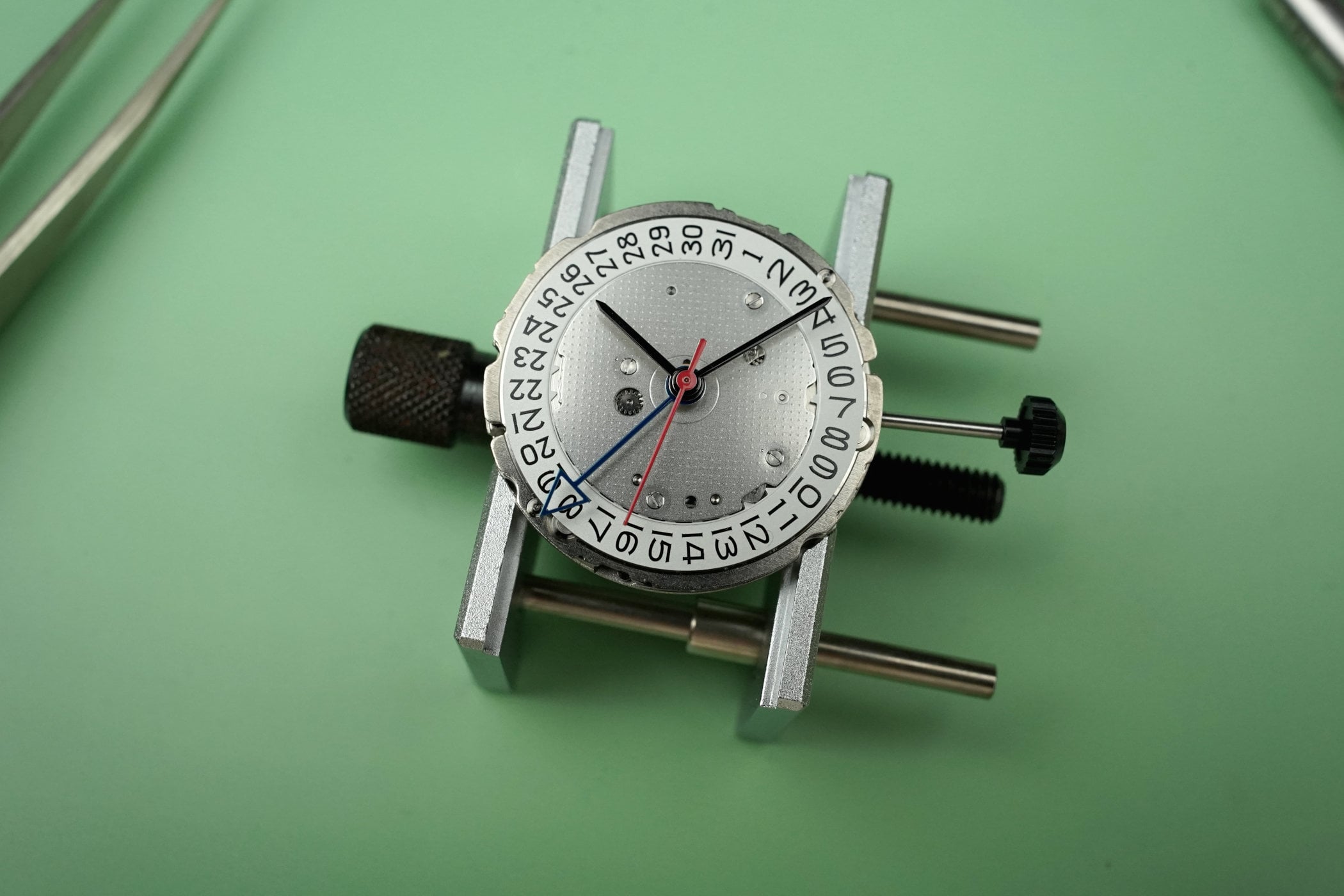
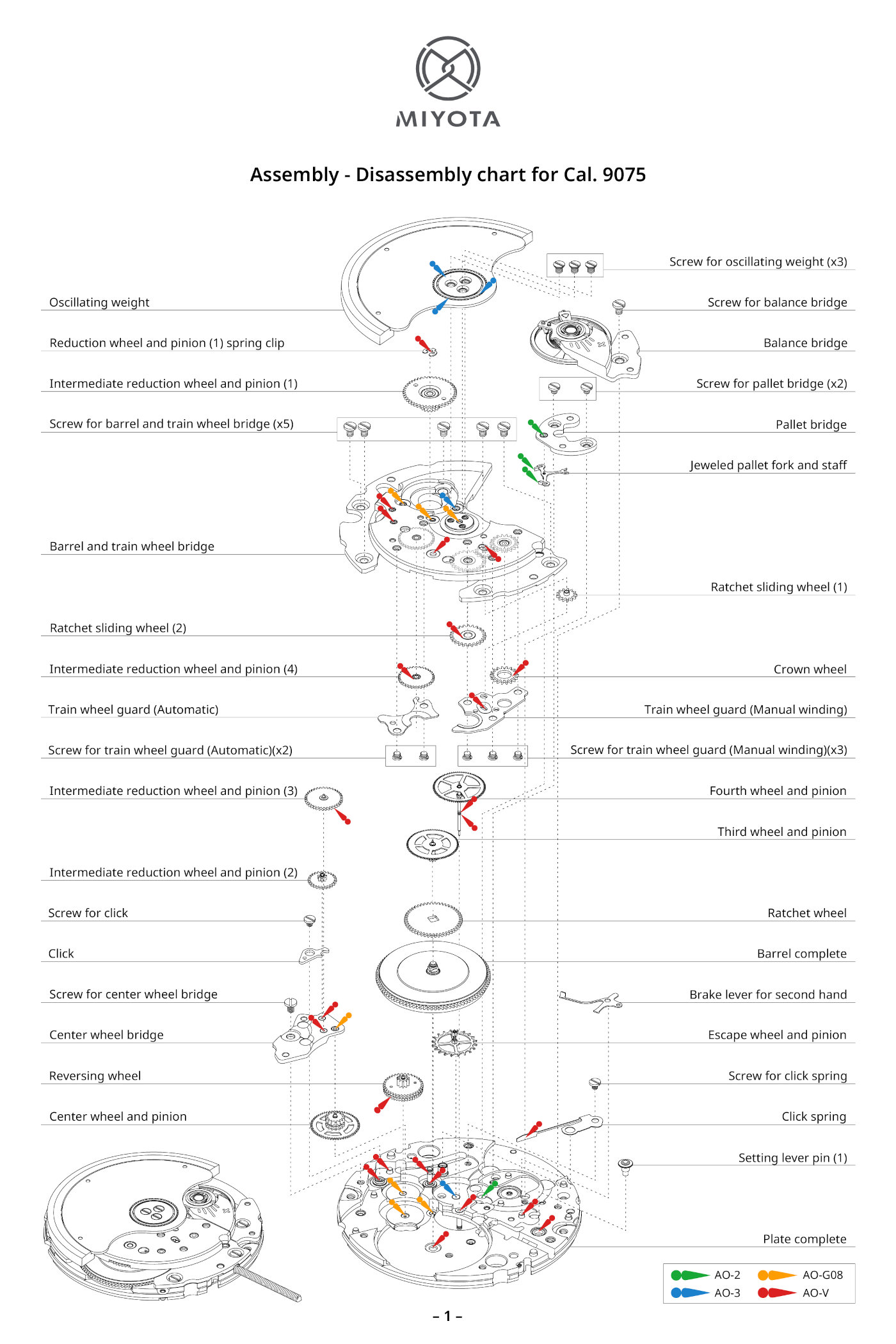
Not too long ago, last February in fact, I had the opportunity to get my hands on a series of Miyota automatic movements, of which I disassembled the ubiquitous Calibre 9015. My prime goal was to learn more about its construction and simply find out how it looks when you take it apart. And as I discovered along the way, it held a few surprises up its sleeve. Not in the least due to the attention to detail I found as I dismantled it piece by piece. Admittedly, my skills as a watchmaker are limited, as I took a half-year-long evening course quite a while back, but with a bit of help (read: Miyota assembly charts), I can at least take one apart. With the experience of the 9015, I thought it would be a good idea to turn to one of Miyota’s next incredible movements, the Calibre 9075, the manufacturer’s True GMT movement.
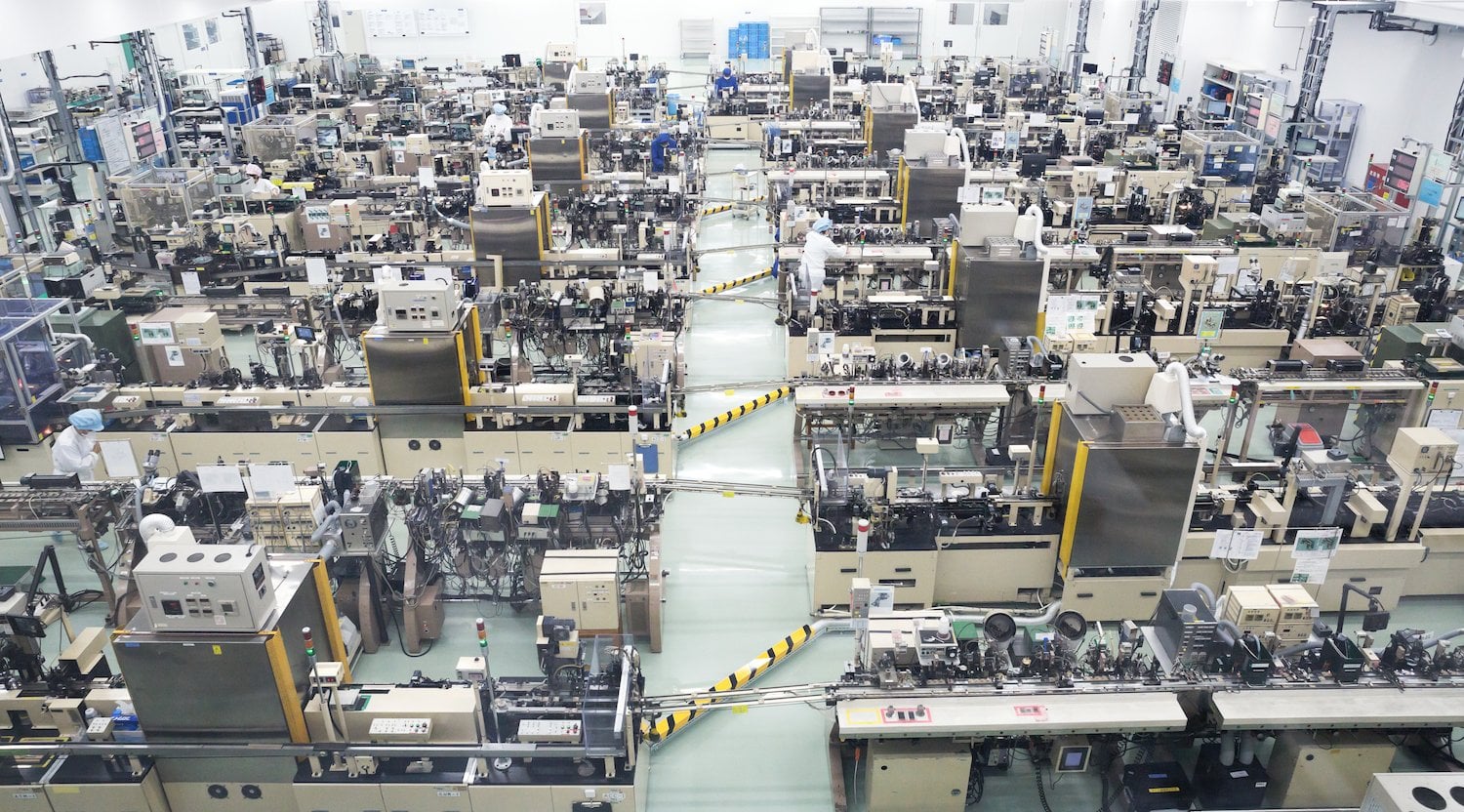
Just as a reminder, Miyota is one of the biggest movement manufacturers in the world, with an estimated total production volume of over 5 billion movements in its 40+ lifespan. It also holds the Guinness World Record of most produced quartz movement in the world, for its calibre 2035, reaching 1.7 BILLION units produced in the late 1990s. Producing one movement every three seconds, Miyota is one of the pillars within the Citizen Group to hit 1 billion euros in sales last year. It truly is a production powerhouse, and a supplier used across the board by brands high and low.


I get the feeling that most of us will have encountered a Miyota movement at some point in life, similar to Casio, Seiko and Citizen-branded watches. It’s often the level of watchmaking where things start for most collectors. Both groups, and by extension Miyota themselves too, are known for their large-scale industrial production and watches at a very attainable, yet ultra-reliable level. Watches like the legendary Seiko SKX, or the equally iconic Citizen Aqualand have likely been produced in the millions.
As a fully integrated manufacturer, Miyota offers a wide range of movements, from very simple three-handers to skeletonised and even chronograph movements (admittedly, quartz-only). In its mechanical watchmaking portfolio, the Calibre 9075 stands out for a very important reason: the Calibre 9075 is a so-called True, or traveller’s GMT movement. And given Miyota’s reliability but also affordability, that basically means it has the sub-2k True GMT genre all to itself!
GMT versus GMT
But what’s the difference, you ask? Well, imagine travelling to your summer holiday destination, which has a six-hour time difference from where you are. You set your watch with both the hour hand and the GMT hand indicating to the same hour. Upon landing, you pull out the crown of your watch to the correct position to adjust the time in accordance with the time zone you’re now in. An Office or Caller’s GMT will let you adjust the GMT hand in one-hour increments, whereas a True or Traveller’s GMT will let you set the central hour hand, which is what you want.
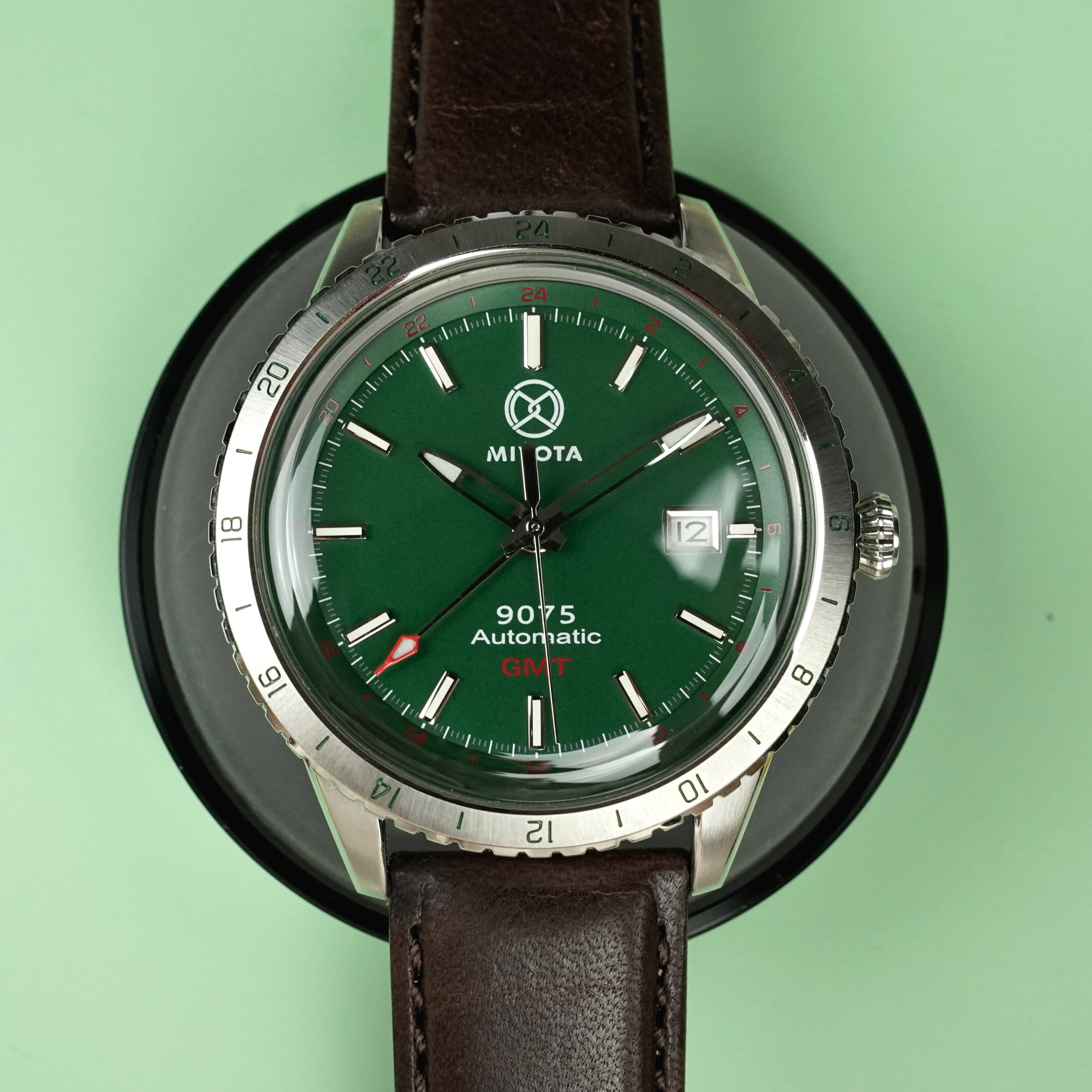
Time is usually checked at a glance, and the fastest and most accurate way to do that is through the central hands for the hours, minutes, and possibly seconds. When those are set to the local time at your destination, you don’t have to worry about anything else if you want to know the hour of the day. Then, if you want to call your loved ones back home, the GMT hand will tell you what time of day it is there, and possibly even if it’s AM or PM if a 24-hour scale is involved.
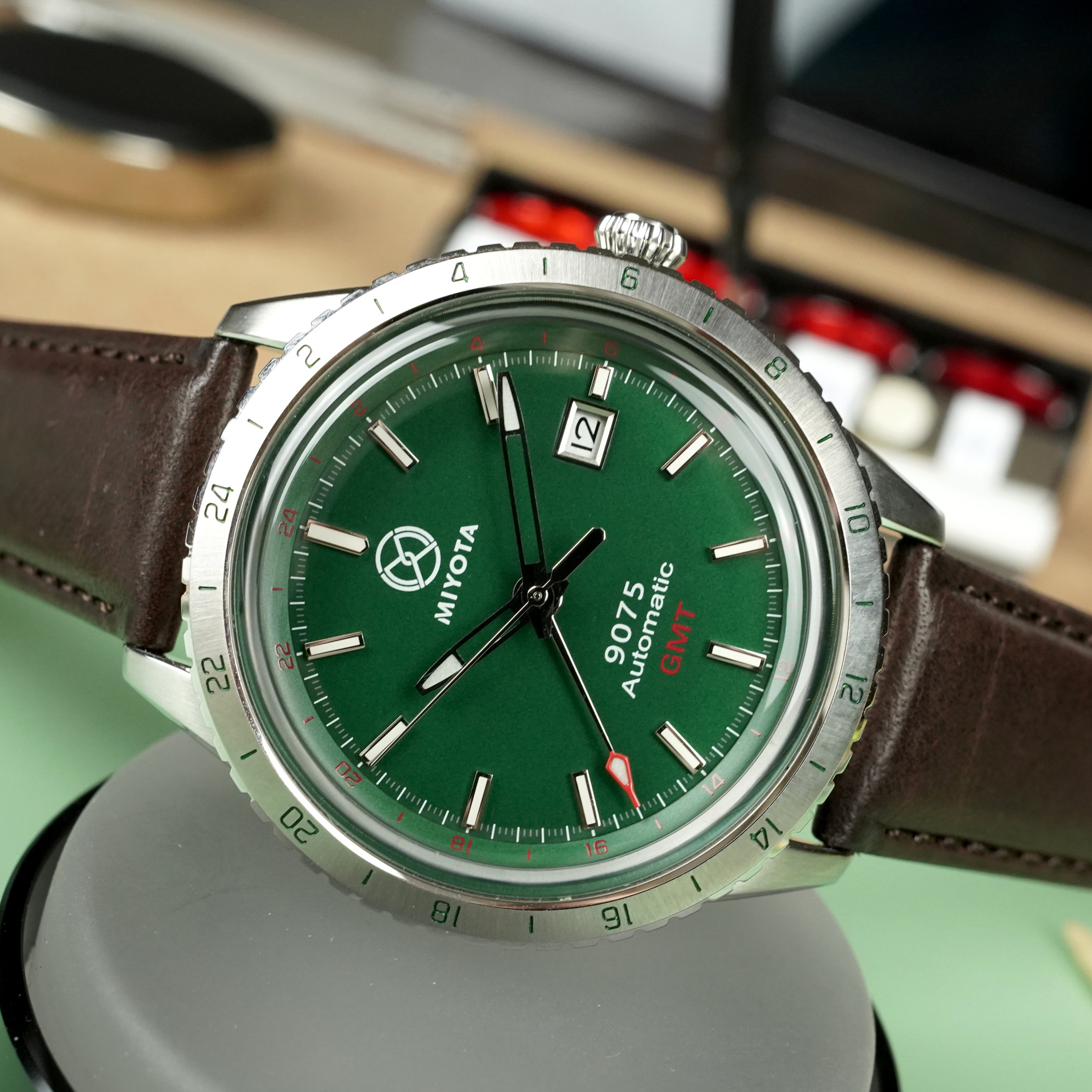
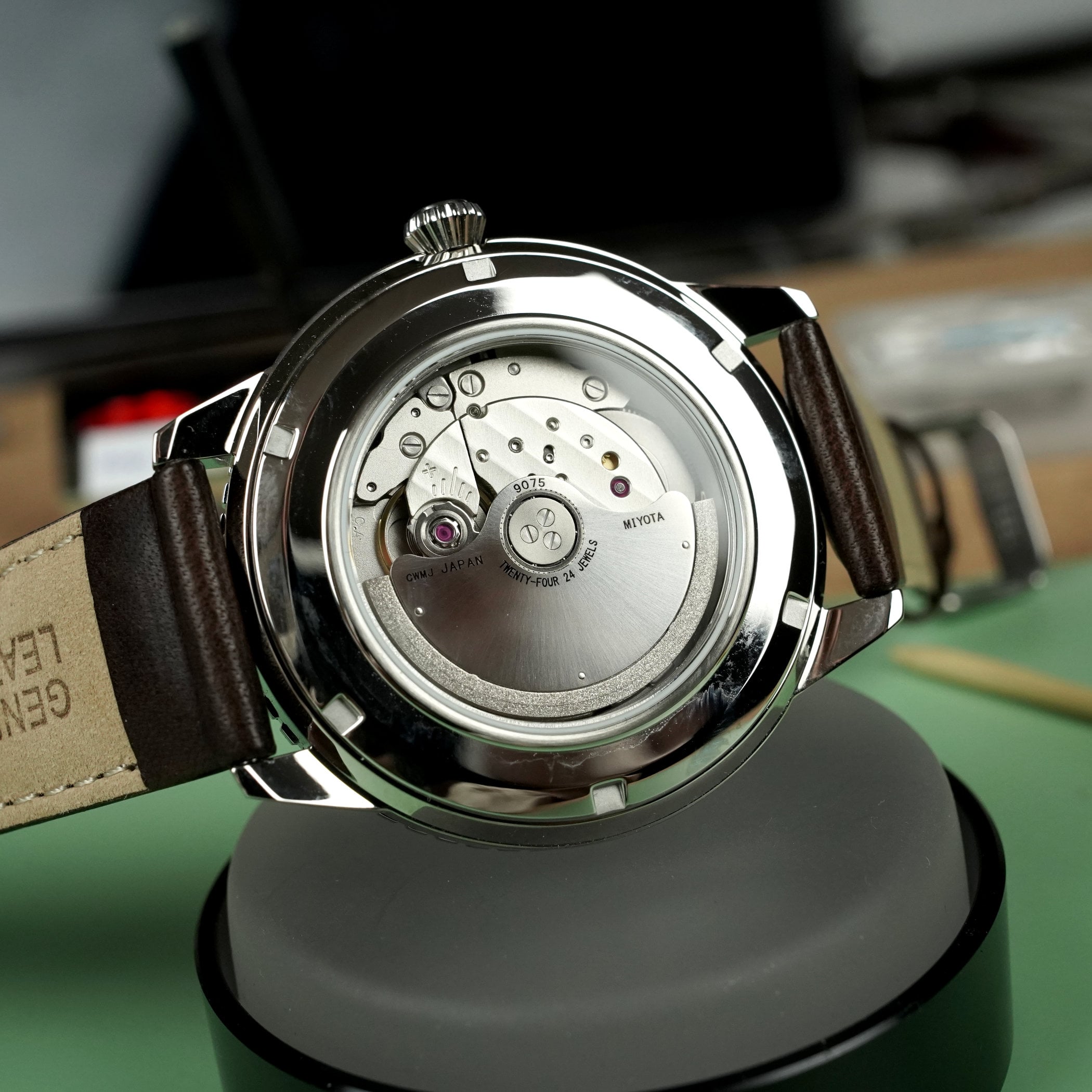
An Office/Caller’s GMT does this the exact opposite way, showing you the time of day back home through the central hour hand, and the hour where you are, through the GMT hand. It’s a simple distinction, but a very important one, especially for frequent travellers! This Miyota 9075 movement does exactly that, and if you scan the market of such True/Traveller’s GMT movements, you very quickly move up to watches like the Tudor Black Bay 58 GMT, or the Longines Spirit Zulu. The Swiss have come down a bit in recent years, with watches like the Certina DS Action GMT Powermatic 80 and Hamilton Khaki Navy Scuba Auto GMT. If you want something outside of the Swatch Group, however, that does the same as this Miyota 9075, you’re looking at spending a couple of thousand, easily.
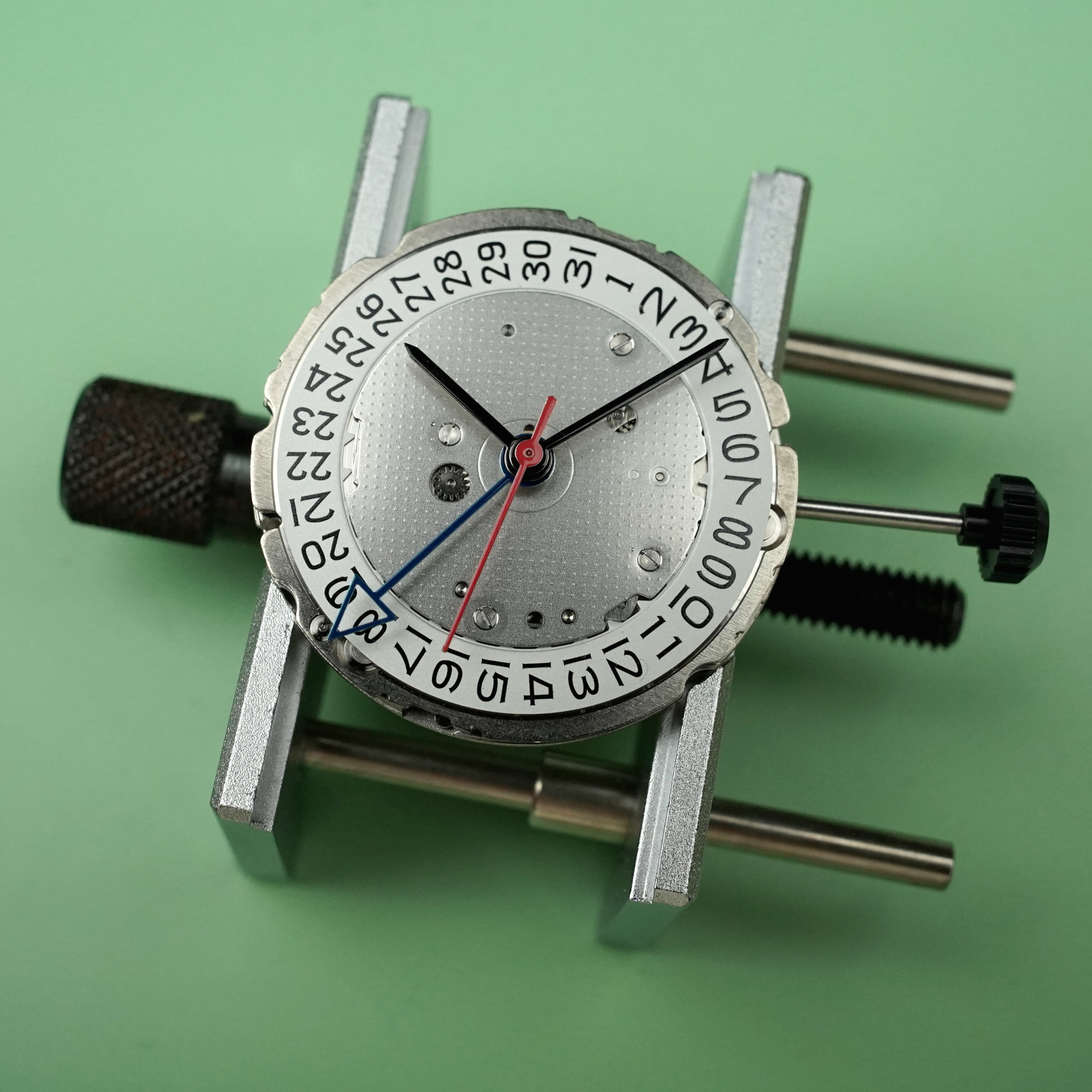
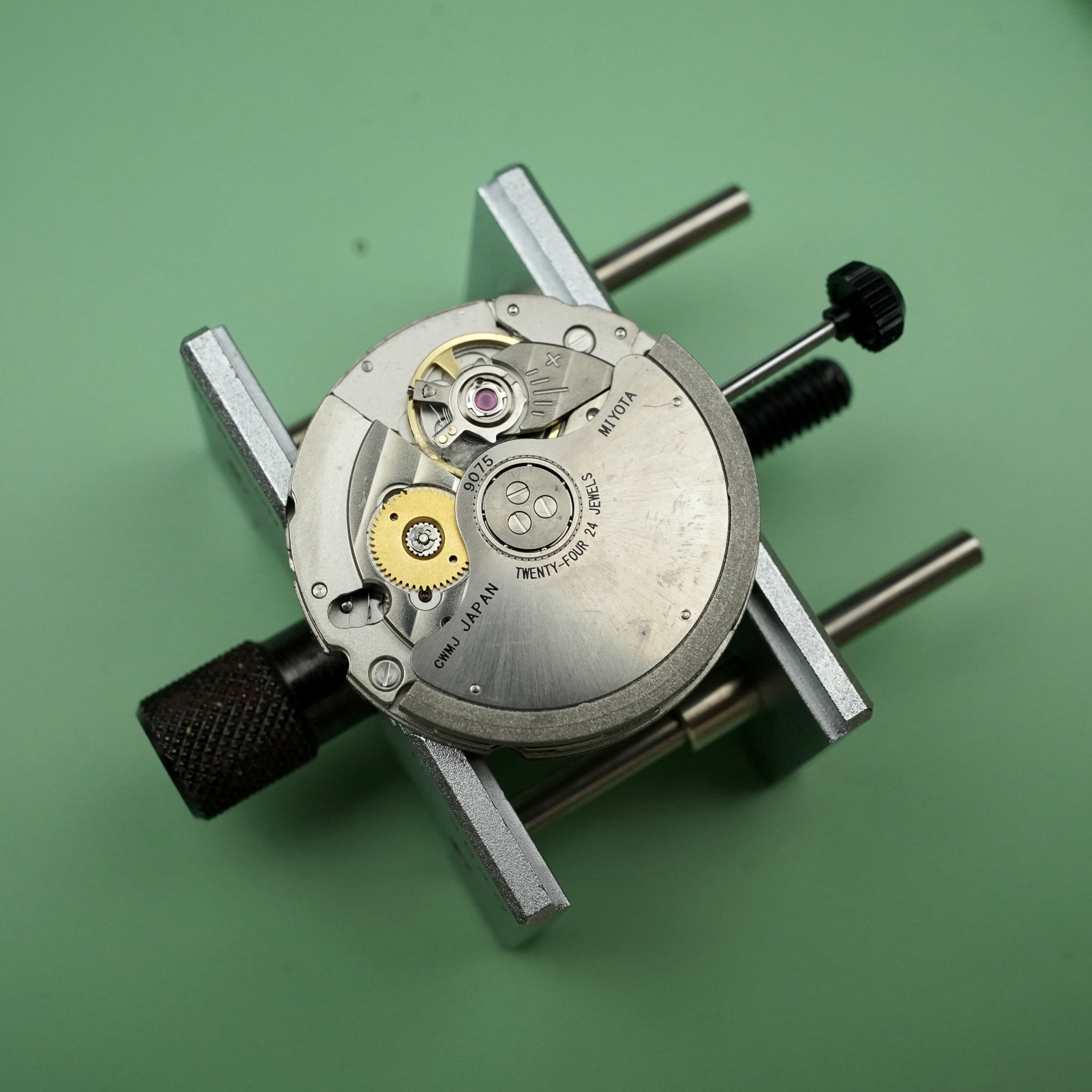
The Breakdown
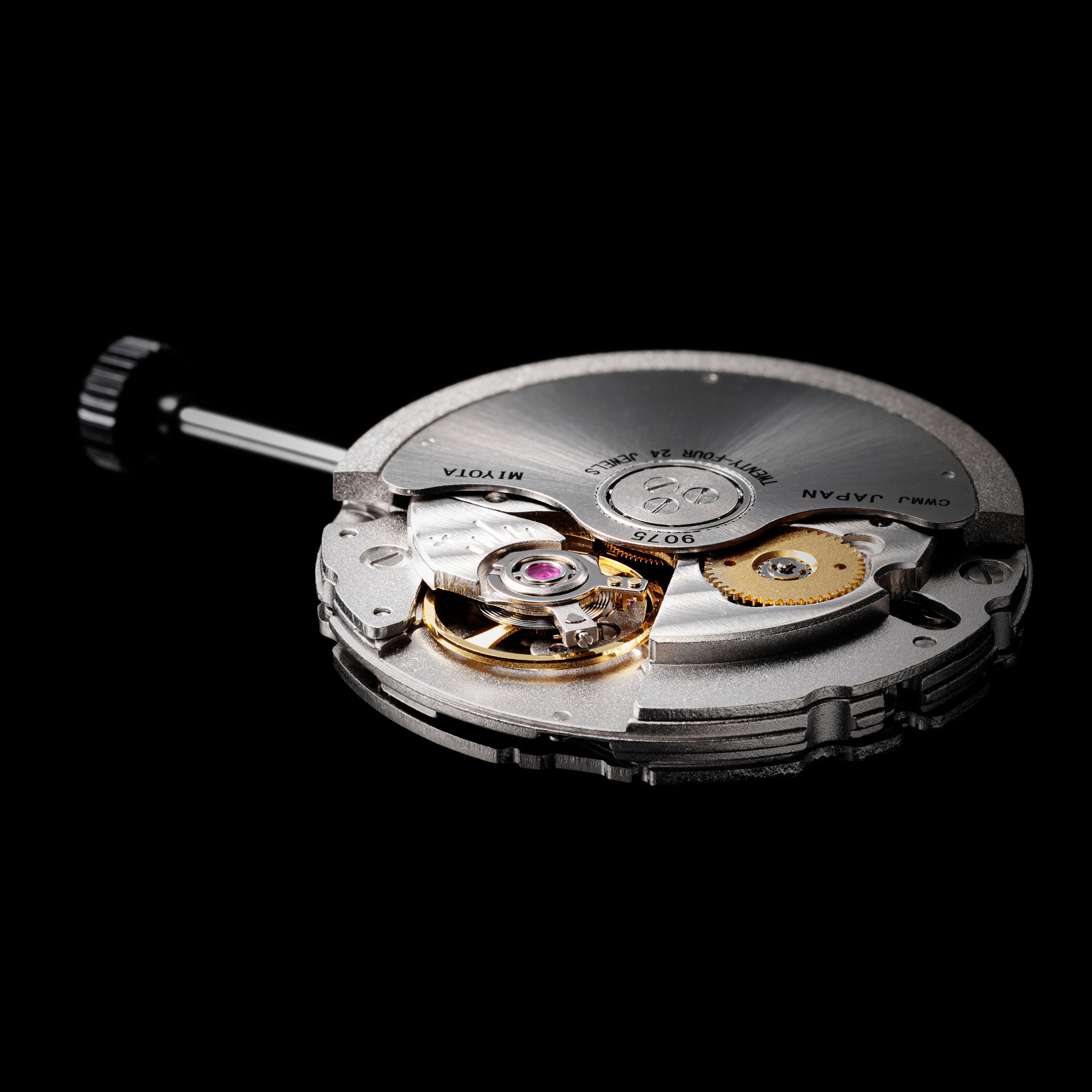
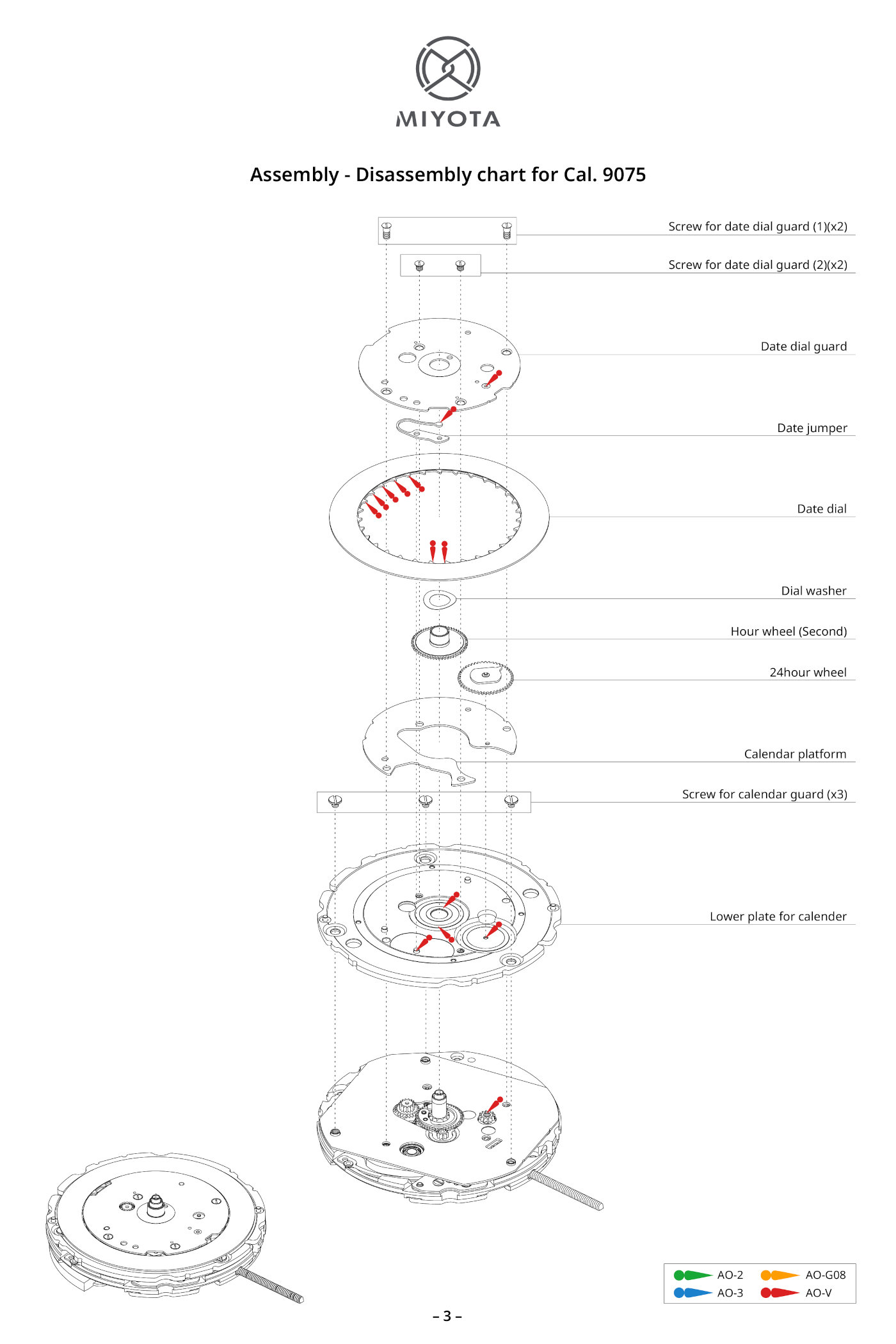
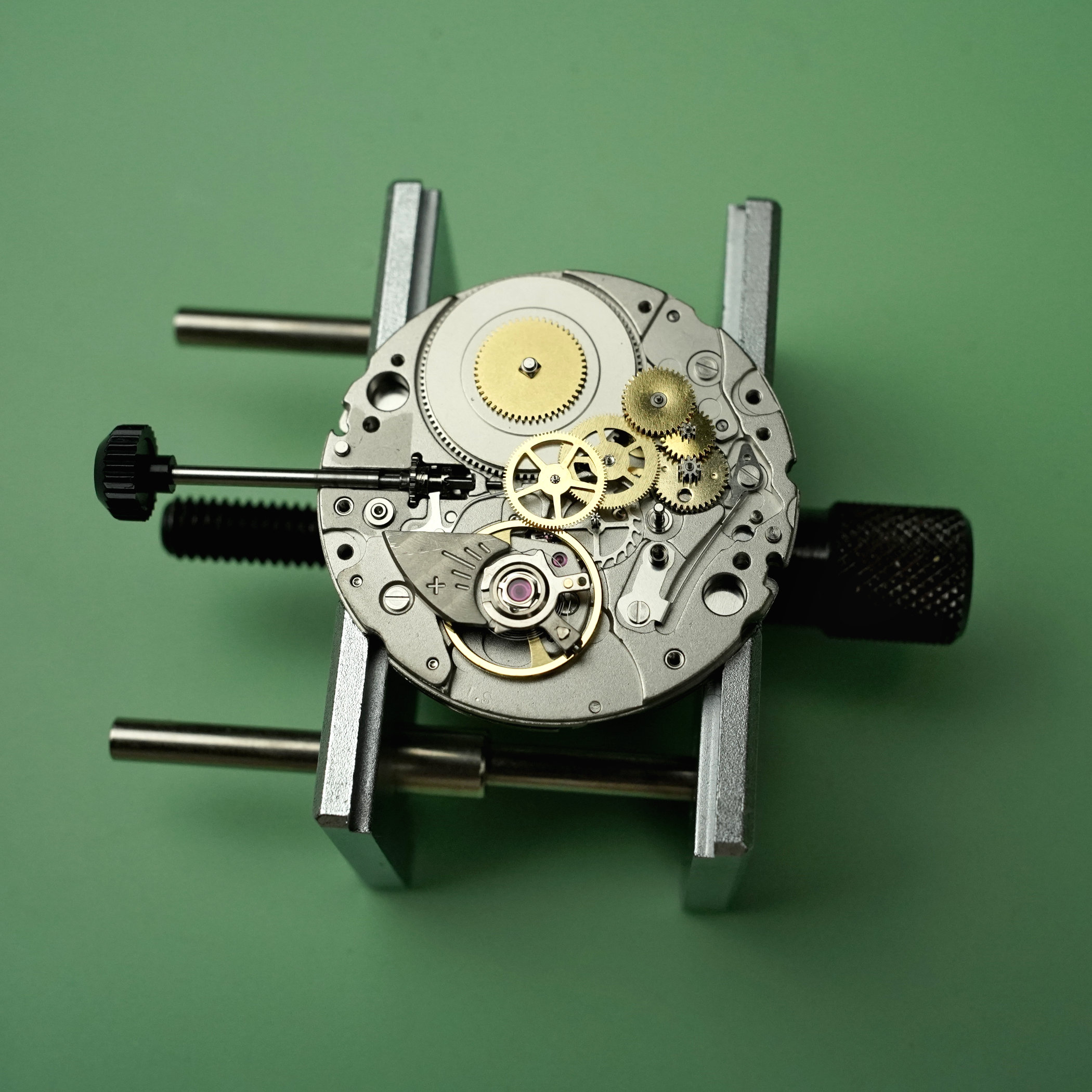
Similar to my previous breakdown of a Miyota movement, things start on the winding side of the calibre. Taking off the rotor is step one, followed by the single directional wheel that transfers the rotor’s movement to the barrel (the gold wheel just off the centre in the image below), before you can take off the large three-quarter bridge. Studying the assembly chart before even picking up a screwdriver already showed me this side differs very little from the Miyota 9015 I tore apart earlier this year, if any at all.
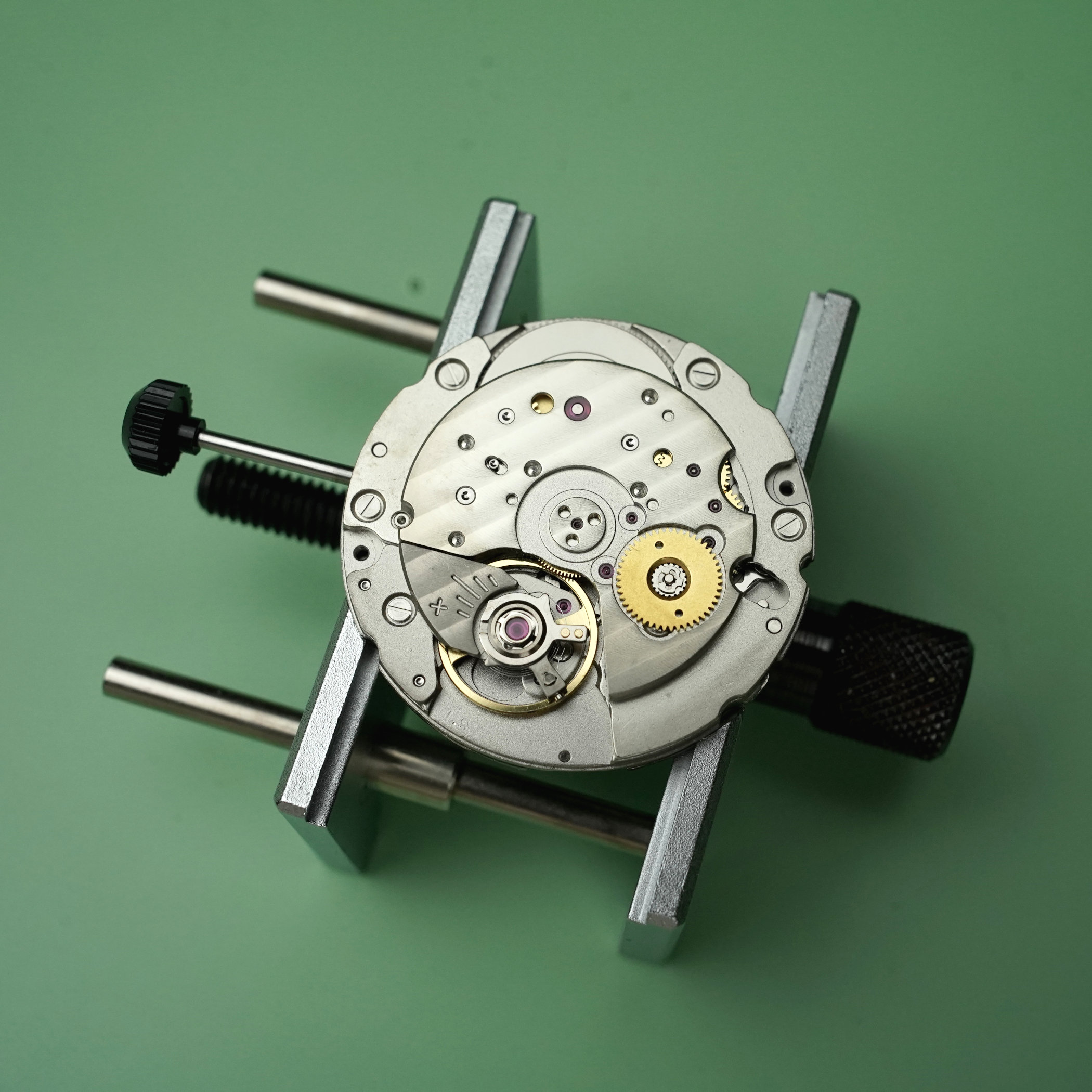
After the rotor, the directional wheel and three-quarter bridge are off, virtually the entire geartrain from the barrel to the hands is laid bare. As mentioned, this requires the same step-by-step process as with the Calibre 9015, so nothing too challenging to this point. One thing I failed to mention in the previous teardown is the underside of the three-quarter barrel and train wheel bridge. Turn it over, and you can see the train wheels and guards for both the manual and automatic winding, which mesh with the intermediate wheel.
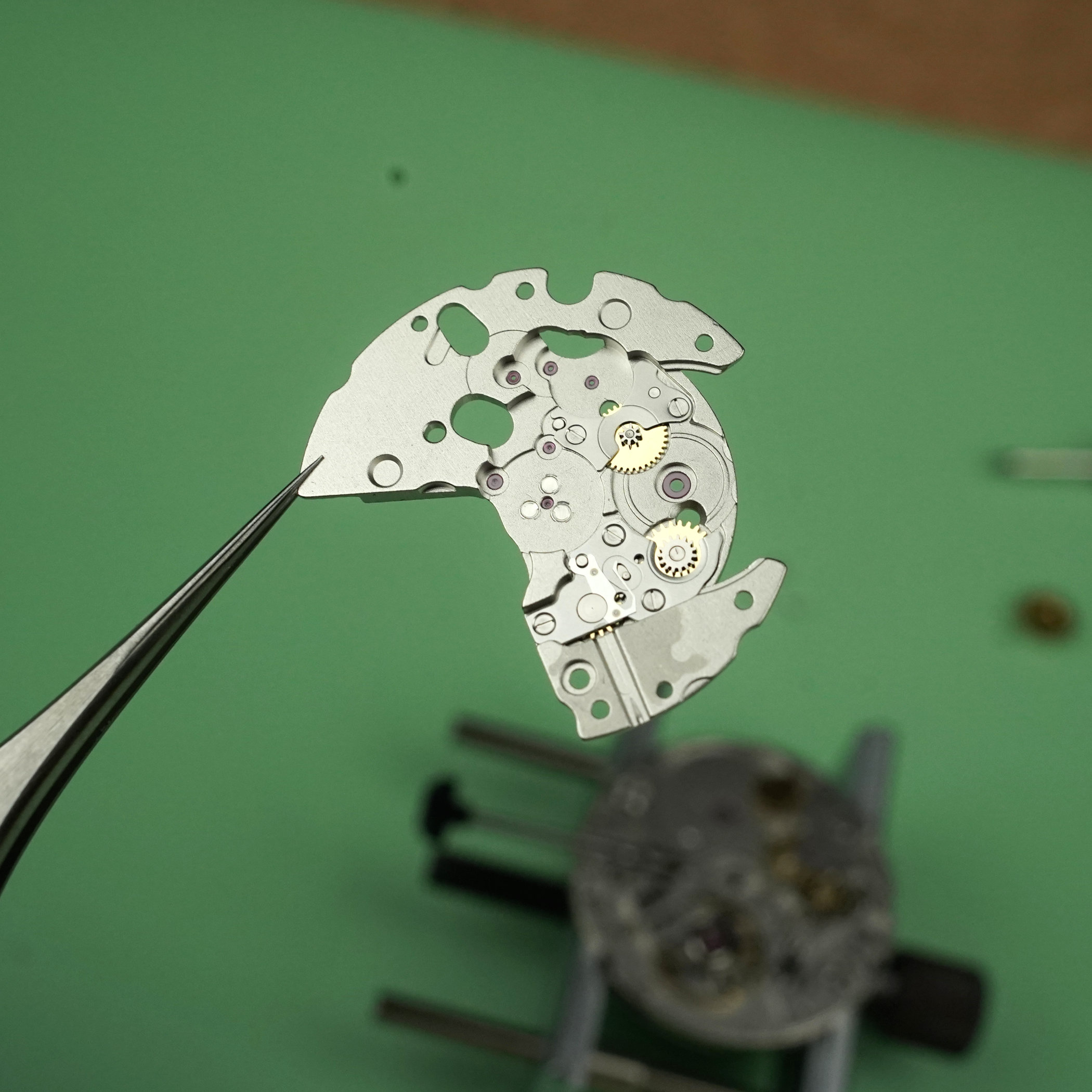
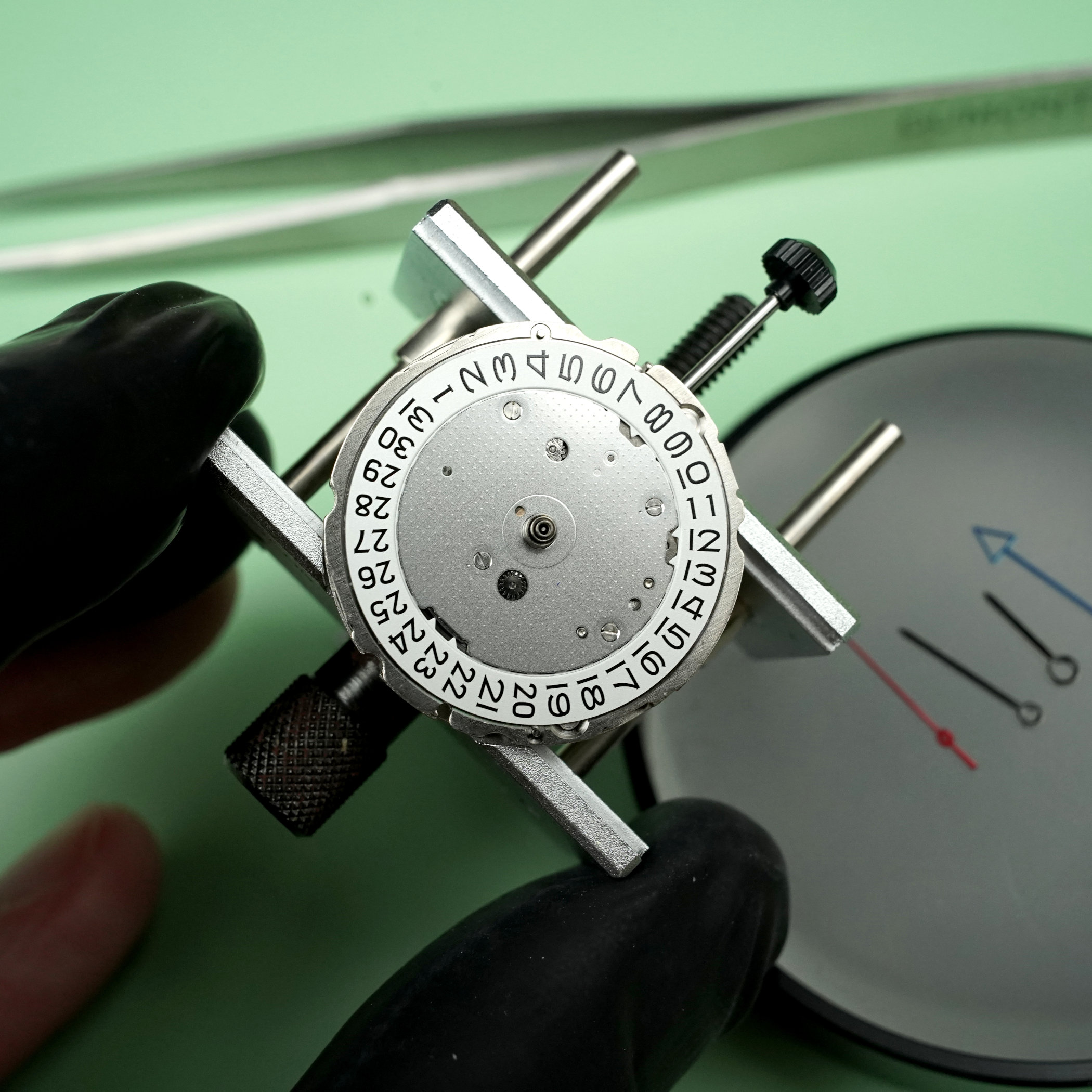
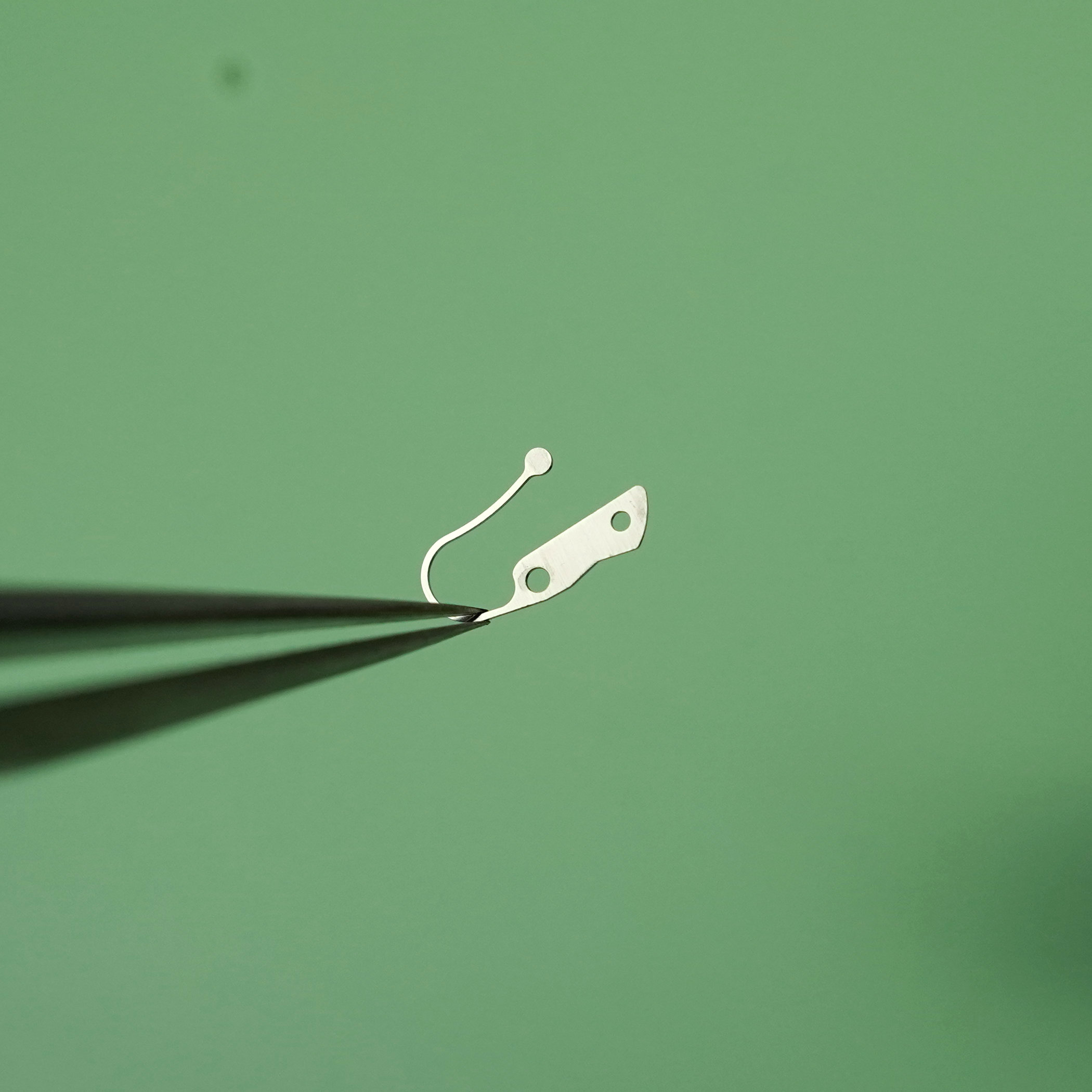
The dial side looks similar to the Miyota 9015 at first glance, but as the layers are peeled back one by one, you’ll notice more and rather intricate differences. This time around, I first had to pull off the hands, followed by the date dial guard. The first thing I noticed is a slightly different geometry of the date jumper (gallery below, bottom right), a part I highlighted previously. The ‘tail’ end, for lack of a better way to put it, looks more rounded. The functionality is the same, though, and I guess it’s just a natural progression in production. I did expect details like this to be similar, though, given Miyota’s vast industrial production.
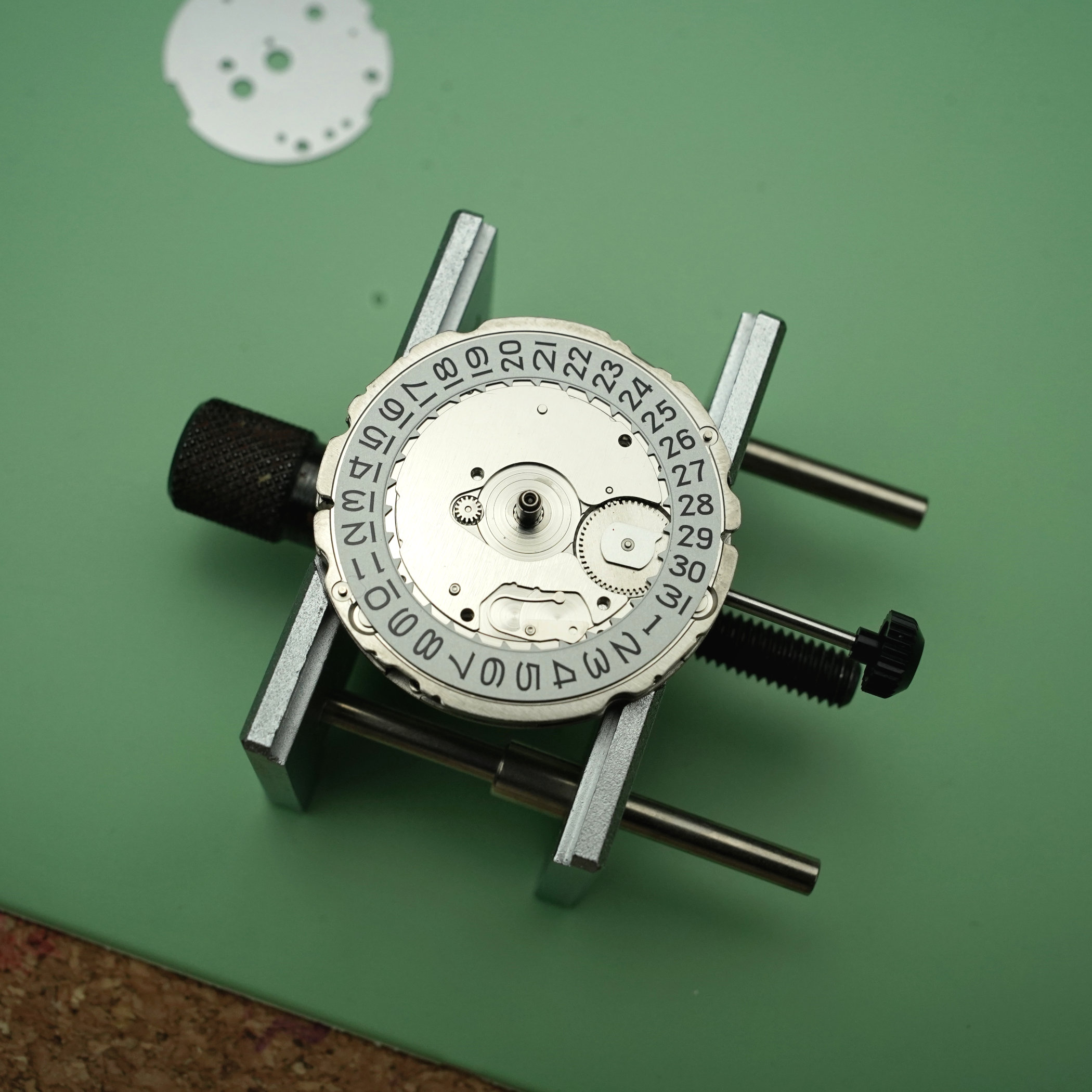
One step down, you get to the hour wheel, with the 24-hour wheel next to it (below, right). This clever and practical solution is very useful when travelling, as it minimises the risk of having your watch set at the wrong date. The part itself is quite simple, with an oval-shaped plate with a finger to manipulate the date wheel sitting on top of a gear. When you pull out the crown to the first position, this is the component that adjusts the date disc in either direction, in accordance with the local hour hand.
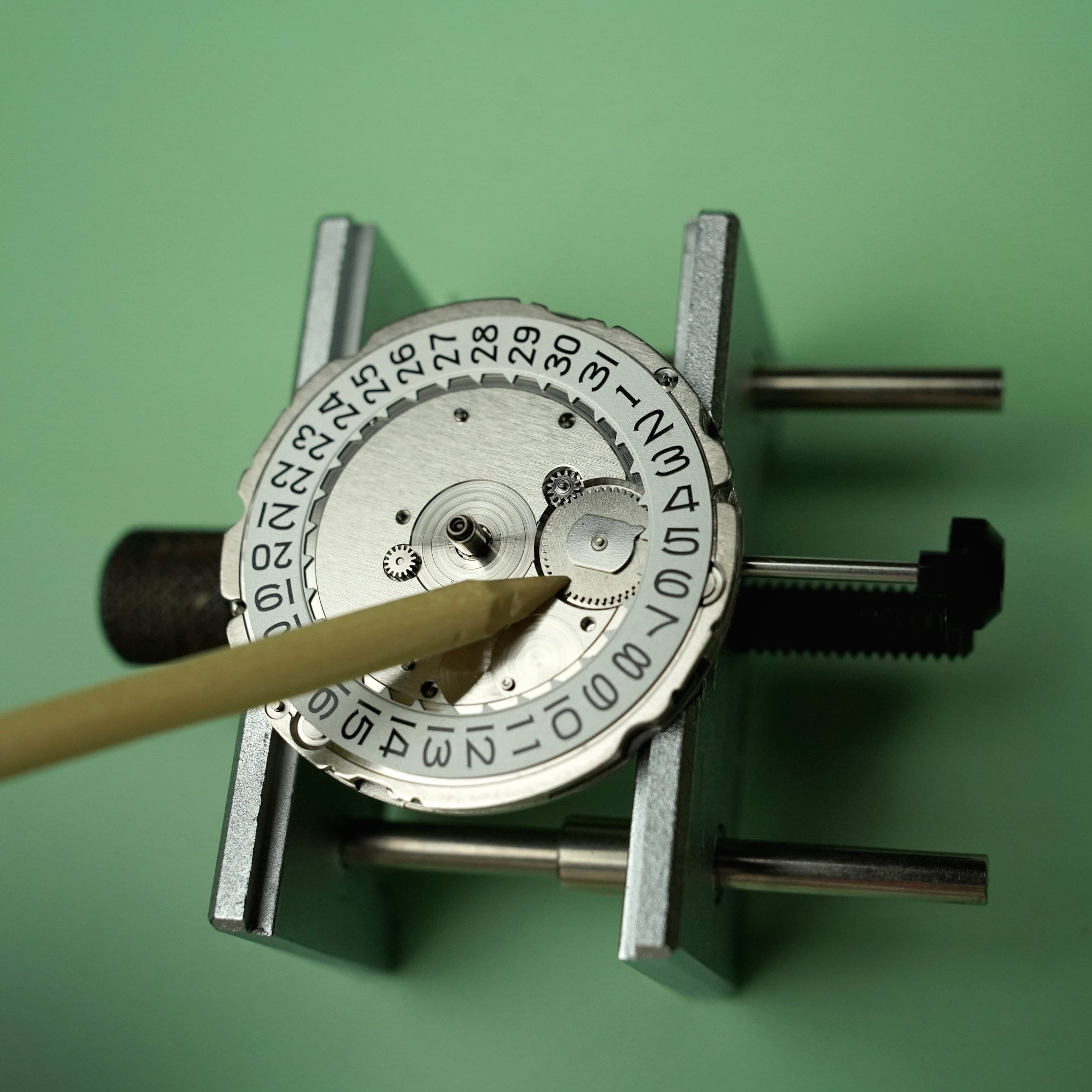

The next level down into the movement is the calendar platform, which acts as a guard for the date jumper and sits on top of the lower calendar plate. This full-size plate has lots of elevations and different types of finishing, with circular brushing where wheels and levers sit. Three screws hold it in place firmly, but once you take it off, there’s yet another plate, known as the minute wheel guard. This is sandwiched between the mainplate and the minute wheel bridge, held in place with pins only.
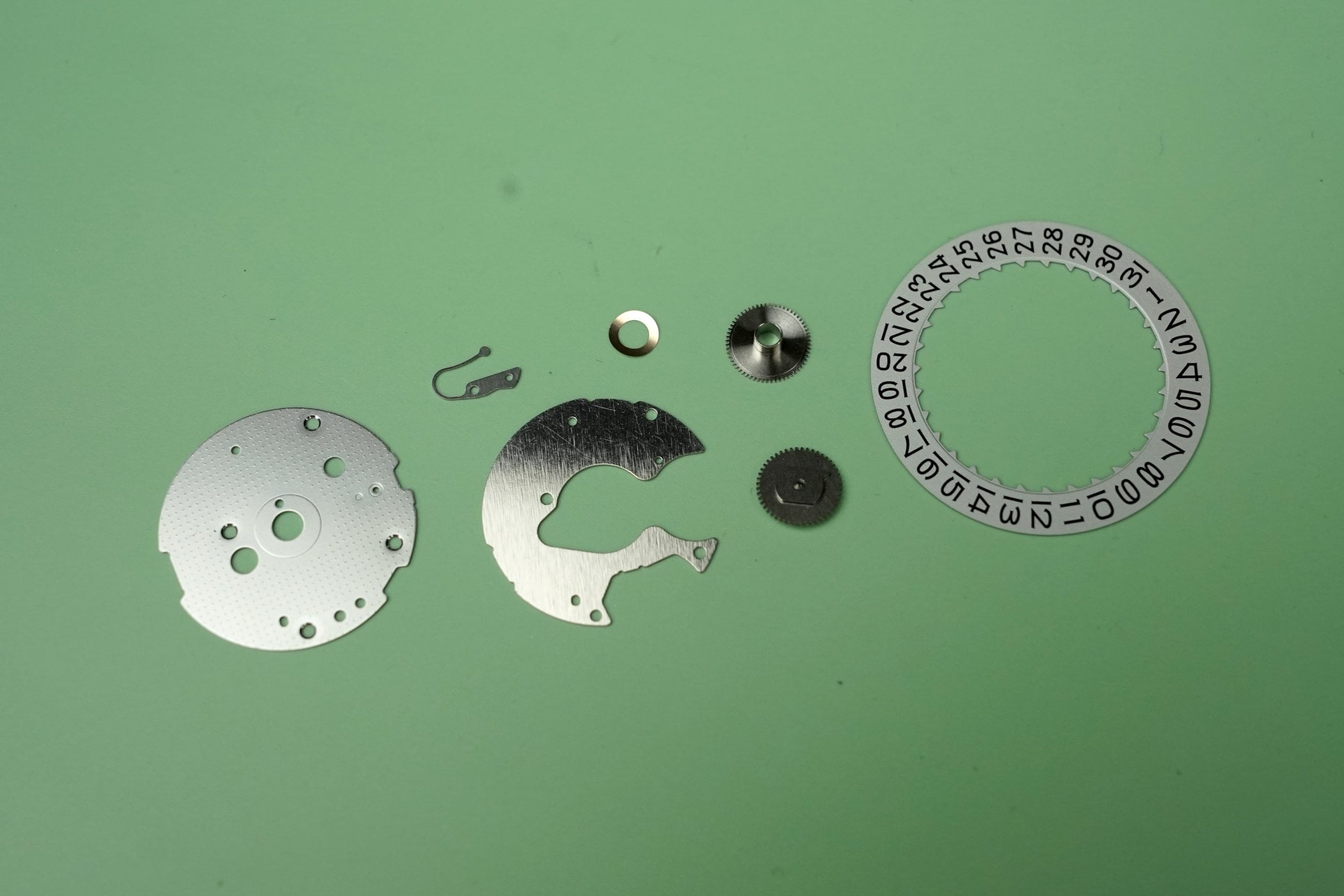
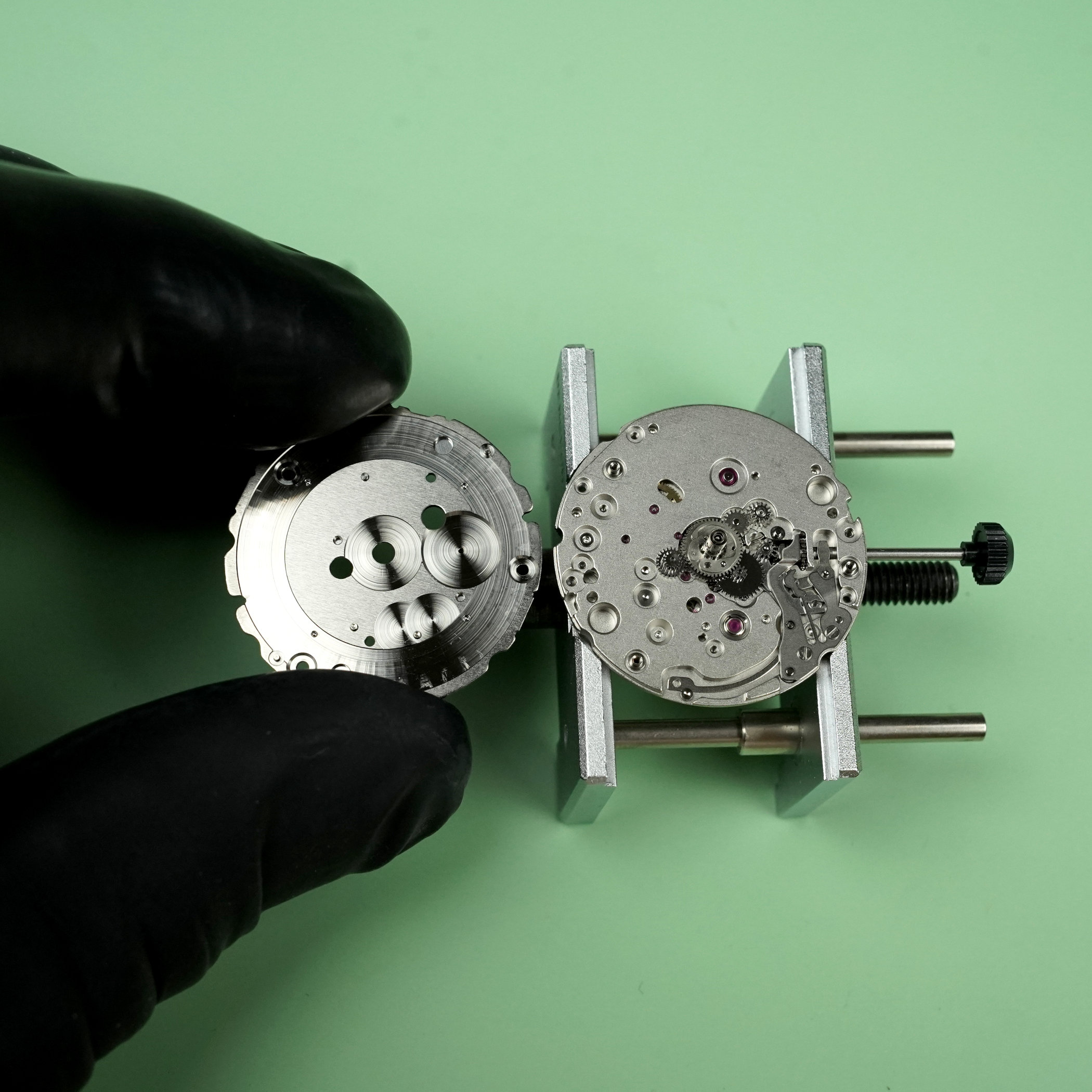
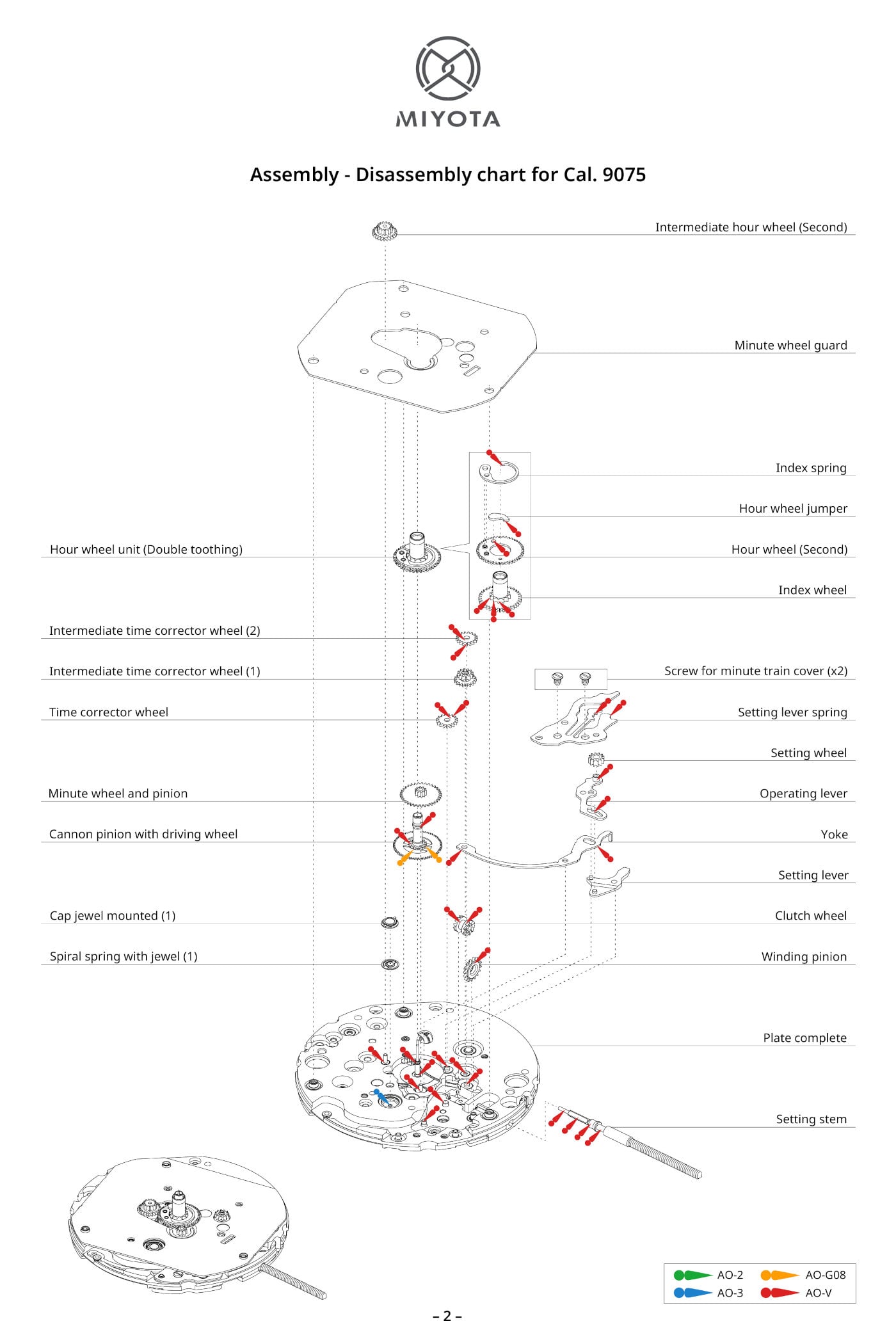
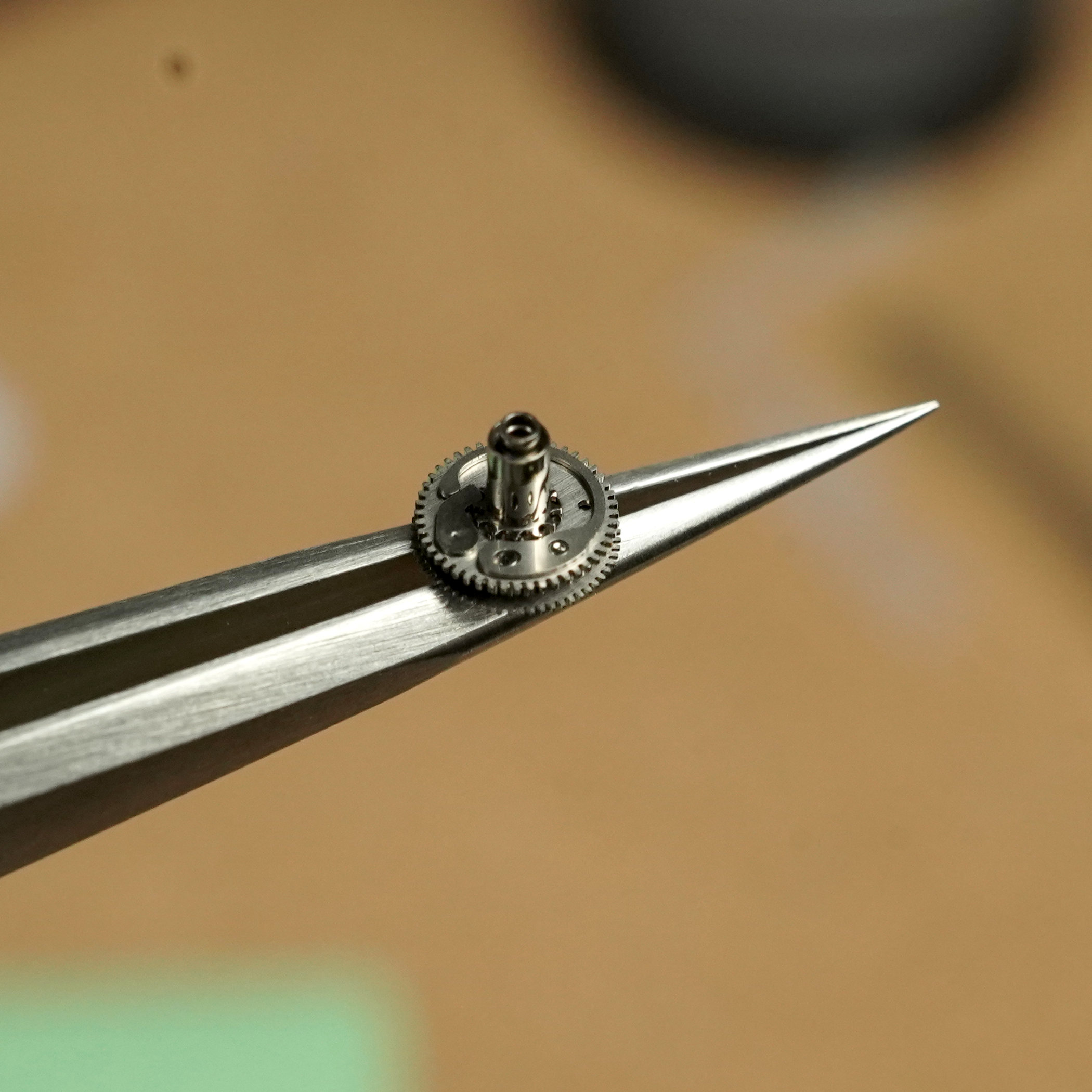
At the heart, you now have the hour wheel unit, which is a relatively complex multifunctional set of parts. It’s built up out of the cannon pinion with driving wheel, the minute wheel and pinion, the index wheel, and the hour wheel, hour wheel jumper and index spring. Essentially, this is what allows the hour hand to be adjusted independently when in the correct crown position, as the small click assembly (the hour wheel jumper and index spring) ensures that when the upper gear of the hour wheel unit is turned, the bottom turns too. When the lower-level gear is turned, the upper-level one does not move.
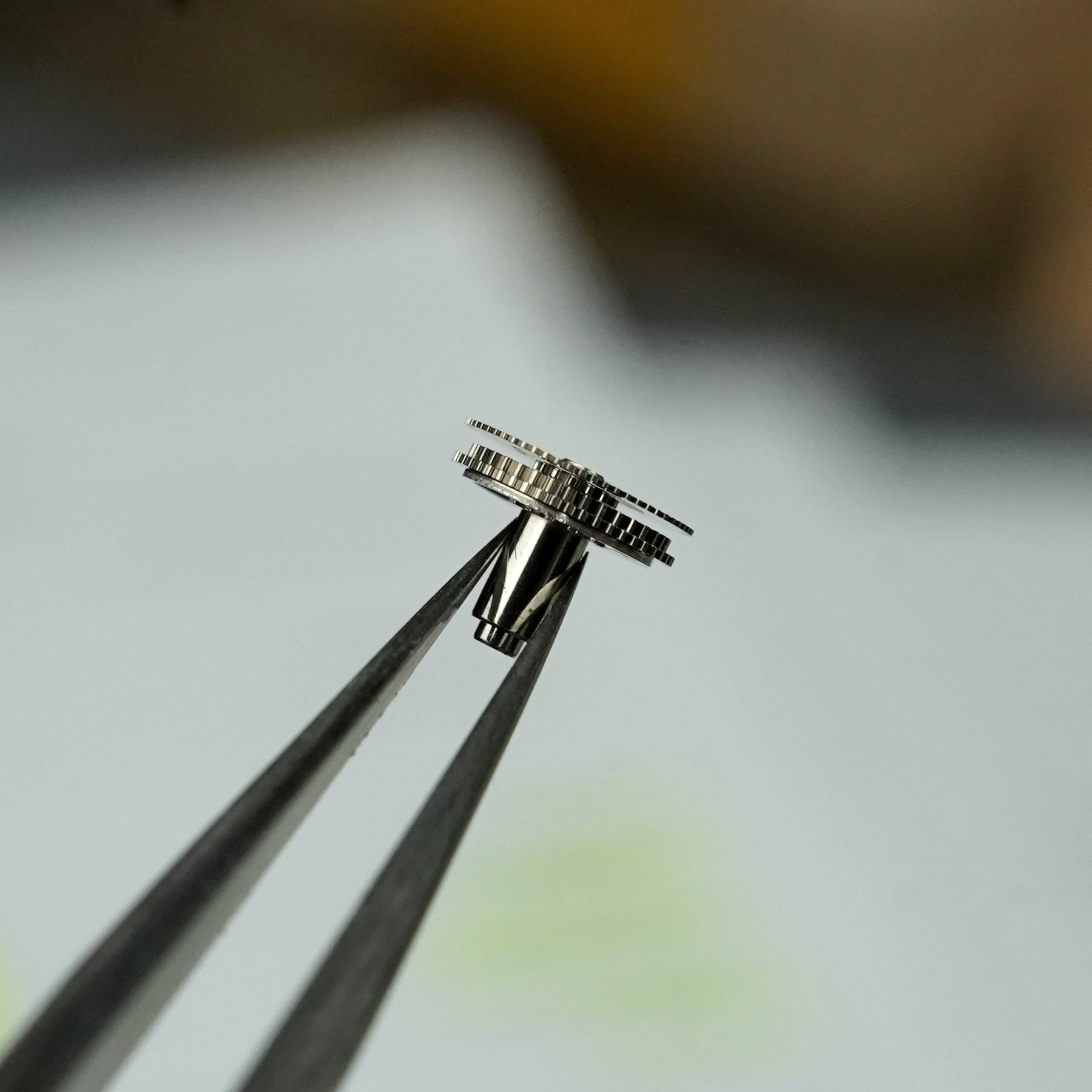
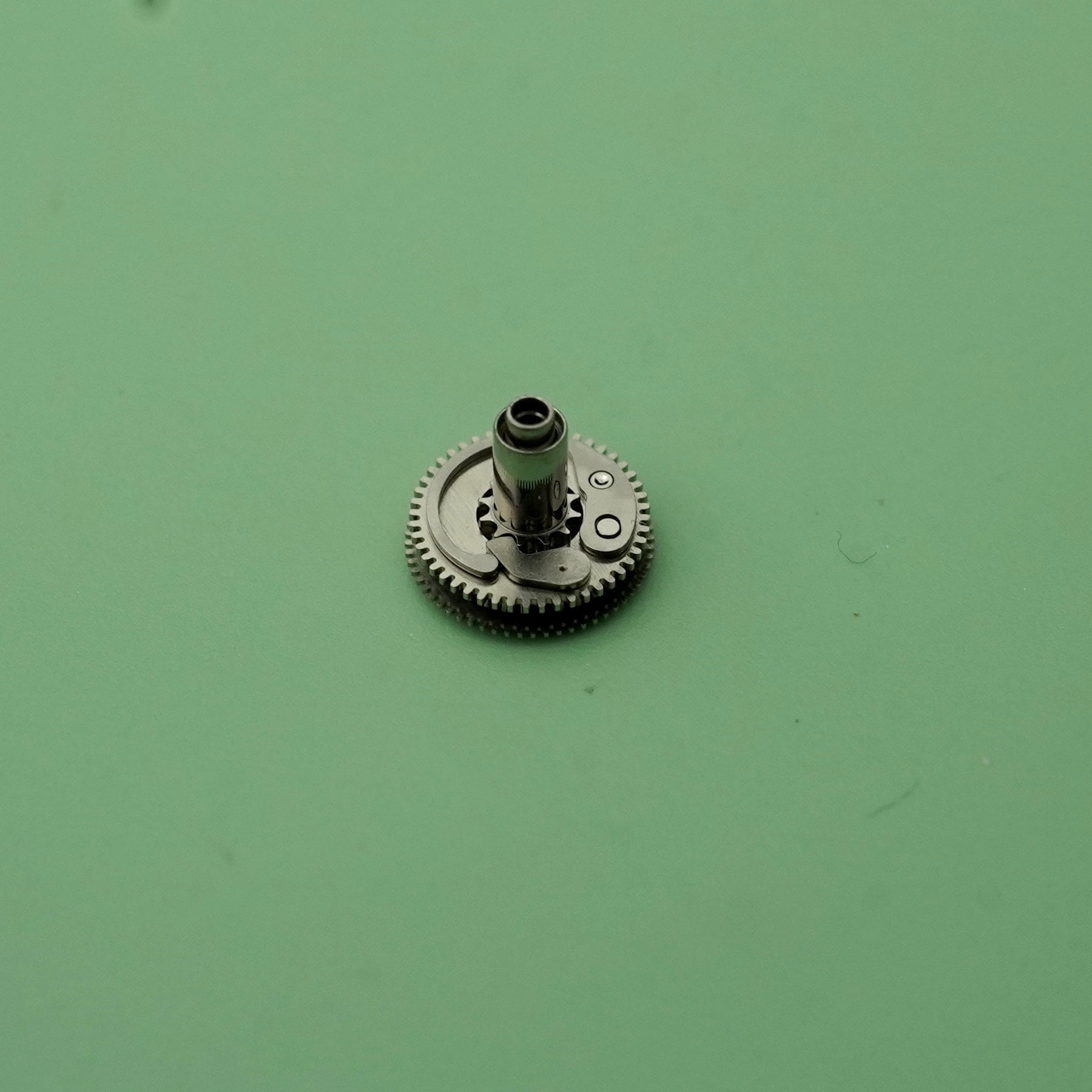
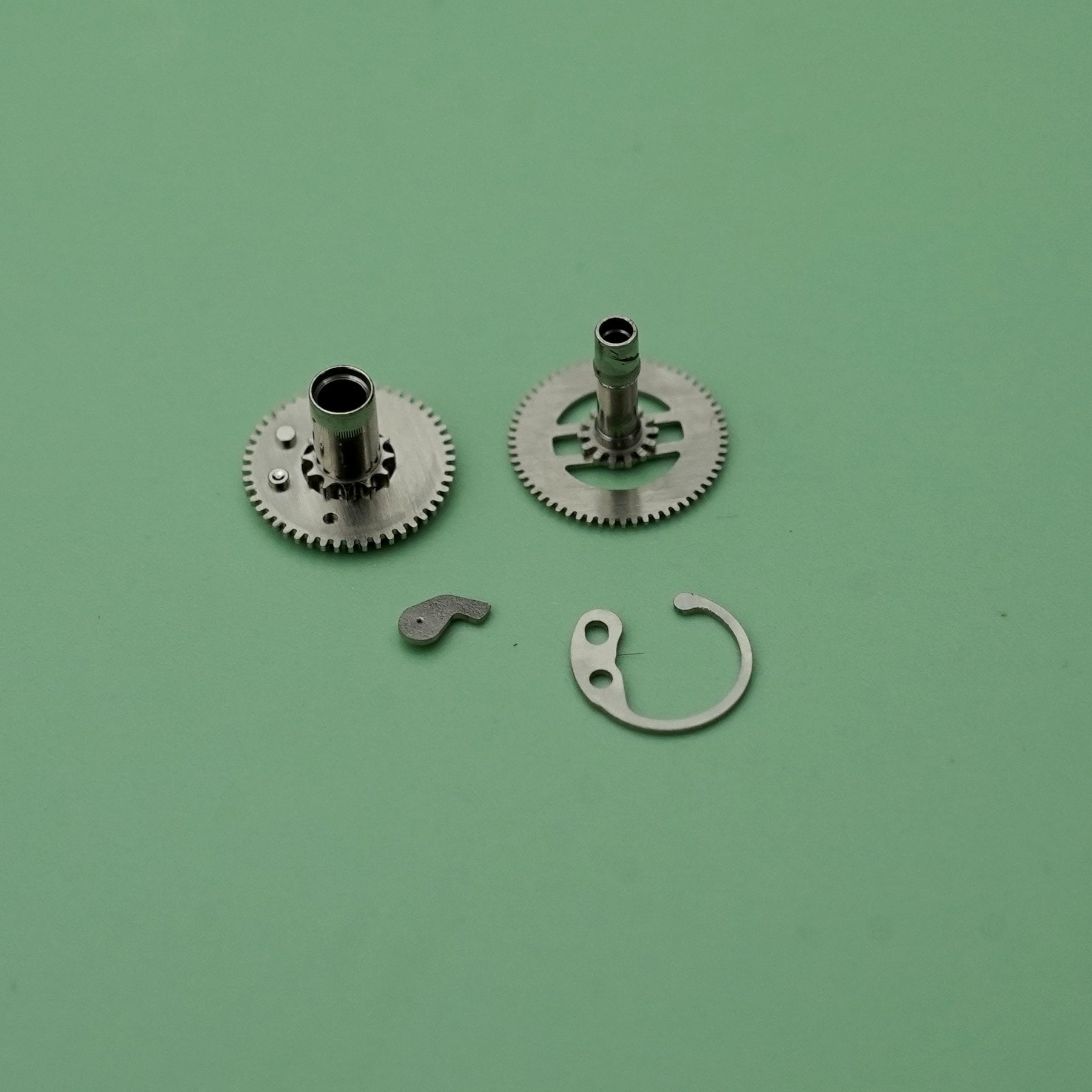
As I continue to work my way down into the movement, something else becomes clear to me. This is a lot more complex than it seems at first! I also took a closer look at the assembly of the setting lever spring, the setting wheel, operating lever and yoke, which moves according to the various positions of the crown, ensuring you set the right indications. The intricately shaped parts move back and forth in an orchestrated dance between the three crown positions, switching from base position to wind the movement by hand if desired, and the first and second positions that adjust all the indications.
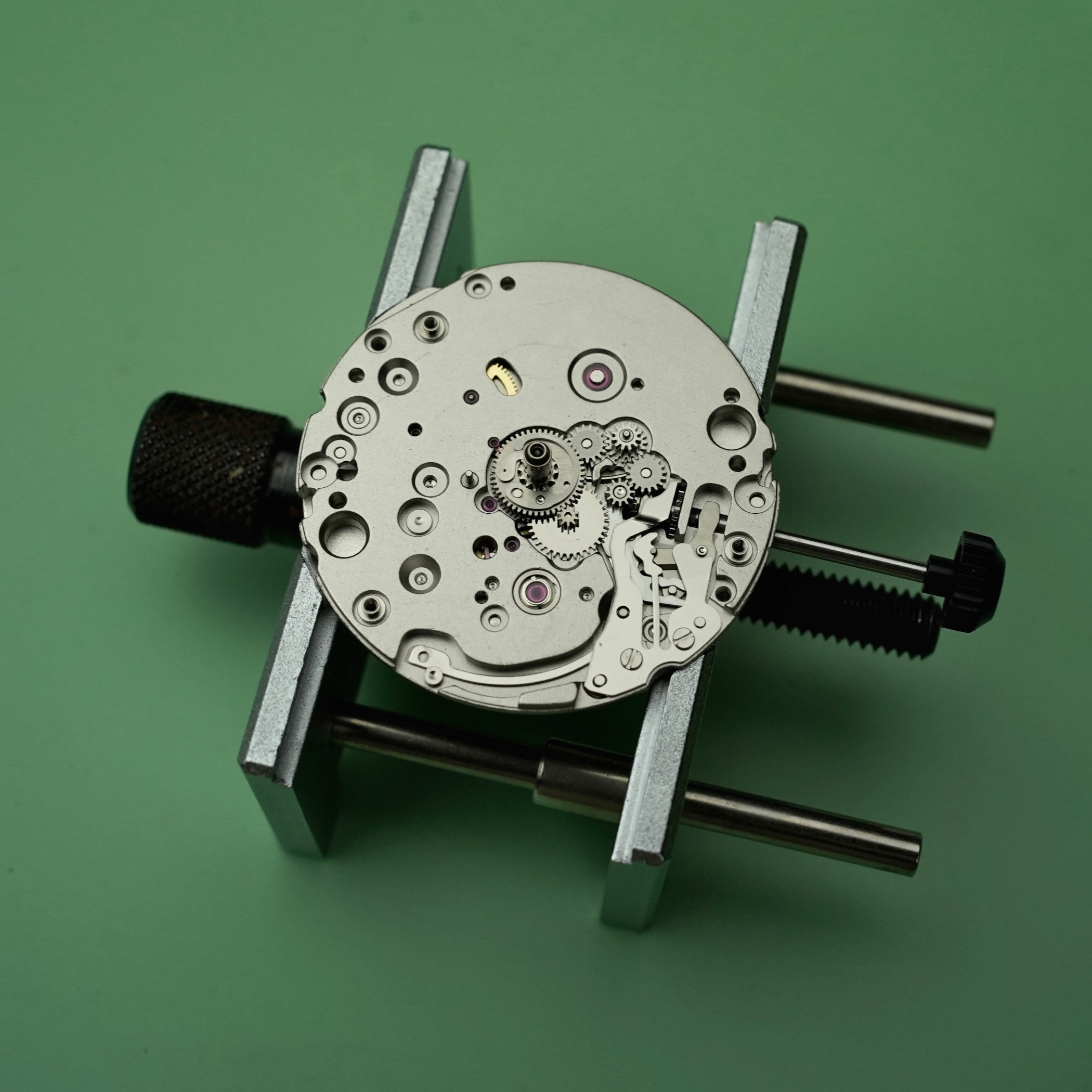
All of this again gave me a much better understanding but also a greater appreciation of how a GMT movement works, and what the essential components are that allow for the adjustments of various indications to accommodate travelling across time zones. The multi-part setup of the Hour Wheel Unit, for instance, fascinates me to bits. How it’s built, with various parts ensuring all things are done the right way, in sync or independently when needed, is just incredible. I knew the principles of watch movement construction, but getting to use my tools and (limited) skill set to take one apart only pulls me deeper down the proverbial rabbit hole.
For more information, please visit MiyotaMovement.com.