
 Not all images were able to load for printing. Please close the print window and try again.
 The Big Pilot Perpetual Calendar ProSet, IWC’s Foolproof Take on the QP
IWC introduces one of the most intuitive, foolproof perpetual calendars ever, redefining this complication with a new sense of ease and control.
IWC Schaffhausen has a very unique history when it comes to perpetual calendars. Naturally, this immediately brings to mind one particular figure: Kurt Klaus. His remarkable perpetual calendar module has left a mark on the history of watchmaking, notably as one of the most user-friendly systems ever created, where all adjustments can be made simply through the crown, without relying on correctors and push pieces. What is even more remarkable today is that IWC has developed a new perpetual calendar, the “ProSet” that faithfully captures the mindset of the 1980’s Kurt Klaus perpetual calendar, with the same indications and the same intuitive crown-based adjustment system. However, with its completely synchronised and gear-based design, it goes one step further in terms of functionality by allowing not only forward corrections, but also backward adjustments.
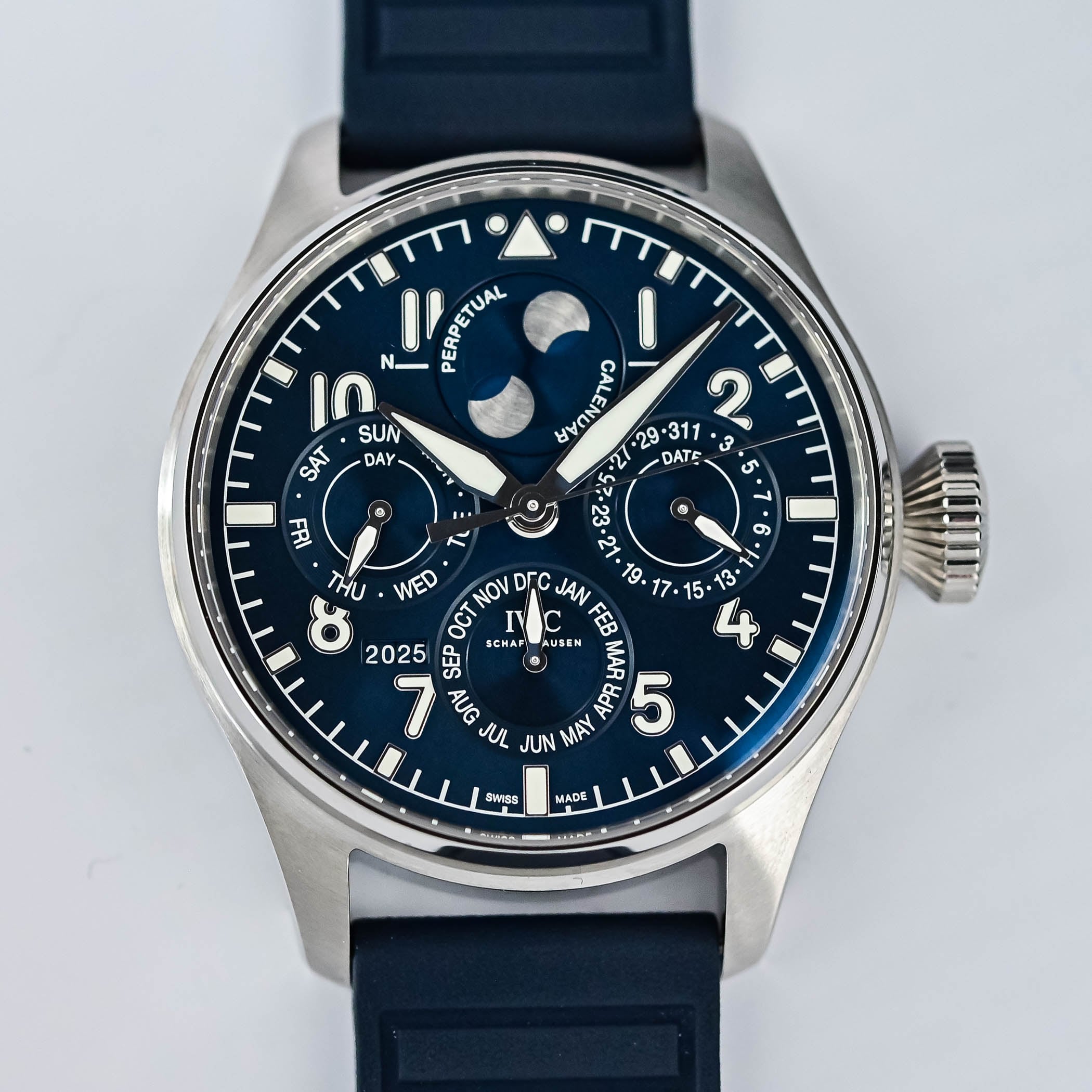
IWC ProSet’s added capability represents a significant evolution. When a user advances the calendar too far, there is no need to wait several days to realign the indications. Instead, one could simply turn the crown back and instantly return the perpetual calendar to the correct date. Protected by several patents, this new IWC ProSet mechanism represents a breakthrough and a departure from traditional horological architecture, moving away from the systems that have defined the vast majority of perpetual calendars for centuries.
Indeed, adjusting a traditional perpetual calendar can be surprisingly tricky: multiple recessed pushers must be actuated in a precise sequence to align the day, date, month, and leap year indications – often with strict “no-adjust” time windows to avoid damaging the mechanism. Even crown-operated systems typically advance only in one direction, so a simple mistake can mean cycling laboriously through weeks or months to get back on track. By contrast, a solution where all indications are synchronised and can be adjusted directly via the crown, both forward and backwards, allows the wearer to reach the correct date quickly, safely, and intuitively. Credit where credit is due, the Ulysse Nardin Perpetual Ludwig, developed by the genius Ludwig Oechslin, is known as the first perpetual calendar to allow bidirectional adjustment via a single crown (1996).
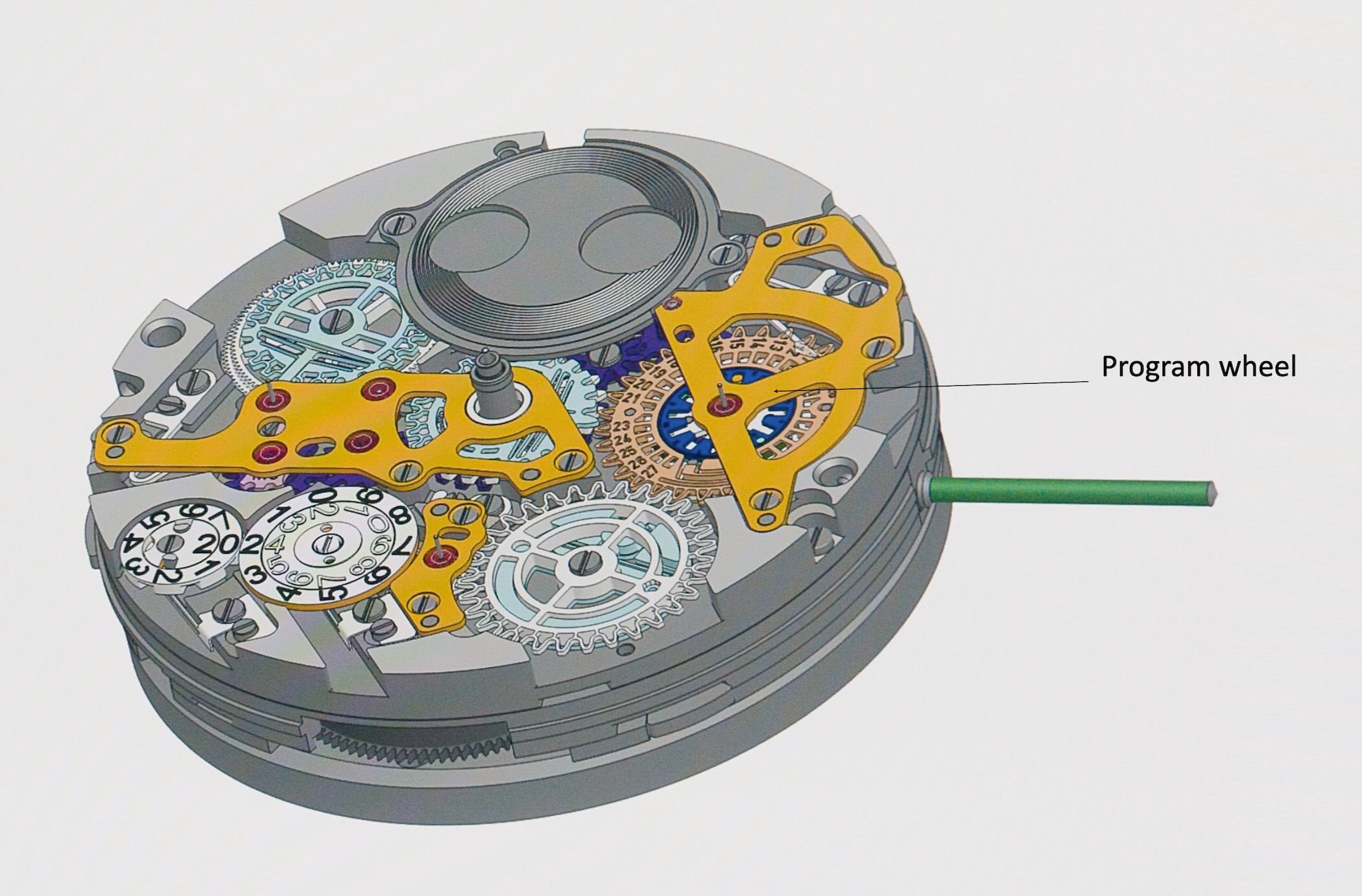
Back to the IWC ProSet, its entirely new movement achieves bidirectional adjustability by centralising the calendar logic into a single, stacked Program Wheel. While traditional perpetual calendars spread their “memory” across the movement using separate cams for the month and leap year, this mechanism utilises a vertically stacked assembly of approximately 20 components. This centralised “brain” houses multiple wheels that rotate at different speeds. In particular, an annual wheel rotates once per year to govern the standard month transitions, and a leap year wheel rotates once every four years to provide the logic for the February cycle.
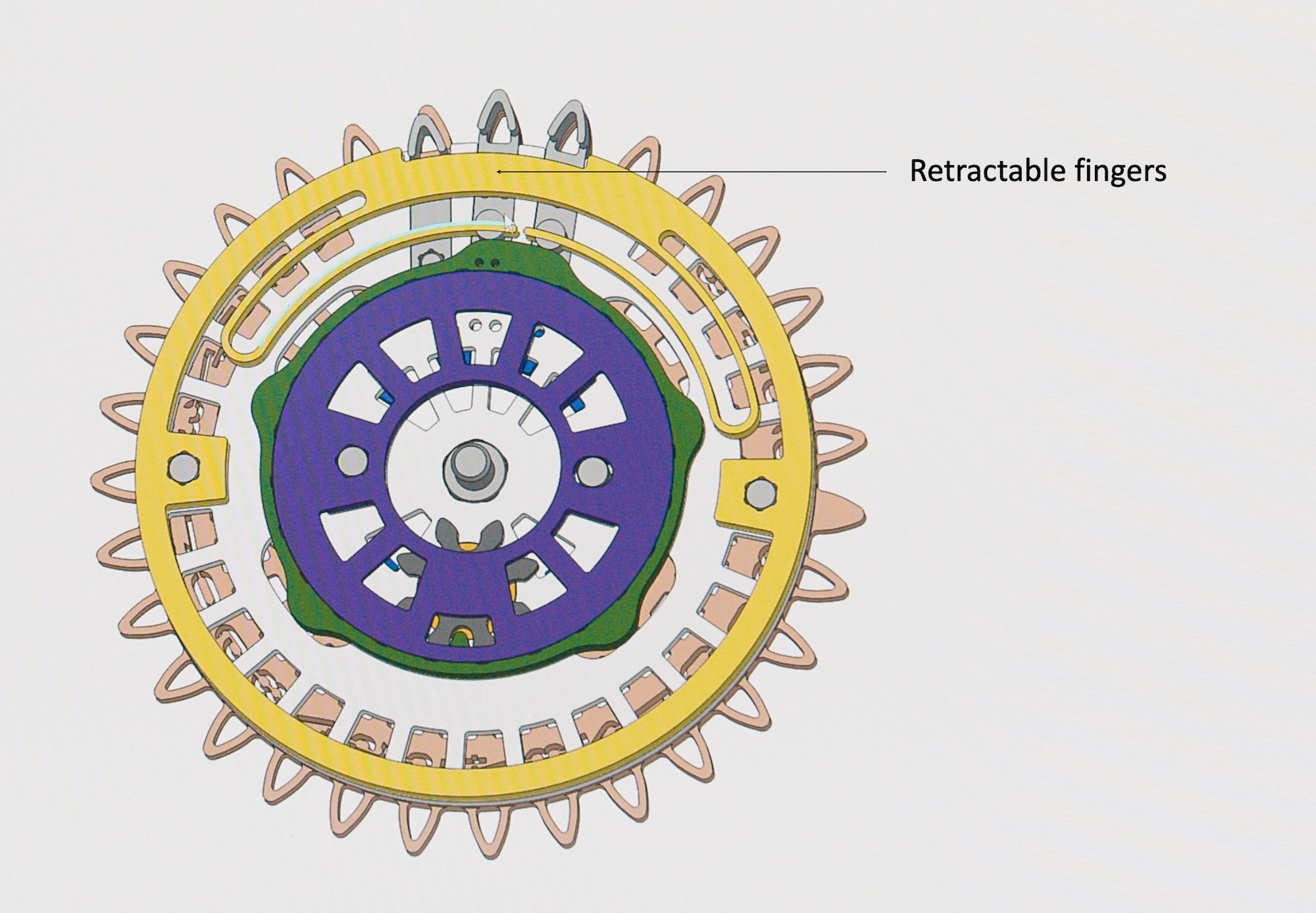
To account for the irregular length of February (28 or 29 days), the mechanism employs flexible components with “retractable fingers”. In a standard mechanical calendar, a lever (named the grand levier) must “feel” the depth of a cam to determine the month’s end. In this system, three fingers are driven by interaction with the annual and leap year wheels. These fingers extend or retract to engage the date-advance wheel at precisely the right moment, allowing the gear to “know” whether to jump from the 28th or 29th directly to the 1st of March.
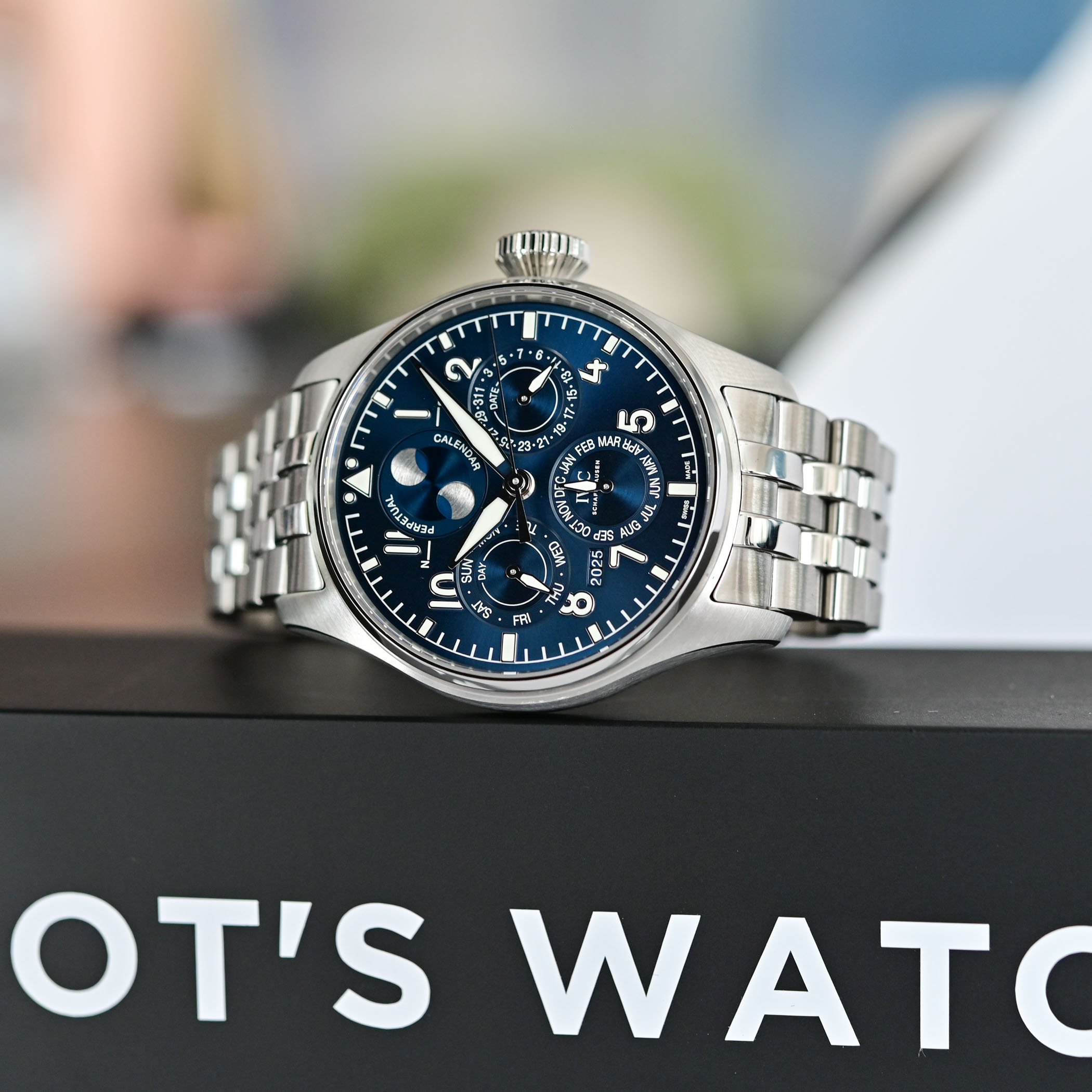
As noted, the mechanism is also extremely user-friendly, eliminating the levers and spring-loaded jumpers. Because the setting mechanism is entirely gear-driven and fully programmed, there are no levers that can be jammed. This geared architecture also allows the crown to drive the entire calendar train backwards and forward smoothly, as the gears remain in constant, synchronised mesh, thus allowing bi-directional adjustments.
For the Perpetual Calendar ProSet, IWC’s engineers also recalculated the reduction gear leading to the moon phase display. With a deviation of just one day after 1040 years, it reaches an impressive level of precision.
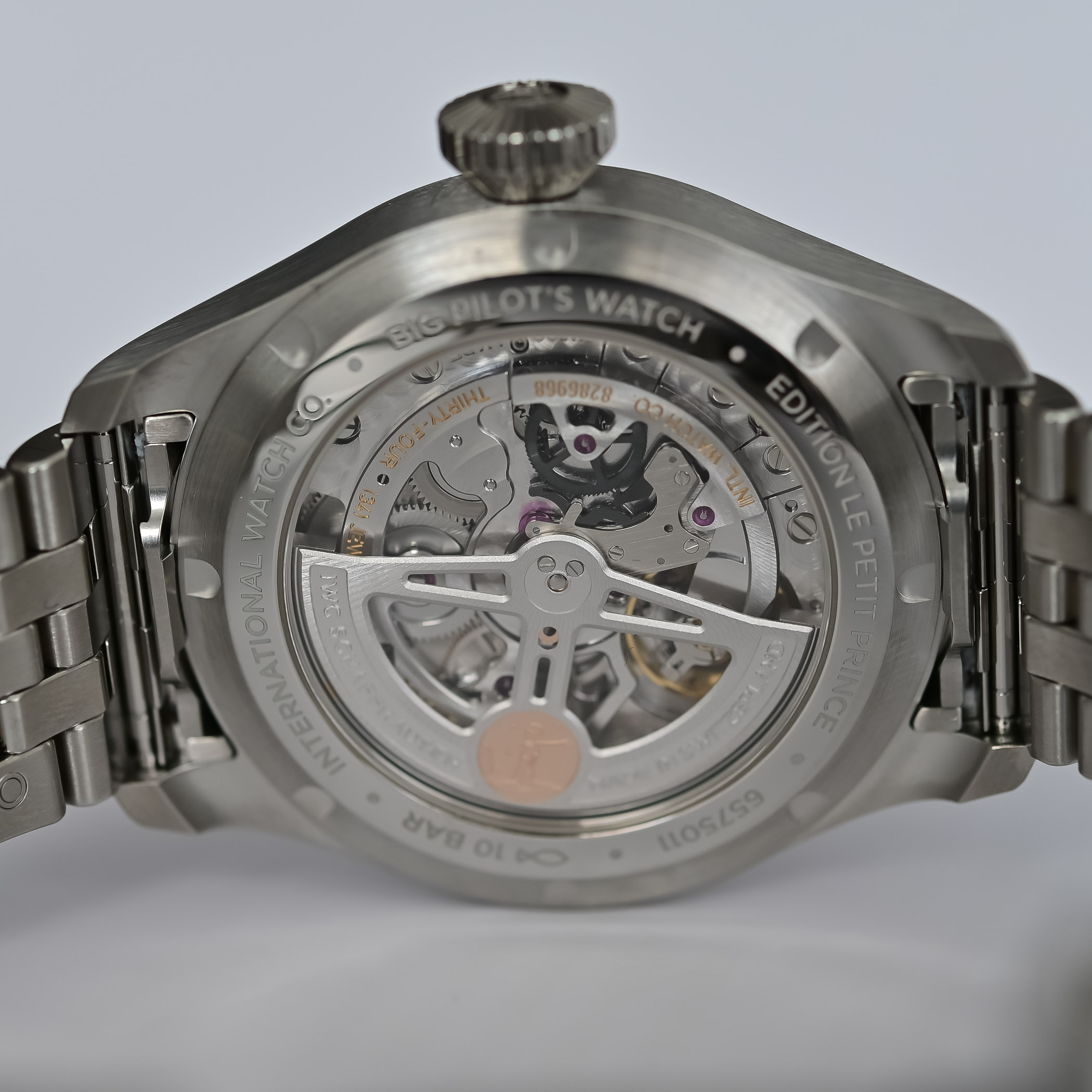
From a technical perspective, the new mechanism was made possible thanks to a highly sophisticated architecture incorporating no fewer than 26 LIGA-manufactured parts, including flexible components. LIGA offers significant advantages, enabling the production of components with highly intricate geometries and exceptional precision that would be extremely difficult to achieve with traditional manufacturing methods. Furthermore, the extreme thinness of these components enables them to be stacked in a very compact space, contributing to both the efficiency and refinement of the overall design.
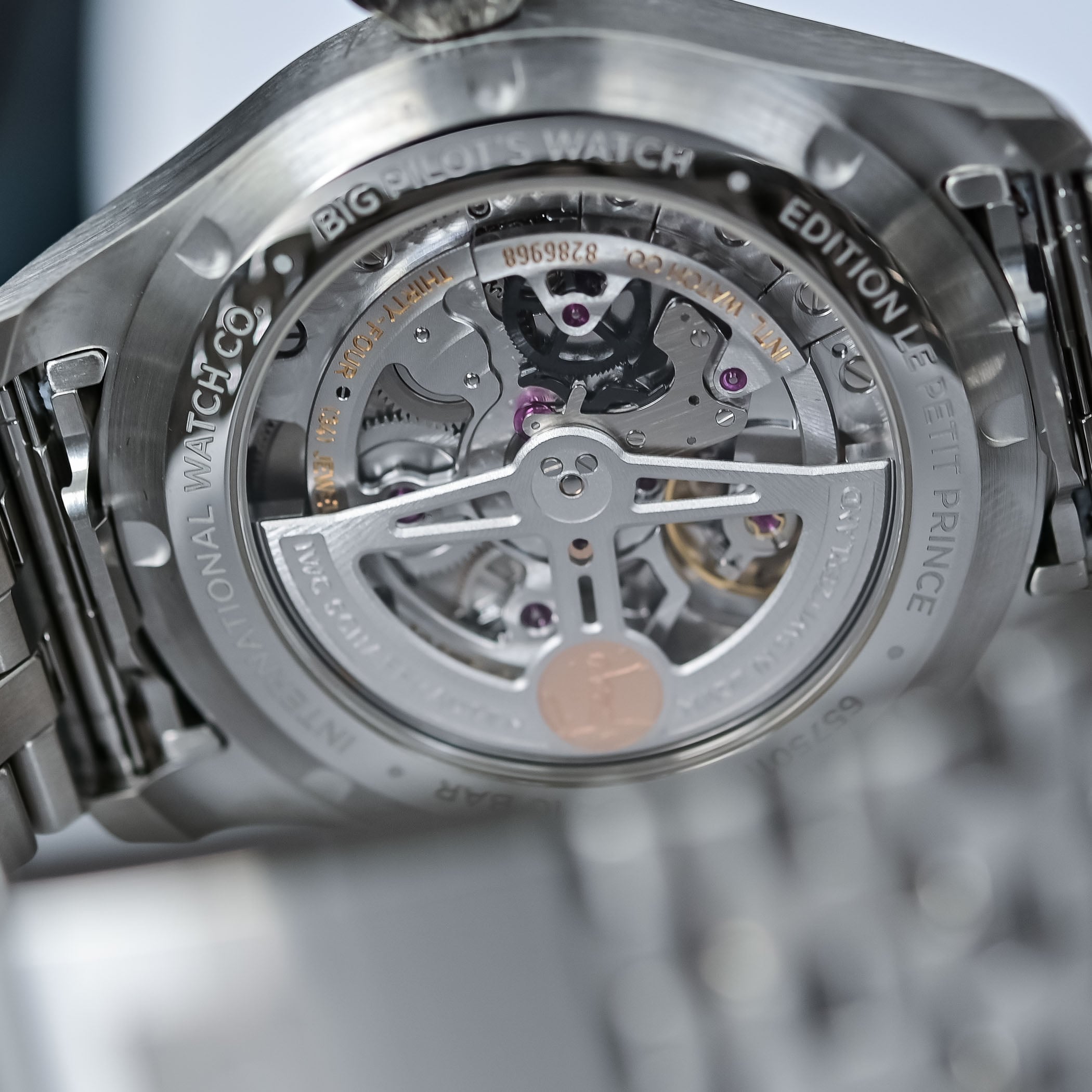
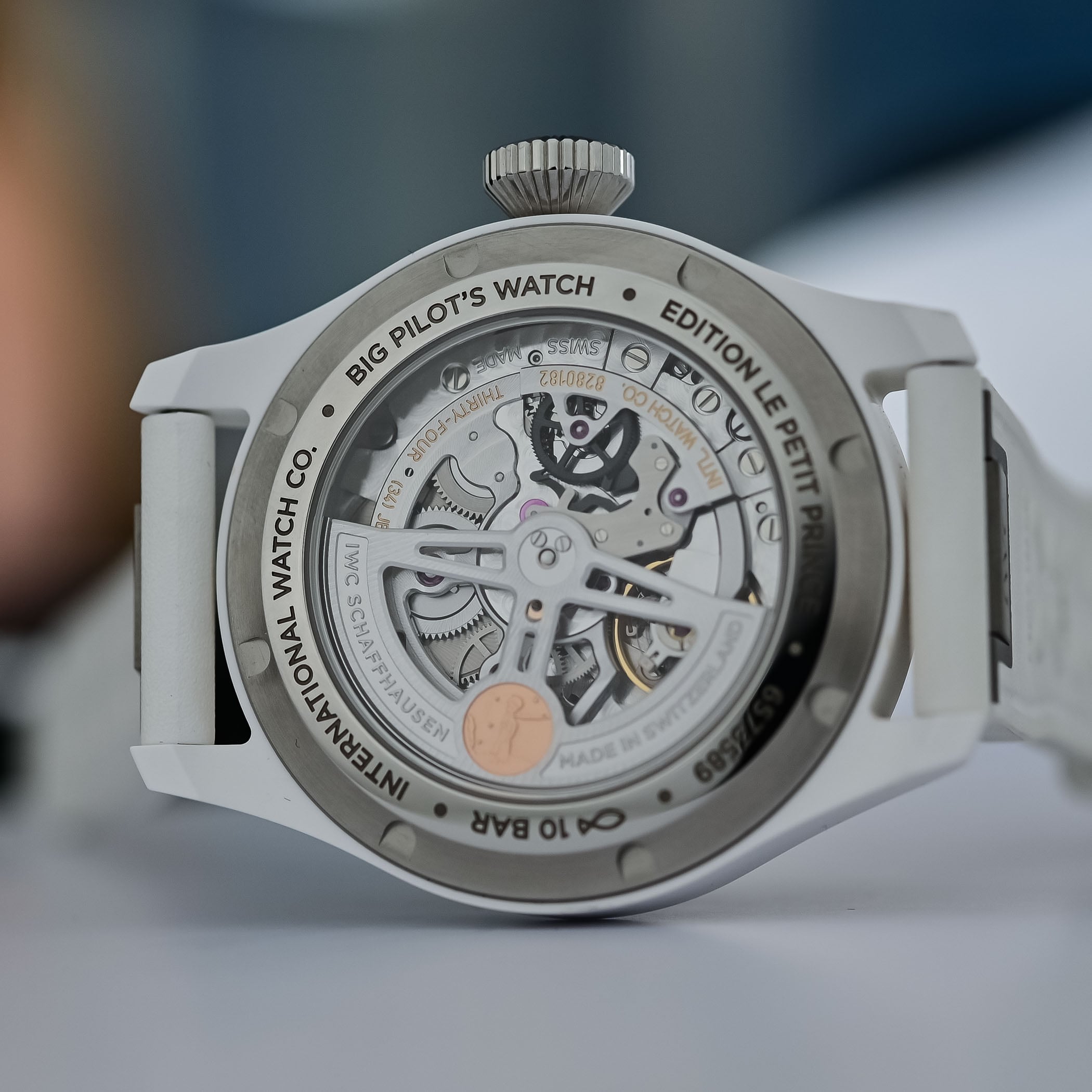
This new calendar module has been integrated into the automatic 82665 calibre, which is equipped with a LIGA nickel-phosphorus escapement and a silicon hairspring. It is driven directly from the hour wheel, which saves space. It runs at 28,800 vibrations/hour and delivers a 60-hour power reserve.
The Proset perpetual calendar debuts in three versions
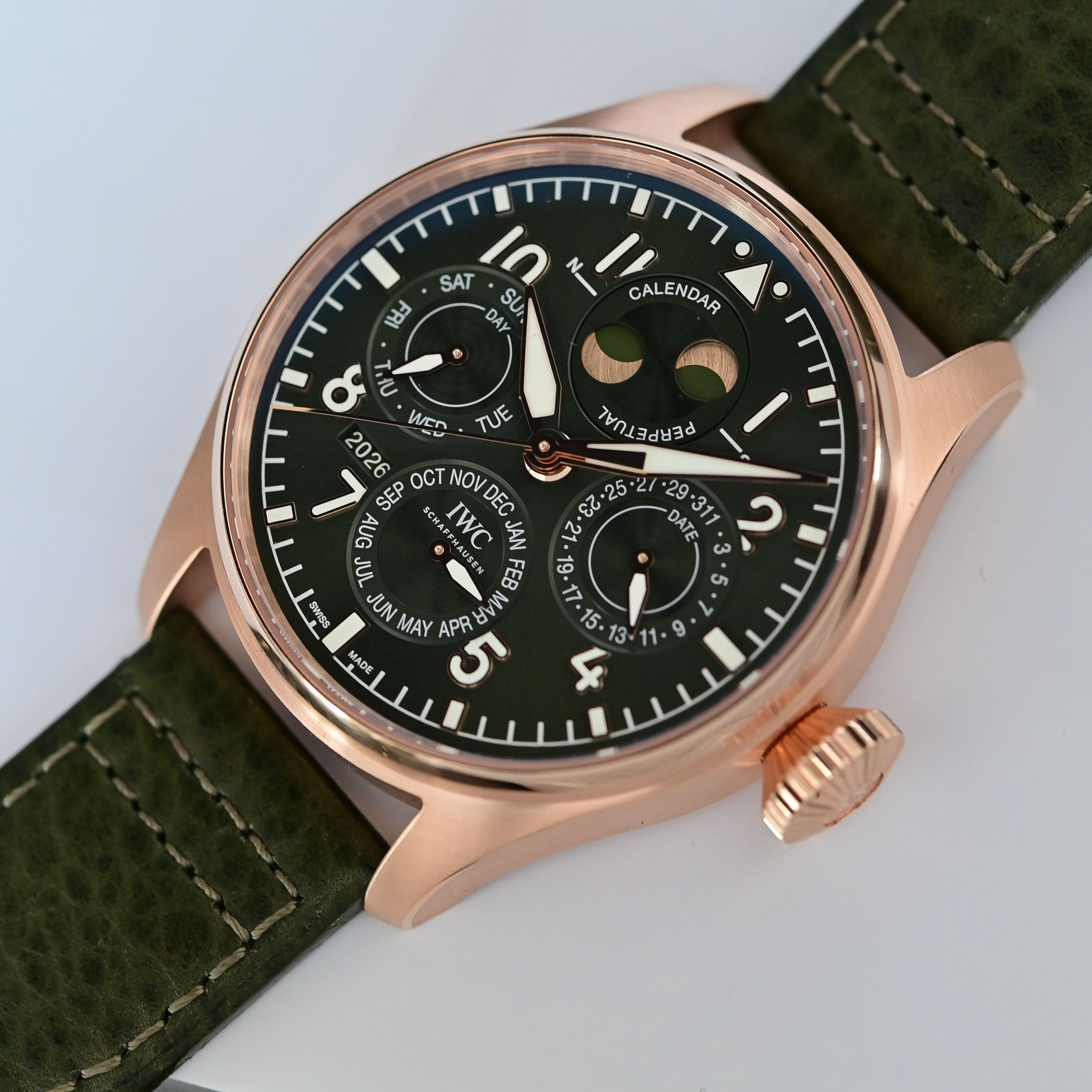
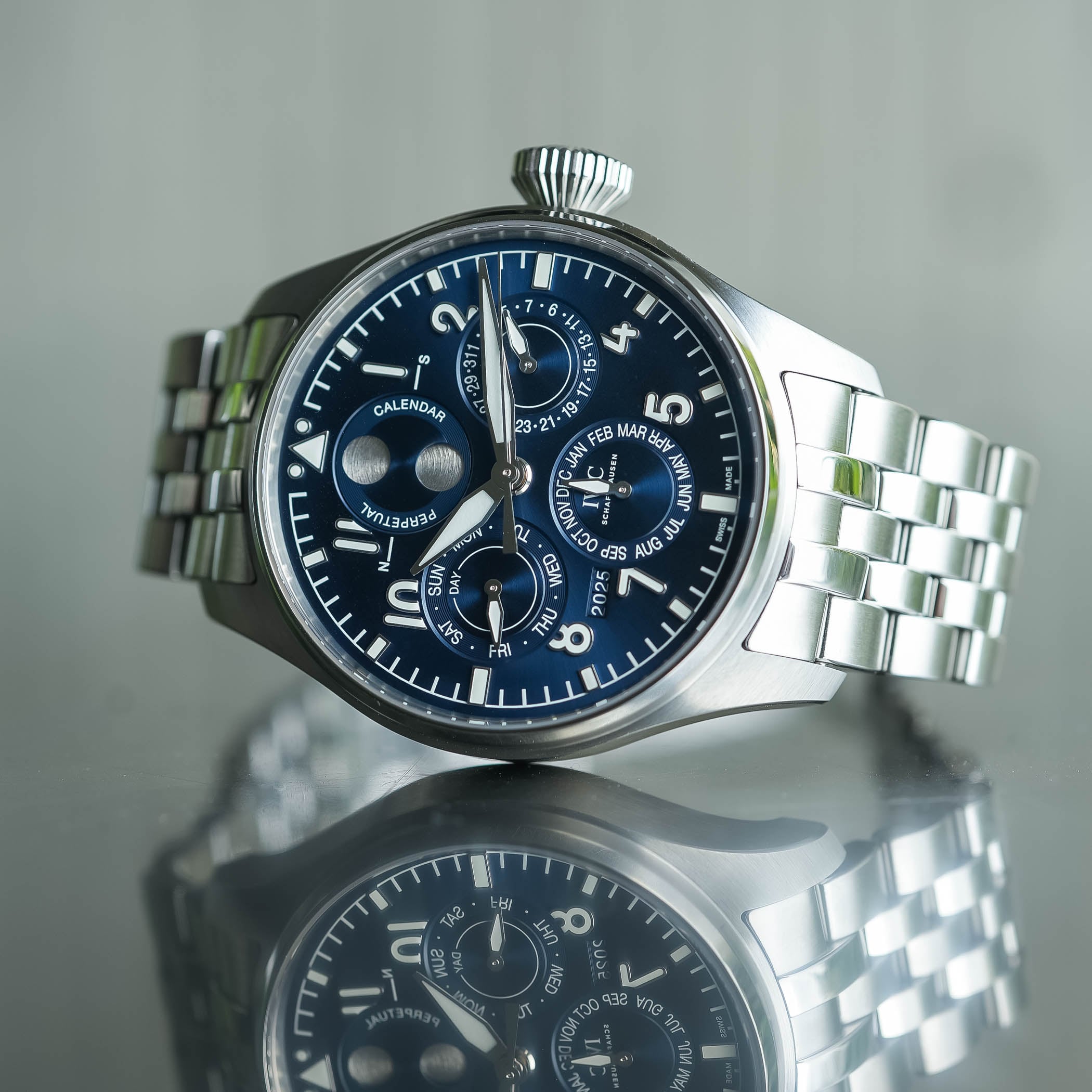
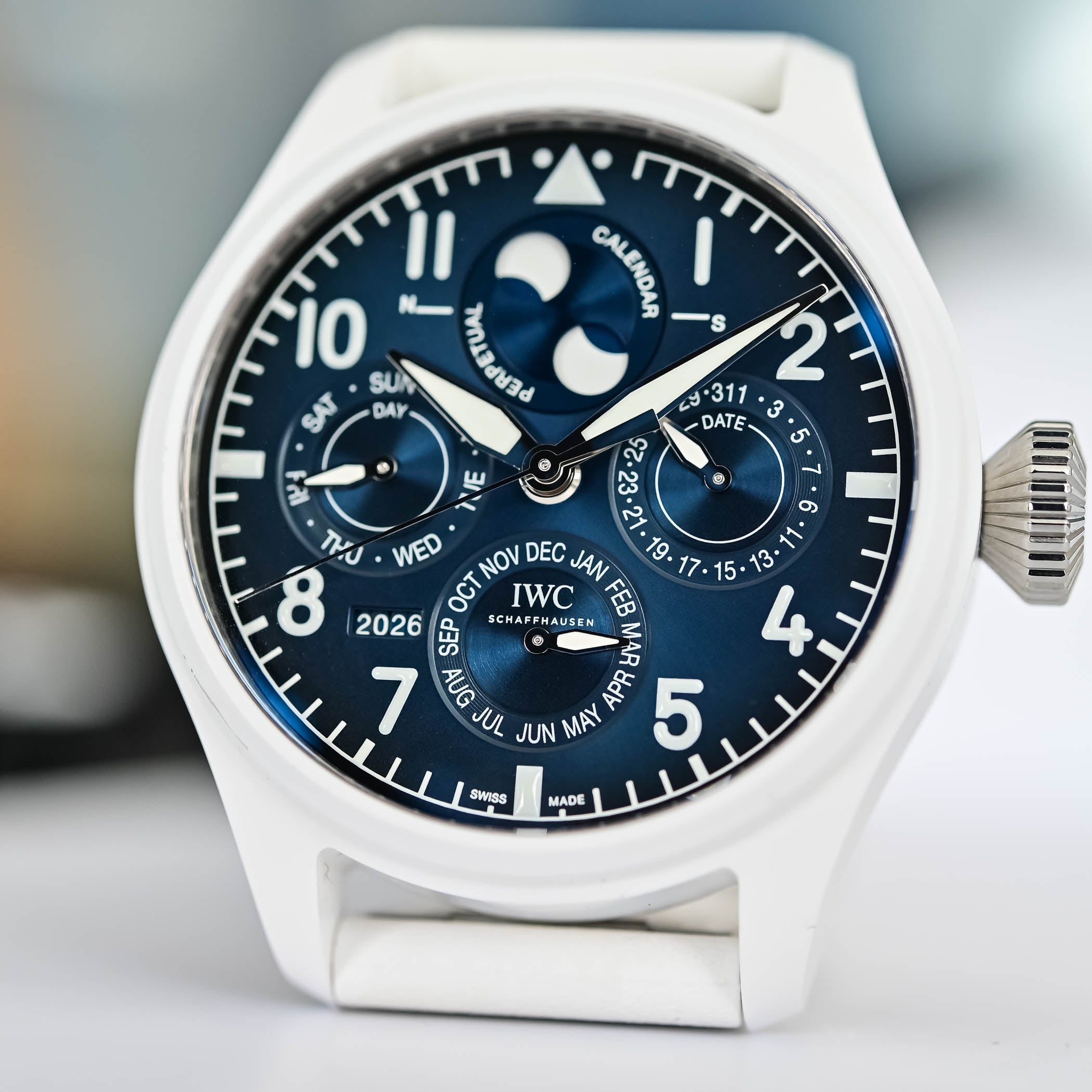
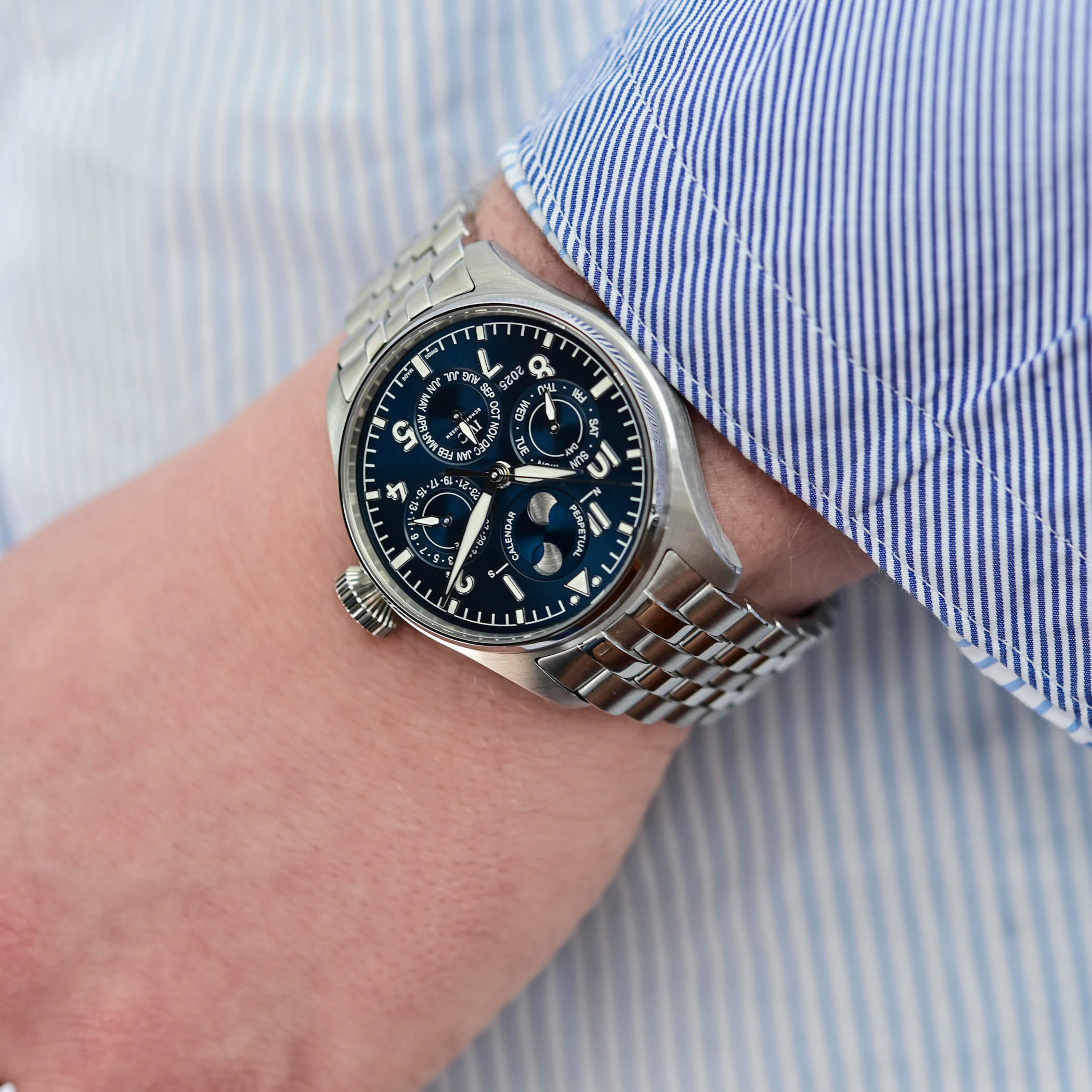
The Big Pilot’s Watch Perpetual Calendar ProSet Le Petit Prince and Big Pilot’s Watch Perpetual Calendar ProSet come in 42mm cases in steel (IW329601) and pink gold (IW329602). The third version, also Le Petit Prince (IW339601), features a 43mm white ceramic case and a deep blue dial with a gradient finish. Shrunk to these dimensions, the Big Pilot loses a touch of its bold, unmistakable presence, but this probably echoes today’s shift toward more restrained proportions.
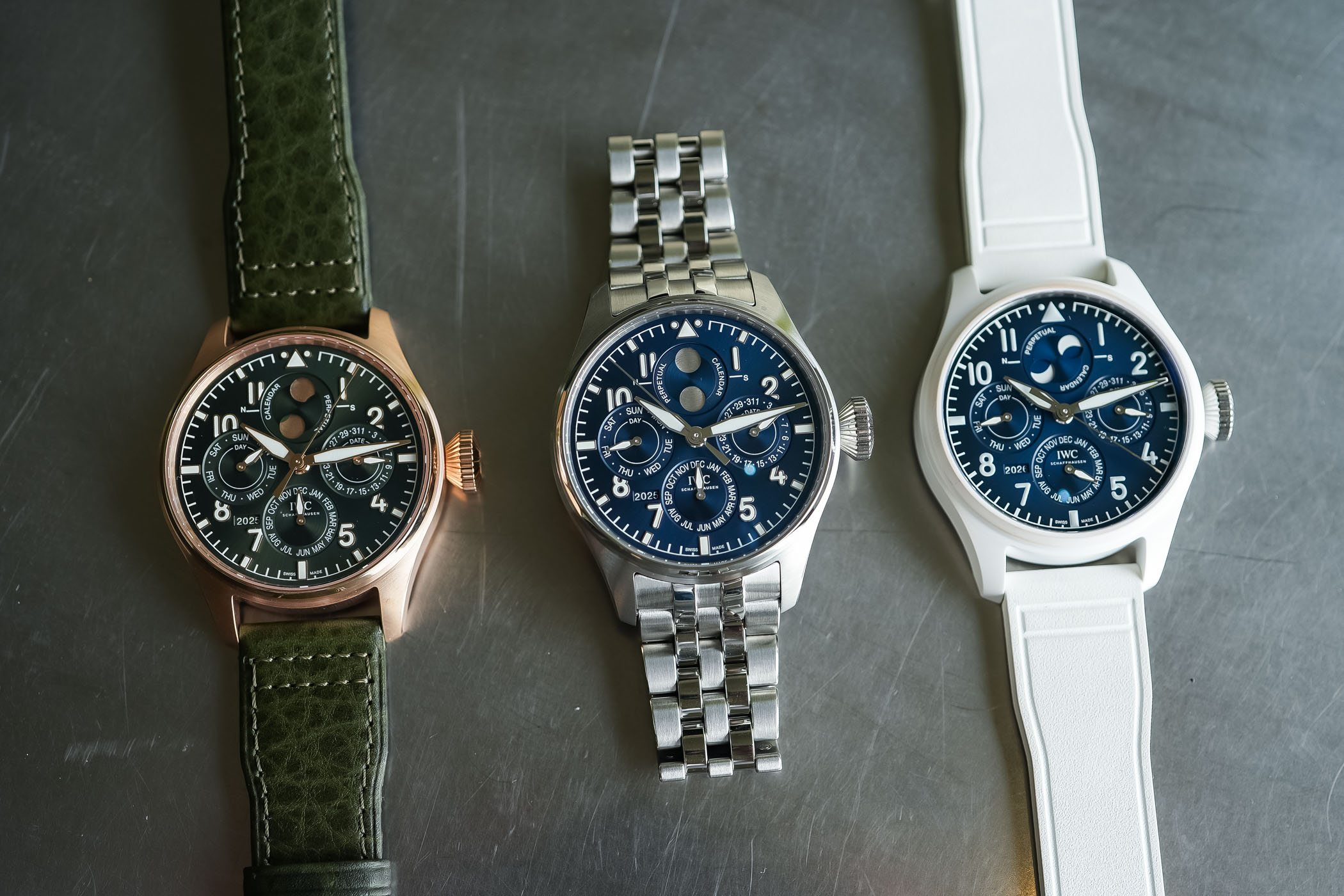
The steel and ceramic versions of the IWC Proset are fitted with the integrated EasX-CHANG system, allowing straps or bracelets (for the steel version) to be exchanged quickly and easily without any tools.
Kudos to the IWC team for developing this impressive, innovation-packed perpetual calendar, certainly one of the highlights of this 2026 edition of Watches and Wonders. For more details, please visit www.iwc.com.