


 Not all images were able to load for printing. Please close the print window and try again.
 A New Platinum Version of the Jaeger-LeCoultre Duometre Heliotourbillon Perpetual
A monochromatic interpretation of the brand’s delirious triple-axis tourbillon and its Duometre technology combined with a perpetual calendar.
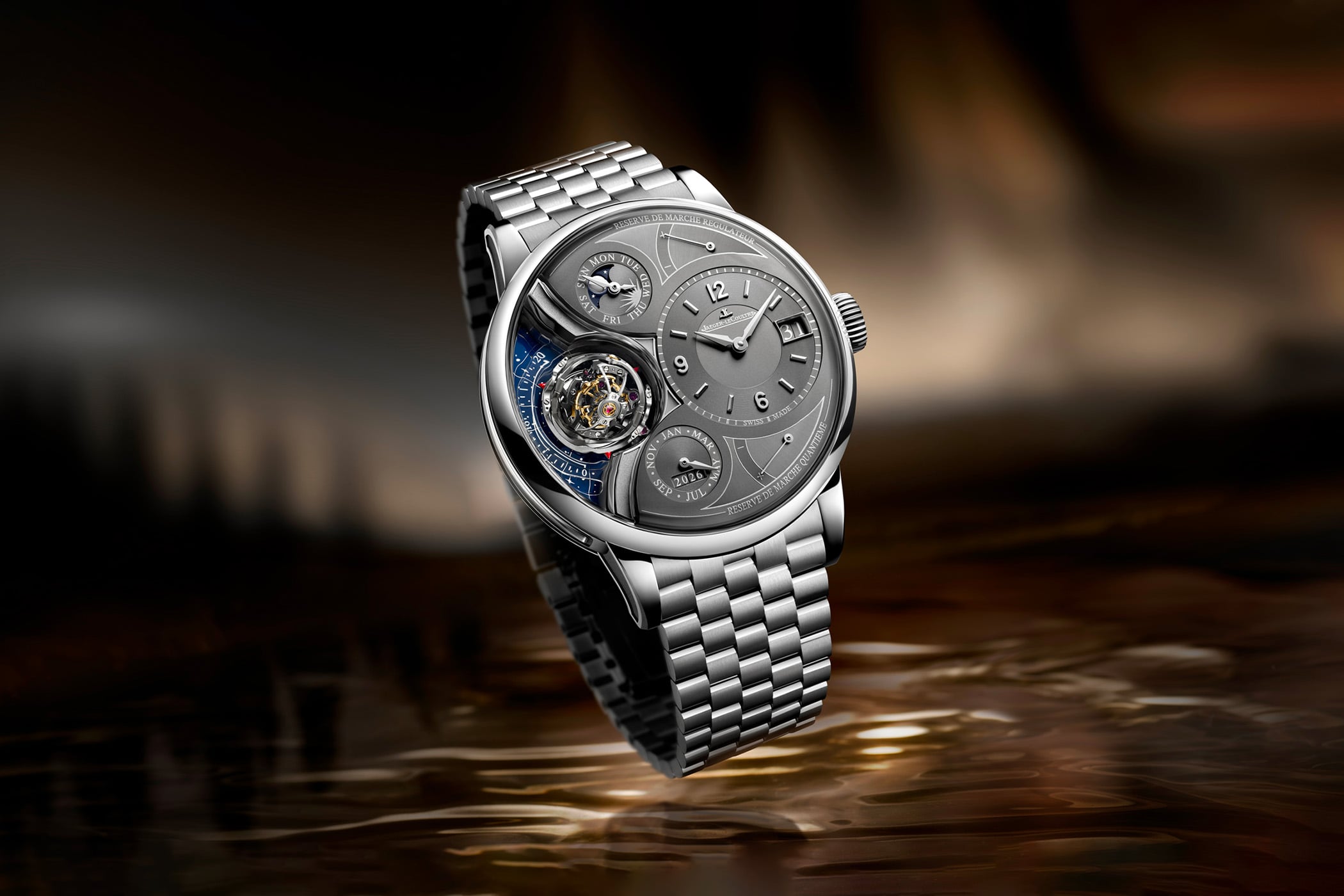
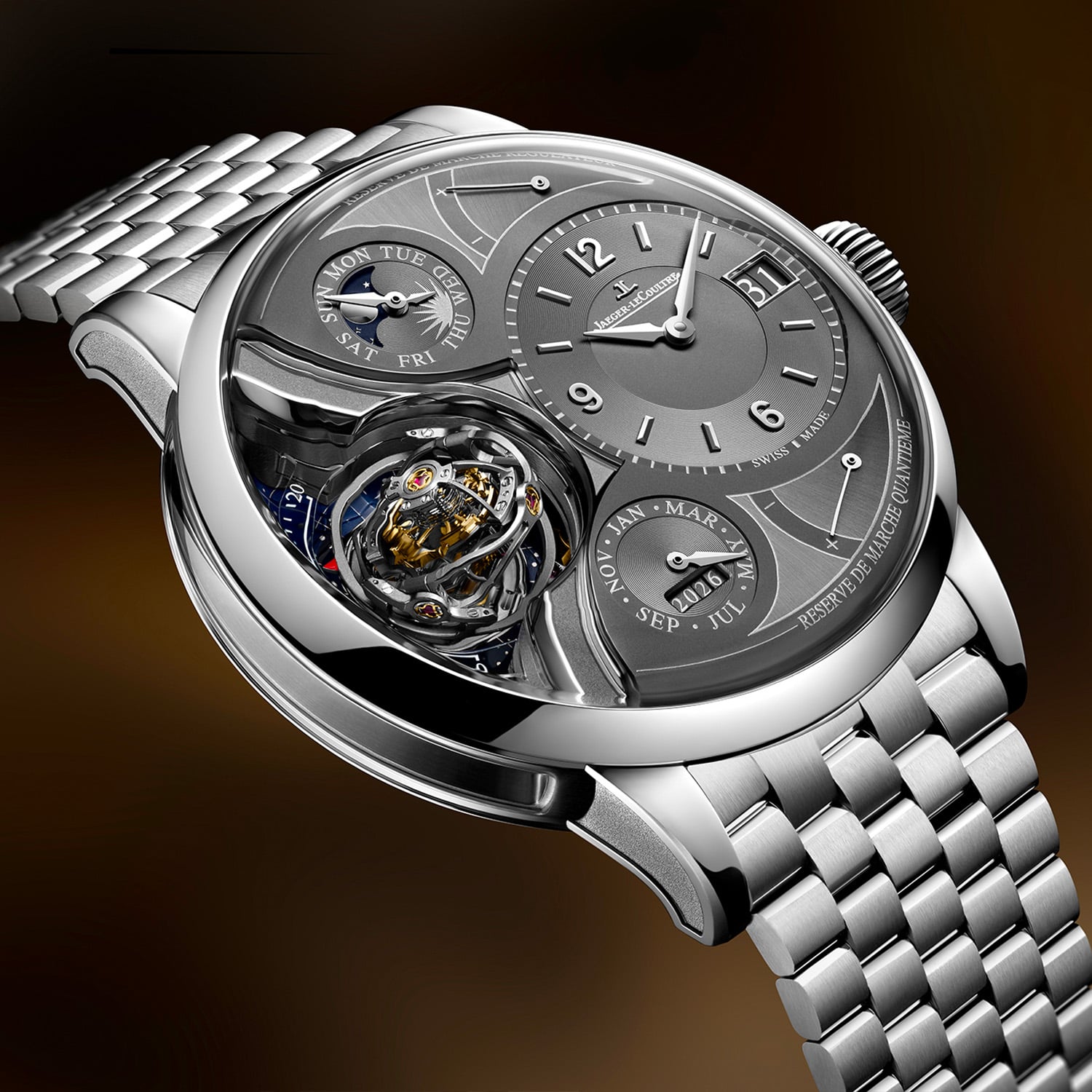
After the impressively complex watches released by Jaeger-LeCoultre at Watches & Wonders 2026, including the Master Hybris Inventiva Gyrotourbillon or the Master Hybris Mechanica Ultra Thin, the Grande Maison now presents a re-edition of its Duometre Heliotourbillon Perpetual, an ambitious creation uniting the brand’s Duometre concept with a triple-axis tourbillon and a perpetual calendar complemented by a big date and moon phase. First released in 2024, the complication returns in a heavyweight platinum case and bracelet with a grey-toned dial for a more contemporary monochromatic look.
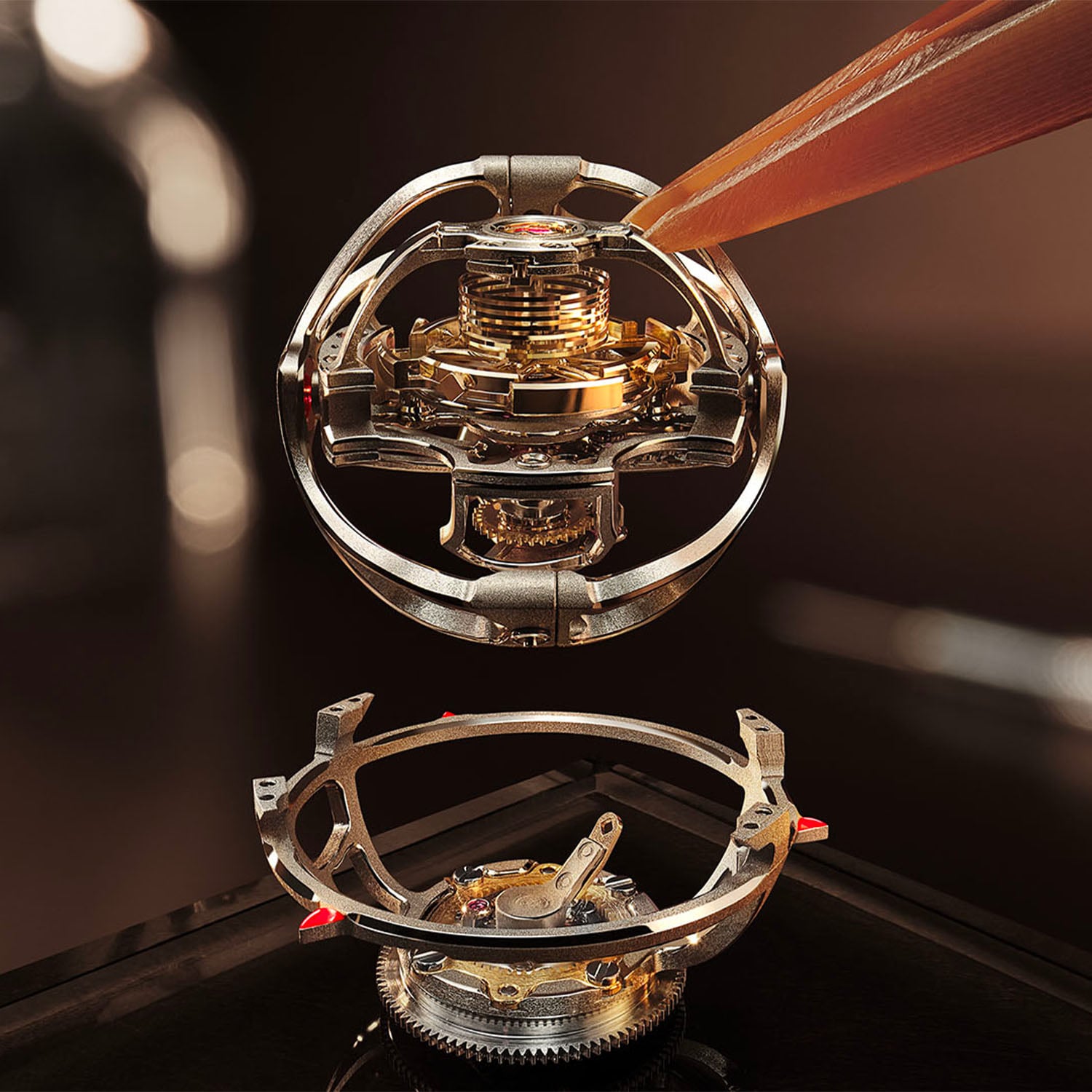
Renowned for its longstanding experience in developing tourbillons, Jaeger upped the ante with its triple-axis Heliotourbillon. An incredible gravity-defying regulator, this tourbillon spins on three axes. Made from lightweight titanium, two of the cages rotate every 30 seconds, while the third rotates every minute. Supported on ceramic ball bearings to minimise friction, the tourbillon has 163 components and weighs less than 0.7 grams. The second concept operating here is Jaeger’s patented 2007 Duometre technology with two separate barrels and gear trains linked to a single regulating organ. Ensuring a steady flow of energy, one gear train powers the time and calendar indications, and the other drives the tourbillon regulator.
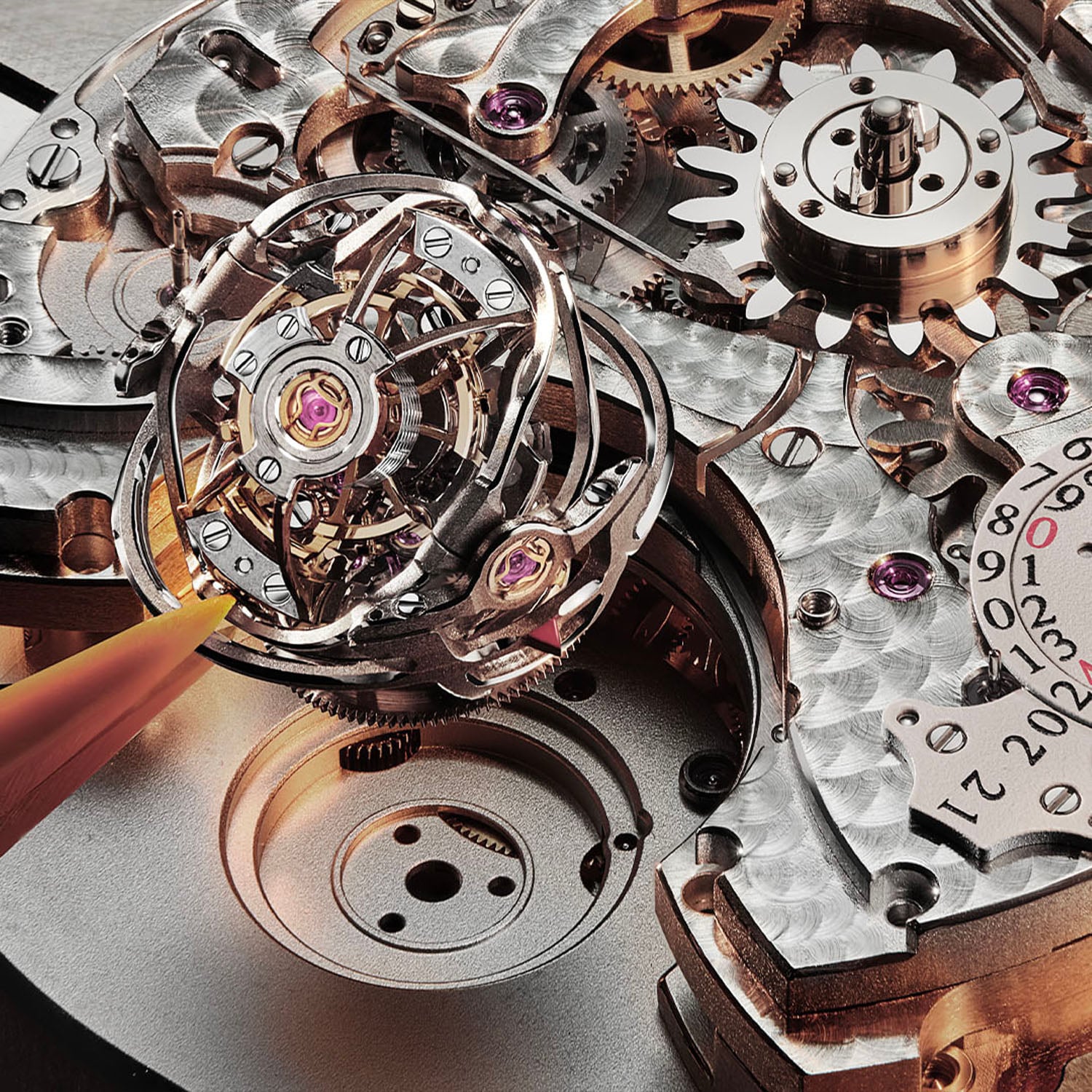
Having tackled the issues of precision and power supply, the manual-winding calibre 388 adds an integrated perpetual calendar to the mix. Automatically calibrating months of different lengths and leap years, it will not need a manual correction until 2100. Capable of being set backwards or forwards without desynchronising the calendar mechanism, it also includes a Grand Date display and a moon phase indication accurate for the next 122 years.
The commanding 44mm platinum case, with a height of 14.7mm, is a contemporary interpretation of Jaeger’s 19th-century savonette pocket watches. Composed of 40 parts, the rounded case contours are decorated with a mix of polished, brushed, and micro-blasted surfaces, and the lugs, with their recessed interiors, are screwed.
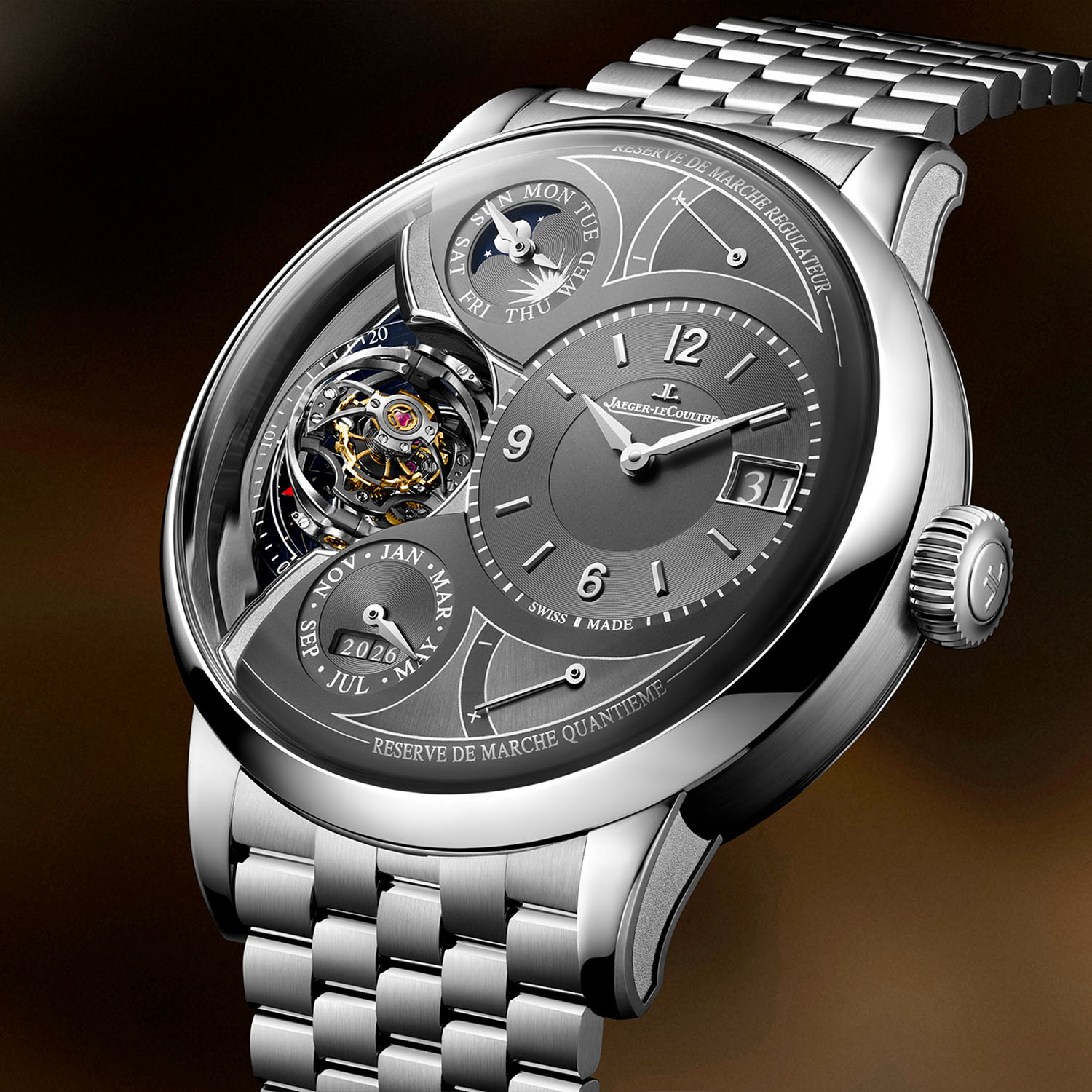
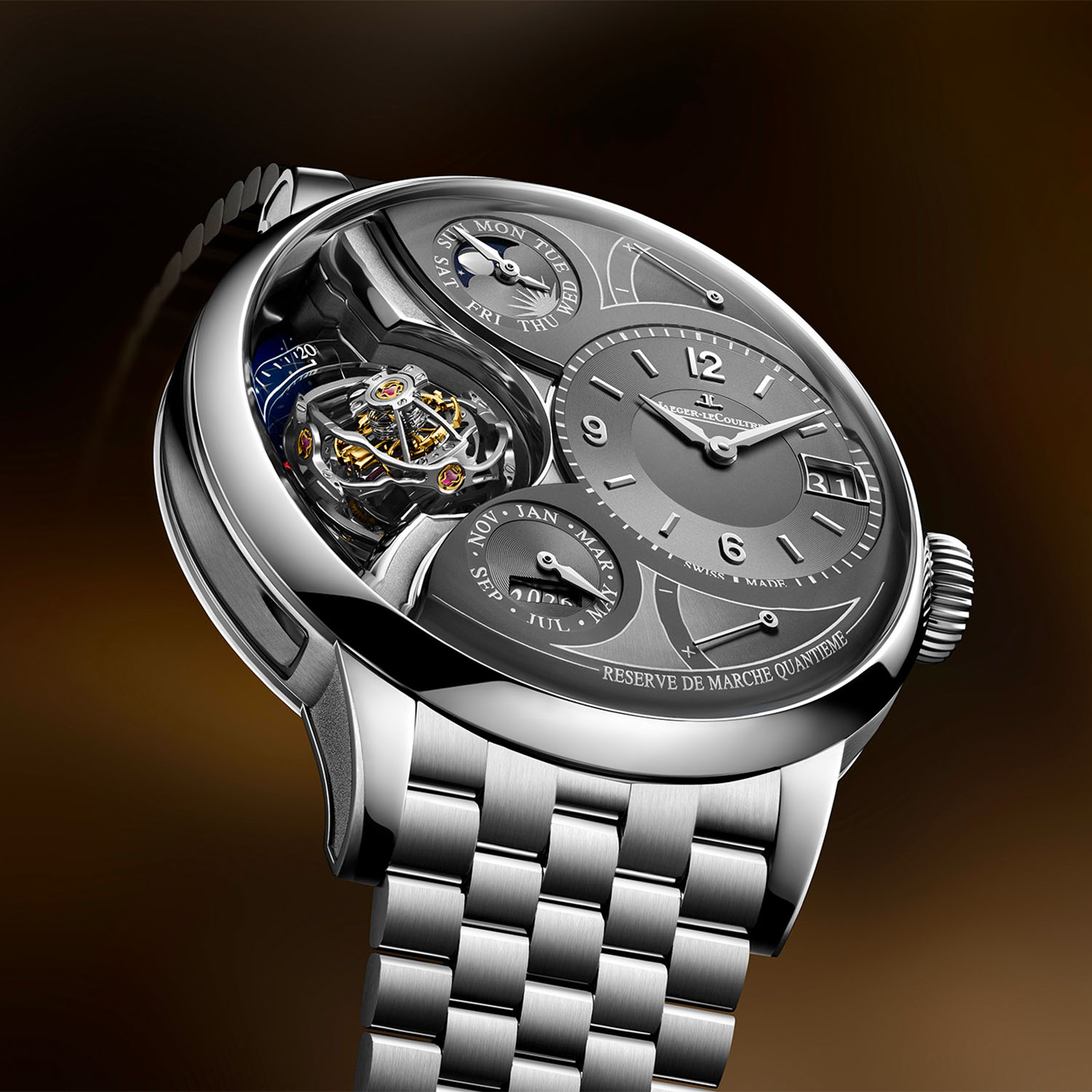
To showcase the spinning-top rotation of the triple-axis tourbillon and its cylindrical hairspring, the case has a sapphire crystal window on the left side and a cut-out area from 7 to 11 o’clock on the dial. To the left of the tourbillon is a dark blue lacquered starry sky with a 20-second track indicated by the three red arrow pointers on the cage. The curving platinum bridge separating the dial from the regulator sweeps open like stage curtains on the show.
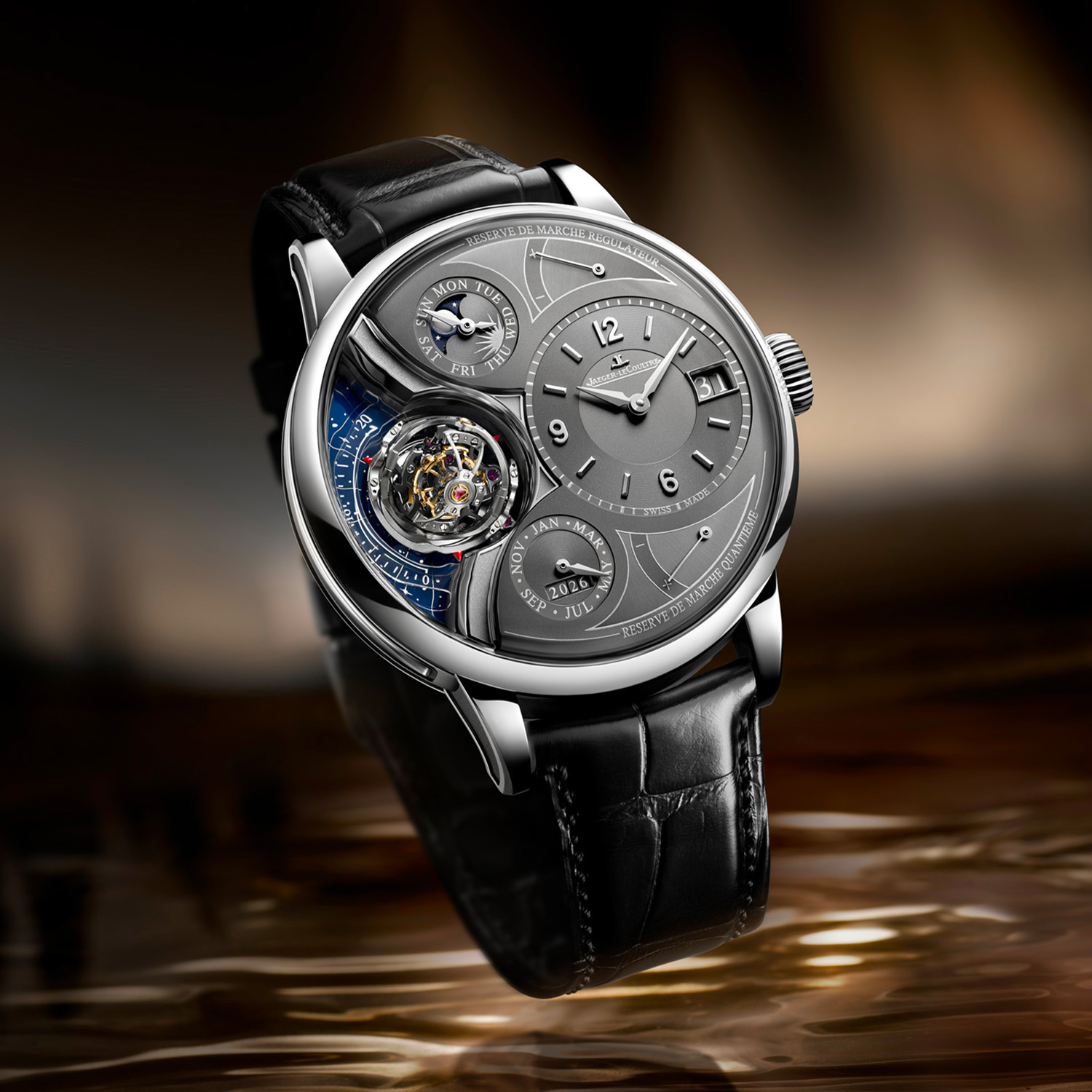
The closed grey area of the dial relays all the calendar information with economy, symmetry and elegance. Using different finishes to highlight the indications, the dial has a rounded triangular form with its apex marked by the big date window at 3 o’clock, nestled in the large hours and minutes sub-dial. The base of the triangle is formed by the day of the week and moon phase sub-dial at one extremity and the month and years at the other, while the two power reserve indicators are featured above and below the time indication. Patented by Jaeger, the last digit of the display is highlighted in red in a leap year.
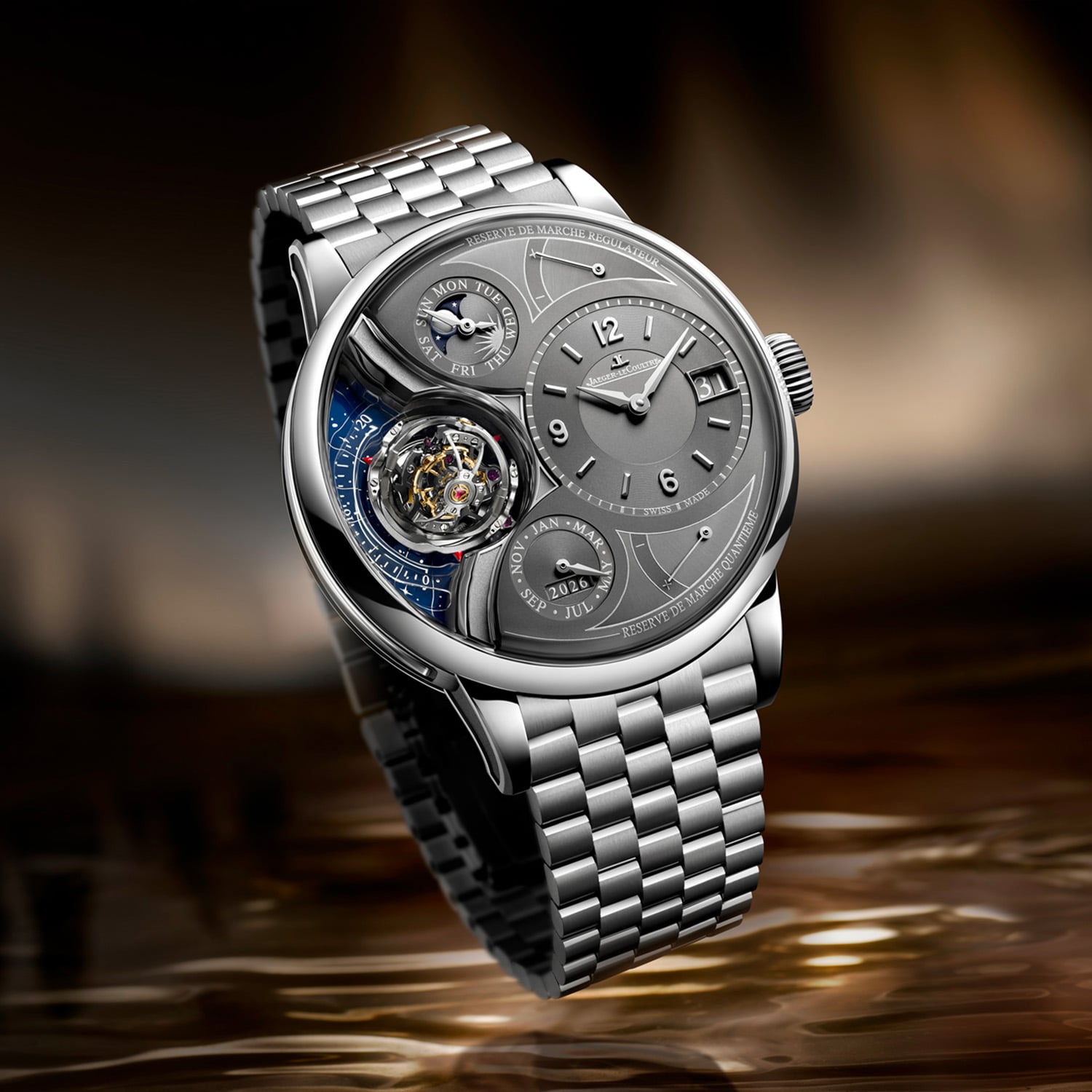
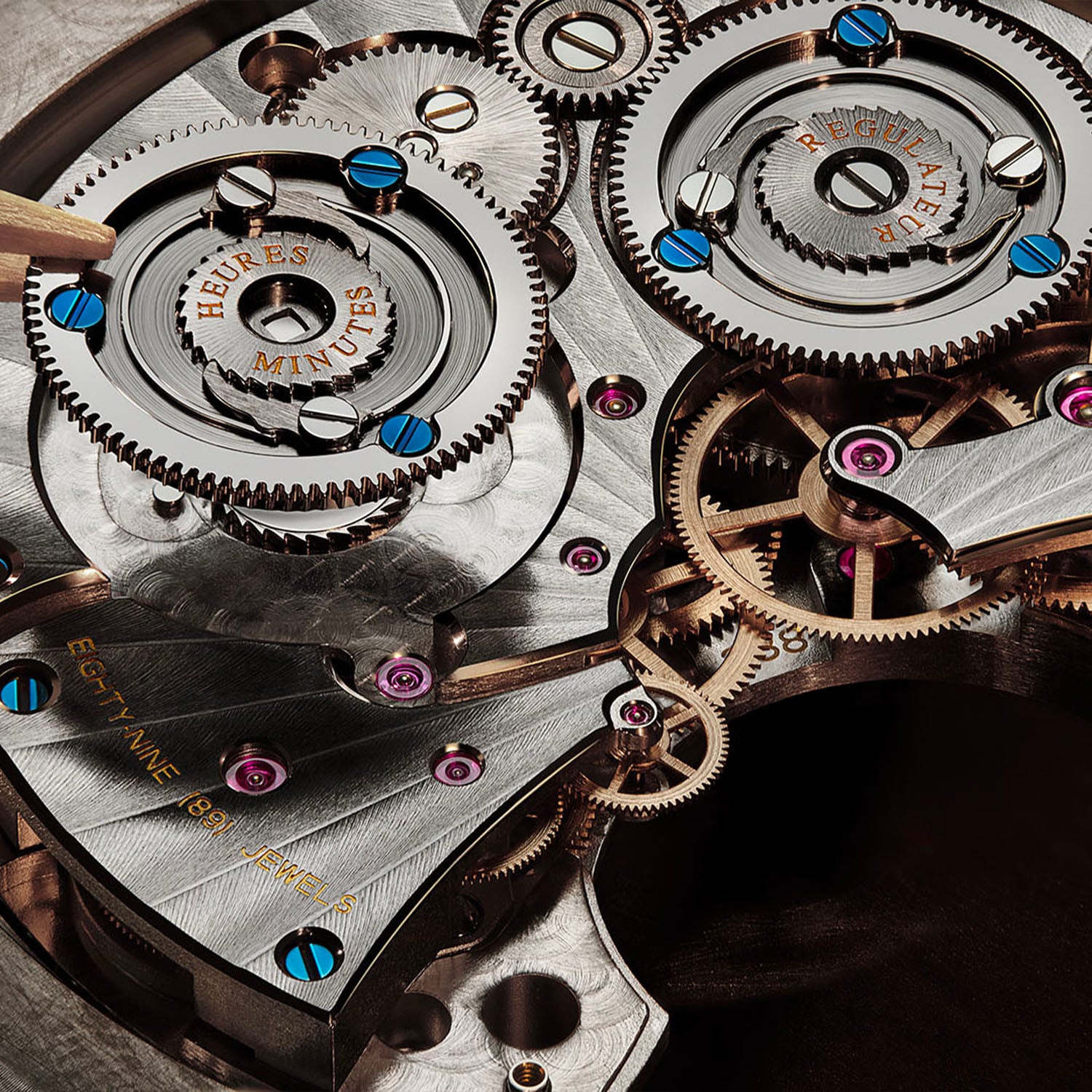
The caseback offers another view of the manual-winding calibre 388 with its two barrels and radiating Geneva stripes on the bridges. The new supple, five-row platinum bracelet gives the watch a slight hint of sportiness and everyday wearability. A limited edition of 20 pieces, the price of the Duometre Heliotourbillon Perpetual is upon request.
More information at jaeger-lecoultre.com.

3 responses
Tourbillons were initially used in pocket watch to counteract gravity’s effect on accuracy, since then they’re deemed useless on wristwatches. Does having multiple axis actually help them with accuracy, or are they just fancier and still “useless”?
Yes fancier and useless but a trend in wathmaking industry .
So big! Couldn’t wear.