


 Not all images were able to load for printing. Please close the print window and try again.
 The new Glashütte Original 70s Collection, a Reworked Take on the Integrated Sports Watch
The Seventies model thoroughly revamped, with a smaller case, textured dials and a new-generation movement.
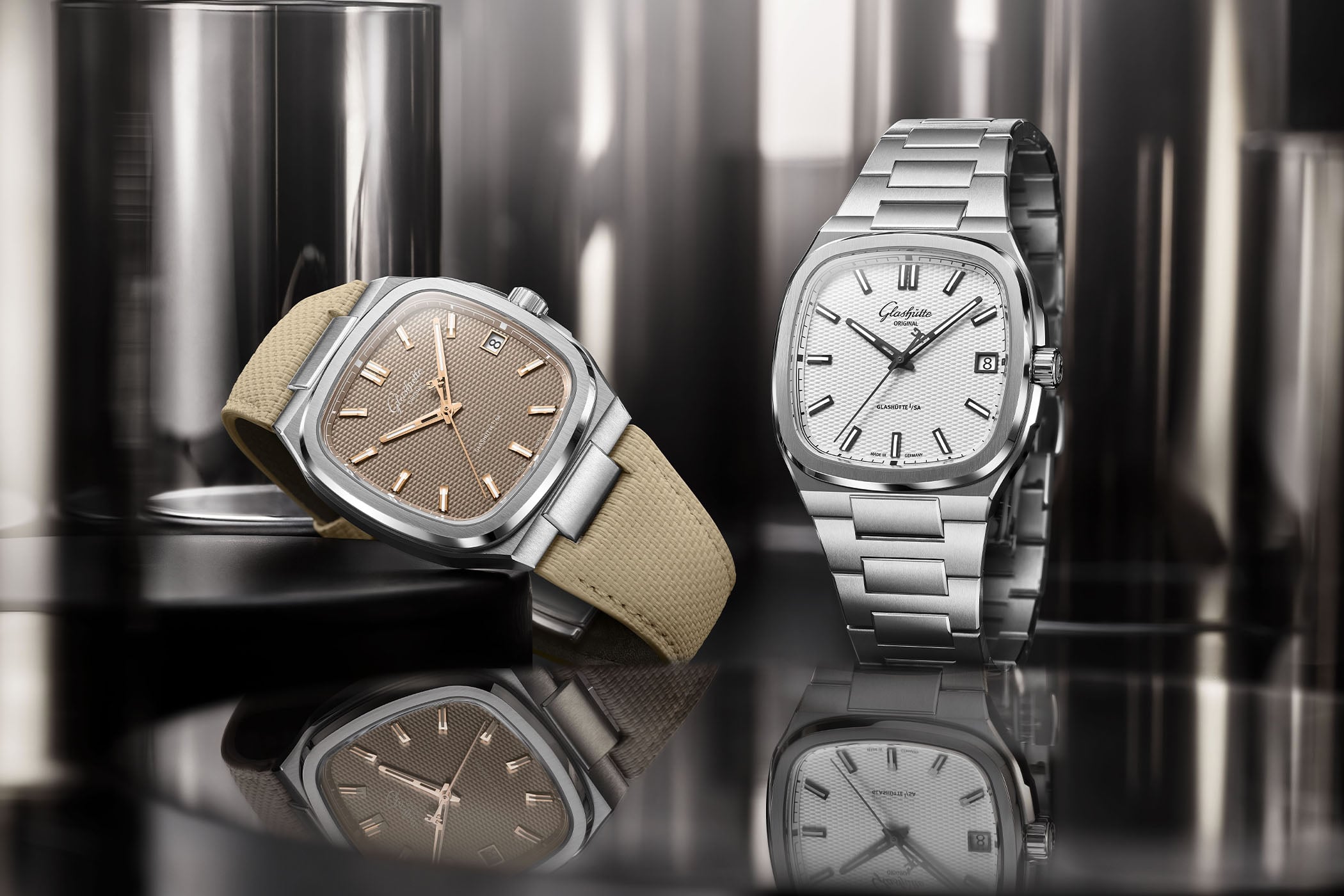
While Glashütte Original‘s Seventies collection has become associated with its bold, square-shaped chronographs, the German manufacture also once offered Seventies Panaroma Date models without the chronograph function. Revisiting the decade with a substantially reworked watch, the brand returns to that time-and-date simplicity and presents the new 70s collection of integrated sports watches, alongside the existing Seventies Chronograph series.
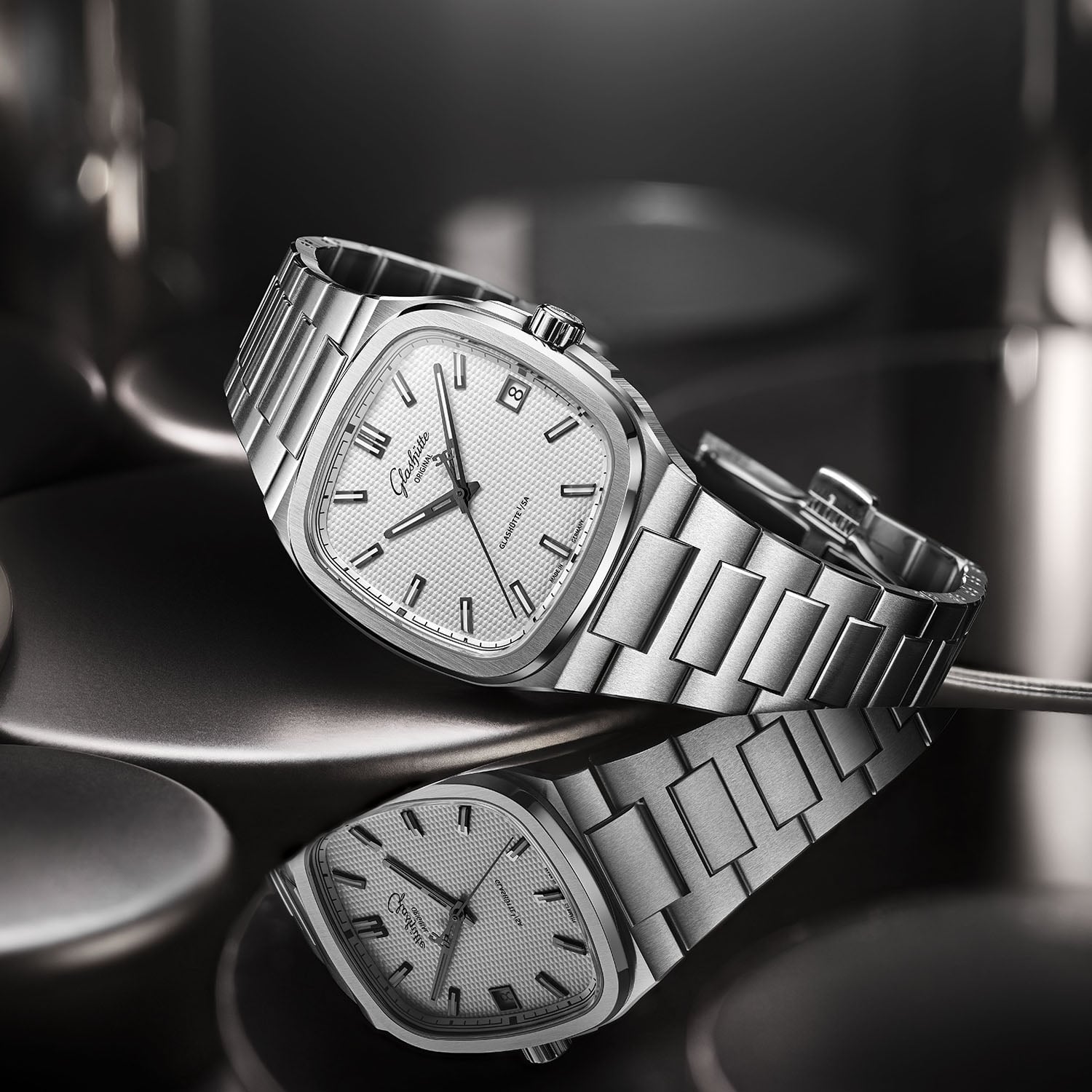
The new Glashütte Original 70s retains the unmistakable geometric character of its predecessor, but almost everything else has changed. The case is smaller and thinner, the dial has been redesigned, the signature Panorama Date has been replaced by a conventional date display, the older Calibre 39 base movement has given way to the modern Calibre 36, and finally, it also features a completely new strap-changing system.
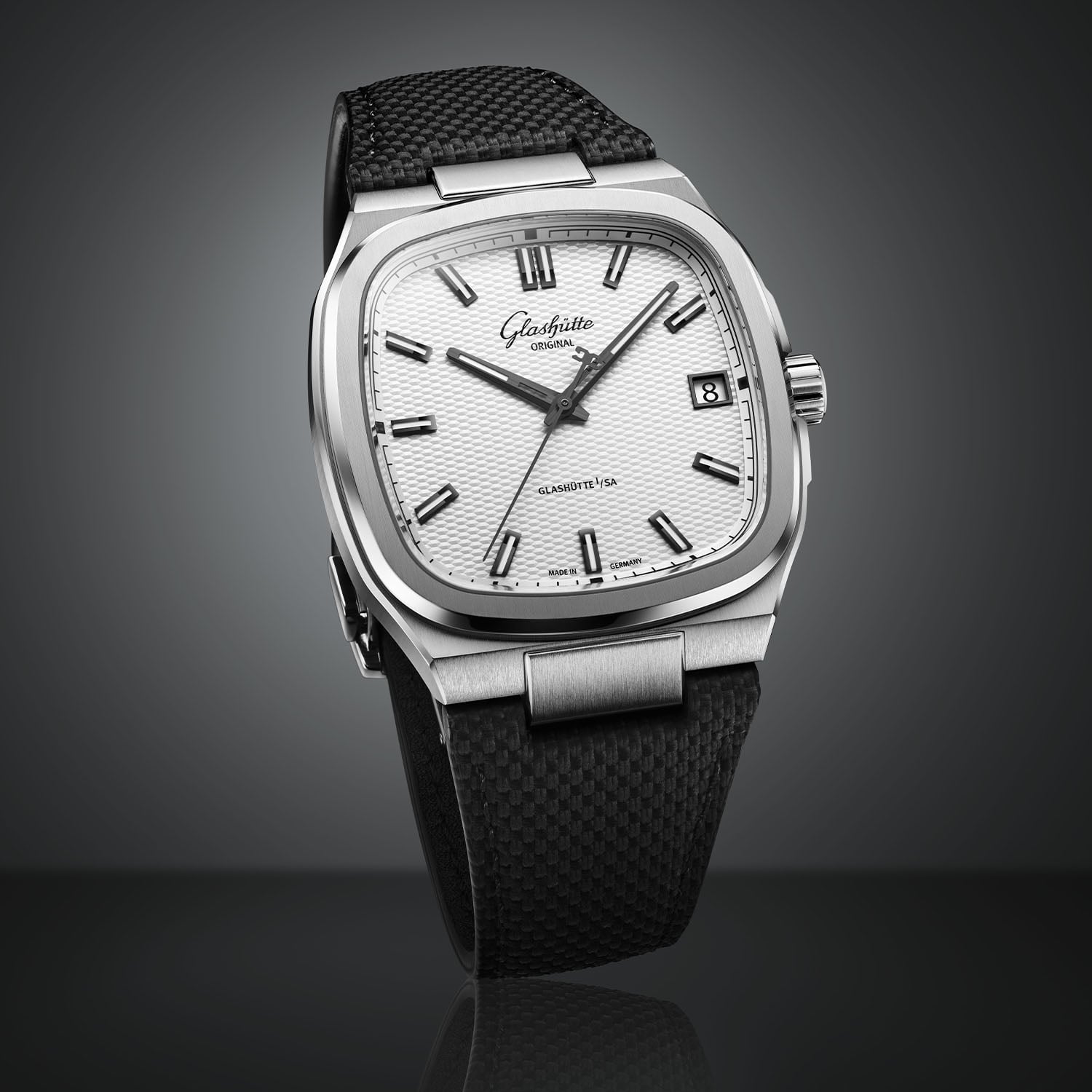
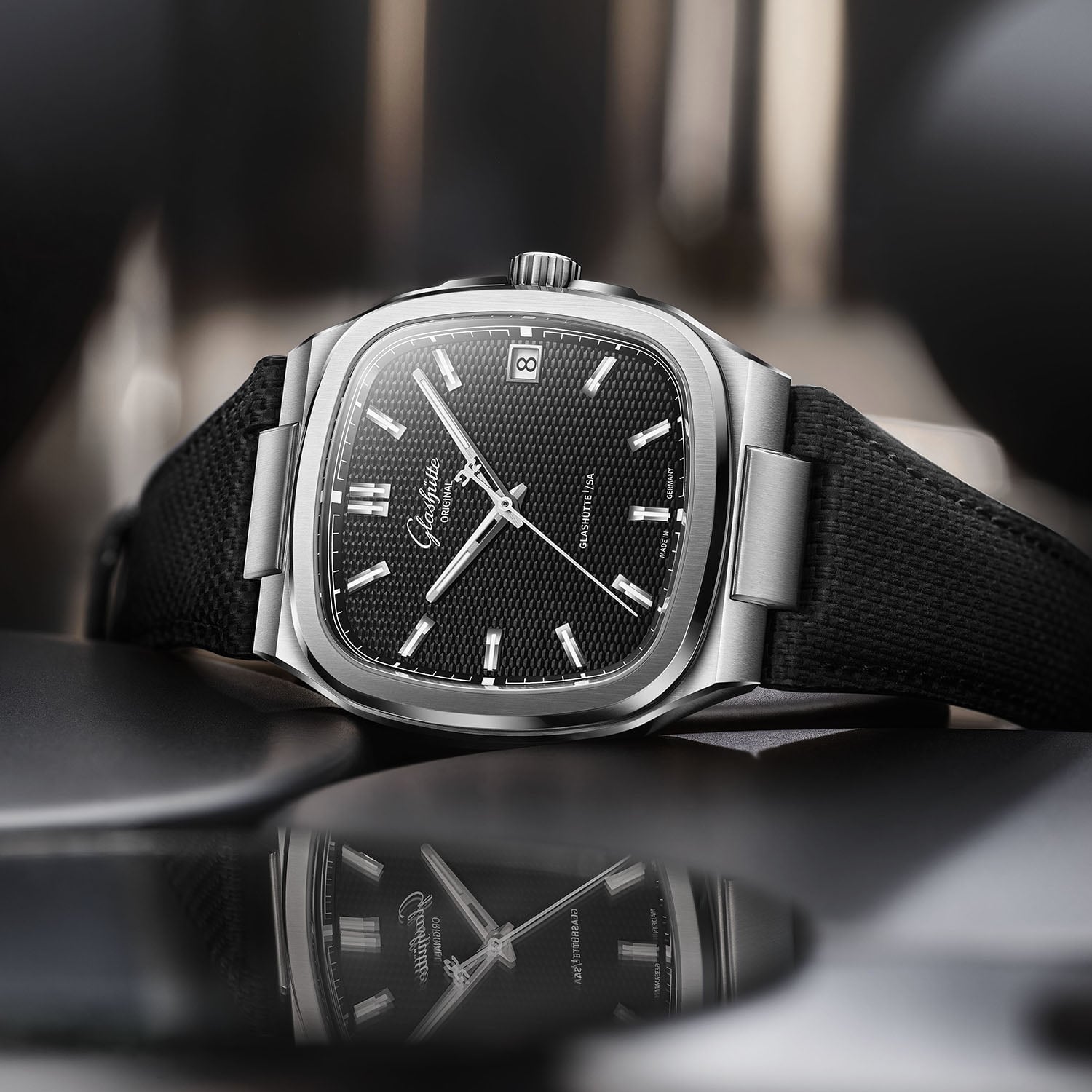
The launch collection comprises three variants – Vinyl Record (black), Tweed Amp (brown) and Stereo Panel (silvery-white) – each taking its inspiration from a different analogue object of the 1970s and following the current fascination for mechanical and analogue experiences: records, amplifiers and hi-fi equipment, objects that require physical interaction, much like the winding of a watch.
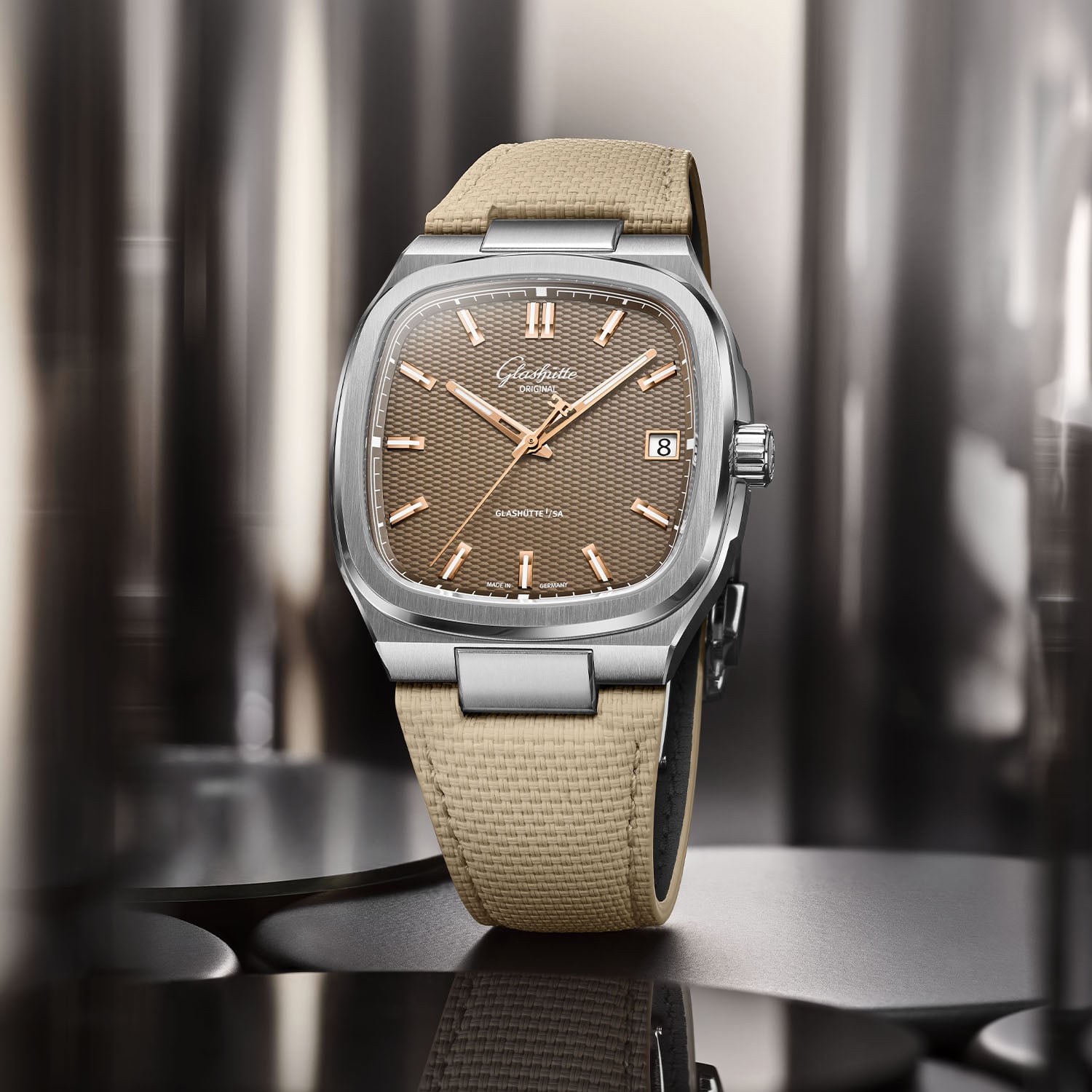
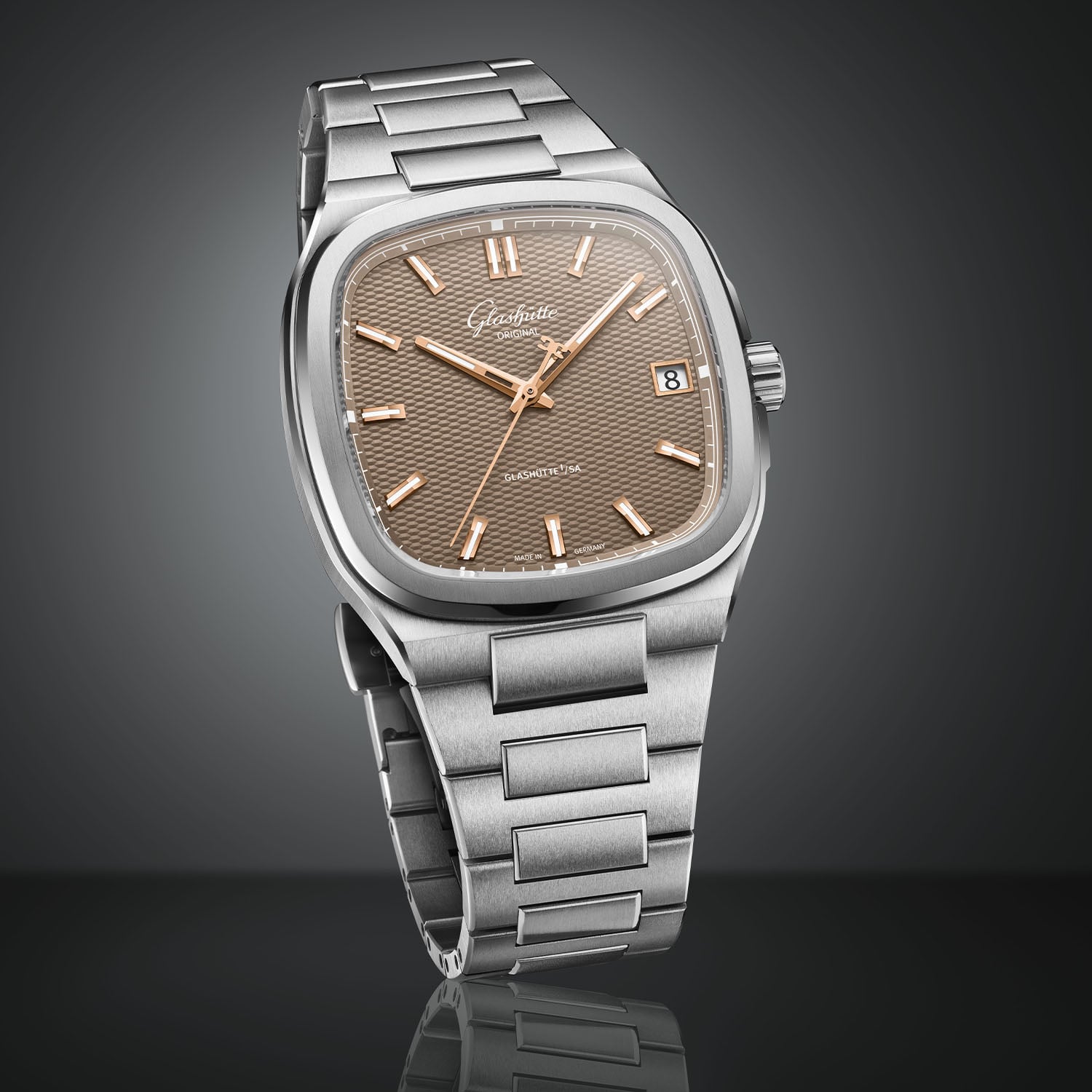
The familiar square case remains, with integrated lugs and softly rounded corners, but the new 70s immediately distinguishes itself from the earlier Seventies Panorama Date through its proportions. The previous time-and-date model measured 40mm by 40mm and 11.5mm thick, whereas the new watch measures 39mm x 39mm and only 9.6mm thick, with a 43.7mm lug-to-lug. That reduction of 1mm in both dimensions, combined with the nearly 2mm off in thickness, gives the new model a much more compact and contemporary profile. The stainless steel case features a satin finish and polished edges, and sapphire crystals are fitted on both the front and back. Subtle guards protect a screw-down crown, and the watch is 100m water-resistant.
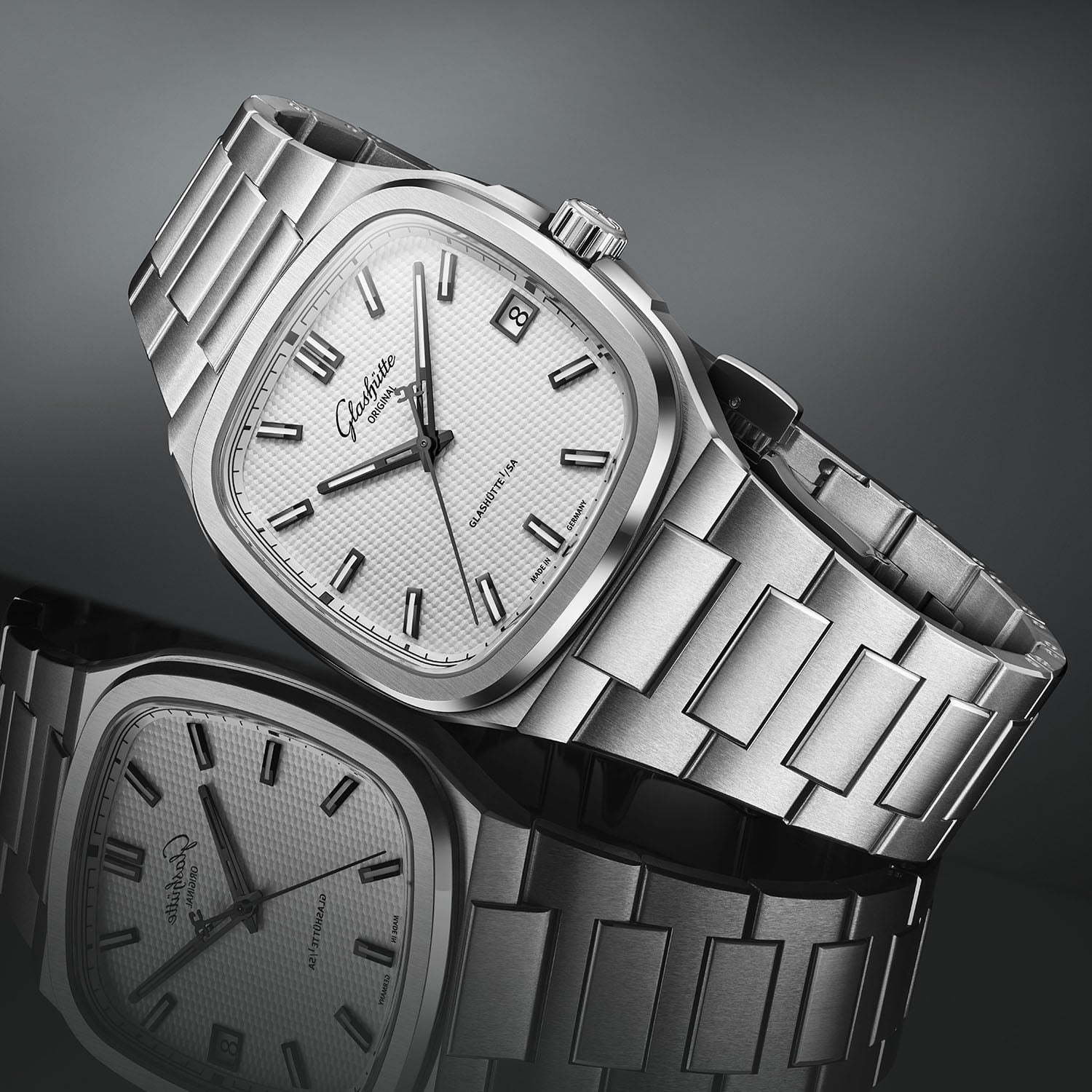
The dial is the clearest visual indication that this is a new generation of the Seventies. As mentioned, the Panorama Date received a Lebewohl, so all three versions have a cleaner display, with central hours, minutes, and seconds and a conventional date aperture at 3 o’clock – less unique than before, which makes you wonder if it is needed at all. The obelisk-shaped hands are sharply finished and coated in Super-LumiNova, including the seconds hand on two of the versions. The thin flange hosts the minutes/seconds markings, and the applied solid gold bar-shaped luminous markers designate the hours.
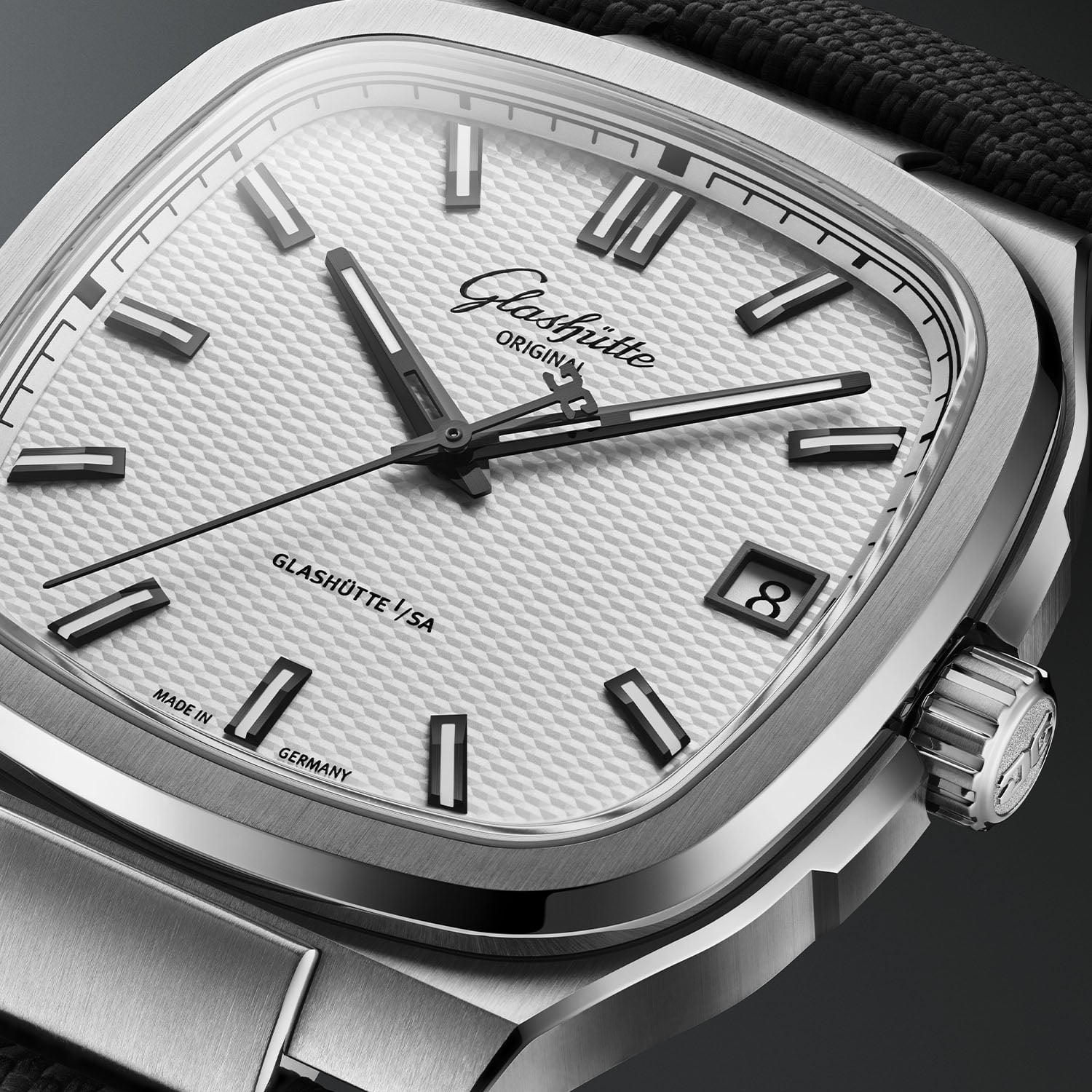
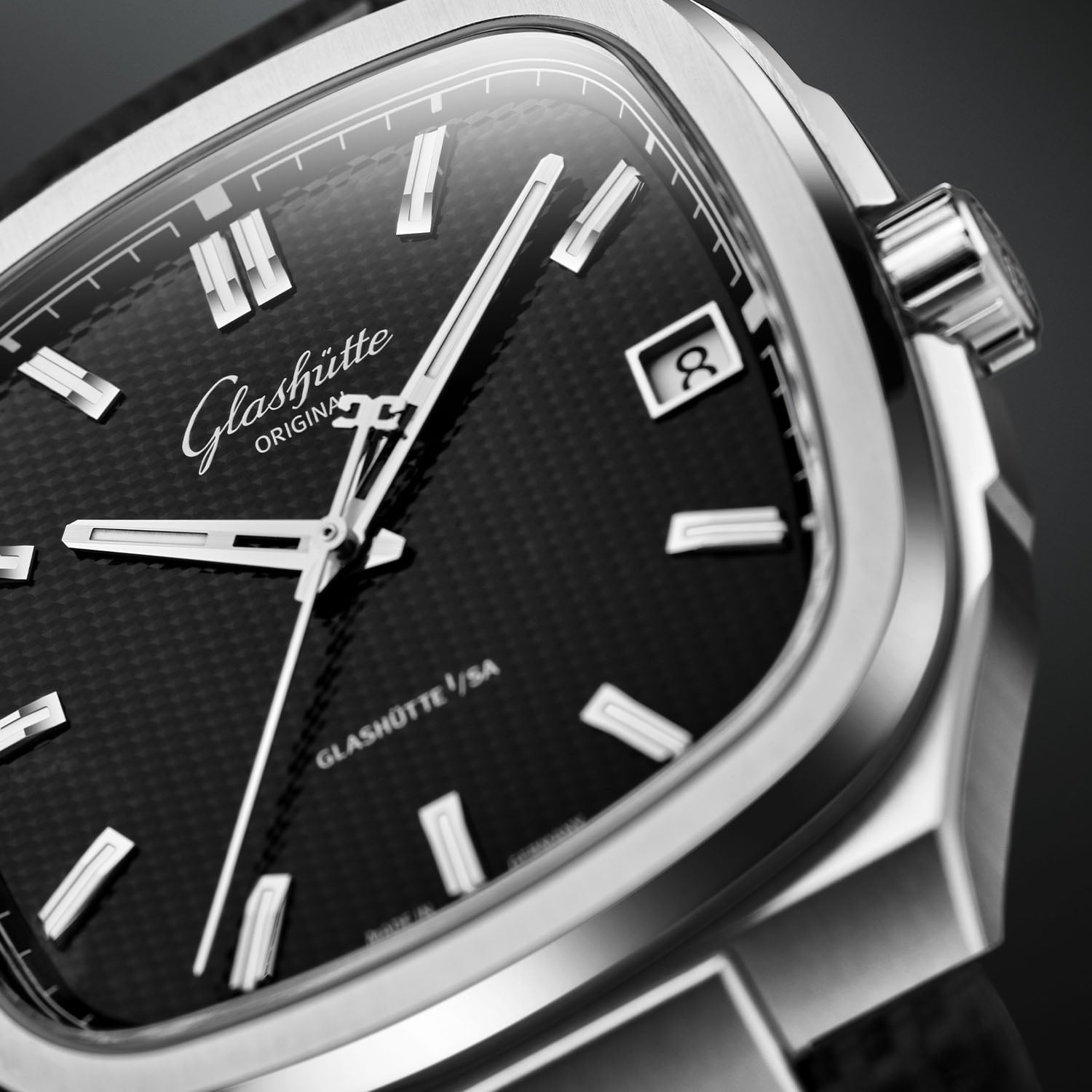
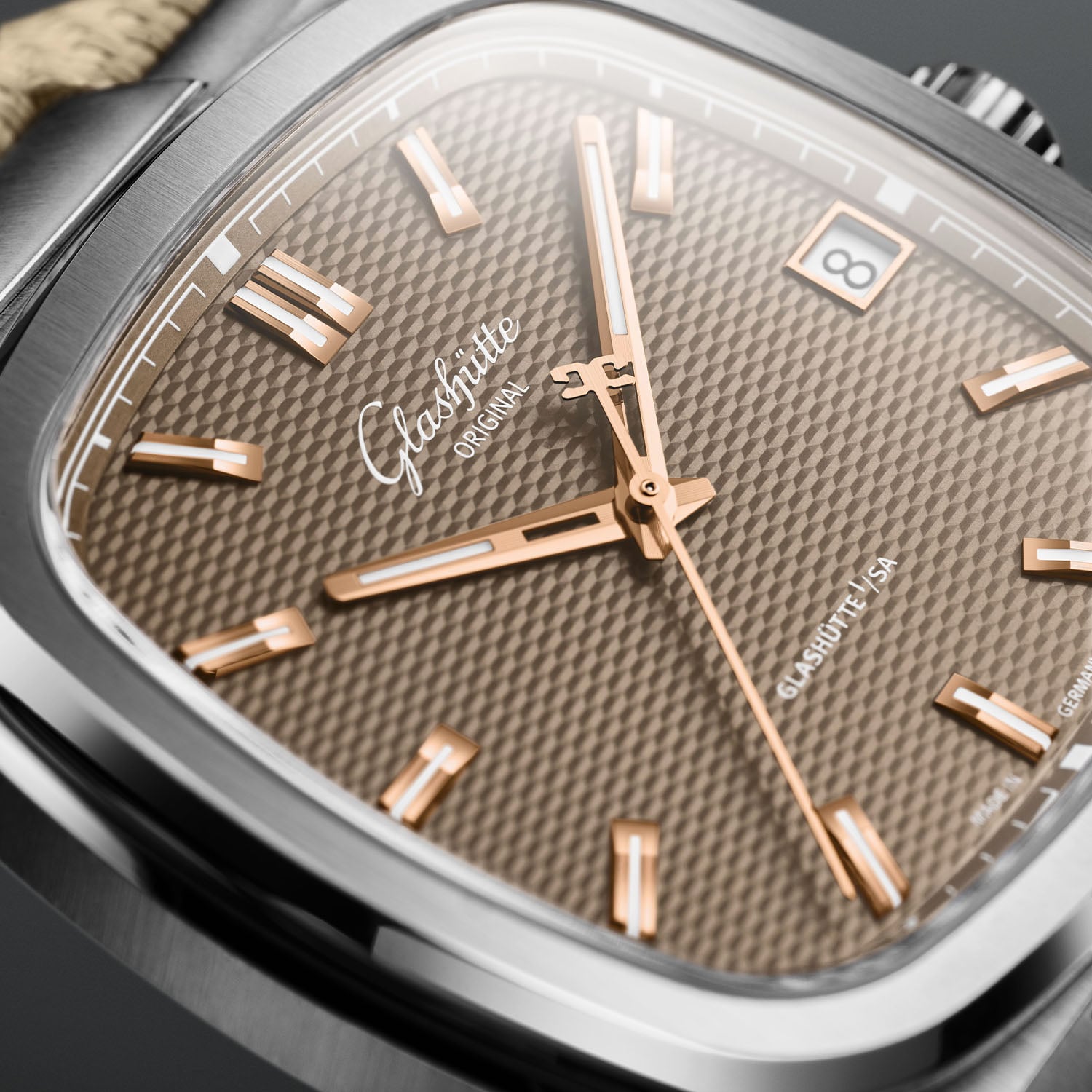
The new 70s introduces an embossed hexagrid dial texture. The Vinyl Record has a silk-matt black galvanised dial with brushed embossing, recalling an LP’s surface. Its hour and minutes hands and applied indices are made from solid white gold. The Tweed Amp features a brown galvanised dial with the same texture, inspired by the fabric coverings of classic guitar amplifiers, with solid 5N red-gold hands and indices. The Stereo Panel pairs a silver galvanised textured dial with black-coated solid-gold hands and indices, inspired by the control panels of period hi-fi equipment.
The underlying movement is another major evolution. The previous Seventies Panorama Date used the Calibre 39-47, an automatic movement with around 40 hours of power reserve. The new 70s is equipped with the more recent Manufacture Calibre 36, bringing a substantial increase in autonomy (100 hours) while remaining compact enough for the slimmer case. The new automatic movement beats at 28,800 vibrations/hour; its silicon hairspring resists magnetic fields and temperature fluctuations.
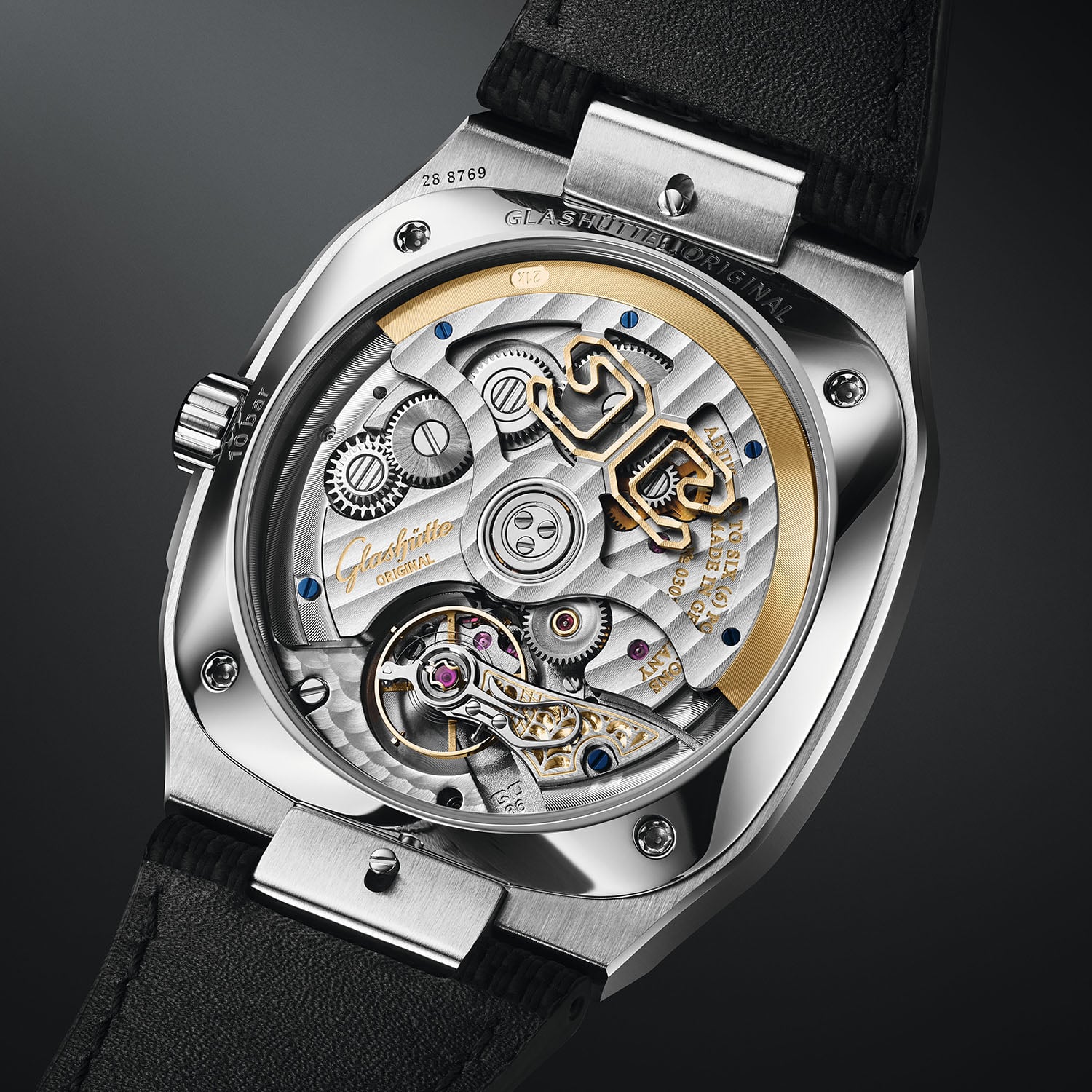
The mechanics visible through the sapphire caseback feature traditional finishing. The three-quarter plate receives Glashütte ribbing, the balance cock is hand-engraved, and the small components feature bevelled and polished edges. Steel parts are polished, and screws are blued. A 21-karat gold oscillating weight carries the skeletonised mirrored-G logo. The Vinyl Record uses Calibre 36-10 with black-rhodium plating; the Tweed Amp and Stereo Panel use the rhodium-plated Calibre 36-11. Technically, the movements share the same specifications.
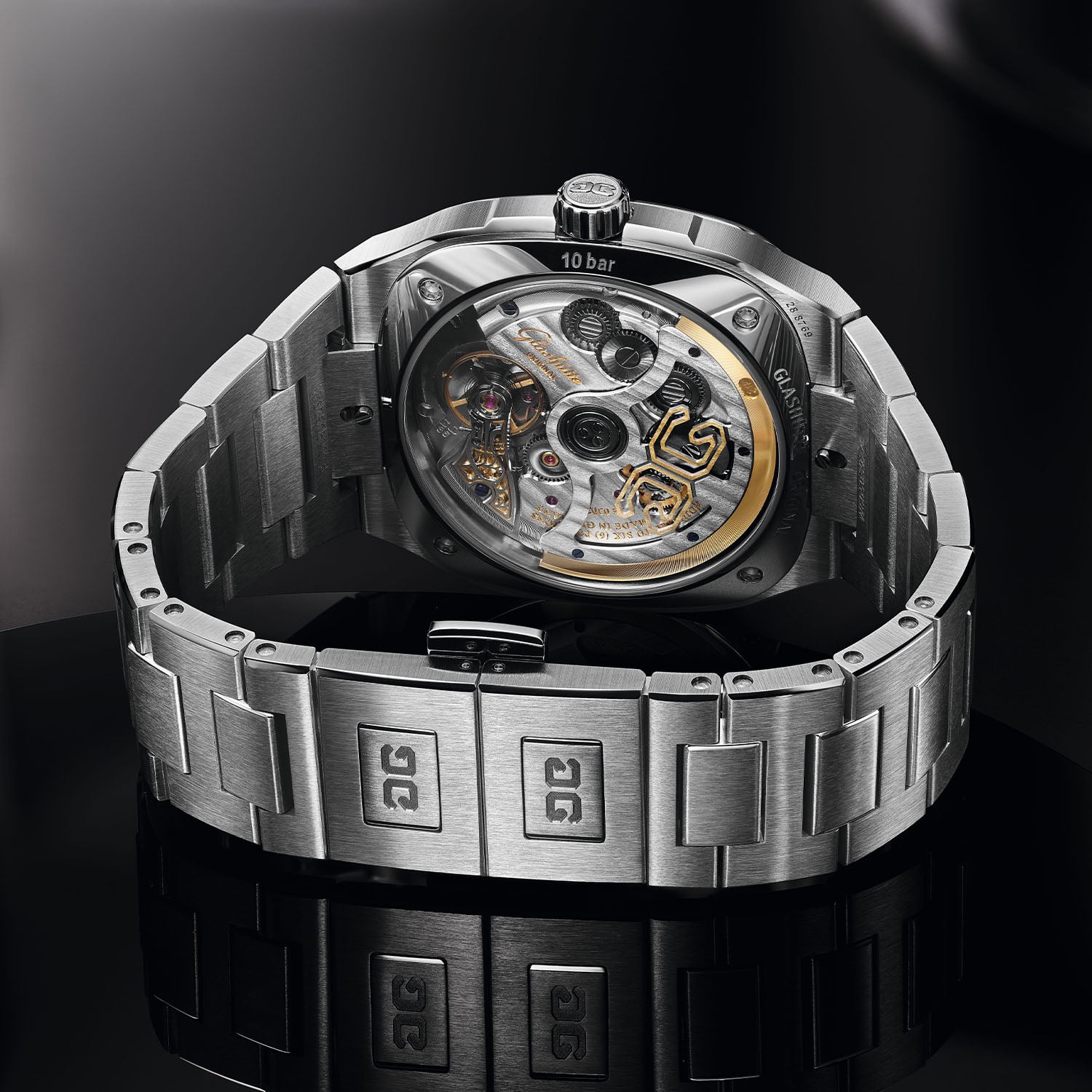
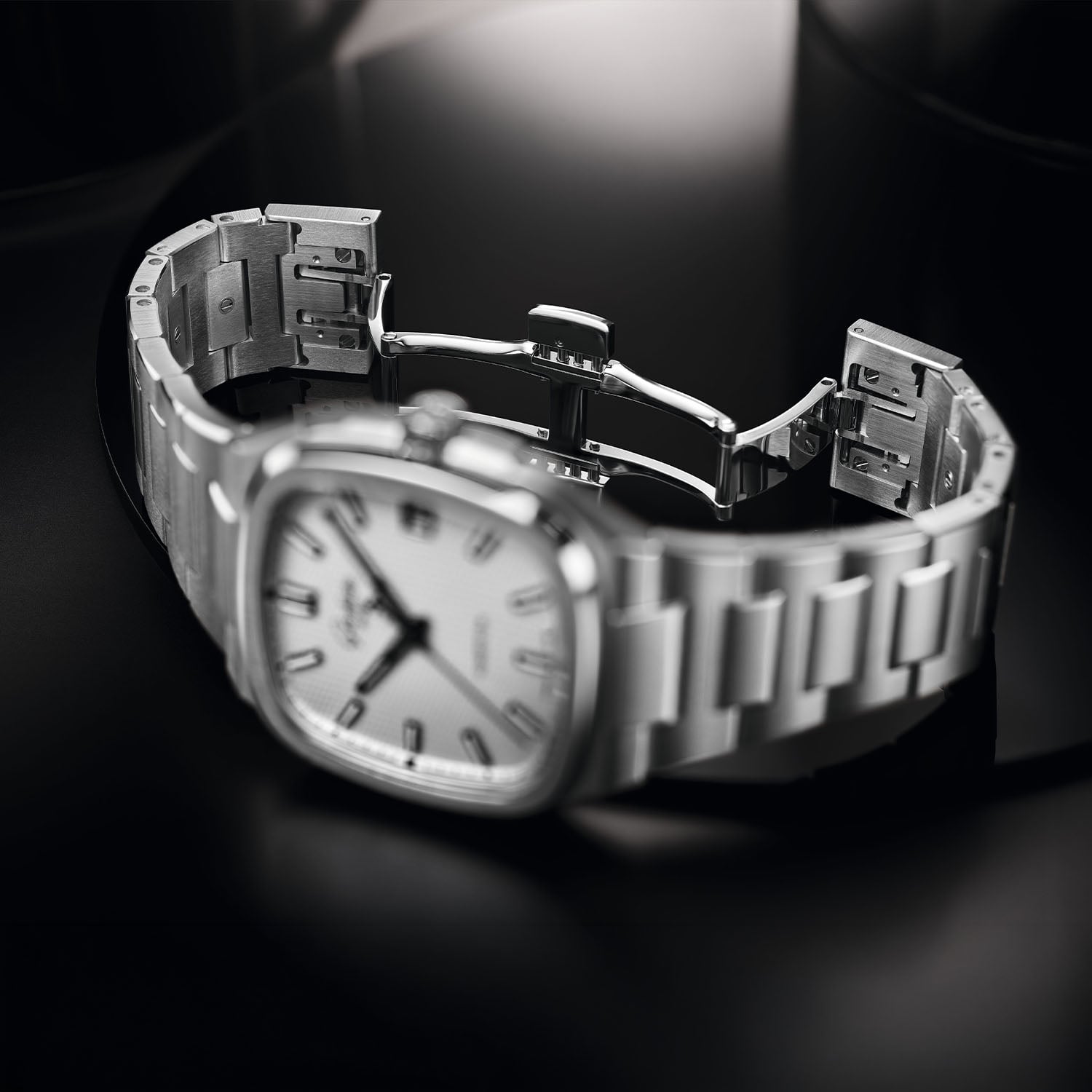
The supplied rubber straps are lined with calfskin and connect to the case through a mechanism of levers, pins and grooves (Glashütte Original’s patented Groove Lock System). The strap connection simply slots into the case and locks into position, while a lever on its underside releases it. The system also lets you transfer the connecting element between different rubber straps. The stainless steel bracelet uses an integrated Groove Lock connection and a double-fold clasp with fine adjustment, allowing the bracelet length to be adjusted by 3mm in either direction.
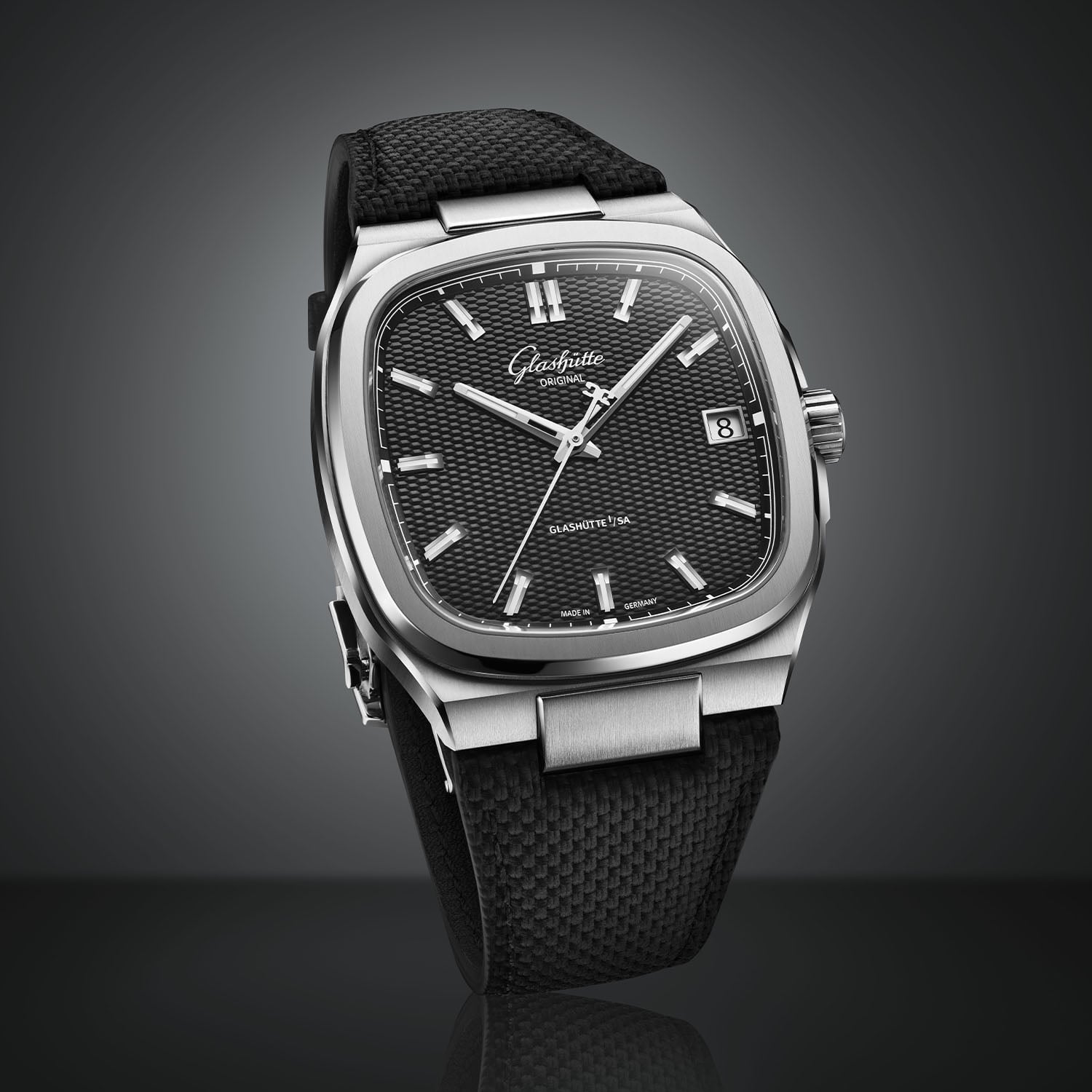
The new 70s is available from September 2026 through Glashütte Original boutiques and official retail partners worldwide. The Vinyl Record reference is limited to 500 pieces and is priced at EUR 16,200 or USD 16,300, and includes both the steel bracelet and a black rubber strap. The Tweed Amp and Stereo Panel are available either on rubber straps for EUR 13,100 or USD 13,200, and on stainless steel bracelets for EUR 14,400 or USD 14,500.
For more, visit glashuette-original.com.

8 responses
EU homepage does not show the models yet. But EUR prices should not differ much from those in USD. The watch is great, even though I am missing the lume on the seconds hand. I think a proper sports watch, also a more elegant one, should incorporate such a feature. Compared to an IWC Ingenieur you could say you are getting a lot for your money. Great measurements, finishing, design, bracelet and clasp with micro-adjustment and obviously movement. But the watch is a couple grands too expensive. RRP will most probably not be paid by most customers, still, with the usual discounts linked to GO, you will still spend a five figure amount and be missing the panorama date. I do not need it, but it could have otherwise been a argument for achieving such high price points. Yes, a Datejust is not the same as this model here, but still comparing RRPs only, the Rolex is substantially more accessible. When ever a new model is released and brands could use the opportunity to recalibrate their pricing for the better, they goof up to be frank. Skipping the panorama date could have been the perfect excuse to draw a line from the past and simply say, this watch retails for 10500 EUR on a bracelet. Blancpain made the same mistake with its 38 mm 5007 fifty fathoms titanium model with sapphire bezel. Could have used the smaller size and inferior movement to price it around 13000 EUR at retail and see their doors being kicked in by customers. Well…
Regression
I would have got rid of the date altogether. I find them too thick and too expensive, too: no thanks. I much prefer my Senators.
That‘s just not GO‘s price bracket for a three-hander. They would have to drastically up their game to justify this price point, but it is not visible in the pictures.
The watch looks nice until you see the bracelet clasp.
If I had the ready cash then this watch is quite compelling. But I’ll just be happy here with the poor’s and my Bulova Super Seville, which is a reasonable clone.
Nice watches, I think they’ll be at their best when you can see them in person, nice proportion on the wrist, good specs and GO quality. Very tempted by the black one but again, can’t understand these silly “limited editions” moves.
Price imho is in line with other brands and value proposition, would by these over any mass produced, overhyped industrial watch, even if it is cheaper.
Maybe the watch is thinner without the Panodate? Still, I miss that feature.