


 Not all images were able to load for printing. Please close the print window and try again.
 The Vertex M36, a Compact Take on the British Field Watch
A smaller, more faithful and highly appealing take on the British military-issued field watch.
By now, the history of the Dirty Dozen military watches is probably well known to just about everyone who would be reading an article like this, but here is a brief overview for any of you stragglers. Over 80 years ago, as World War II was raging on, the British Ministry of Defence (M.O.D.) saw the need for a soldier’s wristwatch that was more robust than the modified civilian models that were being used thus far. As most British watchmaking companies had been conscripted into manufacturing goods to aid the war effort, a design brief was put together and sent to neutral Switzerland’s biggest watch manufacturers, outlining their needs. The required specs included a black dial, small seconds subdial, luminous hands and indices, a tough acrylic crystal, and some level of waterproofness. In a result that surely would not happen today due to various bureaucracies, twelve manufacturers answered the call: Lemania, Omega, Buren, Timor, Jaeger-LeCoultre, Record, Cyma, Longines, IWC, Grana, Eterna, and Vertex (Note: of these twelve, Vertex was the only one that was British in origin, but their manufacturing was done in Switzerland, so they were still able to produce watches, unlike most other British brands of the time).
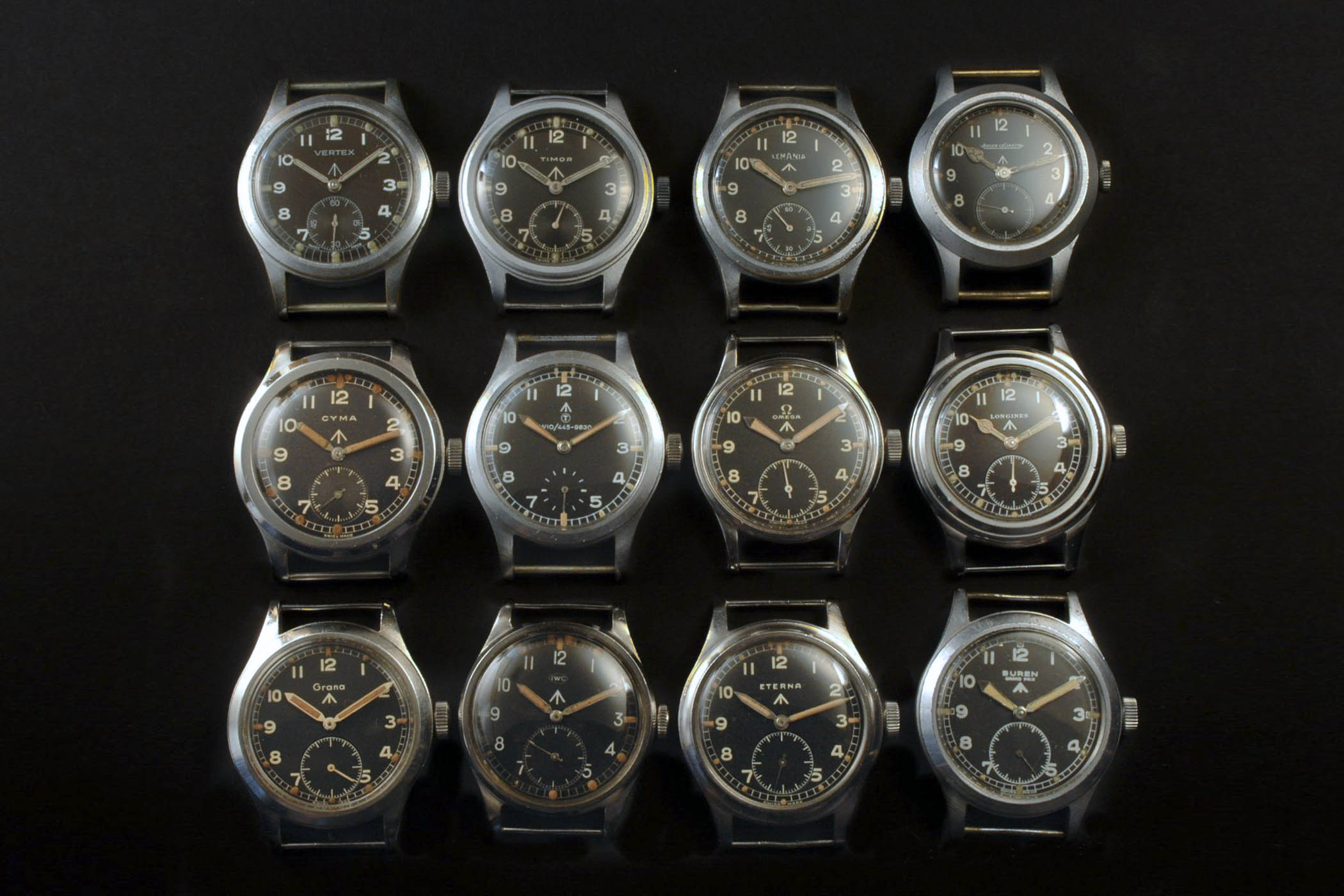
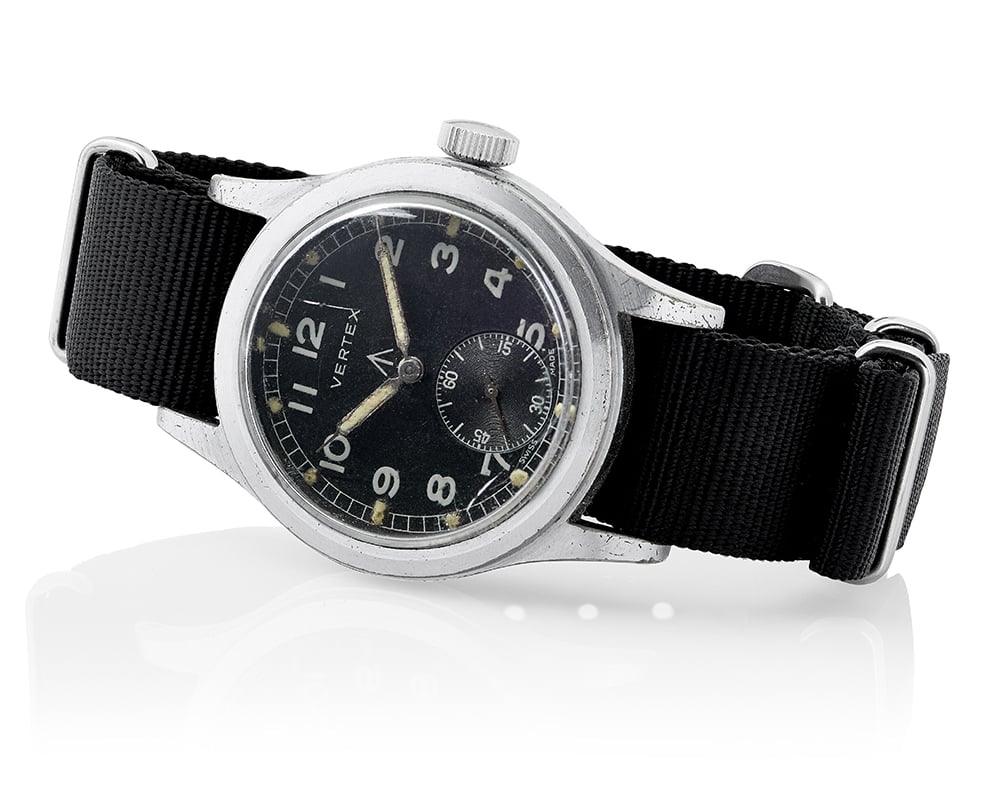
The result was one design, made by twelve different brands in limited numbers for just a few years, a recipe that makes for highly collectable and sought-after watches. Some of those brands are big names that you will easily recognise today, others have fallen by the wayside and been all but forgotten in the sands of horological time. Vertex would likely have been one of those latter brands had they not been reborn and relaunched in 2015 in the hands of Don Cochrane, the great-grandson of the brand’s original founder, Claude Lyons. This new Vertex released their first timepiece in 2017 with the M100, a tribute to their Dirty Dozen watch, but with a more modern 40mm sizing.
Fast forward to 2024, and Vertex released the watch we are discussing today: the M36. It’s less of a tribute and closer to a 1:1 recreation of a Dirty Dozen field watch, but still with a few modern updates. I bought one of these for myself back in May of 2024, and arranged to pick it up at the Vertex boutique in London. Mr Cochrane was a gracious host, meeting with me and showing me around the small Vertex boutique. Having had the watch for the rest of that U.K. trip and the 18 months since then, I think I’m qualified to speak to its pros and cons. But first, let’s go over the spec sheet.
The basics about the Vertex M36
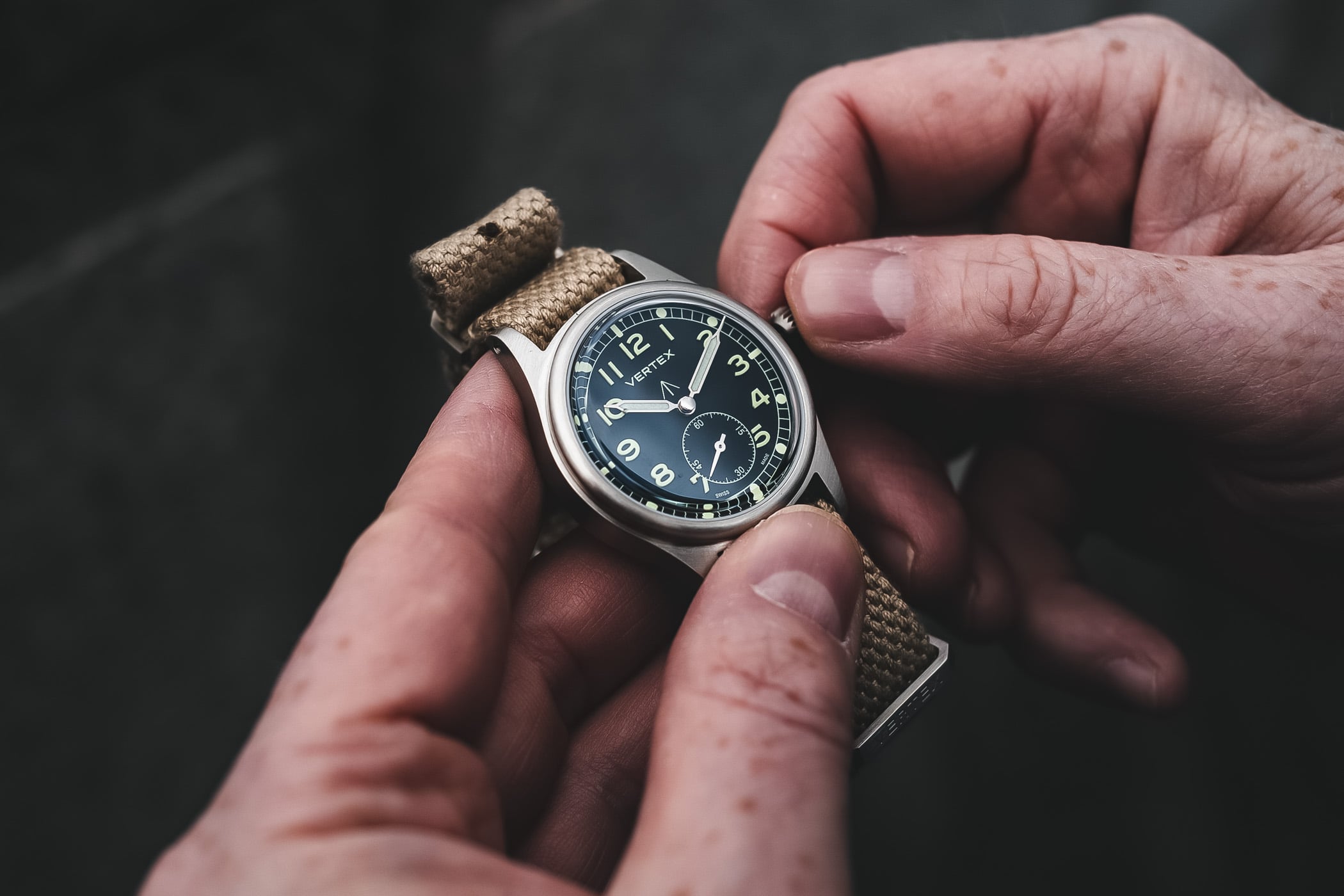
As the name implies, the Vertex M36 is a 36mm field watch, bringing it down to the same size as the original Dirty Dozen watch. It’s rendered in brushed stainless steel and has a lug-to-lug measurement of 46.5mm. The thickness is listed as 11mm, but add another 1mm or so for the double-domed sapphire crystal. The dial is matte black and is true to the original in virtually every way. The only visibly modern update is that the printed, Arabic numerals of the original have been replaced with a modern Vertex trademark, the 3D numerals sculpted out of luminous material. The crown has also been updated to the screw-down variety to aid in upgrading the water resistance to a respectable 100 metres. The caseback is of the screw-on variety and retains the cool W.W.W. engraving of the Dirty Dozen watches, denoting it as a “Watch.Wrist.Waterproof.”

The movement running the show under the glowy dial is the Sellita SW260-1, an automatic movement that beats at 28,800 vibrations/hour and has a power reserve of 38 hours and 31 jewels. We don’t normally go around comparing jewels, but comparing this fairly standard movement’s 31 to the original M.O.D. requirement of 15 gives an indication of how much more intricate movements have become in the last 80 years.
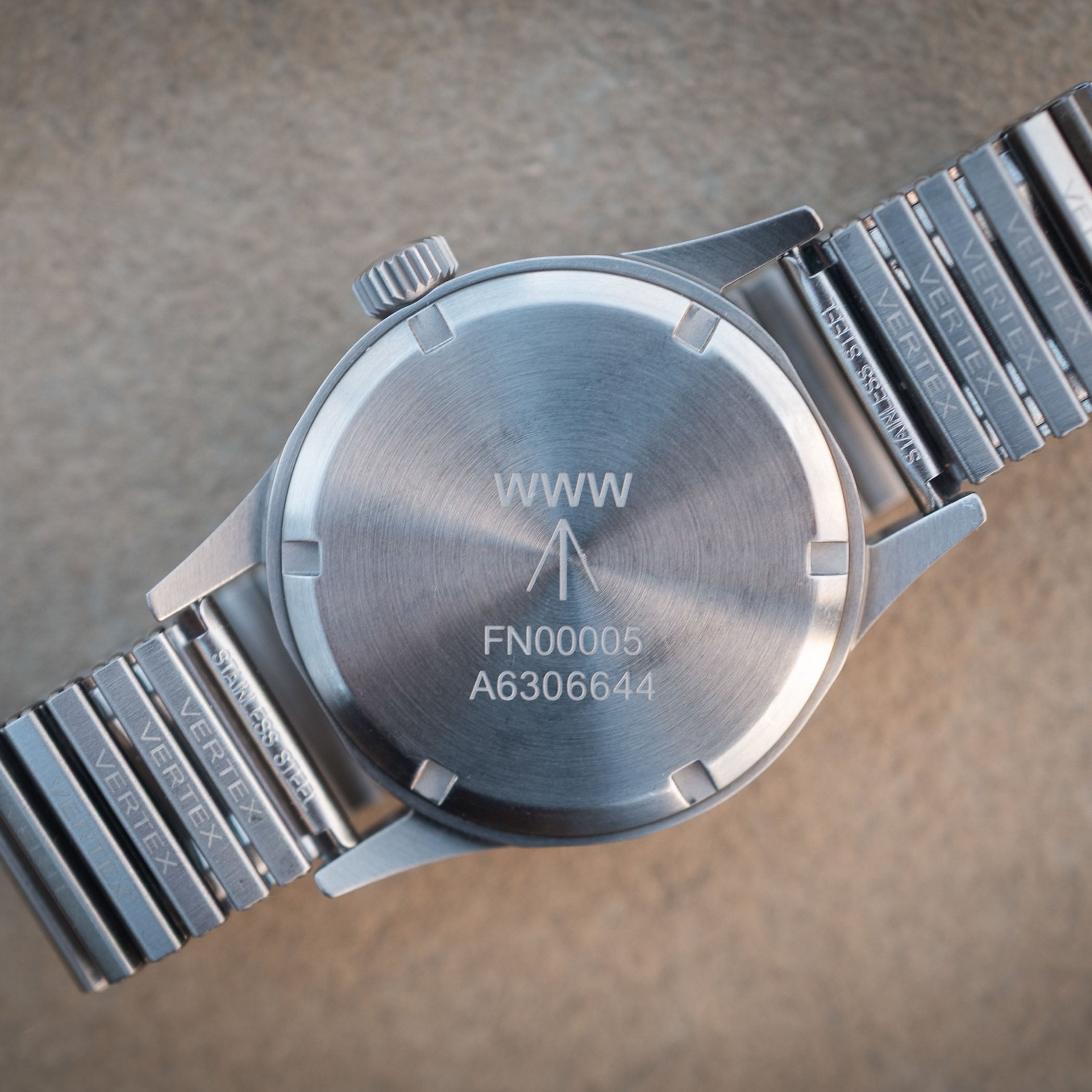
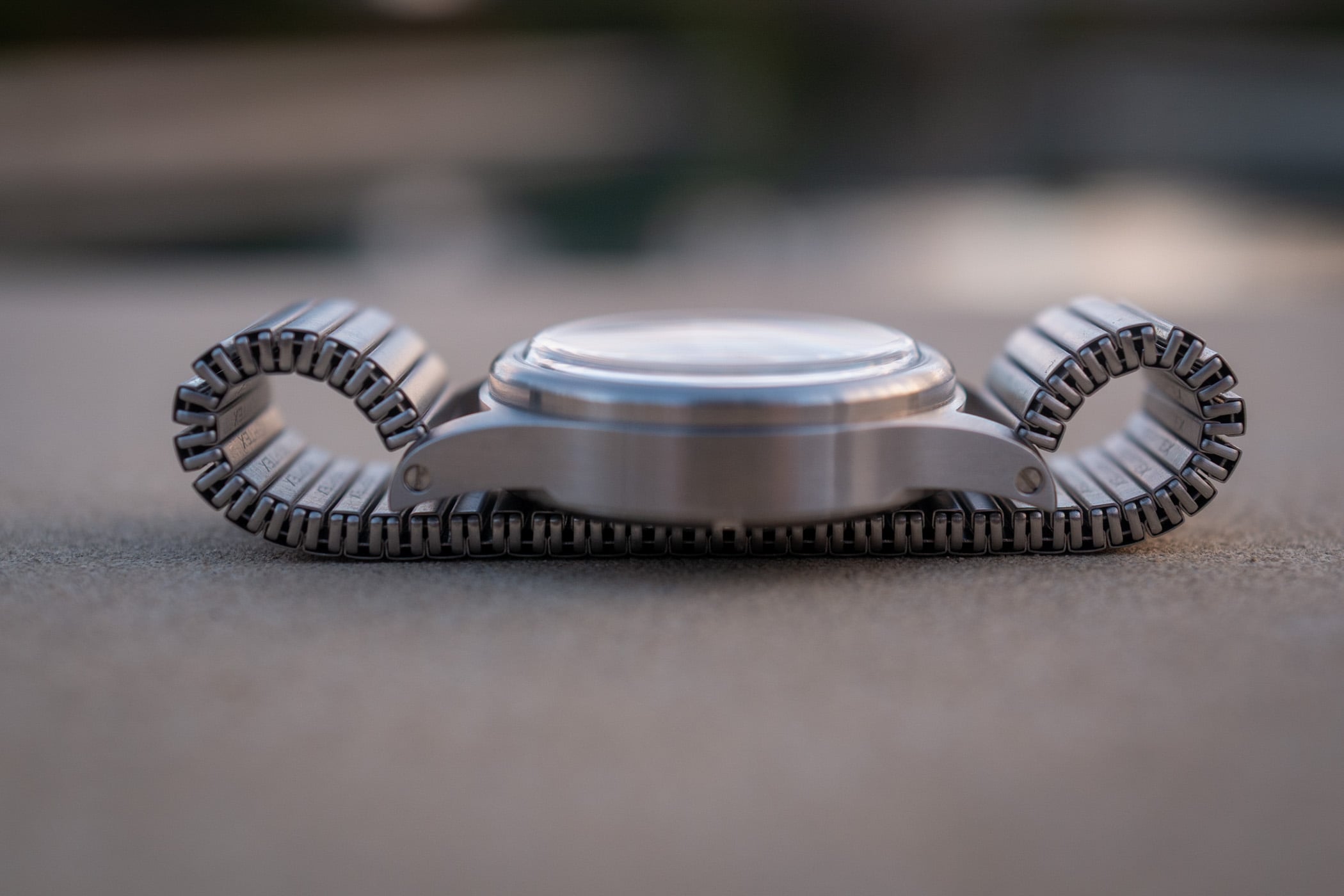
The M36 delivers with three straps: a sand-colored “over-under” NATO strap, a leather NATO strap, and a cool, stretchy, expandable steel bracelet.
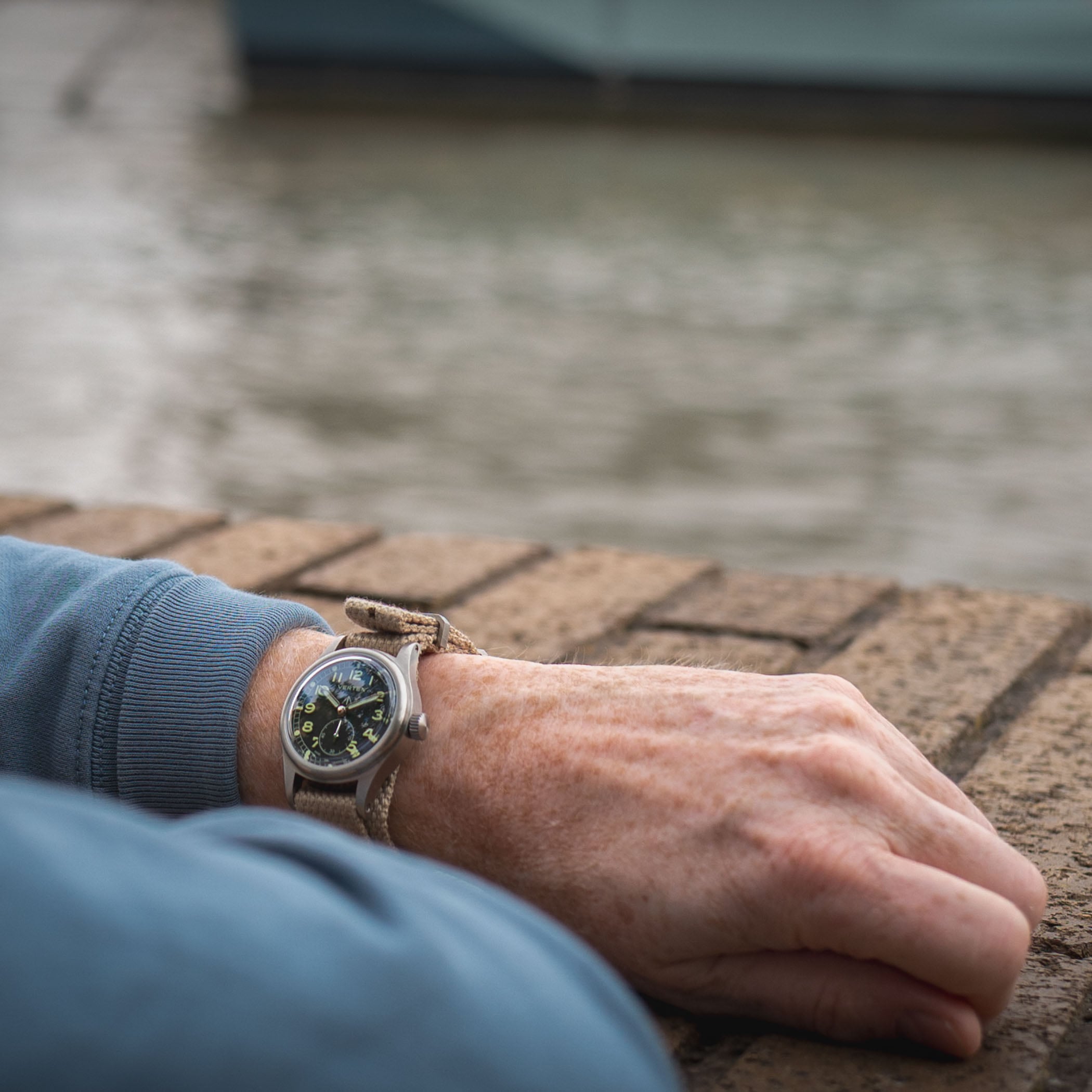
On the wrist experience
The modern appeal of the field watch is the no-nonsense, made-for-purpose simplicity of it all. No bells or whistles, no fidgety bezels or extra pushers or chimes or phases of the moon. Just a tool to tell you the time, nothing more, nothing less. As such, I think the 36mm size is truly the sweet spot for this type of watch. Sure, if you had asked me five years ago, I might have said 39mm is the sweet spot, and if you ask me five years from now, maybe I will say 100mm, who knows? But for now, 36mm feels like a real Goldilocks size. There is probably a reason why that king of all the field watches, the Rolex Explorer, has held strong at 36mm – save for the recent misguided foray into 39-40mm territory – for over 70 years.
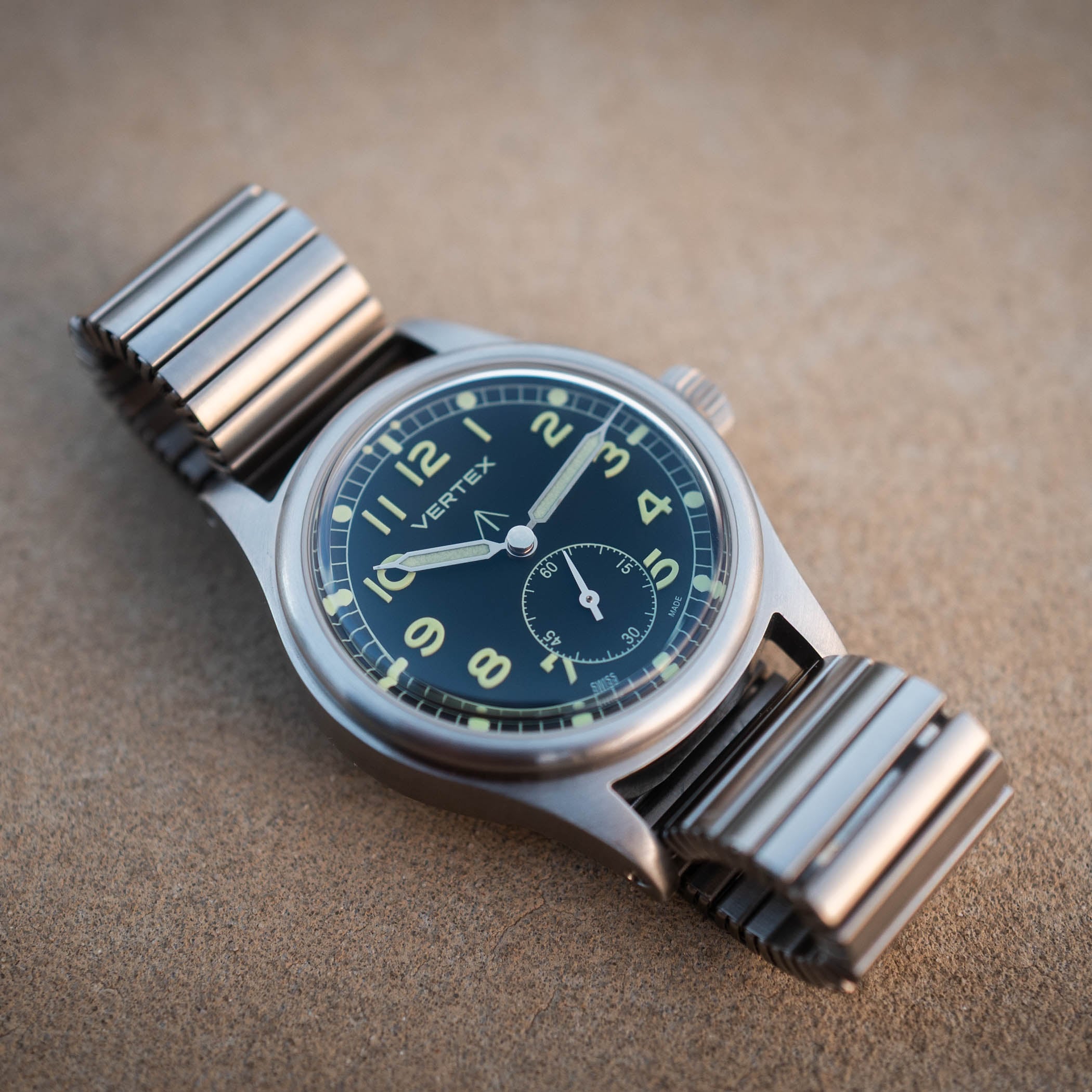
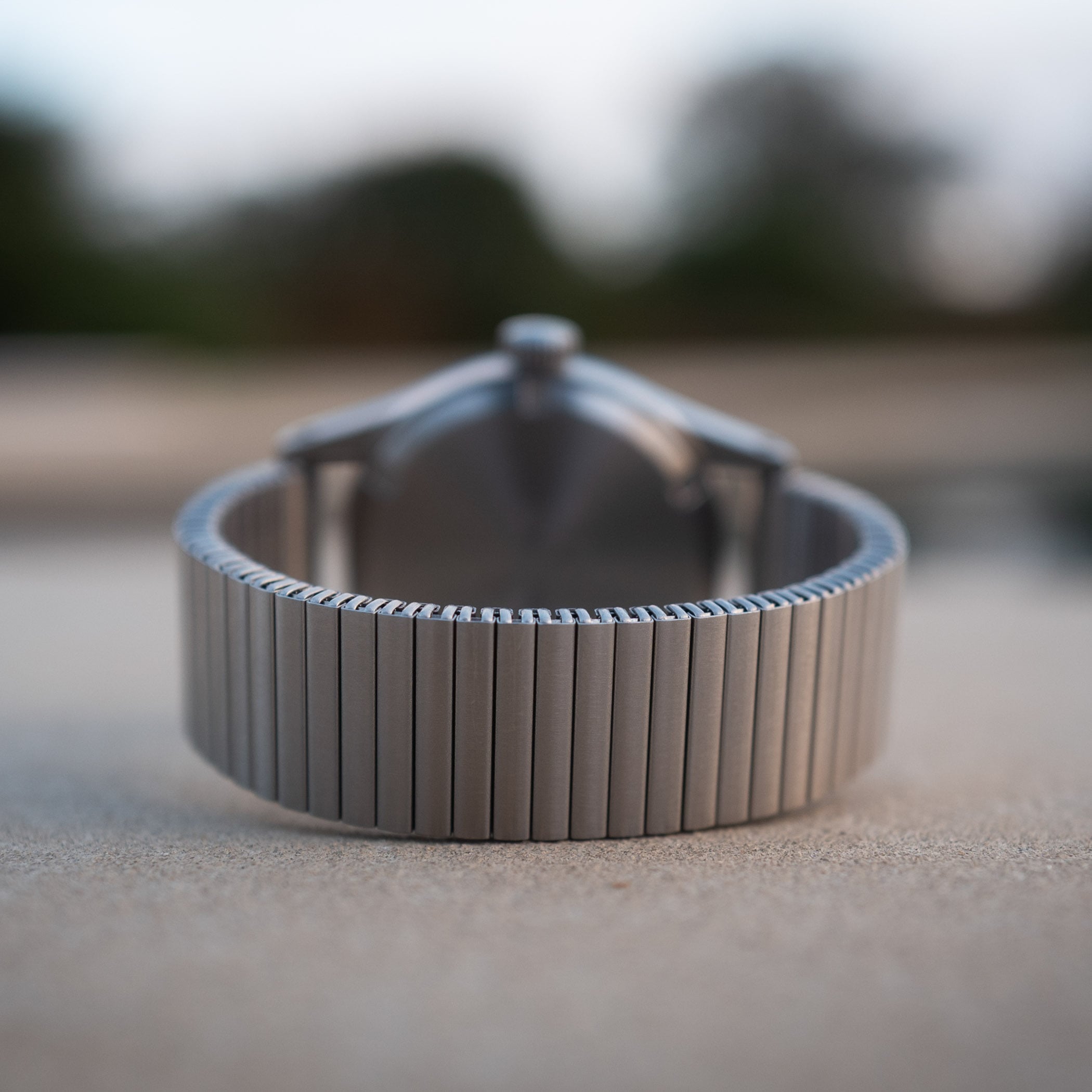
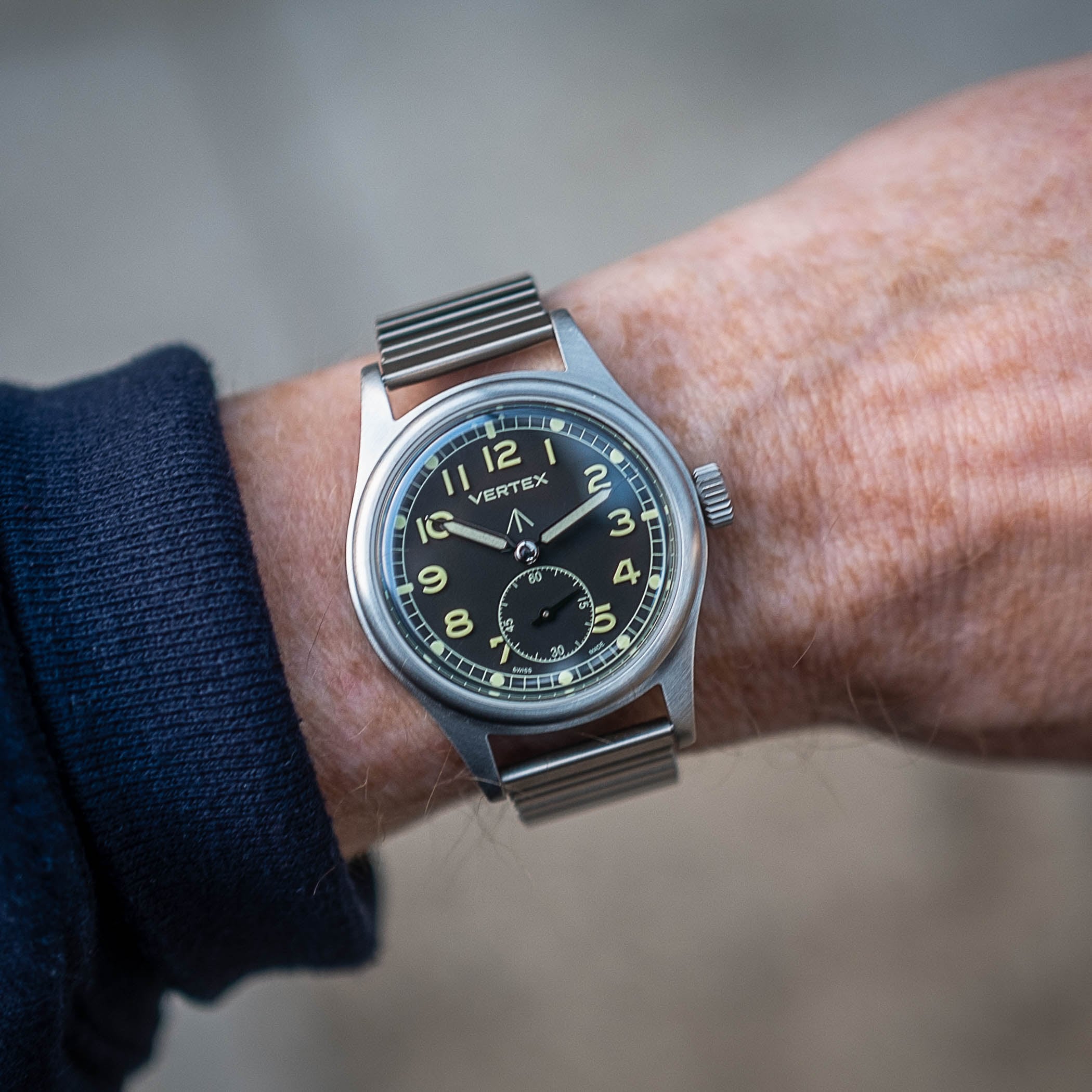
The Vertex M36 is an extremely comfortable and wearable piece of kit. Having worn it on streets, in boats, in nightclubs and bars, in the woods and in the office, it never once seemed out of place or ill-suited to the occasion. I will reiterate that the 36mm size is just about perfect, and the watch is very comfortable on the included NATO strap as well as on the vintage-cool expandable bracelet. Some of these old expansion-type bracelets have a tendency to pull on arm hairs, but I get none of that with this one… Somehow, Vertex cracked that code.
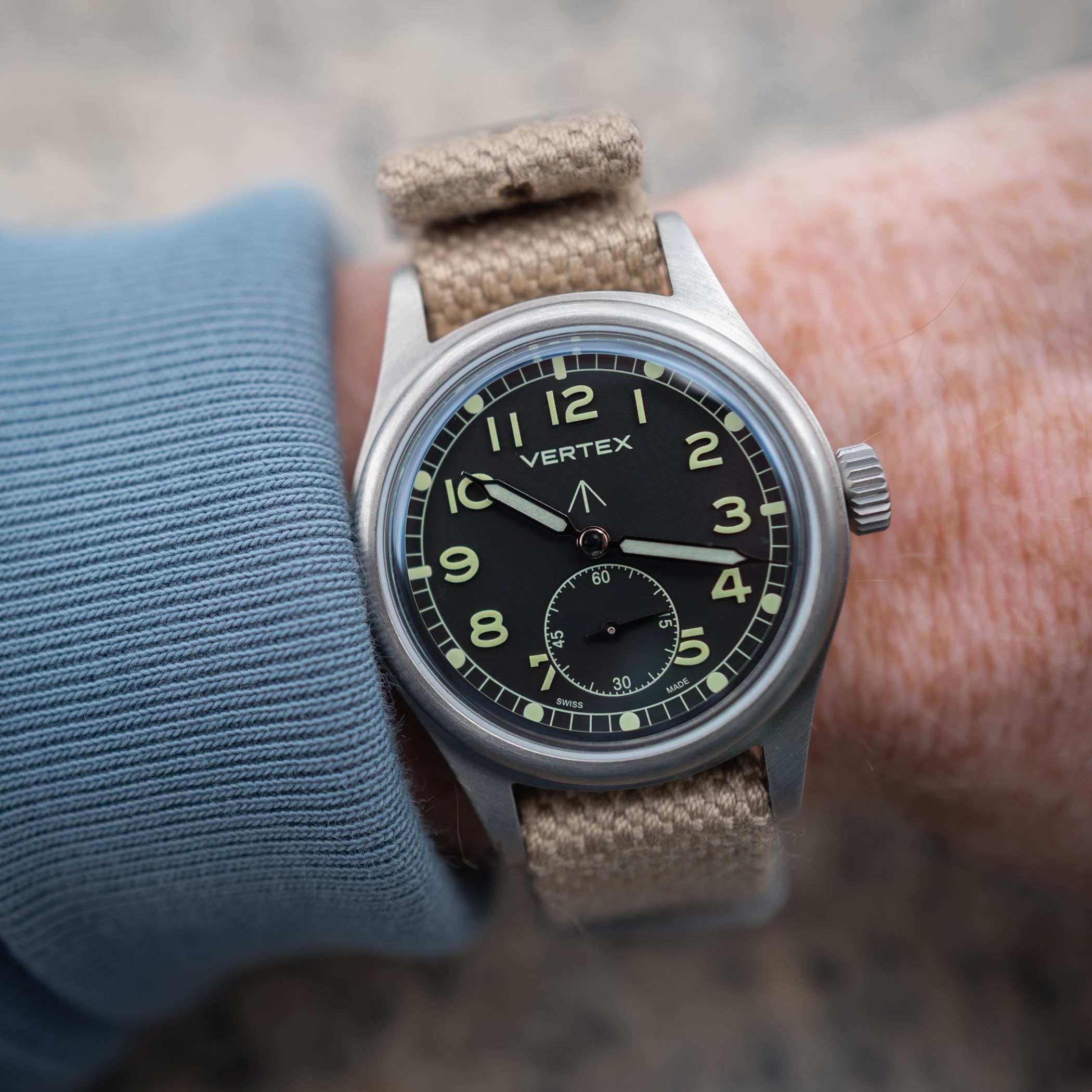
As it should be with a proper field watch, legibility is where the M36 really shines, pardon the pun. The large numerals are very easy to read with a quick glance, and the Super Luminova they are moulded in is absurdly bright. If we could go back in time and swap these with the originals, they would surely scare some soldiers into a full retreat. Maybe lume could have ended the war earlier, but I don’t know, I’m no Sun Tzu.
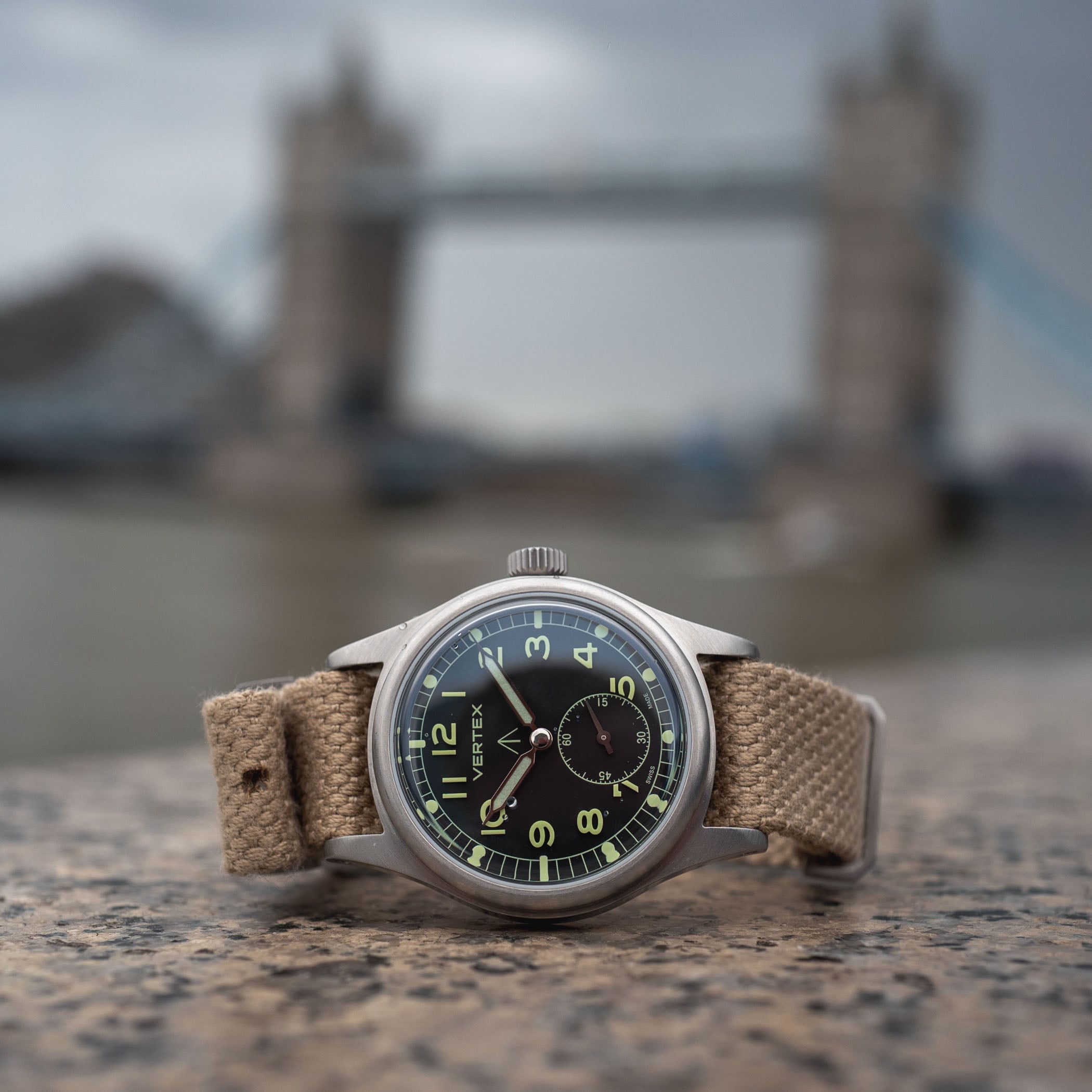
I said I would get into the pros and cons, and so far it’s been all pros. Truly, the only con I have with the M36 is no fault of the watch and just a bit of personal preference. If I had been consulted in the design, I probably would have opted to use a manual-wind movement here. Doing so would have kept it even closer in spirit with the Dirty Dozen watch and saved one or two millimetres in thickness, which is never a bad thing. But alas, no one asked me. A very small nit to pick, but there you have it.
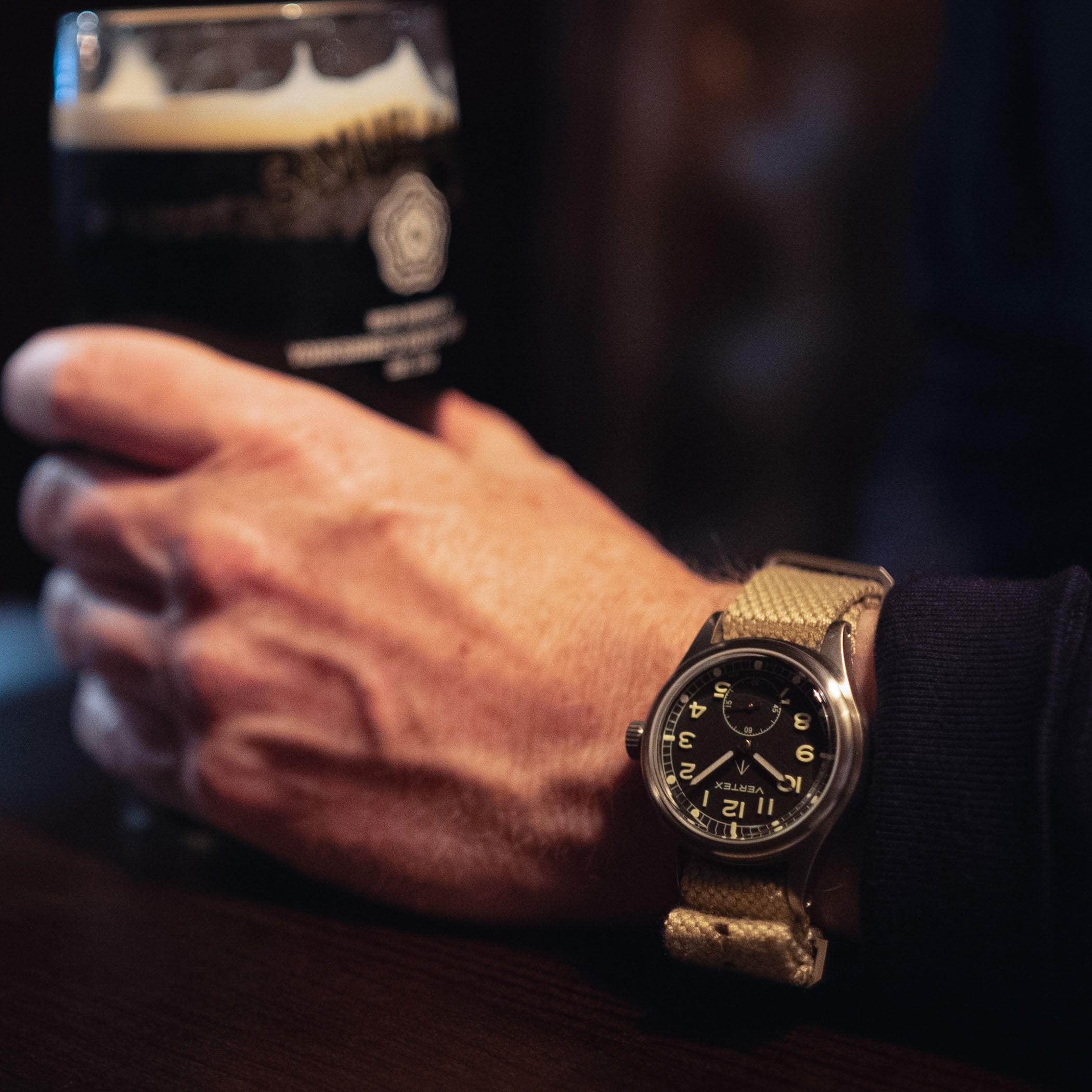
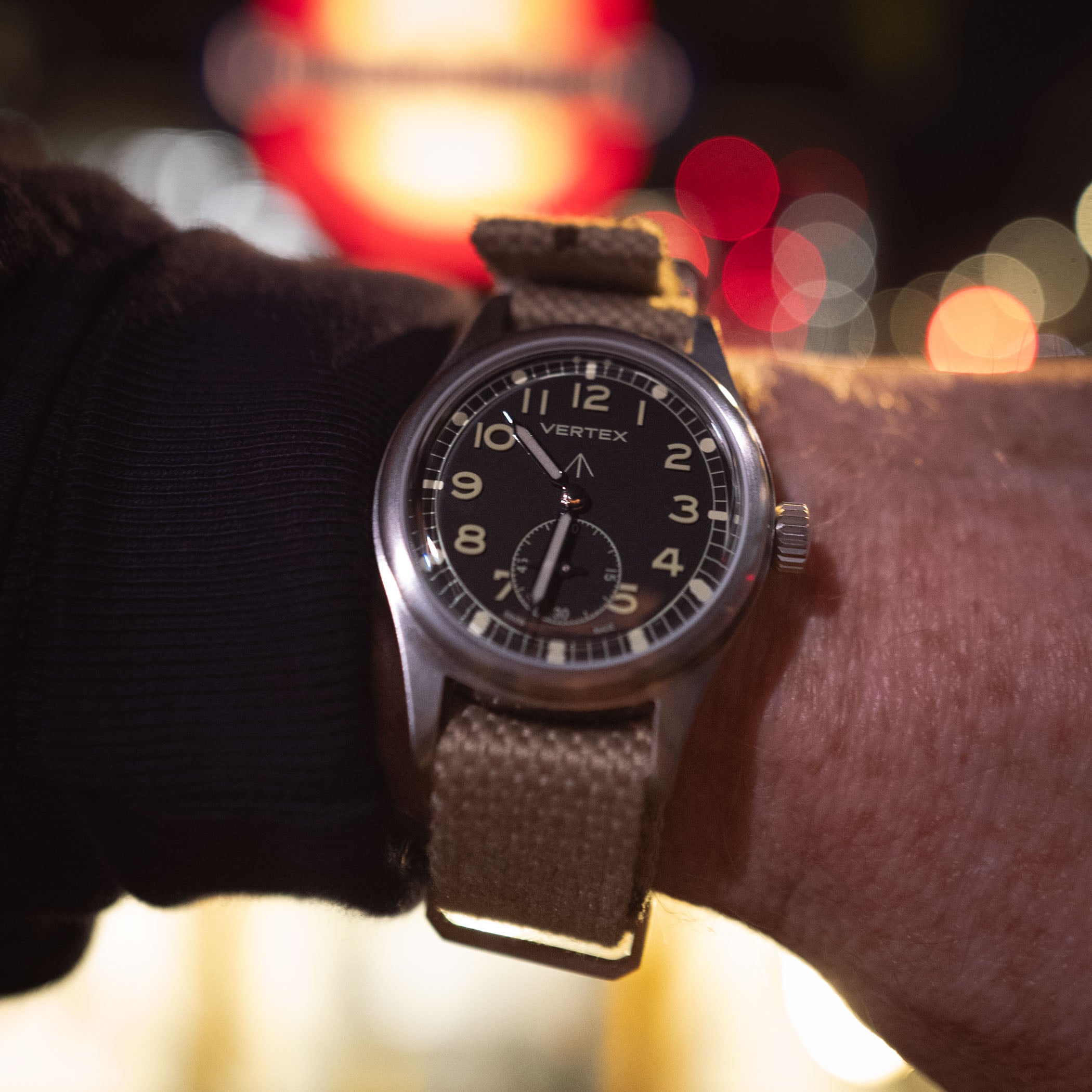
Aside from its extreme wearability and legibility, the Vertex M36 is a lovely watch to look at, and I find myself doing just that, multiple times per day, even after nearly two years. There is something about its simplistic symmetry that is very pleasing to the eye. That is added to by the intangible feelings of being connected to the past in some way that vintage-inspired watches like this seem to elicit. All those things combine to make a watch that is just plain cool. It’s got all the ingredients of that elusive secret sauce.

The Vertex M36 is a lovely recreation of a timelessly classic watch and fits nicely into the modern brand’s catalogue, fully embracing their tie to the past without diluting it or doing it a disservice. And from an on-the-wrist perspective, it has become a favourite in my collection, with the long honeymoon period showing no sign of ending anytime soon. Now available from the brand at GBP 2,150 (incl. taxes) or about EUR 2,100 (excl. taxes). For more details, please visit vertex-watches.com.

14 responses
There is one thing on this watch that spoils the entire thing and is something that cannot be unseen and thats the position of the 12, Vertex Logo and broad arrow. It looks a jumbled mess, with none of them looking like they are vertically aligned with one another, it’s as of someone hit the shift button one too many times when designing the dial.
Vertex giving Nomos a run for their money in the lug department.
Overpriced. Pass.
Buy an original for half the price with a genuine broad arrow.
A decent copy of a Brit military watch But overpriced and like everything else a Sellita movement HO HuM.
I couldn’t agree more with your positive assessment of this watch, except for changing out the automatic for a manual movement. I prefer an automatic movement, given that there’s a screw down crown involved. I have had this watch for awhile now and it’s still fun. Plus, Don treats his customers with respect, unlike a lot of other brands these days, like O&W since it was taken over after Mr. Wajs passed. A shame but it points to an important point, and that is that Vertex can be relied on to take care of their customers, and that’s saying something in this day and age, and in regards to the watch industry in general.
Can someone please tell Omega they should ask Baltic for licensing the Hermétique Tourer case? Then give it caliber 8826, the iconic dial and hand design, a decent crown (but remain the 15 ATM water resistancel!!) and bring back the only field watch worth the name?? Compare the Hermétique to Omega’ Reference 2179 and you’ll understand. That will render this Vertex and all other field watches obsolete.
I own an original gold Vertex from 1959. I inherited it from my grandfather. I wear it regularly and it’s beautiful.
I fail to see the misalignment on the dial (probably more to do with the 1 and 11 than the 12), I like the long lugs on the 36 mm case (allows for that generously thick nato). I concur, though, about preferring a manual movement and two mm of the thickness!
At this price they could have used an Sw300/2892 and shaved 1mm off the thickness. Meh
Everything was more or less smooth with the review until 2100 Eur + VAT. Complete bonkers for a 36mm field watch, which is supposed to be cheap and reliable. This is a very lazy attempt to piggyback on the glorious past. Agree, that automatic is not needed without date, too (but maybe they think it adds to the value?). Next step is platinum case and cover it in jewels and put 50K price tag – because why not?
They couldn’t use an SW300/2892 as it doesn’t allow for the gearing for an off center seconds hand. They would have to use Sellita’s version of a 2895. I understand the price objection given the movement being used, but there’s some solace in knowing it’s a top grade version.
Cracking little watch, oozes charm in hand. A minor niggle could be that they could have used an SW261-1 to lower the small seconds ever so slightly, but there is nought wrong with this ‘un.
If I hadn’t already owned the Seiko SJE085 limited alpinist, this would have been my field watch of choice, although the Smiths PRS-29 does punch above its weight as well.
That Seiko I mention and own also got a lot of flack for being overpriced, but after many years of collecting and owning Seiko watches as well as Hamilton and Glycine field watches I can wholeheartedly say that that little Alpinist and the Vertex are absolutely the ne plus ultra of the field watch genre.
Some things need to be worn for a while to be truly appreciated.
Nearly all of the original Dirty Dozen watches had the same lug proportions. This is not unique to Vertex.