
 Not all images were able to load for printing. Please close the print window and try again.
 The 1990 Monte Carlo Automobiles Centenaire You Probably Never Heard Of
Offered for sale through Broad Arrow Auctions, this is rarer than a Jaguar XJ220 or even a McLaren F1.
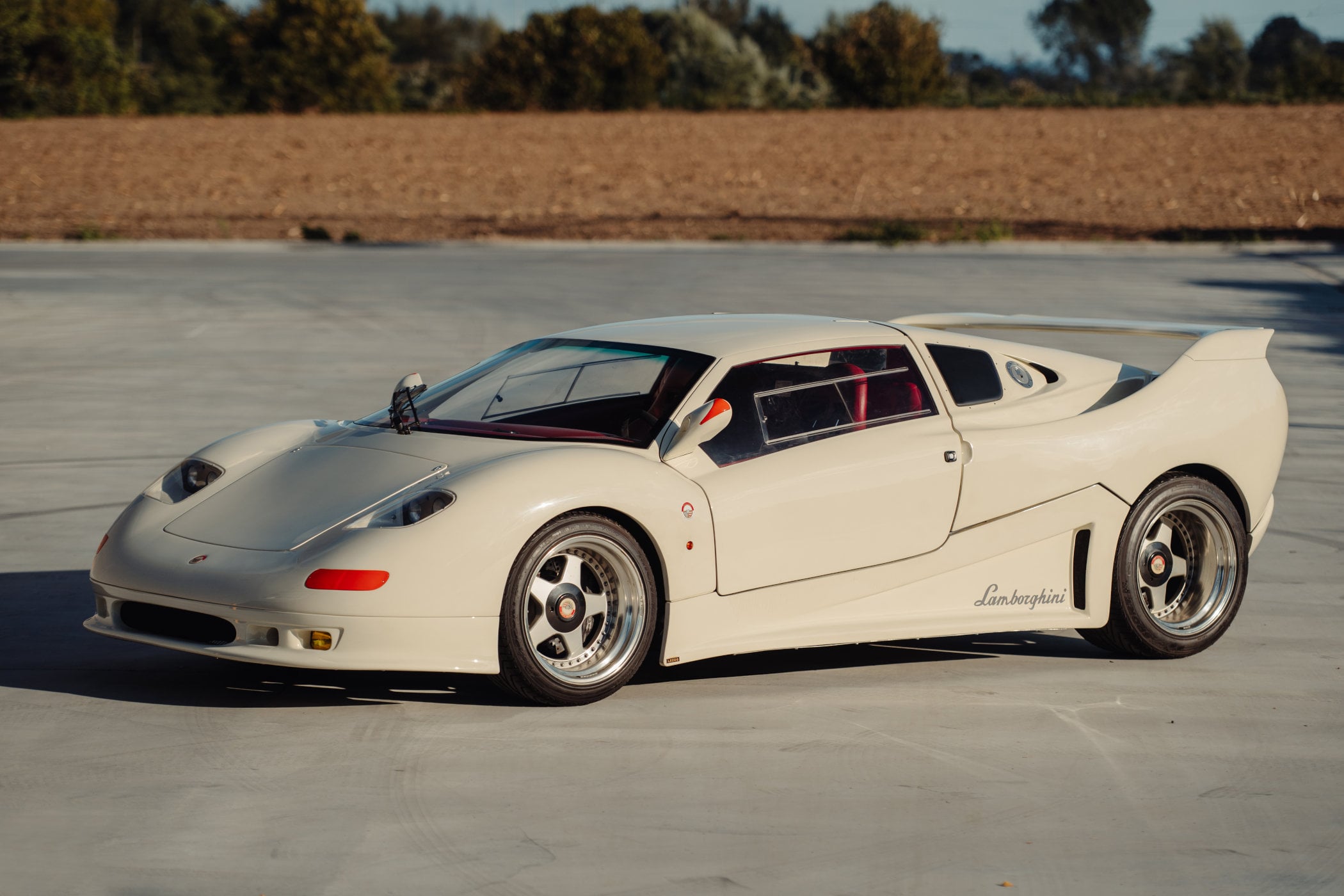
Decades on, we’re still in awe of cars like the McLaren F1, Jaguar XJ220 and Bugatti EB110, yet other high-profile projects of the same era suffered a very different fate. Such is the misfortune that has befallen this Monte Carlo Automobile Centenaire, despite looking very promising on paper when it was first announced! Announced on the occasion of the 100th anniversary of the Automobile Club de Monaco, which, among other things, organises the Monaco Grand Prix and Monte Carlo Rally, only five were ever made. This one, the very first ever produced, was sold at auction yesterday by Broad Arrow Auctions at this year’s annual Zoute Grand Prix Car Week. Let’s take a closer look at this obscure yet fascinating piece of 1990s supercar history!
Monte Carlo Automobile
Monte Carlo Automobile, or MCA for short, was founded by Fulvio-Maria Ballabio, an Italian-born racing driver who competed in Formula 2 and CART during the 1980s before realising his vision of a supercar. To achieve this, Ballabio enlisted the help of several high-profile people from the world of racing. Race engineer Carlo Chiti, for instance, worked for Alfa Romeo’s and Ferrari’s programs and helped develop the 1961 Formula 1 championship-winning Ferrari 156 ‘Sharknose’. Others included former Formula 1 racing driver Guglielmo Bellasi, former Alfa Romeo Sporting Director Perluigi Corbari and F1 specialist Marcel Zunnino.
MCA was the very first car manufacturer to be founded in and operate out of Monte Carlo, with the Centenaire being developed over a period of five years. Initially called the GBT, it was renamed Centenaire in honour of the 100th anniversary of the Automobile Club de Monaco and presented to Prince Albert II of Monaco. The timing proved unfortunate; like so many supercar projects of the time, the global financial crisis basically killed it off altogether due to low demand. In 1993, the rights to the car and company were sold to a Georgian businessman who wanted to take it to Le Mans. Sadly, it didn’t even make it past qualification. Two years later, the Aixam Mega Group took over control of the MCA company, which redesigned the Centenaire into the Mega Monte Carlo. In the process, it also switched engines, but more on that in a bit.
The Aixam Mega Group eventually handed back control of the company to Ballabio, with several projects following, including a collaboration between the FIA and Carlo Chiti, and a new car called the Monte Carlo BRC W12, powered by Volkswagen Audi Group’s 6.0-litre W12 engine in the mid-2000s. In 2014, the company announced another supercar project, the Rascasse, with a production run of only 15 units, although it’s unclear to me if they were actually built. MCA still seems active, yet it’s a bit of a mystery what it’s doing at the moment.
The Centenaire
Ballabio’s vision for a supercar, the Centenario, was not something designed and built in a shed, but in reality a properly impressive piece of engineering. It’s claimed to be the very first road-going car with a carbon fibre monocoque chassis, although sources mention the McLaren F1 and the Jaguar XJR-15. To put things in perspective, the McLaren F1 came to market two years later, while the Jaguar XJR-15 was introduced in 1990 as well, albeit unveiled in November as opposed to the MCA Centenaire’s unveiling in August that year. Regardless, it had what it took at the time to make automotive headlines!
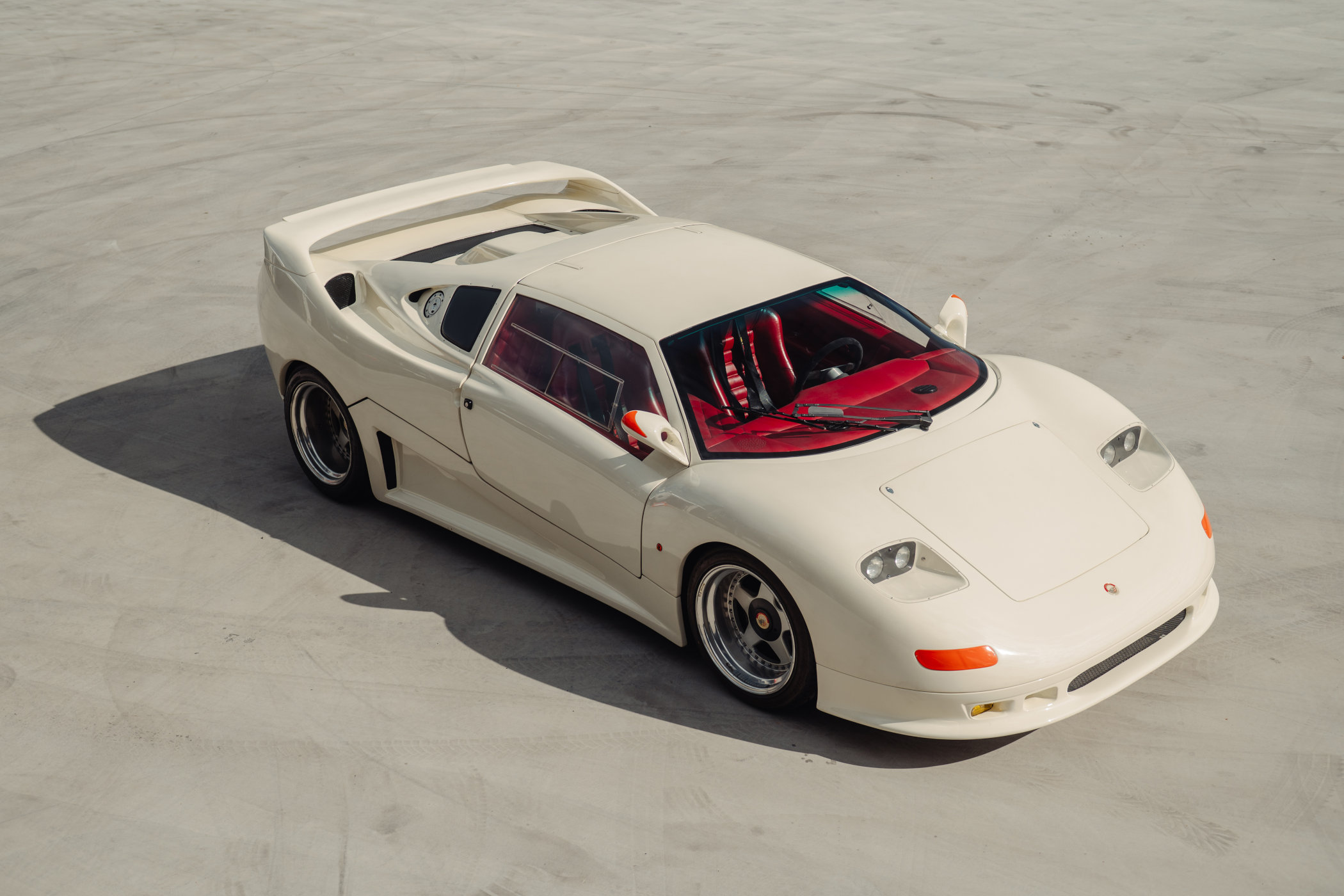
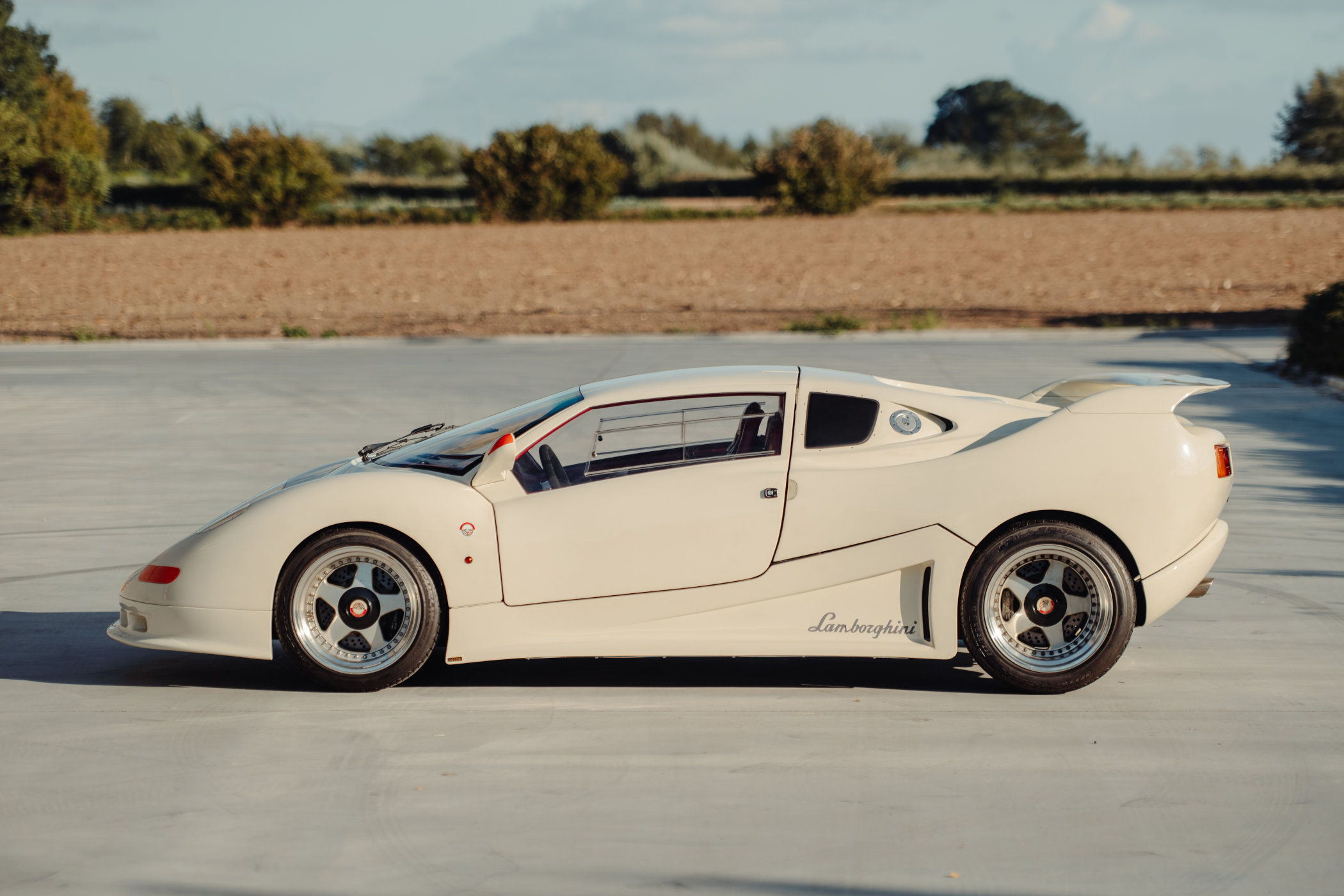
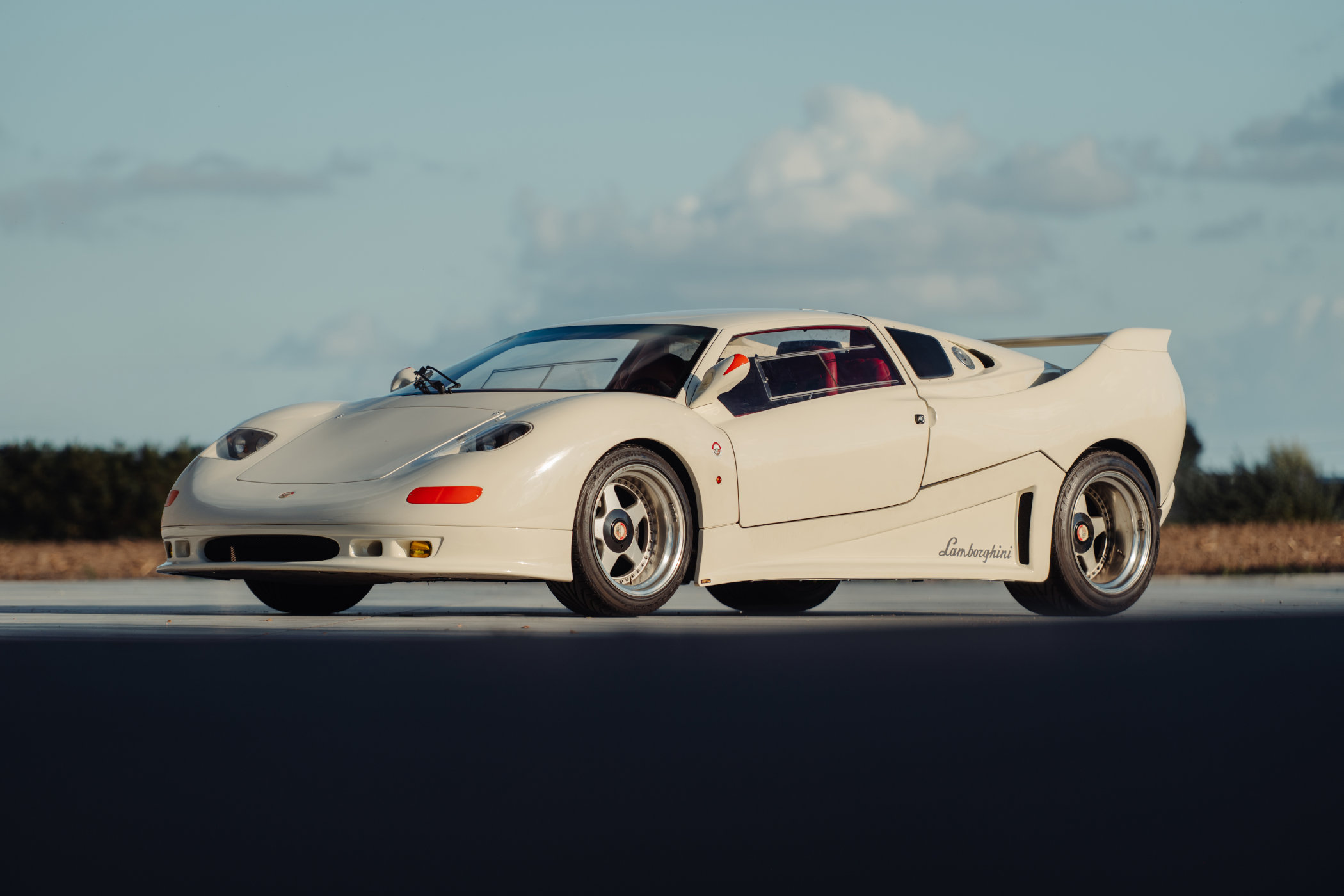
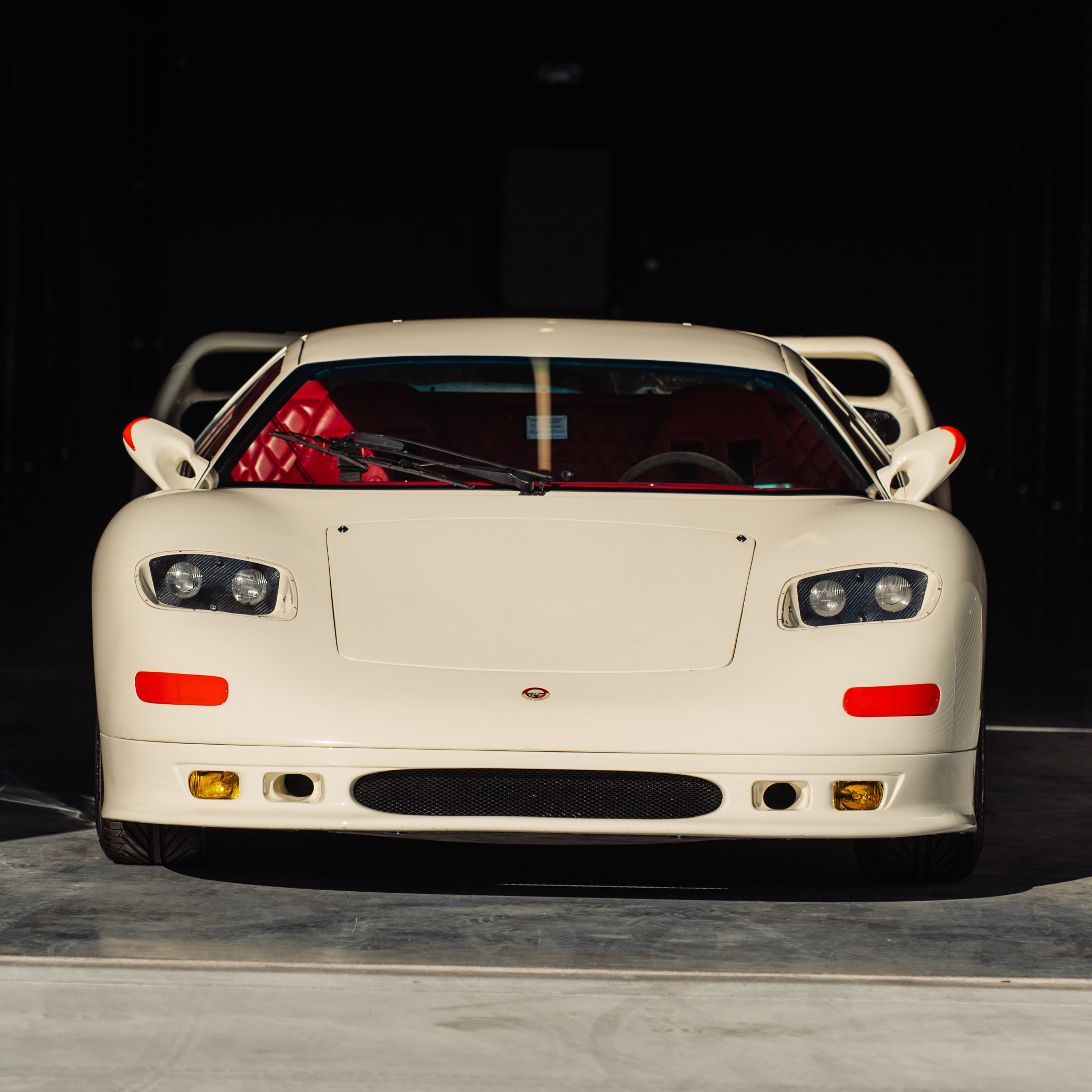
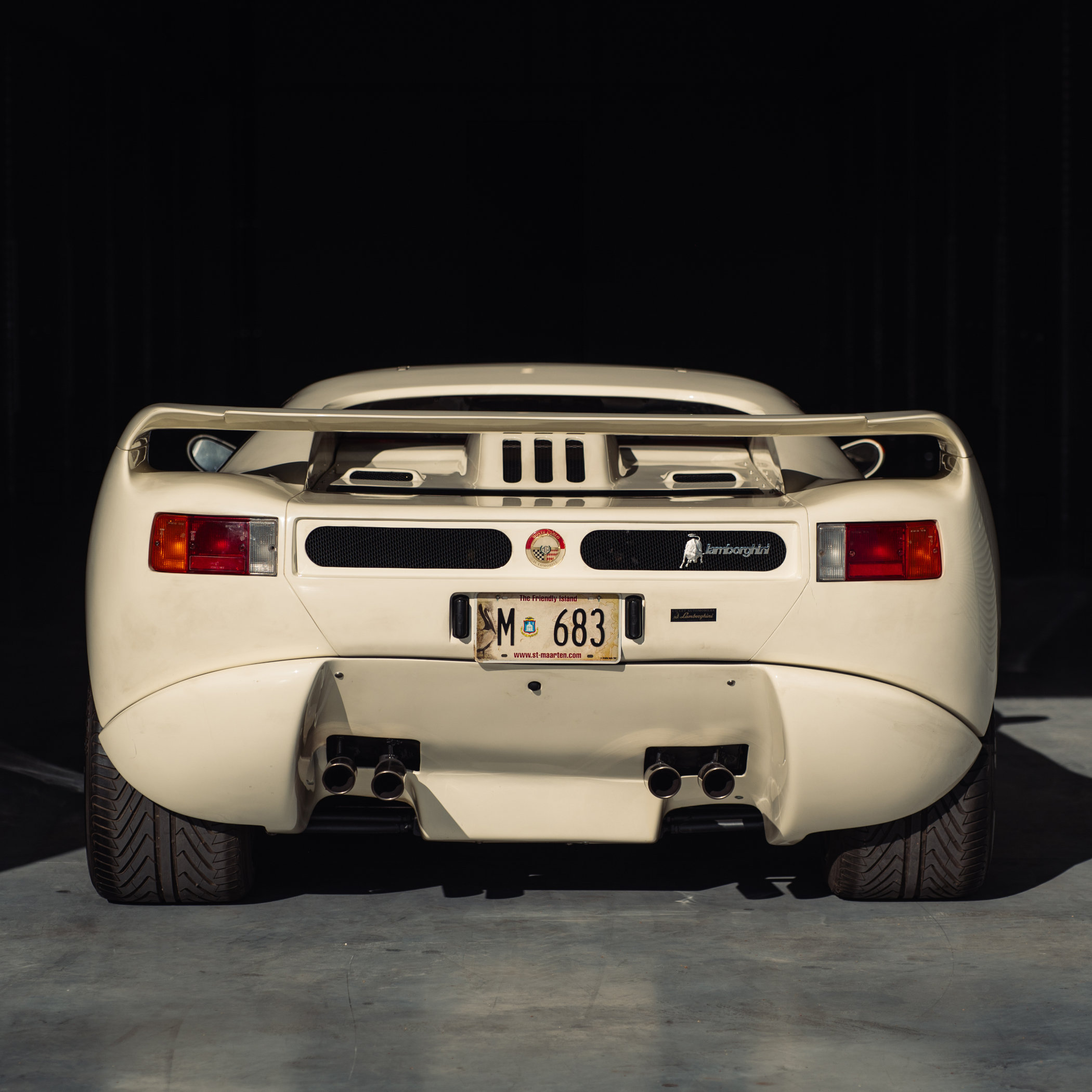
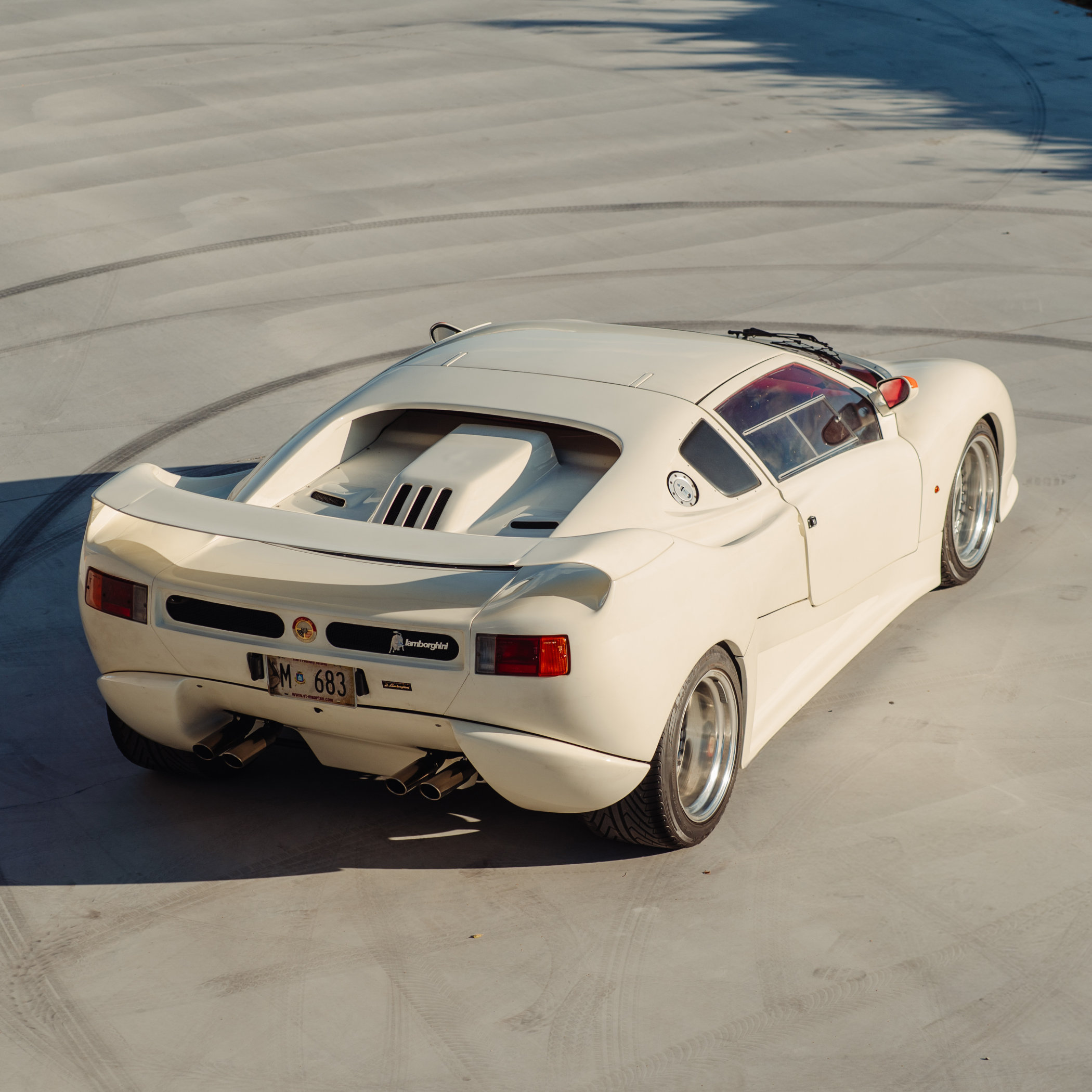
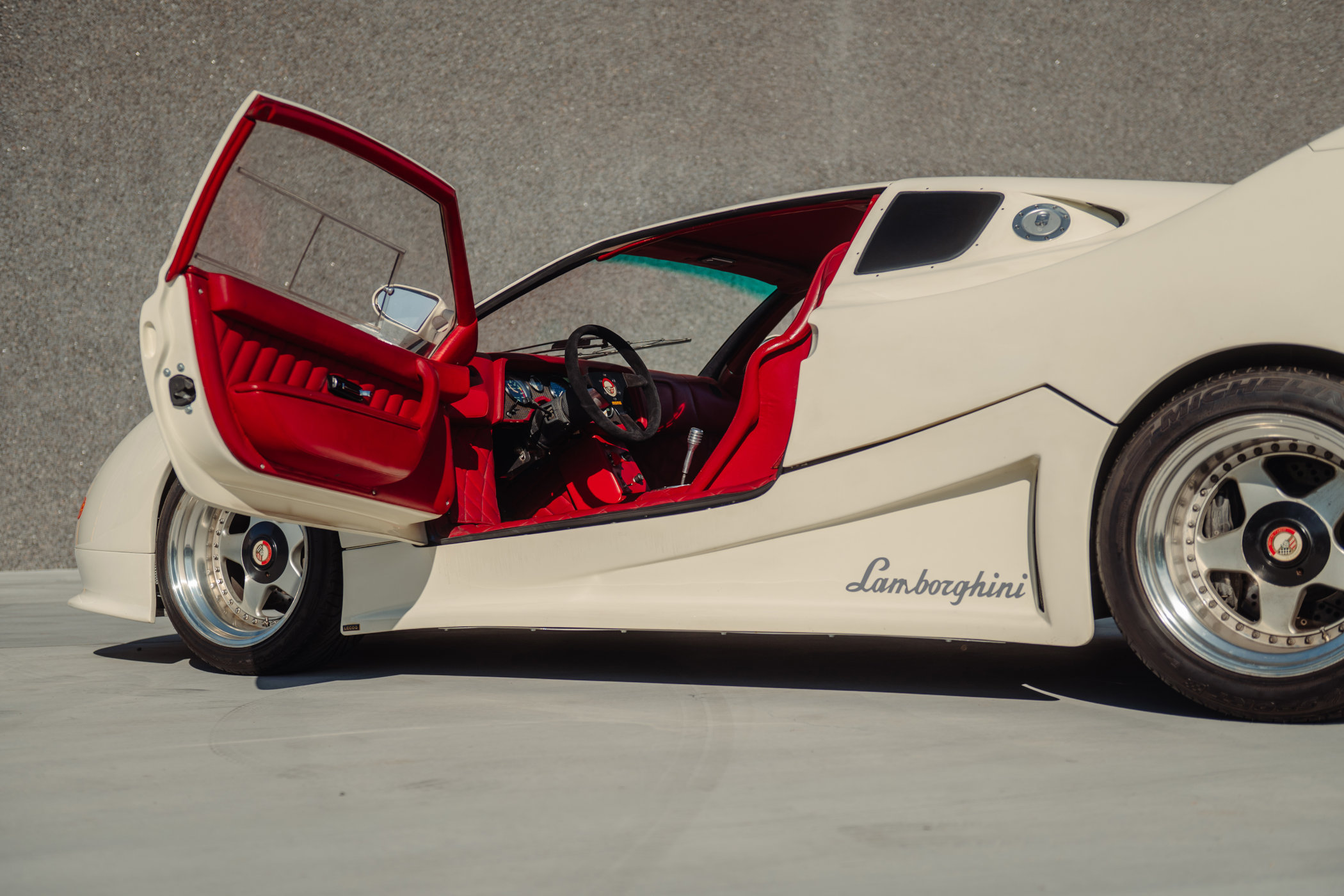
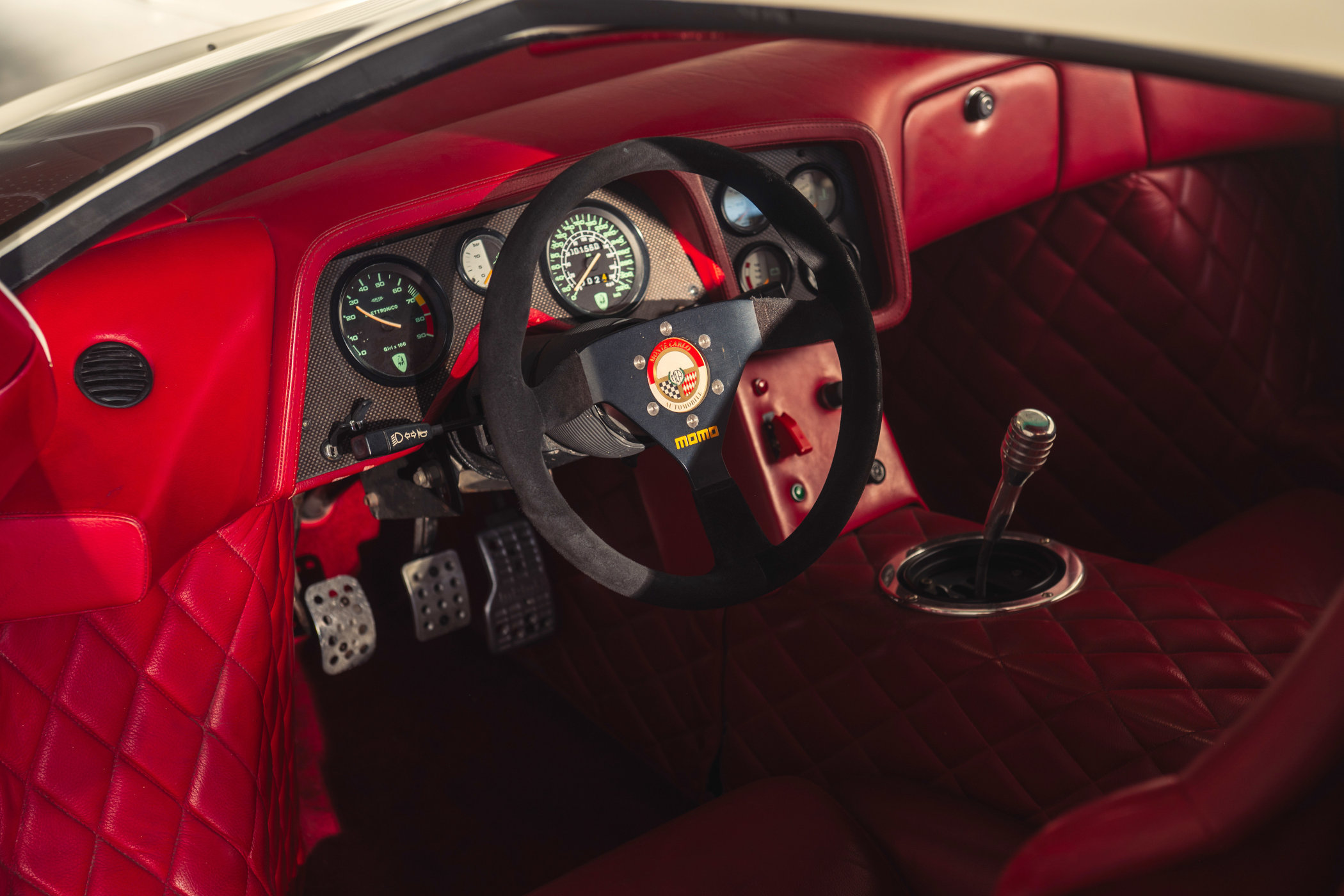
What stands out in the images is just how short it looks, almost as if it were shrink-wrapped. In fact, it’s only 4.025 meters long, with a wheelbase of just 2,520 meters. The shape is quite typical of the era, with short front and rear overhangs, a clam-shell rear section and a large integrated spoiler. This specific car, which was actually the very first chassis MCA built, was originally finished in ivory white. At one point in time it was repainted blue, but the last owner before yesterday’s sale restored it to its ‘factory’ specs, with a similar ivory white finish over a red leather interior. A hint at MCA’s racing aspiration comes in the form of sliding plexiglass windows in the doors, a solution often chosen due to space constraints in the door structure
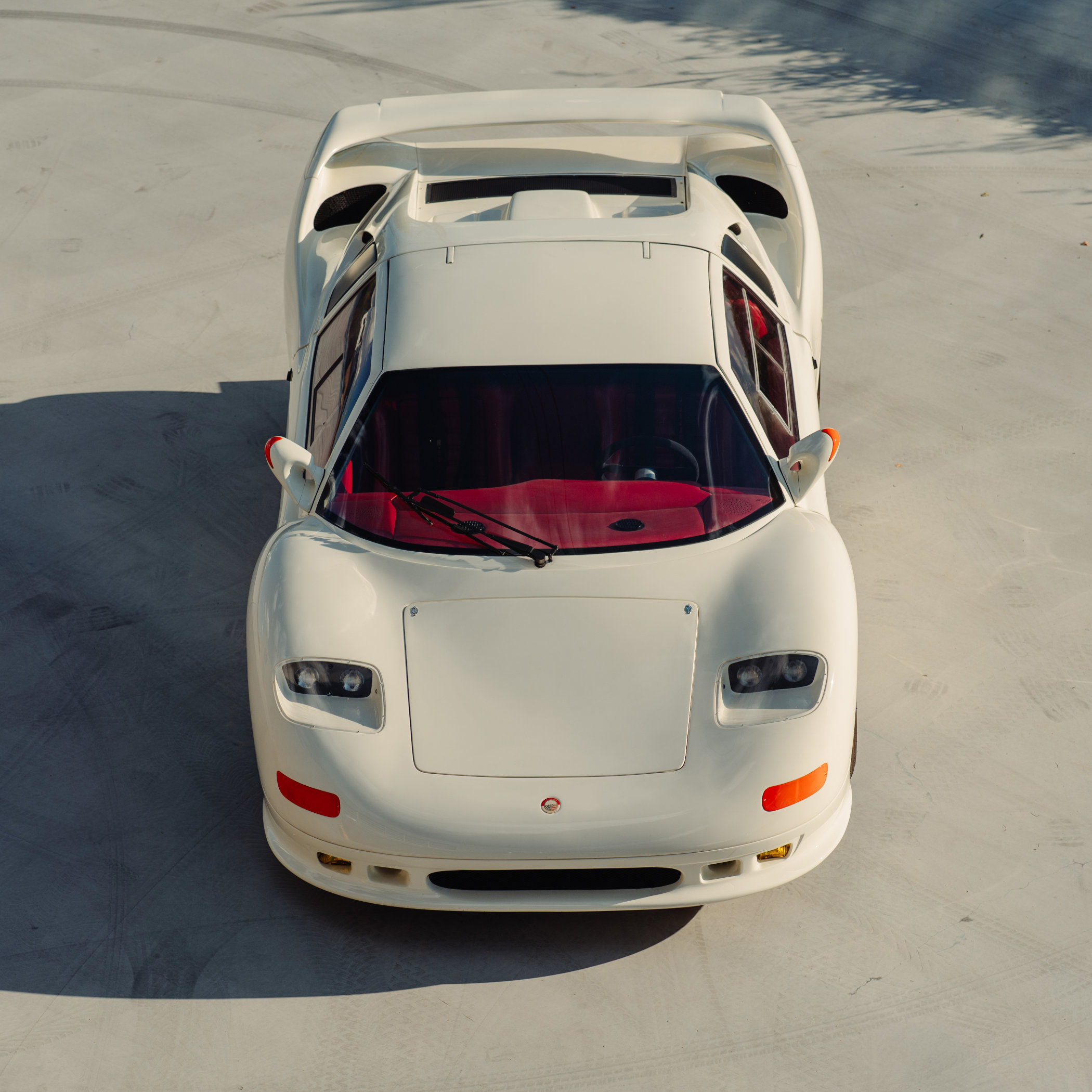
While the front is rather simple, a distinct styling cue on the Centenaire is the strong line running from the front to the back. It starts out low, yet rises significantly from the front wheel backwards. It accentuates the door, before passing along down the clamshell rear body, and cutting back down again and sweeping up behind the rear wheel again. It gives the Centenaire a distinct sense of drama, along with the many cuts, slashes and vents all over the body. Around the back, dual twin exhaust tips poke out from underneath the rear bumper.
Powered by Lamborghini
And this is where the name of Lamborghini comes in, although I’m pretty sure you’ve spotted the brand’s name on the side and the rear already. In 1989, Ballabio travelled to Bologna to secure a deal with Lamborghini for the then 5.2-litre V12 from the Countach 5000QV, mated to a ZF six-speed manual. At the time, this was producing around 455bhp while sources also claim MCA was planning to offer an F1-derived 3.5-litre V12 with a twin-turbo setup producing more than 600 horsepower. Out of the five, three are still fitted with the Lambo-sourced V12, including this one. When the Aixam Mega Group redesigned and revised the Centenaire into the Monte Carlo, the Lamborghini engine was replaced with a 6.0-litre V12 from Mercedes, the same engine that would shortly after also power the first Pagani Zonda.
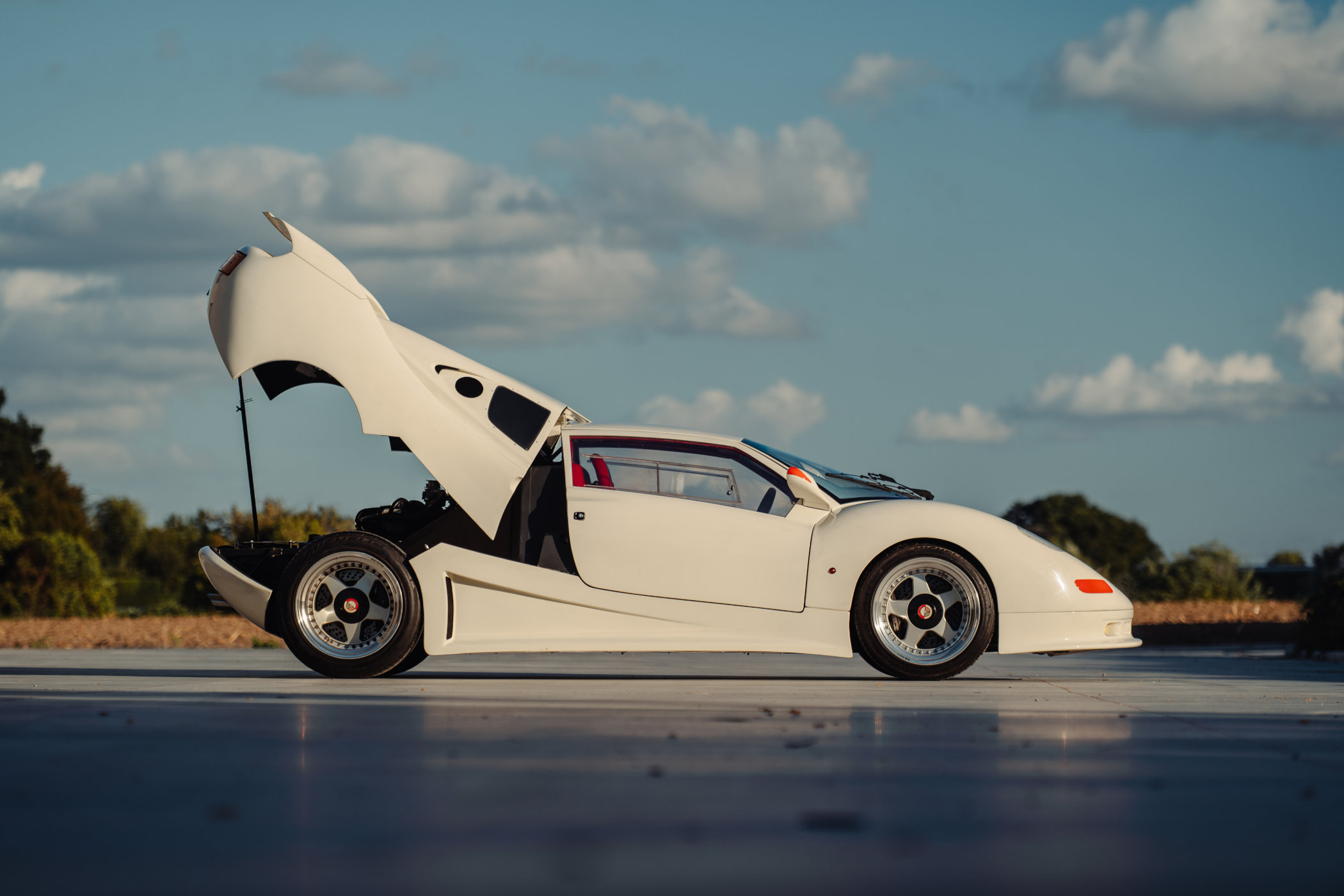
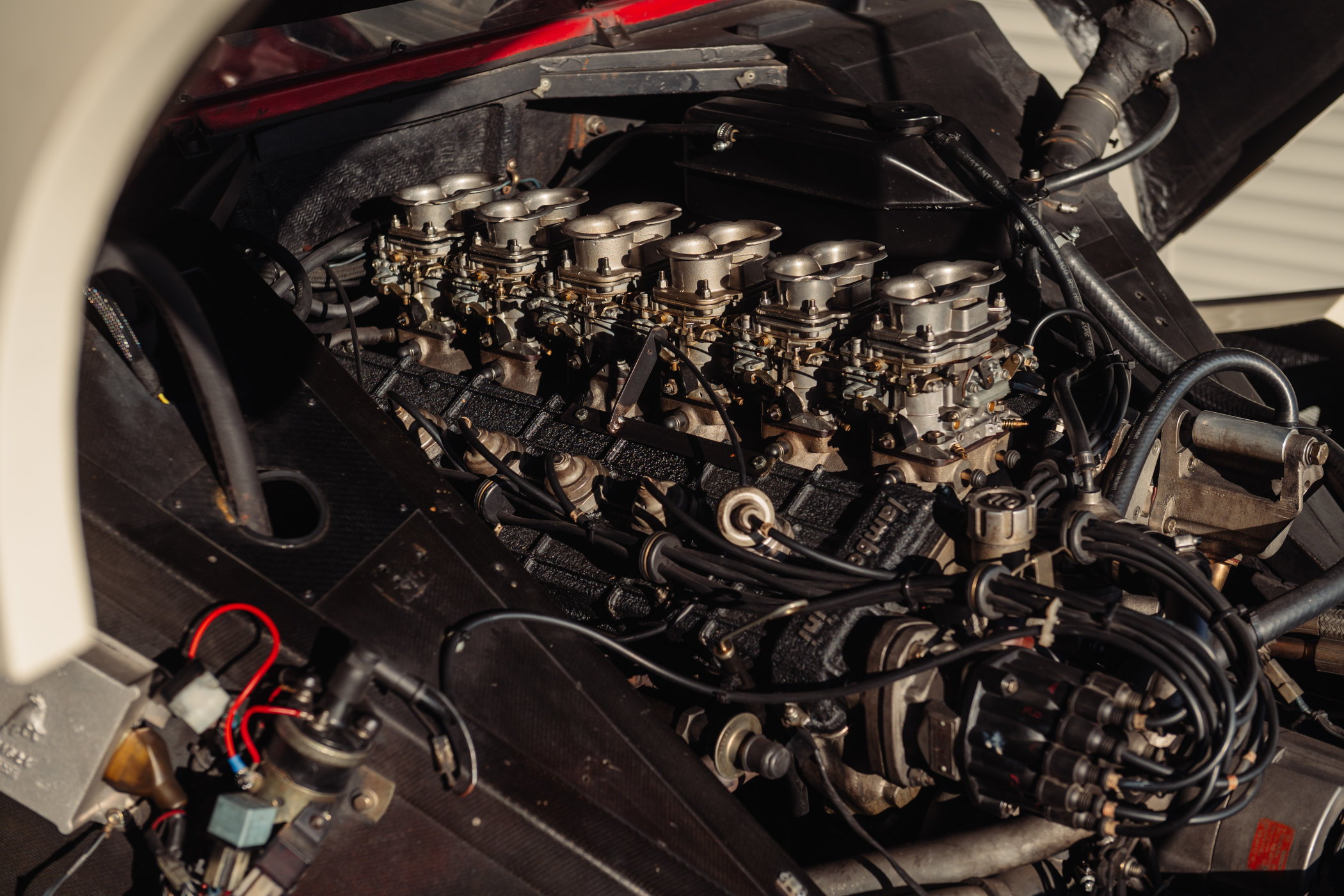
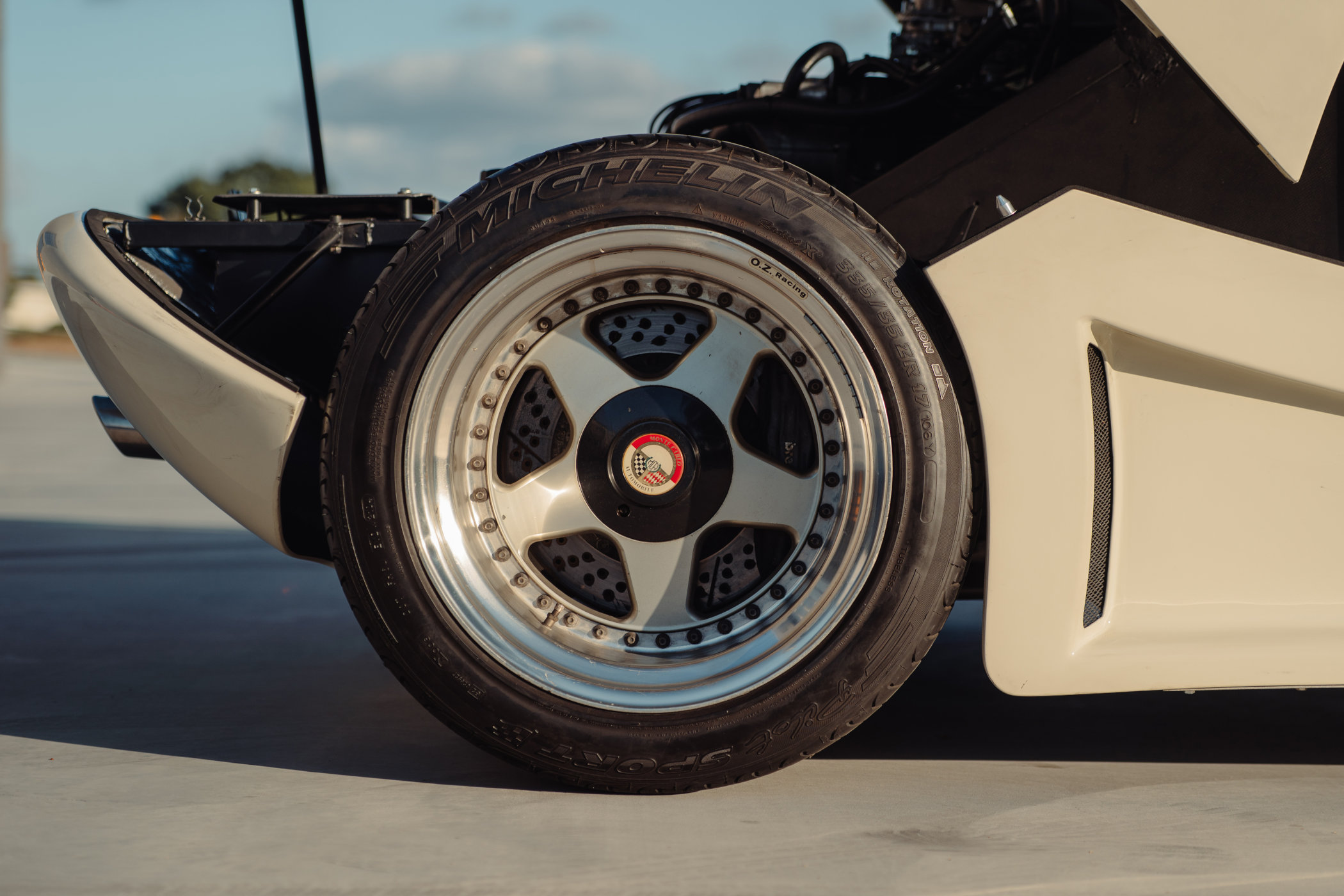
The Monte Carlo Automobile Centenaire serves as a running, driving embodiment of supercar ambition being put to the test at the wrong moment in time. If it wasn’t for the financial crisis of the early 1990s wreaking havoc in the industry, who knows what might have come of the first Monte Carlo-based car manufacturer. This particular car has been owned by Lamborghini for about a decade before the company gave it back to Fulvia-Maria Ballabio in the early 2000s. It changed colour in 2007 and was put on display at Rétromobile that year, alongside the Lamborghini Pregunta concept car. It’s now back to its original colour scheme as mentioned, and comes with full history and documentation, including a letter by MCA representative Matteo Ramello, confirming this very car is indeed the first one built and was used as a testing and demonstration vehicle.
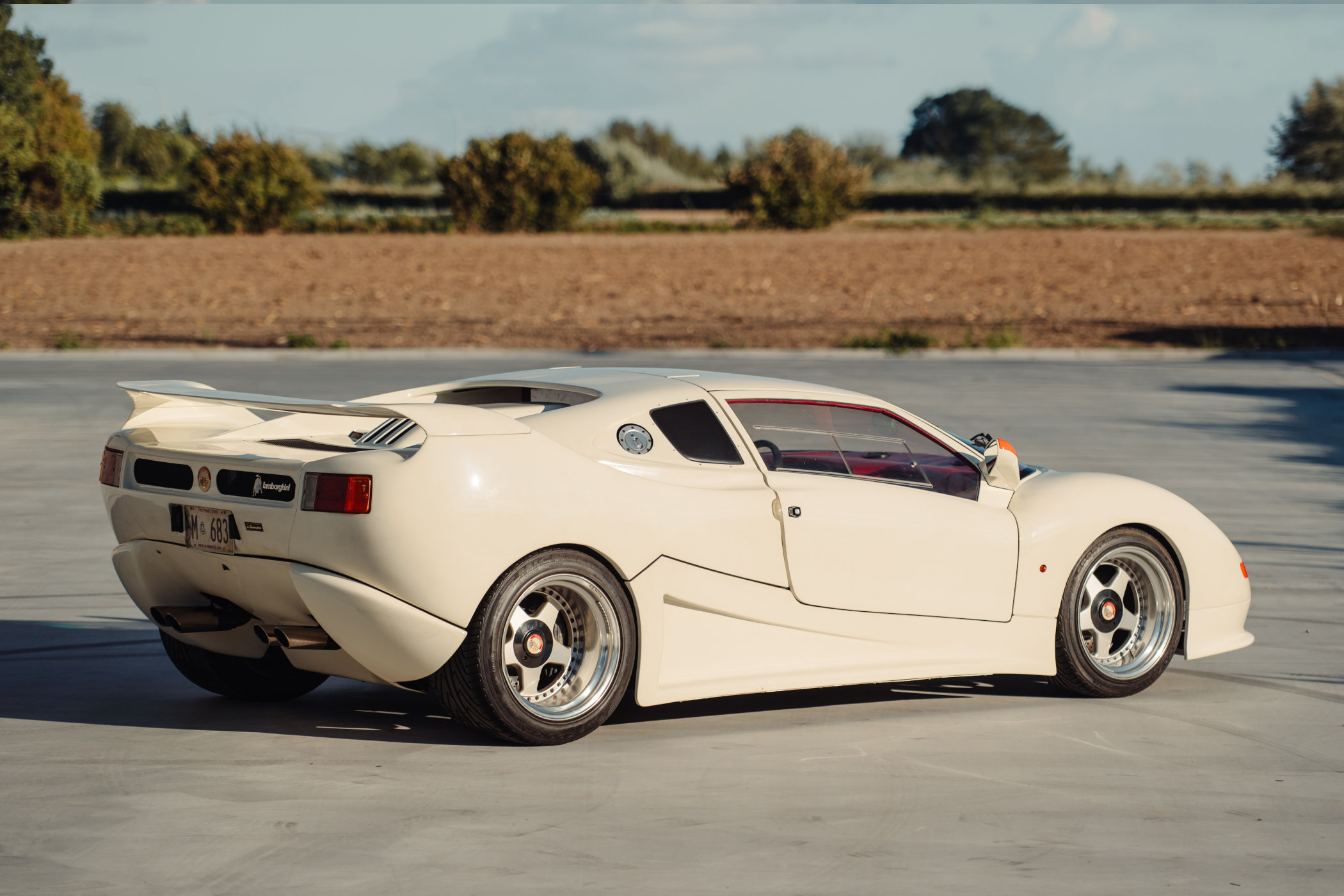
Whoever managed to snag this one up is the new owner of a genuinely fascinating “what could have been” car. The estimate leading up to the auction was set at EUR 900,000 to EUR 1,200,000 without a reserve, with the final hammer price falling short at EUR 725,000 excluding buyer’s premium and VAT.
For more information, please visit BroadArrowAuctions.com.
Editorial Note: The information used and images portrayed in this article are sourced from and used with the permission of Broad Arrow Auctions unless stated otherwise.