


 Not all images were able to load for printing. Please close the print window and try again.
 Some of the Most Iconic Watches to Appear in Movies
Seemingly countless watches have appeared in movies, but only a handful have become icons as a result.
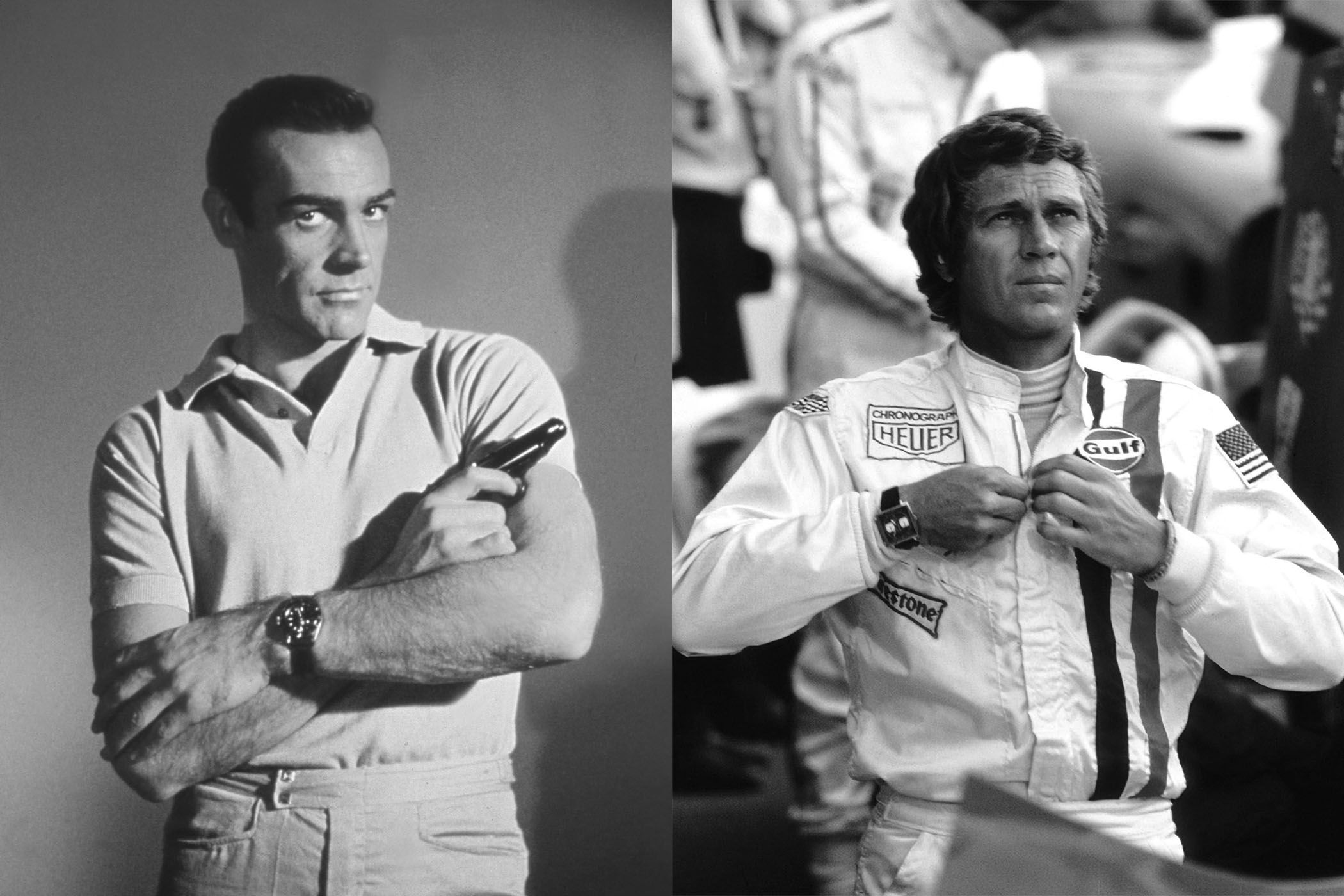
Watches are so ubiquitous that just about every movie has characters wearing them. Most go unnoticed by audiences as a generic part of daily life, although when bigger actors or “movie stars” flash a watch on screen, it often gets noticed. For the most part, however, watches are simply part of the given wardrobe and carry little significance. Perhaps it’s a Seiko Lord Matic 5606-7000 in a 1970s setting or Casio G-SHOCK DW-5000C in a mid-1980s scene. For perspective, Hamilton alone has over 500 movie placements. That said, sometimes a watch becomes an instant icon on the wrist of a major star or even legendary character – from Elvis Presley to James Bond to Steve McQueen, some pairings of star and watch resonate for generations. This won’t be an exhaustive list as I can easily name dozens of examples, but it’ll touch on five watches that have truly stood the test of time.
Bulgari Serpenti
Let’s start with one that became an icon by accident after being photographed on the wrist of Elizabeth Taylor during the production of Cleopatra in 1962. It wasn’t seen in the movie (which was set as far back as 48 B.C.) but simply shot on set and on the right wrist. Elizabeth Taylor was the first actress to command a million dollars for a movie and at the time, she represented peak glamour and Hollywood royalty. She had already won an Oscar for Butterfield 8 (1960) before winning a second for Who’s Afraid of Virginia Woolf? (1966), but her most iconic role was arguably Cleopatra in 1963. Add in a life of scandal that tabloids coveted (such as eight marriages and an affair with Cleopatra co-star Richard Burton, who went on to star in eleven movies with her) and you have a legend always in the spotlight.
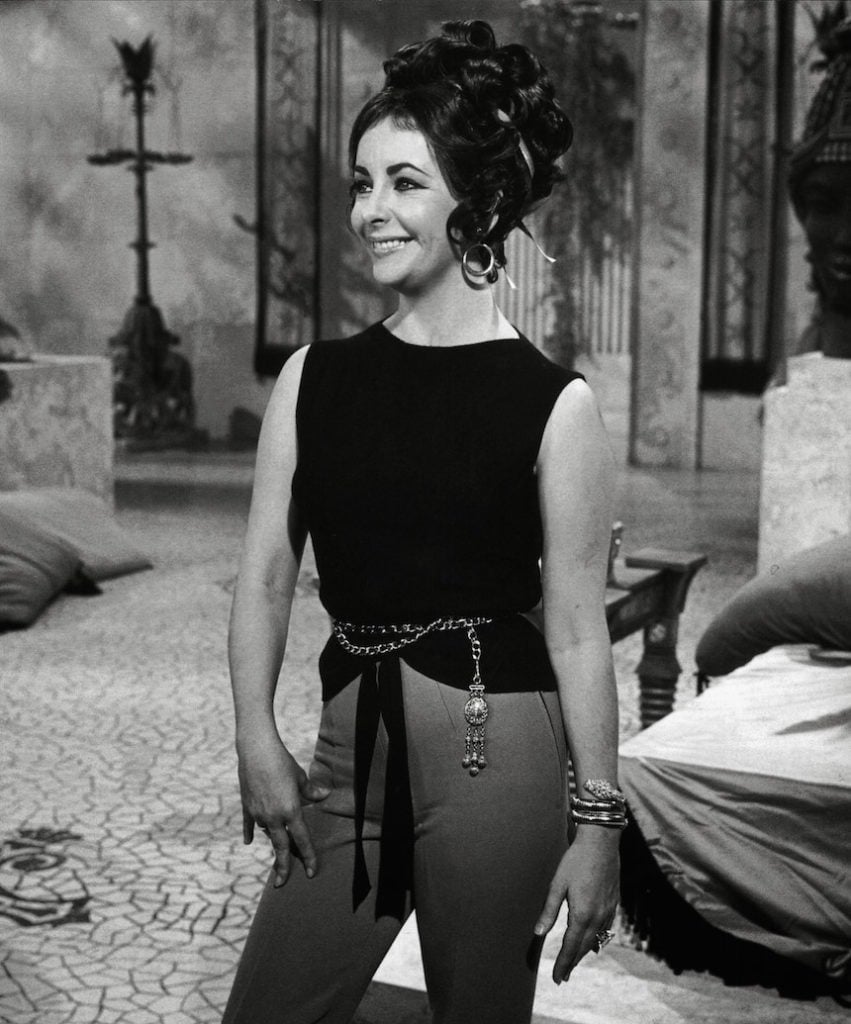
Before she died in 2011, Taylor had amassed one of the most expensive private jewellery collections in the world, but her love of the Bulgari Serpenti is among the most memorable. The Bulgari Serpenti collection actually debuted in 1948, but was almost exclusively limited to the Rome boutique and Italian market with little international recognition. In 1962, there was a perfect storm – A relatively unknown jewelled serpent-themed watch photographed on the wrist of a legend and upcoming Egyptian Queen, additional media attention from the affair with Richard Burton who frequently bought her Bulgari gifts during production, and the overall spectacle and yearning of Hollywood glamour in the 1960s. The watch became an international sensation from just one picture that generated massive buzz and marketing gold, all by accident.
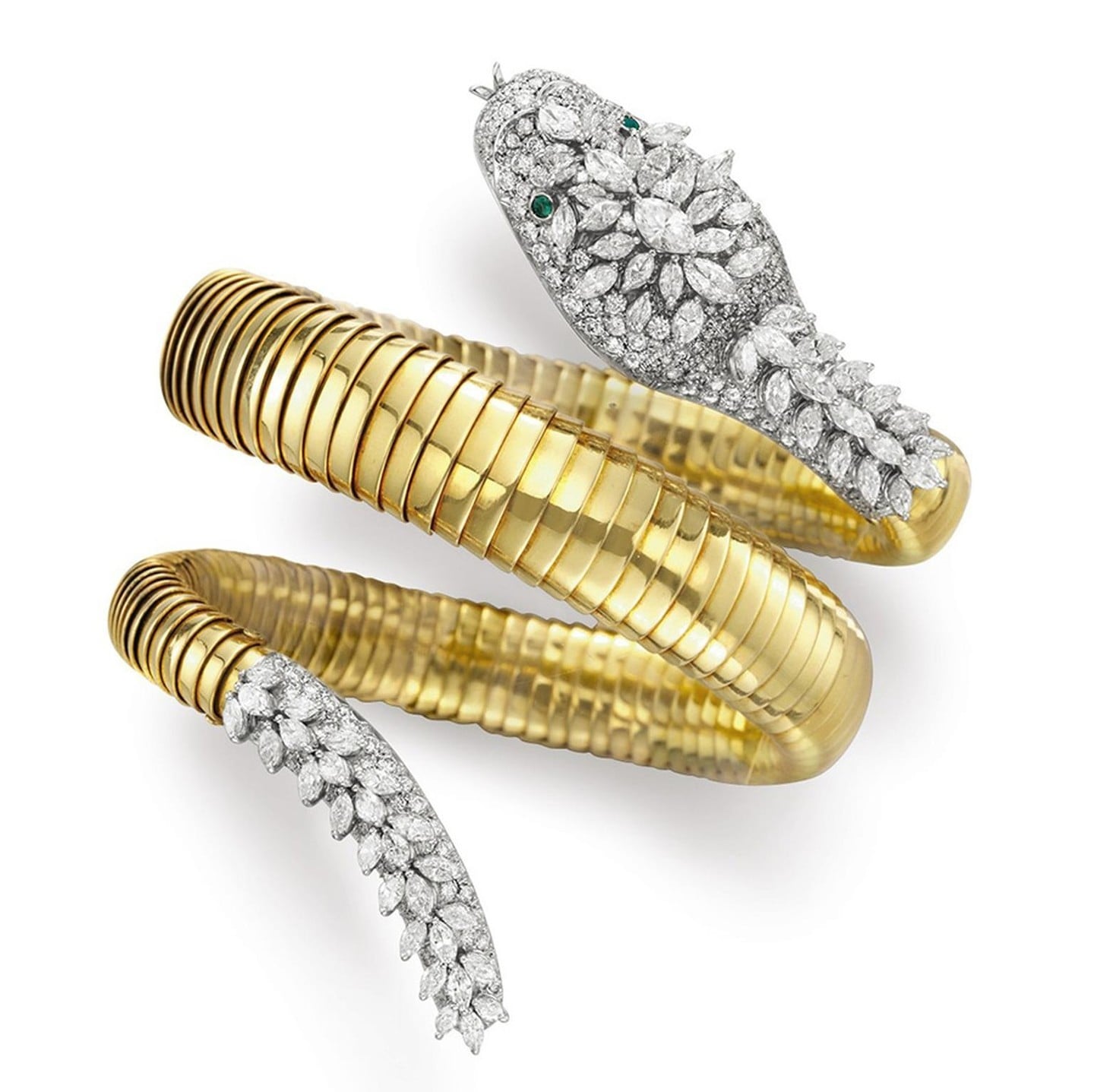
The Serpenti has a snake motif with a bracelet that usually wraps multiple times around the wrist like a living serpent. The design technique is known as Tubogas with flexible metal coils wrapped around a core during production, which are subsequently removed to reveal a seamless, articulating bracelet. There are countless Serpenti models today, but Taylor’s specific watch was a double-coiled gold piece with the dial hidden inside a snake’s head that was covered in diamonds and turquoise. As the style has evolved, most dials are now exposed without concealment, but her design still represents the pinnacle of the model with pieces like the Serpenti Misteriosi leading the way in modern times.
TAG Heuer Monaco
Younger watch fans probably recognise this one from Breaking Bad (season 5) when Jesse gifts Walter a blue TAG Heuer Monaco Calibre 12 Automatic Chronograph (ref. CAW2111.FC6183) for his 51st birthday. That alone is enough to bring popularity to the model, but this is simply icing on the cake for a watch that became legendary on the wrist of an icon from another era – Steve McQueen. He specifically selected this watch (ref. 1133B) for the 1971 movie Le Mans about the 24 Hours of Le Mans race, with McQueen playing Porsche driver Michael Delaney. McQueen’s popularity stemmed from a rebellious persona that resonated perfectly with the 1960s counterculture, which was present both on-screen and off. He was also a passionate car and motorcycle racer, so his character went beyond the movies with notable motorcycle wins in the Baja 1000 and International Six Days Trials in the 1960s and the Sebring 12 Hours auto race in 1970. This legitimacy helped earn McQueen the nickname King of Cool.
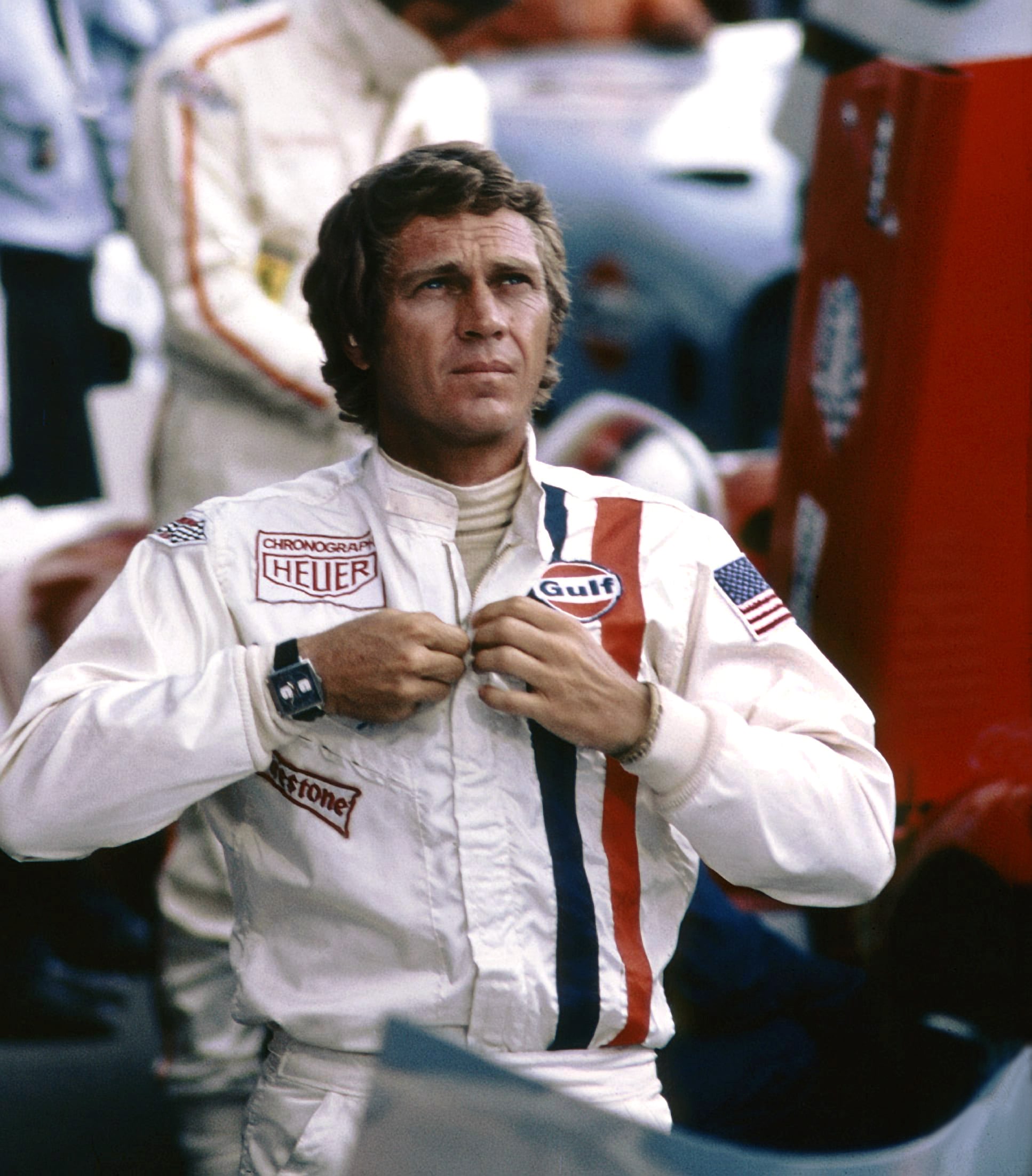
Back then, the watch was simply the Heuer Monaco, as it wasn’t until 1985 that Heuer became TAG Heuer after Techniques d’Avant Garde (TAG) Group became a majority stakeholder. Regardless, the model remains a timeless flagship that’s instantly associated with the brand, old and new. The Monaco debuted in 1969, so it was still a relatively new model when Le Mans premiered in 1971, and it was both polarising and intriguing with a large square shape and square chrono sub-dials. It was also powered by the groundbreaking Calibre 11 (Chronomatic), which was a Heuer, Breitling, Hamilton-Buren and Dubois-Depraz collaboration called Project 99 and the first automatic chronograph movement. A signature feature was the crown positioned on the left side of the case at 9 o’clock to signify that it didn’t need to be manually wound – it’s usually seen at the normal 3 o’clock position today with modern Monaco movements.
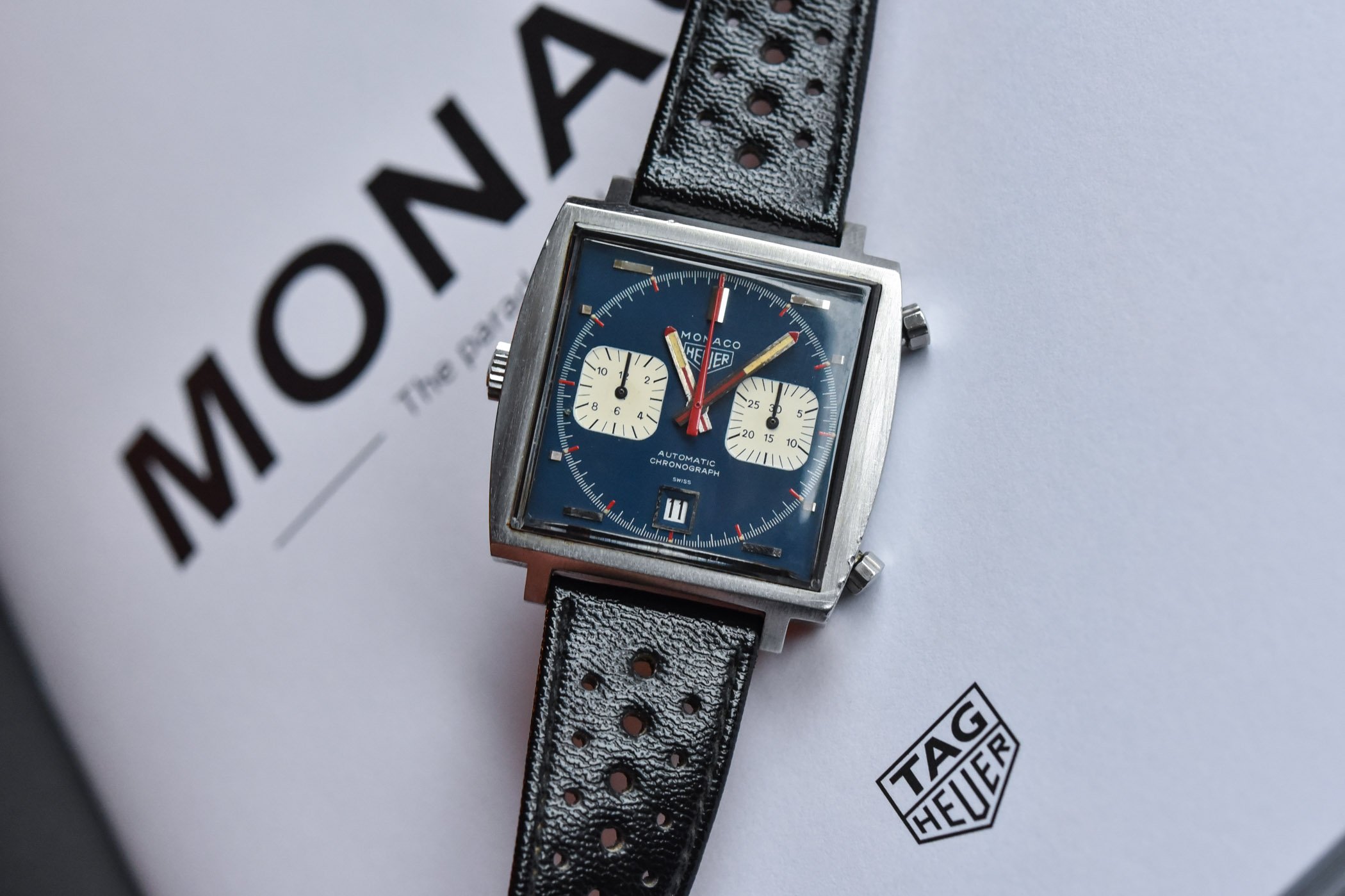
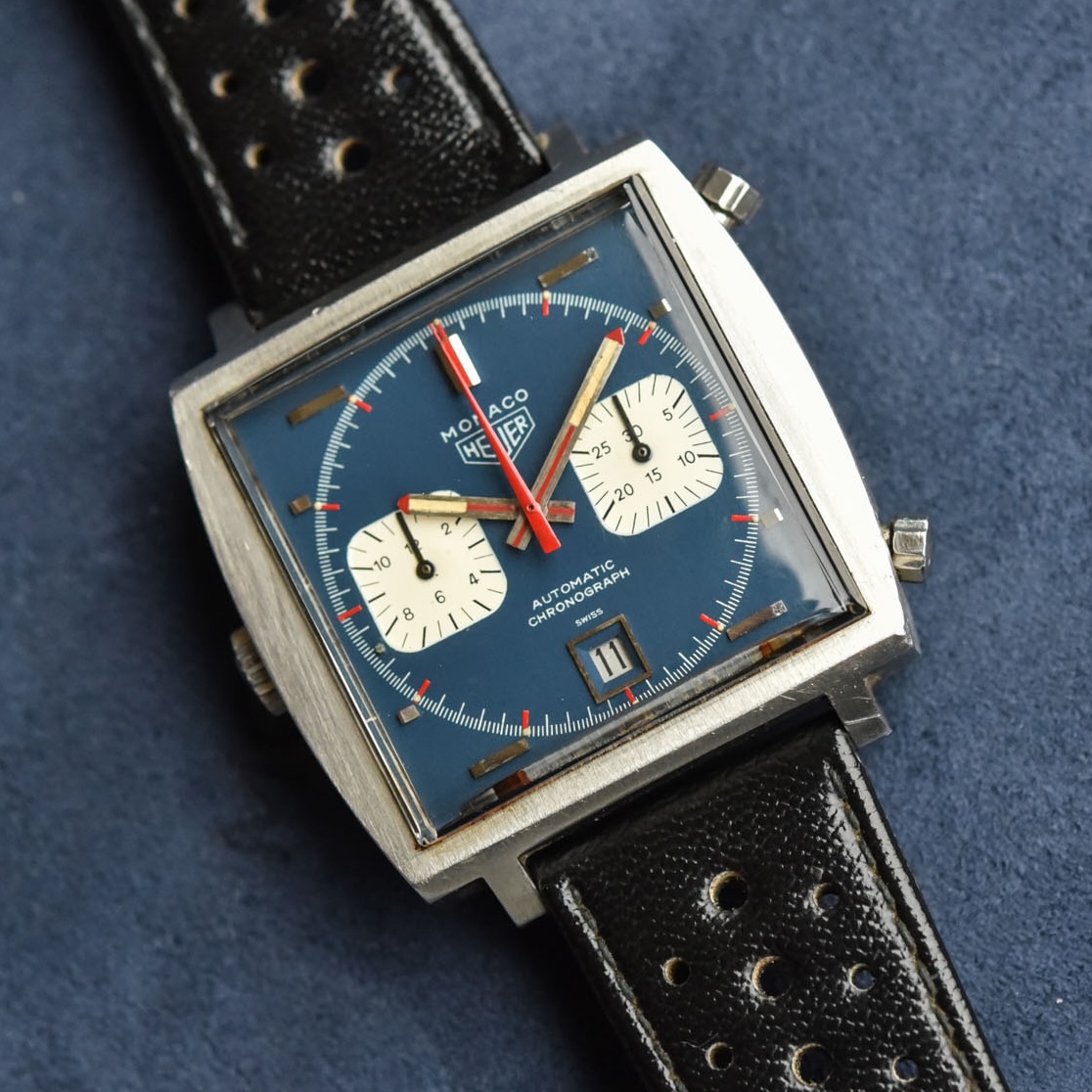
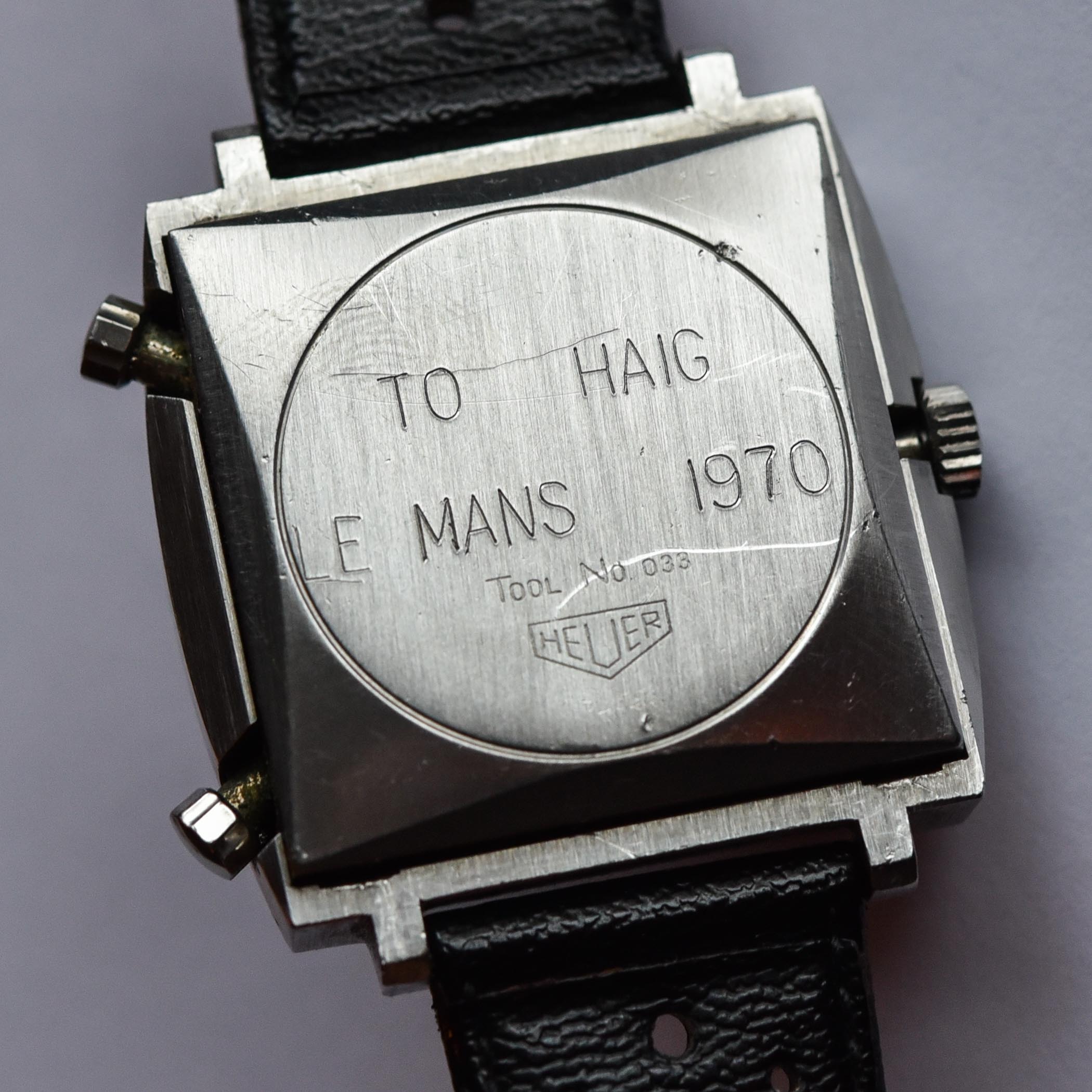
Company head Jack Heuer wanted something special and unique for the Calibre 11, so he partnered with Swiss case manufacturer Erwin Piquerez for the Monaco’s design. A large square case with a water resistance of 100 metres was an industry first. And now we come to Formula 1 driver Jo Siffert, who was a good friend of Jack Heuer and Heuer’s first brand ambassador. He served as a consultant for Le Mans and was instrumental in getting McQueen interested in the role. It was the unusual square design of the Monaco that caught McQueen’s eye, more so than the Heuer Autavia that Siffert himself wore, which was expected to be McQueen’s watch in the movie. So, Jack’s bold design decision for a square case inadvertently led to one of the greatest movie placements and marketing wins in watch history.
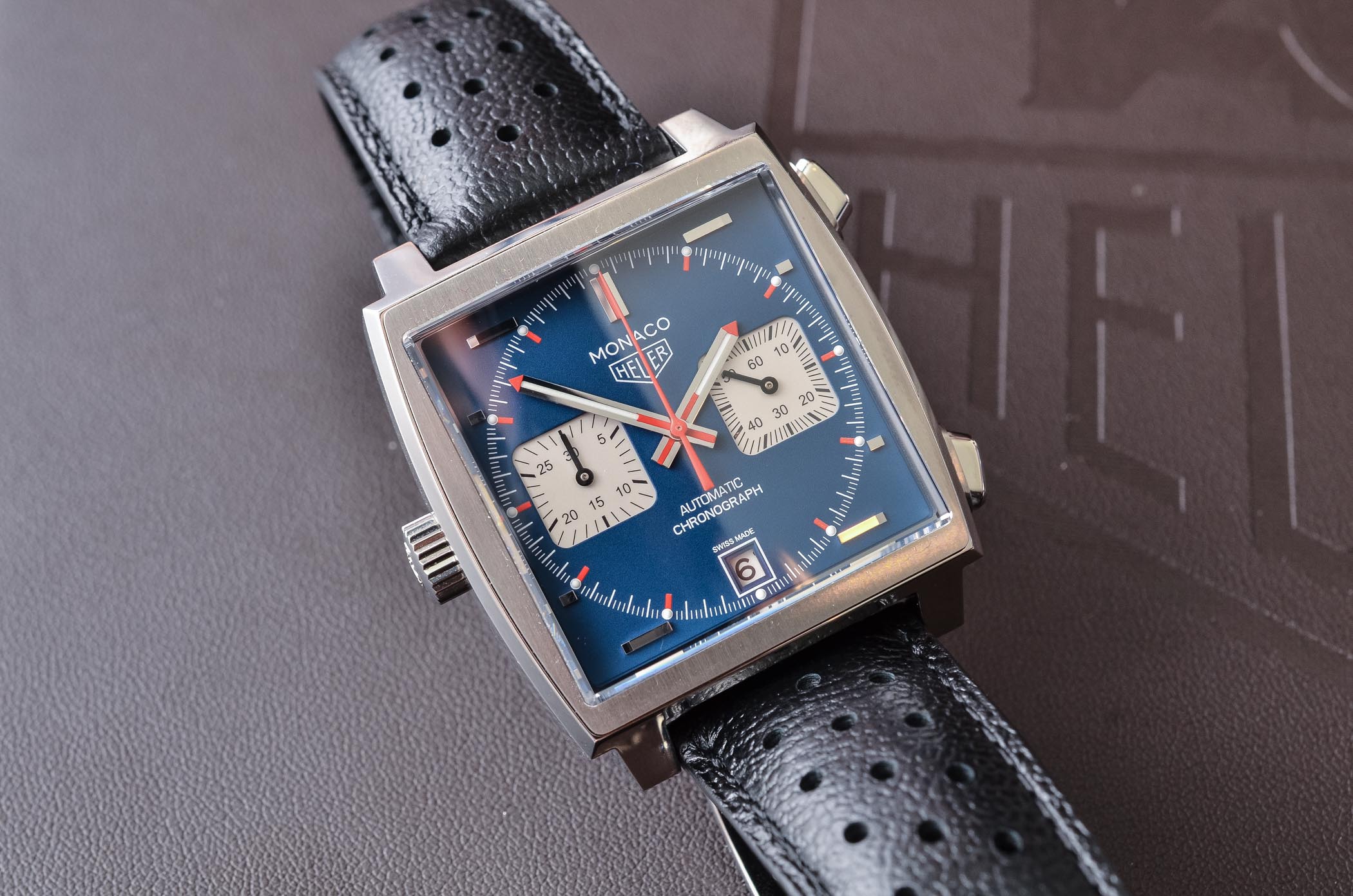
Today, there’s a classic “Steve McQueen” model (I’m calling it that) with a faithful 1969 aesthetic – blue dial, crown at 9 o’clock and Calibre 11 beating inside. The latter, however, is a bit of marketing jargon as the modern Calibre 11 simply has a Swiss base with a Dubois-Dépraz module. In practice, however, it wears very much like the original. That said, the sub-dials are also different – the original had chrono hours and minutes for sub-dials, while modern watches have chrono minutes and small seconds, which is a more practical arrangement for most users. Regardless of the Monaco model you choose, they all go back to the original reference and Steve McQueen, and represent racing with close ties to the 24 Hours of Le Mans. In addition, a collaboration with Gulf Oil and corresponding themed dials further cement the Monaco with racing history.
Hamilton Ventura
This one also got on the map from the wrist of an icon early on, but it was a second movie appearance decades later that really elevated its popularity. Hamilton’s Ventura was the first electric watch to be released commercially in 1957, although it wasn’t a quartz watch (not released until 1969 by Seiko). Its Calibre 500 wasn’t fully electric as it still had a conventional balance wheel and escapement. The electric part simply replaced the mainspring, so power to the regulating organs from the gear train was electric instead of a mechanical winding spring. The point was that it never needed to be wound thanks to technology. To honour such an achievement, the case and dial designs were also futuristic with an asymmetrical, triangular shield shape case from the mind of American car designer Richard Arbib. The dial featured an electrical wavy pattern in the middle with lines extending to round, polished applied indices at the perimeter, giving off an atomic age vibe. It was originally positioned as a high-tech luxury watch only available in gold, but the movement proved too finicky and unreliable for mass adoption, not to mention problematic battery life. Breakdowns and frequent servicing plagued the collection, so Hamilton threw in the towel almost seven years later in 1963. Developments like the superior, all-electric Bulova Accutron in 1960 also sealed the Ventura’s fate.
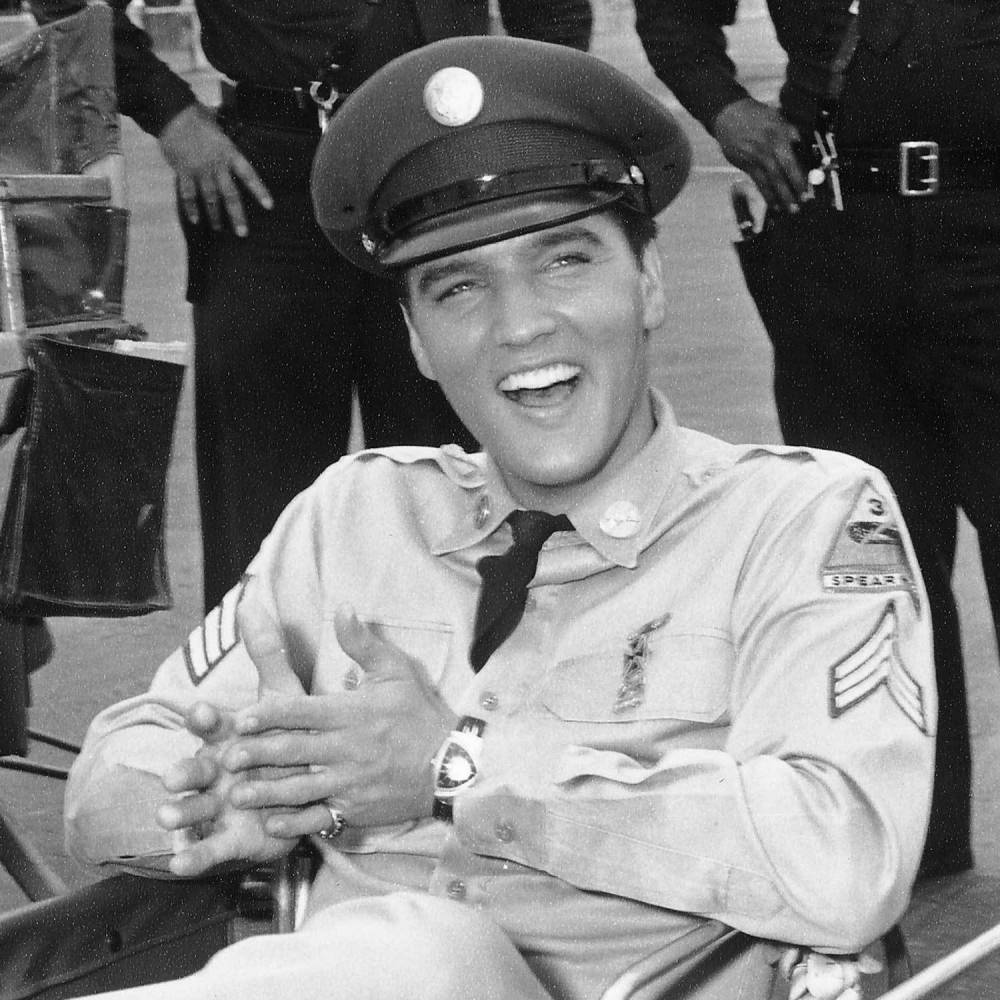
Similar to the problematic DeLorean that shot to icon status thanks to its placement in Back to the Future, the problematic Ventura became an icon thanks to Elvis Presley and the 1961 movie, Blue Hawaii. Steve McQueen might’ve been the King of Cool, but there was only one King of Rock ‘n’ Roll. Despite its shortcomings, the futuristic and space-age Ventura became a favourite of Elvis, and he wore his personal white gold watch throughout Blue Hawaii, elevating its status overnight (although that was somewhat short-lived). Following the model’s discontinuation just a couple of years later, the slick and futuristic Elvis favourite soon fell into the shadows of superior watches from other brands, but everyone likes a good comeback story.
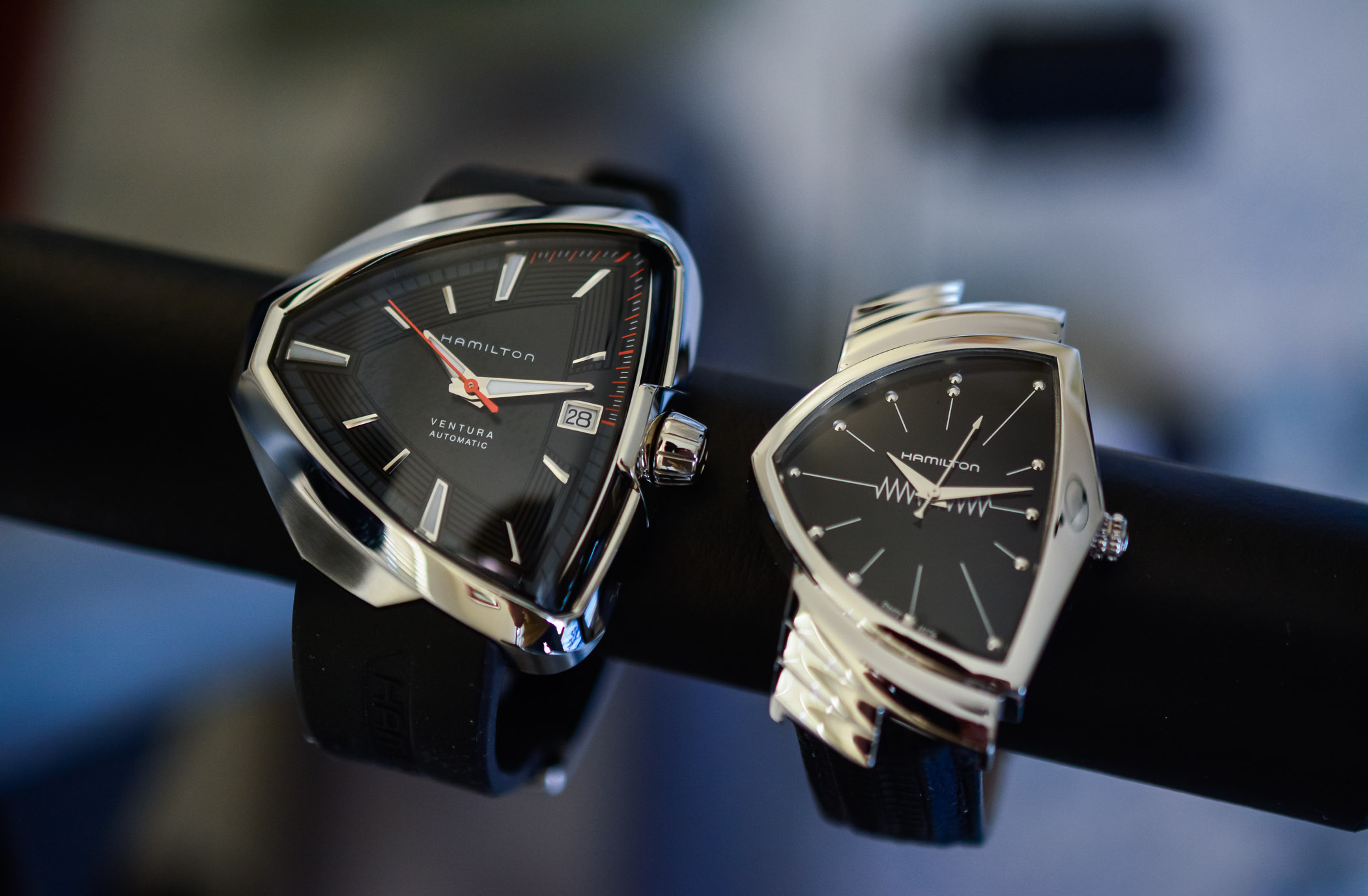
In 1988, the Ventura returned to Hamilton’s lineup with the same iconic shape and dial design, but now housing a modern and reliable quartz movement in affordable stainless steel. It’s early technological reputation and Elvis connection were enough to create a springboard, but it was another movie series and two popular actors that launched it back to fame. Hamilton was no stranger to movie placements with its first watch appearing in Shanghai Express in 1932, but Men in Black in 1997 was a return to form for the Ventura with star power that left other brands with envy. Both Will Smith and Tommy Lee Jones wore the new Ventura, which complemented the futuristic props and weapons they used within the secretive alien backdrop. You couldn’t have asked for a more appropriate timepiece for the movie and it reintroduced the model to a new generation of enthusiasts. Men in Black sequels in 2002 and 2012 (and a spin-off in 2019) introduced additional Ventura models (many are now mechanical as well) and it remains one of the most popular of Hamilton’s collections today.
Seiko TV Watch T001-5019
Talk about a futuristic watch! This one was so good that it appeared in a James Bond movie – not just as a watch, but more of an advanced Bond gadget that was prominent in Q’s always makeshift workshop. Roger Moore’s Bond had a bit of fun with this one and an attractive female assistant in Octopussy, which gave fame to this highly advanced yet ultimately impractical and expensive curiosity (USD 495 in 1984). When it debuted in 1982, it earned a Guinness World Record for the smallest TV set in the world, using a 1.2” LCD black & white display (don’t let the colour screen in the Bond movie fool you) that was a glimpse into the future of today’s smart watches. Watching a high definition colour YouTube video on an Apple Watch makes this one seem positively archaic, but there was nothing like it at the time. What better way to emphasise such a technological marvel than have it featured as a 1980s Bond gadget, and Seiko really leaned into the Bond connection in advertisements. Above the TV was a second, narrow LCD strip for the actual time functions (but who cares about that).
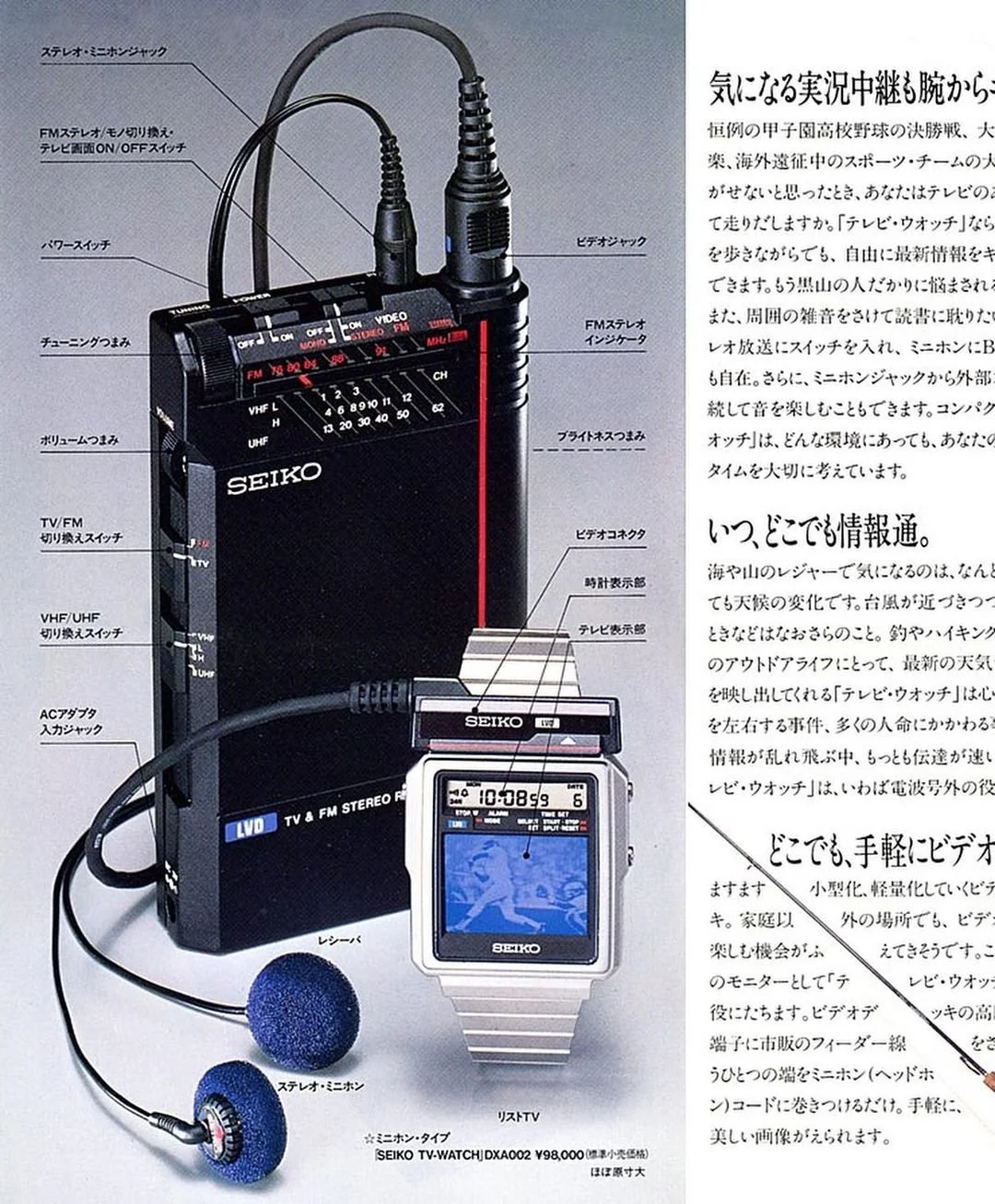
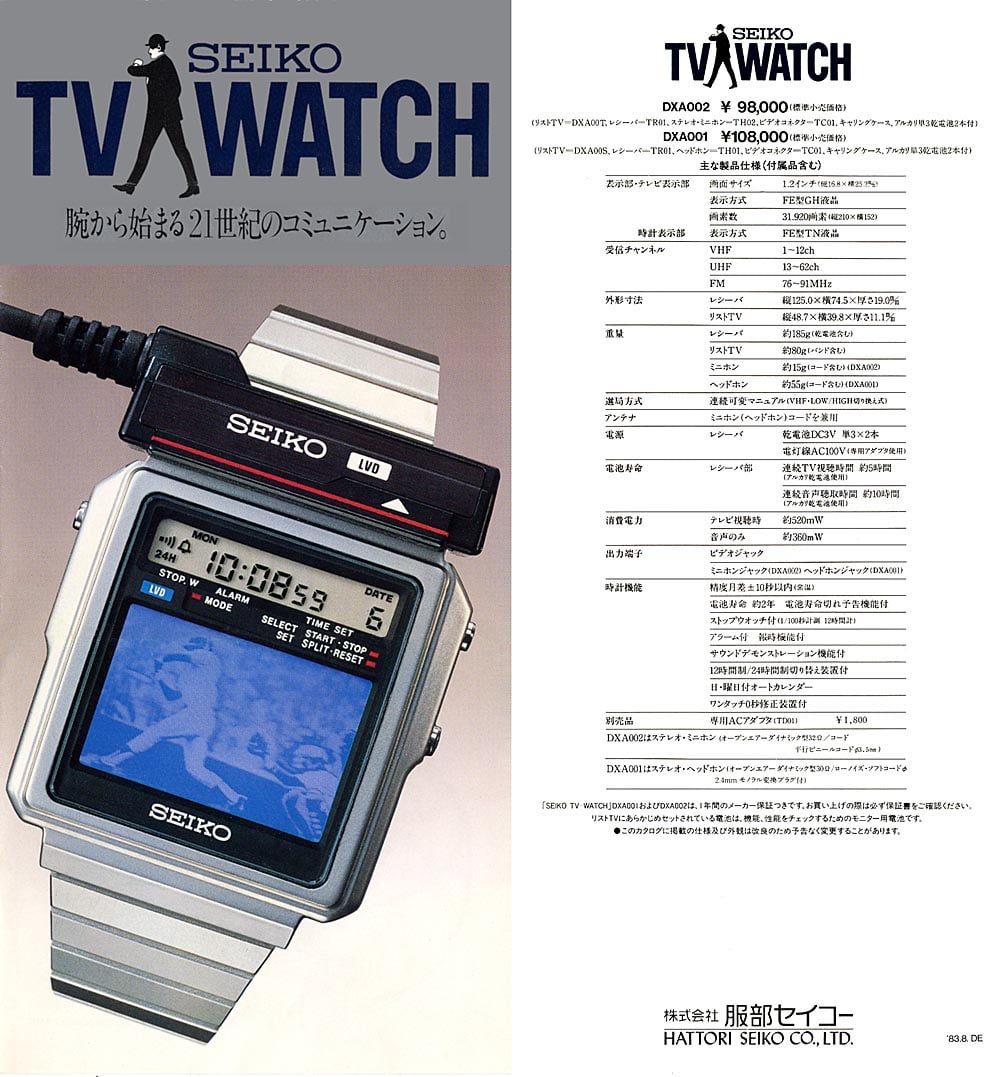
Unfortunately, there were drawbacks to the design, starting with poor battery life and a TV screen that lacked good contrast and definition, not to mention the very small size. It was certainly watchable, but you needed to be a tech enthusiast to really enjoy it. Also, it required a separate tuner box about the size of a cassette Walkman that attached to the case via a six-pin connector, along with wired headphones. The trick was to put the tuner in your pocket and run the wire through your sleeve to the watch, essentially hiding the bulky yet necessary component to create the illusion of a fully autonomous watch. The tuner used two AA batteries that also powered the TV screen, but viewing time was limited to just a few hours. If you wanted more, an optional AC adapter kept things lit up indefinitely (as long as you were near an outlet). The tuner picked up analog VHF and UHF TV signals, along with FM radio bands, which was downright Dick Tracy cool for the early 1980s.
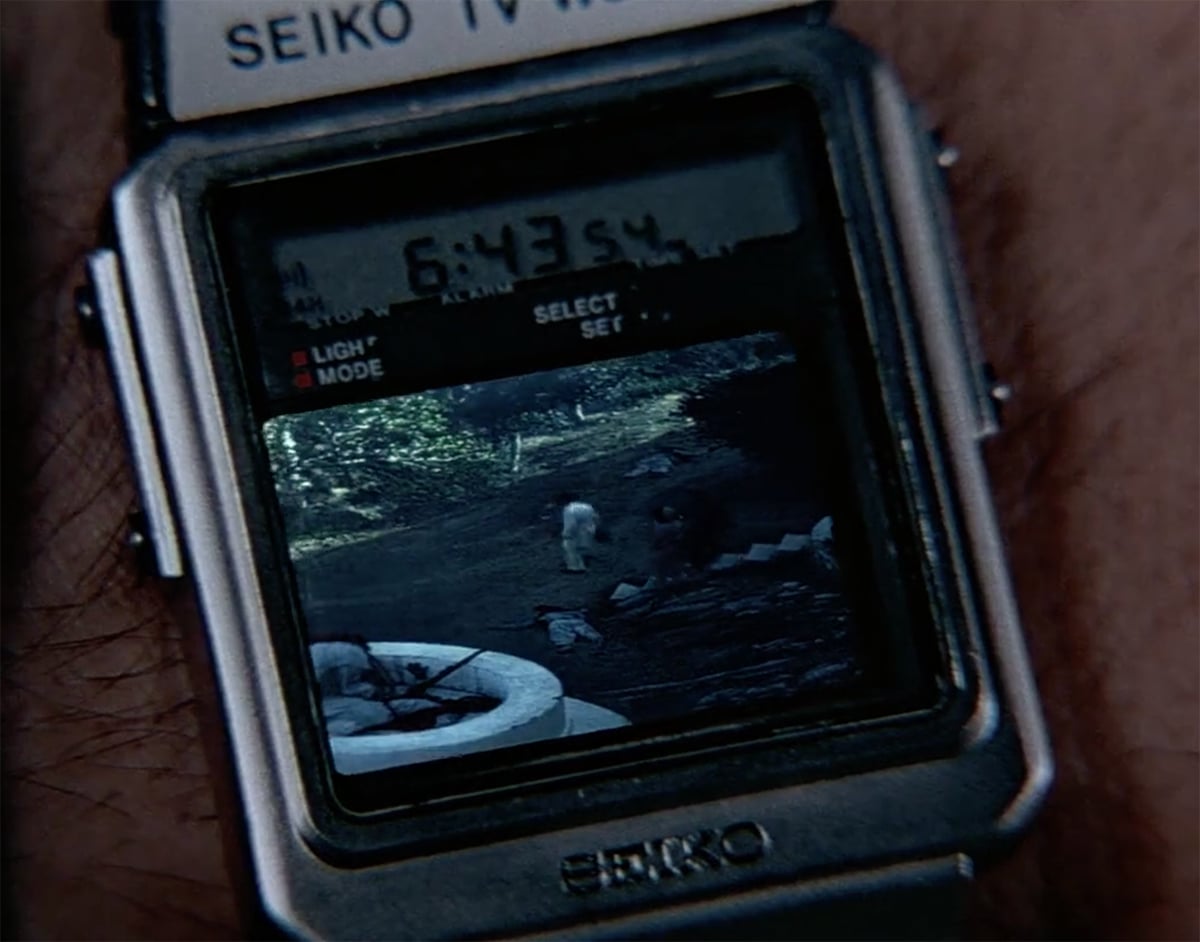
A second major movie placement happened in 1987 on the wrist of Tom Hanks in Dragnet, but the watch had already been discontinued (two years earlier in 1985). However, the technology had real staying power for the decade and many first discovered this TV Watch in Dragnet. If you can find one today on eBay or comparable platforms, it’ll be difficult to use as analog TV signals were replaced with digital equivalents virtually worldwide over 15 years ago, but digital to analog converters do exist if you’re keen on reliving a blast from the past. I’m sure tech savvy enthusiasts could somehow shoehorn a DVD player or other video source to the watch screen as well, but given the colour HD screens on smart watches today with copious video playback options, is it worth the hassle? My answer is YES, but your mileage may vary. And although Seiko’s TV Watch has long since vanished, it was so advanced and disruptive at the time that it remains an iconic example of futuristic designs and products that are ahead of their time.
Rolex Submariner
I’m saving what’s arguably the best for last, the original James Bond super watch. Thanks to Sean Connery’s James Bond, the Rolex Submariner became the most iconic dive watch in the world, hands down. A quick note – the Submariner was introduced in 1953 to a degree, but not officially released until the Basel Watch Fair in 1954. The original model had reference number 6204 or 6205 and lacked many standard features we see today, like Mercedes hands, optional date with cyclops lens and crown guards, and unidirectional bezel. Some dials didn’t even have Submariner printed on them. As is often the case with early Rolex models, things were a bit scattershot until the model really found its legs. That said, the formula was largely set already.
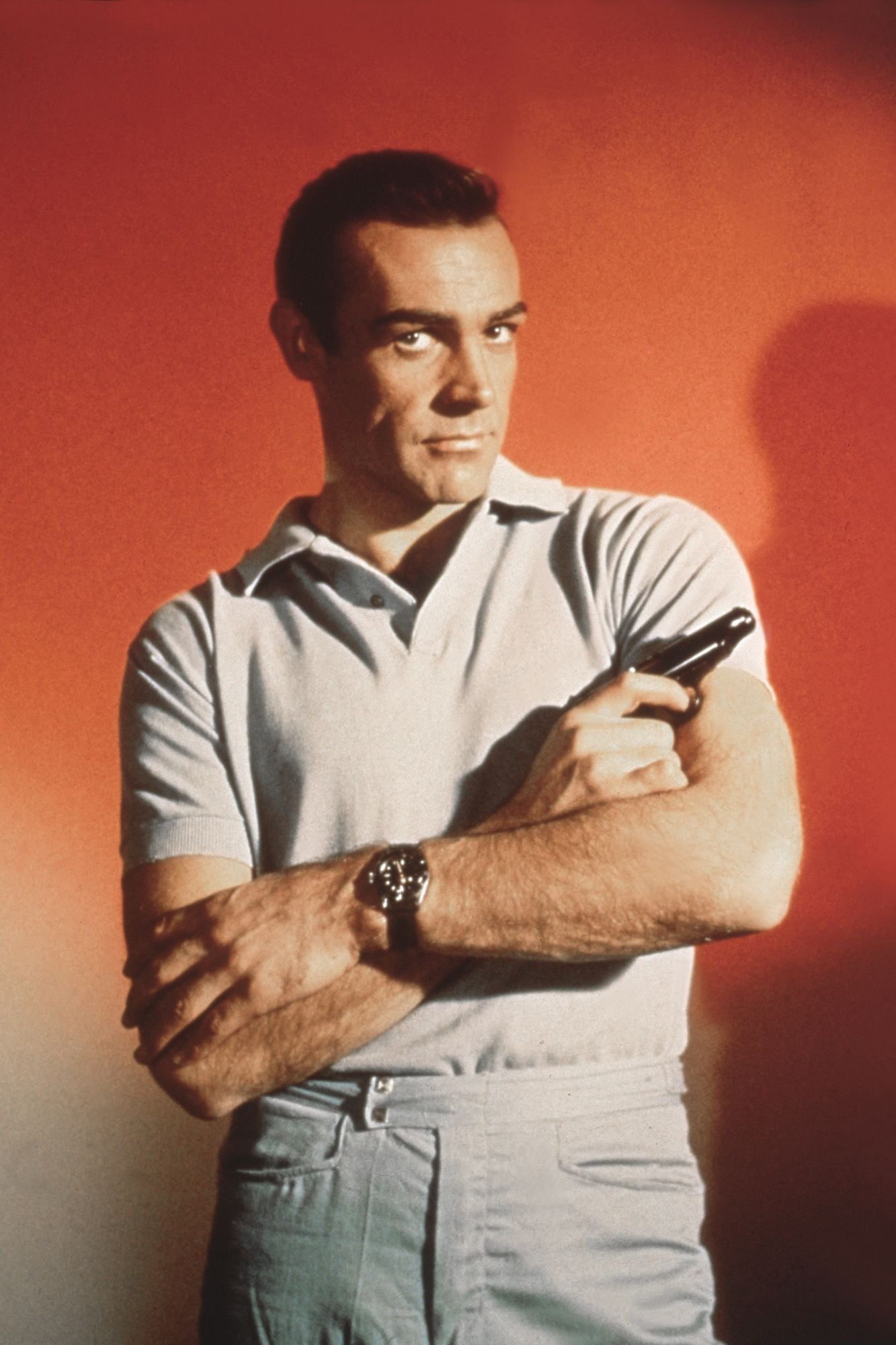
Fast forward almost a decade to 1962, when James Bond hit the screen in Dr. No, one of the most important and influential movies of the 20th century. We’re a few references into the Submariner at this point, which has been largely perfected since the early 6204 and 6205 models. Sean Connery’s Submariner of choice was ref. 6538 with the 8mm “big crown” without guards and now 200 metres of water resistance, produced from 1956 to 1959. There’s an interesting scene in the movie where he tests a Geiger counter with the radium lume on the dial, inadvertently highlighting the long-term dangers of the old-school lume. Although Dr. No tied Bond to the Submariner, making it the dive watch to own, a specific scene in a later Bond movie really hammered home the cool factor and forever immortalised the diver for generations.
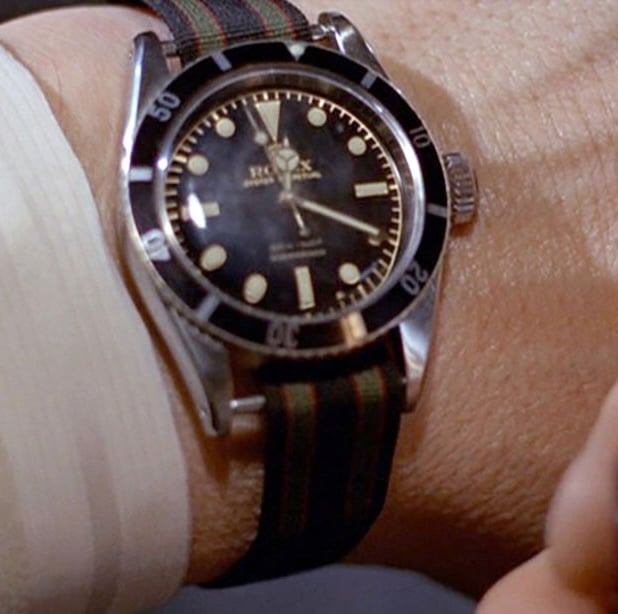
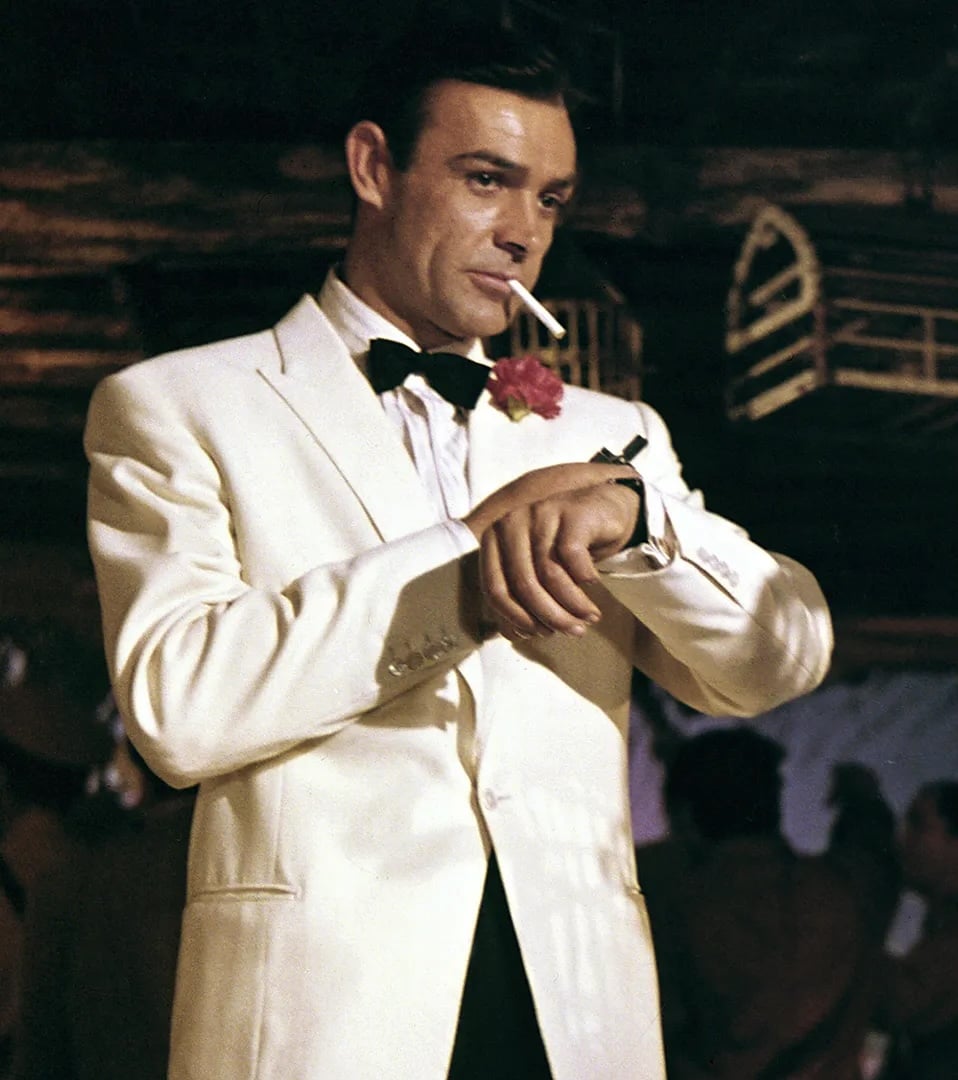
The third Bond movie was Goldfinger in 1964, which has an opening sequence that almost made the Submariner a character of its own. What’s particularly compelling about this pre-title scene is how the Submariner seamlessly goes from a necessary diving tool to a timer to synch with a bomb to a luxury watch that complements a white tuxedo, all within a matter of minutes. Here’s the setup – Sean Connery emerges from the water in a diver’s dry suit (not a wetsuit, as many believe) with scuba gear, wearing a decoy seagull on his head as a diversion as he approaches just below the surface. He fires a grapple gun to scale a wall, takes out a guard and rushes to a secret drug lab, where he spreads plastic explosive on flammable barrels and then sets a detonator timer. It’s here where he checks his Submariner ref. 6538 on a NATO strap (over the dry suit sleeve) against the timer and then rushes out. He removes the dry suit to reveal a clean white tuxedo underneath and ambles into a Central American club with the Submariner now under cuff. As he lights a cigarette, he checks the time on his Rolex, waiting for the imminent explosion that soon rocks the building. As everyone panics and evacuates, he strolls over to the bar where he discusses the success of the mission with his contact, Sierra. And the Submariner was now the coolest dive watch in the world as everyone wanted to secretly cosplay as Bond, from the beach to a bar to a formal event.
Everything Else
This again isn’t an exhaustive list by any stretch, but highlights five watches that were significantly impacted by movies and characters and never lost the iconic status gained. Would the Monaco be the legend it is today without Steve McQueen, or just another historic Heuer with a potentially polarizing design? Rolex will always be among the most desirable of brands, but would the Submariner be an absolute icon without Sean Connery’s Bond? And so on… We’ll never know for sure, but it seems clear that the right watch on the right wrist of the right movie star in the right movie can forever immortalize it in the eyes of consumers. It’s something that marketing dollars could never otherwise buy. As with the Delorean in Back to the Future or Reese’s Pieces in E.T., movie magic is real when it comes to product placement and the watch industry has benefited for almost a century. We can only wonder what the next iconic model will be.

6 responses
The Hamilton Murph!
There is a really weird thing about the Bond Rolex, so it is 6538, but if you look at the film, the bezel isn’t marked till the 15th, so its more like a 62XX series… even in the Rolex Submariner book, it’s a 6538 that they are referencing, but again in the film there is no hashmarks on the 1 to 15th.
Off set at Le Mans, McQueen wore an 18k JLC Memovox E855 – now that’s a cool watch!
Seiko Captain Willard?
It’s not a NATO…..
Kurtz’s Rolex.