


 Not all images were able to load for printing. Please close the print window and try again.
 Shooting for the Moon, Bremont Unveils the Supernova Chronograph
A partnership with Astrolab will place the first British timepiece permanently on the Moon.
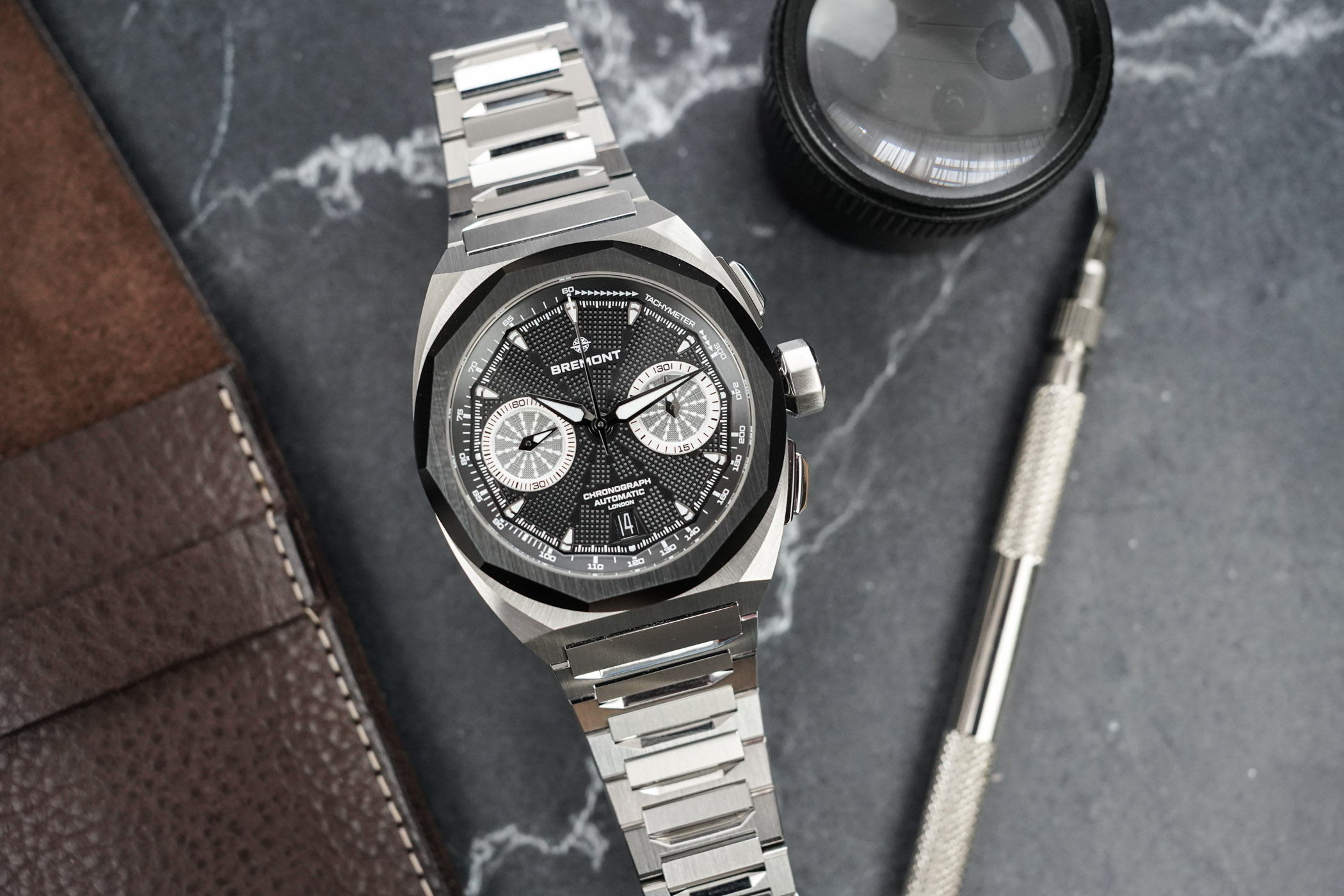
Under Davide Cerrato’s leadership, Bremont has shifted from the British aviation niche toward a more global luxury tool-watch brand, still rooted in Air, Land and Sea but with a more cohesive brand identity. Aiming higher, Bremont announces the release of the Supernova, a new collection that will get a flying start as the first British watch to reach the Moon. True to its “Take It Further” mantra, Bremont has partnered with U.S. aerospace firm Astrolab, putting the Supernova through rigorous NASA-protocol testing ahead of its lunar adventure, where it is set to become the first timepiece left permanently on the Moon’s surface.
Following in the footsteps of the English brothers who validated the ruggedness of their tool watches with real-world testimonials – from SAS troopers to Martin-Baker ejection seat specialists – Bremont’s evolved tagline, “Take it Further”, is being taken literally as the Supernova is propelled into the fourth frontier.
Scheduled to land at the lunar south pole in summer 2026, the Bremont Supernova Chronograph will fly aboard Astrolab’s FLIP (FLEX Lunar Innovation Platform) rover that is part of Astrobotic’s Griffin Mission One. Intended to gather data on lunar dust mitigation and surface operations, the information gathered by the FLIP rover will inform the design and functionality of future lunar platforms. Bremont’s Supernova will be integrated into the FLIP rover’s chassis via a custom-engineered tile plate.
To prep the Supernova for lunar exploration, Bremont’s watch and the rover undergo a rigorous testing programme (vibration, acoustic, shock and electromagnetic testing) to meet NASA-protocol Spacecraft Protoflight Qualification. Exceeding mission conditions, the tests ensure they can withstand the rigours of launch, flight and survival on the Moon. A timely mission, the Supernova’s Moon landing coincides with the establishment of lunar time. A petition from the White House, NASA and international standards organisations will establish a Coordinated Lunar Time (LTC) by the end of 2026 to provide an atomic-clock-based standard for navigation and communication.
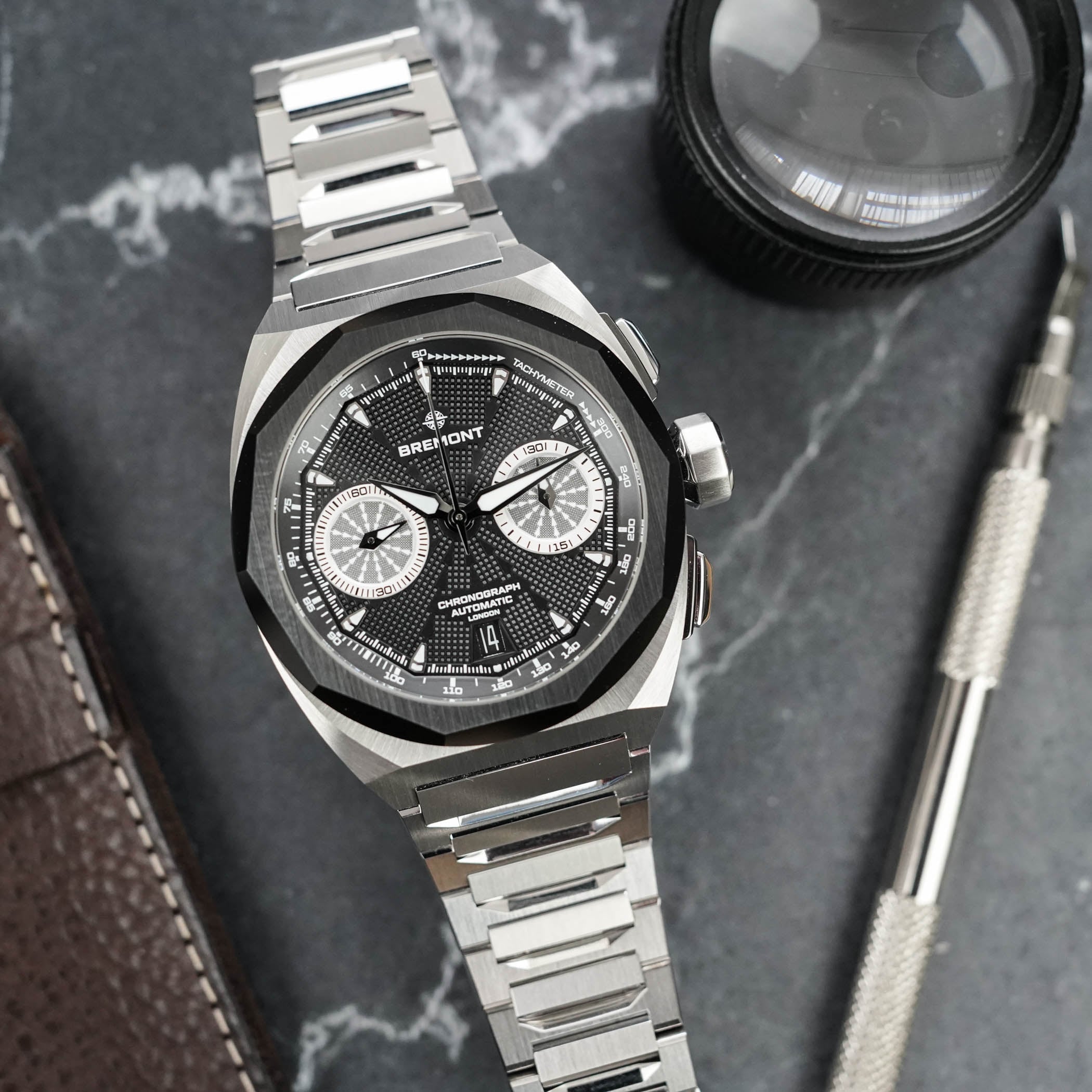
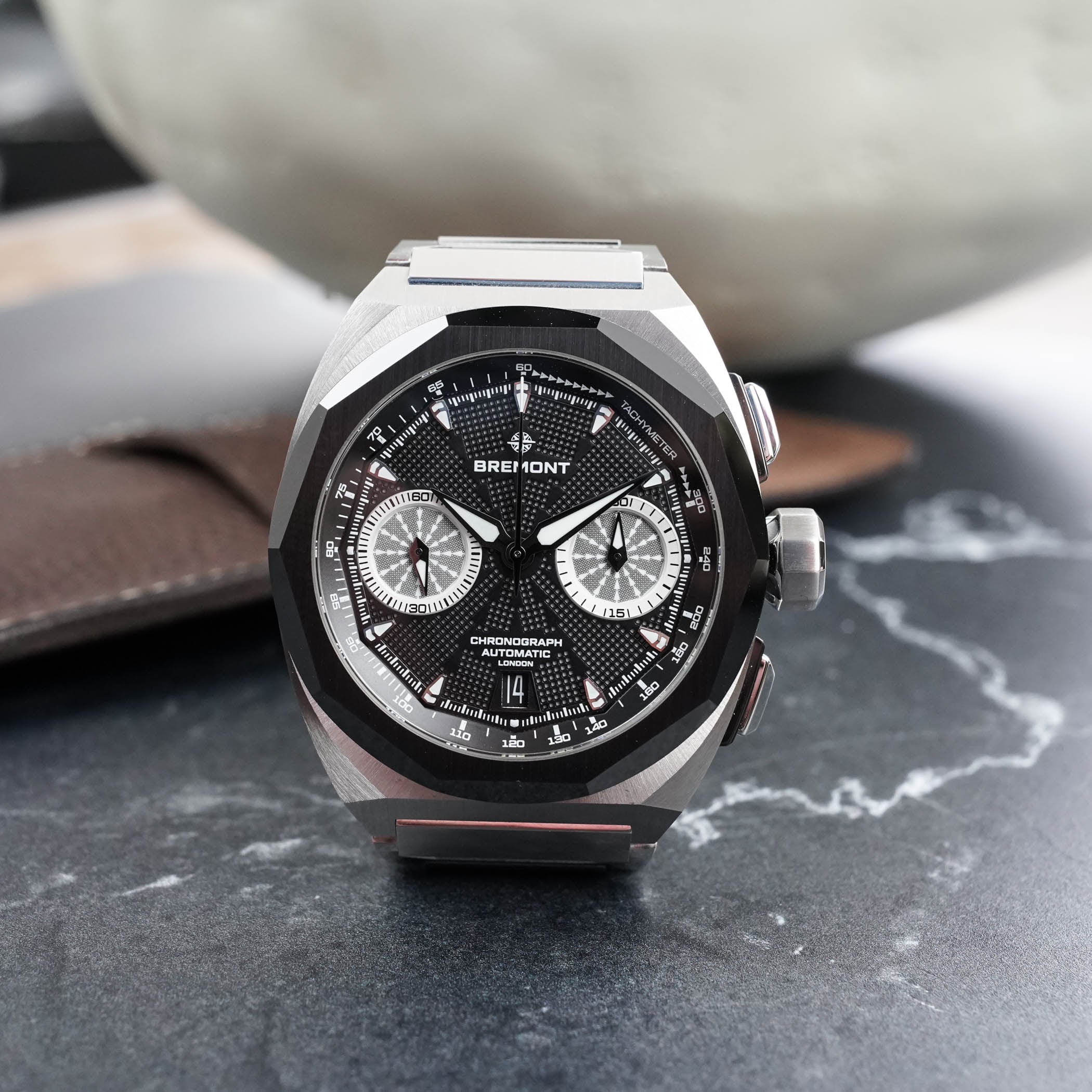
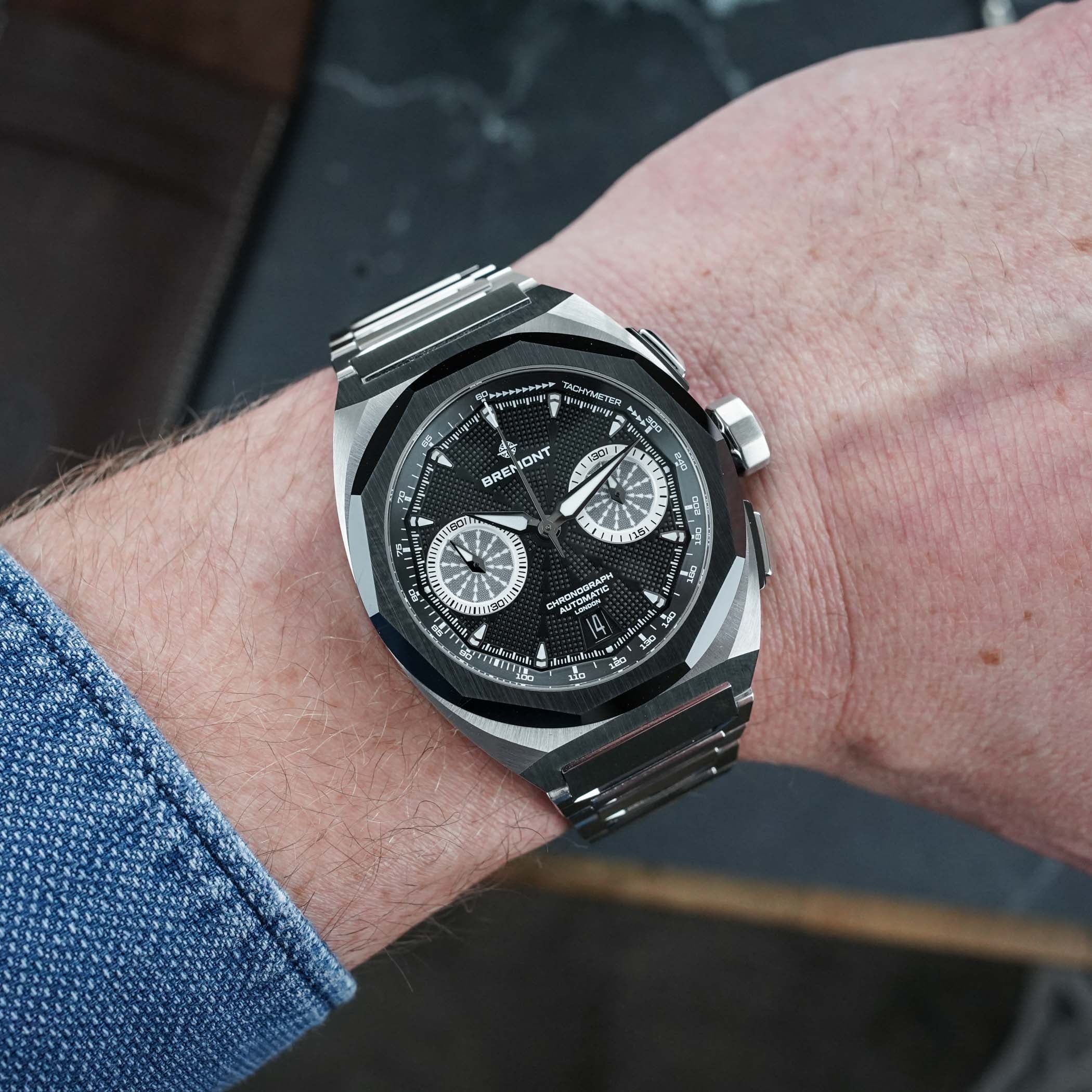
Inspired by spacecraft geometry, the 41mm Supernova Chronograph with a thickness of 14.4mm has a futuristic angular design with sharp, polygonal lines and an imposing ten-sided black ceramic bezel. Crafted from 904L stainless steel, the case of this integrated sports chronograph employs a sandwich-style case architecture, echoing Bremont’s trip-tick concept. The decagonal black ceramic bezel stands out with its vertically brushed top surfaces and highly polished scalloped edges, while the equally angular steel case features an abundance of satin-brushed surfaces, polished facets and a black DLC-coated case middle with rectangular chronograph pushers and a large, fluted screw-down crown. Fitted with a domed, double-anti-reflective sapphire crystal over the dial and an exhibition caseback, the case is water-resistant to 100 metres.
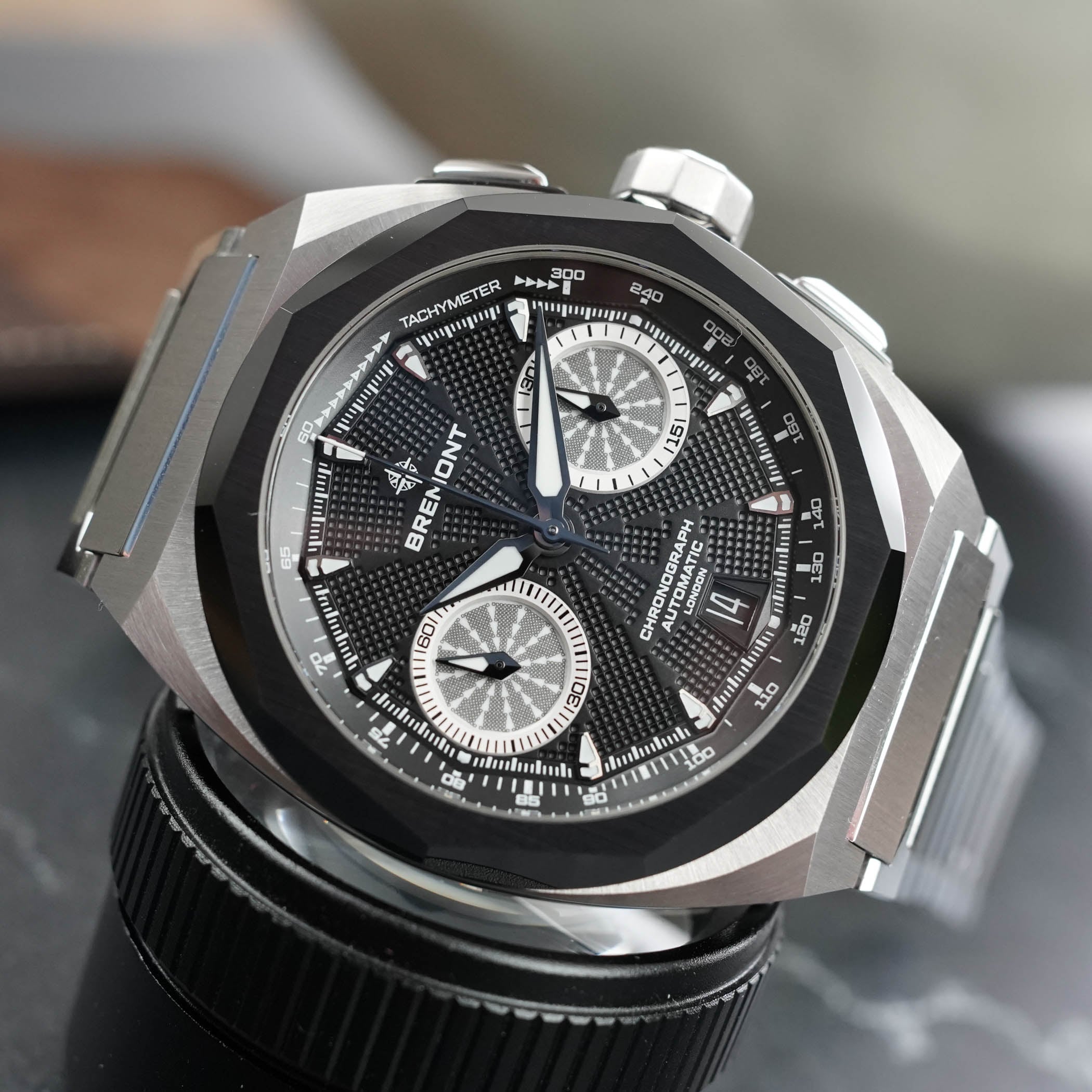
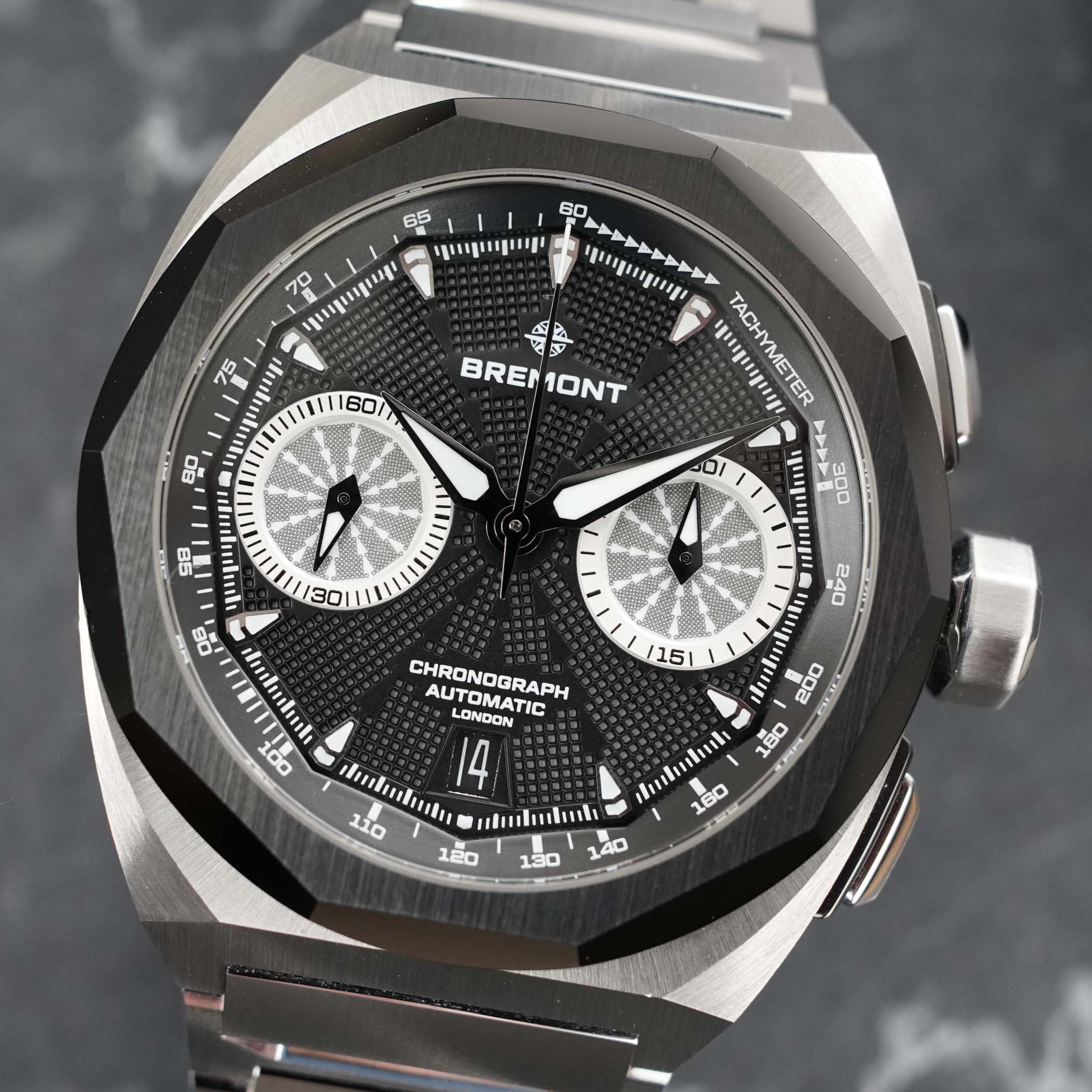
The three-dimensional dial features a twelve-sided black galvanic perforated grid that resembles the solar arrays and solar sail panels of spacecraft. Function-wise, the dial features a tachymeter scale on the periphery, two sub-dials at 9 and 3 o’clock with a similar grid pattern and silver rings and a date window at 6 o’clock. A spectacle in the dark, the perforated grid and sub-dials are illuminated by the Super-LumiNova underlayer, emitting a blue glow. Moreover, the triangular applied indices and the black gold hour, minute and sub-dial hands are also treated with Super-LumiNova.
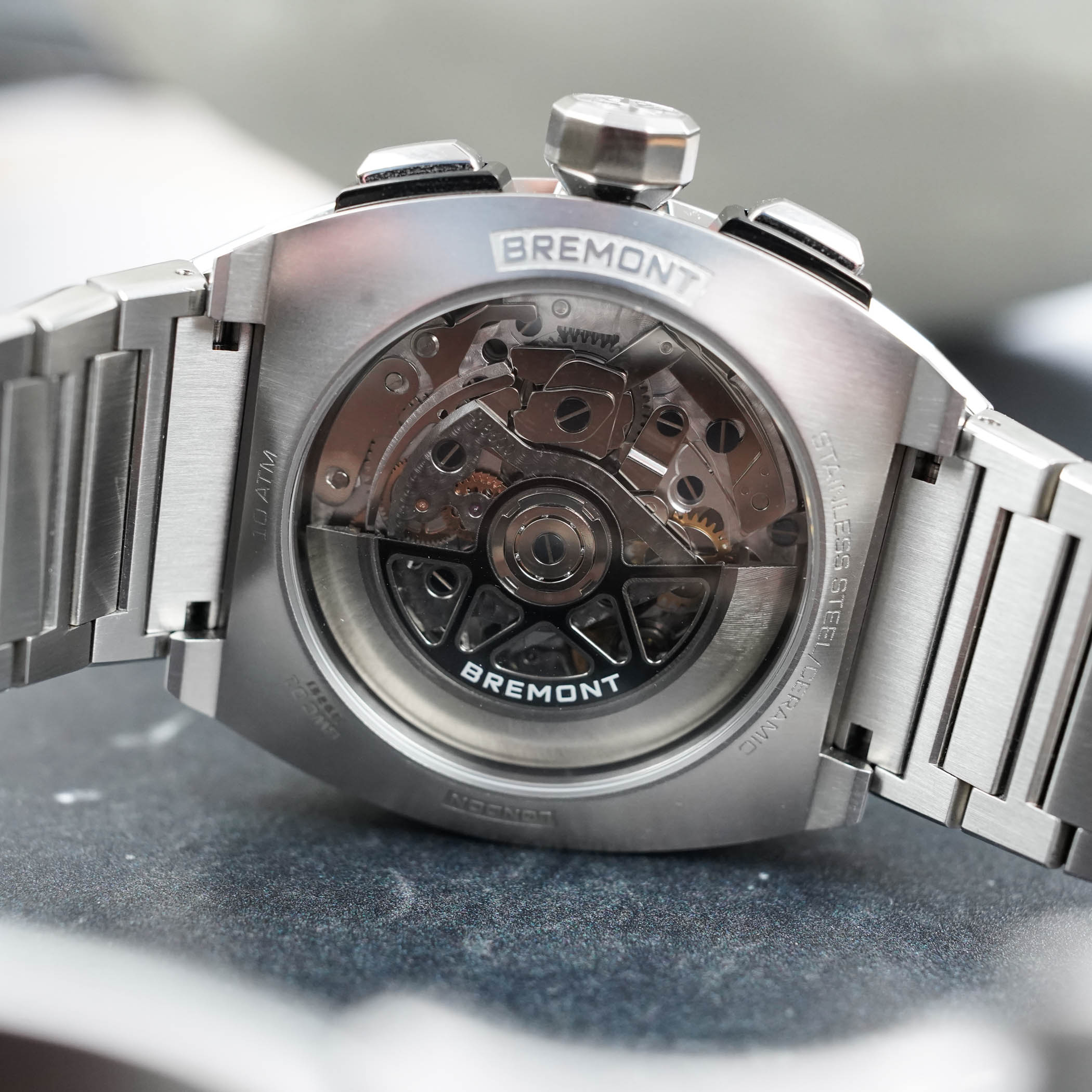
Powered by the chronometer-rated BC77 automatic chronograph calibre (based on the Sellita SW500) with a 62-hour power reserve, parts of the movement are visible on the exhibition caseback, including the openworked rotor with triangular apertures echoing certain features of the dial. For enhanced stability, durability and precision, the movement has a Glucydur balance wheel, an Anachron balance spring and a 4Hz Nivaflex mainspring.
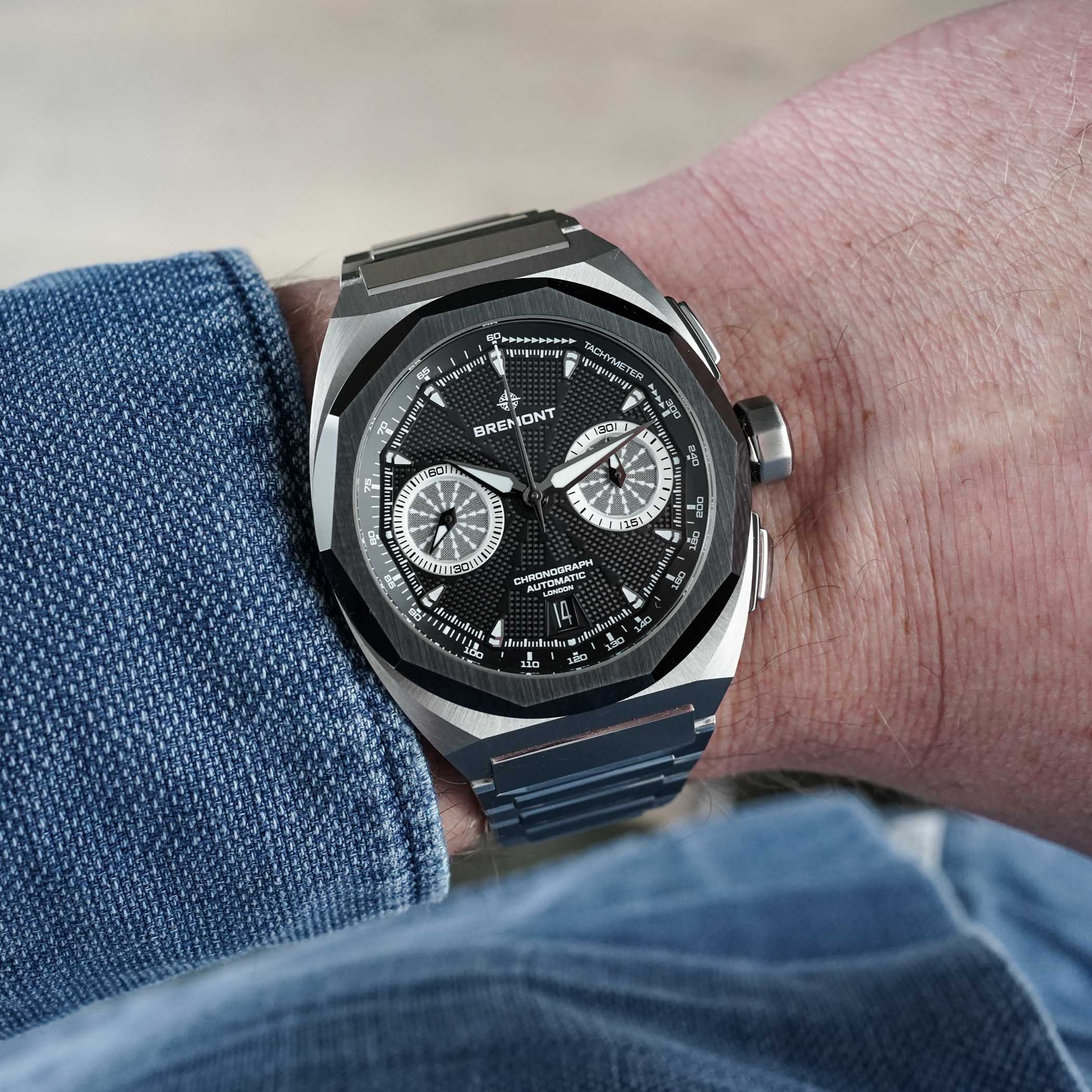
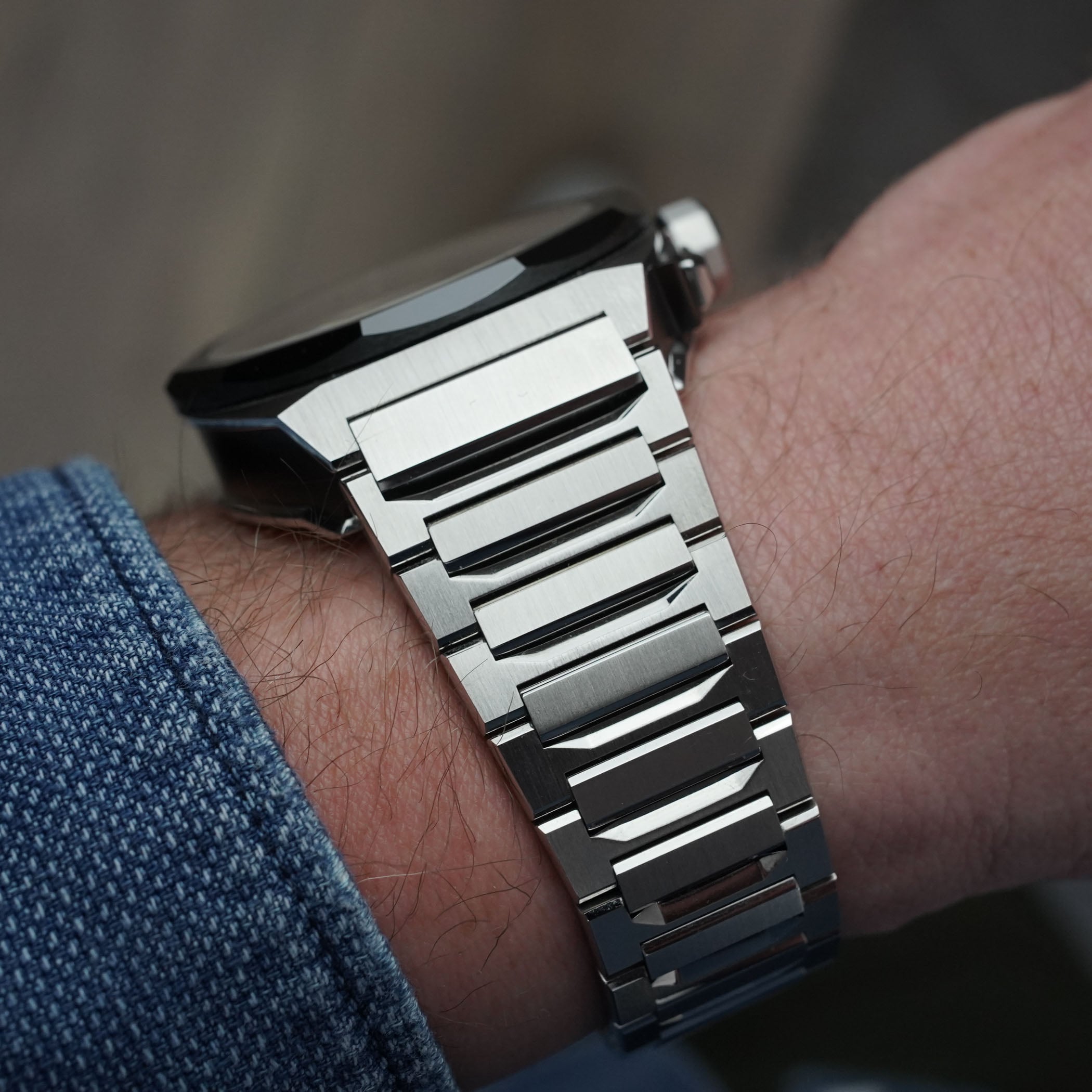
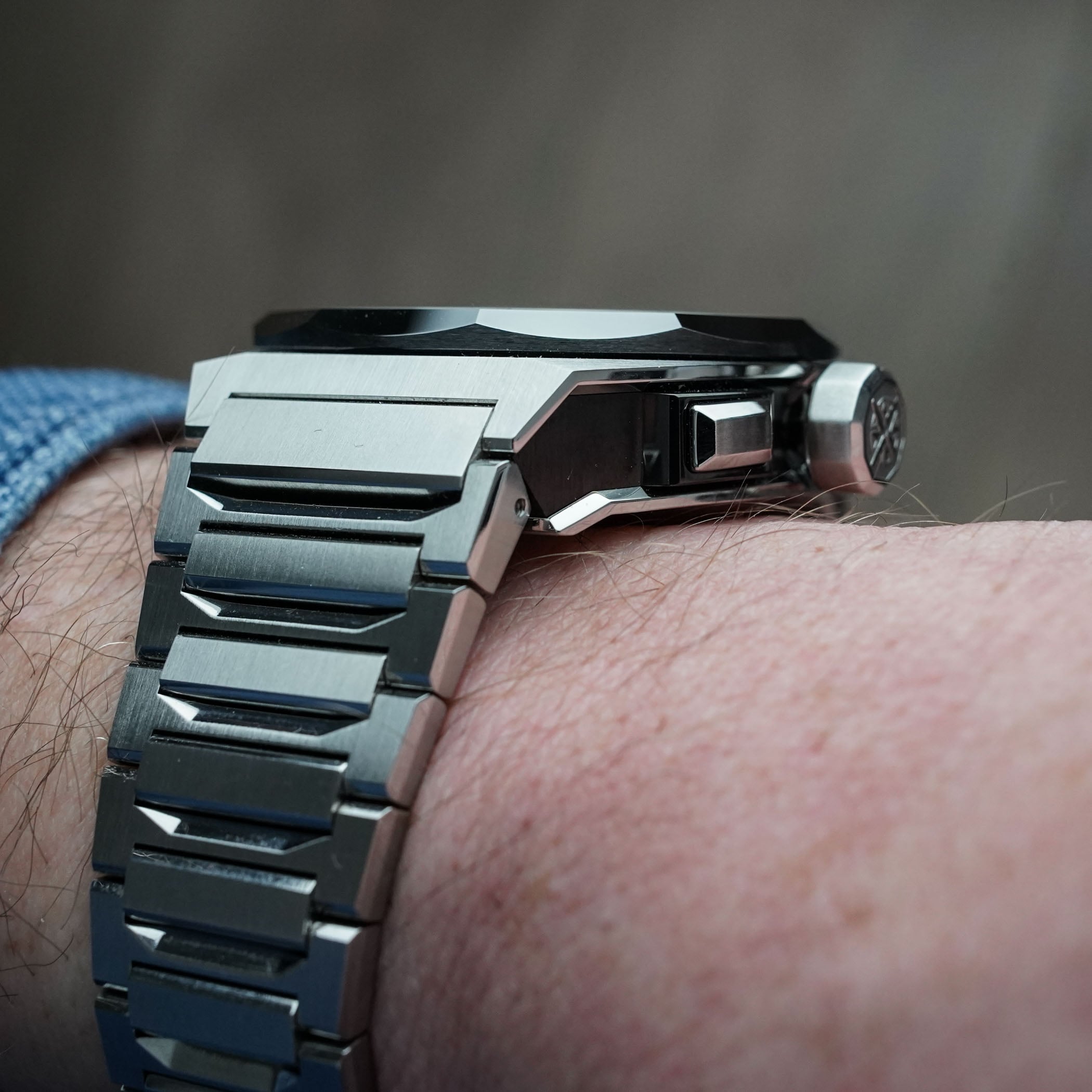
The Supernova is available with an integrated stainless steel bracelet for GBP 7,200 or an integrated rubber strap for GBP 6,950, both with quick-release mechanisms and folding clasps. More information at bremont.com.

5 responses
Nice looking watch. I like what Bremont is doing. I think the person writing the article meant 904 not 914 steel. It’s mentioned a couple of times and I actually looked to see if there was such a thing.
Thanks Ed, my mistake!
Of course they leave it on the moon—no one on Earth wants it.
There he is. Was wondering where the attack dogs were. You are a day or so late.
really haven’t vibed with any of the recent bremont designs apart from perhaps the altitute gmt chrono. i really miss the old design language – love my waterman apex and ionbird and the quirkiness and inspired vintage looks of them. genuinely wish bremont would also use a flyer gmt mechanism or module – their prices push them into the category where this is mandatory.