


 Not all images were able to load for printing. Please close the print window and try again.
 The Ressence Type 11 with Proprietary Movement, a Game-Changing Step for the Brand
Powered by its first proprietary movement, the Ressence Type 11 is the brand’s most complete watch so far, offering superb integration between the ROCS and the base calibre.
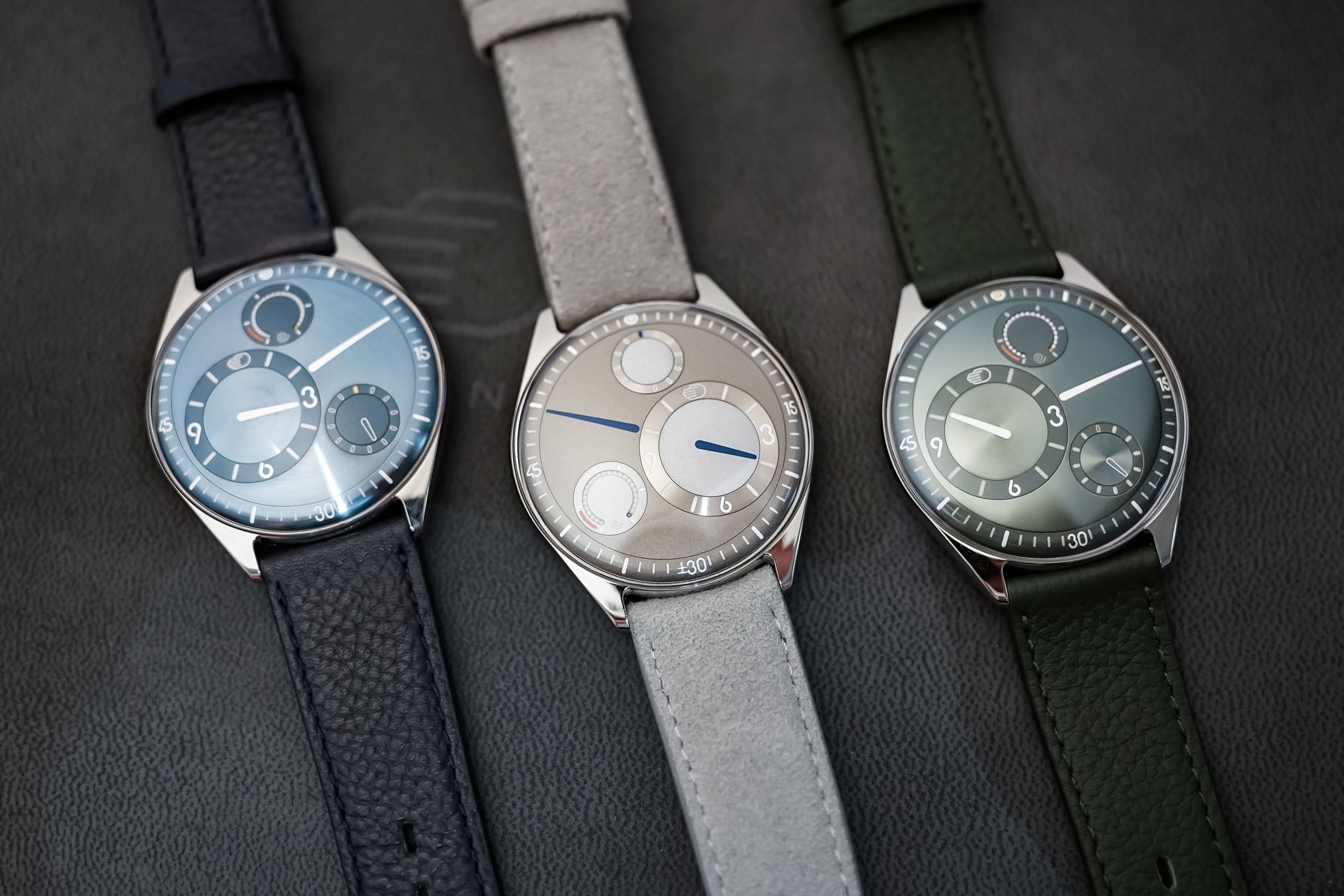
Founded in 2010 by Belgian industrial designer Benoît Mintiens, Ressence questioned, from the start, something fundamental: how we read time. Its patented Ressence Orbital Convex System (ROCS), with its constantly rotating discs replacing conventional hands, has become one of the most recognisable displays in modern independent horology. Until recently, however, Ressence relied on a seriously modified third-party movement to drive that display via a mechanical or a magnetic transmission (in the oil-filled models). The new Type 11 changes the practice, and while the watch looks unmistakably like a Ressence Type 1, underneath lies the brand’s biggest technical step since its creation: the first movement designed by Ressence from the outset to work with the ROCS.
A revisited Pebble-Shaped Case
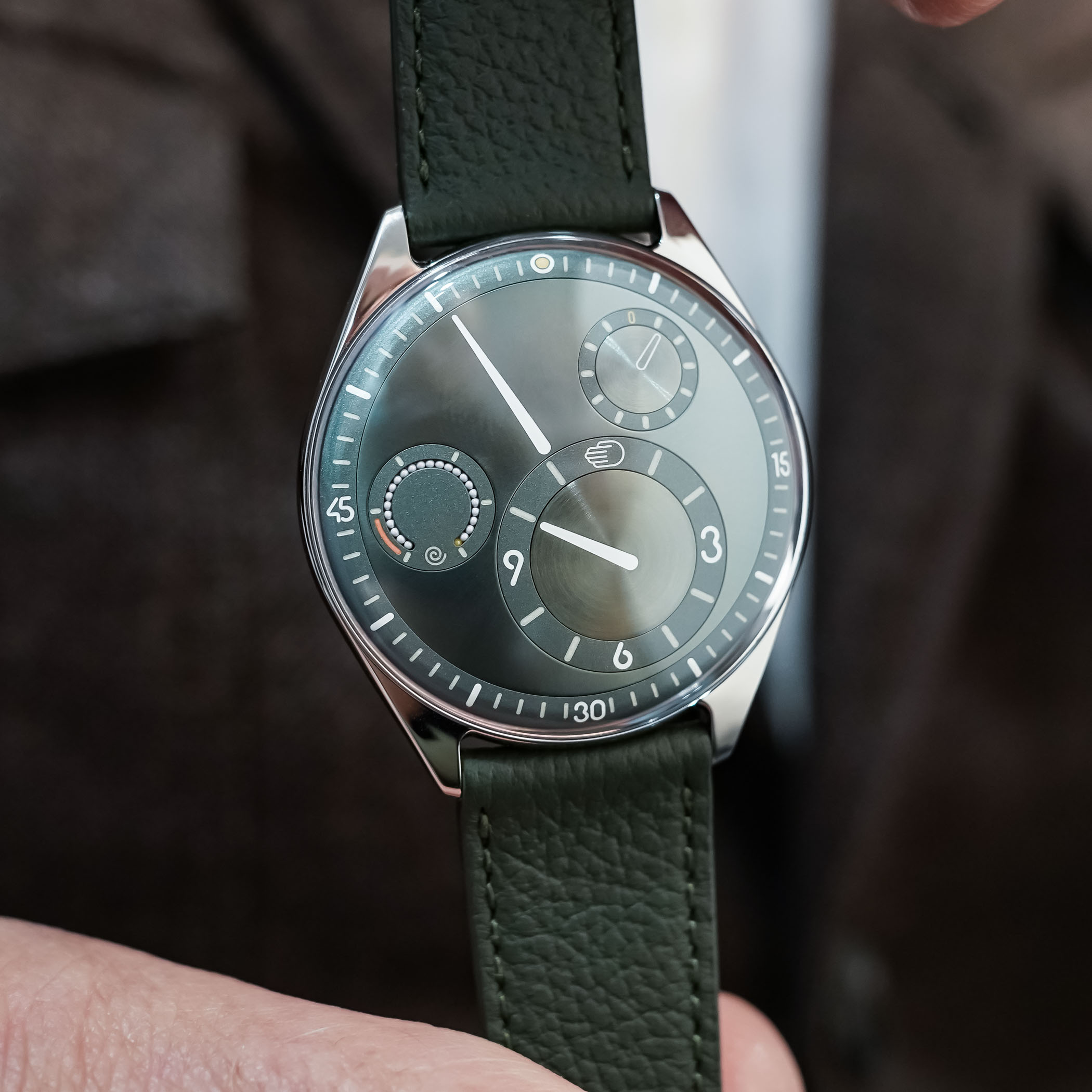
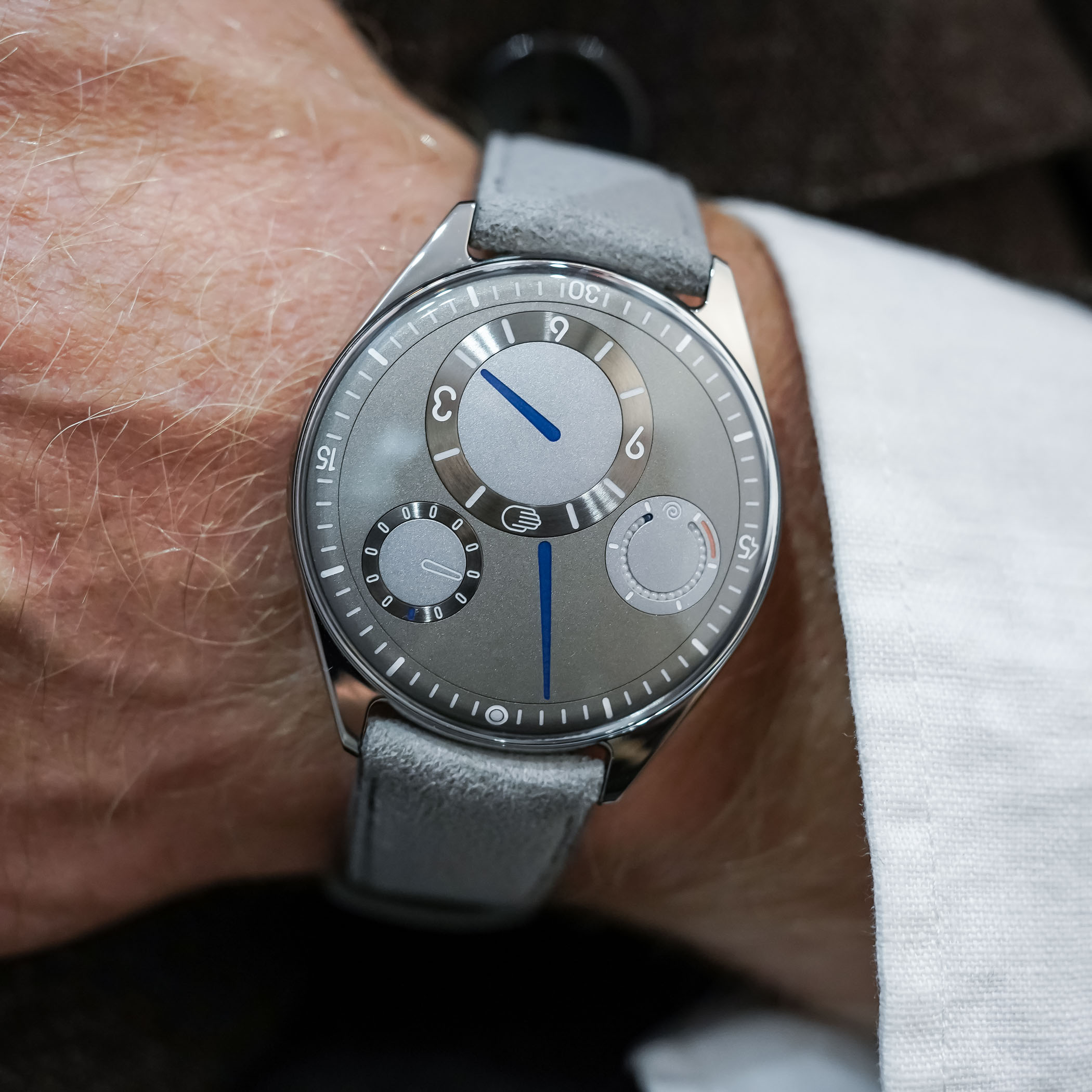
At first glance, little appears different. The pebble-shaped silhouette remains intact, somewhere between a Type 1 and a Type 8, but the Type 11 introduces subtle classical touches. The Grade 5 titanium case now incorporates conventional lugs, giving the watch a different stance without losing its fluid appearance. Measuring 41mm in diameter, 11mm thick and with a compact 45mm lug-to-lug distance, it wears remarkably well. Titanium keeps the weight low, while the fully polished surfaces bring out the almost sculptural quality that has always characterised Ressence watches. The integration done between the movement and the ROCS display module is, without a doubt, beneficial to the overall comfort on the wrist. The Type 11 isn’t noticeably thinner, but it simply feels more coherent as an object.
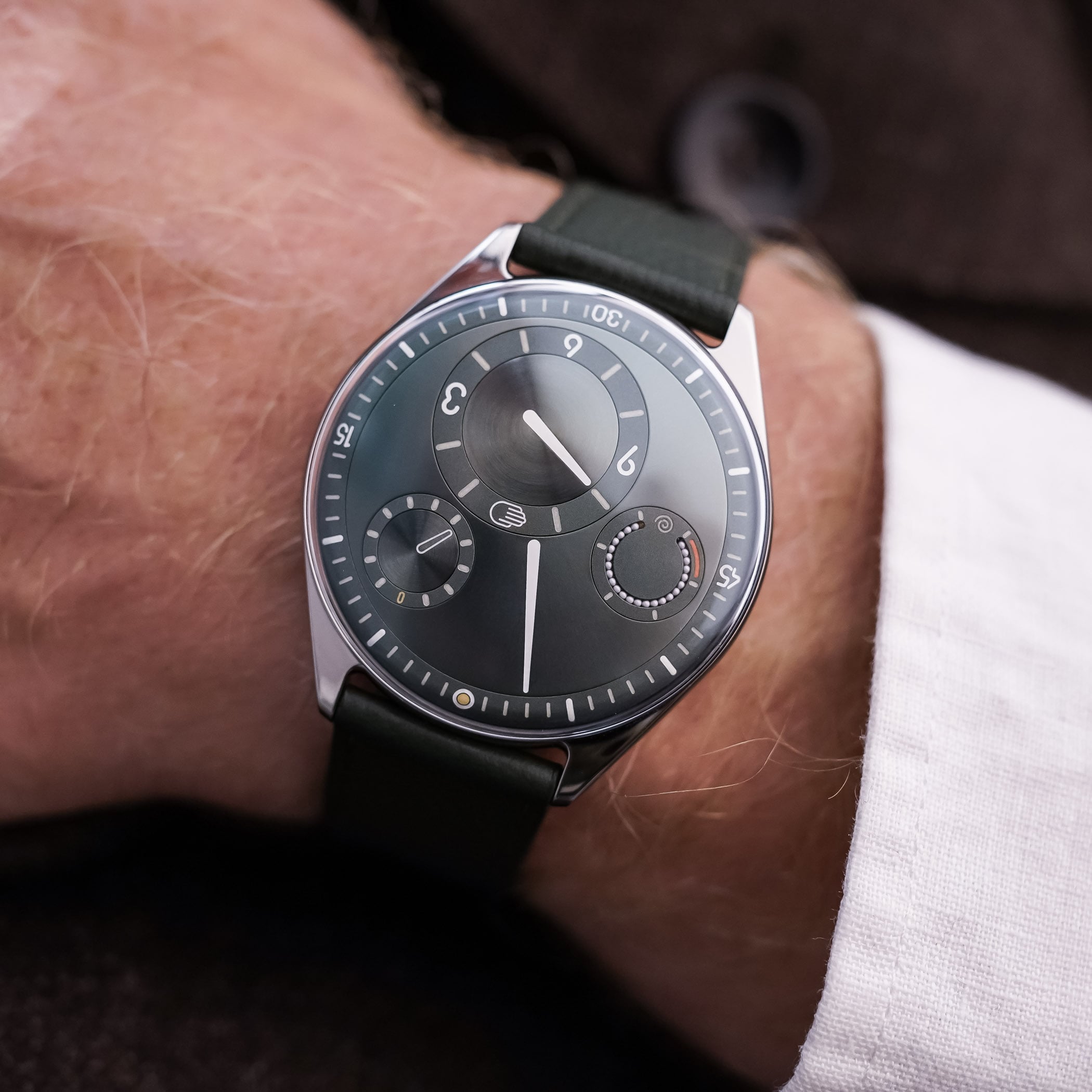
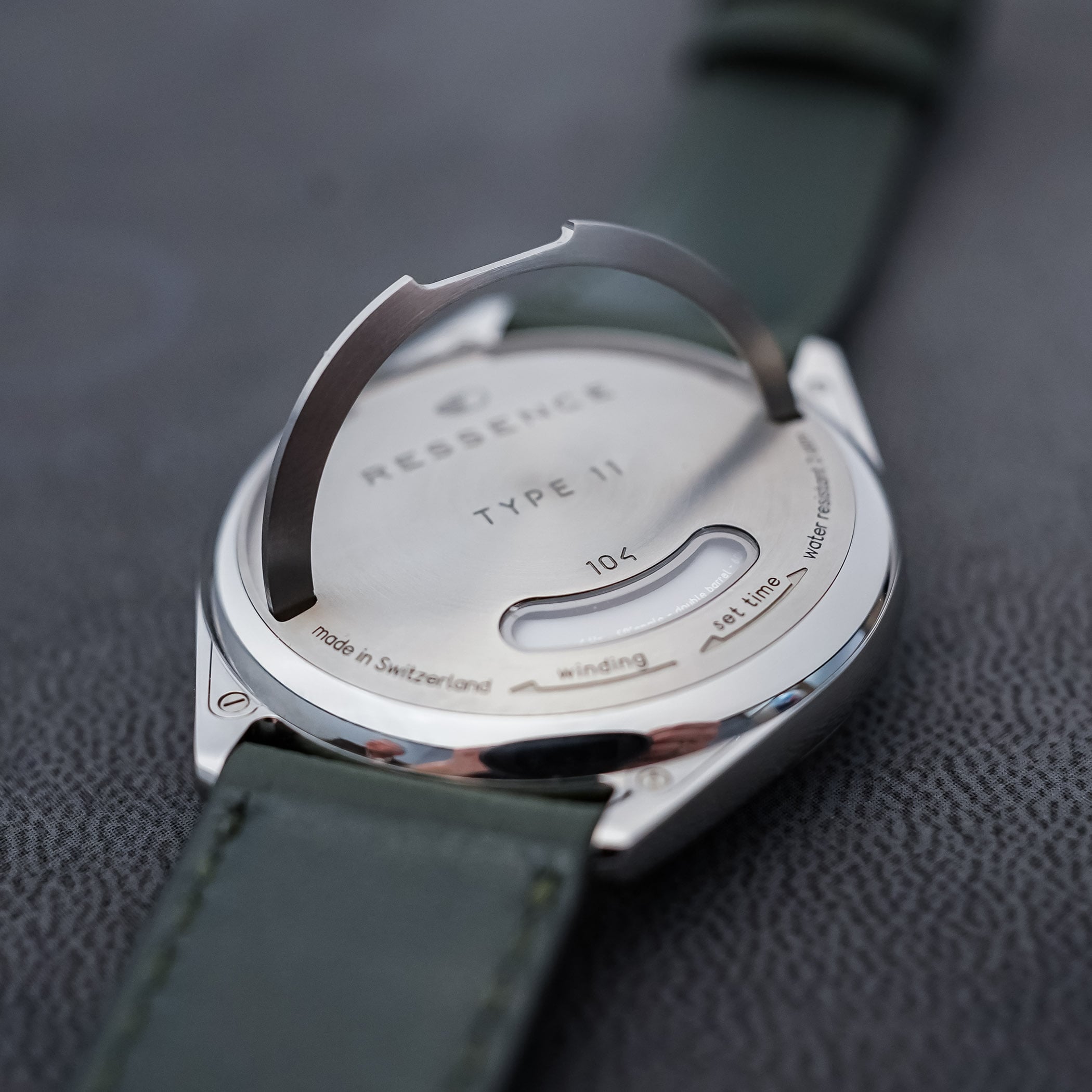
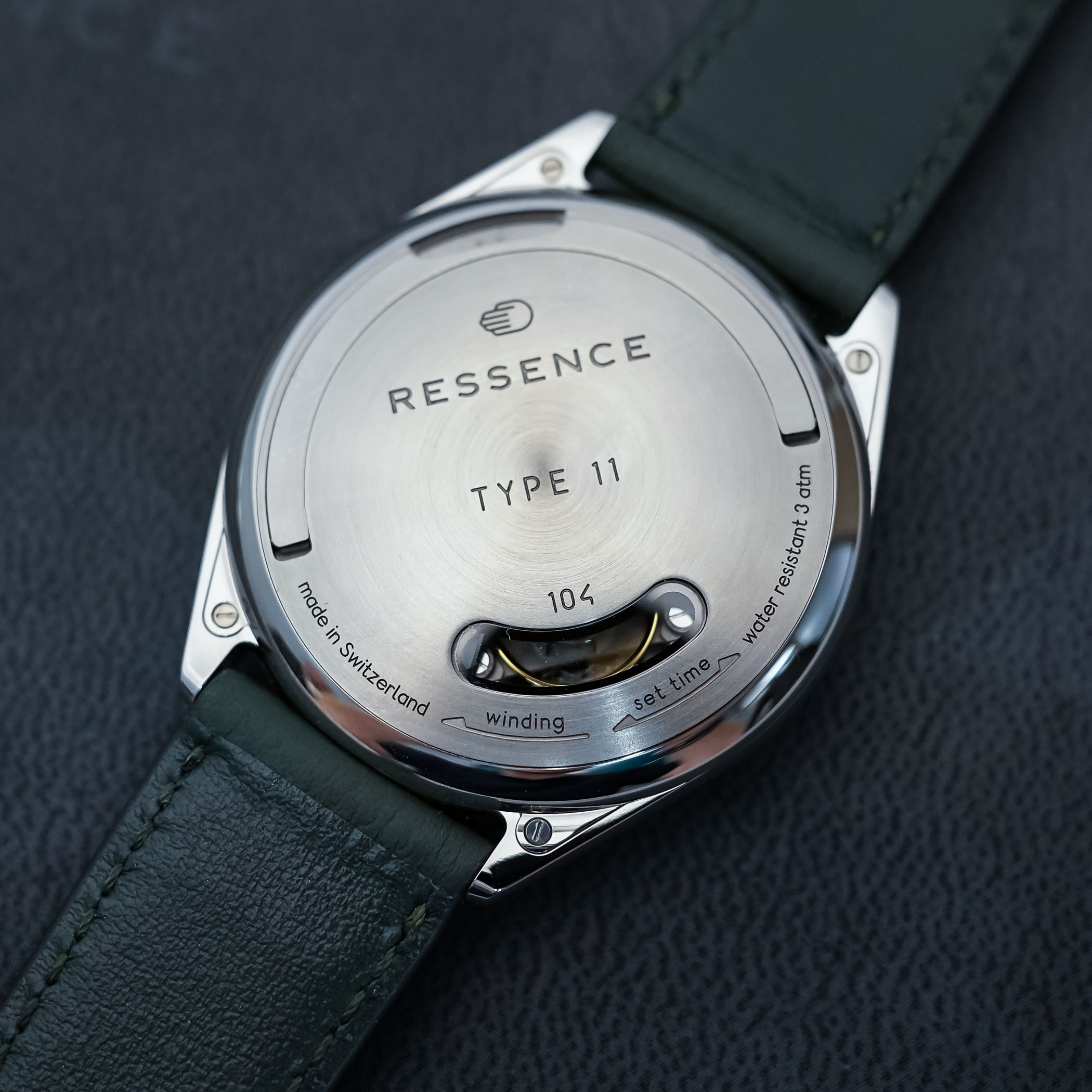
The absence of a crown, a signature element of the brand almost since its debut, continues to define the profile. Manual winding and time-setting are still performed from the caseback, but the process has been simplified. Previous Ressence models required users to locate a specific winding zone on the rotating back before moving it back and forth, a system that could be unintuitive for some. The Type 11 introduces a hinged lever integrated into the caseback, allowing the movement to be wound continuously and making daily interaction much more natural. A small sapphire aperture also reveals part of the movement and rotor, something rarely seen on previous Ressence models. Water-resistance has also increased to 30m, making this one of the brand’s most practical everyday watches.
The Dials and Indications
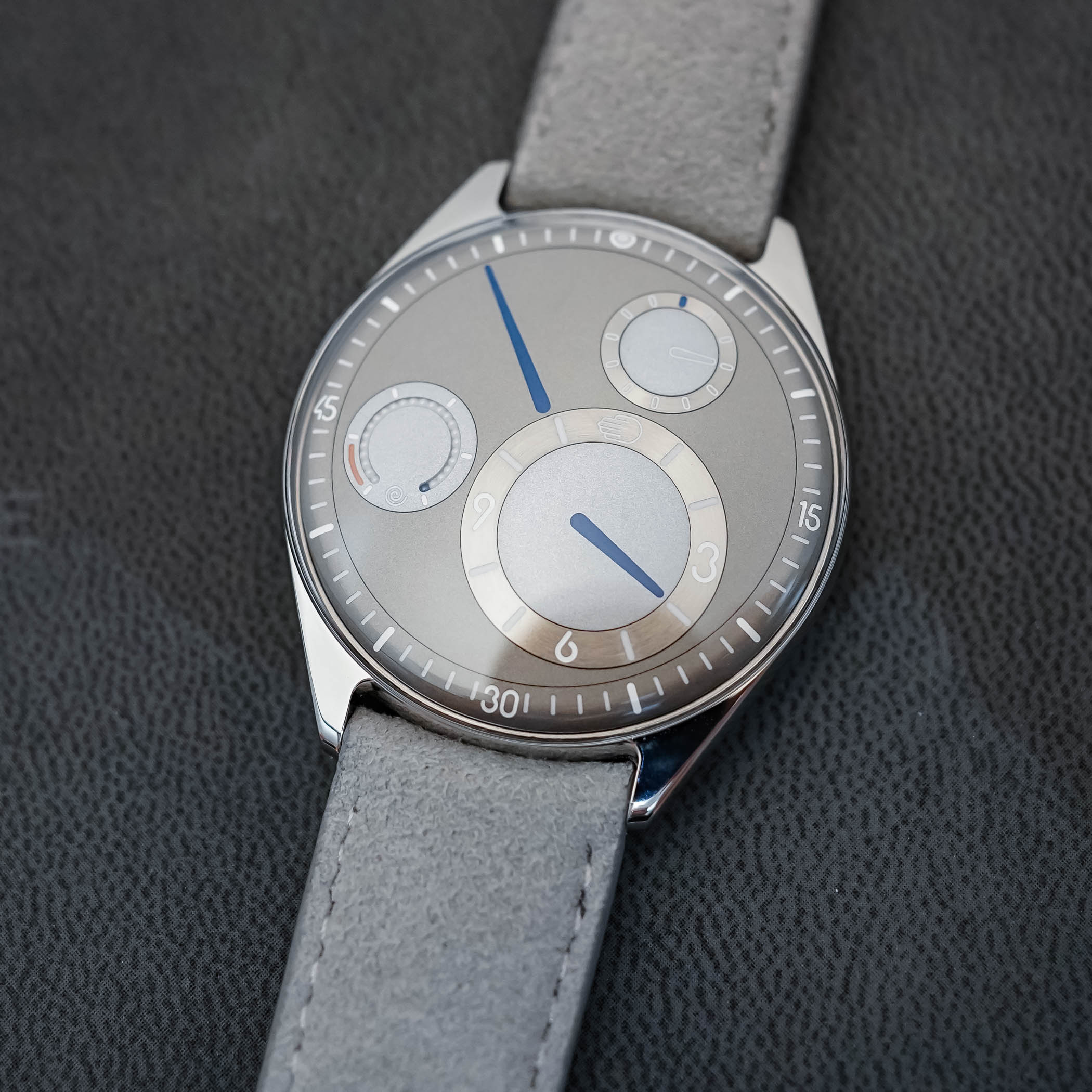
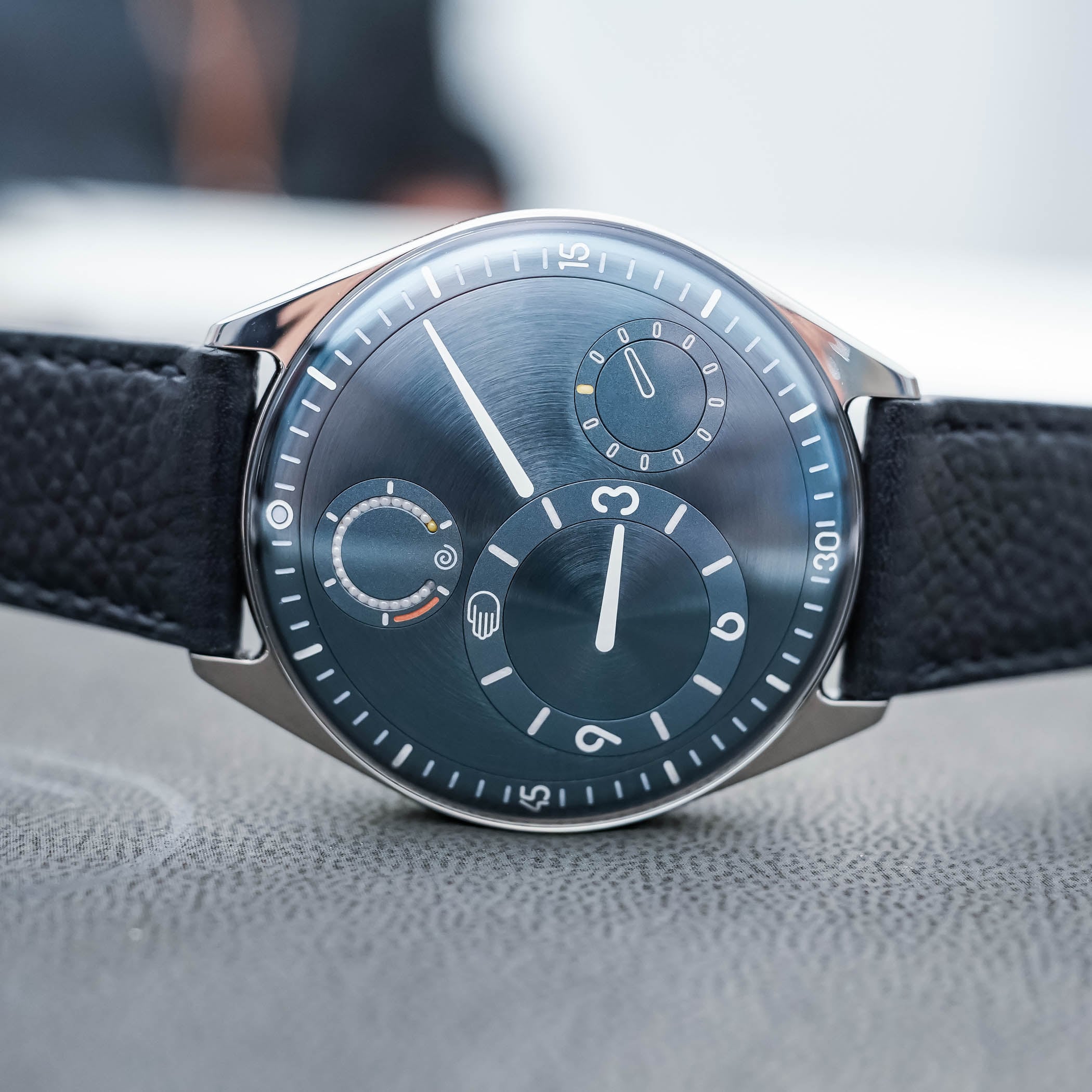
The Ressence Type 11 dial is available in three dial colours, Pine, Sky and Latte. It continues to excite. There are no hands, no traditional markers and no static elements. The convex Grade 5 titanium dial with a sunburst finish in the centre carries three continuously rotating satellites displaying the hours, running seconds and power reserve. The entire dial rotates once every hour to indicate the minutes against the fixed outermost scale with a grained finish, which extends to the power reserve indicator and the rings of the hour and second subdial. The circular finish is applied to the inside of the hour and second sub-dials. Like every Ressence, it takes only a few moments to understand, then it becomes surprisingly clear.
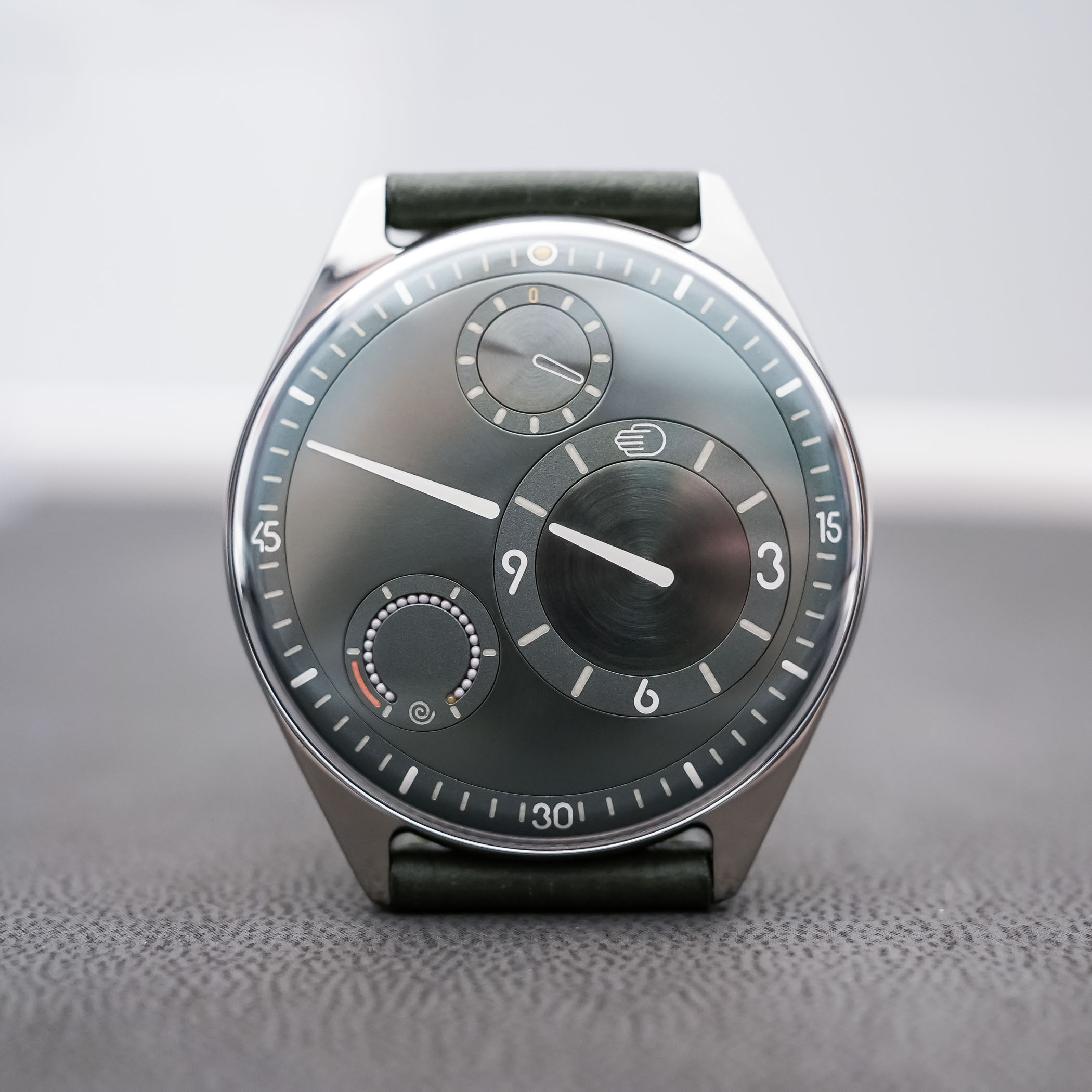
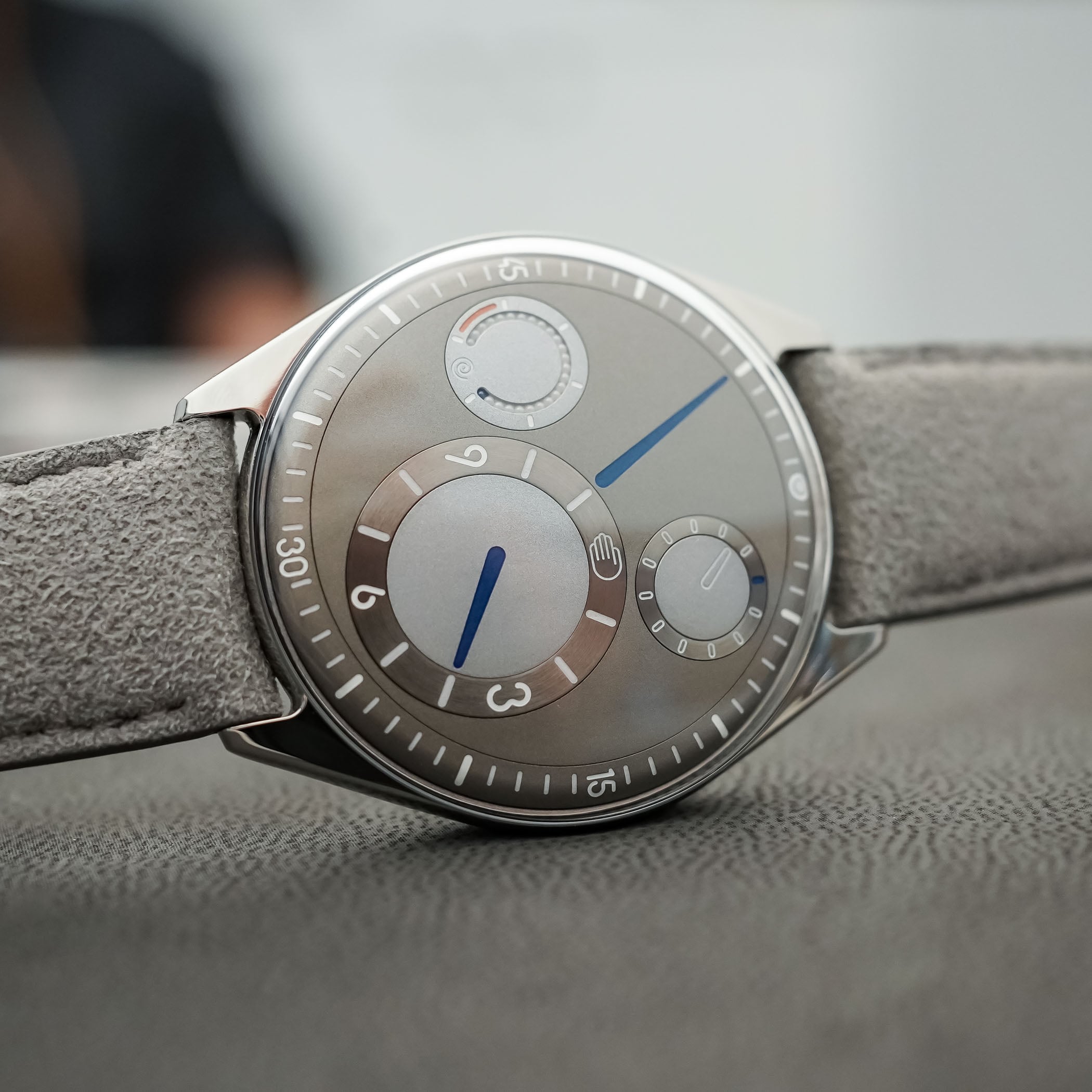
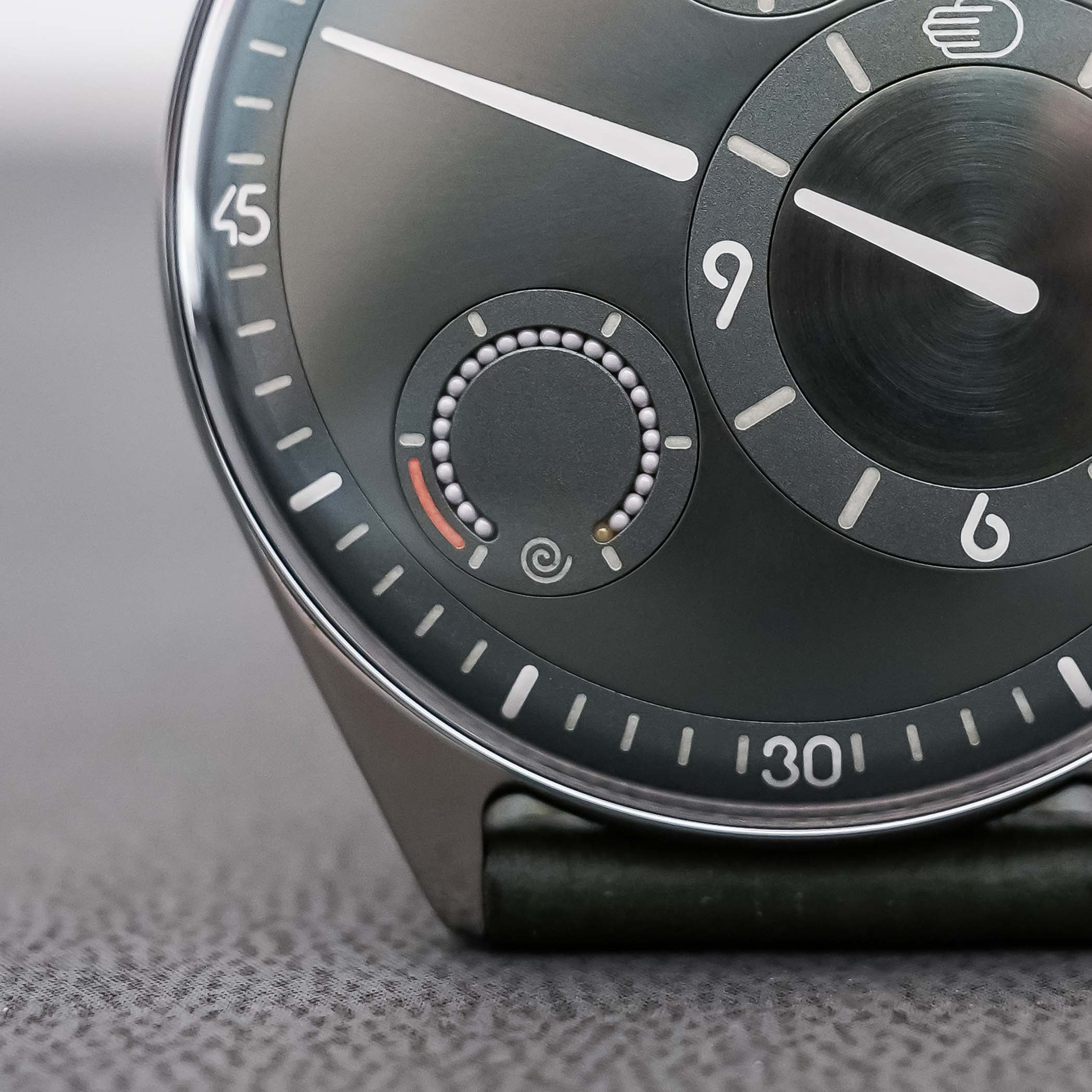
The fun new feature is the patented power-reserve display. Here, Ressence uses a string of ceramic micro-balls in contrasting colours. As the movement winds, lighter balls appear while darker ones disappear, giving a straightforward indication of what remains from the (more solid now) 60-hour autonomy. Watching the display change as you manually wind the watch is quite satisfying and perfectly aligned with the brand’s idea of making mechanical information more intuitive and somehow playful, rather than more complicated.
The Proprietary Movement
The big story is the Ressence Werk RW-01, the first movement designed entirely by Ressence in Belgium and produced by Swiss movement specialist Concepto. Up until now, Ressence has relied on classic ETA 2824-2 and ETA 2892-2 base movements to power its ROCS, its patented Orbital Convex System that replaces traditional hands with three-dimensional, constantly rotating discs to indicate time. The ROCS was either mechanically driven by the minute axle of these outsourced movements (in the air-filled models) or thanks to a magnetic transmission (in the oil-filled models). The problem was that not only were these ETA bases not the most powerful to start with (between 38 and 42 hours of power reserve), but the energy consumption to make an entire convex dial and sub-dials revolve is, as you can imagine, much higher than powering three hands.
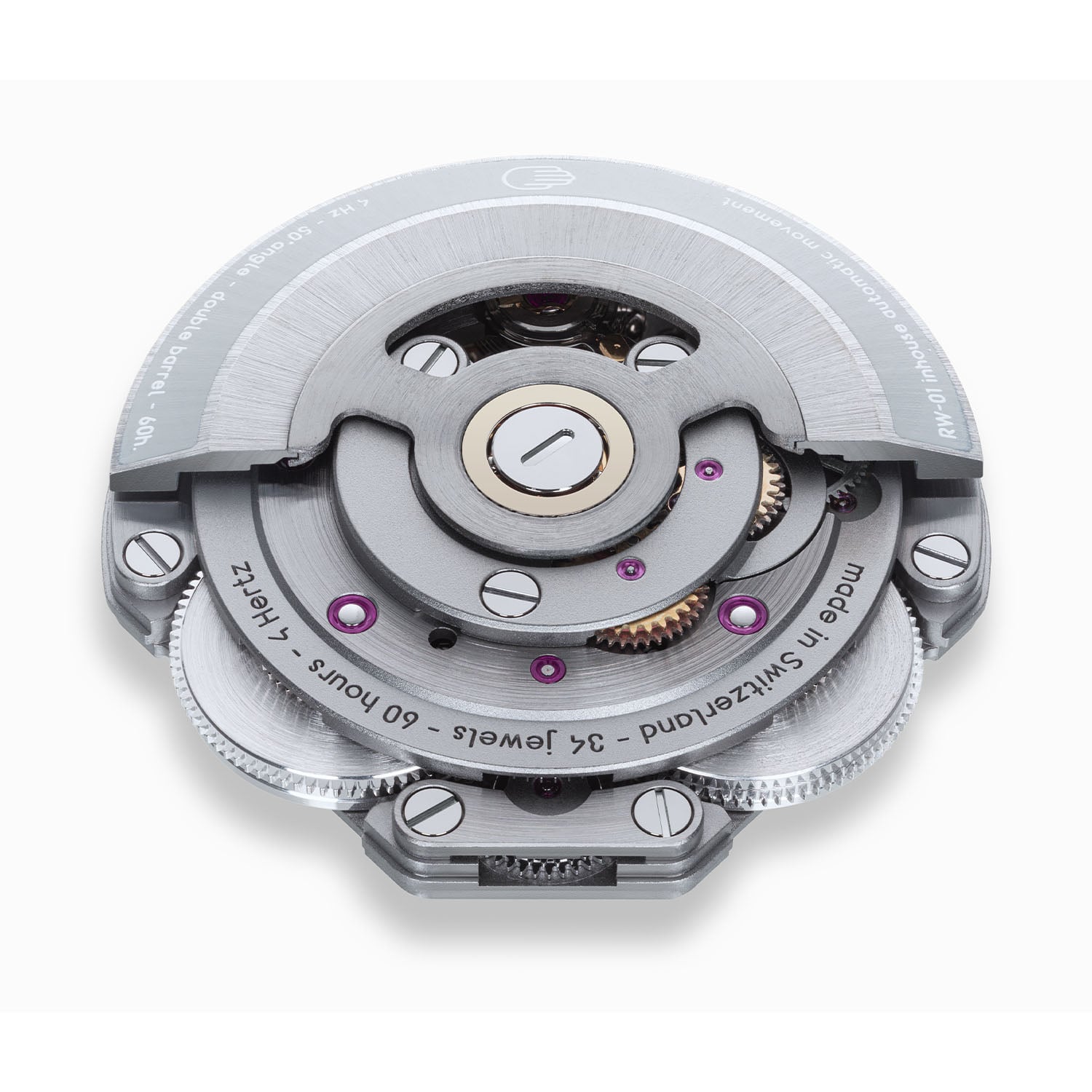
The result was that a Type 1 with its ETA 2892-2 base only delivered 36 hours of power reserve. And, as said above, there was also room for improvement regarding winding. The answer comes from the Ressence Werk RW-01. The movement was specifically conceived to power the ROCS, allowing Ressence to integrate the movement and display into a single architecture rather than treating them as two mechanically separate systems, thus forming a single unified entity.
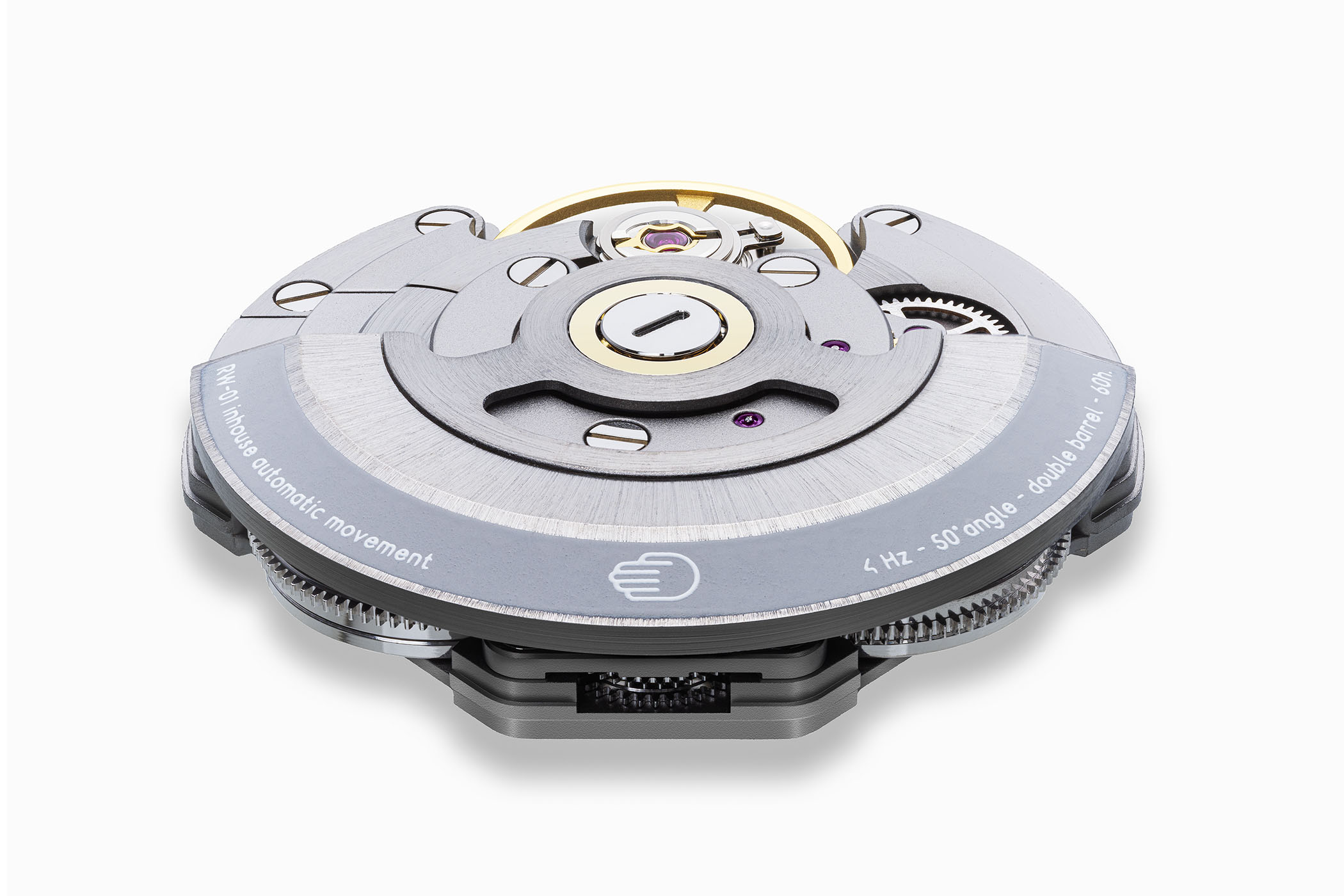
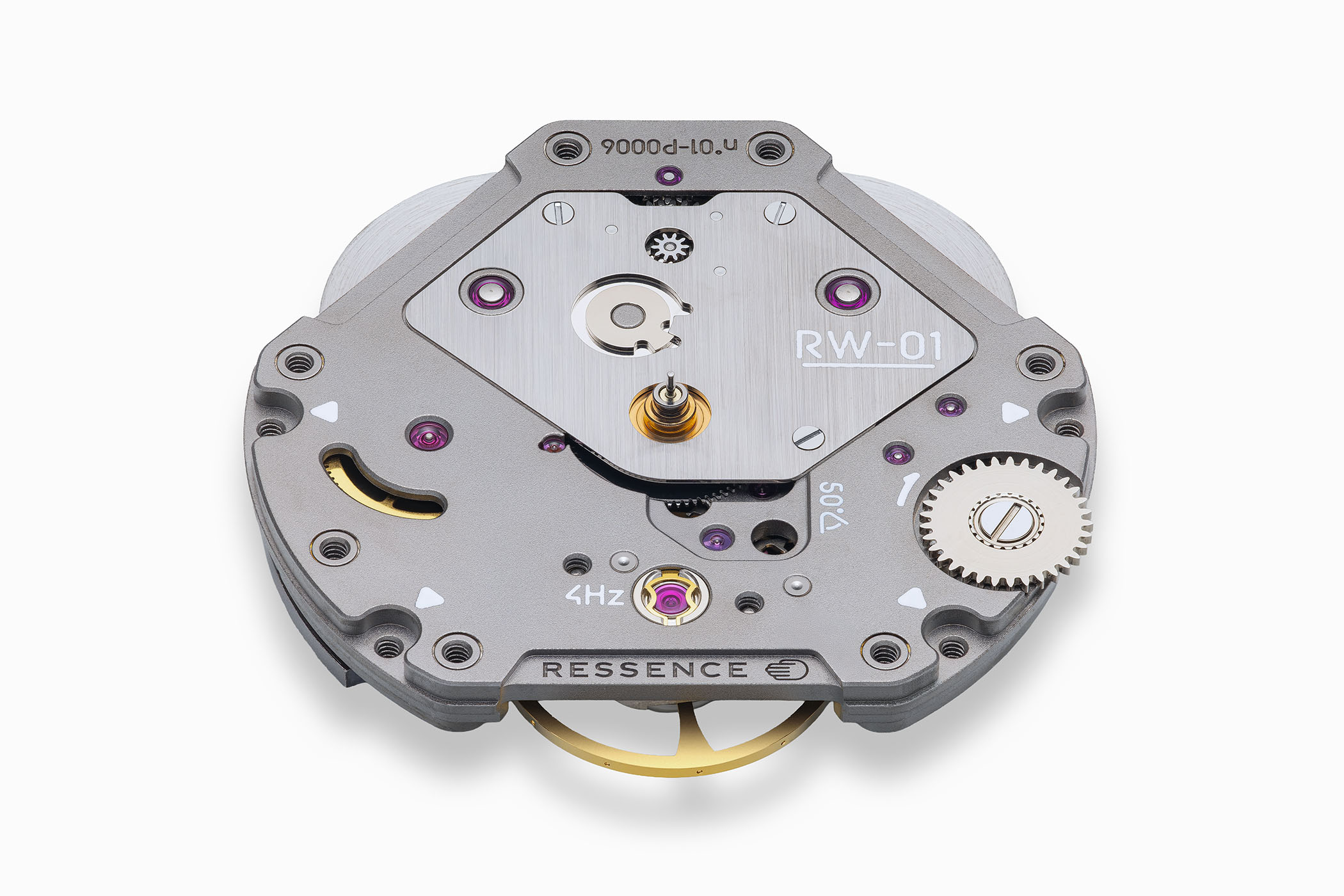
The movement has a distinctive triangular architecture defined by its twin barrels and centrally positioned balance wheel. Delivering a 60-hour power reserve, it beats at 28,800 vibrations/hour and drives a ROCS module that now runs on titanium ball bearings. The simplified winding system is perhaps the most tangible everyday improvement, but the integrated construction also contributes to the watch’s slimmer proportions and cleaner engineering.
Bracelet & Straps
The Ressence Type 11 can be paired with leather, rubber, hybrid leather-rubber straps or, perhaps most attractively, a lightweight titanium Milanese bracelet. The latter complements the titanium case particularly well, enhancing the watch’s lightness and contemporary feel.
Thoughts, Availability, & Price
The Type 11 is the watch Ressence has been working towards for years. It keeps everything that made the brand distinctive while addressing many of the practical limitations of earlier generations. The proprietary movement, simplified operation and ingenious power reserve display don’t alter the Ressence experience; they make it more complete and coherent. At CHF 23,000 excluding taxes or EUR 30,500 including taxes, it is far from entry-level pricing, but for anyone fascinated by alternative approaches to mechanical watchmaking, the Type 11 is easily the Belgian independent’s most accomplished watch to date. Discover more at ressencewatches.com.

2 responses
I really really like the looks of these.
These innovative watches are true futuristic. Really love it!