


 Not all images were able to load for printing. Please close the print window and try again.
 The Pequignet Royale Paris Chronograph (Incl. Video Review)
This handsome chronographs packs a rather interesting movement, and a first for the brand.
Just a stone’s throw north of Neuchâtel, Switzerland and crossing the border into France, you will stumble upon a town called Morteau. Much like Le Locle and the Vallée de Joux are for the Swiss, Morteau is the heart of French mechanical watchmaking. It is here that you will find the Pequignet manufacture, a company that’s been in business since 1973. Withstanding the pressure and challenges of the quartz revolution, the company has long remained one of France’s leading independent watchmaking names. One of the latest watches to come out of the brand’s workshop is the Royale Paris Chronograph, and today we’re taking a closer look at it.

Founded by self-taught watchmaker Emile Péquignet in 1973, the company’s reins were transferred to Didier Leibundgut in the early 2000s, and for the past couple of years, it’s been in the hands of Enowe, a family-owned ethical investment fund. What’s important to note is the fact that Pequignet has been a proper manufacture since 2010, when it introduced its first in-house movement, the Calibre Royale, making its debut in a watch a year later. And since then, the brand has slowly but surely been moving towards a higher grade of watchmaking.
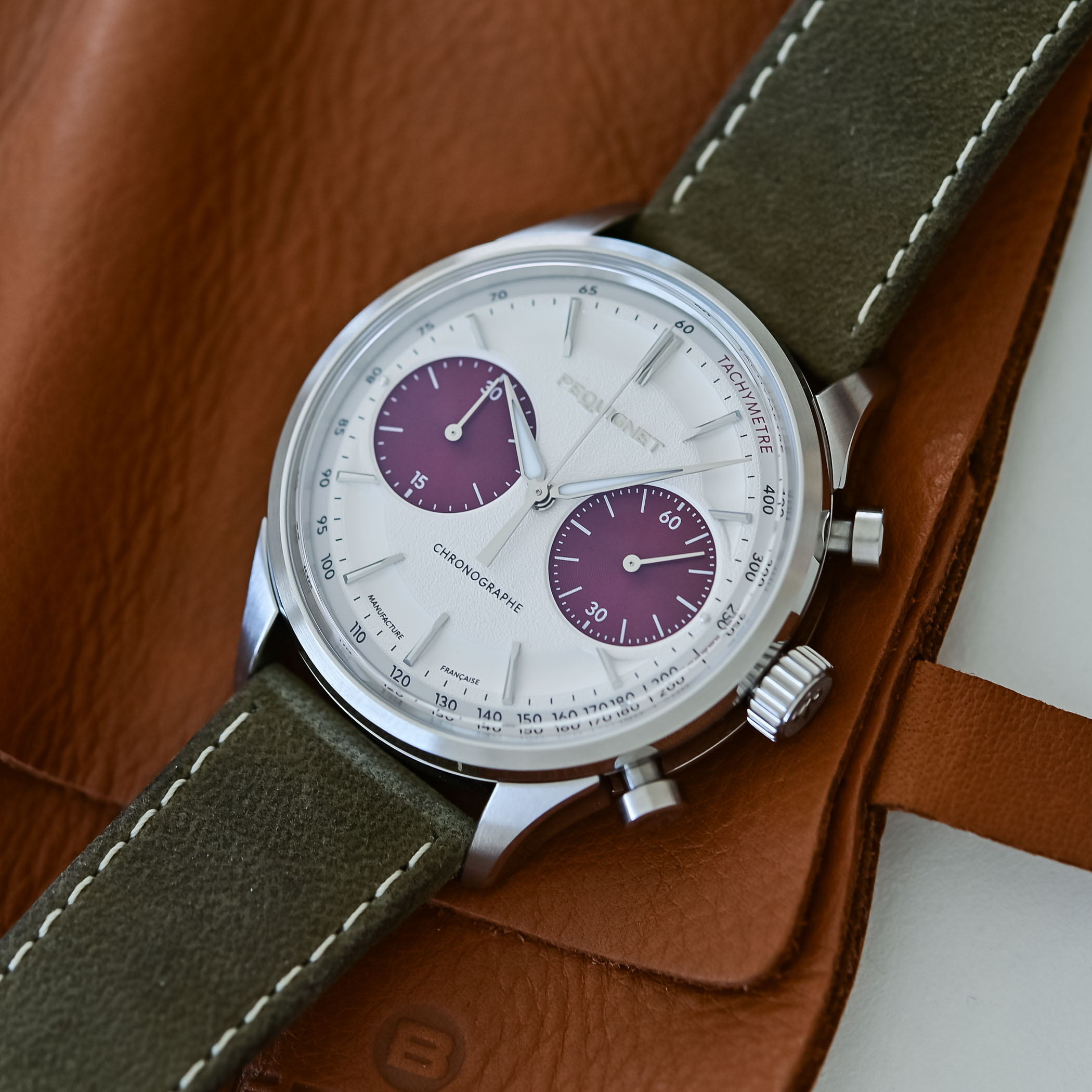
The Royale collection serves as the cornerstone range for the brand, hallmarked by a refined profile and balanced multi-layered dials that offer classical watchmaking indications with subtle contemporary elements. This Royale Paris Chronograph is one of the brand’s latest introductions and features its own chronograph movement.
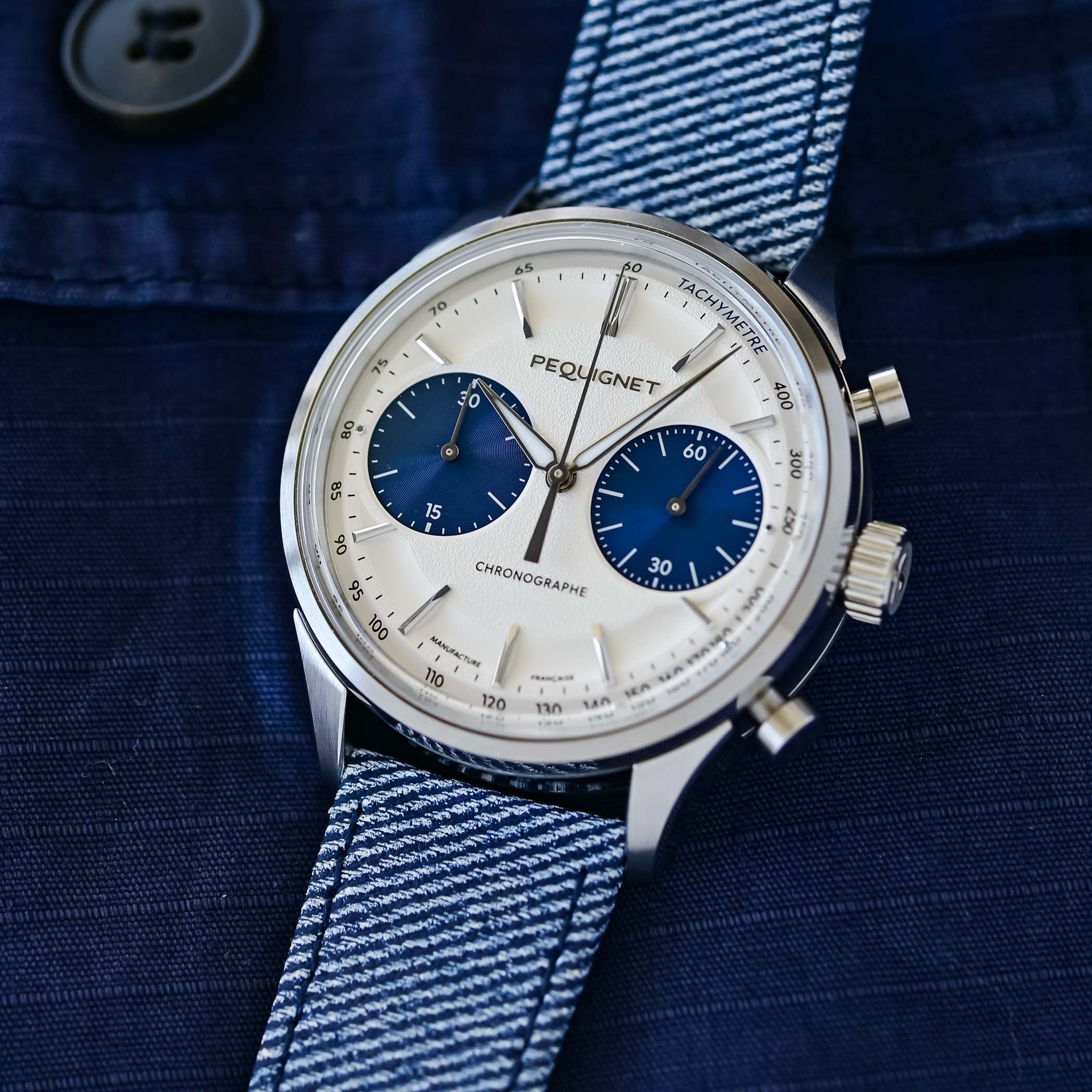
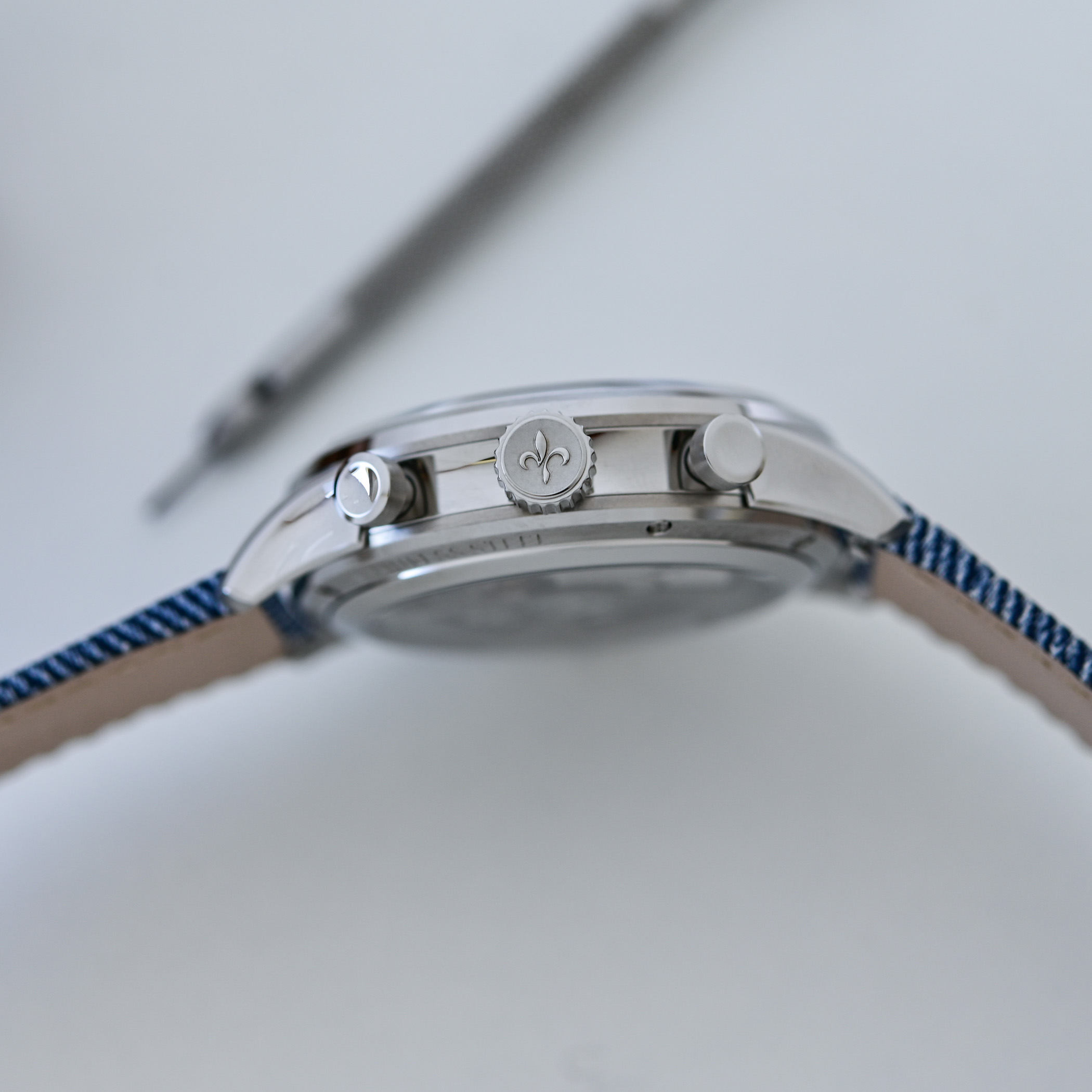
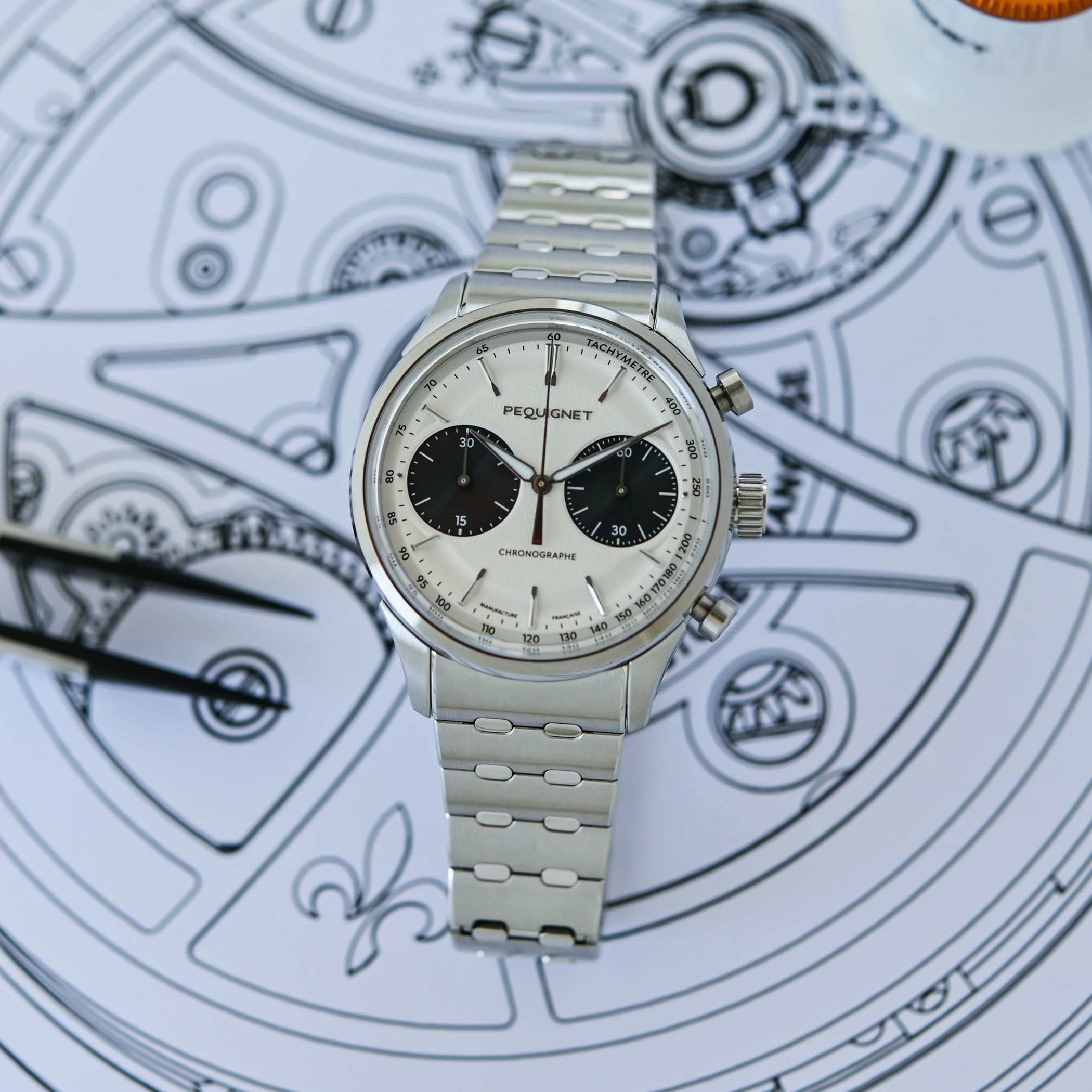
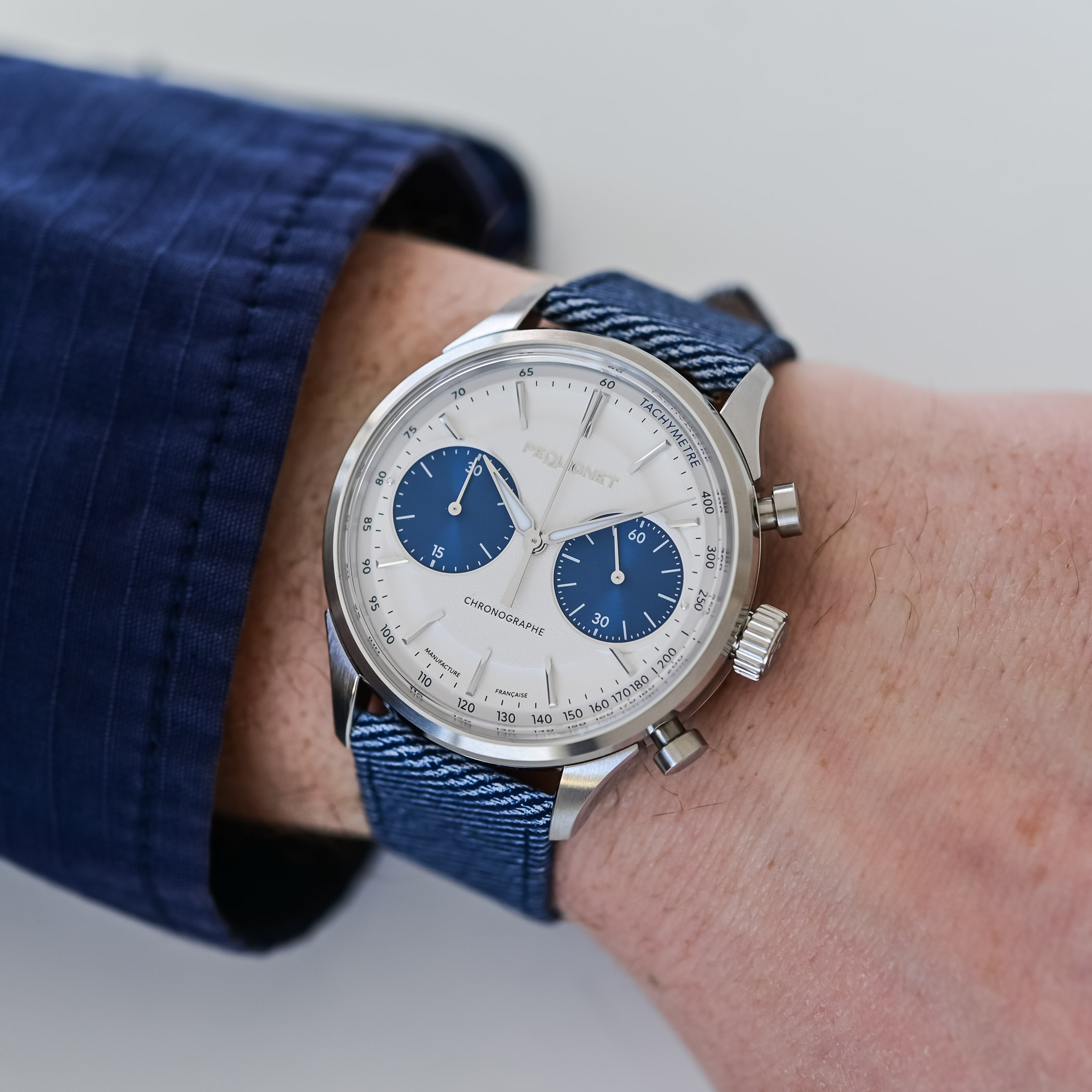
The design follows suit with the ethos of the Royale Paris range. A modern yet elegant watch, fit for everyday life. The case measures a pleasant 39.5mm across and 12.7mm in height, and reveals the signature style lugs of the Royale Paris collection. It also means the Royale Paris Chronograph is a rather modestly sized watch, considering it’s a modular automatic chronograph. The finishing reveals contrasting brushed and polished sections, and around the back, you get an unimpeded view of the movement. The flanks are recessed to add a bit of flair, yet it all feels very restrained and refined. On the right side, the knurled crown is flanked by a pair of classical piston-style pushers. The sloping bezel has a brushed top surface and meets a box-type sapphire crystal.
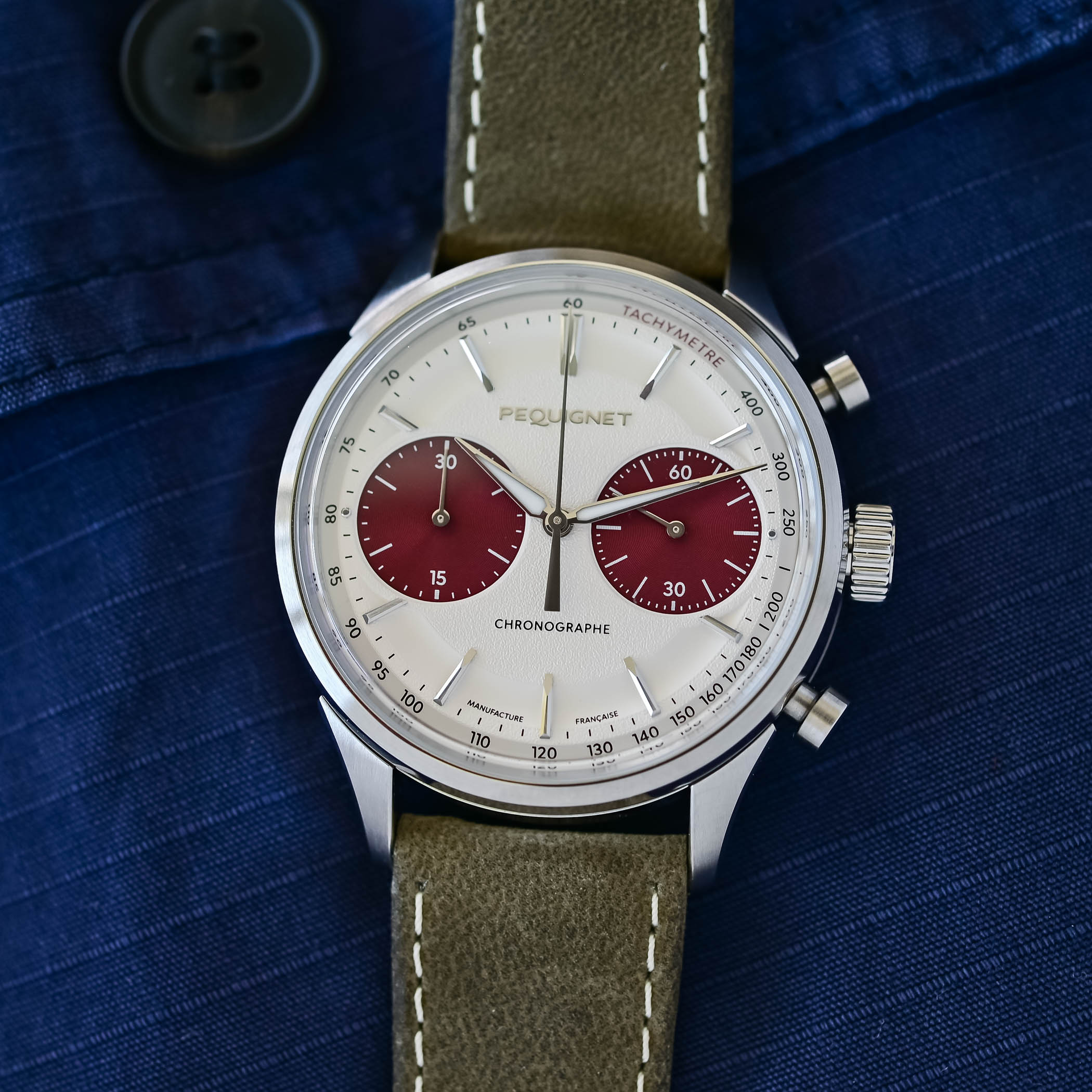
While the Royale Paris collection usually offers asymmetrical layouts for added complications, such as a moon phase or power reserve display, the Royale Paris Chronograph is all about balance. The flat centre section has a grained finish and connects the two subdials with the outer tachymeter scale. The subdials themselves have a snailed finish and come in either deep blue or burgundy red, with an upcoming panda version, which you can see here on a steel bracelet. In between the heart of the dial sits a concave ‘trench’ with the applied hour markers bridging the gap, if you will. The polished hour and minute hands have a touch of Super-LumiNova down the spine, and the applied logo rounds everything off. While it’s nothing groundbreaking, the attention to detail, mix of textures and multiple levels give it tons of character without compromising legibility.
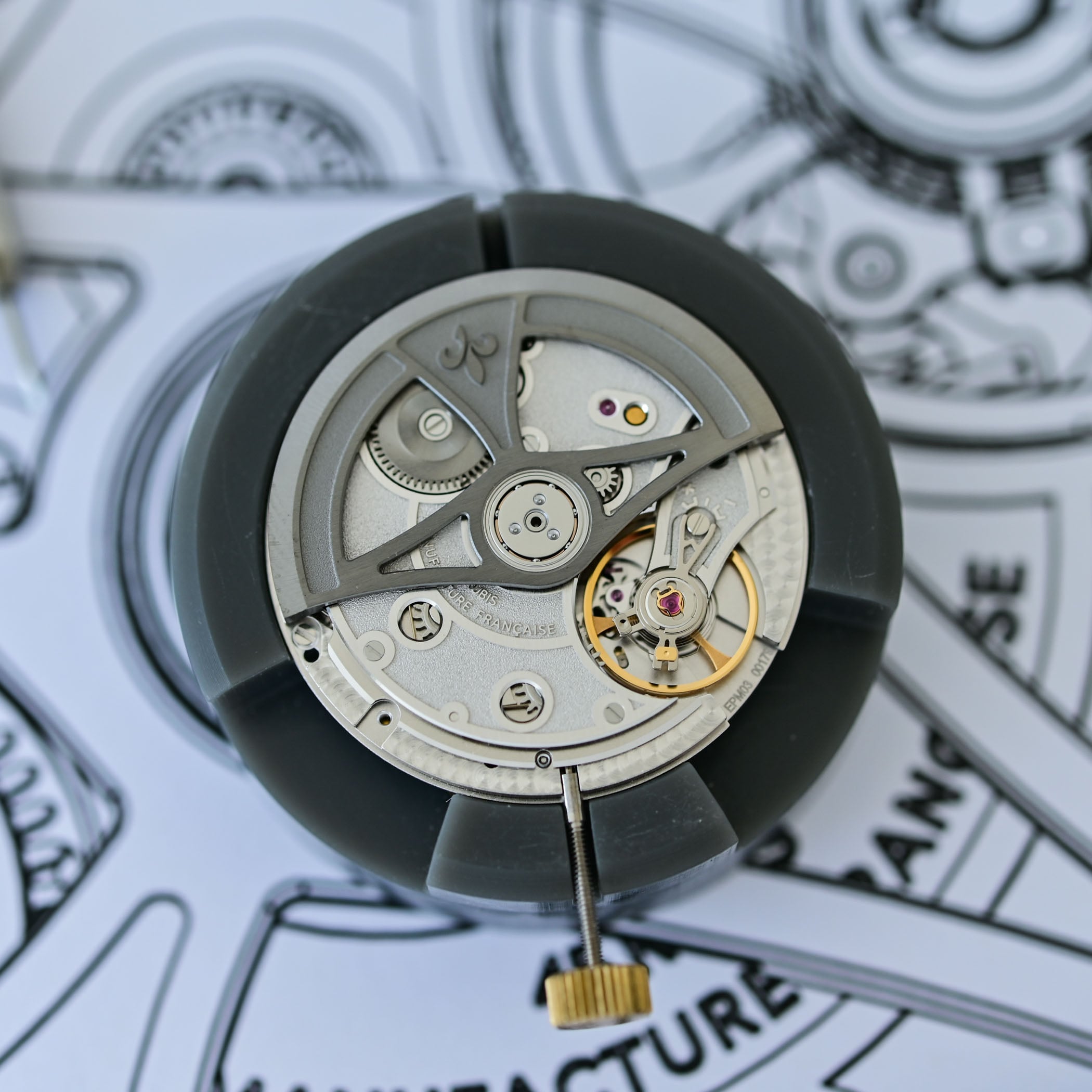
As mentioned, the movement needs a little explaining. While most watches in this collection use the in-house produced Calibre Royale as an automatic base movement, this Royale Paris Chronograph uses the Calibre Initial instead. This slim automatic movement is usually found in the Attitude or Concorde collections, but here it serves as the driving force for the cam-actuated chronograph module developed by Dubois-Depraz on top. It runs at a frequency of 28,800vph and has a power reserve of 65 hours.
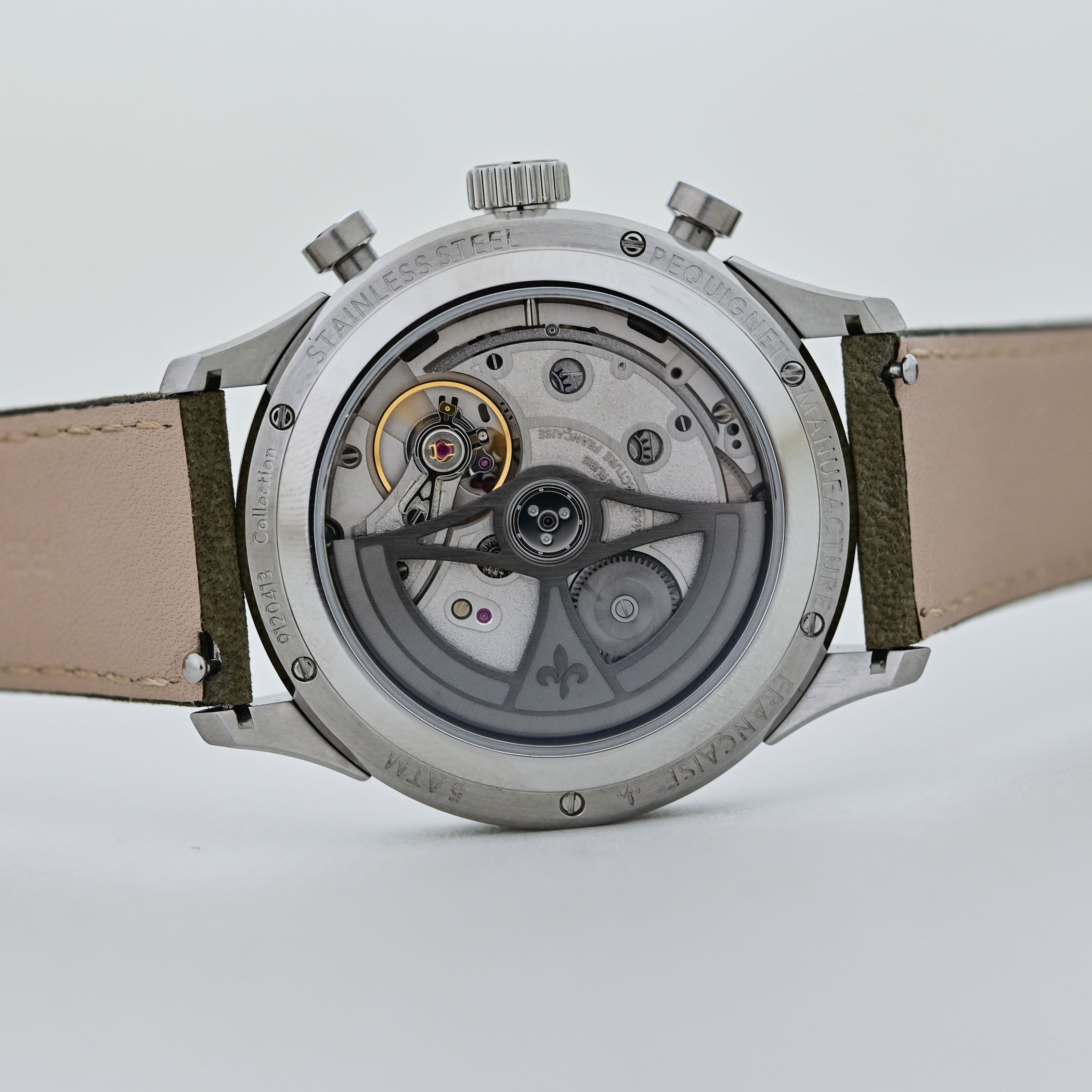
The finishing is rather modern, befitting the watch’s overall look and feel. There’s a recessed grained section on the three-quarter bridge, with brushed outlines and multiple openings to reveal its mechanics. On top, there’s a darkened openworked central rotor, proudly bearing the brand’s stylised Fleur de Lys logo. A nice touch, and one that’s often overlooked, is the mechanism that aligns the crown with the pushers. In most modular chronograph movements, the crown sits below the pushers because it’s connected to the base, while the pushers are connected to the module.
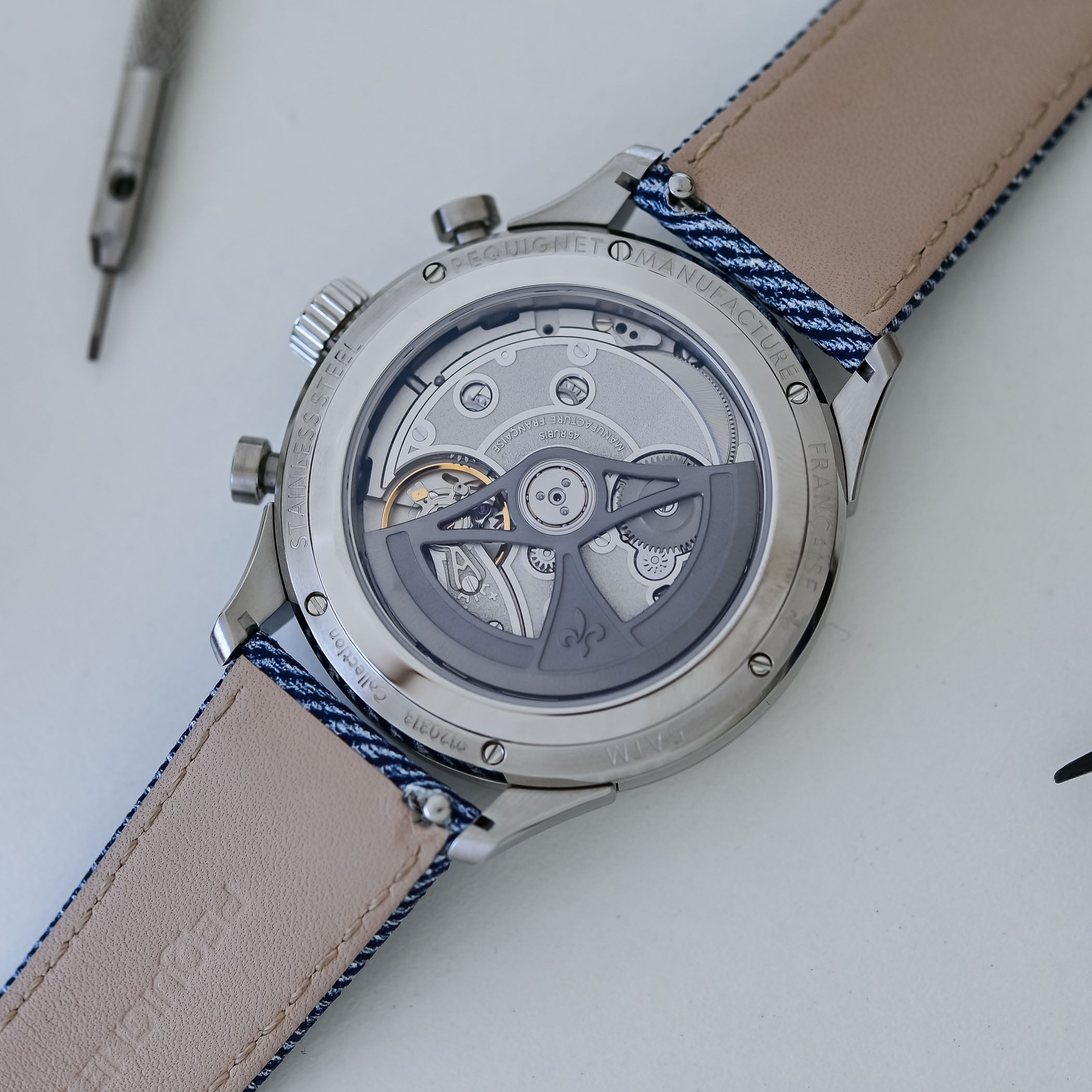
The Royale Paris Chronograph is offered on either a strap or a bracelet. As seen here, the straps are green nubuck, or denim-like leather with a steel pin buckle. The stainless steel bracelet, also available, complements the case’s aesthetics and finish. The brushed centre links are connected to one another with smaller connector links, which are polished for added contrast. With this Royale Paris Chronograph, Pequignet has added a handsome, modern chronograph to its collection with subtle classical elements. It looks great, is very nicely finished throughout and packs an interesting movement that’s mostly done in-house. Retailing for EUR 6,450, it’s a very solid offer well worth your consideration.
For more information, please visit Pequignet.com.

3 responses
As more than usual with today’s watch industry, swiss, french and others, not a bad looking watch or movement, until you get to the overblown and insulting pricetag of an otherwise average and common looking watch, with the same being said, more or less, for the movement. At the very least, it’s not near worth its asking price, other than they are looking to buy themselves palatial estates on the backs of those they expect will buy these things! Lost interest when saw the sucker price!
Honestly I was expecting a real manufacture chronograph movement and no their base movement with a module on top (not even colum wheel). I really like this brand but this watch is a downgrade
Hey…at least they put a big name on the model: ‘ROYALE PARIS’…?