


 Not all images were able to load for printing. Please close the print window and try again.
 Minerva The Unveiled Crownless, Rethinking One of Watchmaking’s Simplest Controls
By removing the crown altogether, Minerva has created one of the year's most intriguing mechanical watches.
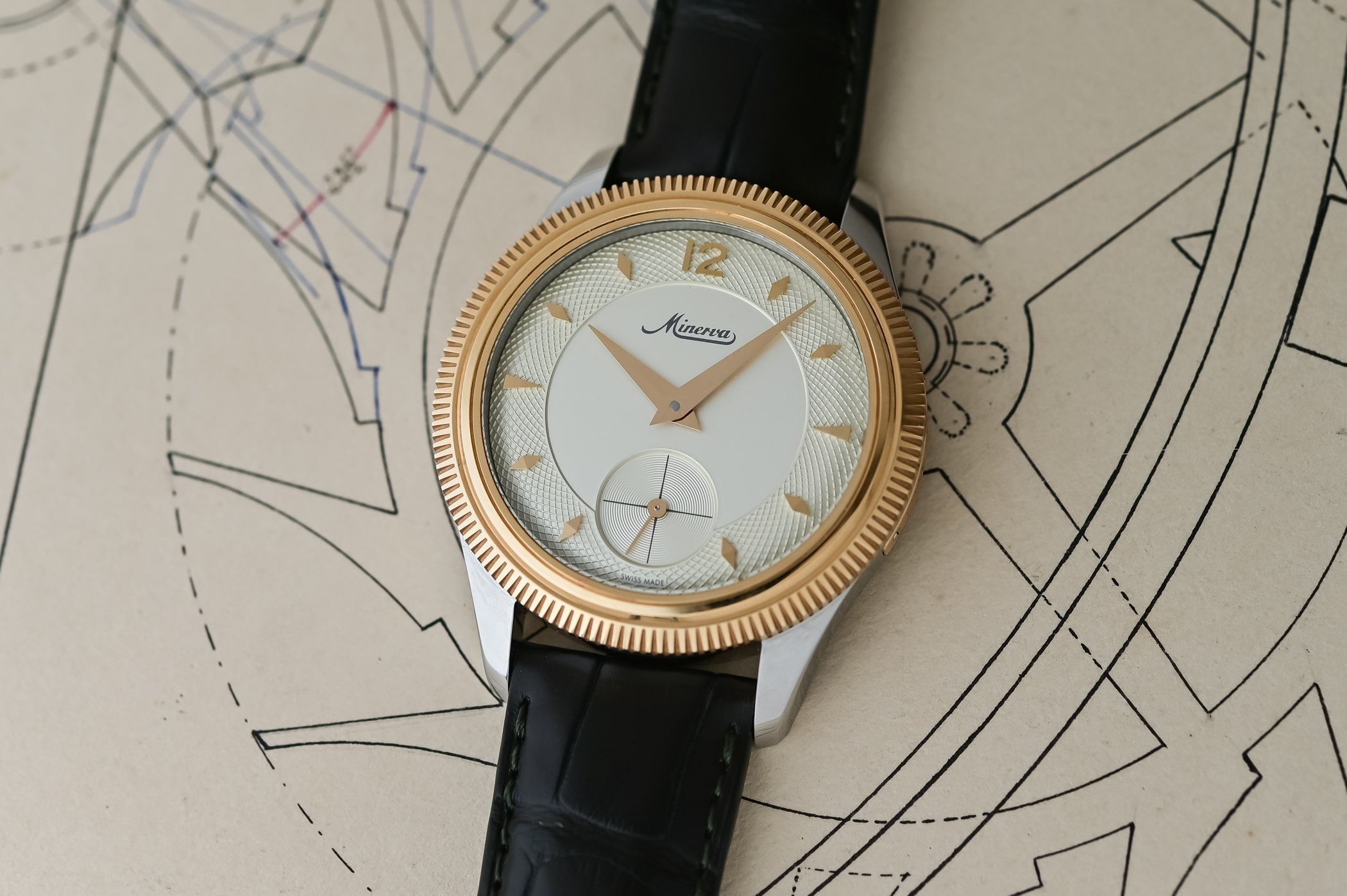
The crown is one of those watch components we rarely think much about. It has been there for well over a century, mainly performing two essential tasks: winding the movement and setting the time. We now have all sorts of crowns, including hidden crowns and even retractable crowns, yet very few have questioned whether any are needed at all. The newly independent Minerva returned to its roots, took cues from one of its lesser-known historical inventions, and introduced The Unveiled Crownless, rethinking one of watchmaking’s simplest controls.
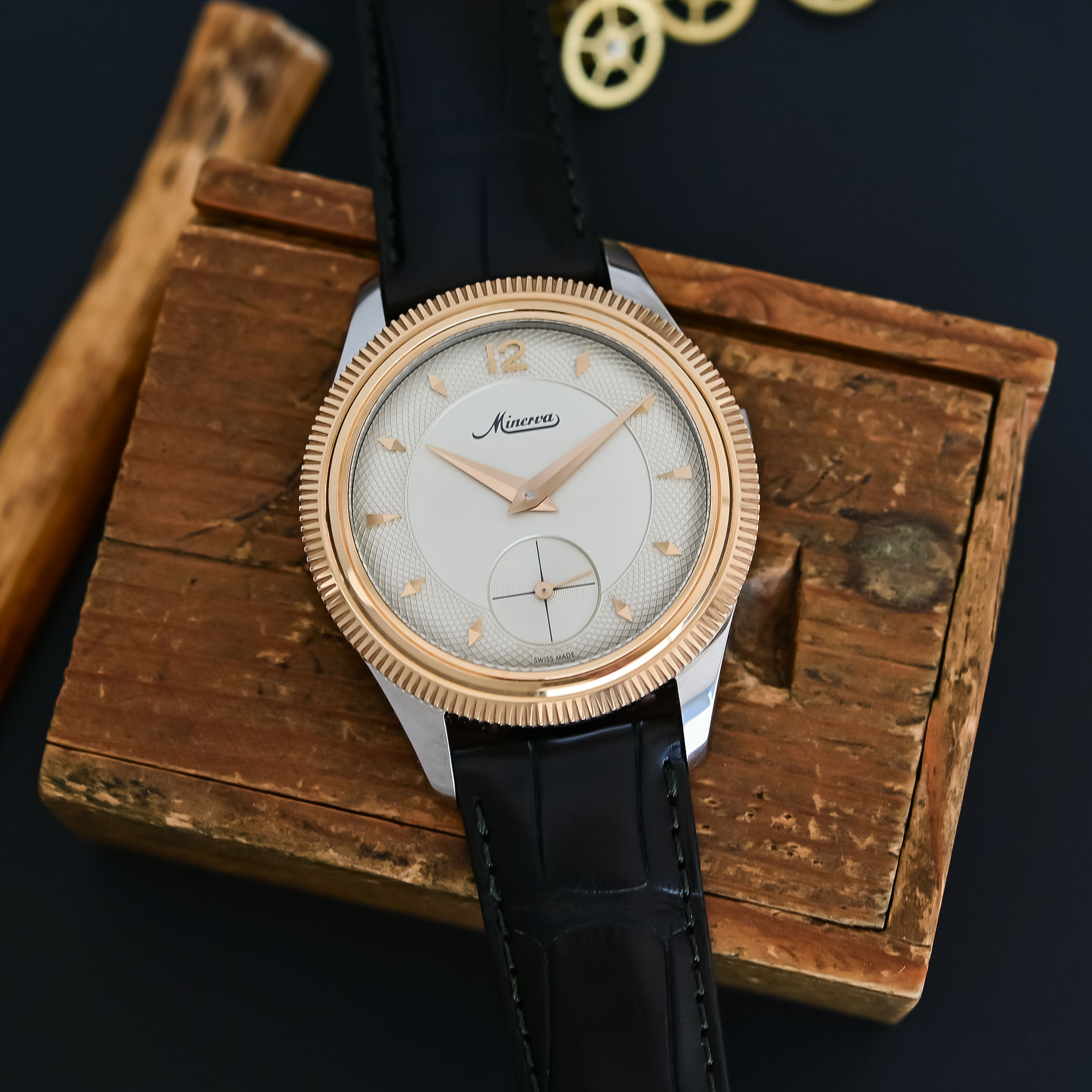
The roots reach back to 1927, when Minerva created a military watch with a bezel-operated timing function. The concept returned with The Unveiled Timekeeper in 2023, whose chronograph was controlled via the bezel. The latest time-only The Unveiled Crownless is another step in the same direction, which feels unusual at first, but surprisingly logical once you spend a little time with it.
The Crownless Case
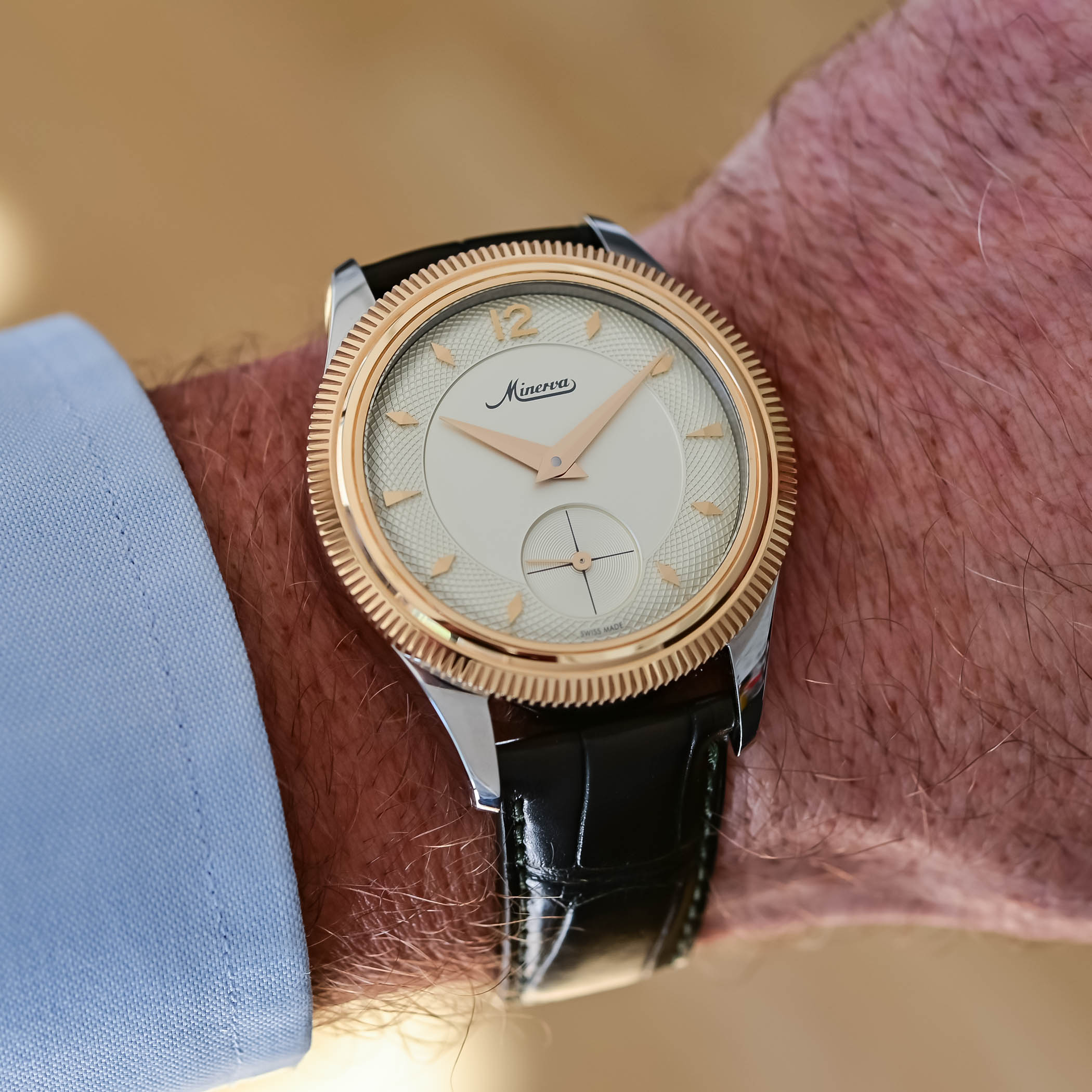
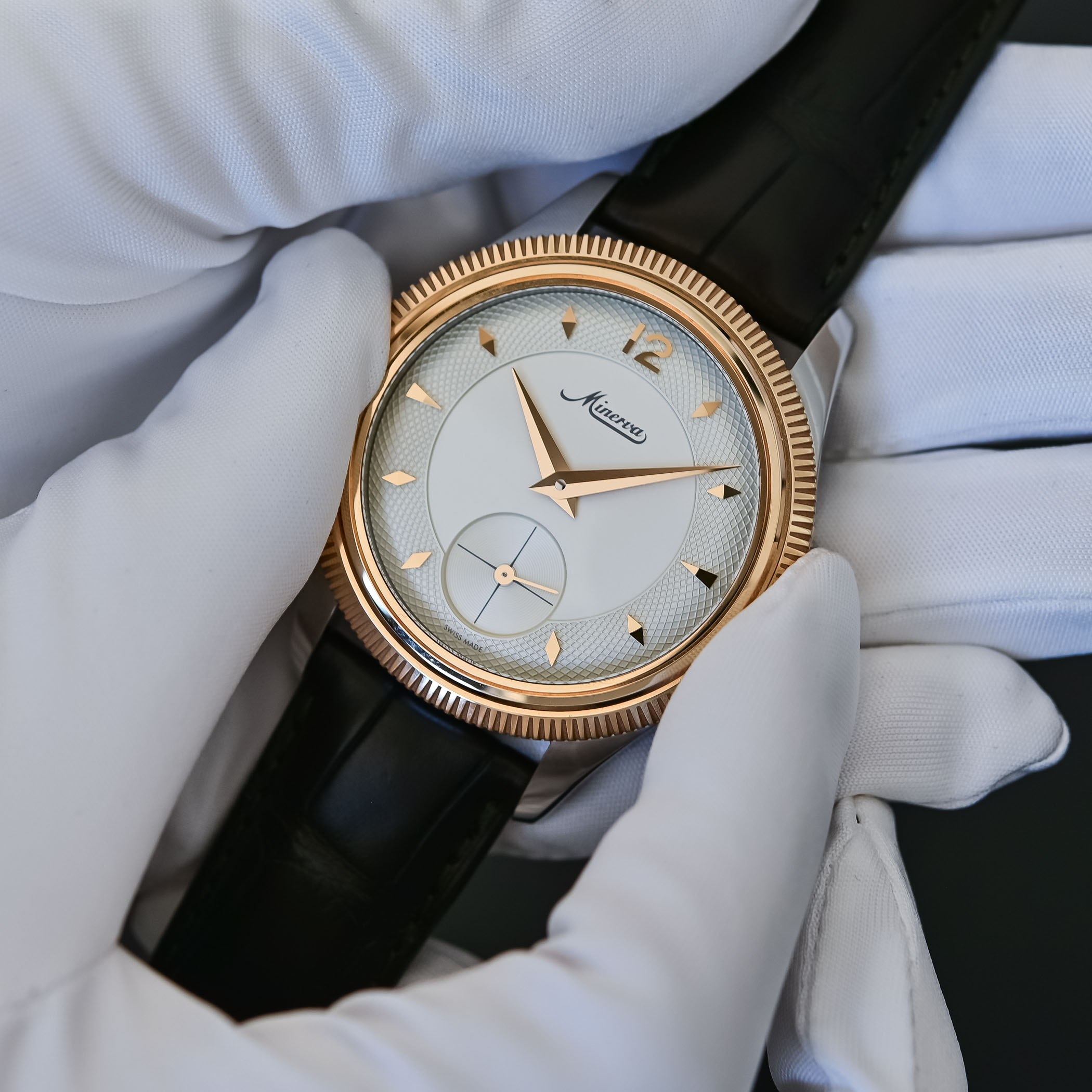
The absence of a crown changes the perception of the watch. Symmetry becomes the main feature. Without any protrusion on the case flank, the polished steel case appears remarkably clean (but also surprisingly odd at first sight), with the warm rose-gold fluted bezel becoming the undisputed focal point. At 41.5mm in diameter and under 12mm thick, this isn’t a vintage-sized dress watch despite its elegant appearance, but the proportions work rather well. The downward-curving lugs help the watch settle naturally on the wrist, while the lack of a crown means nothing digs into the back of your hand. It is one of those details you only appreciate after wearing it. If there was one complaint about The Unveiled Crownless, as well as most recent Minerva watches, that would be the position of the lug holes, which results in the tip of the lug pointing a lot on smaller wrists.
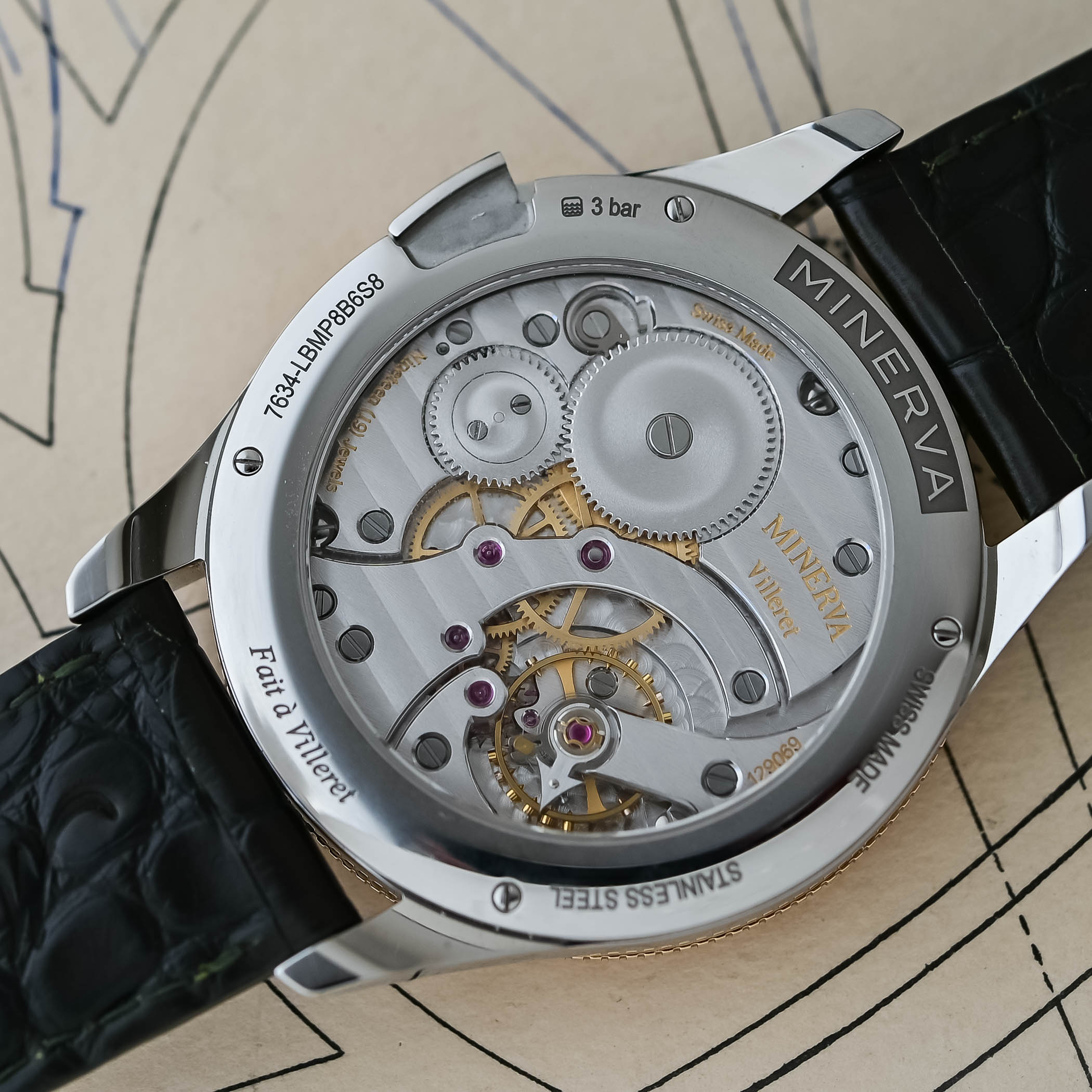
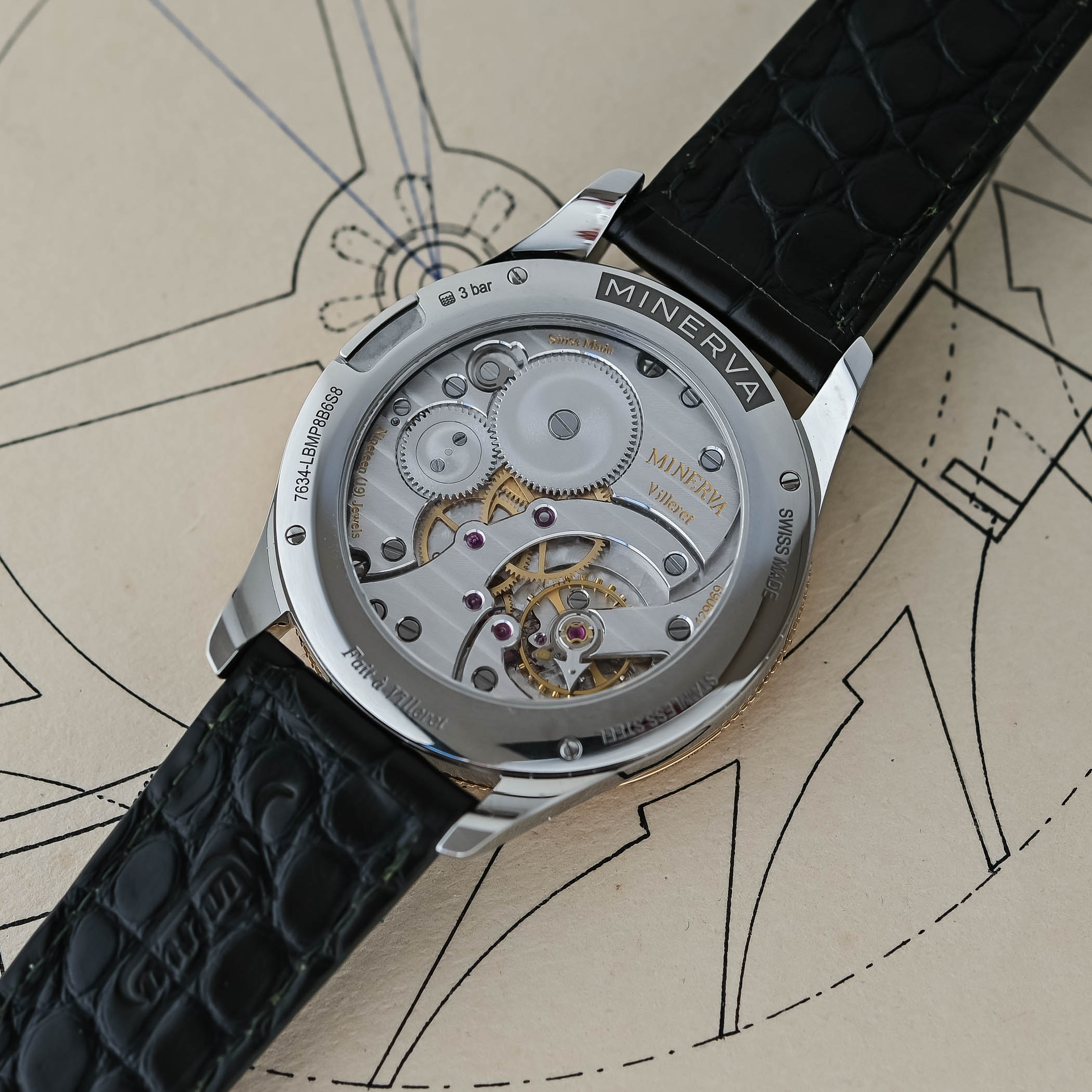
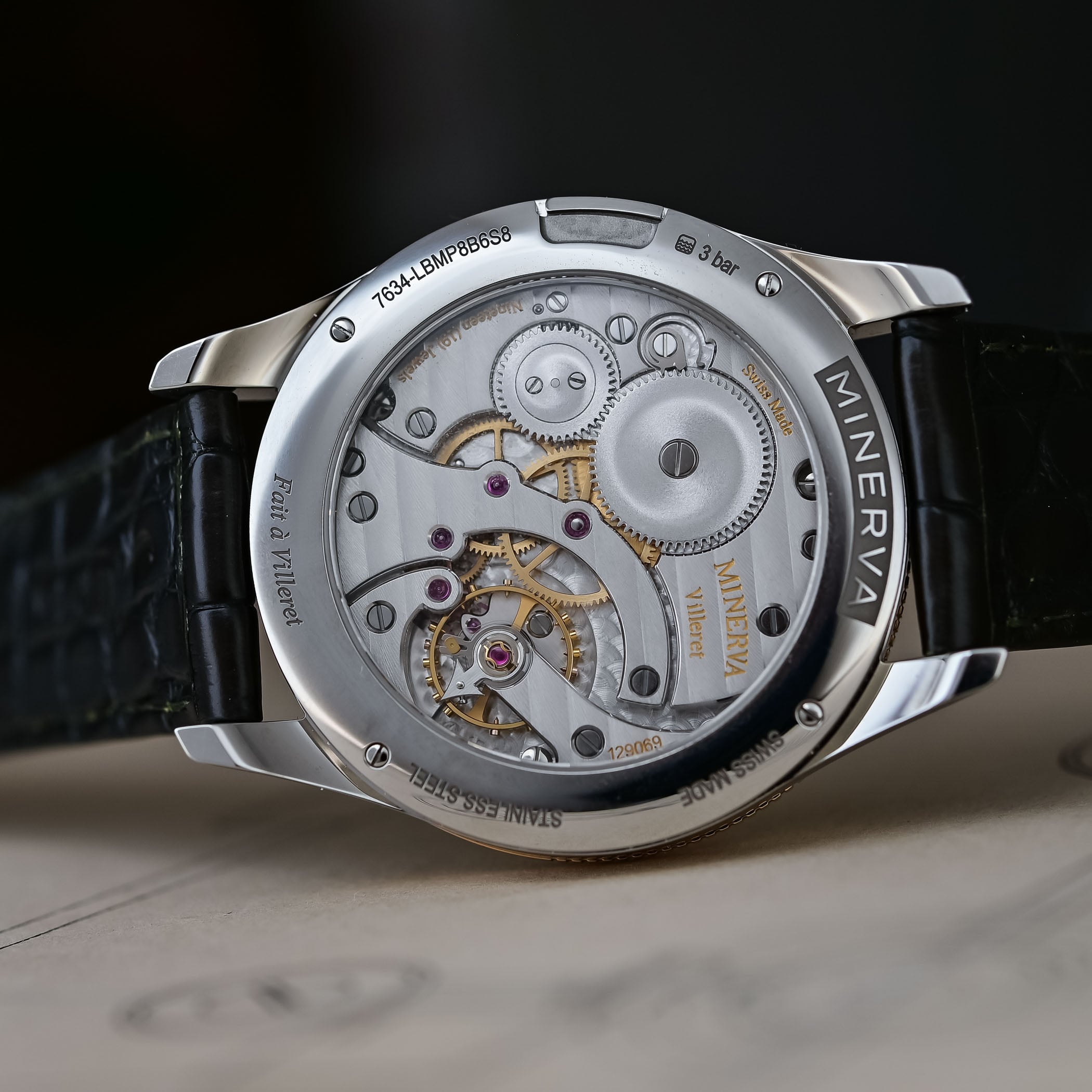
The bidirectional bezel serves as the primary interface with the watch. Hidden discreetly within the caseback is a small lever that changes its function; look for it next to the 3-bar water-resistance engraving. With the lever pushed in, rotating the bezel winds the movement. Pull it out, and the bezel switches to time-setting mode. It’s an elegant solution that works. The action feels precise and deliberate, and after only a few attempts, operating the watch becomes second nature. It is different, certainly, but not at all complicated.
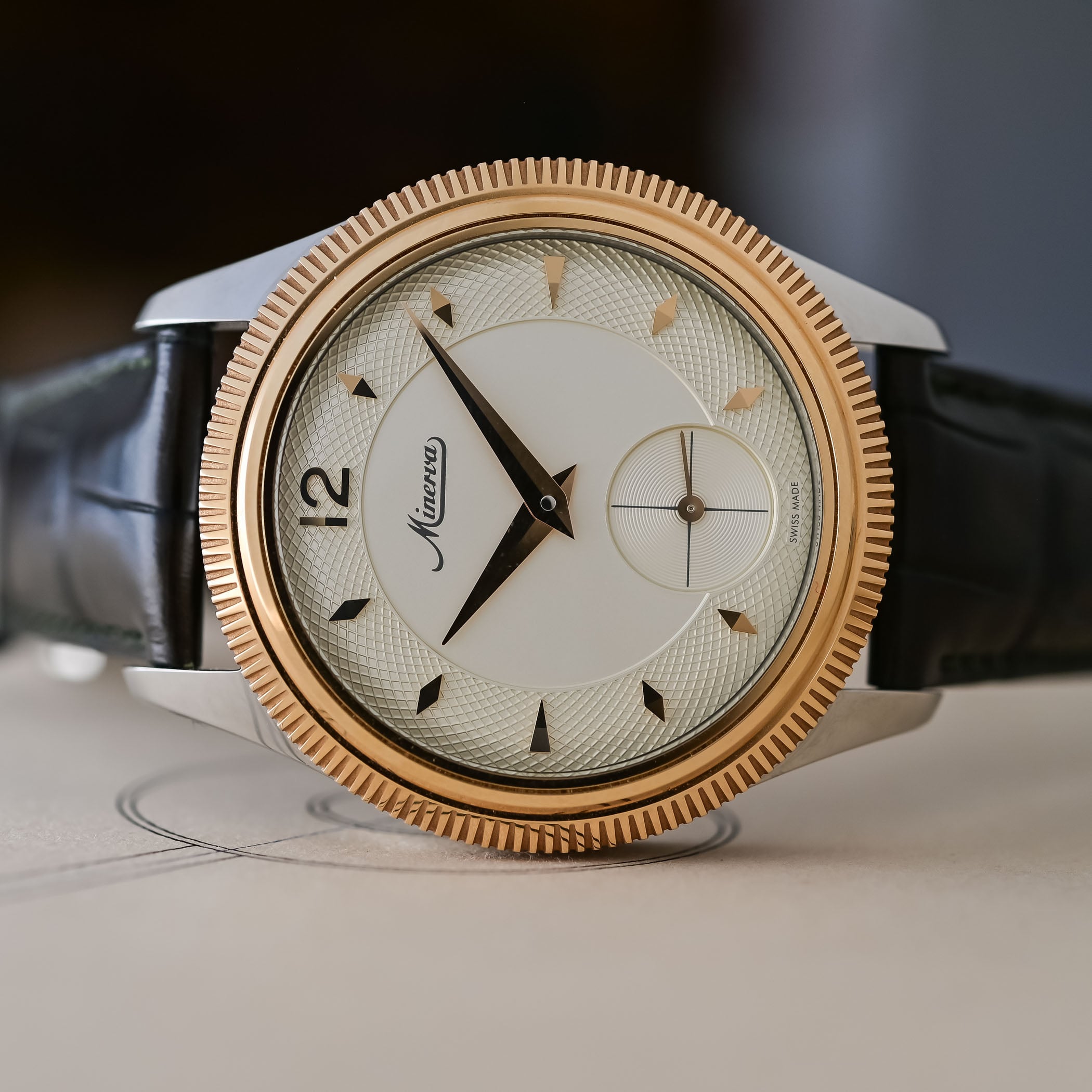
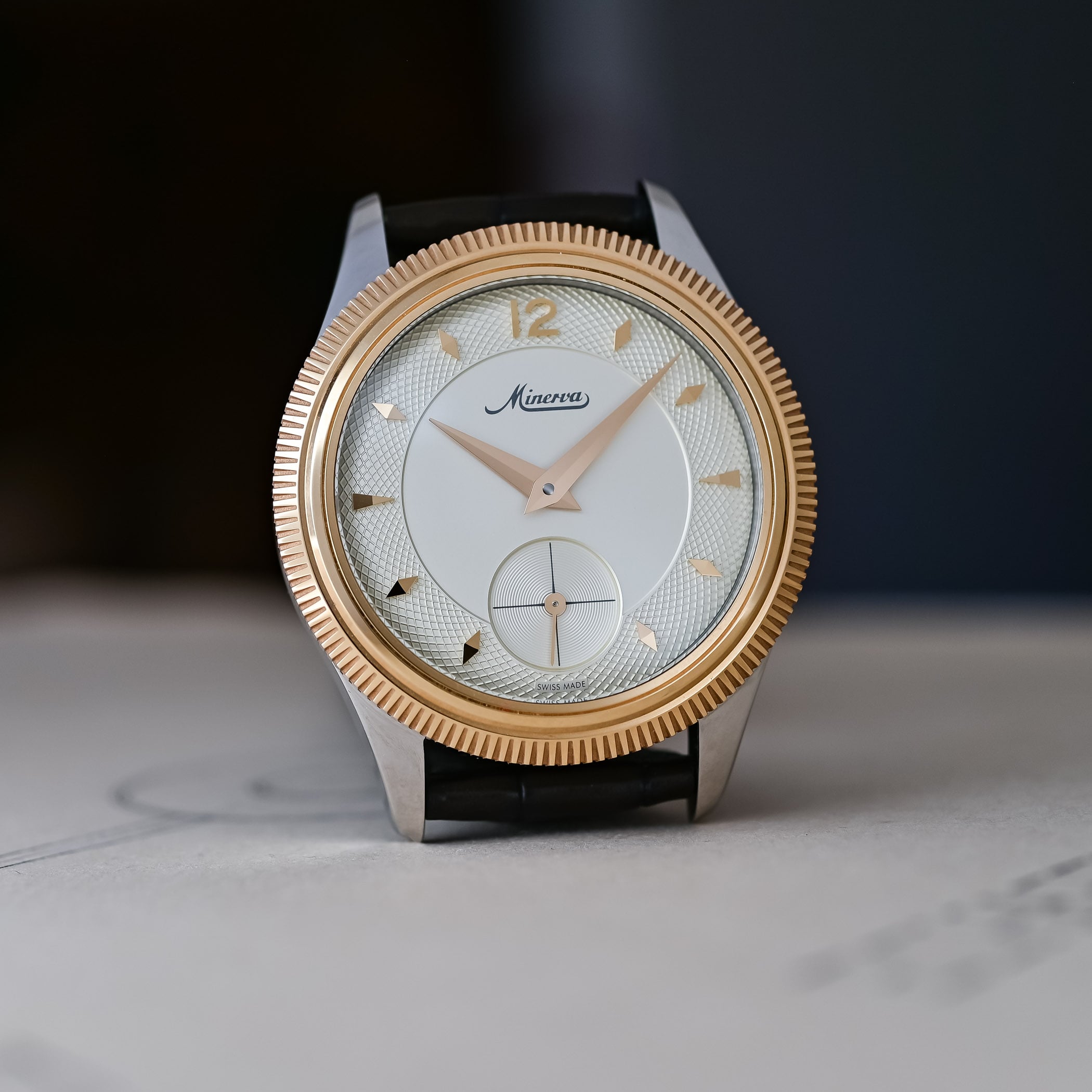
On the left side of the case, a discreet rose-gold plaque engraved with “Depuis 1858” serves as a reminder of Minerva’s heritage. The dial is protected by a domed box-shaped sapphire crystal with double anti-reflective coating, while the sapphire caseback offers a view of the movement.

A Classical Dial
If the case explores new territory, the dial remains quite traditional and draws just as much attention as the bezel. Its design borrows heavily from Minerva watches of the 1950s, combining an opaline centre with a finely guilloché outer ring. The warm ivory tone gives the watch considerable charm, with the textures catching the light subtly rather than dramatically.
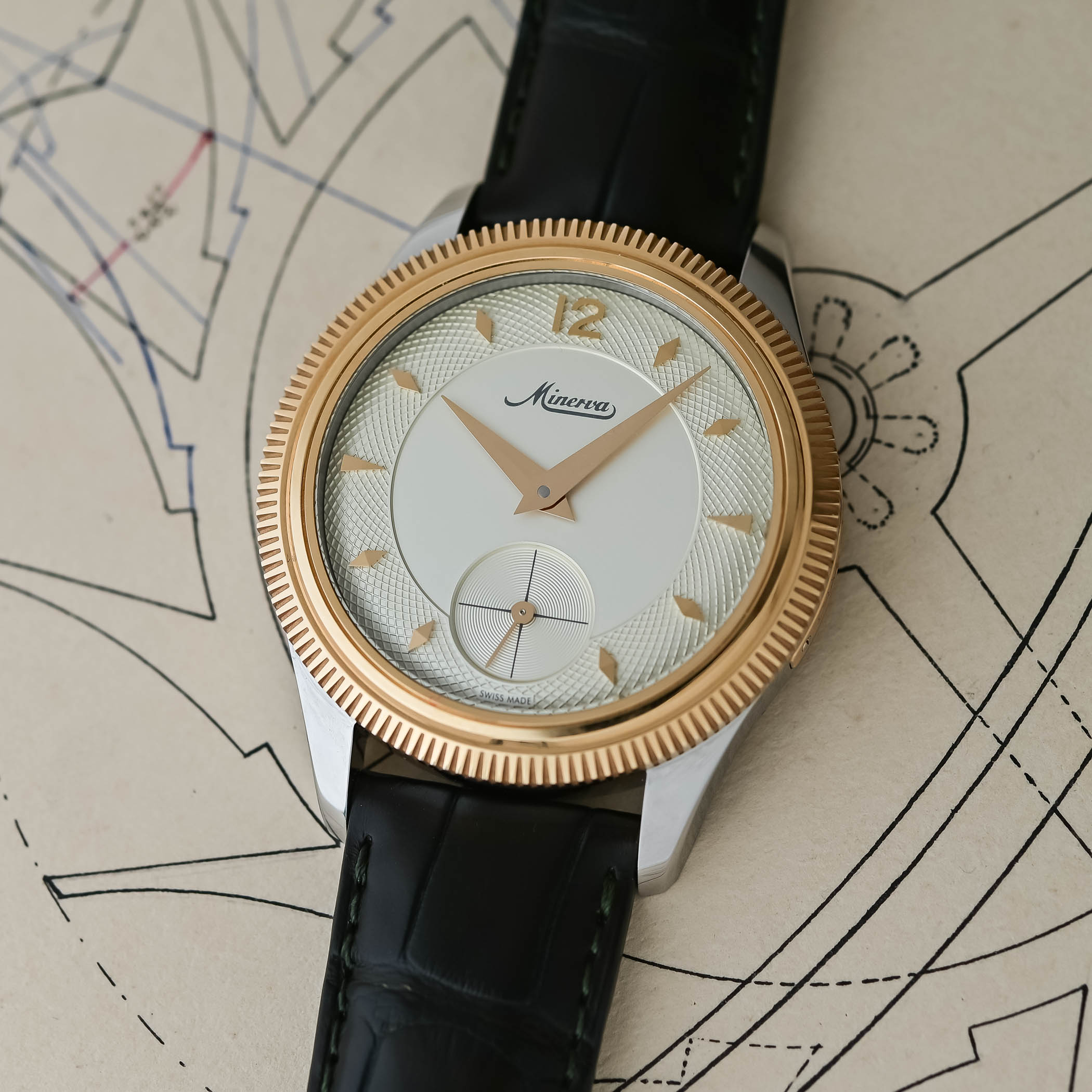
Applied faceted hour markers, mostly rhomboid-shaped, with triangular markers at 3 and 9 o’clock, surround the dial, interrupted by the large applied Arabic numeral at twelve. Matching rose gold-coated dauphine hands add to the classical character, while the recessed small-seconds display at six provides nice visual balance. The dial feels refined, restrained and appropriately elegant. Combined with the perfectly symmetrical crownless case, it creates a watch that looks both familiar and genuinely unconventional.
A New Movement for a New Concept
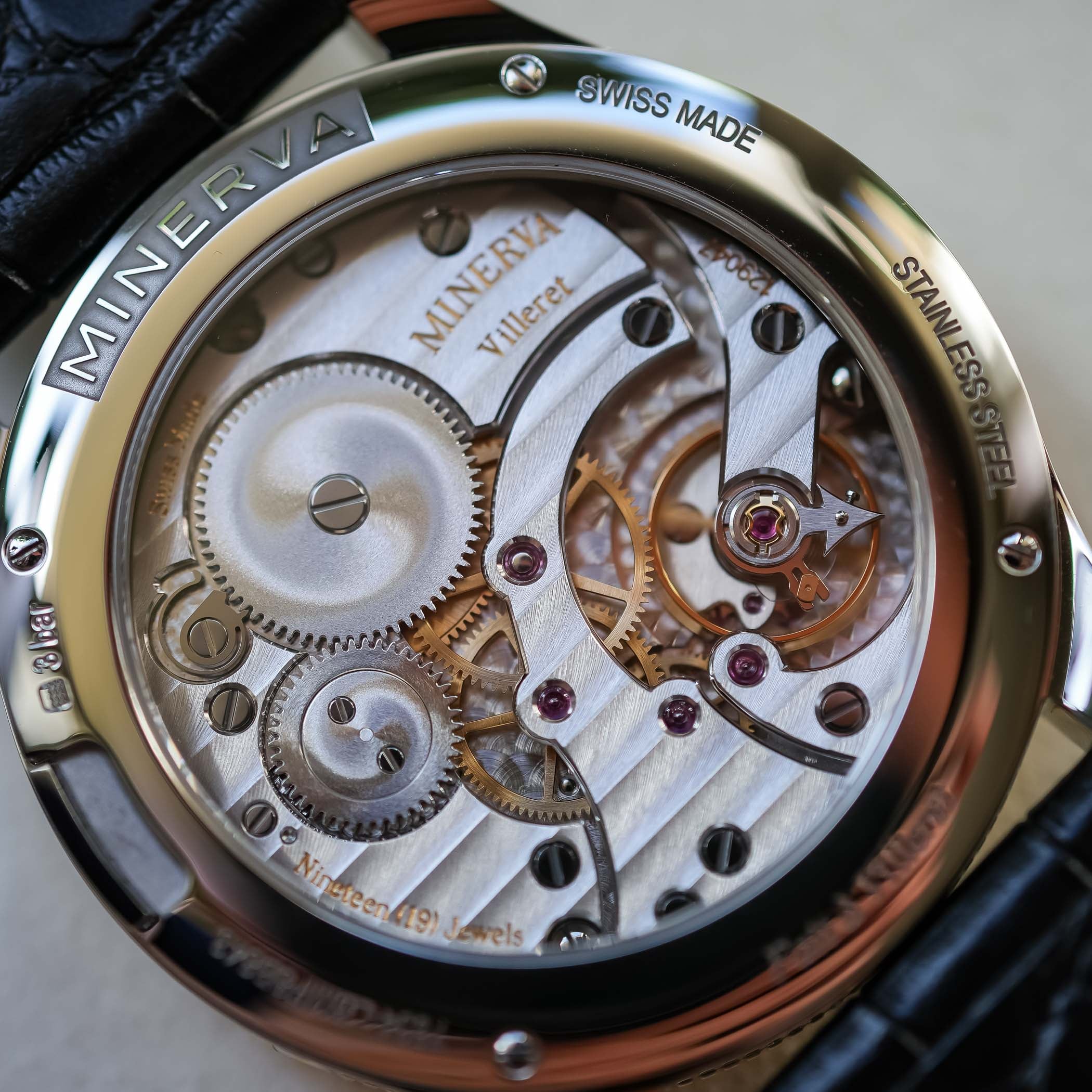
Removing the crown required more than clever case engineering. It demanded a new movement. The manufacture calibre M15.08 was developed for the Crownless and is produced entirely in Minerva’s Villeret workshops, yet shares its base with the 1858 Geosphere Annual Calendar, as well as the historic Pythagore calibre 10-48, one of Minerva’s distinguished movements, created in 1943 by André Frey. The manually wound movement beats at 18,000 vibrations per hour, a frequency long associated with classic Minerva calibres. A generously sized mainspring delivers an impressive 80-hour power reserve. Visible through the sapphire caseback, the rhodium-plated German silver bridges feature Geneva stripes, polished bevels and circular graining, while the large free-sprung balance dominates the view. Note the arrow-shaped regulator and beautifully proportioned bridges.
Living Without a Crown
After a few hours on the wrist, the most interesting aspect of the Unveiled Crownless is how quickly the missing crown disappears from your thoughts. The bezel proves to be an intuitive control system. Winding the movement feels surprisingly engaging, arguably even more satisfying than using a conventional crown, while setting the time is equally straightforward. There is something special about interacting with the watch in a completely different way without sacrificing practicality.
Of course, the Crownless is a niche proposition. Nobody has been asking for crownless watches, just as nobody thought mechanical sunrise-and-sunset displays or resonance mechanisms were important before someone built them. Yet this willingness to question long-established conventions is what independent high-end watchmaking is often about.
Thoughts and Price
The Unveiled Crownless reconsiders one of the most familiar interactions we have with a mechanical watch and offers an elegant alternative that feels natural. Add a beautifully executed classical dial, a newly developed hand-finished manufacture movement, and the exceptional quality long associated with Villeret. You have a genuinely original watch, which is impressive without trying too hard to impress.
The Minerva Unveiled Crownless is priced at EUR 39,000. More details at montblanc.com. No, even though a stand-alone brand as of this year, Minerva doesn’t have a dedicated web page yet.

4 responses
Nice watch, I thought. Then saw the price, just totally crazy.
Interesting. Attractive. Way overpriced.
I genuinely like the idea. Using the bezel to wind and set the watch is clever, intuitive and far more interesting than another decorative complication.
The execution is beautiful too, especially the movement and the symmetry of the crownless case. I just wish Minerva had shown a little more restraint: at 41.5mm and €39,000, a charming mechanical curiosity becomes rather a serious proposition.
41.5mm…..