
 Not all images were able to load for printing. Please close the print window and try again.
 L.Leroy Osmior Bal du Temps, Sounding the Return of a Famed Name
A 240-year-old Parisian name returns with sound and soul, to prove that French watchmaking tradition still has poetry to offer.
If I had to describe the return of L.Leroy, once one of France’s most illustrious watchmaking houses, with its name respected as much as those of Breguet and Ferdinand Berthoud, it was very theatrical. Founded in 1785 by Charles Leroy in Paris, it became famous for its marine chronometers, regulator clocks, and commissions for European royalty; Leroy timepieces accompanied explorers and adorned courts. Like many watchmaking brands, it lay dormant for decades. Acquired by the Festina Group in 2004, L.Leroy quietly began rebuilding its legacy and preparing for a triumphant return to the stage. After a short reappearance with a Minute Repeater Flying Tourbillon for Only Watch 2023, L.Leroy returned in earnest with the Osmior Bal du Temps.
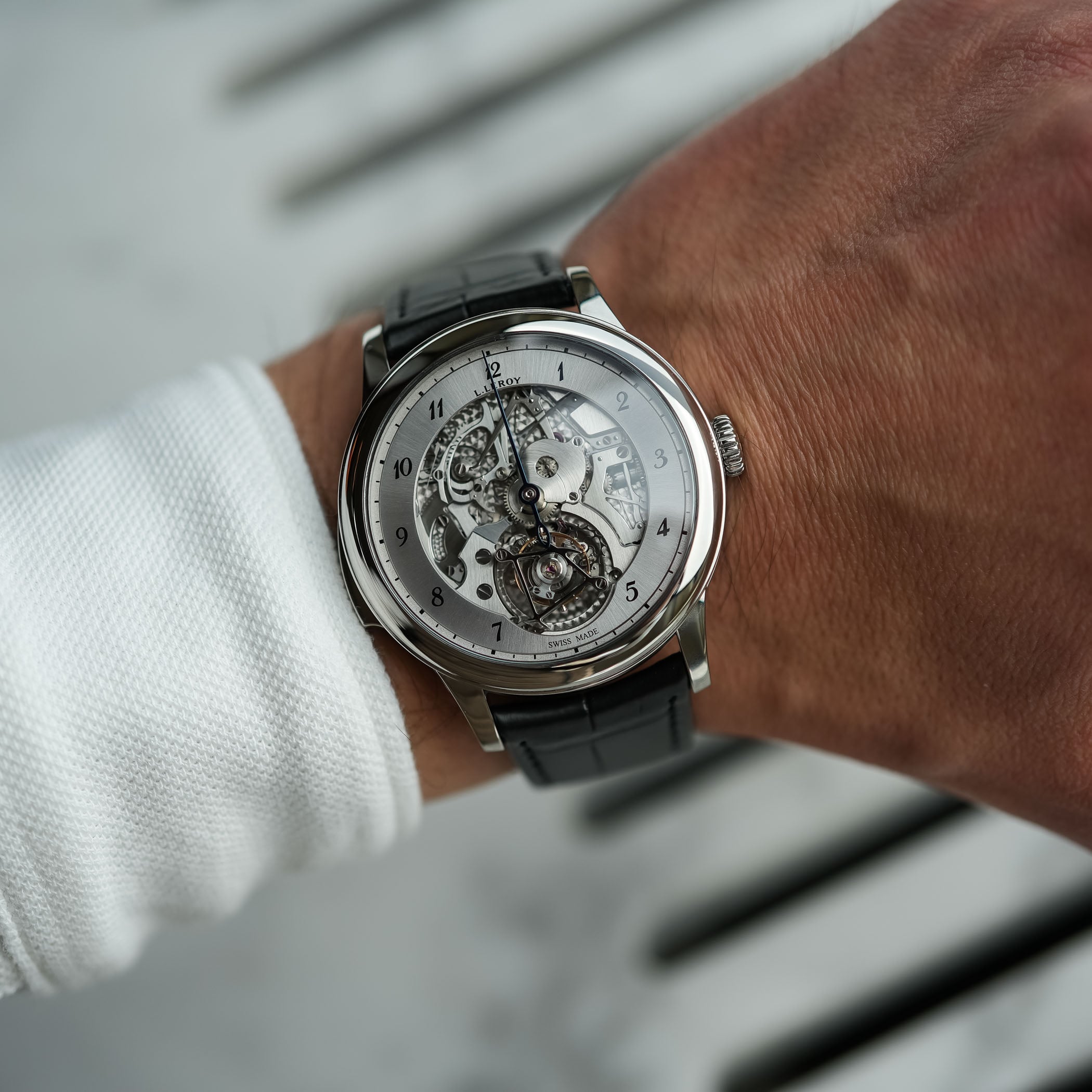
The Dance of Time
The name Bal du Temps (“The Ball of Time”) was chosen to recall the soirées of Louis XVI’s court, where the rhythm of music and dance also measured the passage of time. The same lyrical spirit lives in a minute repeater that transforms the hours into a melody. After all, it’s a watch that tells time through performance.
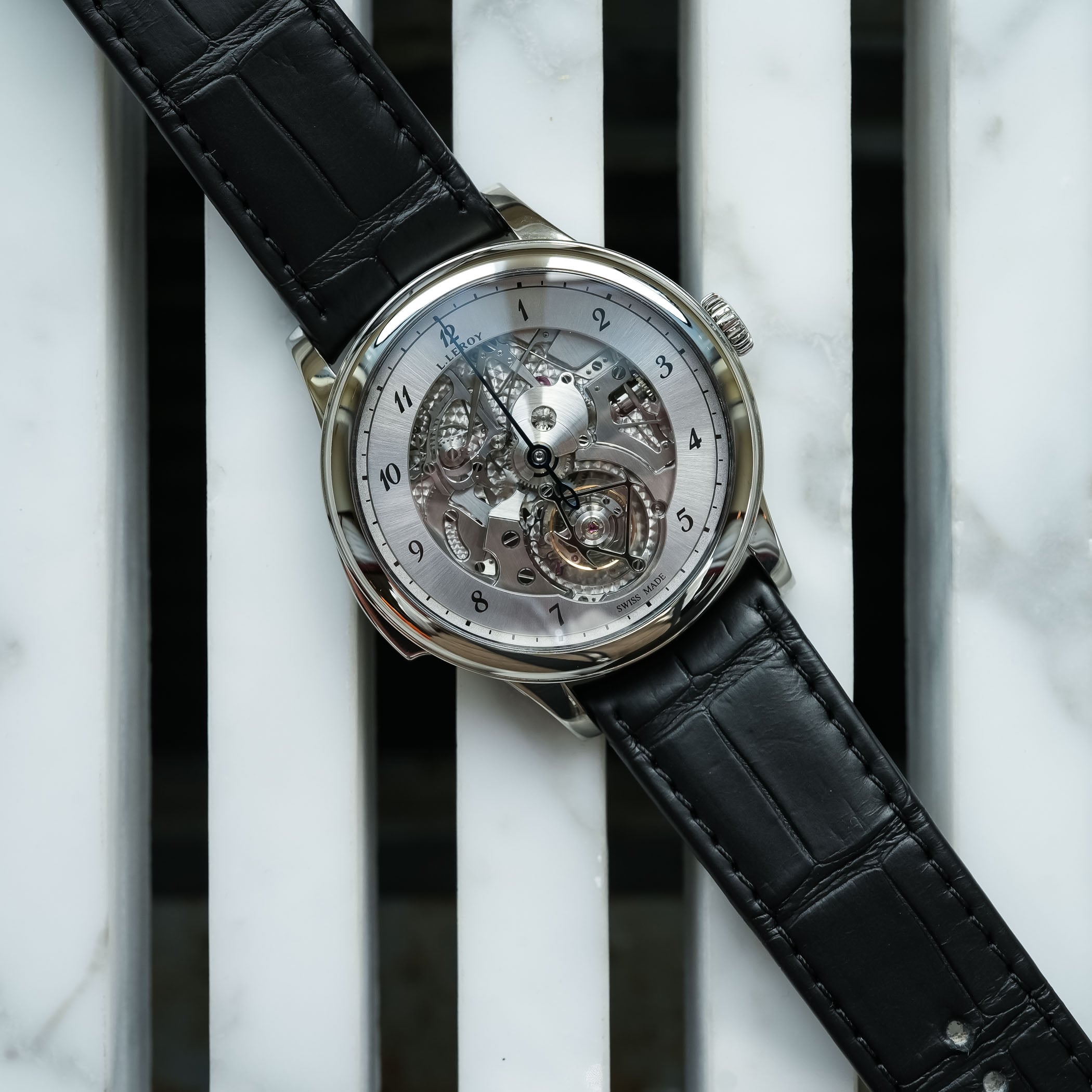
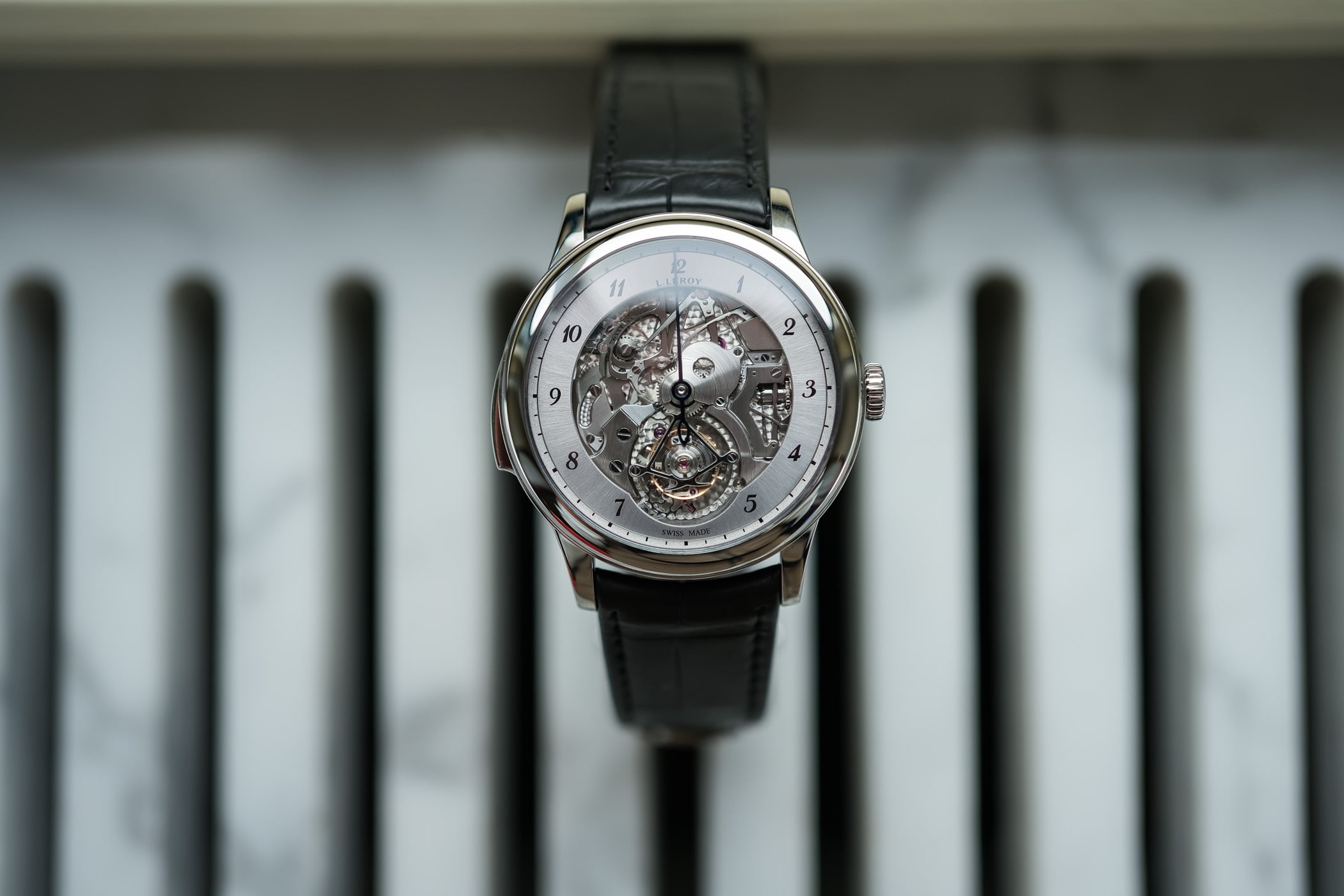
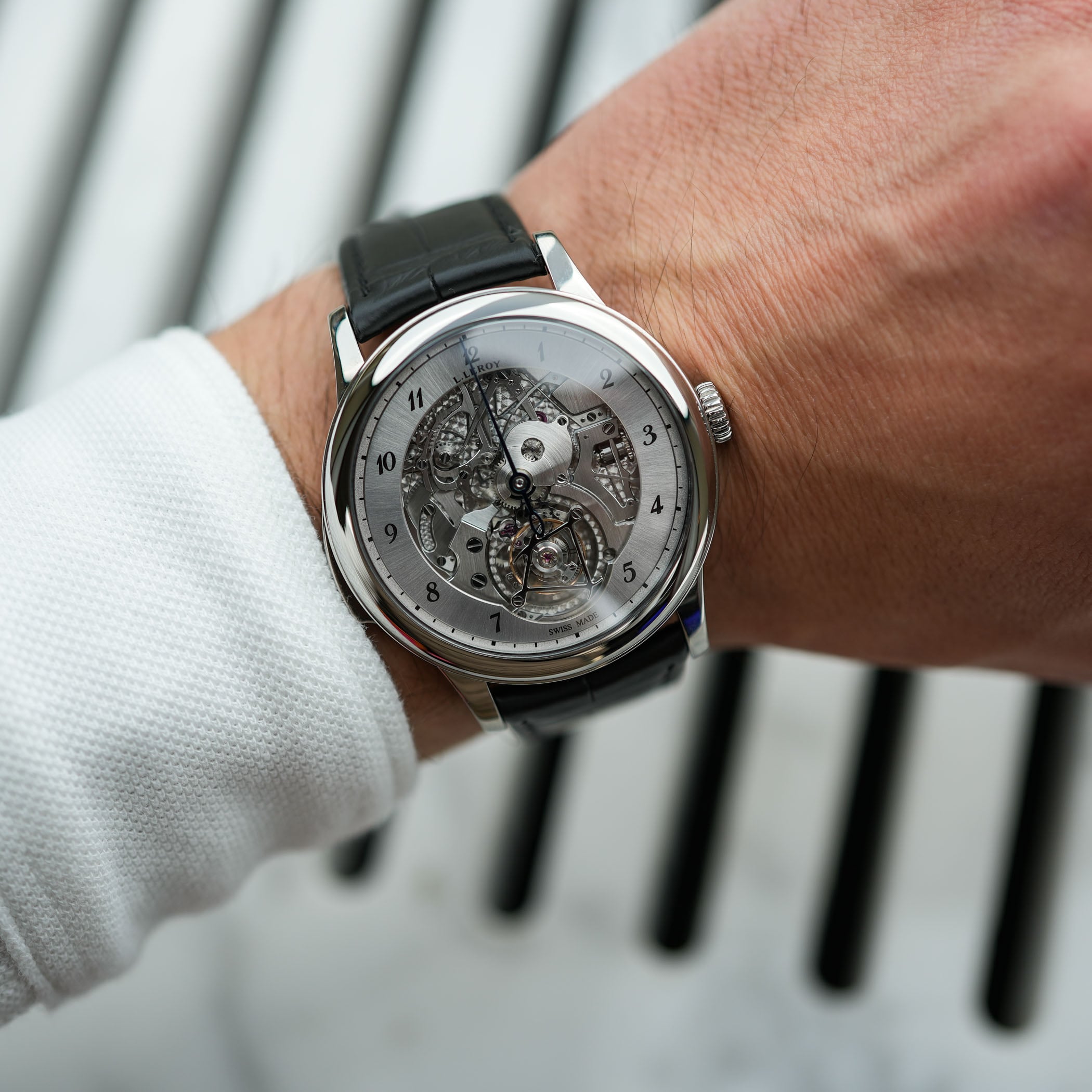
The Bal du Temps revisits the past Osmior collection’s “tambour” profile; it measures 43mm in diameter and 13.8mm in height (11.8mm without the crystal); generous proportions, nonetheless harmonious, especially given the complexity inside. The case is round, with a domed bezel, a recessed midsection, and gently flared lugs. Available in red gold, platinum, or grade 5 titanium (pictured), the Bal du Temps expresses various personalities, each distinguished by its dial tones: choose classical warmth, stately coolness, or modern lightness.
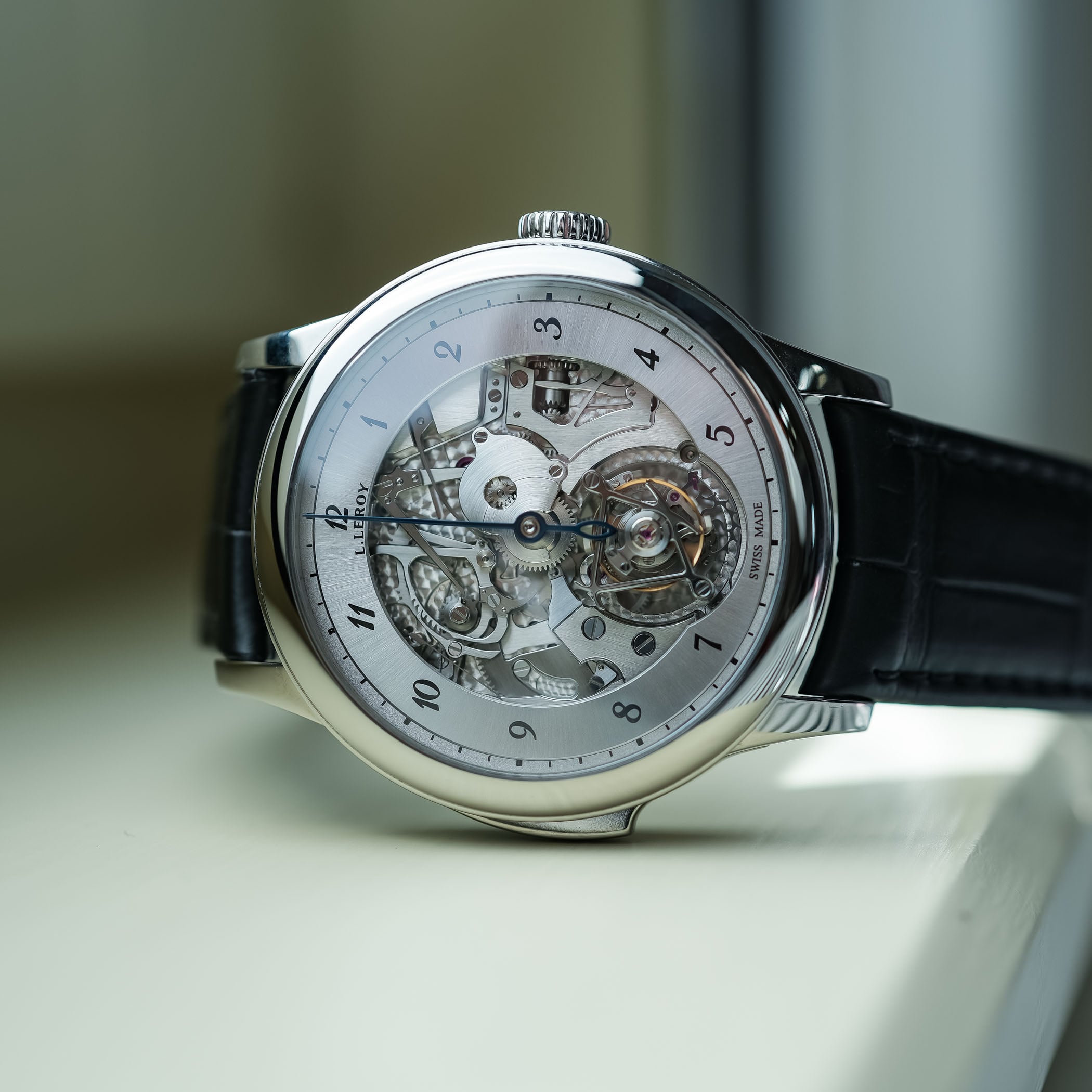
Upon close inspection, the case is alive with contrasts and offers details to admire. Surface finishes alternate between polished and satin; the engraved double-L crown and the repeater slide at 9 o’clock sit close to a shiny base. The caseback features frosted relief engravings, polished borders, and a sapphire window revealing the movement. Water resistance is 30m.
A Dial of Light and Movement
L.Leroy decided to open the dial almost entirely. To continue theatrical references, the watch’s minute repeater and flying tourbillon are revealed like performers on a stage. Time is indicated by a single central hour hand, a nod to the Maison’s historic “à tact” watches, such as the one created around 1810 for Prince Emil Maximilian Leopold of Hesse. The minutes are not seen but heard, chimed by the repeater when the side slide is activated: a ceremony introduced to something as simple as checking the time.
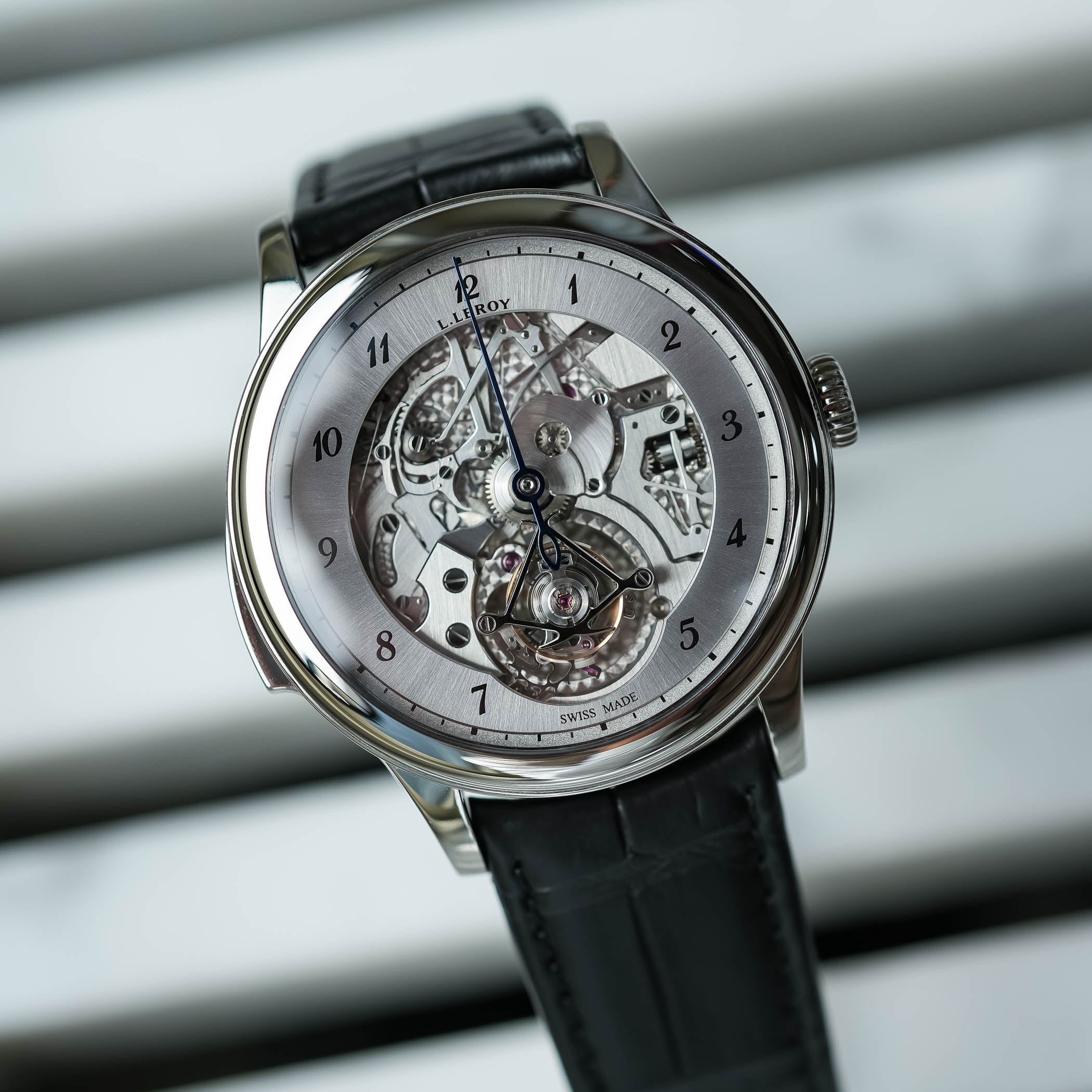
The hour ring, finished in a delicate sunray pattern, is colour-coordinated with its case. In red gold, it’s anthracite with gilt numerals and a gold-plated hand. In platinum, it’s ALD-treated light blue with white numerals and a rhodium-plated hand. In titanium, it’s rhodium silver with black numerals and a blue hand.
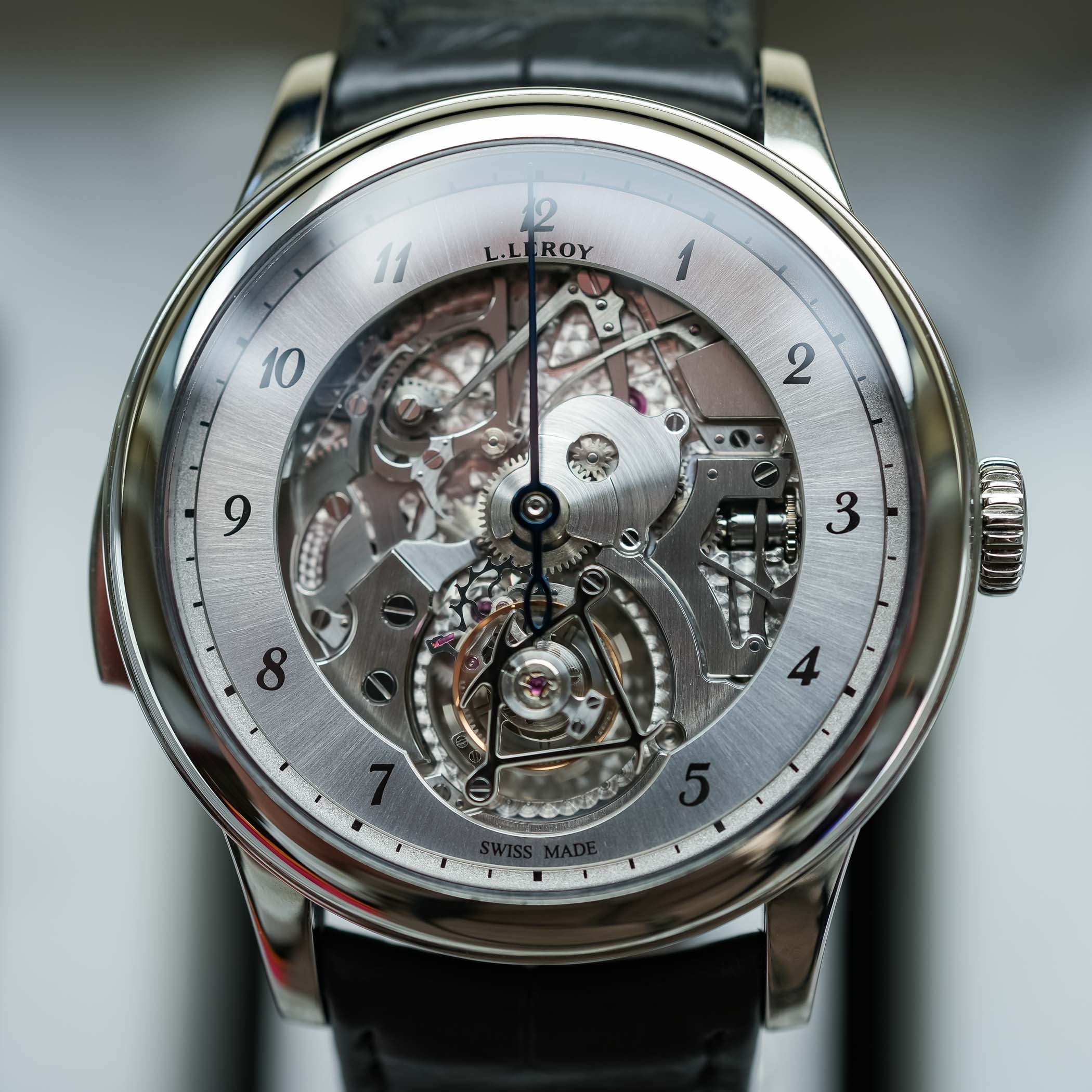
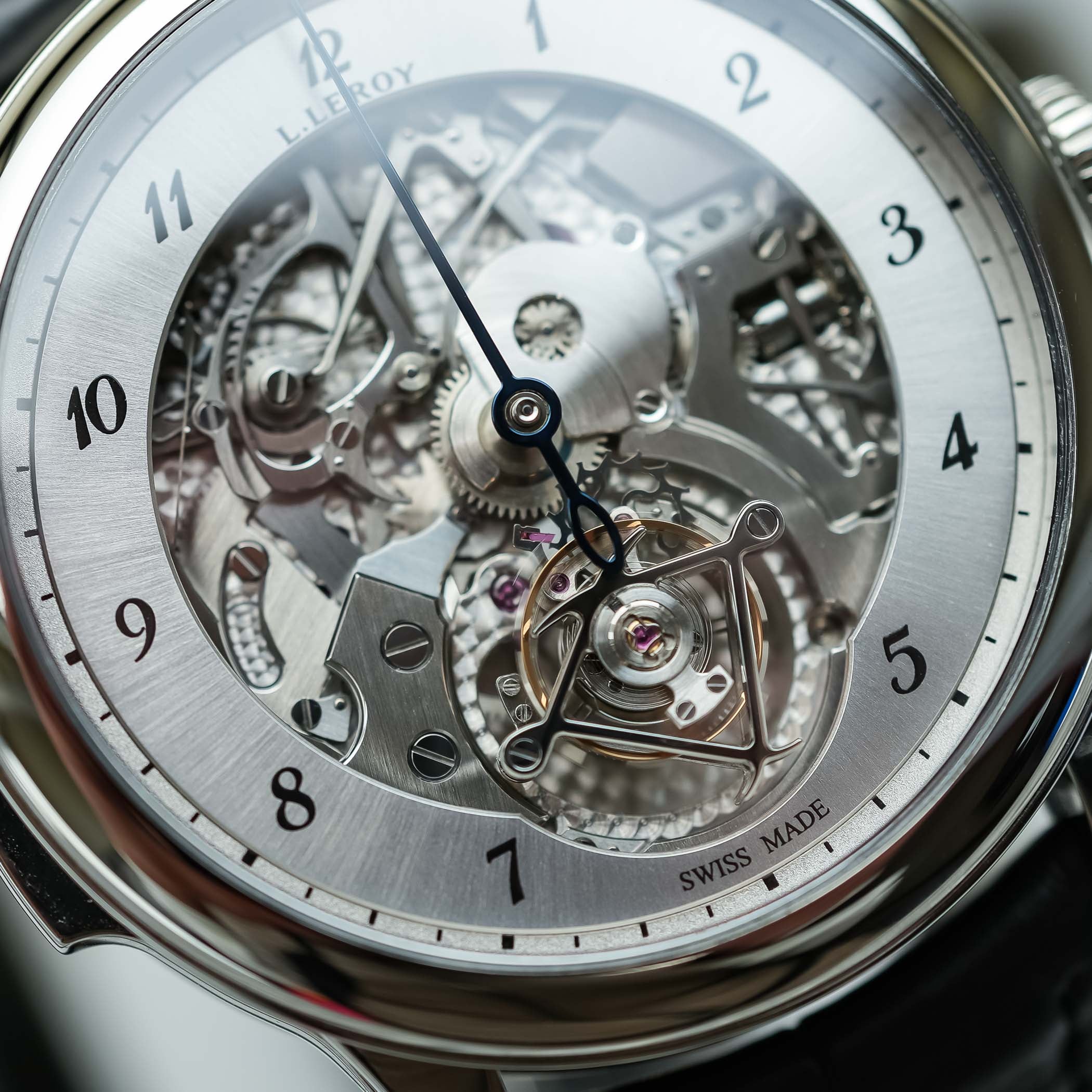
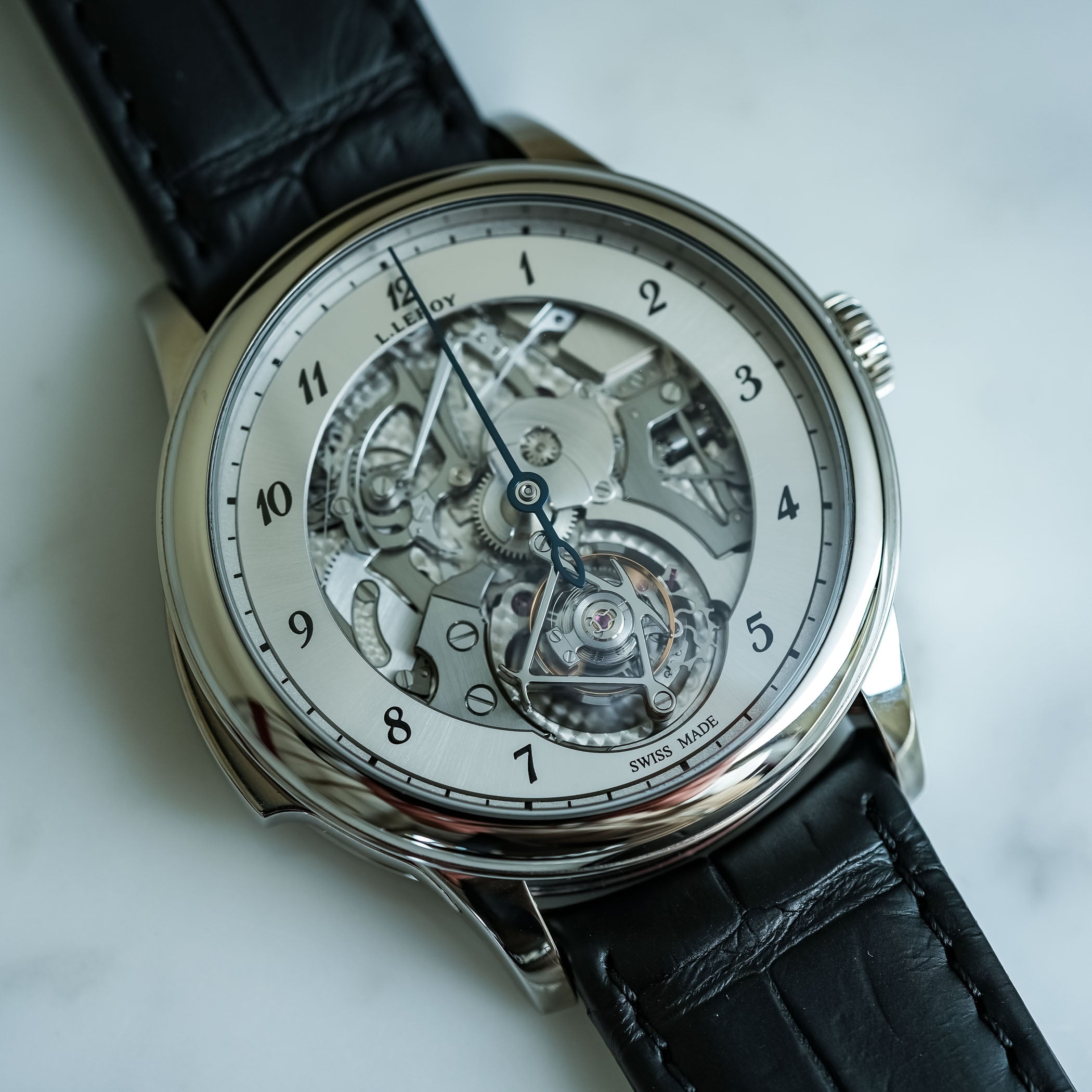
As mentioned, each version captures a different emotional tone, from formal and regal to quietly contemporary. The flying tourbillon at six o’clock, rotating once per minute, is suspended beneath a polished titanium bridge shaped into the interlaced double-L monogram. Its slow motion contrasts with the static geometry of the bridges and levers surrounding it.
The Soul of Craft
The Osmior Bal du Temps is powered by calibre L601SQ, a hand-wound movement built exclusively for L.Leroy in Geneva; the maker´s name is unfortunately kept secret. Comprising 321 components and 29 jewels, it runs at 21,600 vibrations/hour and offers a good 90-hour power reserve from a single barrel.
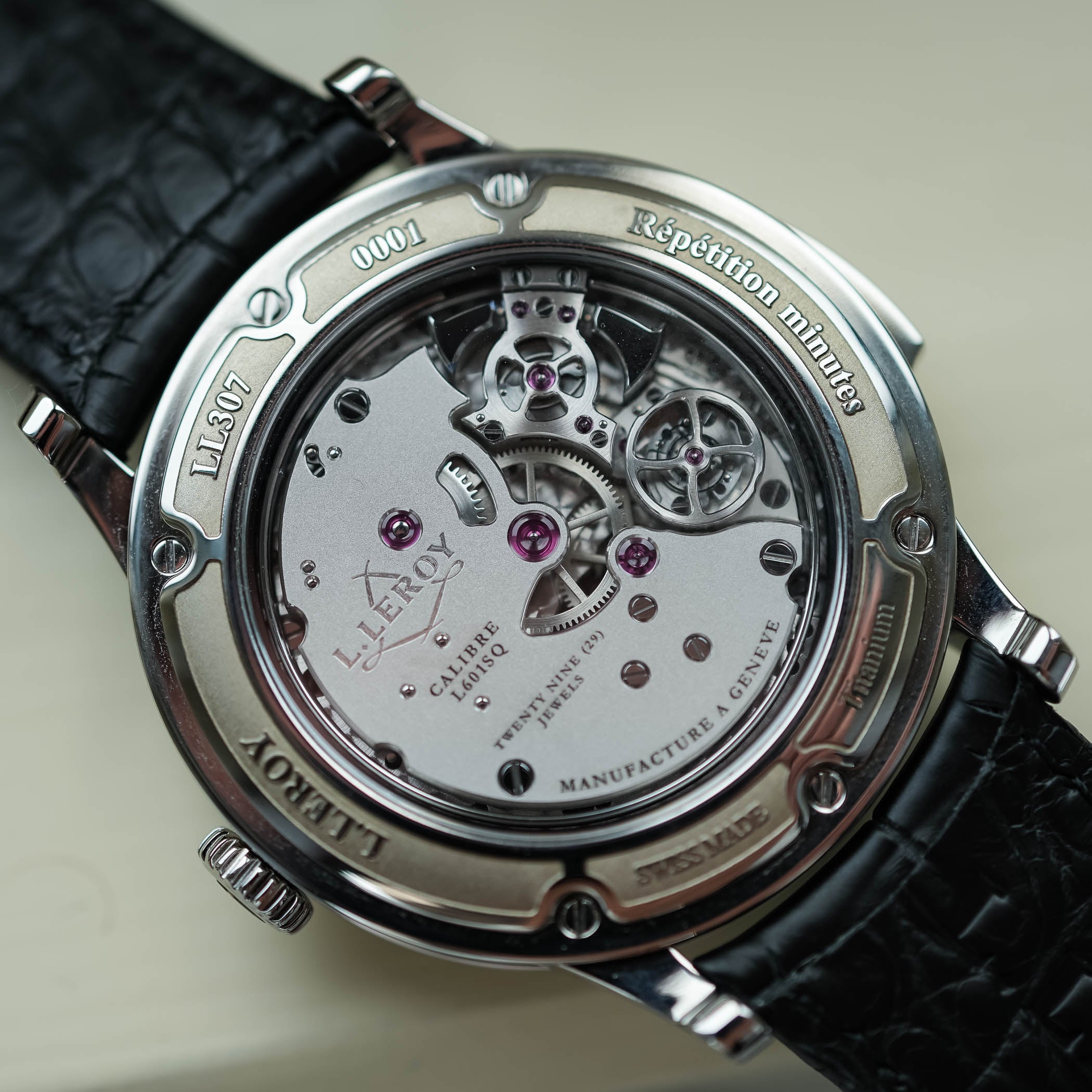
The minute repeater is tuned like a musical instrument, its two circular gongs struck by mirror-polished hammers, visible through the sapphire caseback. The sound is pure, distinct, and harmonised, with hours, quarters, and minutes each chimed in different tones. The case material slightly influences the resonance, meaning each version (gold, platinum, or titanium) carries its own acoustic signature.
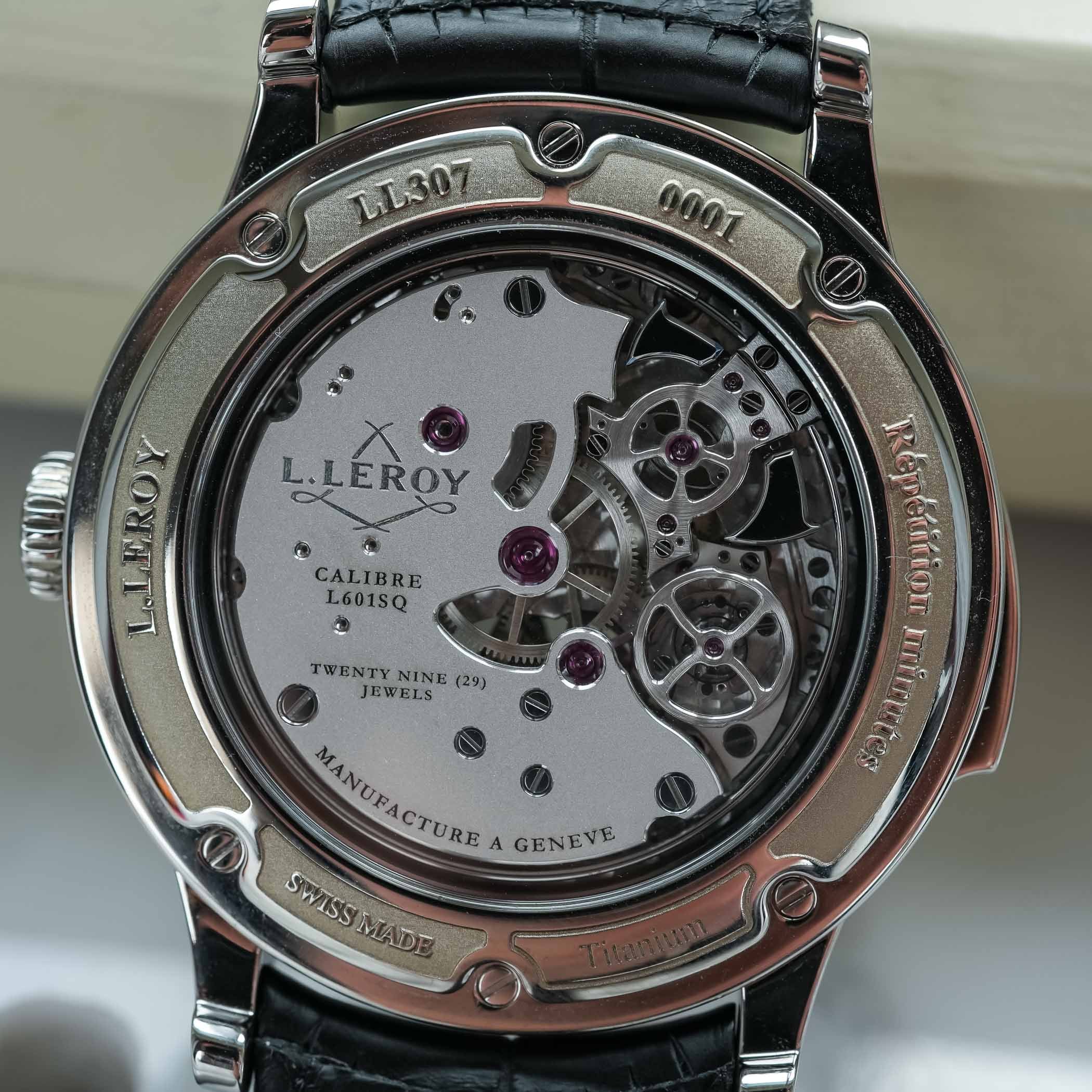
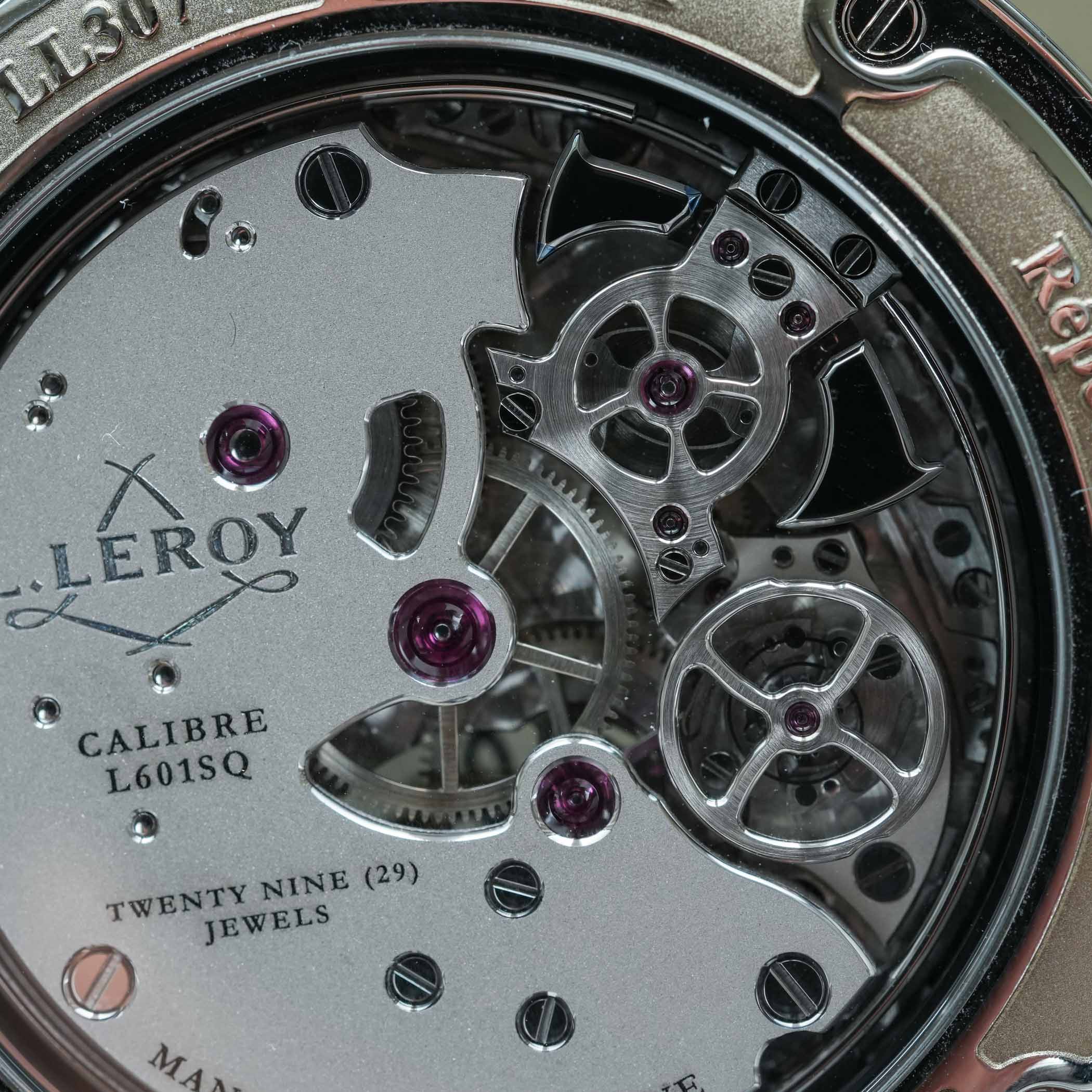
The flying tourbillon, composed of 76 parts, adds a visual counterpoint to the music. Its 13.6mm cage, anchored only from below, appears to float within the dial. The movement finishing is exemplary: a rhodium-plated single bridge with a frosted surface, hand-bevelled edges, and polished countersinks. The same approach is evident from the dialside: satin and mirror-polished levers, circular-grained plates, and polished screw heads. It’s not flamboyant but nicely refined, the kind of craftsmanship that invites and (rewards) patient observation.
On the Wrist
Despite its grandeur, the Bal du Temps wears comfortably. The black alligator leather strap (large scales on top, small scales inside) tapers towards a folding clasp that echoes the double-L logo. The 43mm size, tempered by the lugs’ curvature, wears smaller than one might expect. The tactile experience is every bit as refined as the audible one.
Availability and Price
As expected, with such a complicated movement, production of the L.Leroy Osmior Bal du Temps is limited. Prices are on request, but given the materials, finishing, and dual complications, expect them to reside firmly in the upper echelons, EUR 200,000 – 300,000.
For more information, please visit www.montres-leroy.com.