


 Not all images were able to load for printing. Please close the print window and try again.
 The new, Surprisingly Modern Patek Philippe Celestial 6105G
The first watch with sunset and sunrise indication, coping with DST.

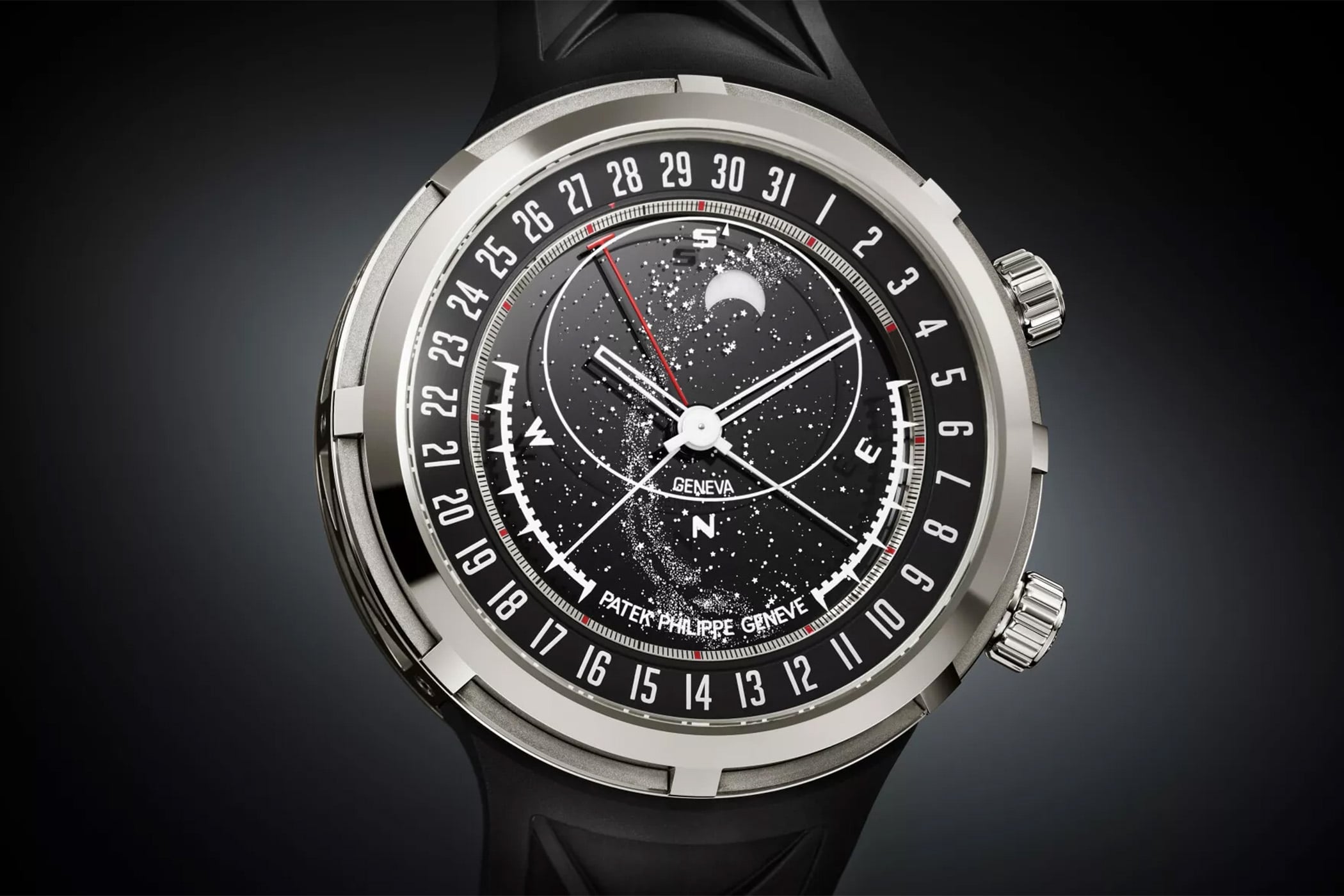
On the occasion of Watches and Wonders 2026, Patek Philippe unveils a new astronomical complication with the reference 6105G-001, standing out with its surprisingly modern design. Derived from the Celestial, it features a multi-layered dial with several stacked discs that rotate independently to display the night sky with the apparent movement of the stars as seen from Geneva, together with the phases and orbit of the Moon. For the first time in a Patek Philippe wristwatch, it also displays the sunrise and sunset times. A world first, these indications can be adjusted to summer and winter time with a simple push of a corrector.
Very few brands dare to venture into the creation of astronomical grand complications, a domain where mastery, innovation, and tradition intersect. The Holy Trinity of watchmaking – Patek Philippe, Vacheron Constantin, and Audemars Piguet – immediately comes to mind. Patek Philippe, in particular, has cultivated a long-standing tradition in this field, consistently developing timepieces that push the boundaries of mechanical ingenuity.
Among classical astronomical complications, very few brands offer sunrise and sunset time indications on wristwatches. Again, the holy trinity comes to mind. We shall also mention Krayon with their remarkable Everywhere and Anywhere concept – for which the sunrise and sunset time can be adapted to different locations (with the intervention of a watchmaker for the second). Today, Patek Philippe presents an interesting take on this unique indication, with a watch that, for the first time, displays the sunrise and sunset time indications while being able to cope with DST. Indeed, sunrise and sunset displays are usually based on winter time, so there is a bit of math to do for a part of the year while checking this indication on your watch… Well, not with the reference 6105G-001.
Before looking at this new creation, let’s take a look at the history of this complication at Patek Philippe. The sunrise and sunset time indications are featured in rare grand complications. Among these are the legendary pocket watches commissioned by James Ward Packard (1927) and Henry Graves Junior (1933), or more recently, the mighty calibre 89 and the Star Caliber 2000. On the occasion of Watches and Wonders 2026, Patek Philippe presents its first wrist watch with Sunrise and Sunset indication.
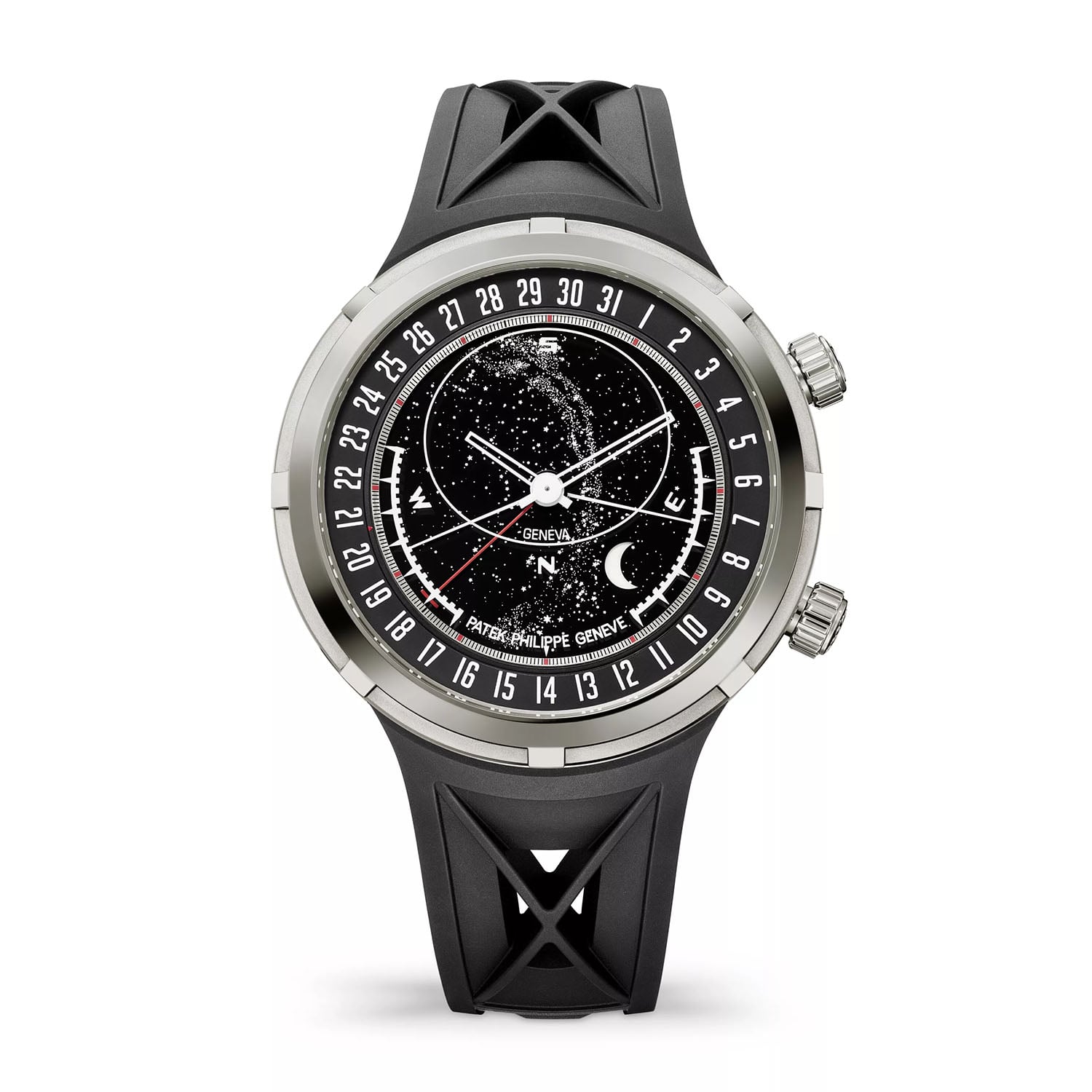
Derived from the Celestial, the new reference 6105G-001 required 5 years of development and is associated with 6 patents. The addition of the Sunrise and Sunset times is associated with a clever mechanism that allows for their correction in relation to summer or winter time.
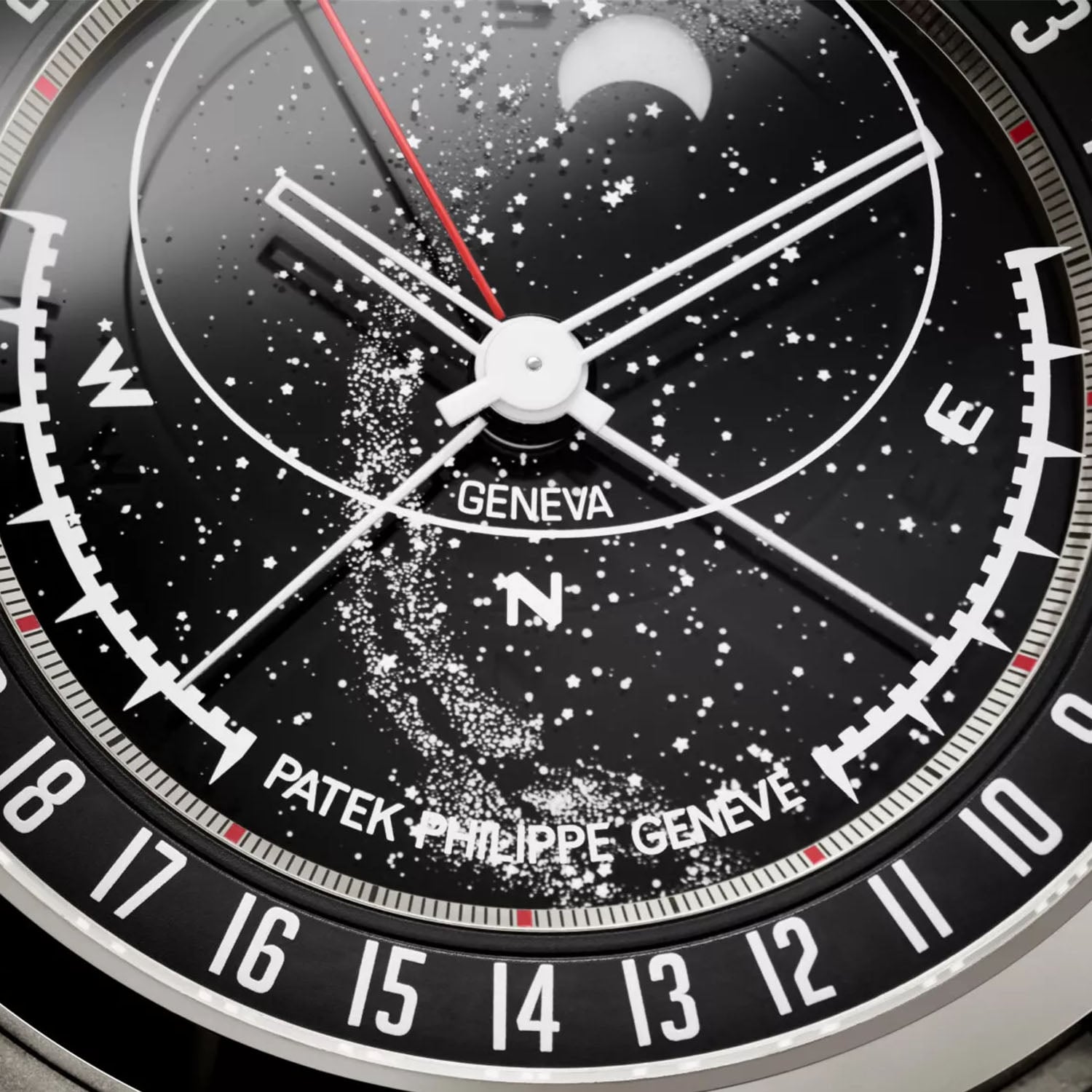
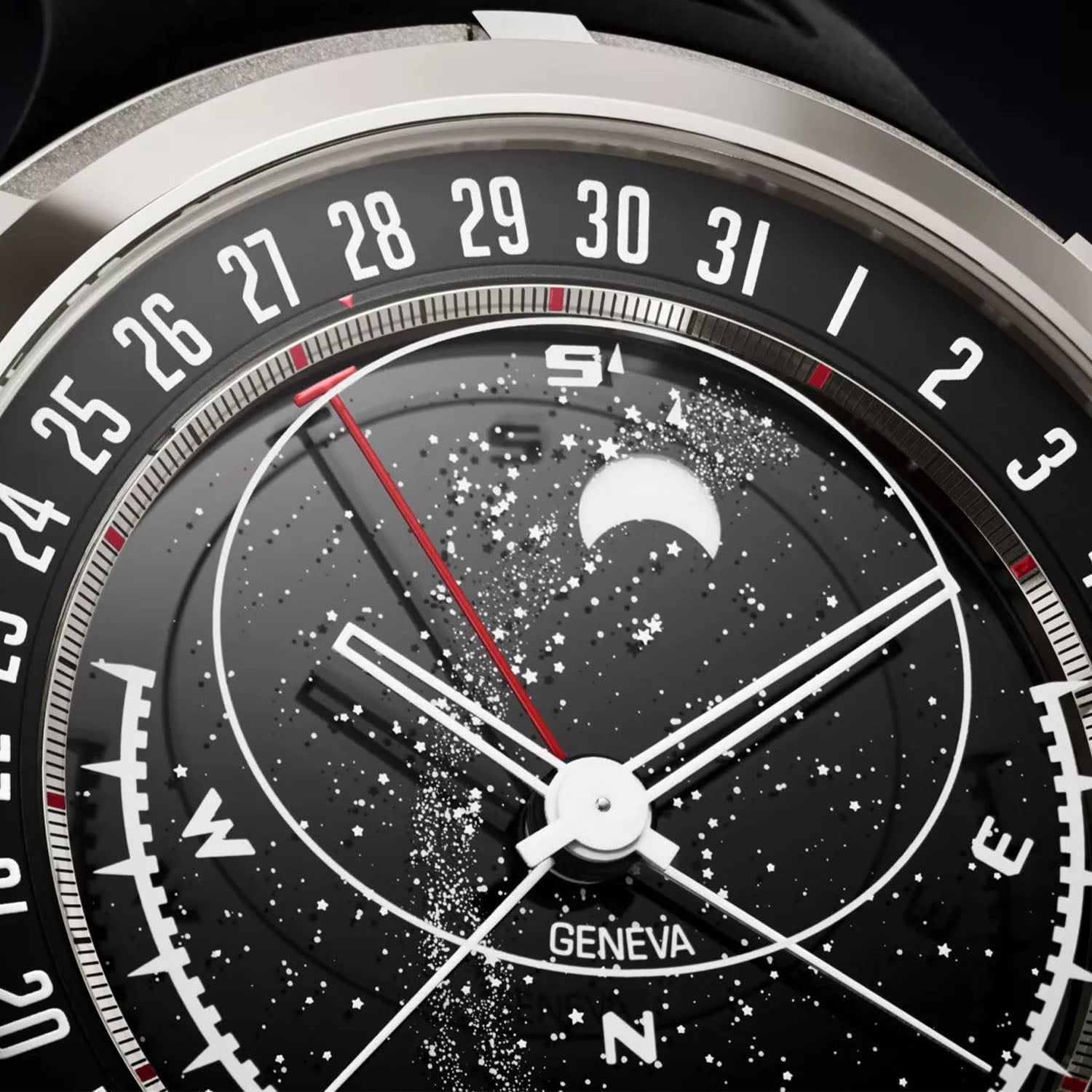
Just like for the Celestial, the 6105G features a multi-layered dial with several stacked discs that rotate independently to display the night sky with the apparent movement of the stars as seen from Geneva, together with the phases and orbit of the Moon. One disc in sapphire for the mobile sky chart rotating in 23 hours and 56 minutes. It features the star chart on the front side and the Milky Way on the back to enhance the sense of depth. A second disc in sapphire, covered in black PVD and mounted on an aluminium wheel, represents the rotation of the moon in 24 hours and 50 minutes. It features a round opening to reveal a third disc, in mineral crystal, to reproduce the moon phases. This mechanism deviates by just one day in 3000 years.
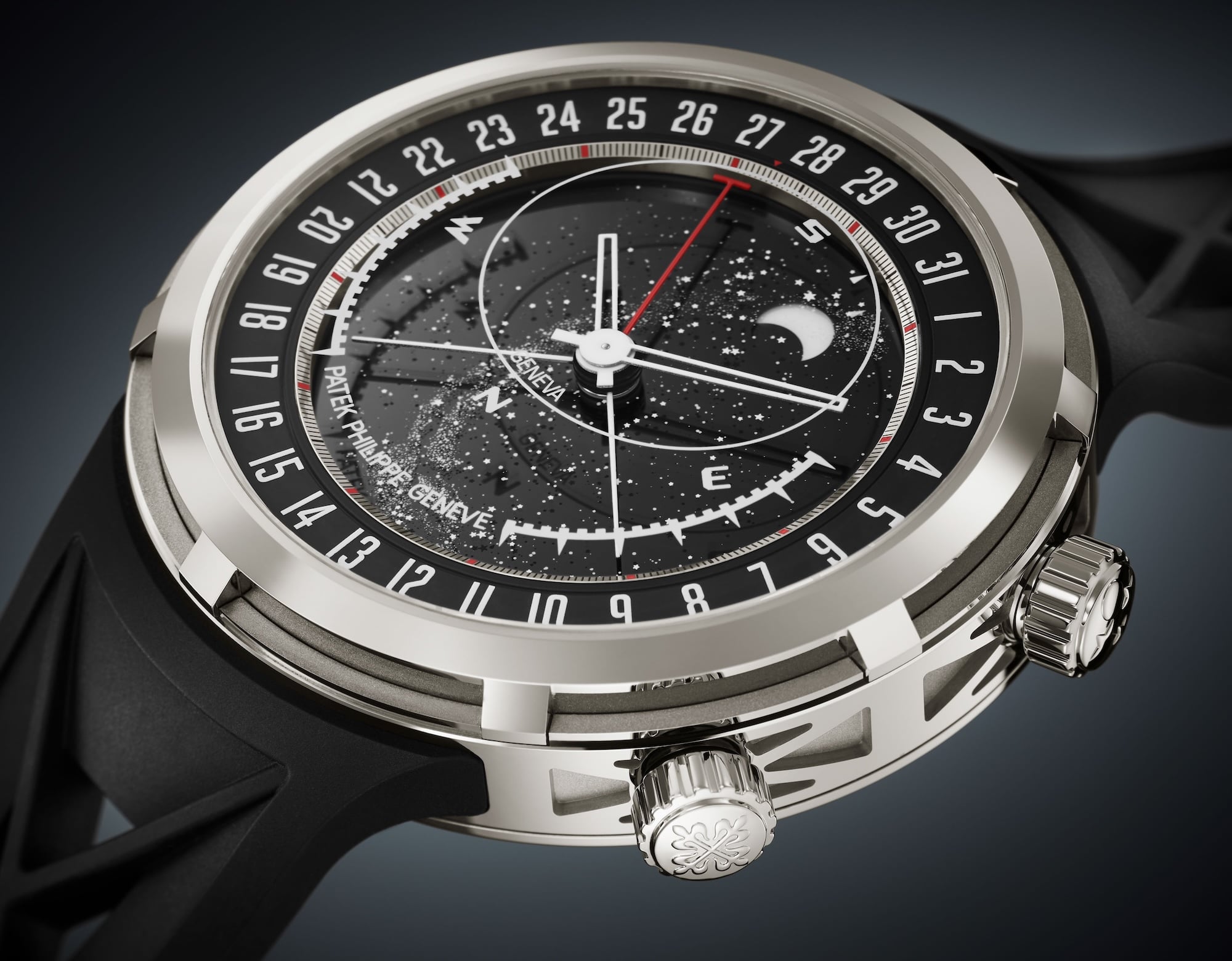
This captivating spectacle is completed by a date disc at the periphery of the dial. It is used to display not only the date (by hand) but also the sunrise and sunset indication with two white baton-style hands. In this respect, to achieve a more balanced symmetrical display, the date disc is tilted, and the figure 1 is not positioned at 12 as would be usually the case.
The sunrise and sunset display is driven by a sophisticated mechanism with two ovoid cams reproducing their yearly cycle for Geneva. A patented double feeler reads the indications on the cams. These moves in a linear fashion thanks to two racks guided by a flexible component with 2 pairs of 4 arms. This monolithic, compact and precise component also replaces several mechanically assembled parts. The absence of mechanical coupling eliminates contact, play, friction, wear, lubrication or dispersions… and it also contributes to keeping the movement remarkably thin. Last, gear trains then transmit the information to the hands.
Switching between winter and summer time is extremely simple and user-friendly. Two correctors are positioned in the case band at 8 and 10 to switch between winter time and summer time. A security system prevents you from activating the same pushers several times. From a technical perspective, a press on one of the pushers drives 3 different actions. The current time is corrected by one hour. The date wheel is rotated by 1/31 while the date hand is rotated equally to keep track of the correct date. So, it is actually the rotation of the date disc – that is also used for the sunrise and sunset indication – that allows coping with their adaptation to DST.
The new automatic 238 240 C LU CL LCSO calibre ticks at 21,600 vph and comes with 48 hours of power reserve. Derived from the 240 calibre, it features a micro-rotor in 22 ct. gold. Despite its complexity and 426 parts, its height is only 7.93mm.
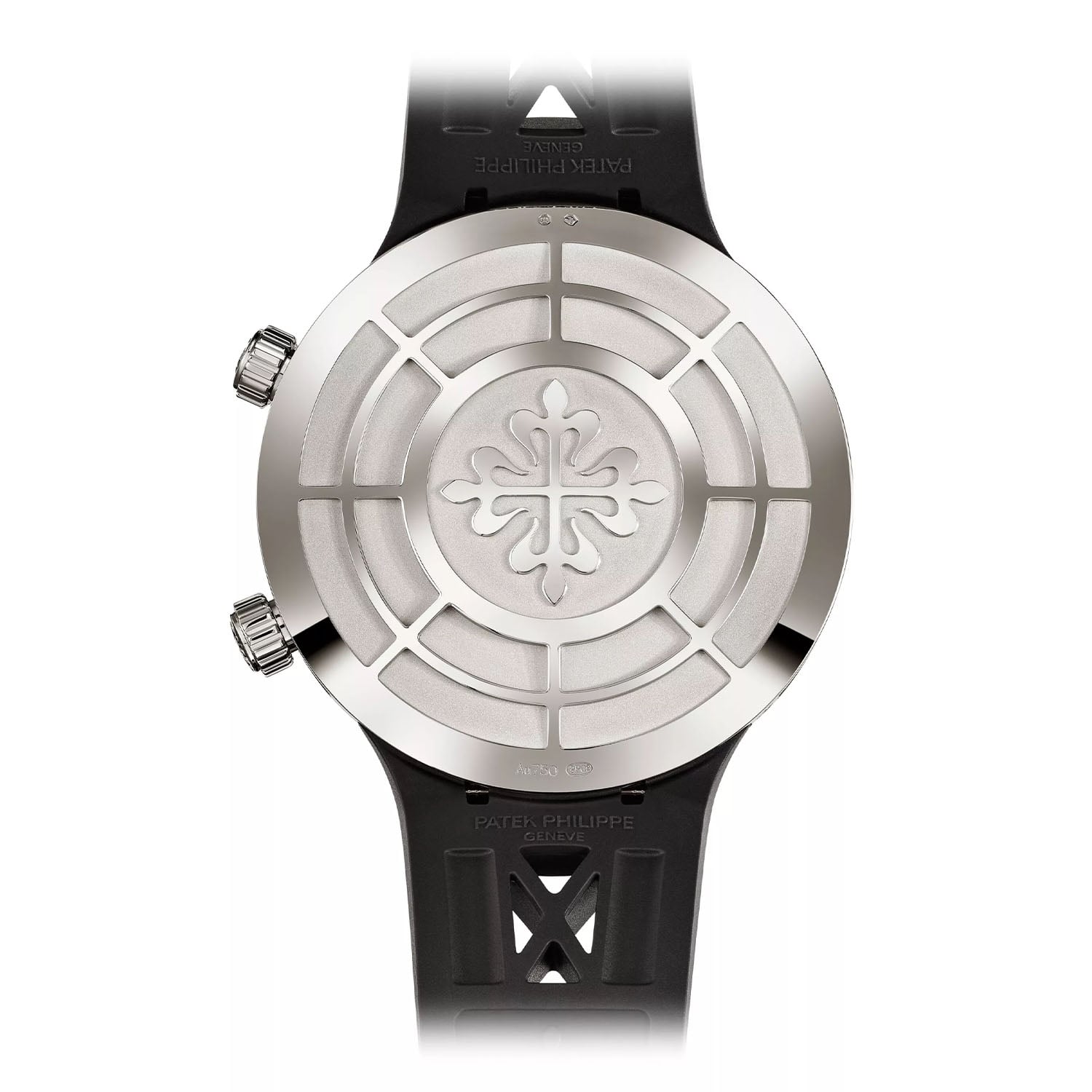
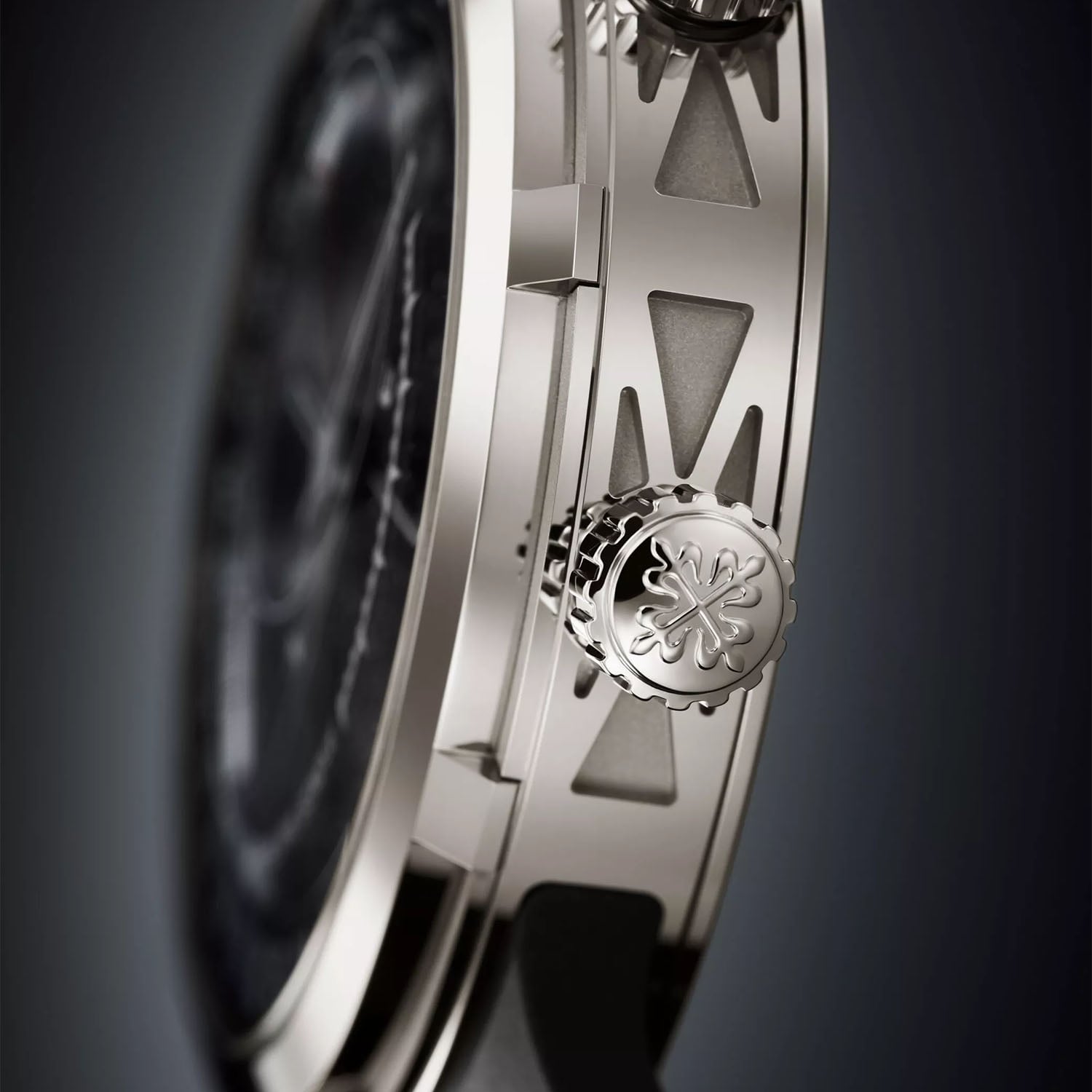
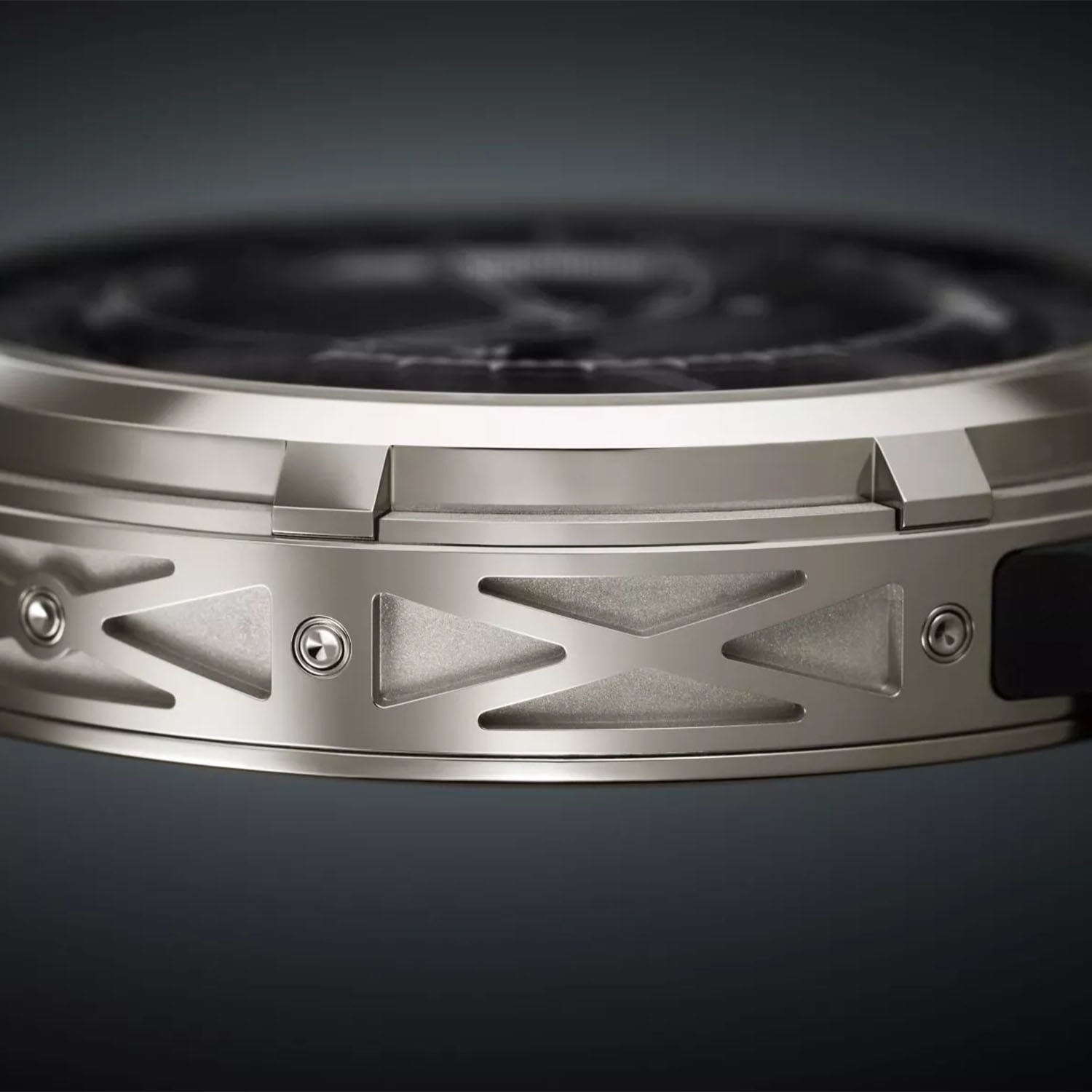
This marvel of watchmaking ingenuity is housed in a 47mm white gold case whose design is surprisingly modern for a Patek Philippe. It features a lugless design, making the watch appear smaller on the wrist than its actual diameter suggests. The case band and the solid case back (quite unique for a Patek Philippe) are decorated with a modern X-shaped decor. The two crowns at 4 and 2 o’clock are used respectively to wind and set the time and to set the astronomical indications. A patent system to position the stems allows their perfect integration into the case profile and decor. Lastly, a pusher set into the case band at 7:30 permits date adjustment via consecutive actuations.
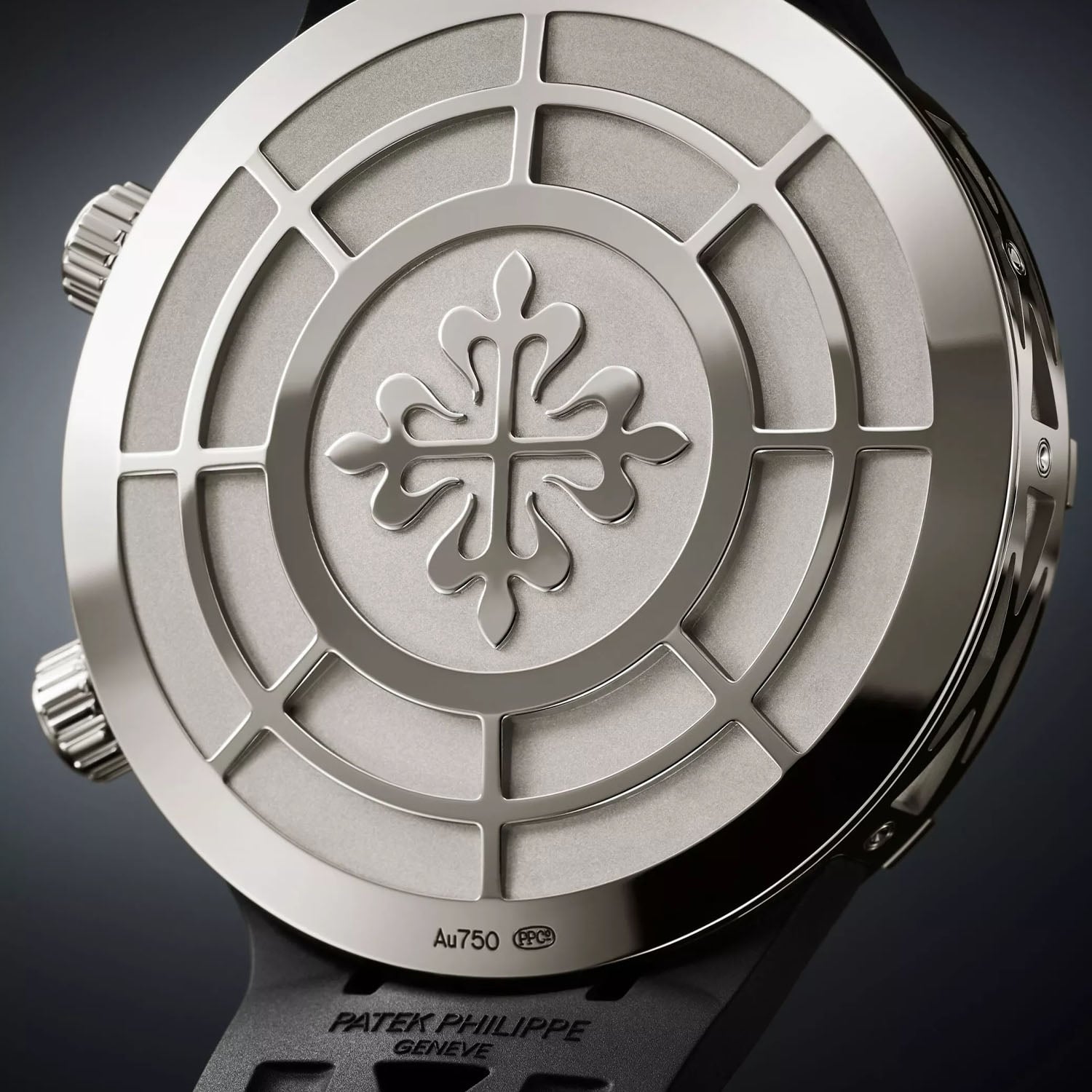
The Patek Philippe 6105G comes on an integrated black composite strap with an X decor echoing that of the case. It is secured to the wrist by a triple folding clasp. Price is CHF 350,000.
For more information, please visit www.patek.com.

1 response
We are so fucking back