


 Not all images were able to load for printing. Please close the print window and try again.
 The New David Candaux DC1 Platinum Art of the Tourbillon
A denser, darker evolution of David Candaux's first creation.
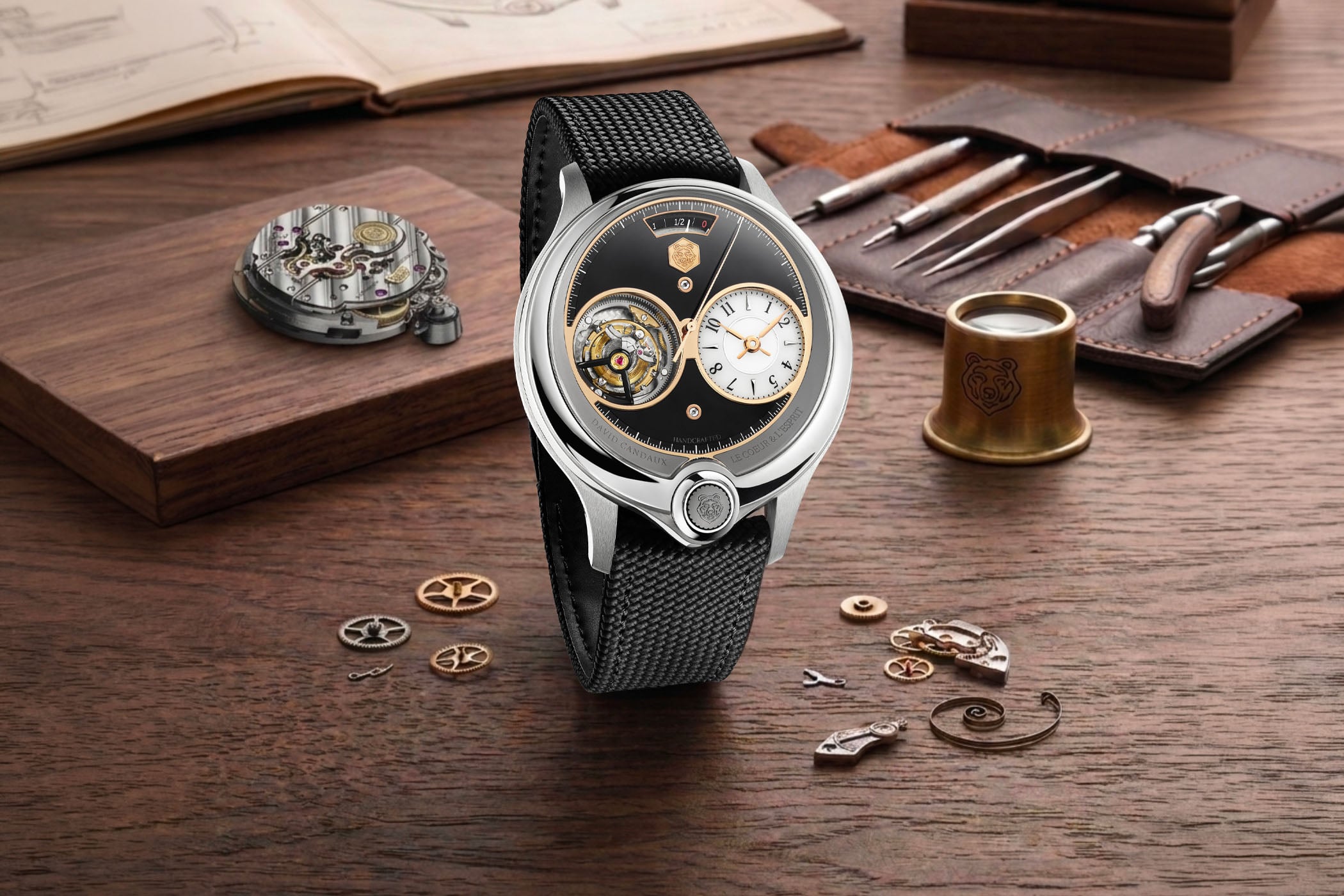
David Candaux, born and raised in Le Solliat, in the Vallée de Joux, belongs to a lineage of watchmakers. Yet his work consistently merges classical craftsmanship with highly personal engineering and design solutions. After years at Jaeger-LeCoultre, where he contributed to some of the manufacture’s most ambitious projects, and later collaborations with some of the most respected names in the industry, he launched his own brand in 2017 with the original DC1. We already explored the story behind the inaugural DC1 in steel and the DC1 in titanium, as well as the DC6, DC7 and DC12 models. Now, the independent watchmaker revisits the piece that started it all with the new DC1 Platinum Art of the Tourbillon. This limited-edition watch retains the architecture of the original model while transforming it through materials, colour, and finishing.

This new edition is immediately recognisable as part of the DC1 collection. The asymmetrical case, the inclined flying tourbillon, the off-centred time display and, of course, the retractable “Magic Crown” at 6 o’clock all survive unchanged. It’s the transition to platinum, along with the dial materials, that alter the watch’s character.
The 43mm platinum case, 10.02mm thick (12.9mm with crystal), gains density and physical weight, but the sharply sculpted geometry of the original is preserved. Platinum is difficult to finish, particularly on a case defined by steep transitions, polished curves and taut edges, and Candaux insists on entirely hand-polished surfaces throughout for a richer, brighter and more substantial result.
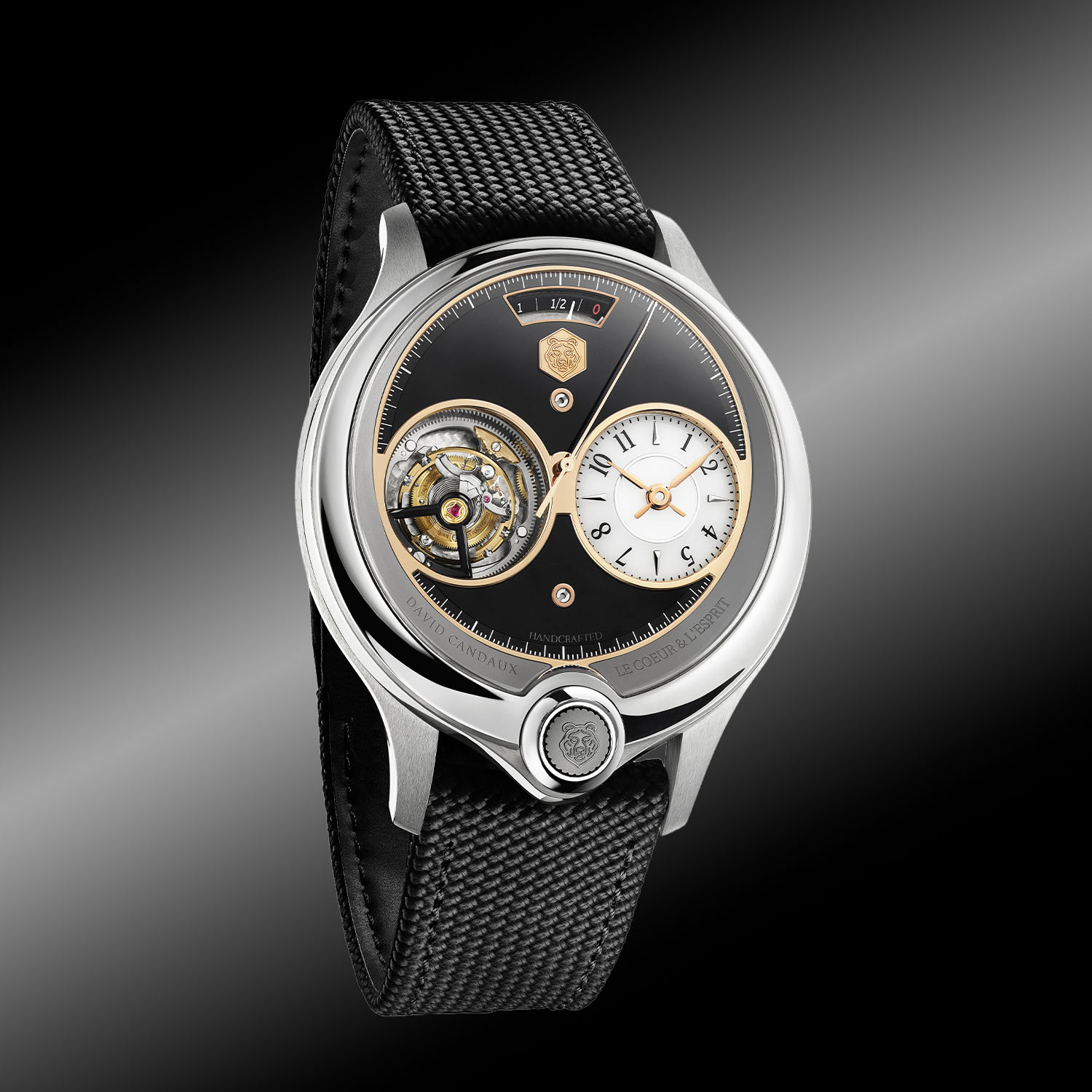
The case is horizontally symmetrical but vertically asymmetrical, tapering from 6 to 12 o’clock. The sloping sapphire crystal, tinted and with AR coating, follows the descending dial construction. The “Magic Crown” is still one of the most charming details of the DC1. Inspired by the mechanism of a retractable ballpoint pen, the patented crown system deploys and retracts via a pressure-activated mechanism comprising 31 parts. Hidden flush within the case when not in use, it preserves the symmetry of the watch.
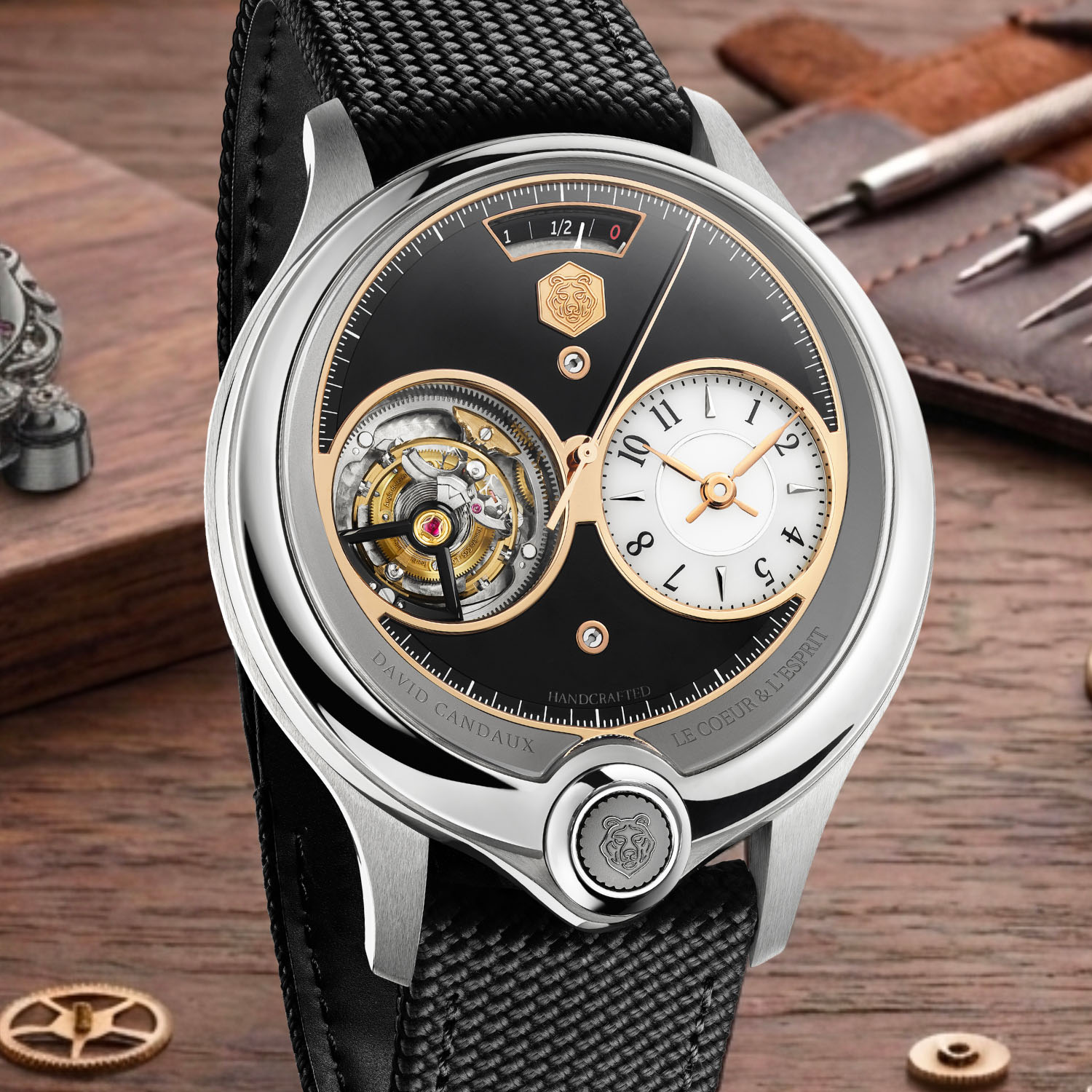
The dial is the centre of the visual transformation. The earlier model relied on textured gold surfaces and a lighter overall atmosphere. Here, Candaux introduces a mirror-polished black onyx central plate, only 0.2mm thick, creating a far more dramatic composition. The flanges framing the domed faceted opal time display and the tourbillon are crafted from hand-finished 18k rose gold. The black pad-printed numerals and hand-bevelled and polished 18K white gold hour markers (at cardinal positions) are surrounded by pad-printed minutes track running the mini-dial’s periphery, and time is indicated by the rose gold, hand-polished syringe-shaped hour and minutes hands. The power reserve is indicated by a tiny titanium hand in the aperture at 12 o’clock, and there’s a central seconds hand.
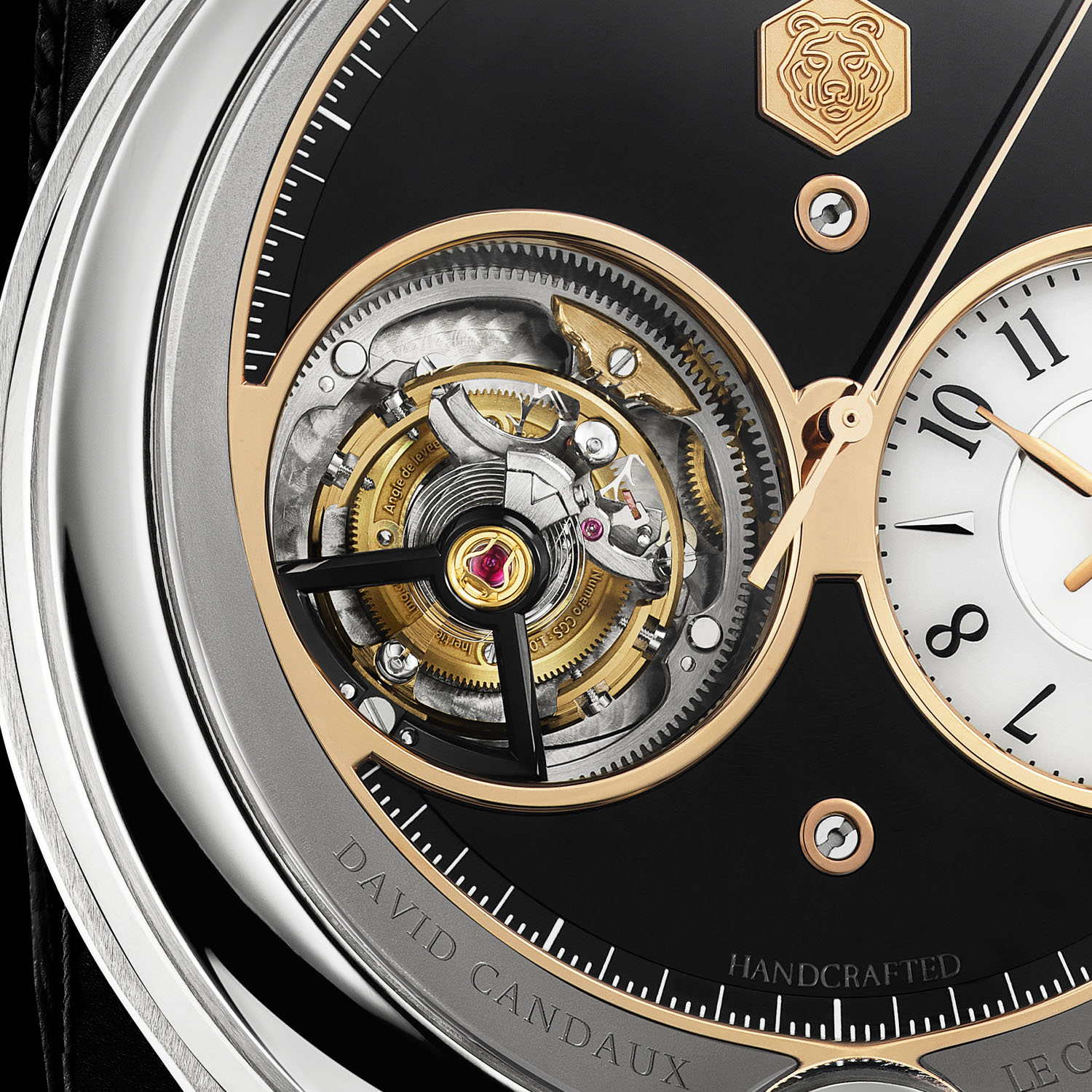
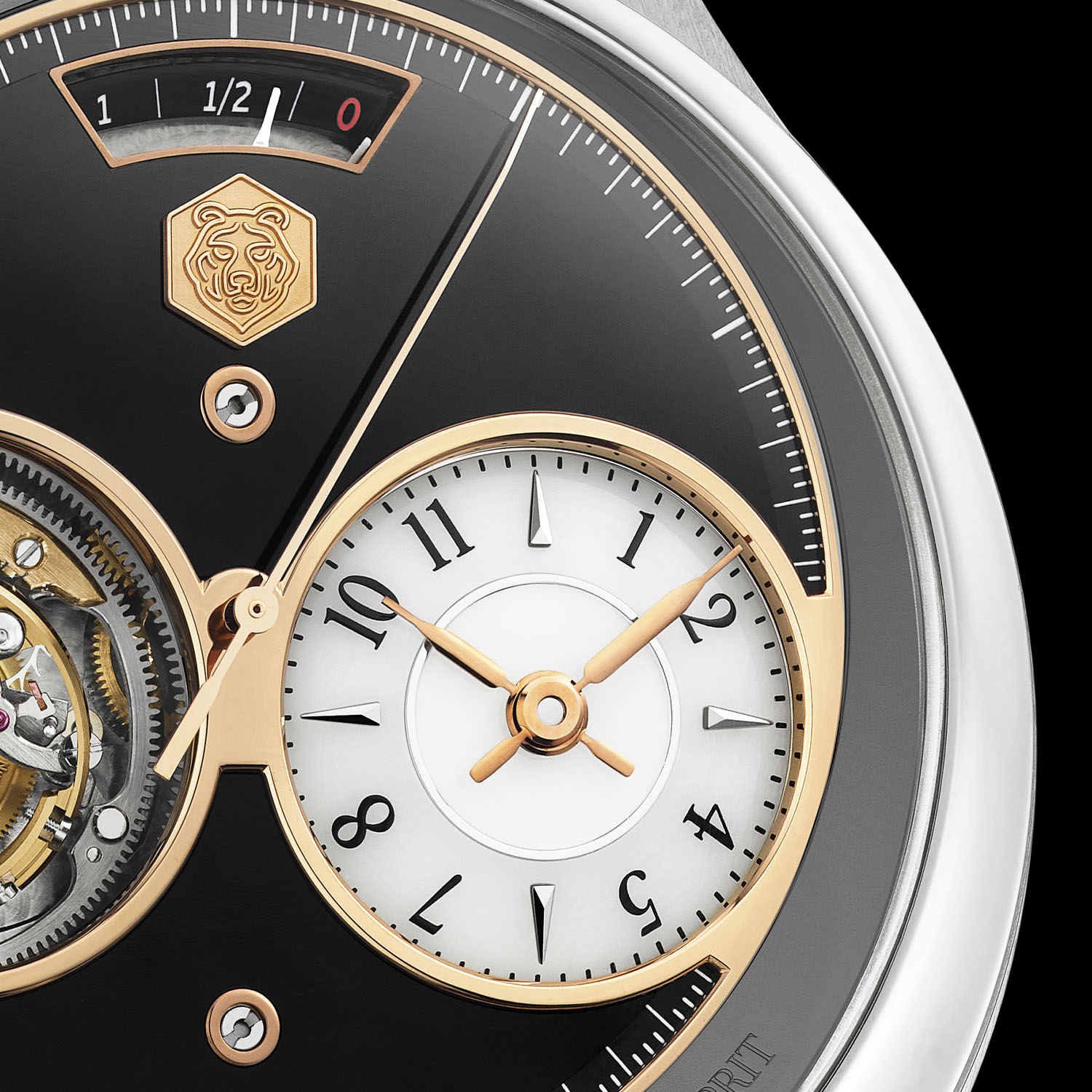
The flying tourbillon at 9 o’clock remains the mechanical signature of the DC1. Inclined at 30 degrees, the regulator was conceived by Candaux to restore the tourbillon’s practical chronometric relevance in a wristwatch. By tilting the escapement, the cage passes through a more diverse set of positions during operation, including those encountered when the watch rests flat.
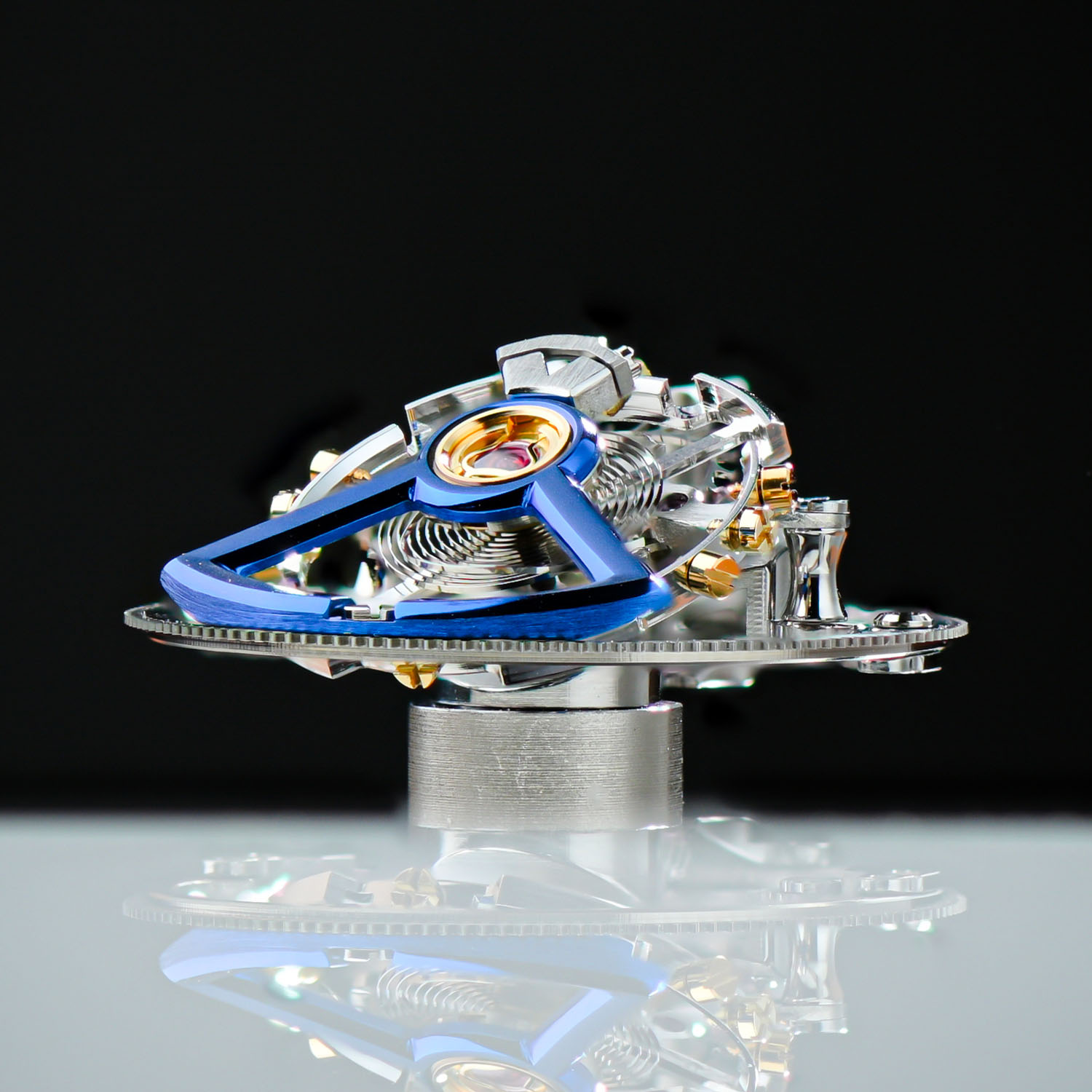
The mechanism remains complex. The cage, made from black anodised titanium, makes one rotation per minute and appears suspended within the movement architecture. Candaux uses a specialised micro-arc oxidation process to achieve the intense black finish, integrated directly into the titanium rather than applied as a coating.
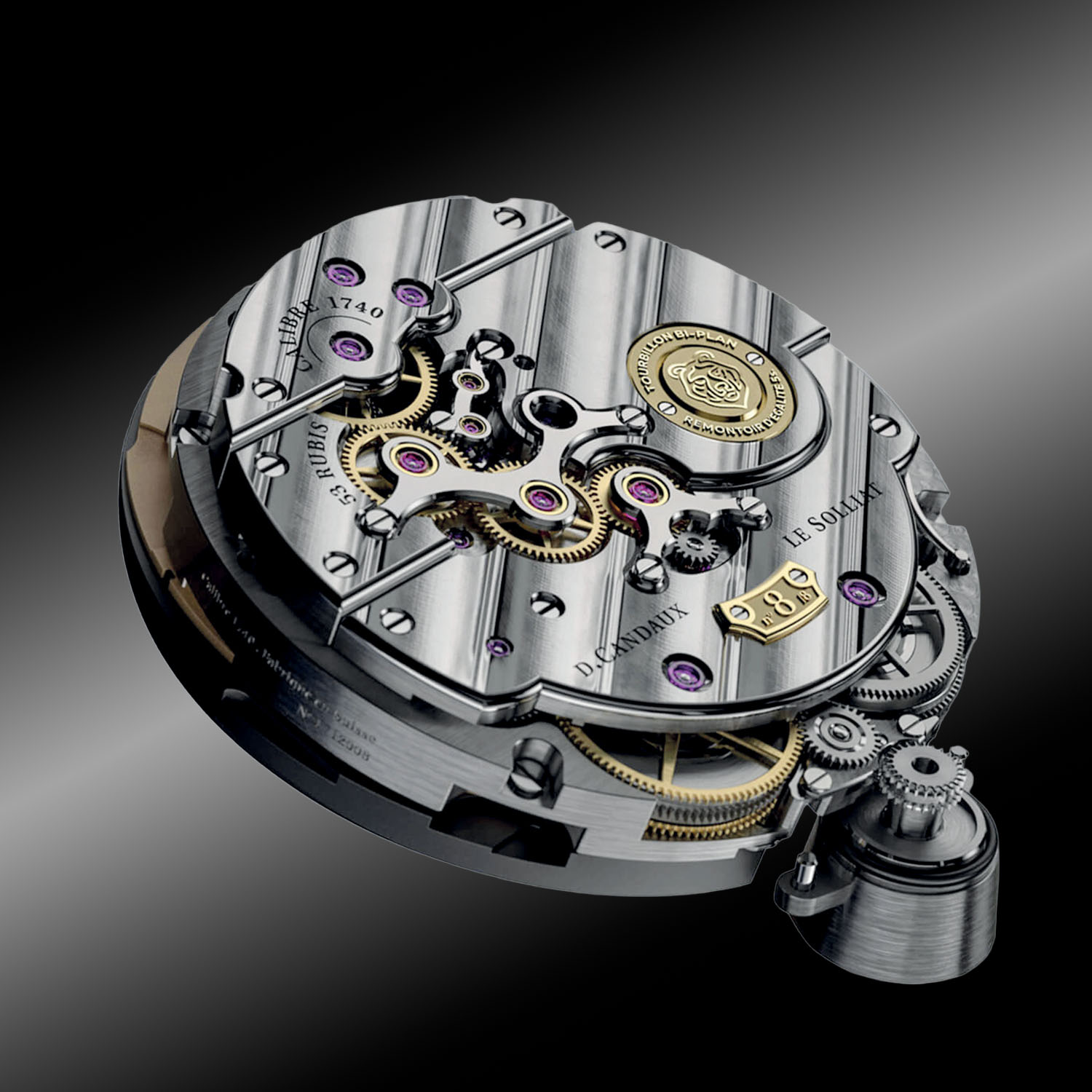
Powering the watch is the hand-wound calibre H74, developed in-house in Le Solliat. As with previous David Candaux watches, the movement relies on titanium bridges and plates, making Candaux one of the few independent watchmakers to use the metal as a structural material. The movement is inclined by 3 degrees inside the case, reinforcing the cascading architecture visible through the sapphire back. Finishing is resolutely traditional despite the contemporary construction. Hand-polished bevels, recessed angles, circular graining and the brand’s signature “Côtes du Solliat” decorate the movement, while gold chatons and engraved gold plaques reinforce the artisanal character of the calibre.
The David Candaux DC1 Platinum Art of the Tourbillon is worn on a textured black rubber strap with Velcro closure and quick-release system. Production is limited to eight pieces, with a price set at CHF 248,000. More information at davidcandaux.com.

1 response
One. Day. Soon………………