


 Not all images were able to load for printing. Please close the print window and try again.
 The New Rolex Yacht-Master II ref. 126680 & 126688 – the Regatta Instrument Reimagined
A misunderstood complication, revisited with clarity, purpose and a new mechanical logic.
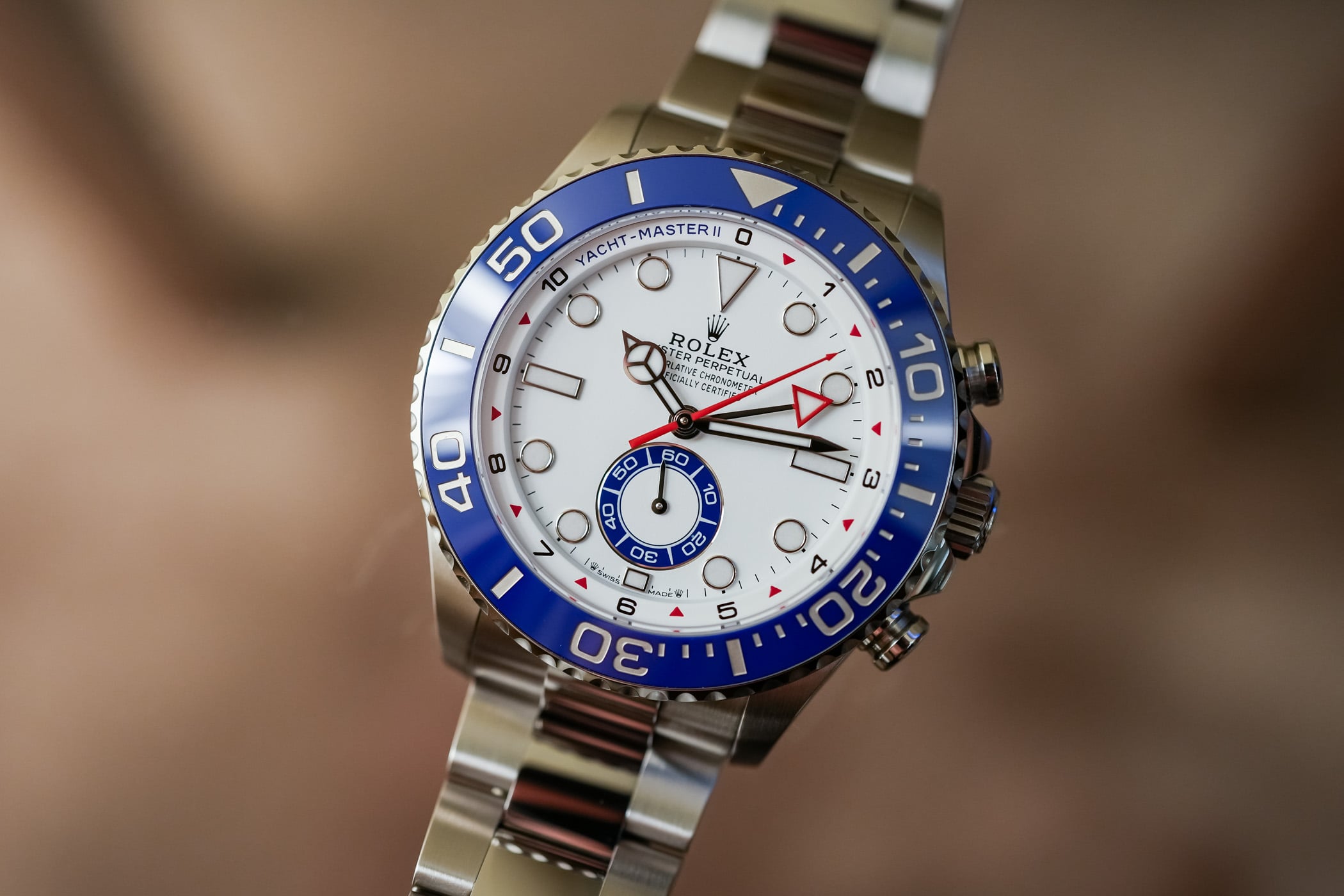
There’s always been something slightly paradoxical, if not vague, about the Rolex Yacht-Master II. In the brand‘s catalogue, year after year defined by a slow-paced evolution (quite unpredictable recently, though, as we have learned from experience) and exceptional commercial clarity, this watch has consistently stood apart. A large, complex and highly specific model, it is more often than not misunderstood by both sailors and non-sailing customers.
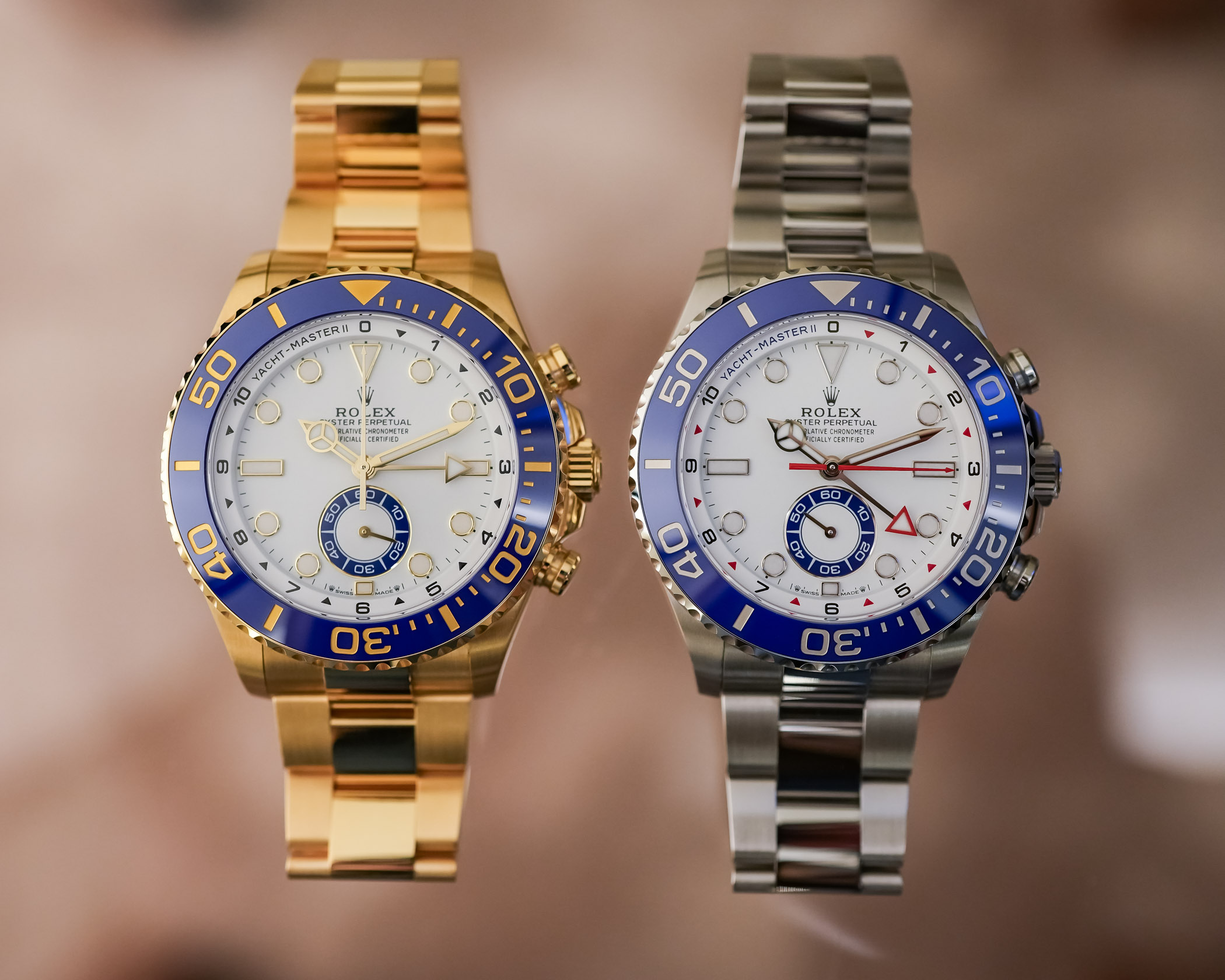
The return of the Yacht-Master II in 2026 (the model was absent for two years) is more deliberate than surprising, especially when viewed as part of a broader trajectory of Rolex’s nautical collection. In recent years, models like the Yacht-Master 42 and, more radically, the RLX Titanium edition have sharpened the range’s identity, making it lighter, more technical, more purpose-driven and less like a luxury version of the Submariner. In this context, the reappearance of the Yacht-Master II is a reminder that Rolex has a clearly designated place for one of its ambitious and specialised complications. To understand the model and its importance, it helps to revisit the evolution of the Yacht-Master line.
From Luxury Diver Alternative to Nautical Specialist
When Rolex introduced the Yacht-Master in 1992, it was one of the rare moments when the brand launched an entirely new collection. The watch borrowed plenty from the Submariner but reinterpreted it with softer lines, lower water-resistance and an emphasis on precious materials. It was less a tool watch than a statement piece, positioned as a luxurious nautical companion.
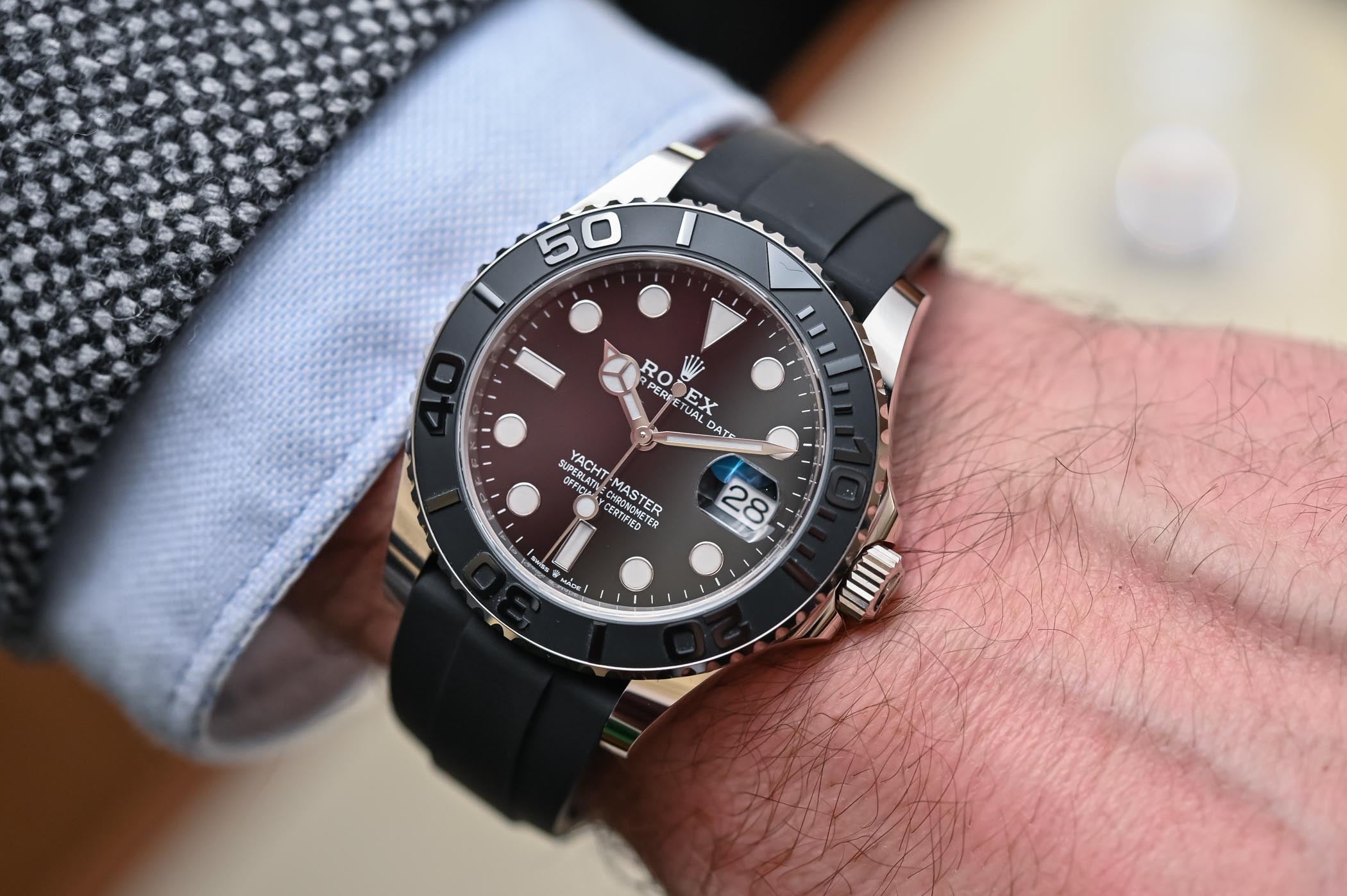
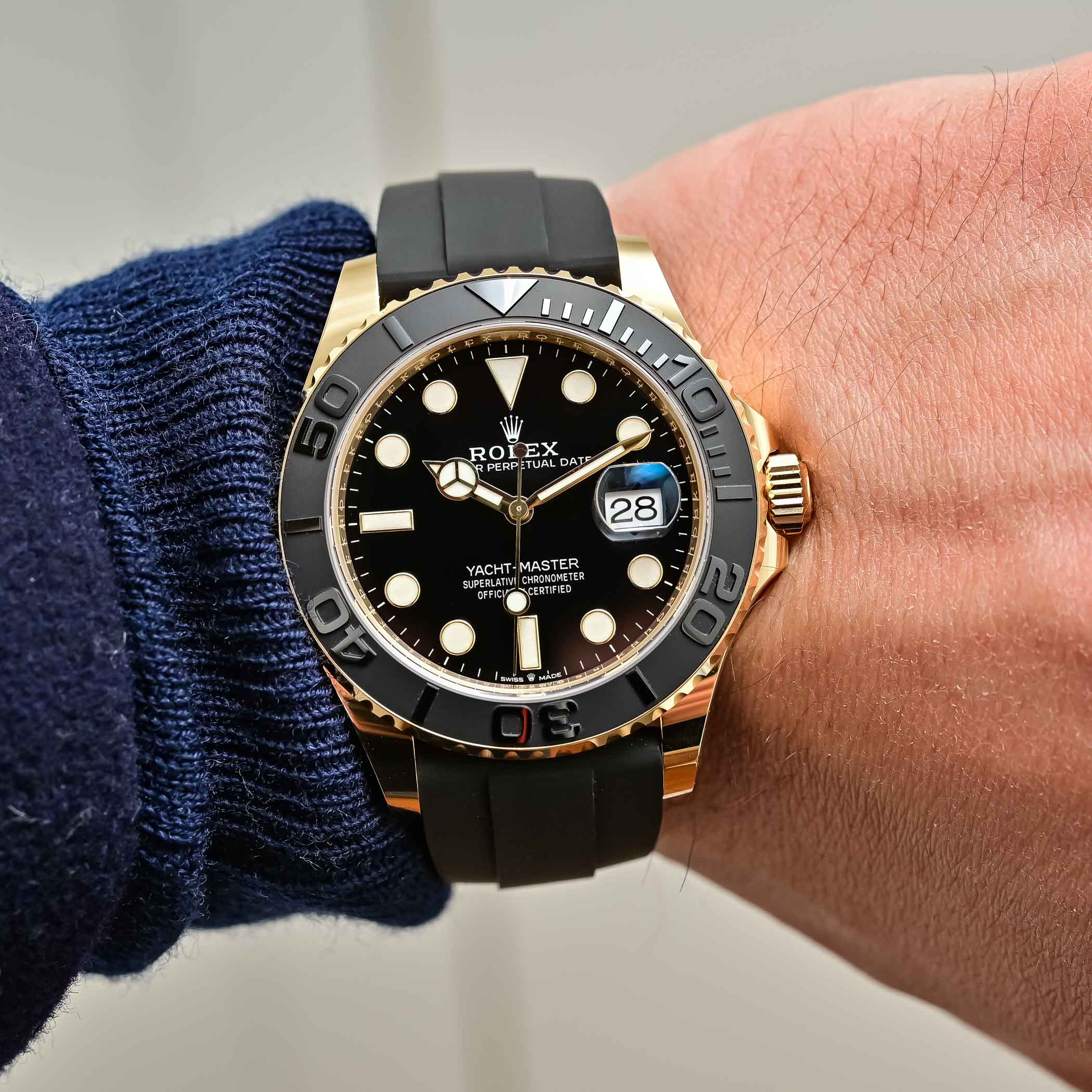
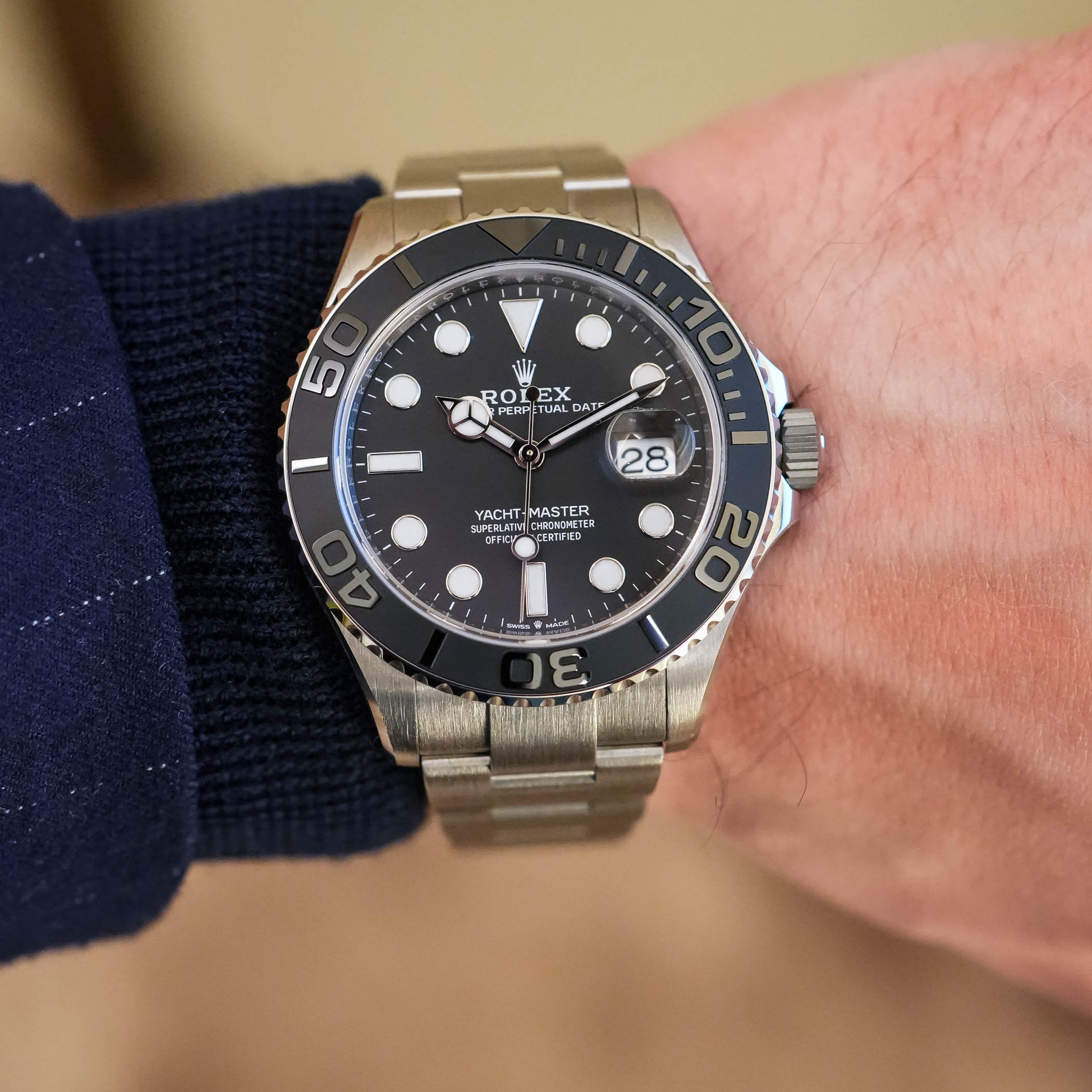
And this duality defined (and for many, poisoned) the series for years. The Yacht-Master was a sports watch, but looked and behaved as if it had forgotten its own purpose. It was only much later, with references like the Everose Oysterflex models (116655 in 2015) and the introduction of the 42mm case (226659 in 2019), that the collection began to develop a clearer identity and a more distinct nautical positioning. The Yacht-Master II, unveiled in 2007, pushed the collection in a new and unexpected direction.
2007 – The Most Radical Rolex of Its Time
By launching the Yacht-Master II, Rolex created a new category within its own catalogue, a chronograph watch designed specifically for regatta starts, where timing is not about measuring duration but about counting down to a precise moment.
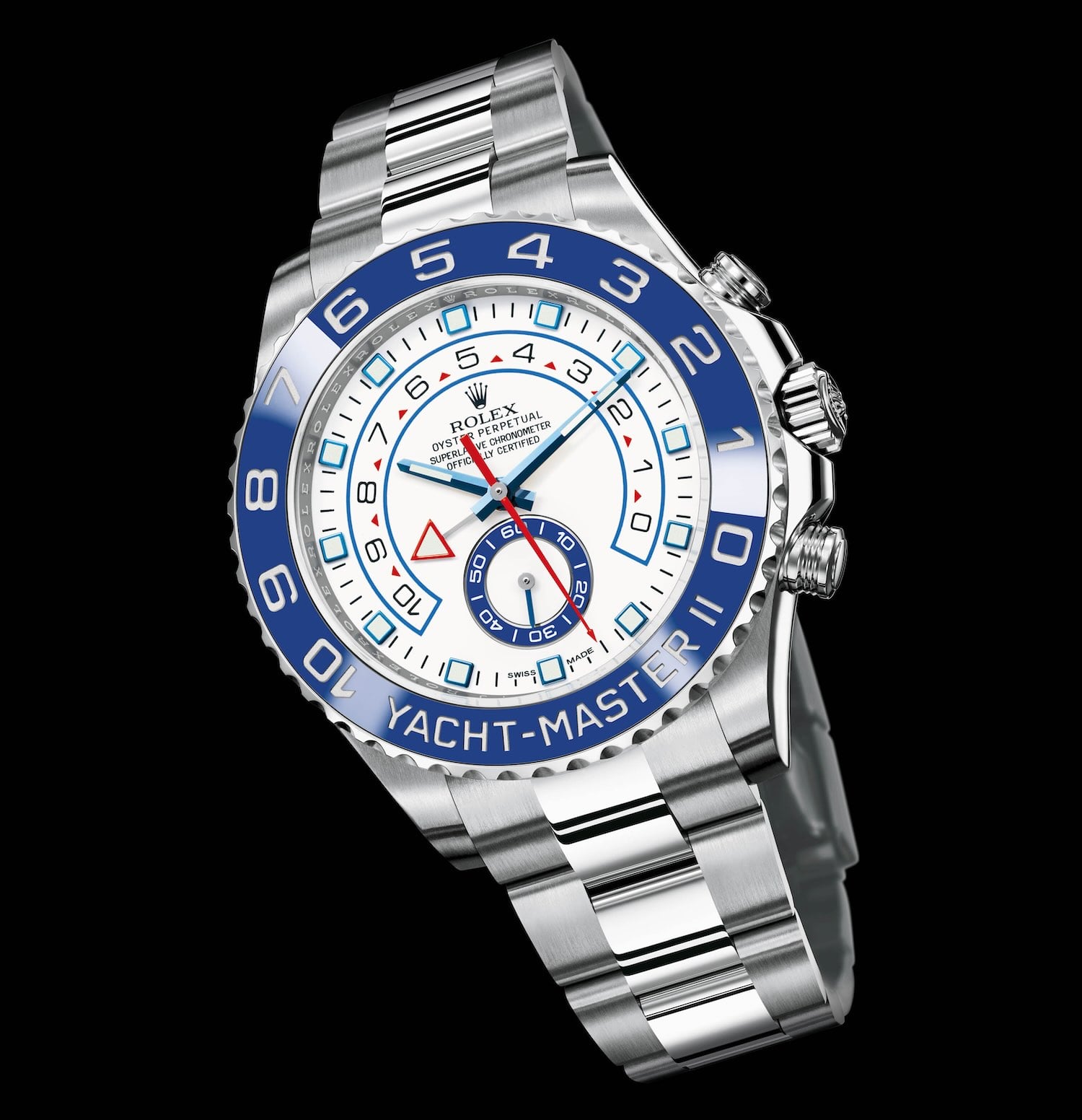
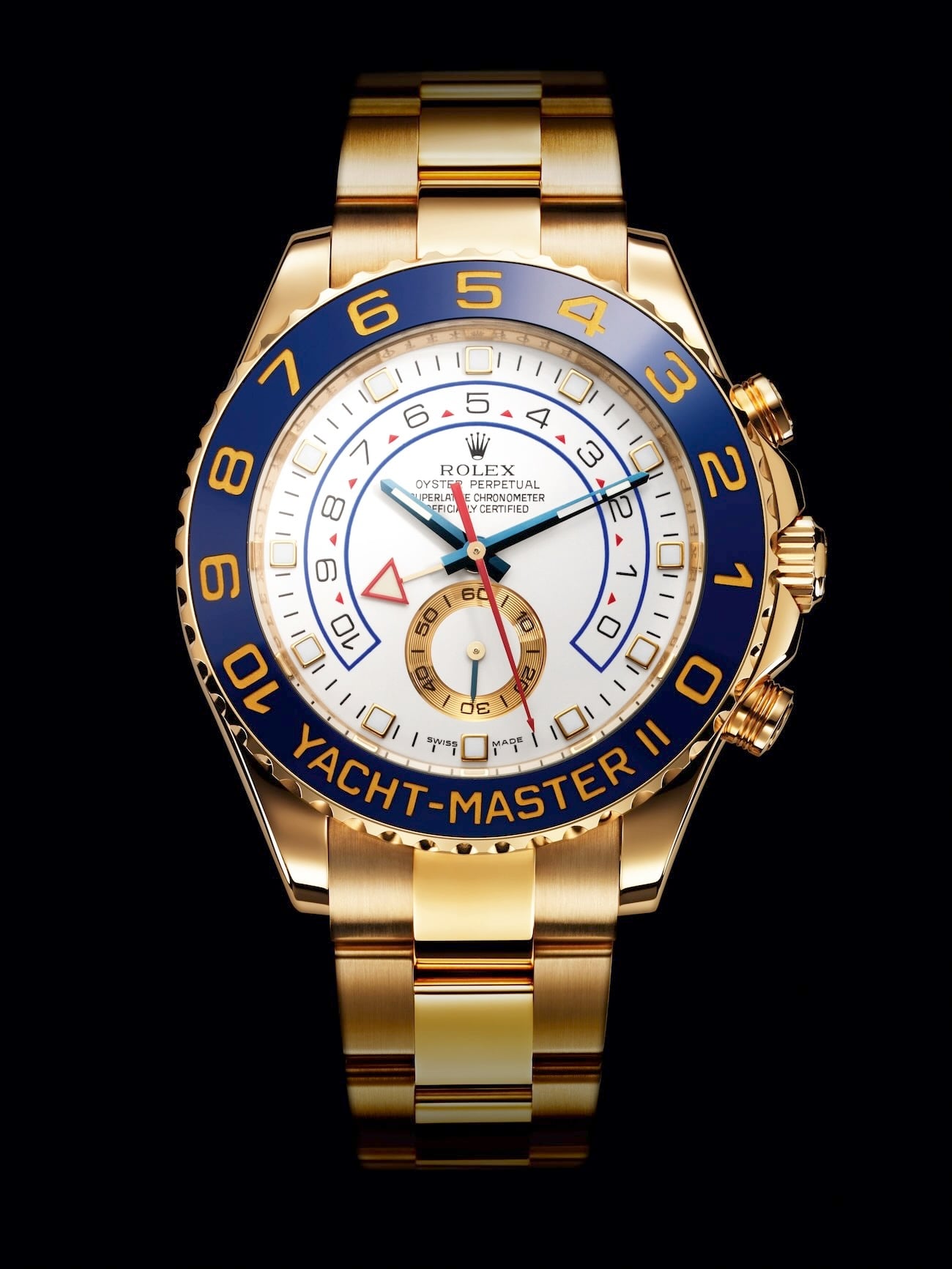
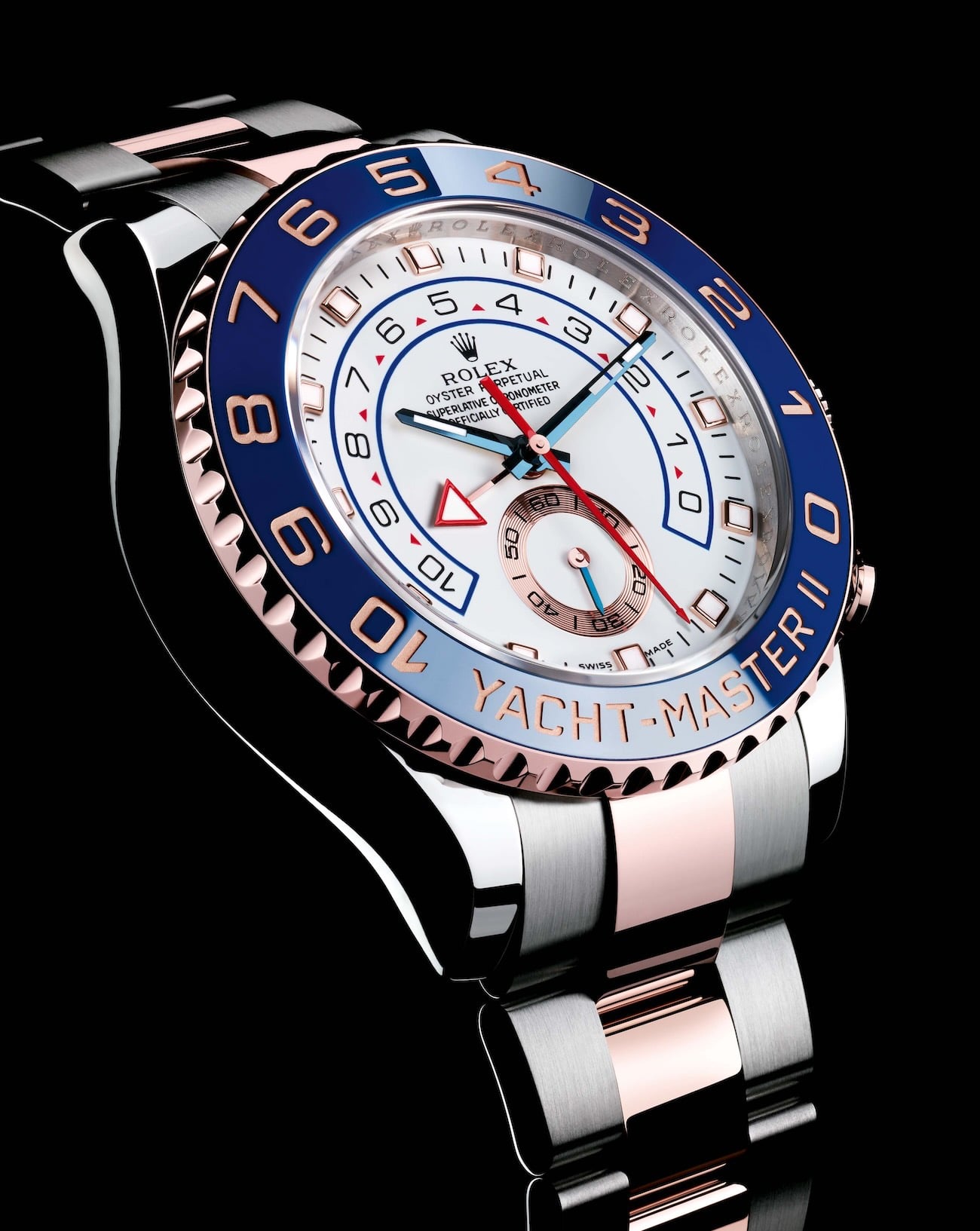
To make it work, Rolex developed a programmable countdown with a mechanical memory and on-the-fly synchronisation. The innovation was not limited to the movement itself. The Ring Command bezel, which interacted directly with the calibre, became an integral part of the mechanism, allowing the wearer to programme the countdown duration without adding extra pushers. It was a cool solution, technically impressive and very functional. Yet, outside the world of sailing, it remained difficult to grasp. Its size, its complexity and its luxurious execution overshadowed its purpose, leaving it in a somewhat ambiguous position within the collection.
2017 – A Small but Necessary Update
A decade later, Rolex revisited the Yacht-Master II with an update that fixed some legibility issues. The addition of distinctive markers at 12 and 6 o’clock, along with a Mercedes-style hour hand, brought the watch closer to the Professional collection’s visuals. Beyond these, the watch remained fundamentally unchanged. The Ring Command bezel, the movement design and the user experience were left intact. It was a necessary evolution, but not a revolution.
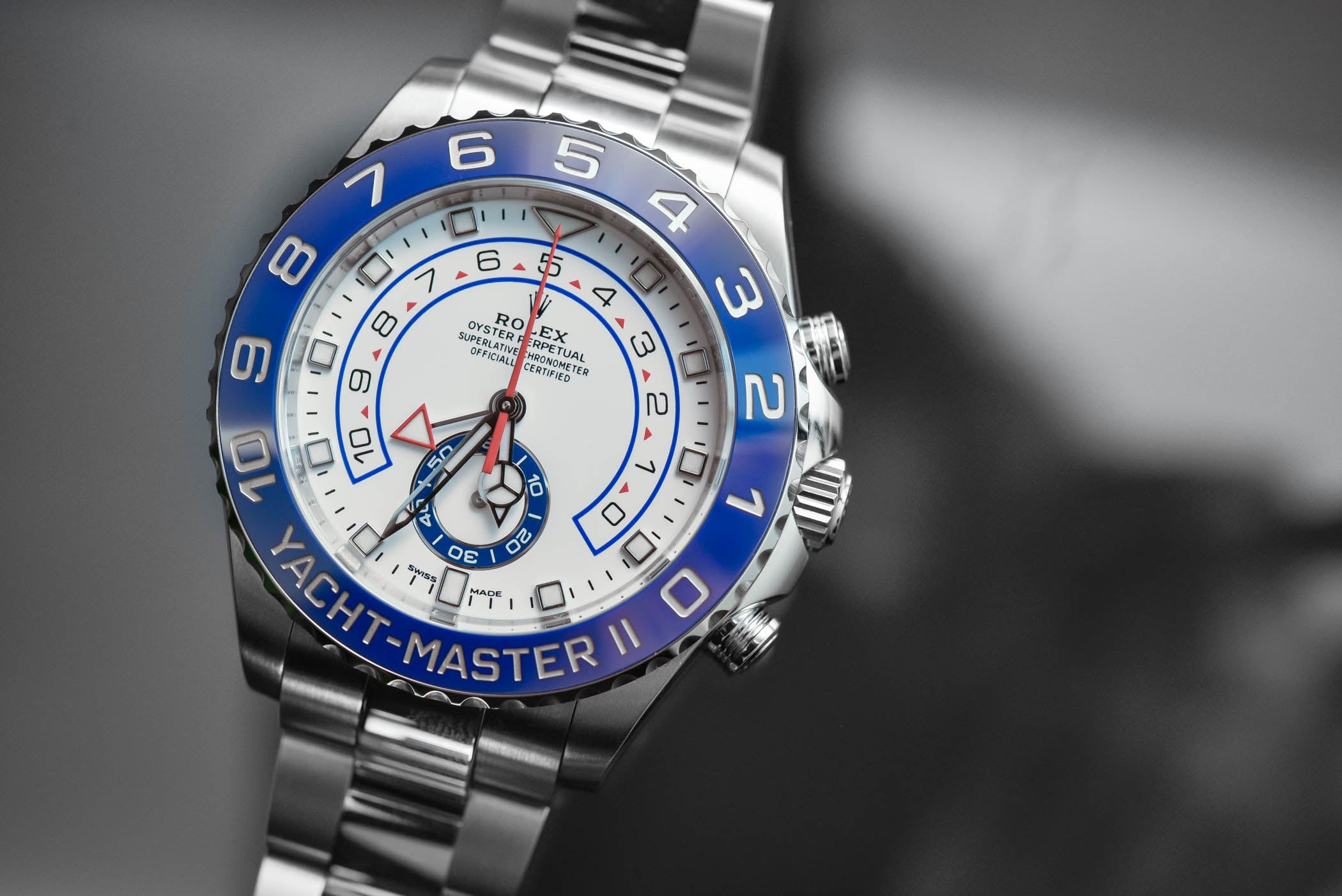
2026 – A Sleeker Yacht-Master II
The new generation, presented as references 126680 in Oystersteel and 126688 in yellow gold, marks a more decisive shift. The watch remains recognisable, still with its large case and bold presence. Yet the way the wearer interacts with the complication has changed. Gone is the Ring Command bezel. Instead, Rolex has redesigned the system so that programming and operation are handled via the two winch-style pushers. The mechanism’s complexity remains, but the interface has been simplified.
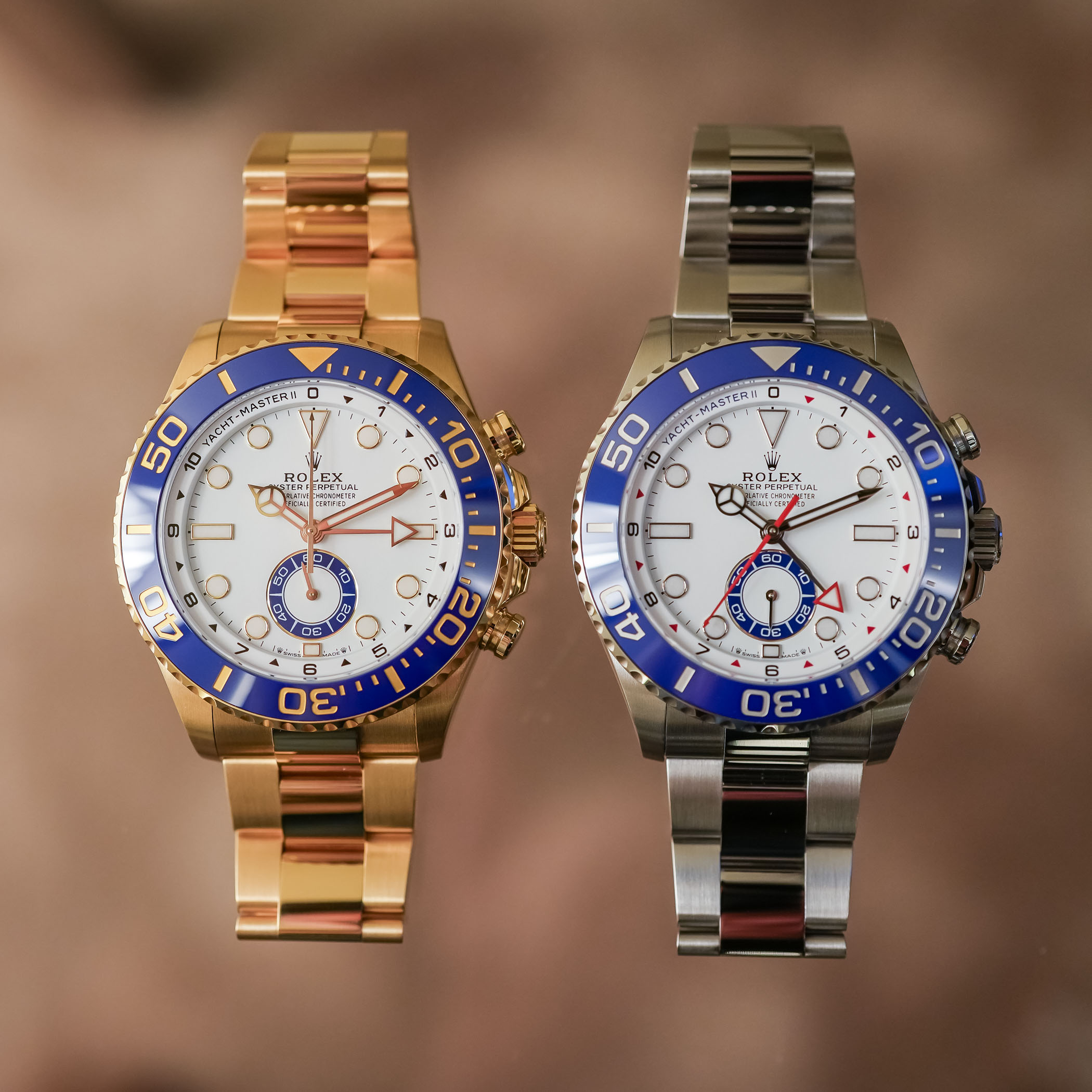
The case
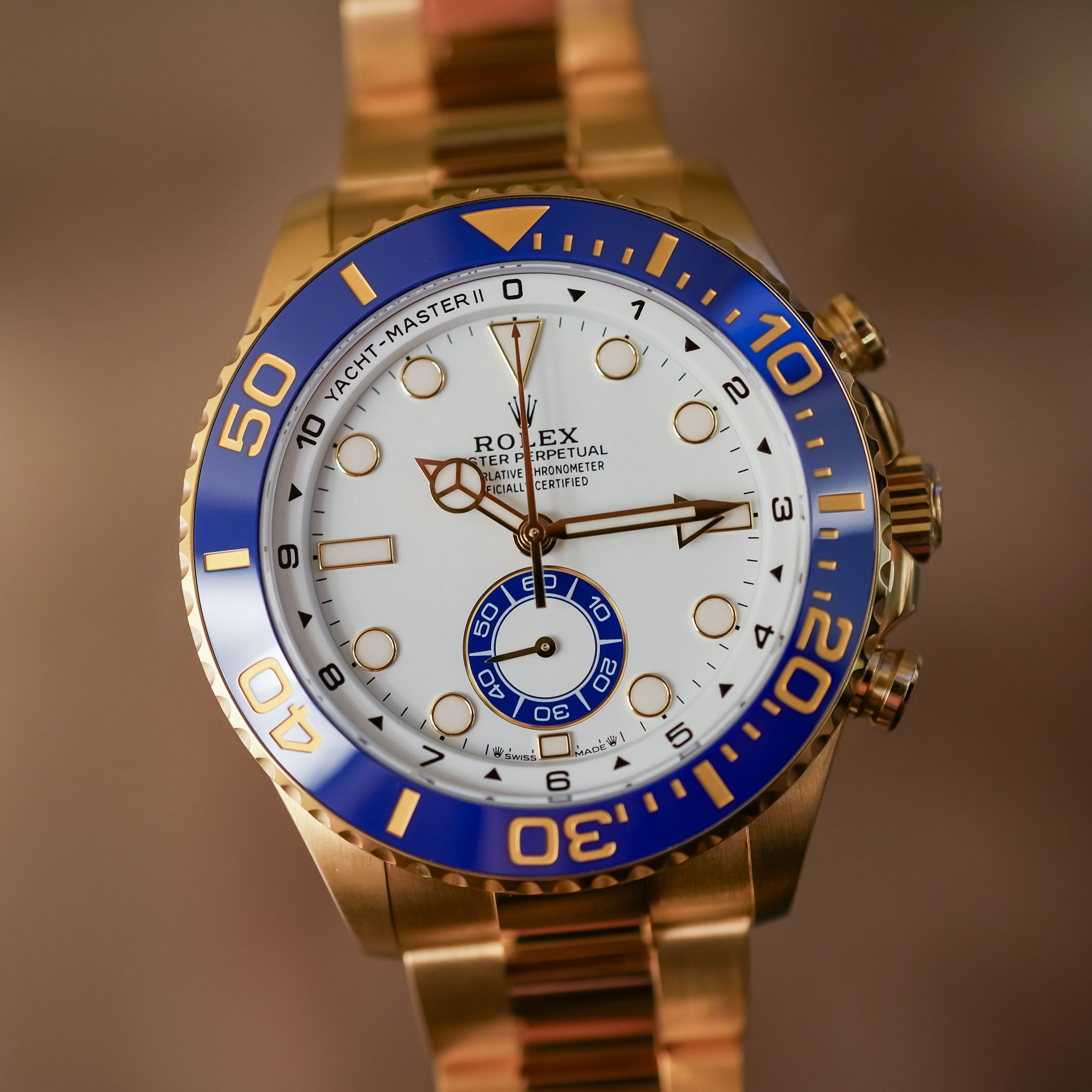
The case retains its 44mm diameter, measures 13.9mm thick (about 0.2mm less than before), with some refinements already seen in recent updates by Rolex, such as a slightly wider lug width and narrower lugs. Available now in Oystersteel or 18k yellow gold, the watch maintains the robust construction expected from Rolex, with a screw-down caseback, a Triplock crown and 100m water-resistance. The bidirectional bezel, fitted with a blue Cerachrom insert, now features a classic 60-minute scale, shifting its role back to a more conventional timing function rather than being part of the countdown mechanism. And thanks to this more traditional scale, the new Yacht-Master II looks sleeker, yet retains a strong visual impact.
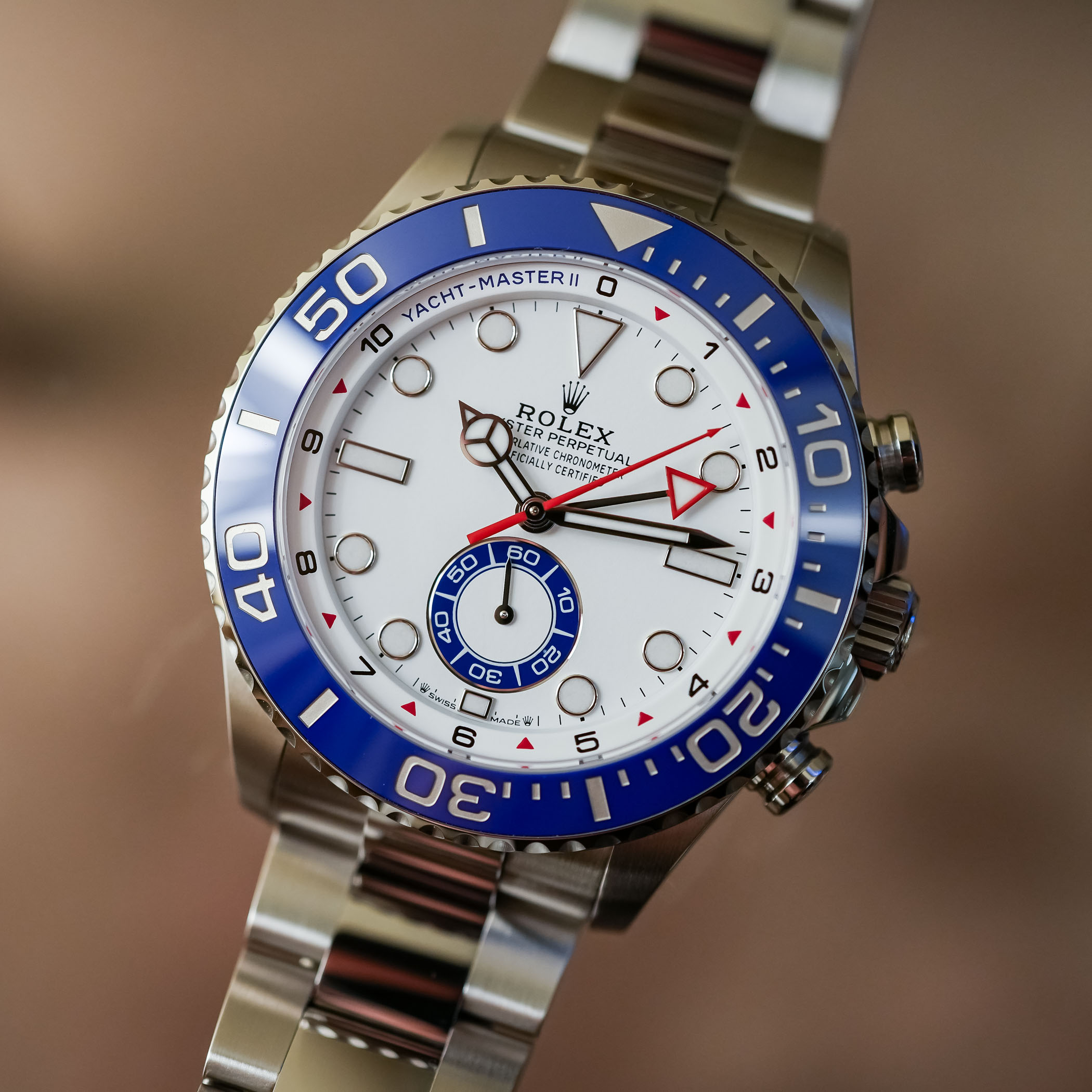
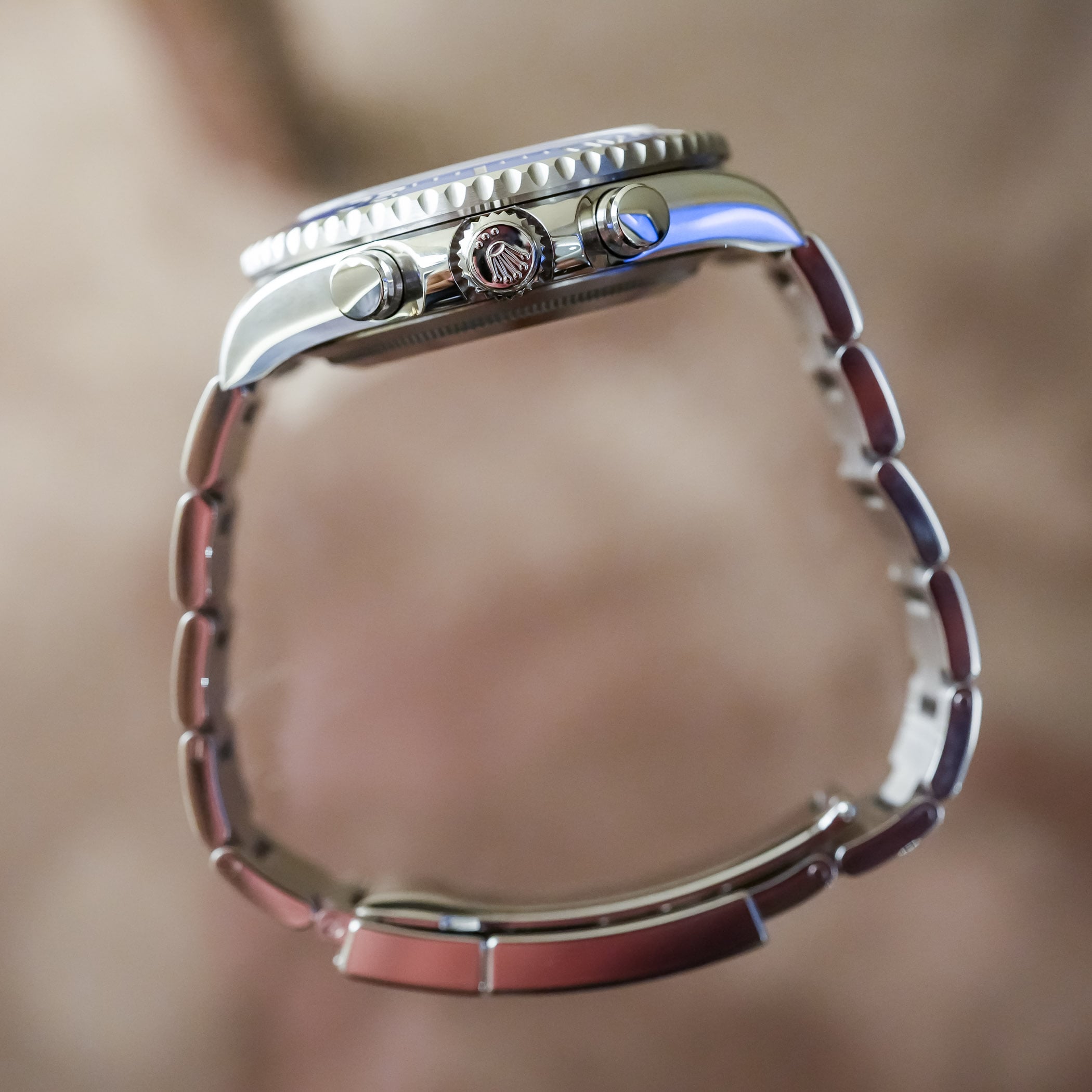
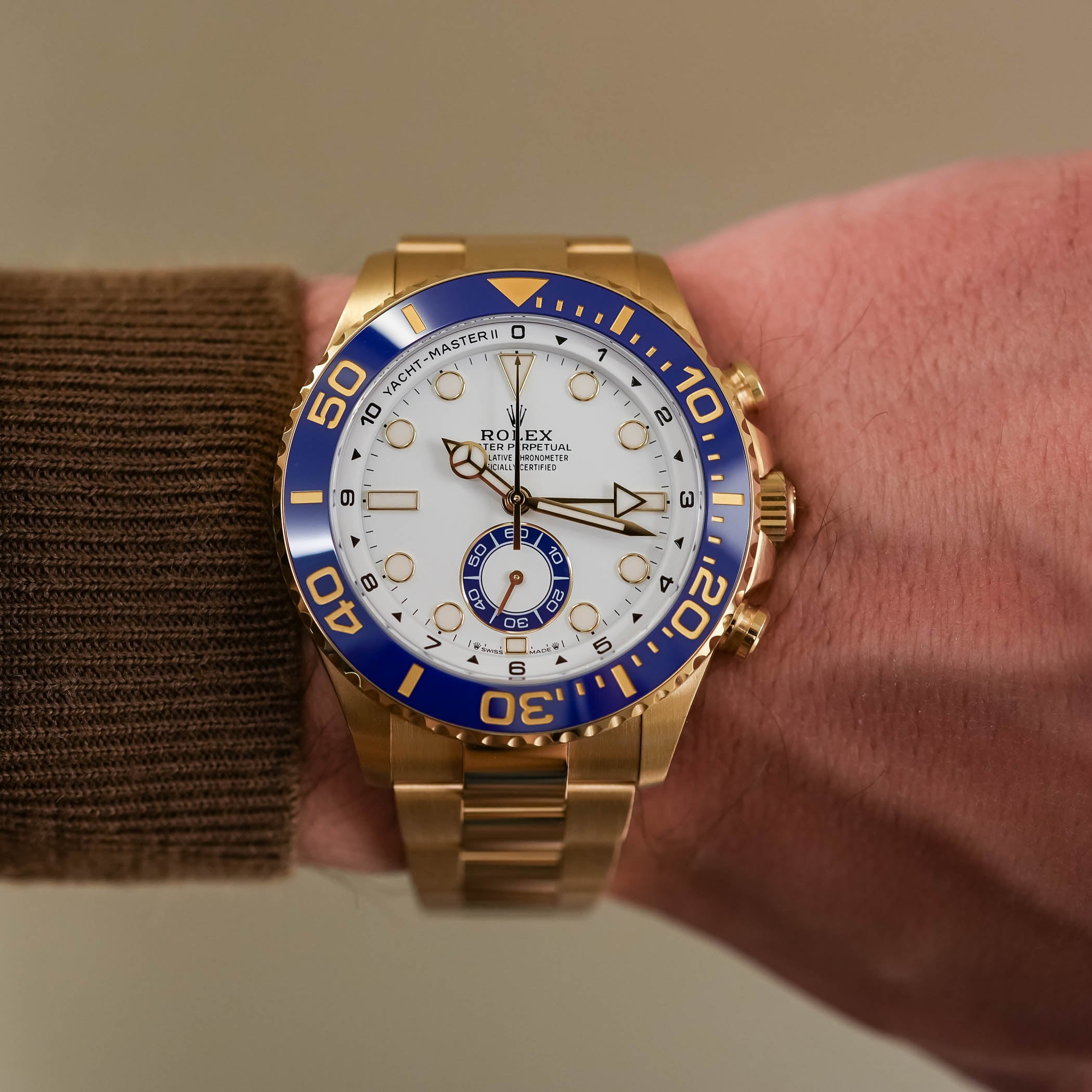
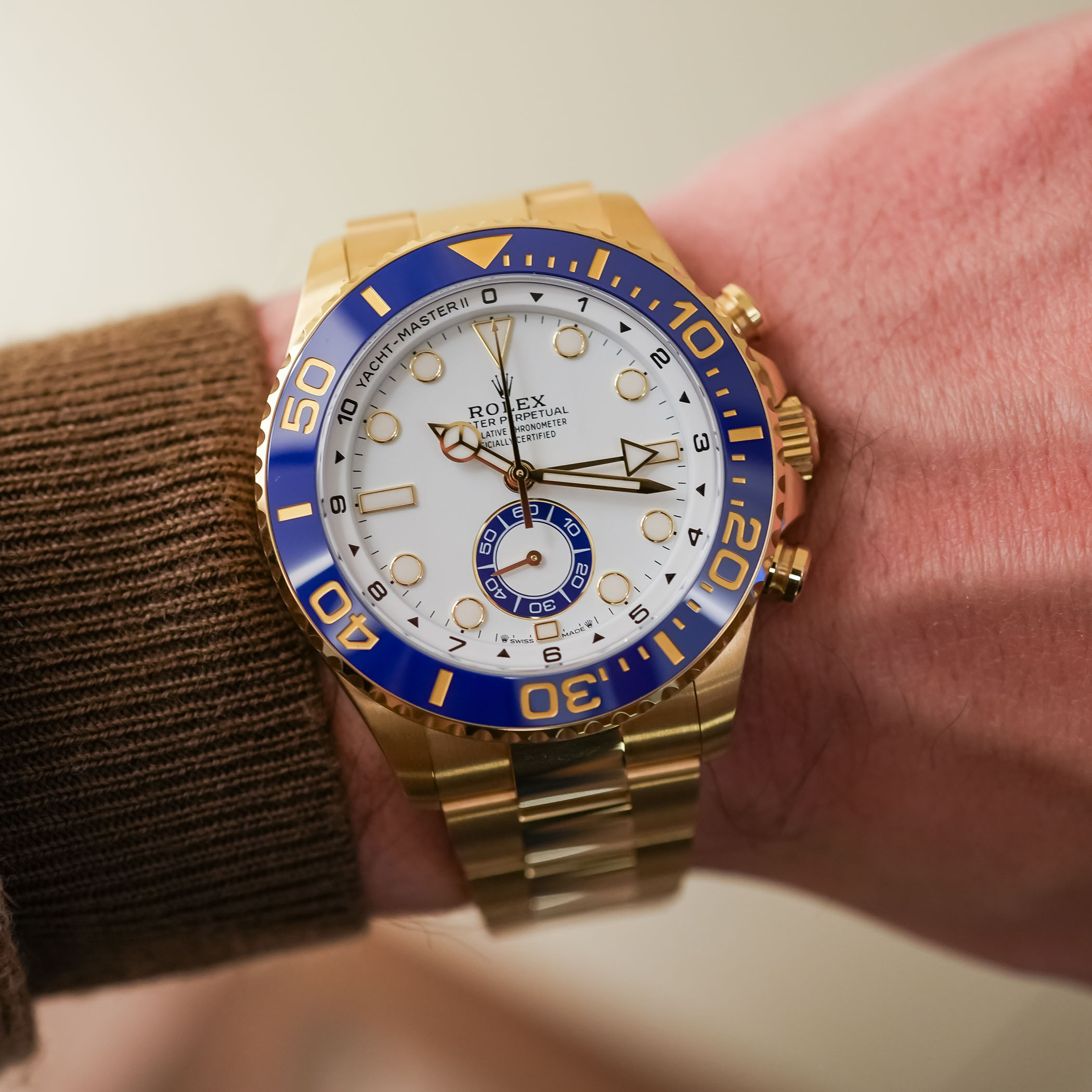
Photographed on the wrist of Brice (which is about 16.5cm), the new references 126680 and 126688 are, without a doubt, large watches. There’s both visual presence and heft, in particular with the gold model. That being said, Rolex’s sports watches, even larger ones, tend to wear comfortably. But don’t expect the same sleekness as a no-date Submariner.
The Dial
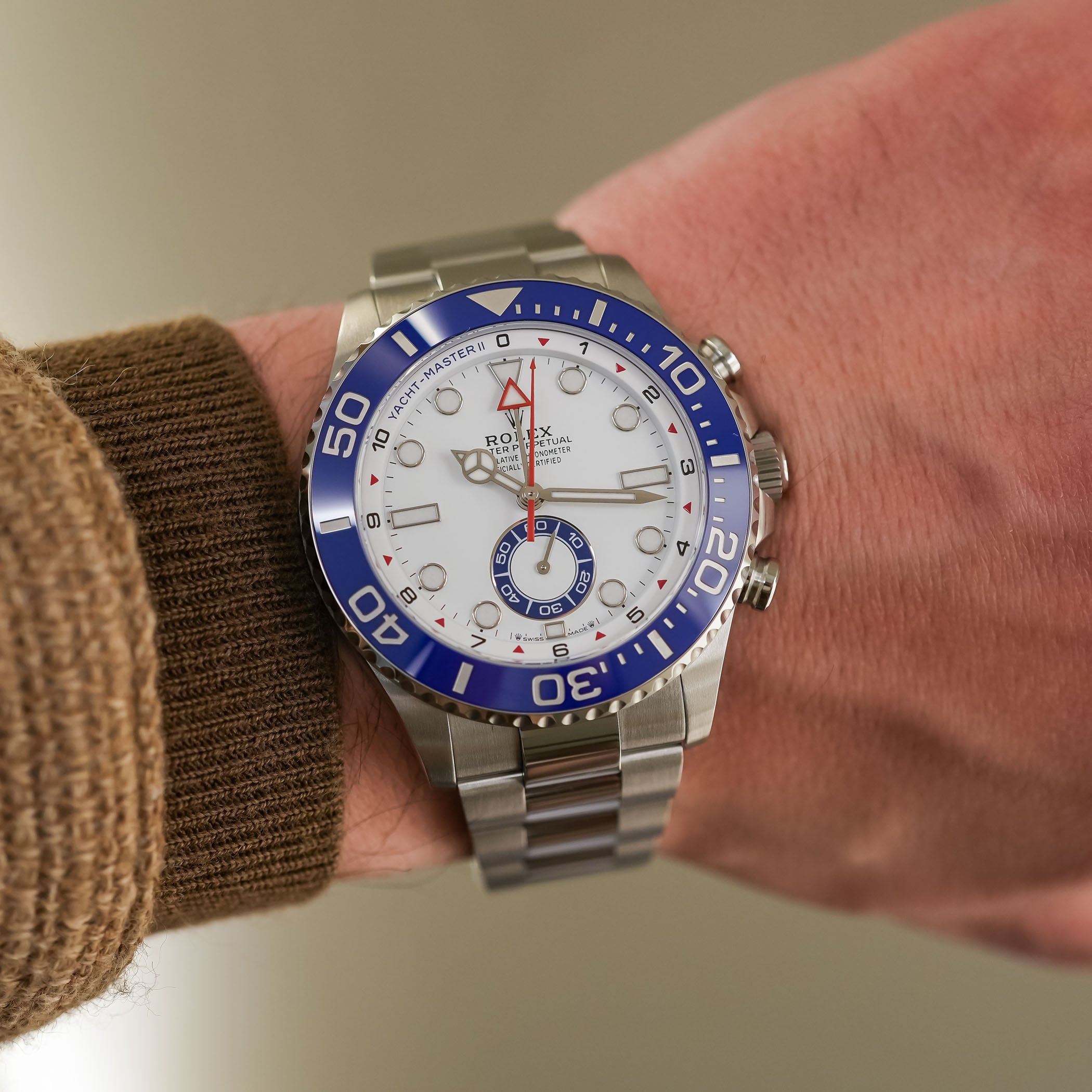
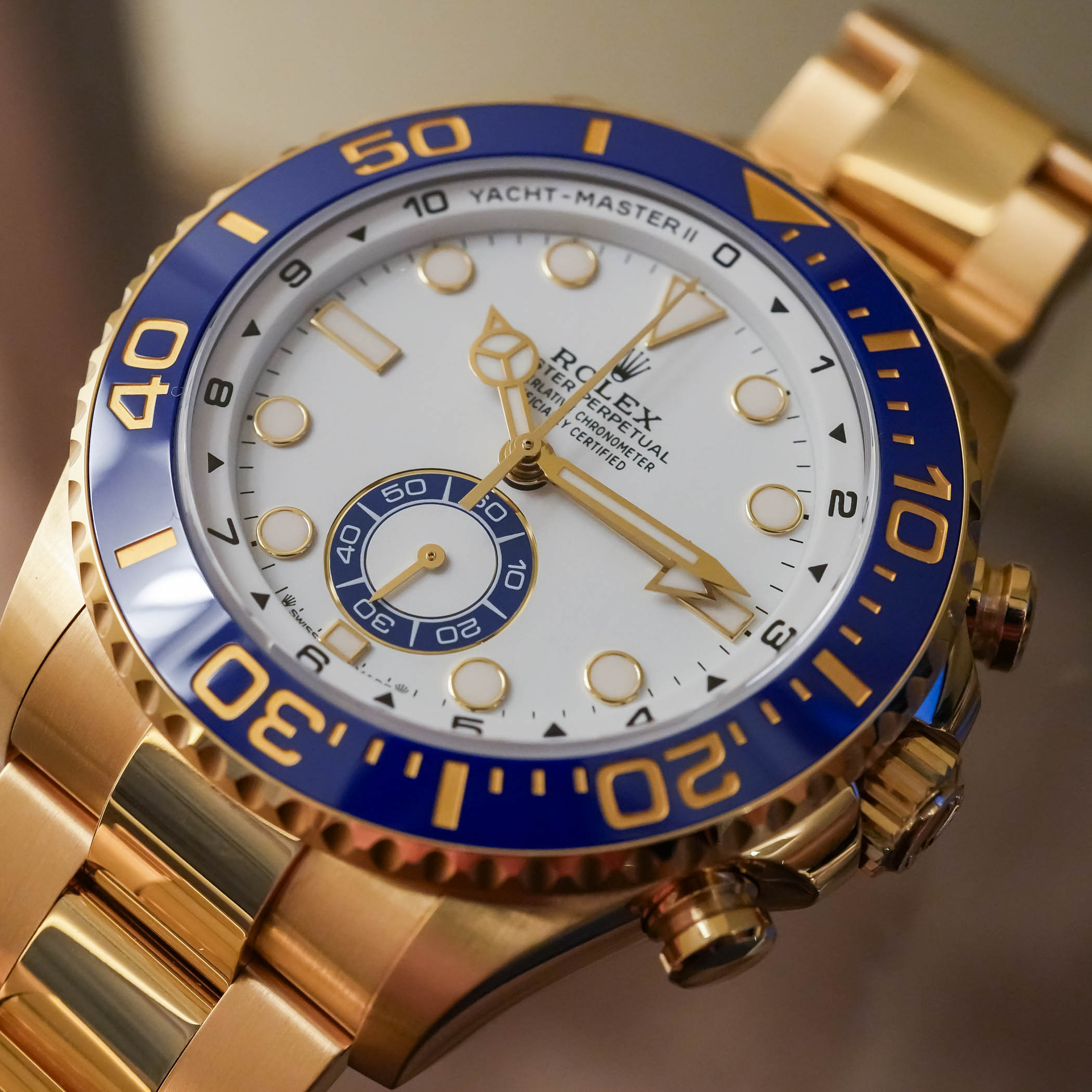
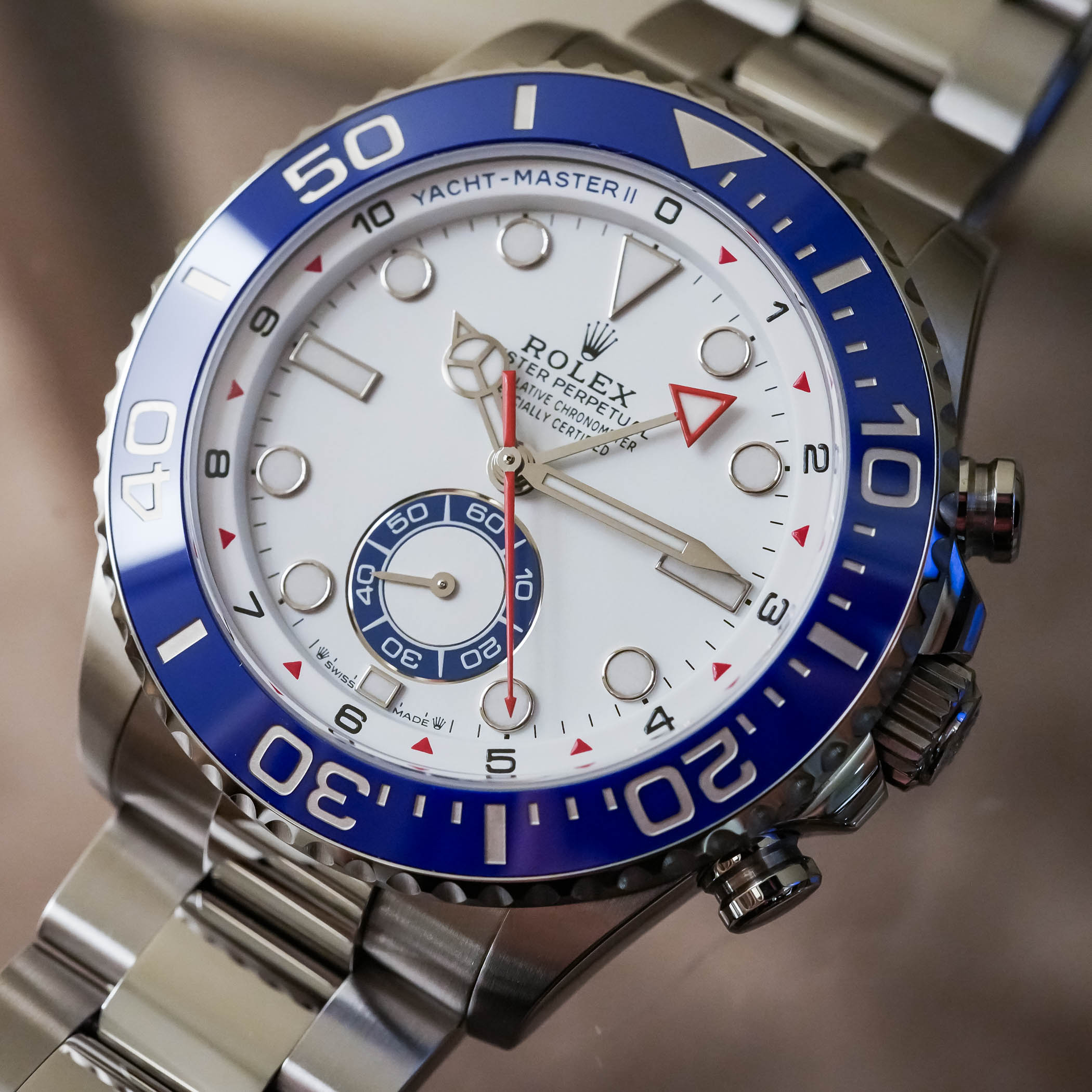
The dial is where the changes are most noticeable. The regatta scale, previously printed on the dial, has been moved to a precisely engineered flange, creating a cleaner display with applied geometric hour markers, gold hands with Chromalight treatment, and a running seconds subdial at 6 o’clock. The matte white lacquer surface reduces reflections and enhances contrast. The combination of blue and white, a classic of the model, certainly brings the desired nautical effect.
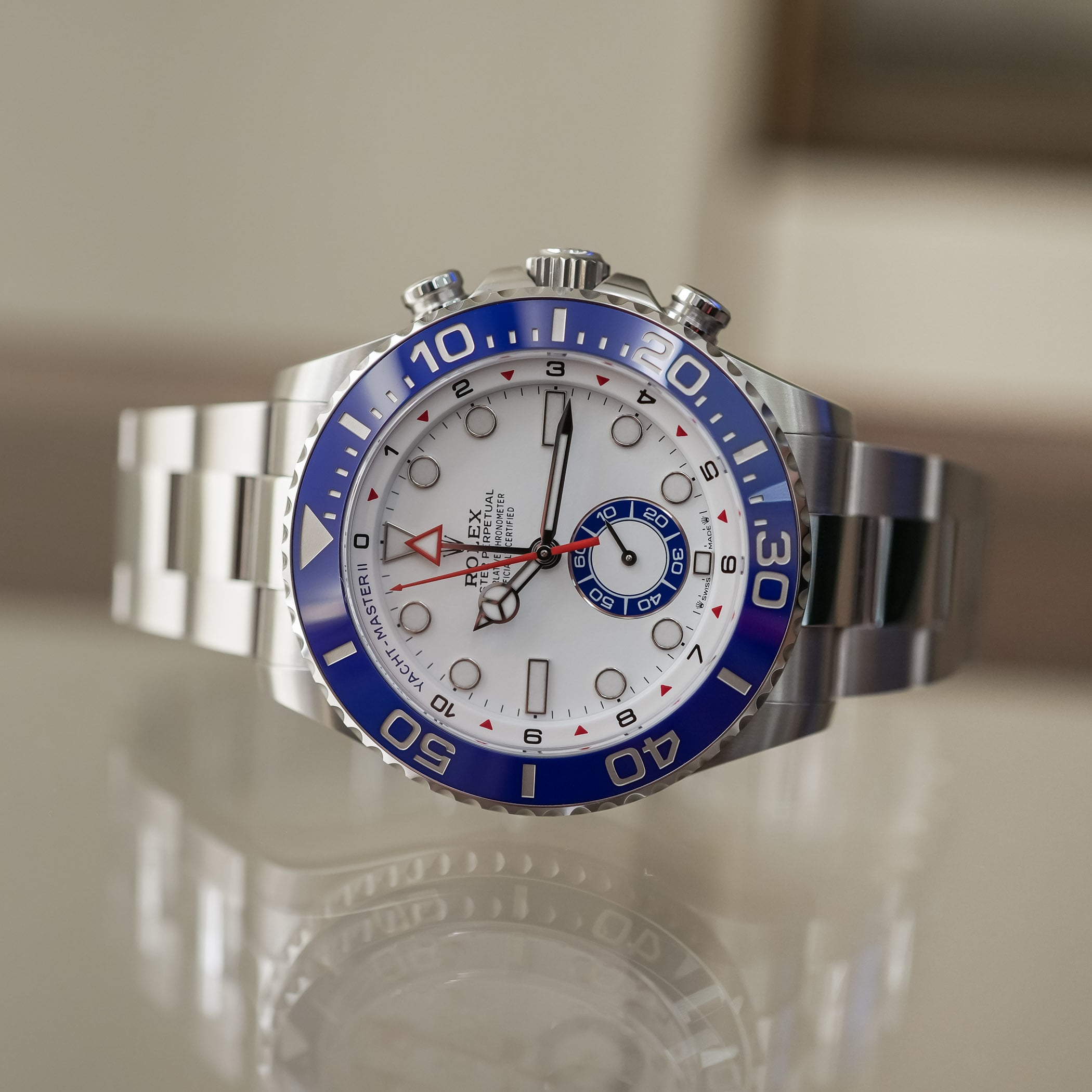
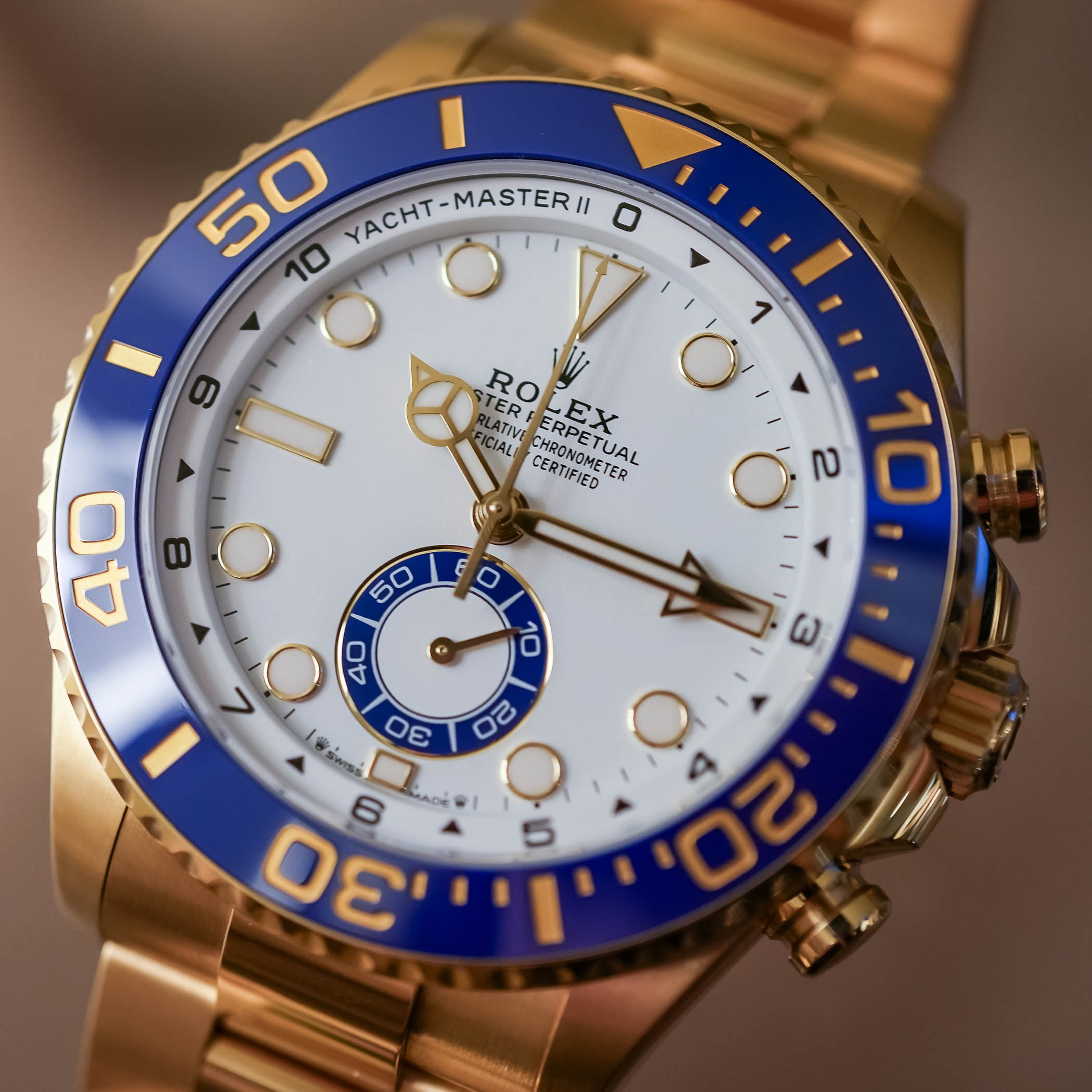
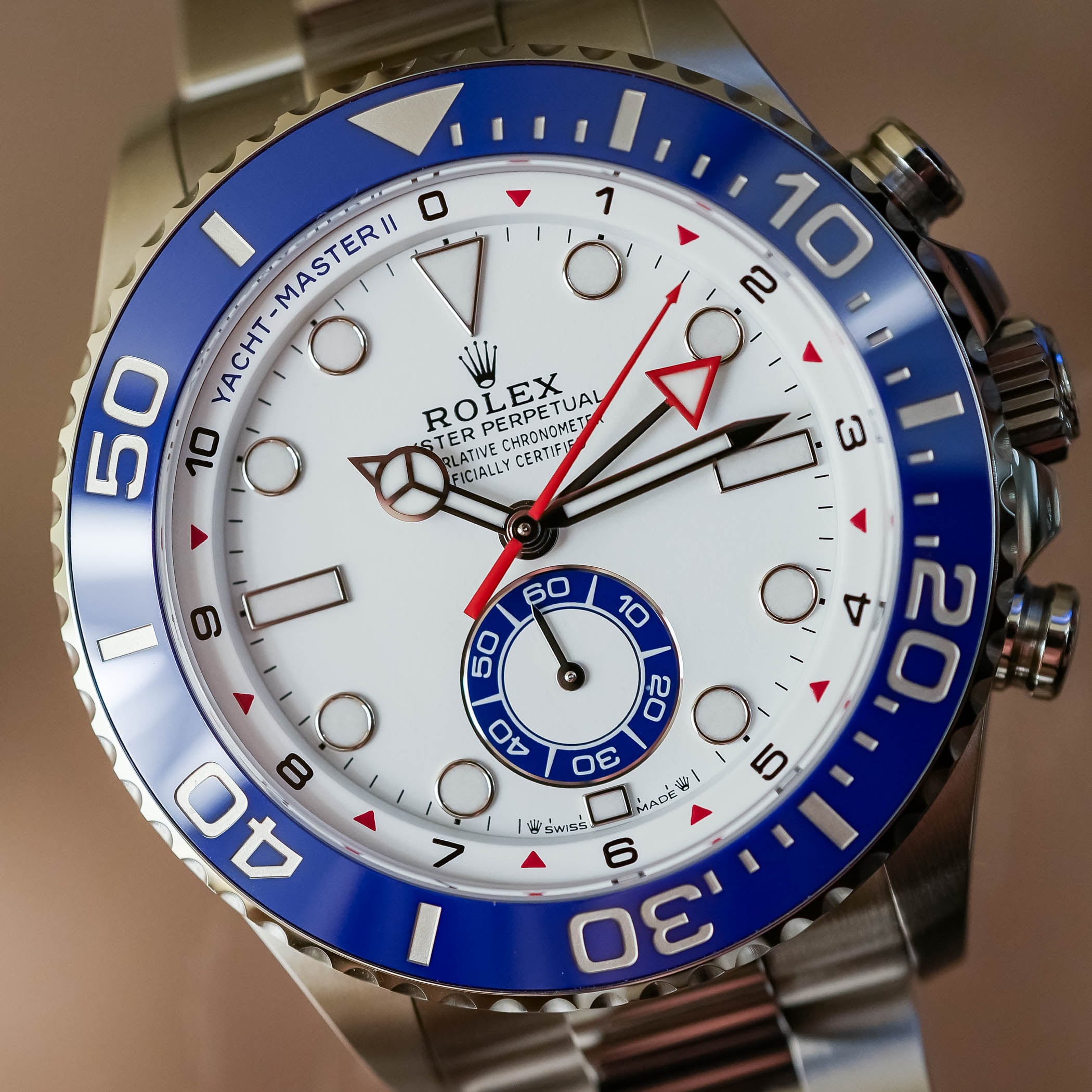
One of the most interesting changes is the movement of the countdown hands. Both the central seconds hand and the countdown minute hand now rotate counterclockwise, which significantly improves intuitive reading and aligns the display with the logic of the complication. On the Oystersteel variant, the countdown hands offer better legibility, with red lacquer and red accents on the regatta scale. The yellow gold version lets the gold do the talking, while being equally capable.
The Movement
The new Rolex Yacht-Master II is powered by the calibre 4162, an evolution of the previous 4161, updated with Rolex’s latest technical developments. It incorporates the Chronergy escapement for improved efficiency and magnetic-field resistance, along with a Parachrom hairspring and Paraflex shock absorbers. The movement operates at 28,800 vibrations/hour and delivers a power reserve of approximately 72 hours.
Despite the updates, the architecture remains faithful to the original concept. It is, at heart, an automatic chronograph (sharing some of its architecture with the calibre 4130 and 4131 of the Daytona) with a column wheel and a vertical clutch ensuring precise, instantaneous operation of the chronograph functions. It remains one of the most sophisticated movements the brand has ever produced.
The Bracelet
The Oyster bracelet remains faithful to Rolex’s established design, with brushed outer links and polished centre links. The Easylink extension system allows for quick adjustment. On the gold version, ceramic inserts within the links improve durability.
How does the 2026 Yacht-Master II work?
The Yacht-Master II is not a conventional chronograph like the Daytona, and understanding its operation is key to appreciating its purpose. As detailed in the official documentation, the watch is designed around the structured sequence of a regatta start, where timing must be precise and adaptable. The regatta start sequence lasts 5 to 10 minutes (when the participants manoeuvre) and comprises an official countdown start (gun fired), a synchronisation signal (gun), a preparatory signal (horn), and an official start (gun). I encourage you to look at the video below to understand how the pushers function and discover the motion of the hands.
The countdown is programmed using the lower pusher, with each press advancing the minute hand incrementally (the countdown seconds hand must be stationary, in reset). Once set, this duration is stored in the watch’s mechanical memory, allowing it to be reused without reprogramming. At the official starting signal, pressing the upper pusher activates the countdown, setting the central seconds hand in motion while the triangular minute hand tracks the remaining time along the flange.
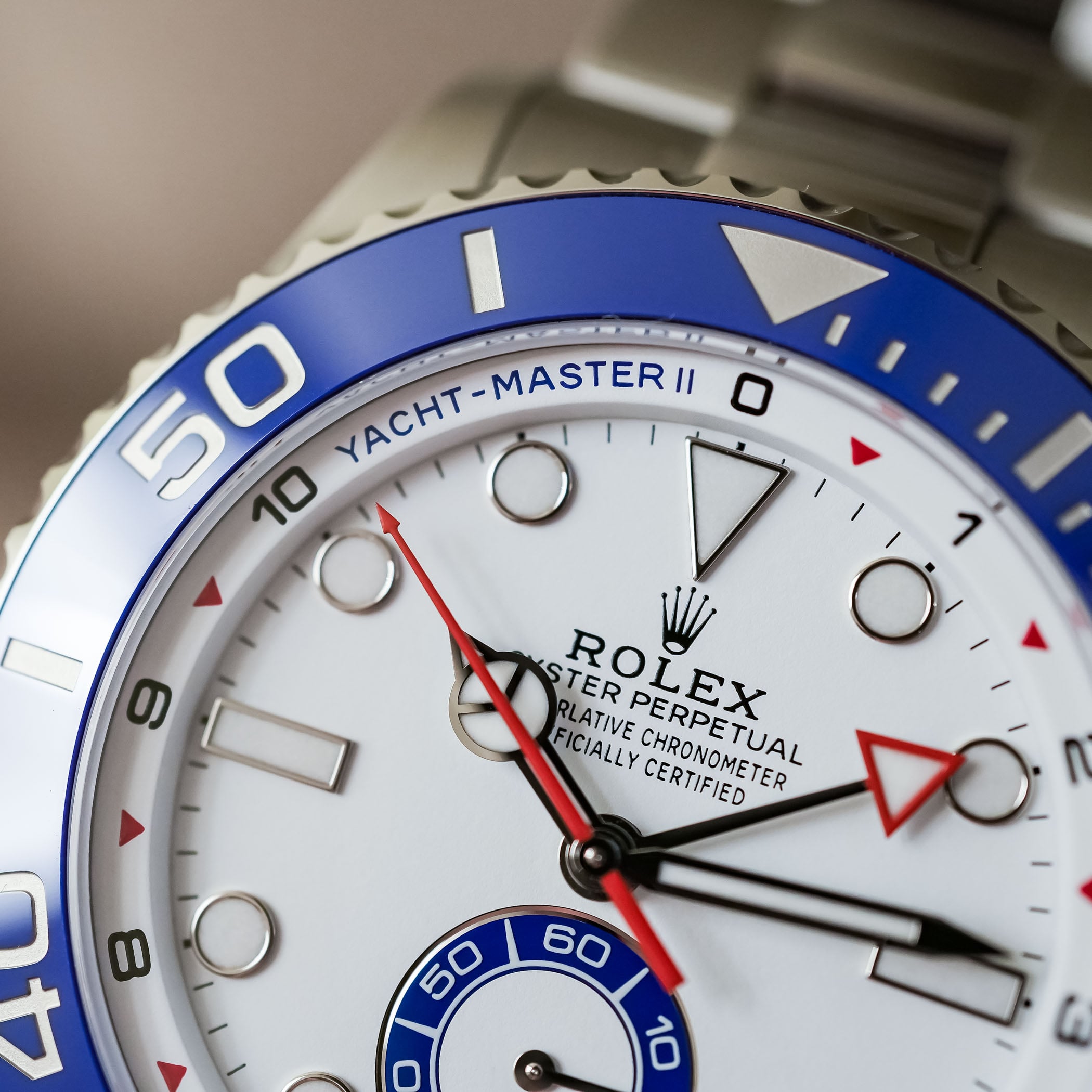
If the timing is slightly off, in a case when the countdown was activated too late or too early, the system allows for quick correction. Pressing the lower pusher resets the seconds hand on the fly and synchronises the minute hand to the nearest minute, ensuring alignment with the official countdown without interrupting the sequence. The second firing of the gun and the horn signals are used to check if you are in line with the official timing.
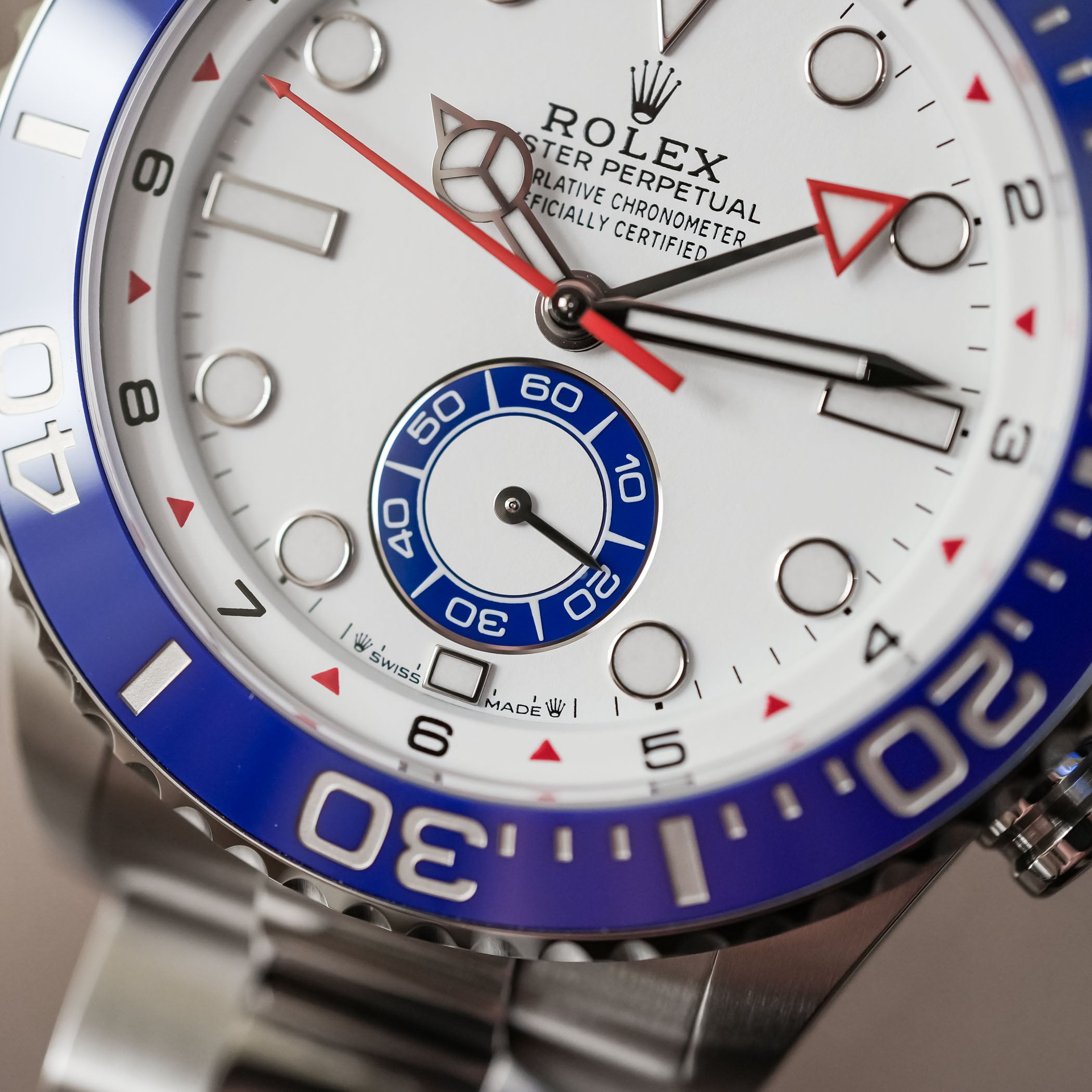
As the countdown approaches zero, the watch readings become increasingly precise, with the final seconds clearly indicated. Once the start (zero) is reached, the mechanism can be reset instantly, returning to the pre-programmed duration and ready for the next sequence. Pressing the upper pusher stops the seconds hand, then pressing the lower pusher returns the hands to their initial positions, meaning the seconds hand returns to zero and the countdown minutes hand to the position programmed earlier. Once programmed, it starts, stops and resets, like the familiar chronograph operation.
Final Thoughts
The Yacht-Master II has always been one of the most intriguing watches in Rolex’s catalogue, but also one of the most misunderstood. Its complexity, while impressive, was not always easy to comprehend.
These new references, 126680 and 126688, may well change that perception. By simplifying the interaction and refining the dial, Rolex has made the watch more intuitive and look more approachable without compromising its technical ambition. It remains a niche watch, designed for a very specific use, but this latest iteration makes it more compelling and technically fascinating.
Availability & Price
The new Yacht-Master II joins the permanent collection; the Oystersteel reference is priced at EUR 19,750, and the yellow gold version at EUR 56,200. For more information, please visit Rolex.com.

4 responses
Yeah, right. In whose mindless fantasy did this show up in? Because it ain’t gonna show in reality in any store I know of! Ha! In any case, who would want it to!
Its still one of the Ugly Sisters.
I really like it. It serves a very unique, specialized purpose, and I admire Rolex for the dedication to such a unique instrument. Unfortunately, I’m not in the market for the watch or for the yachting environment to which it belongs. For those naysayers, it certainly serves a greater purpose than the proliferation of the moon phase complication found in so many watches. Who really pays attention to the current phase of the moon? Or cares?
Neil the entire watch is dedicated to a regatta function.