
 Not all images were able to load for printing. Please close the print window and try again.
 New References of the Piaget Polo Signature Date with Gadroons on the Dial
Getting back to its roots, the Polo flaunts its gadroons again.
Piaget’s iconic Polo watch debuted in 1979 as a slim, sensual, all-gold integrated bracelet watch covered from head to toe with horizontal gadroons. In 2016, Piaget resuscitated the Polo name and transformed it quite radically into a steel, cushion-shaped luxury sports watch closer in shape to the brand’s Emperador collection. Recouping some of the Polo 79’s codes, the Polo sports watch collection adopted its signature gadroons and placed them on the dial of its Polo Date in 2024. For Watches & Wonders 2026, Piaget releases a fresh batch of Polo Signature Date models in two metals and two case sizes, featuring gadroon dials in silver or Piaget’s in-house blue.
Yves Piaget, fourth-generation member of the Piaget family, joined the company in the 1960s and cultivated the brand into a visible, lifestyle-driven luxury maison. Pushing the brand’s historical ultra-thin calibres 9P and 12P and its high-tech quartz 7P movement into new terrain, a flamboyant generation of fashionable jewellery watches with bright-coloured hardstone dials found an audience among high-society figures of the day. As a keen equestrian, Yves Piaget’s solid gold Polo watch, decorated with a series of gadroons across the case, dial and bracelet, captured the sport’s glamorous milieu and was quickly adopted as a status symbol in the 1980s. Resurfacing in 2016, the name Polo was chosen to represent Piaget’s luxury sports watch collection.
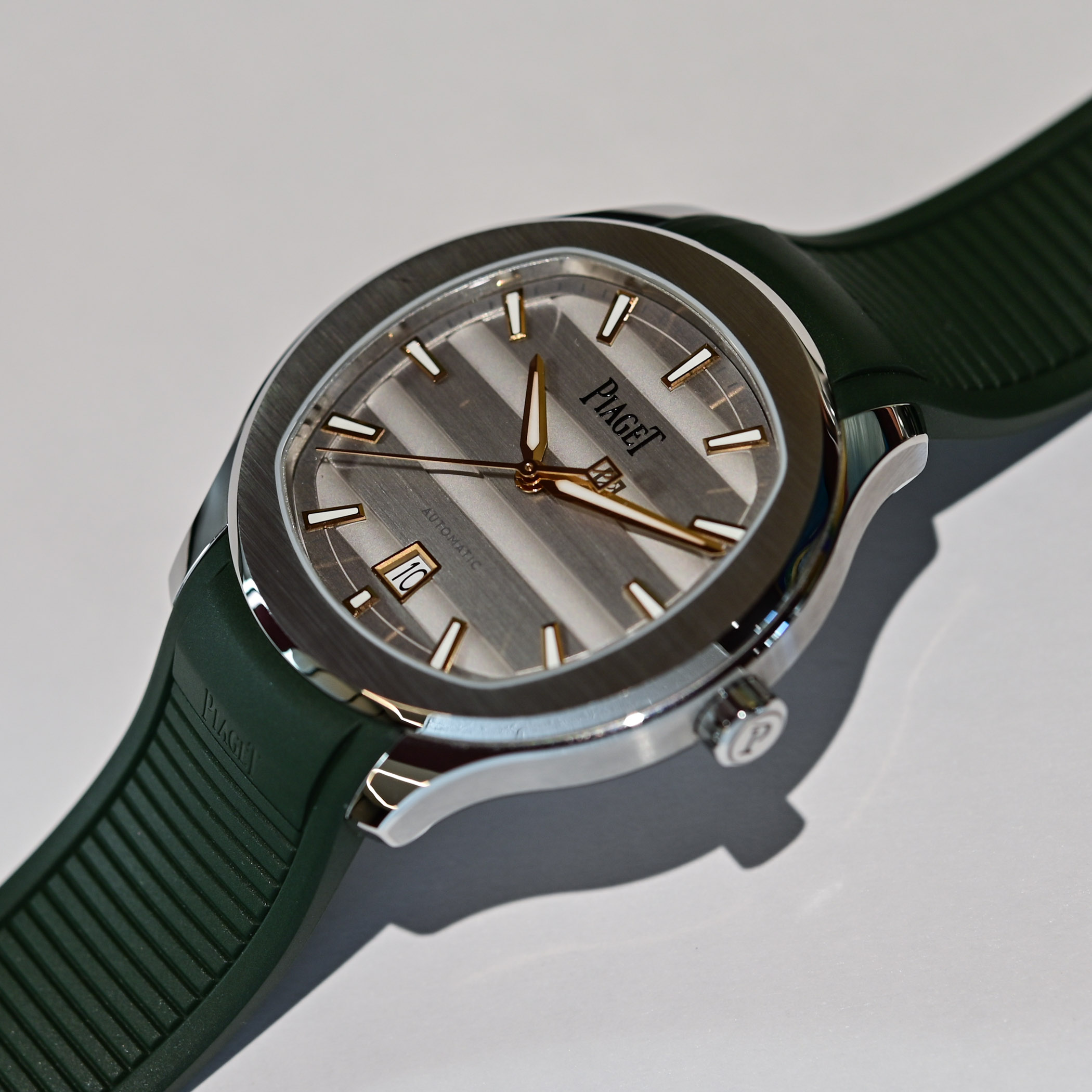
While almost all dials in the extensive Polo family (excluding stone, skeletonised and gem-set models) are decorated with thin horizontal ridges, the relationship to the original Polo 79 was not immediately evident. The brand’s decision, in 2024, to incorporate gadroons – a key feature of the Polo 79 – on the dial of the sporty Polo family brought it one step closer to its famous predecessor.
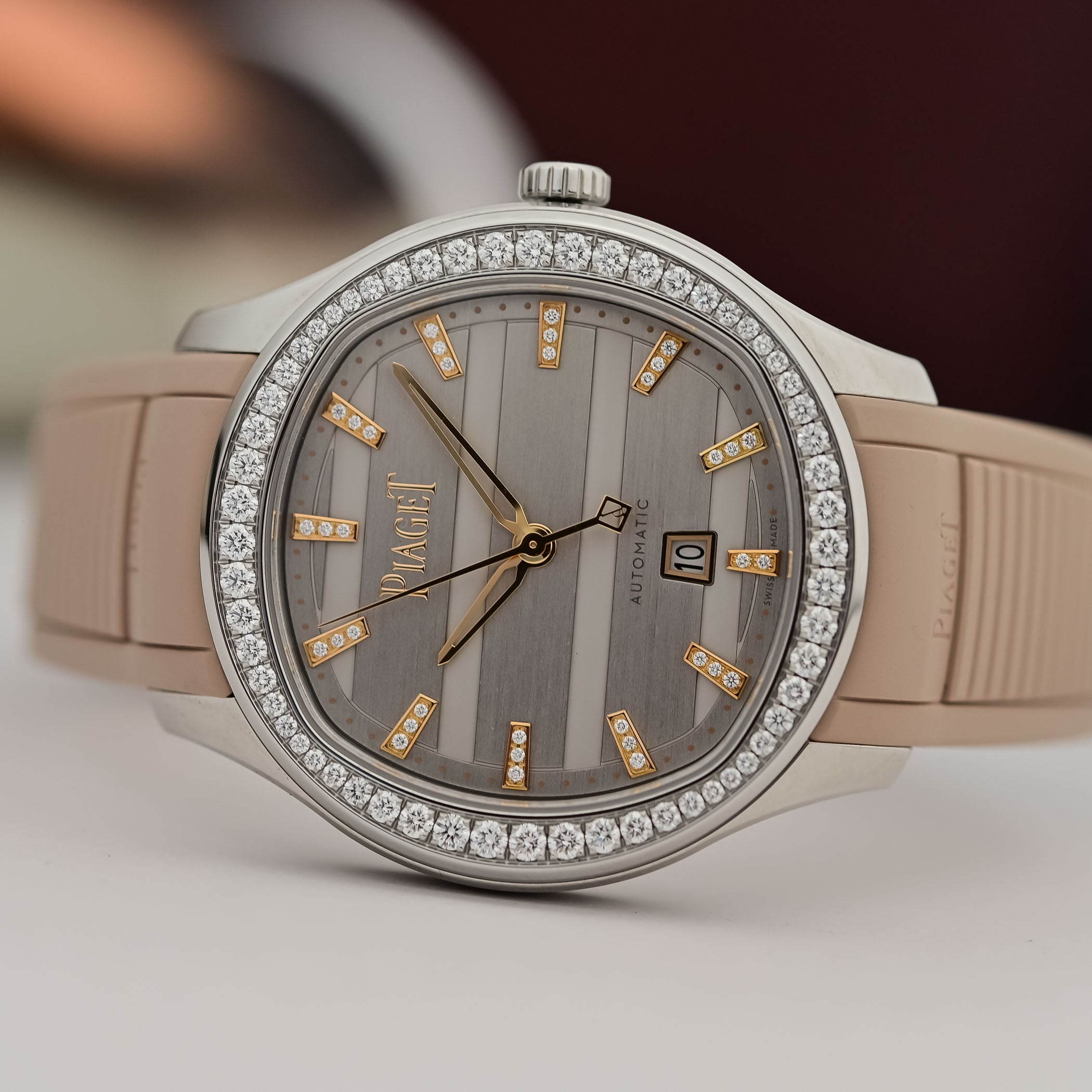
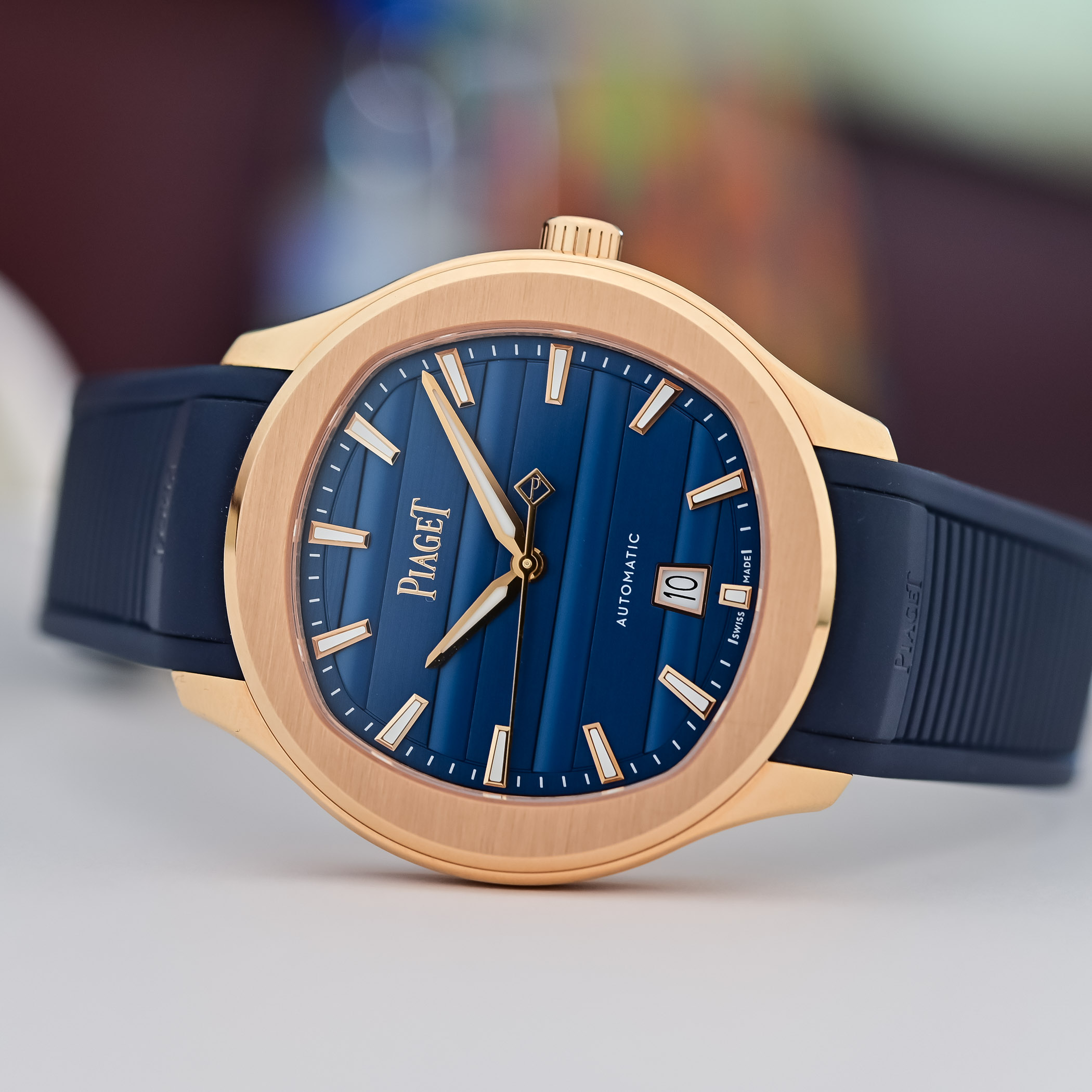
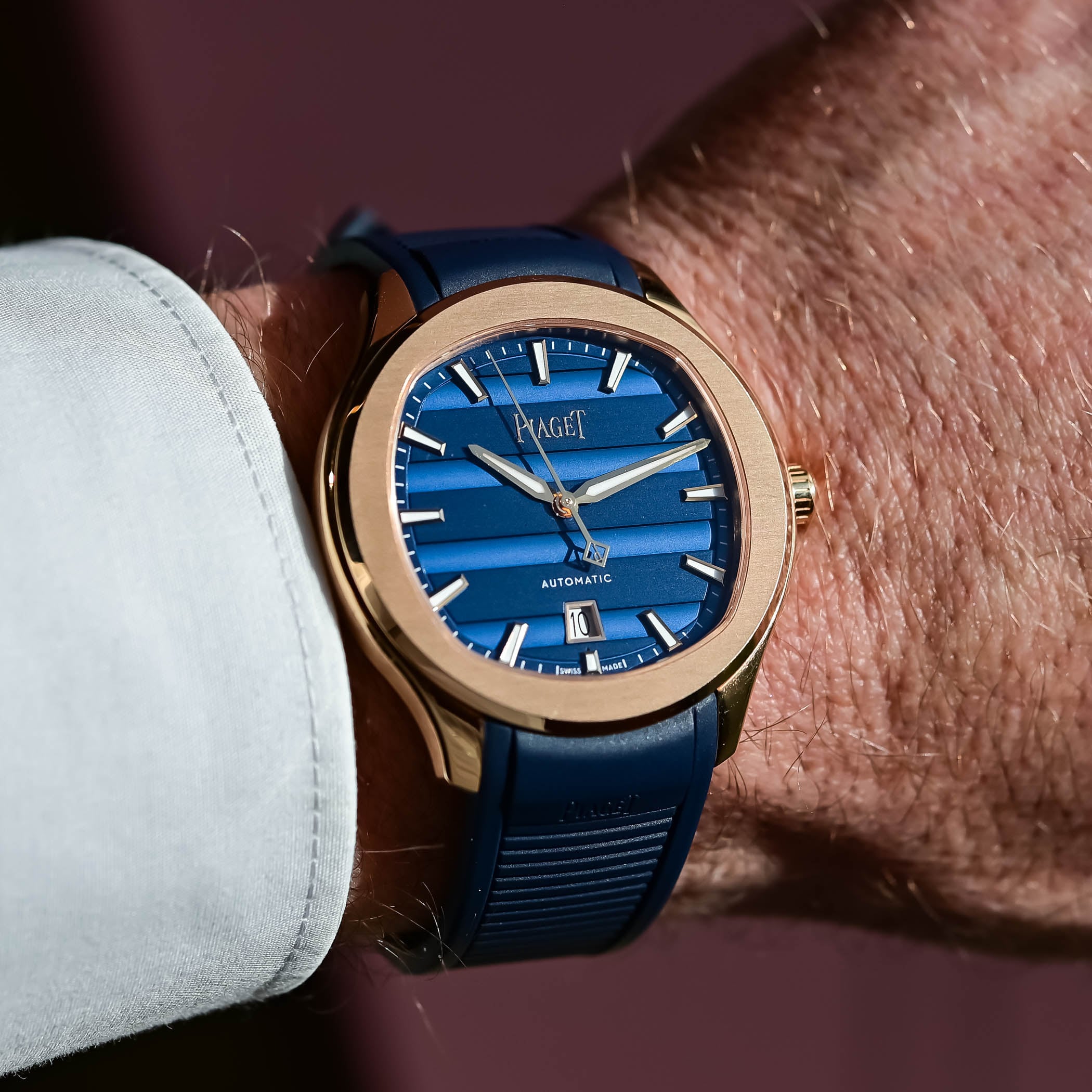
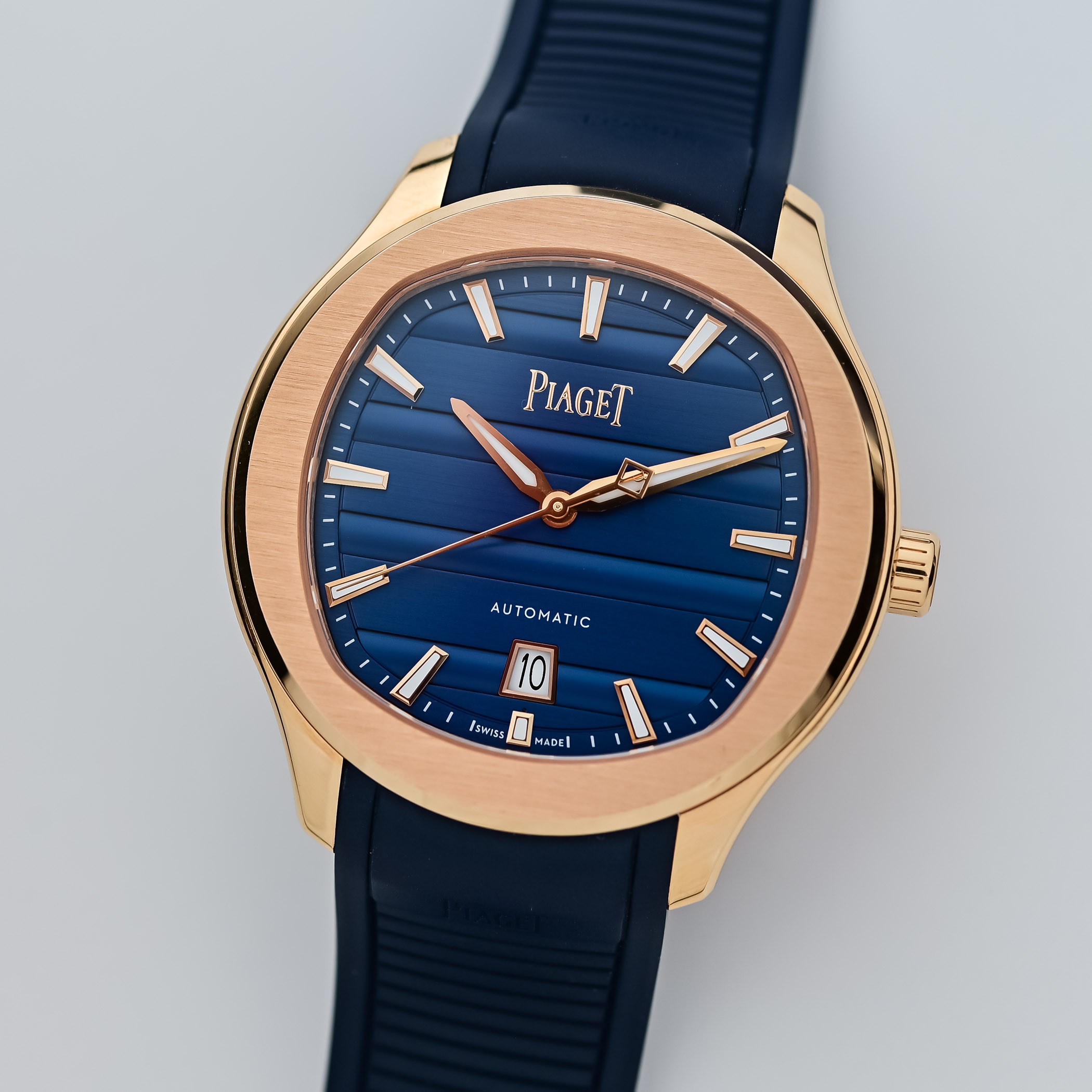
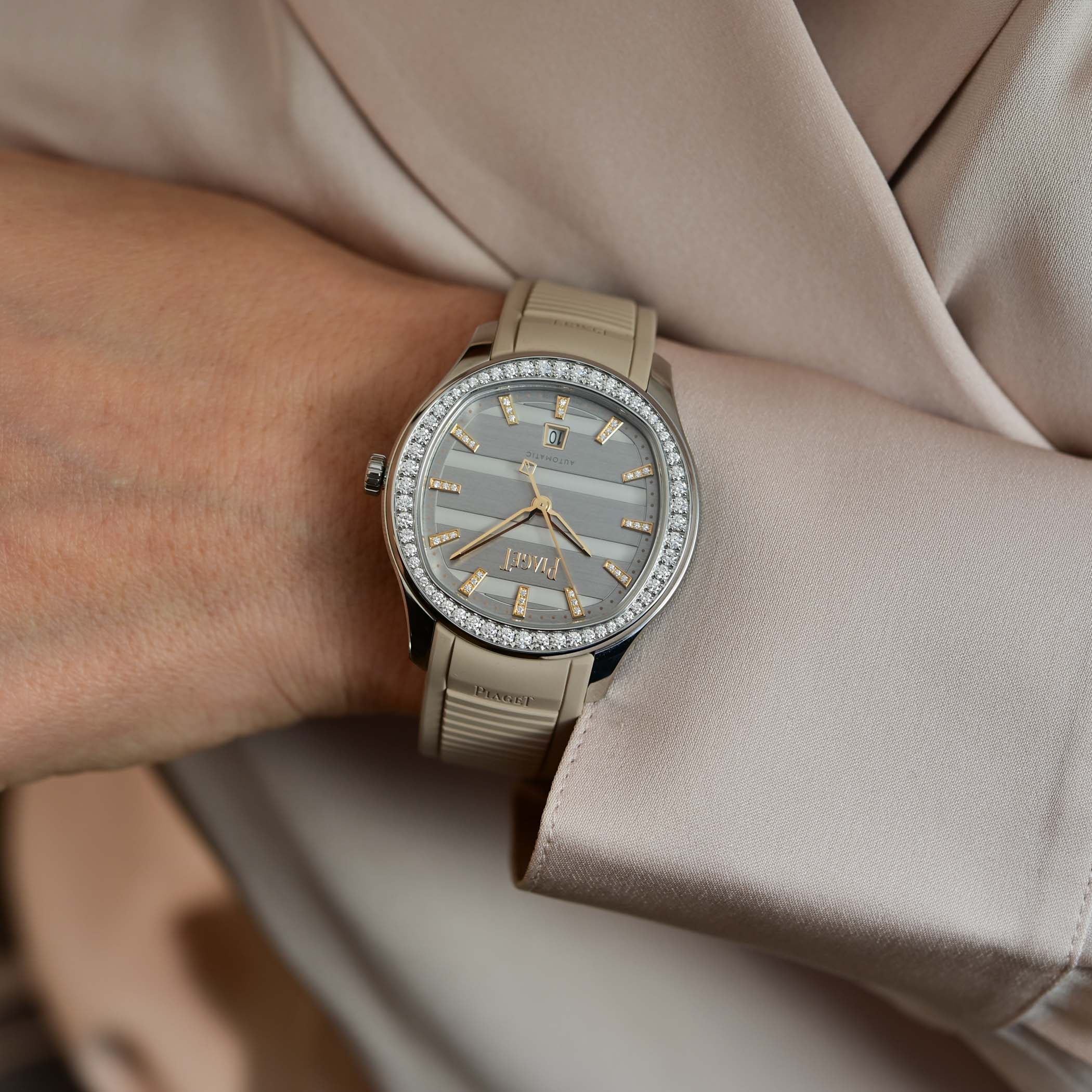
Following the 2024 release of the 42mm and 36mm his-and-hers Piaget Polo Date references with beige dials decorated with prominent horizontal gadroons, the brand returns with more new renditions featuring blue or silver dials traversed by rounded horizontal and polished gadroons with a date in an aperture at 6 o’clock. Available with or without brilliant-cut diamonds set in the indices and bezel, the 42mm references feature Super-LumiNova on the indices and hands, while the 36mm references feature Super-LumiNova only on the indices, as their hands are skeletonised. Presented in stainless steel or 18k pink gold cases, the wide bezel is decorated with horizontal brushing and a polished bevel matching the surface of the case middle.
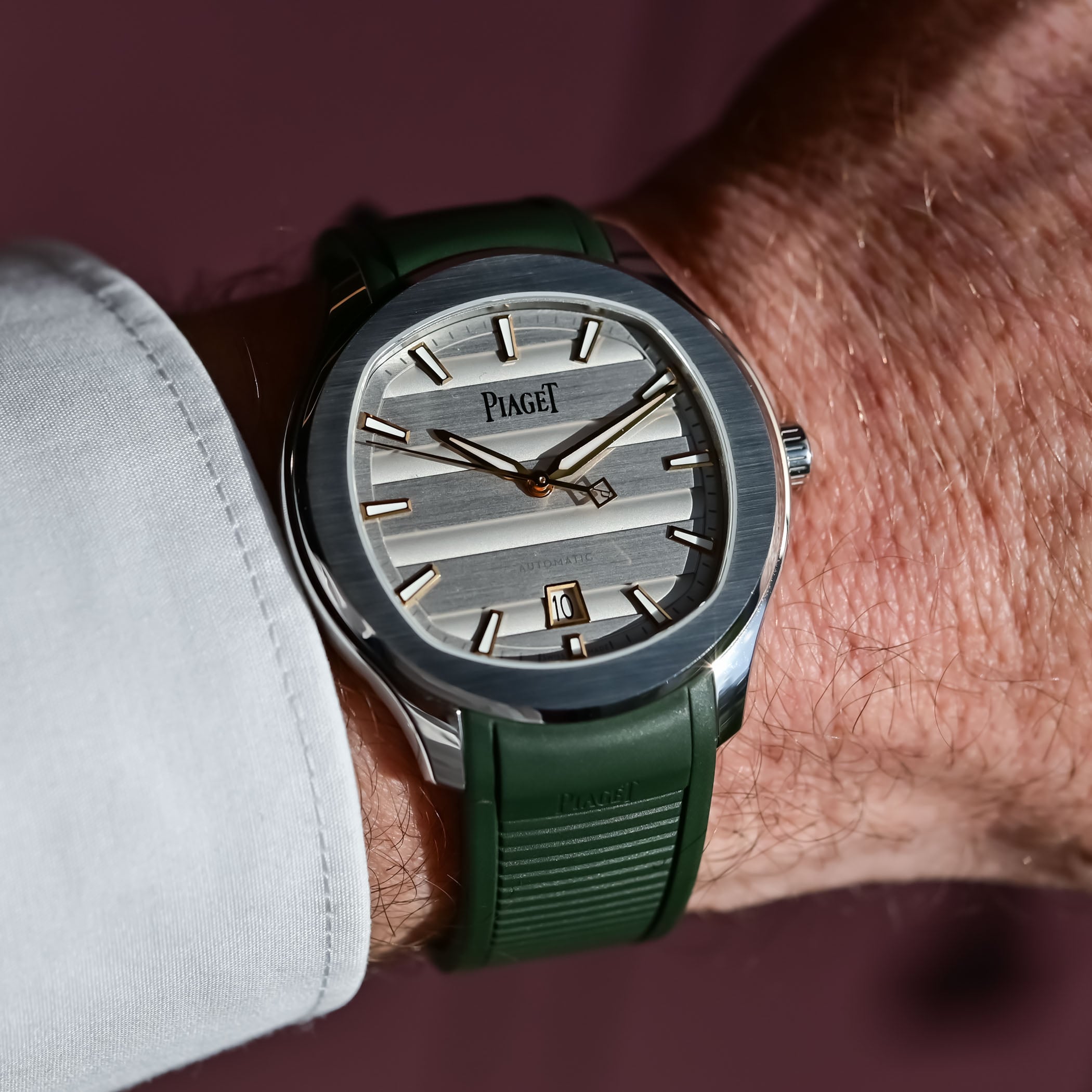
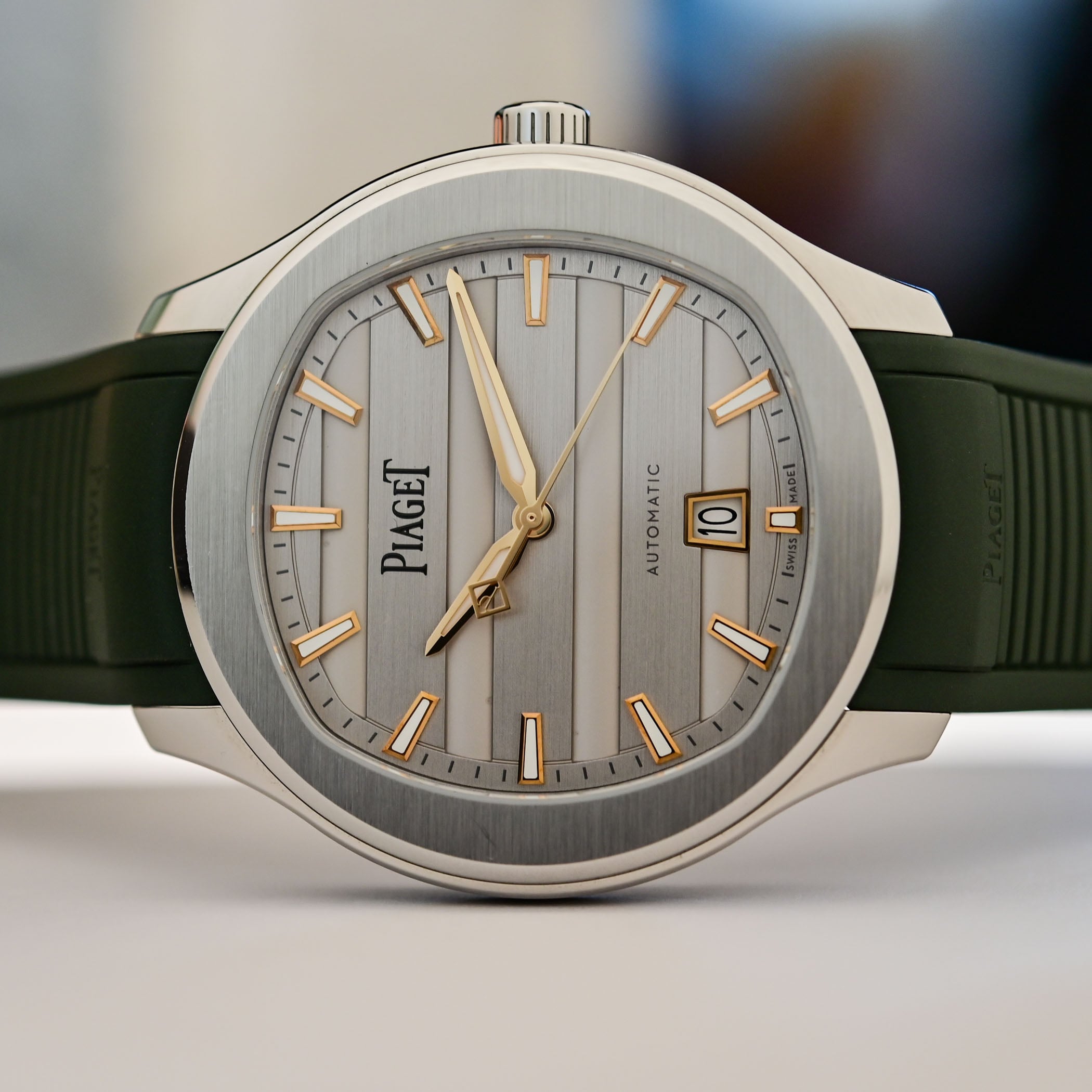
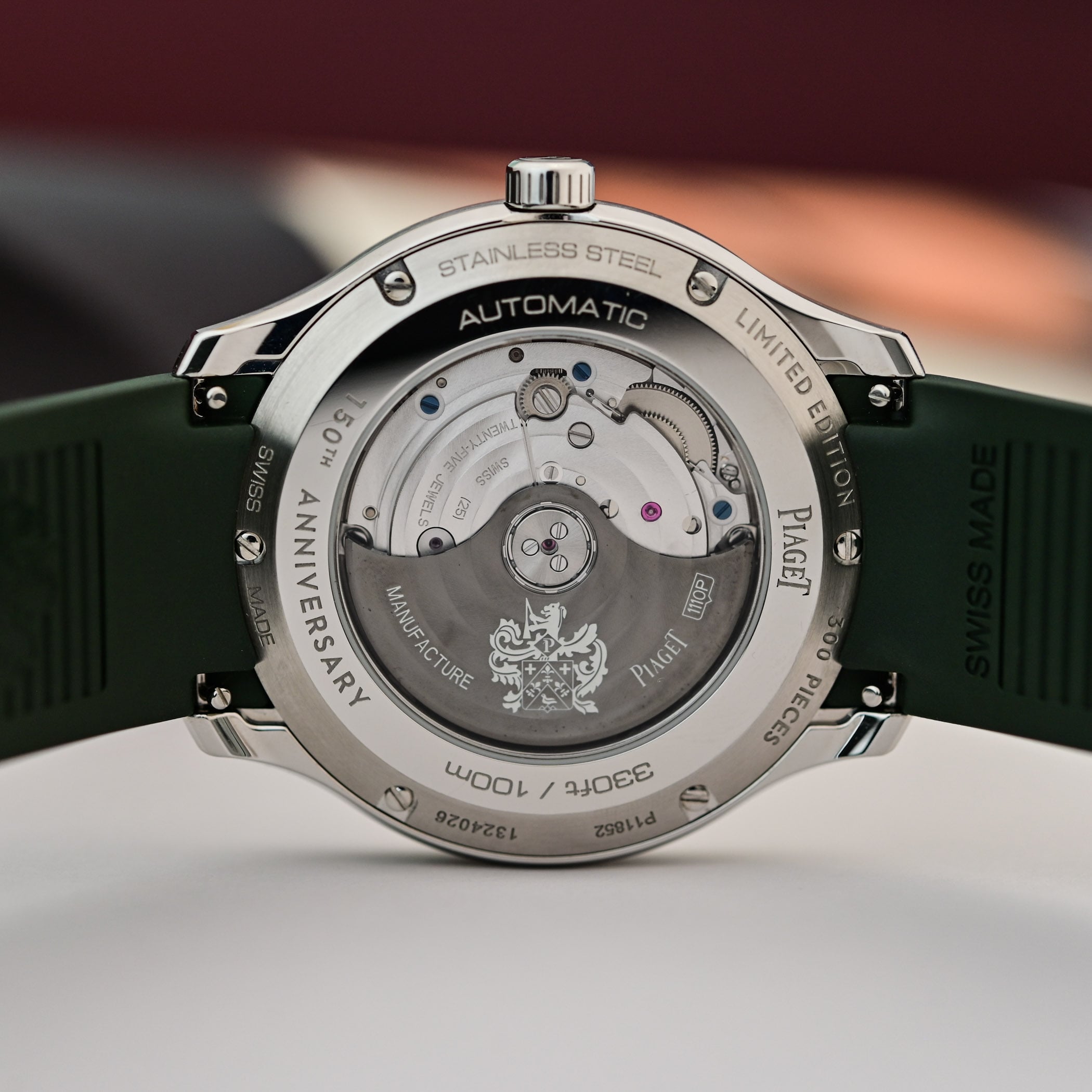
The largest 42mm x 9.4mm reference, with a water-resistance of 100 metres, comes in stainless steel and more luxurious 18k pink gold cases with silver or blue dials, with or without diamond-set bezels and indices. The movement inside the 42mm model is the automatic calibre 1110P, an evolution of Piaget’s automatic 800P. With a height of just 4mm, it operates at 28,800vph and has a power reserve of 50 hours. A stop-seconds mechanism allows you to set the time with precision.

The more compact 36mm x 8.8mm model, with 50m water-resistance, also comes in steel or 18k pink gold cases with silver or blue dials and a choice of diamond-set indices, diamond-set bezels, or both. Powering the 36mm model is Piaget’s in-house calibre 500P1. This automatic movement with a central rotor has an ultra-slim height of 3.6mm and delivers a power reserve of 40 hours.
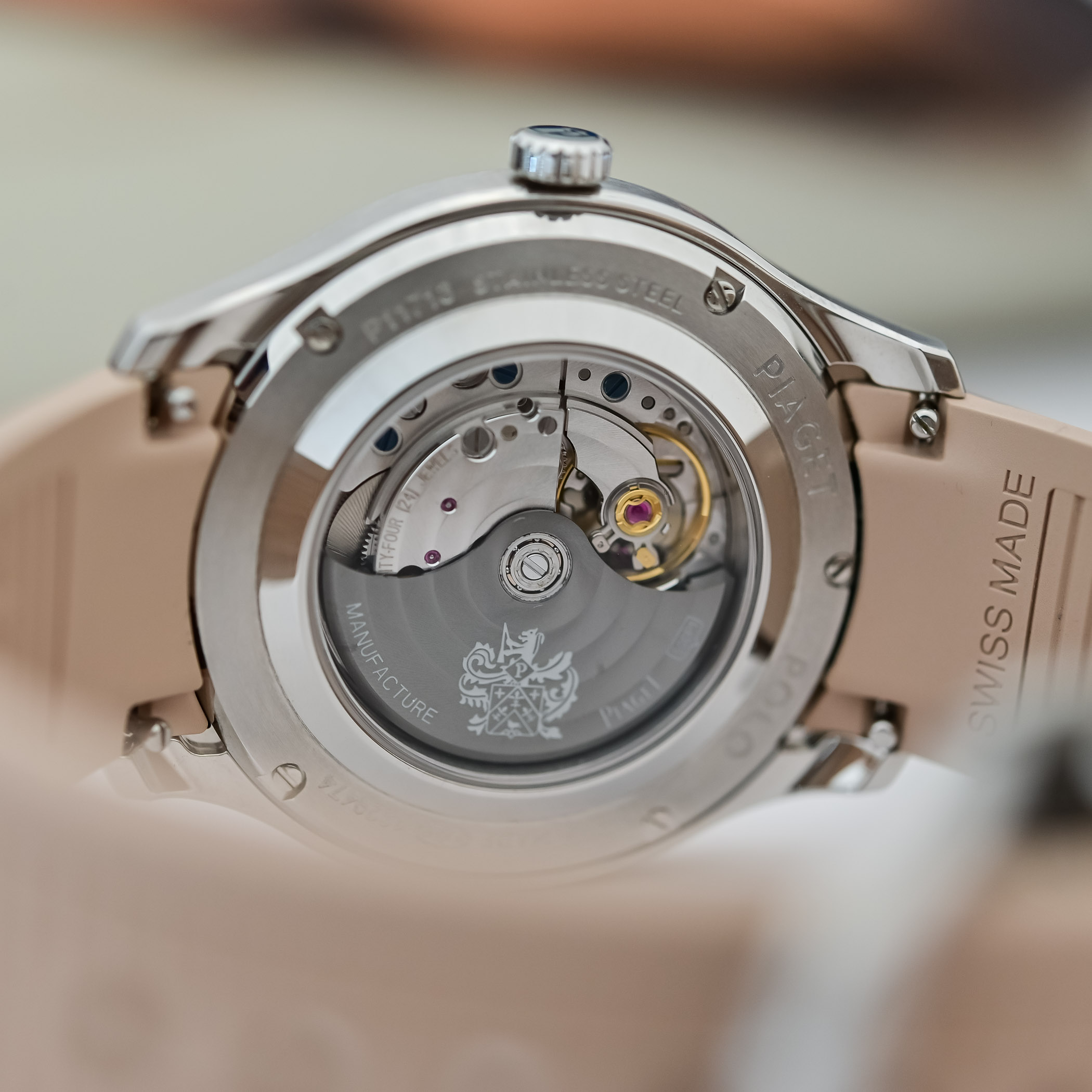
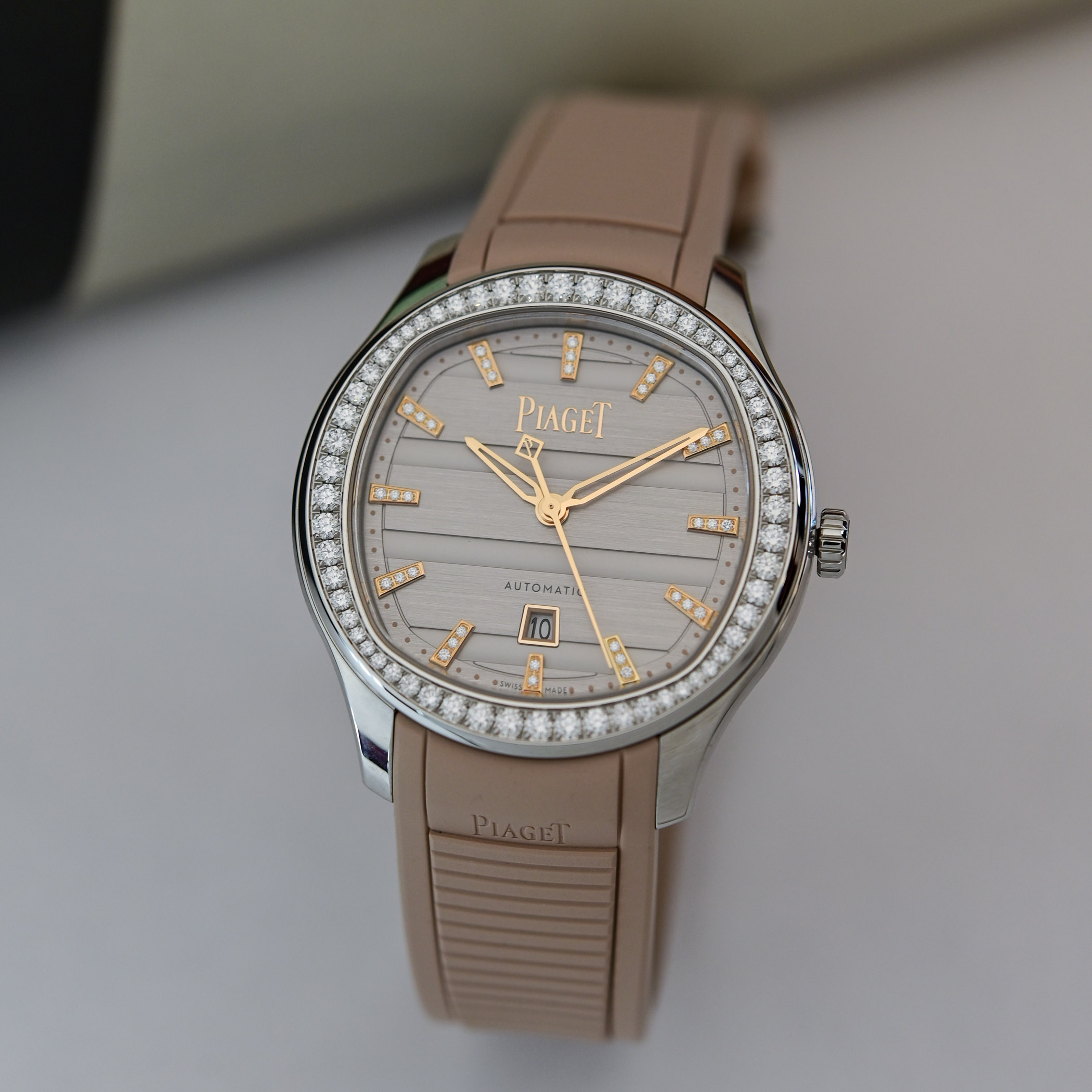
The four models presented on interchangeable steel or gold bracelets are delivered with an extra rubber strap; the rest are paired with interchangeable rubber straps. The new models expand the regular lineup. Prices range from CHF 11,700 in steel to CHF 49,200 in gold with diamonds. More information at Piaget.com.