


 Not all images were able to load for printing. Please close the print window and try again.
 The New Eagle Lightweight GTR Is Pure E-Type Perfection
Honed to perfection, both technically and aesthetically, Eagle's new Lightweight GTR is a true thing of beauty!
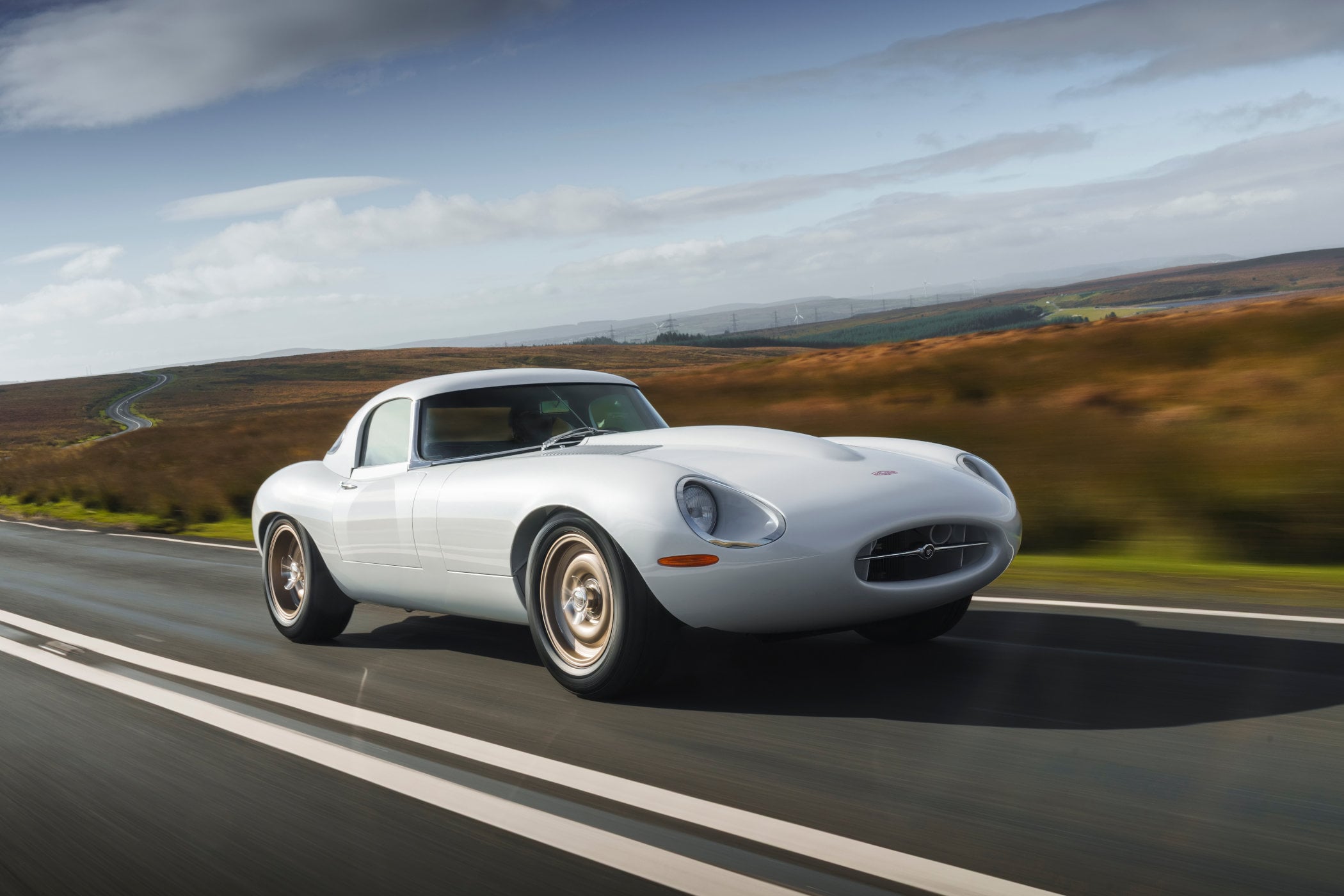
Enzo Ferrari allegedly called the Jaguar E-Type “the most beautiful car ever made”, and decades later, one Jeremy Clarkson proclaimed the Eagle Speedster as “the most beautiful thing he has ever seen”, cementing the E-Type specialists as the Singer of Jaguar cars. And truth be told, the cars coming out of the Eagle workshop in East Sussex, in the south-east of the UK, are absolute works of art. From fully restored ‘zero miles’ original E-Types to restomodded ones in all sorts of delectable forms, Eagle is known for its insanely high standards and for virtually achieving driving perfection. The latest to hit the roads is the new Lightweight GTR, recreating the E-Type’s uncompromising racing heritage, with a license plate.
Few cars have made an impression as the E-Type has. If any rival, from a design perspective at least, is to be named, you end up with cars like the Ferrari 250 GT California Spider, the Bugatti Type 57 SC Atlantic, and the Lamborghini Miura. That’s the level of iconic you have to consider when speaking about the E-Type. Primarily, that comes from its insanely gorgeous lines, but the E-Type’s racing career is not to be overlooked. Presented to the public in 1961 as a coupe and a roadster (the slightly less evocative 2+2 followed in 1966), it stole the hearts of plenty, and not just for its looks. It was relatively light and rather fast, with a top speed of about 150mph thanks to the 265bhp 3.8-litre straight-six engine under that never-ending bonnet. It broke with conventional ladder frames for its construction, and instead uses a front and rear subframe bolted directly to the tub. It also came with disc brakes all around, rack-and-pinion steering, and independent suspension in the front and rear. But above all, it was affordable, especially pitted against the aforementioned rivals!
The E-Type’s racing career began pretty much the moment it hit the roads, yet it took the company a couple of years to actively start racing with it. Jaguar was a genuine force to be reckoned with at the race track, winning the 24 Hours of Le Mans multiple times in the decade leading up to the E-Type with cars like the C- and D-Type. Using that racing expertise, Jaguar first built the E-Type Low Drag Coupe prototype, with a specially designed roofline and a lightweight aluminium body. The company tested it, but did very little with it in terms of racing and sold it in 1962. A year later, the E-Type Lightweight was built, which is essentially a roadster with a hard top, but differs underneath, as it shares quite a bit with the D-Type race cars instead of the road-going E-Type. Twelve were built out of the originally planned 18, and it’s considered pretty much the holy grail in race-prepped E-Types, apart from the Low Drag Coupe, obviously. It’s this highly sought-after and extremely valuable E-Type that Eagle’s Lightweight GTR is based on.
As a company, Eagle is completely dedicated to preserving and enhancing the legacy of the E-Type for over 40 years. It not only works on nut-and-bolt restorations for original E-Types, but even more so, made a name for itself with the Speedster, a glorious restomod of the Series I E-Type roadster. It stood out thanks to the ultra-clean lines, which respected the purity of the E-Type, yet gave it a more svelte appearance. The interior and mechanics received a massive upgrade as well, but again in honour of the original. It looks sleeker, more sensual even, and above all, timeless. But there’s more to Eagle’s work than restoring E-Types and building the Speedster. Eagle also makes the Low Drag GT, based on the prototype LDC from the early 1960s. Then it makes the Spyder GT, combining the performance of the Low Drag GT with the styling of the Speedster. And then there’s the Lightweight GT, and now the Lightweight GTR, turning the dial of the original dozen Lightweight E-Types that Jaguar built, to 11 and 12, respectively. Better, faster, more reliable and even more beautiful.
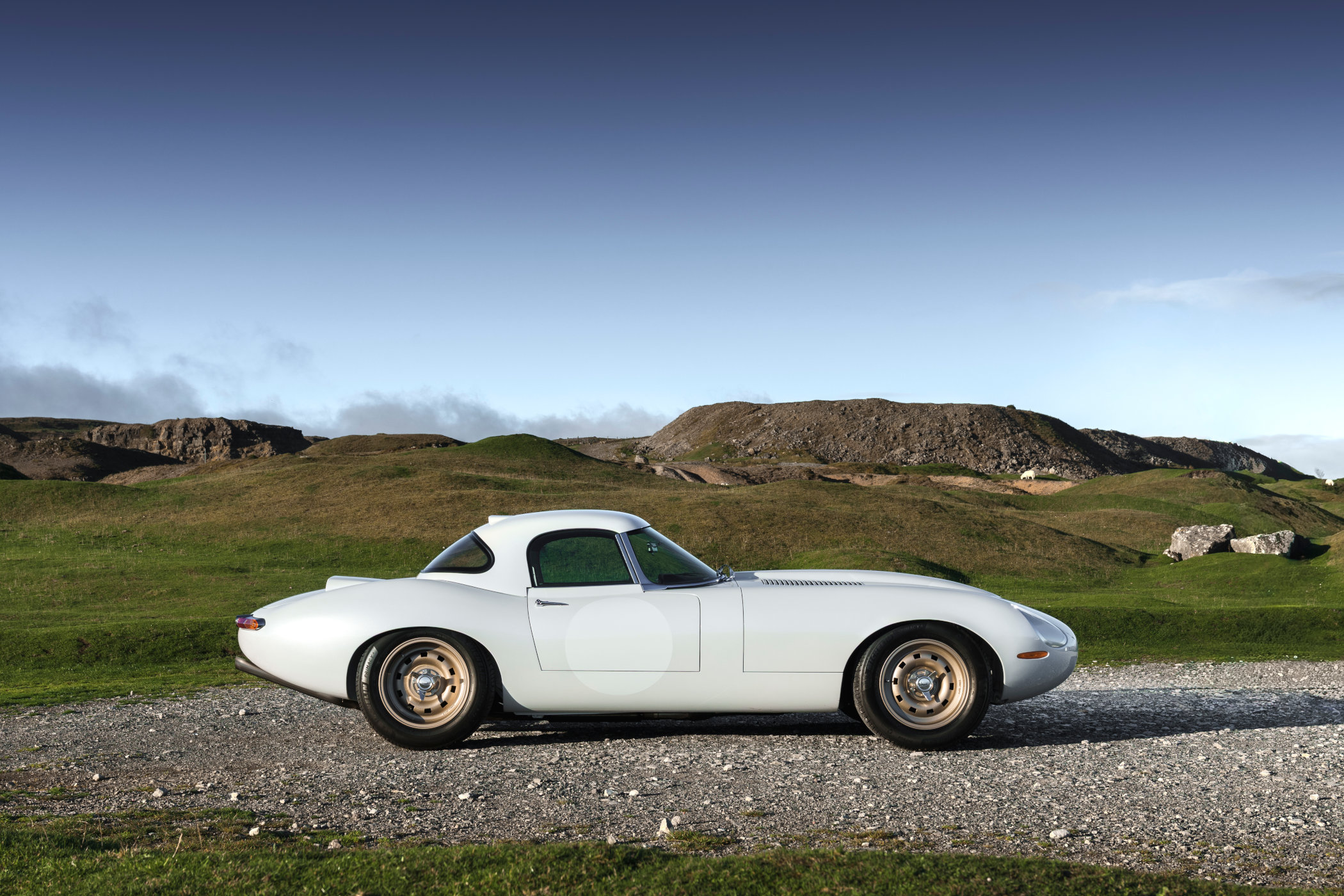
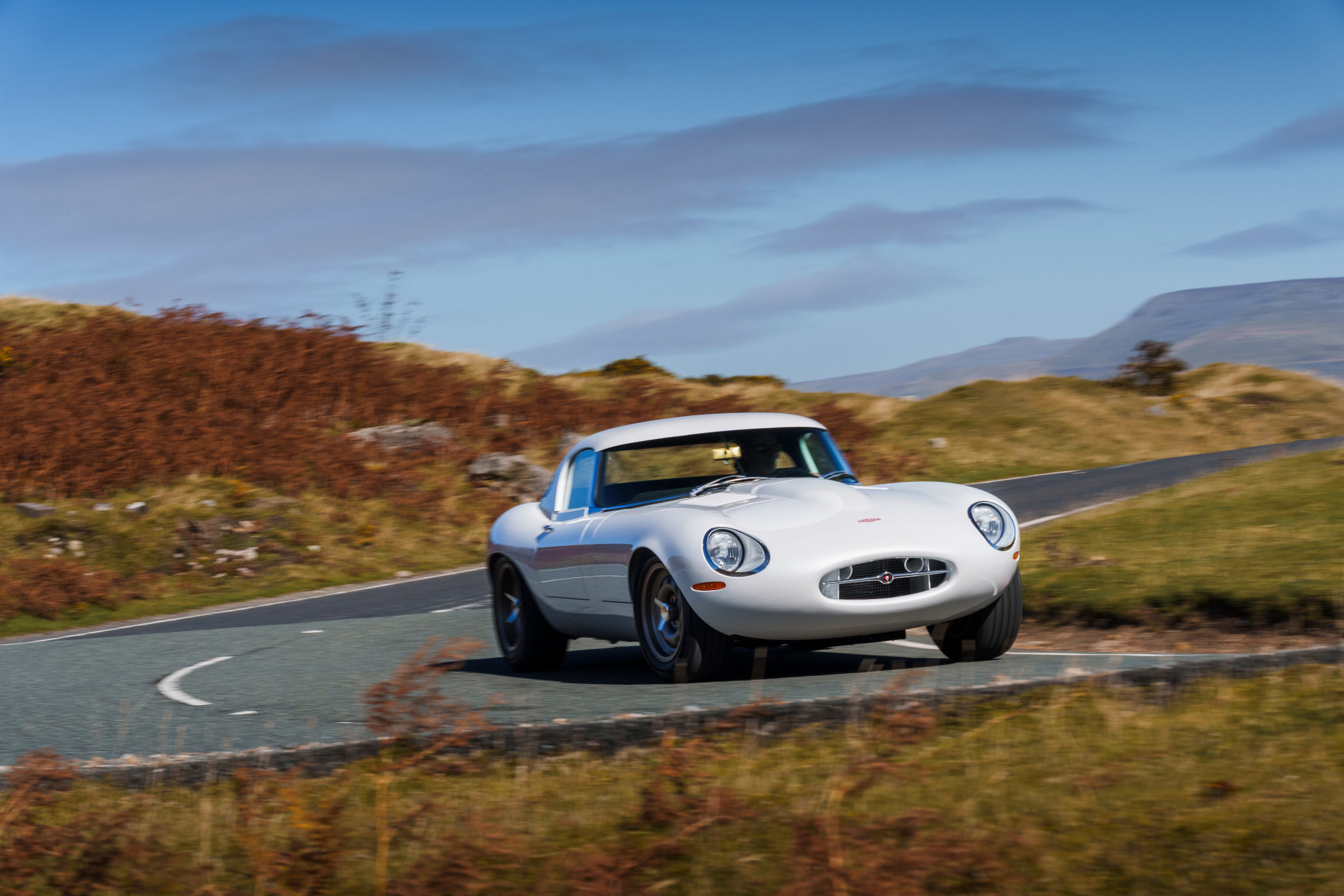
The Eagle Lightweight GTR starts where the Lightweight GT ends. It’s even lighter, more powerful and thus even more enticing to drive, I imagine. And best of all, even though it’s derived from a pure-bred racing version of the E-Type, it’s road legal! The Lightweight GTR is quite possibly an analogue driving experience as pure as can be. The style is just breathtaking, building upon the jaw-dropping looks of the original. Even parked side by side next to an original Lightweight E-Type as seen in Hagerty’s video just above, it’s astonishingly good-looking.
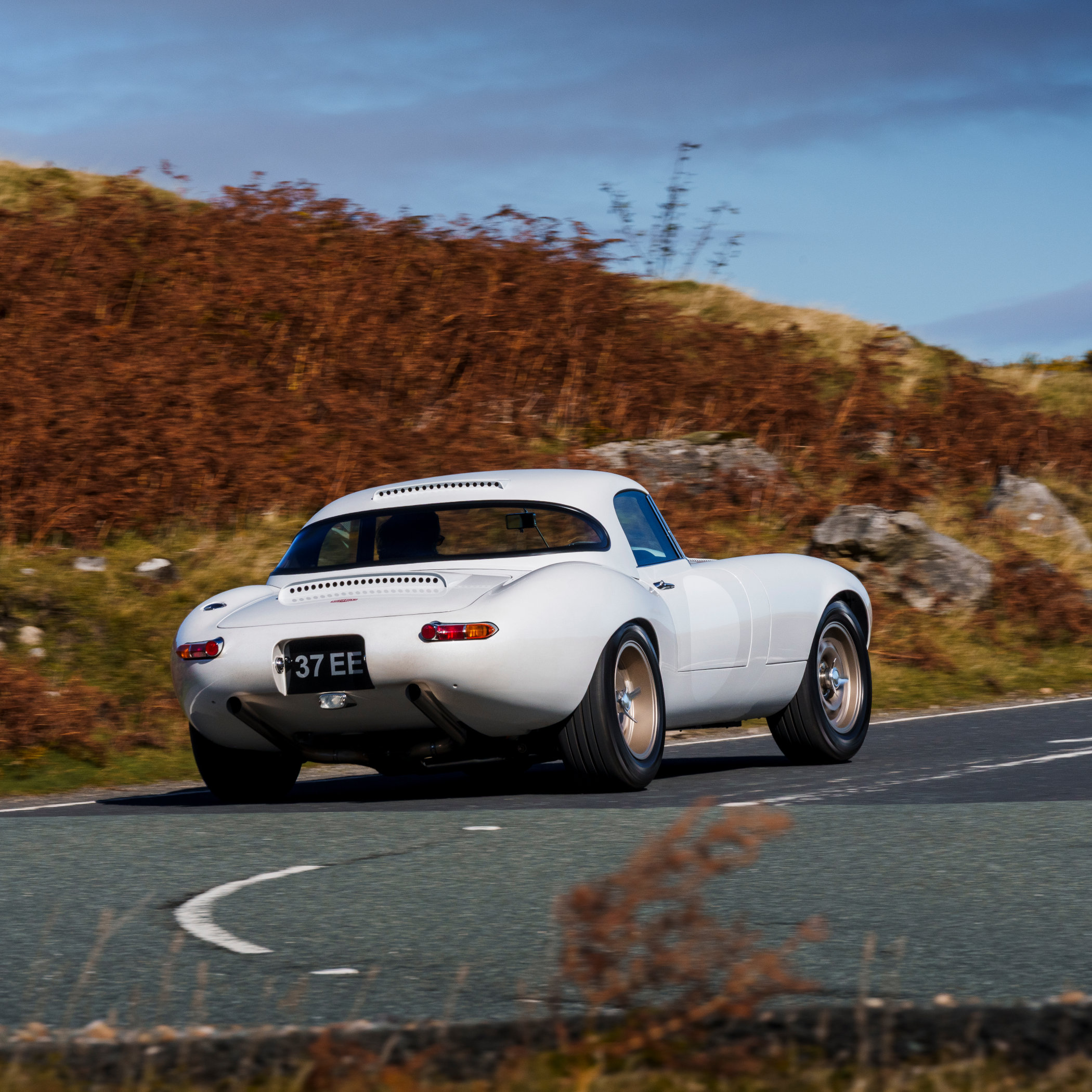
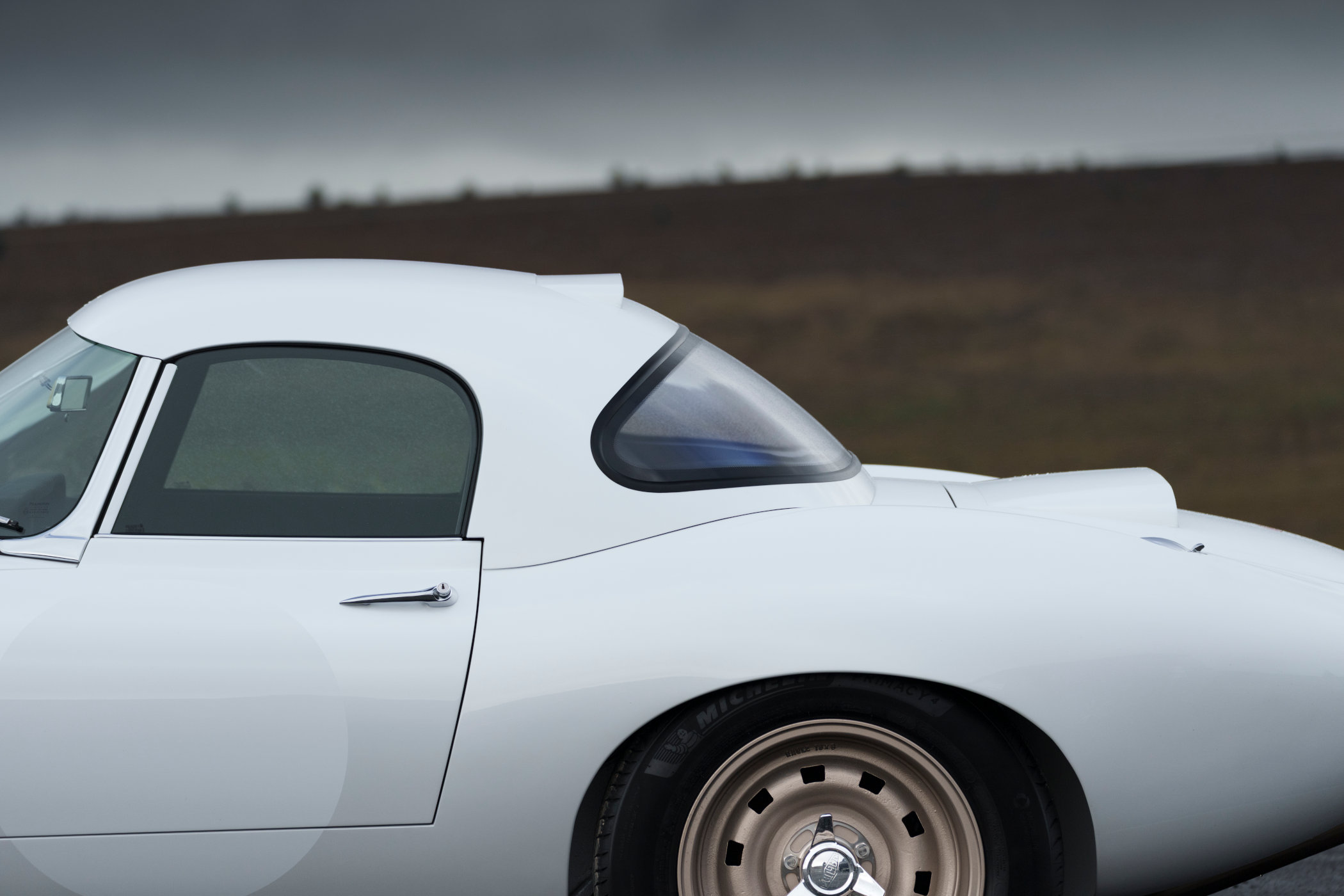
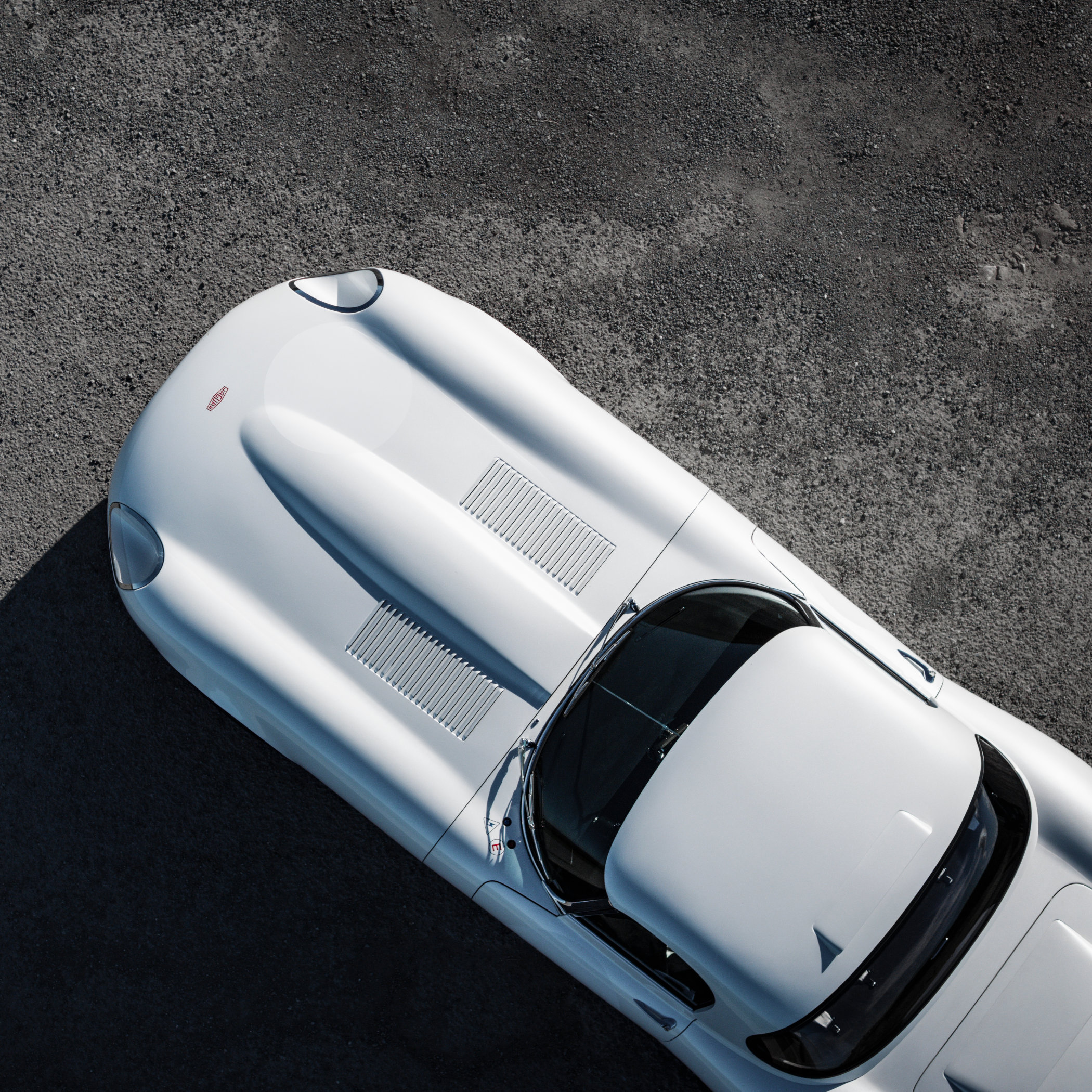
Eagle’s idea for the Lightweight GTR is intended to bring the concept of a restomod Lightweight E-Type closer to the original race car. Thanks to carefully nipping and tucking the body, and using lightweight materials such as carbon, titanium, magnesium and aluminium, the Lightweight GTR puts just 930 kilos of dry weight on the scales (975 including fluids). To put that in perspective, that’s about 200 kilos less than the original race cars. Design tweaks include a stronger raked windshield, lower roofline, lowered suspension (only a touch) and a shaven exterior body. Everything deemed obsolete was removed, shaved or reshaped in order to meet Eagle’s top-of-the-line standards. Details such as the wider arches, flush-mounted fuel filler cap and the air outlets in the roof and rear decklid add to the drama of the car, yet are done in the spirit of the original. What also stands out is the way the exterior electric cut-out and fire extinguisher switches have been recessed into the bodywork, with the signs painted on and covered in clear lacquer instead of being a sticker.
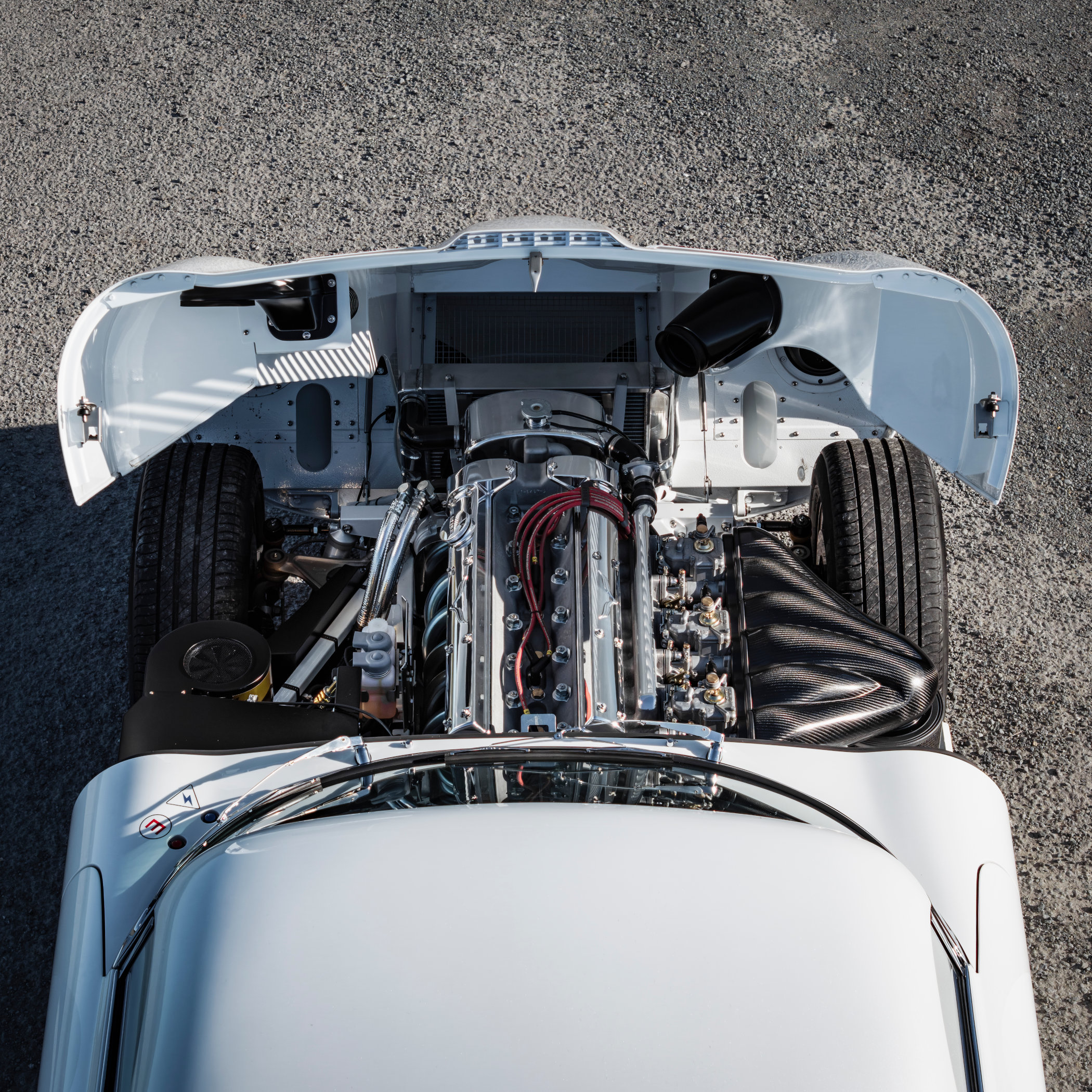
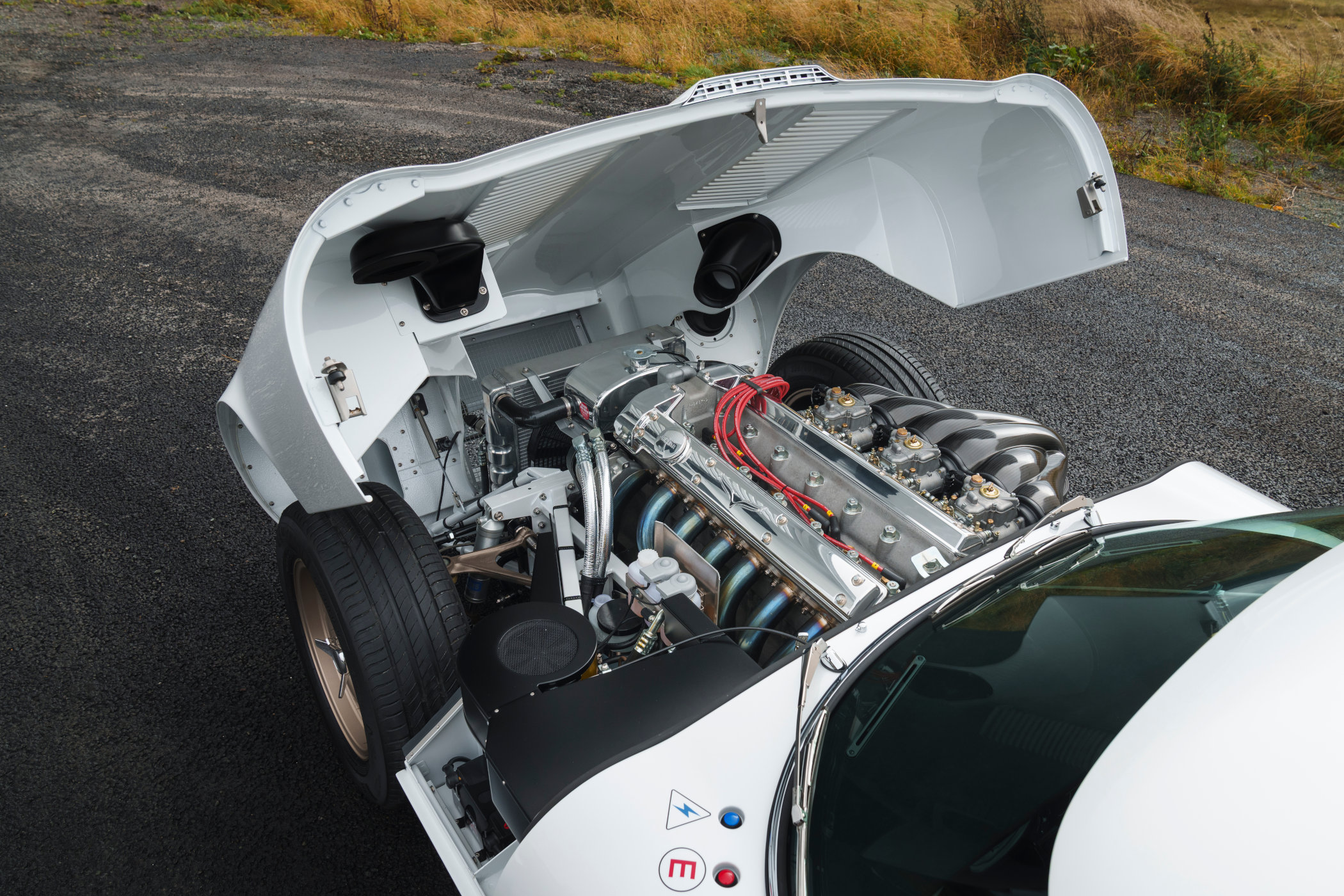
Underneath that iconic front shell sits an all-aluminium 4.7-litre inline-six-cylinder engine, which revs higher than in previous Eagle builds thanks to titanium conrods and other upgrades. There’s no word on the exact power output, but Eagle states the Lightweight GTR has a power-to-weight ratio of 430bhp per tonne. That means that, based on the claimed weight, the engine makes about 420 horsepower. Adding power also necessitates other upgrades, although purists might frown upon them. As a result, the Lightweight GTR relies on carbon-ceramic brakes to stop, high-performance suspension components to improve handling, and an inconel exhaust system.
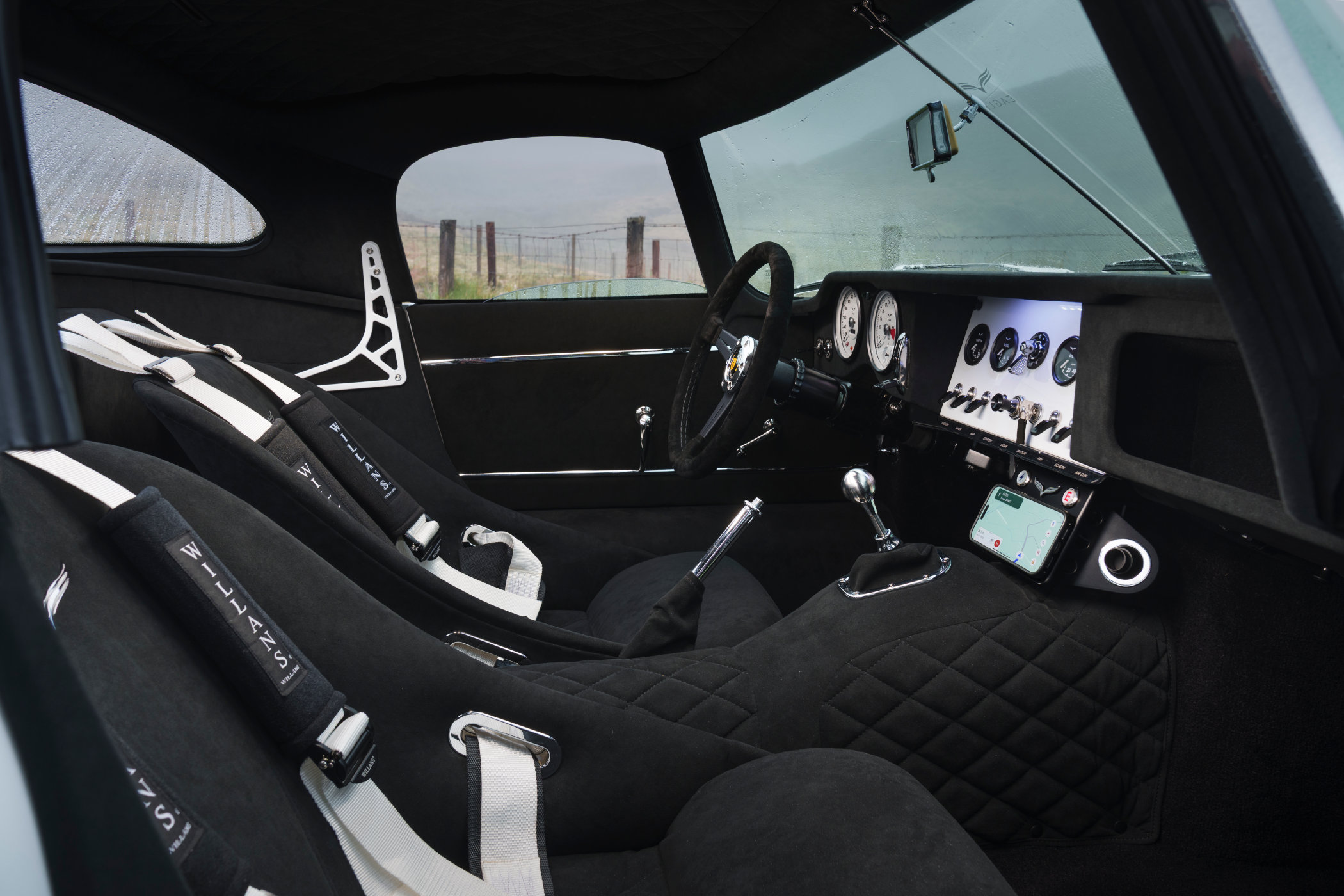
The interior of the Eagle Lightweight GTR is more spacious and comfortable compared to the original, with swathes of Alcantara, and is fitted with air conditioning and a heated windshield, but not much more in terms of luxury features. It also features platinum switches with Mother-of-Pearl inlays, per the client’s desires. The bucket seats with four-point racing harnesses are paired with a three-spoke steering wheel, enhancing the racing feel.

If, after reading all this, you’re eager to commission your own Eagle Lightweight GTR and head off into the sunset, pursuing driving Nirvana, you’re all out of luck. This is a true one-of-one, commissioned by a client who wanted the antithesis to today’s big, heavy and tech-loaded performance cars. And according to the man himself, “he couldn’t be happier with the result”, and I can honestly wholeheartedly agree with him despite not having driven it for a centimetre, let alone having seen it in person. I’m going to watch that video and enjoy the rasping symphony again and dream about it some more….
For more information, please visit EagleGB.com.
Editorial Note: The information used and images portrayed in this article are sourced from and used with permission of Eagle GB, unless stated otherwise.


1 response
E-type perfection is 49 FXN.