
 Not all images were able to load for printing. Please close the print window and try again.
 The Auto Union Lucca, a Record-Breaking Speed Machine Reborn
Recreating the car that set the flying-start mile record at 326.975kph... in 1935!
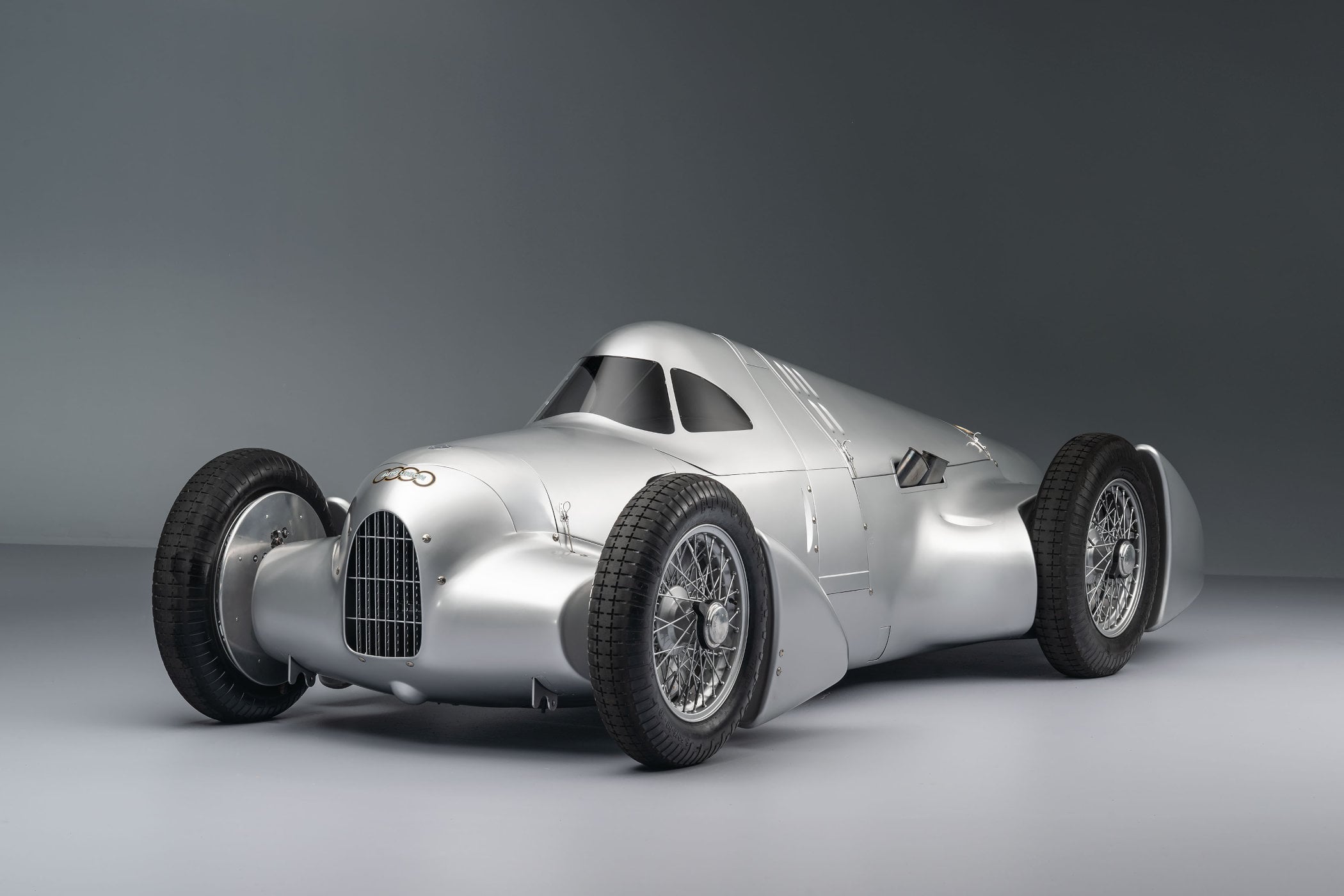
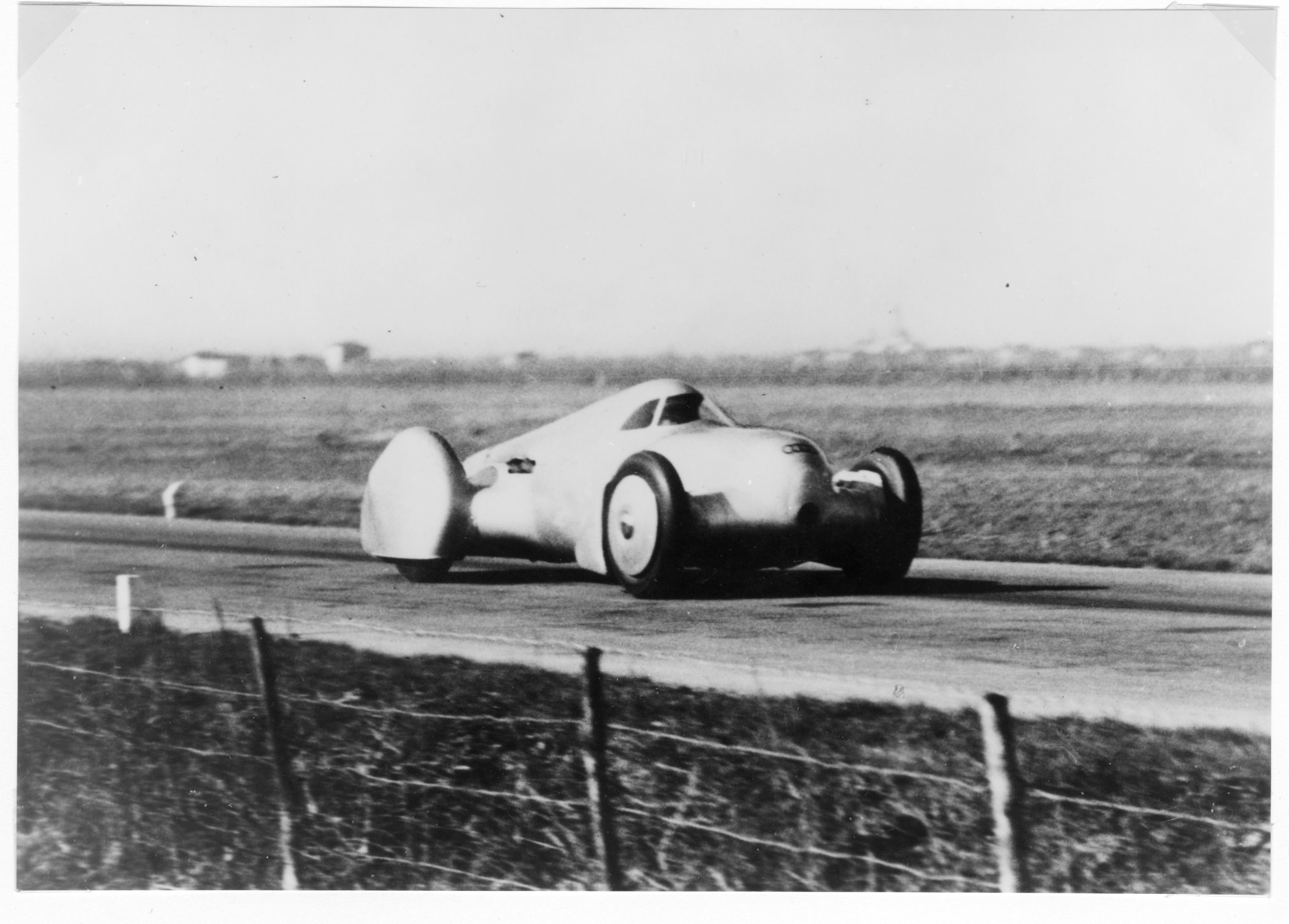
It wasn’t too long ago that we brought you the story of the brilliantly cool Auto Union Type 52 Schnellsportwagen. This was a car that, before this coachbuilt creation, existed on paper only, as Auto Union had the plans ready but never got around to actually building it for various reasons. Along the same concept, Audi Tradition now transports us back to the 1930s once more, with the Auto Union Lucca. The era of the Grand Prix cars is forever etched in history thanks to the ‘Silver Arrow’ racing cars by Auto Union and Mercedes-Benz. But this Auto Union Lucca is a tribute of a different kind, as it remembers the record-setting 1935 run of Hans Stuck just outside of Lucca, Italy.
The 1920s and 1930s were marked by many things, but when it comes to racing, it’s best remembered for a total and relentless pursuit of speed. Both on water, on land, and in the air, technological breakthroughs pushed machines to new limits, setting record after record in the process. When it comes to motorsports, the French, the British and the Italians dominated in Europe, but the arrival of Mercedes-Benz and Auto Union by the early 1930s left an indelible mark on the early days of motorsports, primarily in Grand Prix racing. Famously coined ‘the Silver Arrows’ by Mercedes-Benz’s racing manager Alfred Neubauer (although there’s doubt the weight-saving-by-paint-stripping story is actually true), both manufacturers rewrote the rule- and record books in more ways than one.
The Auto Union Legacy
The state-backed racing program of Auto Union came into fruition after the merger of Audi, DKW, Horch and Wanderer to form Auto Union AG in 1932. The newly formed racing team made its debut in 1934 with the Type A, designed by Ferdinand Porsche and powered by a supercharged V16 engine. The Type B and Type C that followed used the same recipe as the Type A, yet pushed it further and further. The engine would always be placed in the back, driving the rear wheels only, while the driver was positioned as far up front as possible. The capacity of the engine varied depending on the Type A/B/C and ranged from 4.4 litres to 6.0 litres. The power also made significant jumps, as the Type A’s V16 engine is rated at an output of 295 horsepower, while the most powerful Type C was pumping out well over 500bhp!
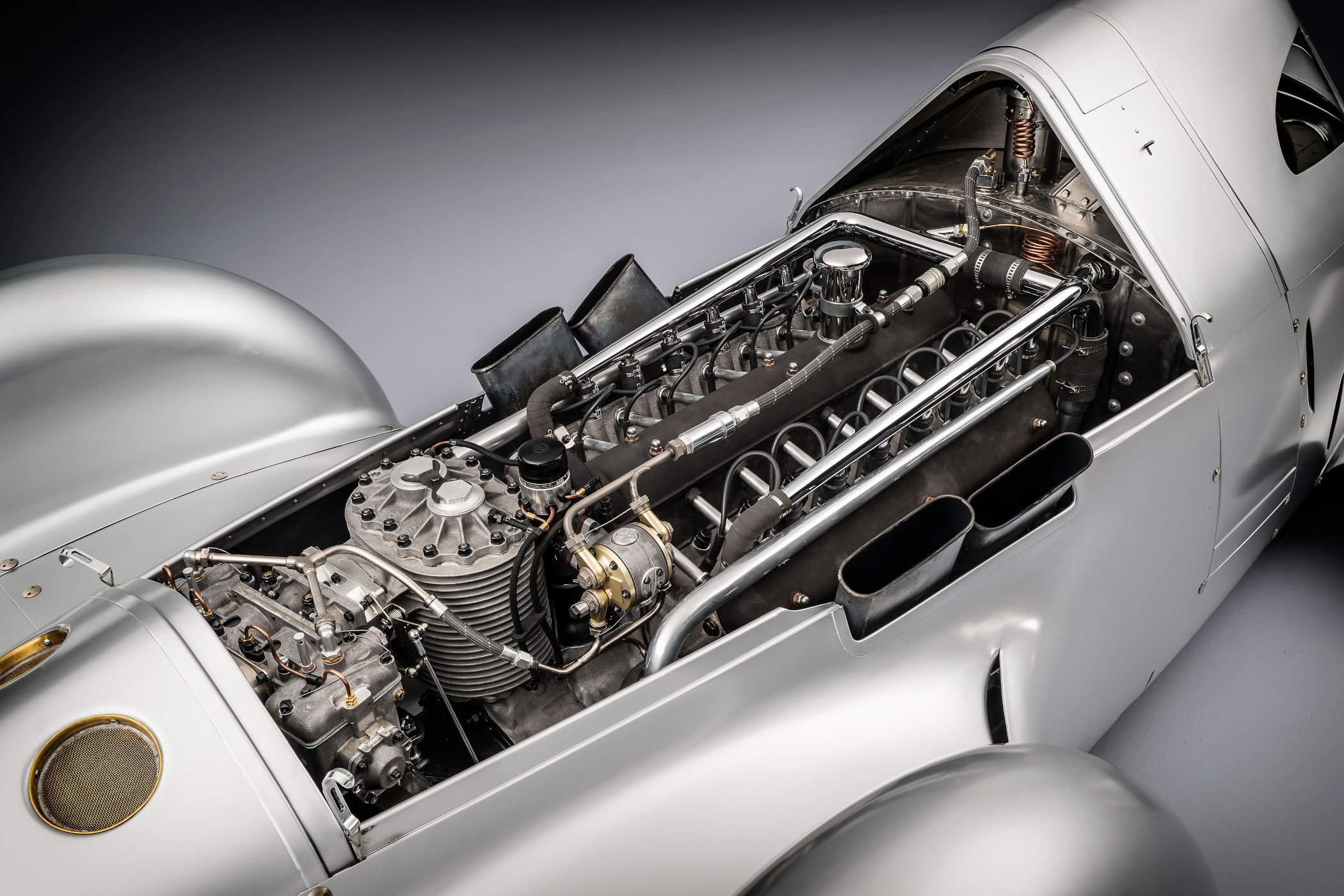
By 1938, regulation changes rendered the massive V16 engine obsolete, so Auto Union modified it into a V12 for the Type D, the company’s last of the four Grand Prix racing cars prior to the outbreak of WWII. The shorter engine meant the cabin could be pushed back a bit, for a more 50-50-like split between the front and rear sections. Across all four cars, Auto Union fielded some of the best racing drivers of the era, including the likes of Achille Varzi, Hans Stuck, Bernd Rosemeyer and Tazio Nuvolari. The team achieved massive success, winning multiple races and titles, and setting countless speed records as well. One of which is honoured today, with this rather special streamlined Lucca.
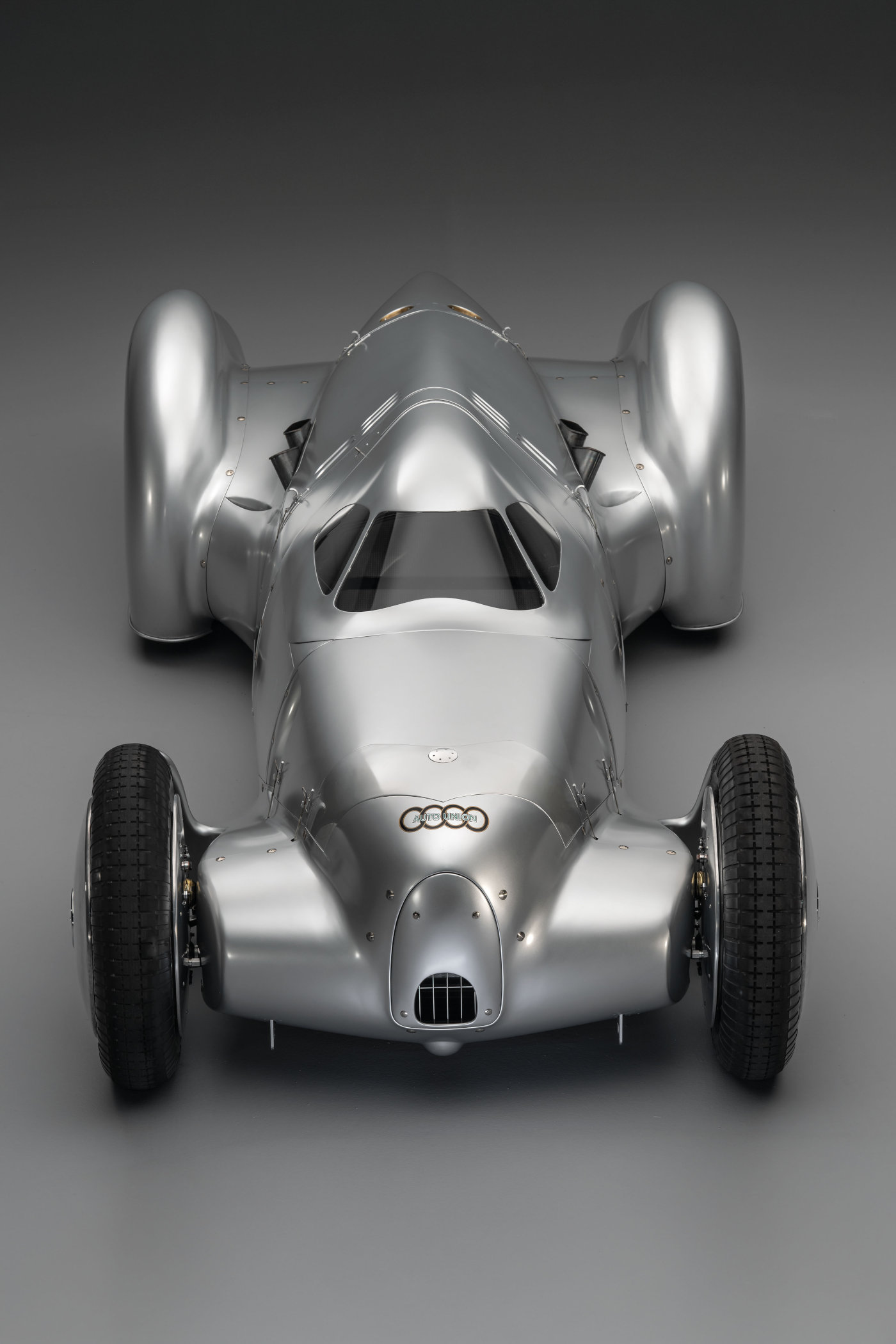
A hand-built tribute
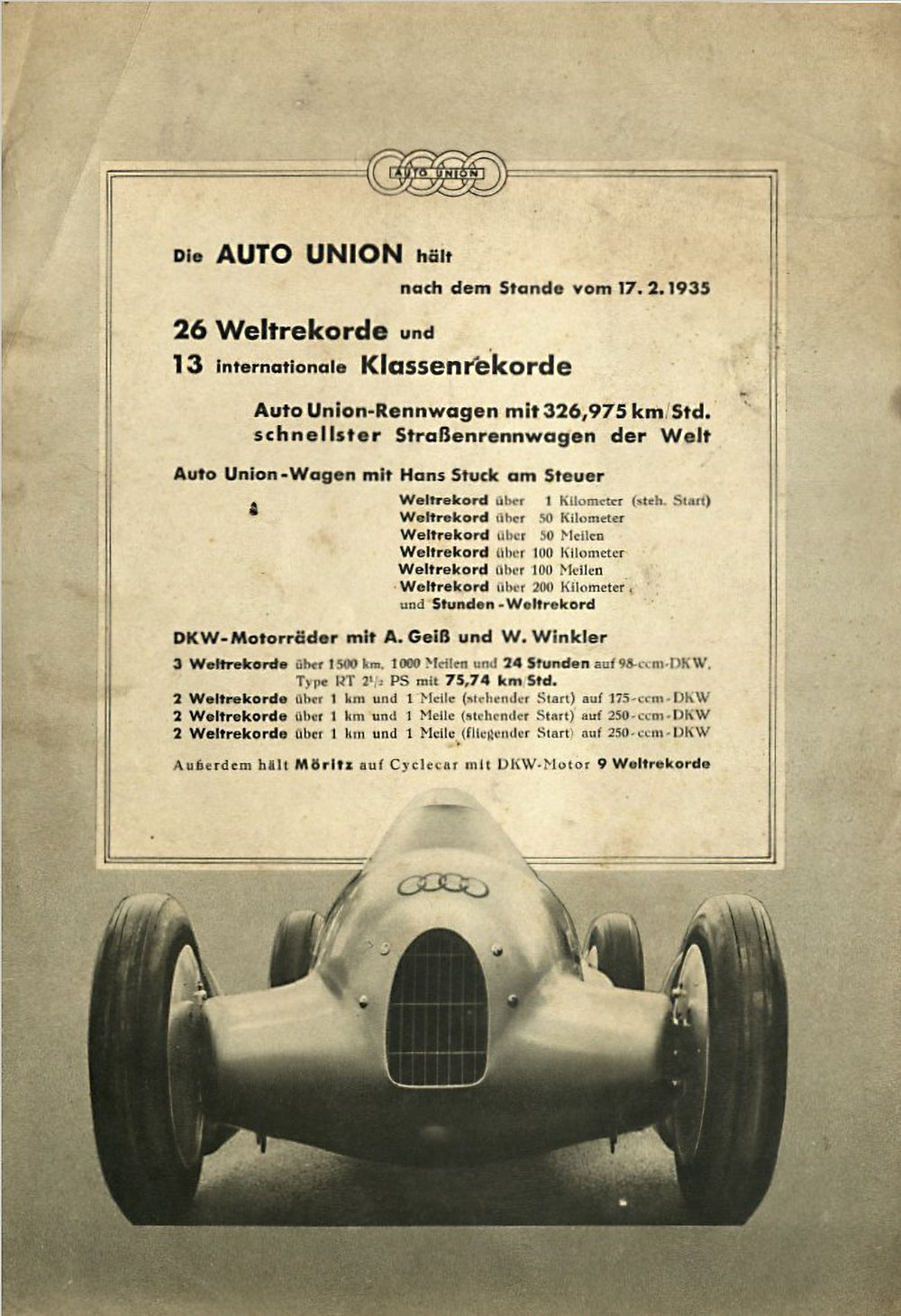
This recreation is based on the Type A that Auto Union prepared for a speed record run in early 1935. A year prior, Auto Union set a land speed record for the standing-start mile with the Type A. Mercedes-Benz, however, outpaced the Auto Union with a specially prepared car to hit 316.952kph over the flying-start mile not long after. The race is on between the two carmakers, with Auto Union frantically updating its car in an effort to reclaim the record. The result would simply become known as the Lucca, named after the town close to where it ran its speed runs. One of the key areas where Auto Union seeks improvements is in the aerodynamic efficiency of the car.
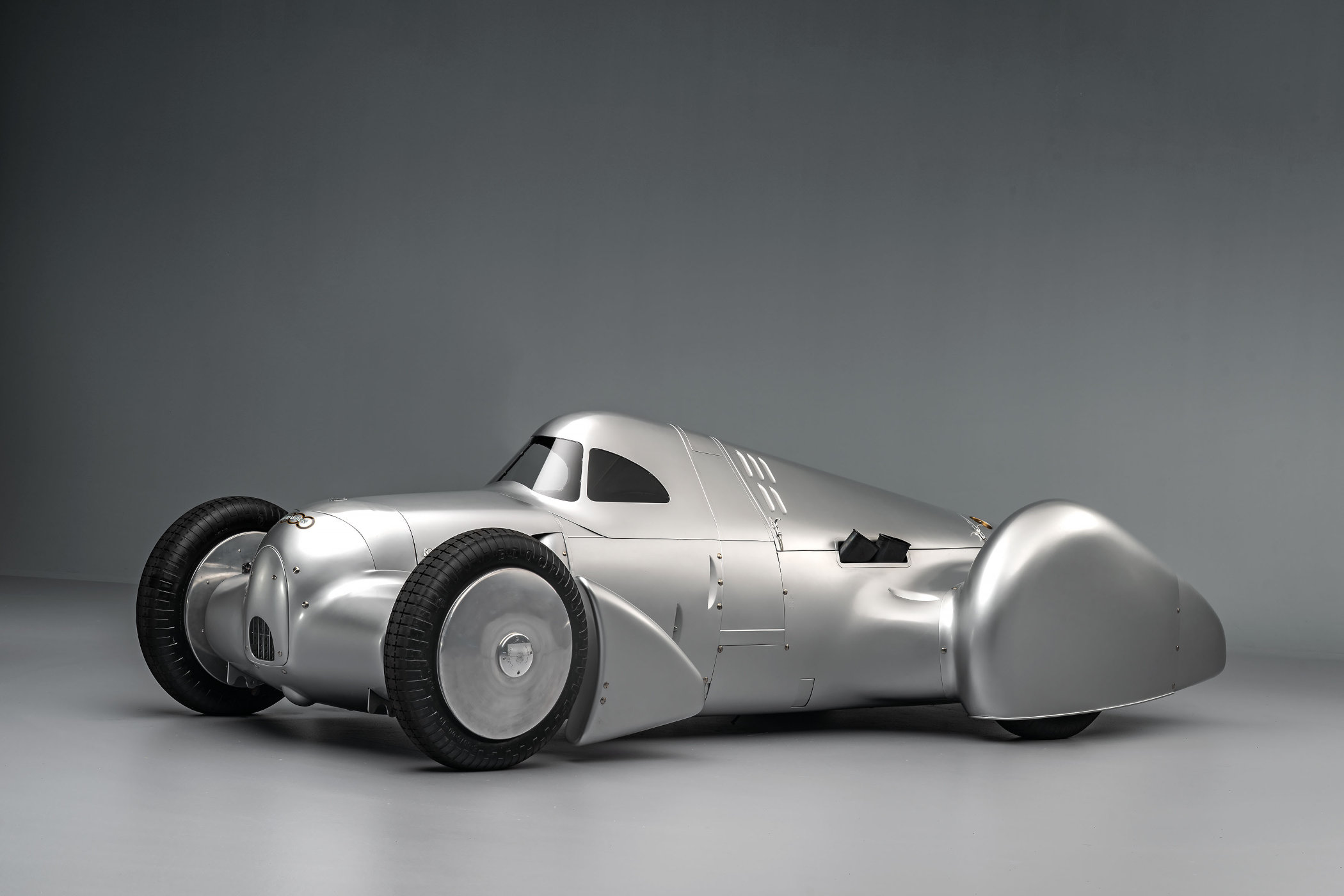
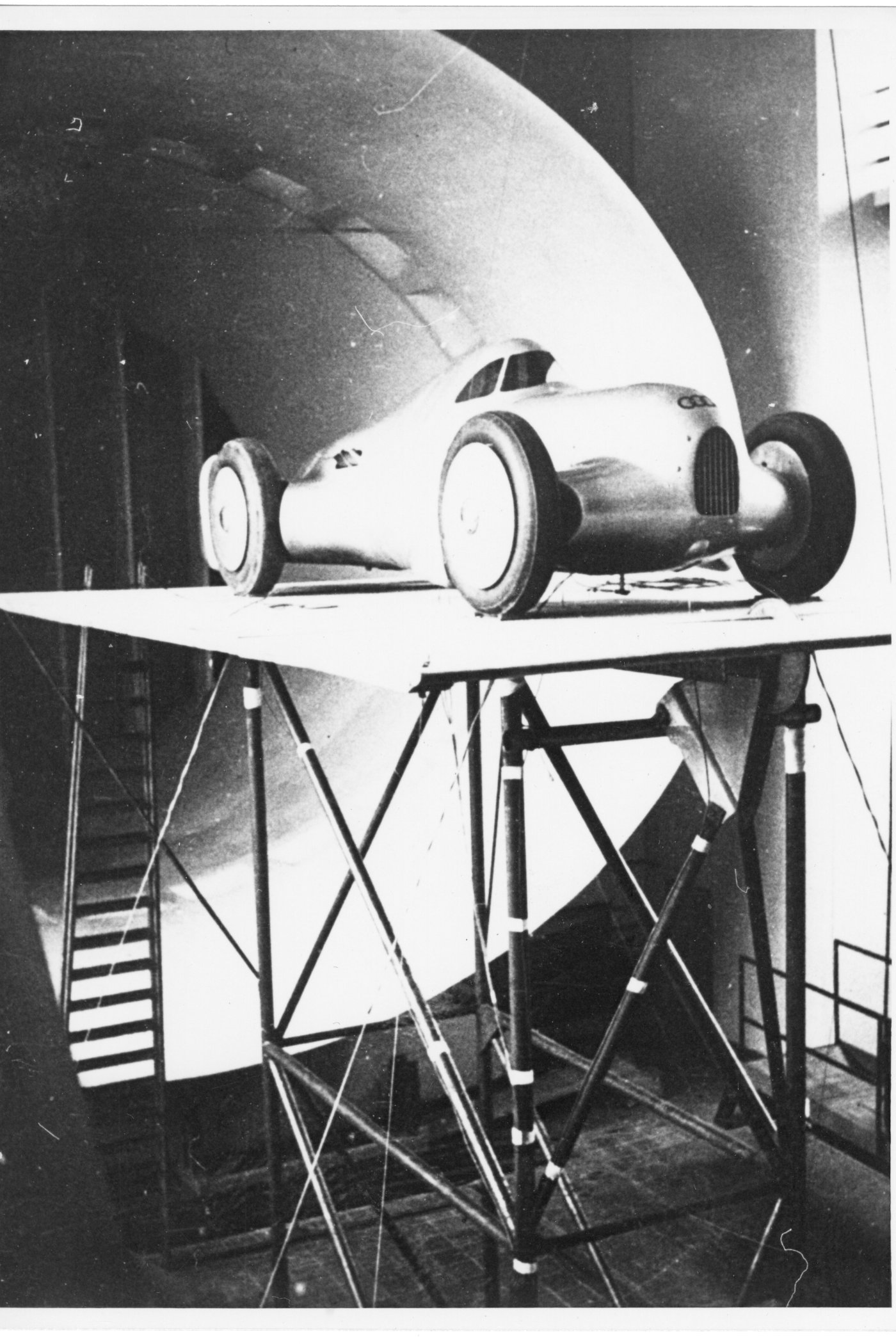
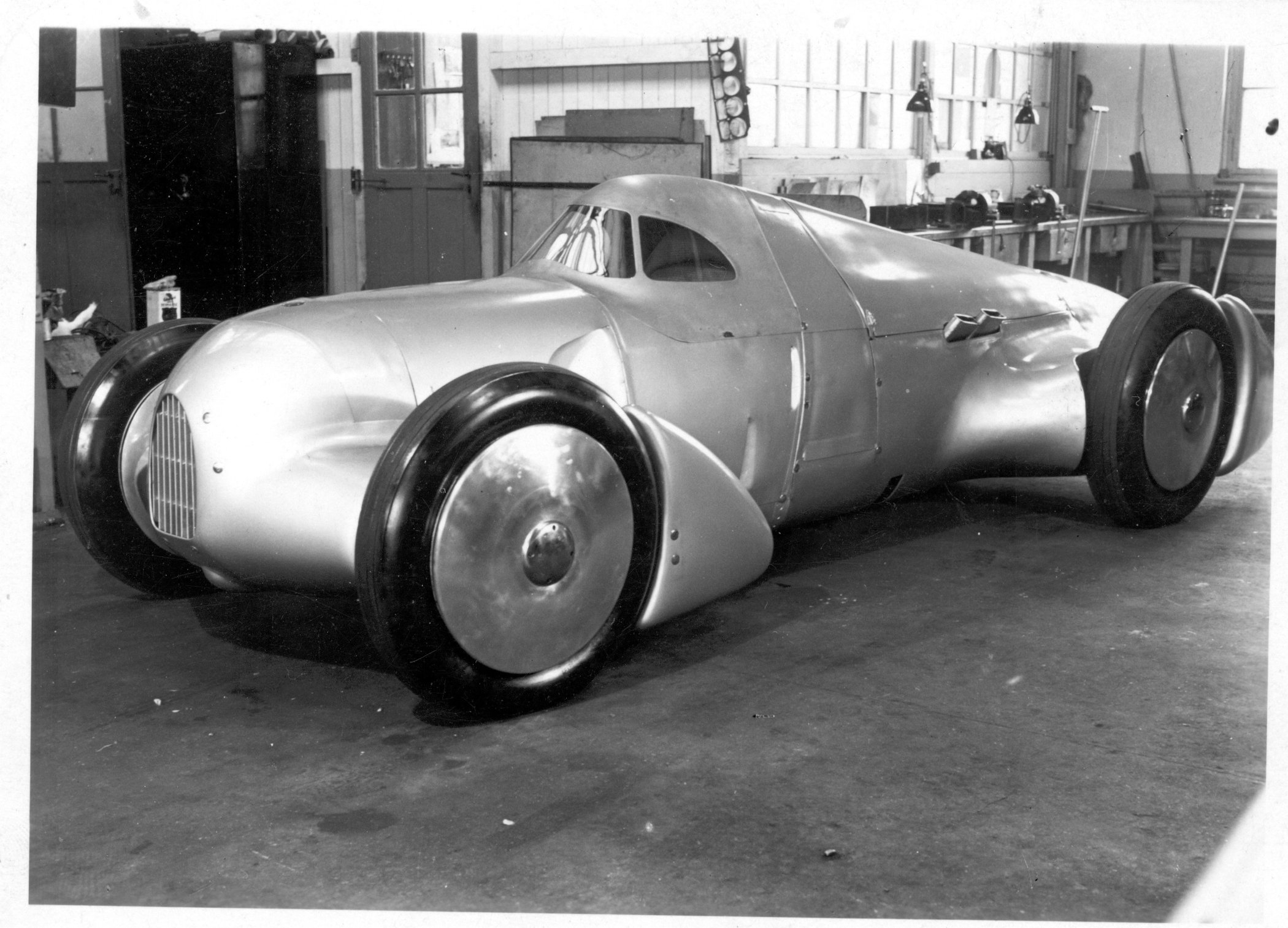
With aerodynamics very much in its infancy back then, the team constructed a wind tunnel model and tested various configurations from open cockpits to a closed one, and from the typical exposed wheels to encapsulated ones. The result of all that work gives the Auto Union a unique shape, with tear-drop wheel arches, a closed cockpit, a fin down the rear spine and so on. The body is finely sanded and coated in clear lacquer for a smooth finish. The chassis was fitted with the V16 engine from the Grand Prix cars, now with a displacement of around 5 litres and a power output of 375bhp.
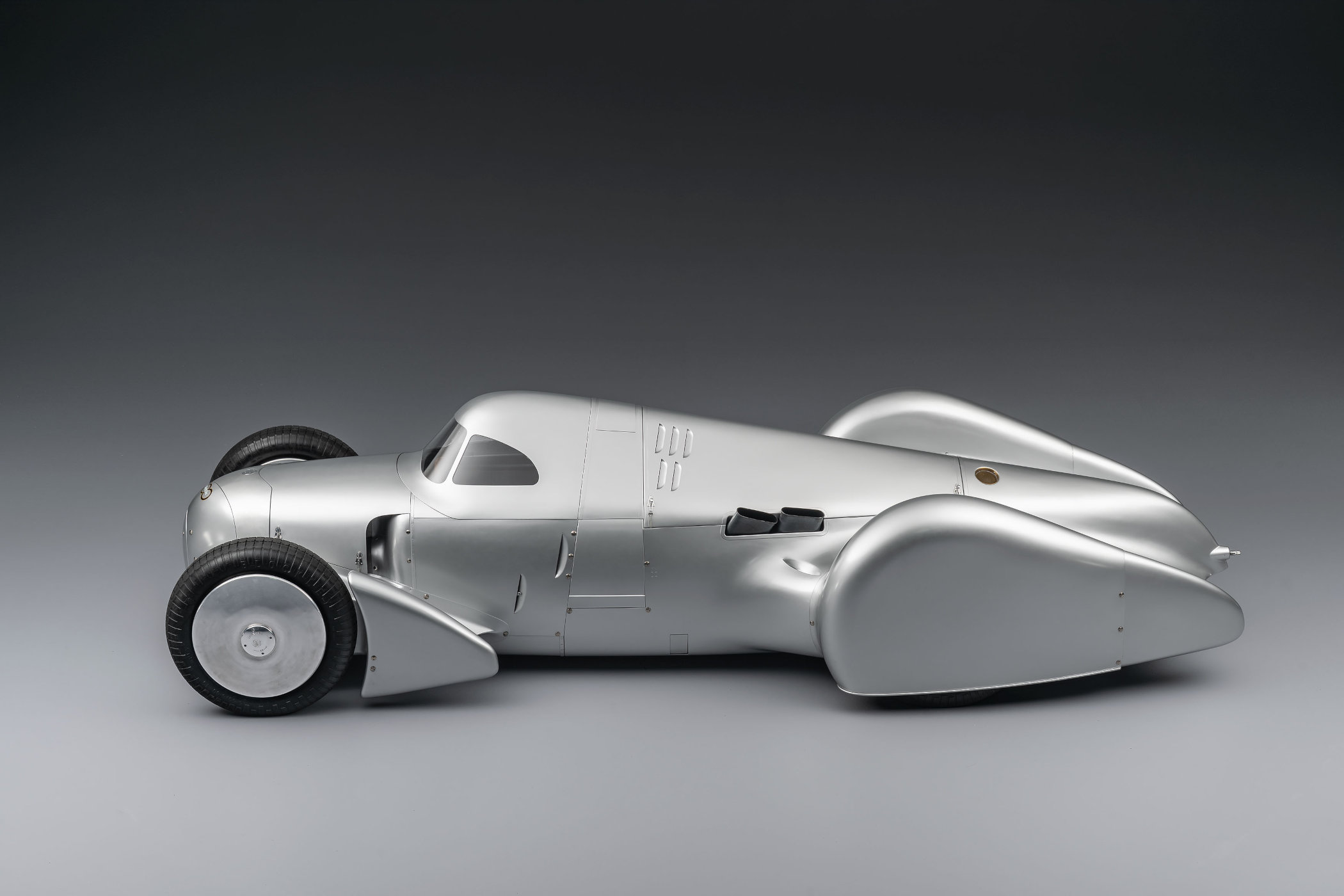
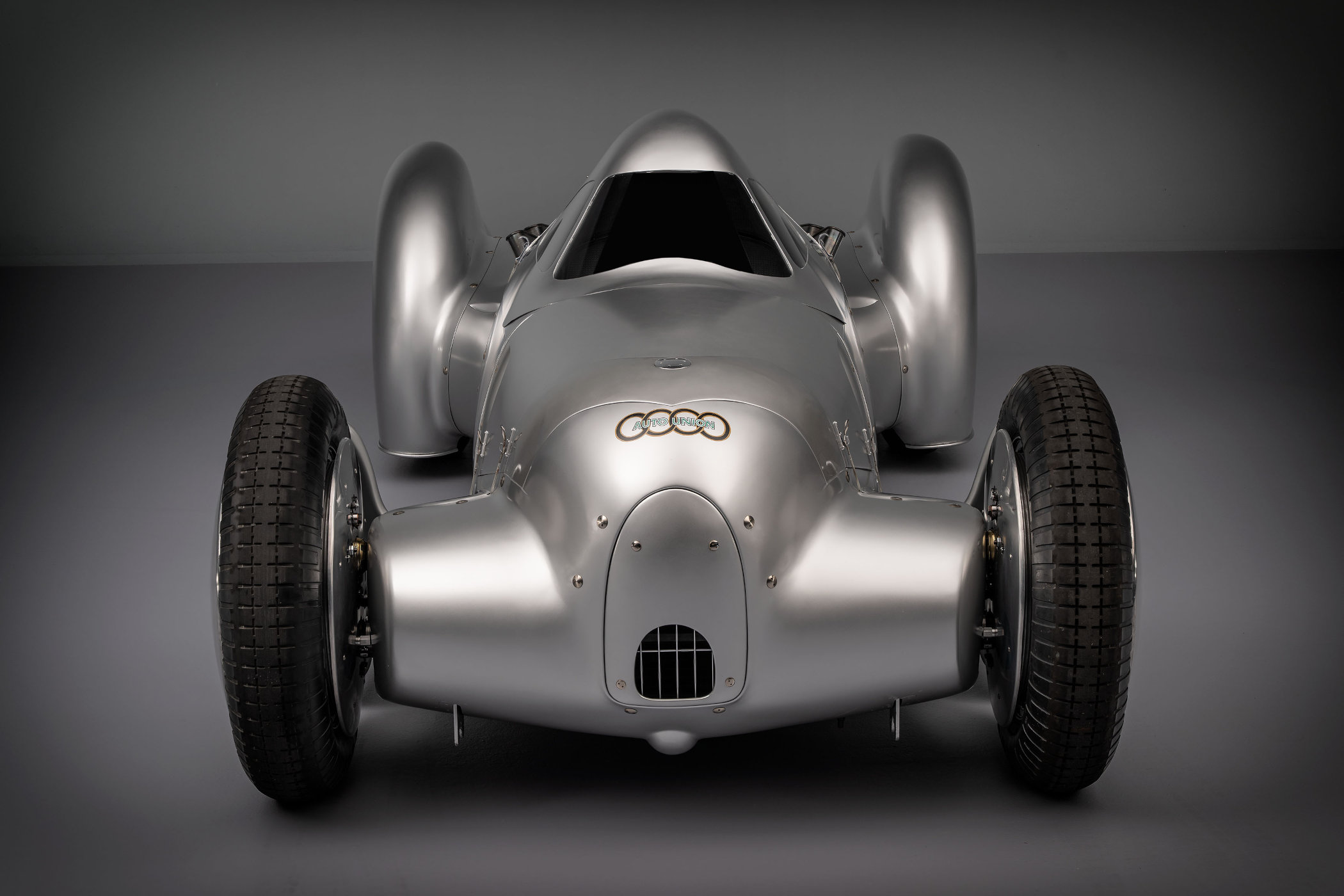
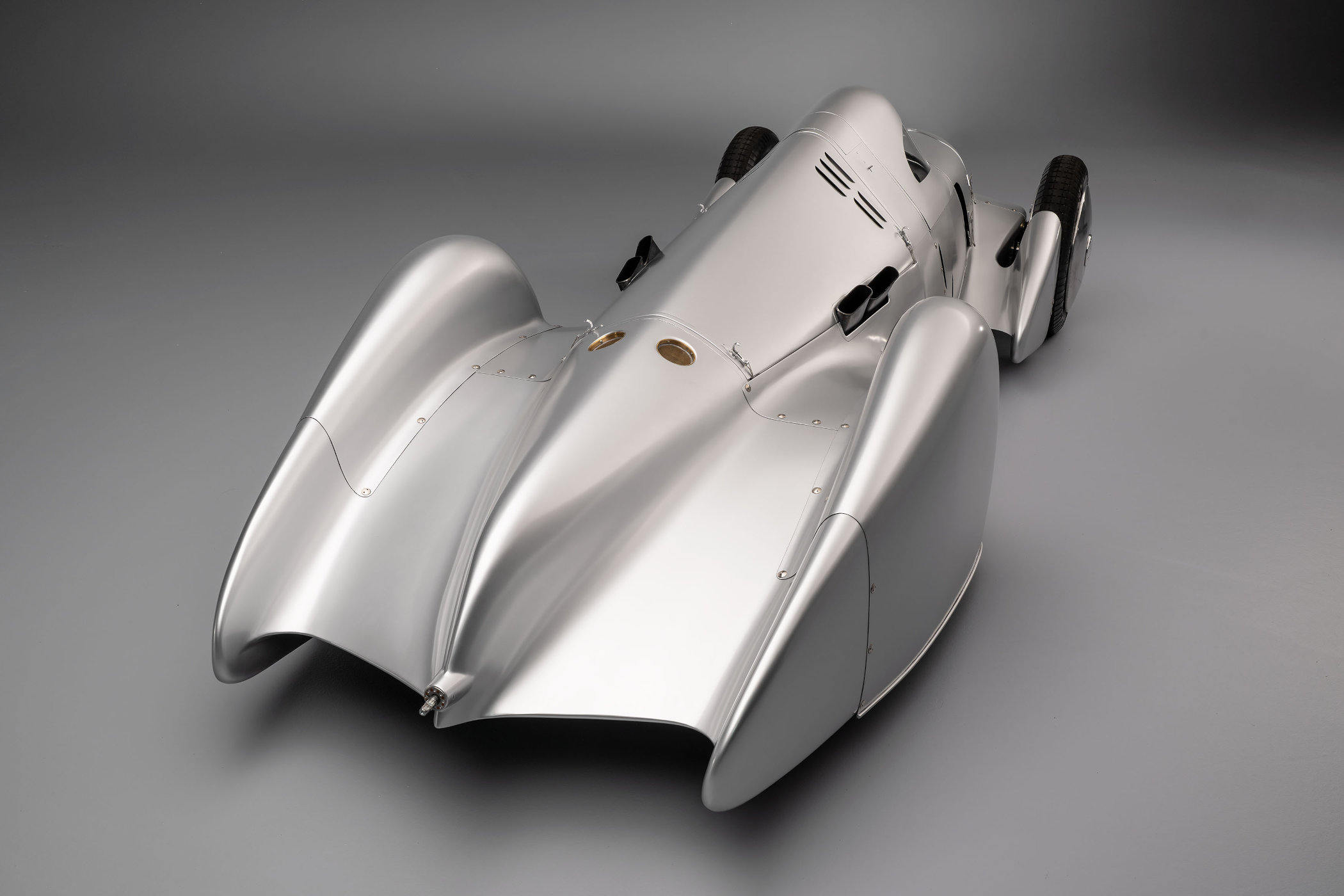
First road tests were undertaken in January of 1935 at Gyón, in Hungary, on the same stretch of road where Auto Union and Mercedes-Benz set their previous records. The weather turned against them, though, so the tests were cut short. A month later, the Auto Union team settled for a stretch of road near Lucca, in Italy. During initial testing, the Auto Union team made adjustments to the grille opening and the wheel arches and so on, based on analyses of the first runs. A few more attempts are made, and the goal is hit. Over two runs, the car driven by Hans Stuck manages an average speed of 320.267kph over two runs of the flying start mile. During the return run, Stuck hits a top speed of 326.975kph, setting the record for fastest road racing car in the world.
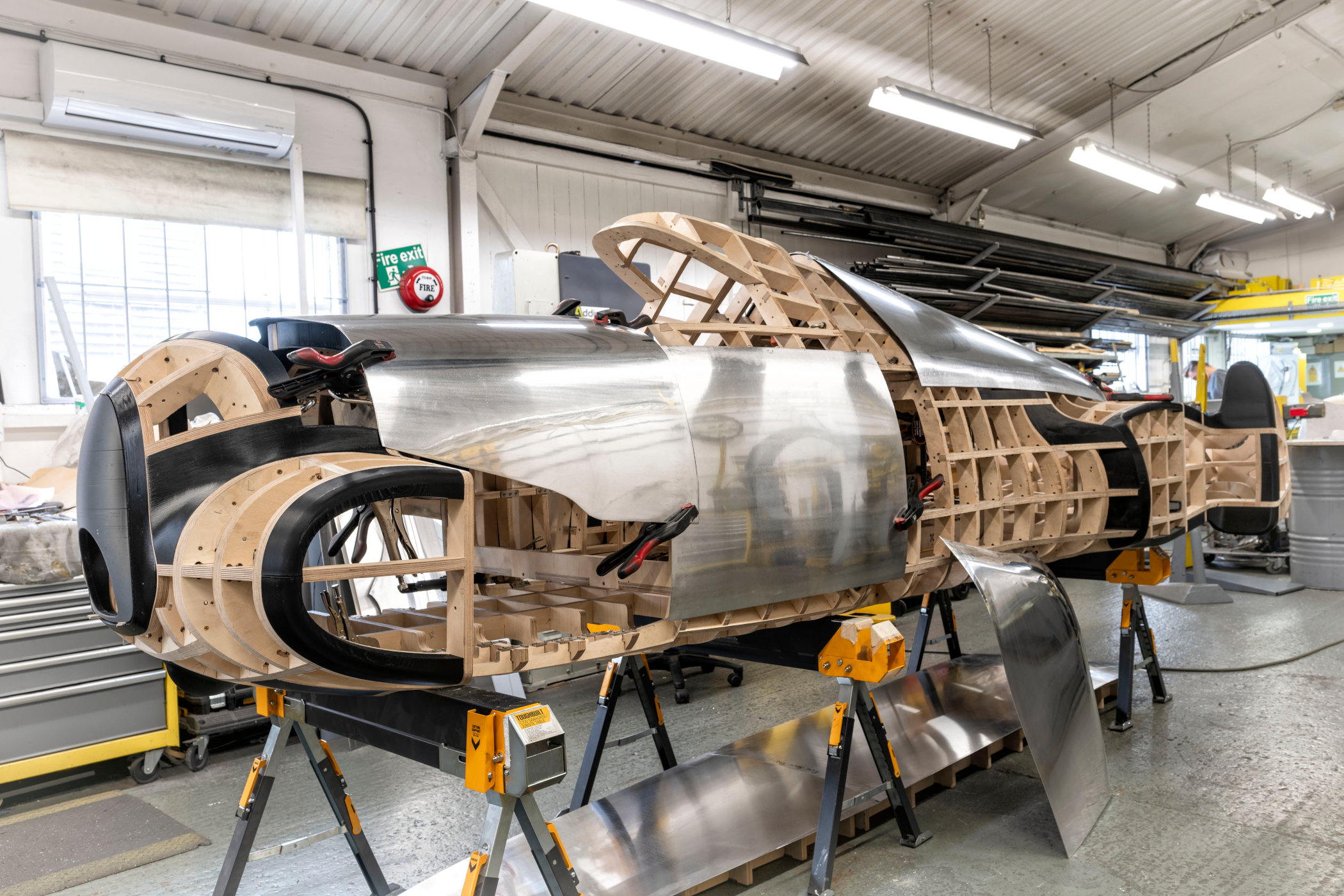
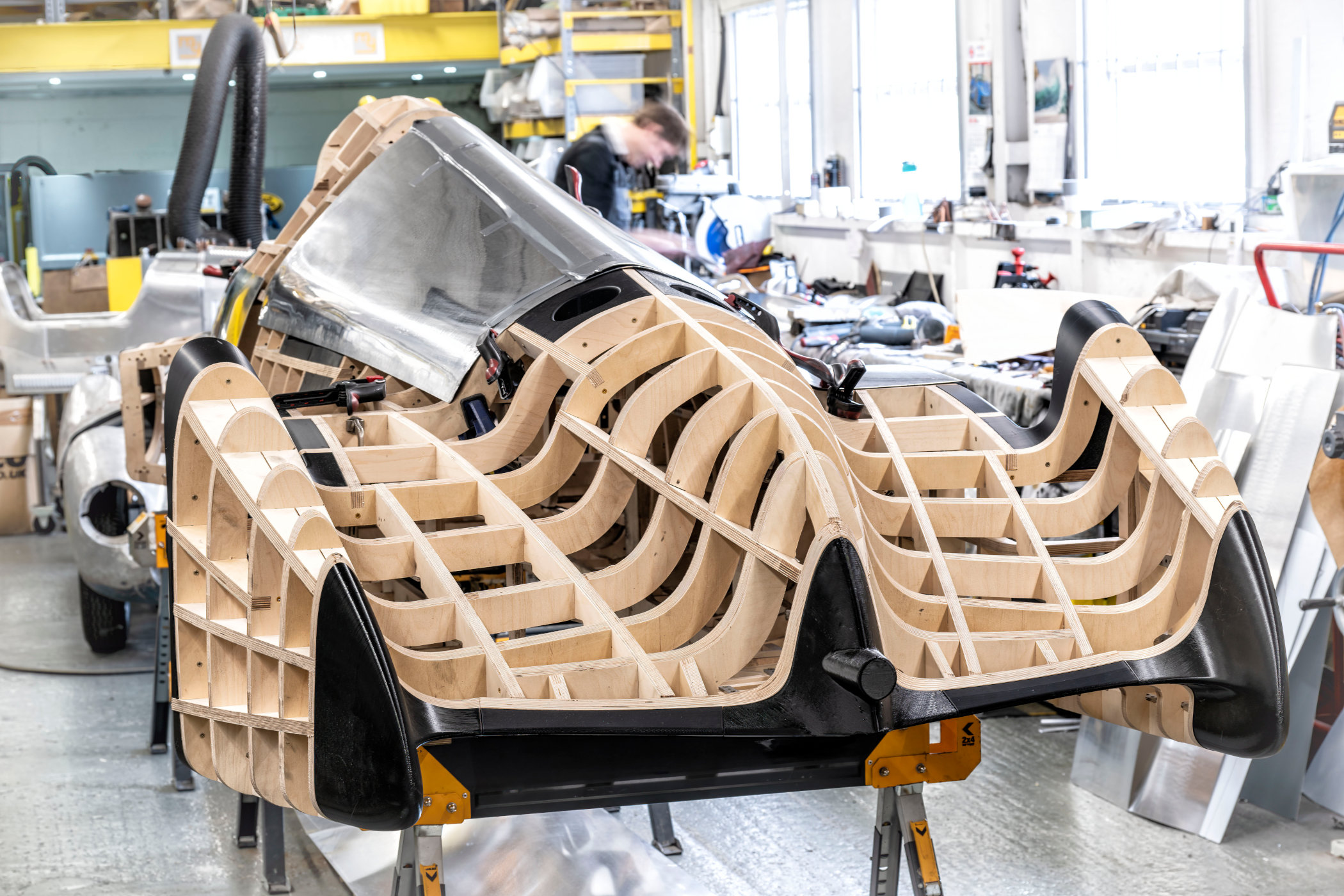
Much like the Type 52 Schnellsportwagen before it, this Auto Union Lucca is completely built by hand. Created over three years, the Lucca is basically a fully coachbuilt car, much like it would have been built back in the day. We’re talking about aluminium panels shaped over a wooden buck by hand. Audi Tradition enlisted the help of specialists Crosthwaite & Gardiner once more, using historical photographs and various other documents from the archive to painstakingly build it as close to the original as possible.
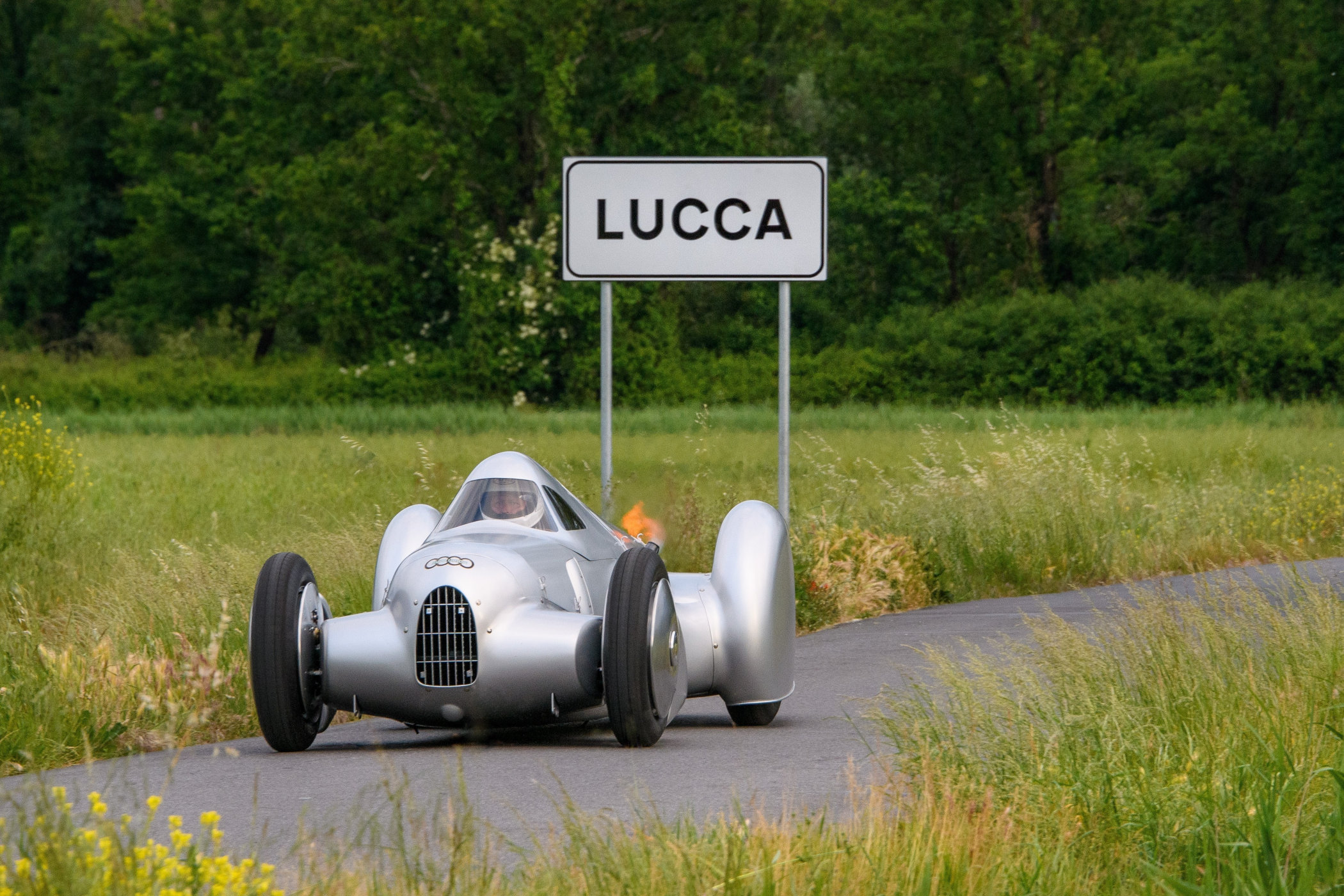
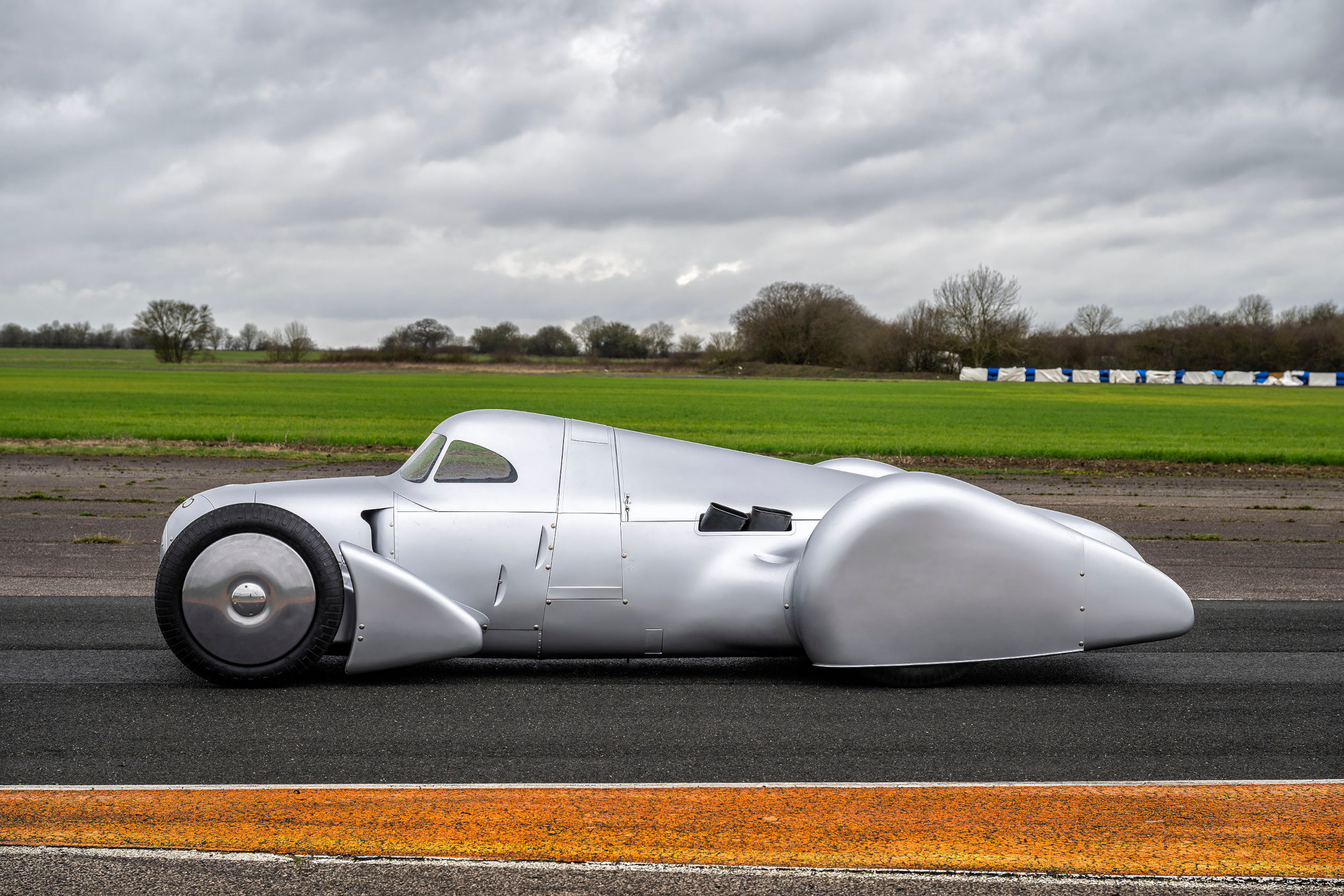
Inside, you will find a 6.0-litre V16 engine as used in the later Type C (see earlier), which is visually indistinguishable from the 5.0-litre engine that powered the Lucca originally. That also means it’s more powerful, producing 520bhp over the 375bhp of the actual record-breaking car. The work was done earlier this year, with the car having been shaken down near Lucca, Italy, the very location it achieved racing fame. A few modifications have been made to improve reliability, as this is very much intended to be a working, driving exhibit of Auto Union’s and thus Audi’s speed record heritage.

Similar to the Schnellsportwagen from two years ago, the Auto Union Lucca will make its public debut at this year’s Goodwood Festival of Speed.
For more information, please visit Audi-Mediacenter.com.
Editorial Note: The information used for, and images portrayed in this article, are sourced from and used with permission of Audi-Mediacenter.com unless stated otherwise.