
 Not all images were able to load for printing. Please close the print window and try again.
 The New Ulysse Nardin Super Freak, Quite Possibly the Most Complex Time-Only Watch Ever
From a disruptive experiment to a fully integrated machine, a quarter century of the Freak reaches its point of convergence.
Some watches follow the established path of horology, refining proportions, improving calibres, and adjusting aesthetics within well-defined and safe boundaries. And then some watches question nearly everything that is considered conventional and classic. When the Ulysse Nardin Freak was unveiled in 2001, it introduced a new design, a new movement, but it also proposed an entirely different way of thinking about what a mechanical watch could be. It removed the dial, eliminated the usual time-indicating hands, discarded the crown, and turned the movement into the spectacle. Truth be told, I totally disliked the look of the Freak, but that initial reaction quickly gave way to appreciation of the technical aspects and forward thinking that went into its creation. Also, allowing silicon into the regulating organ felt like a sell-out, but little did I know, the decision would reshape the technical direction of the entire industry.
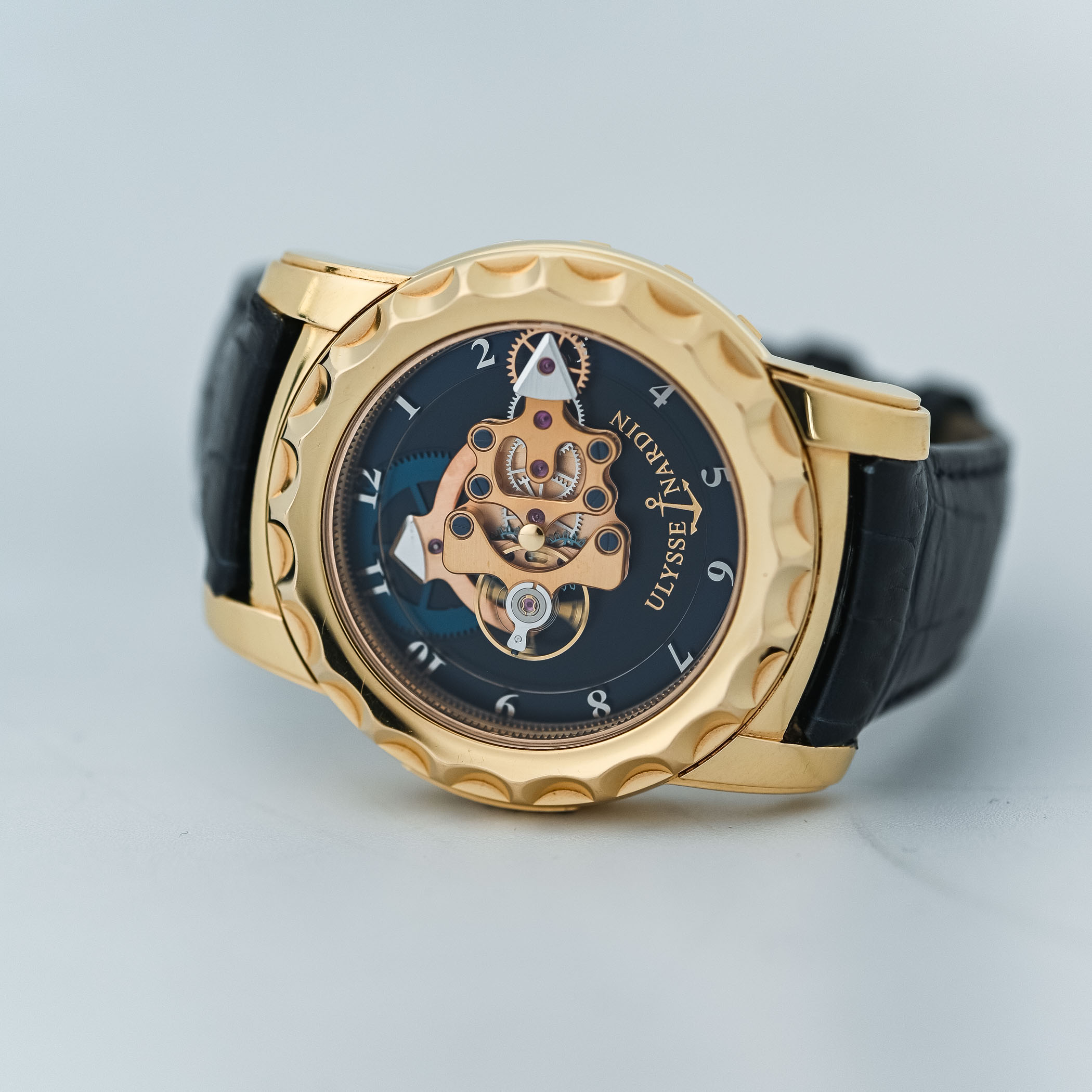
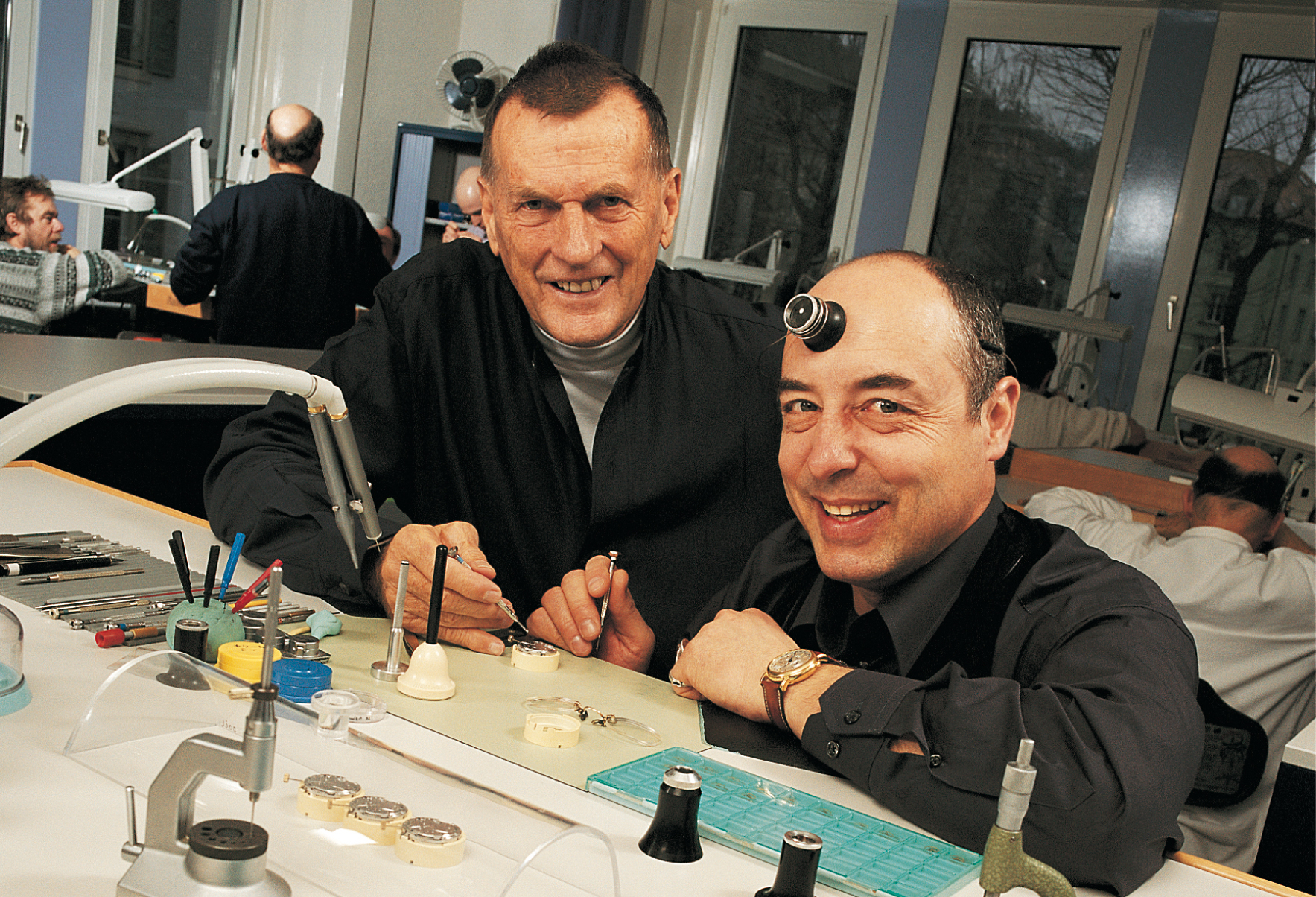
Twenty-five years later, after all the experimentation, material research, aesthetic and mechanical refinement of the Freaks, the Super Freak arrives. To understand why this watch matters, it helps to step back. Founded in 1846 in Le Locle, Ulysse Nardin was known for precision timekeeping, particularly through marine chronometers, which were relied upon for navigation at sea long before the advent of GPS. To skip a century and a half, in 1983, Rolf Schnyder acquired the brand and brought in Ludwig Oechslin, the “wizard watchmaker” and also a historian, archaeologist, mathematician, and philosopher with a passion for astronomy. Their collaboration shifted Ulysse Nardin away from tradition for tradition’s sake and towards a much more experimental, very intellectual approach to watchmaking. The Freak emerged from that creative environment as a watch that deliberately broke conventions to explore new solutions, with Rolf Schnyder, Ludwig Oechslin, Carole Forestier and Pierre Gygax, among others, involved. It was, in many ways, less a product but a platform, a laboratory, with some spectacular results.
The Freak Experiment
Since the original Freak introduced silicon parts and a rotating movement display, the concept has continuously evolved. The higher-frequency Freak 28’800 (2005), the material-innovative Freak DIAMonSIL (2007), and concept-driven InnoVision 1 (2007) and InnoVision 2 (2017), which previewed oil-free construction and the Grinder system, followed. The arrival of the Freak Vision (2018) marked the transition to self-winding; the cutting-edge Freak NeXt came as a concept watch packed with innovative applications of compliant mechanisms. The more accessible Freak X (2019) reinterpreted the concept and brought back the crown. The Ulysse Nardin Freak S (2022) introduced dual inclined oscillators and a differential, followed by the streamlined Freak One (2023) and experimental collaborations like the UR-Freak (2025). The Super Freak comes from all this work, builds on the Freak’s 35 patents, integrating many of these ideas into a single watch, and adding a double tourbillon and gimbal-driven seconds display.
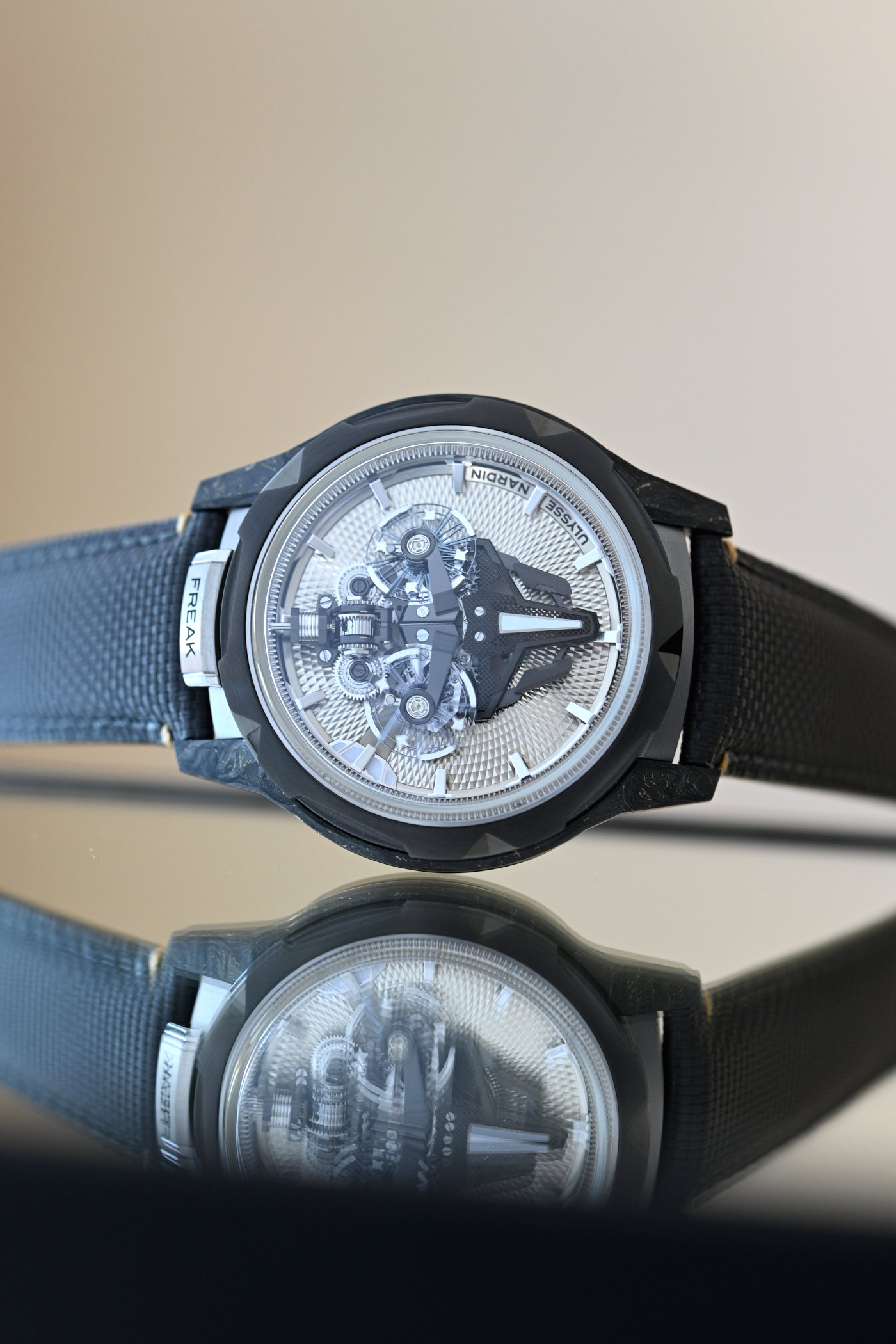
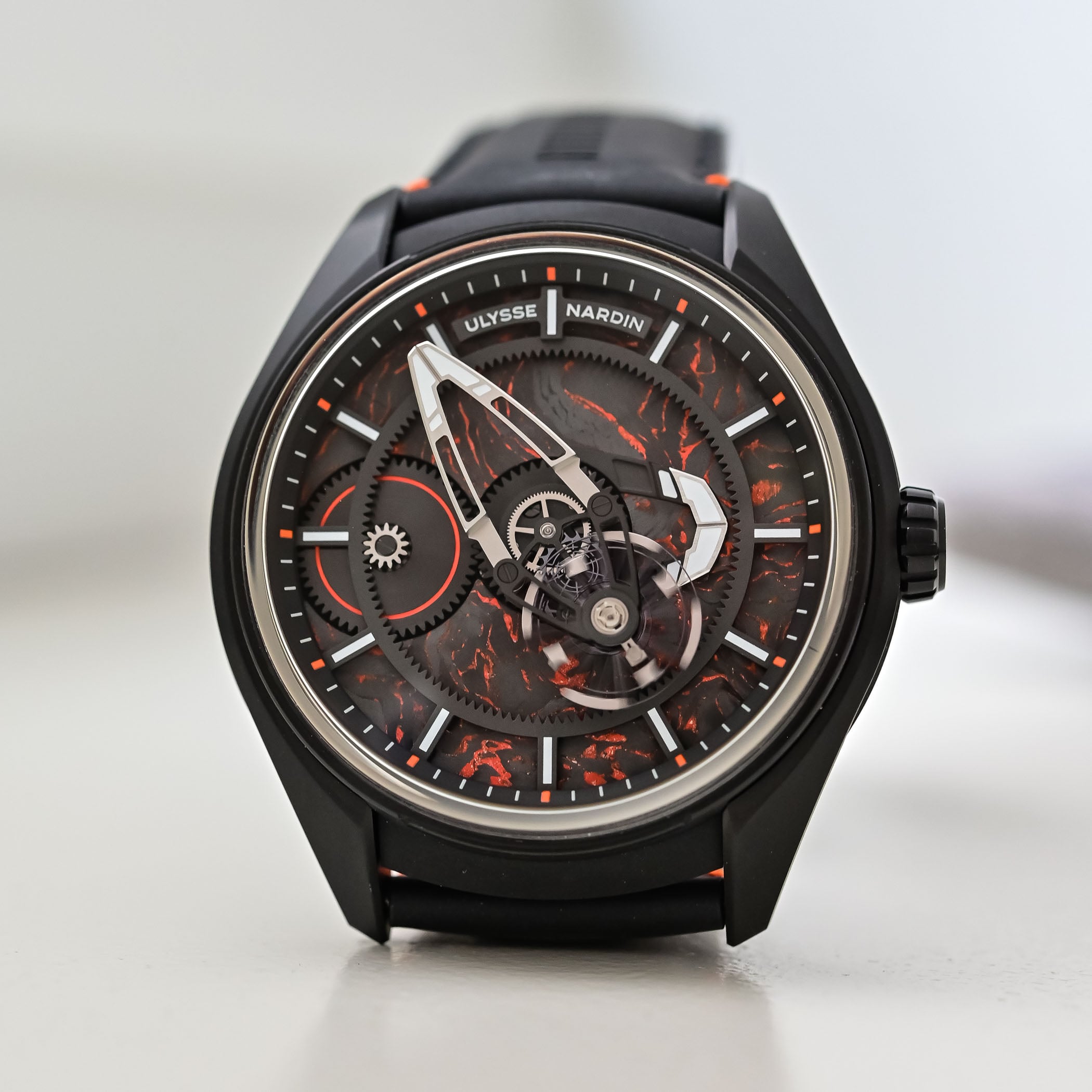
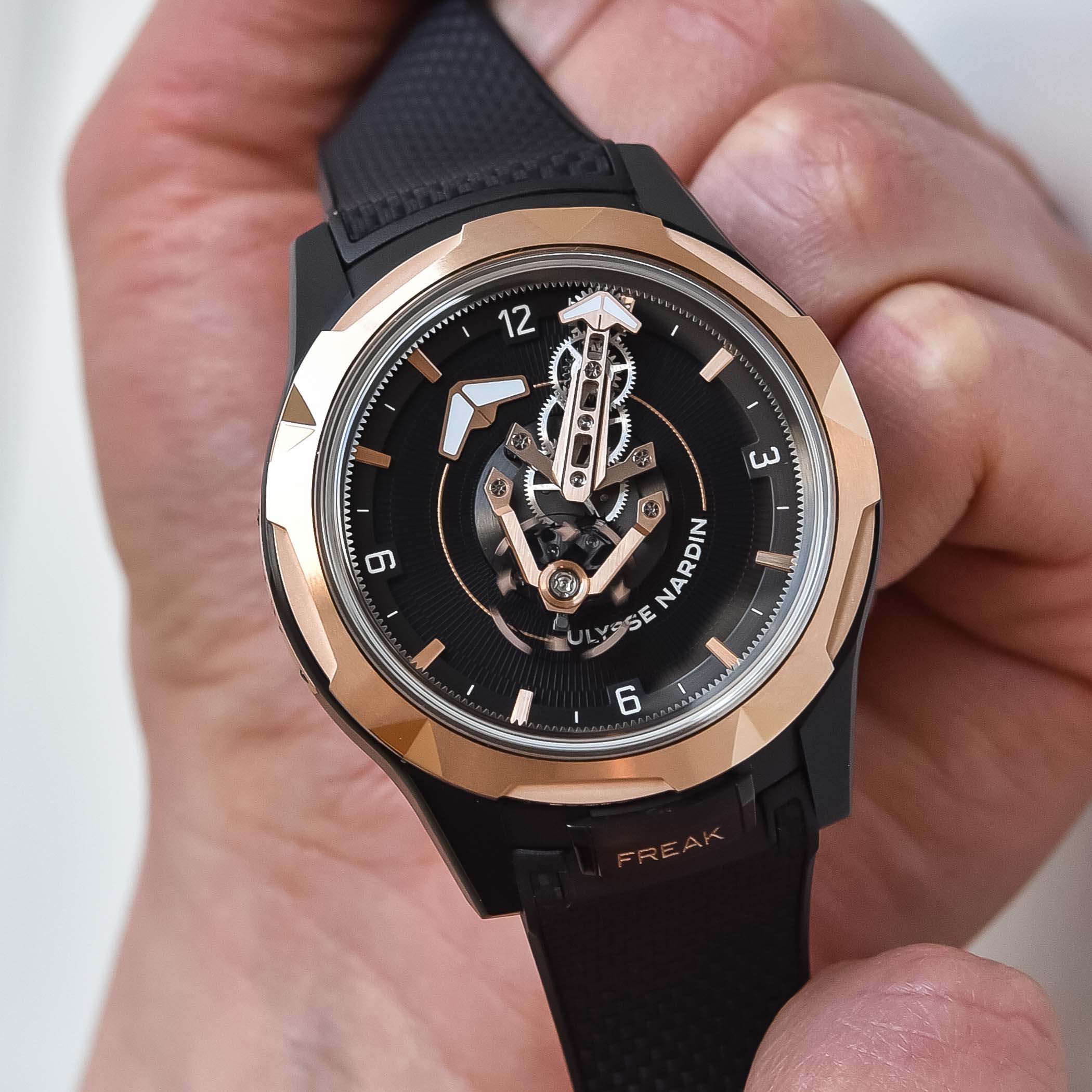
Ulysse Nardin describes it as the most complicated time-only watch ever made, and while the statement is bold, it is difficult to argue against, all things considered. Now, the Super Freak is still a Freak, no doubt, but where the original felt disruptive and provocative, this new model feels controlled, even familiar by the looks of it: after all, with all the different Freaks we were treated to so far, we might have gotten used to the appearance. But with the Super Freak comes a difference; the ideas are no longer being tested – they are being fully realised. See if you agree.
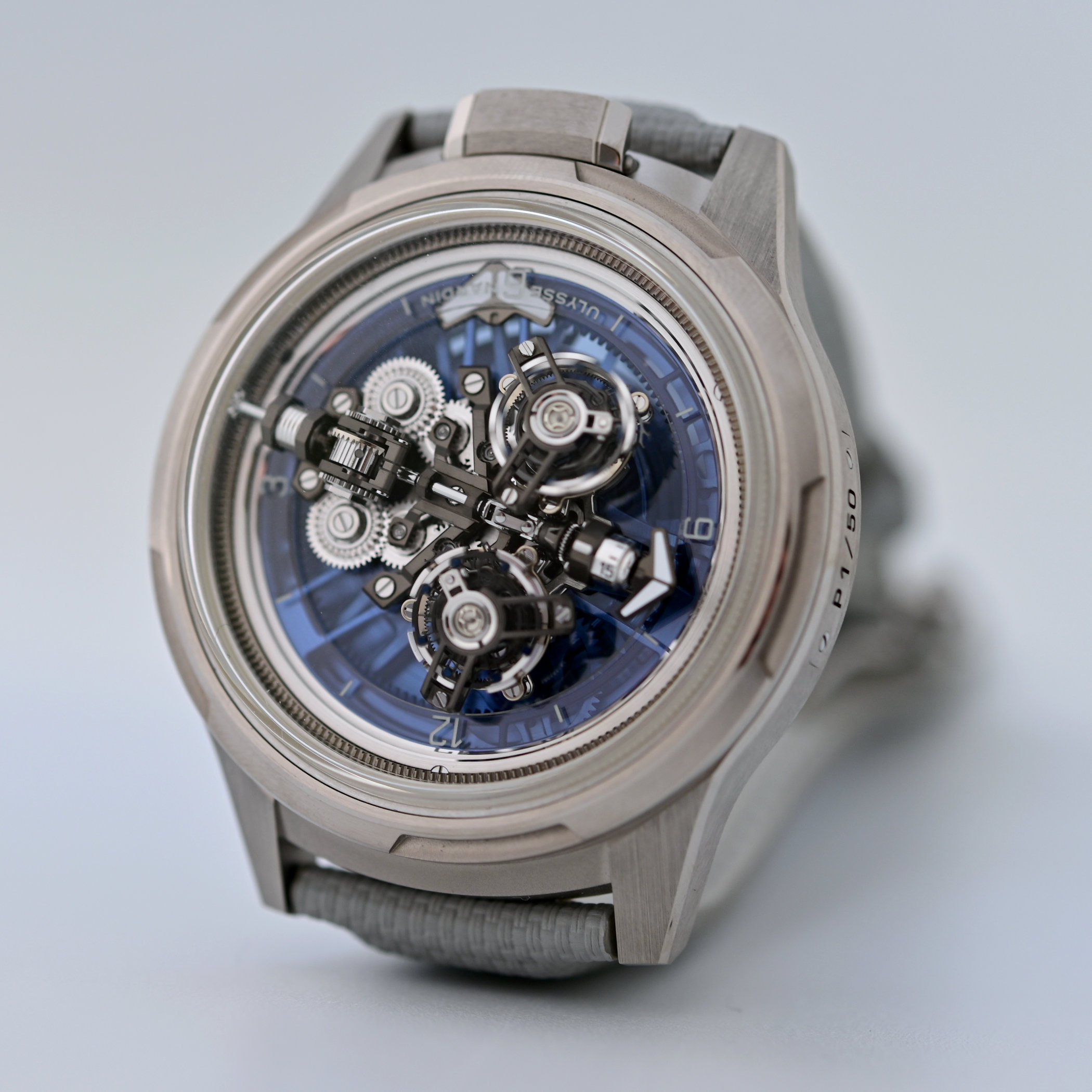
The Super Freak Case and Display
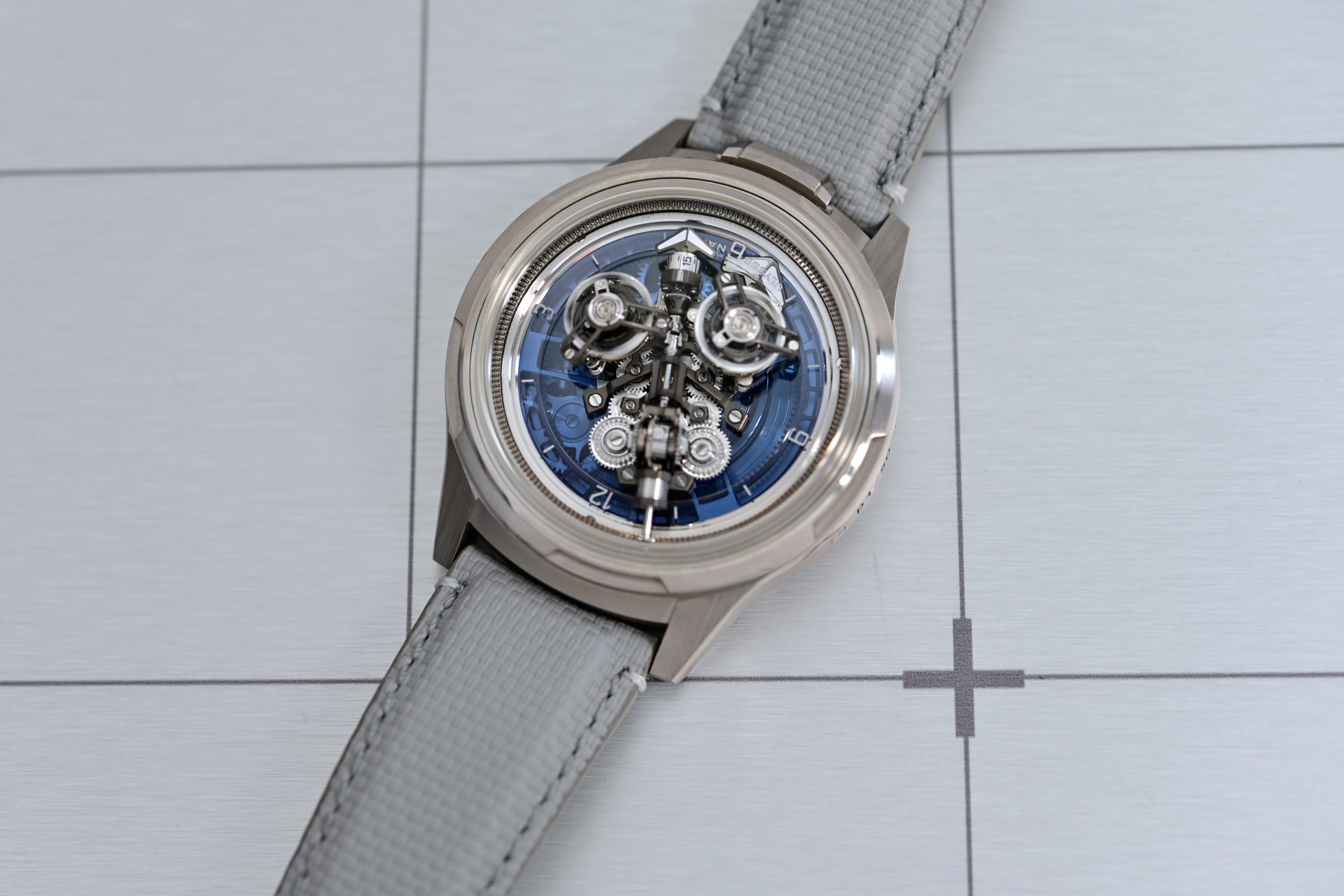
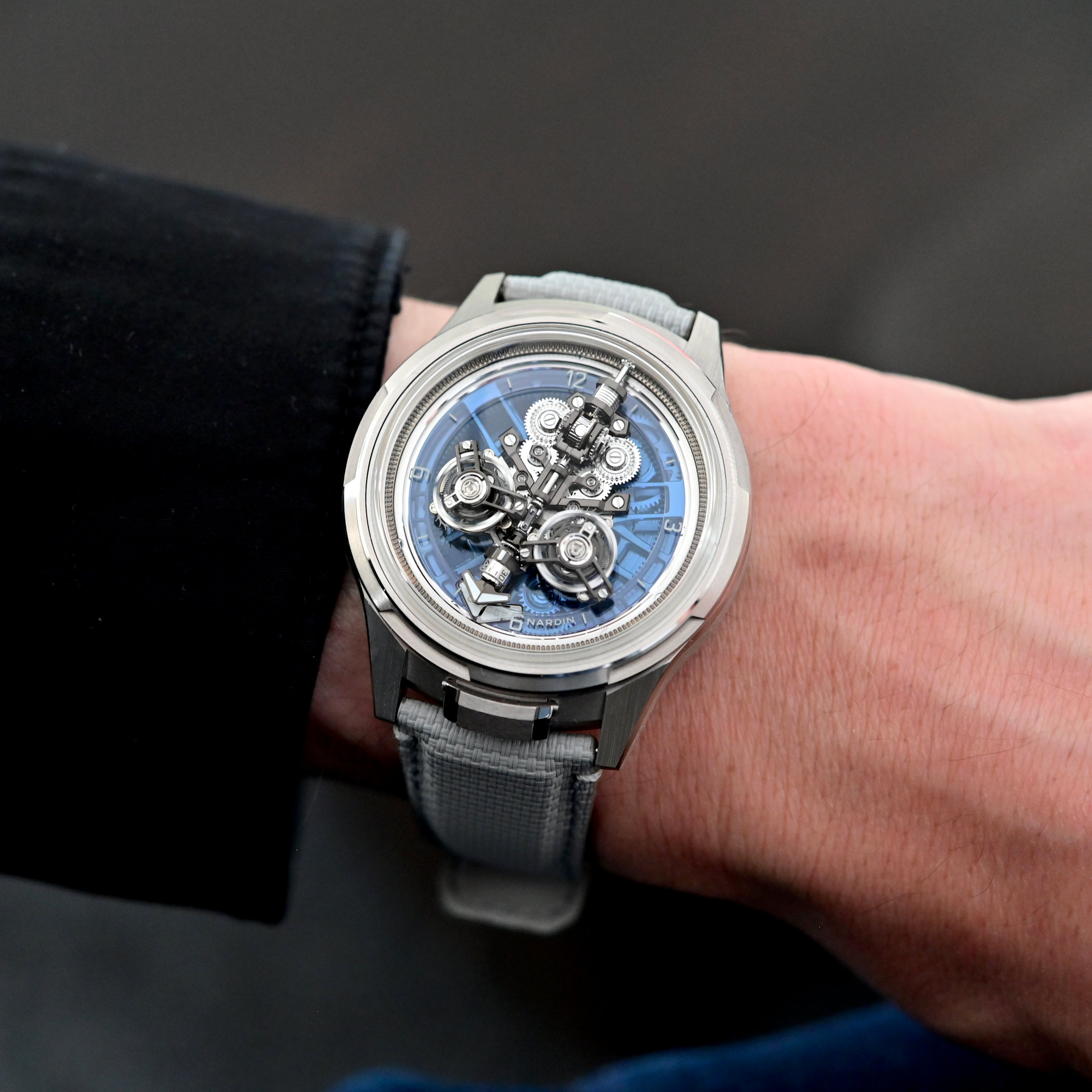
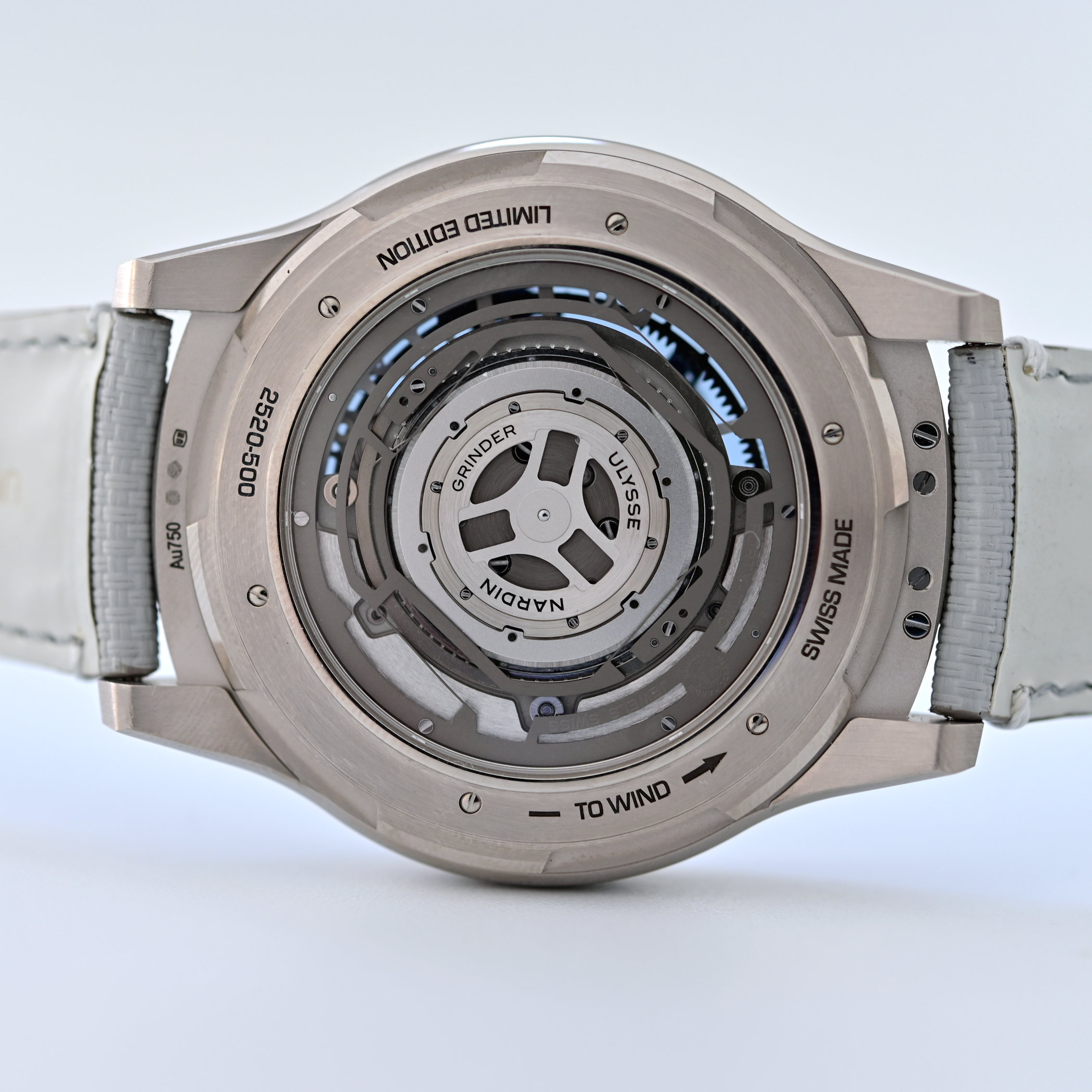
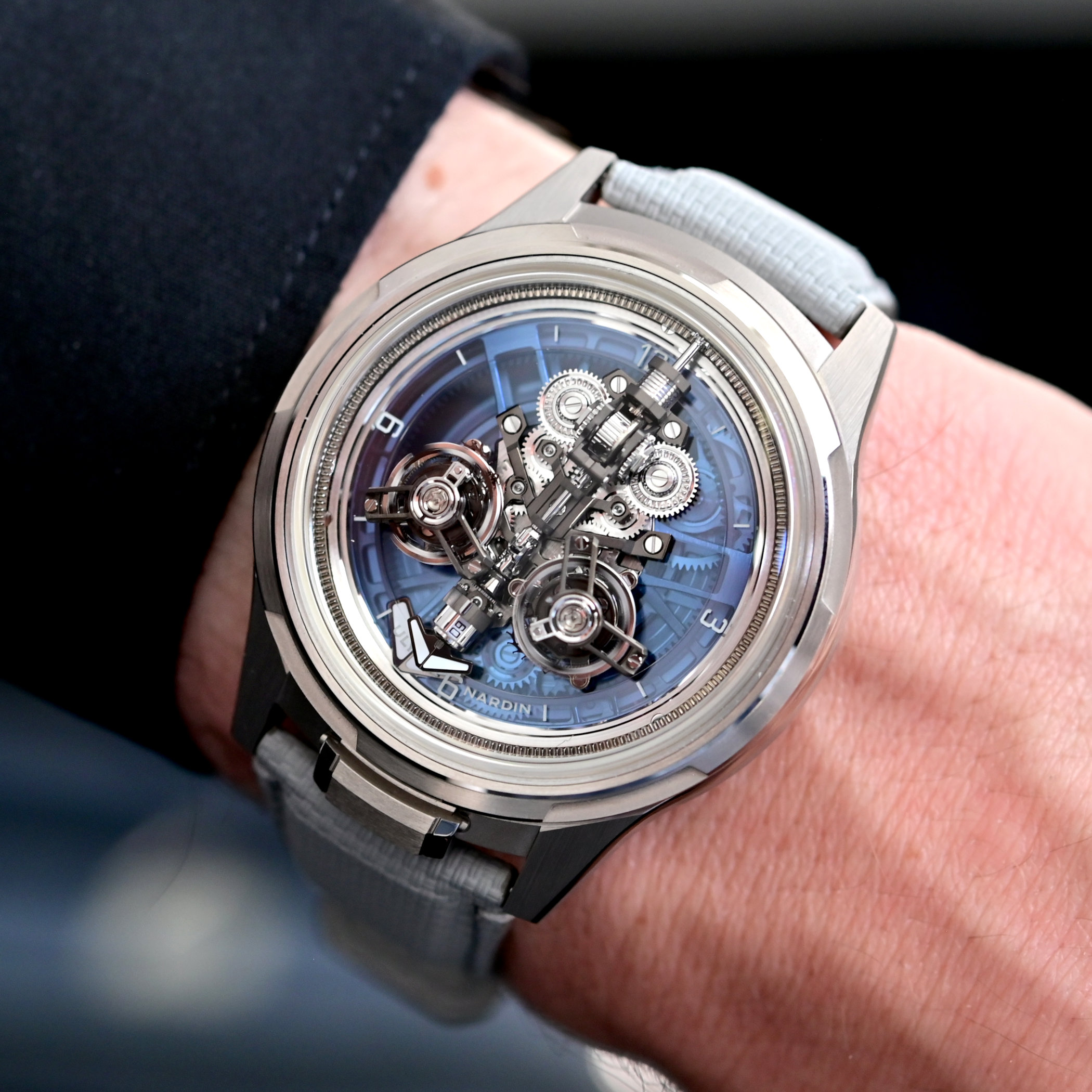
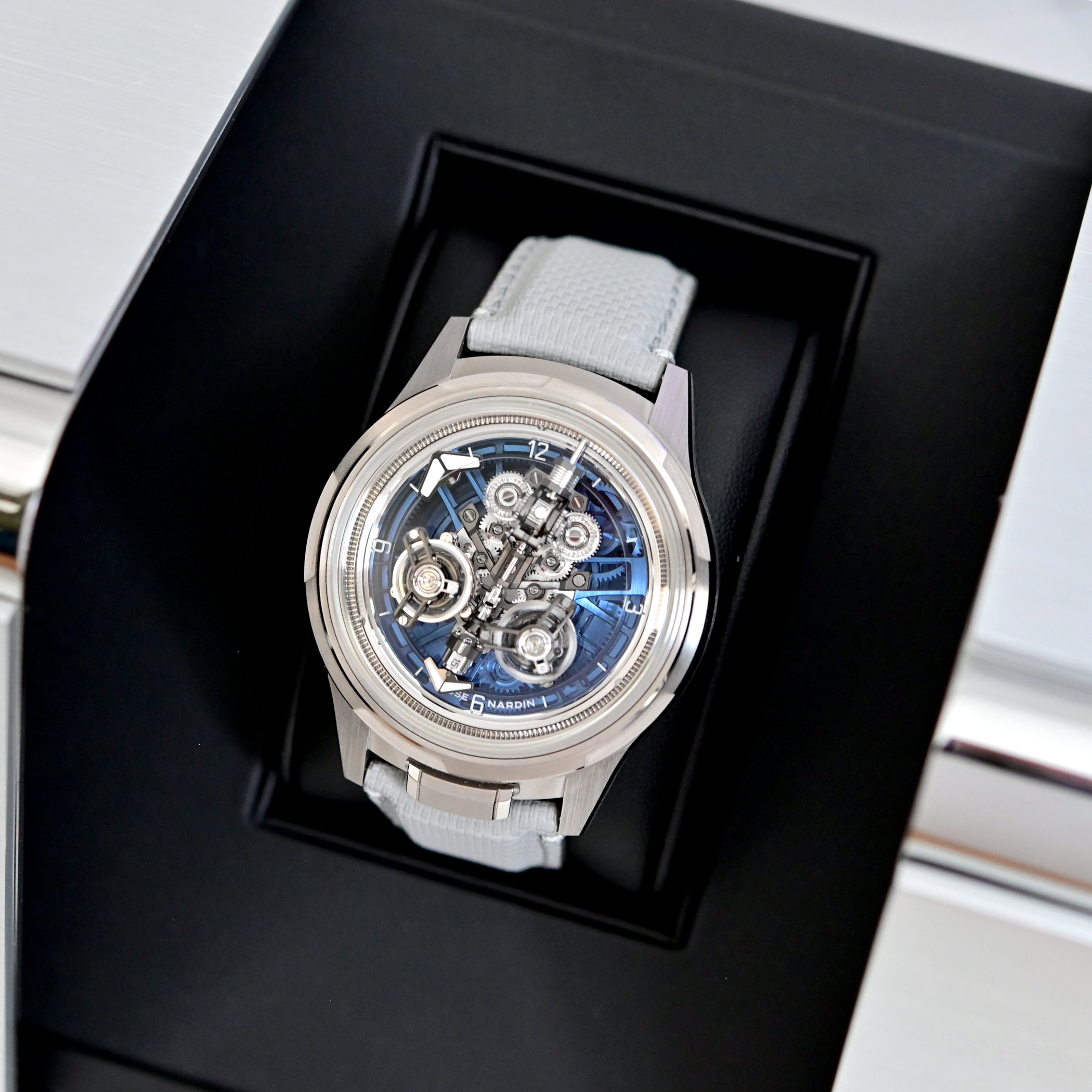
The Super Freak white gold case measures 44mm in diameter; it is marginally smaller than the 45mm Freak S, yet more refined in its execution. The absence of a crown remains; time is adjusted by rotating the bezel, and winding is performed through the caseback. This unconventional interface, once surprising, now feels integral to the watch’s identity, and UN is not the only brand to exploit the idea. What has changed is the design’s clarity. The bezel-locking system has been reworked to appear more integrated and less mechanical. The case nicely balances technical density and wearability. Despite the complexity, the proportions are managed, and the perceived thickness of just over 12mm (16.54 mm overall) disguises a much more elaborate internal construction.
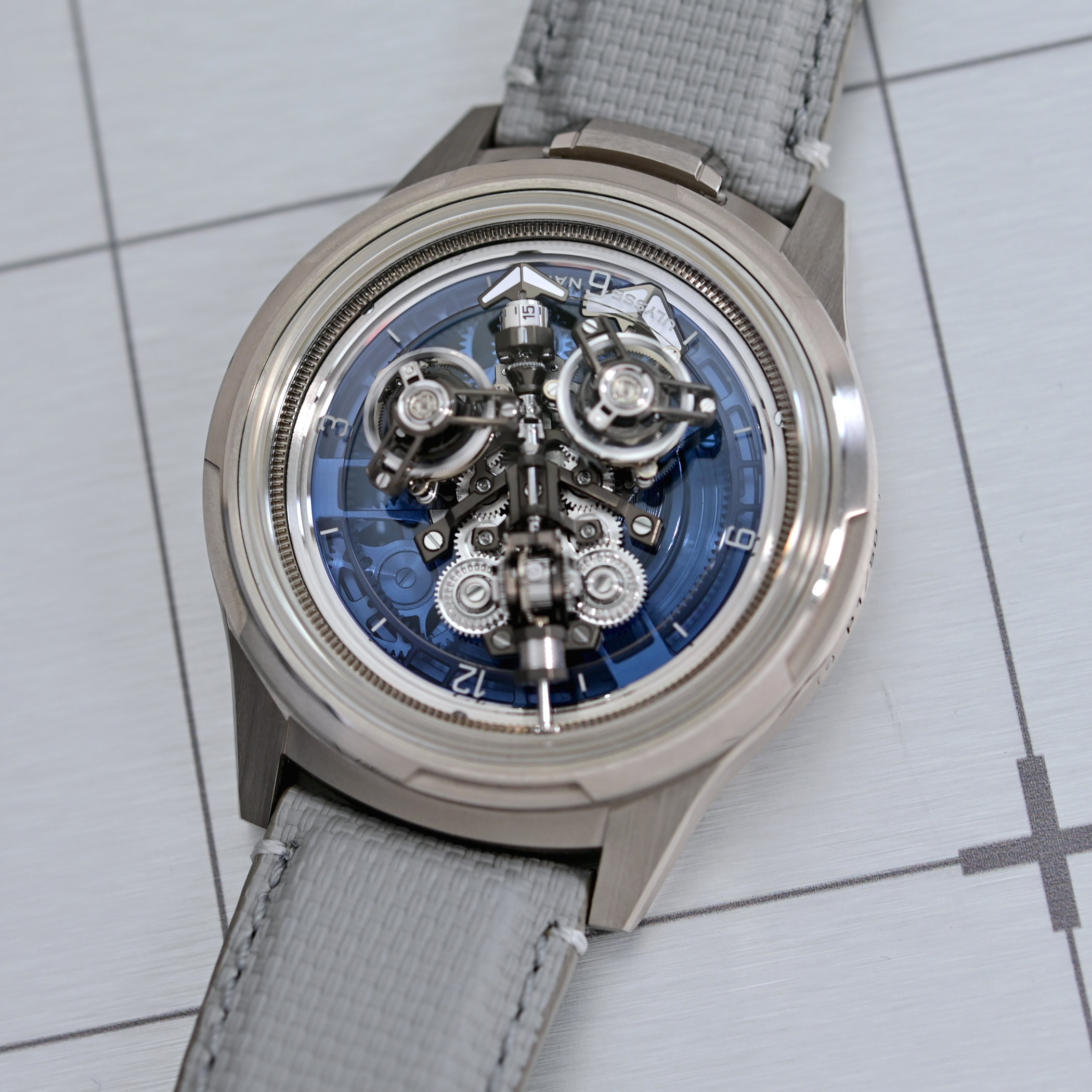
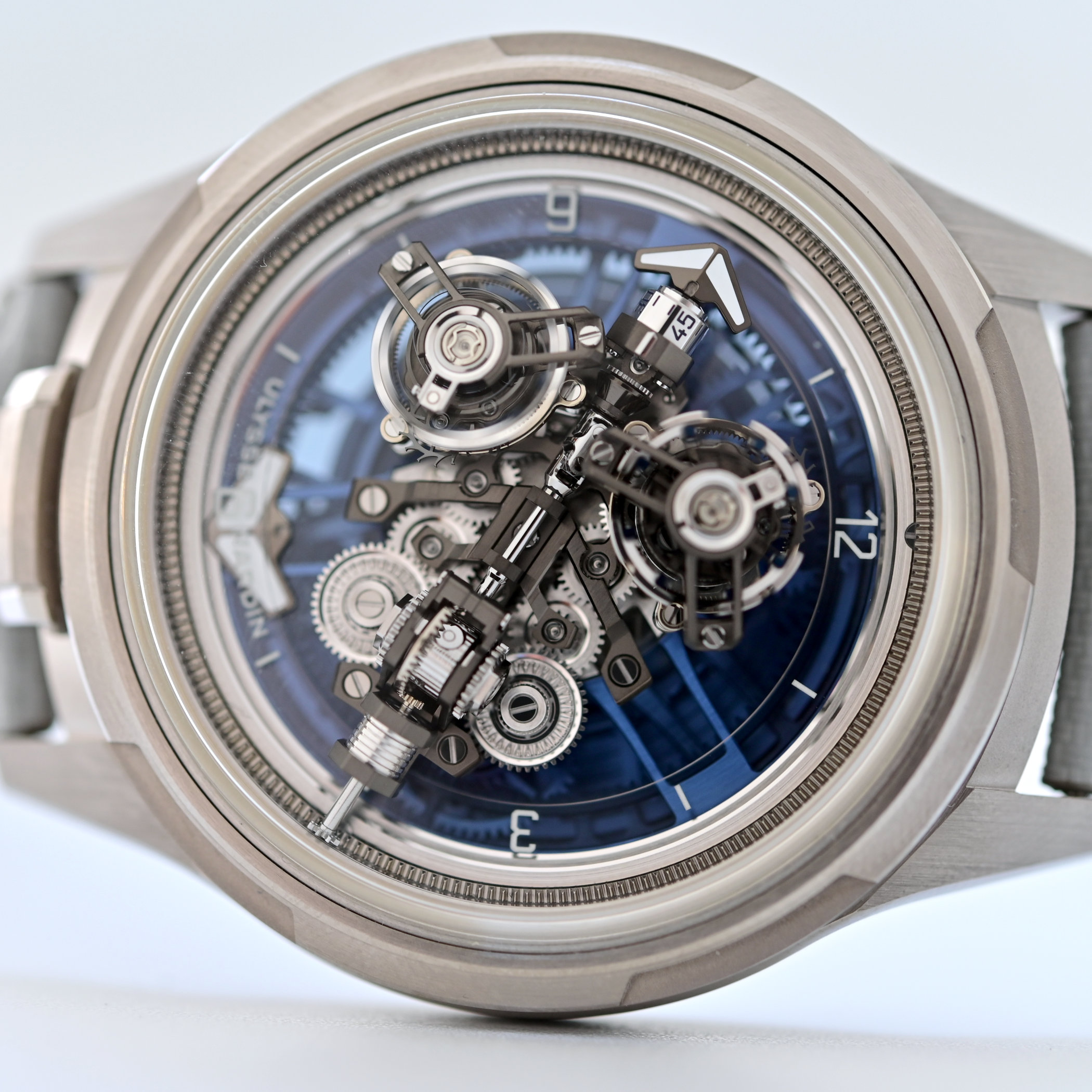
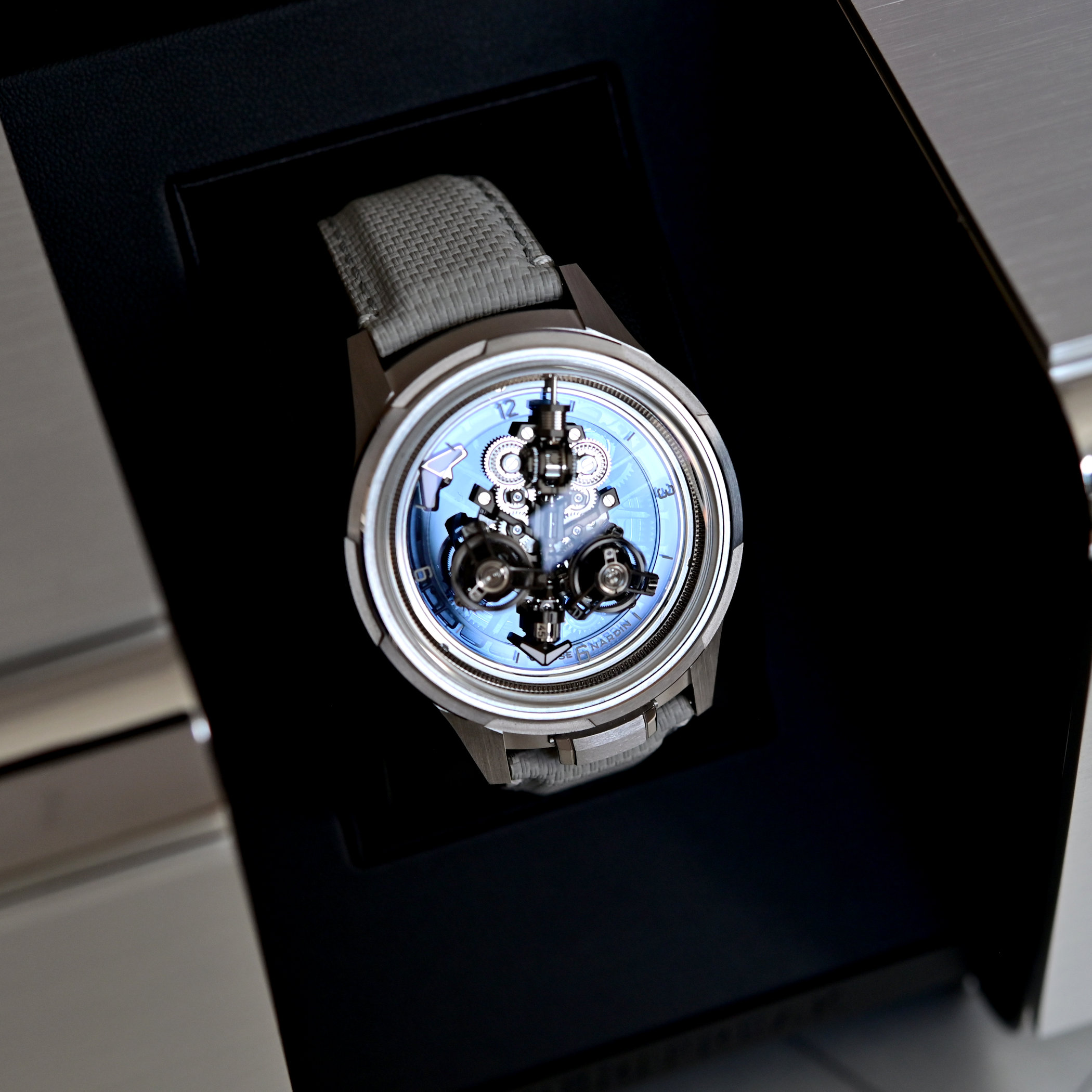
Like other Freaks, the Super Freak is built around depth and motion. There is no dial in the traditional sense as the watch exhibits a multi-layered landscape arranged across seven distinct planes. The eye is never drawn to a single focal point, as the interaction of components constantly shifts. The blue Nanosital (an optically transparent polycrystalline material offering a wide colour spectrum) hour disc floats above the movement, its transparency allowing light to pass through and hit the surfaces beneath. It’s icy, but strangely not cold, adding a contemporary tone without feeling too technical or sterile.
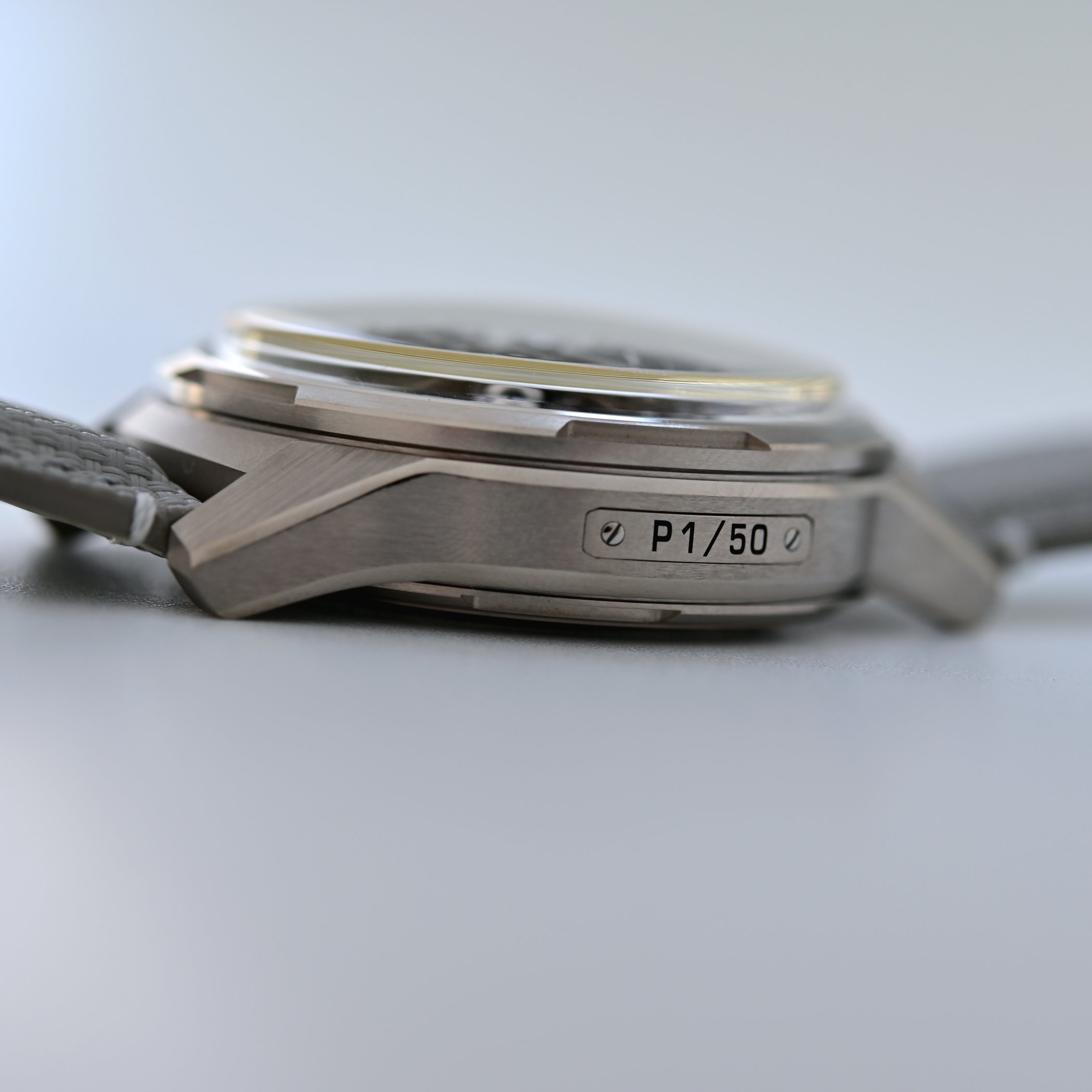
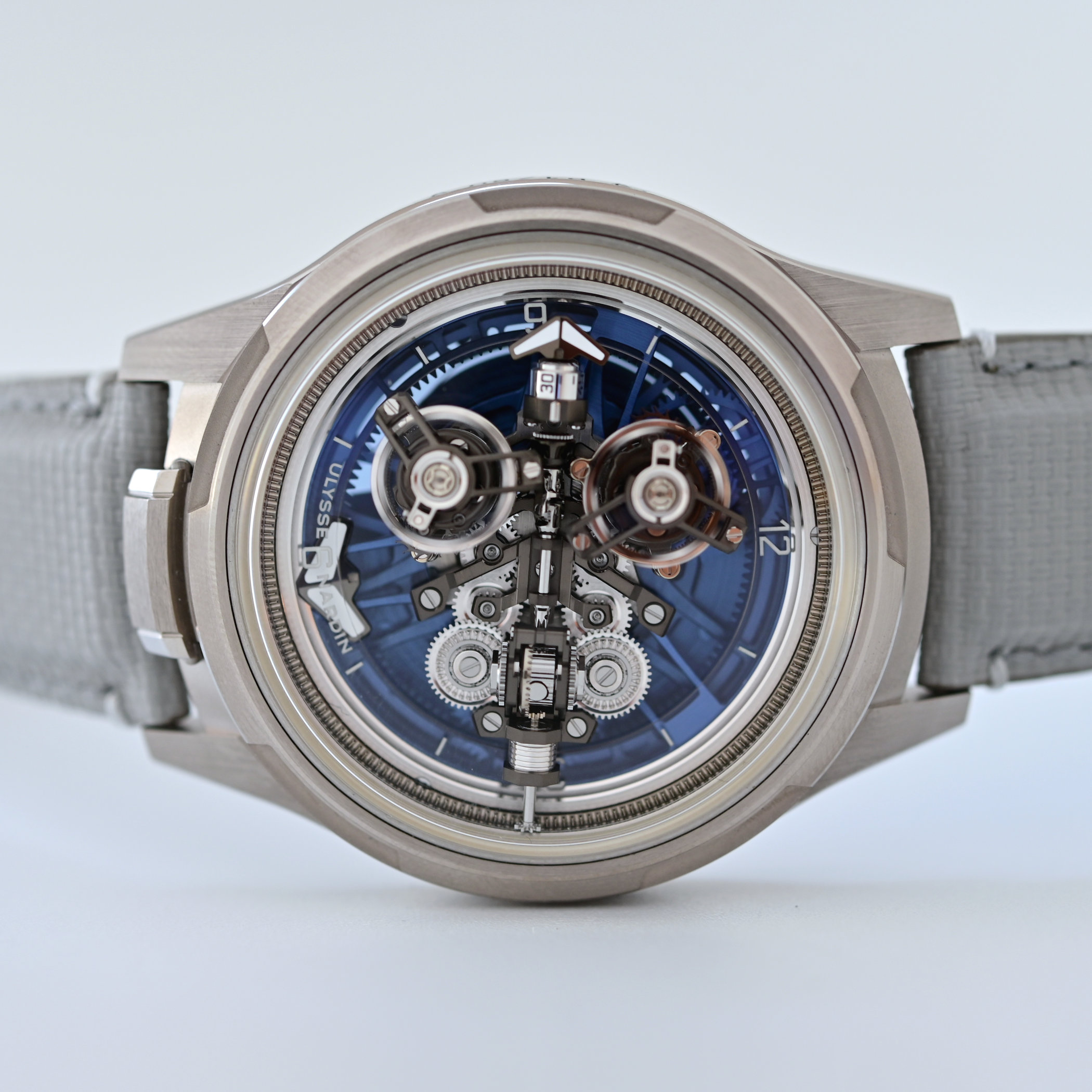
The way time is displayed remains one of the defining features of the Freak concept. The movement performs the role usually assigned to hands. The central bridge, carrying the regulating organ, rotates once per hour to indicate the minutes, while the disc indicating the hour completes a full rotation every twelve hours; thus, the indication is inseparable from the mechanics that produce it.
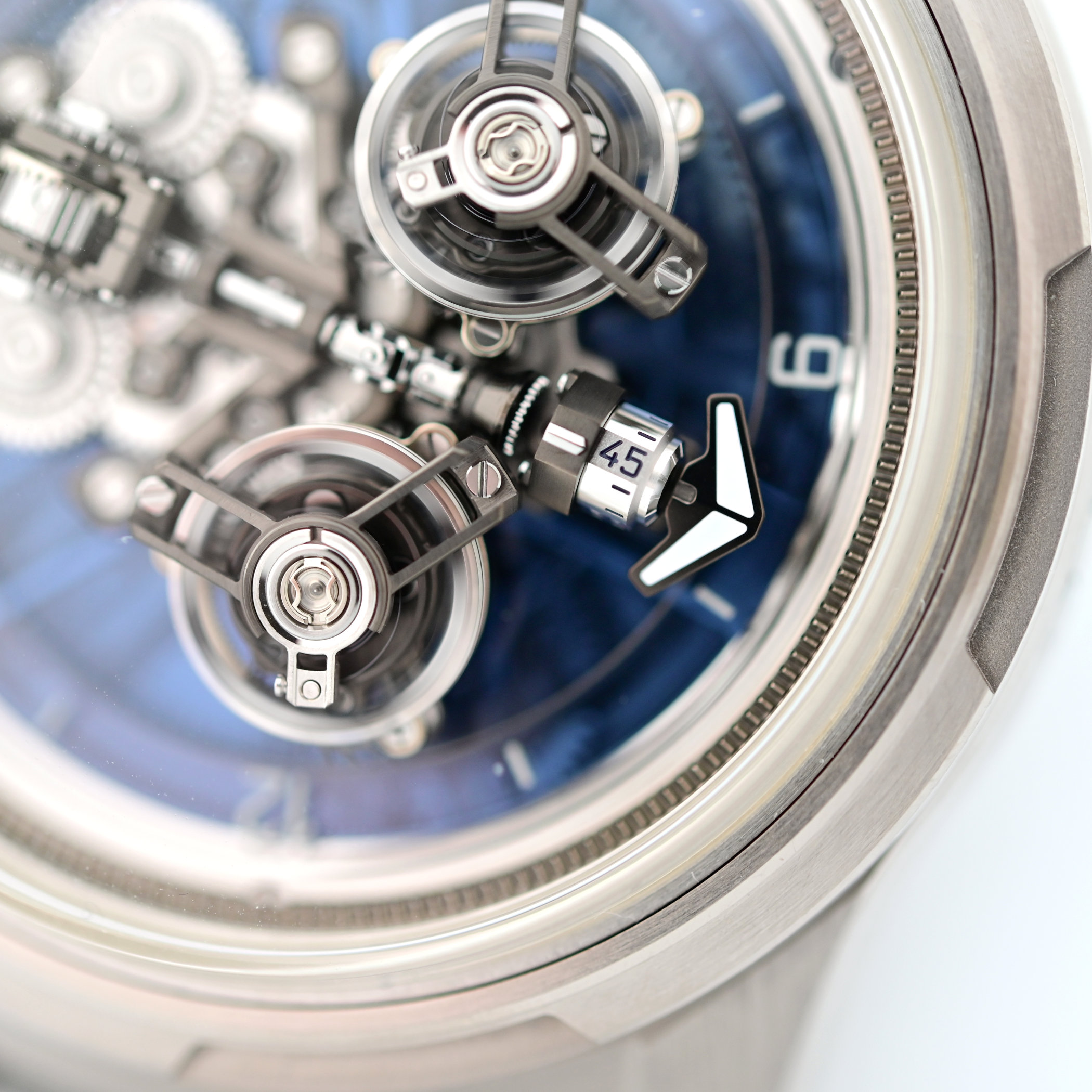
What distinguishes the Super Freak from its predecessors – time-only watches except for the Lab edition with a date indication – is the introduction of a seconds display. In a conventional watch, adding a seconds indication is sort of trivial. In a Freak, it is anything but. The entire movement is already in motion, rotating around its axis, which complicates the transmission of energy to any additional display. It is a minor addition visually, but mechanically significant, as it required rethinking how energy flows through the movement.
The Super Freak Works
At the centre of this system is the new calibre UN-252, a 511-component movement developed over four years. The most striking feature is the presence of two flying tourbillons, each inclined at ten degrees and rotating in opposite directions. Both complete a full revolution every sixty seconds and are mounted on a shared bridge that also serves as the minute indicator.
The use of two regulators is justified. By combining outputs and averaging their rates, the movement aims to improve overall stability, achieved via an exceptionally compact differential mechanism measuring only 5mm in diameter. Because the differential and the seconds display operate on separate, off-centre axes, Ulysse Nardin developed and patented a compact, 11-component gimbal system measuring only 4.8mm to maintain consistent energy transmission between them. Acting as an intermediary, the gimbal receives power from the differential and delivers it to the cylindrical seconds indicator for stable, precise operation despite the constantly shifting geometry of the movement.
The integration of this differential is particularly noteworthy. Its orientation has been inverted compared to earlier implementations (Freak S), opening up the movement’s architecture. It is both a functional and an aesthetic decision, because in the Freak, mechanics are always meant to be seen. Obviously, energy management is important, if not crucial, for a watch of this complexity. Driving two tourbillons, a rotating carousel, and an additional seconds display requires efficiency, and this is where the Grinder system comes into play. Unlike traditional automatic winding systems, which rely on a central rotor, the Grinder uses a system of ultra-thin blades connected to an oscillating weight. This configuration allows it to capture even minimal wrist movements and convert them into usable energy with remarkable efficiency, with a power reserve of approximately three days.
Where there’s a Freak, there’s material innovation. The already mentioned Nanosital for the hour disc is one. Silicon, introduced in the original Freak, is used extensively here for critical components such as the balance wheels and hairsprings. Its properties, lightness, resistance to magnetism, and reduced need for lubrication make it very well suited to high-performance watchmaking. The escapements, meanwhile, employ DIAMonSIL technology, a diamond-coated silicon solution that enhances durability and reduces wear.
The Artisanal Super Freak
Despite its technological focus, the Super Freak is also about craftsmanship. More than 70% of its components are finished by hand, using traditional techniques such as straight-graining, polishing, and sandblasting. The use of titanium for structural elements introduces additional challenges, and achieving a consistent finish requires greater effort and precision. Thus, the technically complex Super Freak also carries an artisanal aspect.
The Super Freak Impressions
Perhaps what best defines the Super Freak is not its complexity, but the way that complexity is structured. The dual tourbillons, the differential, the gimbal-driven seconds display, and the rotating mechanisms are not isolated features; they are interconnected parts of a single idea: to explore alternative ways of displaying and regulating time within a mechanical system. In that sense, the Super Freak does not try to compete with traditional high complications. It is less about adding functions, though the second display is cool, and more about redefining how those functions are expressed. The Super Freak demonstrates what happens when a radical idea is pursued relentlessly and with consistency. It is no longer experimental; it is fully formed, complete, though it’s hard to imagine the line ends here.
The Super Freak Details
To guarantee overall quality, each Super Freak is assembled by a single watchmaker within Ulysse Nardin’s Haute Horlogerie Atelier. The watch is first assembled, then fully taken apart for cleaning, and finally reassembled for final adjustment. The total assembly time needed is around sixty hours, followed by several days of testing to verify performance.
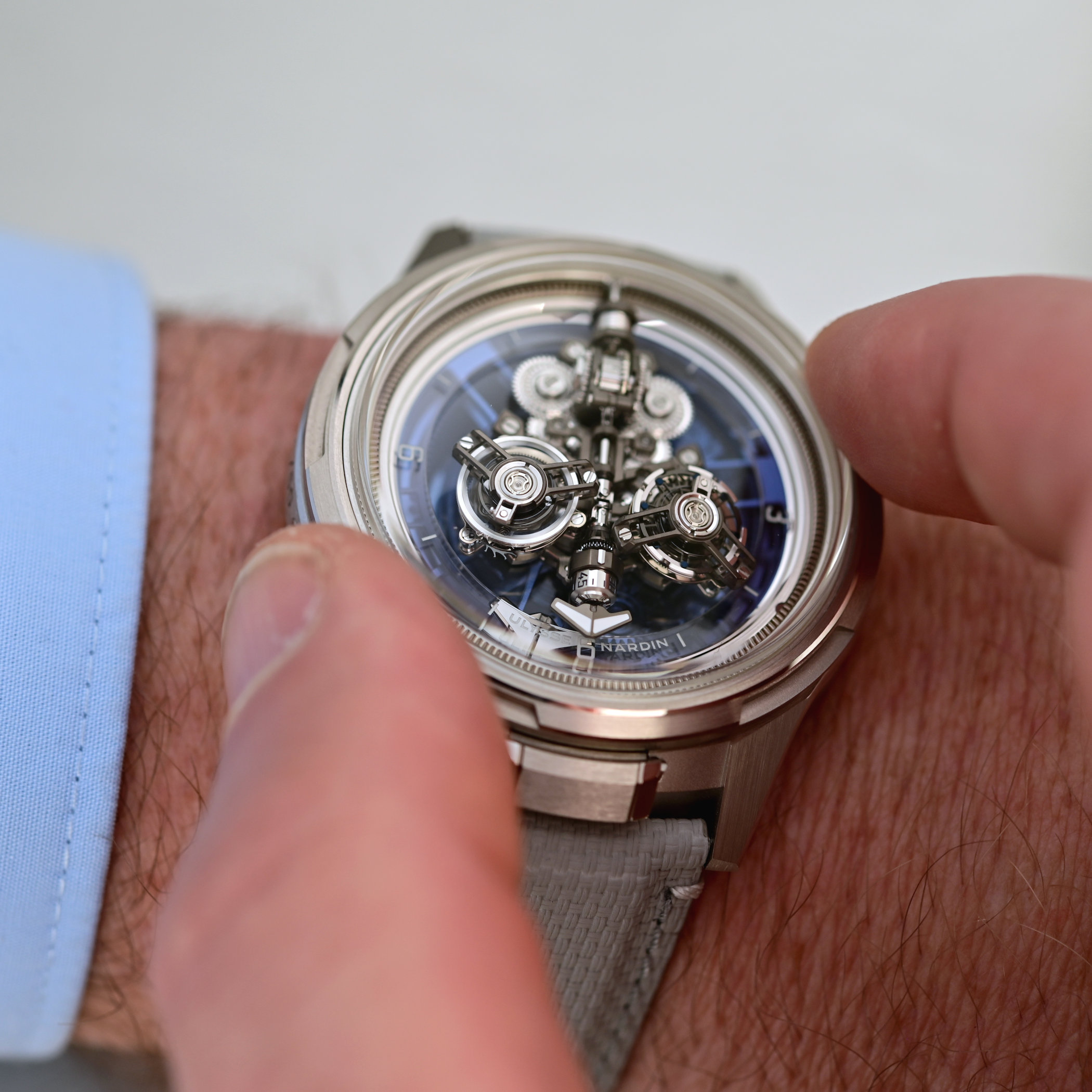
On the wrist, the Super Freak, worn on a grey rubber strap, provides a more refined experience than earlier iterations. The slightly reduced diameter and improved ergonomics make it more comfortable to wear. It remains a bold watch, visually and conceptually, but somehow it feels friendlier.
The Ulysse Nardin Super Freak is a limited edition of 50; the price is CHF 320,000 / EUR 348,100.
For more information, please visit UlysseNardin.com.