Not all images were able to load for printing. Please close the print window and try again.
Tested Beyond Endurance – A Conversation with Aldo Kane about Bremont Watches
Underwater, up in the sky, through deserts… There’s no place where Aldo Kane didn’t bring a Bremont watch.
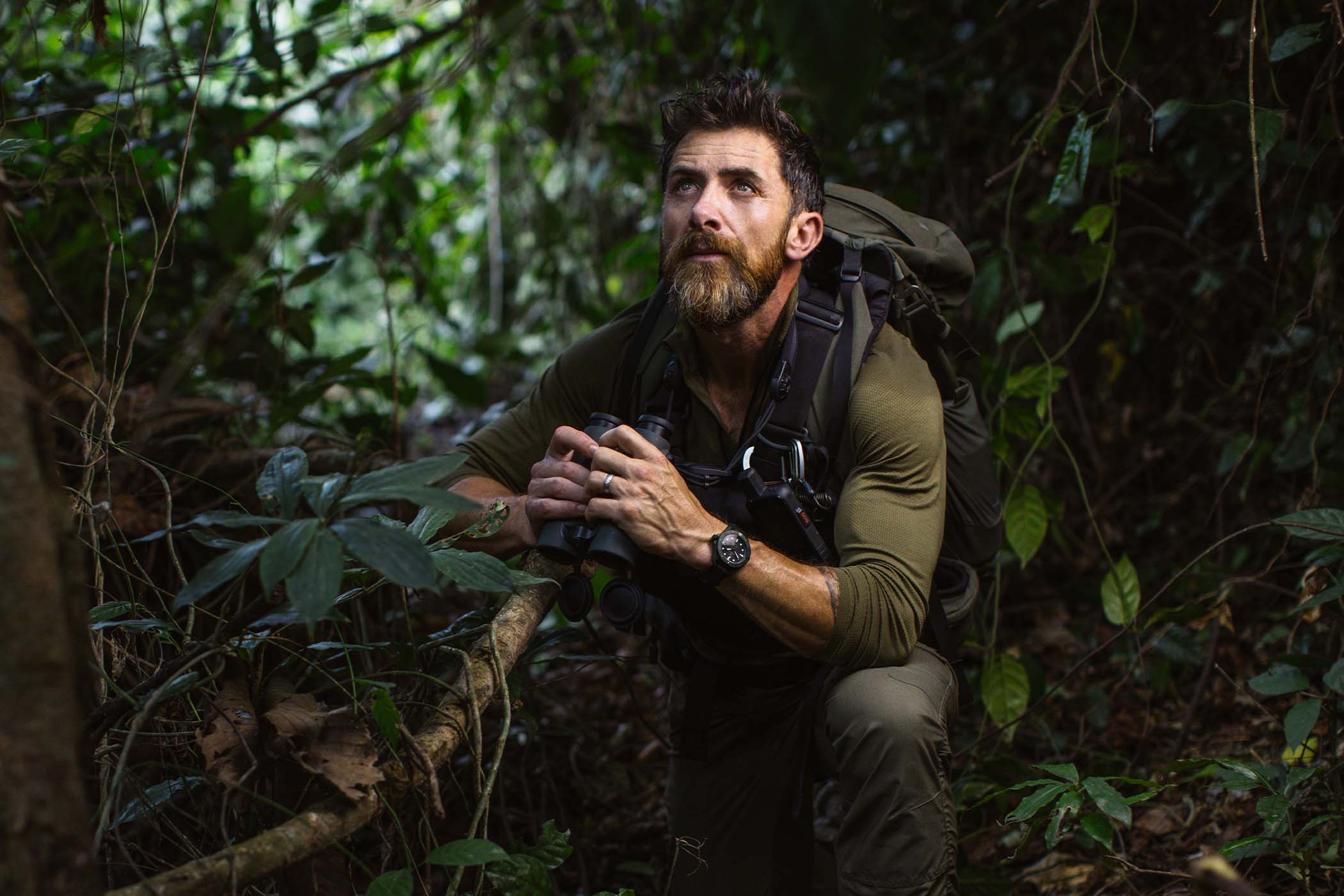
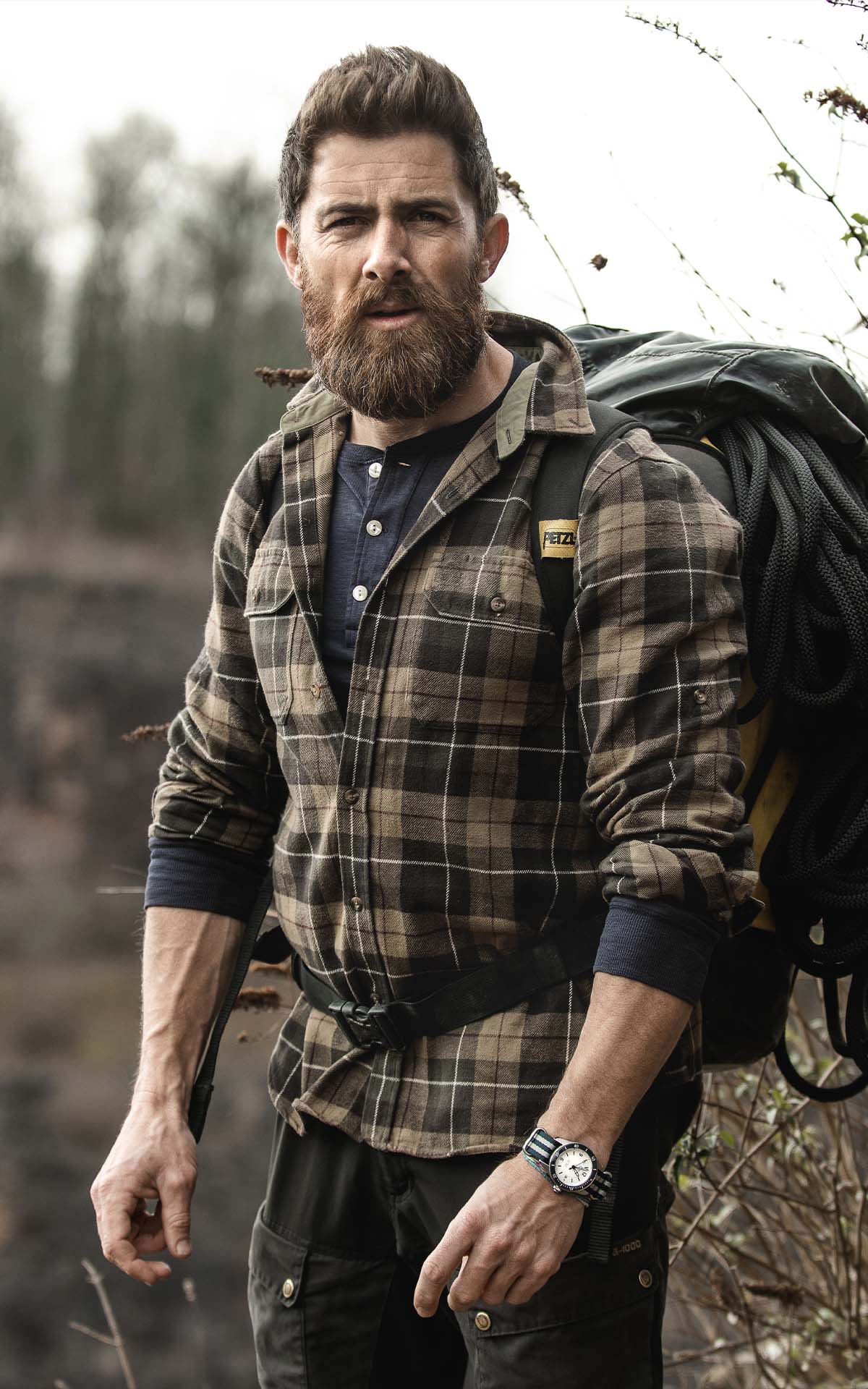
Aldo Kane, an expedition leader, former Royal Marines sniper, and television adventurer, has spent the better part of a decade as a Bremont ambassador, putting the brand’s watches through volcanoes, jungles, oceans and mountains. We talk about how the relationship began, why he prefers a simple mechanical watch to a wrist computer, and what eight years of expedition life have taught him about reliability.
Frank Geelen, MONOCHROME – How did your relationship with Bremont start? Did they contact you, or did you meet them some other way?
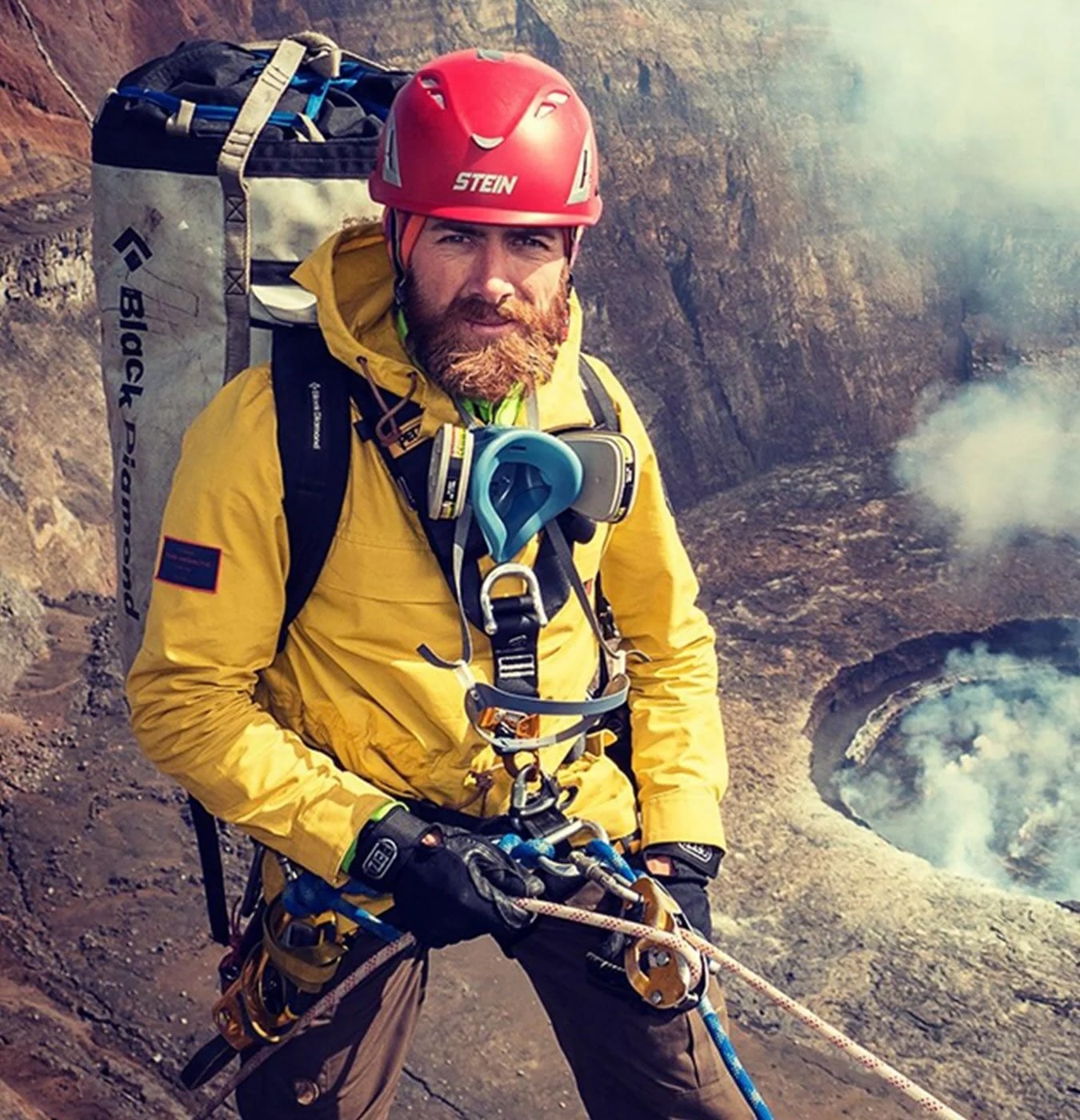
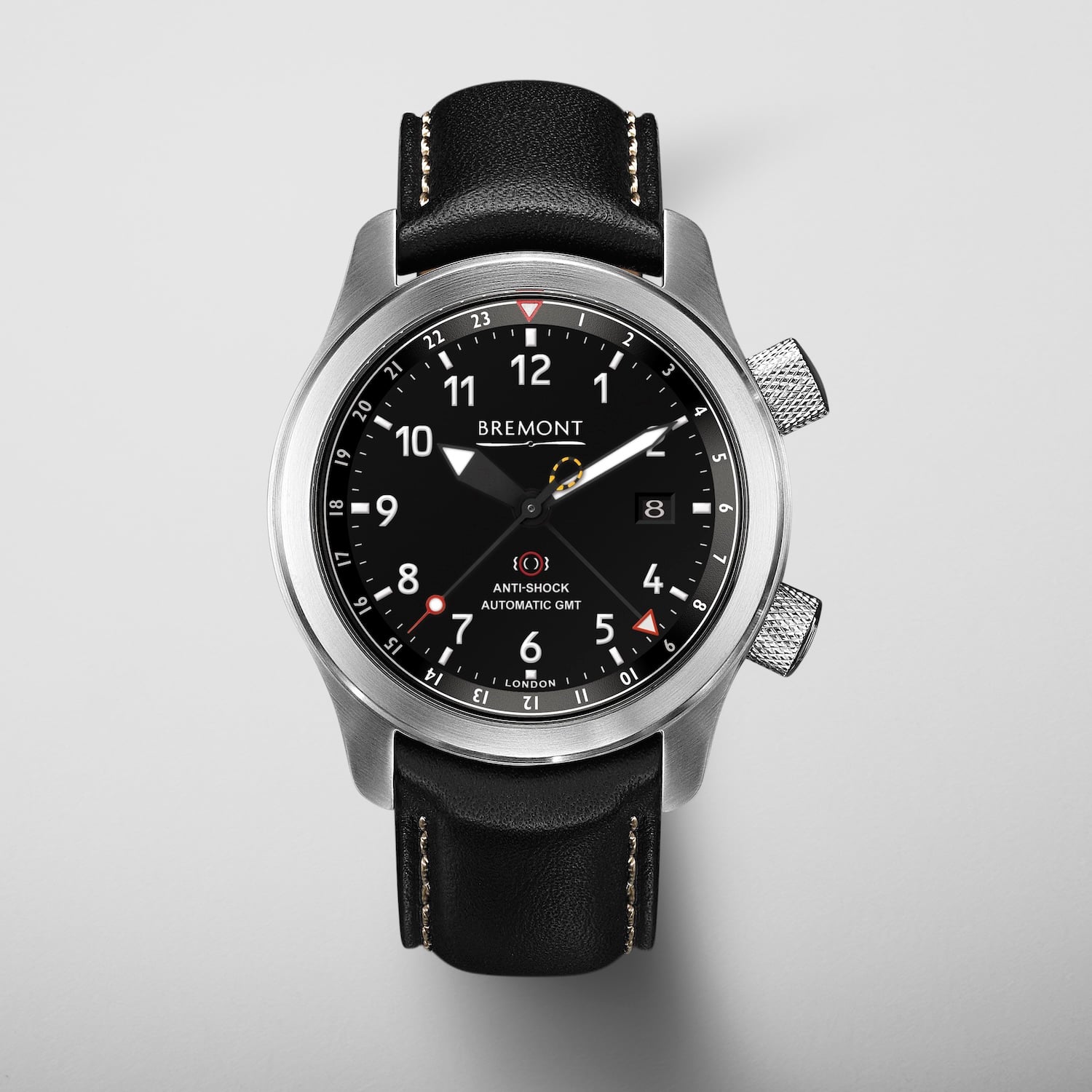
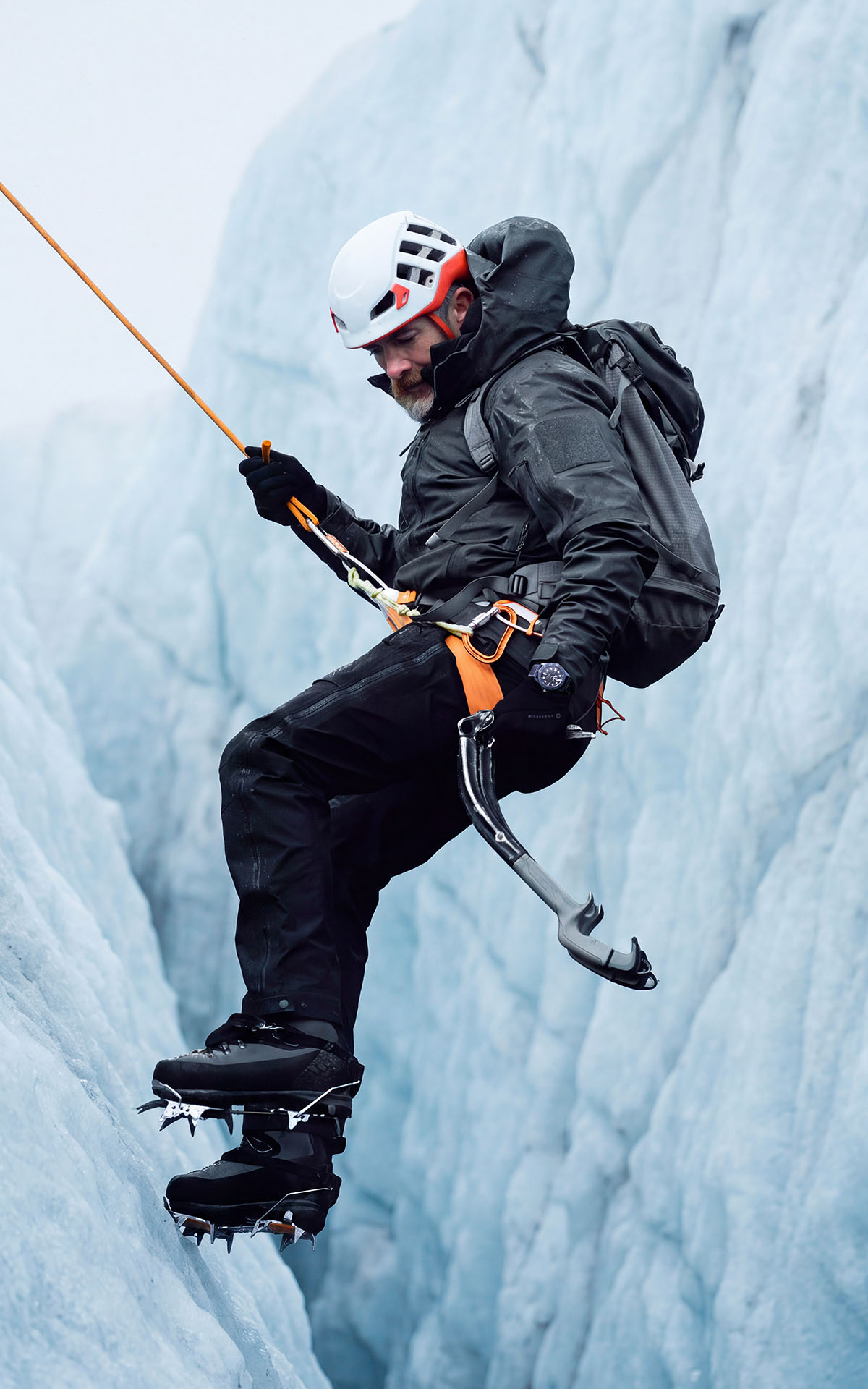
Aldo Kane – I first heard about them through a friend who was doing base jumping – that must have been nine or ten years ago, maybe longer. They were in the back of my mind, but it wasn’t until I started doing a lot more television work that things moved forward. I was invited to an event and ended up speaking to Nick and Giles at Bremont. That evening I just said to them, “By the way, I’m going inside an active volcano next month – do you want me to take one of your watches in and test it?” Their strap line at the time was “tested beyond endurance,” so it felt like the right fit. That was 2017, and I’ve been working with them, unofficially and then officially, ever since – nine years now. I took their Martin Baker III into the volcano, lived in and around it for a month, and brought it back to tell the tale.
Were they immediately open to working with you?
At the time, Bremont was still very small, run directly by Nick and Giles, and there weren’t many people doing the level of activity I was doing. Everything about what they were – exploring the planet, exploring yourself, testing yourself – was exactly in line with my own values. It fitted perfectly.
How did it feel wearing a watch of that value into environments like that? Did it put pressure on you?
Good question. Up until that point, I’d never really worn an expensive watch – just digital ones that told me altitude, temperature, and so on, with a lot of functions you end up not really using. Moving to a proper watch, I actually enjoyed going back to something that just tells the time. And in a strange way, it’s easier to wear a watch you haven’t paid for into an environment like a volcano or a jungle, because you’re not worrying about damaging it. Their line was “tested beyond endurance” – these watches are meant to go wherever a human being can go, and I’m the person going to those places. So it was kind of my job to try and break it.
I gave that first watch no quarter. Short sleeves the whole time in the volcano, watch fully exposed, rigging for seventeen or eighteen hours a day – sweat, dust, sand, ash. Inside a volcano, the atmosphere is incredibly corrosive. An aluminium ladder used to cross the crevasses between ash layers will corrode through in about two weeks with the rain and sulfuric acid. Carabiners corrode after two weeks and can’t be reused. Ropes corrode. Even the stitching in your clothing comes apart, because the sulphur gas in the atmosphere mixes with rain into a mild sulfuric acid. It’s probably one of the most destructive environments I’ve worked in, for my own health and for the kit. So it was a genuinely good test.
And the watch came out fine?
Fine — even after all that. If I’d bought that watch myself, I’d have been terrified to use it in extreme environments. But having used Bremont watches for eight years now, you could take one I wore on the summit of Everest, one from exploring the ocean depths, and one I wore for eighteen months in the jungle, put them all back in the safe, and they’d look the same as when they were new. It’s very difficult to actually damage them.
After the Martin Baker III, how did the relationship with the brand develop? Did they start offering you watches for specific expeditions?
When I came back from that trip, it landed on the BBC, and I was in the same volcano again shortly after for Discovery and Disney. I think they realised the exposure was authentic – I was doing this stuff anyway. It became official in 2018, when the brand asked me to be a full ambassador rather than just quietly testing in the background.
That happened at a significant time, because I was heading out on a series with Steve Backshall, the UK naturalist. We had fifteen world-first expeditions booked back-to-back over about three years – paddling the Baliem River in Papua New Guinea, a first ascent of a tepui in Venezuela with abseils into Angel Falls and undiscovered cave systems, cave diving in Mexico, big walls in Oman, first descents of rivers in Suriname, jungle exploration in Borneo, kayak expeditions in the Arctic around Greenland. That period really cemented me in their eyes as someone actually walking the walk, not just talking about it.
Do you remember which watches you wore on those expeditions?
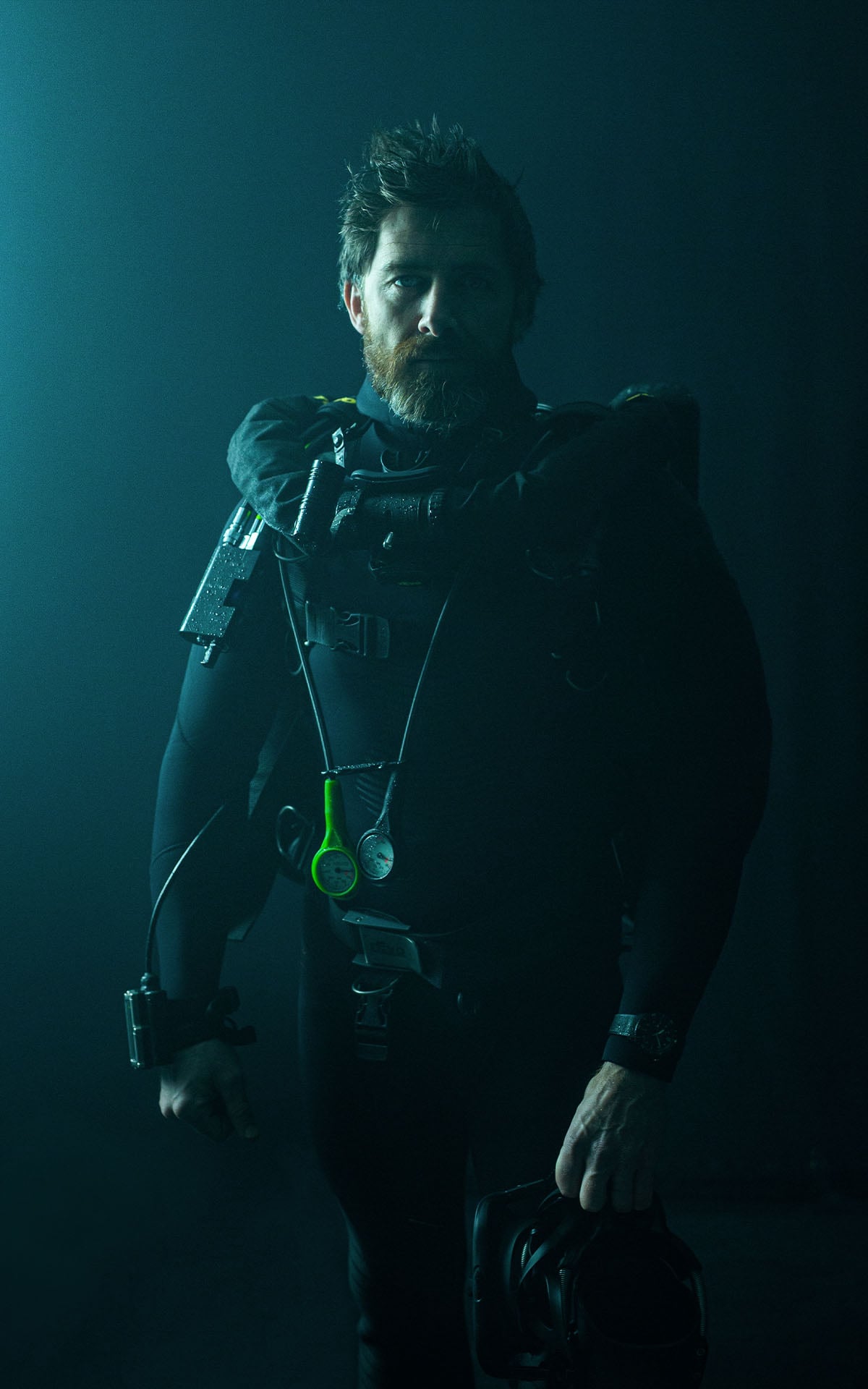
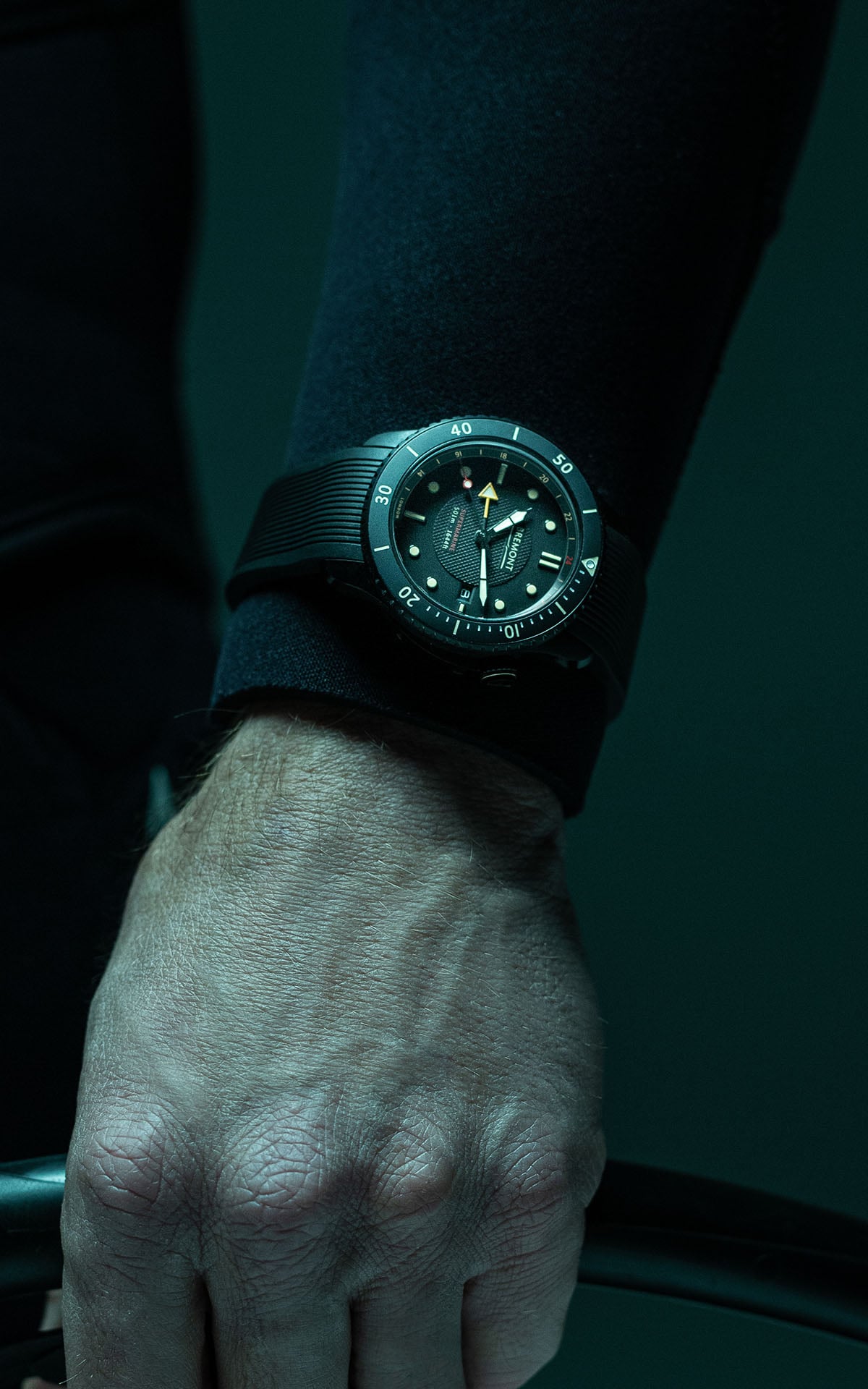
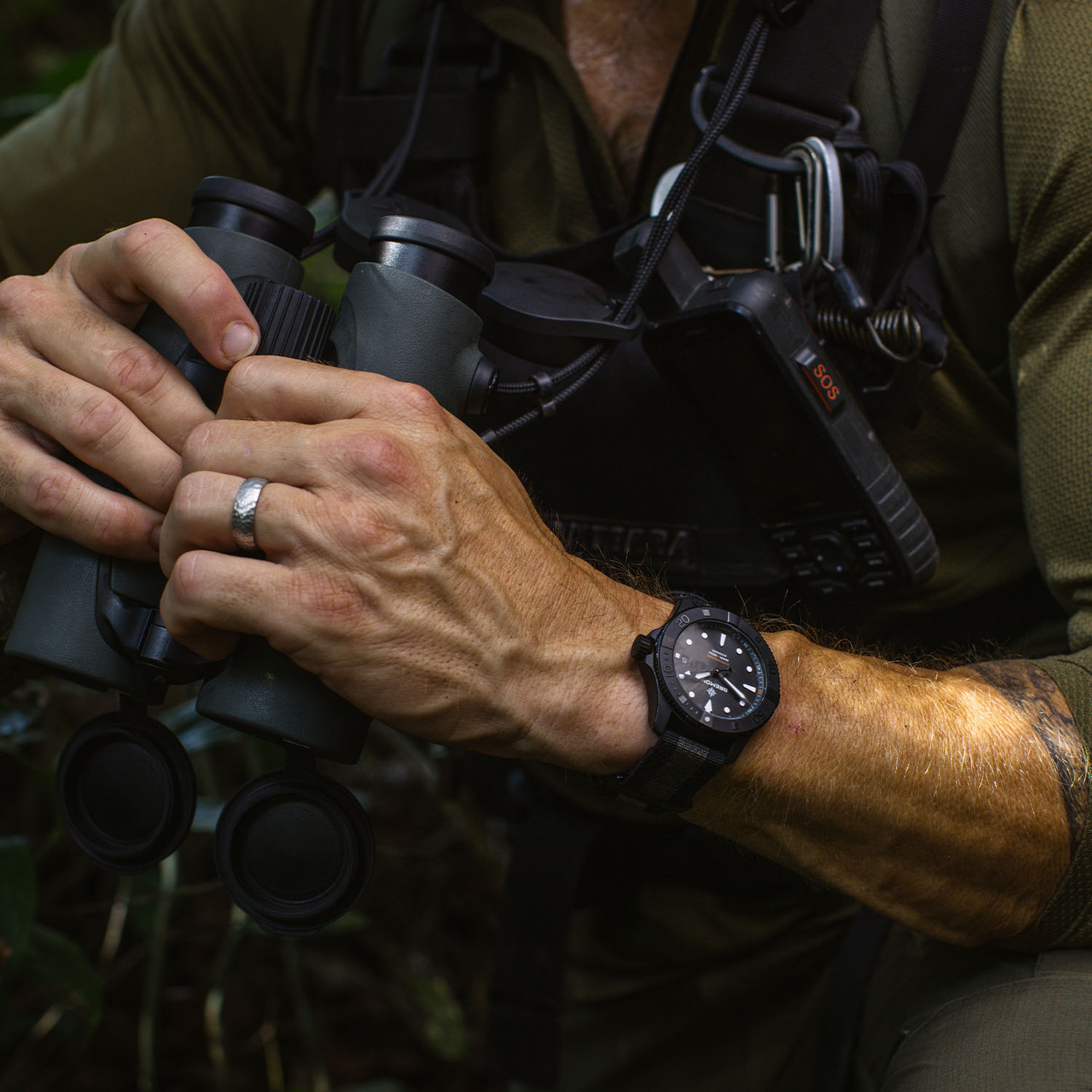
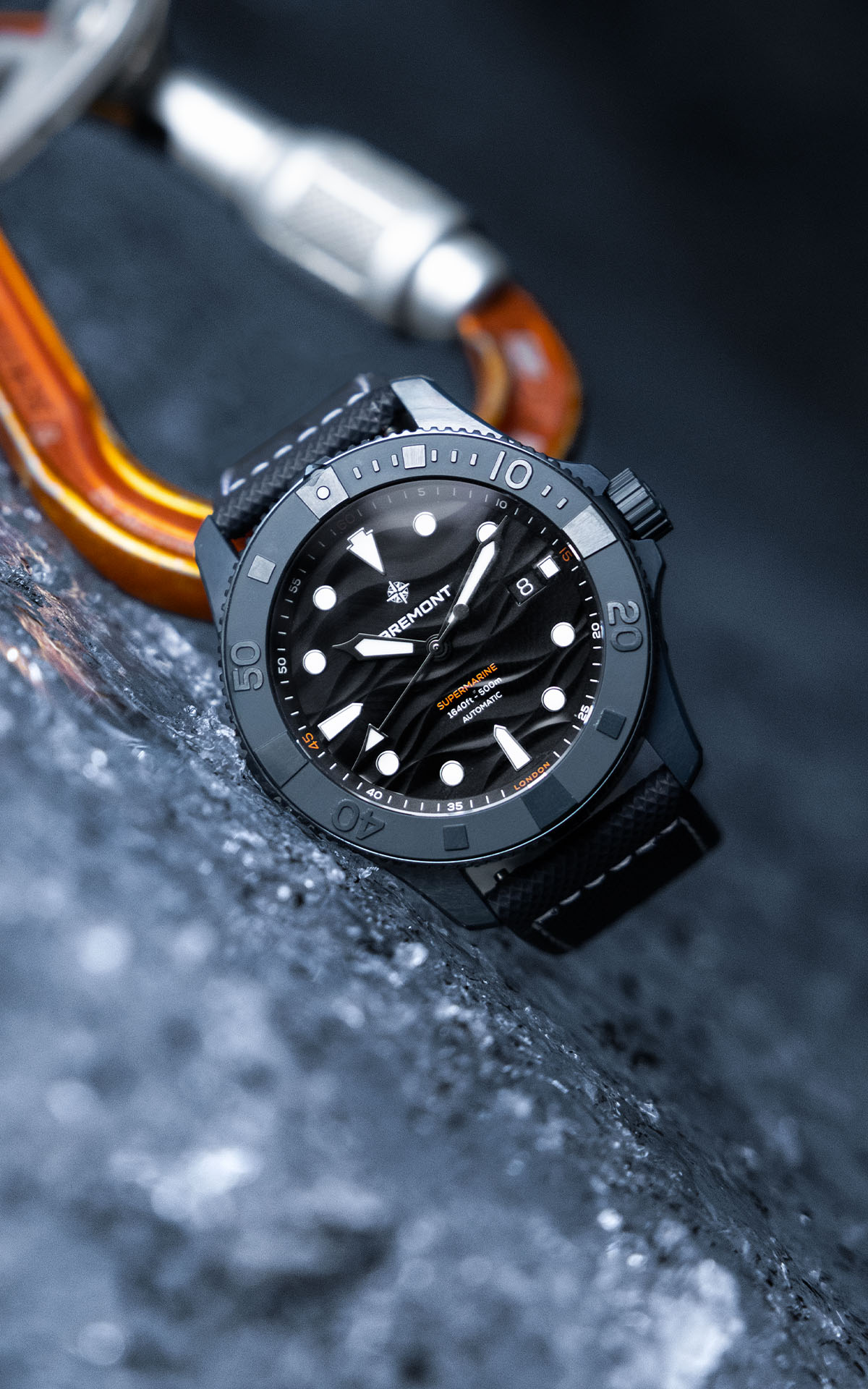
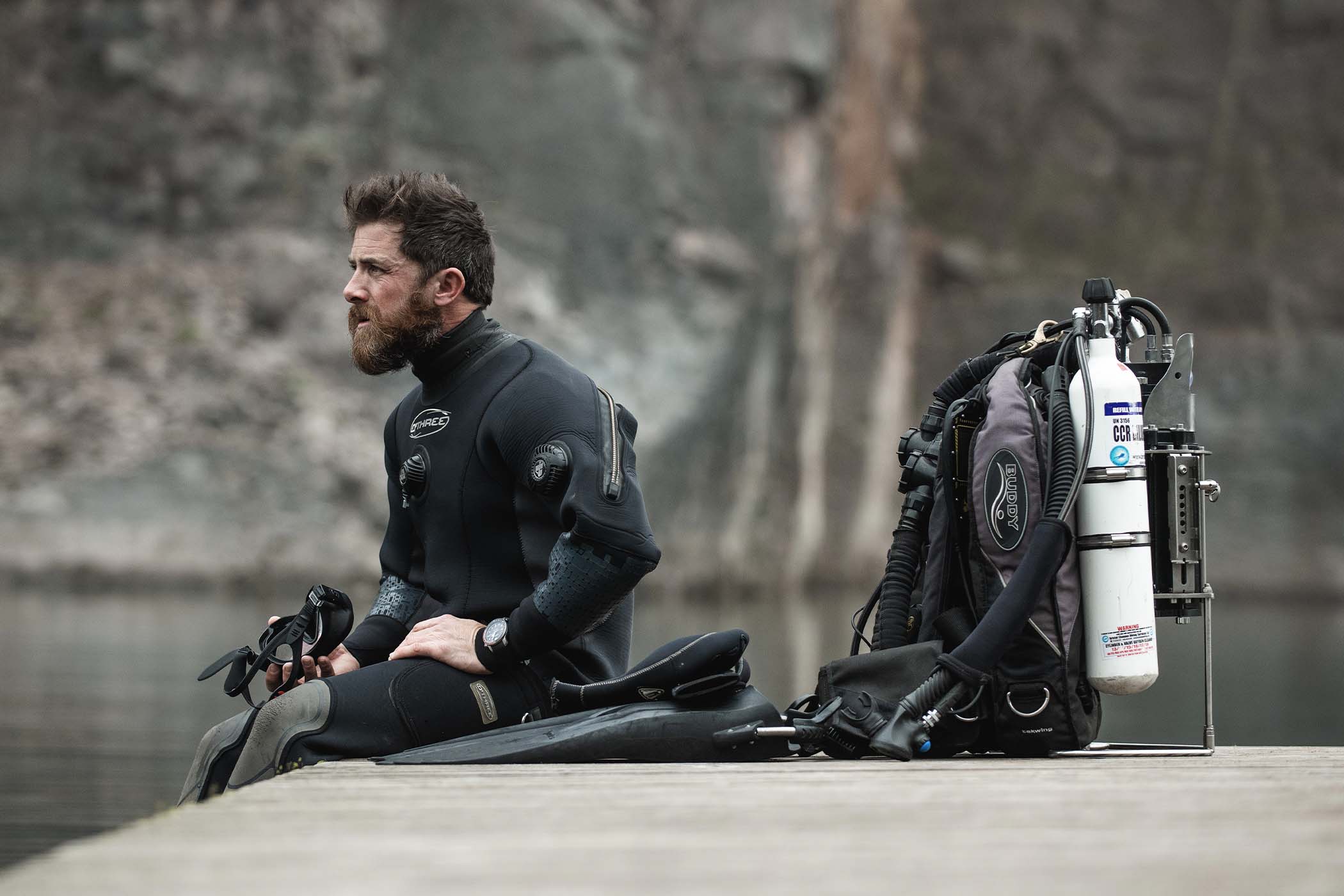
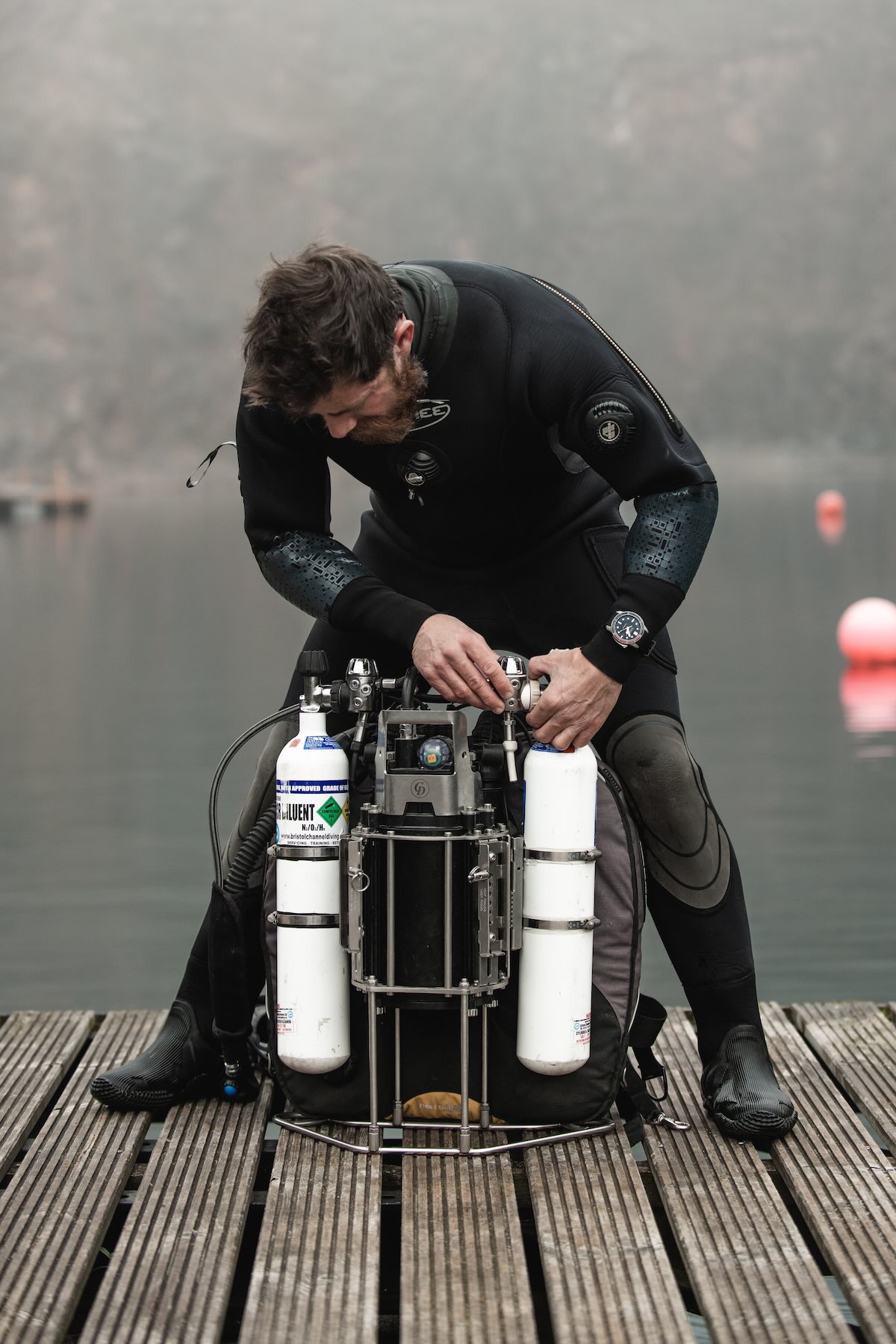
The Supermarine S502 — that was the dive watch, and it stayed with me through pretty much all of it, probably two or three years. You can’t tell just by looking at a watch, but whenever I get them out, each one has a story attached. I’ll be watching something back on TV or YouTube and think, “I remember that watch — it had the compass on it, that strap, in that jungle.” They’re all quite unique.
Do you get to keep them?
I think I have an allowance – one a year or something like that. But that probably only lasts as long as I’m still doing the hard stuff.
Watch collectors often talk about a watch carrying a special memory. For you, with expeditions being filmed as well, does that add something extra?
I think so. Travelling now isn’t like it was twelve or thirteen years ago, when you were properly off comms in the jungle – no tech at all. Now you’re inundated with it: phone, GPS, Starlink, sat phones. Since that first volcano trip in 2017, I’ve genuinely enjoyed having a nice timepiece that only tells the time – and if you’re clever with it, you can work out direction using the hour hand. It just feels different being on an expedition with a proper timepiece.
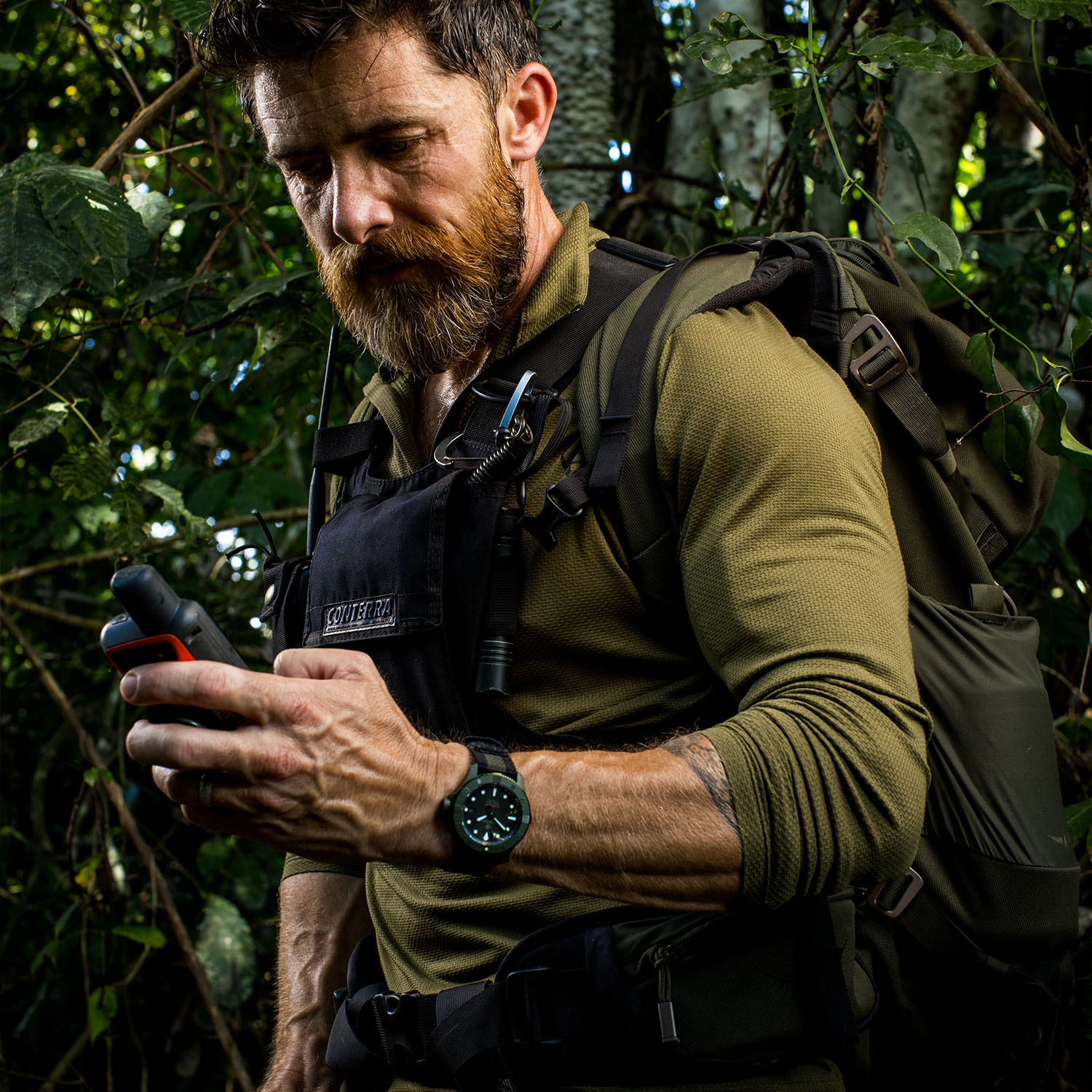
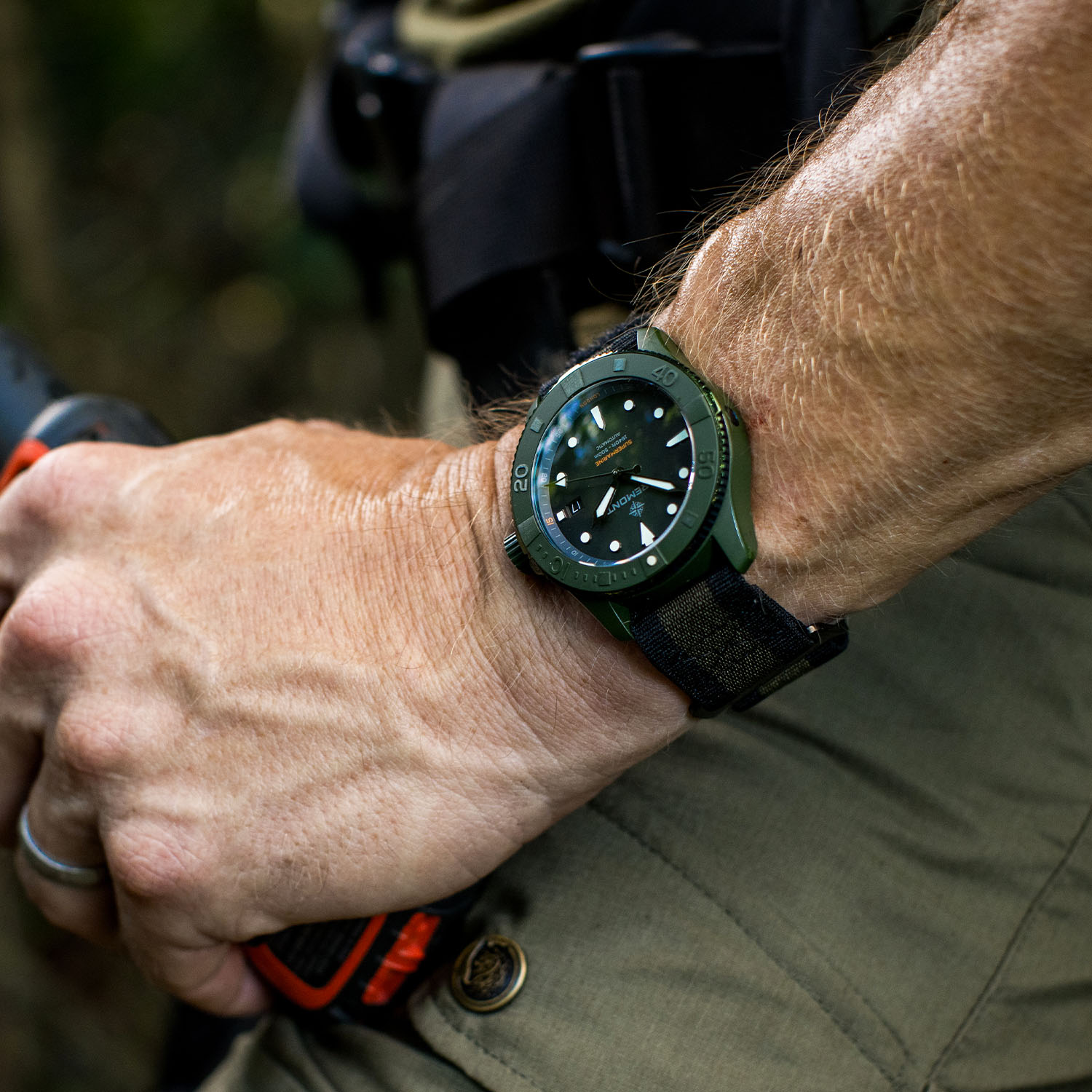
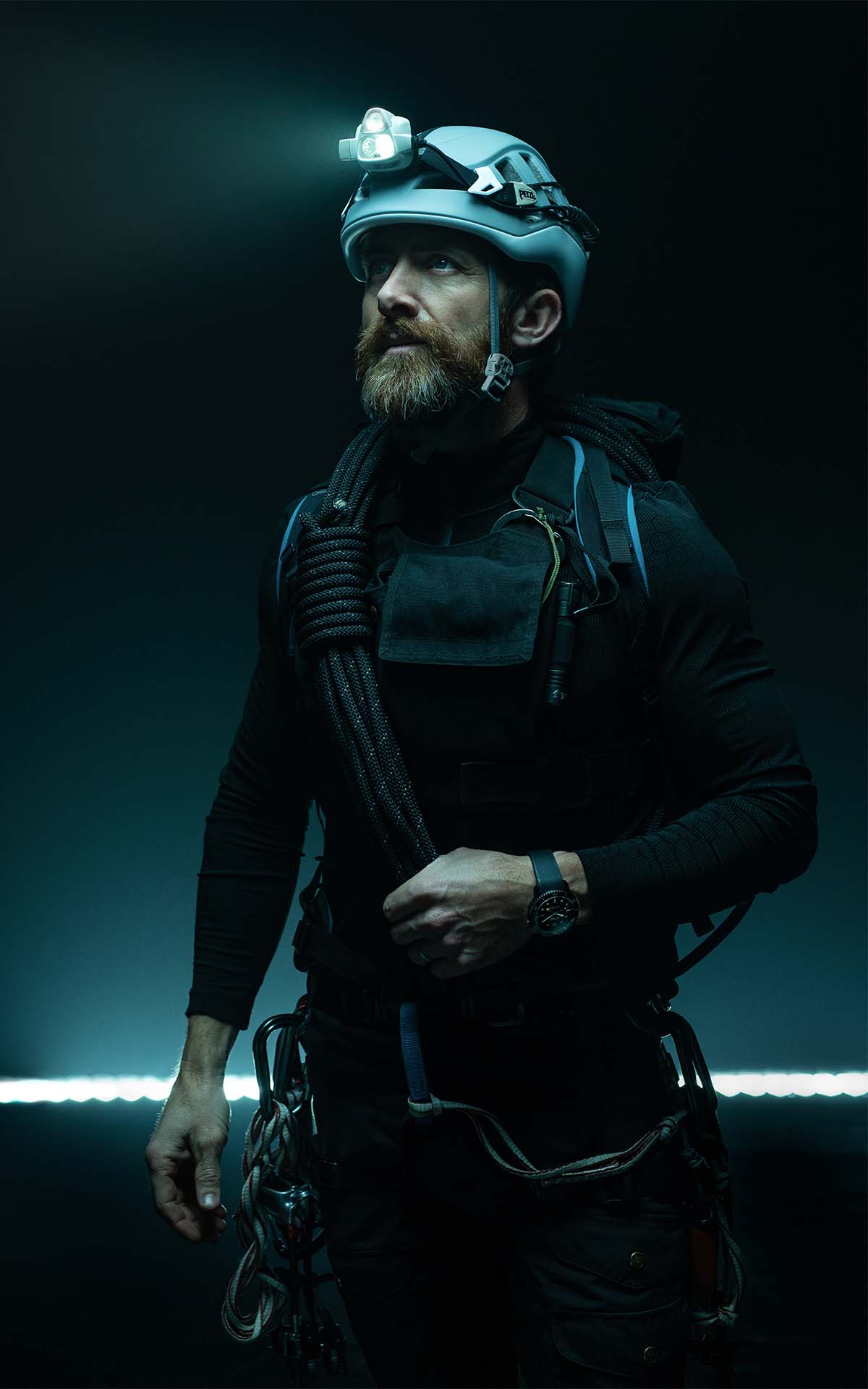
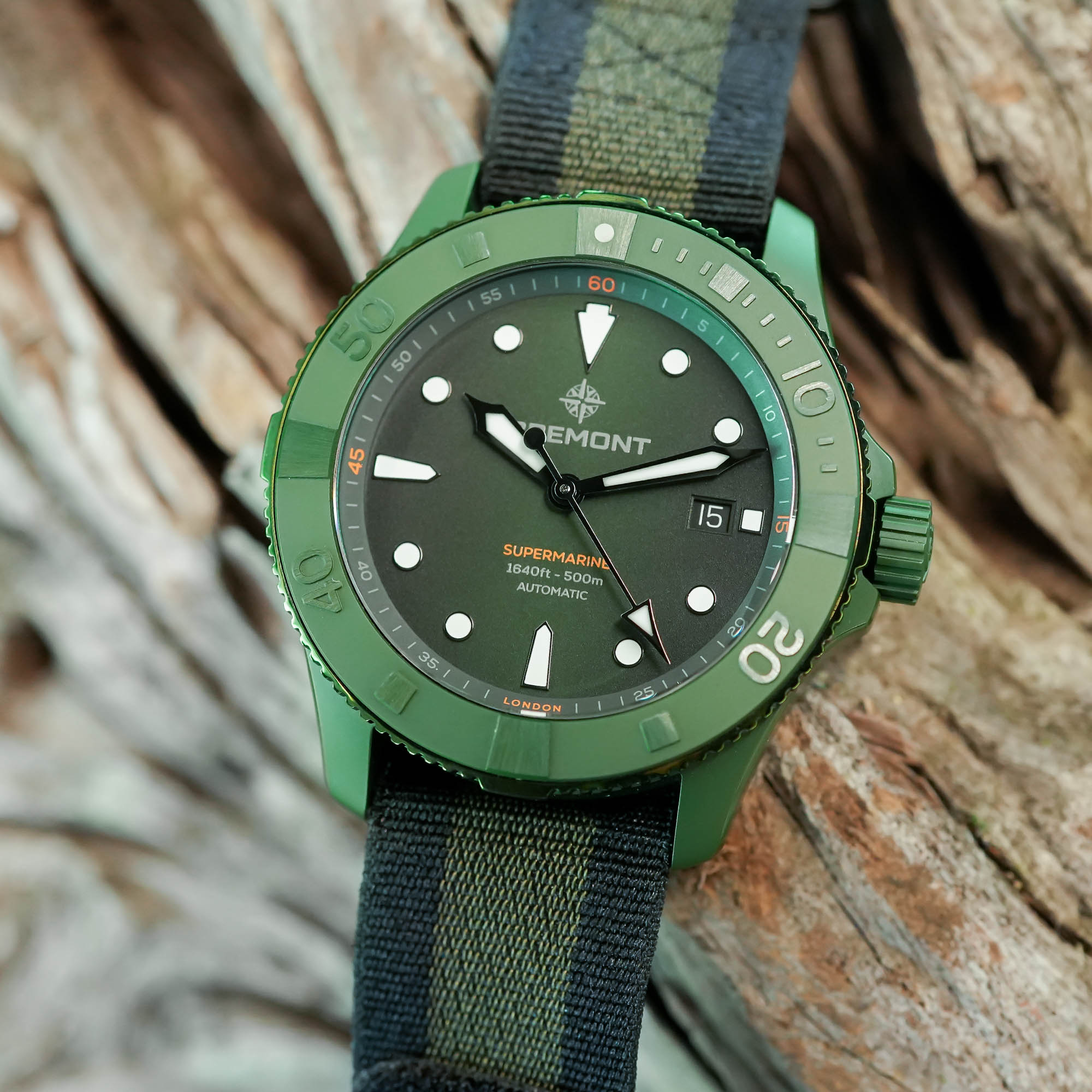
Last year, I had just finished filming a series for Apple TV called The Wild Ones, trying to find and film six of the rarest animals on Earth. Over that year and a half, I was testing the Supermarine Full Ceramic – I spent something like 114 nights in the jungle across those two years with that watch. I could say, with a high degree of certainty, that I’ve worn the jungle-green Full Ceramic for more days in the jungle than anyone else on the planet. Can’t guarantee it, but I’d put myself at about 99%. Each of these watches links not just to a time in my life, but to a specific set of expeditions.
Going from a digital computer on your wrist – altitude, weather, all of it – to something as simple as two or three hands and maybe a date: how does that compare when it comes to actually reading the time?
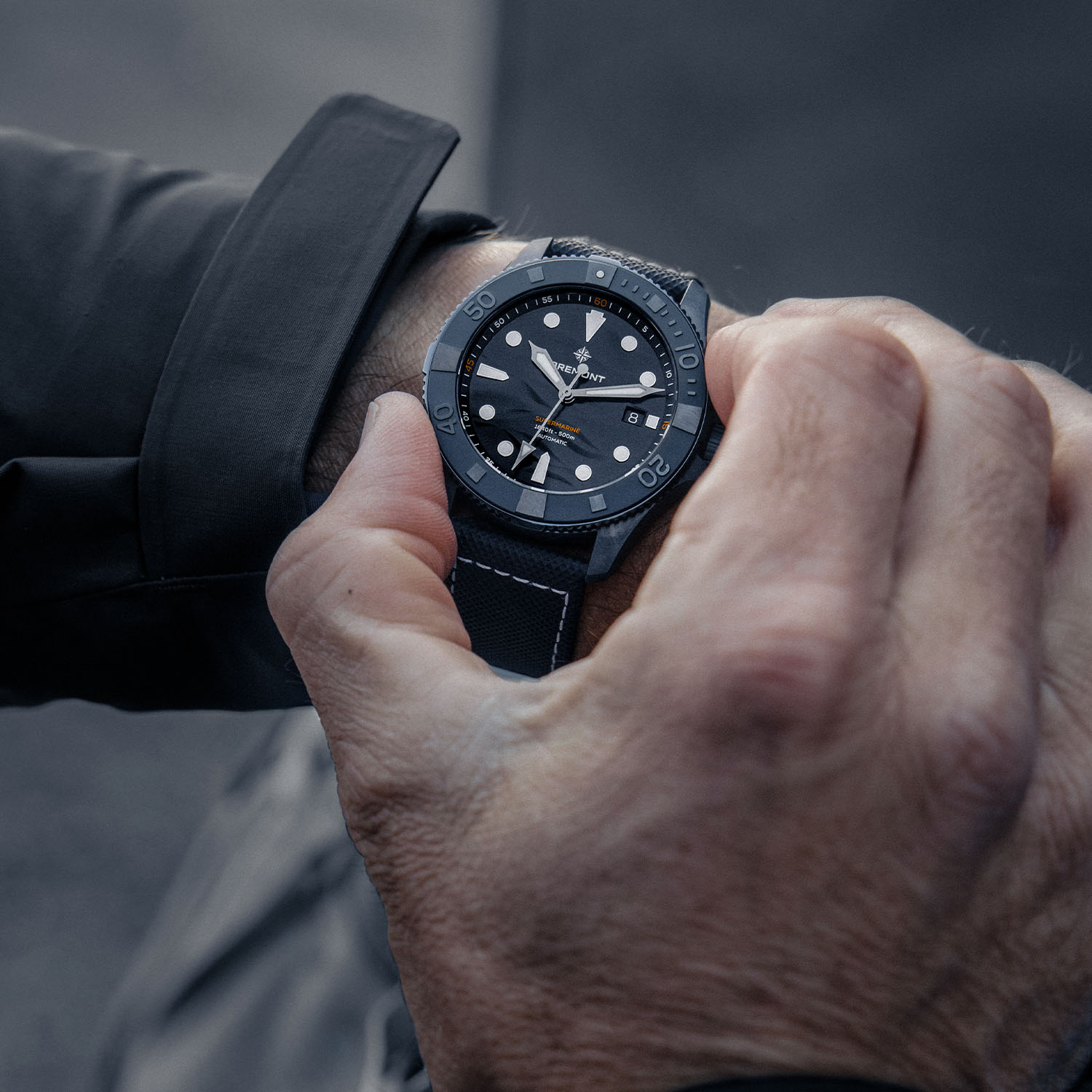
The digital watch always seemed to interrupt things. Over the last five years especially, I’ve made a real effort to cut interruptions out of my day – no notifications; my phone’s basically a black box. I love the simplicity of a mechanical watch: you just need to know the time, and you can see it. If you’re lying in a hammock at night in the jungle, under the canopy for two weeks straight, it’s easy to read at a glance. You’re also not blowing out your night vision with a torch, which matters if you’re in a hide and don’t want to give your position away by lighting up your wrist in the dark.
There’s also the practical side – running out of battery halfway up a mountain, or three weeks into an expedition, is a non-starter. That used to happen with digital watches needing charging every day or two. It’s just another problem on expedition that you don’t need.
That resonates – I did National Service in the Netherlands. Lying in an ambush position, needing to check a digital watch and having to press a button, shield the light so you don’t give your position away.
Exactly that. In the UK, we were issued a very simple NATO-issue watch – I can’t remember the brand – but no light required; you could just see the time. Perfect. I love the simplicity of it.
A lot of divers keep a mechanical watch as a backup alongside their dive computer.
It’s the same logic as map reading. Plenty of people navigate on their phone, then the signal drops, the app crashes, or the battery dies – so you need the mechanical map and compass, and you need to know how to use it. Redundancy is the old rule: one is none. Dive computers run all the complex algorithms, but ultimately you need something that simply tells you how long you’ve been down. That’s your analogue backup.
After the Martin Baker III, the Supermarine, and the jungle-green Full Ceramic, have there been other watches you’ve tested for the brand?
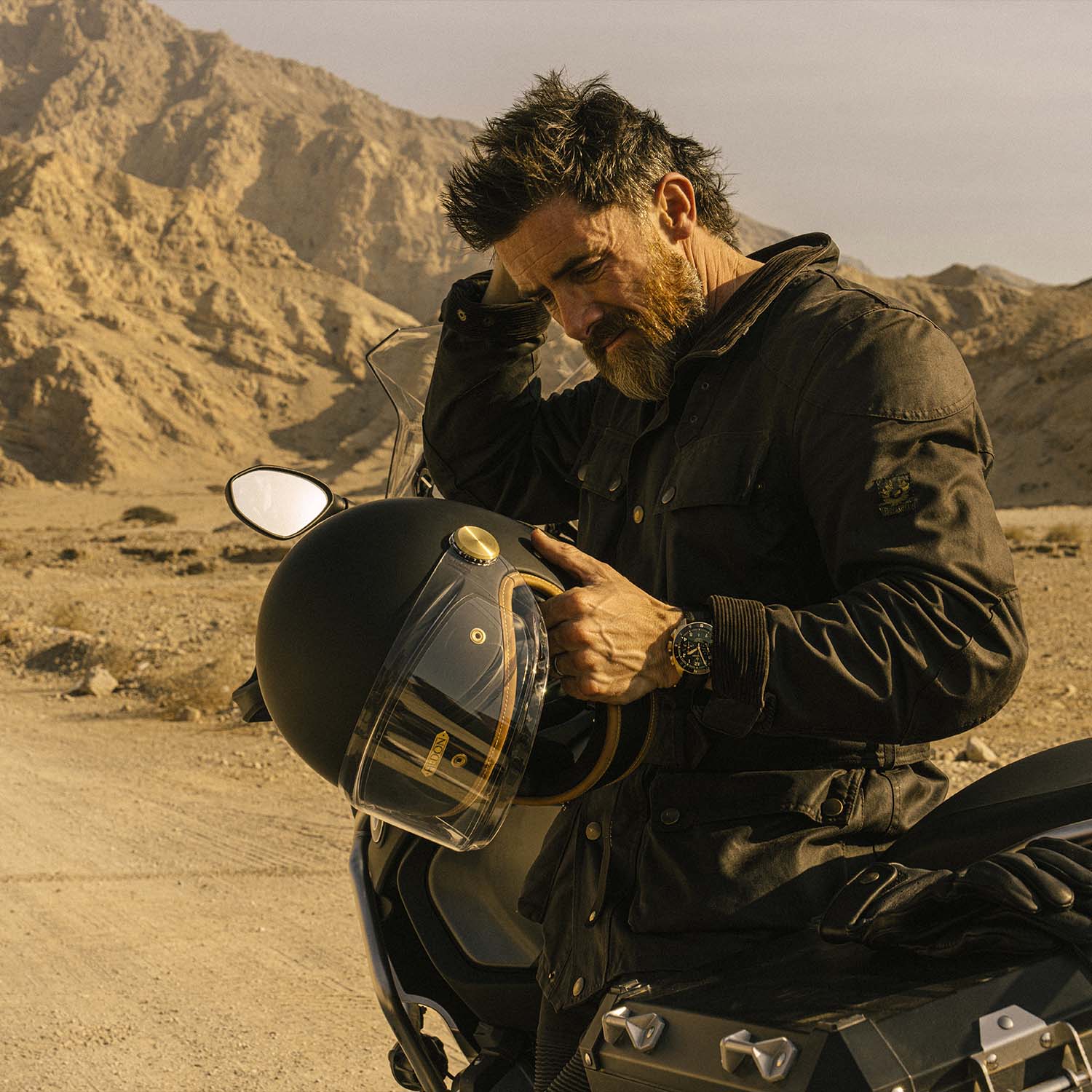
Yes — the Terra Nova Bronze, which I’ve been wearing for about a year and a half now. I was always the ex-military, chunky-watch, adventure type, and I’d never owned a dress watch. Bremont said, “come on, we’ve got this new range — the Terra Nova Bronze.” It was very different to anything I’d worn before. I took it out to the UAE at the start of this year to film some content in the desert, and it’s become my go-to watch at home now. It’s the closest thing I have to a dress watch, though it’s still robust and chunky by most people’s standards. I wouldn’t hesitate to take it on an expedition either — for me, kit and watches alike have to function as well as look good.
It has to be reliable.
Time on expedition is critical. Almost everything comes back to time, and your ability to read and use it effectively against the weather, the environment, the conditions. It has to be a reliable toolkit.
How much of an expedition is planned around timing?
We spend about a year planning each expedition — logistics, safety, ground fixes, all of it — largely because you know it’s going to go sideways once you’re actually in the field. Timings on expedition are usually dictated by when the sun goes down. In the jungle, on the equatorial belt, it gets dark at six or six-fifteen every night, all year round — you could set your watch by it. So you have a defined window to work in. Elsewhere you can extend that with head torches and other tech, but timing is still critical — it’s how you make and measure progress, whether military or civilian. It takes a certain amount of time to climb to a given height, or to cover a given distance in a given environment.
Are you still the official Bremont ambassador?
Yes — since 2018. I’ve been with them through the transition from the old Bremont into where the brand is heading now. I’ve stayed closely involved, testing kit and giving feedback, using it in the harshest environments. Most people who buy the watches probably won’t put them through that, but they like to know it can be done.
That’s why collectors call certain dive watches “desk divers” – that’s usually the most action they’ll ever see.
Exactly – it’s good to know that they can do it.
Do you also give presentations for Bremont, talking to clients about the expeditions?
Yes. After around eighteen months of filming in the jungle testing the Supermarine Full Ceramic, when they launched that watch, I came in and gave a presentation to Bremont clients and investors about testing it in the jungle — the experience, the aesthetics, what it felt like. That was earlier last year, or maybe the end of the year before. Essentially: here I am using this watch in this environment, 140 nights in the jungle, and so on. I have the luxury of having a lot of it documented on Apple, Disney, National Geographic, Discovery, the BBC — so people can actually see it being used the way it’s meant to be.
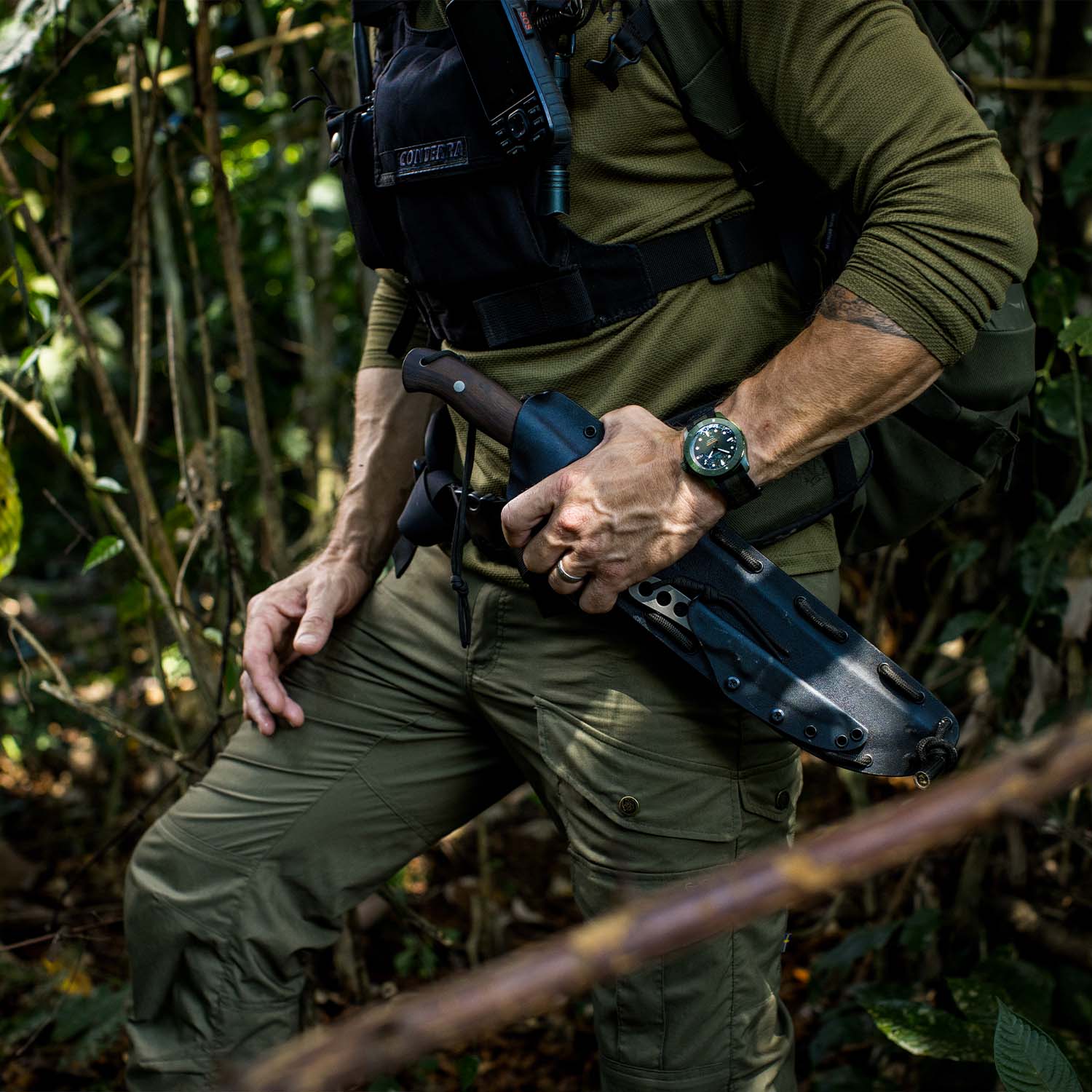
Over 140 nights in the jungle, surrounded by other gear that also tells the time – do you ever need to reset your mechanical watch to keep it accurate, or do you just set it once and go?
I’ve never had to do that. I don’t know if that’s true of watches generally, but those 140 nights came in three- or four-week blocks, and because I never take the watch off on expedition – except to clean it – it’s in continuous motion the whole time. I’ve never personally needed to reset it.
That makes sense – a mechanical movement typically drifts two to four seconds a day, so it can add up, but over three, four or five weeks you’re still only looking at maybe a minute either way. Not the end of the world.
Interview conducted by Frank Geelen, MONOCHROME, transcribed and condensed for clarity. More details at www.bremont.com.