
 Not all images were able to load for printing. Please close the print window and try again.
 The Otsuka Lotec No.8 Refines Jiro Katayama’s Industrial Language
Less conceptual, more resolved, a rare watch that prioritises mechanical behaviour over visual refinement.
We wouldn’t go as far as to say that there’s something fundamentally different about the way Jiro Katayama approaches watchmaking. After all, industrial design, be it cars, instruments, or machinery, has inspired and defined quite a few independents. Still, most start from horology and branch outward, yet the mind behind Otsuka Lotec comes directly from industrial design, and that origin explains everything, including the new Otsuka Lotec No.8 watch.
Over the past years, we’ve reported how the brand and Jiro Katayama’s take on watchmaking has evolved through the double-retrograde Otsuka Lotec No.6, the camera-inspired Otsuka Lotec No.7.5, the satellite-driven Otsuka Lotec No.5 KAI, and, more recently, the highly complex Otsuka Lotec No.9, which packs a tourbillon, jumping hours and a striking mechanism in an in-house movement. The latest Otsuka Lotec No.8 is not a simplification, but a consolidation, a conclusion we have reached after a brief but exciting encounter with the timepiece.
The Case
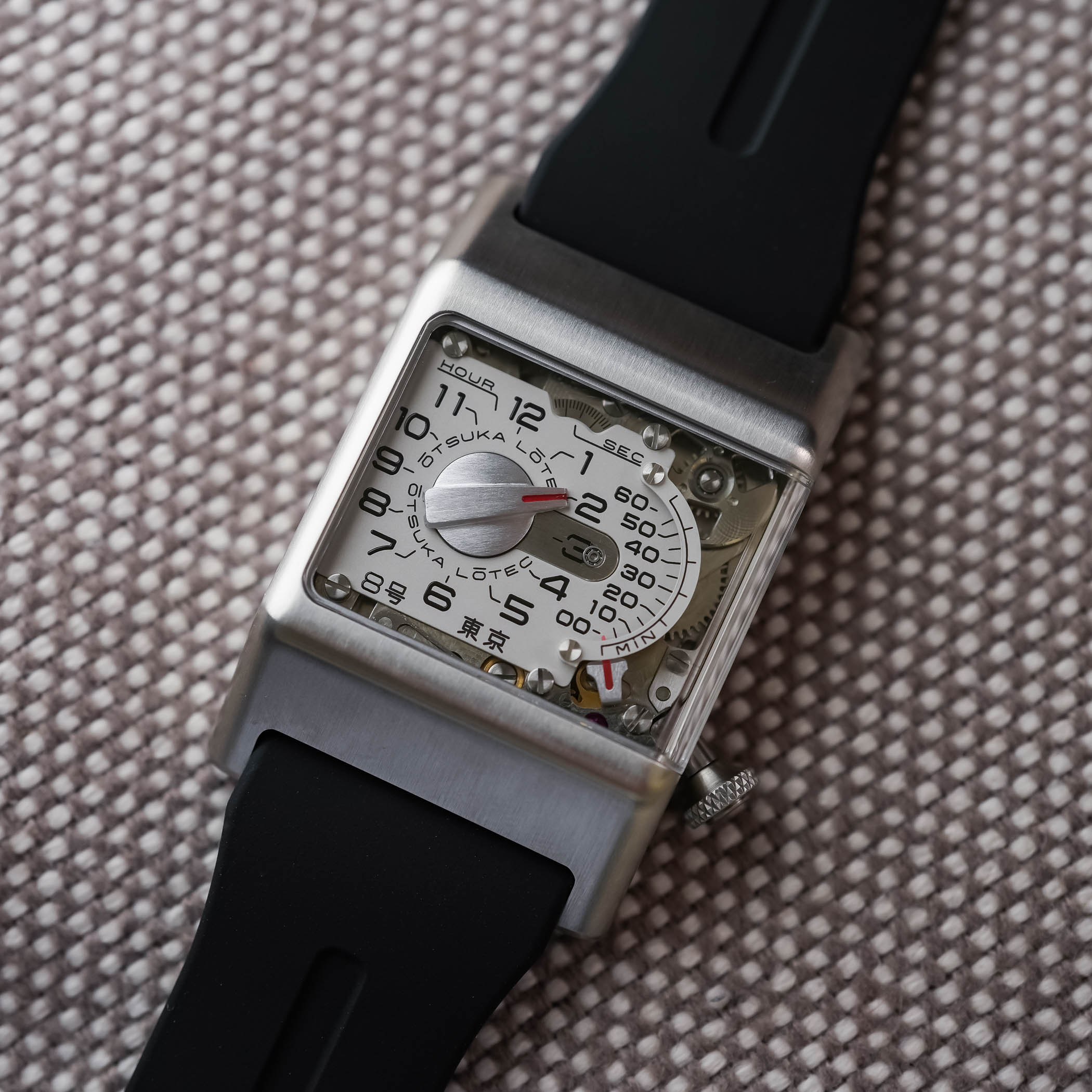
Even from a distance, the No.8 is immediately recognisable as an Otsuka Lotec. It was from a distance that we spotted it on the wrist of a finely dressed young Japanese gentleman who came from Precision Watch Tokyo, accompanying Hajime Asaoka, a revered indie watchmaker also behind Kurono Tokyo and Takano. The watchmaker presented his creations during the Geneva Watch Week, and we will report what Hajime Asaoka also had for us later. Back to the Otsuka Lotec No. 8, we couldn’t help but ask whether another exemplar was available to study. And there was!
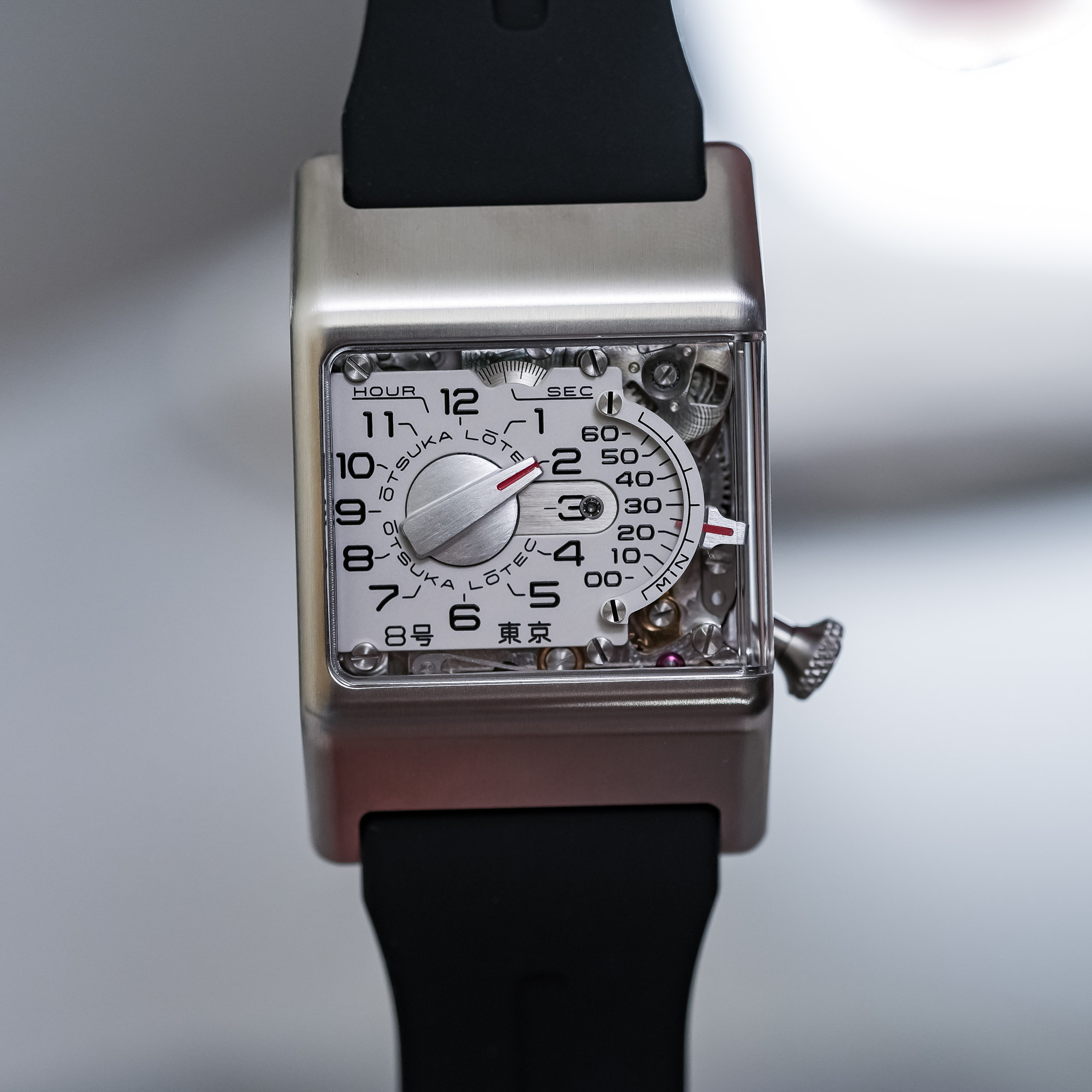
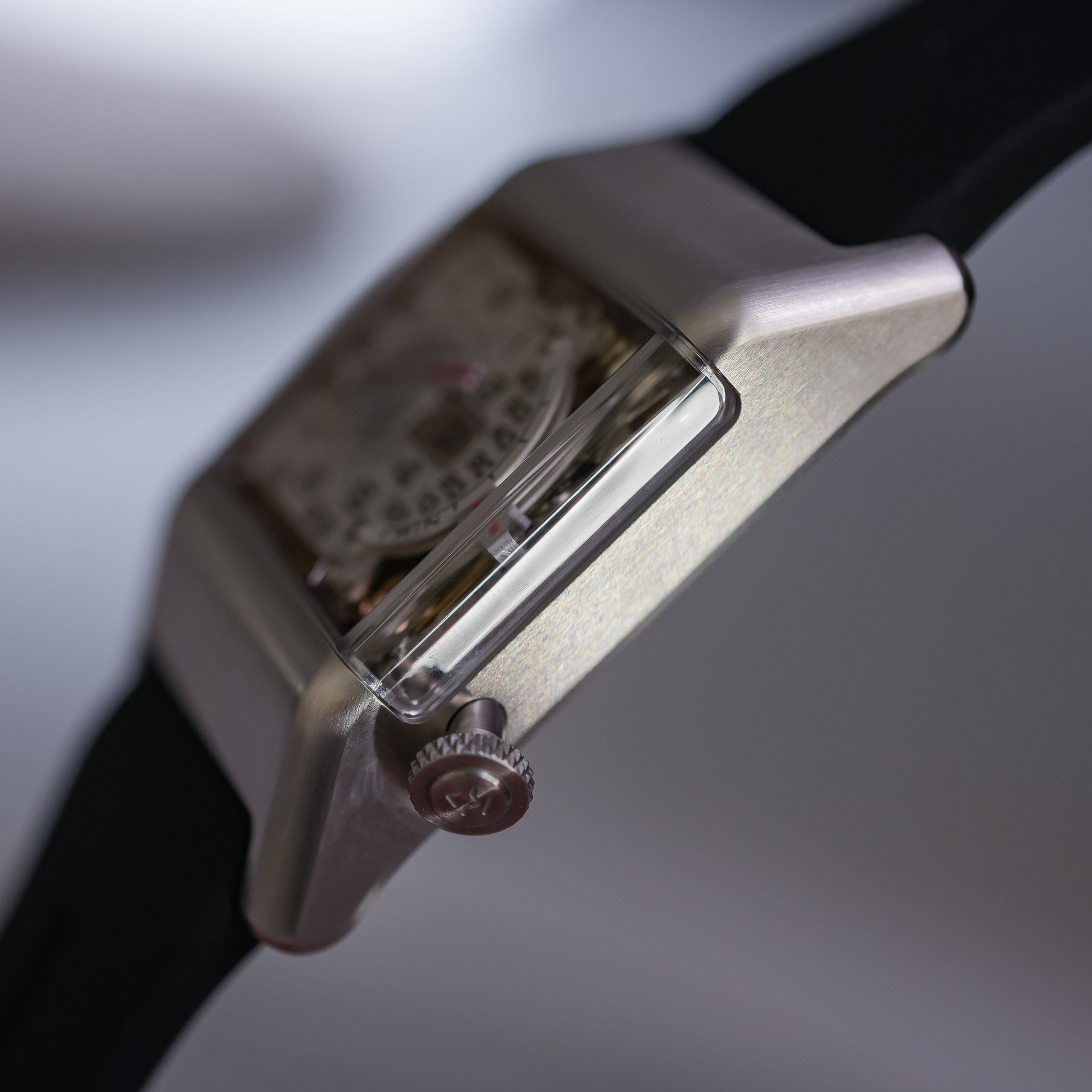
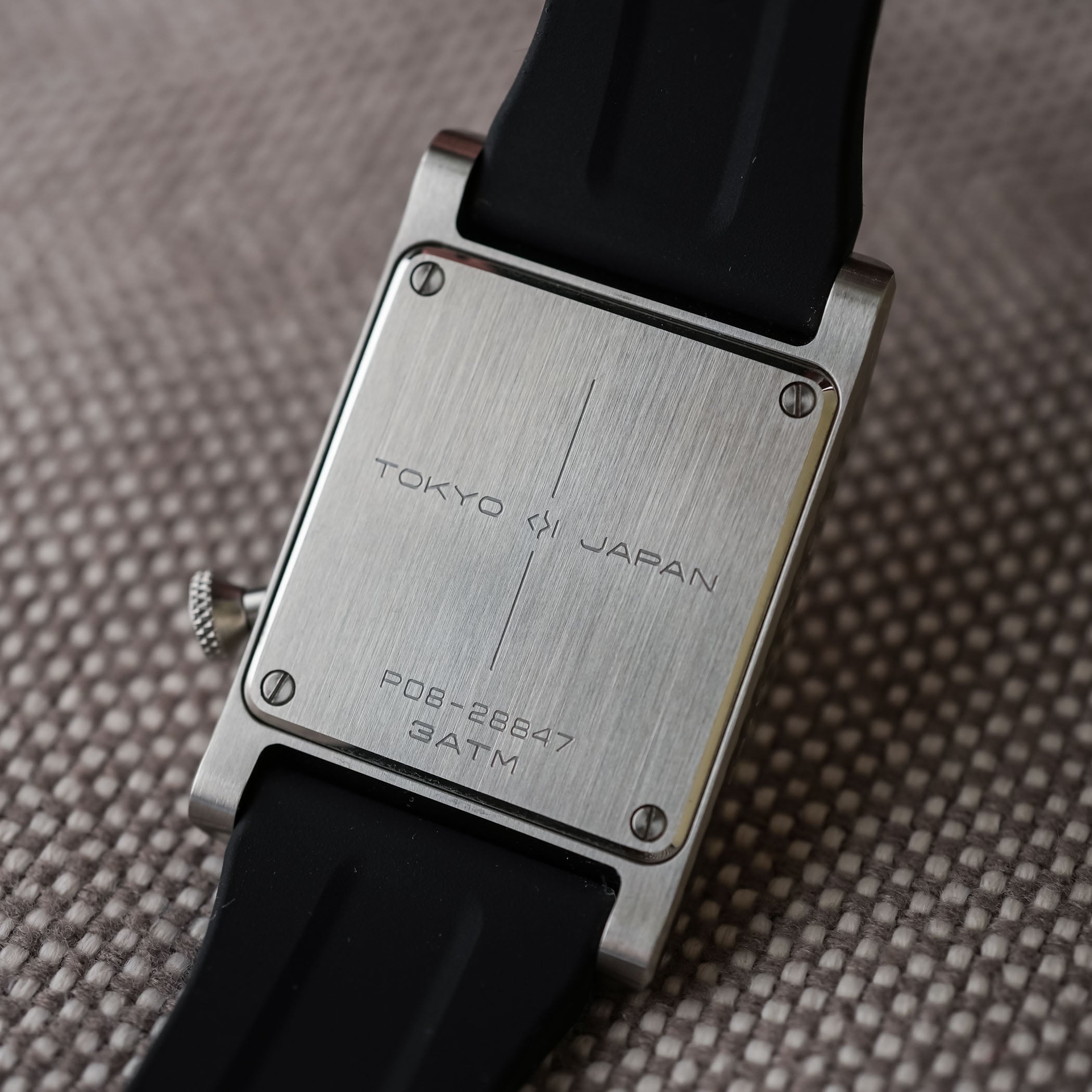
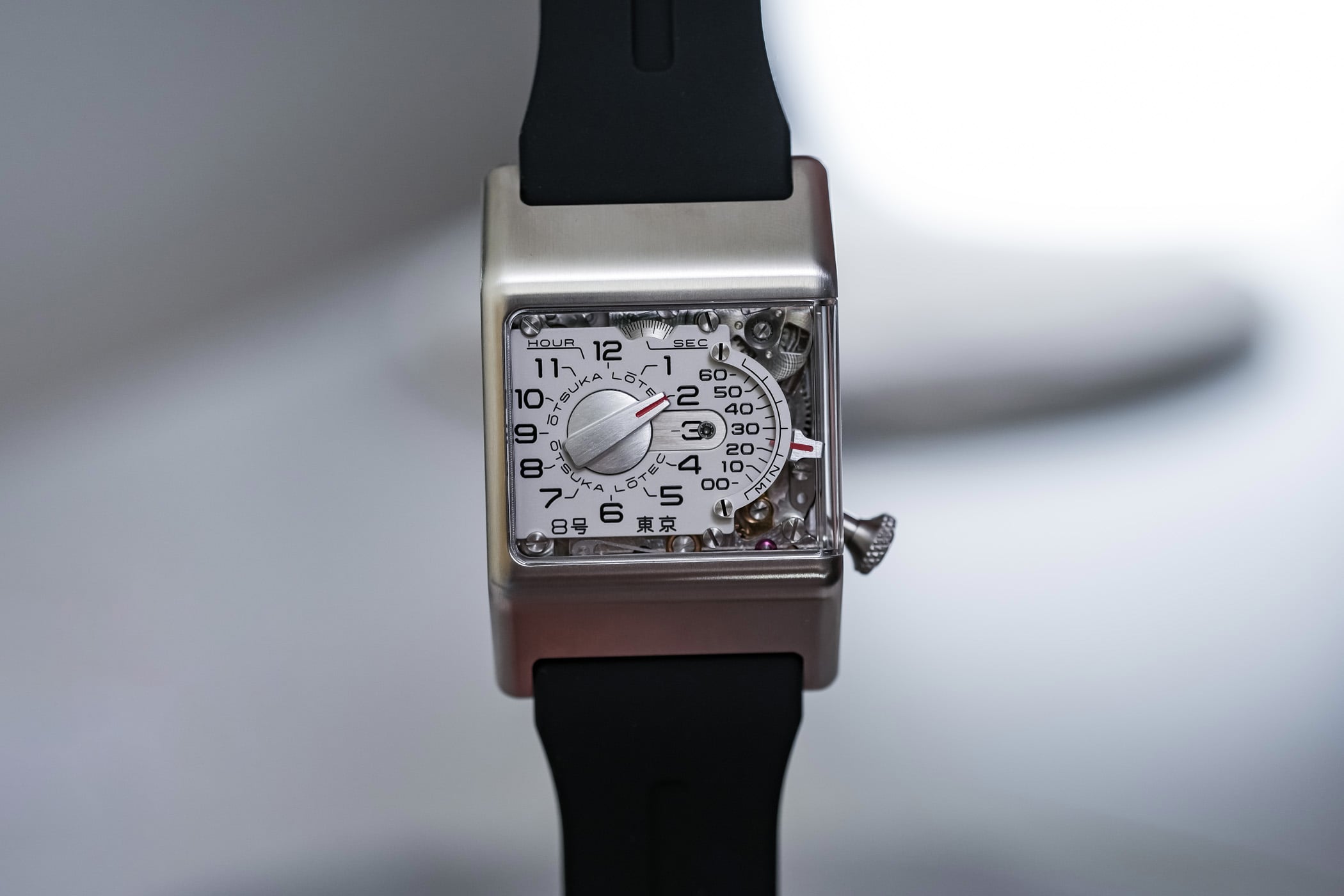
The rectangular steel case of the Otsuka Lotec No.8 measures 31mm across, 10.8mm thick and under 48mm in length. The proportions appear controlled, especially considering the architecture under the crystal. The curvature of the sapphire on the right side creates a slight visual asymmetry, almost like a protective viewport over a sensitive mechanism. To answer the concerns of collectors who only saw the watch on Instagram or in our own pages before, the No.8 wears very nicely, even on wrists measuring around 16cm. The shape of the lugs and the curvature of the caseback help the watch sit comfortably.
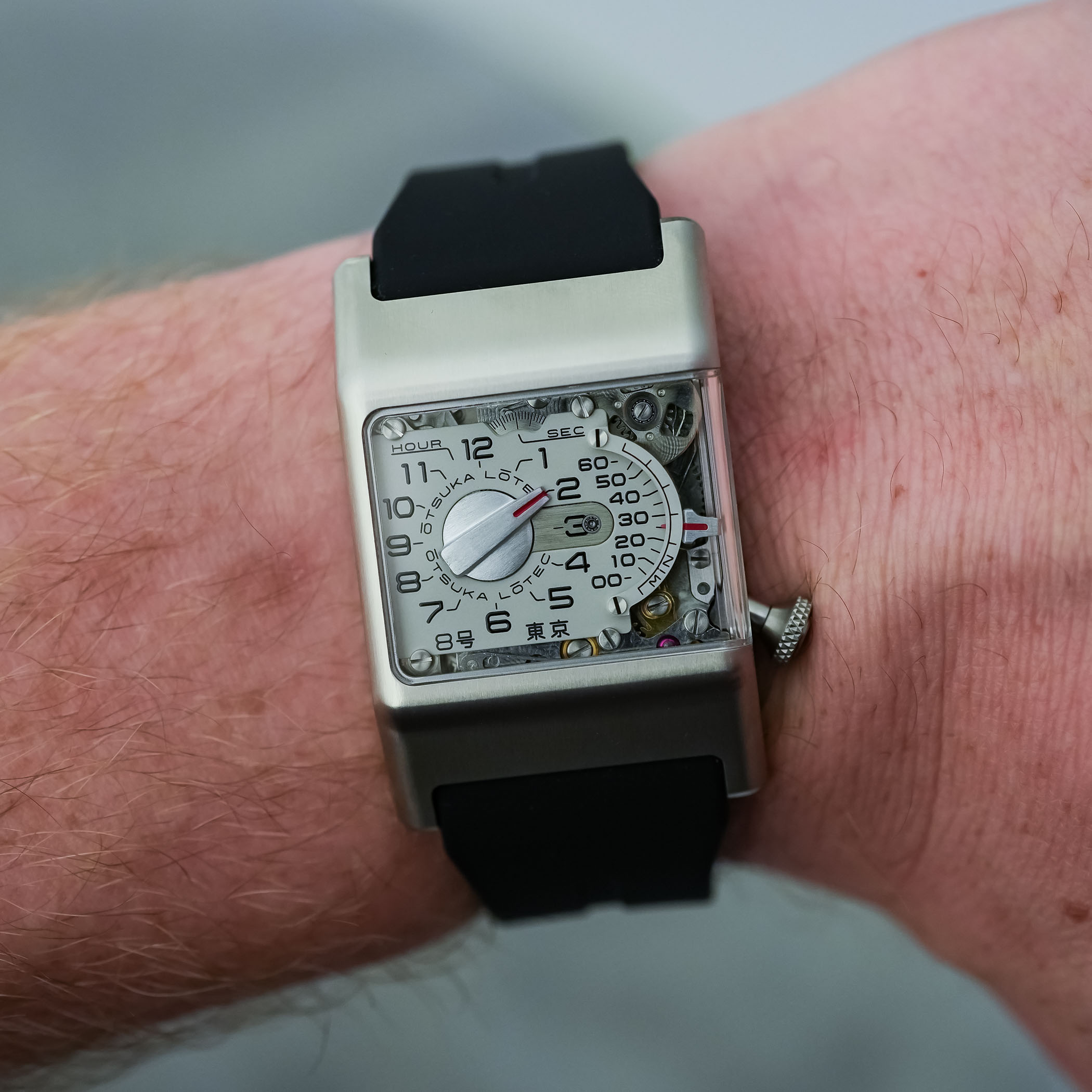
The case is straight-grained throughout, with no polishing to soften edges, a deliberately near-raw finishing, and no attempt to disguise the machining marks. Even though the watch feels closer to a milled component than a luxury object, there’s undeniable finesse about it. The crown at 4 o’clock is small and tactile, a functional knob, positioned to aid ergonomics, while the caseback is solid, with four screws to hold it in place. On the wrist, the watch sits quite flat, and the rubber strap anchors the case nicely, like an instrument.
The Control Panel
To call what we see under the sapphire crystal a dial would be slightly misleading; what the Otsuka Lotec No.8 displays is more like an aluminium control panel, with a top plate above the moving parts below.
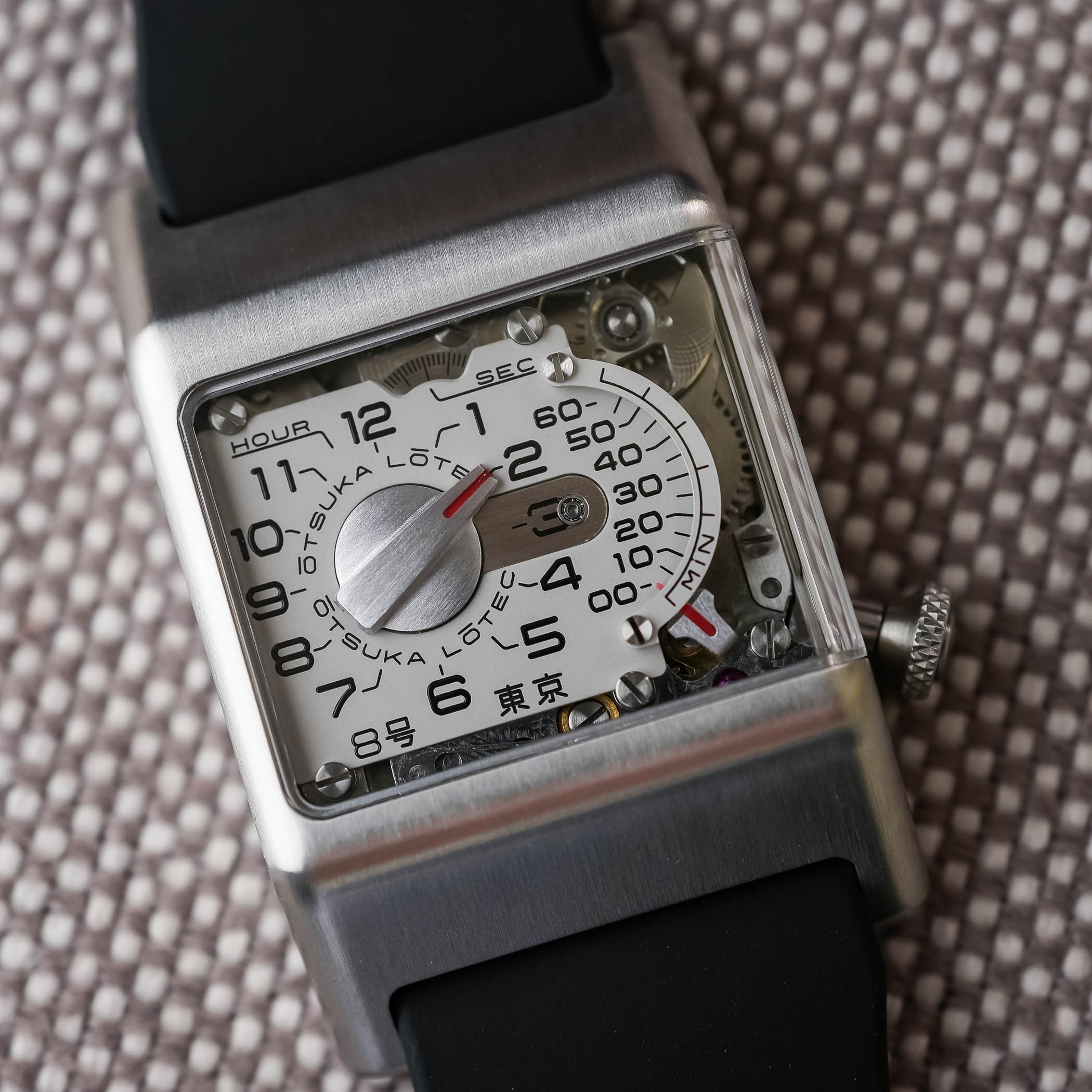
The layout is split into two zones. On the left, the hour is indicated by a large, rotating, or rather jumping, disc with a red-striped pointer. The numerals are bold, industrial, and easy to read, with the running seconds on a continuously rotating disc at 12:30.
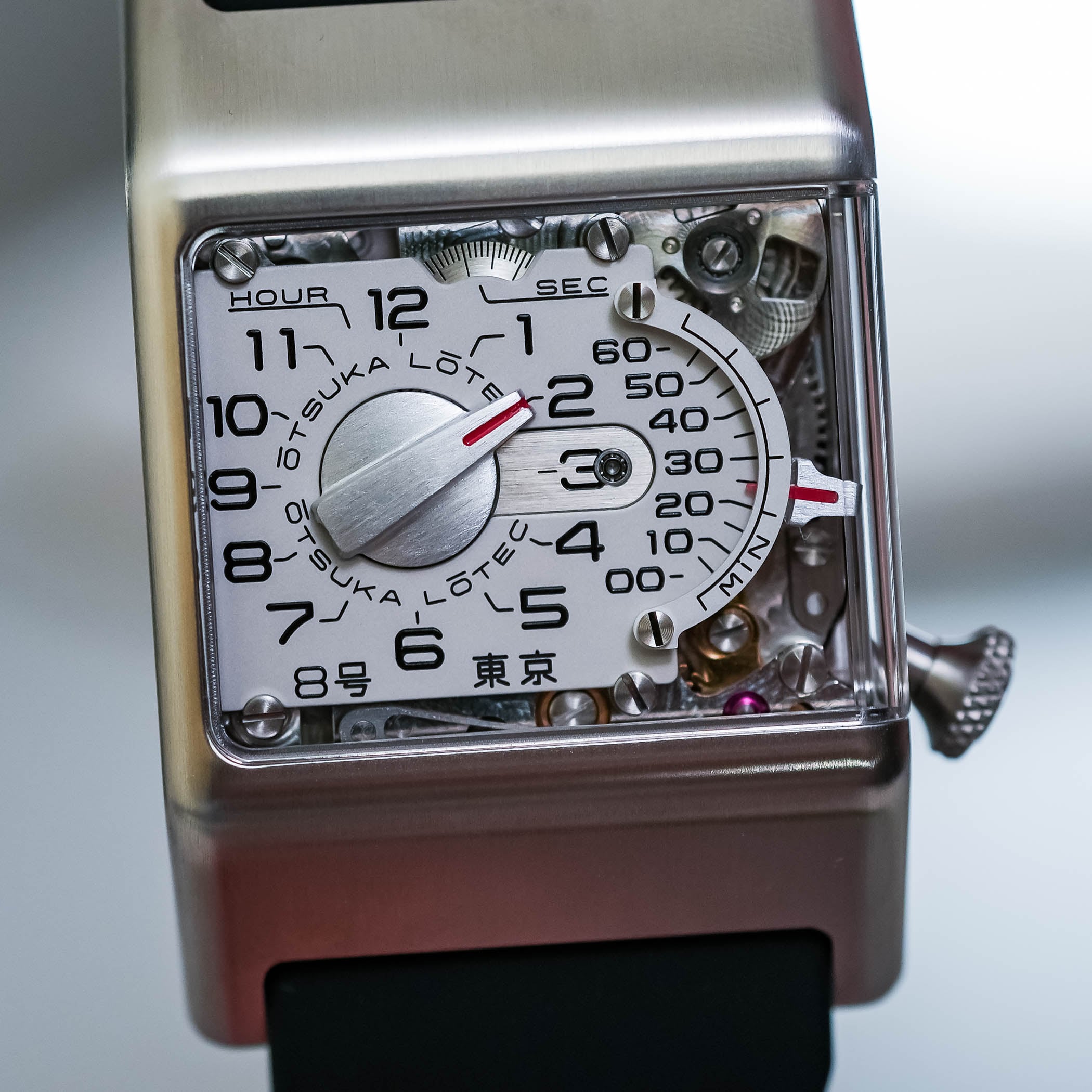
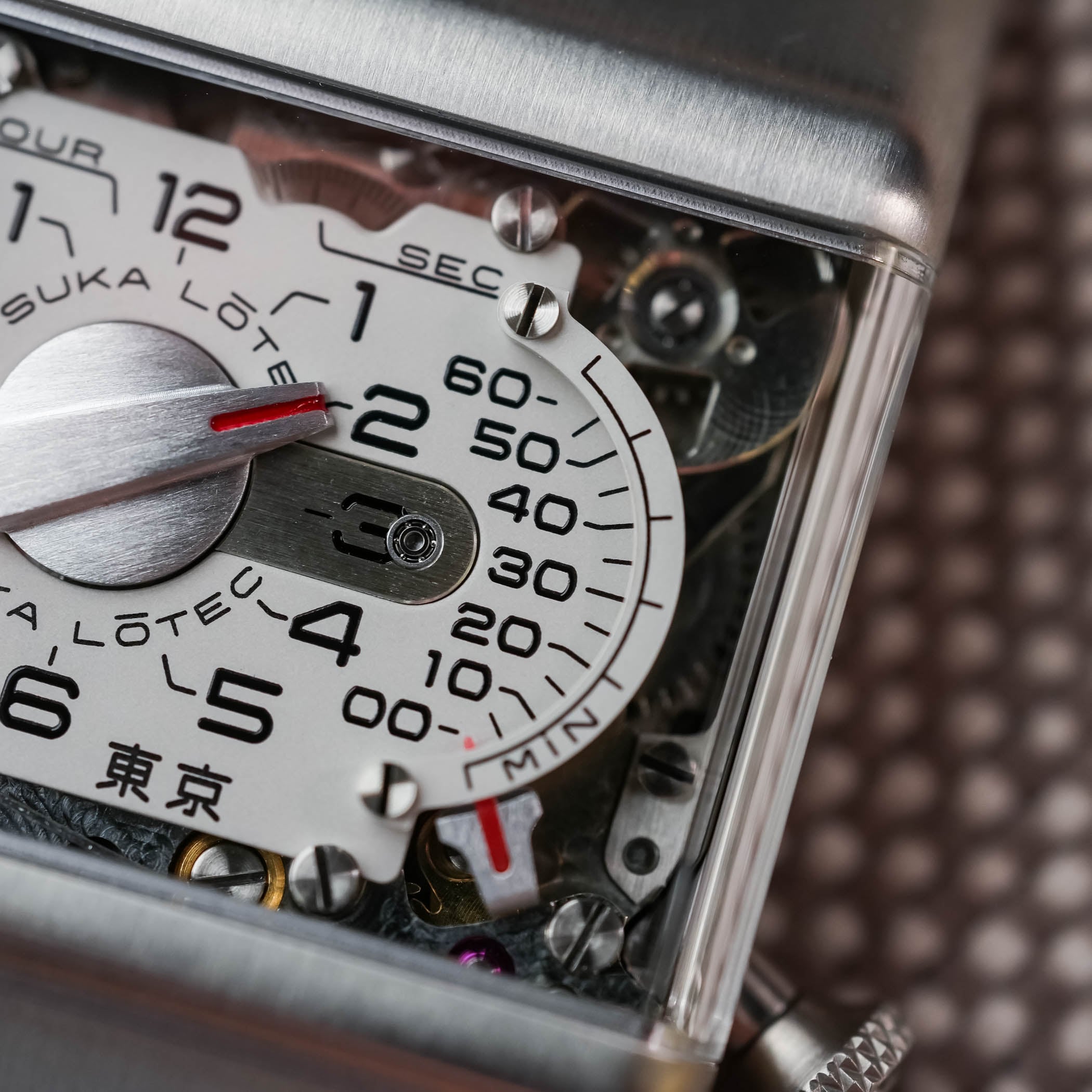
On the right, the retrograde minutes take over. An arched component, raised above and fixed to the plate, carries the red-marked pointer. The double-digit minutes track runs vertically, with the carrier moving progressively upward as the minutes advance, from 0 to 60. At 60, the system resets, but not abruptly!
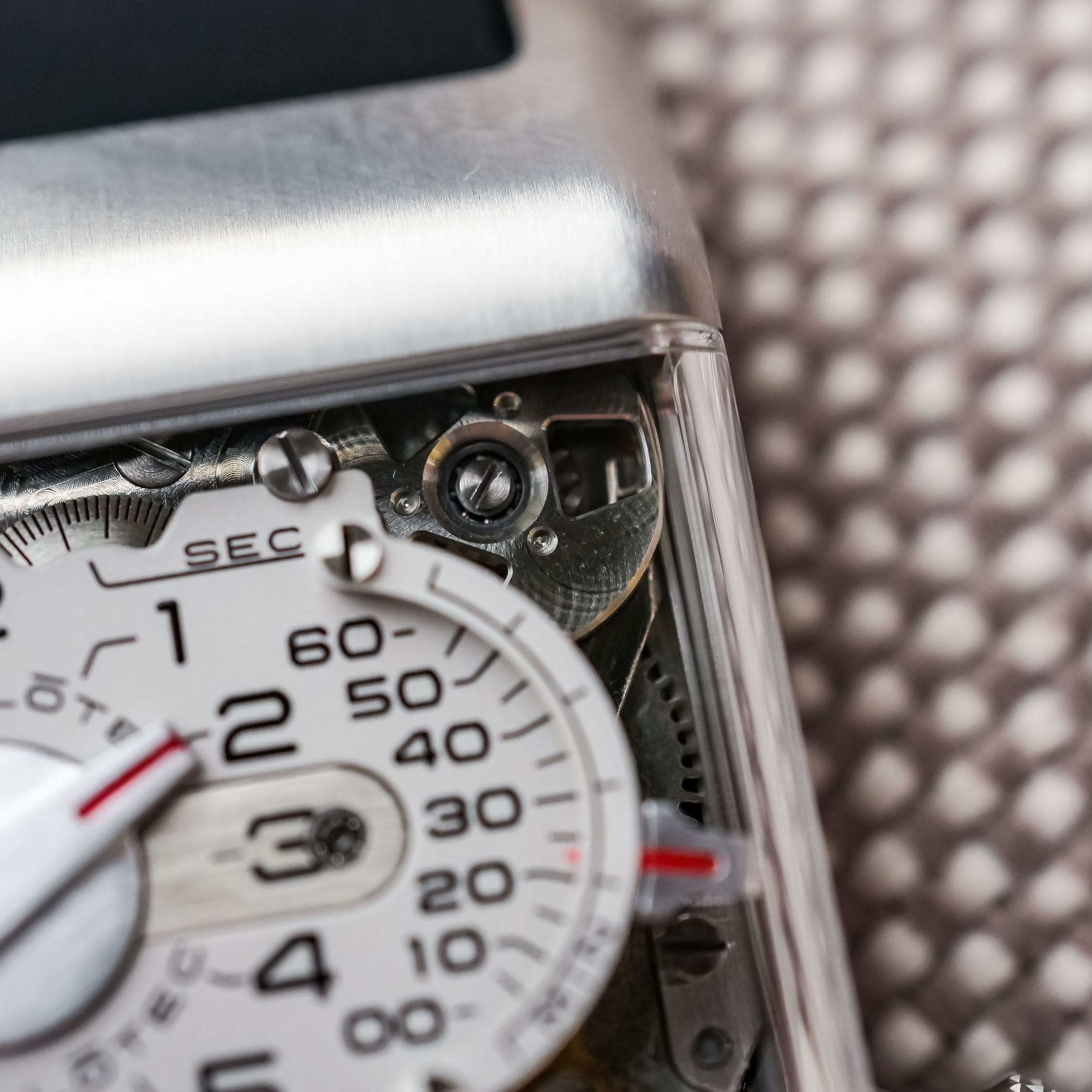
Part of the revealed mechanism, at the top right, is a visible flywheel. Instead of a snap, the return is controlled, almost dramatic. When the minute hand returns to zero, the hour disc jumps to the next hour. The action is nearly audible (it will be in a quiet room) and slightly slowed down for effect. It invites observation. Legibility, despite the unconventional layout, is surprisingly immediate.
The Engine
The No.8 relies on a Miyota 90S5 automatic base, powering a 62-component in-house module. The base movement is certainly not the focus; the display is. The module adds nice complexity, not necessarily in finishing, but in function. The use of ball bearings is central. One ultra-small 1.5mm bearing handles critical motion, supported by two larger 2.5mm bearings. The result is a fluidity that contrasts a bit with the otherwise industrial aesthetic.
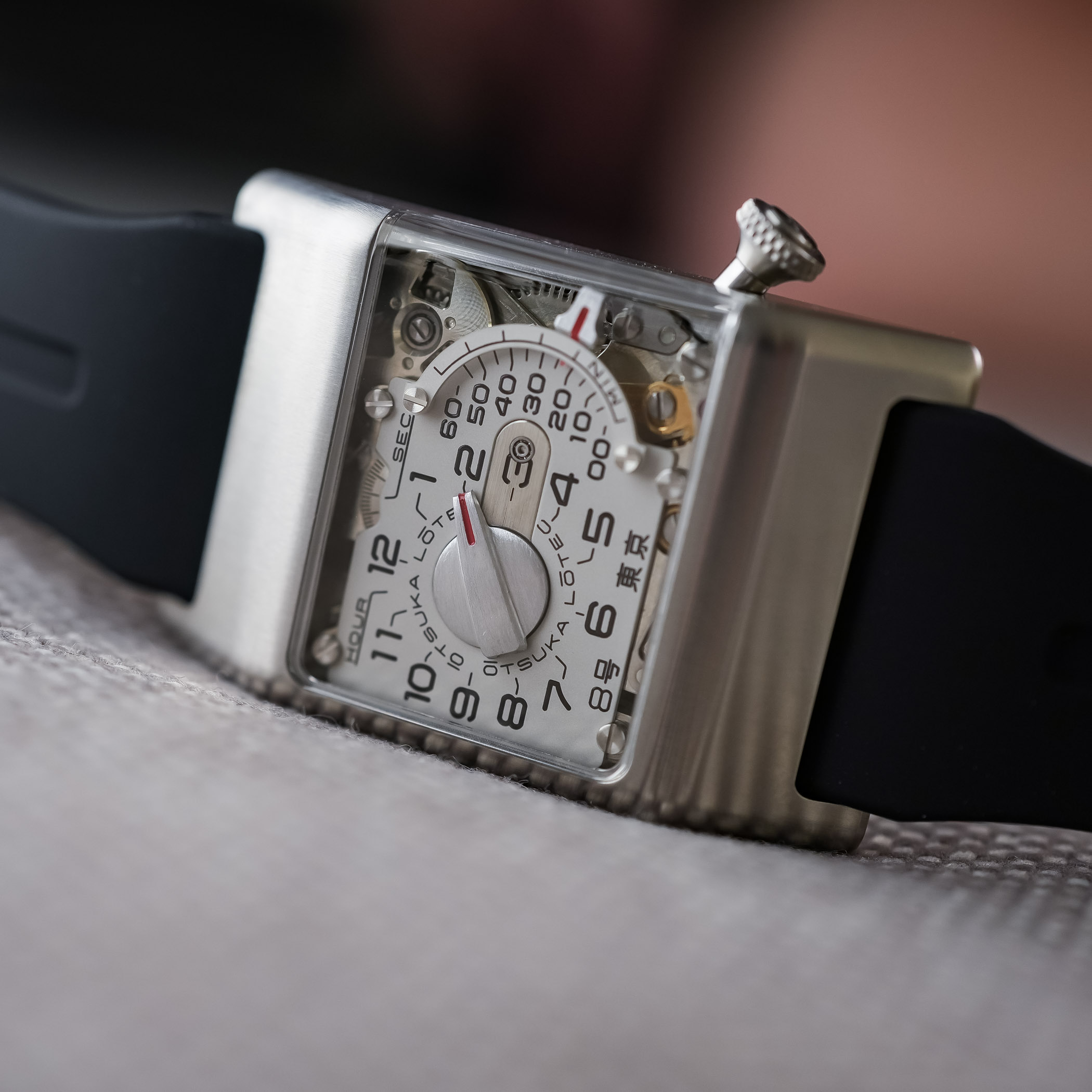
With only 32 hours of power reserve, autonomy is limited, but this is explained by the demands of the display, which makes the watch feel alive: the slow build-up, the tension before release, the controlled reset, all of it through the dial.
Thoughts, availability & Price
The black rubber strap is wide (24mm) and visually integrated into the case. Comfort is good, as the rubber’s flexibility compensates for the case’s rigid geometry. The Otsuka Lotec No.8 takes the retrograde logic of the No.6, the mechanical theatre seen in the No.9, and the experimental spirit of the No.5 KAI and No.7.5, and merges them into a more focused object.
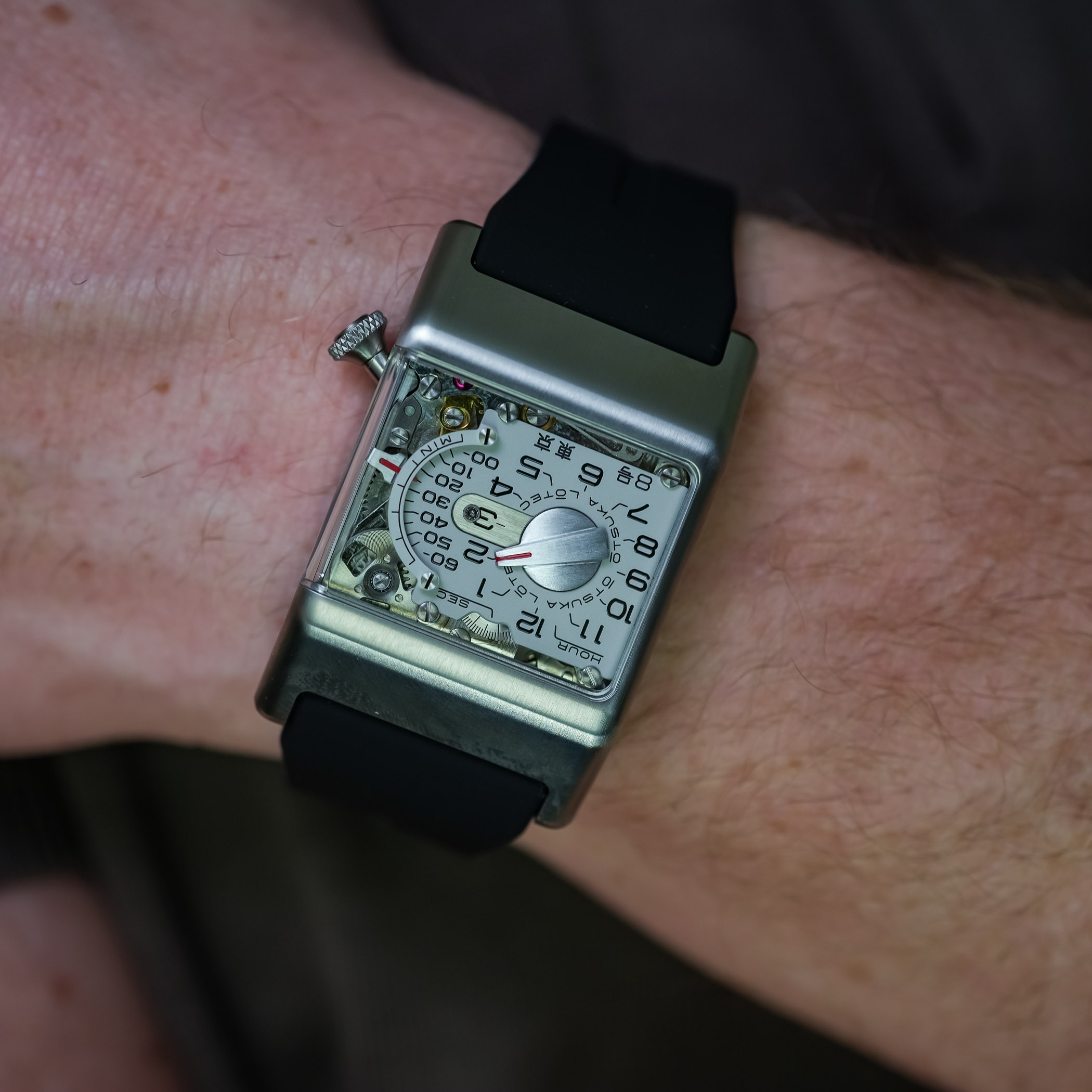
It is a watch that clearly prioritises mechanical behaviour over visual refinement. You don’t read the time, you observe how it’s constructed, how it moves, how it resets.
And like all Otsuka Lotec pieces, it remains frustratingly inaccessible (Japan-only distribution, lottery allocation, and low production), despite the approachable price of JPY 990,000 (approx. EUR 5,300). But in a way, the constraint is part of the appeal, and this is not a watch you buy; it’s the one you manage to get. For more details, please visit otsuka-lotec.com.