

 Not all images were able to load for printing. Please close the print window and try again.
 New Vacheron Constantin Tribute to Great Civilisations, Inspired by Masterpieces from the Louvre
Inspired by ancient sculptures from the Louvre, Vacheron deploys nine decorative crafts to embellish the dials of a quartet of limited editions.
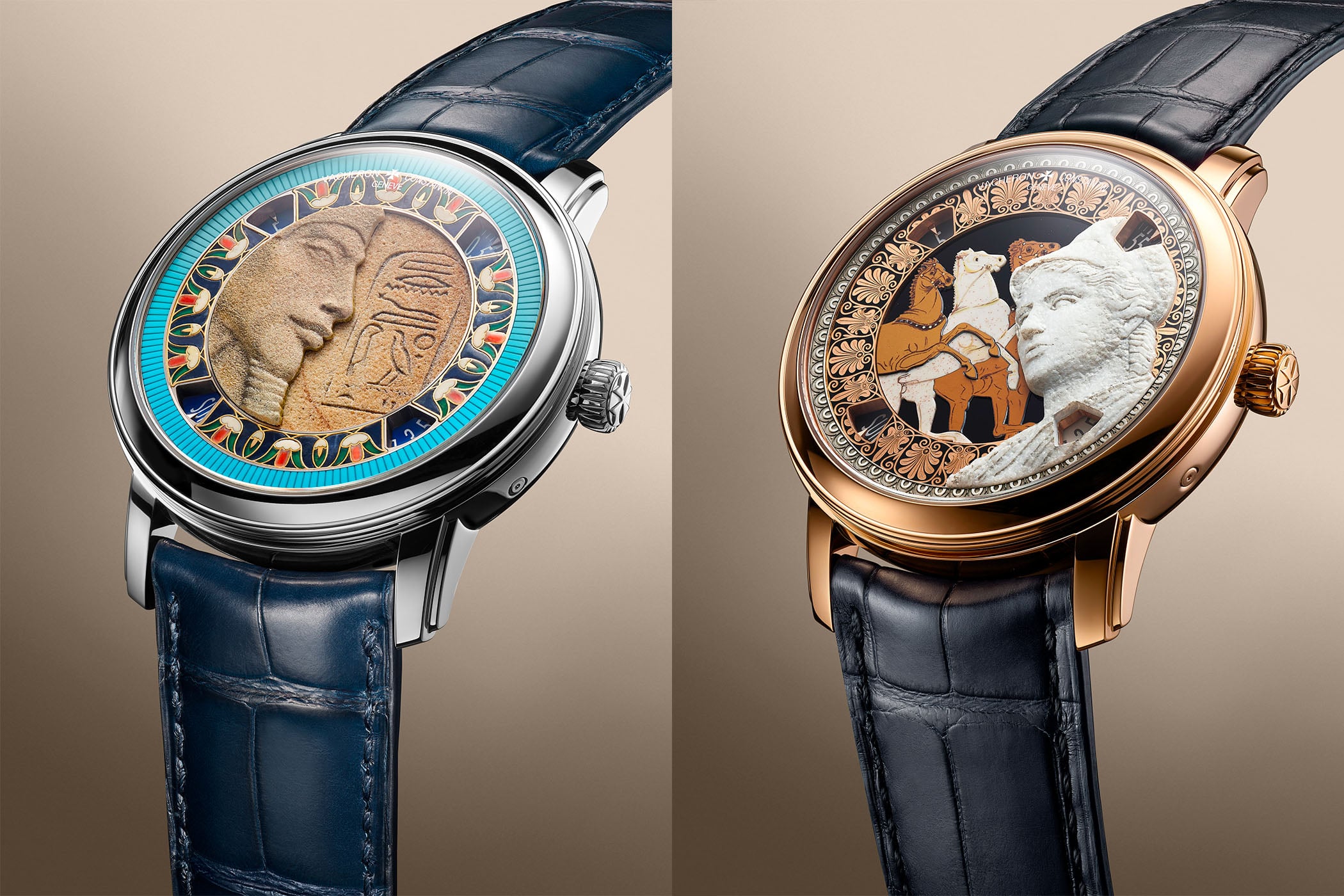
Vacheron Constantin’s Métiers d’Art Tribute to Great Civilisations series turns the Louvre’s ancient masterpieces into wearable miniature artworks, blending high watchmaking with some of the Maison’s most demanding decorative crafts. Limited to 15 pieces each, the four watches use the calibre 2460 G4/2, a hand-finished automatic movement with peripheral displays that frees the dial for artistic expression.
The collaboration between Vacheron Constantin and the Louvre dates to 2019 and reflects a shared mission to preserve and transmit art and craftsmanship. Following the quartet of 2022 dedicated to Great Civilisations, Vacheron delved into the Louvre’s rich Department of Antiquities and selected four ancient civilisations for the Métiers d’Art Tribute: Pharaonic Egypt, the Neo-Assyrian Empire, Ancient Greece and Imperial Rome.
Each watch is anchored by a central stone glyptic appliqué, with surrounding friezes inspired by each culture’s decorative arts. Great care has been taken to match the stones to the originals before they were engraved or sculpted in relief by hand. Deploying nine different decorative crafts, each watch is a genuine work of art.
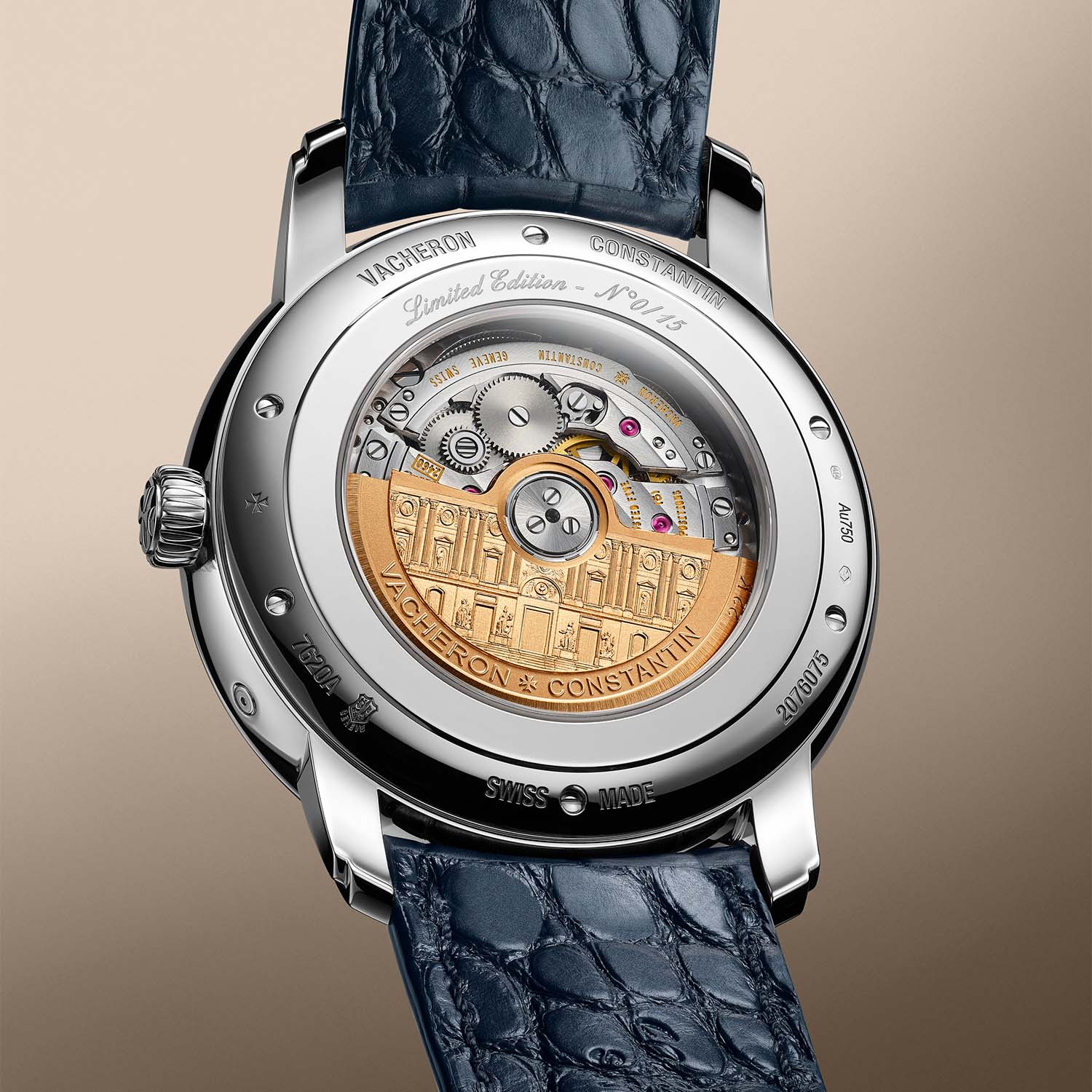
All four timepieces are limited and numbered series of 15 pieces presented in 42mm pink gold or white gold cases with a thickness of 12.9mm. Powered by the in-house automatic calibre 2460 G4/2, the gold rotor is engraved with the eastern façade of the Louvre. With a 4Hz frequency and a 40-hour power reserve, the movement reveals the hours, minutes, day of the week and date in apertures on the periphery of the dial.
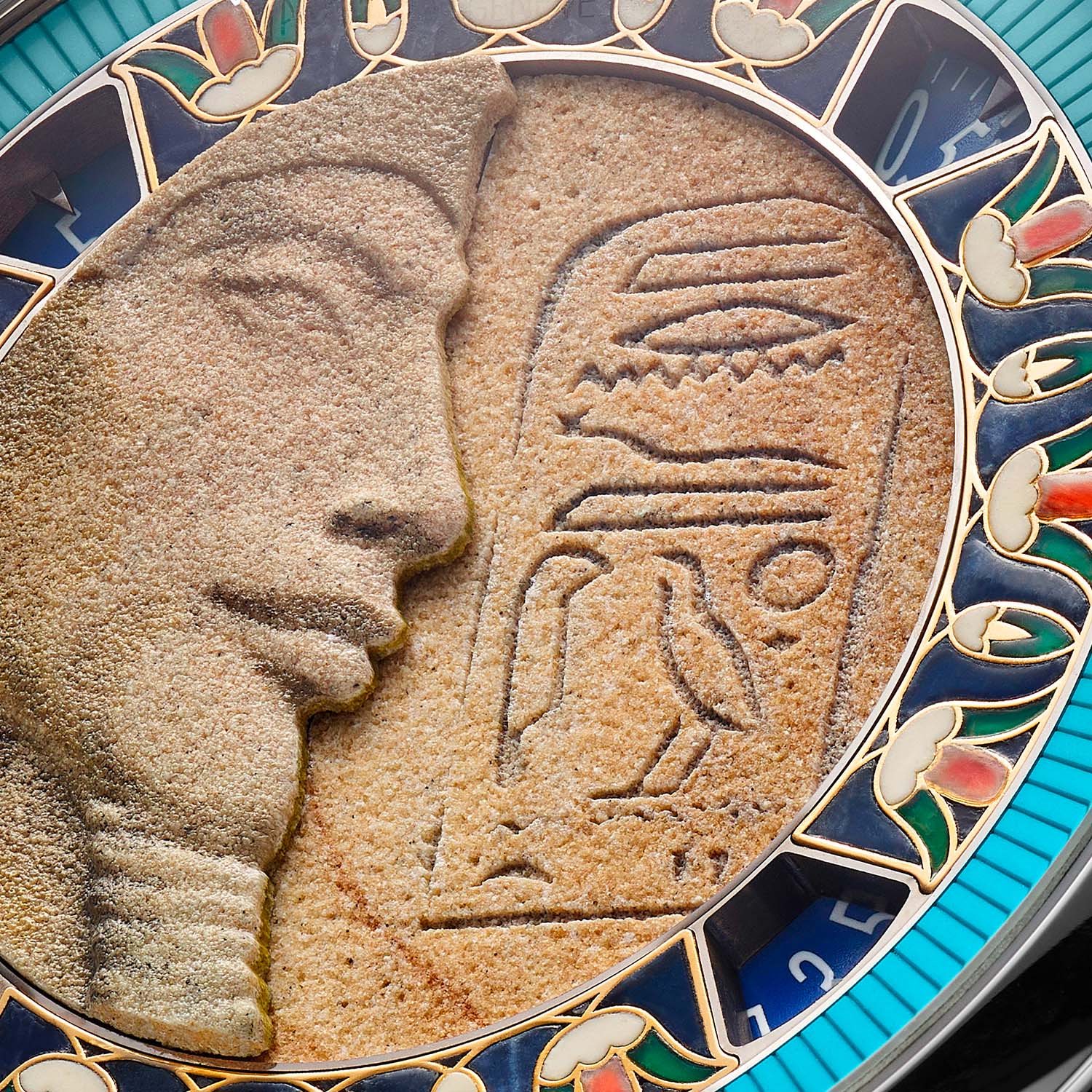
Buste d’Akhenaton – Egyptian New Kingdom (1500–1000 BC)
The sandstone bust of Pharaoh Akhenaten preserved in the Louvre is fragmentary and depicts the sovereign with a long ceremonial beard holding two royal sceptres. The elongated, almost abstract face of the pharaoh is featured in the centre of the dial and, like the original, carved from limestone sandstone from Sinai, Egypt. Using glyptics, an ancient art of carving or engraving hard stones to create designs in relief or intaglio, the portrait is carved and hand-patinated to produce greater volume and depth. The adjacent cartouche is also engraved using the same calcareous limestone. Framing the portrait, the outer frieze is drypoint-engraved on a single turquoise ring and separated from the inner frieze, executed in stone champlevé, by a gold border. Here, the different coloured tesserae of red mother-of-pearl, chrysoprase, opaline and sodalite are inserted into frames of gold.
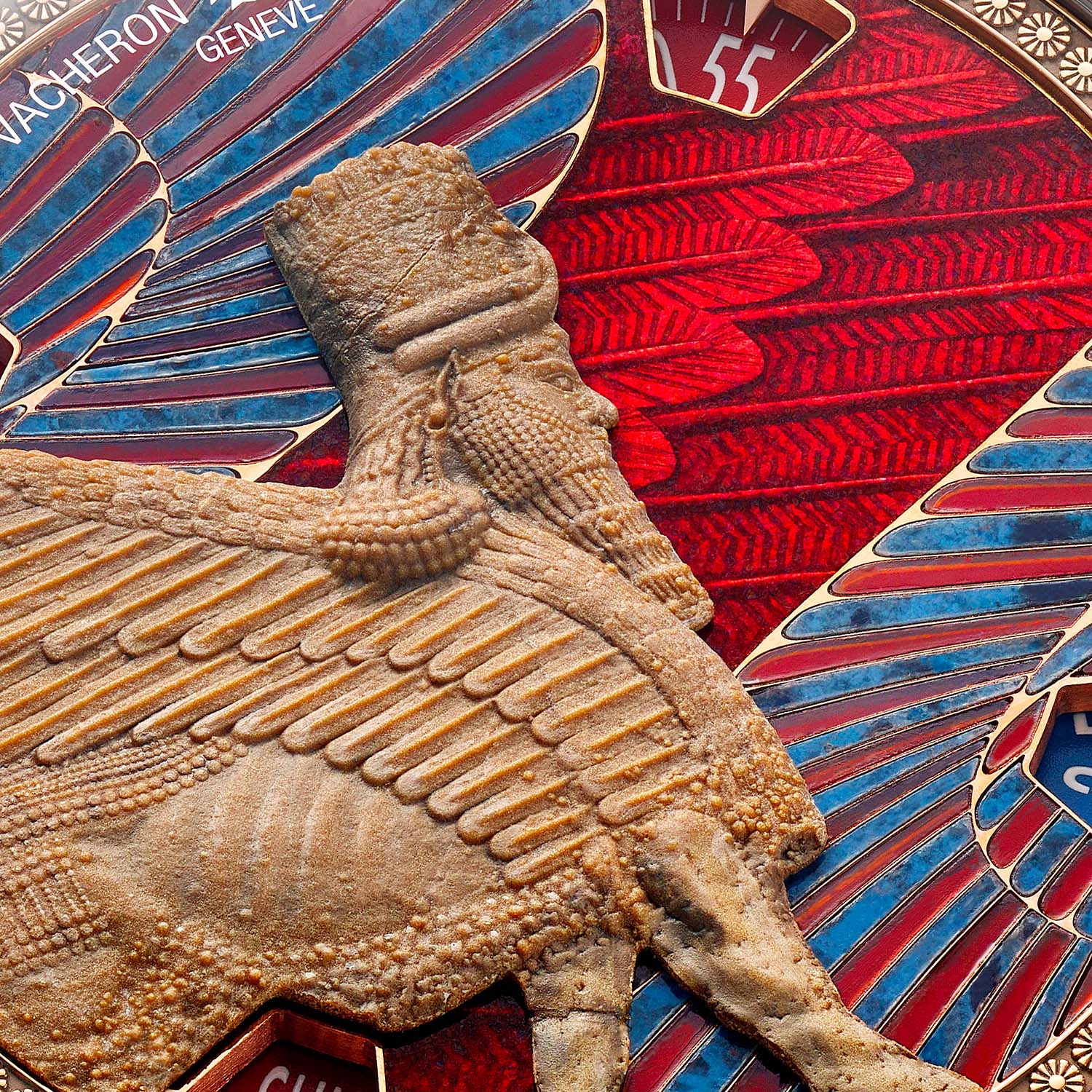
Lamassu de Sargon II – Neo-Assyrian Empire (934-609 BC)
Carved from enormous blocks of alabaster, the five-metre high Lamaussus – part bull, eagle and man – guarded the gates of the city of Sargon II, home to the king of Assyria. The winged, human-headed bull is executed in glyptics using limestone sandstone with features accentuated by hand-applied patina. The red and blue background, inspired by champlevé enamel, features slender rods of red agate and blue dumortierite marquetry inserted into the gold structure, creating the sensation of wings. The composition is further enhanced with flinqué enamel to create depth before the appliqué of the Lamassu is added. The outer frieze is made of engraved gold floral patterns.
Athena de Velletri – Ancient Greece (480 – 323 BC)
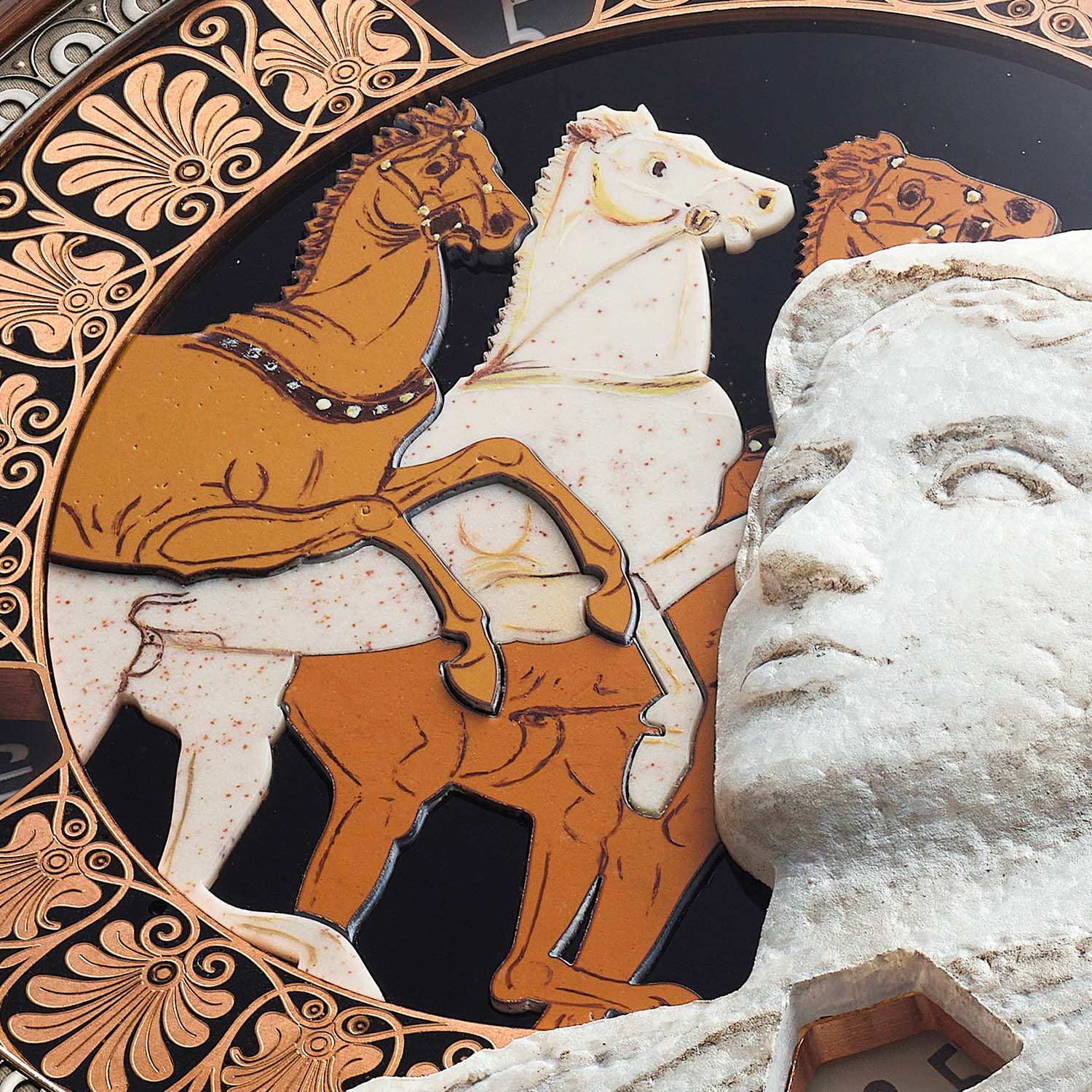
Discovered in Velletri, the 3-metre high marble statue of Pallas was a Roman copy of a Greek original sculpted around 430 BC. Once again, Vacheron’s artisans use glyptic to depict the goddess of Athens. Here she is revealed in three-quarter view, sculpted from Greek marble like the original. Hand-patinated to accentuate depth, the appliqué is mounted on a gold dial decorated by an enameller with a stunning black champlevé enamel frieze, framed by a peripheral white-gold frieze. Stone marquetry is used for the horses featured in the centre of the dial, enhanced with miniature painting to portray vigour.
Tibre de l’Iseum Campense – Imperial Rome (27 BC – 467 AD)
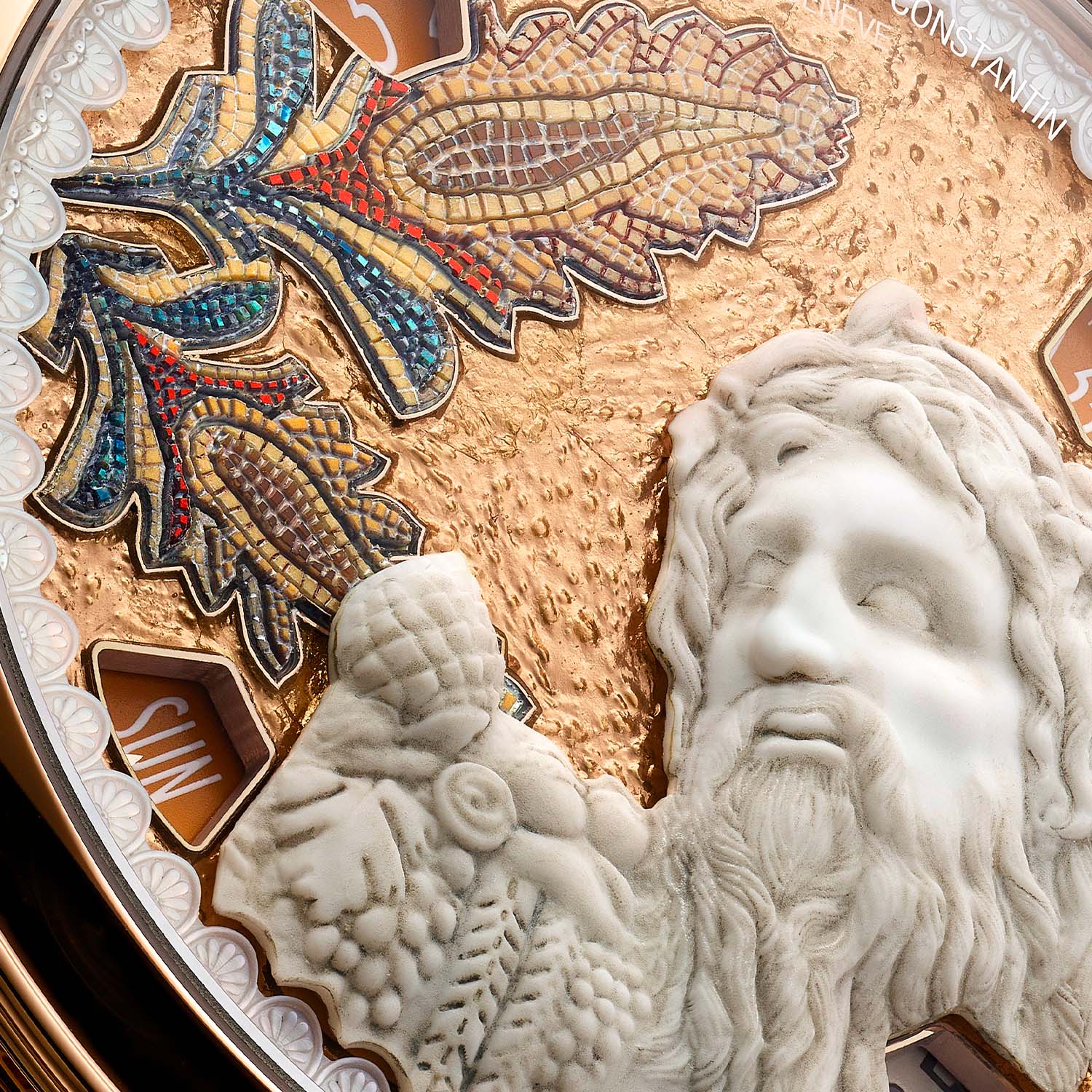
Discovered in Rome on the site of a sanctuary dedicated to Egyptian gods Isis and Serapis, the imposing marble statue of the god Tiber was seized by Napoleon Bonaparte and displayed in the Louvre. Shown in three-quarter view, the head of the god Tiber and his cornucopia are executed in glyptics on marble, sourced from Italy. Sculpted and patinated, the realistic depiction of the river god is accompanied by a stone micro-mosaic composed of jasper, chrysocolla and opaline tesserae. A grained gold-leaf base, covered with translucent enamel in the background, adds light to the composition. The elegant, engraved mother-of-pearl frieze framing the dial is executed in drypoint.
More information at vacheron-constantin.com.