
 Not all images were able to load for printing. Please close the print window and try again.
Second Thoughts about the Master Control Chronomètre Date, Jaeger-LeCoultre’s Take on the Integrated Bracelet
Several months after its introduction, we take a second look at JLC's integrated proposition.
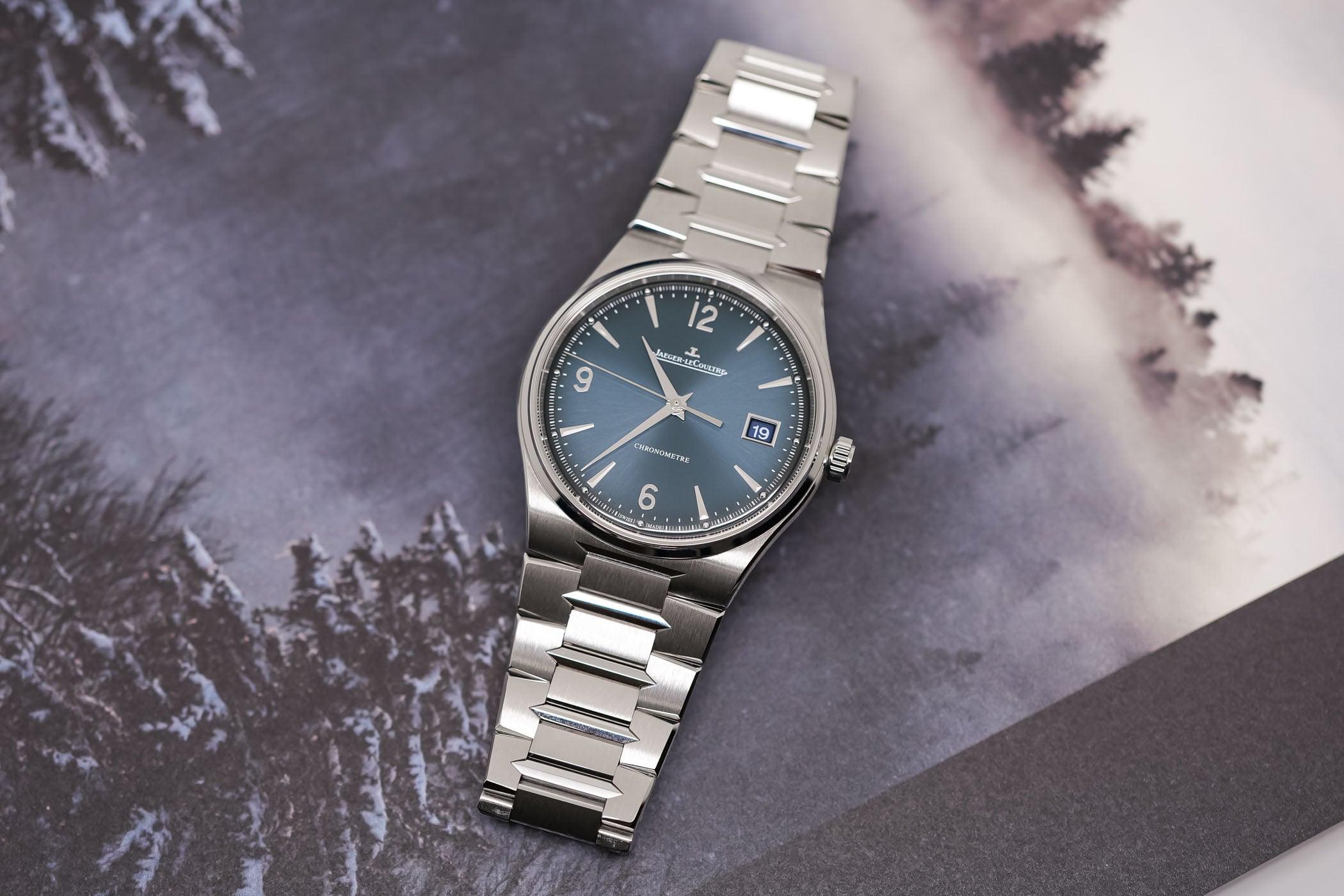
Some watches make a strong first impression. Some, on the other hand, take more time to be appreciated. Or, at least, the initial effect is not that of love at first sight. So is the case of the Jaeger-LeCoultre Master Control Chronomètre collection. I can perfectly remember receiving the press release and official renderings just ahead of Watches & Wonders 2026, and discussing this new range of integrated sporty-chic watches with the team. And our initial impression was not hyper-enthusiastic. There were no negative feelings, but no major excitement either. And there was not enough time during the fair to really get to experience the watch either. But some relationships need more time to grow, and that is why, several months after the collection’s introduction, I’ve decided to take another look at the core model, the Master Control Chronomètre Date, to see if I’ve changed my mind about JLC’s take on the integrated-bracelet watch.
JLC’s Master Control Chronomètre Collection in a nutshell
Before we dive into the details of a specific model, let’s first have a look at what the Master Control Chronomètre stands for. In short, this is JLC’s integrated sporty-chic proposition: a watch to capture the trend of the 1970s integrated bracelet, and to compete with models such as the Rolex Land-Dweller, the IWC Ingenieur, the Chopard Alpine Eagle, the Bulgari Octo Finissimo 37mm or the Girard-Perregaux Laureato (to stay in the same price range), and everything the market offers in this category, up to the Vacheron Constantin 222 and Overseas, the Audemars Piguet Royal Oak Jumbo or the Patek Philippe Nautilus.

Jaeger-LeCoultre was indeed one of the very few established watch brands not to have such a watch in its collection, something versatile, daily-oriented, positioned between the elegant, highly classic Master Ultra-Thin models and the more robust Polaris range. Yet, JLC is a brand with a strong identity and historical background, and the brand couldn’t go too wild with this collection – which isn’t its first integrated bracelet, as the 1973 Master Mariner Chronomètre already had a fully integrated metal bracelet, but this hasn’t been the main source of inspiration. JLC being JLC, its integrated sporty-chic watch has certain codes to respect: thinness, elegance and a certain discretion that has always pleased the brand’s clientele. The result had to integrate a contemporary design language within the brand’s traditional codes.

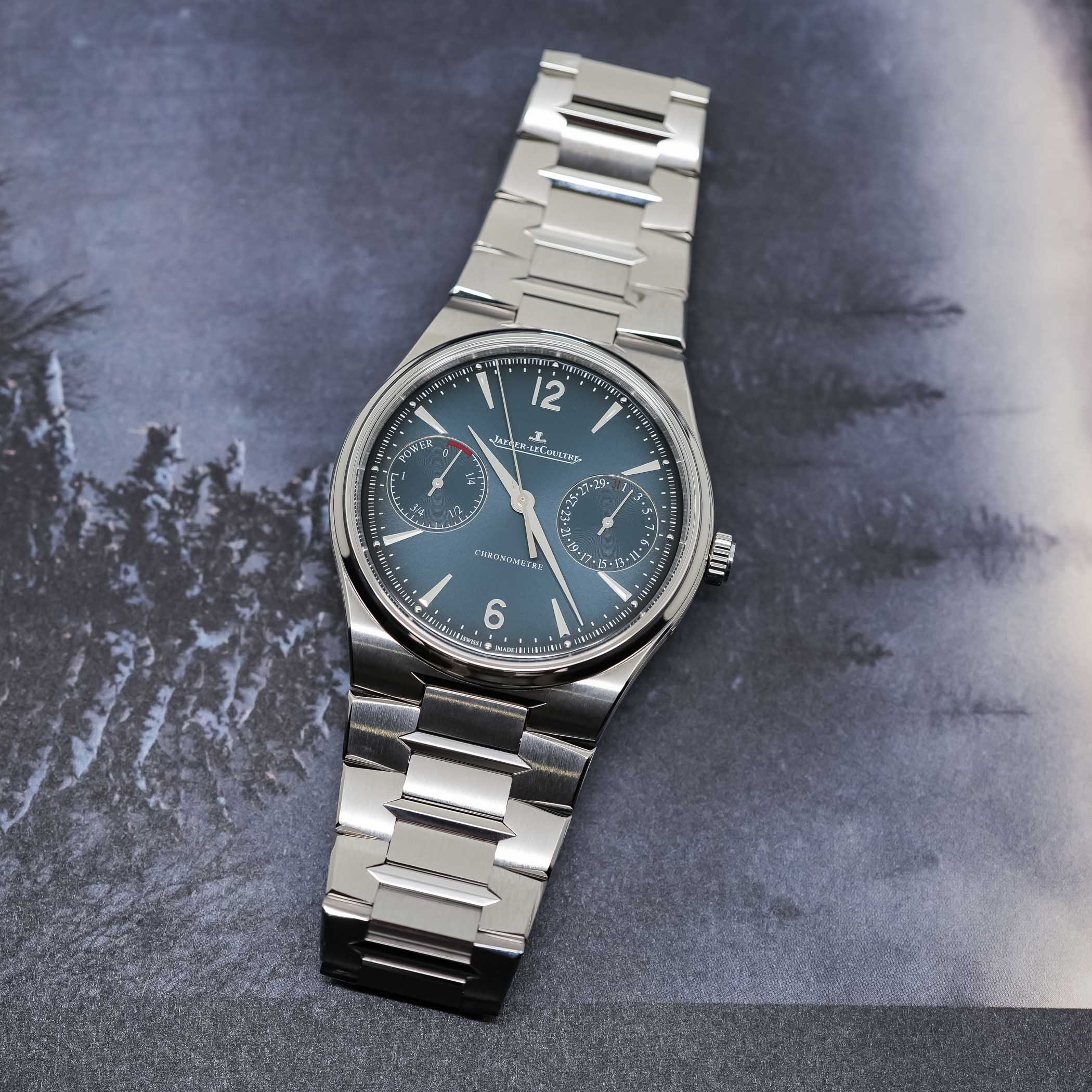
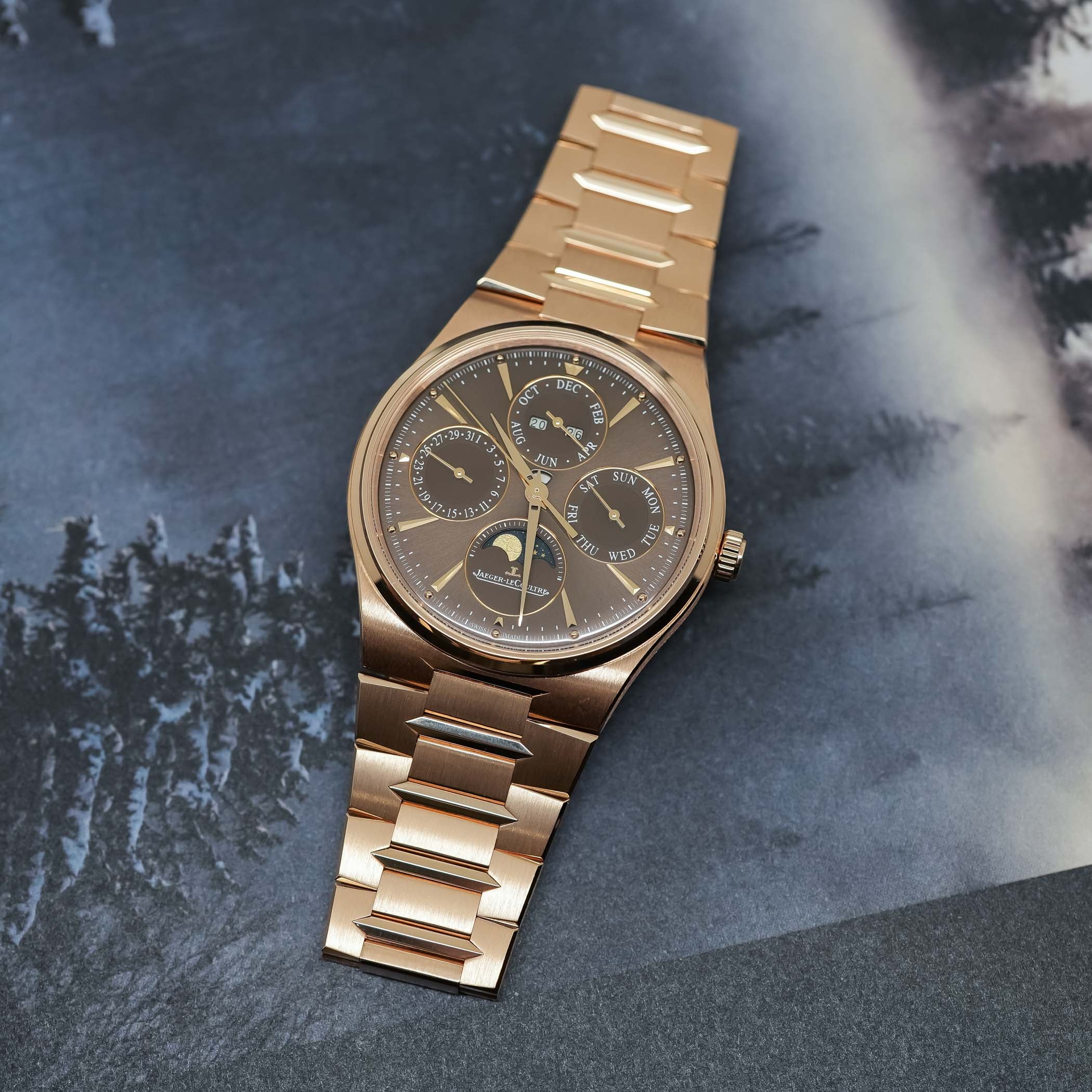
The collection was launched at Watches & Wonders 2026, with 5 references in steel or gold, and 3 distinct versions: a core model with a time-and-date display, also the most compact of the three, and two slightly larger editions with more complex movements, the Master Control Chronomètre Power Reserve and the Master Control Chronomètre Perpetual Calendar. And what JLC did was to create a more relaxed, more modern version of its Master Control, worn on an integrated bracelet. And this partially explains why the watch didn’t make a strong first impression. It wasn’t meant to be a striking new release that makes headlines, only to be forgotten. It is a watch that actually feels like it’s been around for a while, almost escaping the novelty effect. And, after second thoughts, it might not be a bad thing at all. On the contrary. What the Master Control Chronomètre could become is a watch to last, a core collection with a more timeless appearance than some of its competitors. And even though it cannot rely on decades of history, it feels JLC from case to bracelet.
An integrated take on the Master Control
Take a look at the Master Control Classic 36mm, a watch released in 2025 that captures the spirit of the original MCC launched in 1995. You’ll immediately understand where the new JLC Master Control Chronomètre comes from… I have deliberately chosen to look at this new collection of integrated watches through the lens of the base time-and-date model, because it is the purest expression of what JLC has wanted to do. Our founder, Frank, has grown an undeniable appreciation for the Perpetual Calendar version in steel, and I certainly can’t blame it for that. Not only are JLC’s QPs among the brand’s most emblematic watches, but this version is thin, compact, elegant, and, as with all perpetual calendar movements, carries the charm of true complication. But in a way, it feels almost too easy to talk about this collection by looking at the top of the range.
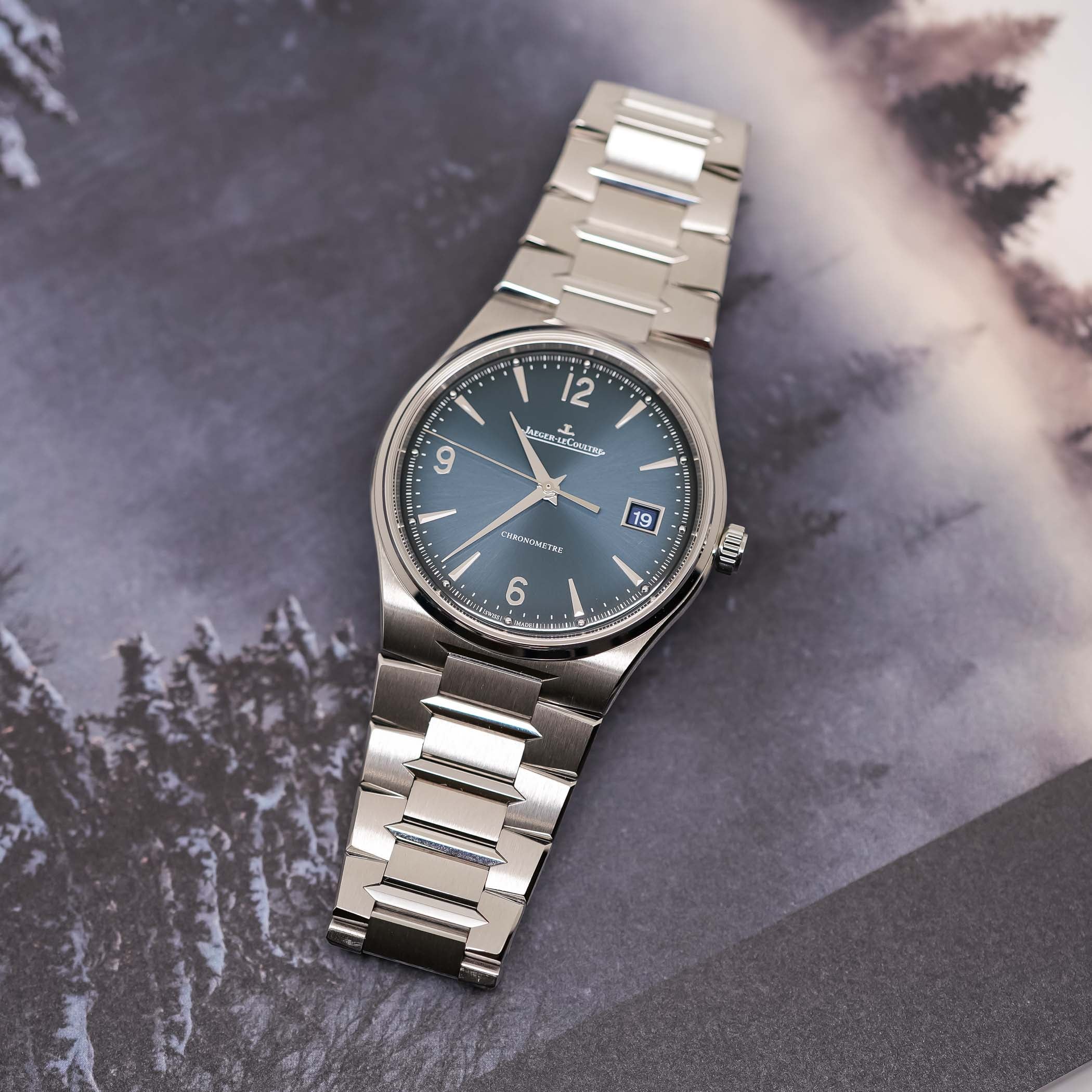
So let’s focus on the sleeker Date version. As said, while the watch is an entirely new development for the brand, it immediately feels like a familiar member of the family. And that’s easily understandable when looking at classic models such as the Master Control and Master Ultra-Thin. The Master Control Chronomètre uses every single design code known from these established collections and transposes them into a more contemporary, more versatile, slightly more casual watch. This, however, doesn’t mean that JLC has been lazy; the case, while discreet at first, is more refined than it seems at first sight.
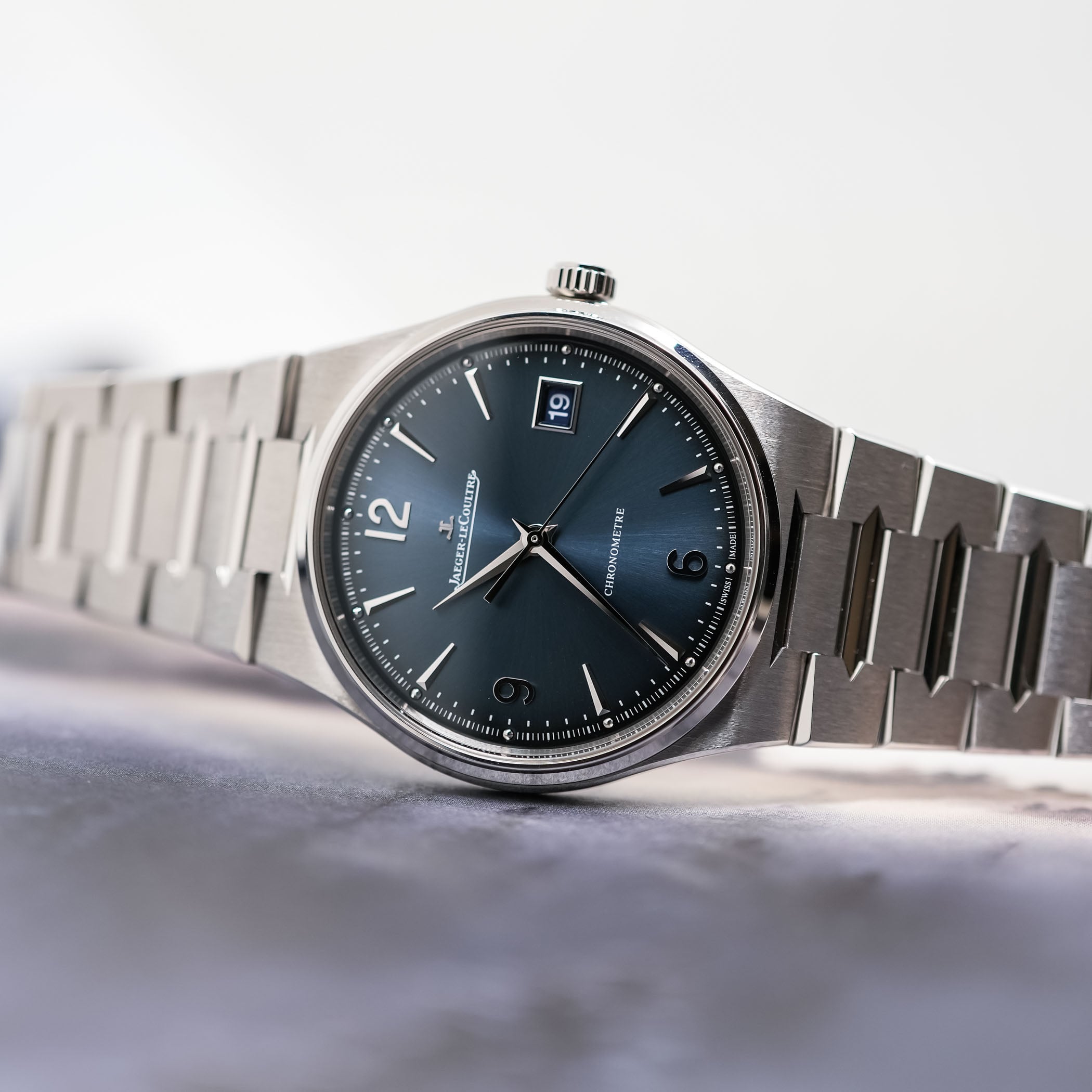
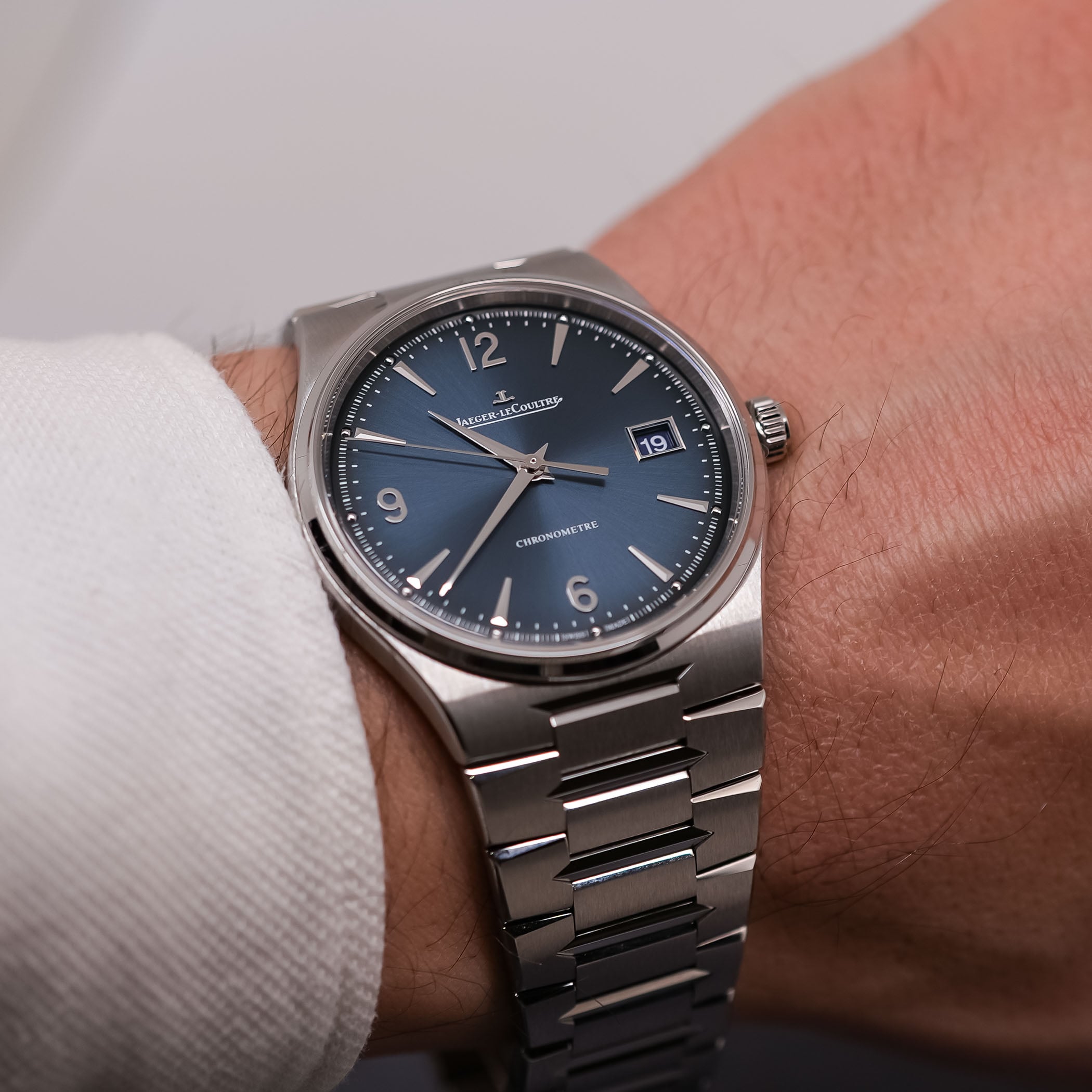
The MCC Date is the most compact of the three versions, measuring 38mm in diameter, about 45mm in lug-to-lug and, my favourite part, only 8.4mm in thickness. It is certainly not record thin, and some have made even thinner integrated sports watches, but sub-9mm is right where it should be, and in the same bracket as a 222 (8mm), a RO Jumbo (8.1mm) or a Nautilus (8.3mm), and much thinner than an Alpine Eagle (9.7mm) or an Ingenieur (10.8mm). It is only about 0.5mm thicker than a Master Ultra-Thin Date equipped with the same base movement. And on the wrist, thanks to its short case and thinness, it wears like a charm. Some will potentially prefer the added presence of the Power Reserve (39mm x 9.2mm) and the Perpetual Calendar (also 39mm x 9.2mm), but the shape of the case and the integrated bracelet give this watch more presence than the numbers suggest.
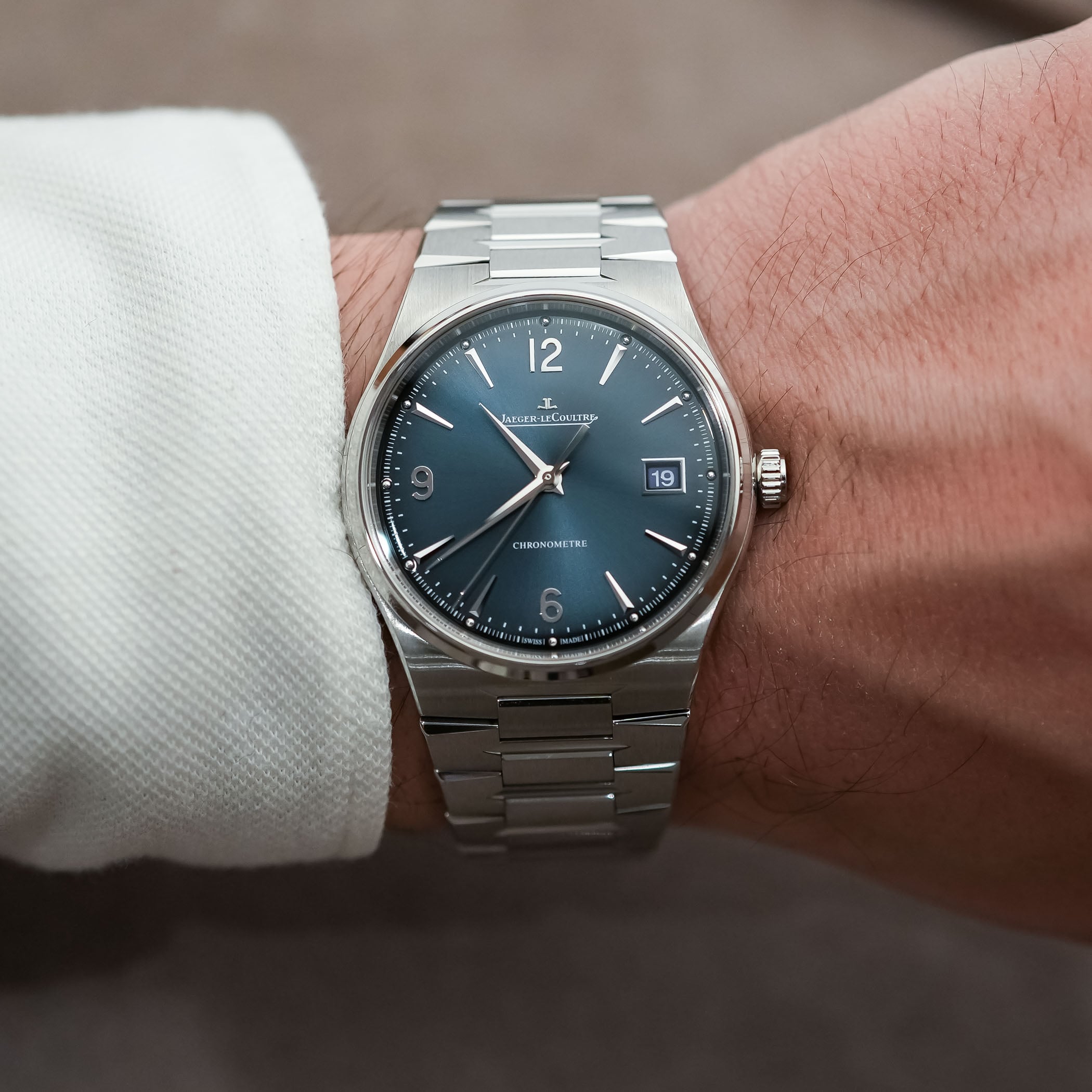
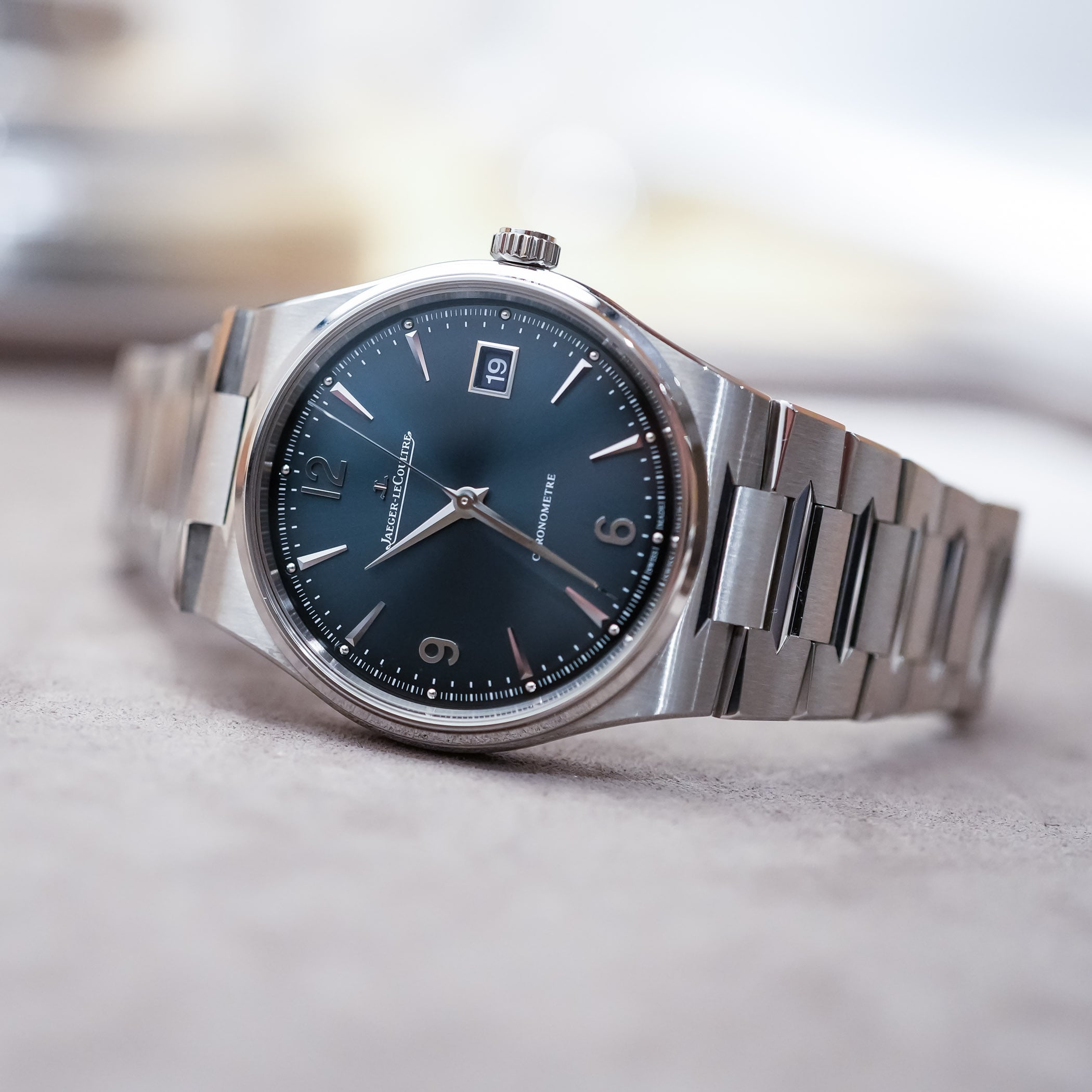
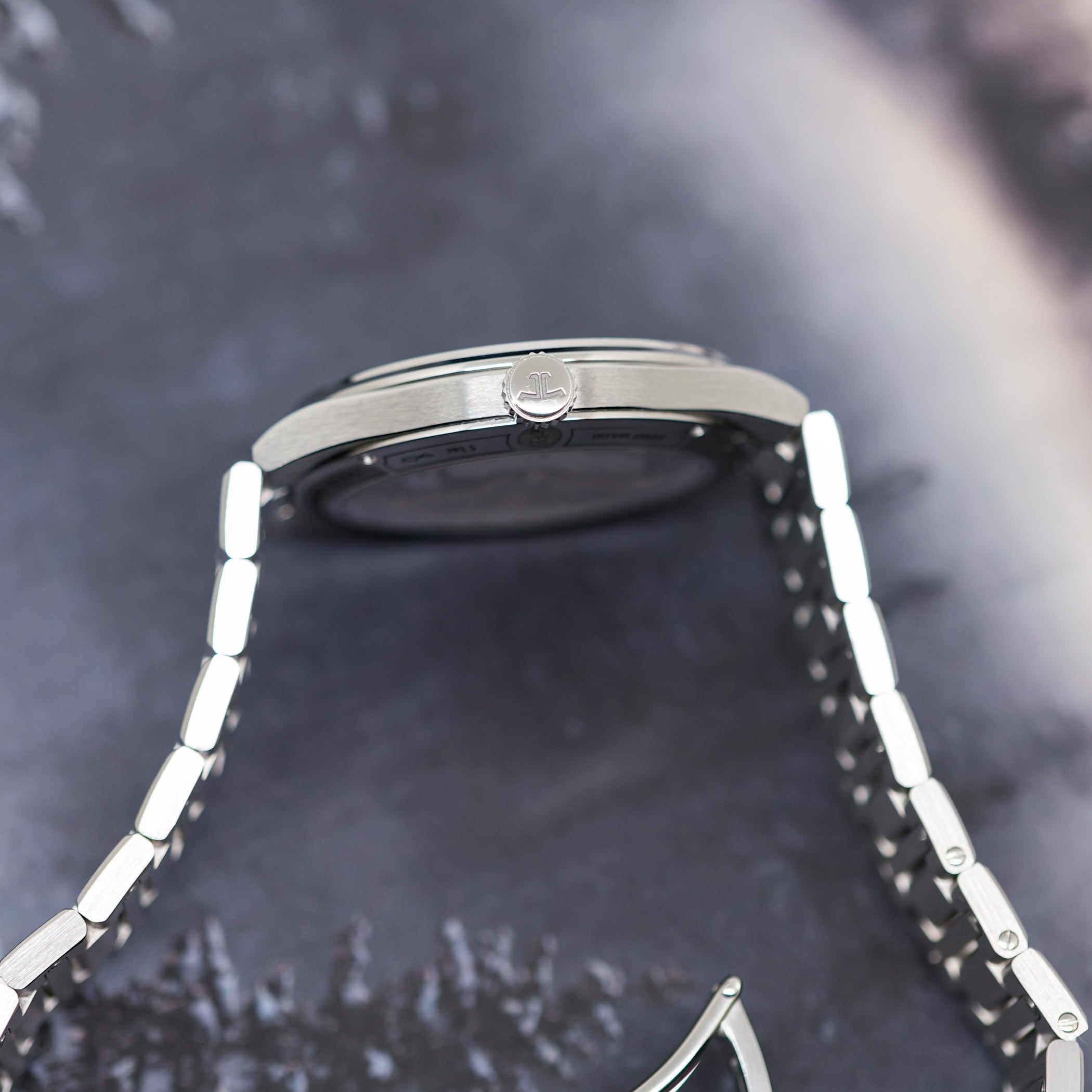
Design-wise, Jaeger-LeCoultre has chosen to remain sleek and discreet, and this is immediately noticeable with the use of a classic round bezel, not a raised, multi-sided bezel with screws, claws or notches. The bezel is sharp, clean and polished, and a direct reference to the classic Master Control models. The middle case is more interesting, however. Relying on the category’s classic barrel shape, it is nicely finished with vertically brushed surfaces, polished edges and sapphire crystals on both sides of the watch. The crown strikes a nice balance between compactness and ease of use, while remaining a classic push-pull element. This also explains the 50m water-resistance, decent but not exceptional. It will do the job, and falls in line with the positioning of this watch in the integrated bracelet category, leaning towards elegance rather than sport. That said, a 100m water-resistance and a screw-down crown wouldn’t hurt.
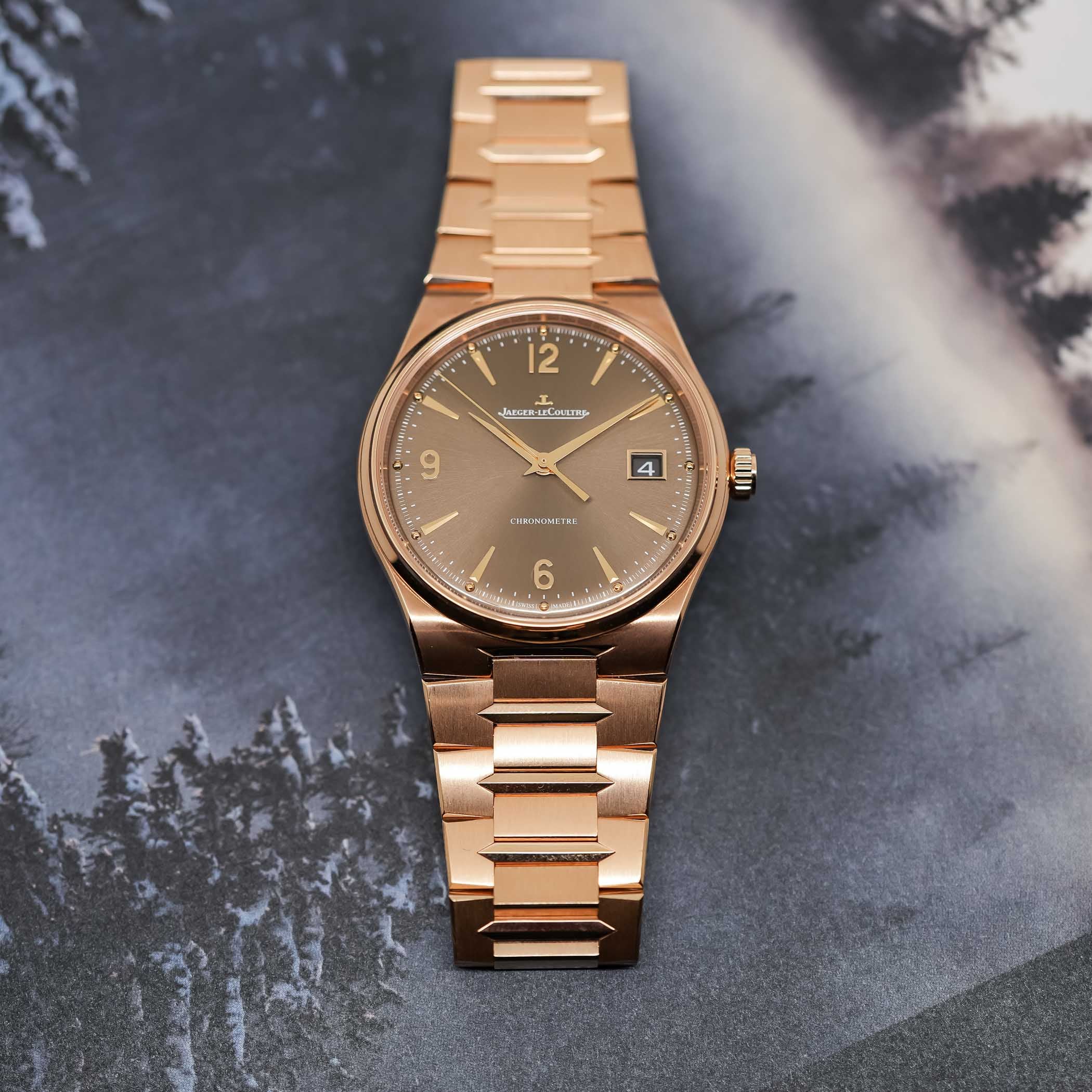
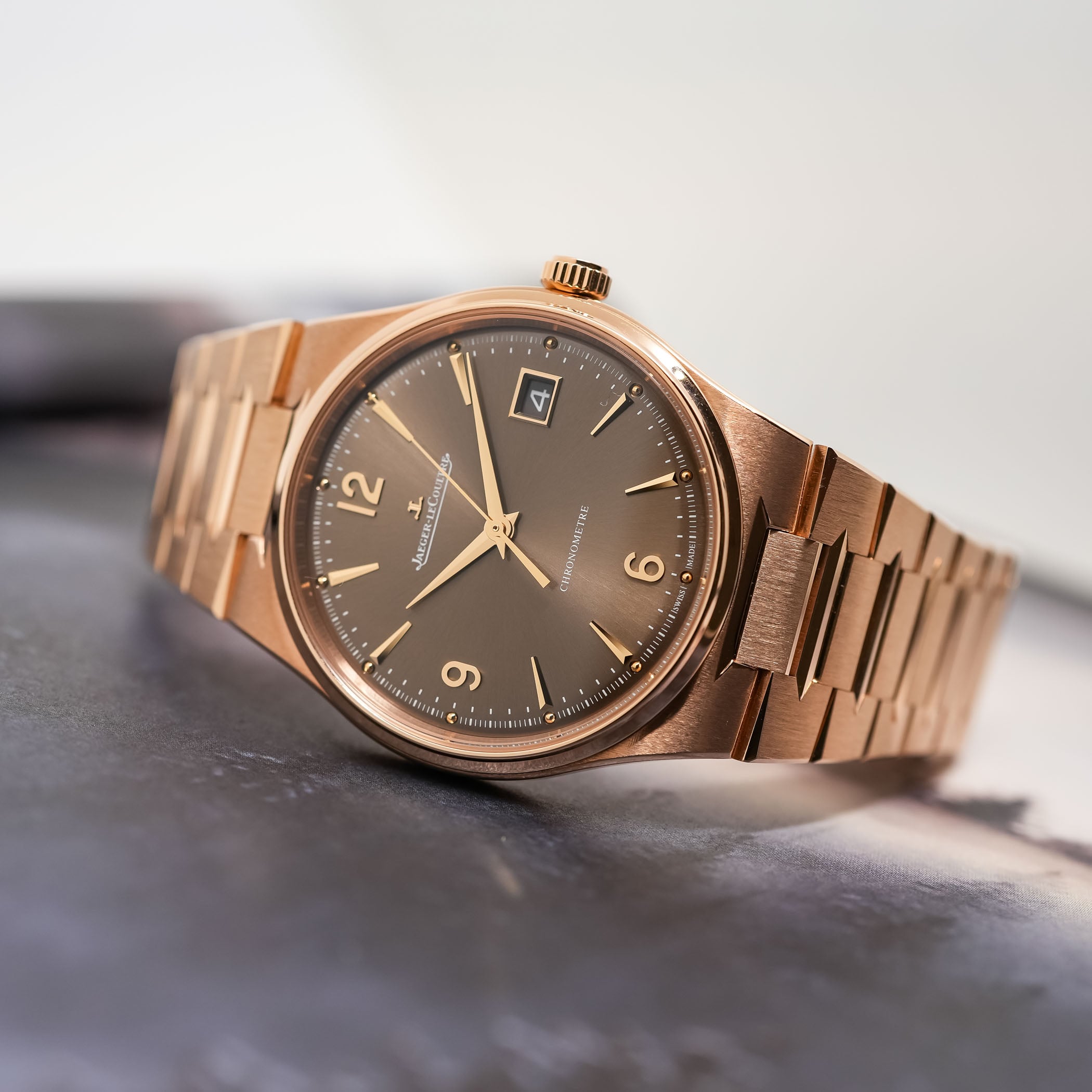
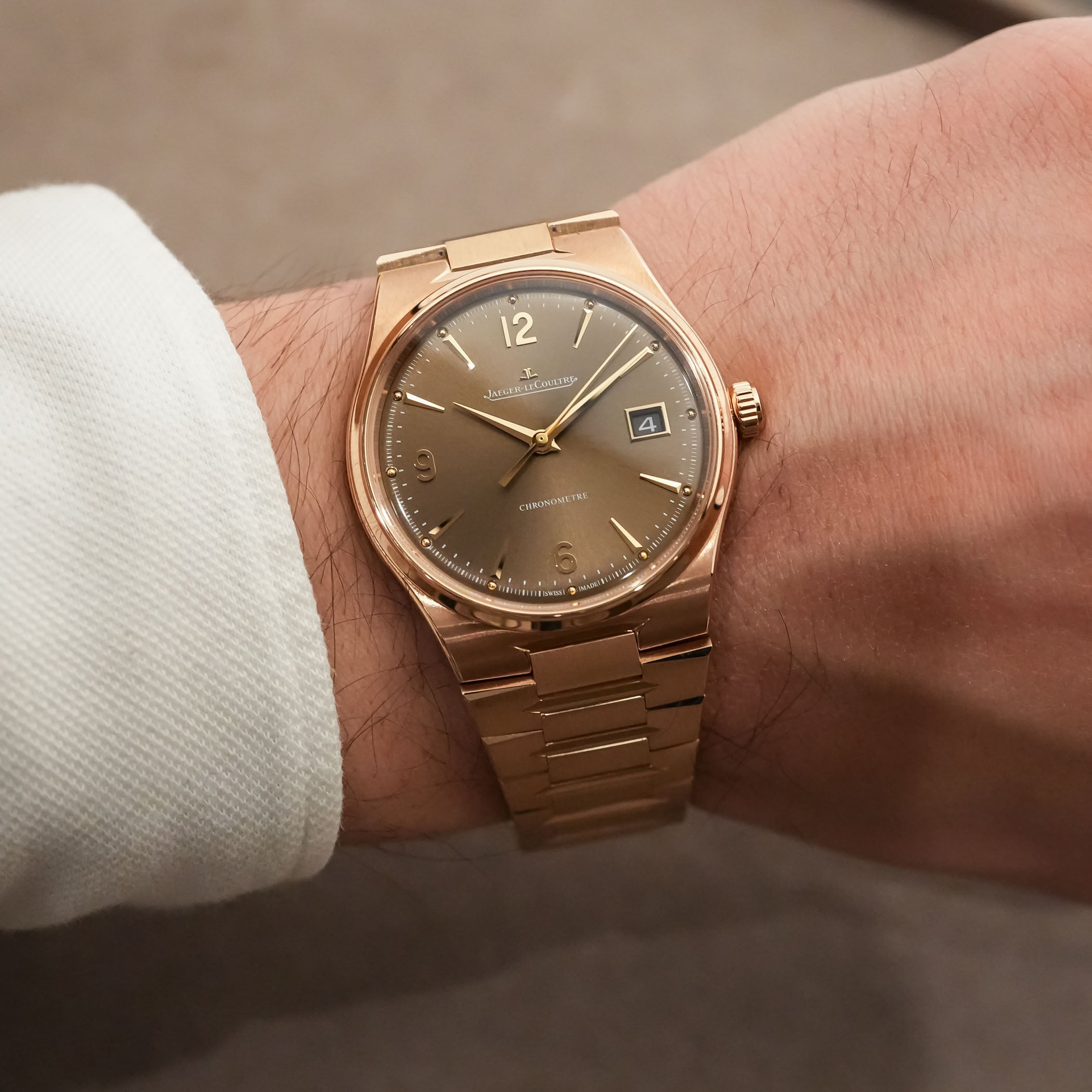
The most interesting part of the design of this JLC MCC Date is, at least in my books, the connection and integration of the bracelet to the case – and, for that matter, the bracelet in its entirety. There is undeniable attention to detail and design in the bracelet, which is finished and constructed in a rather impressive way. A three-link bracelet (no H-shaped links here), it combines flat, vertical, satin-brushed surfaces with highly polished bevels on all sides of the links, including on the inner surfaces. Another key element is the connecting links shaped like triangular prisms. Designed after the slim Dauphine hands and faceted applied indexes of JLC’s Maste Control collections, they give the bracelet great dynamism and a high-end feel. It is, without a doubt, the highlight of the collection, and the bracelet itself feels more complex and detailed than most of what you’ll find in this segment of the market, as well as watches at much higher sticker prices.
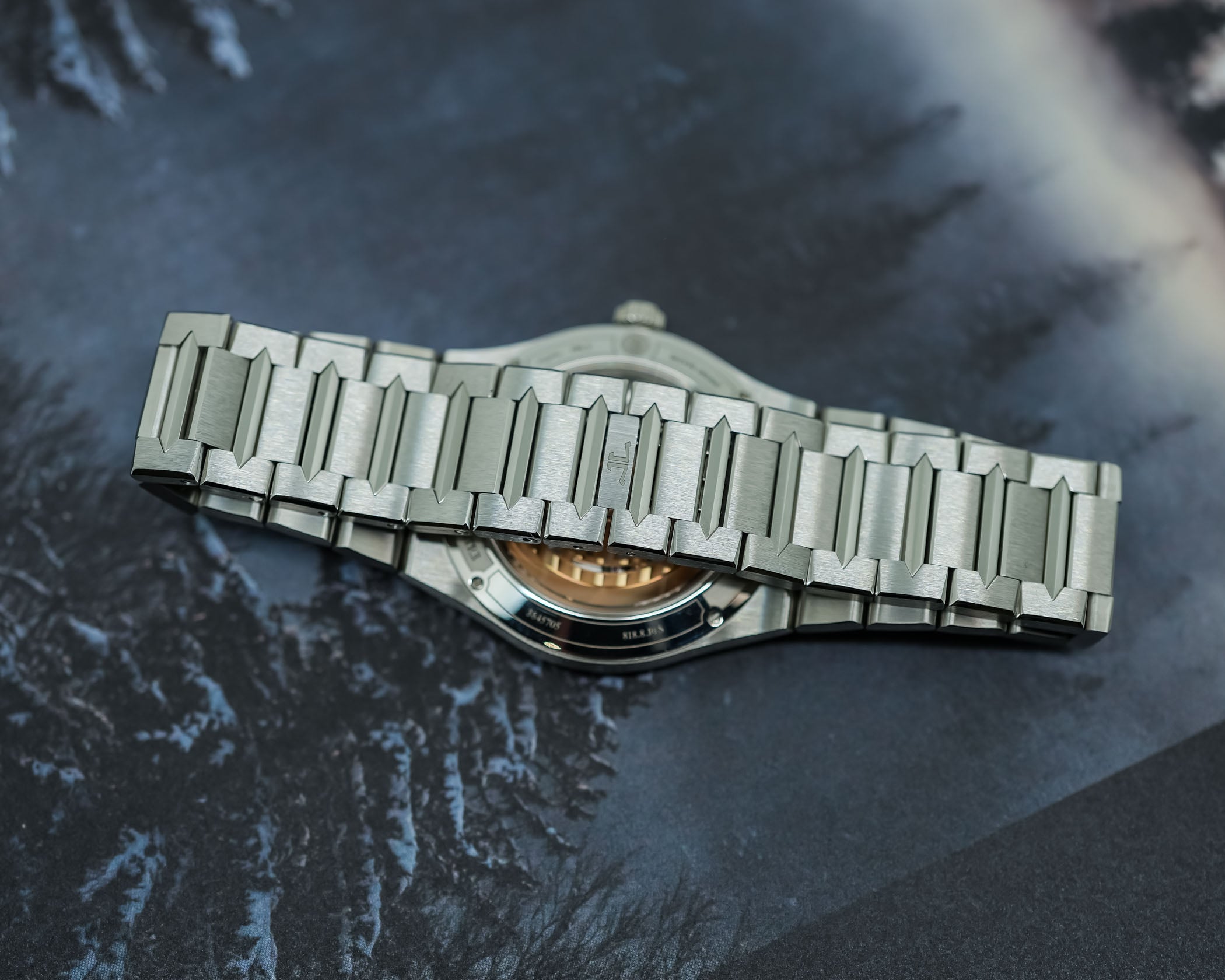
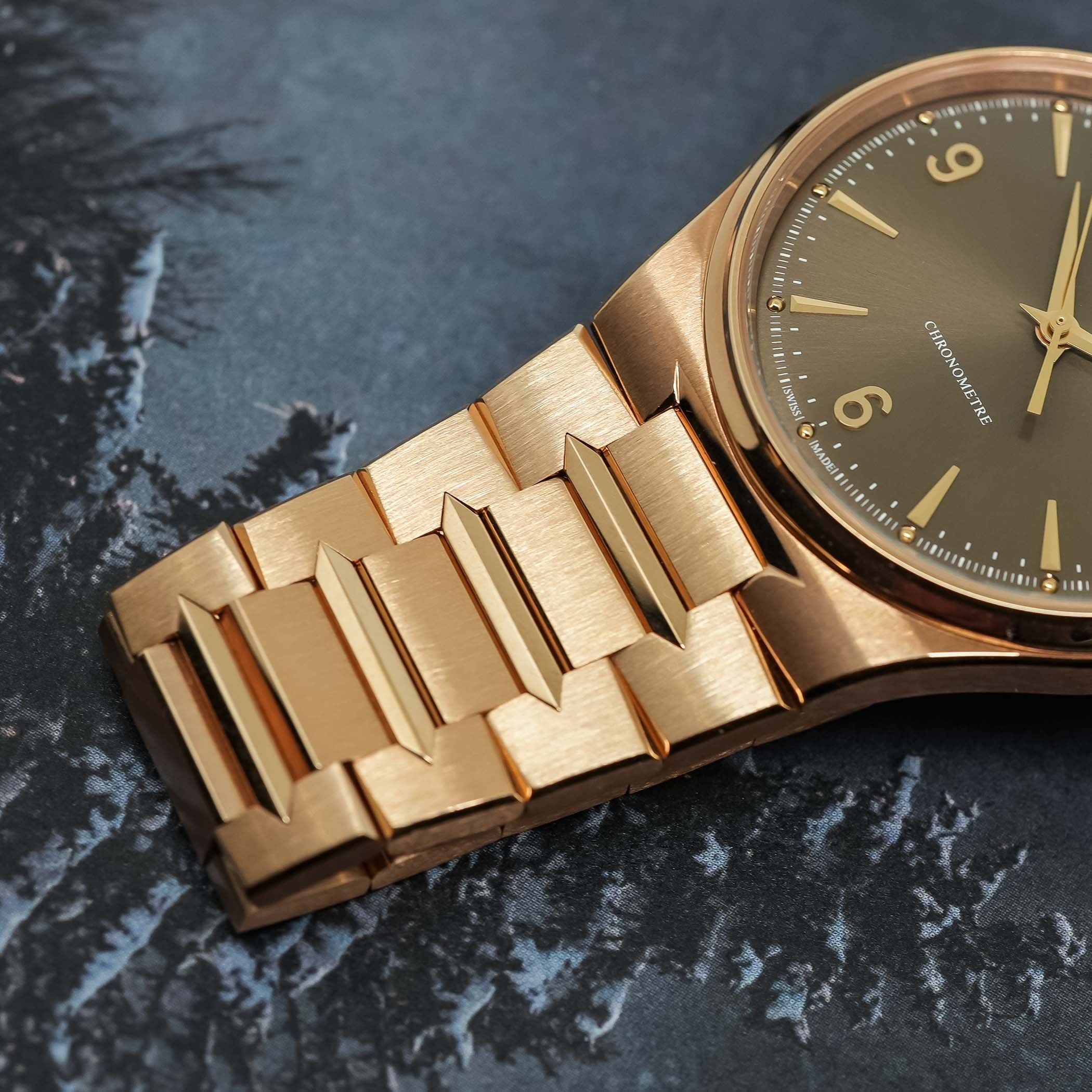
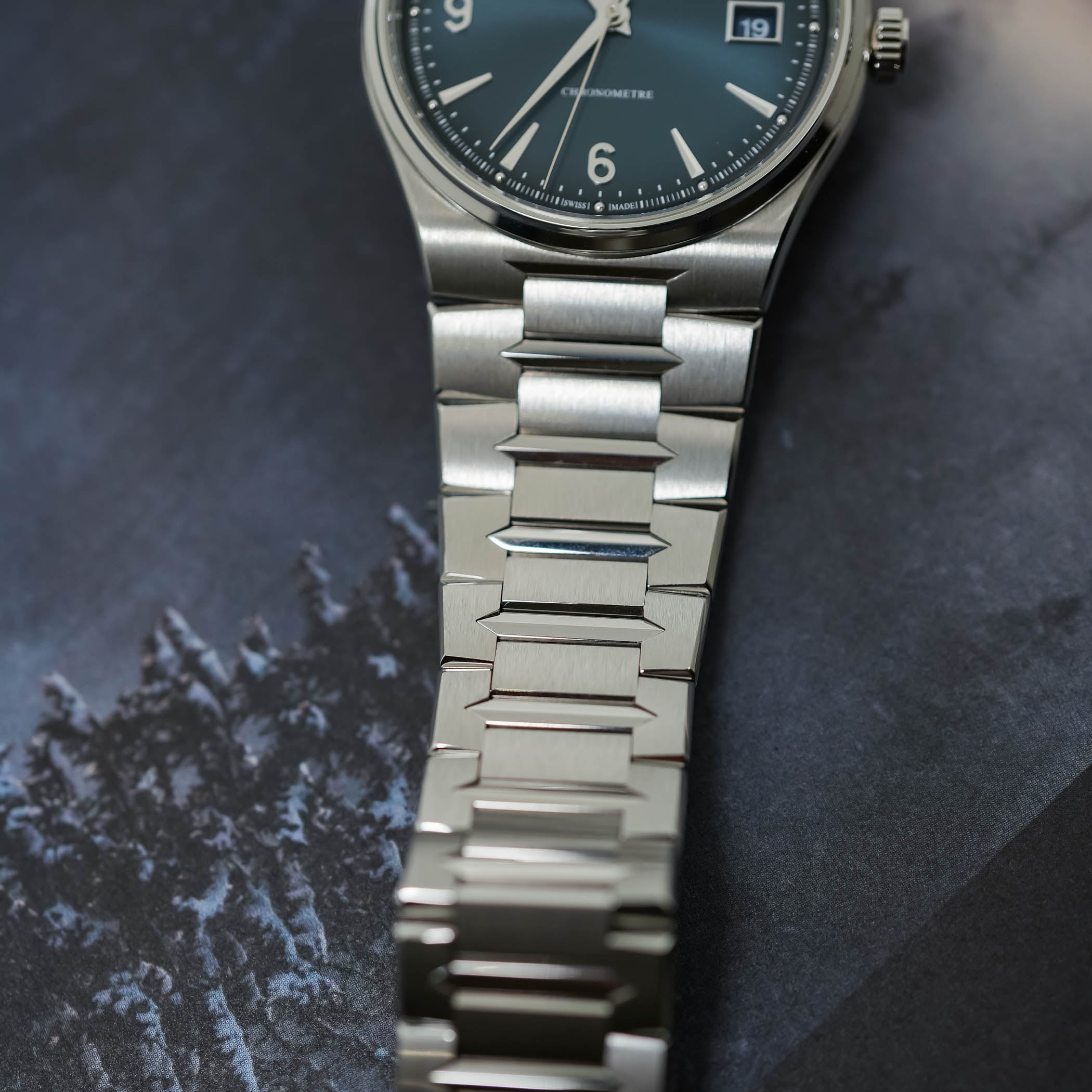
As for the case, the bracelet is thin and comfortable to wear, with pleasant flexibility. It is closed by a triple folding clasp that is said to feature a winter/summer adjustment, allowing for a comfort release during hotter days. I have unfortunately not seen this feature, which was absent from the photographed prototypes. I’ll thus reserve my final verdict for another encounter.
A dial as classic as it can be
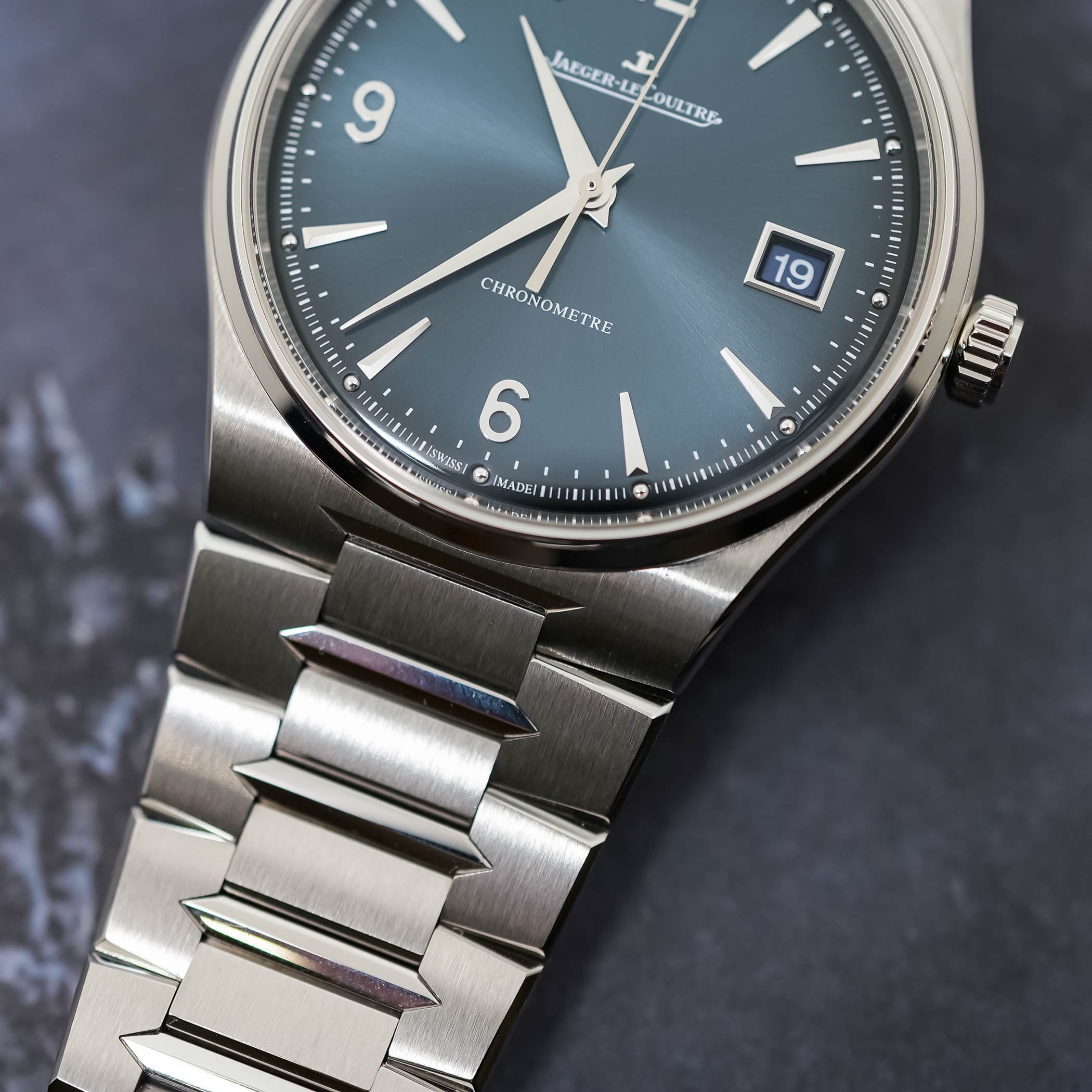
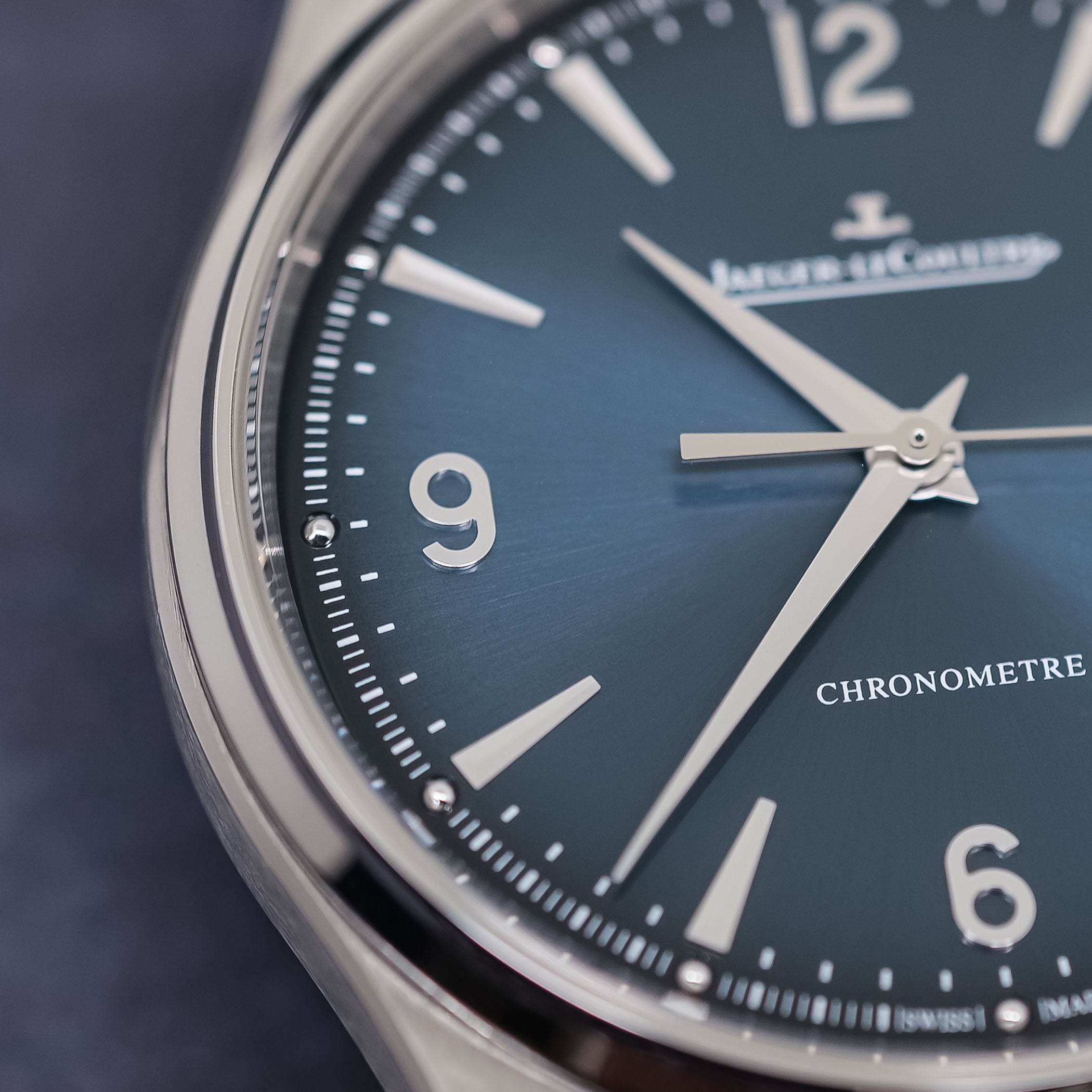
The dial is also partially explaining the lack of initial wow-effect. Here, no dramatic textures, patterns or exotic shapes. The dial of the Master Control Chronomètre Date, and all other members of the MCC family, are again playing on familiar traits. The watch is available in two different editions: stainless steel with a muted grey-blue dial and a very discreet gradient effect, or 18k pink gold with a bronze-coloured dial – the latter being far more striking than the steel model. In both cases, the dials are domed and classically sunray-brushed, paired with polished Dauphine hands, triangular facetted hour markers, and polished Arabic numerals.
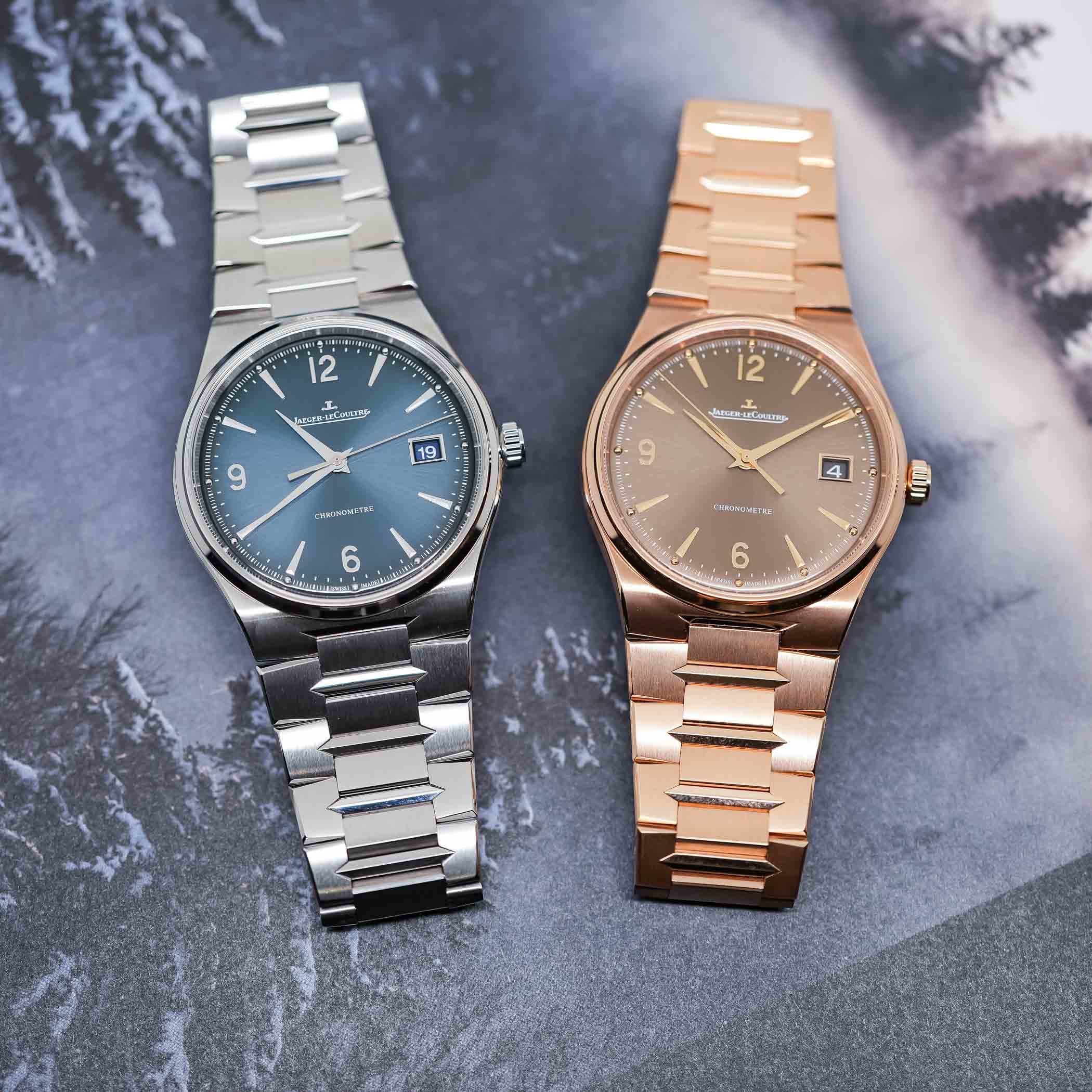
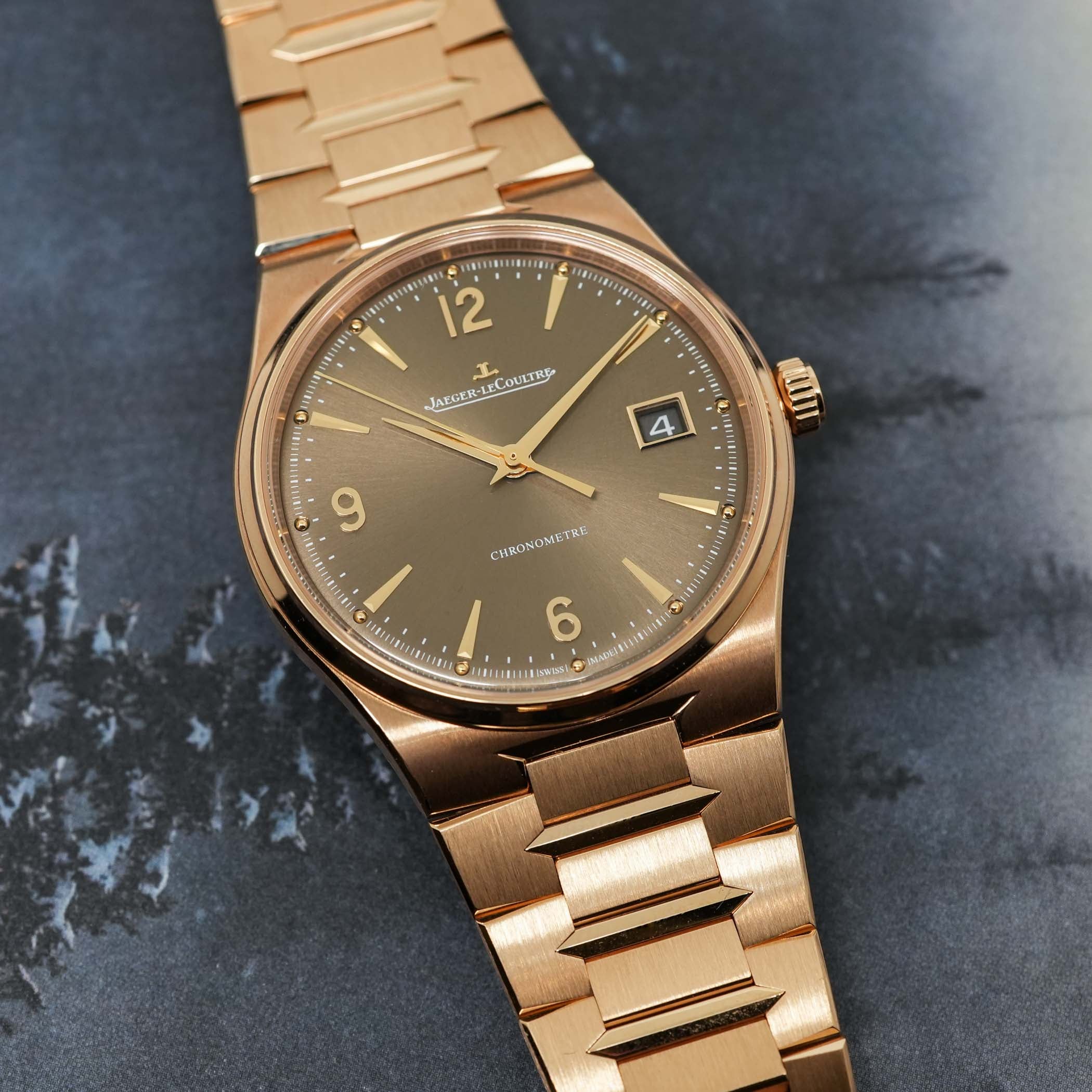
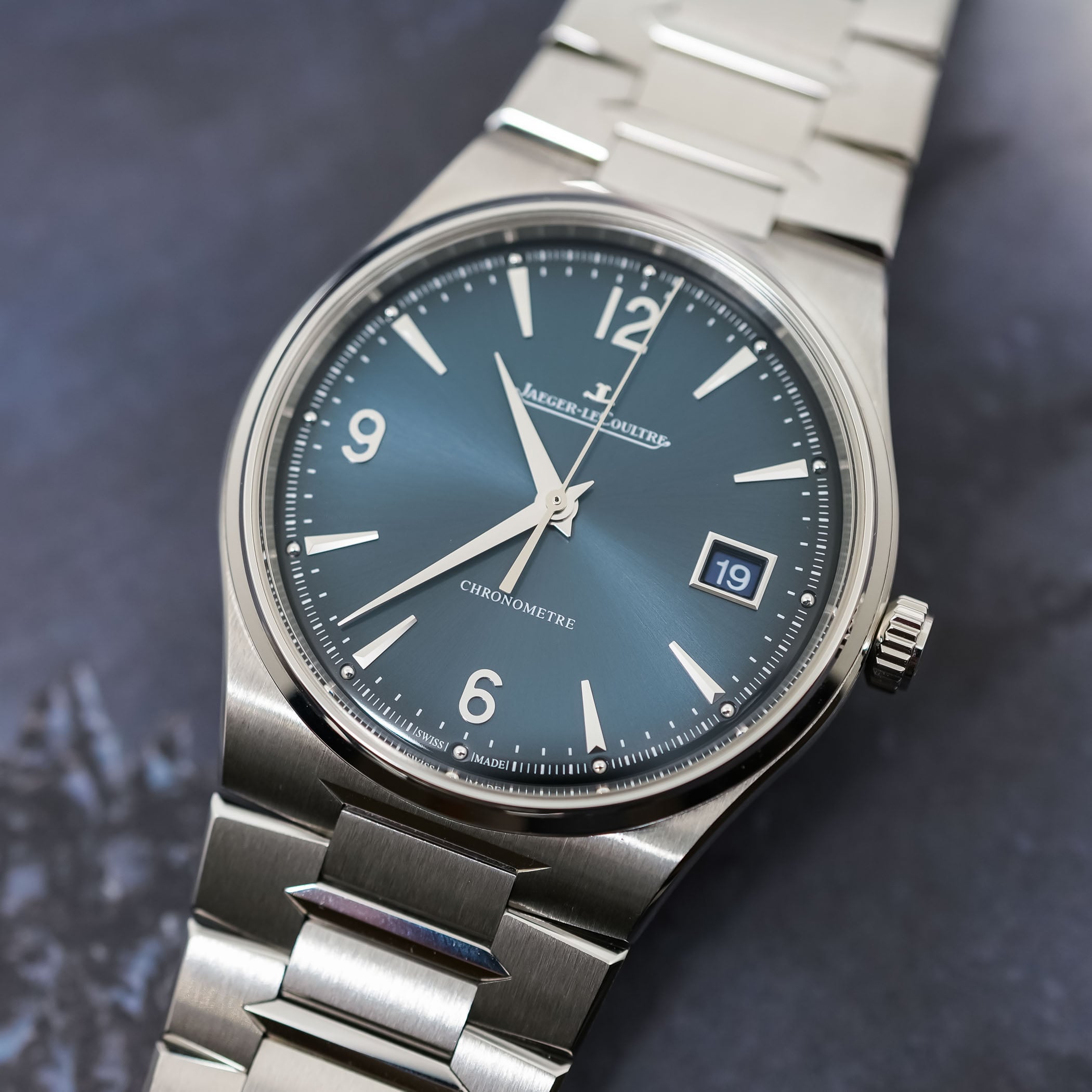
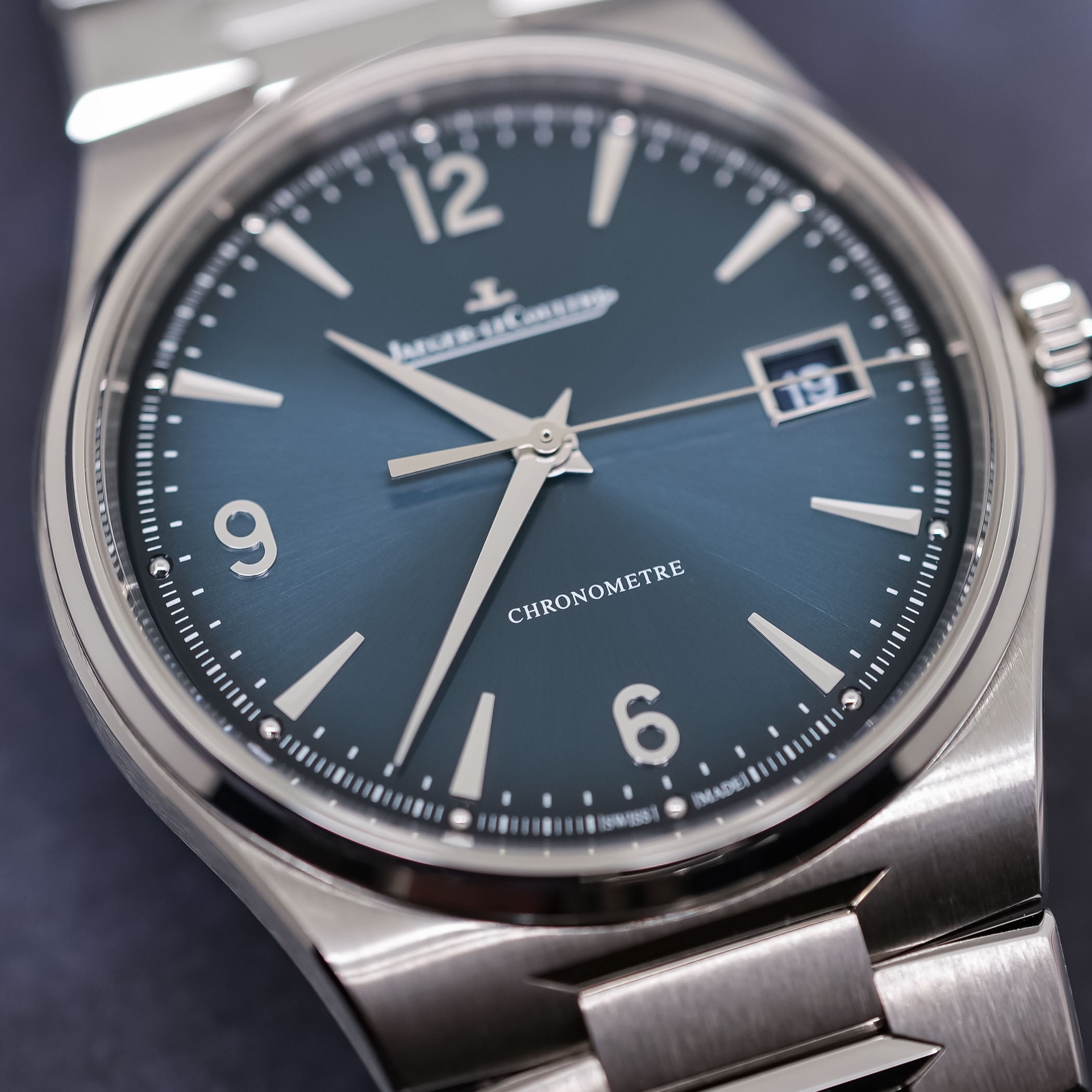
The date has a strong metallic frame, and the minute track features elegant polished pearls, slightly recessed and adding a certain charm to the dial. You’ll notice that all these elements are clearly reminiscent of the strap-worn Master Control models, giving the integrated Master Control Chronomètre its familiar face. A nice detail is the colour-matched date wheel. A not-so-pleasant feature, or lack of feature, is the complete absence of luminescent material. It would have been wise to add at least a thin band of Super-LumiNova on the hands, even though I can understand the sleek, elegant vocation of this collection. Also, I’m not entirely sold on the Serif font used for the chronometer mention. But that’s my personal taste.
Calibre 899 and the HPG Seal
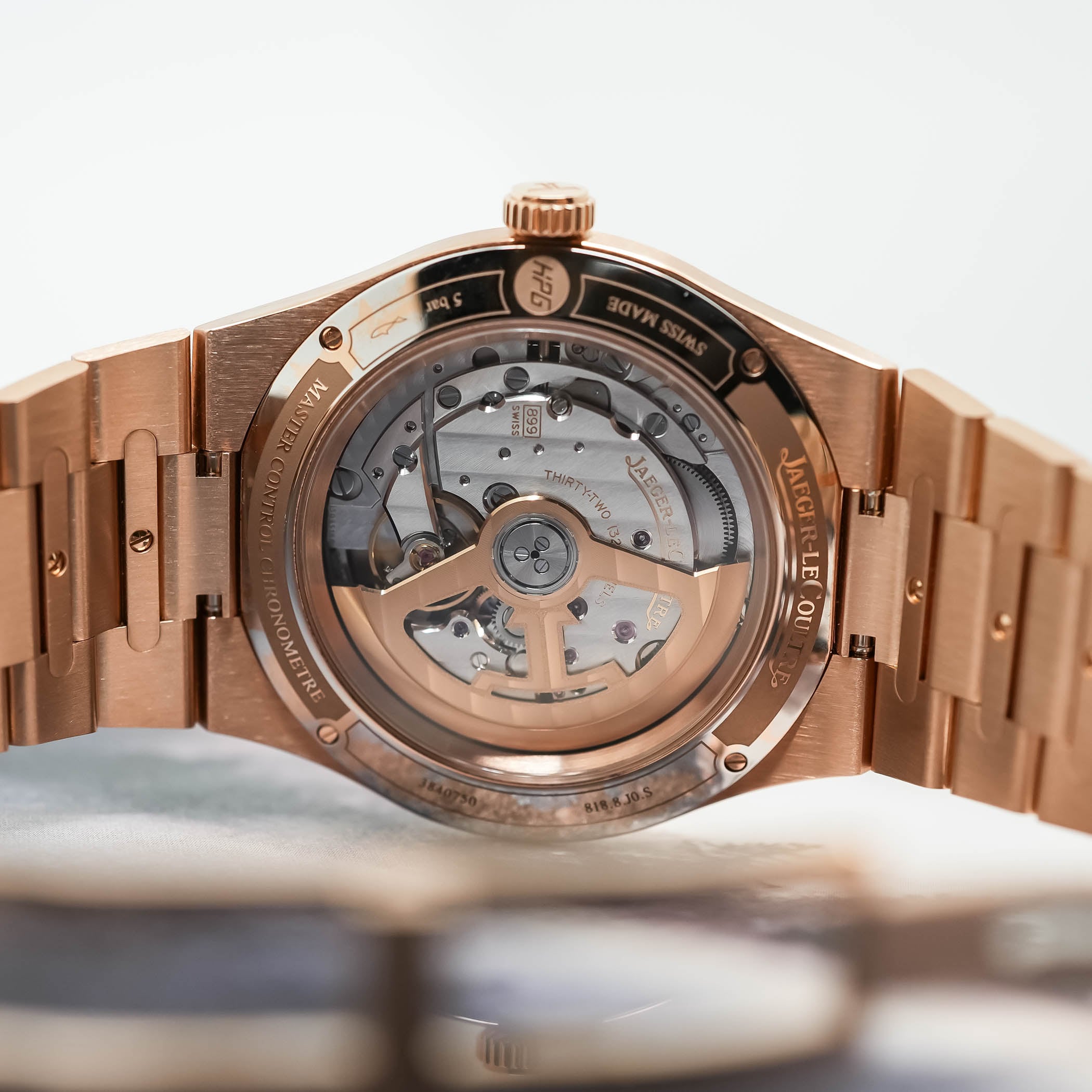
Inside the case of this Master Control Chronomètre Date is a tried-and-tested movement: the automatic Calibre 899, used in the Master Ultra-Thin Date and the Master Control Classic 36mm, for instance. A thin movement running at a 4Hz frequency, it stores a comfortable 70-hour power reserve from its single barrel. It is wound by an openworked 22k gold central rotor and, specific to this collection, features redesigned bridges, including a slimmer balance cock. The movement is decorated with Geneva stripes, perlage and a strong 45-degree polished bevel around the main bridge.
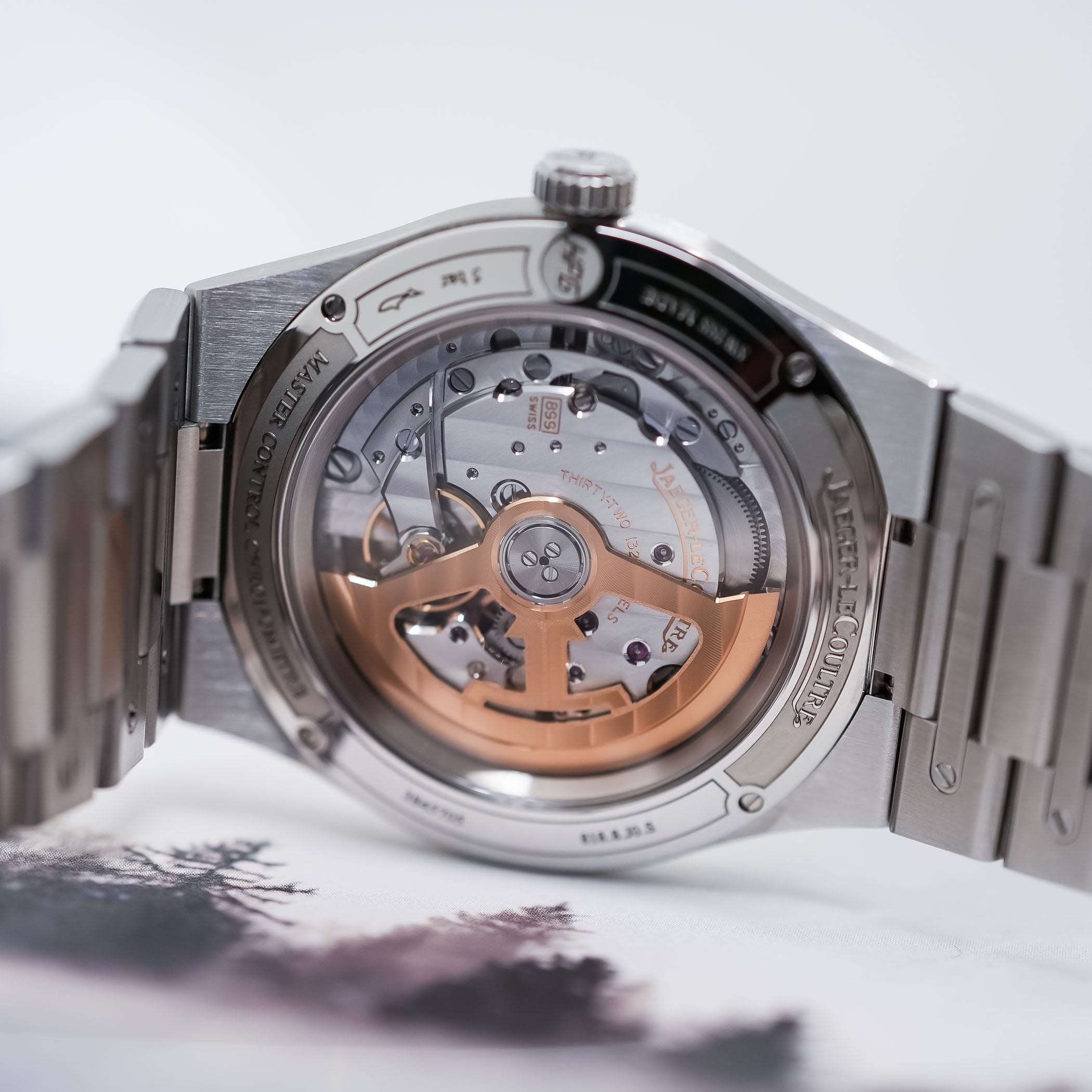
More importantly, as the name of the collection suggests, this movement is chronometer-certified by COSC. It also comes with Jaeger-LeCoultre’s most recent in-house certification, the High Precision Guarantee (HPG), a stricter internal testing procedure than the brand’s classic 1000-Hour Control. It consists of a week of stringent wear simulated in a 3-day period and tests shock resistance (from 25G to 50G), altitude (up to 1,004 metres), temperatures (18°C to 35°C) and multiple positions. Like other internal seals or the Geneva Seal, Jaeger’s HPG also includes rules on finishing, guaranteeing at least eight haute horlogerie-level finishing techniques (Côtes de Genève, beveling, polished screws, circular graining, burnishing, circular smoothing, linear smoothing and sinked rubies).
Price and competition
The Jaeger-LeCoultre Master Control Chronomètre Date in gold is priced at EUR 54,500 or USD 52,500. A rather impressive amount of money, if you ask me. That is why I prefer to look at the steel model, which retails for EUR 14,700 or USD 14,200. This is about 4K more than an equivalent Master Ultra-Thin date or a Master Control Date 40mm, equipped with the same base movement, but none of which features such an intricate steel bracelet or a chronometer certification. On its own, I would not call this watch accessible or exceptional value.
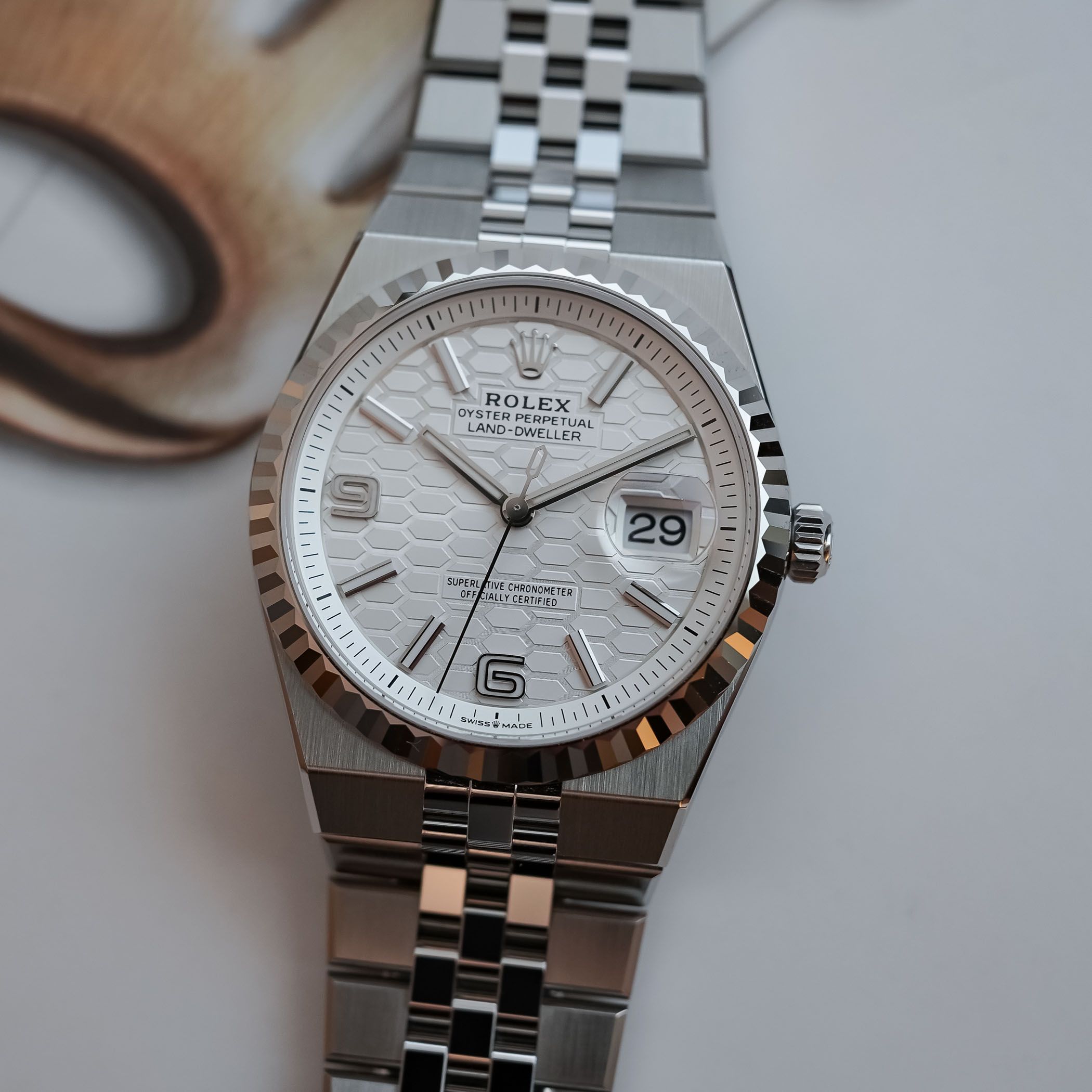
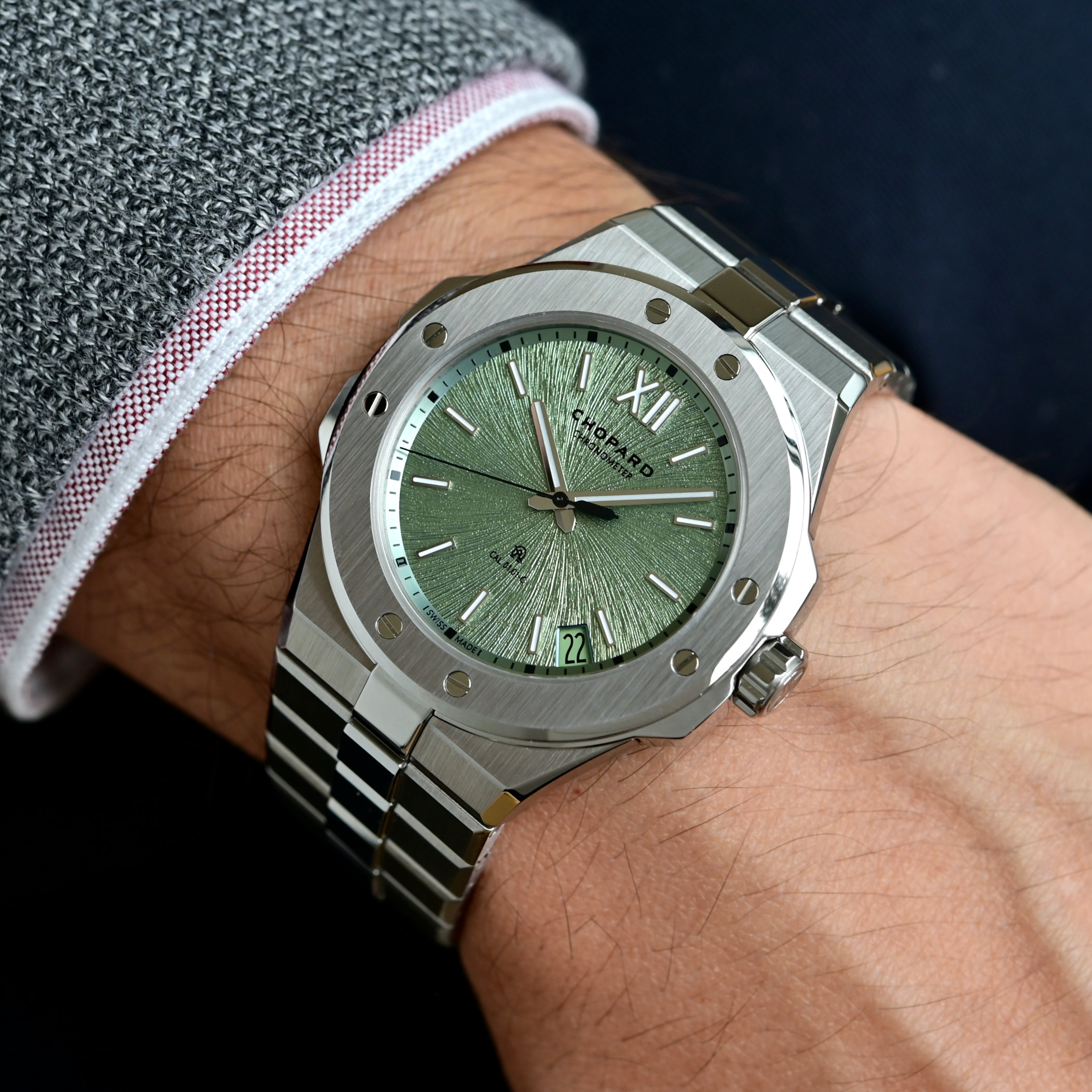
However, I do believe the price (of the steel model) is relatively fair considering, first, the beautiful execution of the case and bracelet, and the fine in-house, chronometer-certified movement inside. Second, by looking at the competition, such as the IWC Ingenieur (EUR 13,300), powered by a ValFleurier-based movement, in a thicker case, and without the same attention to detail; the Chopard Alpine Eagle 41mm (EUR 16,100), a watch with beautiful finishing and an in-house movement, but larger and thicker; the Rolex Land-Dweller 40mm (EUR 15,950), with its great bracelet and impressive in-house movement and innovative escapement. These watches could easily all be on a watch enthusiast’s short list, and looking at them, I’d say that the Jaeger-LeCoultre Master Control Chronomètre Date isn’t badly positioned. If you’re into something more compact, thinner, less impactful at first, but with a more elegant profile on the wrist.

Apart from a few complaints (absence of lume, 50m WR, no quick-change system for the bracelet), I do think that this Jaeger-LeCoultre Master Control Chronomètre Date is, overall, a very complete release and a serious contender in the integrated bracelet category. And one that should last. For more details, please visit www.jaeger-lecoultre.com.