


 Not all images were able to load for printing. Please close the print window and try again.
Indie Watchmaker Mickaël Gaspar Launches the Souscription, His First Wristwatch
The first watch of a 29-year-old French watchmaker, with a fully exposed movement.
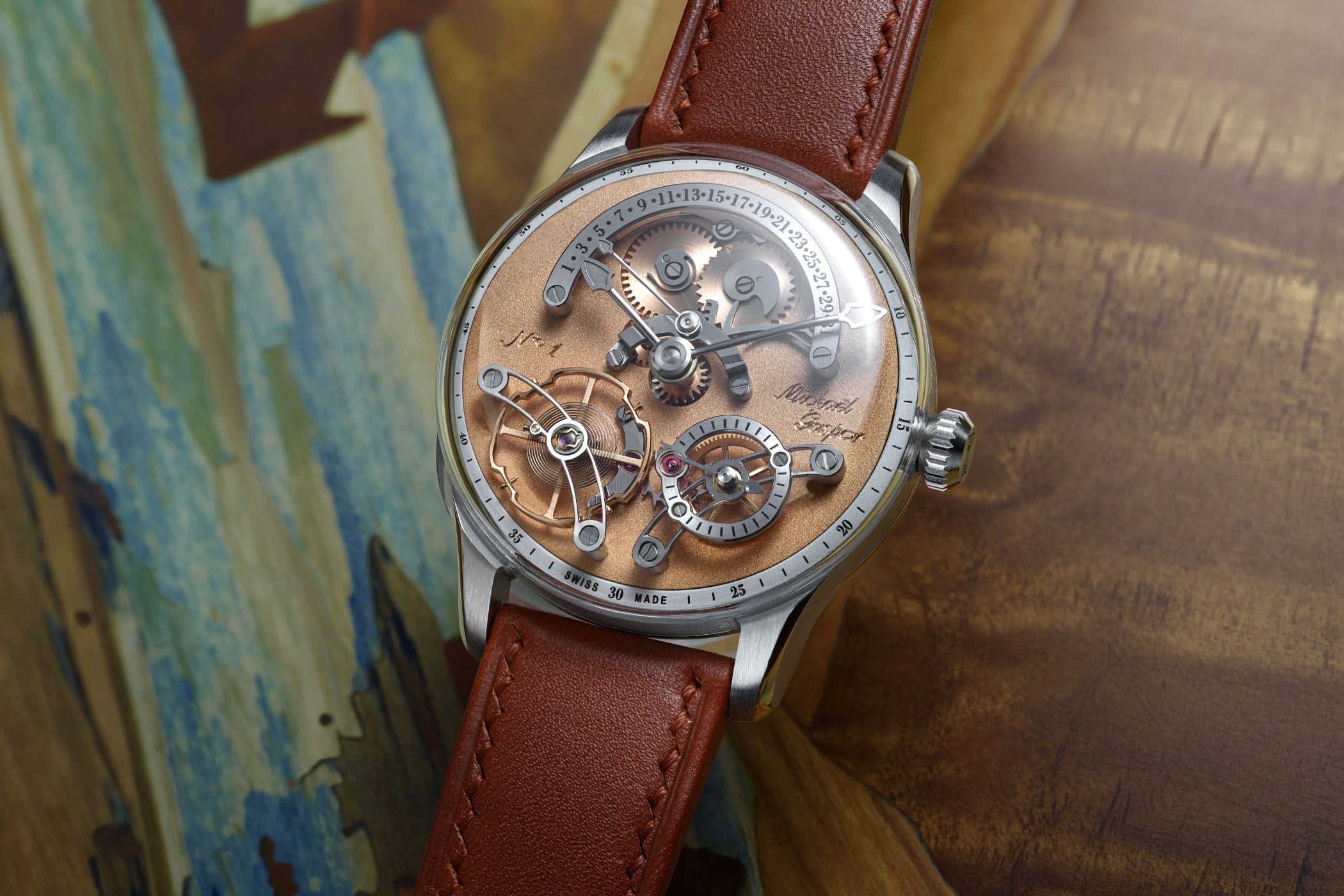
The independent watchmaking scene has never been more active, with dozens of highly skilled watchmakers launching their own brands (think Alexandre Martin, Marcu, Atelier Bernard, Mathieu Cleguer or Hazemann & Monnin, to name just a few). Yet, these projects are often run by a single person or a very compact team, leaving almost no time for everything else involved in watchmaking. This was the idea behind Ateliers Associés, a Swiss incubator for independent watchmaking founded by William Massena (Massena LAB) and Louis Westphalen-Lemaitre (ex-Roth and Genta), which takes care of everything around the watch, from imagery and press to relationships with collectors. The first project is the debut wristwatch of 29-year-old French indie watchmaker Mickaël Gaspar: the Souscription, a retrograde date watch with the movement on the dial side and superb execution.
Watchmaker Mickaël Gaspar and Ateliers Associés
Mickaël Gaspar is the great-grandson of a watchmaker who spent forty years at Lip. He was trained at Lycée Edgar Faure in Morteau, a renowned training centre where Sylvain Pinaud, Théo Auffret, Rémy Cools, John-Mikaël Flaux, Cyril Brivet-Naudot, Thomas Aubert and Alexis Ramel-Sartori also studied. There, he won the silver medal as the Meilleurs Apprentis de France (one of the best apprentices of France). He then joined Breitling as one of three apprentices chosen from fifty, spent four years at Sellita, then joined MH Horlogerie in Les Brenets, where he became partner and head of workshop, developing and repairing grand complications for other houses: flying tourbillons, fusée-and-chain, minute repeaters, natural escapements. He built the Souscription between the calibres he made for others and founded his own atelier in 2026.
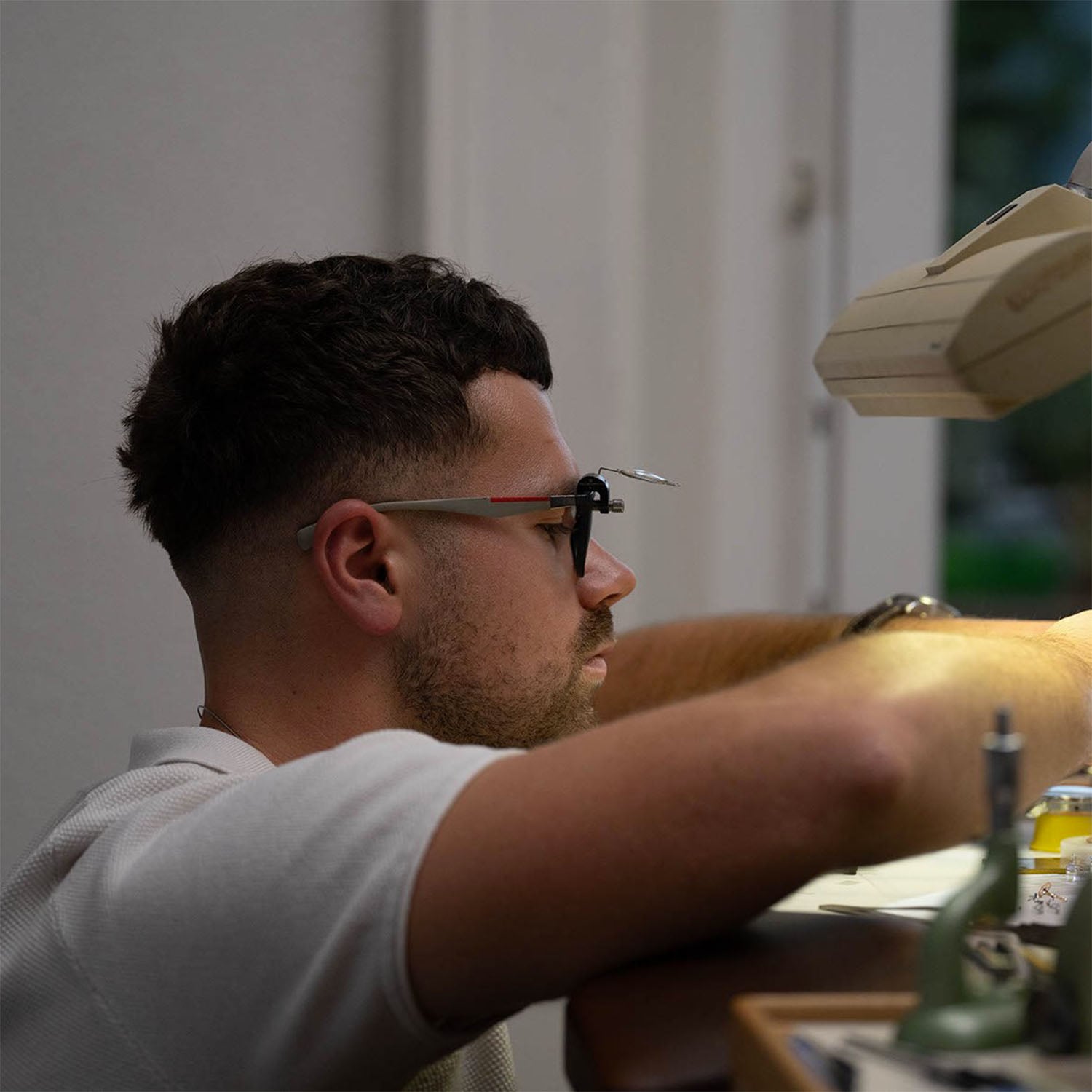
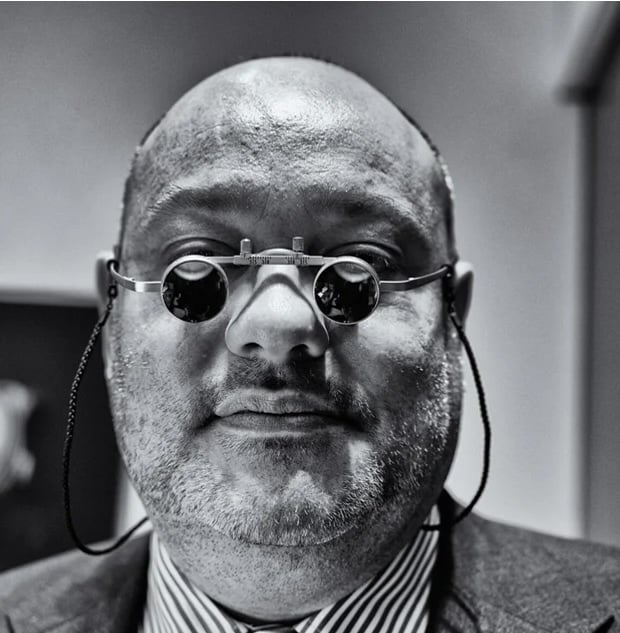
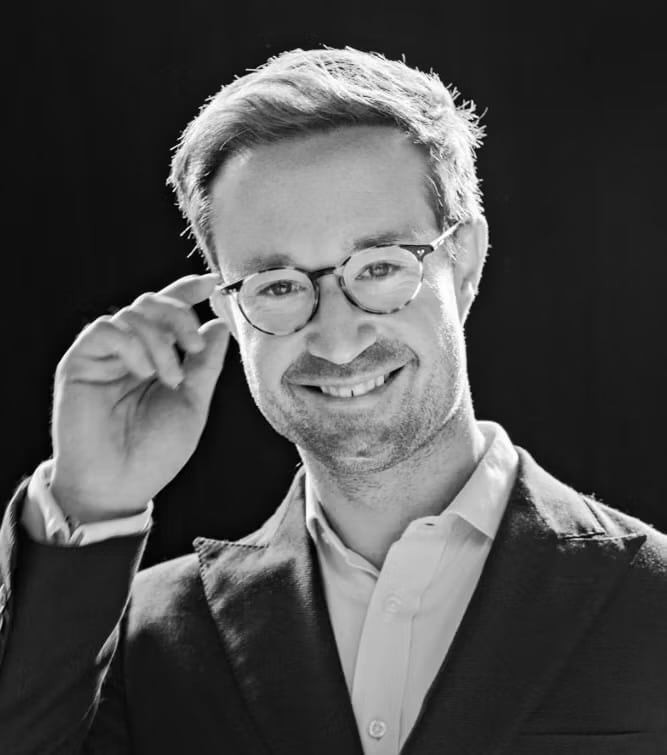
In order to focus on creating his movements and watches, Mickaël Gaspar is backed by an incubator, Ateliers Associés, founded by two industry veterans: William Massena, who is now running creative studio Massena LAB, and Louis Westphalen-Lemaitre, an ex-Hodinkee contributor who later joined Breitling, before participating in the relaunch of high-end brands Daniel Roth and Gerald Genta, under La Fabrique du Temps Louis Vuitton. The incubator plans to give four new independent watchmakers “the money and the team to turn a first watch into a house that lasts”, since a watchmaker working alone can hardly carry a team with experience at every step between a drawing and a delivered watch. “Ateliers Associés builds that team once and makes it available to every watchmaker it backs: technical development and prototyping, industrialisation and quality, sourcing and suppliers, production and after-sales, brand, imagery and press, pricing, allocation and the collector relationship worldwide. The watchmaker’s hours go to the bench, and to the watches only he can make.”
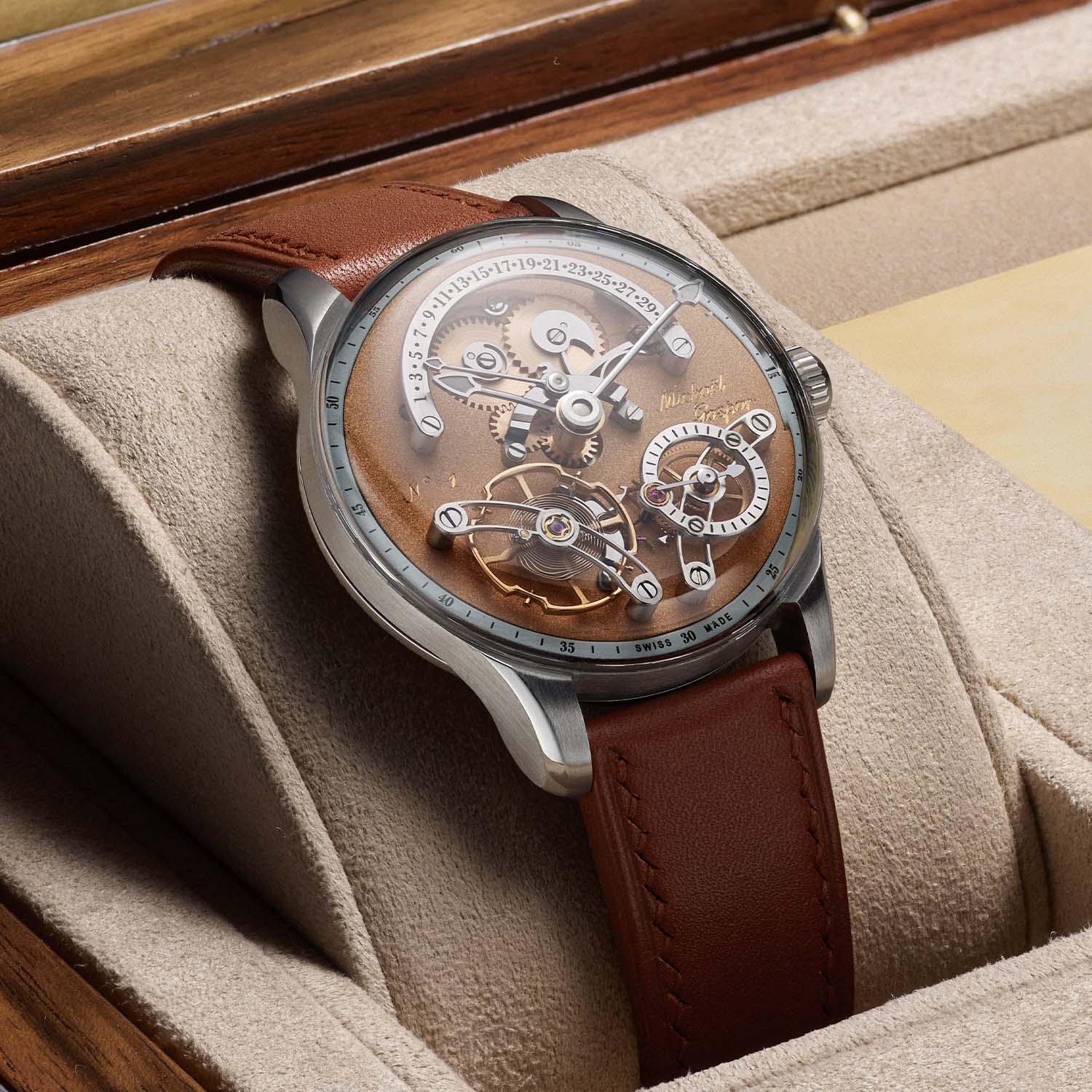
Mickaël Gaspar’s Souscription watch
Like many other independent watchmakers before him (think Hazemann & Monnin or Remy Cools), the Souscription Watch began as Mickaël Gaspar’s school watch at the Morteau watchmaking school, made between the ages of 17 and 19: a retrograde date, movement visible, and a style that is, without a doubt, influenced by other projects that came out of the Lycée Edgar Faure. Back then, he didn’t plan on putting his name on the dial, or even launching this watch. Ten years later, the same idea has been rebuilt from the ground up, developed, signed under his name and released as the Souscription watch.
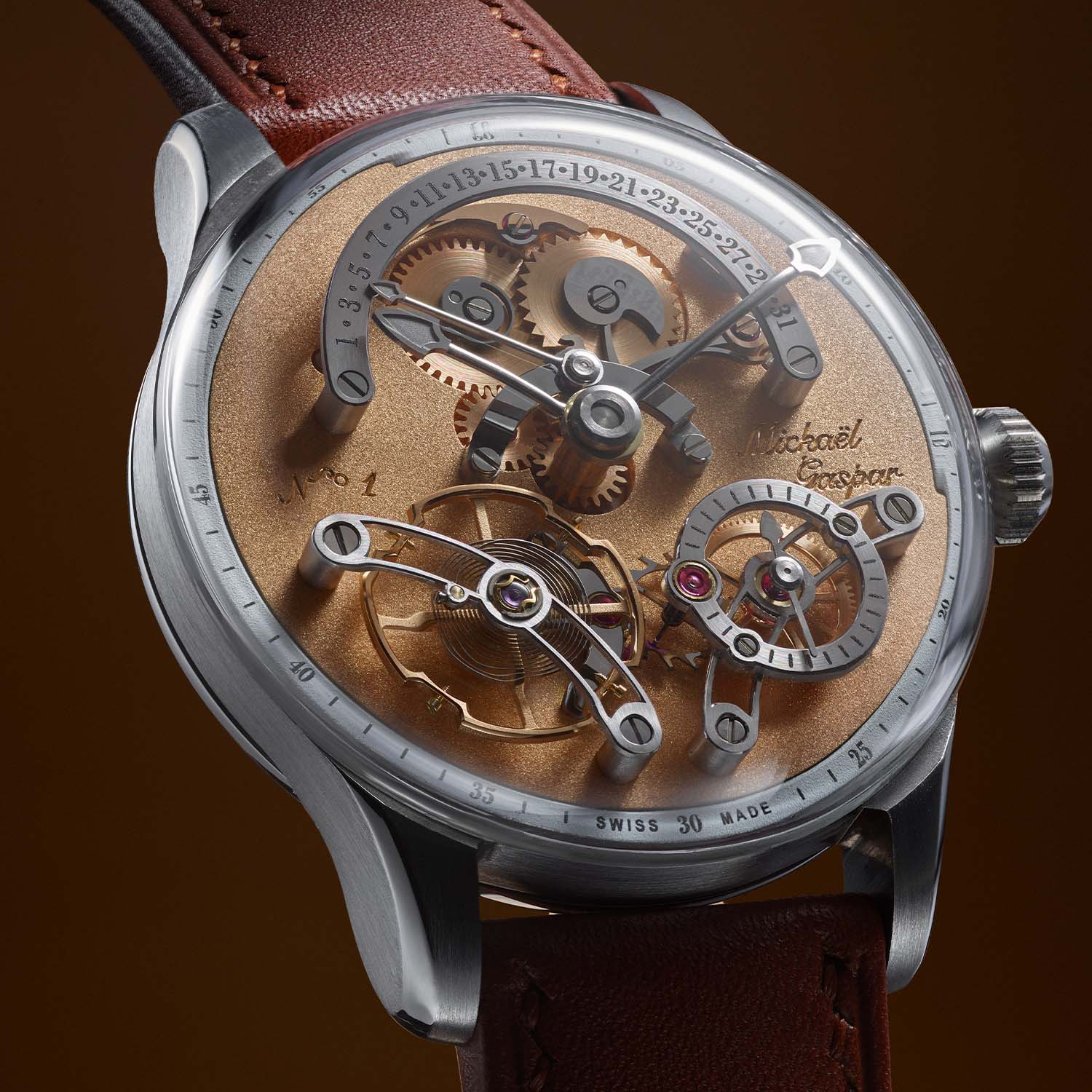
Made of stainless steel, the case measures 39.9mm in diameter and is topped by a highly domed sapphire crystal, giving uncluttered views of the dial-side movement from all sides. Total thickness is 13mm, with the case showing a nice mirror-polished bevel running around the case band. But with this new Mickaël Gaspar Souscription watch, like many of these indie projects, the case isn’t the main talking point.
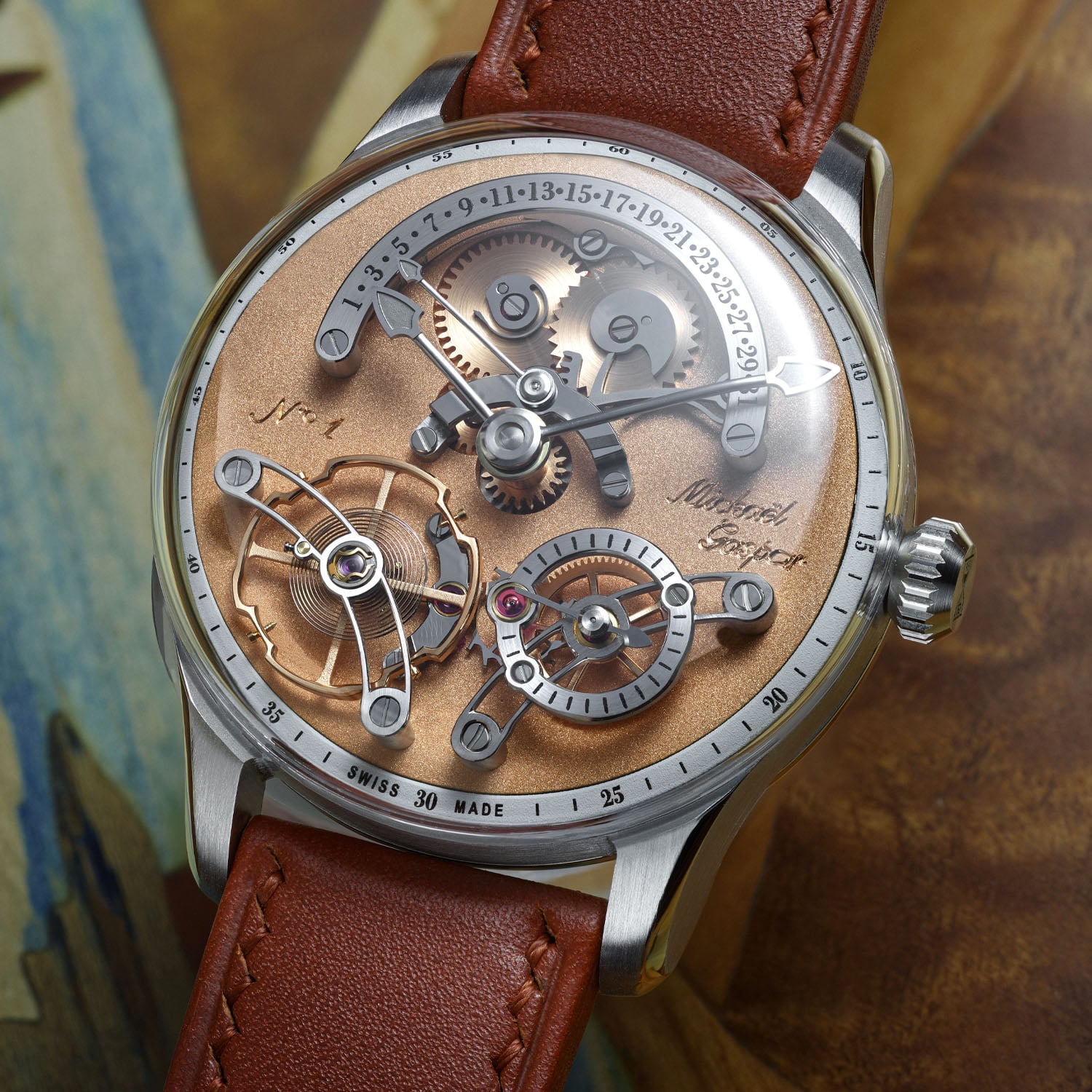
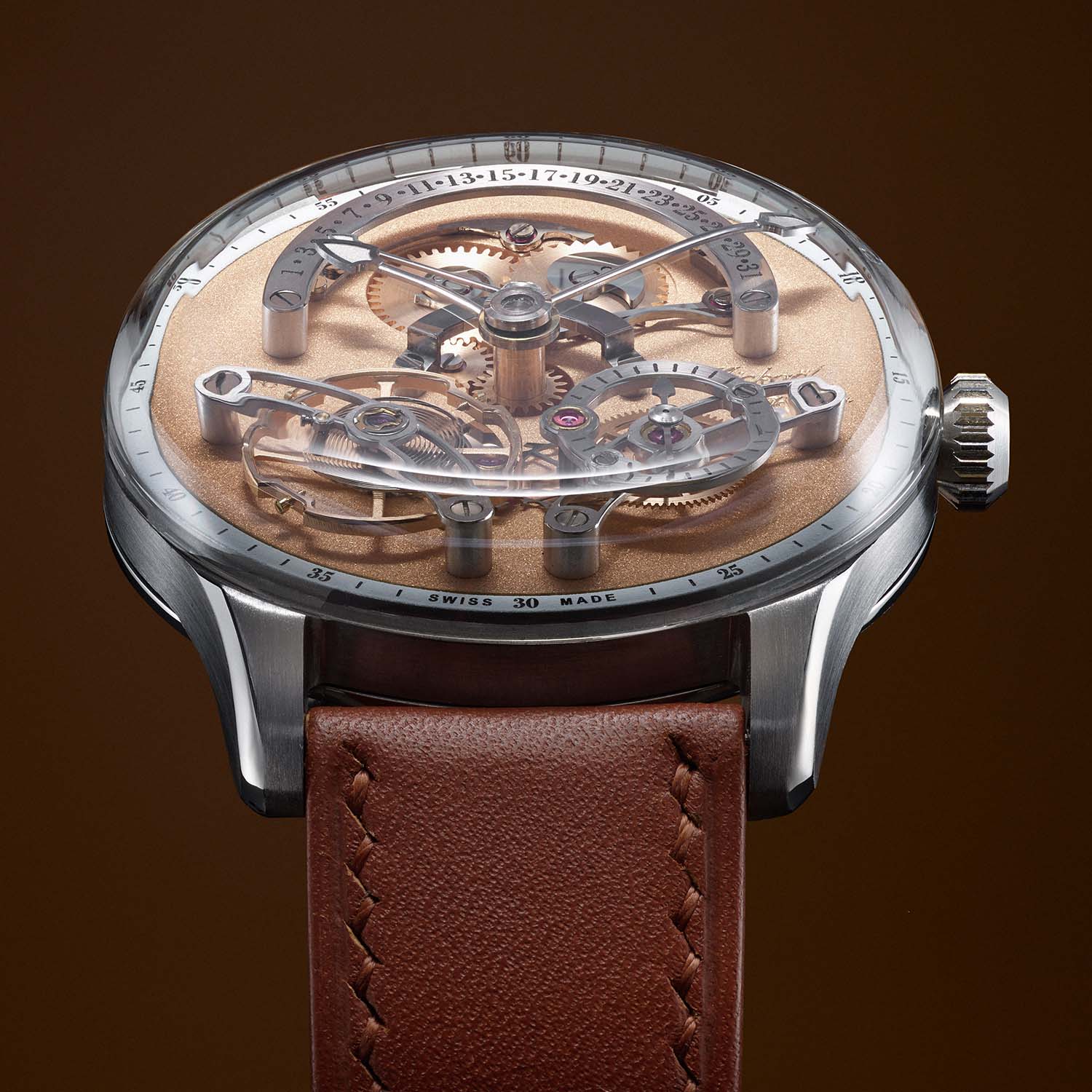
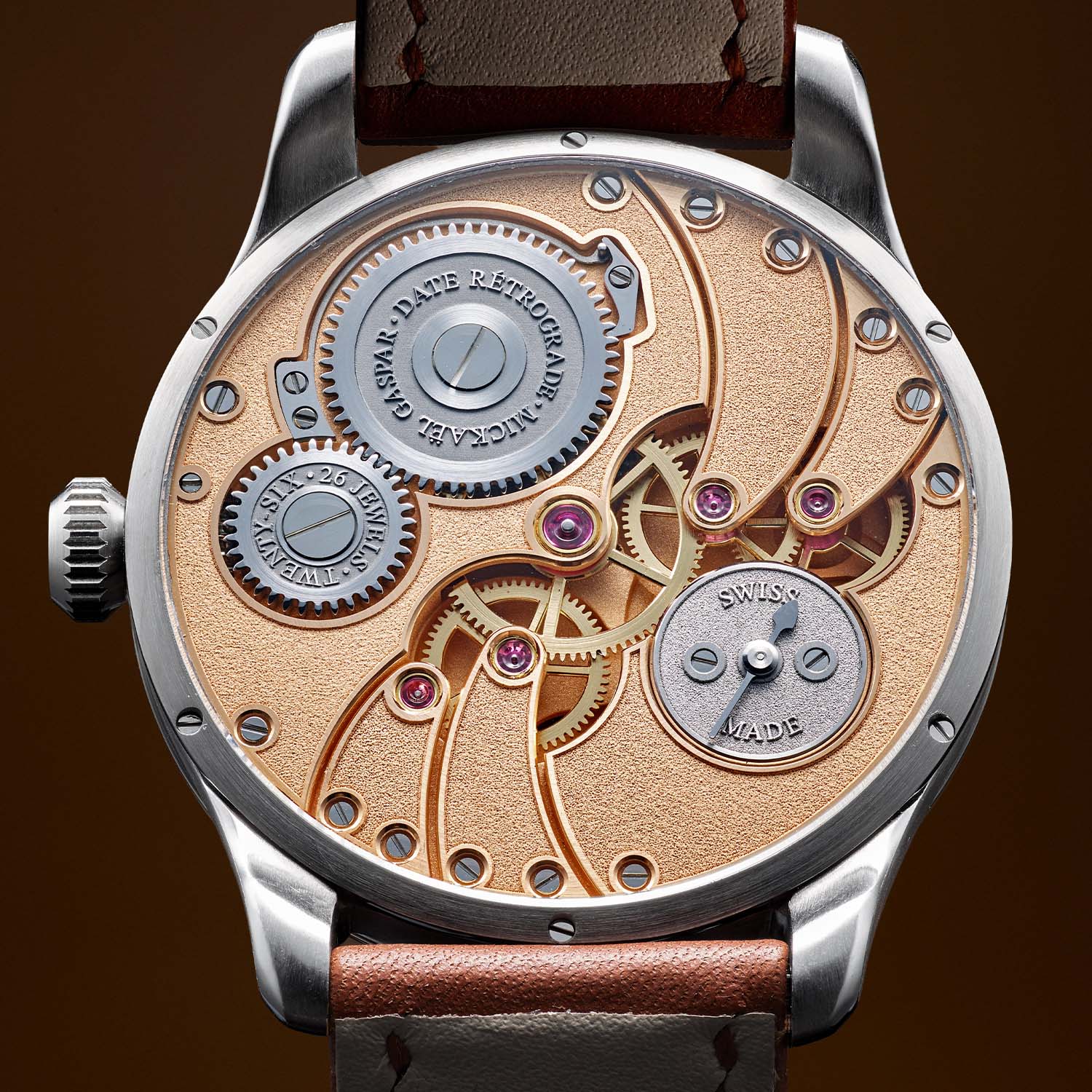
Underneath the sapphire crystal sits an inverted movement, with a deconstructed structure and a strong 3-dimensional effect. Serving as a backdrop for all the exposed technical parts of the movement, the mainplate is hand-sandblasted and plated in rose gold – a classic of modern independent watchmaking, nicely contrasting with all the steel and rhodium-plated elements. While the hands are traditionally positioned in the centre, they run over a series of technical elements and indications: the retrograde date sector at 12 o’clock, the balance under its bridge between seven and eight o’clock, and the small seconds at 4 o’clock, with a bridge that mirrors the balance’s. Even though it is not obvious at first sight, the numerals of the date, the seconds and the chapter ring are filled with Super-LumiNova, as are the hands, which are black-polished and curved by hand.
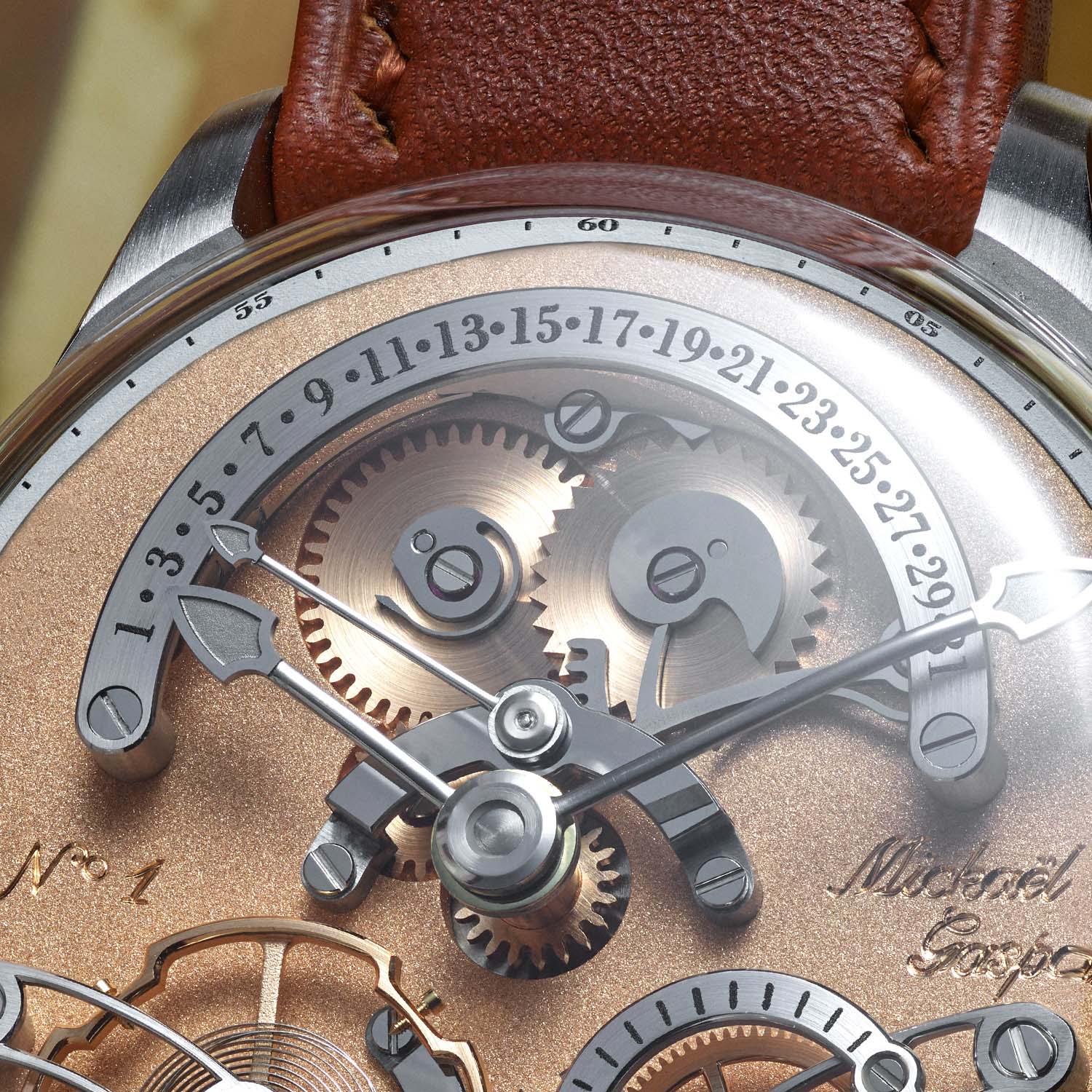
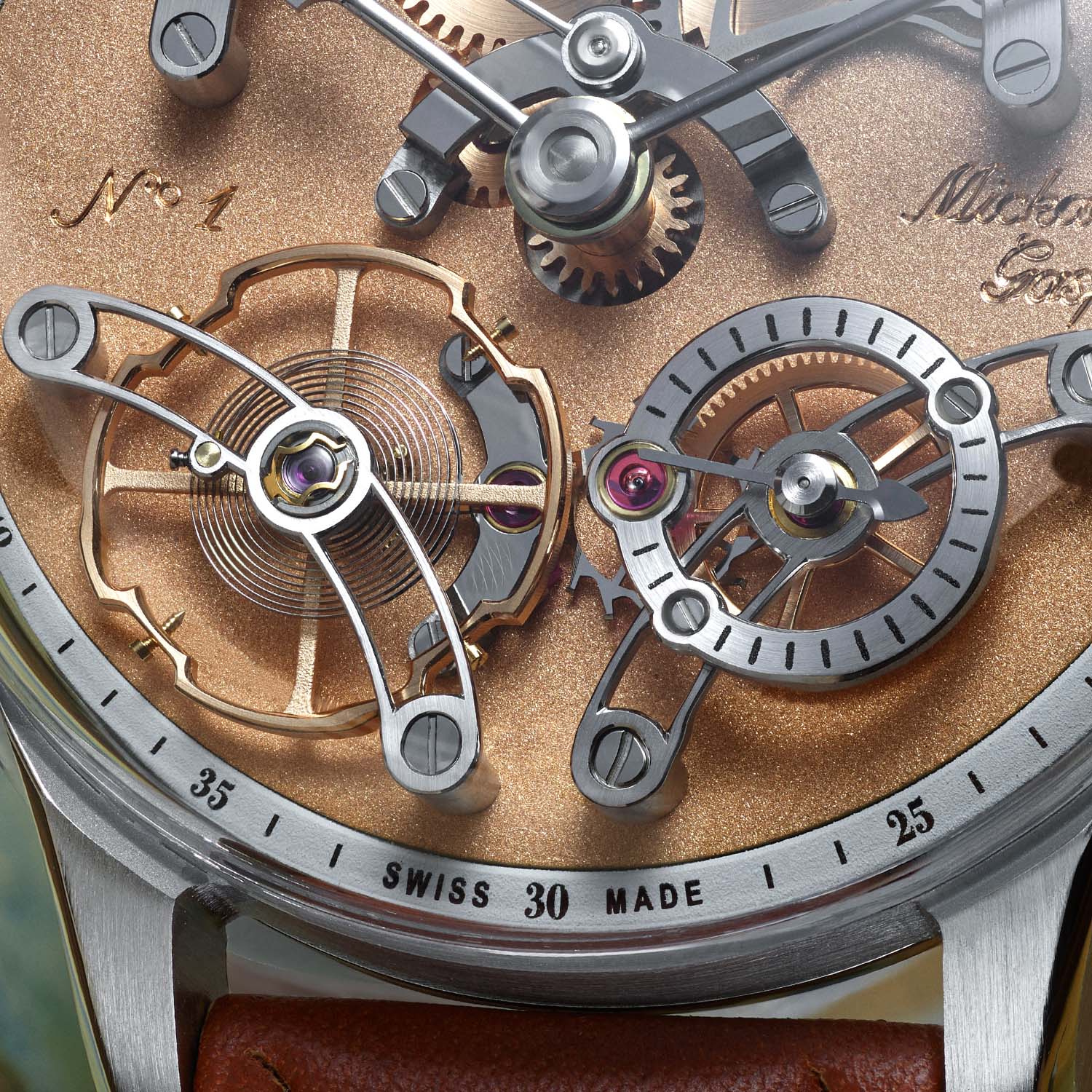
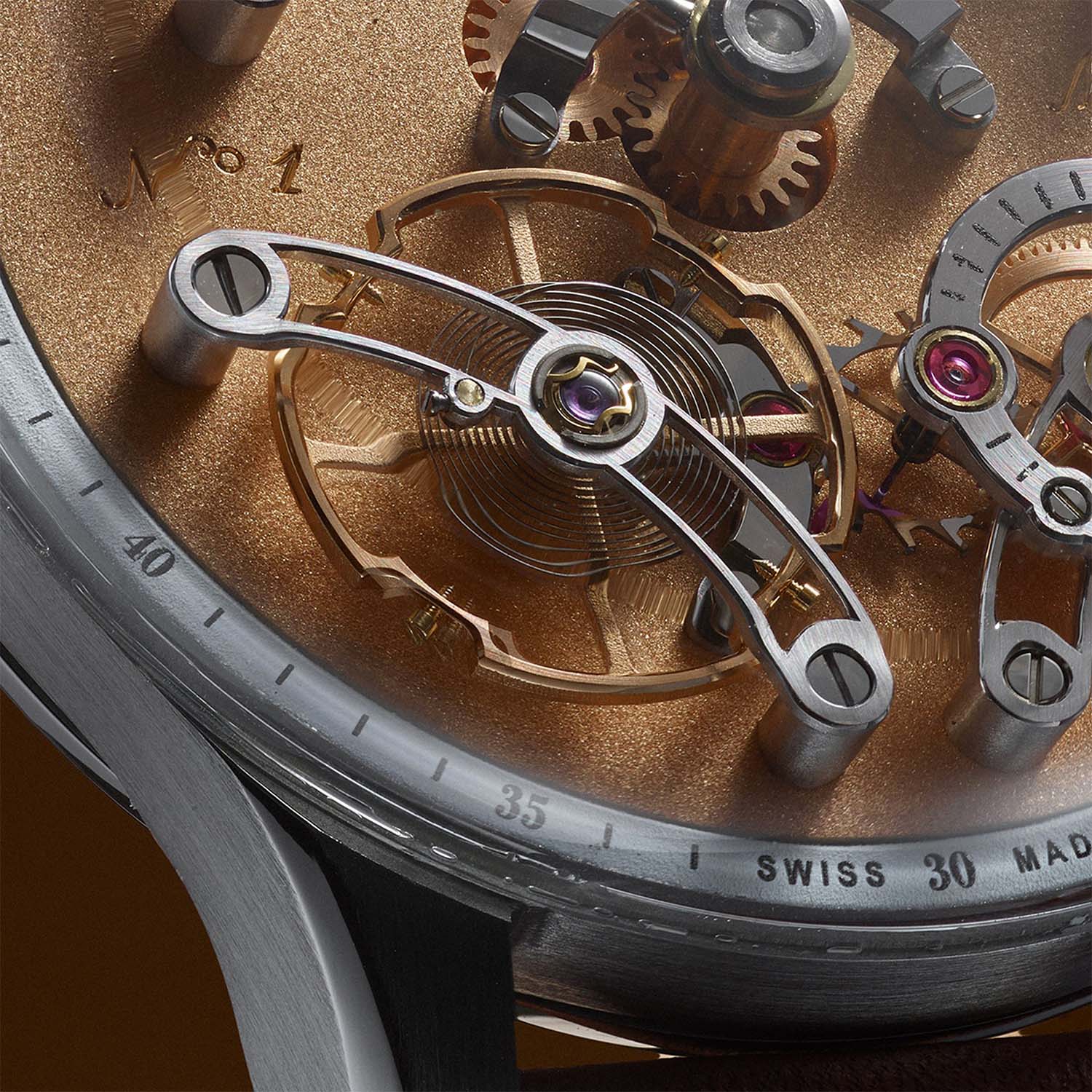
For the movement, Mickaël Gaspar starts with an undisclosed, “modified Swiss base plate and gear train” to power the retrograde date mechanism he designed as a student. Despite using an existing base, Gaspar reworks most elements: the wheel staffs and pinions are turned on a traditional lathe; certain wheels are cut in Les Brenets; the balance wheel is made and balanced in the atelier; and the Breguet overcoil is formed and pinned by hand. The exposed movement reveals the entire retrograde mechanism, leaving the back void of most usual elements.
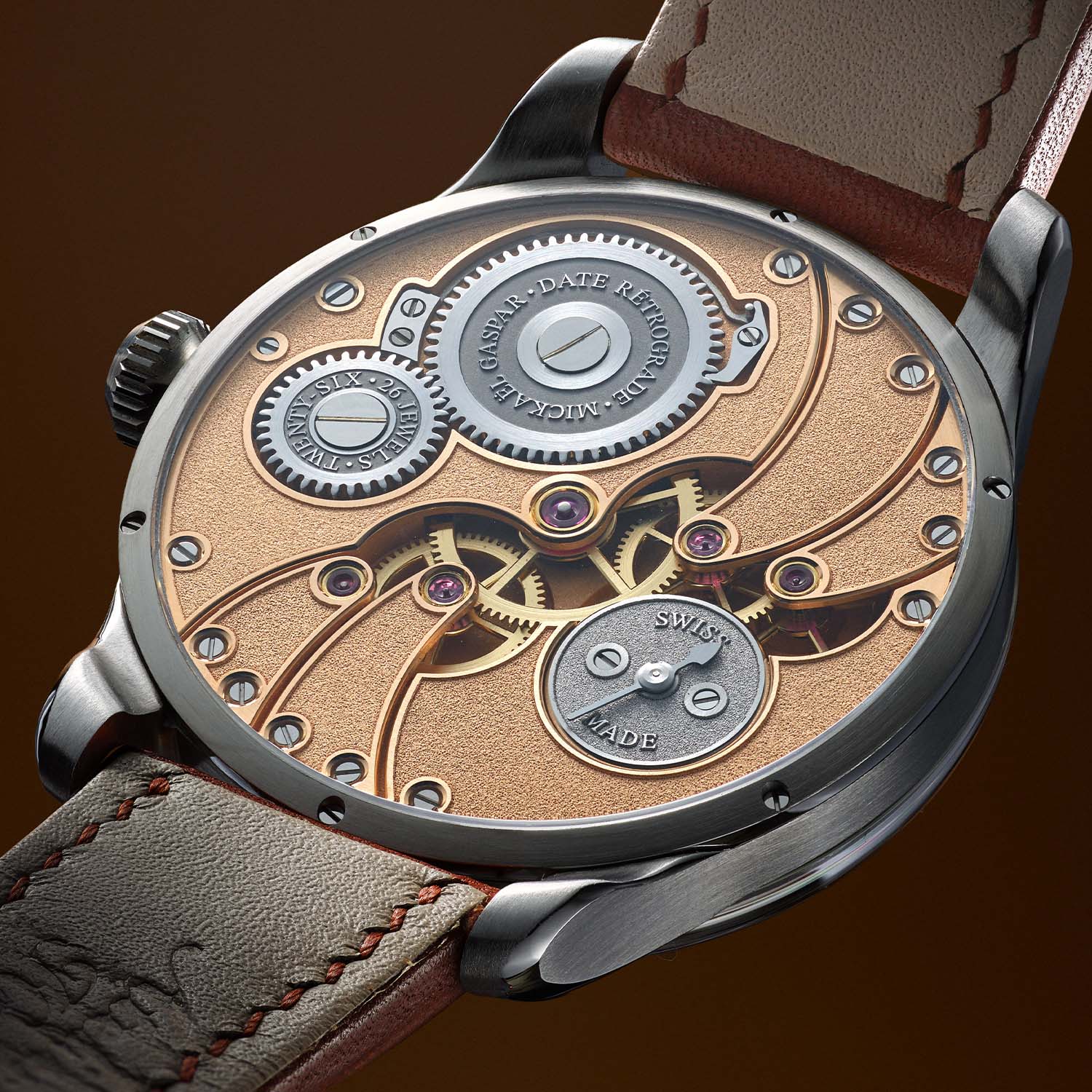
That said, Gaspar cleverly designed the bridges to animate the view from the caseback. These curved bridges, again gold-coated, are hand-finished with sandblasted surfaces, bevelled with mirror-polished edges, and the same attention to detail found on the dial side. It is said that each watch takes some 250 hours of machining and hand-finishing. The movement runs at 18,000 vibrations per hour and delivers 46 hours of power reserve.
Availability & Price
Mickaël Gaspar’s Souscription watch will be offered in 20 pieces, numbered 1 to 20 on the dial, and delivered in a wooden box with a marquetry scene of the Doubs Valley, where it was made. The watch is priced at CHF 69,000 excl. taxes (a price range that seems to be becoming the norm of the indie scene). For more details, please visit mickaelgaspar.com.

8 responses
This is fantastic, and for the price the level of craftsmanship and presentation seems a tremendous value. Well done!
After seeing what the Chinese are doing I am no longer impressed with the craftsmanship, complications etc.
Nearly 2800 EUR per hour, and this is a freshman watchmaker. Thanks but no…
Very nice looking watch. Although I think I’d like blue’d hands, which would make them pop a bit more. But this is me.. I like contrast.
Wonder how much is outsourced, and how much of this design is truly ‘innovative’ that moves horology forward? Have full respect for everyone’s efforts in producing this, bravo to all…. but please, anyone reading this, what is innovative here? Perhaps I missed the revolutionary new technique, new escapement, or some other truly unique…..
Lots of love, but perhaps I’m missing some detail that moves horology forward in some meaning way??? Looks very nice, a bit short on power reserve, but really that doesn’t matter that much.
Are the 5-axis machines ‘winning’?
Perhaps wait for him to mature, and truly produce something very unique, with innovation and reflection. Very much respect to him and his suppliers, you did create something and dare to go on your own. That’s a great starting point.
We’ll be looking to see how he progresses over the decades ahead. Congrats on coming forward and daring to dream.
PS: My apologies if my post seems… tho at what point do these oversaturate the market? Asia is waking up, too, in design and lower costs. We live in interesting times for horology and precision machines / additive manufacturing.
“He was trained at Lycée Edgar Faure in Morteau, a renowned training centre where Sylvain Pinaud, Théo Auffret, Rémy Cools, John-Mikaël Flaux, Cyril Brivet-Naudot, Thomas Aubert and Alexis Ramel-Sartori also studied.” Perhaps we should not forget to mention the watchmaking teacher at this prestigious school. He is, after all, one of the people who helps shape all these talents. He also creates some truly impressive watches himself.
Moreover, he deserves even more appreciation because he continues to teach and considers it important to share his passion and educate the next generation.
He could just as easily dedicate 100% of his time to making watches himself and stop teaching at this prestigious school. But he has the decency and respect to choose both.
After his teaching hours, he creates his own impressive timepieces, while continuing to shape an entire generation of watchmakers.
So, please do not forget Florent Lecomte !!!
@Greg …. apparently maths wasn’t your strongest subject at school, I assume?