


 Not all images were able to load for printing. Please close the print window and try again.
 Dominique Renaud Launches New Brand and Presents the One-Hertz-Beating Pulse60 Watch
New project Haute Horlogerie Dominique Renaud (HHDR) launches, and the first watch is a slow runner…
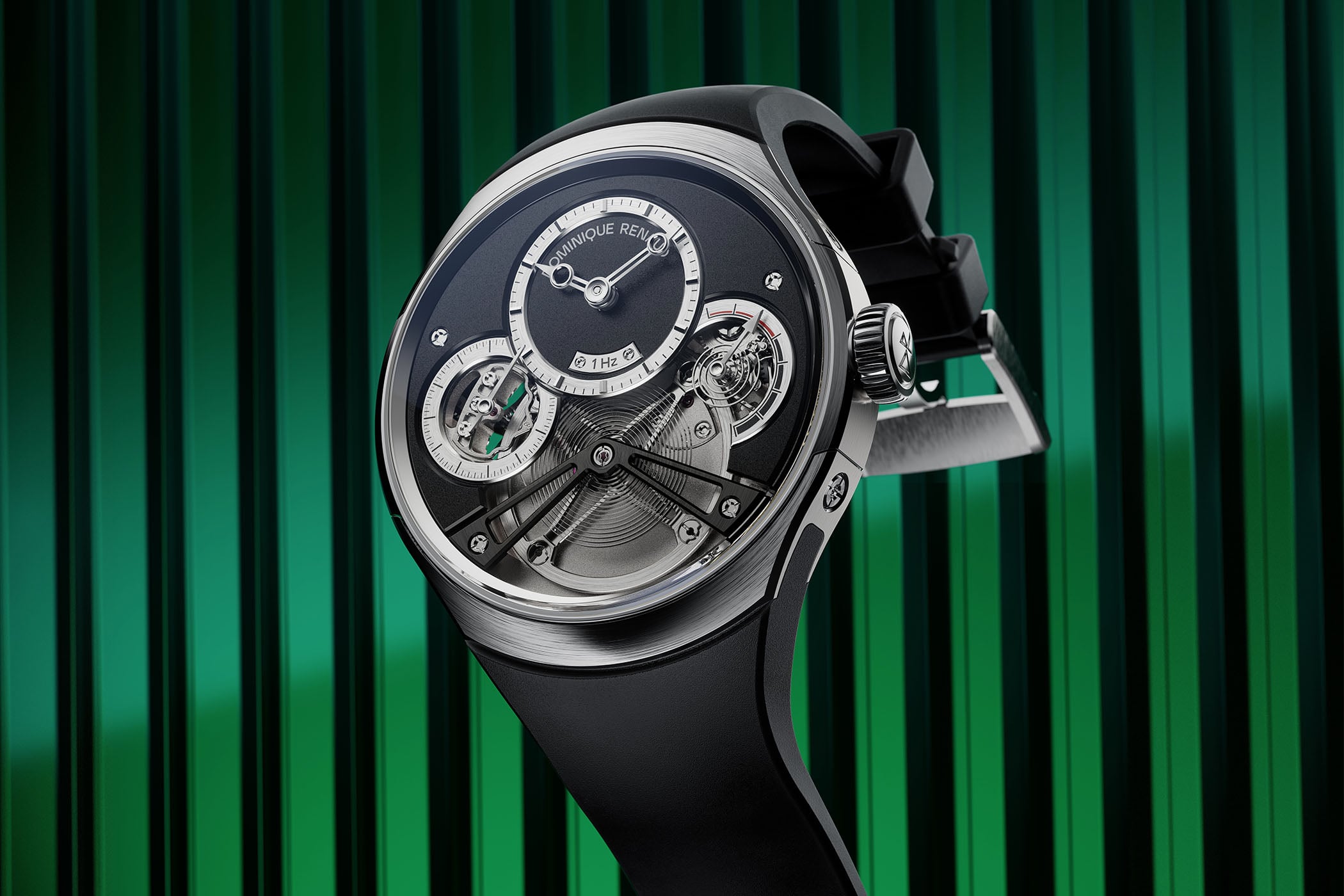
If high-frequency is often marketed as the pinnacle of precision in modern watchmaking, things are actually more nuanced and more about managing the inevitable trade-offs. Every gain in one area usually comes with a drawback elsewhere. Although he has already worked on high-frequency, low amplitude oscillators, industry veteran Dominique Renaud is now taking the opposite approach with a new watch featuring an oversized balance oscillating dial-side beating at one hertz. Let’s get straight to the point: here is a look at the new Dominique Renaud Pulse60.

French watchmaker Dominique Renaud is a veteran and a figure in modern watchmaking. Born in Besançon in 1959, he began his career in the complications workshops of Audemars Piguet in Le Brassus, where he met Italian watchmaker Giulio Papi. In 1986, the two men decided to establish their own workshop and founded Renaud & Papi, a company specialising in the development of complications. Renaud & Papi established itself as one of the few independent movement manufacturers in haute horlogerie at the time, designing and developing complex mechanisms for the most prestigious brands. Its teams have contributed to the creation of movements for brands such as Audemars Piguet, Richard Mille, IWC, Cartier or A. Lange & Söhne to name a few… In 1992, Audemars Piguet became the majority shareholder of the company, which then adopted the name Audemars Piguet Renaud & Papi (APRP), while retaining its role as a complications laboratory. Renaud & Papi was also a true incubator for watchmaking talents. Among those who worked there or collaborated with the company were Robert Greubel, Stephen Forsey, Andreas Strehler, Bart and Tim Grönefeld, Peter Speake, Christophe Claret, Anthony de Haas, Carole Forestier and many others…
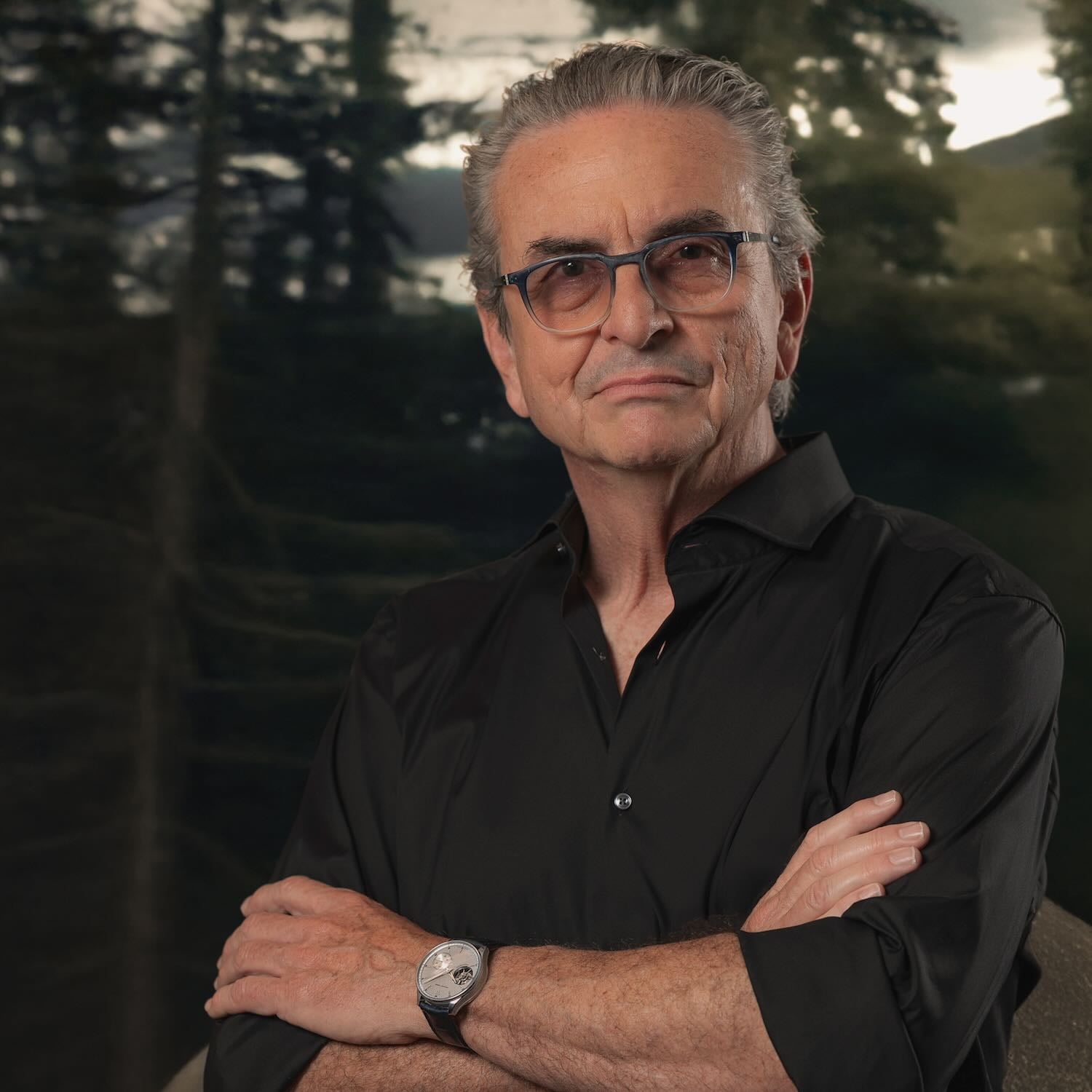
When Audemars Piguet gradually acquired the company, Dominique Renaud withdrew from the project around 2000. He then retired from the industry for several years. After this period of discretion, Dominique Renaud returned to watchmaking with various mandates and projects of varying lengths, working on each to different extents. In 2023, he launched the Renaud Tixier brand with watchmaker Julien Tixier and continued this comeback with a new haute horlogerie brand bearing his own name. It is part of HHDR (Haute Horlogerie Dominique Renaud), based in Tolochenaz, near Lausanne, with a structure and a team that suggest substantial investments and financial backing.
The Dominique Renaud Pulse60
To kick off his eponymous brand, Dominque Renaud unveils the Pulse60, a one-hertz watch with an oversized dial-side balance wheel beating at high-amplitude. If high-frequency is often marketed as the pinnacle of precision in modern watchmaking, things are actually more nuanced and more about managing the inevitable trade-offs. Every gain in one area usually extracts a “tax” elsewhere. Some of the most accurate watches ever made (like marine chronometers) used extremely large but very slow balances. High-frequency comes with challenges, which explains why 4Hz (28,800 bph or 8 ticks per second) is the most frequently used frequency to create modern movements. A high-frequency oscillator (5Hz and above) beats more times per second.
With it, small timing errors get averaged out faster, and the watch recovers from disturbances more quickly. It typically requires a smaller balance wheel, a higher energy consumption and creates the conditions for faster wear. On the other hand, a large balance wheel beating at a low frequency has more inertia to resist small disturbances, which can produce a more stable rate over time. Among other theoretical advantages, it would also help achieve a longer power reserve and reduce friction and wear on the escapement and balance pivots. The large balance can yet be more sensitive to shocks because of its size and weight…
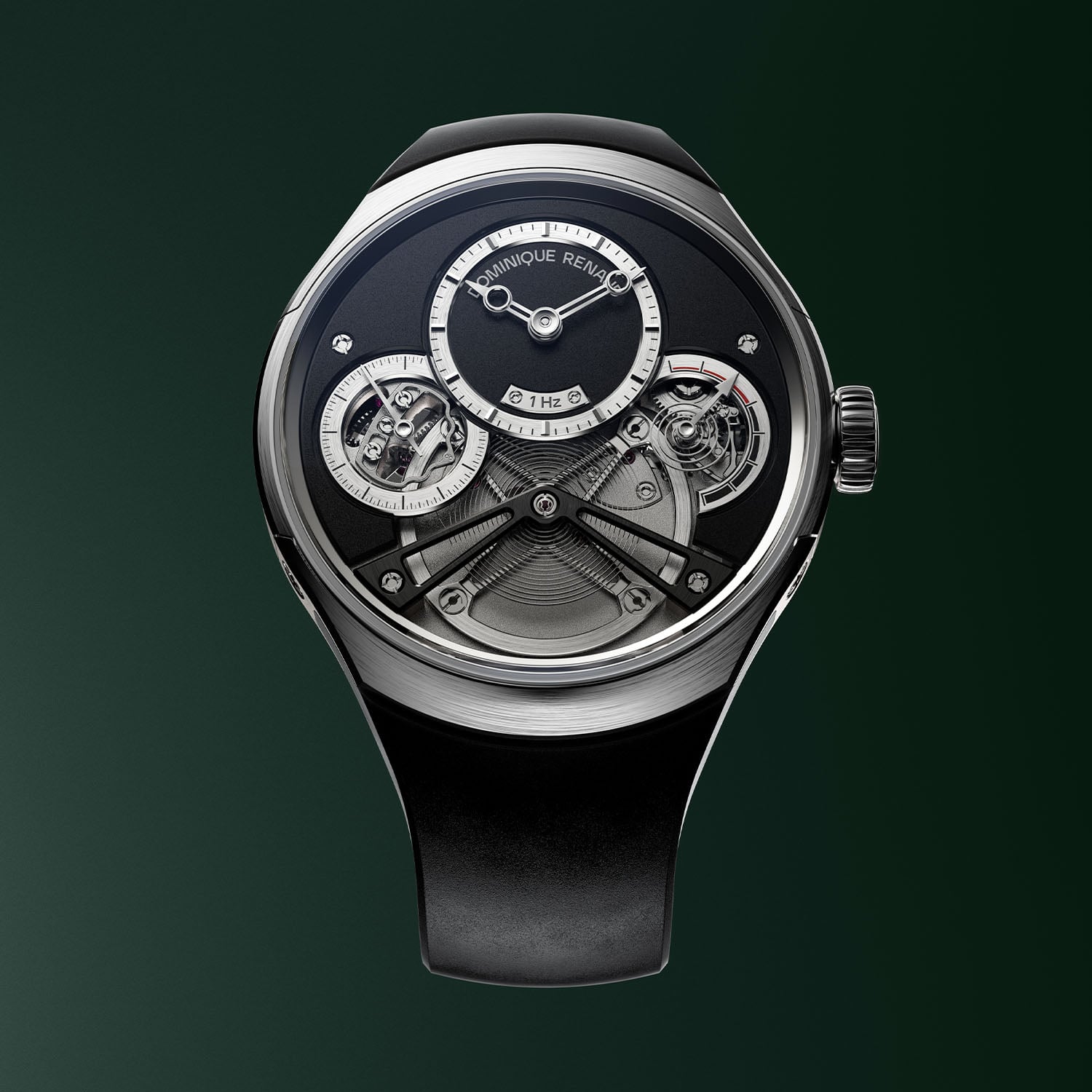
The Dominique Renaud Pulse60 is not the first one-hertz wristwatch. Independent watchmaking fans will naturally think of the Antoine Martin Slow Runner and its oversized, 24mm balance wheel slowly pulsing back and forth at the back of the watch. At the heart of the Pulse60 is the Dominique Renaud BUA2024 hand-wound calibre. Its development started in 2024, and BUA stands for Balancier Ultra Amplitude, as its 20mm balance is actually capable of swinging over 360 degrees, which involved adapting the construction of the regulator.
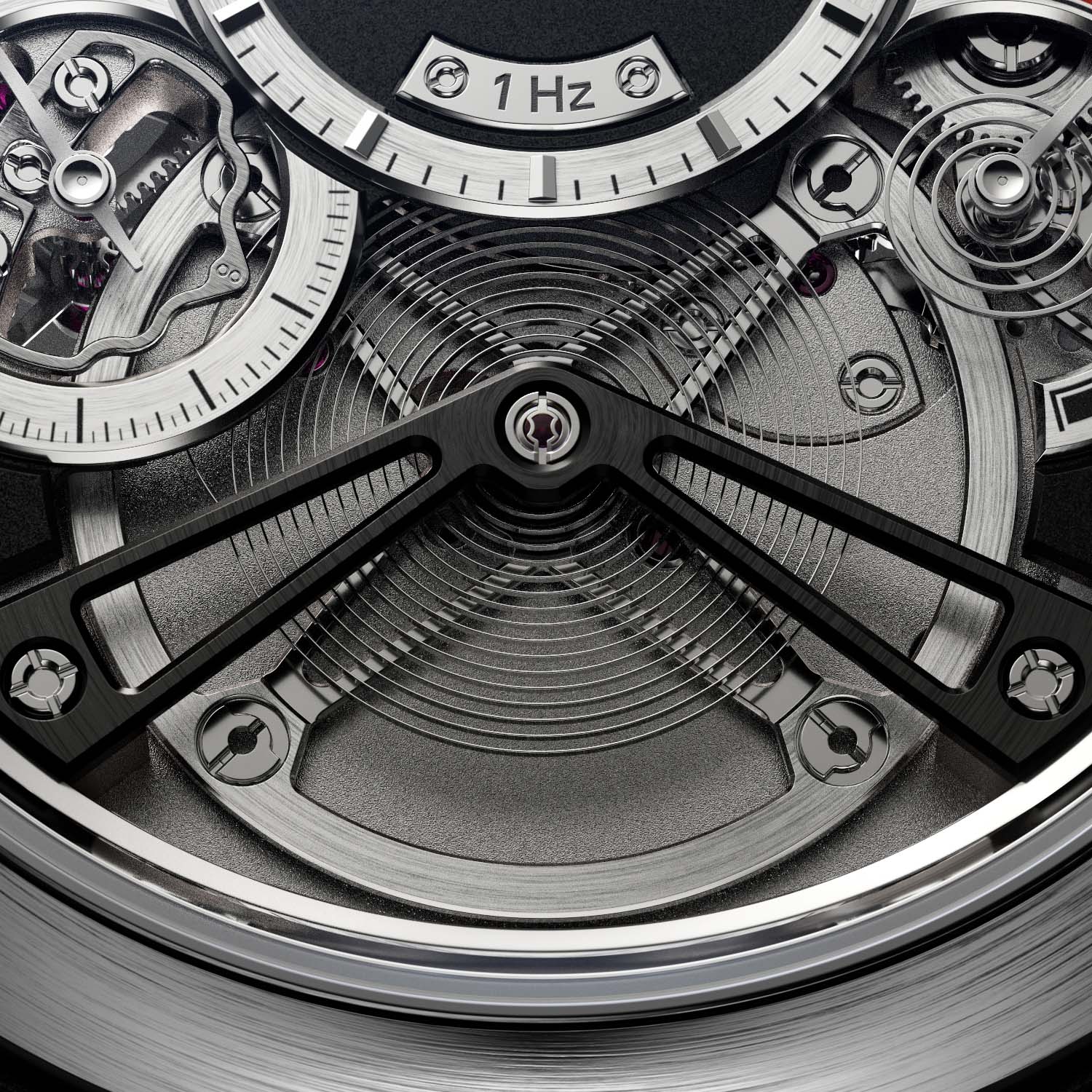
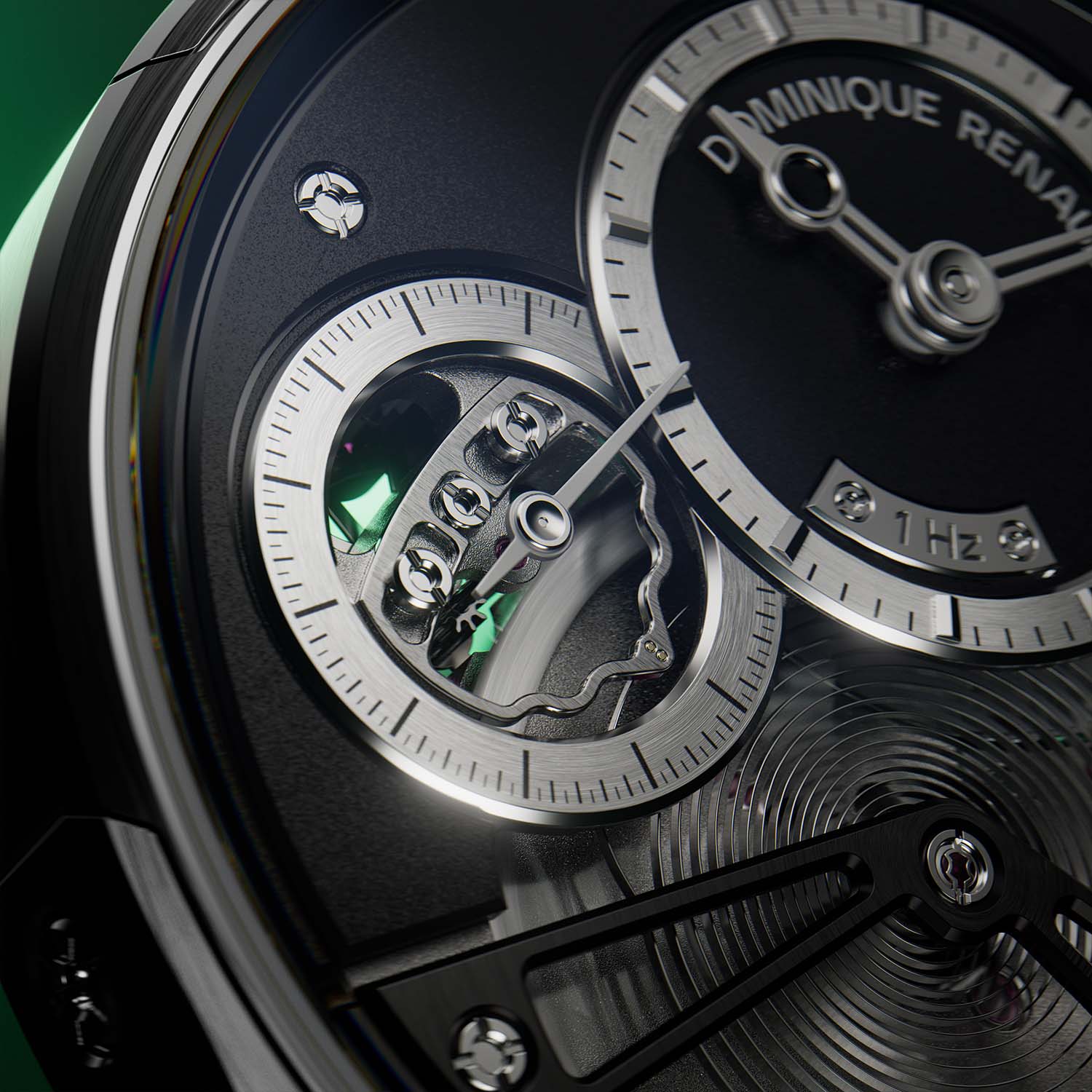
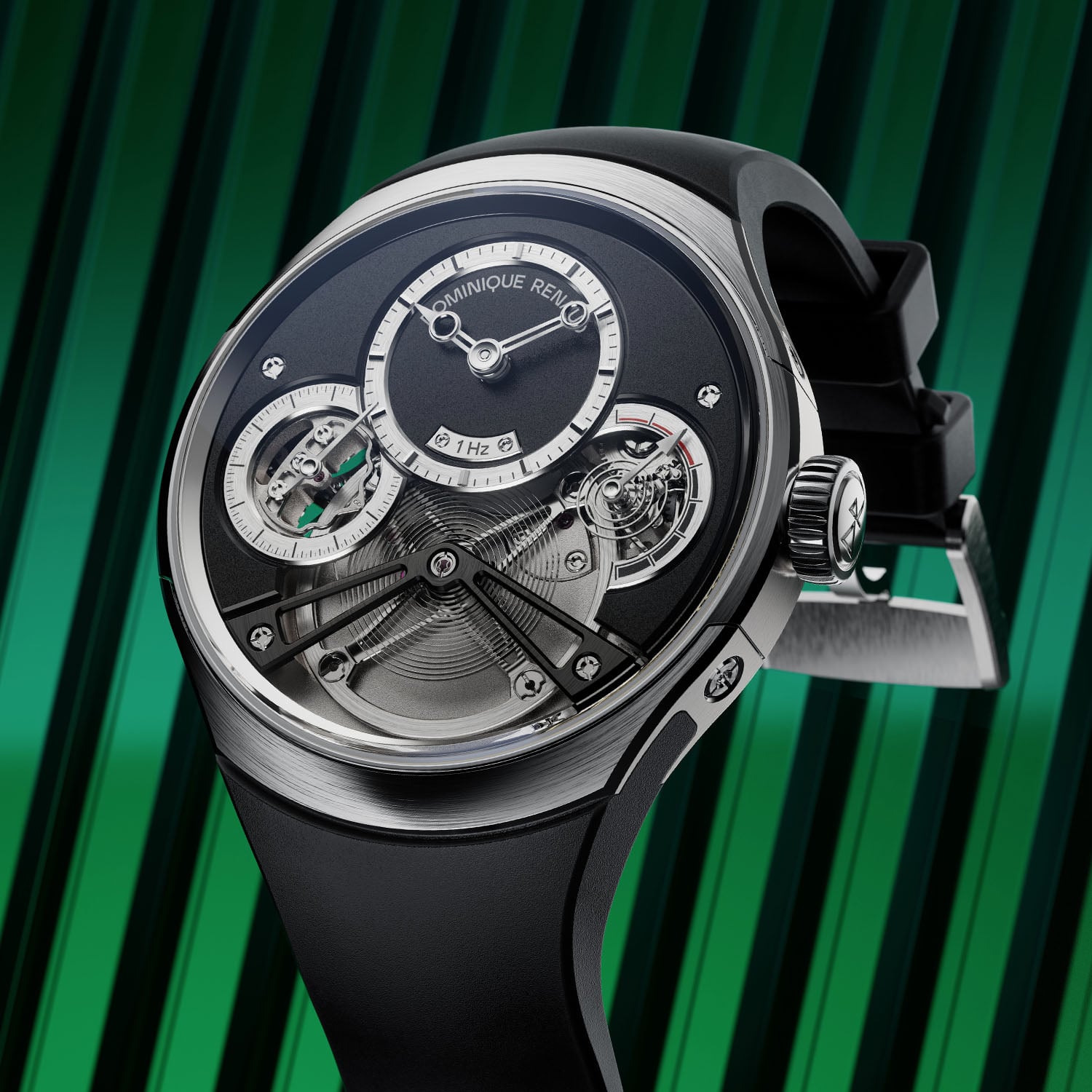
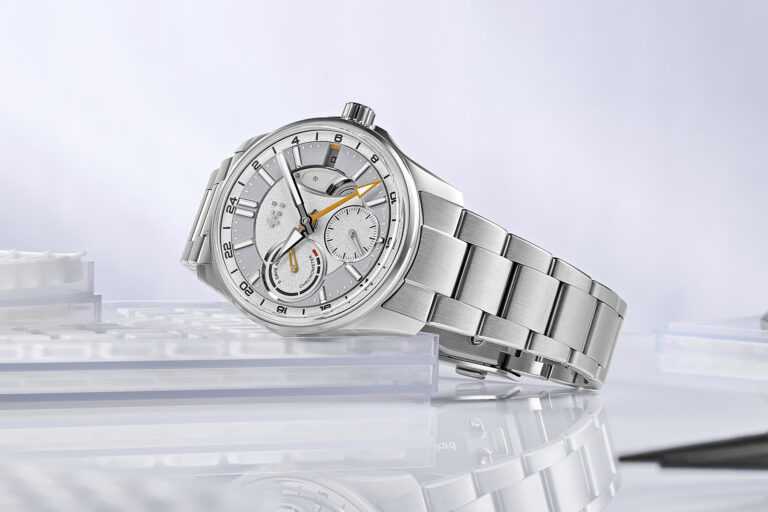
The Pulse60 stands out with its distinctive dial layout. The captivating large slow-beat balance wheel is held under an open-worked full cock. It is surrounded by the hours and minutes indication at 12 o’clock, the small seconds at 9 o’clock and a torque indication at 3 o’clock. Because of the frequency of the watch, the small second hand ticks twice per second, which the brand refers to as a “natural” dead half-second. The power reserve is given for 4 days.
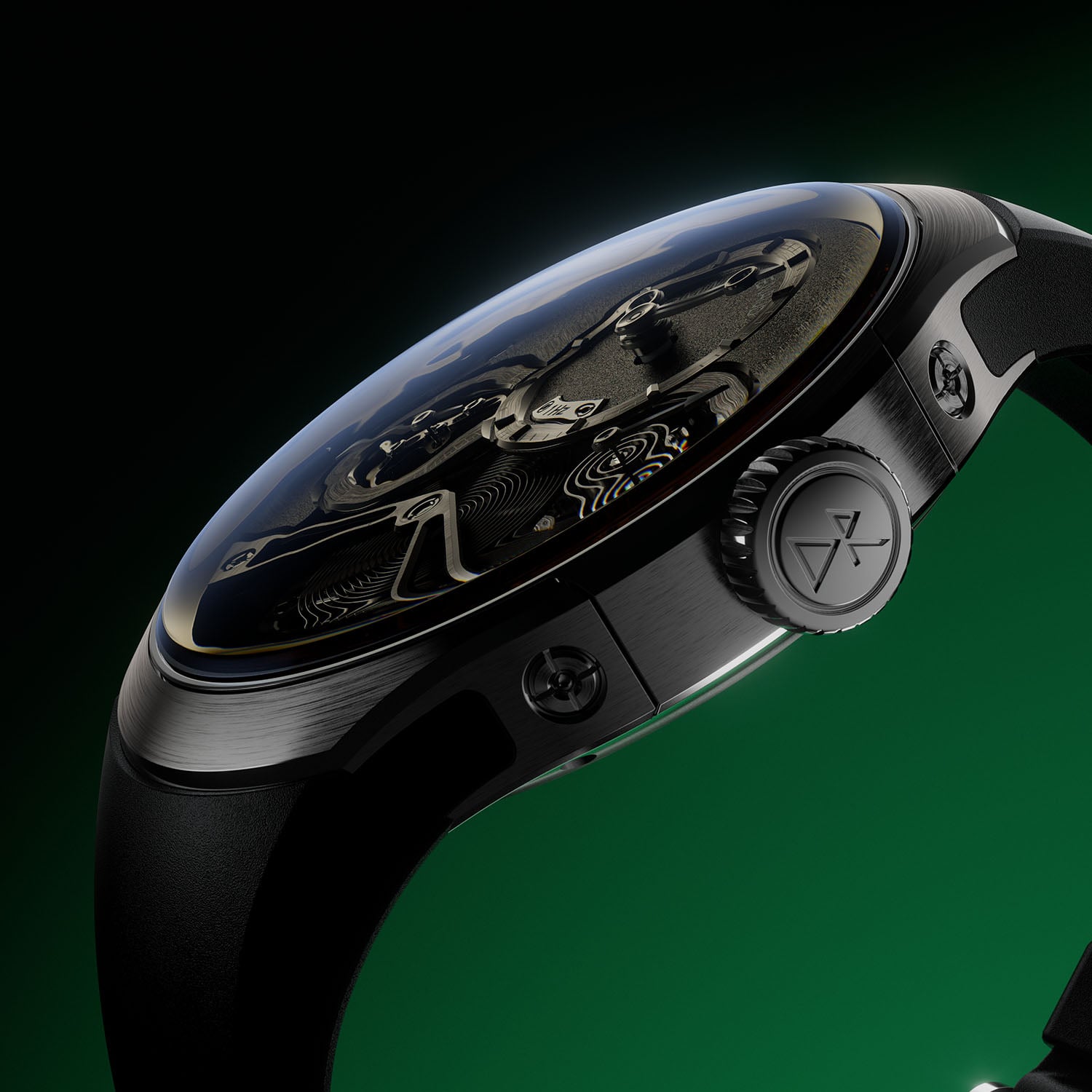
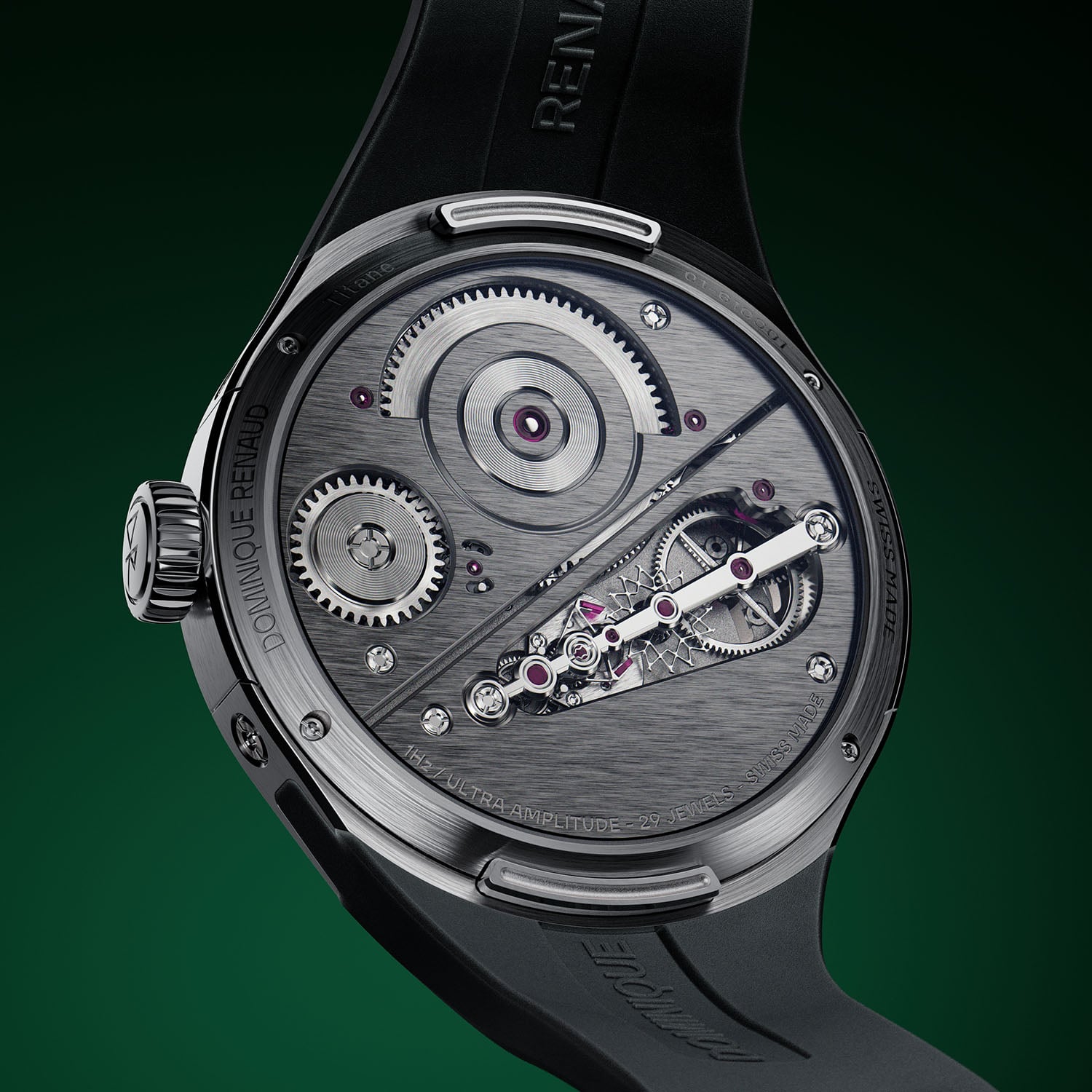
Turning the watch over, a sapphire crystal allows discovering the geometrically streamlined architecture of the BUA2024 calibre with two large bridges. The upper one reveals the ratchet and crown wheel, while a cutout in the lower one allows you to discover the escapement line and its original construction.
The BUA2024 hand-wound calibre is housed in a 40mm x 44mm case fashioned out of titanium or a combination of pink gold and titanium. Its modern, dynamic design is characterised by soft, rounded curves and an integrated strap. It is fitted with a push-button interchangeability mechanism and delivered with a pin buckle and a triple-folding clasp.
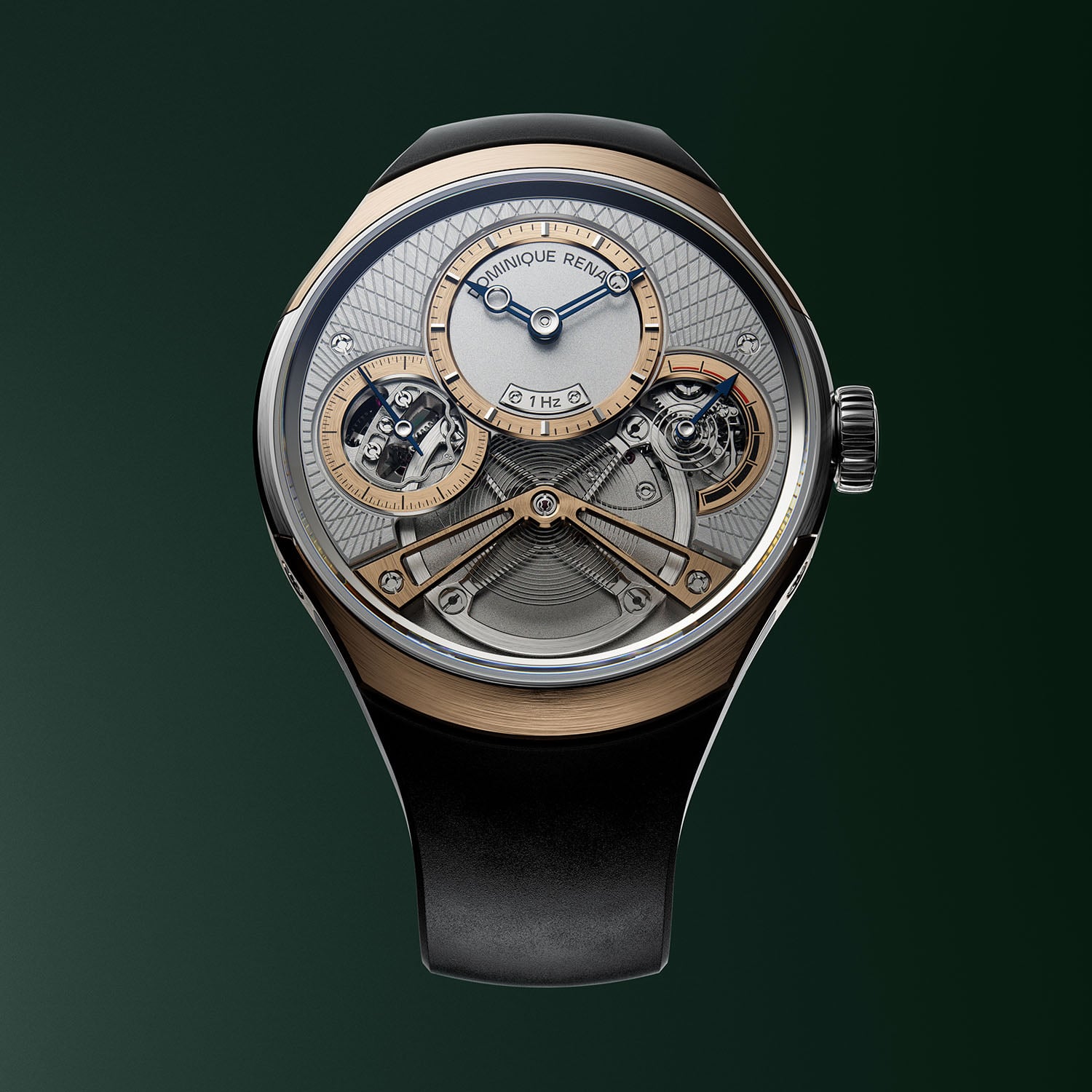
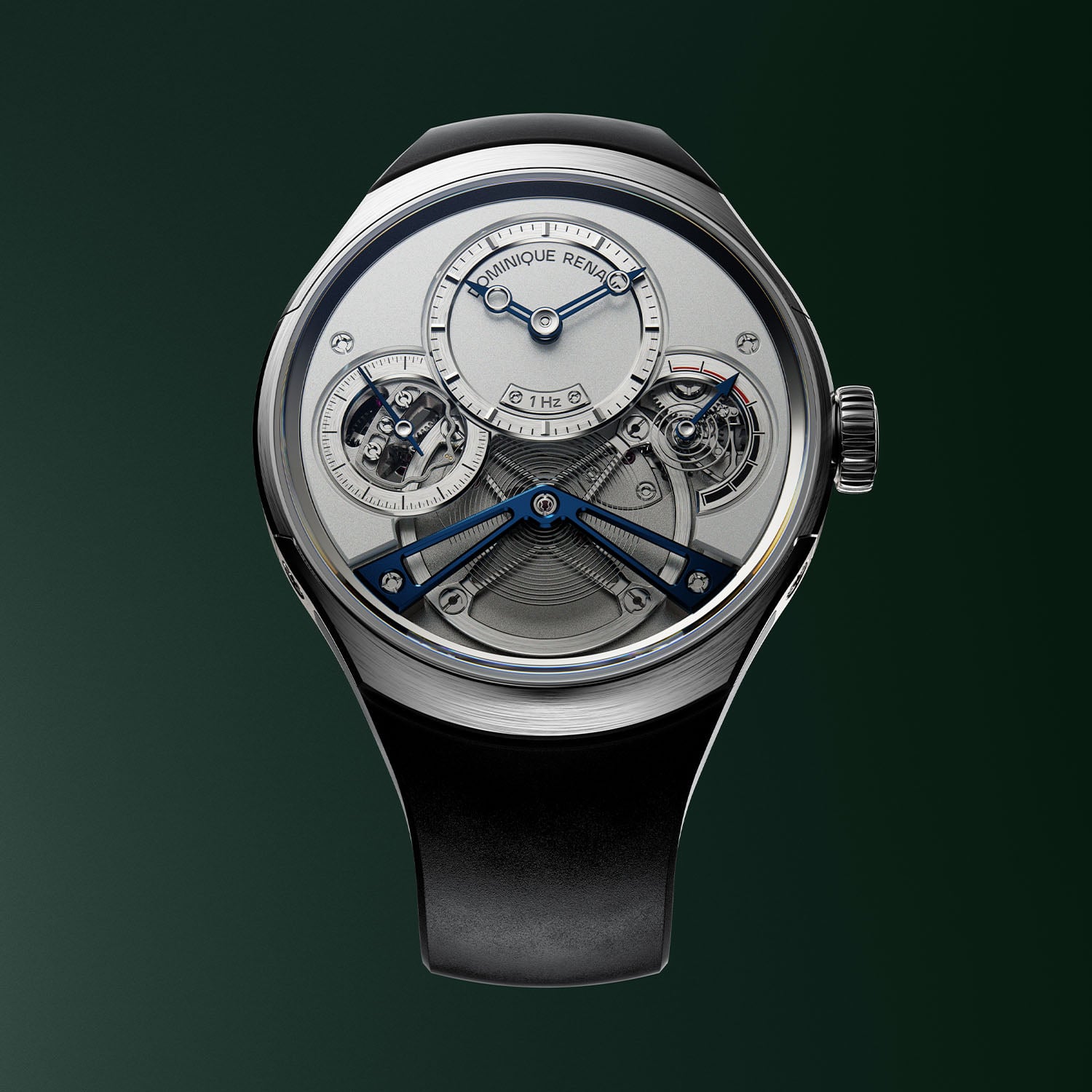
The Dominique Renaud Pulse60 is launched in three versions and will be available from April 2026. It comes in titanium with either a silver grey or black dial at CHF 49,000 excluding taxes. The pink gold and titanium model features a grey guilloche dial and is priced at CHF 59,000 excluding taxes. For more details, please visit www.dominiquerenaud.com.

5 responses
The front layout is simply superb. Wished I had that kind of money. Would buy it on spot. True heart beat.!!!!
What a watch! Both technically and in terms of design! If I had the money, I would also already be on the order list!
I have tried to inquire the point of sales in Switzerland via Dominique Renaud website contact, received a reply that domain does not exist. Does anyone know their contact Info?
Really exciting for the industry to see these Master watchmakers coming to light, HOWEVER more scrutiny is required. In the article Xavier you mention several times the advantages of the extra large balance towards MINOR disturbances. So what constitutes a MINOR disturbance??? Is it the movements by the average person in daily wear? The best way is to wear one for a few days and go about your business and the see how it behaves.
What a beauty! I’d love to see the balance movements. The Slow Runner by Martin Braun was so nice to behold. Unfortunately, the use of titanium hairspring was blocked by Swatch group. So, let’s hope with fingers crossed that this beauty doesn’t face the same grim destiny.