


 Not all images were able to load for printing. Please close the print window and try again.
 Hamilton Brings Art Deco Back with the American Classic Cushion Mechanical Collection
Inspired by early 20th-century timepieces, the new collection combines small cases, vintage-style dials, and a familiar yet upgraded hand-wound movement.
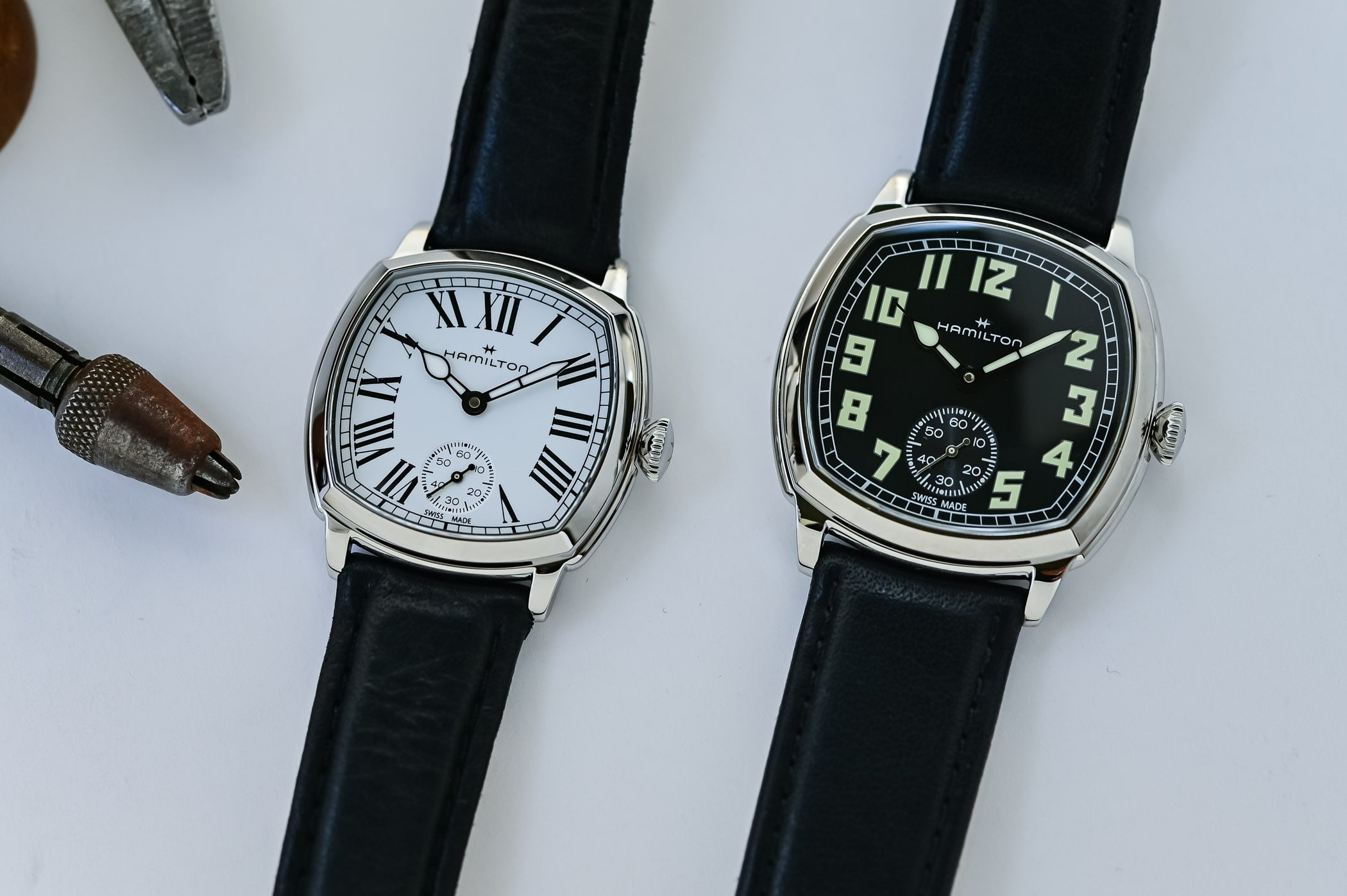
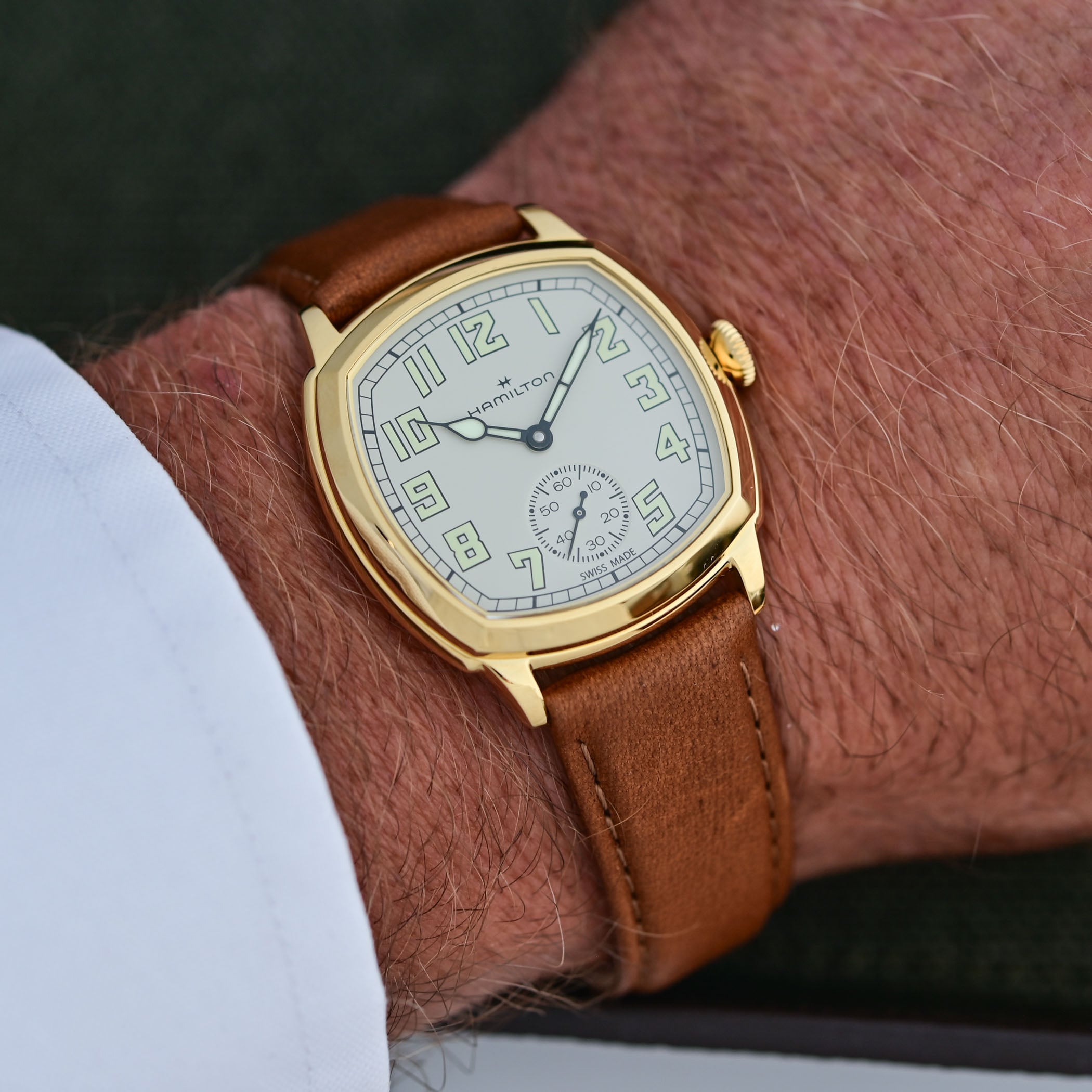
As smaller, historically inspired, shaped watches find renewed interest, it is no surprise that Hamilton looks back almost a century for its latest collection, reviving the cushion-shaped watches that defined part of its portfolio in the 1920s and 1930s. The new American Classic Cushion Mechanical takes direct inspiration from the Cushion Plain and Cushion Engraved models of 1926, bringing their Art Deco geometry and compact proportions to a modern series of six watches offered in two sizes. The brand used the period as a design starting point: it kept the characteristic cushion case, fitted it with contemporary sapphire crystals, added Super-LumiNova to the indications, and installed a newly upgraded hand-wound movement. For watch and movie fans, the collection also has a nice piece of cinematic provenance: its design is inspired by one of the Hamilton watches worn in Oppenheimer.
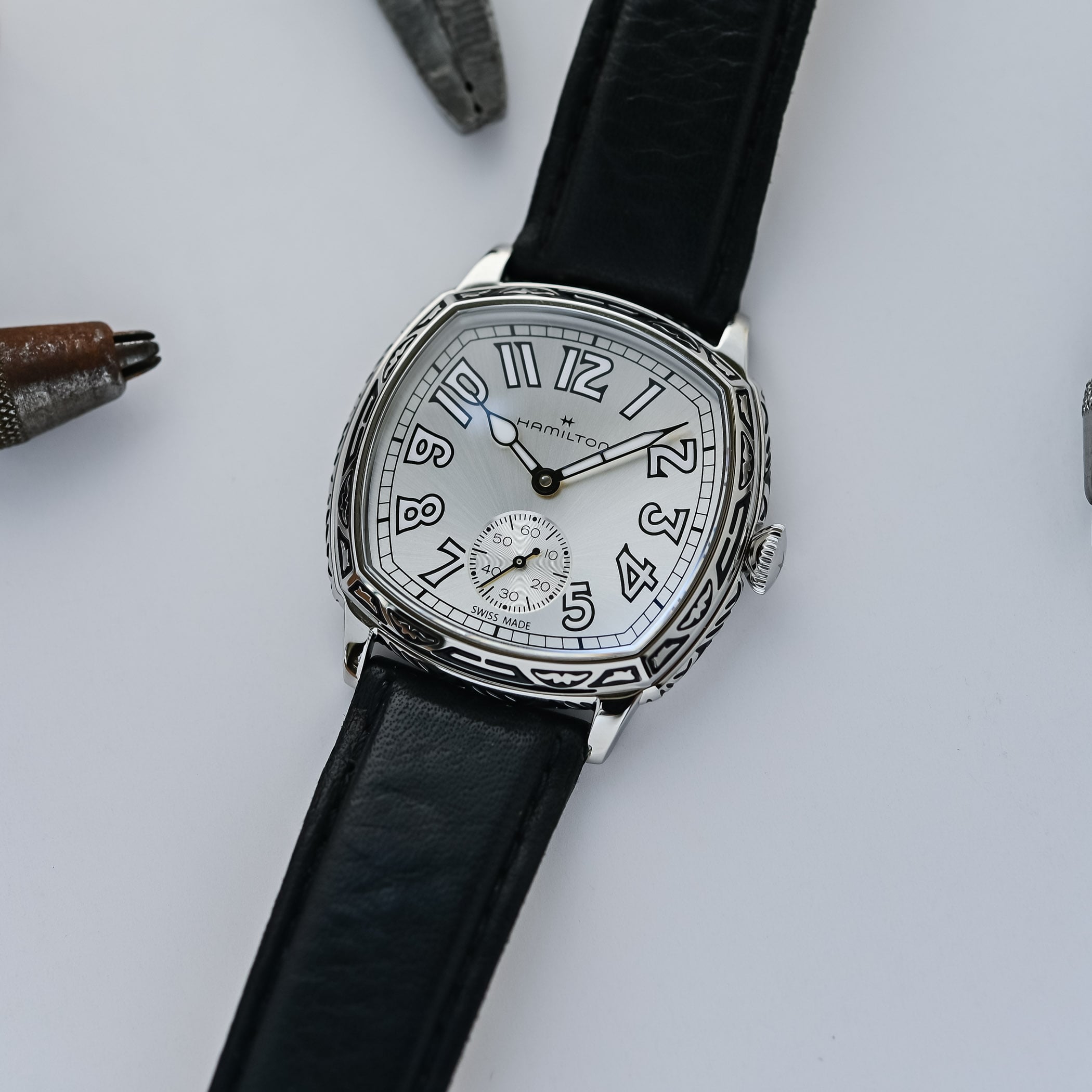
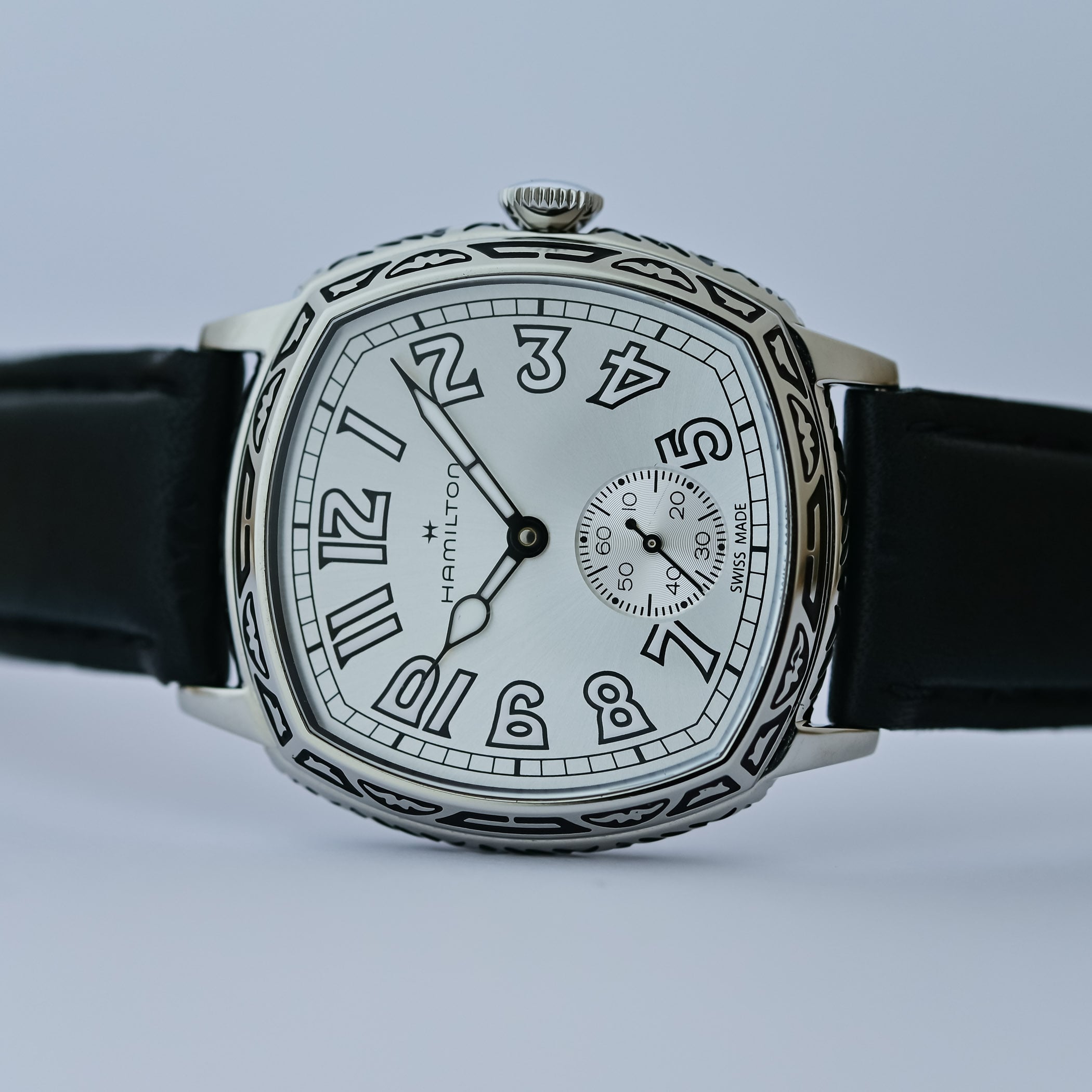
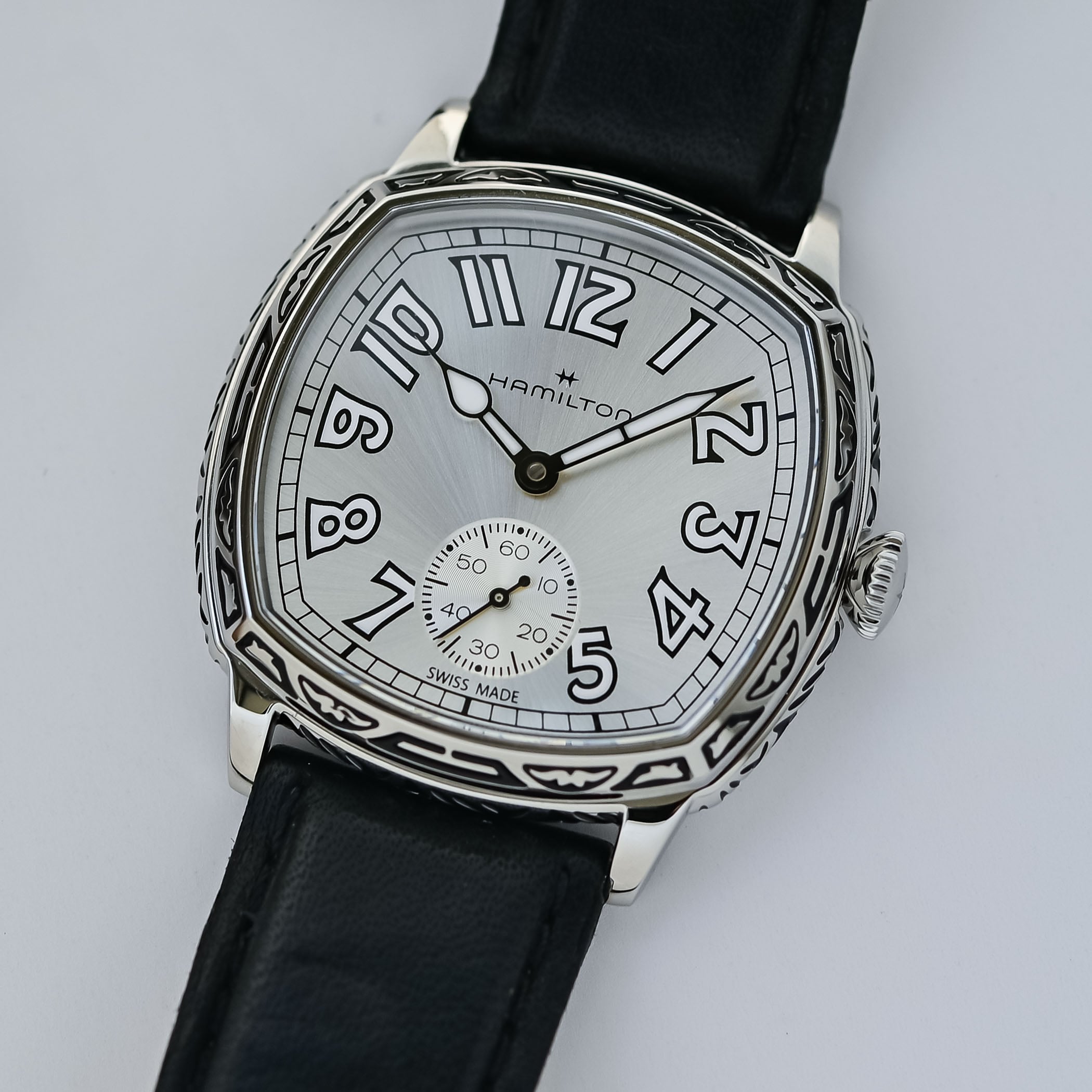
The new American Classic Cushion Mechanical collection comes in 30mm and 34mm cases, both measuring only 8.1mm in thickness. The smaller 30mm watches use a stainless-steel case with an optional yellow gold PVD coating, and the 34mm range expands the choice to plain or engraved stainless steel and gold PVD coating. The engraved version is quite interesting, as it recalls the engraved silver cases of the early 20th-century watches, adding a distinctly period-correct character to an otherwise contemporary construction – a style that we’ve seen on selected Ralph Lauren watches, but here with a far more accessible price.
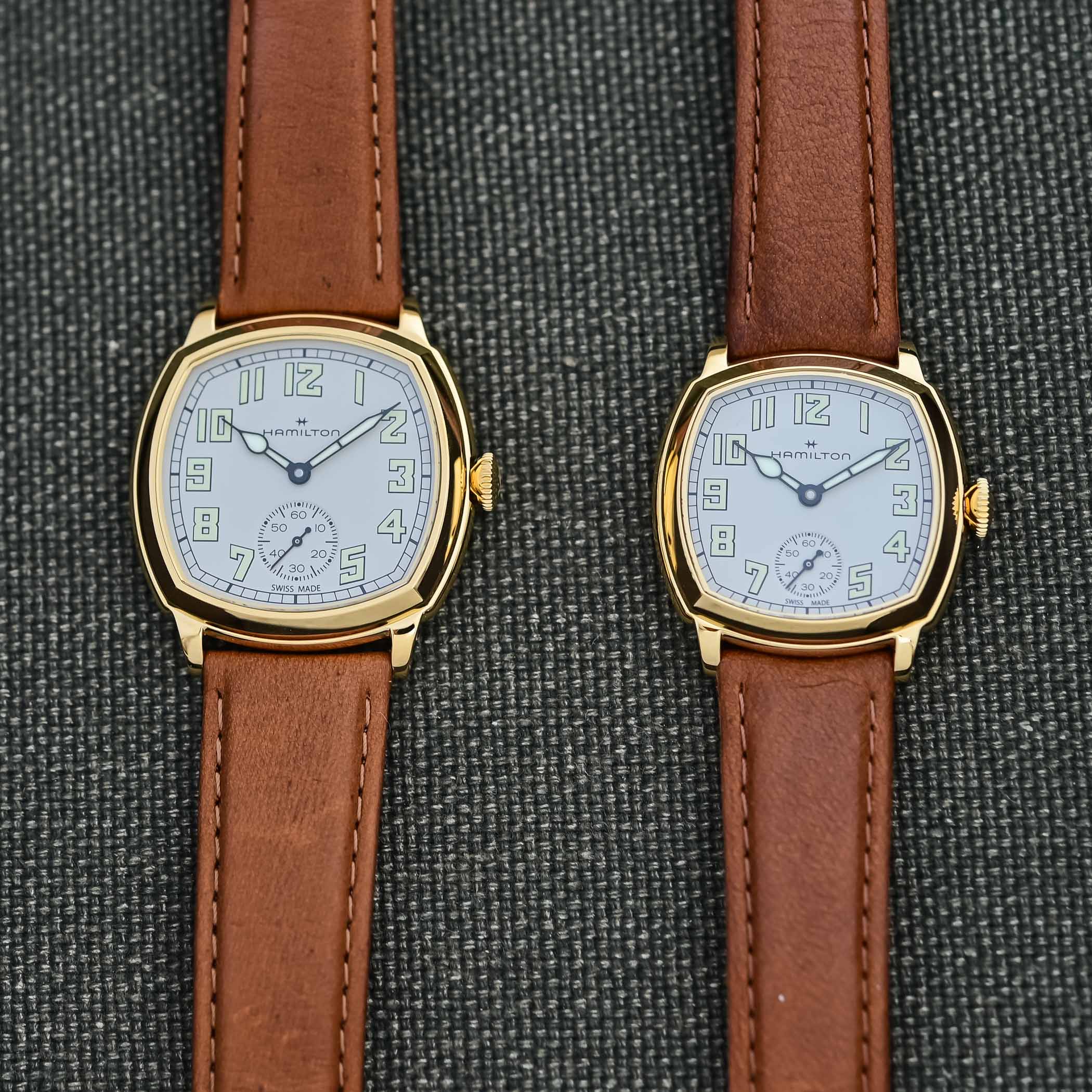
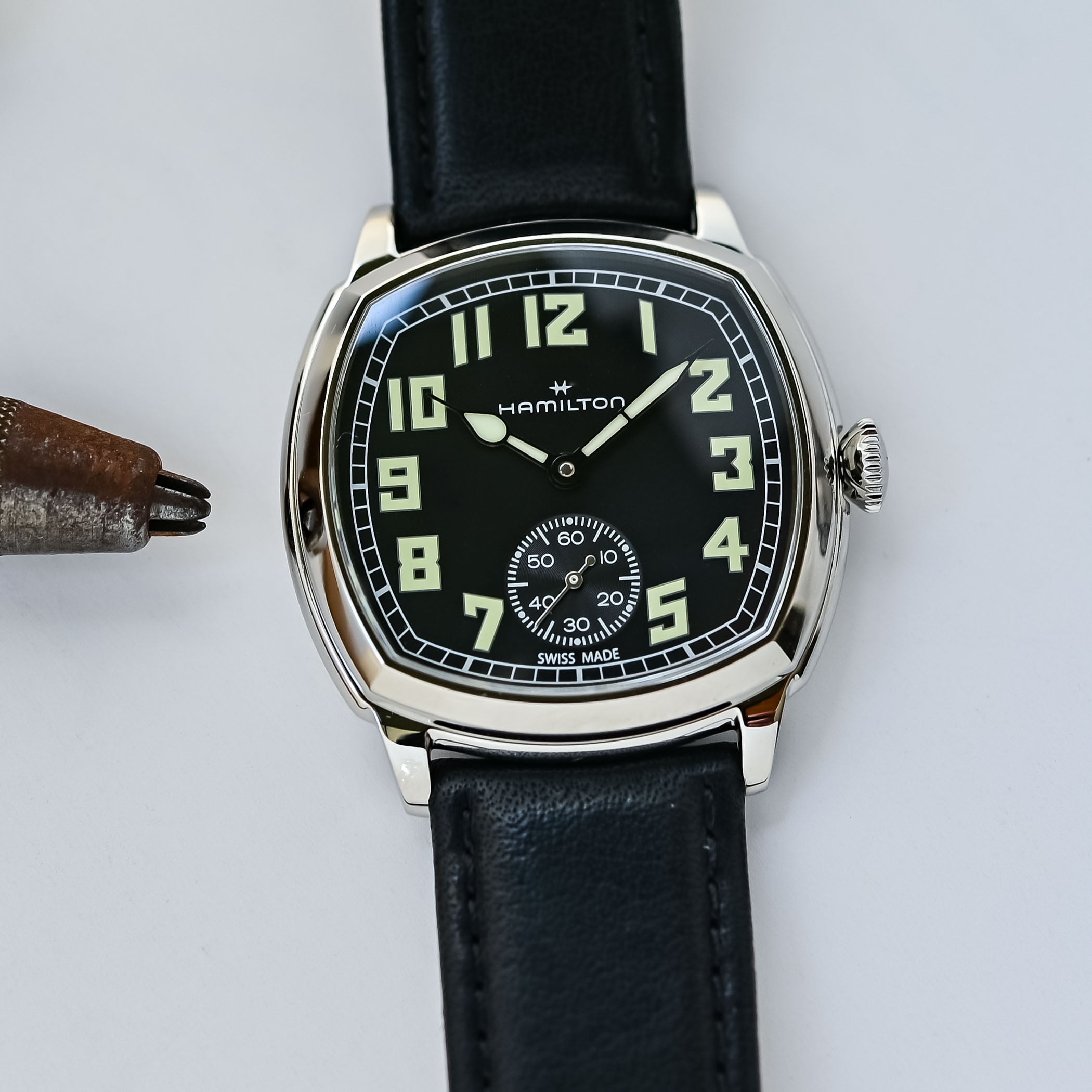
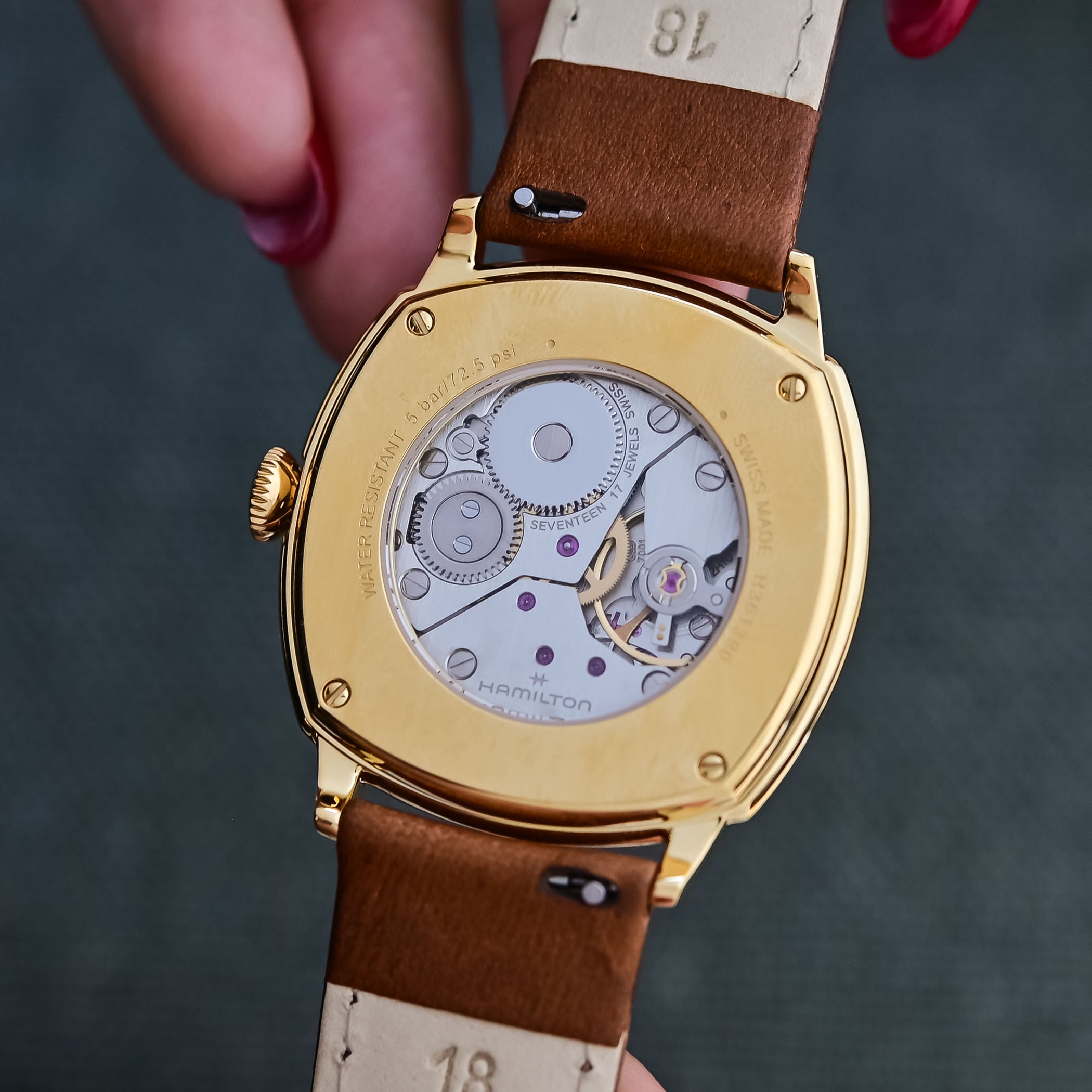
Across the range, the shape is the real key attribute: a rounded square cushion profile with nice proportions and relatively short, integrated-looking lugs. Sapphire crystal with an anti-reflective coating replaces the more fragile mineral or acrylic crystals of vintage watches, while the 50m water resistance adds the practicality expected of a modern watch.
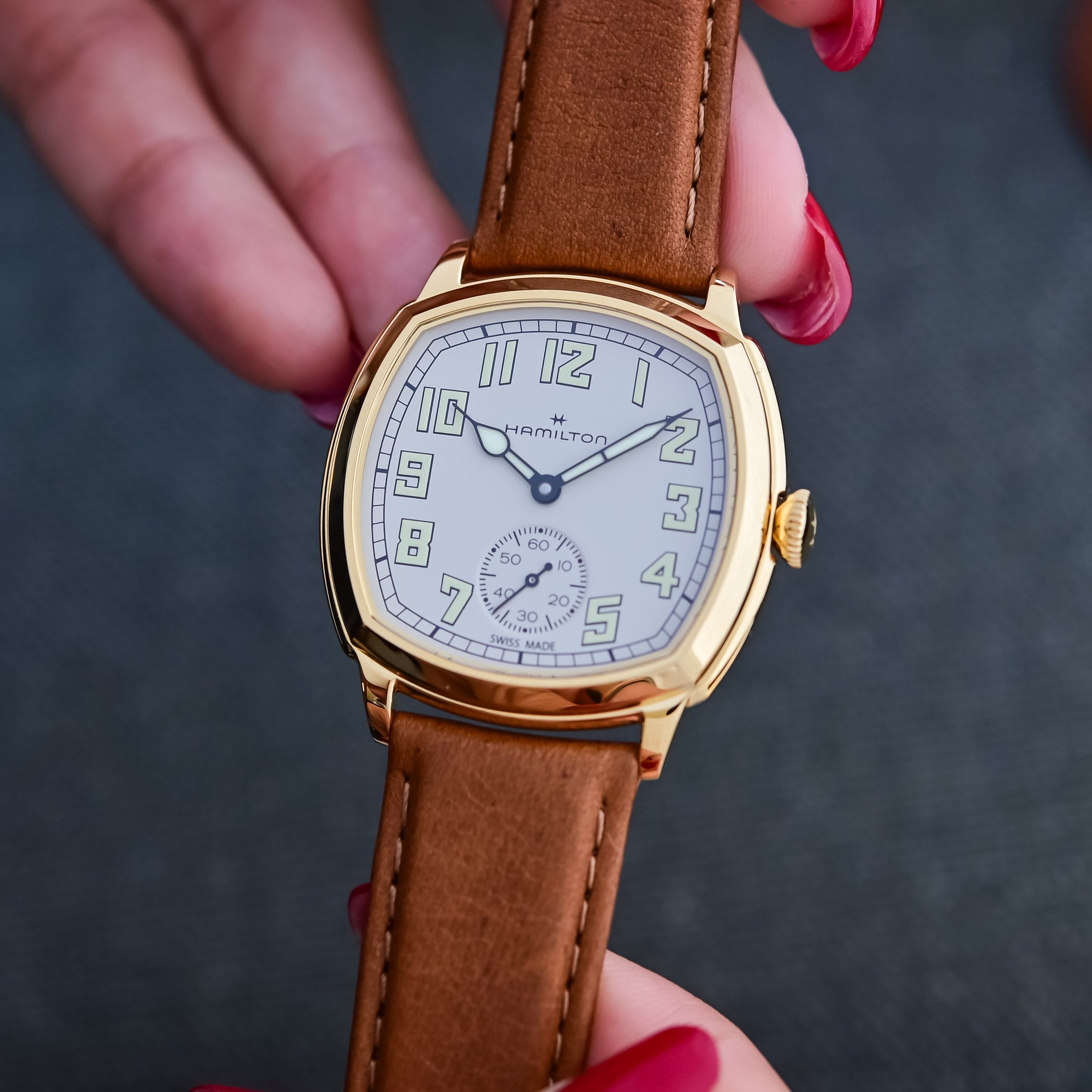
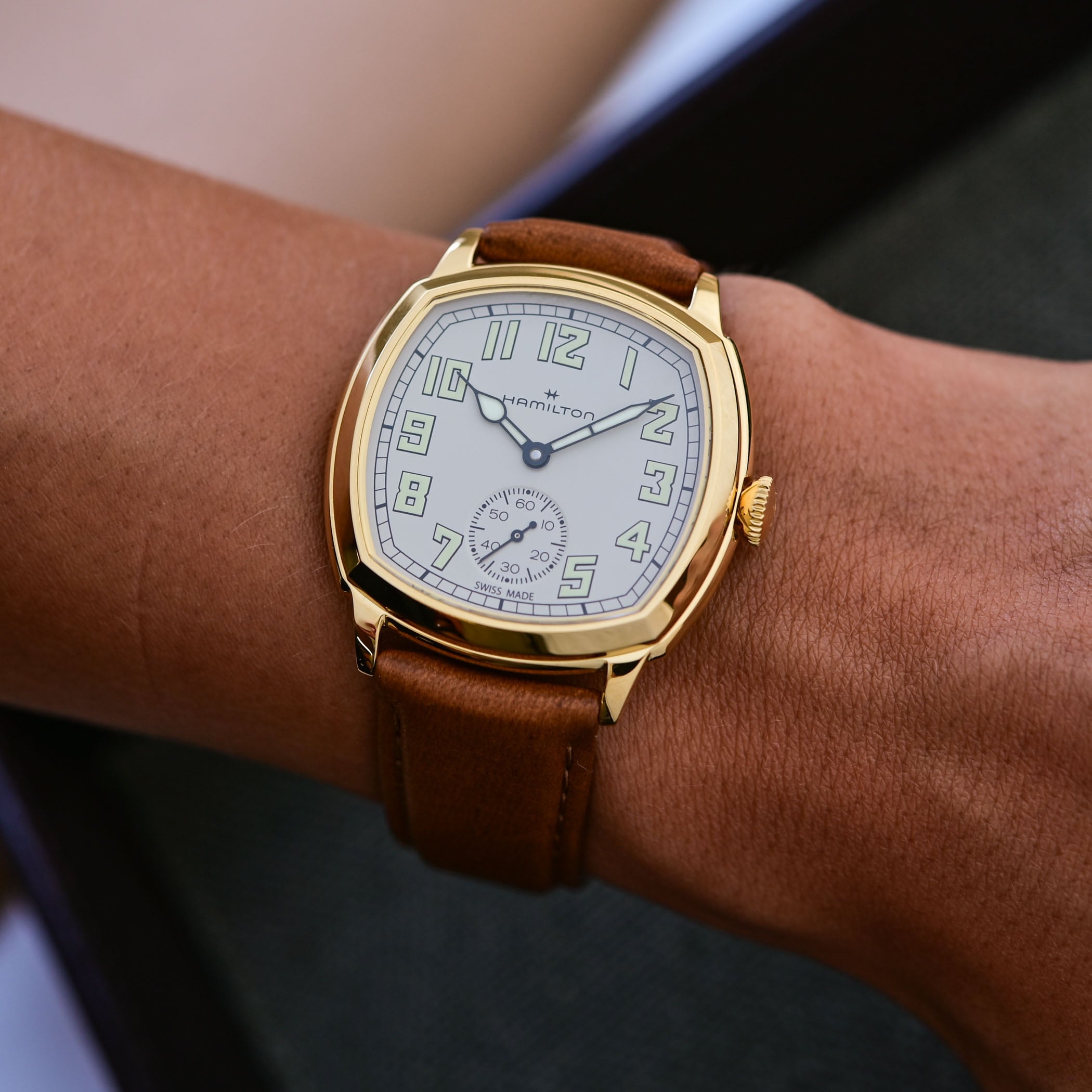
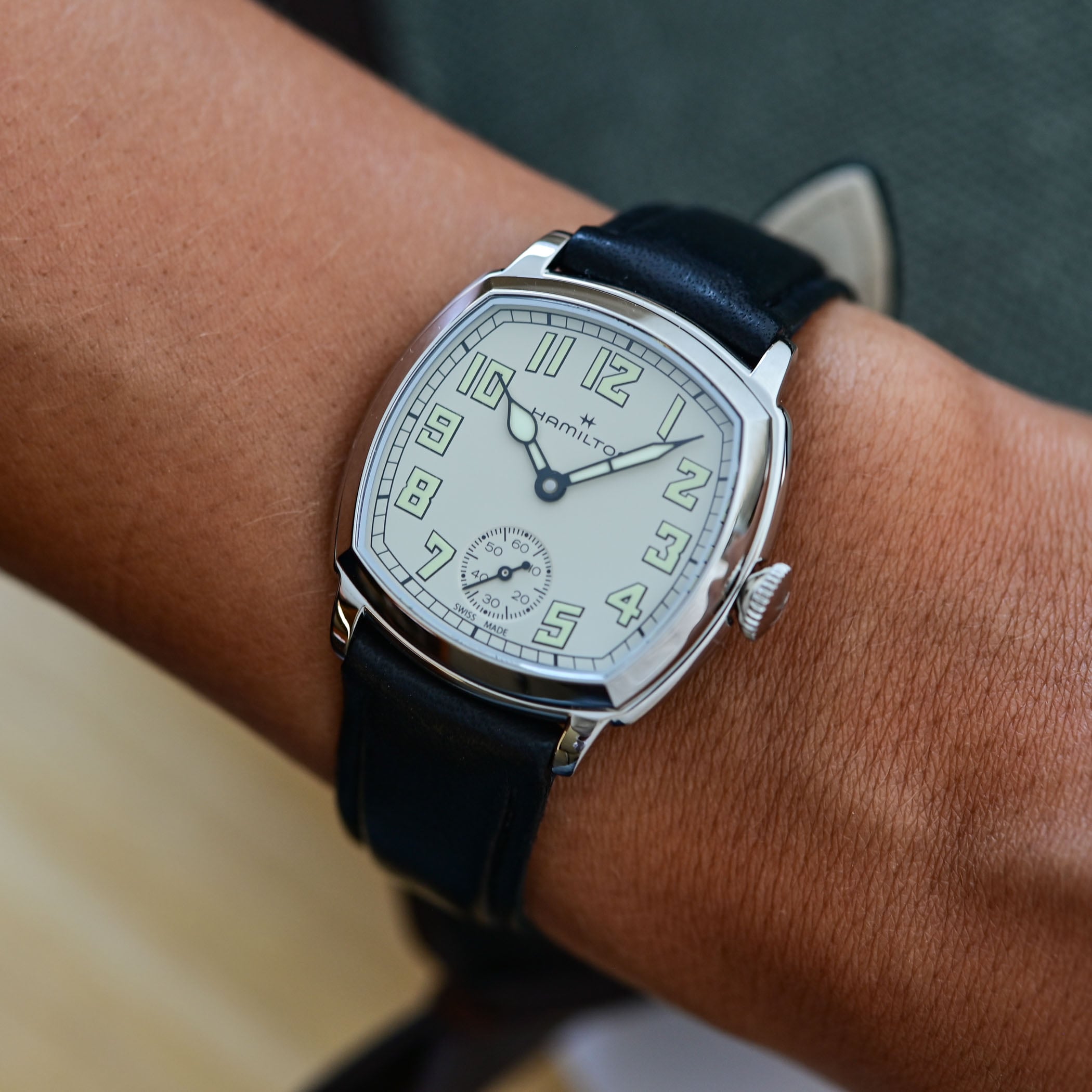
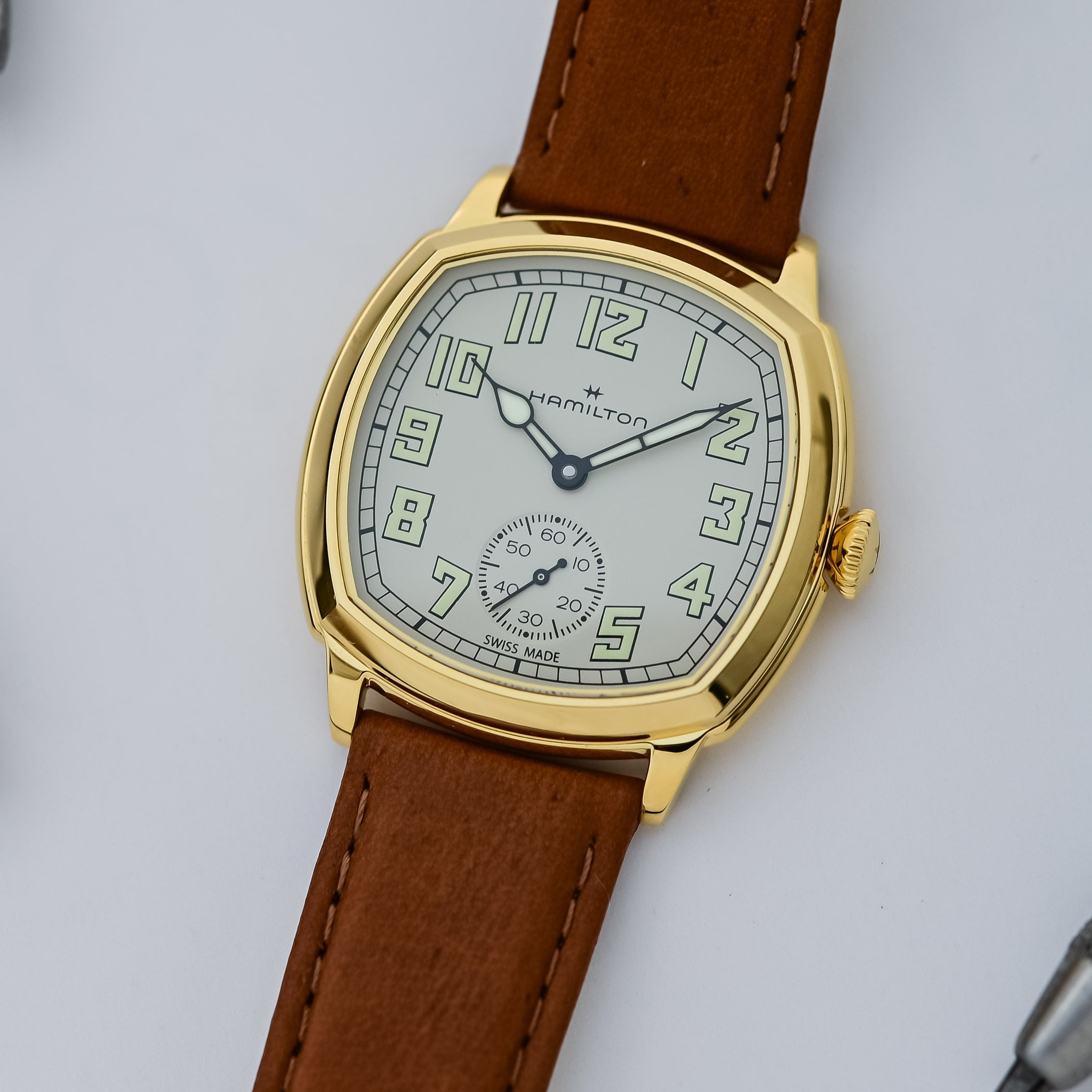
Hamilton has created six references to offer several interpretations of the same Art Deco theme. The 30mm models come with a beige sandblasted dial with Arabic numerals (in steel and with gold PVD cases) and a white enamel-style dial with Roman numerals (steel case). Both use black, glossy lacquered hour and minute hands with Super-LumiNova, maintaining the era’s simple, highly graphic character.
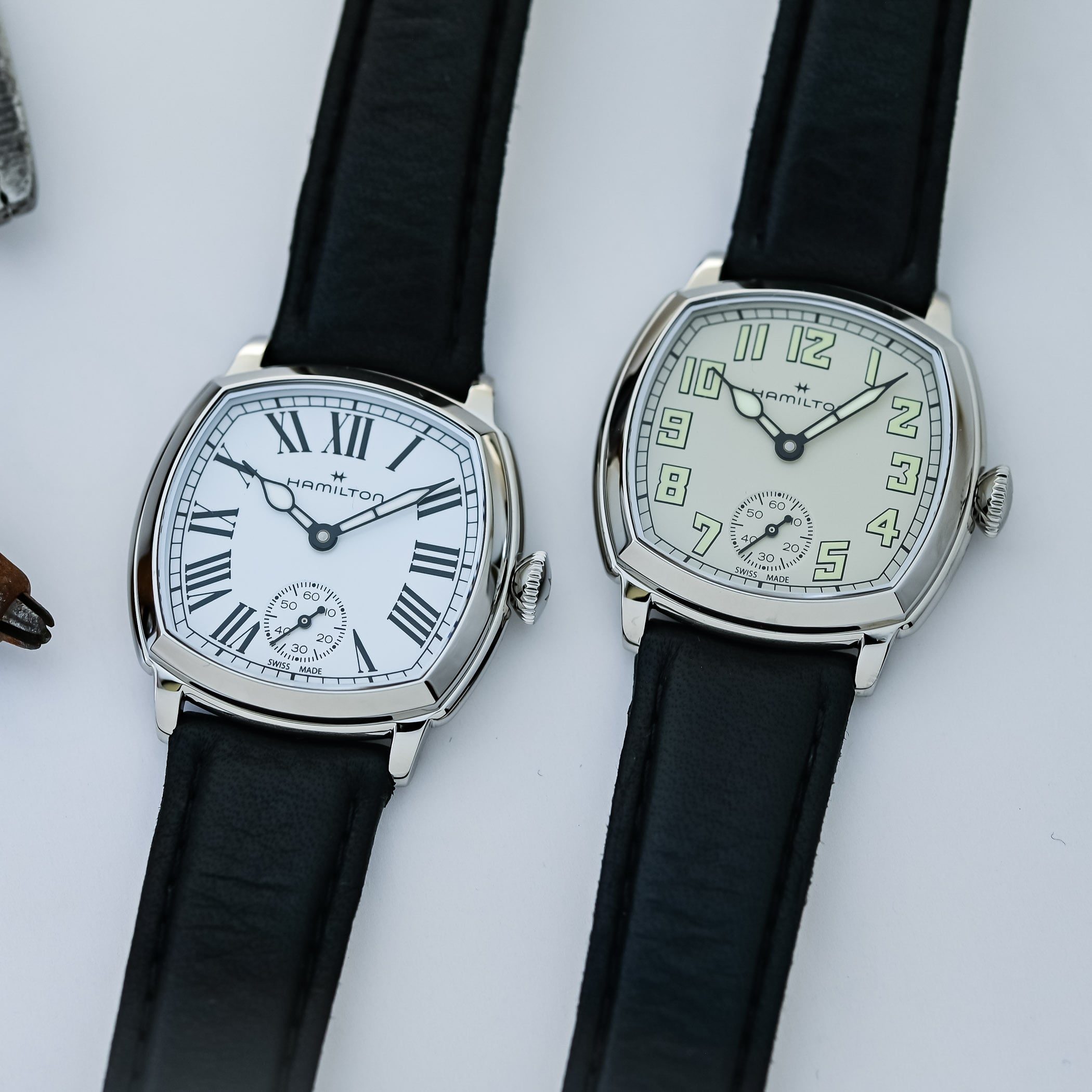
The 34mm watches come with black, beige and silver dials. The silver dial (engraved case) receives a sunray finish, stylised Arabic numerals and luminous hands to preserve the clear, functional appearance shared across the collection. The dials aren’t overly complicated, with a running seconds subdial at 6 on all references.
The vintage-inspired series is powered by Hamilton’s new H-42 hand-wound mechanical movement. This calibre is based on the ETA 7001, itself descended from the Peseux 7001 introduced in the 1970s, updated with a Nivachron balance spring and an extended 57-hour power reserve (up from 42 hours). The 17-jewel movement still beats at 21,600 vibrations/hour, and the decoration is fairly minimal (to be expected with Hamilton’s accessible prices), yet the see-through caseback lets you see a cleanly finished movement with vertically brushed bridges.
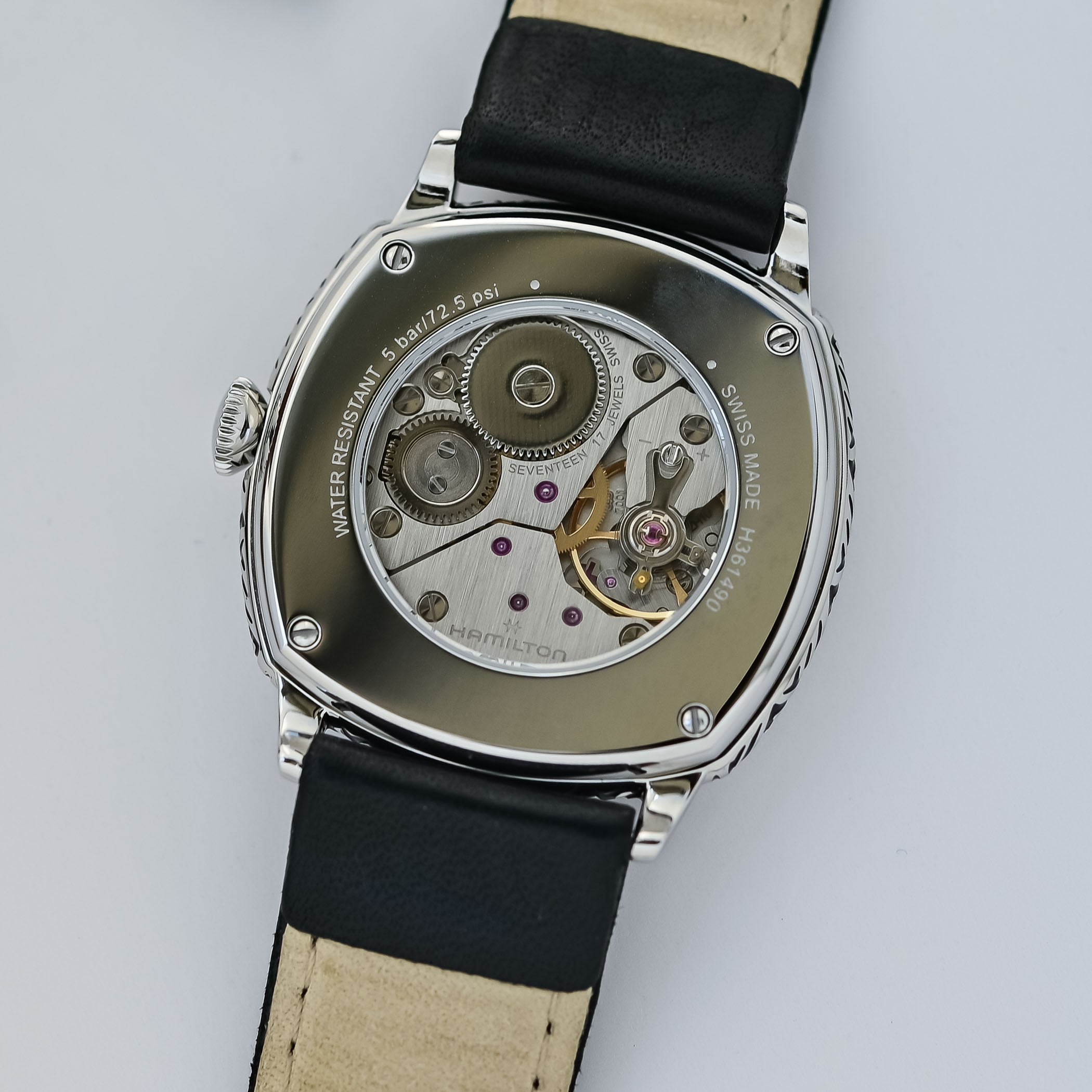
Availability & Price
The new Hamilton American Classic Cushion Mechanical watches are worn on leather straps with easy-click spring bars, in black or brown depending on the reference, closed with a pin buckle matching the case material and treatment. All are part of the permanent collection and immediately available from Hamilton’s website and retailers.
Prices start at EUR/USD 995 or CHF 945 for all 4 stainless steel references (including the very appealing engraved version) and rise to EUR/USD 1,095 or CHF 1,045 for the PVD-treated models, regardless of the dimensions. Really not bad for a storied collection, with an evolution of a highly important movement. For more, visit hamiltonwatch.com.

1 response
The “Internets” have complained that the lume color (daylight and dark) is inconsistent on the (un-engraved) 34mm models. Yellowish that glows green on the hour numerals, but white on the hands and black sub-dial. I have seen pictures that seem to support the complaint. The engraved 34mm is said to have white/white lume everywhere, which would be my choice. Why do I suddenly want to get M?ori tattoos and do the Haka?! ^L^