
 Not all images were able to load for printing. Please close the print window and try again.
 The H. Moser & Cie. Endeavour Tourbillon Skeleton
Eliminating all superfluous material to lay bare the stark beauty of the mechanism.
Among its multiple collections, which consist of the sporty Pioneer, the integrated Streamliner, and a few Heritage watches, H. Moser & Cie‘s Endeavour represents the brand’s vision of an elegant watch, often paired with a twist – should it be a pared-back “concept” dial or unexpected textures and colours. The Endeavour, as the brand’s classic watch, is no stranger to complications or tourbillon regulators. What’s new for this year, however, is the introduction of an openworked flying tourbillon movement into the Endeavour’s case. So let’s discover this, shall we?
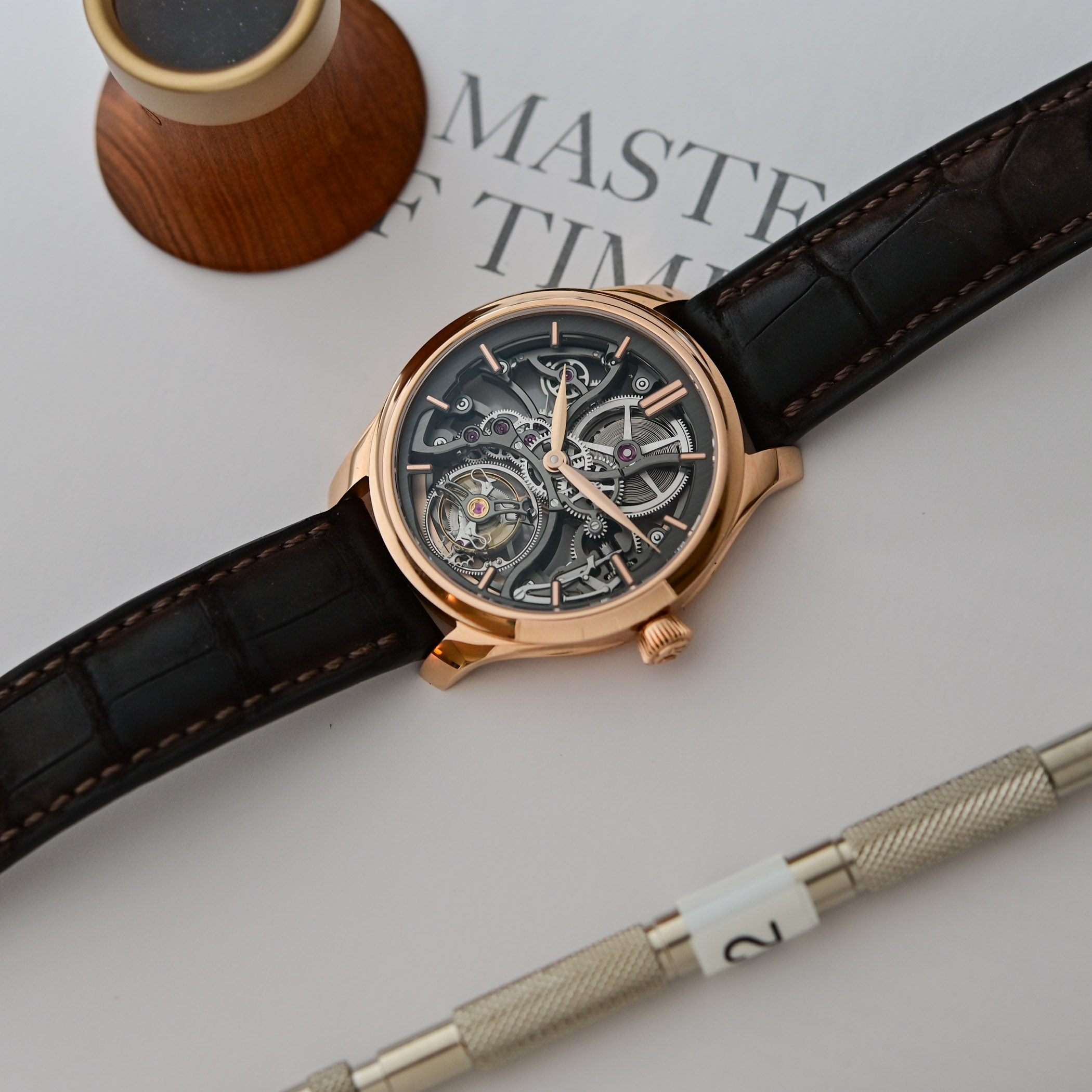
What we’re looking at here is the reunion of the classic, elegant Endeavour watch on one side, and the in-house calibre HMC 814, introduced in the Streamliner collection in 2024. This movement isn’t to be confused with Moser’s other Tourbillon Skeleton movement, the calibre HMC 811, the latter being equipped with a cylindrical hairspring and an off-centred display. As both of these elements add a lot to the overall thickness of the watch, the much thinner HMC 814 with its one-minute flying tourbillon with a double hairspring was elected to be part of the Endeavour collection.
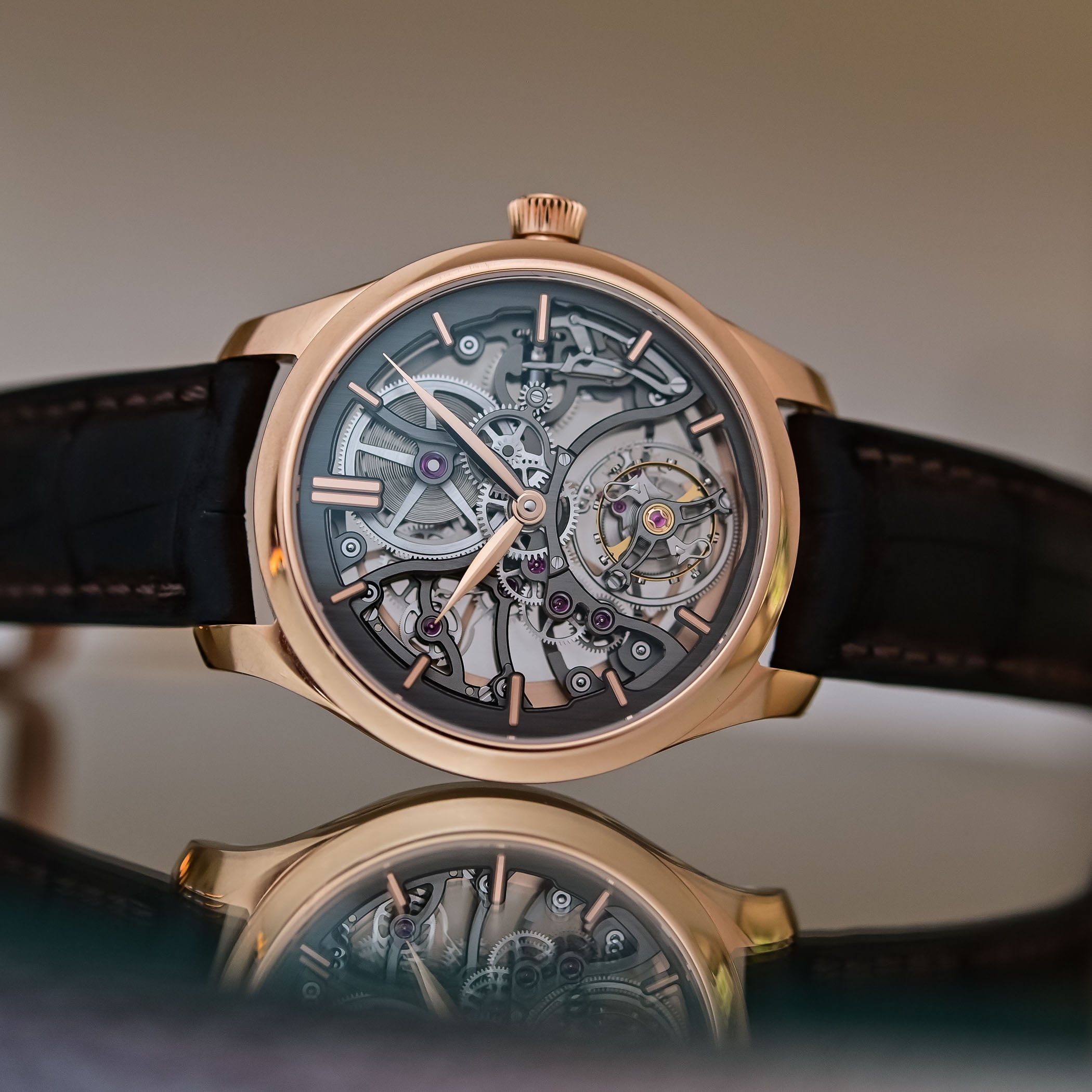
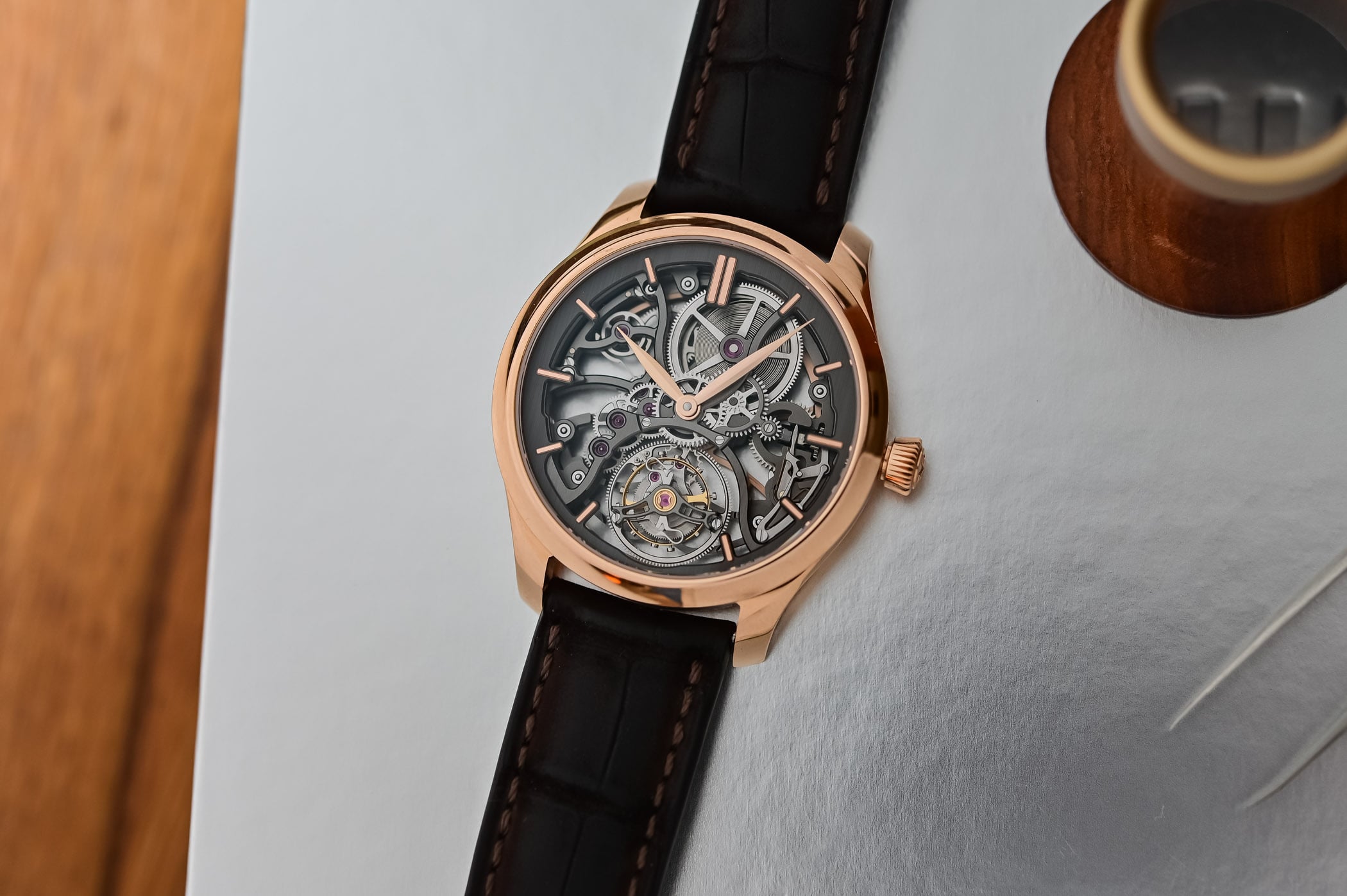
Starting with the case, no major surprises here. The watch retains the classic design and proportions of most Endeavour watches, and measures a fairly reasonable 40mm in diameter, with an overall thickness of 10.7mm. Like all other members of the collection, this version, made of 5N red gold, comes with a polished concave bezel, a conical crown and elegant flanks that feature the characteristic asymmetric forms of the collection, with vertically brushed elements contrasting with a polished groove. It naturally features sapphire crystals on both sides to admire the movement.
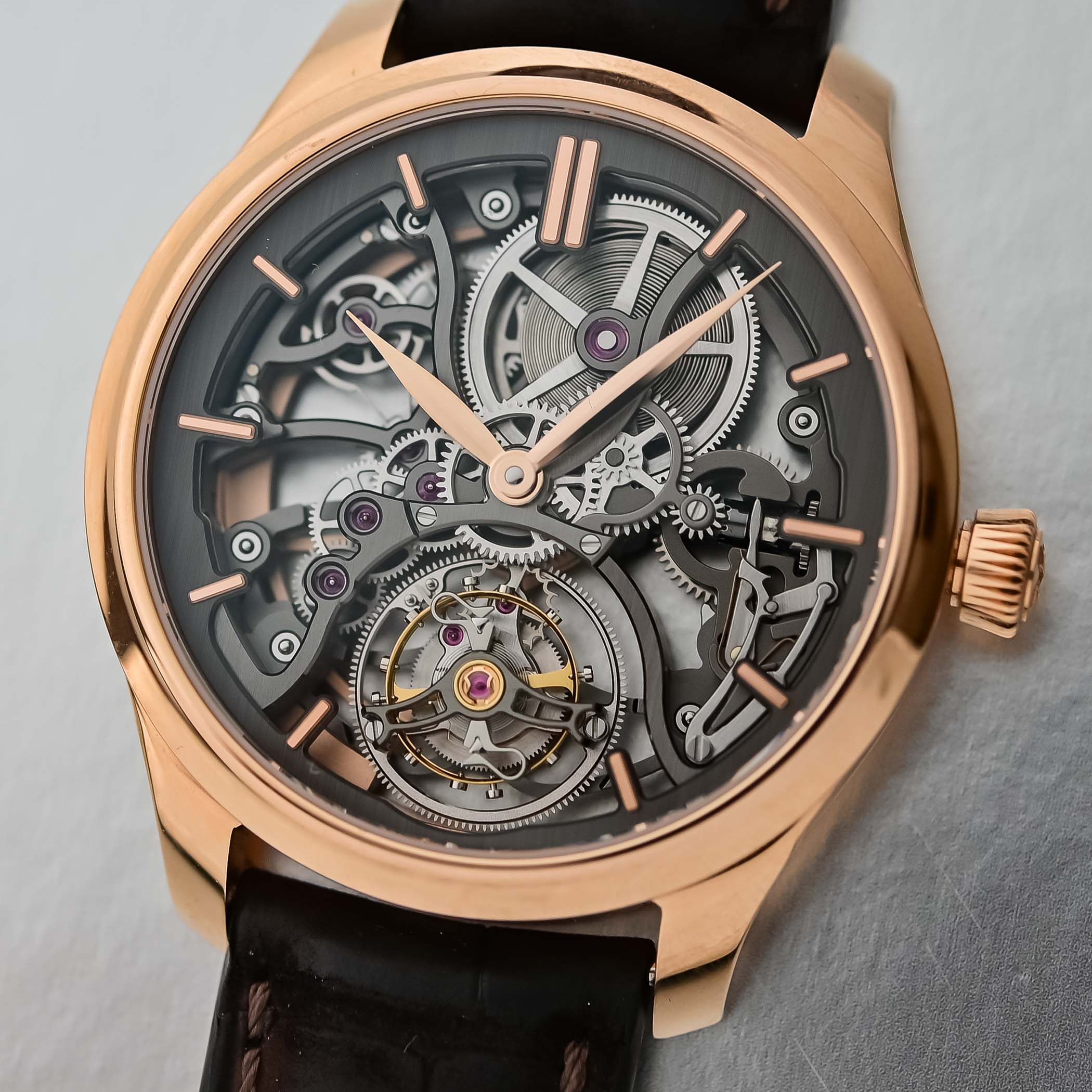
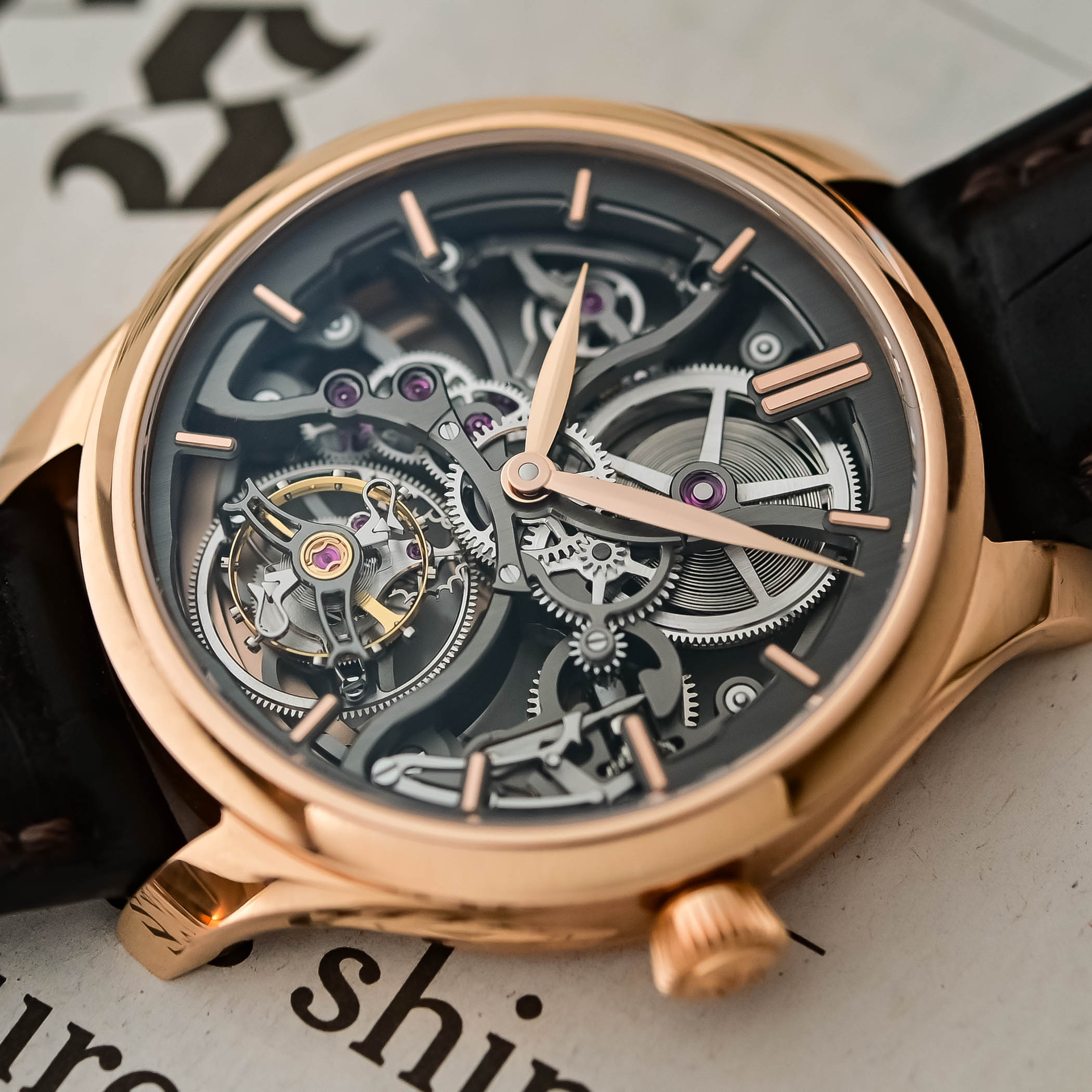
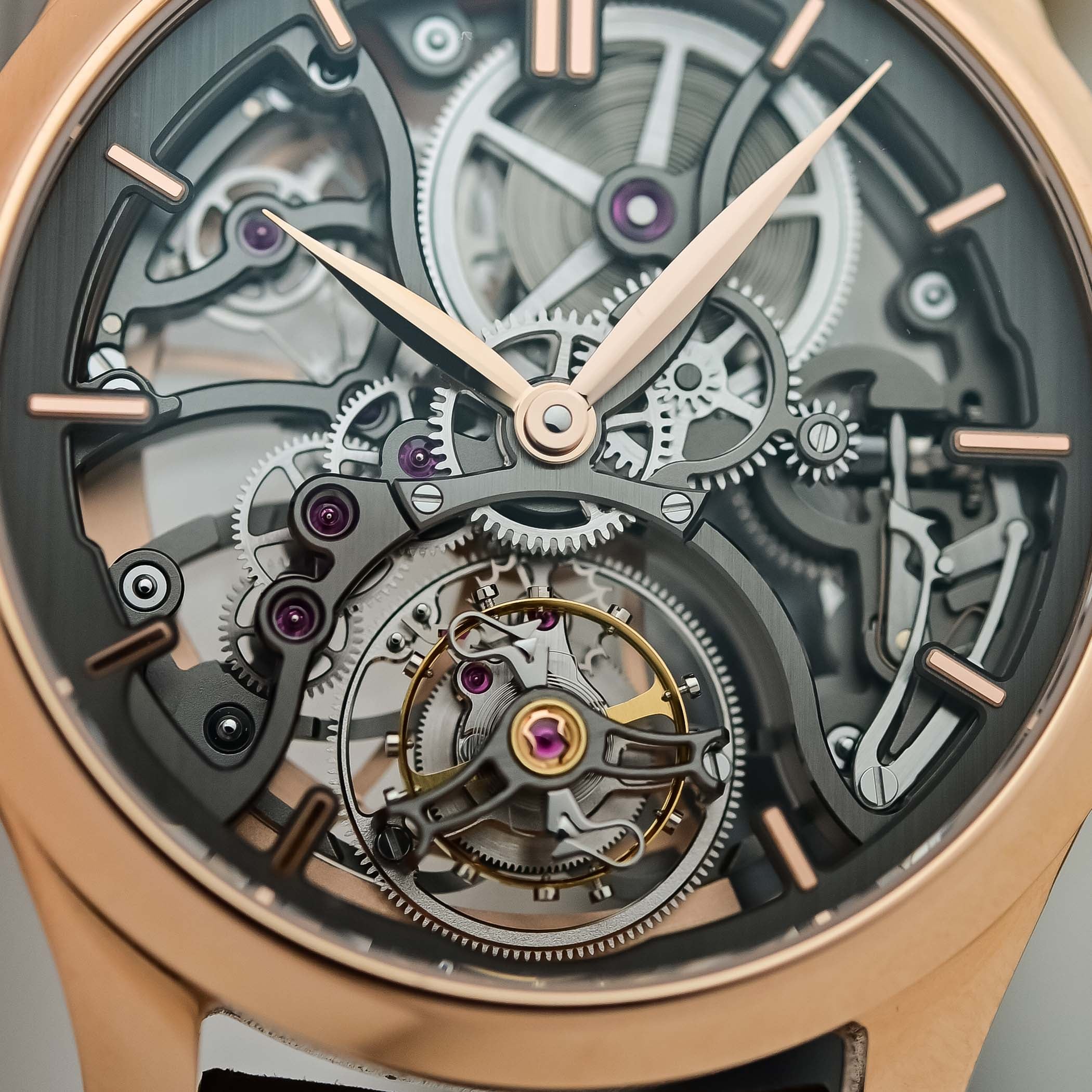
Transparency and symmetry are the keywords of the Endeavour Tourbillon Skeleton, with a fully openworked movement that is, as said before, shared with the Streamliner collection. The bridges and main plate, treated in an anthracite shade and adorned with drawn strokes, create a sleek and modern canvas that contrasts with the polished leaf-shaped hands and the applied hour markers, both gold-plated, for a modern yet classic look. Thanks to the use of different colours, legibility remains pretty good, at least for such a skeleton watch. At 6 o’clock, the flying tourbillon, equipped with a double hairspring (produced in-house by H. Moser & Cie.’s sister company, Precision Engineering AG), occupies most of the space and animates the dial.
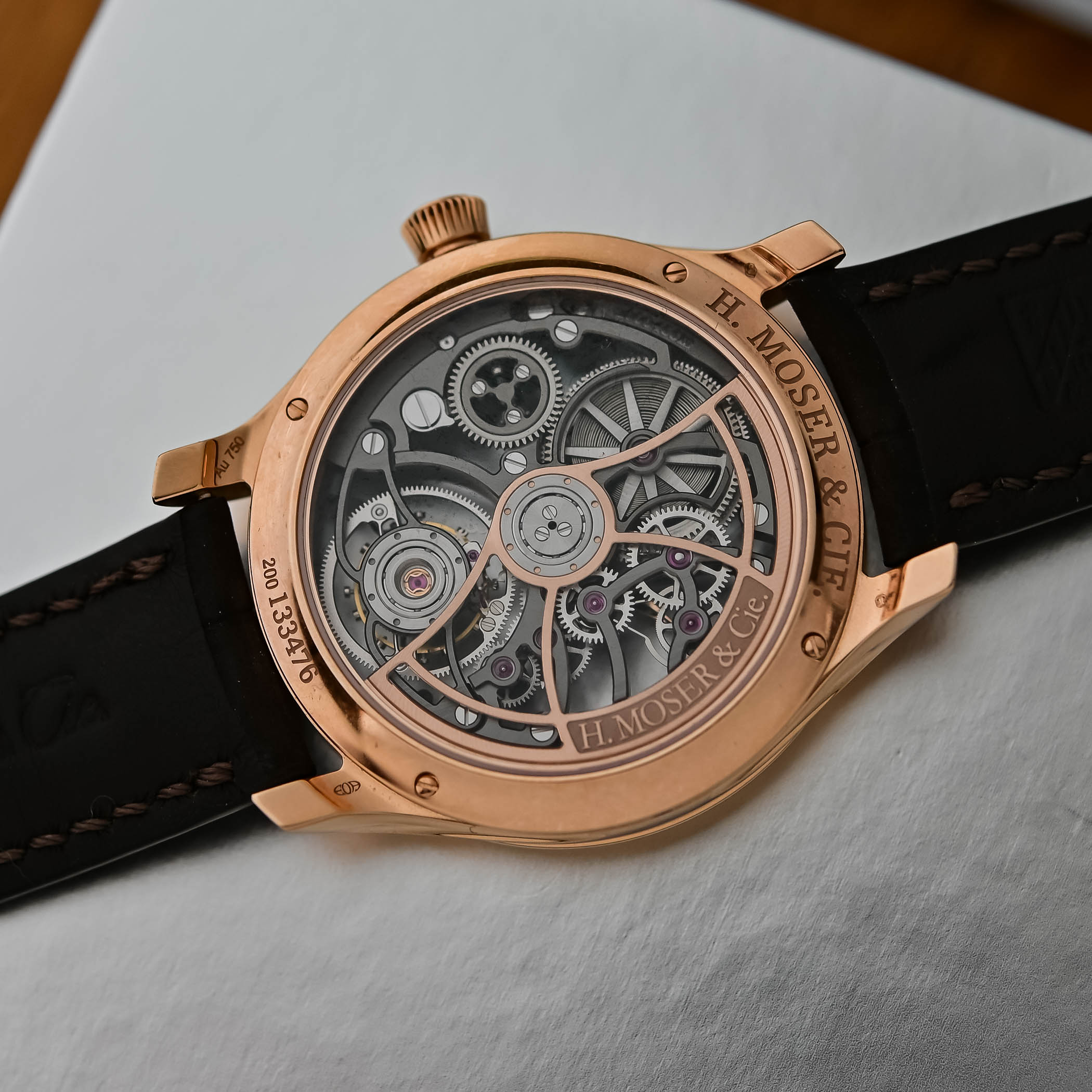
The Endeavour Tourbillon Skeleton is powered by the Calibre HMC 814, an in-house automatic movement derived from the HMC 804. It maintains a solid power reserve of 72 hours and utilises a bidirectional pawl winding system. Operating at 21,600 vibrations/hour, the HMC 814 comprises 167 components, including 28 jewels. All elements have been opened, including the barrel, offering a direct view of the spring, allowing the wearer to check that it is wound correctly. Finishing is pleasant, with polished bevels all around, even though some internal anglage would elevate this calibre to an even more appealing level.
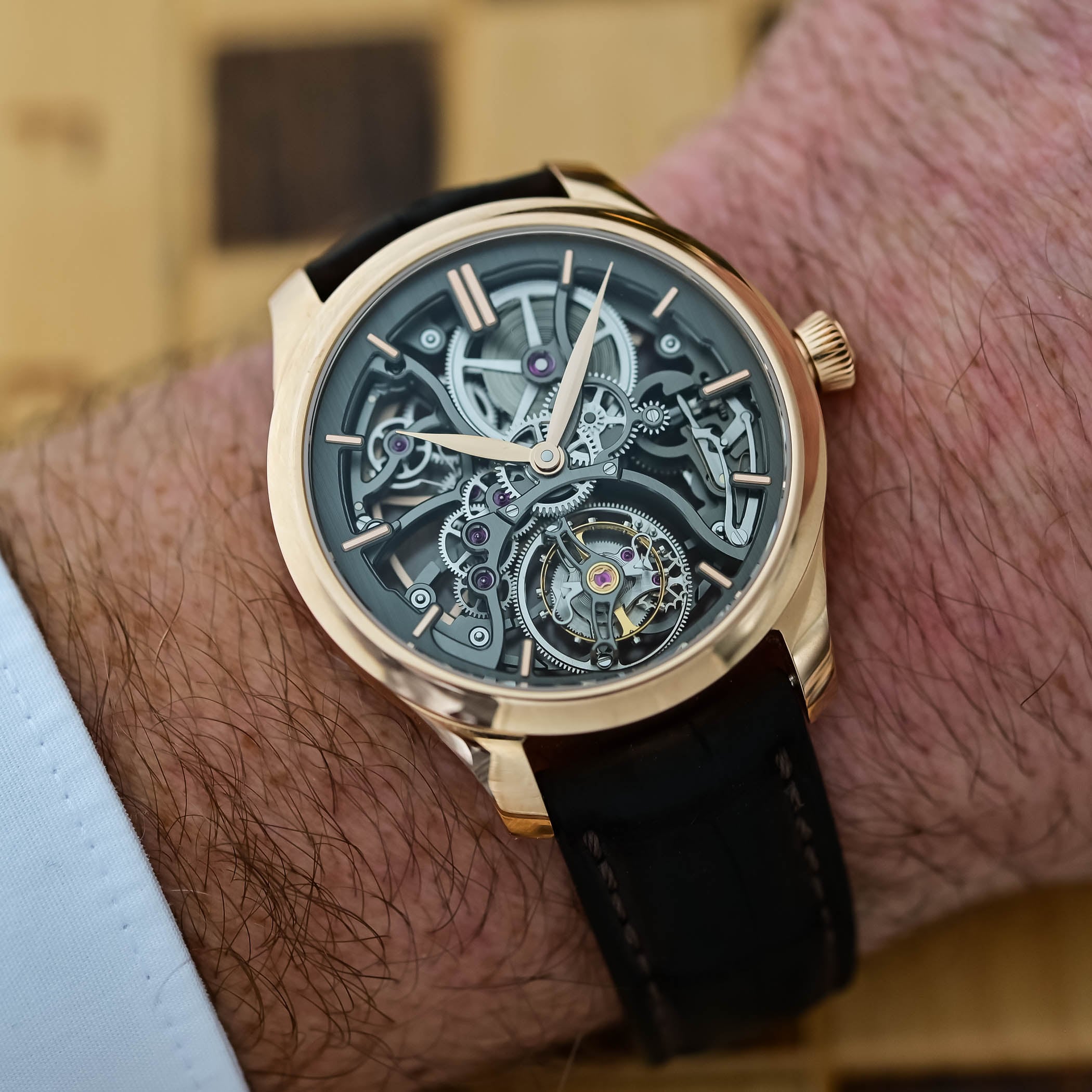
Worn on a dark brown alligator nubuck leather, the H. Moser & Cie. Endeavour Tourbillon Skeleton is released as part of the permanent collection and is priced at CHF 85,400 (incl. taxes). For more information, please visit H-Moser.com.