


 Not all images were able to load for printing. Please close the print window and try again.
 Favre Leuba Launches the New 1737 Collection with a Triple Calendar Edition
Looking back to move forward, the revived brand takes inspiration from its mid-century triple calendars, revisiting them in a more contemporary yet classical key.
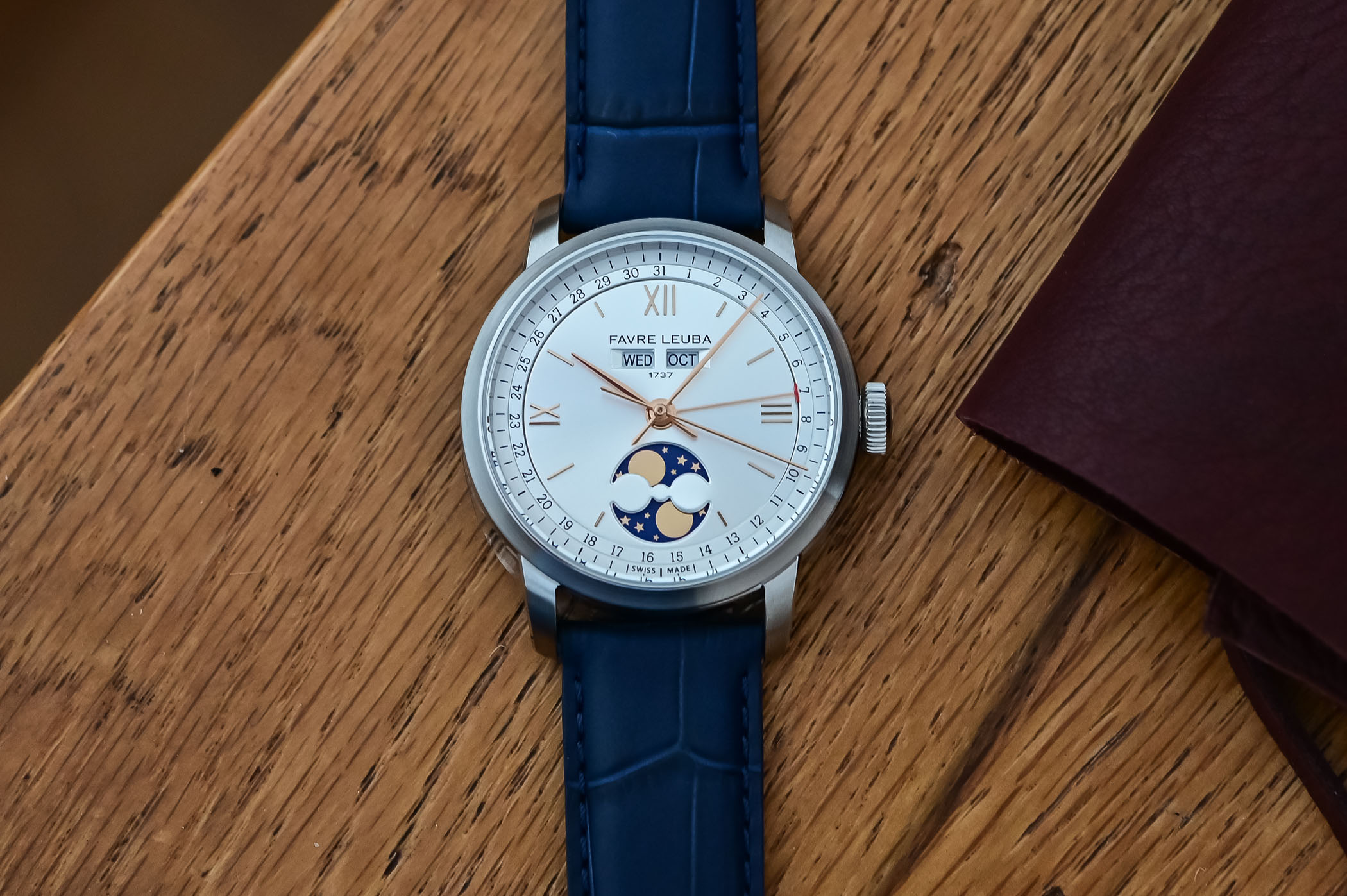
The second-oldest name in watchmaking history, Favre Leuba’s origins go back to 1737, when Abraham Favre was recorded as a watchmaker in Le Locle. Following a global relaunch in 2024 under the leadership of CEO Patrik P. Hoffmann, Favre Leuba’s modern revival focuses on precision-driven timepieces that honour the brand’s extensive archives while meeting contemporary mechanical expectations. Keen to underscore its heritage, Favre Leuba marks its Watches & Wonders debut with the release of the 1737 Triple Calendar.
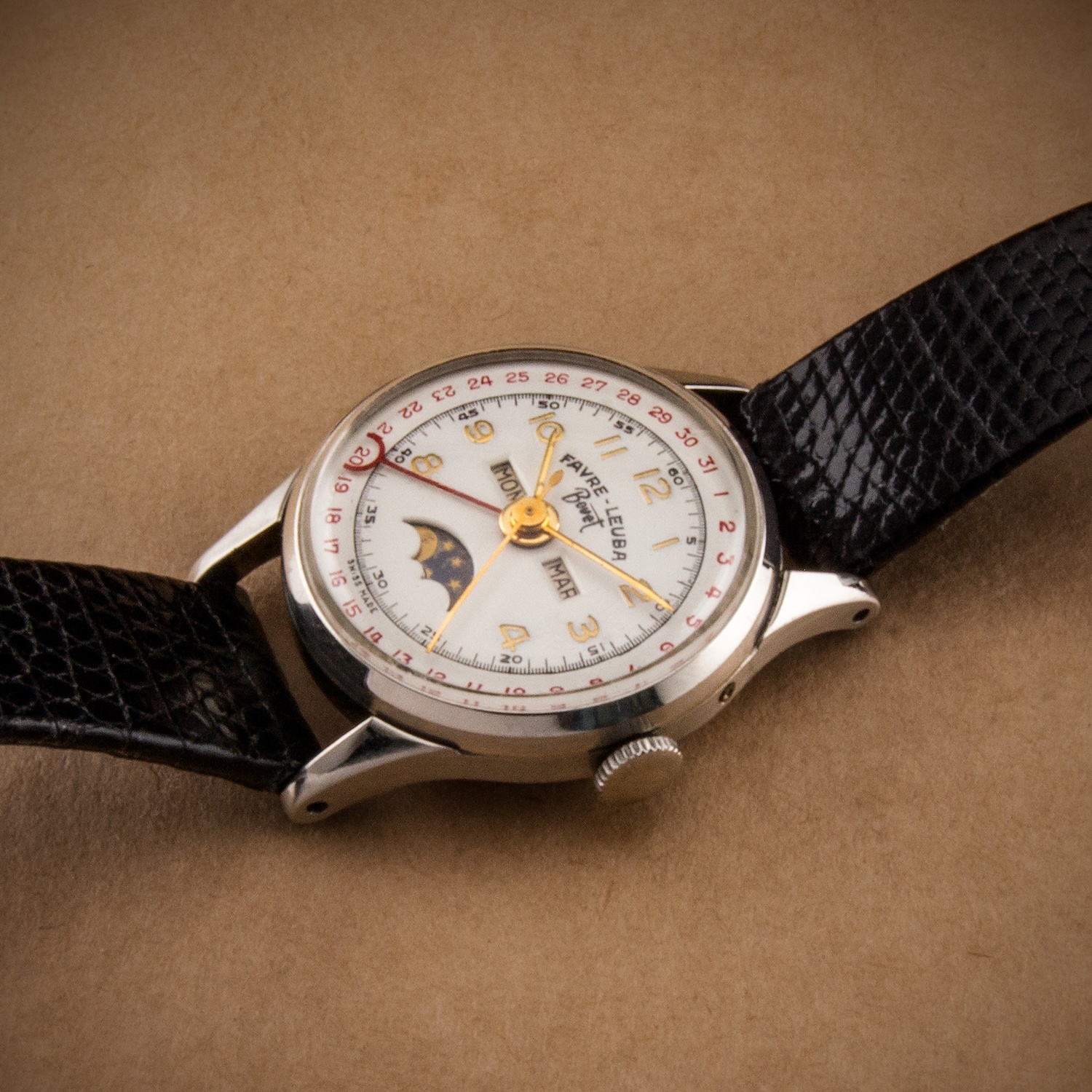
Joining the brand’s current collections – Chief, Deep Raider, Sea Sky and Harpoon (launching now) – the 1737 Triple Calendar can trace its ancestry to the late 1940s. The brand’s history of triple calendar complications with moon phases dates to 1946, with the launch of the Datora, an important post-war watch for the brand. Around 1950, Favre Leuba and Bovet & Frères teamed up to produce a triple-calendar model with moon phases using calibre 1162.
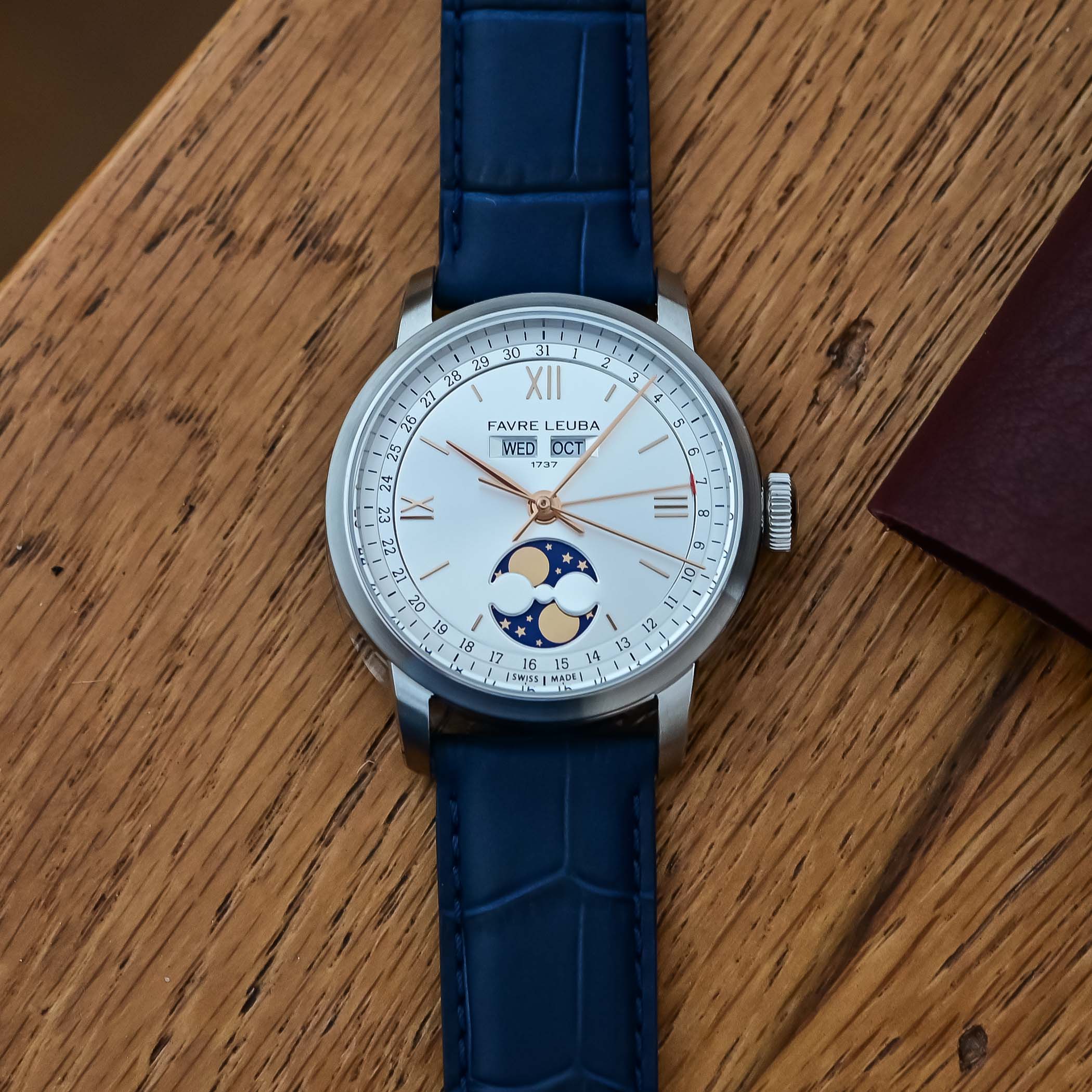
Recontextualising the complication in one of Favre-Leuba’s 1970s geometric designs, the 1737 Triple Calendar is a contemporary expression of the brand’s heritage. Housed in a round 39mm stainless steel case with a thickness of 12.11mm and 100m water-resistance, the large crown is embossed with the hourglass monogram. Two correctors, set flush into the case at 2 and 10 o’clock, are used to adjust the month and day indications, respectively.
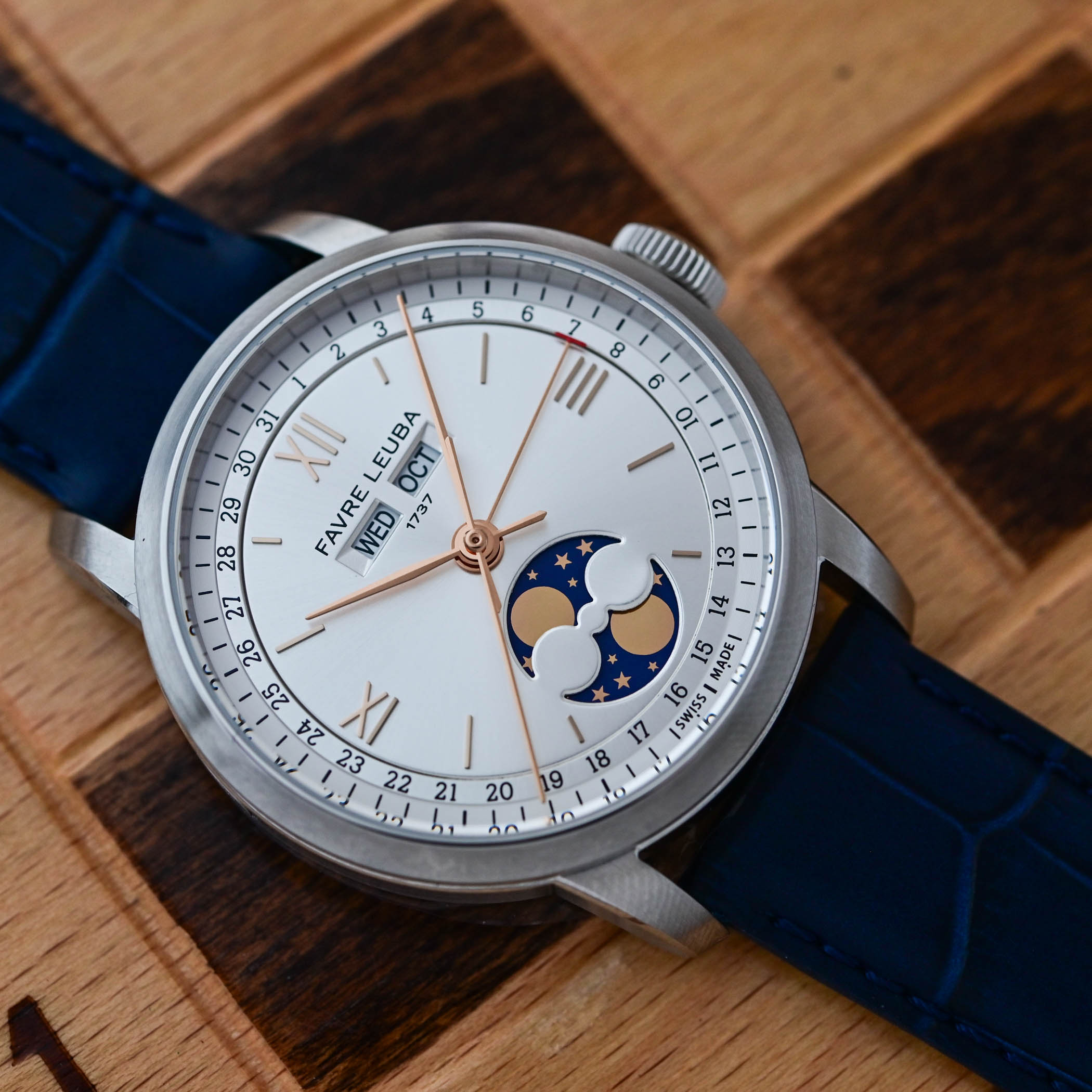
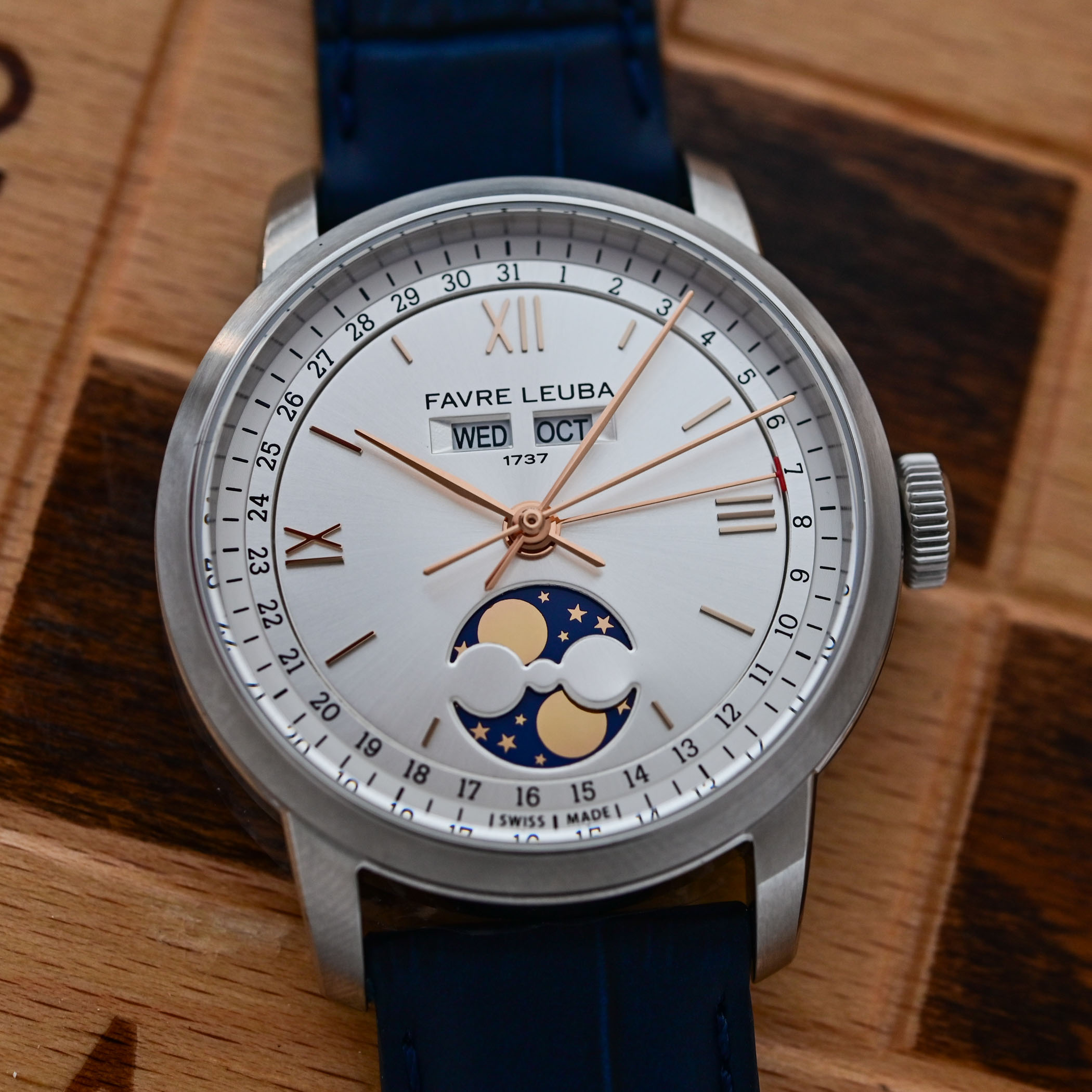
The silver sunray-brushed dial reveals a couple of details that reference the brand’s mid-century triple calendars. The peripheral date function, indicated by a pointer hand, for example, was a feature of Favre Leuba’s early calendars but is somewhat overshadowed in this context by an extra snailed track corresponding to minutes. The day-of-week and month apertures are also located in a similar position to the original at noon.
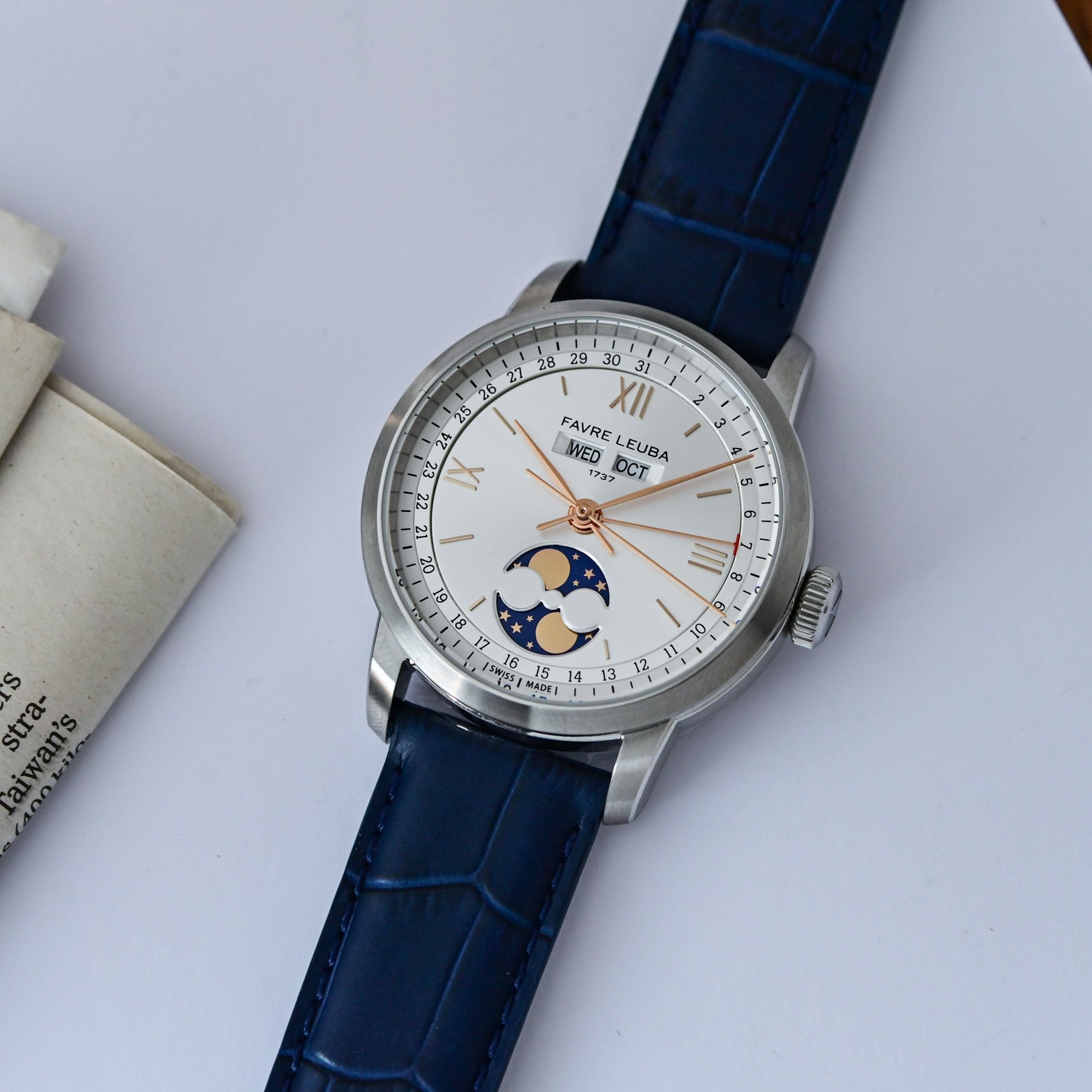
However, instead of Arabic numerals, the new triple calendar features classic gold-plated Roman numerals applied at XII, III and IX with baton markers of varying lengths for the rest. The moon phase display in a circular cutout occupies its traditional position at 6 o’clock, revealing two golden moons surrounded by golden stars in a midnight-blue sky. The three central hands are a slightly darker shade of gold, and the pointer hand indicating the date has a red lacquered bar.
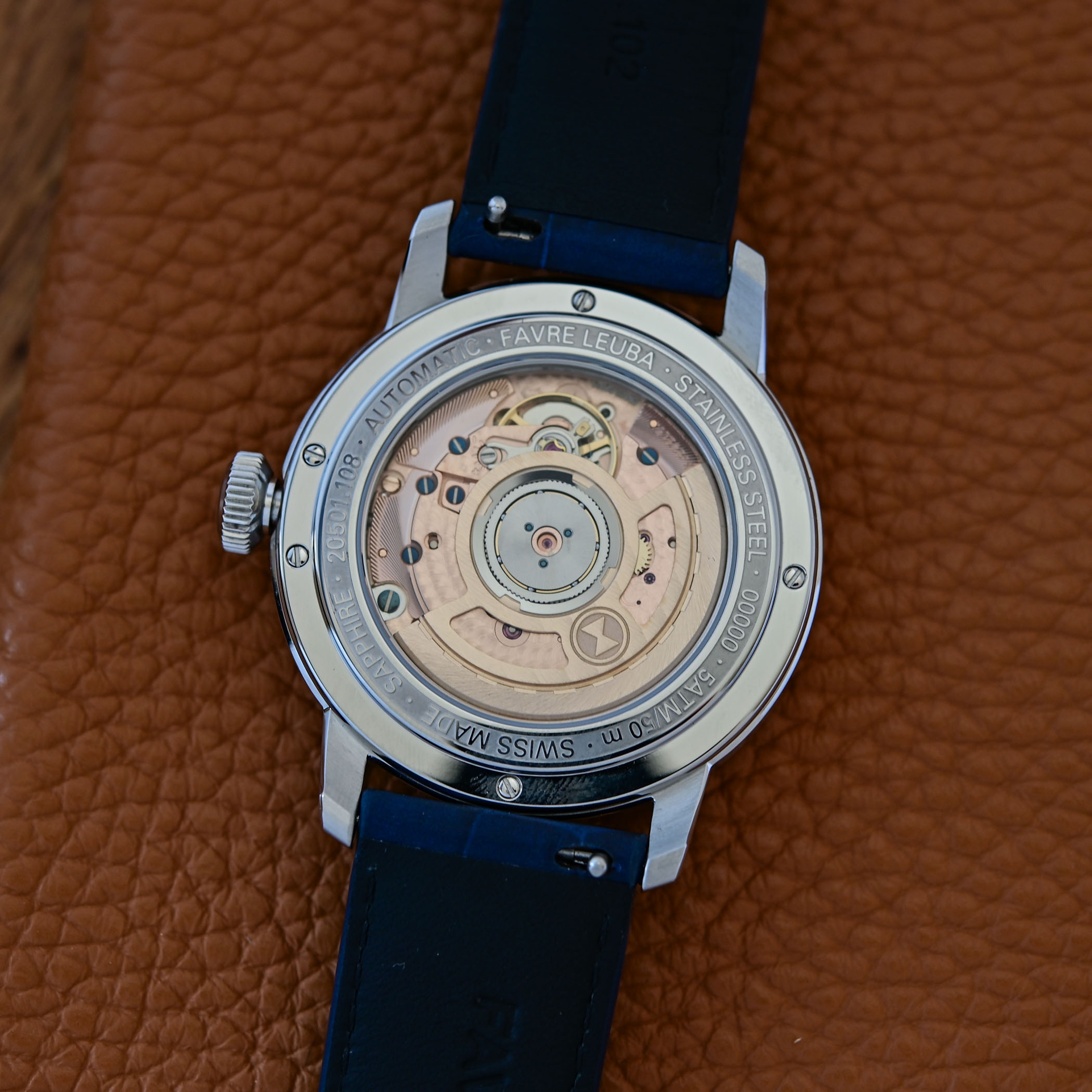
Visible on the caseback, the FLD06 automatic calibre (base Sellita SW300) has a rose gold finish and a customised skeletonised rotor. Beating at 4Hz, the 25 jewel movement delivers a 56-hour power reserve and is decorated with Côtes de Genève, blued screws, perlage and diamond snailing.
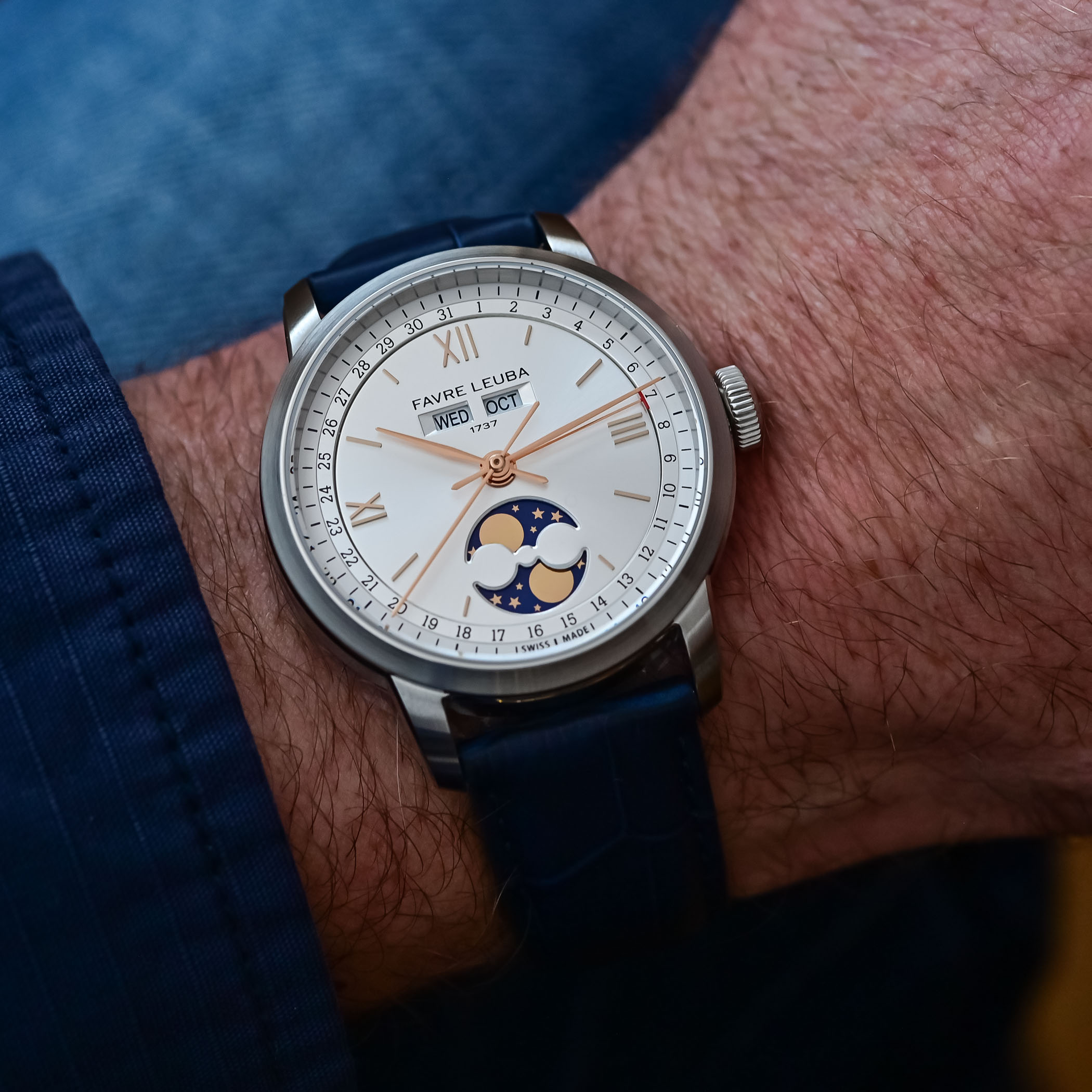
The 1737 Triple Calendar is paired with a leather strap and a pin buckle with the hourglass logo. The strap has a quick-release system. The watch retails for CHF 3,500. More information at favreleuba.com.

3 responses
Smart looking watch and for the name and quality not badly priced.
Except spoiled by the moon phase bit. Who apart from werewolves and vampires watches moon phases?
But I’m an Australian who’s a dive watch guy anyway.?
Beautiful. Hope it does well.
I have their Chief Chrono and Deep Raider (happy with both) and will pull the trigger on this one, too!