Not all images were able to load for printing. Please close the print window and try again.
A Seconds Hand That Slows, Stops, Runs Backwards, Races Fast, but is Never Late… by Algorithme du Temps
Even though its second hand wanders and moves in a non-linear motion, it will be on time every minute.
Do you know the feeling that time sometimes passes very quickly, while at other moments, time seems to drag on with an annoyingly slow pace? The seconds hand on your watch sometimes simply does not comply with how you feel that time passes by, and Nadim Elgarhy created the Algorithme du Temps Rêveries des Secondes watch that reminds us of the philosophical construct of time, which isn’t always in pace with our perception.
We all have experienced this situation when we’re waiting for someone to arrive, someone who is late. And then you look at your watch, the seconds hand sweeping over the dial at an astonishingly slow pace. Time feels long; seconds feel like minutes. And then, a moment of excitement, of joy. You don’t even take the time to look at your watch anymore. Up until the point when you realise that several hours have passed. Time feels fast; you’ve lost track of time. And yet, in both situations, a minute is still 60 seconds long. No matter what. This represents the difference between measured and perceived time.
The perceived notion of time
Time is a convention, a norm that has been defined by mankind based on the observation of natural cycles. Mankind has divided time into seconds, minutes, hours, days and months, all for the sake of practicality. There is, however, no cosmic law requiring an hour to have 60 minutes. That’s only for the measurement of time, the convention upon which we (almost) all agree.
But what about our perception of time? How do we feel time? You’ll agree that it all depends on the moment. Many things can change about how fast or slow time passes; it depends on our own perception. Although some would disagree, we do not have a built-in metronome, and time sometimes flies, and it sometimes drags as boredom grows. Time thus becomes relative.

This highly philosophical construct has fascinated scholars across disciplines, from psychology and physics to philosophy… and horology, of course. These theories on time perception, subjective temporality and the multifaceted nature of time have given Nadim Elgarhy the idea to create a watch, the Algorithme du Temps Rêveries des Secondes, featuring a seconds hand that wanders, just like our minds in front of time passing by.
Algorithme du Temps
This is a particularly interesting topic that has led Nadim Elgarhy to found Algorithme du Temps. Nadim holds a degree in computer engineering and algorithms, and he wrote two papers, both framing his work – which can be read here and here. He also founded a study office named the Bureau Privé des Études Expérimentales, with one question: “How faithfully can a watch reflect the time we actually live, the second that stretches while you wait and vanishes when you don’t?” The answer came by founding Algorithme du Temps and creating the Rêveries des Secondes watch. “The great houses pursue accuracy and complexity, and they do it superbly. We pursue neither for its own sake,” he says, adding that “Algorithme du Temps lives in the tension between its two words: the logic of the algorithm, the elusiveness of time.” The idea was to unite these two notions that essentially can’t exist together: the time we measure and the time we live.
Every watch marks the second in the same way. Or, almost every watch, because some have played with the seconds in the past. Think of the Swiss railway clock, designed by Hans Hilfiker, running 58 seconds and then waiting at exactly 12 for the next two seconds. In 2008, the Corpus Clock by John C. Taylor in Cambridge was designed to run erratically, slowing down, speeding up or sometimes stopping, while still being correct every 5 minutes. In 2020, Dubois Depraz, the renowned module manufacturer, designed Thila, with a small seconds hand that swings like a metronome.
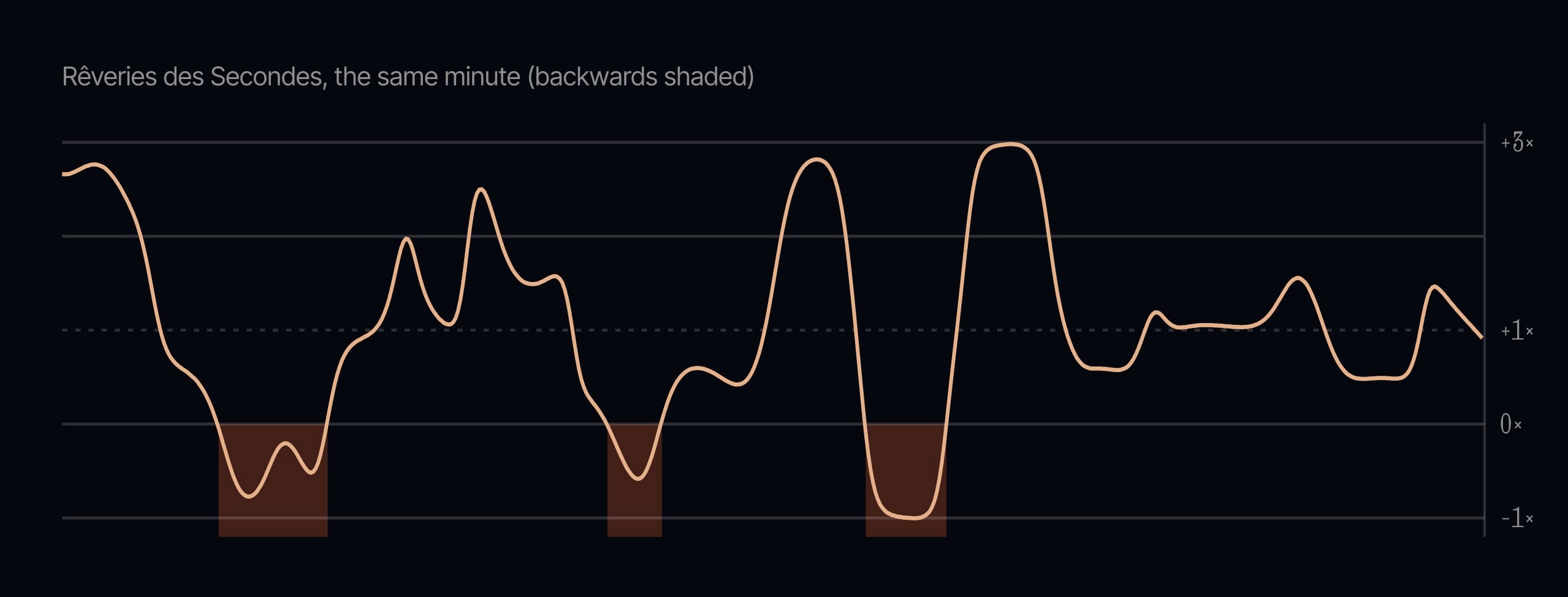
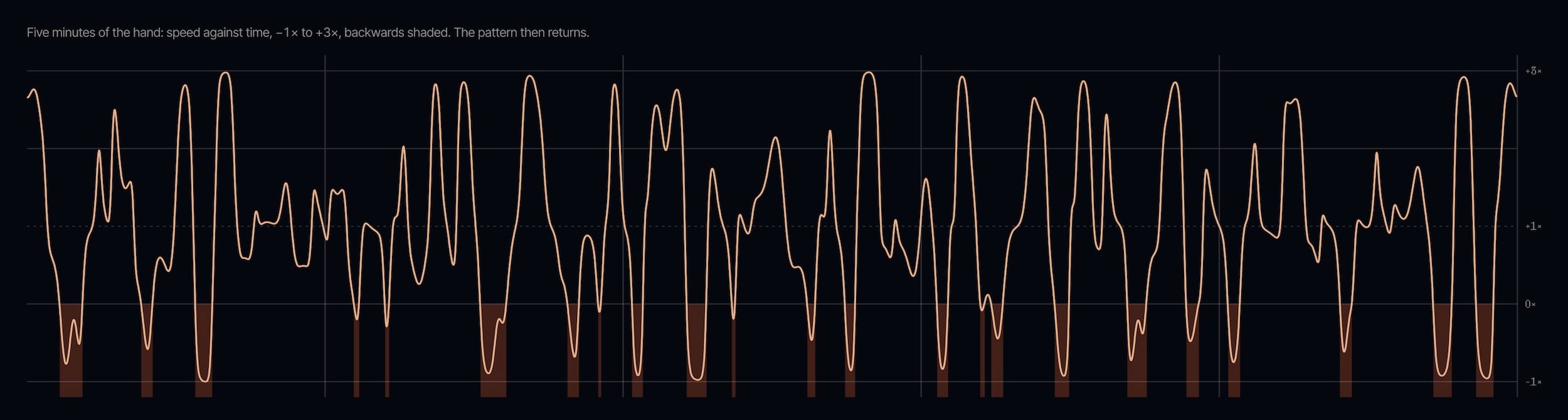
With the Algorithme du Temps watch, the idea is pushed even further. The motion of the seconds hand is anything but linear. It’s not even one-sided. It slows, stops, accelerates, runs backwards before changing direction again. And yet, at the end of every minute, no matter how far it wanders off, it will inevitably cross the 12 o’clock position at every full minute. As you can expect, there is a logic behind this erratic motion, a pattern that has been mechanically recorded over a 5-minute period, thanks to a clever module on top of a Sellita SW200, here simply to give power to the watch. And to understand how this all looks and works, I invite you to look at the video at the top of this article.
The non-linear seconds hand
If you glance at a clock’s seconds hand, for a short moment, it seems to stand still or to take longer than normal to reach its next position, or at least the position where you expect it to be. Neuroscientists call this chronostatis, as the brain stretches the moment of looking. It is an illusion, one described by Nadim Elgarhy as such: “the instrument we trust to measure time evenly is read by a mind that does not.” That was the starting point of the watch.
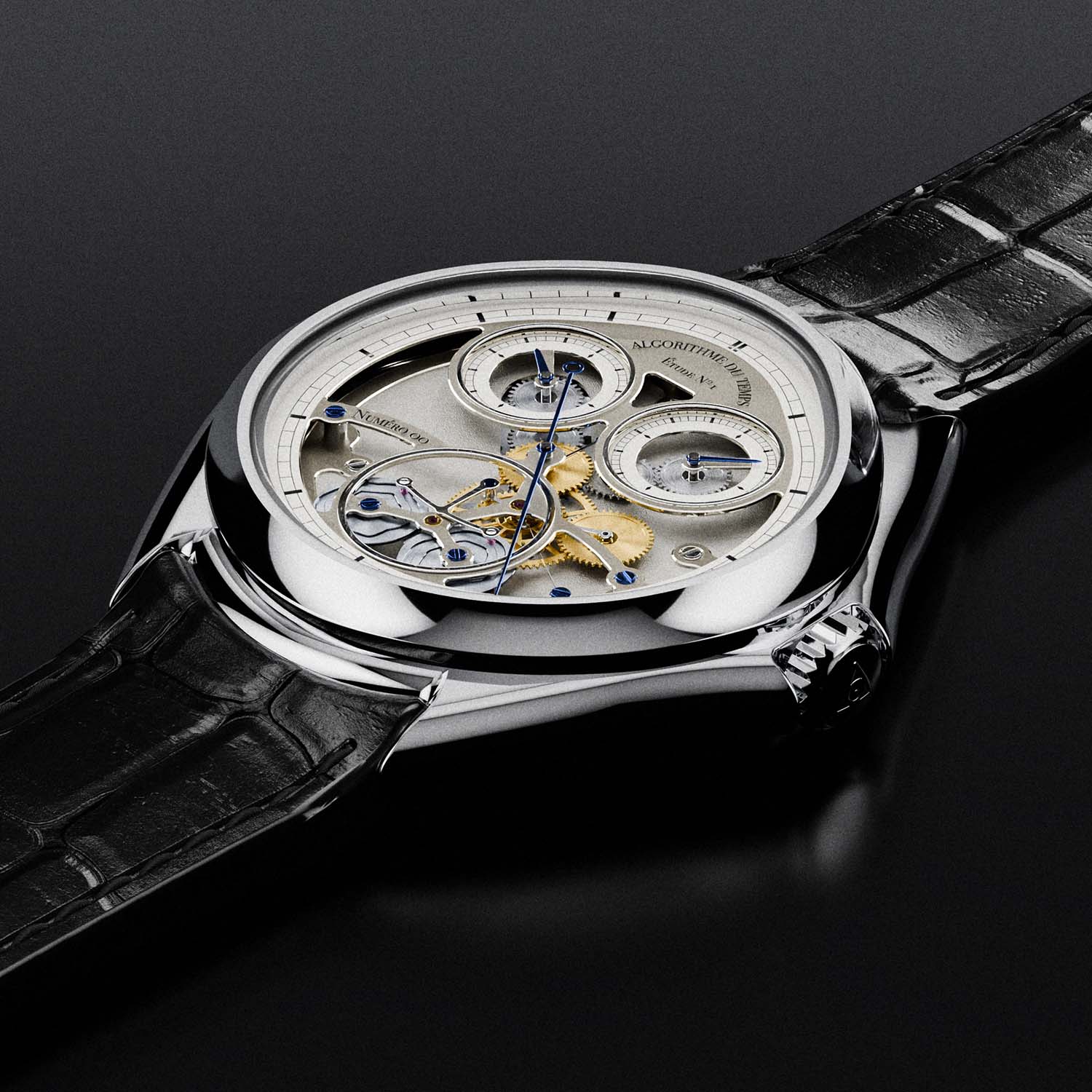
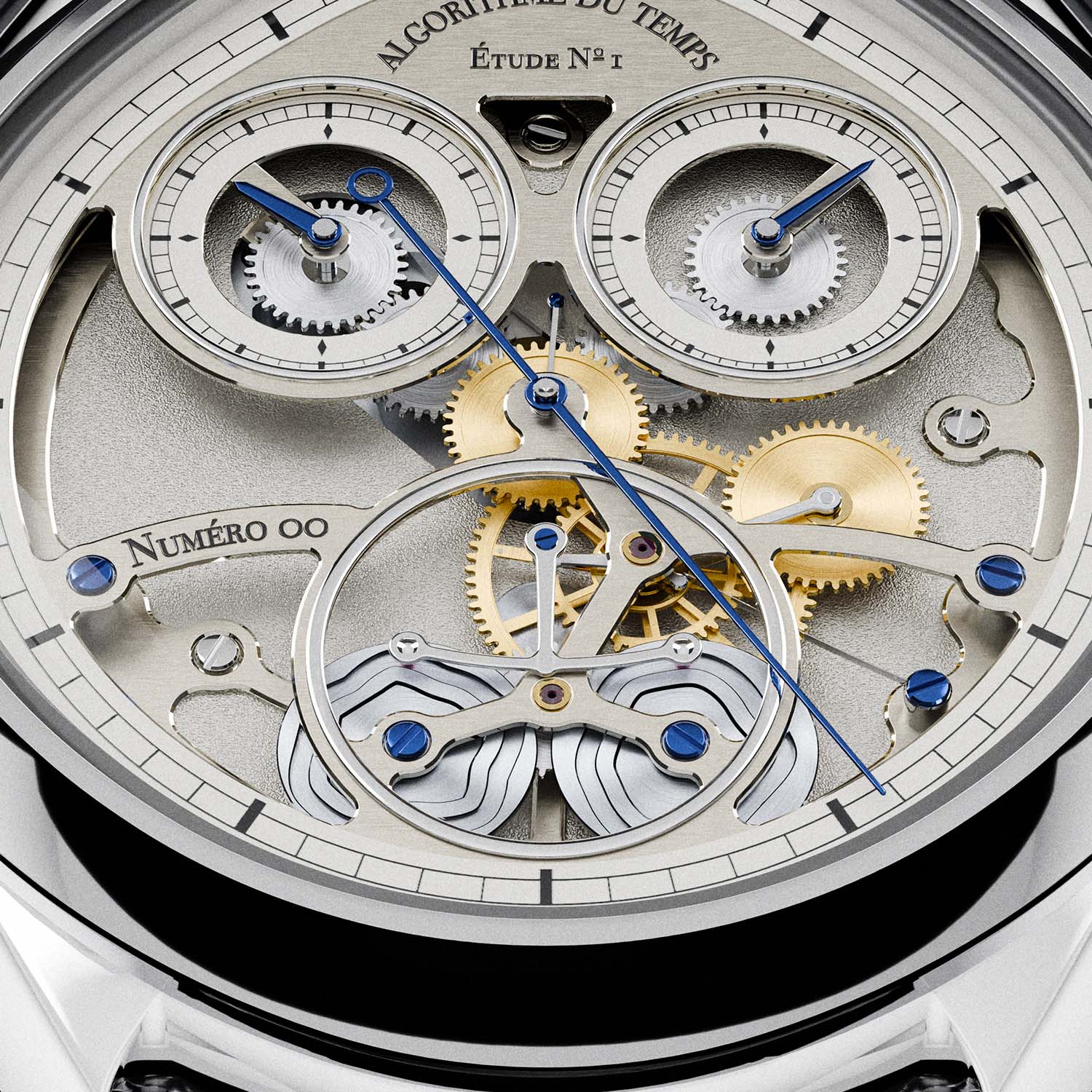
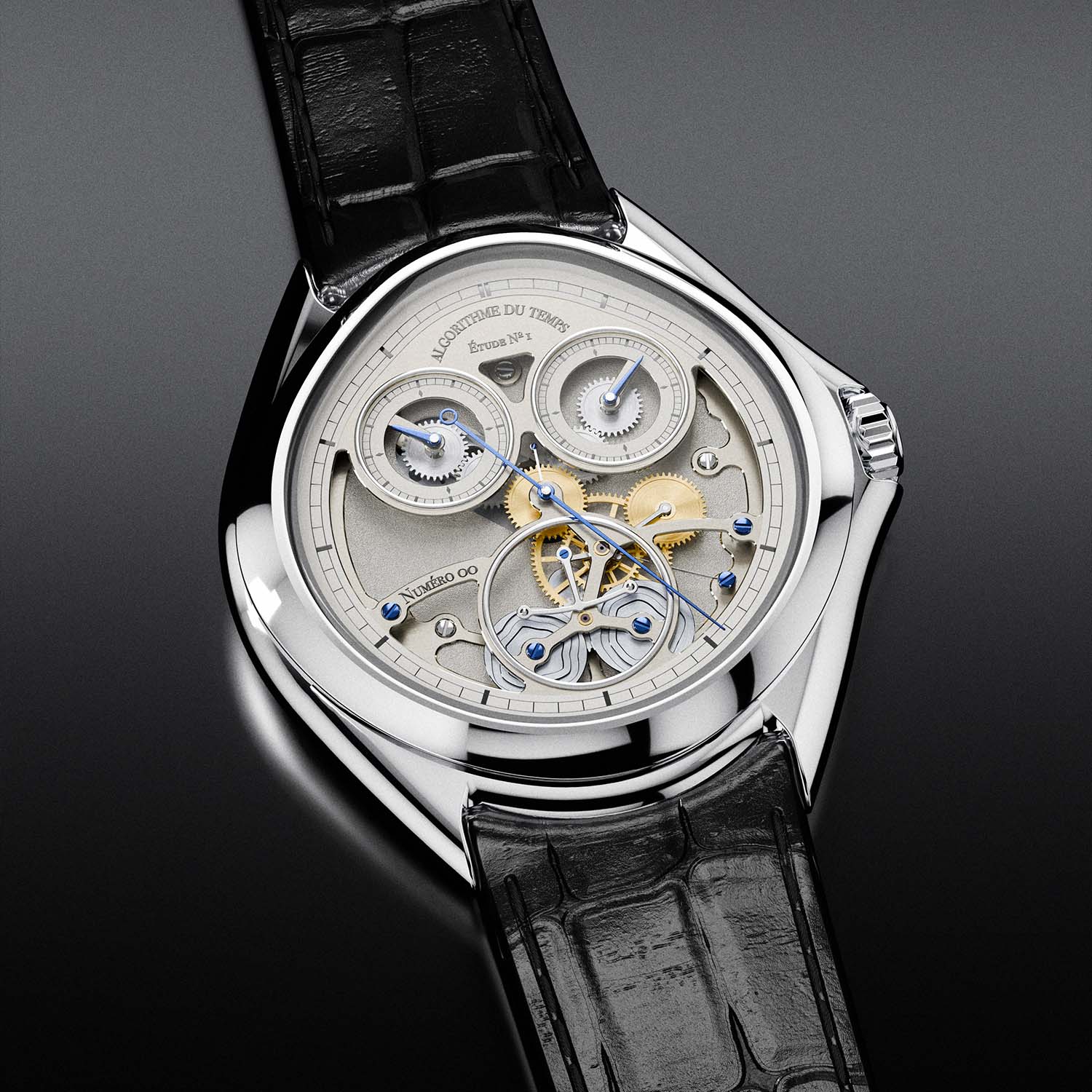
Placed right in the centre of the dial, unobstructed by other indications, the seconds hand sweeps across a non-circular track framing the dial and making the shape of the bezel and case. But that’s not the tricky part. Contrary to the linear and constant motion of most second hands, the one found in the Algorithme du Temps never runs evenly. Depending on the moment you look at it, it can slow down well below the normal speed, it can fully stop, it can run backwards, or even race to three times the normal speed. 19% of the time, it will run backwards. It changes direction 46 times over the course of its 5-minute program. And yet, it always indicates the end of a minute accurately.
How does it work?
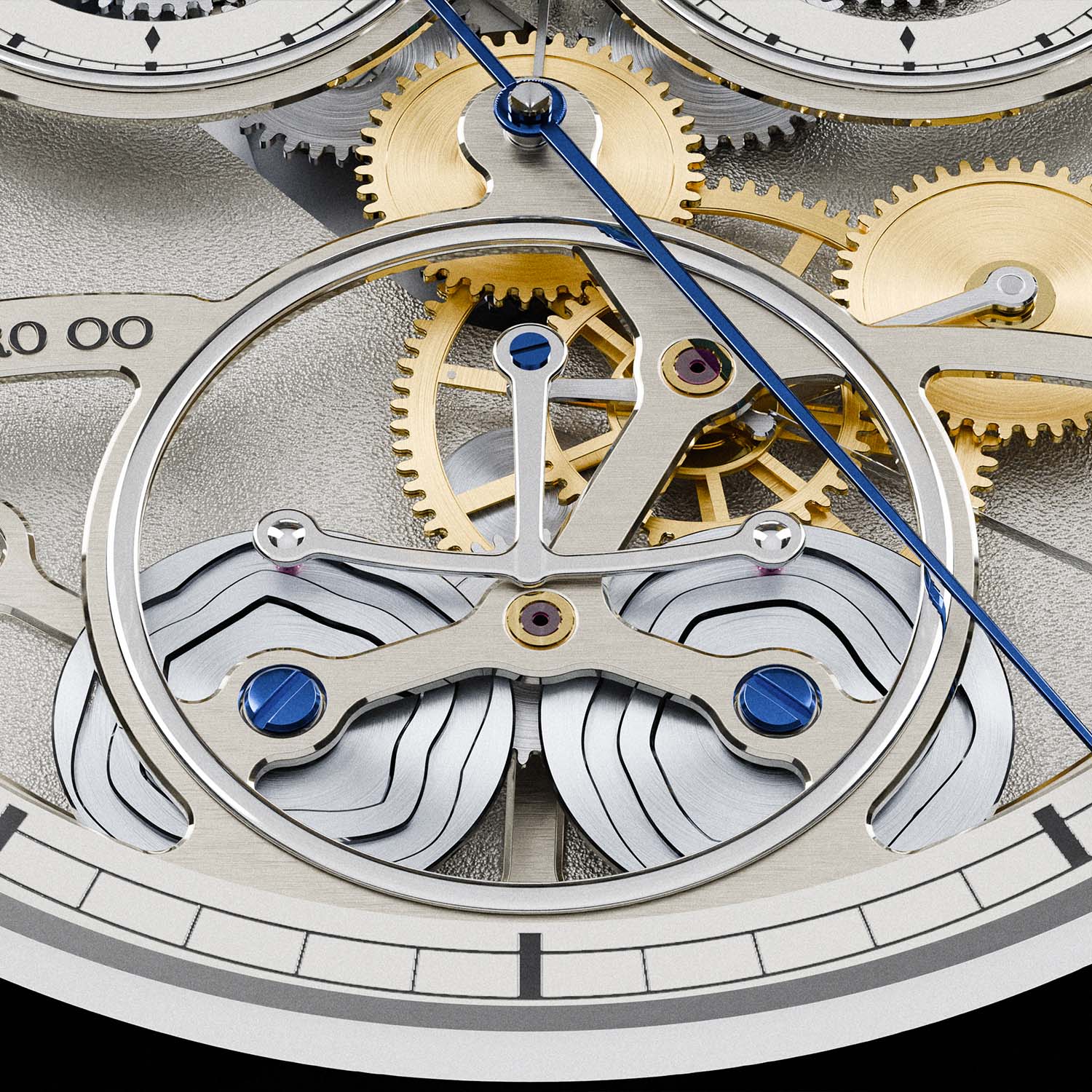
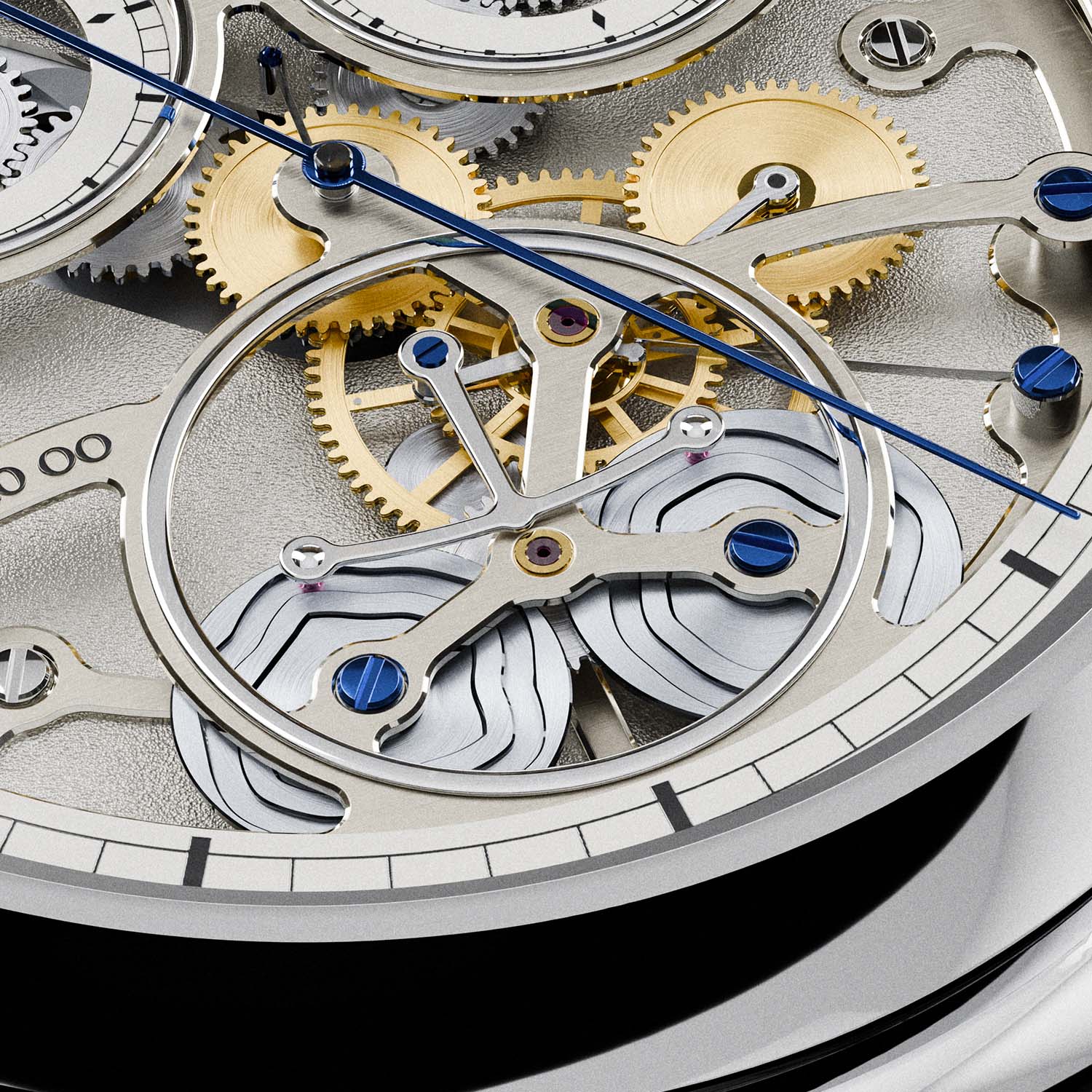
The seconds hand is positioned centrally, but what matters sits at 6 o’clock. As said, the motion is fully mechanical and fully determined. The motion relies on two cams, and the escapement and timekeeping part of the watch are doing what they do in pretty much every watch on this planet. The two cams feature non-circular patterns and are connected by a central anchor, the latter transmitting their motion through a differential connected to the central seconds. One cam rotates in 50 seconds, the other in 42.86 seconds. They only line up once every five minutes, so the pattern repeats every five minutes. The differential shows the seconds; the cams offset it. Finally, each watch receives its own pair of cams, computed for it alone. No two watches share the same pattern, so each is unique in its randomness.
Off-centred but classic hours and minutes
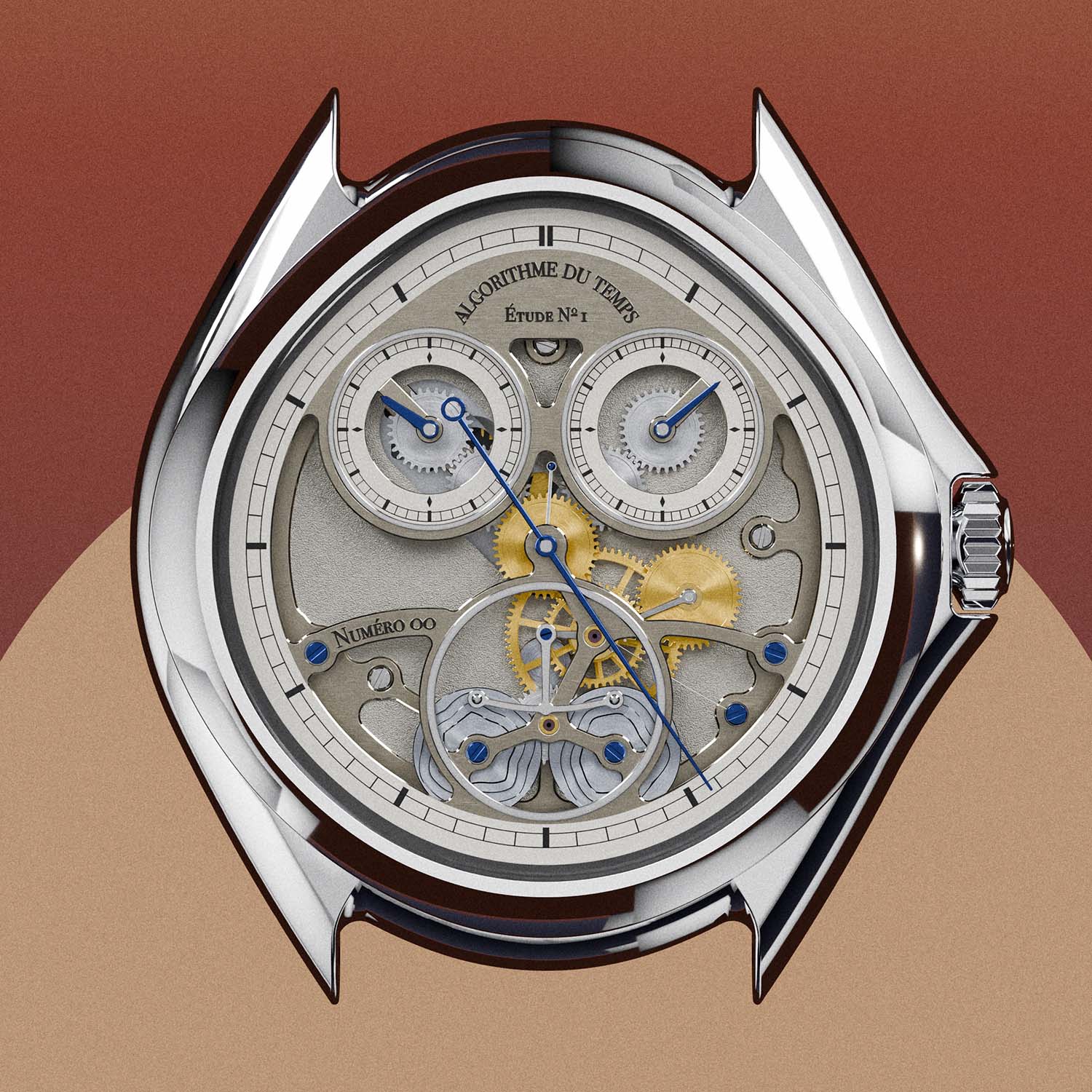
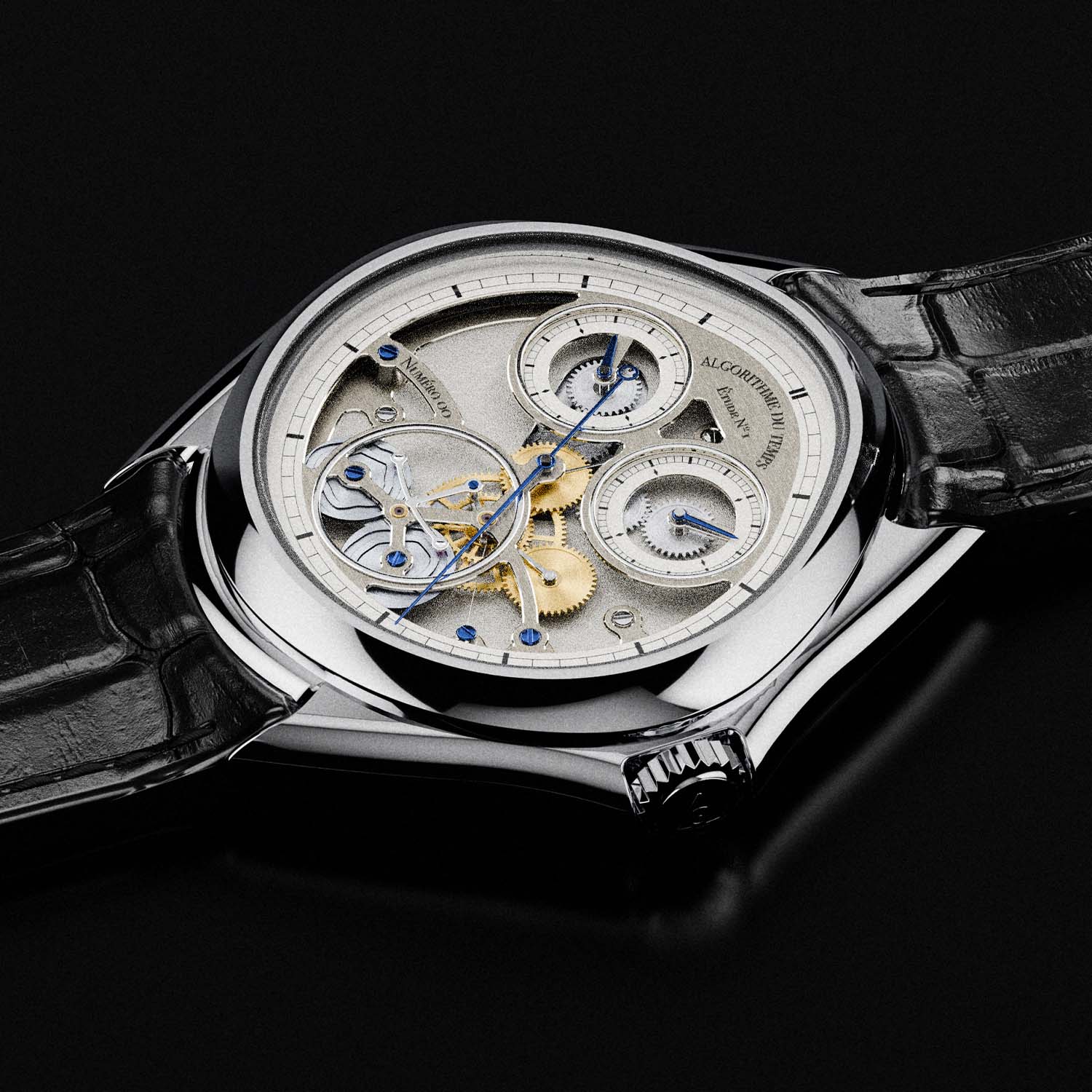
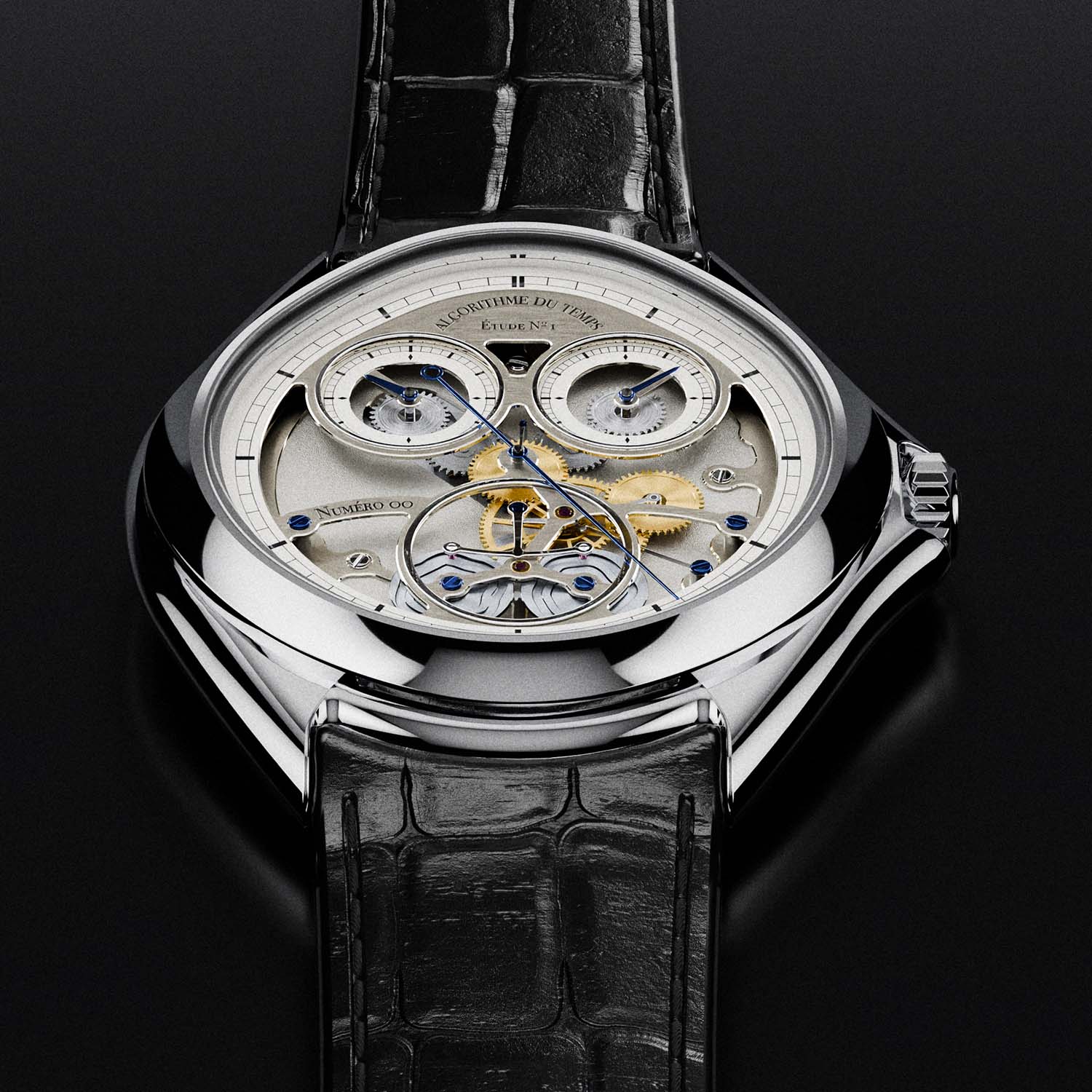
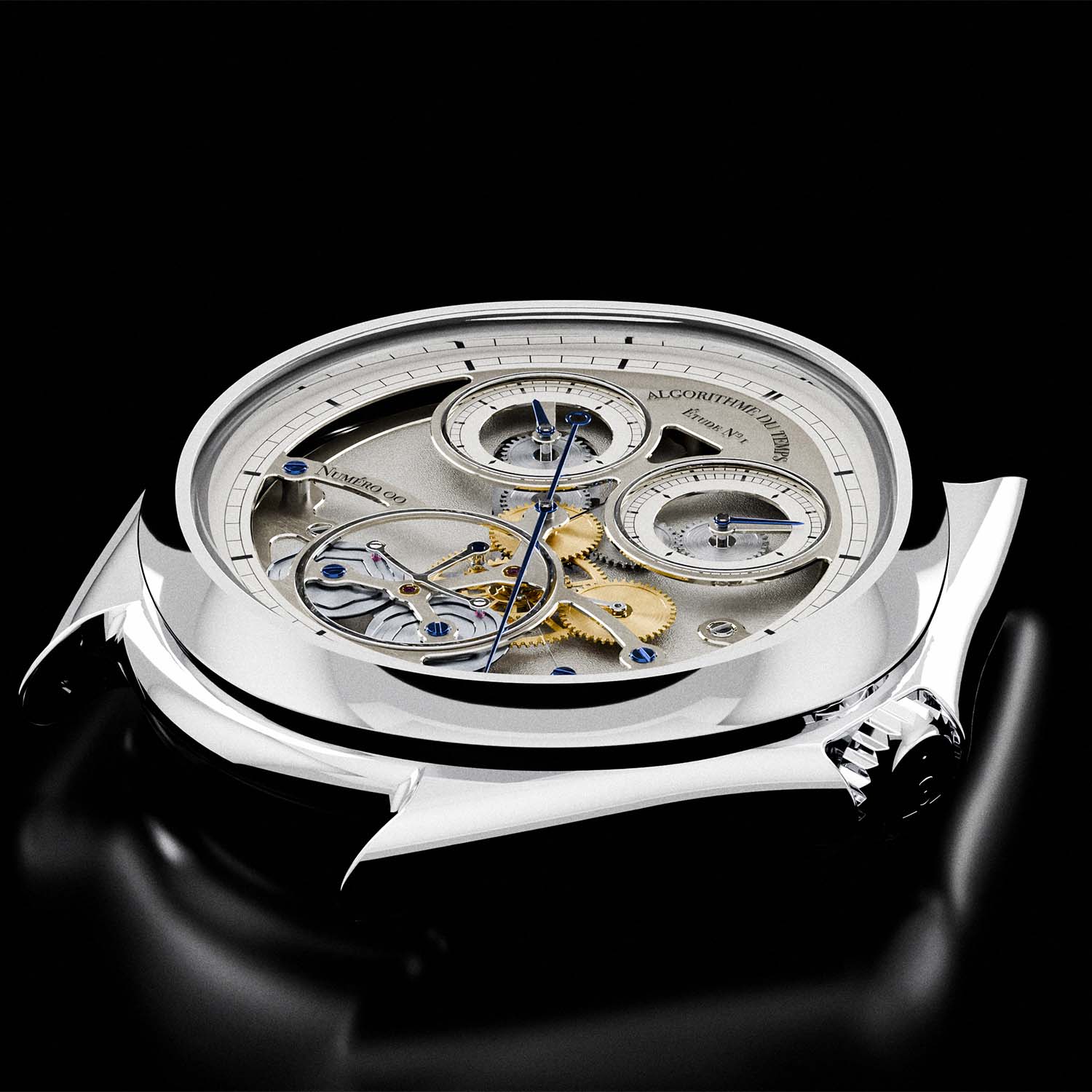
The Algorithme du Temps Rêveries des Secondes watch is not all erratic, though. Time, by the means of minutes and hours, is displayed classically, with two off-centred sub-dials and blued steel hands. These two indications run on classic circular motions of 60 minutes and 12 hours. The dial itself offers great depth and an undeniable attention to detail. The base plate is grained, offering a matte background for all the indications floating over the dial. The latter is limited to a flange framing the indications and is fully open on the lower part, thus revealing the mechanics behind the non-linear motion of the seconds hand.
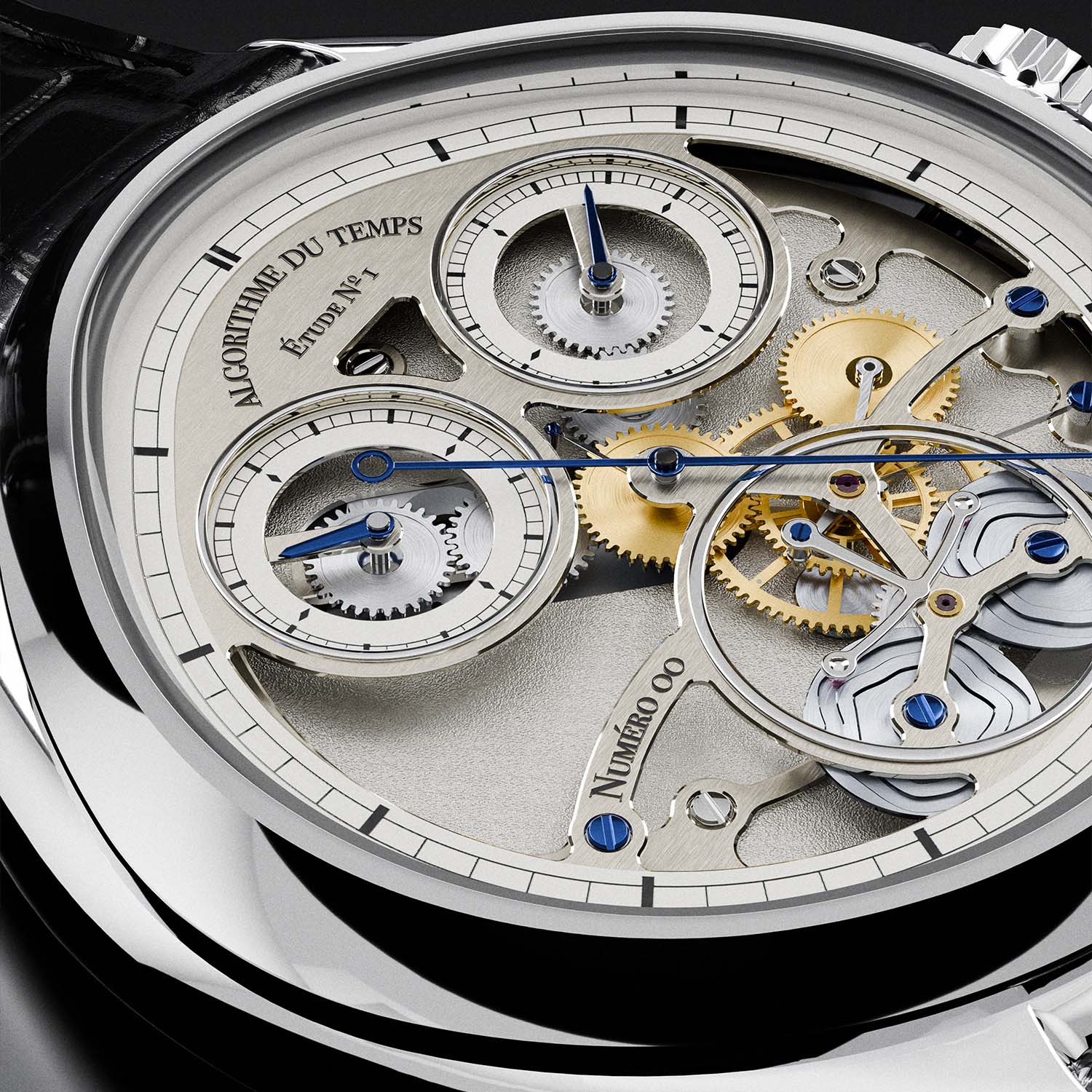
The finishing of the elements also appears refined, with a grained background, top plates with brushed top surfaces, multiple bevels, blued, chamfered screws and circular grained wheels.
A compact 904L steel case
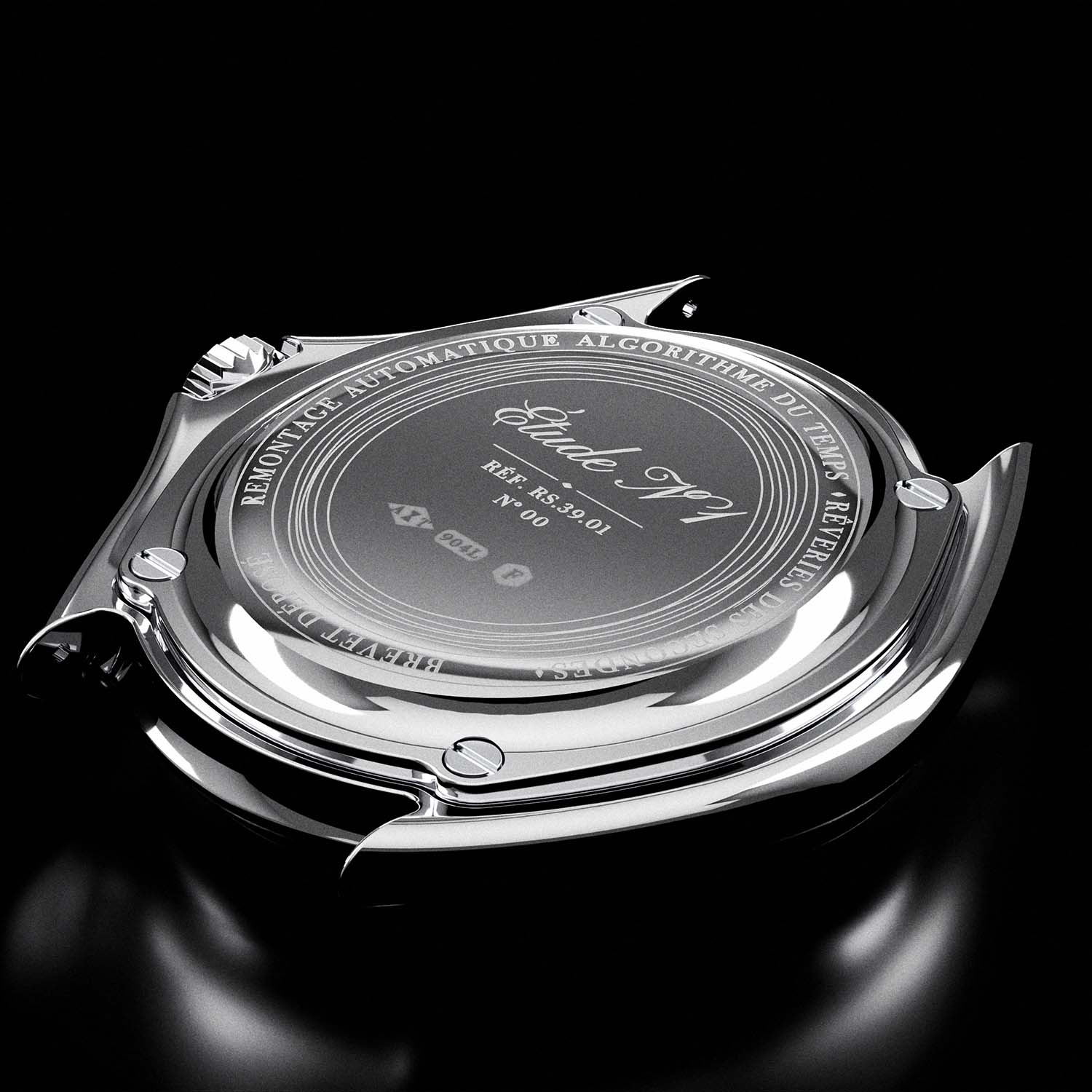
The first watch of Algorithme du Temps is not just a philosophical exercise but also a rather elegant, yet singular watch. The case, measuring 38mm in diameter and a reasonable 10.5mm thickness, is made of 904L steel, fully polished and shaped. Seen from above, it feels almost like a hexagon with short, integrated lugs, while the bezel, with a nice concave and polished profile, has an asymmetrical ovoid shape. The back is solid steel and hides a simple but reliable base movement, a Sellita SW200-1, an automatic movement known to be a clone of the venerable ETA 2824.
Availability & Price
The Algorithme du Temps Rêveries des Secondes watch will be produced in a limited initial run of 40 pieces, with each watch receiving its own pair of cams – thus, each watch will have a unique seconds hand pattern. The price is expected to be just under CHF 17,000 excluding taxes, with the final price to be confirmed once the prototype is ready and the production partners are chosen. For more details and to express your interest, please visit www.algorithmedutemps.com.