


 Not all images were able to load for printing. Please close the print window and try again.
 Three-in-a-Row For Porsche, As The Penske Factory Team Wins The Rolex 24 At Daytona 2026
Back-to-back-to-back wins for Porsche Penske Motorsport's #7 Porsche 963.
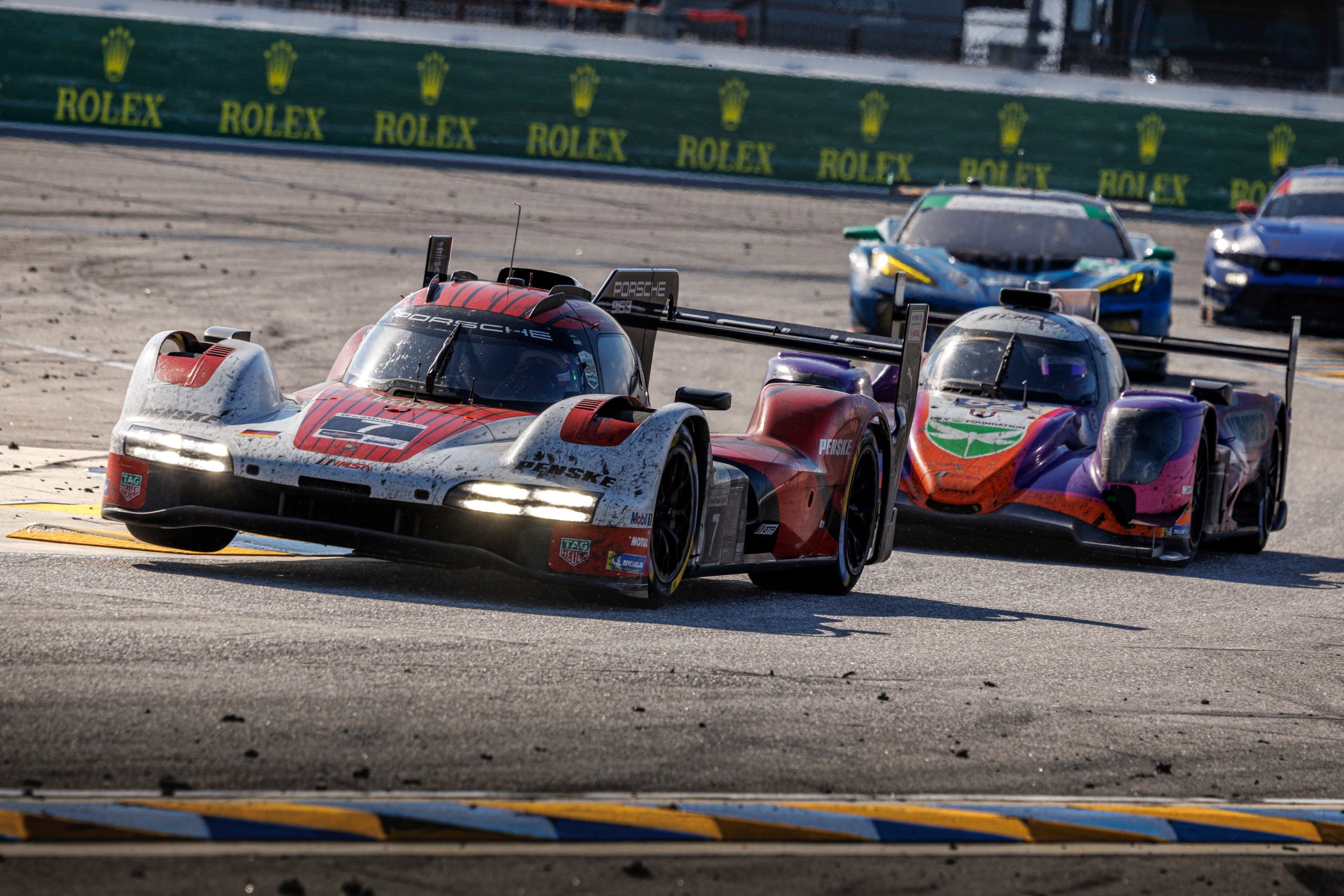
It seems like a trend that endurance races are won with only seconds between the podium finishers. We’ve seen it in this year’s Dakar, where Luciano Benavides won the Bikes class with just two seconds difference over second-place man Ricky Brabec. We’ve seen it in last year’s Rolex 24 at Daytona, where the entire podium in the GTP Class was separated by less than five seconds. And it’s pretty much a repeat for the 2026 running of the Rolex 24 at Daytona, as first and second we’re virtually nose-to-tail crossing the finish line. In fact, the entire GTP field finished within a minute-and-a-half, after 705 nailbiting laps of racing! In the end, the Porsche Penske Motorsport team stood on the top step, but it wasn’t an easy win for the #7 car!
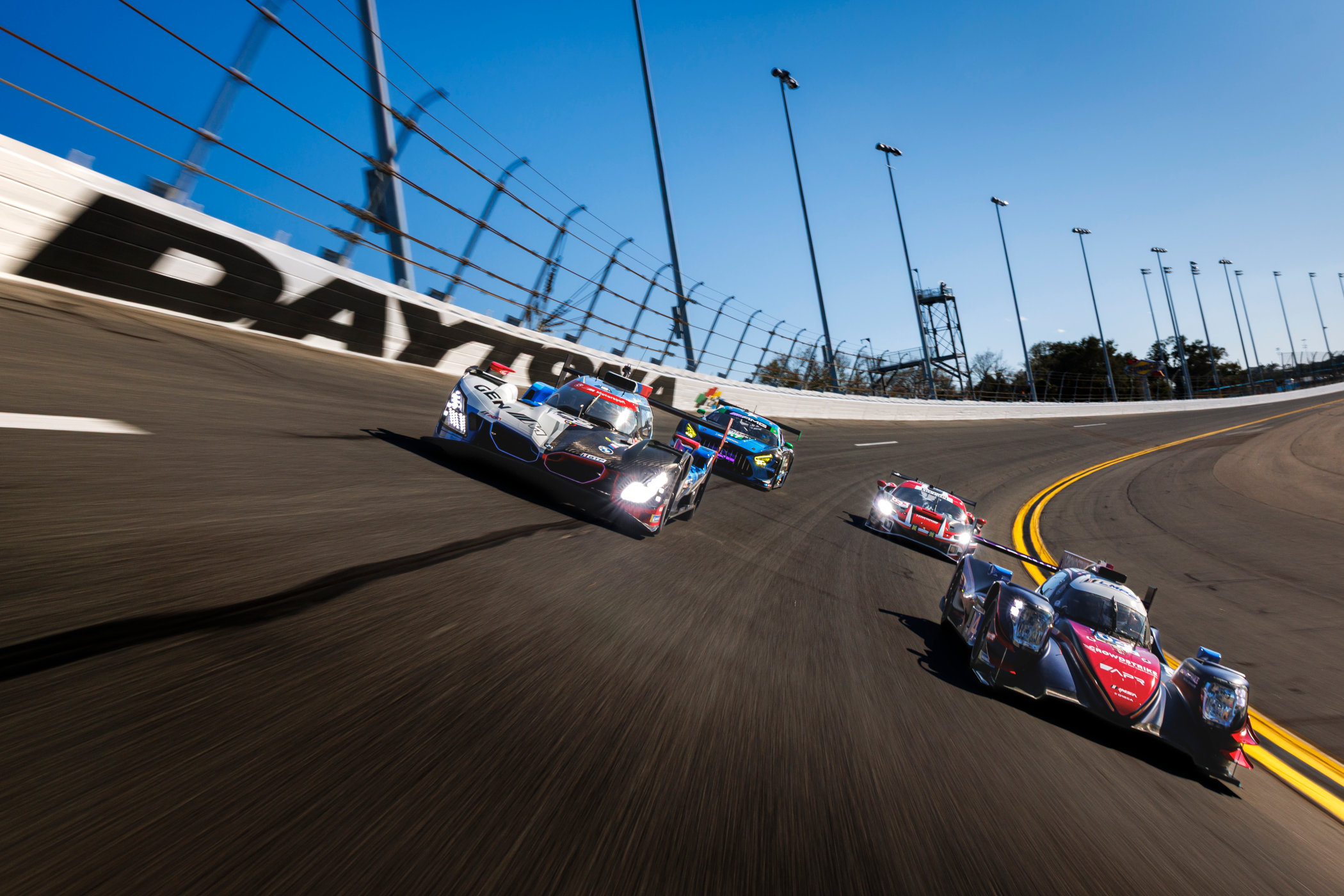
Throughout racing, especially in endurance events, there are times when manufacturers are on a mighty impressive winning streak. Ford winning four straight years at Le Mans, for instance, or Porsche winning 9 times in 10 years throughout the 1980s, are just two examples. In other fields of motorsports, it also occurs every now and then, which is no easy thing to do! Mercedes won the Formula 1 constructors’ title a record-breaking 8 years in a row, for instance. In the Dakar, to come back to the desert-adventurers once more, there are quite a number of streaks across all classes. Mitsubishi racked up 7 overall wins between 2001 and 2007, and KTM even amassed a staggering 18 overall victories, from 2001 to 2019. And then there’s the Daytona 24 Hours, or the Rolex 24 at Daytona, we should say, where the Porsche Penske Motorsport team has now strung together three consecutive wins, with the same car. This lines up neatly with Porsche’s legendary 11-win streak running from 1977 to 1989, making for 21 victories in total for the German manufacturer!
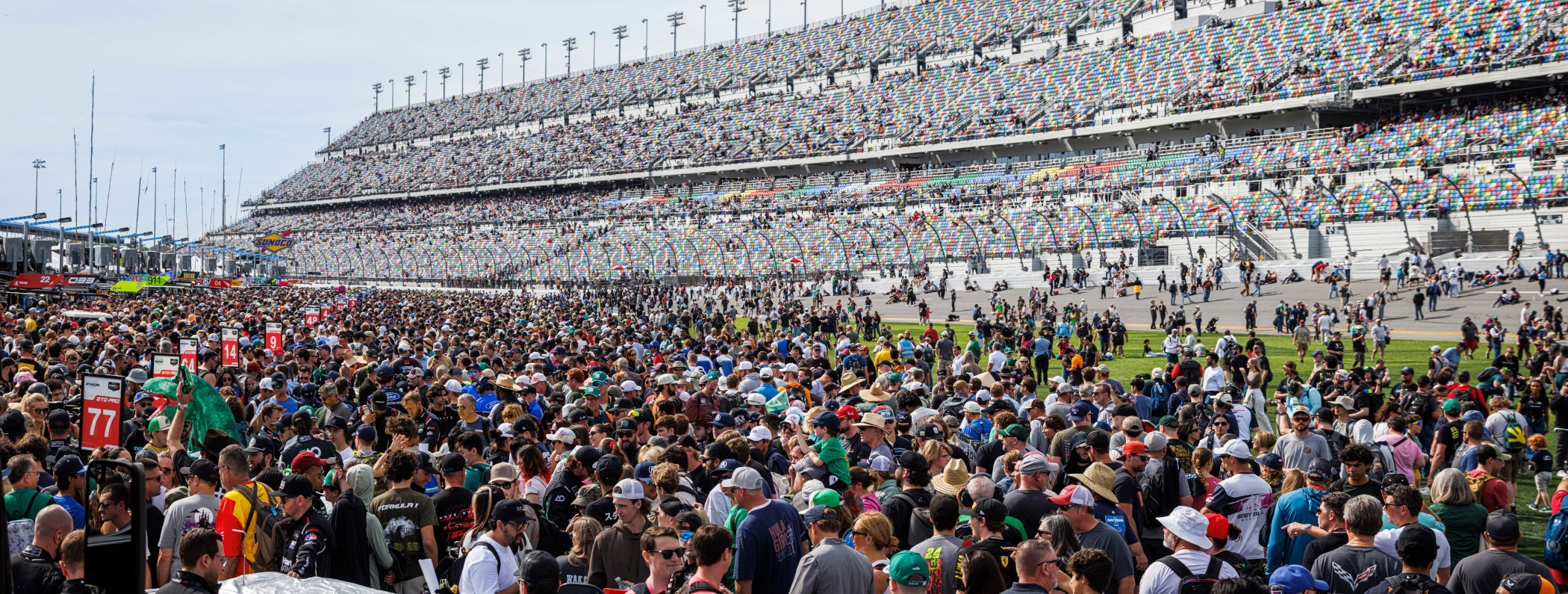
Daytona’s Sports Car course was once again the stage for the Rolex 24H at Daytona, the 64th running of the event. A total of 217 drivers across 60 teams lined up for the start on Saturday, set to battle it out over 24 hours. The tricky thing with any multi-class race on a closed circuit, wether its Sebring, Daytona or Le Mans, is to navigate speed differences. With everything from top-class prototypes to production-based, things can become hair-raisingly close as faster cars come up to slower cars to lap them.
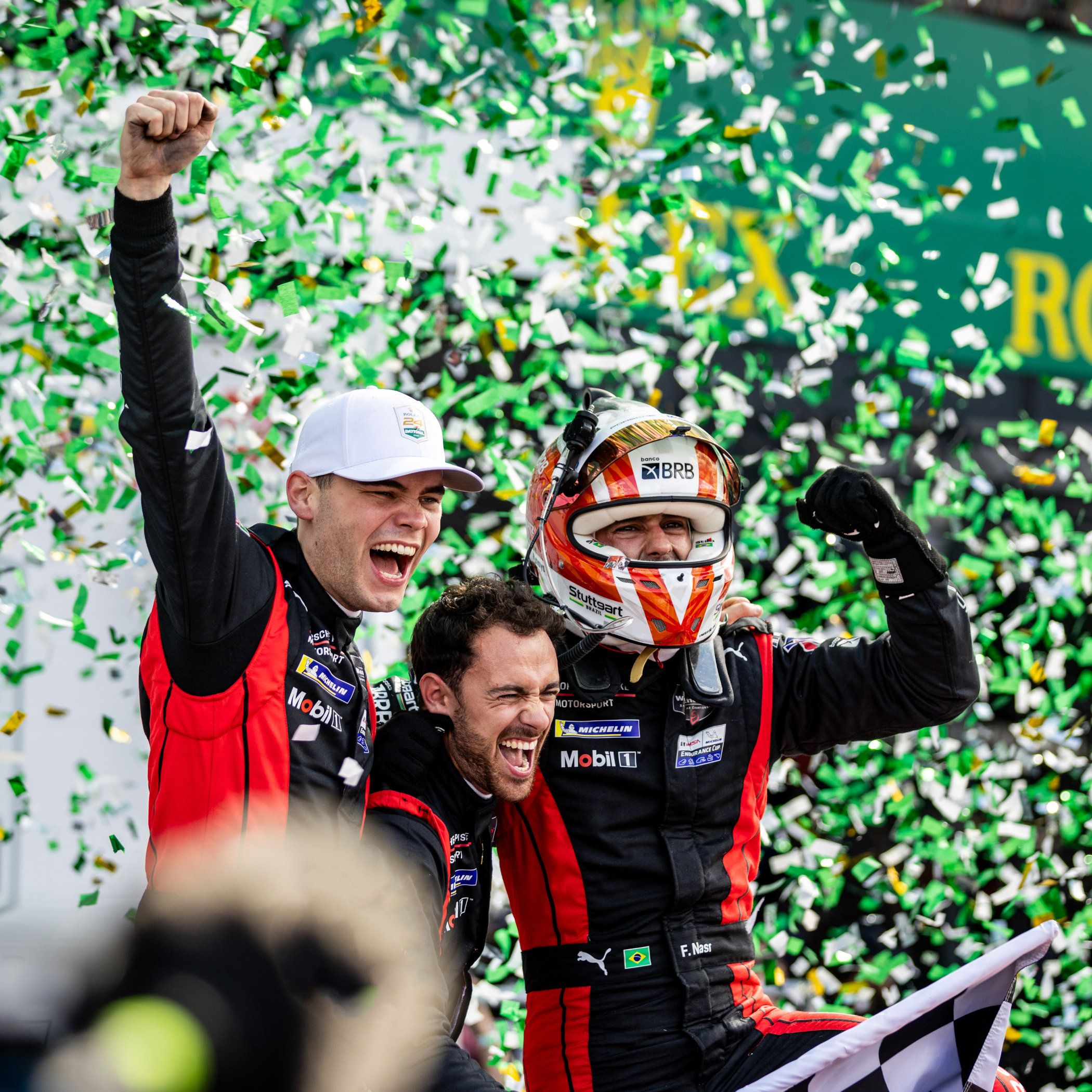
Pole position, despite not mattering much in a race that’s run over a full day, went to the Acura Meyer Shank Racing team, with Dutchman Renger van der Zande setting a time of 1:34.041 in qualifying. It was a bit of a gift, though, as the #31 Cadillac Whelen car actually set the fastest time, but was later disqualified for failing to meet the post-qualifying inspection. The #40 Cadillac from the Wayne Taylor team moved up to second, with the #6 Penske-Porsche being promoted to third in. At the drop of the flag on Saturday afternoon, all 60 roared across the starting line in pursuit of glory! After 24 hours of intense racing, despite being pushed to the limit by other teams and facing a strong nighttime fog that slowed things down drastically for hours, it was the Porsche Penske Motorsport #7 driven by Felipe Nasr, Julian Andlauer and Laurin Heinrich who crossed the finish line first! Let’s break down the class-by-class action…
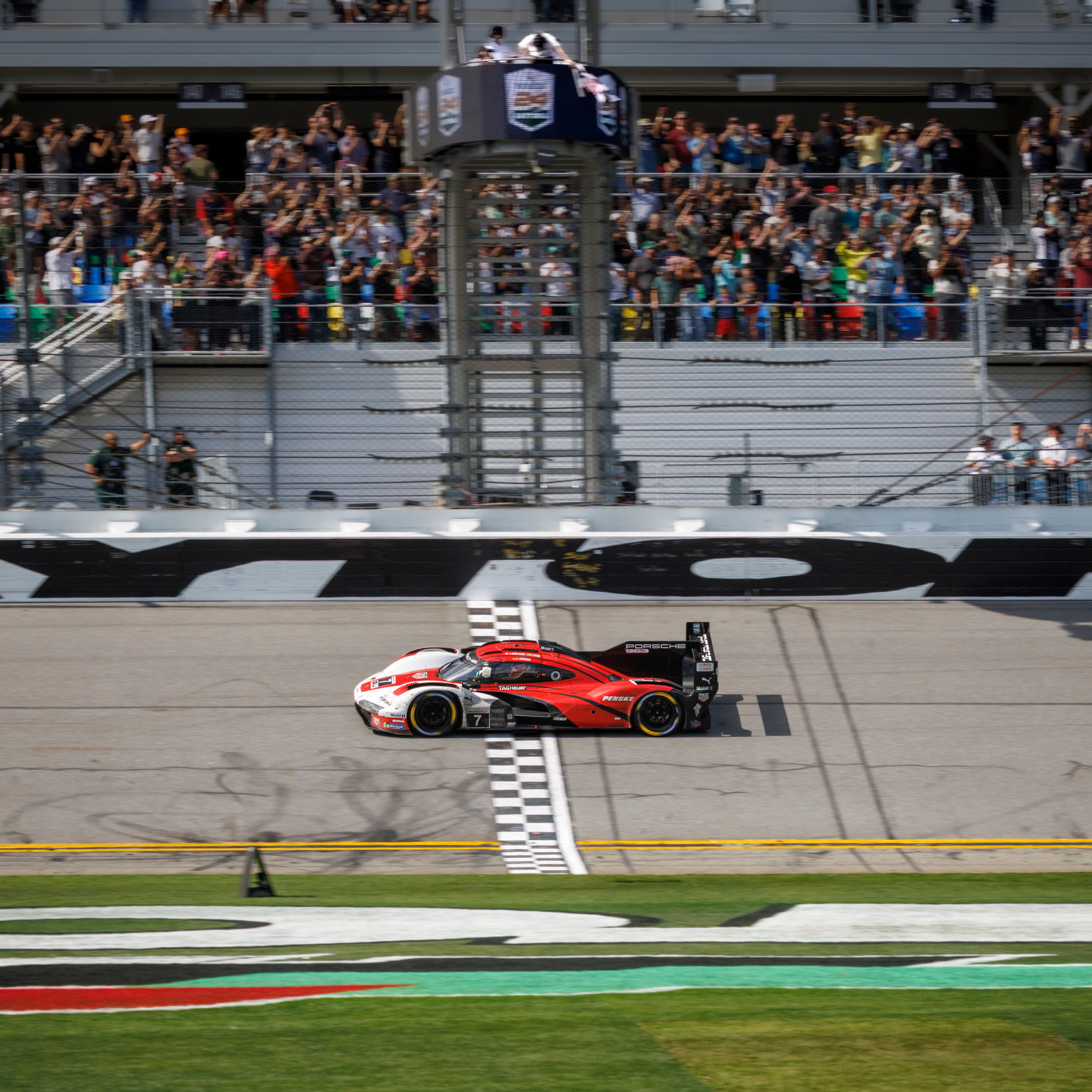
GTP Class
As mentioned, it was Acura in pole position for the 64th running of the Daytona 24 Hours, with Cadillac and Porsche close behind. A total of ten cars competed in the GTP class, with the teams of Porsche Penske Motorsport, Cadillac Whelen, Cadillac Wayne Taylor Racing and Acura Meyer Shank Racing expected to make for a tight battle from start to finish. The BMW M Team WRT lined up with two cars, JDC-Miller MotorSports entered with another Porsche 963, and Aston Martin was represented by The Heart of Racing Team’s Valkyrie AMR-LMH.

Despite starting at the back of the field due to its disqualification, the #31 Cadillac moved up the ranks rather quickly and joined the leading pack. The #7 Porsche quickly jumped the pole-sitting Acura and controlled the majority of the early hours. Both Penske Porsches managed to build a gap of about 20 seconds over the rest of the field in the opening hours. The #6 Porsche of Laurens Vanthoor almost made contact with a GTD car that was heading into the pits, causing damage to the car and a double pit stop under full course yellow for repairs dropped it to the back of the class. Heading into the evening, and eventually the night, the #7 Porsche seemed in full control, only relinquishing the lead due to pit stops for tyres or fuel.
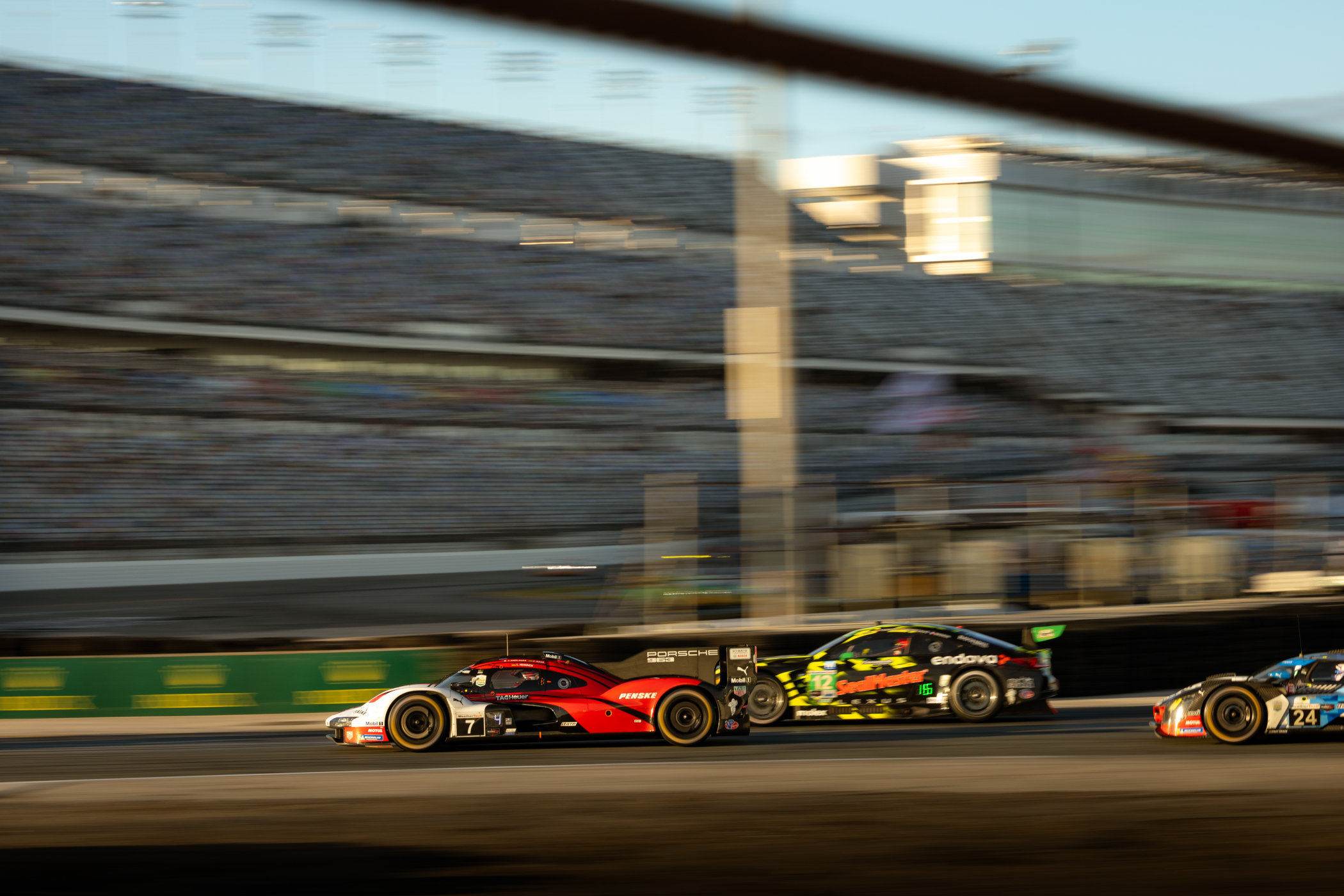
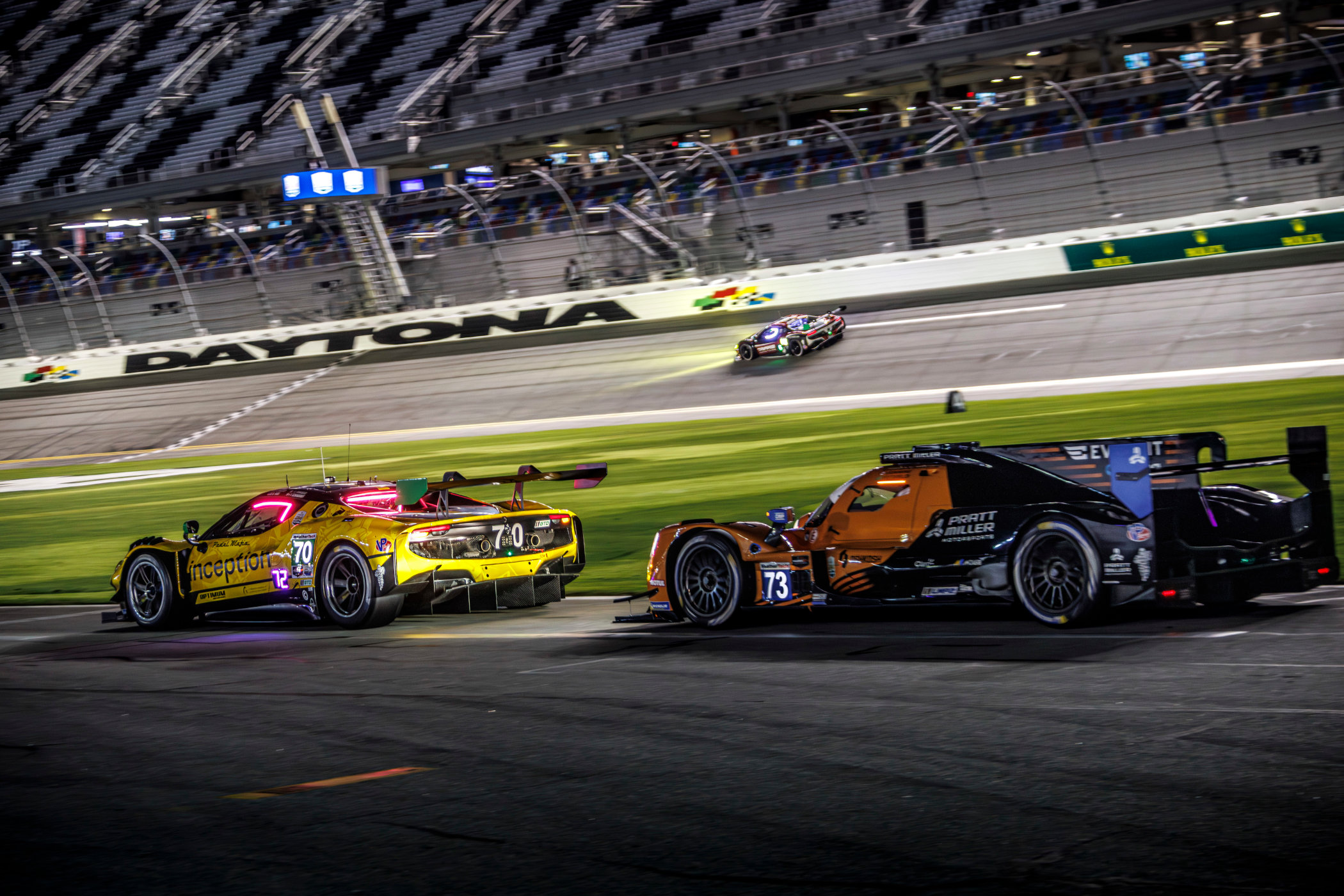
The night saw a thick layer of fog roll in, causing a 6-hour and 33-minute-long caution car due to a lack of visibility. the longest in the Daytona 24 Hours history, by far!. The entire field had to slow down and follow the safety cars with no overtakes allowed, with the field reshuffled as teams pitted to fill up on fuel or make repairs where needed. This lasted until the early morning on Sunday, when at 07:19 am the field was let loose once more. A crash between two LMP2 cars triggered the next caution, with the #25 BMW in the lead of the GTP class when things were cleared again, and the #40 Cadillac and two Penske Porsches close behind. Retaking the lead with roughly four hours to go, things seemed to settle in for a calm run to the finish for the #6 and #7 Porsches. The team decided to split pit stop strategies, though, with the #6 having a fuel advantage over the rest of the field, but having to drop back to 10th place because of it. One of the two Cadillac Wayne Taylor cars broke down and entered the pits to retire, with flames billowing out the back of the car.
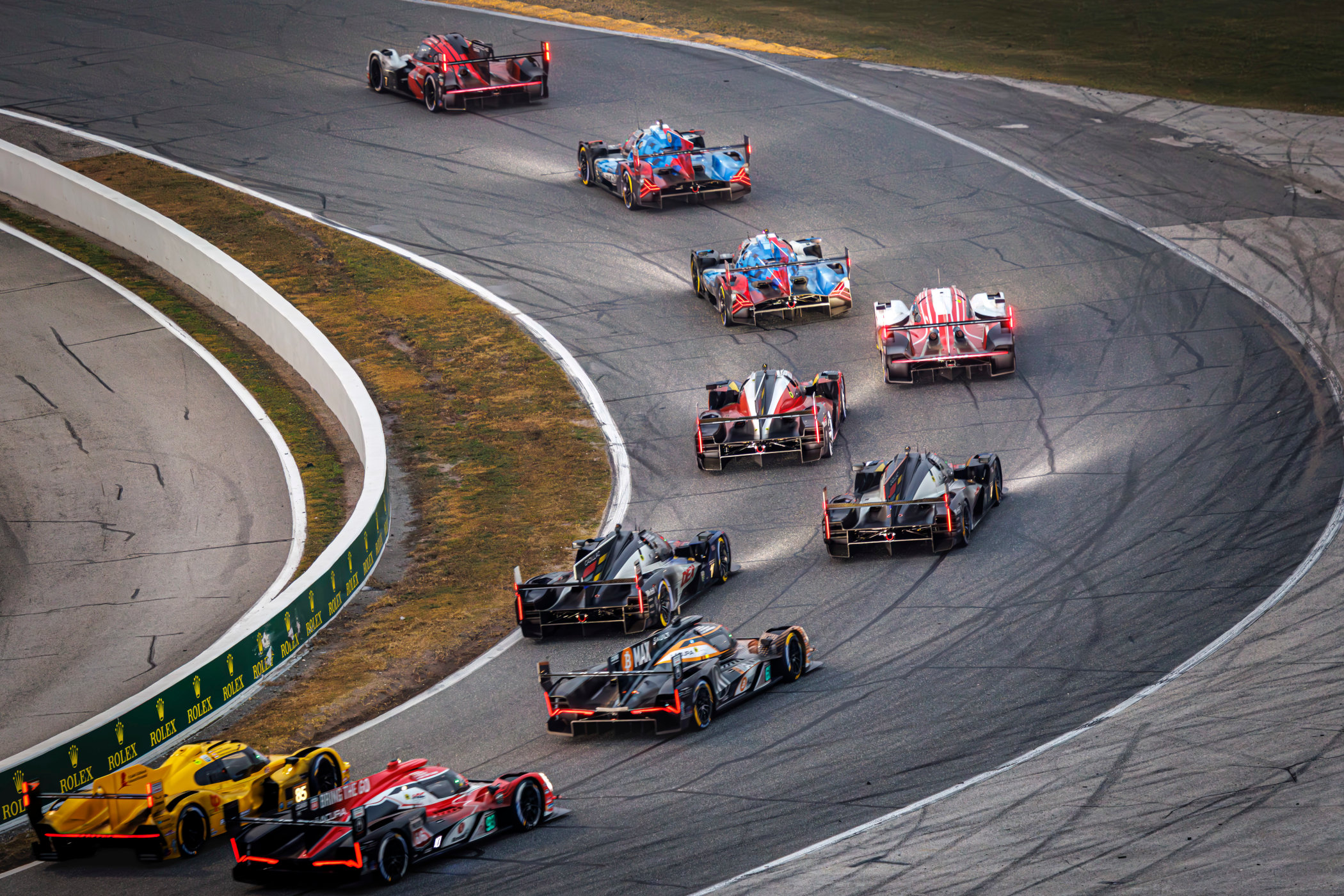
The closing stages of the race saw the pit stop gamble of the #6 Porsche pay off, coming into second place behind the leading #7 sister-car, but it wasn’t meant to be. A hard-charging Jack Aitken in the #31 Cadillac and the #6 Porsche, having to slow down and drop back due to damage, things became tense for the Porsche Penske team. In the end, Cadillac came to within 1.5 seconds of a remarkable comeback, but saw the #7 Porsche 963 cross the finish line first, clinching Porsche’s 21st overall win, the Porsche Penske Motorsport team’s and Felipe Nasr’s third victory in a row!
LMP2 Class
As pretty much every race, mostly due to the fact that every team runs the same chassis and engine combination (Oreca 07-Gibson) and some very talented and experienced drivers lining up, racing is very close in LMP2. Immediately after the start of the race, heading into turn 1, no less than five LMP2 cars collided, with two of them coming together again trying to get back on the track, and the #2 United Autosports and #11 TDS Racing cars had to head into the pits for repairs. Once that was sorted, the LMP2 Class could get truly underway and settle in for the long haul.
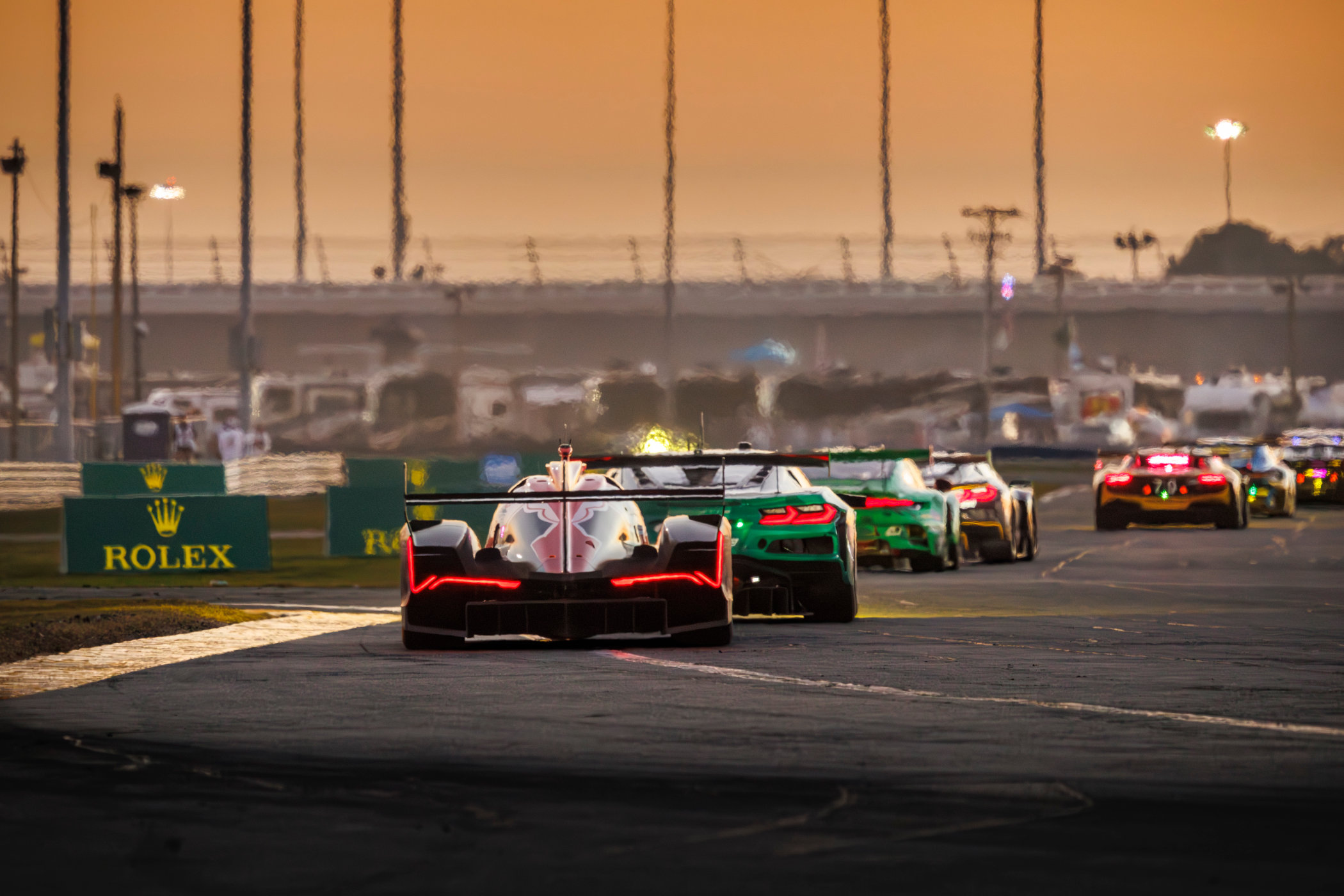
After about an hour of racing, the #52 Bryan Herta Autosport with PR1/Matthiasen car, driven by Ben Keating, was in the lead of the LMP2 class, but was overtaken by the #99 AO Racing car after the initial pit stops. Multiple incidents followed over the next couple of hours, with the #99 staying clear of drama and having a firm grasp on the lead as the race hit the halfway mark. With others suffering tyres coming off, collisions with competitors or spinning off on their own, the battle for the top spot continued between the #99 AO Racing car and the #22 United Autosports car.
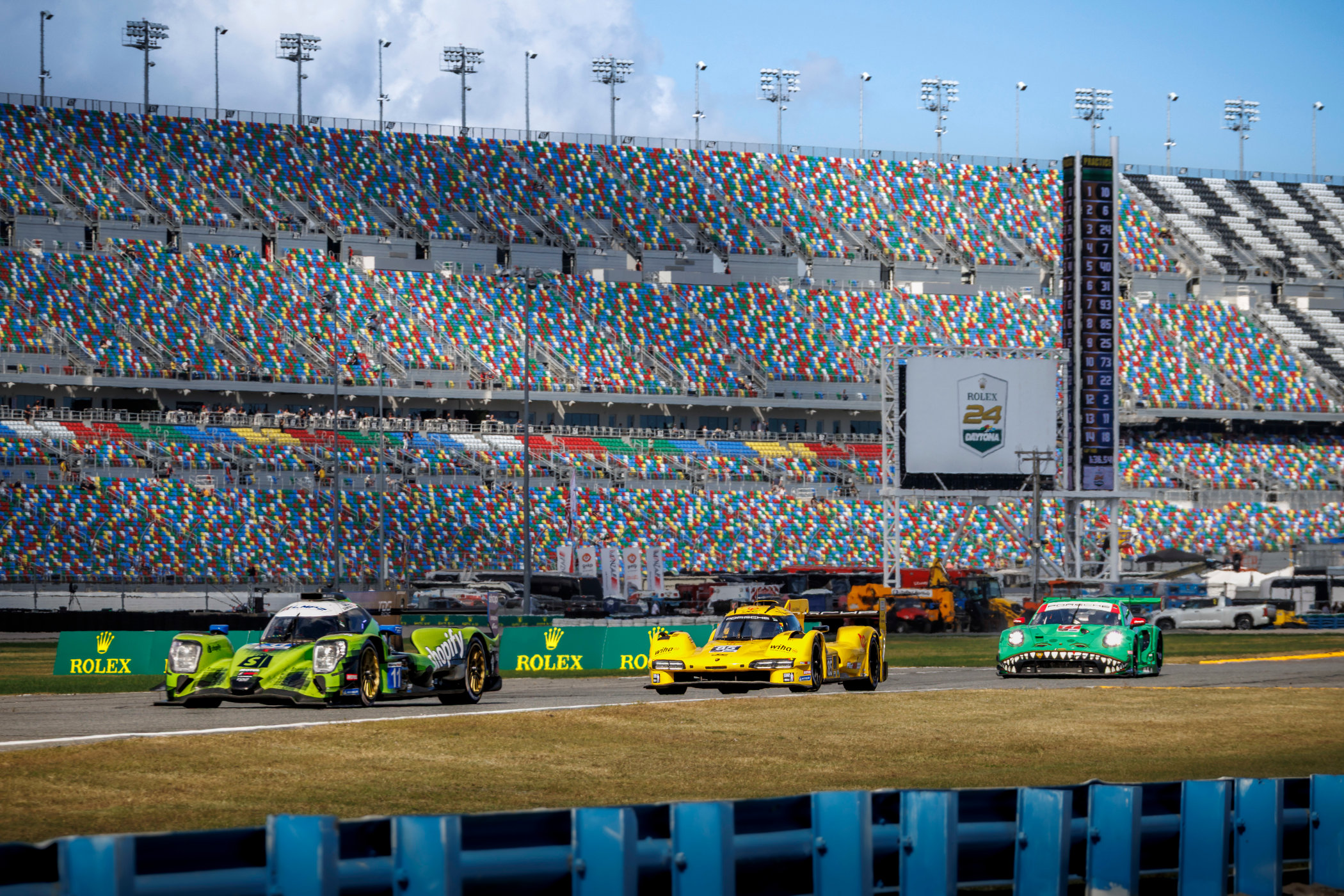
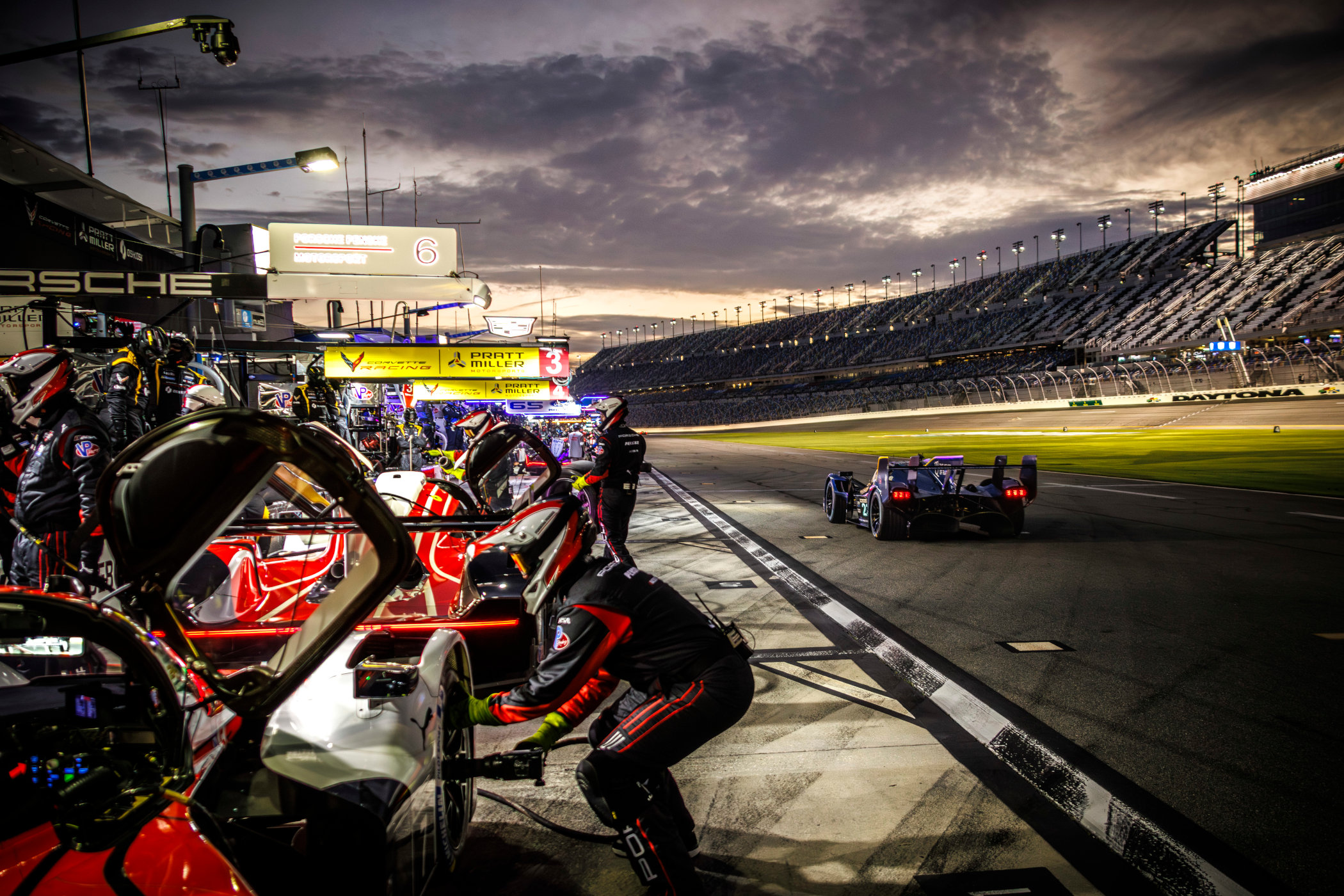
Coming out of the lengthy fog-induced safety car period during the night, it was Toby Sowery in the lead, though, with his #04 CrowdStrike Racing car, the #52 Bryan Herta Racing car in second, and Inter Europol’s #43 in third. The #22 United Autosports and #8 Tower Motorsports cars joined in on the action, with the #99 AO Racing team not far behind. A move to block a rival was deemed illegal by the stewards, and the #04 CrowdStrike Racing car was given a drive-through penalty and subsequently dropped back. Over the final few hours of the race, cars limped back to the pits to either retire, be repaired or top up on fuel. The CrowdStrike Racing team persevered, though, and retook the lead of the race and kept it thanks to a perfectly executed final pit stop. Malthe Jakobsen, George Kurtz, Alex Quinn and Tobey Sowery took home the trophy, with Jeremy Clarke, Tom Dillmann, António Felix da Costa coming in second in the #43 Inter Europol team, and sister-car #343 driven by Nick Cassidy, George Kolovos, Nolan Siegel and Jakub Smiechowski closing out the podium.
GTD Pro & GTD Class
Running GT3 cars from the likes of Corvette, Mercedes, McLaren, Ferrari, Aston Martin, Lamborghini and Porsche, the GTD class is always a spectacle. Split into GTD Pro, running a full professional line-up, and GTD, where teams run a mix of amateur and professional drivers, it’s sure to provide plenty of close racing and drama. All cars put down roughly similar performance, so it’s often a case of trading paint and trying to stay out of trouble from start to finish.
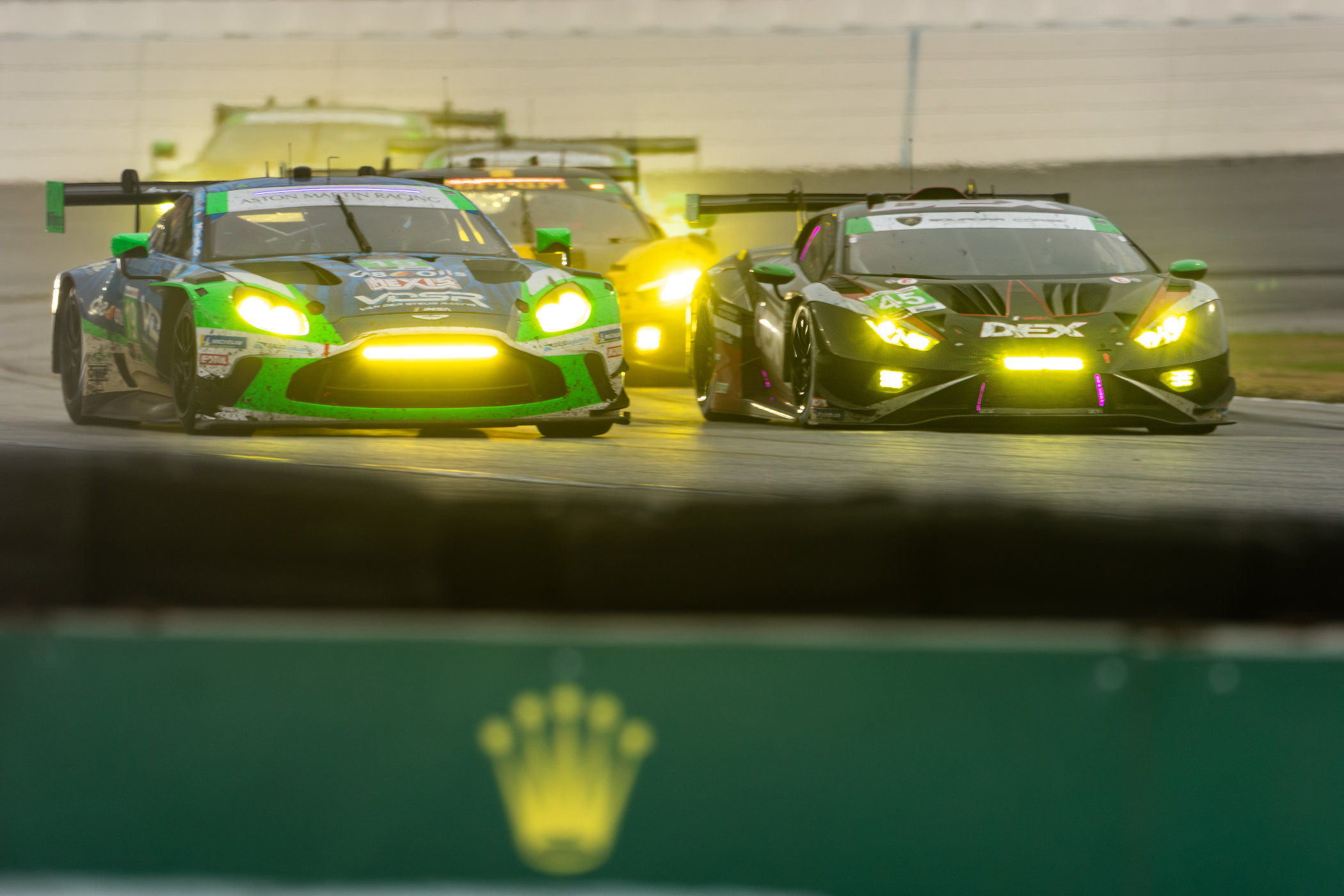
During the early stages, there was a train of GTD Pro cars battling for the lead, with the top four cars separated by less than 1.5 seconds. As the battle went on, it was Nicky Catsburg in the #4 Corvette Racing by Pratt Miller Motorsports Corvette Z06 GT3.R that managed to pull away. In the GTD class, it was the #96 Turner Motorsport BMW M4 GT3 Evo at the front of the pack as the race progressed into the evening. Heading into nightfall, plenty of swaps for the lead followed, in part by incidents on track, or by stopping for a driver and tyre change, or needing refuelling. Nine hours in, the top five cars in the GTD Pro class were bunched up again, with just 5 seconds between first and fifth. As night progressed to morning, it was the #64 Ford Multimatic Motorsports Mustang GTD GT3 Evo in the lead of the GTD Pro class, and the #21 AF Corse Ferrari 296 GT3 Evo heading the GTD field.
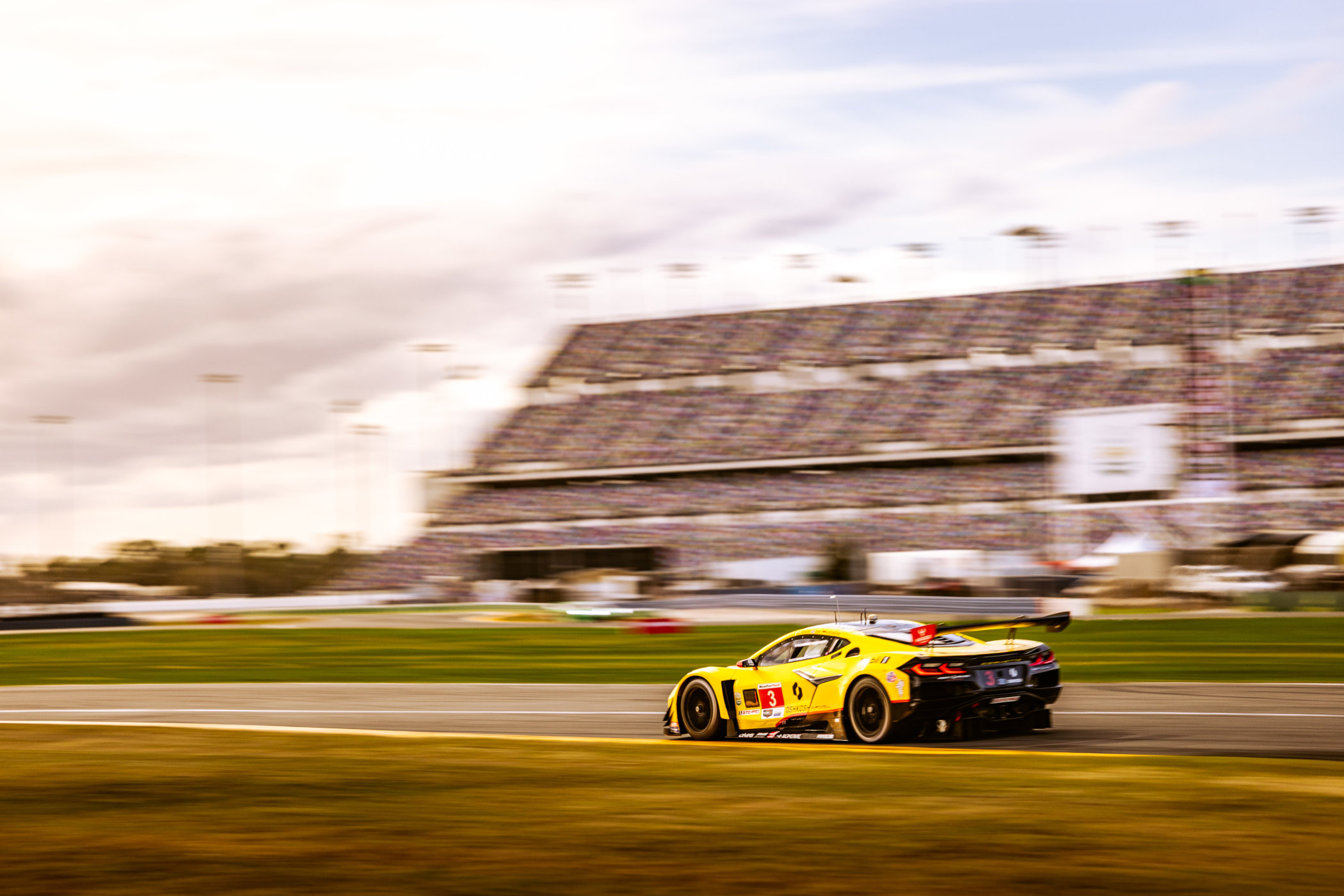
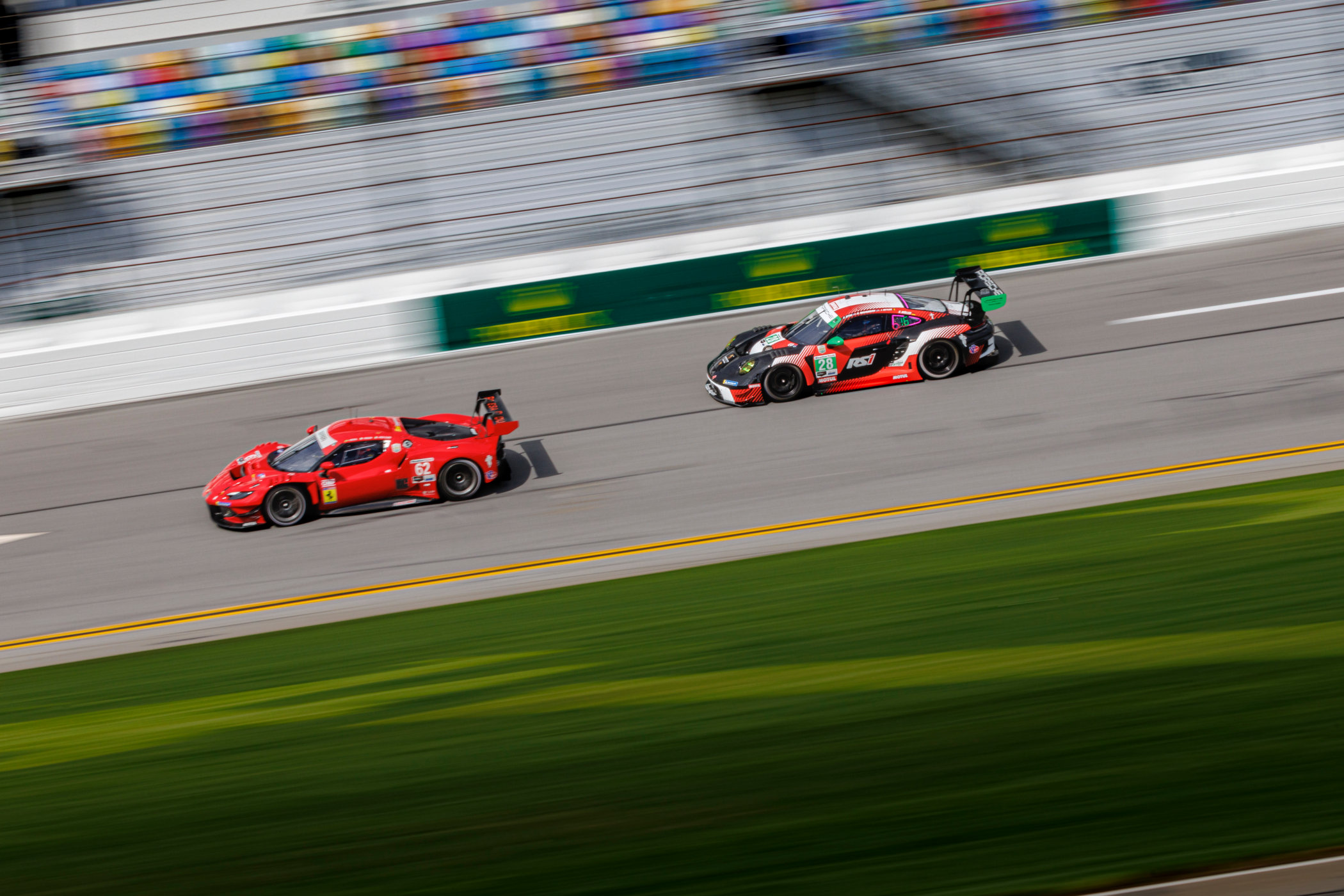
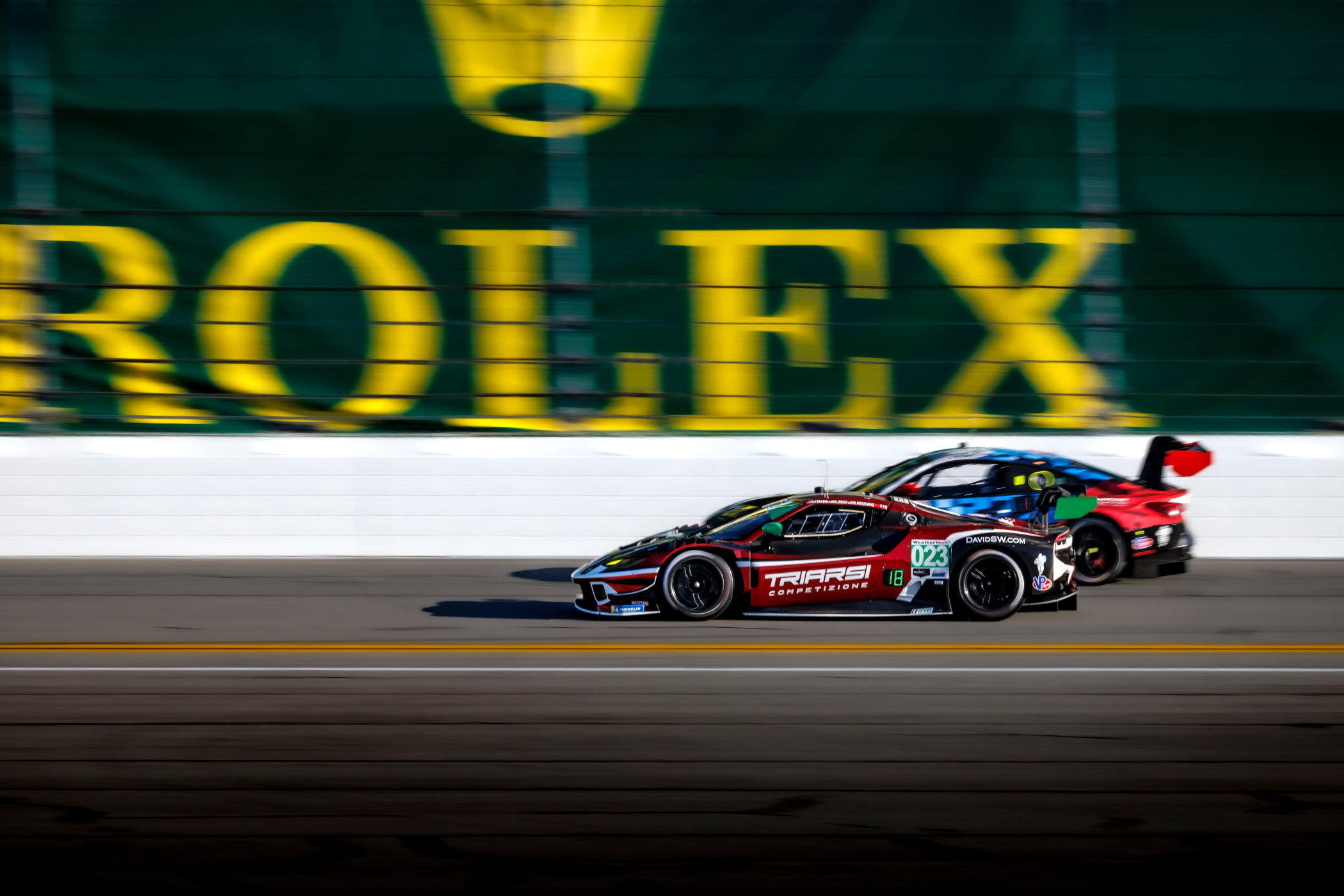
Drama ensued for the #3 Corvette, with smoke pouring from the right-rear corner, forcing them to abandon the battle for the lead and drop down the order as repairs were made in the pits. With just four hours to go, it was a Porsche 1-2 in GTD Pro, and the #66 Ford Mustang dropped out of the race while in the lead of the GTD class. As the teams soldiered on to the finish, it became hectic. A number of incidents and collisions followed, right up to the final stages of the Daytona 24 Hours.
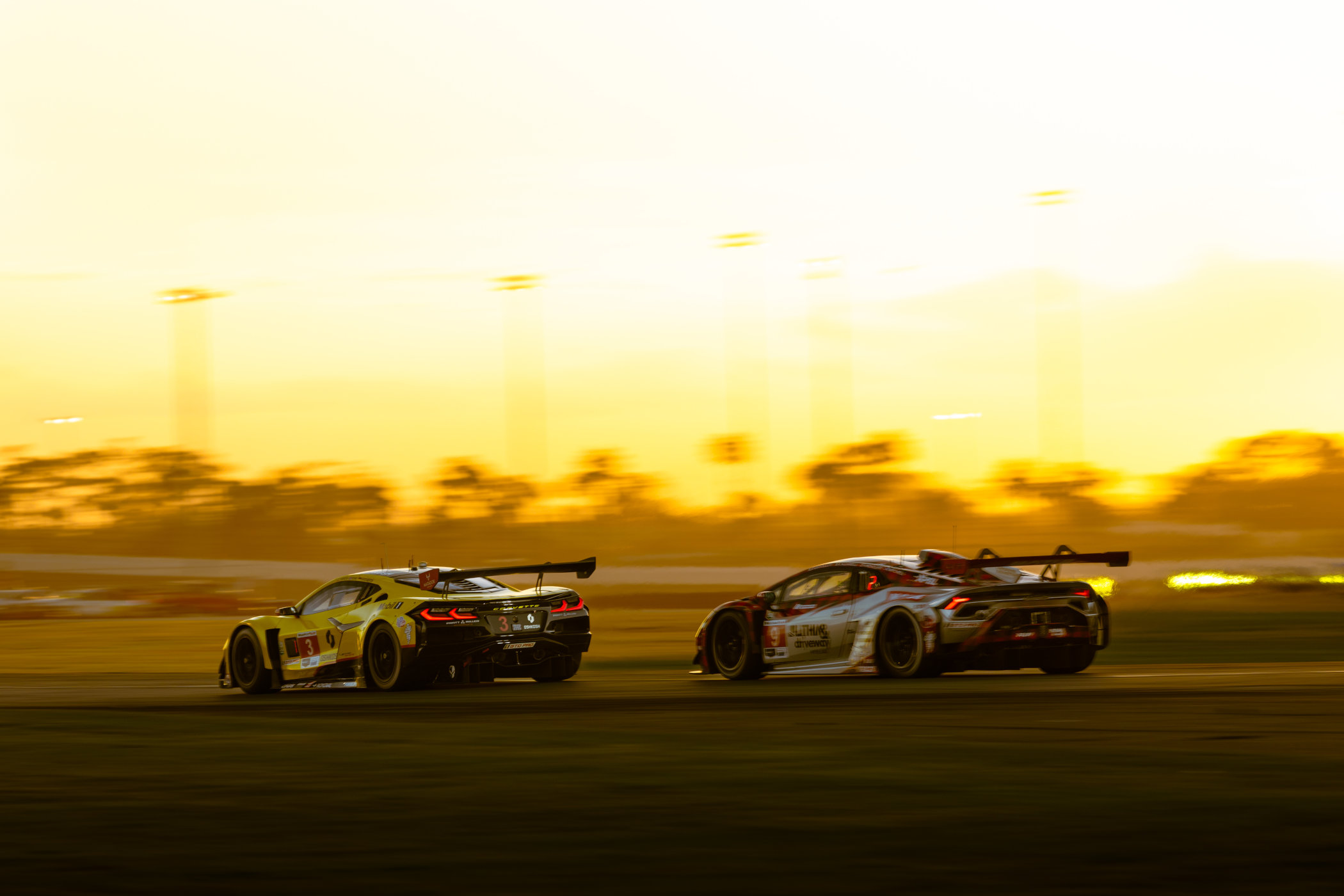
In the end, it was the #1 Paul Miller Racing BMW M4 GT3 Evo driven by Connor de Phillippi, Dan Harper, Max Hesse and Niels Verhagen that took the win in the GTD Pro class. The #75 75 express Mercedes-AMG GT3 Evo of Maro Engle, Kenny Habul, Chaz Mostert and Will Power came in second, with the #48 Winard Racing Mercedes-AMG GT3 Evo piloted by Jason Hart, Maxime Martin, Scott Noble and Luca Stolz finishing in third. In the GTD class, it was the #57 Winward Racing Mercedes-AMG GT3 Evo of Lucas Auer, Indy Dontje, Phillip Ellis and Russell Ward that clinched the victory, followed by the #44 Magnus Racing Aston Martin Vantage AMR GT3 Evo of John Potter, Spencer Pumpelly, Madison Snow and Nicki Thiim in second, and the #27 Heart of Racing Team of Eduardo Barrichello, Mattia Drudi, Tom Gamble and Zacharie Robichin in third, driving another Aston Martin Vantage AMR GT3 Evo.
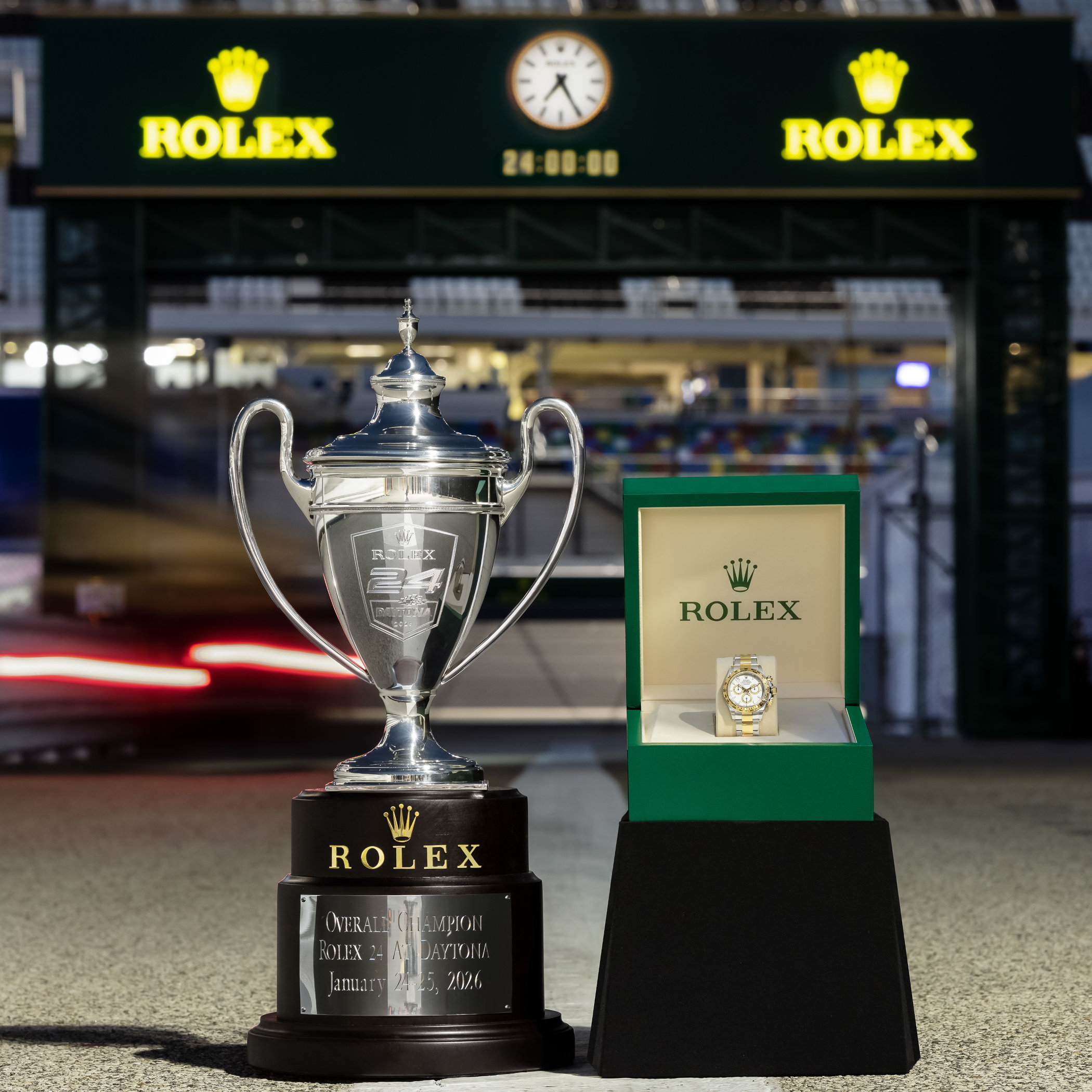
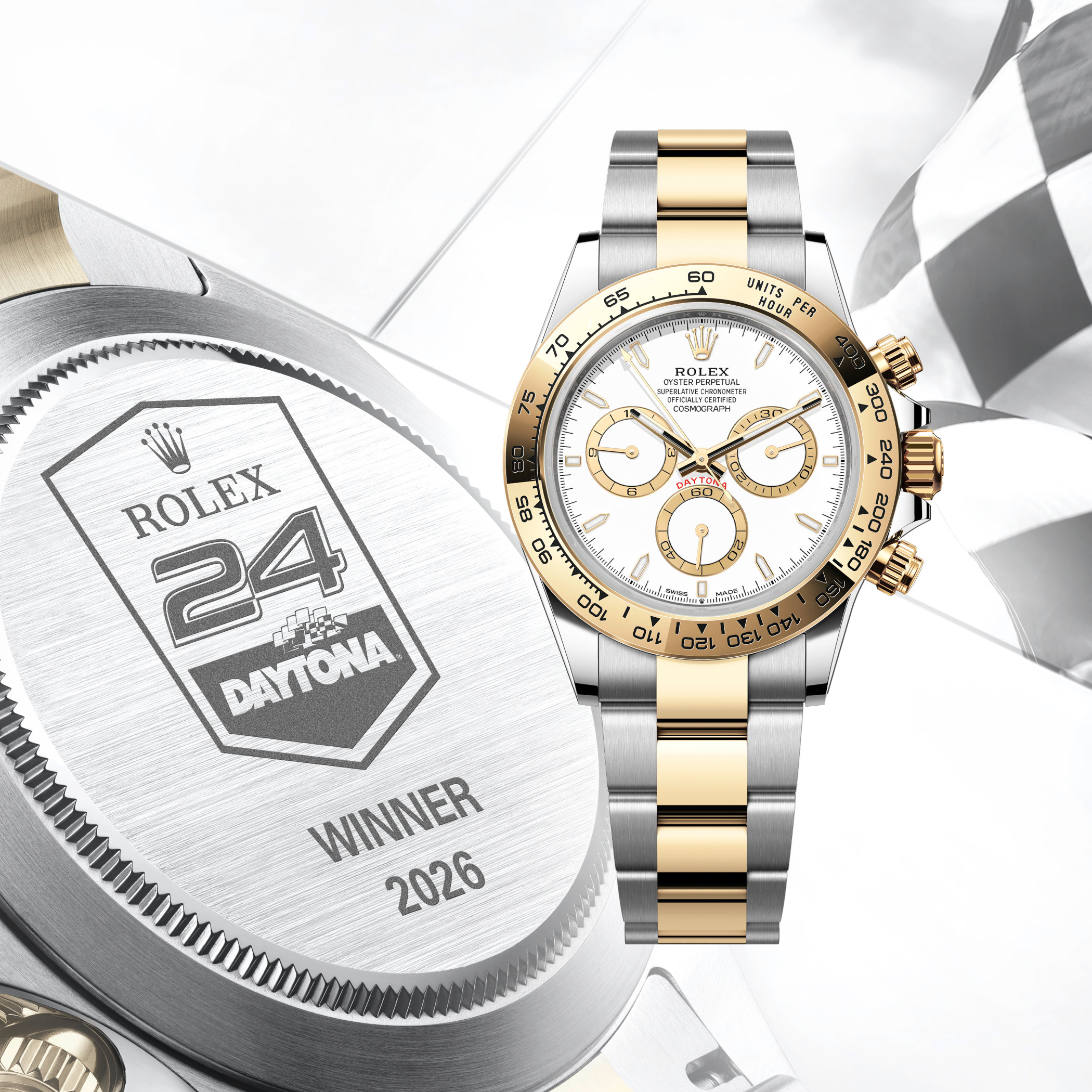
As every year, the winners in each class were not only presented with a trophy, but also a special edition Rolex Cosmograph Daytona. This year, it’s a two-tone steel and yellow gold edition with a white dial. The caseback is engraved with the event’s emblem, and the script “Winner 2026” below it, signifying the team’s victory in one of the biggest races on the calendar!
For more information, please visit Rolex.com or Imsa.com.
Editorial Note: The images used in this article are provided by and used with permission of Rolex, title sponsor of the Rolex 24 At Daytona.

2 responses
963 guys not.936!
Oops, slip of the fingers there. Thanks for pointing it out to us, and it’s now fixed.