
 Not all images were able to load for printing. Please close the print window and try again.
 Two of America’s Finest Cars Ever Made Coming Up For Auction
Duesenburg meets Tucker during this year's Monterey Car Week.
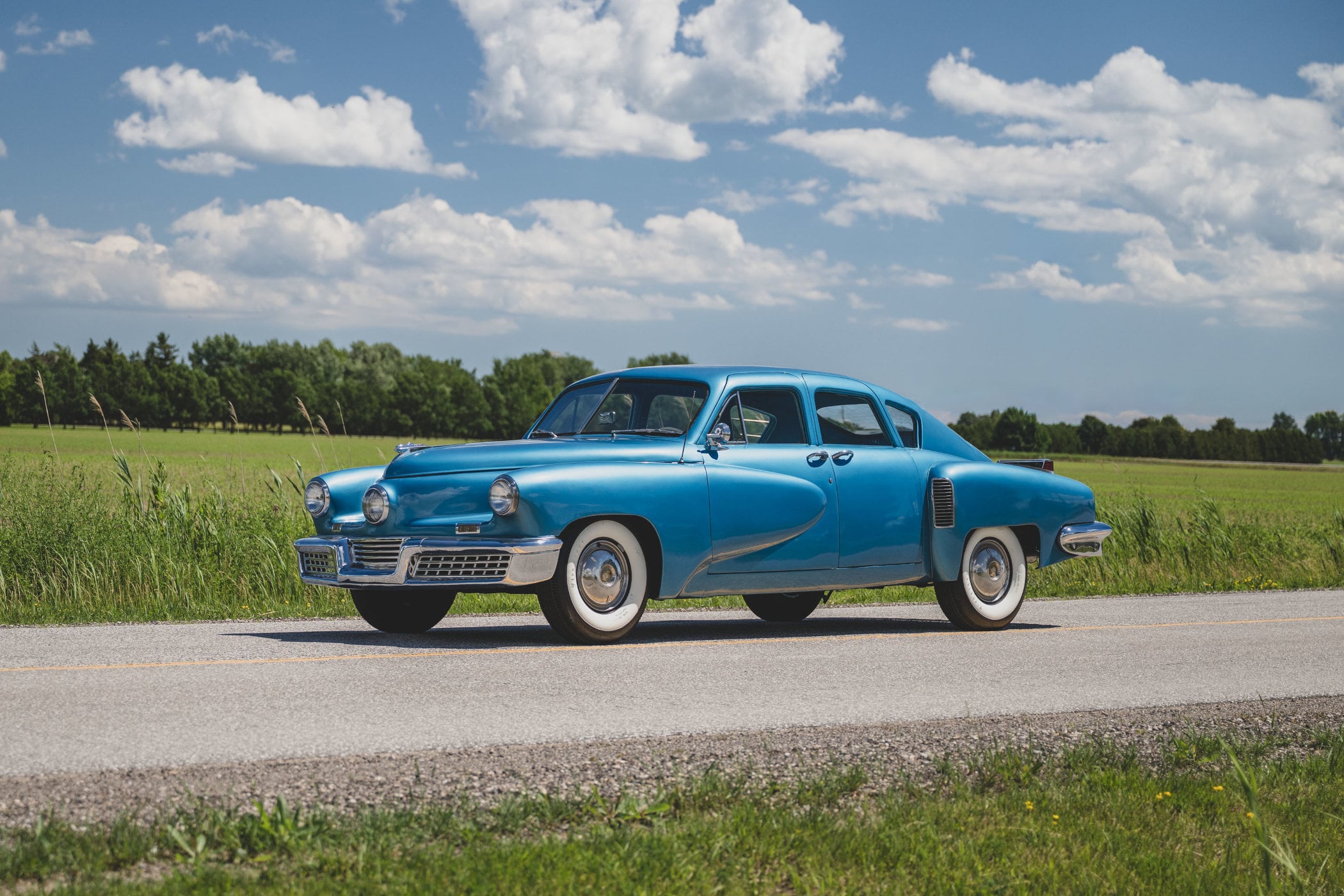
Every summer, the classic car world flocks to Monterey, California, for what is known as the Monterey Car Week. Over ten days, attendees will have the chance to spend time among the rarest and most special cars ever created, with races, rallies, car shows and the prestigious Pebble Beach Concourse d’Elegance all taking place during the event. And naturally, you have the chance to acquire a piece of automotive history for yourself, with countless cars coming across the auction block. This year, two of the absolute highlights happen to be two of the finest cars ever built in America: a 1933 Duesenberg Model J Disappearing Top Convertible Coupe offered by Mecum, and the 1948 Tucker 48 offered by RM Sotheby’s.
The Three-Car Duesenberg Company
Founded in 1920 by brothers Fred and August Duesenberg, the Duesenberg Automobile & Motors Company is responsible for some of the finest luxury cars ever made in America. Based in Indiana, it was the culmination of a career that started with designing and building engines in the early 1900s. The Duesenberg company would be in business for less than 2 decades yet would become the epitome of American luxury cars at the time. The company was eventually sold and dissolved in 1937, at the height of the Great Depression, and the only one not saved by the US Government despite being the largest employer in the state of Indiana.

The Duesenberg company was essentially a three-car manufacturer. The Model A made its debut in 1921, which was replaced by the Model X in 1926, before the Model J would enter production in 1928. However, Duesenberg mostly produced rolling chassis and engines before sending them to a coachbuilder for body fitment per the client’s requests, which was a very common practice for exclusive cars like this. As a result, no two Duesenberg cars are identical, as there are always small differences between them, even when they were built by the same coachbuilding company. And it wasn’t just about catering to luxury demands, as Duesenberg’s cars were fast and expertly built. They could rival, and most likely surpass, any other luxury car manufacturer in the day, even the likes of Bugatti, Bentley and Rolls-Royce.
As mentioned, Duesenbergs were known for their performance, and the brothers also built several race cars. One of which, the Murphy Special, won the 1921 French Grand Prix, a 30-lap race along the then 17.26km long Le Mans circuit. The company also won the Indianapolis 500 four times, proving they were far more than just a luxury car maker.
The Model J Disappearing Top Convertible Coupe
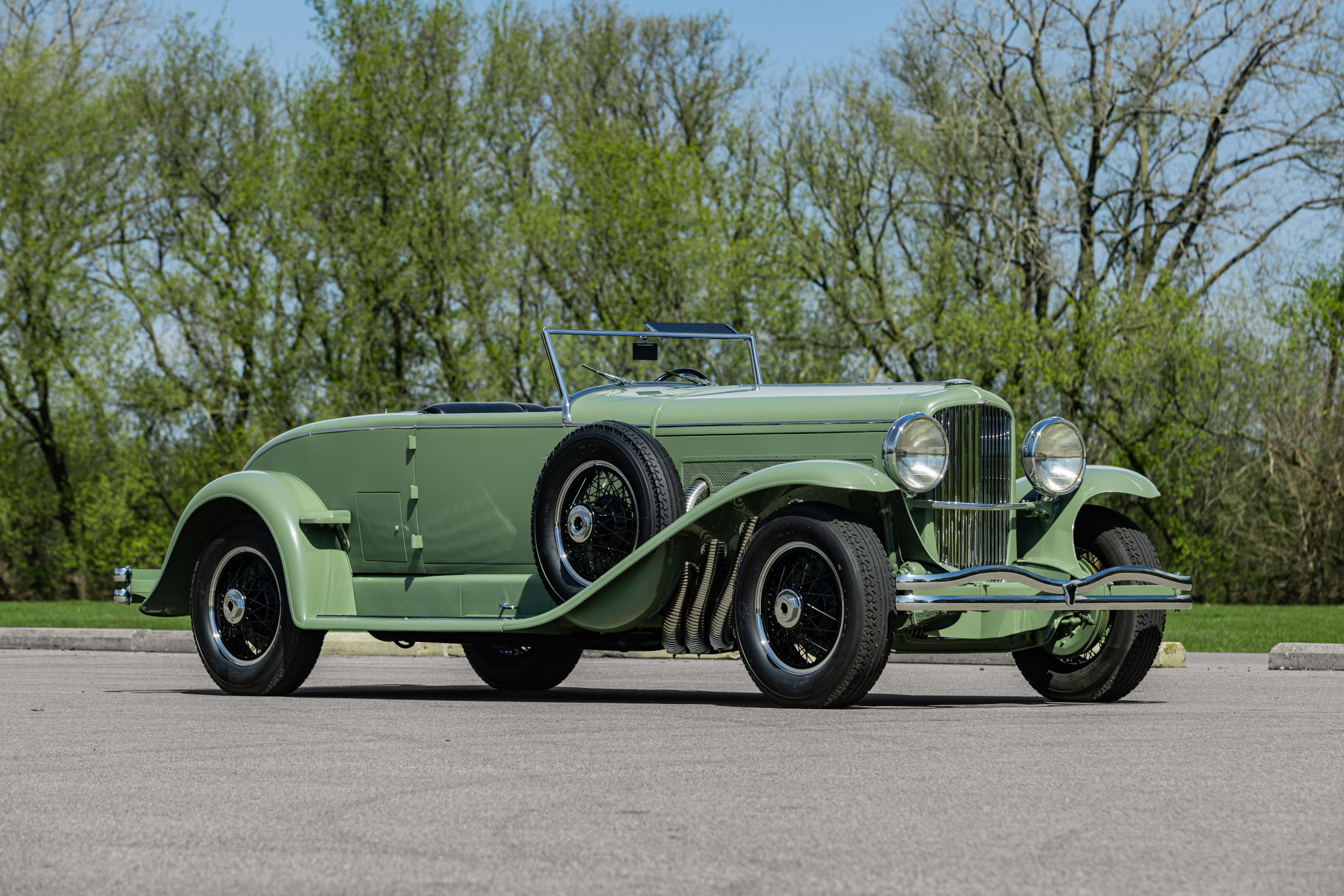
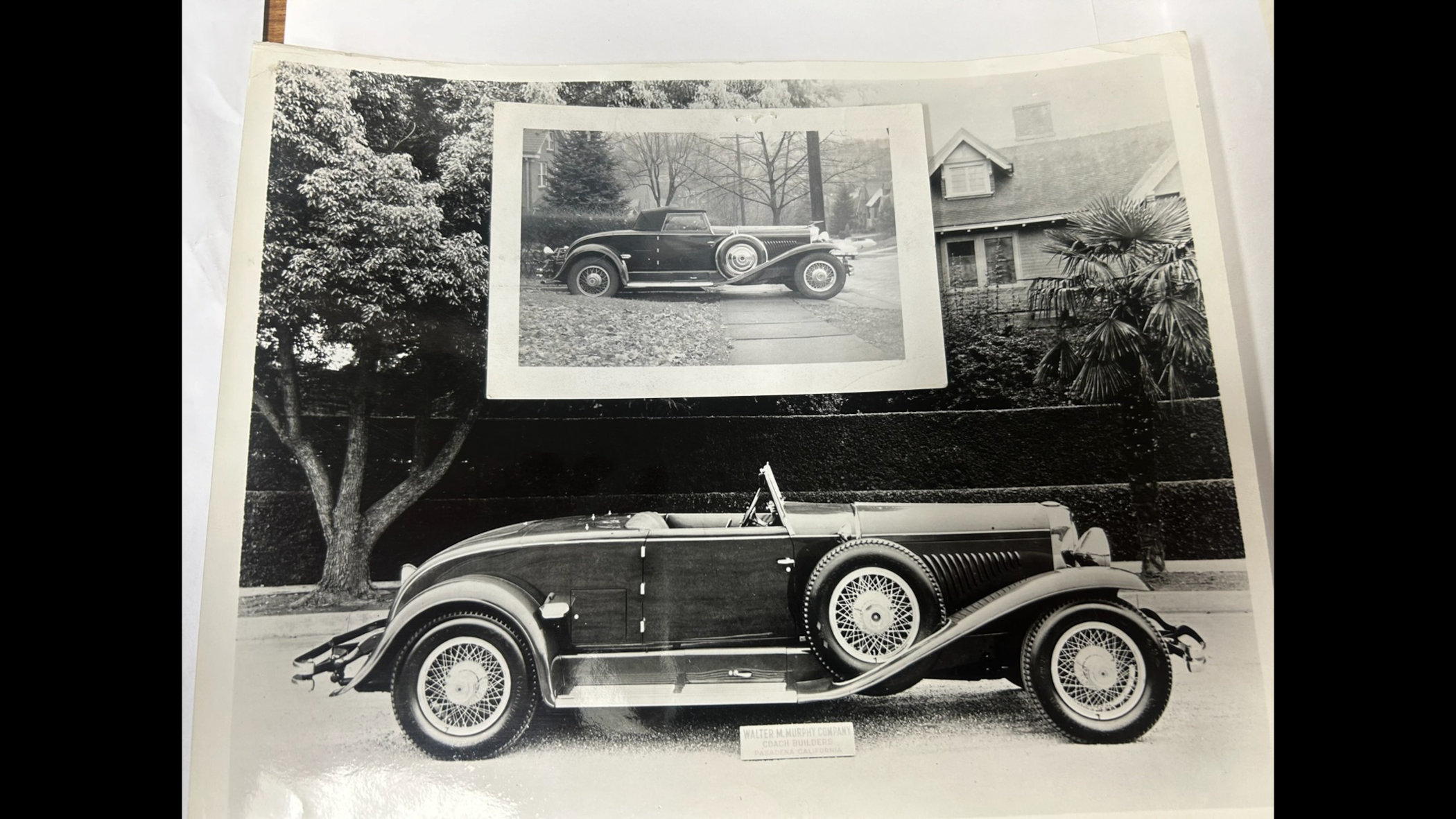
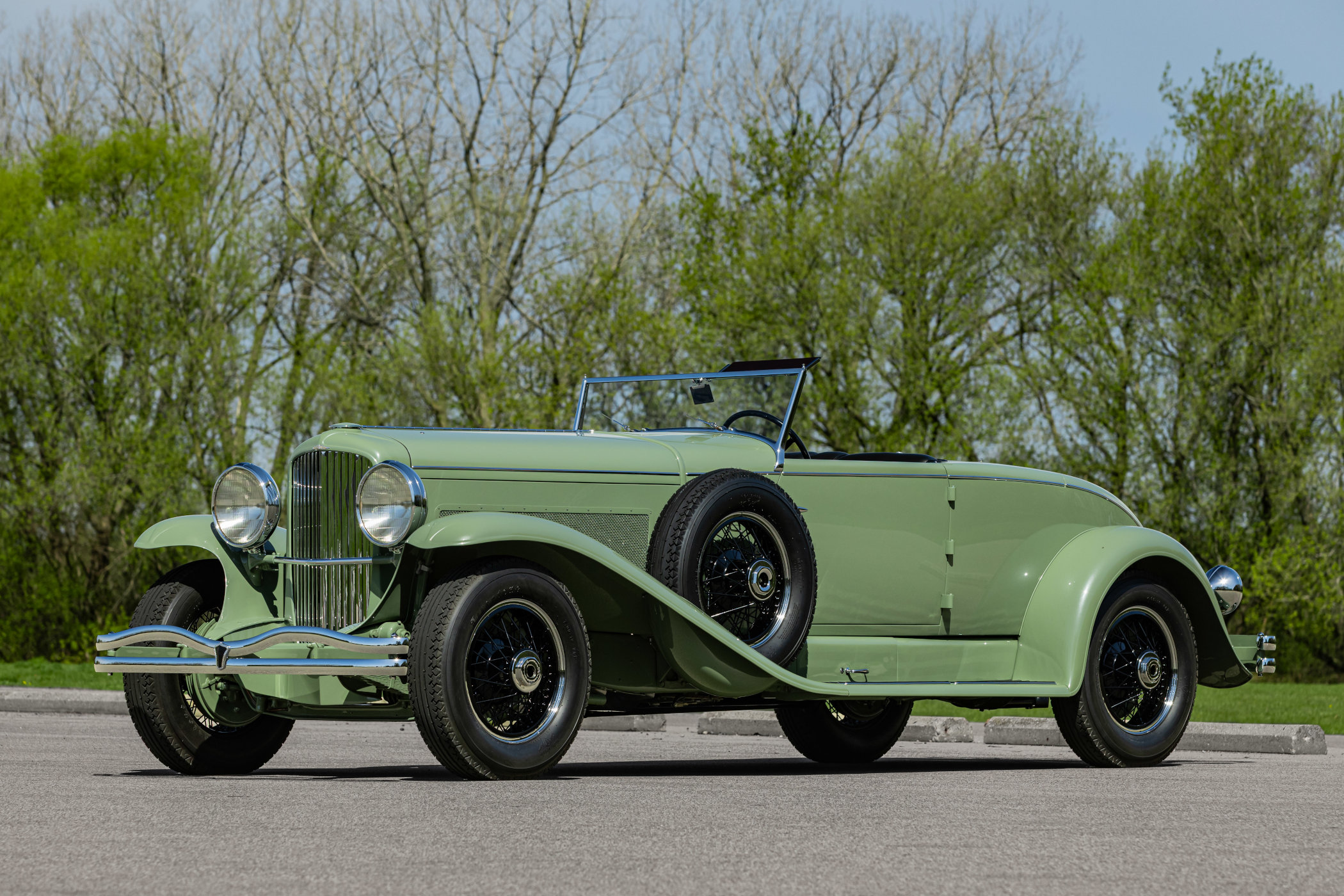
This particular Duesenberg Model J that’s coming up for auction at Mecum during the 2026 Monterey Car Week is chassis No. 2446, completed in 1933 and fitted with a body by Walter M. Murphy Co. Incredibly, after almost a century since being built, it comes with the original chassis, engine, transmission and body, and an almost fully known lineage from first owner to the last, including Bob Estes, an American racing pioneer who owned this car for about 40 years! And it’s unique in more ways than one…
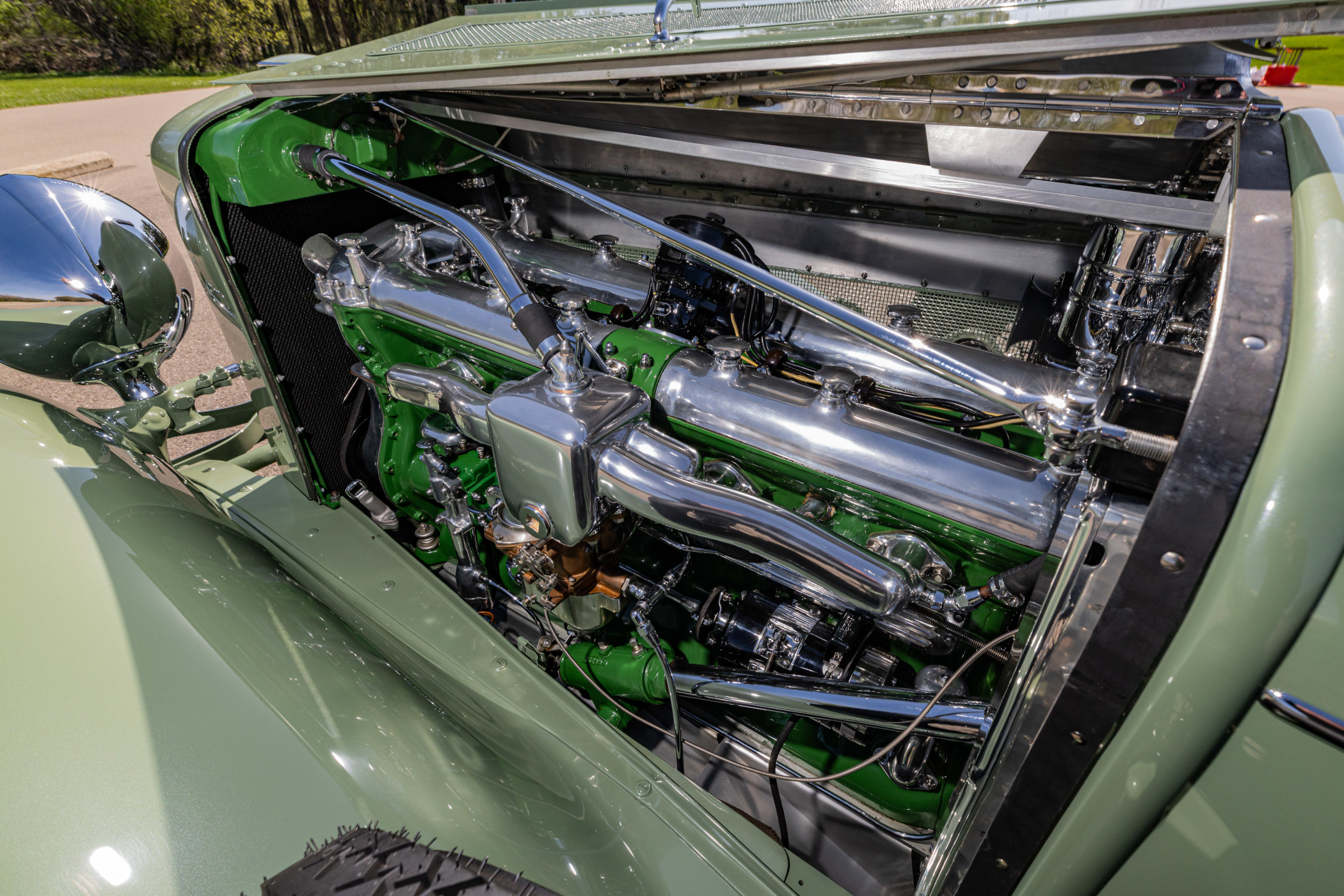
The first clue is literally in the name, as the Model J Disappearing Top Convertible Coupe has a unique, fully retractable soft-top. That’s not all that uncommon in itself, as it was found on countless other cars in its day, but this one neatly tucks away inside the bodywork completely, and that’s quite something! Chassis 2446 was sold to its first owner as a bare chassis, fitted with Duesenberg’s famous 420 cubic inch (7-litre) straight-eight engine producing 265 horsepower. After testing, it was sent to the workshop Walter M. Murphy Co., who built a two-door body on top of it, with that signature retractable disappearing soft top.
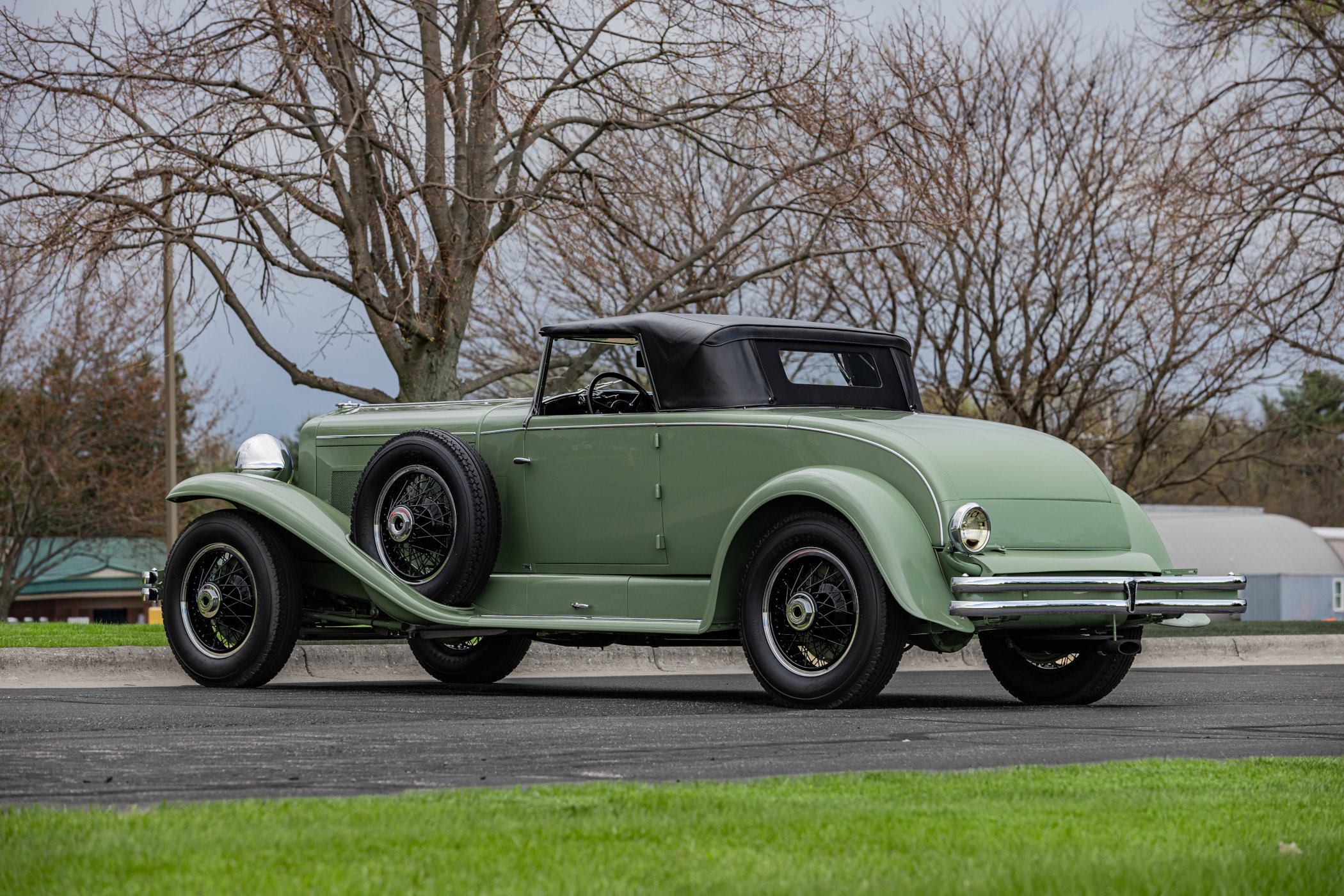
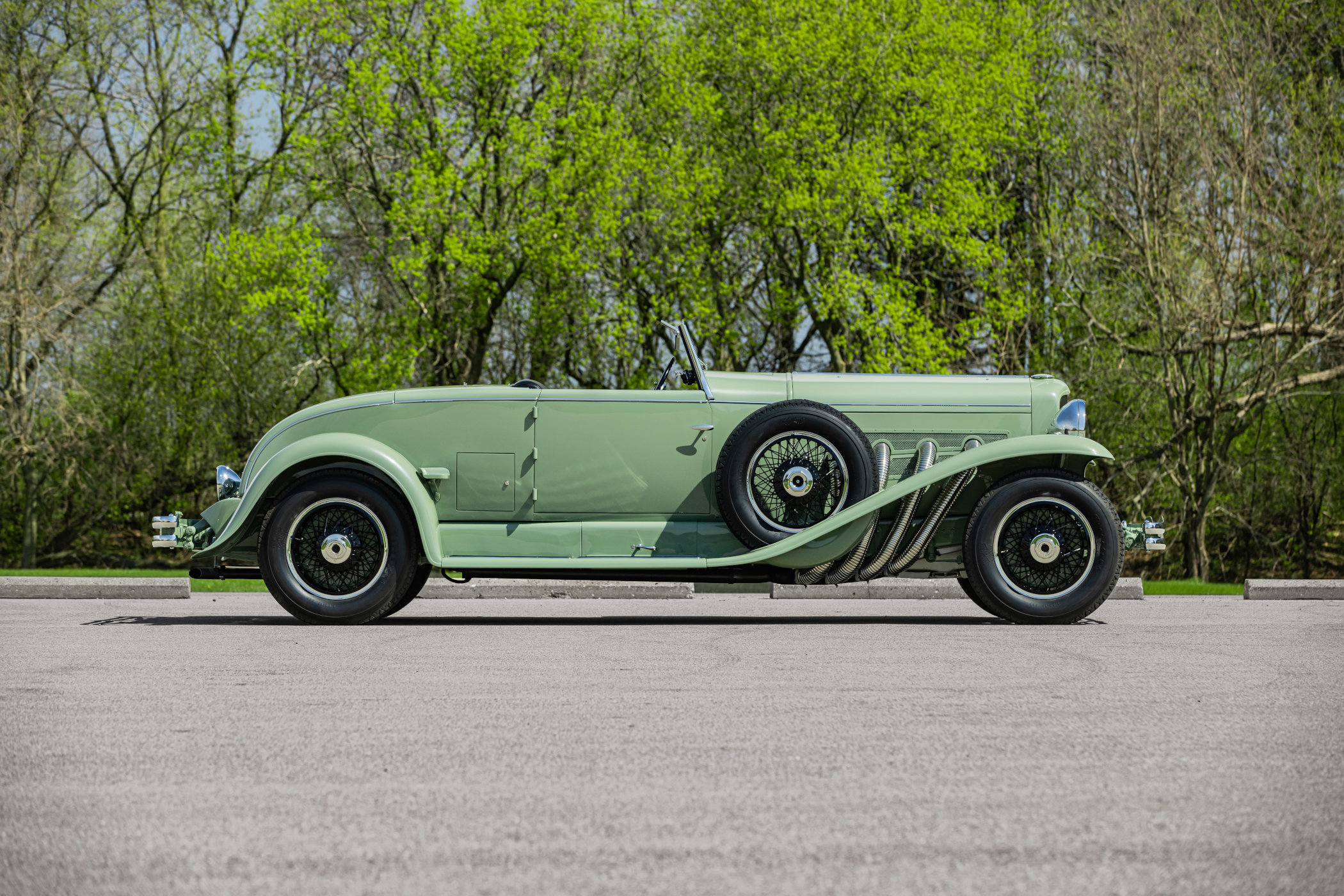
The bodywork is typical of the 1930s, with long, swooping ponton fenders, a vertical grille, a very long engine cover and spare wheels on either side. On the right side, four exhaust pipes come through the engine cover, drop down through the fender, and exit out the back through twin tailpipes. Up front, two large headlights are mounted on a cross-bar, and the single taillight reads “stop” when lit. And just behind the compartment for the retractable top is not a trunk but rather a rumble seat, in case you needed to bring more people than just your missus.
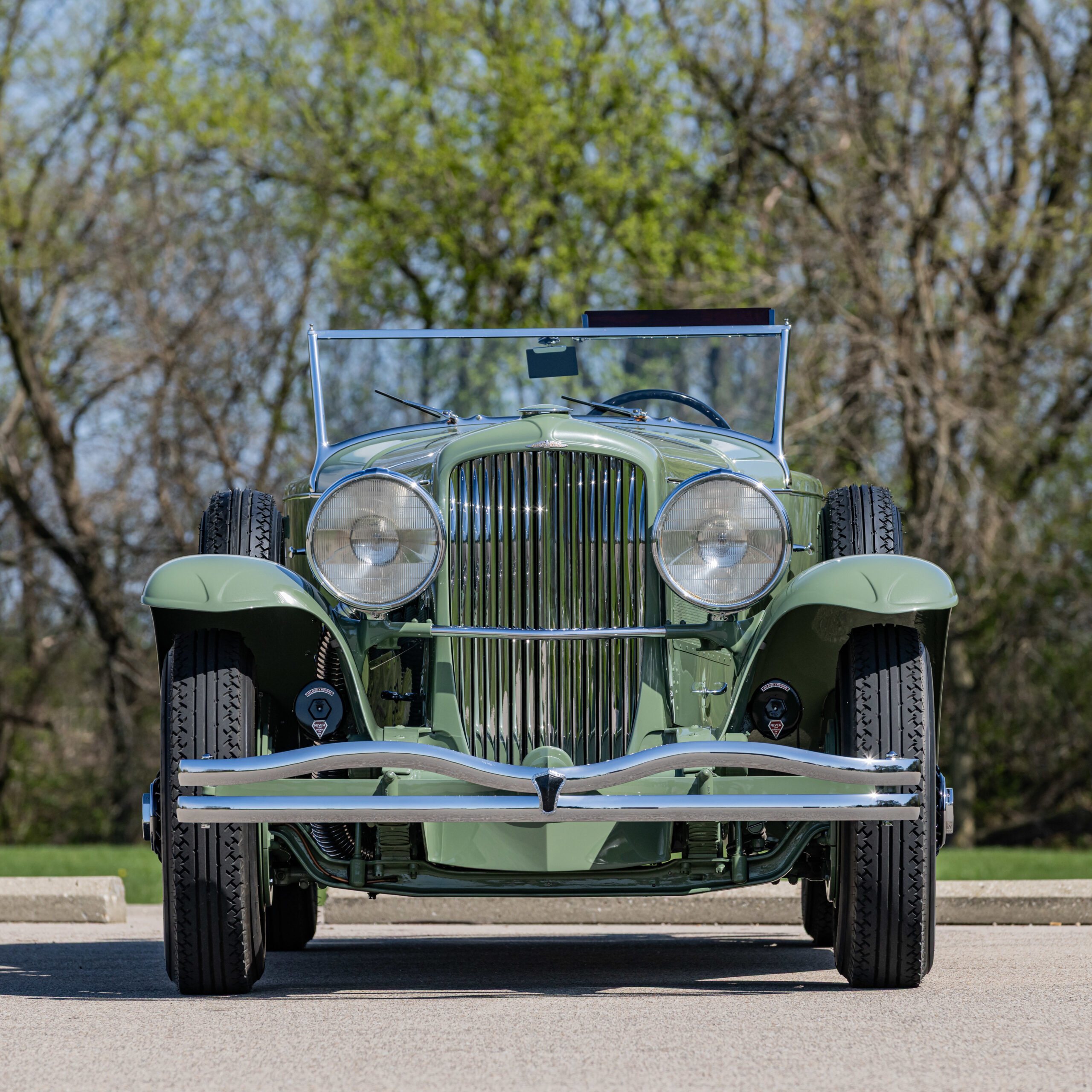
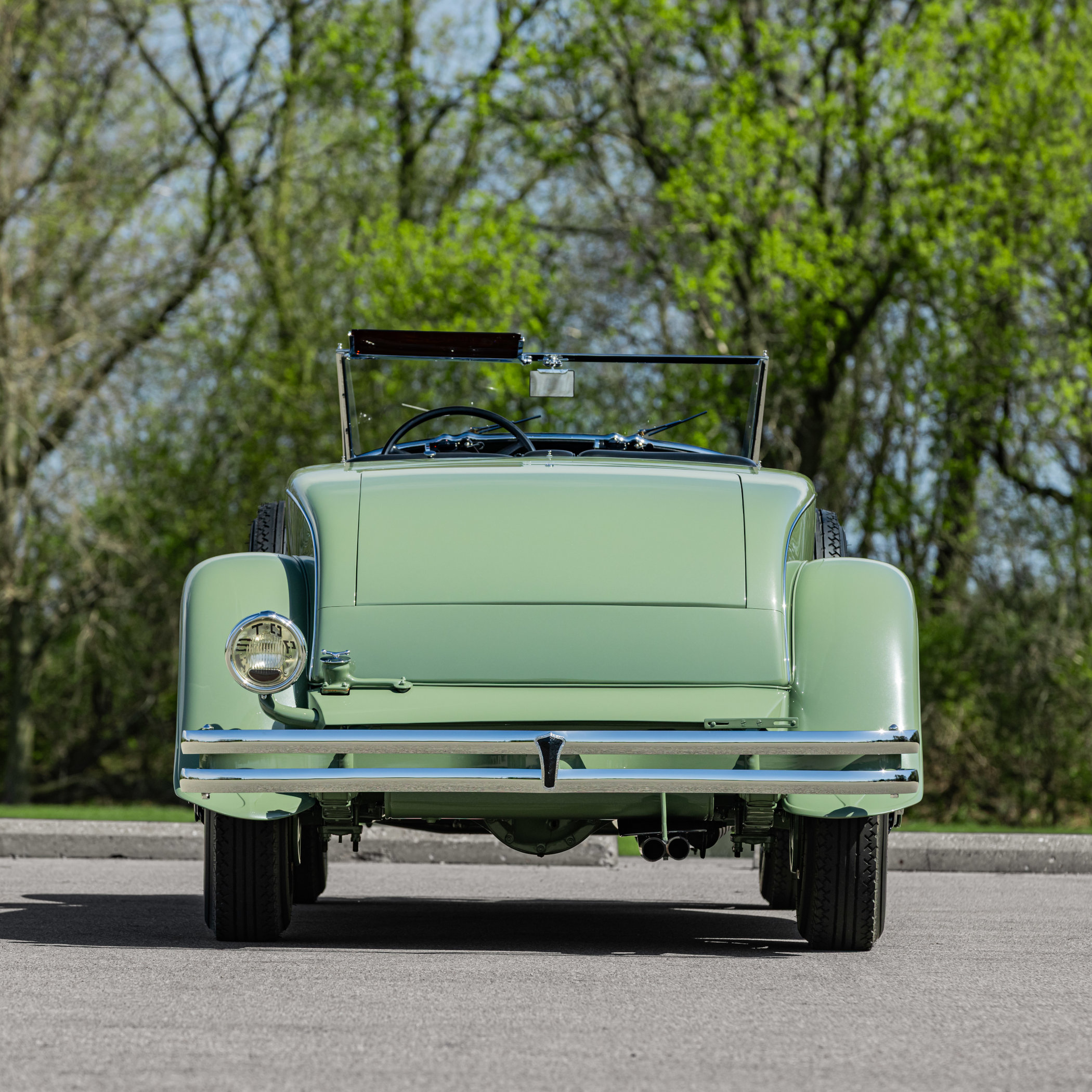
The Model J Disappearing Top Convertible Coupe has regularly attended the Pebble Beach concours and has passed through several prolific collectors after Bob Estes’ passing in 2001. It has been fully restored to pristine condition, finished in a rather lovely shade of green over black leather. It is the main attraction for Mecum’s Monterey Car Week auction, although no estimate has been released (yet). However, given the rarity of the Model J and even more so the Disappearing Top by Walter M. Murphy Co., plus considering past auction results for these cars, it wouldn’t surprise me if it surpasses the USD 4 million mark when it comes across the block on the weekend of the 13th through 15th of August.
Preston Thomas Tucker’s Automotive dream
Tucker is one of those stories where one man’s dreams became a reality, yet ended prematurely through all sorts of trouble, mostly legal. Preston Thomas Tucker, besotted with cars from a very young age, is the namesake behind the Tucker Corporation. And although Tucker only built one car over three years, the Tucker 48, or perhaps better known as the Tucker Torpedo, it would become a true American motoring icon long after the company’s demise and the founder’s passing.
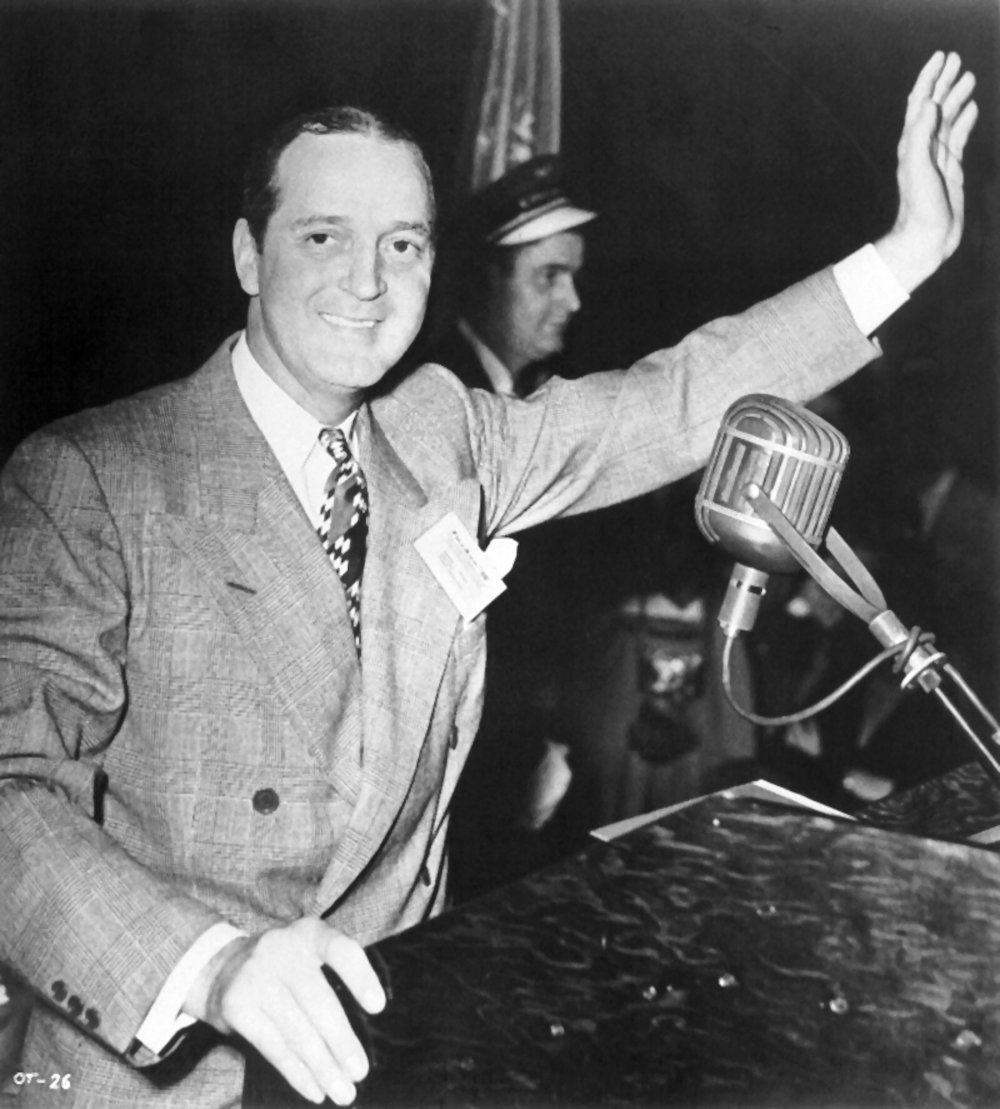
Preston Tucker’s buildup to his own automotive manufacturing company began with the Lincoln Park Police Department, for which he worked in three separate stints. In between, he managed a gas station with his wife, worked on a Ford assembly line, was an office clerk at the Cadillac Motor Company and sold Studebaker cars. He moved around the country a few times, working as a car salesman, and got the idea for a high-speed, turreted combat vehicle while reading the news about the potential outbreak of a war in Europe in the hospital in 1937. At least one prototype was built, but a deal with the Dutch government fell through as the Germans invaded the Netherlands in May of 1940.

Moving on, he founded the Tucker Aviation Corporation and Higgins-Tucker Aviation during World War II to manufacture aircraft engines and other military components, but little would come of it for several reasons. Shortly after the war, Tucker began developing “the car of tomorrow” and founded one of the first post-war car manufacturing companies, the Tucker Corporation.
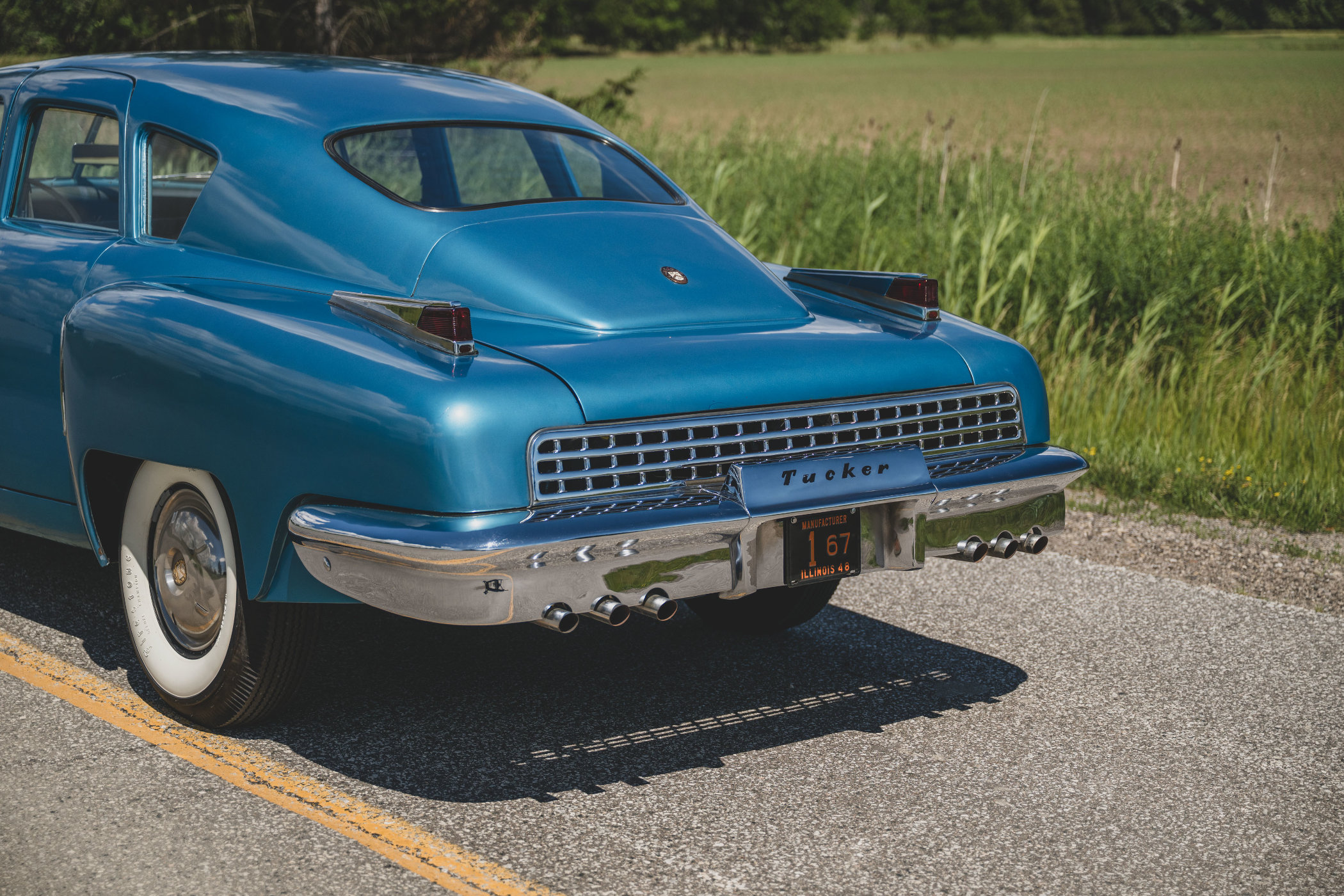
The Tucker 48
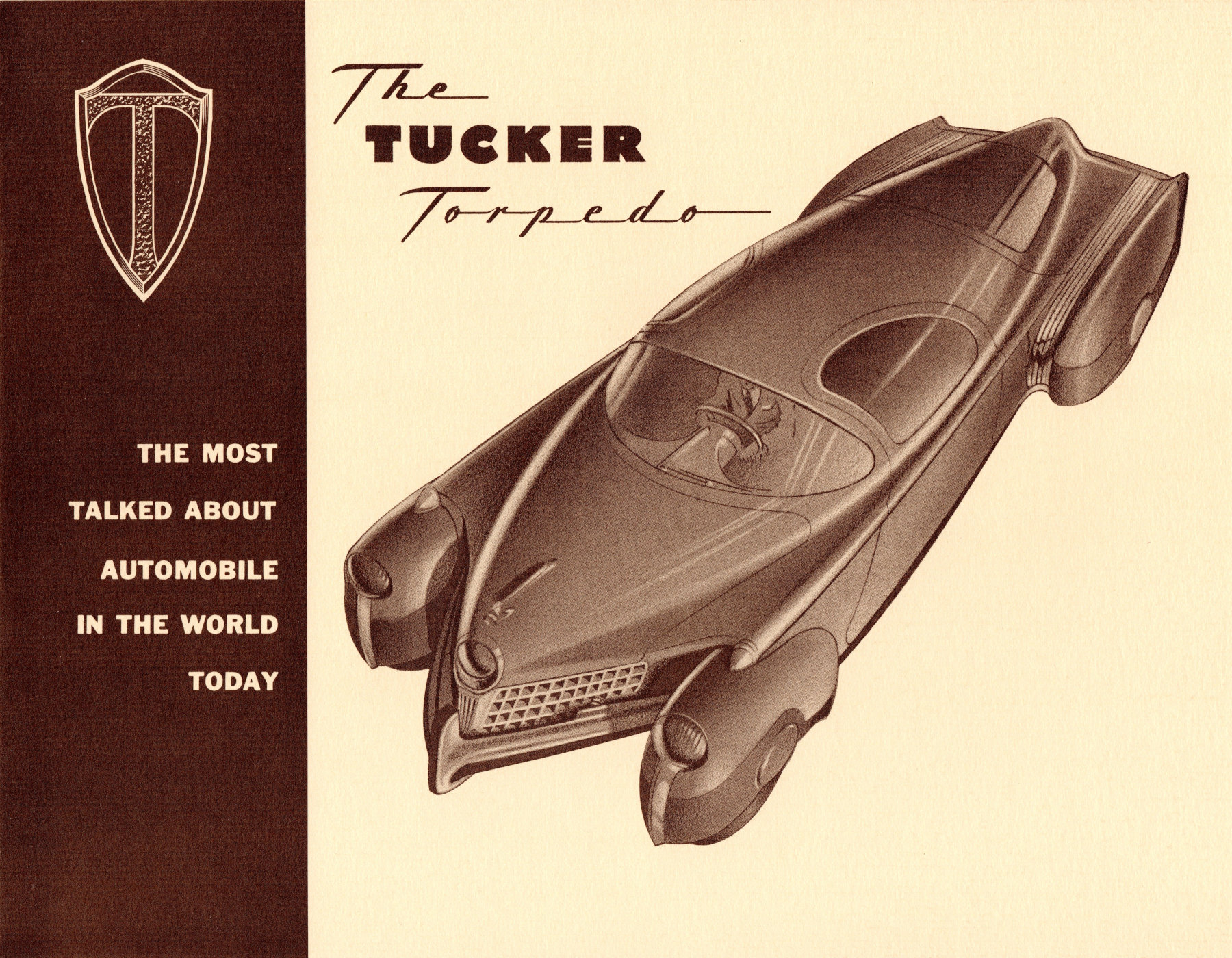
The Tucker 48 initially made its debut as the Tucker Torpedo in 1948, but Preston Tucker didn’t feel comfortable with a combat-derived name shortly after World War II. Designed with safety and comfort in mind, the Tucker 48 was full of innovative ideas. Initial sketches and promotional material revealed, for instance, a central driving position. And with the major car manufacturers not having produced anything really new since the early 1940s, Tucker seized the opportunity to design something rather forward-thinking in the process!
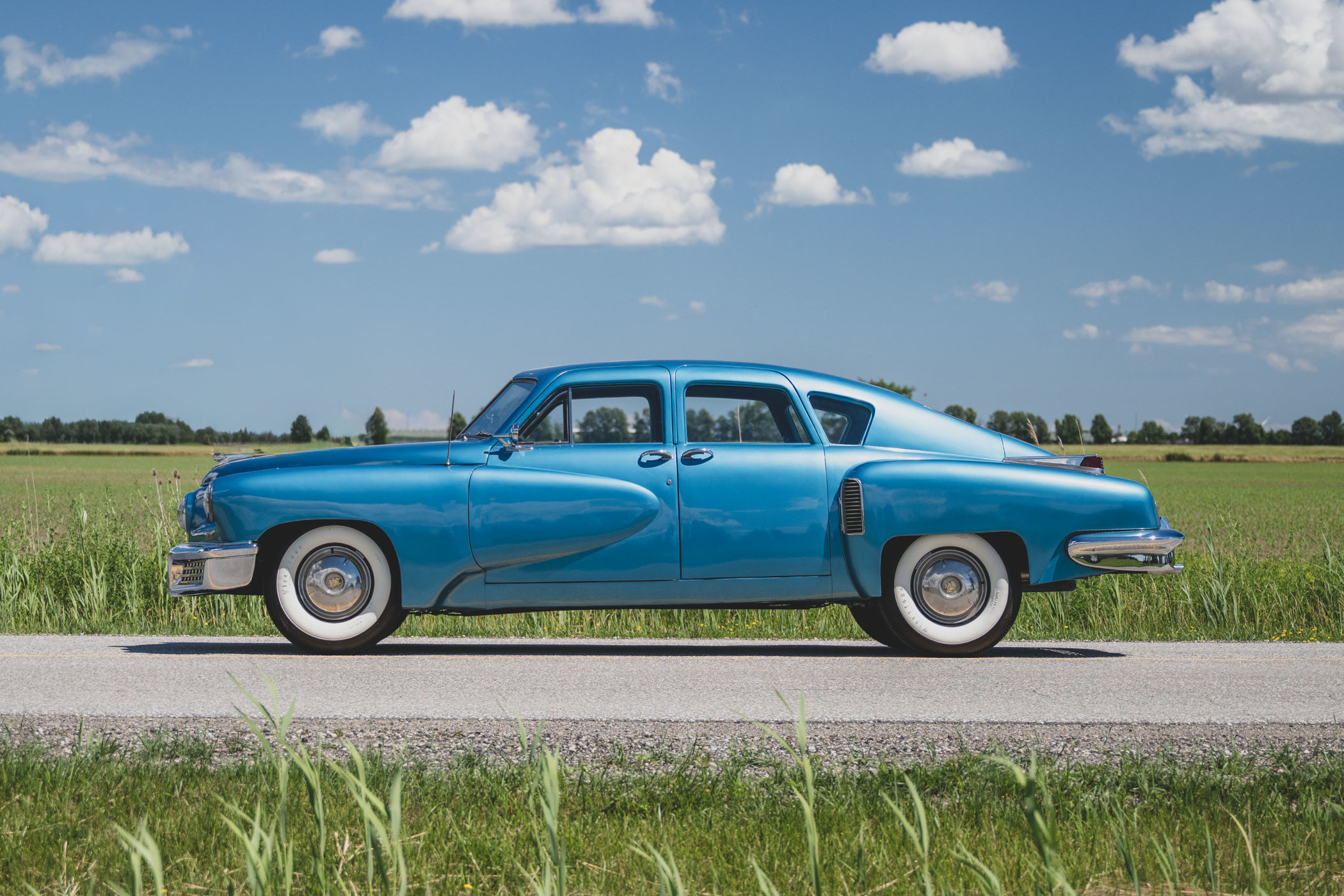
The Tucker 48 was sketched by automotive designer Alex Termulis, who worked for companies like Auburn, Cord and Duesenberg. Looking to set up shop in the former Chicago-Dodge Plant, Preston Tucker and his team set out to build the prototype and production cars of the Tucker 48. Several setbacks delayed the project significantly, but they eventually got the prototype and production underway. The prototype was revealed on June 19th 1947, although it was far from trouble-free. Tucker’s unconventional aircraft engine with hydraulic valves didn’t work out, so he opted for the air-cooled flat-6 Franklin O-335, which was mounted in the rear. The prototype was too loud, overheated, snapped its suspension arms and couldn’t reverse. The media picked up on this, and subsequently the reputation of the 48 was tarnished even before it went into production.

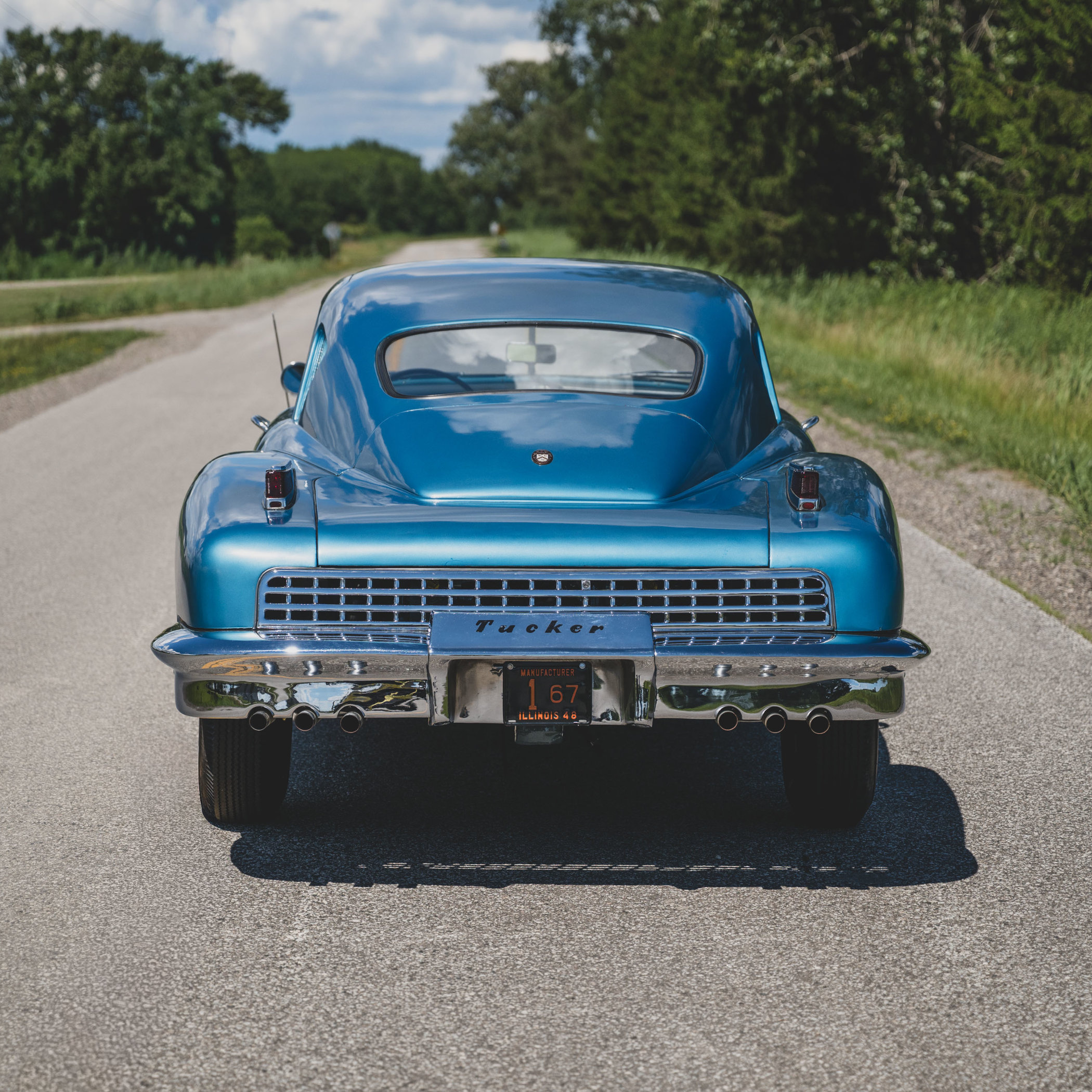
As mentioned, Preston Tucker focused heavily on driver safety and comfort. The Tucker 48 had a reinforced framework, a padded dashboard, a central third headlight that moved along with the steering wheel, superior weight distribution and aerodynamic performance, a collapsible steering wheel and doors that cut into the roof for easy access, and so on. This particular light blue car is chassis No. 1019, the 19th produced car out of a total of just 51. The reason for this is that Preston Tucker got embroiled with the US Securities & Exchange Commission over a claim of fraud in funding his company. He sold accessories to the car, as well as dealer licenses ahead of production, which became the focal point of the SEC’s investigations, along with the rushed build of the prototype and all its fixable flaws.
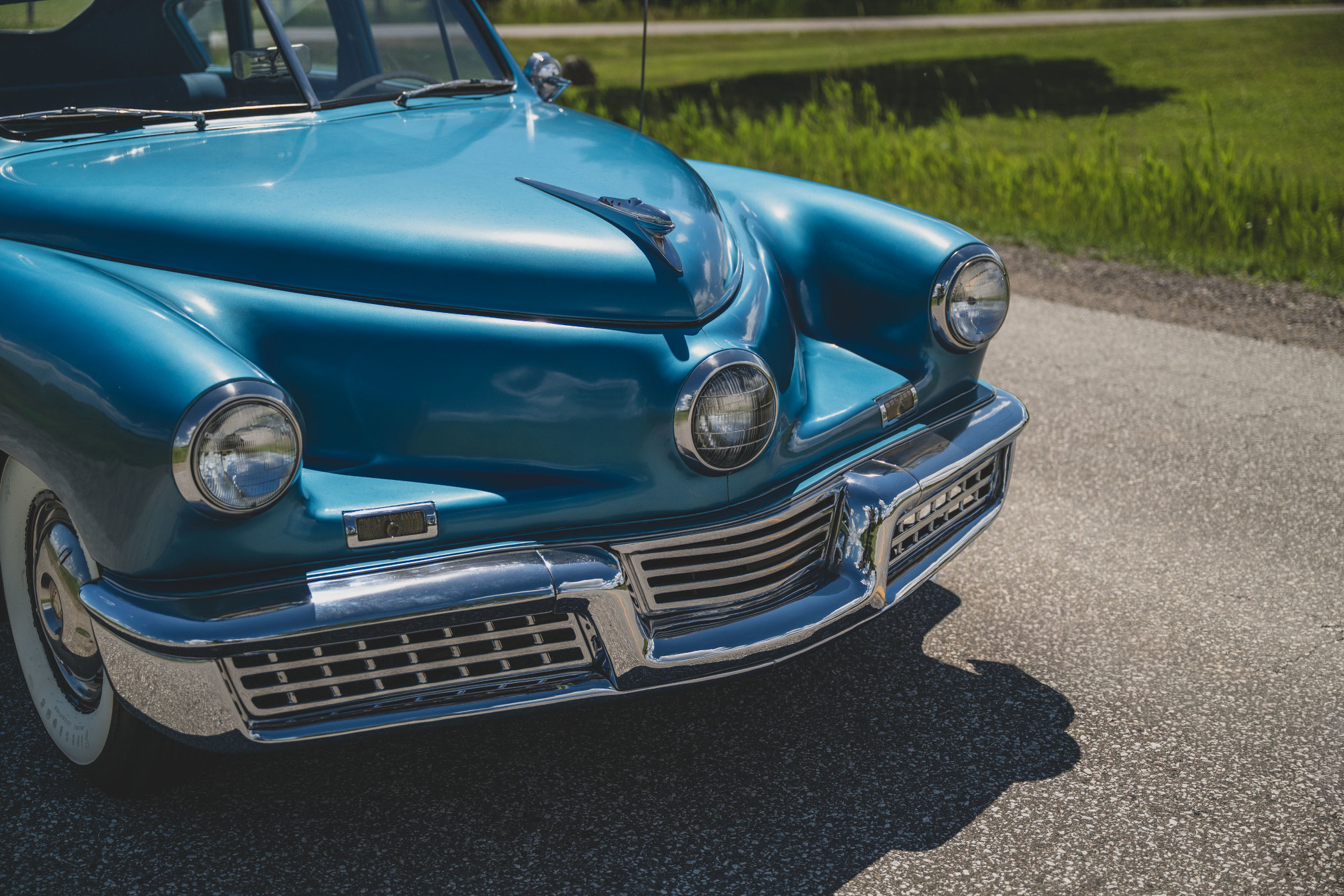
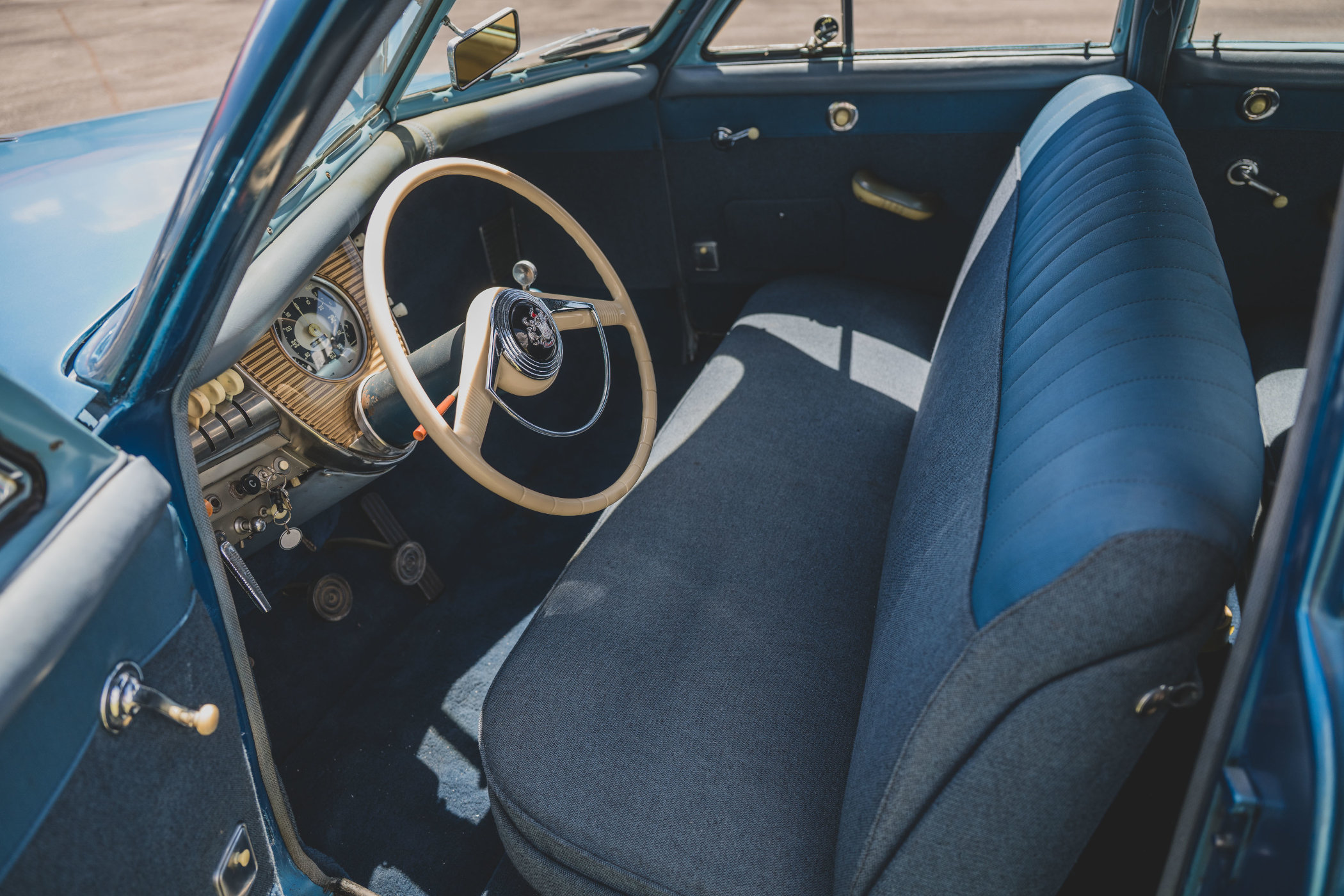
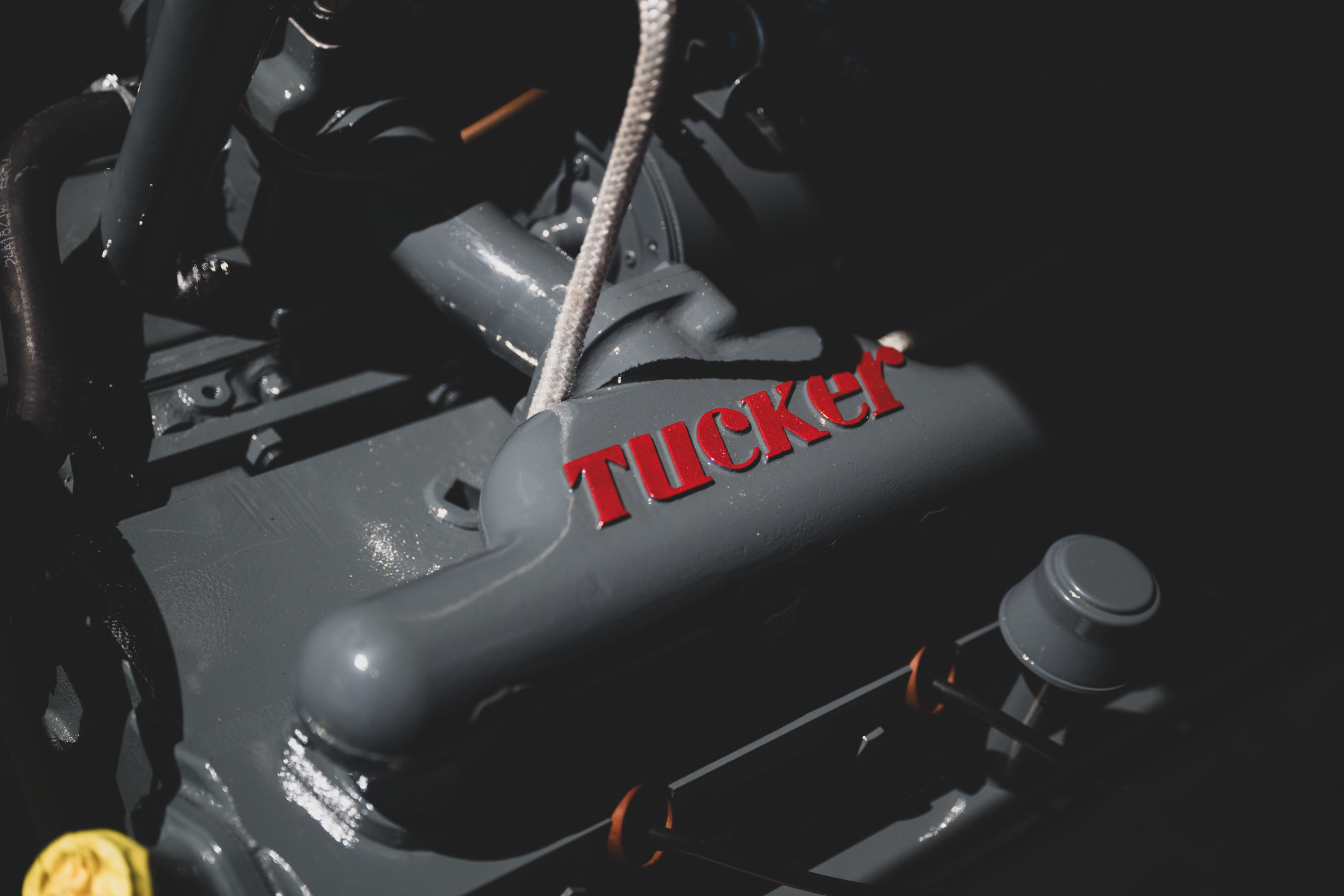
Following the trial, Preston Tucker was acquitted on January 22nd 1950, but the damage was done. There continued to be much speculation of ill practice surrounding the Tucker Corporation, and the reputation of the Tucker 48. The company was liquidated, with the assets and rights being sold off, and Tucker would never produce a car again. After just 51 cars, the curtain fell for what was one of America’s greatest and most misunderstood cars, from a forward-thinking, misunderstood gentleman. This light blue No. 1019 is a tangible reminder of Preston Tucker’s unique vision, and comes with an estimate of USD 1,000,000 to USD 1,300,000 from RM Sotheby’s, which is auctioning the car during the Monterey Car Week.
For more information, please visit Mecum.com or RMSothebys.com.
Editorial Note: The information used and images portrayed in this article are sourced from and used with permission of Mecum Auctions, Inc and RM Sotheby’s unless stated otherwise.